Feeling uncertain about what to expect in your upcoming interview? We’ve got you covered! This blog highlights the most important Ground Fault Interruption Testing interview questions and provides actionable advice to help you stand out as the ideal candidate. Let’s pave the way for your success.
Questions Asked in Ground Fault Interruption Testing Interview
Q 1. Explain the principle of Ground Fault Interruption (GFI) protection.
Ground Fault Circuit Interrupters (GFCIs) are life-saving devices designed to protect people from electrical shock. Their core principle lies in detecting imbalances in electrical current. Essentially, a GFCI continuously monitors the current flowing through the hot and neutral wires. In a properly functioning circuit, these currents should be equal. If there’s a ground fault – meaning current is leaking to ground, perhaps through a person touching a faulty appliance – the GFCI detects this imbalance and rapidly shuts off the power, preventing serious injury or death. Think of it like a sensitive scale; if the weight (current) on one side is even slightly different from the other, the scale (GFCI) triggers.
This difference is measured in milliamps (mA). Even a small leakage current, which may be imperceptible to a person, can be detected by a sensitive GFCI. This rapid response is crucial, as even small currents can cause a fatal shock under the right (or wrong) circumstances.
Q 2. Describe the difference between a GFI and an AFCI breaker.
While both GFCIs and Arc-Fault Circuit Interrupters (AFCIs) are safety devices protecting electrical circuits, they address different hazards. GFCIs protect against ground faults, where current leaks to ground, typically through a person or object touching a live wire. AFCIs, on the other hand, are designed to detect and interrupt arcing faults, which are dangerous electrical arcs that can cause fires. These arcs can occur within wiring, receptacles, or appliances, even without a ground fault.
Analogy: Imagine a leaky faucet (ground fault). The GFCI is like a sensor that detects the leak and shuts off the water supply (power). Now imagine a faulty pipe that starts to spark (arc fault). The AFCI is like a fire alarm that detects the spark and alerts you (or shuts off the power) before a fire starts.
Q 3. What are the common types of GFI receptacles?
GFI receptacles come in several configurations:
- Standard GFI Receptacle: This is the most common type, with test and reset buttons clearly visible. They protect the downstream outlets on the same circuit.
- GFI Breaker: This is not a receptacle but a breaker in your electrical panel. It protects all outlets and appliances on the circuit it controls.
- Combination GFCI/AFCI Receptacles and Breakers: These offer dual protection against both ground faults and arcing faults.
- Tamper-Resistant GFI Receptacles: These receptacles have shutters that prevent children from inserting foreign objects into the outlets, providing an extra layer of safety.
The choice of receptacle depends on the specific application and safety requirements. For example, outdoor outlets or those near water sources should always be GFCI-protected.
Q 4. How does a GFI detect a ground fault?
A GFI detects a ground fault using a current transformer. This transformer measures the current flowing through both the hot and neutral wires. In a normal situation, these currents are equal and opposite, so the transformer detects near-zero current difference. However, if current leaks to ground, the current in the hot and neutral wires becomes unequal. The GFI’s current transformer detects this imbalance and activates a tripping mechanism, instantly cutting the power.
This is a highly sensitive process. The tiny difference in current resulting from a ground fault— even just a few milliamps— is sufficient to trigger the GFCI. This rapid response is critical for preventing electrical shock.
Q 5. What is the sensitivity level of a typical GFI device?
The sensitivity level of a typical GFI device is 5 milliamps (mA) or less. This means the GFI will trip if a current imbalance of 5 mA or greater is detected. Some GFCIs for specific applications, such as those in healthcare settings, may have even higher sensitivity (e.g., 30mA for larger equipment).
The lower the mA rating, the more sensitive the GFI, offering greater protection against smaller leakage currents. However, highly sensitive GFCIs might be more prone to nuisance tripping due to normal electrical noise in the system.
Q 6. Explain the testing procedure for a GFI receptacle.
Testing a GFI receptacle is simple and should be performed regularly to ensure its proper functioning. Here’s a step-by-step procedure:
- Unplug all devices from the GFI protected receptacle.
- Press the ‘TEST’ button. The GFI should trip, and the receptacles should stop supplying power.
- Press the ‘RESET’ button. Power should be restored to the receptacle if the GFI is working correctly.
- Plug appliances back in and check if they work.
If the GFI doesn’t trip during the test or doesn’t reset, it indicates a potential problem and should be replaced.
Q 7. What are the indications of a faulty GFI?
Several indications suggest a faulty GFI:
- Failure to trip during the test: This indicates the GFI is not functioning correctly and may not protect against ground faults.
- Frequent nuisance tripping: The GFI trips even without apparent ground faults. This could be due to wiring issues or a faulty GFI.
- Failure to reset after tripping: The GFI remains tripped even after the ‘RESET’ button is pressed, indicating an internal fault.
- ‘TRIP’ indicator light constantly illuminated: This suggests a persistent ground fault in the circuit that needs to be investigated.
If any of these symptoms are observed, it is crucial to immediately replace the GFI to ensure the safety of persons and equipment.
Q 8. How do you troubleshoot a GFI that is not tripping?
A GFI (Ground Fault Interrupter) that doesn’t trip when it should indicates a problem within the GFI itself or its wiring. Think of it like a faulty smoke alarm that doesn’t sound – a critical safety feature is compromised. Troubleshooting involves a systematic approach:
- Check the GFI Receptacle: First, ensure the GFI is receiving power. Test other receptacles on the same circuit to rule out a broader power issue. Check the GFI’s test button; if it doesn’t trip, the internal mechanism might be faulty.
- Inspect the Wiring: Carefully examine the wiring connected to the GFI. Look for loose connections, damaged insulation, or corrosion, especially around the ground wire. A loose ground connection is a prime suspect.
- Test with a GFI Tester: A dedicated GFI tester provides a more precise diagnosis than just the built-in test button. This tool simulates a ground fault and will accurately indicate whether the GFI is functioning correctly.
- Check the Load: Sometimes, a heavy load on the circuit can overwhelm the GFI’s sensitivity. If you are using many appliances, try disconnecting some to see if the problem persists.
- Replace the GFI: If all else fails, the GFI itself might be defective and needs replacing. This is often the most efficient solution if other tests yield no results. It’s crucial to use a GFI receptacle of the same rating and specifications.
Remember, always de-energize the circuit before working on any electrical components.
Q 9. How do you troubleshoot a GFI that is tripping unnecessarily?
A GFI tripping unnecessarily suggests a genuine ground fault somewhere in the circuit or a problem with the GFI’s sensitivity. This is like a smoke alarm constantly going off when there’s no fire – annoying and disruptive, but it indicates something is wrong. Here’s how to diagnose it:
- Identify the Load: Start by unplugging appliances one by one connected to the GFI circuit. If the tripping stops after unplugging a specific appliance, that appliance likely has a faulty ground or internal short circuit.
- Check for Water Intrusion: Water is a significant cause of ground faults. Look for moisture or signs of water damage around the GFI receptacle or appliances on that circuit.
- Inspect Wiring and Connections: Again, scrutinize the wiring for fraying, loose connections, or damage. Pay close attention to the connections at the GFI receptacle itself and the junction boxes.
- Test with a GFI Tester: Use a GFI tester to verify if the GFI is actually malfunctioning or if a genuine fault is causing it to trip. A malfunctioning GFI can be too sensitive or have other internal failures.
- Check for High-Impedance Ground Faults: These faults are tricky to detect as they cause a smaller current leak. A specialized high-impedance ground fault tester is necessary in these cases.
- Replace the GFI: If you’ve eliminated other possibilities, a faulty GFI might be the culprit and replacing it is your next step.
Remember to turn off the power before working with electrical components. If you’re unsure about any step, consult a qualified electrician.
Q 10. What are the safety precautions to take when testing GFIs?
Safety is paramount when testing GFIs. Think of it like handling a potentially live wire – caution and adherence to procedures are essential. Here are crucial precautions:
- Turn off the Power: Always turn off the power to the circuit at the breaker box before performing any testing or wiring work. This prevents potential electrical shocks.
- Use Insulated Tools: Utilize insulated screwdrivers and other tools to avoid accidental contact with energized components.
- Use a GFI Tester: A proper GFI tester is designed for safe testing, protecting the user from electrical hazards. Never rely solely on the GFI’s built-in test button for comprehensive assessment.
- Wear Appropriate Safety Gear: Protective eyewear and non-conductive gloves are highly recommended.
- Never Test Alone: If possible, have another person present who can assist in case of an emergency.
- Understand Your Limitations: If you are not comfortable or knowledgeable about electrical work, contact a licensed electrician. This ensures your safety and the correct implementation of solutions.
Q 11. What are the common causes of ground faults?
Ground faults occur when a current intended to flow through the hot and neutral wires leaks into the ground. This is often due to a variety of reasons:
- Damaged Insulation: Worn or compromised insulation on wiring can allow current to escape to ground. Think of it as a hole in a water pipe leading to a leak.
- Water Intrusion: Moisture provides a pathway for current to leak to ground, often causing a short circuit.
- Faulty Appliances: Appliances with damaged internal wiring or a compromised chassis can cause a ground fault.
- Loose Connections: Loose or corroded connections in wiring and receptacles offer a pathway for current leakage.
- Overloaded Circuits: An overloaded circuit can overheat and cause insulation to break down, increasing the chance of a ground fault. This is similar to overloading a water pipe which can cause a break.
- Damaged Wiring: Physical damage to wires, such as cuts or abrasions, can lead to ground faults.
Q 12. What are the potential consequences of a ground fault?
The consequences of a ground fault can range from minor inconveniences to serious hazards:
- Electrical Shock: A significant risk, potentially leading to injury or death.
- Electrical Fire: The arcing and heat generated by a ground fault can ignite flammable materials, resulting in house fires.
- Appliance Damage: The fault can damage appliances and other electrical equipment connected to the circuit.
- Circuit Breaker Tripping: While this is a safety feature, it can disrupt power to essential appliances or systems.
- GFI Tripping: This interruption temporarily stops the flow of power, preventing more significant damage. However, the underlying issue needs to be addressed.
In summary, ignoring ground faults can lead to significant property damage and life-threatening situations.
Q 13. Explain the importance of regular GFI testing.
Regular GFI testing is crucial for safety and preventative maintenance. Think of it like a regular checkup for your car; it helps prevent small problems from turning into major disasters. It:
- Ensures Proper Functioning: Regular testing verifies that GFIs are operating correctly and will trip when needed, providing protection against electrical shocks and fires.
- Early Fault Detection: Testing helps identify potential issues early, before they escalate into more serious problems. A small fault can easily become a large one over time if ignored.
- Reduces Risks: Proactive testing significantly reduces the risk of electrical shocks, fires, and equipment damage.
- Complies with Codes: Regular testing often meets regulatory requirements and industry best practices.
- Extends Lifespan: Proper maintenance through testing helps prolong the life of GFI receptacles and other safety devices.
Q 14. What are the regulatory requirements for GFI testing?
Regulatory requirements for GFI testing vary depending on location and the specific application. However, many codes and standards emphasize the importance of regular testing and maintenance of GFIs, especially in areas where electrical safety is paramount. Always refer to your local electrical codes and the National Electrical Code (NEC) for specific requirements and recommendations. In many jurisdictions, regular inspection and testing by a qualified electrician are recommended in commercial and industrial settings. Regular testing is a sign of responsible electrical safety management, as well as possibly being required by law in some jurisdictions or industries.
Q 15. Describe the different types of GFI testing equipment.
Ground Fault Interruption (GFI) testing equipment comes in various forms, each designed for specific applications and levels of sophistication. The most common types include:
- Dedicated GFI Testers: These are handheld devices specifically designed to test GFCIs. They typically provide both a ground fault test (simulating a fault) and a regular continuity test (checking the wiring integrity). They often have clear displays indicating pass/fail results.
- Multi-meters with GFI Testing Capability: Many high-end multimeters incorporate GFI testing functions among their other capabilities. These offer a more versatile tool, useful for broader electrical testing needs.
- Combination Testers: Some testers combine GFI testing with other electrical tests like voltage measurement, continuity checks, and more, streamlining the testing process for electricians.
The choice of equipment depends on the testing frequency and the need for additional testing features. For frequent professional use, a dedicated GFI tester is ideal for its ease of use and targeted functionality. A multi-meter with GFI capability is often chosen when versatile testing is needed on a less frequent basis.
Career Expert Tips:
- Ace those interviews! Prepare effectively by reviewing the Top 50 Most Common Interview Questions on ResumeGemini.
- Navigate your job search with confidence! Explore a wide range of Career Tips on ResumeGemini. Learn about common challenges and recommendations to overcome them.
- Craft the perfect resume! Master the Art of Resume Writing with ResumeGemini’s guide. Showcase your unique qualifications and achievements effectively.
- Don’t miss out on holiday savings! Build your dream resume with ResumeGemini’s ATS optimized templates.
Q 16. How do you interpret the results of a GFI test?
Interpreting GFI test results is straightforward. A successful test indicates the GFCI is functioning correctly and will trip when a ground fault is detected. The results are typically displayed as a simple pass/fail indication. Here’s what to look for:
- Pass: The GFCI tripped correctly during the ground fault simulation test and passed the continuity test, indicating proper wiring and operation.
- Fail: The GFCI either failed to trip during the ground fault simulation or the continuity test failed, indicating a problem with the GFCI itself or the wiring. A failed test requires investigation and immediate rectification.
Some advanced testers might provide more detailed readings, including the trip time, but the basic pass/fail indication is universally used and essential.
It’s crucial to note that a successful test only means the device is operating according to the test; it doesn’t guarantee complete safety. Regular inspections and maintenance remain crucial to preventing potential hazards.
Q 17. What is the difference between Class A and Class B GFI devices?
Class A and Class B GFI devices differ primarily in their sensitivity to ground faults. This distinction affects their application in various settings.
- Class A GFCIs: Designed to trip within a 5 milliamp (mA) ground fault. They are suitable for general-purpose applications in most residential and commercial settings.
- Class B GFCIs: More sensitive, tripping at currents lower than 5 mA. This increased sensitivity enhances safety in environments where moisture or special circumstances increase the risk of shock, such as those found in healthcare facilities or areas with high water usage.
Essentially, Class B offers a higher level of protection but at a potentially higher cost. The appropriate class selection depends on the specific risk assessment of the location and application.
Q 18. Explain the concept of Ground Fault Circuit Interrupters (GFCIs).
Ground Fault Circuit Interrupters (GFCIs) are life-saving devices designed to protect against electrical shock. They constantly monitor the current flowing through a circuit. If there’s an imbalance between the current flowing out and returning – indicating a ground fault, perhaps from a person touching a live wire – the GFCI quickly interrupts the current, preventing serious injury or death.
Imagine a river: normally, the same amount of water flows in and out. A GFCI is like a sensor monitoring this flow. If some water leaks out unexpectedly (a ground fault), the GFCI instantly shuts off the water (power) to prevent flooding (electric shock).
Q 19. What are the limitations of GFI protection?
While highly effective, GFCIs have some limitations:
- Protection Limited to the Protected Circuit: GFCIs protect only the downstream circuits they are connected to. A fault outside the protected circuit won’t be detected.
- Not Foolproof: While exceptionally reliable, GFCIs aren’t entirely immune to malfunction and can be affected by wear and tear or damage.
- Potential for Nuisance Tripping: In rare instances, GFCIs might trip due to external factors unrelated to ground faults, such as excessive electrical noise.
- Doesn’t Protect Against All Electrical Hazards: GFCIs primarily address ground faults. They don’t protect against other electrical hazards like arc faults, overcurrent, or high voltage.
Regular testing and maintenance are vital to mitigate these limitations and ensure continued protection.
Q 20. How do you test GFCIs in various locations (e.g., bathrooms, kitchens)?
Testing GFCIs in various locations follows the same basic procedure, but some considerations depend on the environment:
- Bathrooms and Kitchens: These high-moisture areas require extra care. Ensure the GFCI is not wet before testing. Use caution and potentially utilize rubber gloves.
- Outdoor Locations: Again, safety precautions are crucial due to potential rain or moisture. Never test while standing in water or on damp surfaces. Employ appropriate safety equipment.
- General Procedure: In all locations, test using a dedicated GFI tester or multimeter with this function. Always turn the power off at the breaker before performing any physical checks on the outlet or wiring. Follow the tester’s instructions for both the ground fault test and the continuity test. Pay attention to any indications and check the GFCI’s reset button after a trip, confirming it is correctly re-engaging.
Remember, safety is paramount. Adherence to safety protocols and proper testing procedures minimizes risks.
Q 21. What are some common GFI testing errors and how to avoid them?
Common GFI testing errors include:
- Incorrect Wiring: Incorrect wiring can cause false test results. Double-check all connections for proper placement and tightness.
- Faulty Test Equipment: Using malfunctioning testing equipment will render inaccurate or misleading results. Regular calibration and maintenance are important.
- Ignoring Safety Precautions: Working on electrical circuits without turning off power at the breaker or using proper personal protective equipment (PPE) is dangerous and should never be done.
- Misinterpreting Results: Understand the different test results and their implications. A fail does not necessarily mean the wiring is at fault. Test multiple times to be sure and troubleshoot accordingly.
- Neglecting Regular Testing: GFCIs should be regularly tested to ensure they are functioning correctly, per code and professional best practices.
To avoid errors, always adhere to safety regulations, use calibrated equipment, properly interpret results, and document your testing procedures for future reference.
Q 22. How to document GFI test results effectively?
Effective GFI test result documentation is crucial for safety and compliance. It should be clear, concise, and easily auditable. A well-documented test includes the date, time, location, equipment used, tester’s name or ID, and the results of each test. For each GFI receptacle or circuit, record whether it passed or failed, including the measured trip time and ground fault current. Photos or sketches of the test setup can also be beneficial, especially in complex installations.
- Date and Time: Essential for tracking maintenance and identifying potential trends.
- Location: Precise location (e.g., building, room, and receptacle number).
- Equipment Used: Model number and calibration date of the GFI tester.
- Tester’s Name/ID: For accountability and traceability.
- Results: Clearly indicate ‘Pass’ or ‘Fail’ for each tested GFI. Include the measured trip time (typically in milliseconds) and the ground fault current (in milliamps) for both tests (Button and Load).
- Photographs/Sketches: Helpful for visually complex setups or when troubleshooting failures.
Consider using a standardized testing form or spreadsheet to ensure consistency and ease of analysis. This rigorous record-keeping helps prevent future accidents and simplifies regulatory inspections.
Q 23. Describe the proper use of a GFI tester.
Proper use of a GFI tester begins with understanding its capabilities and limitations. Always check the tester’s instruction manual before use, ensuring it’s correctly calibrated and in good working order. To test a GFI receptacle, first ensure the power is on. Then, plug the tester into the receptacle and press the ‘Test’ button. A properly functioning GFI should trip and interrupt the power within the specified timeframe (usually between 4 and 5 milliseconds). If it doesn’t trip or it trips too slowly, this signals a potential problem. Next, press the ‘Reset’ button to restore power. The load test simulates a fault current. Most testers offer various load settings. Following the tester’s instructions, conduct the load test to verify that the GFI protects the circuit under load conditions. Repeat both tests on all outlets and circuits.
Remember to always prioritize safety. Never test a GFI receptacle if you suspect there’s a live fault. If you encounter difficulties, consult a qualified electrician.
Example: A typical GFI test would involve pressing the 'Test' button, observing a trip, restoring power, and conducting a load test, all documented precisely.Q 24. Explain the role of GFI protection in preventing electrical shocks.
GFIs (Ground Fault Circuit Interrupters) play a vital role in preventing electrical shocks by rapidly detecting and interrupting the flow of current should a ground fault occur. A ground fault happens when an unintended path for electricity is created, often when someone touches a live wire or faulty appliance. This leakage current can be fatal. The GFI continuously monitors the current flowing out of and back into the circuit. If there is an imbalance – indicating current is leaking to ground – the GFI instantly cuts off the power, preventing severe or fatal electric shocks. Think of it as a highly sensitive trip switch that protects you from dangerous current leakage.
The speed of the GFI’s response is critical. Unlike circuit breakers that protect against overloads, GFIs react to minute current imbalances, ensuring rapid response to protect individuals from lethal shocks.
Q 25. What is the difference between a ground fault and a short circuit?
While both ground faults and short circuits involve electrical issues, they are distinct:
- Ground Fault: A ground fault occurs when a portion of the current intended to flow through the circuit leaks to ground through an unintended path, often involving human contact or a fault in an appliance. This leakage current creates an imbalance between the hot and neutral wires.
- Short Circuit: A short circuit happens when there’s an unintended, low-resistance pathway between the hot and neutral wires. This creates a significantly higher current flow, potentially causing overheating and fires. There isn’t necessarily a connection to the ground.
In essence, a ground fault involves a current leak to ground, while a short circuit involves a direct connection between hot and neutral wires. GFIs are specifically designed to detect and react to ground faults, while circuit breakers primarily address short circuits and overloads.
Q 26. How frequently should GFI devices be tested?
The frequency of GFI testing depends on local regulations and the specific application. However, monthly testing is a widely accepted best practice for most residential and commercial settings. In high-risk environments, such as industrial settings or those with critical medical equipment, more frequent testing—even weekly—may be necessary. Regular testing ensures GFIs are functioning correctly and provide continued protection against electrical hazards. Neglecting regular testing significantly increases the risk of electrical shocks or fatalities.
Q 27. What are the legal implications of failing to conduct proper GFI testing?
Failing to conduct proper GFI testing can have severe legal implications, varying depending on jurisdiction and the context of the failure. In cases where negligence leads to injury or death due to malfunctioning GFIs, significant legal liability may arise, including lawsuits and penalties. Occupational Safety and Health Administration (OSHA) regulations in many countries mandate regular electrical safety inspections, including GFI testing. Non-compliance can result in fines, workplace shutdowns, and damage to professional reputation. Insurance companies may also deny claims if it is determined that the lack of proper GFI testing contributed to an incident. In essence, proper GFI testing is not just a safety measure, but also a legal obligation in most cases.
Q 28. Describe your experience with different types of GFI testing equipment.
Throughout my career, I’ve worked extensively with various GFI testing equipment, ranging from simple, handheld testers for residential use to sophisticated, multi-function testers for industrial settings. I am familiar with both analog and digital testers, each offering specific advantages. Analog testers provide a visual indication of the current imbalance, while digital testers offer precise numerical readings of the fault current and trip time. I have experience with devices that test single receptacles and those capable of testing multiple circuits simultaneously. I am also proficient in using specialized testers for GFI breakers within electrical panels. The selection of the appropriate tester hinges on the complexity of the system and the level of detail required in the testing process. Regardless of the equipment, proper calibration and user proficiency remain paramount to ensure accurate and reliable test results.
Key Topics to Learn for Ground Fault Interruption Testing Interview
- Fundamentals of Ground Fault Current: Understanding the principles behind ground fault currents, including their causes and effects on electrical systems.
- GFCI Device Operation: Detailed knowledge of how Ground Fault Circuit Interrupters (GFCIs) function, including their internal components and tripping mechanisms.
- Testing Procedures and Standards: Familiarity with various testing methods (e.g., loop impedance testing, ground fault testing) and relevant safety standards (e.g., NEC, OSHA).
- Practical Applications: Understanding the application of GFCI testing in different environments (residential, commercial, industrial) and the implications for safety and compliance.
- Troubleshooting and Diagnostics: Ability to diagnose common GFCI problems, interpret test results, and implement effective troubleshooting strategies.
- Types of Ground Fault Protection Systems: Explore different types of ground fault protection systems beyond GFCIs, such as ground fault relays and their applications.
- Safety Regulations and Compliance: Deep understanding of relevant safety regulations and compliance requirements related to ground fault protection.
- Interpreting Test Equipment Readings: Proficiency in using and interpreting readings from various test equipment used in GFCI testing.
Next Steps
Mastering Ground Fault Interruption Testing opens doors to exciting career opportunities in electrical safety and maintenance. A strong understanding of these concepts is highly valued by employers, making you a competitive candidate in a growing field. To enhance your job prospects, focus on creating an ATS-friendly resume that highlights your skills and experience effectively. ResumeGemini is a trusted resource to help you build a professional and impactful resume. We provide examples of resumes tailored to Ground Fault Interruption Testing to guide you in showcasing your expertise. Take the next step towards your dream job – build a compelling resume that gets noticed!

Safety Engineer Resume Sample
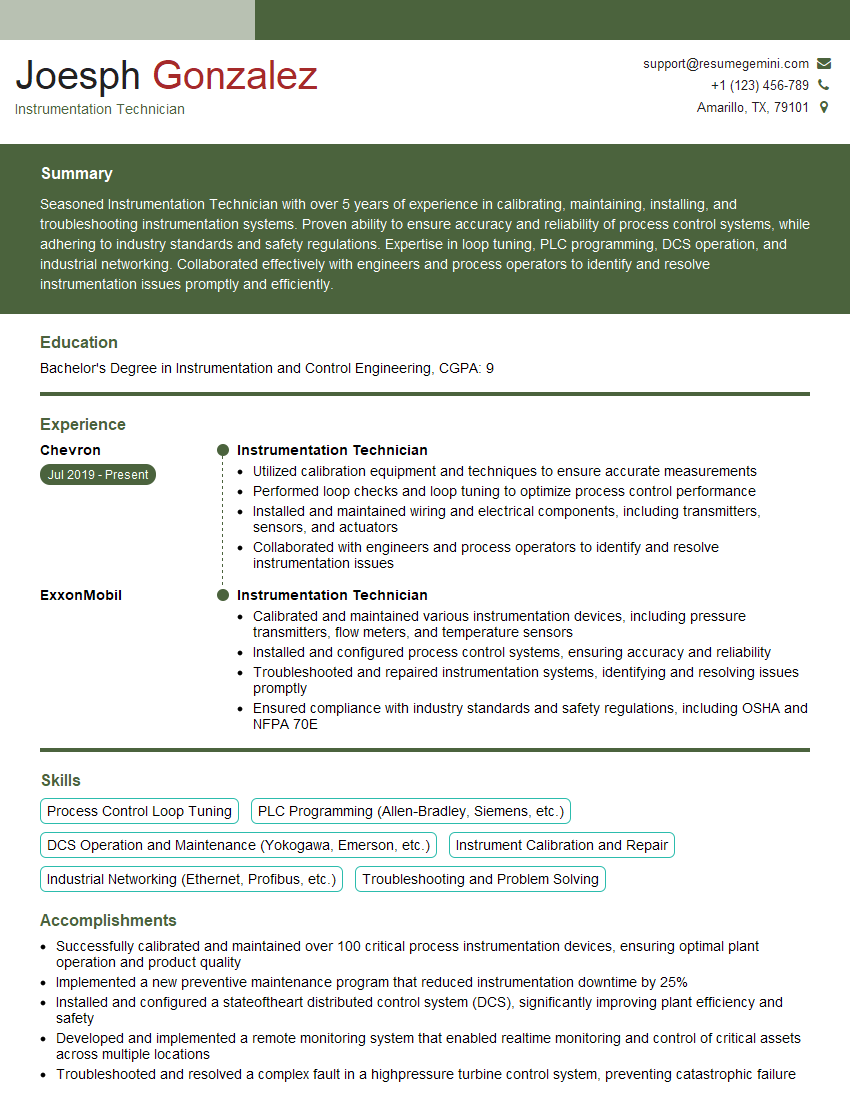
Instrumentation Technician Resume Sample

Automation Technician Resume Sample
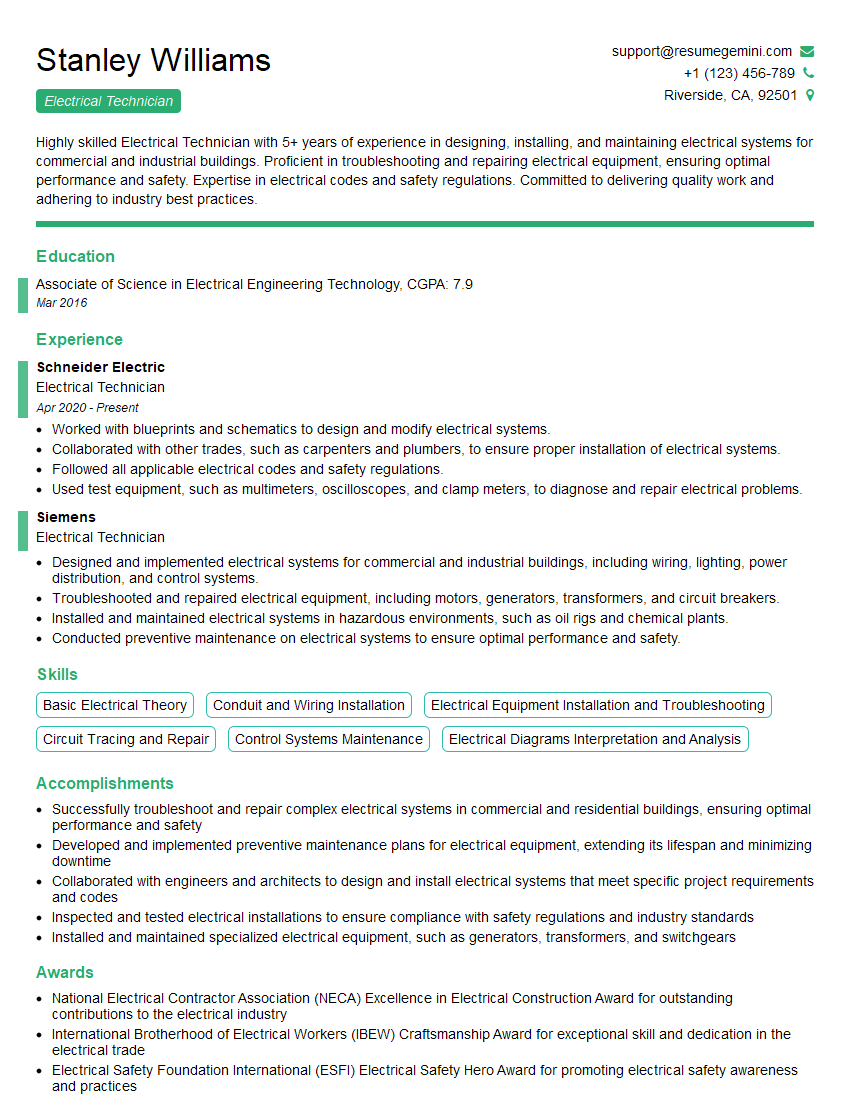
Electrical Technician Resume Sample
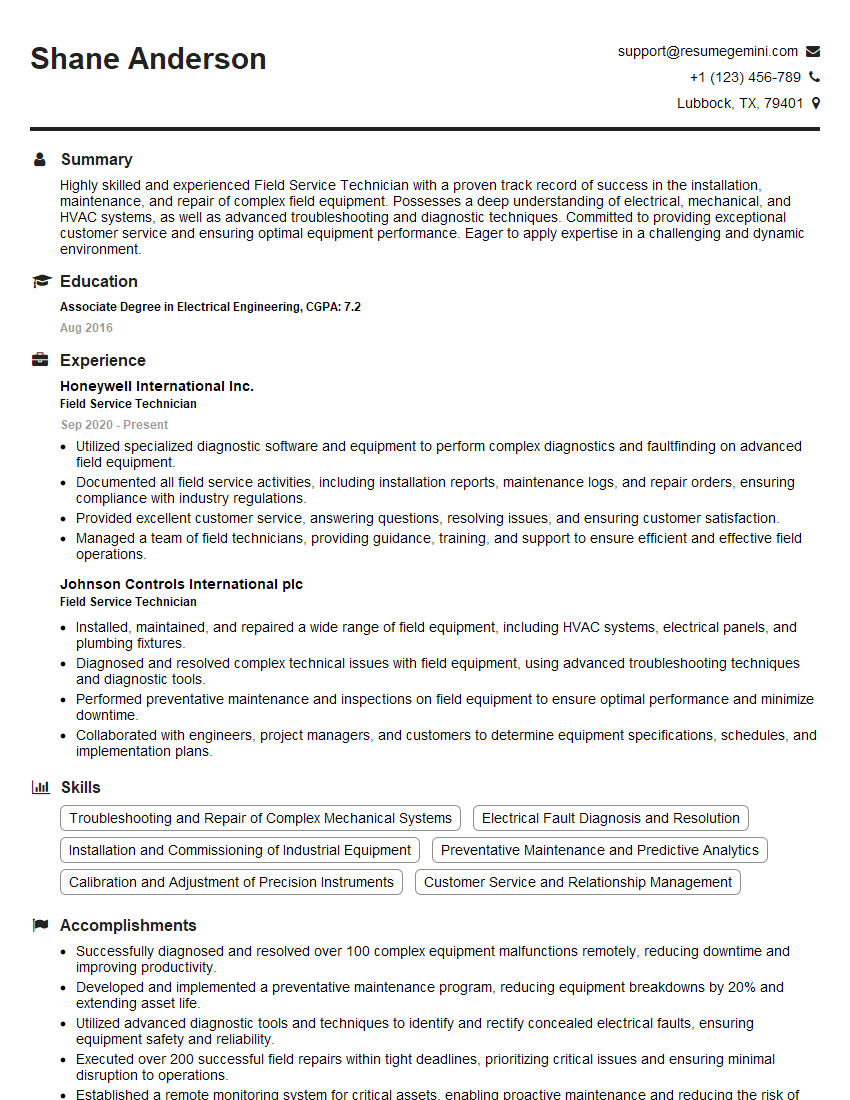
Field Service Technician Resume Sample

Building Maintenance Supervisor Resume Sample

Facilities Maintenance Manager Resume Sample
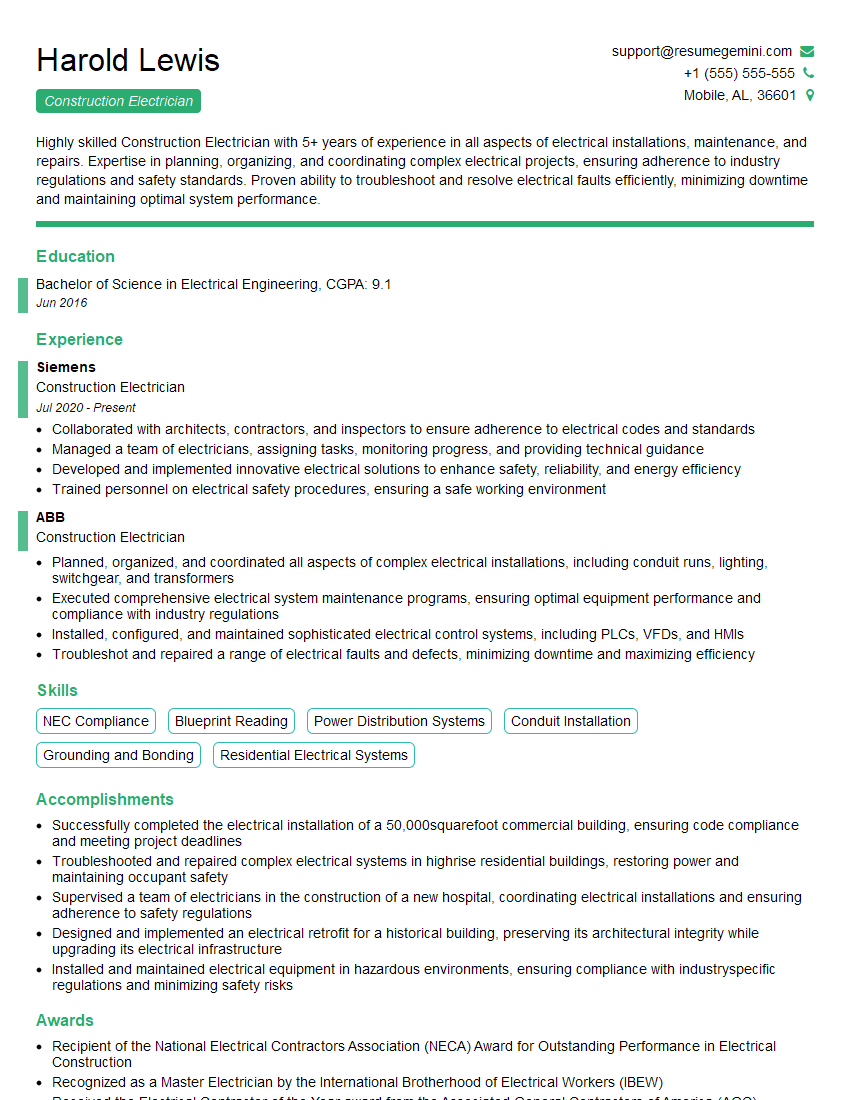
Construction Electrician Resume Sample
Industrial Electrician Resume Sample

Maintenance Electrician Resume Sample
Electrical Inspector Resume Sample
Control Systems Technician Resume Sample

Quality Control Inspector Resume Sample
- Safety Engineer
- Instrumentation Technician
- Automation Technician
- Electrical Technician
- Field Service Technician
- Building Maintenance Supervisor
- Facilities Maintenance Manager
- Construction Electrician
- Industrial Electrician
- Maintenance Electrician
- Electrical Inspector
- Control Systems Technician
- Quality Control Inspector
Explore more articles
Users Rating of Our Blogs
Share Your Experience
We value your feedback! Please rate our content and share your thoughts (optional).
What Readers Say About Our Blog
To the interviewgemini.com Webmaster.
Very helpful and content specific questions to help prepare me for my interview!
Thank you
To the interviewgemini.com Webmaster.
This was kind of a unique content I found around the specialized skills. Very helpful questions and good detailed answers.
Very Helpful blog, thank you Interviewgemini team.