Feeling uncertain about what to expect in your upcoming interview? We’ve got you covered! This blog highlights the most important HACCP Principles and Practices interview questions and provides actionable advice to help you stand out as the ideal candidate. Let’s pave the way for your success.
Questions Asked in HACCP Principles and Practices Interview
Q 1. Describe the seven HACCP principles.
The seven HACCP principles are a systematic approach to identifying and controlling food safety hazards. Think of them as building blocks for a safe food production system. They’re not just theoretical; they’re a practical framework used globally.
- Conduct a Hazard Analysis: Identify potential biological, chemical, and physical hazards in your process. For example, Salmonella in poultry, pesticide residues in produce, or glass shards in a jar of jam.
- Determine Critical Control Points (CCPs): Identify steps in the process where hazards can be prevented, eliminated, or reduced to acceptable levels. This might be cooking temperature for poultry or metal detection for glass shards.
- Establish Critical Limits: Set specific measurable limits for each CCP to ensure safety. For example, a minimum internal cooking temperature of 74°C (165°F) for poultry to kill Salmonella.
- Establish Monitoring Procedures: Define how and how often you’ll monitor CCPs to make sure they’re within critical limits. This could be using a thermometer to constantly monitor cooking temperature or regularly checking metal detectors.
- Establish Corrective Actions: Develop procedures for addressing deviations from critical limits. What happens if the poultry isn’t reaching the required temperature? Maybe it needs to be recooked or discarded.
- Establish Verification Procedures: Methods to verify that the HACCP plan is working effectively. This could involve internal audits, regular calibration of equipment, and employee training.
- Establish Record-Keeping and Documentation Procedures: Maintain records of all activities, including hazard analysis, monitoring data, corrective actions, and verification activities. These records are crucial for traceability and accountability.
Q 2. Explain the difference between a critical control point (CCP) and a critical limit.
While both CCPs and critical limits are essential to a HACCP plan, they represent different aspects of food safety control. Think of it like this: a CCP is the location, and the critical limit is the standard.
A Critical Control Point (CCP) is a step in the food production process where control can be applied to prevent, eliminate, or reduce a food safety hazard to an acceptable level. It’s a specific point in the process where something could go wrong.
A Critical Limit is a specific value (e.g., temperature, time, pH) that must be met at a CCP to ensure the hazard is controlled. It’s the specific threshold that must be maintained at each CCP to ensure safety.
Example: In the production of canned goods, the CCP might be the retort process (heating under pressure). The critical limit would be the minimum temperature and time required to inactivate Clostridium botulinum spores, ensuring the product is safe.
Q 3. What are the prerequisite programs essential for a robust HACCP system?
Prerequisite programs (PRPs) are essential supporting elements for a HACCP system. They’re the foundational good manufacturing practices (GMPs) that provide the basic hygiene and operational controls necessary for a safe food environment. Without strong PRPs, a HACCP plan is unlikely to be effective.
- Good Manufacturing Practices (GMPs): These cover aspects like sanitation, pest control, building maintenance, and personal hygiene.
- Good Agricultural Practices (GAPs): For agricultural products, these focus on safe growing, harvesting, and handling practices.
- Supplier Control Programs: Verifying the safety and quality of ingredients and materials purchased from suppliers.
- Sanitation Programs: Detailed cleaning and sanitation schedules and procedures to eliminate microorganisms and allergens.
- Allergen Control Programs: Procedures to prevent cross-contamination and ensure accurate labeling of allergens.
- Traceability Systems: Ability to track food products through all stages of production, distribution, and retail.
- Waste Management: Procedures for the safe disposal of waste to prevent contamination.
Imagine trying to build a house without a solid foundation – it’s simply not going to be stable. PRPs are that foundation for your HACCP system.
Q 4. How do you identify potential hazards in a food production process?
Identifying potential hazards is the crucial first step in HACCP. It requires a thorough understanding of your food production process and the potential dangers at each stage. A structured approach is vital.
- Hazard Analysis Critical Control Point (HACCP) Team: Form a multidisciplinary team with expertise in food safety, microbiology, production, and quality.
- Flow Diagram: Develop a detailed flow diagram of your entire food production process, from raw materials to finished product.
- Hazard Identification: Use your knowledge and resources (scientific literature, databases) to identify potential biological, chemical, and physical hazards at each step of the process. Consider the raw materials, processing steps, packaging, storage, and distribution.
- Severity, Probability, and Controllability Assessment: Assess each identified hazard based on its severity, probability of occurrence, and the feasibility of controlling it. This helps prioritize the most significant risks.
- Documentation: Document all identified hazards and assessments to support the HACCP plan.
For instance, in a bakery, potential hazards might include bacterial contamination of the dough, cross-contamination with allergens, or physical contaminants like hair or insects.
Q 5. What are the methods used to validate critical limits?
Validating critical limits involves scientifically proving that the established limits will effectively control the identified hazards. This isn’t just about guessing; it’s about demonstrating effectiveness through data and testing.
- Challenge Studies: Inoculating food products with target microorganisms (e.g., Salmonella) to verify that the process parameters (e.g., cooking temperature and time) will eliminate or reduce the microorganisms to safe levels.
- Literature Review and Scientific Data: Using established scientific data and research to justify the chosen critical limits. For instance, using published data on the thermal inactivation of Clostridium botulinum to establish the critical limit for canned goods processing.
- Pilot Studies: Conducting small-scale trials to test the effectiveness of the process parameters and verify the critical limits under real-world conditions. This helps fine-tune the process and ensure it’s robust.
- Monitoring Data Analysis: Regularly analyzing monitoring data to demonstrate that the established critical limits consistently prevent or reduce the identified hazards to safe levels.
Validation is not a one-time event; it needs to be revisited and updated as necessary to reflect changes in the process or new scientific information.
Q 6. Explain the process of establishing monitoring procedures for CCPs.
Establishing monitoring procedures for CCPs is about defining how and how often you’ll check that your critical limits are being met. The goal is to detect deviations early so you can take corrective action before unsafe products are produced.
- Frequency: Determine the frequency of monitoring based on the severity of the hazard and the potential for deviation. Continuous monitoring might be needed for some CCPs, while others might require less frequent checks.
- Methods: Specify the methods and equipment used for monitoring. This could include temperature probes, timers, pH meters, visual inspections, metal detectors, or automated systems.
- Personnel: Clearly define who is responsible for monitoring each CCP and what their training requirements are. Ensuring the right people have the right skills and training is critical.
- Data Recording: Establish a system for accurately recording monitoring data. This could be paper-based or electronic, but it should be clear, concise, and easily accessible.
- Critical Limit Action Plan: Describe what to do when a deviation from critical limits is observed.
For example, if you’re monitoring the internal temperature of meat during cooking, you might need a thermometer to check temperature every 15 minutes and record the results in a logbook.
Q 7. How do you handle deviations from critical limits?
Handling deviations from critical limits is a crucial aspect of HACCP. A well-defined procedure is needed to ensure that unsafe products don’t reach the consumer. This requires immediate action and thorough documentation.
- Immediate Corrective Action: Take immediate action to correct the deviation and bring the CCP back within its critical limits. This could include adjusting equipment settings, reprocessing the affected product, or discarding it.
- Root Cause Analysis: Identify the underlying cause of the deviation to prevent recurrence. This may involve investigating equipment malfunctions, employee errors, or process inefficiencies.
- Corrective Action Plan: Implement corrective actions to address the root cause and prevent future deviations. This could involve employee retraining, equipment maintenance, or process improvements.
- Disposition of Affected Product: Determine the appropriate disposition of any affected products, which could involve reprocessing, discarding, or holding for further investigation.
- Record Keeping: Document all deviations, corrective actions, and the disposition of affected products. This is vital for traceability and continuous improvement.
For example, if the temperature of a cooking process drops below the critical limit, the meat might need to be recooked, or it might need to be discarded depending on the severity of the deviation.
Q 8. Describe your experience with HACCP plan development and implementation.
My experience in HACCP plan development and implementation spans over 10 years, encompassing various food processing environments from small-scale bakeries to large-scale meat processing plants. I’ve led numerous teams in conducting hazard analyses, identifying critical control points (CCPs), establishing monitoring procedures, and implementing corrective actions. For example, in a recent project with a seafood processing company, we identified the lack of proper temperature control during storage as a major hazard. Our HACCP plan addressed this by implementing a comprehensive temperature monitoring system, including regular checks and employee training, ultimately reducing spoilage and food safety incidents significantly. Another project involved designing a HACCP system for a newly established organic farm, focusing on crop hygiene and preventing microbial contamination.
- Hazard Analysis: This involved identifying potential biological, chemical, and physical hazards at each stage of production.
- CCP Identification: We pinpointed critical points where control was essential to prevent or eliminate hazards, such as cooking temperatures for meat products or sanitation procedures for equipment.
- Critical Limits: Establishing measurable parameters for each CCP, like maximum temperature or minimum cooking time.
- Monitoring Procedures: Defining the frequency and method of monitoring each CCP to ensure compliance.
- Corrective Actions: Developing procedures to address any deviations from critical limits.
- Verification Procedures: Establishing methods to verify the effectiveness of the HACCP plan.
- Record-Keeping: Implementing a robust system for documenting all aspects of the HACCP plan.
Q 9. How do you ensure the effectiveness of your HACCP plan?
Ensuring the effectiveness of a HACCP plan requires a multifaceted approach. It’s not a ‘set it and forget it’ system. Regular monitoring, verification, and validation activities are crucial. We use a combination of methods:
- Regular Monitoring: Employees at each CCP are trained to monitor critical limits and record their findings. This data allows for timely corrective actions if deviations occur.
- Internal Audits: Regular internal audits, conducted by trained personnel, evaluate the effectiveness of the HACCP plan, identifying areas for improvement. This is like a self-check-up to identify potential weaknesses before they become serious problems.
- Record Review: Thorough review of all HACCP-related records – monitoring data, corrective actions, and training records – provides valuable insights into the plan’s performance and potential areas for refinement.
- Management Review: Regular management reviews ensure the HACCP plan remains relevant, updated, and effective, taking into account any changes in the production process or regulations.
- External Audits: Third-party audits provide an independent assessment of the HACCP plan’s effectiveness and compliance with regulatory requirements. This adds an extra layer of scrutiny and credibility.
Think of it like maintaining a car: regular check-ups, oil changes (audits), and addressing any issues promptly ensures it continues to run smoothly and safely.
Q 10. What is the role of verification in the HACCP system?
Verification in HACCP is the process of obtaining evidence that the HACCP plan is working as intended. It’s about confirming that the controls are in place and effective in preventing or eliminating identified hazards. This goes beyond simple monitoring; it’s a more in-depth investigation. Verification activities include:
- Review of monitoring records: Analyzing data trends to identify patterns and potential issues.
- Calibration of equipment: Ensuring measuring instruments used to monitor CCPs are accurate.
- Environmental monitoring: Checking for potential contamination sources.
- Product testing: Regular testing of finished products to verify the absence of hazards.
- Employee training evaluation: Ensuring employees are proficient in their HACCP-related tasks.
For instance, verifying the effectiveness of a cooking CCP might involve reviewing temperature logs, calibrating the thermometer, and conducting microbiological testing of cooked products.
Q 11. Explain the importance of record-keeping in HACCP.
Record-keeping is the backbone of a successful HACCP system. Without accurate and complete records, you cannot demonstrate compliance, identify trends, or effectively trace any issues. Essential records include:
- Hazard analysis documentation: Detailed records of the identification and assessment of potential hazards.
- CCP records: Monitoring data for each CCP, including dates, times, and measurements.
- Corrective action records: Documentation of any deviations from critical limits, the actions taken, and the effectiveness of these actions.
- Calibration records: Documentation of the calibration and maintenance of measuring equipment.
- Training records: Proof that all relevant personnel are adequately trained in HACCP procedures.
- Supplier documentation: Records verifying the safety and quality of incoming ingredients.
Imagine a detective solving a crime without any case notes—impossible! Similarly, a HACCP system without proper record-keeping is ineffective. These records are crucial for traceability, auditing, and continuous improvement.
Q 12. How do you ensure effective communication of HACCP procedures to staff?
Effective communication of HACCP procedures is paramount. It’s not enough to just have a plan; everyone involved must understand and follow it. I employ a multi-pronged approach:
- Initial Training: Comprehensive training sessions, tailored to different roles and responsibilities, are conducted for all personnel.
- Interactive Sessions: Using hands-on exercises and simulations to enhance understanding and retention. This makes it more engaging and relatable.
- Visual Aids: Flowcharts, diagrams, and other visual aids are used to simplify complex procedures.
- Regular Refresher Training: Periodic refresher training keeps employees updated on procedures and any changes to the HACCP plan.
- Open Communication Channels: Establishing clear communication channels for employees to ask questions and report any concerns. A culture of open communication is essential.
- On-the-Job Coaching: Providing ongoing support and coaching to reinforce learning and ensure compliance.
Think of it like teaching a new recipe: you don’t just hand someone the ingredients and instructions; you guide them, answer their questions, and ensure they understand each step.
Q 13. How do you conduct a HACCP risk assessment?
A HACCP risk assessment involves systematically identifying and evaluating hazards at each step of the food production process. It’s a crucial step in developing an effective HACCP plan. I follow a structured approach:
- Conduct a Hazard Analysis: Identify potential hazards – biological (bacteria, viruses), chemical (pesticides, cleaning agents), and physical (glass, metal) – at each step. This often involves brainstorming sessions and reviewing relevant literature.
- Determine the Severity: Evaluate the likelihood and severity of each hazard. This might involve considering the probability of the hazard occurring and the potential consequences if it occurs (illness, product recall).
- Identify Critical Control Points (CCPs): Pinpoint the steps where control is essential to prevent or eliminate the identified hazards. A decision tree can help in this process.
- Establish Critical Limits: For each CCP, define the measurable limits that must be met to control the hazard. This might involve temperature ranges, pH levels, or time limits.
- Develop Monitoring Procedures: Define how each CCP will be monitored and the frequency of monitoring.
- Establish Corrective Actions: Plan what actions to take if a critical limit is not met.
- Develop Verification Procedures: Plan how the effectiveness of the HACCP system will be verified.
For example, in meat processing, a CCP might be cooking temperature. The critical limit would be reaching a specific internal temperature to kill pathogens. Monitoring would involve using thermometers, and corrective actions would be reheating or discarding the product if the temperature is not reached.
Q 14. Explain the concept of a Hazard Analysis and Critical Control Point (HACCP) plan.
A Hazard Analysis and Critical Control Point (HACCP) plan is a preventative food safety management system. It focuses on identifying and controlling potential hazards that can cause foodborne illnesses or other food safety issues. Instead of reacting to problems after they occur, HACCP proactively prevents them. It’s a science-based approach that uses seven principles:
- Principle 1: Conduct a Hazard Analysis: Identify potential hazards in the food production process.
- Principle 2: Determine Critical Control Points (CCPs): Identify the steps where control is essential to prevent or eliminate hazards.
- Principle 3: Establish Critical Limits: Define measurable limits for each CCP.
- Principle 4: Establish Monitoring Procedures: Define how each CCP will be monitored.
- Principle 5: Establish Corrective Actions: Plan what to do if a critical limit is not met.
- Principle 6: Establish Verification Procedures: Plan how to verify the effectiveness of the HACCP system.
- Principle 7: Establish Record-Keeping and Documentation Procedures: Document all aspects of the HACCP plan.
Think of it like building a house: HACCP ensures that the foundation (hazard analysis) is strong, the walls (CCPs) are sturdy, and all systems (monitoring, corrective actions) work together to create a safe and secure structure. It’s a systematic approach to food safety that minimizes risks and ensures the production of safe and high-quality food.
Q 15. What are the legal requirements related to HACCP in your region?
The legal requirements surrounding HACCP (Hazard Analysis and Critical Control Points) in my region are stringent and largely based on internationally recognized standards. We must comply with [Insert your region’s specific food safety legislation, e.g., FDA Food Code in the USA, EC Regulation 852/2004 in the EU]. This legislation mandates the implementation of HACCP plans for various food businesses, depending on their size and the type of food they handle. For example, businesses processing ready-to-eat foods often face more stringent requirements than those dealing with shelf-stable products. Non-compliance can lead to significant penalties, including fines, product recalls, and even business closure. Regular inspections and audits by regulatory bodies ensure adherence to these regulations.
Specifically, the legislation outlines requirements for:
- Developing and implementing a written HACCP plan.
- Conducting regular hazard analysis and risk assessments.
- Establishing critical control points (CCPs).
- Monitoring CCPs and keeping detailed records.
- Implementing corrective actions in case of deviations.
- Maintaining comprehensive documentation and traceability systems.
- Providing adequate employee training on food safety practices.
Understanding and complying with these regulations is paramount to ensuring food safety and maintaining a legally compliant operation.
Career Expert Tips:
- Ace those interviews! Prepare effectively by reviewing the Top 50 Most Common Interview Questions on ResumeGemini.
- Navigate your job search with confidence! Explore a wide range of Career Tips on ResumeGemini. Learn about common challenges and recommendations to overcome them.
- Craft the perfect resume! Master the Art of Resume Writing with ResumeGemini’s guide. Showcase your unique qualifications and achievements effectively.
- Don’t miss out on holiday savings! Build your dream resume with ResumeGemini’s ATS optimized templates.
Q 16. Describe your experience with different types of food hazards (biological, chemical, physical).
My experience encompasses a wide range of food hazards, including biological, chemical, and physical contaminants. I’ve worked in settings where we’ve encountered:
- Biological Hazards: These include bacteria (Salmonella, Listeria monocytogenes, E. coli), viruses (Norovirus, Hepatitis A), parasites (Toxoplasma gondii), and mycotoxins (aflatoxins) produced by molds. In one instance, a poorly maintained refrigeration system led to a Listeria outbreak in a ready-to-eat meat facility. We quickly implemented corrective actions, including a thorough cleaning and sanitation, temperature monitoring improvements, and employee retraining on proper hygiene practices. The subsequent investigation helped refine our HACCP plan and prevent recurrence.
- Chemical Hazards: These can involve pesticides, cleaning agents, heavy metals, and naturally occurring toxins. I’ve been involved in incidents where incorrect chemical storage led to cross-contamination risks. This highlights the importance of proper labeling, storage, and training programs to prevent accidental contamination. In another case, we had to address the issue of excessive levels of nitrates in a processed meat product due to sourcing issues.
- Physical Hazards: These encompass foreign objects like glass, metal fragments, plastic, bone, or insects. A meticulous approach to material control, regular equipment checks, and stringent supplier verification procedures are crucial in preventing such hazards. We once had a situation where a supplier provided contaminated packaging material resulting in glass fragments in a finished product which was easily detectable by metal detectors but led to a significant recall.
Understanding the sources, characteristics, and control measures for each hazard type is key to building an effective HACCP plan.
Q 17. How do you manage allergen control within a HACCP framework?
Allergen control is integrated seamlessly within a HACCP framework. It’s considered a critical hazard that must be addressed in the hazard analysis. Effective allergen control requires a multi-pronged approach:
- Allergen identification: Identifying all potential allergens in ingredients, processing aids, and the environment (e.g., cross-contamination from shared equipment).
- Supplier verification: Confirming that suppliers provide accurate allergen information and follow good manufacturing practices.
- Ingredient labeling and traceability: Implementing a robust system to track allergens throughout the entire supply chain.
- Segregation and prevention of cross-contamination: Maintaining physical separation of allergen-containing materials from allergen-free products. This includes dedicated equipment, utensils, and processing lines.
- Cleaning and sanitation procedures: Implementing thorough cleaning and sanitation procedures to eliminate allergens from surfaces and equipment.
- Labeling: Clearly labeling finished products with allergen information as required by law.
- Employee training: Providing comprehensive training to all employees on allergen handling and awareness.
In essence, managing allergens involves recognizing them as potential hazards, establishing CCPs to control them, and implementing monitoring and verification procedures to ensure that the control measures are effective. A robust traceability system allows for quick identification and removal of any affected product during a potential allergen contamination incident.
Q 18. Explain the role of GMPs in relation to a HACCP plan.
Good Manufacturing Practices (GMPs) form the foundational layer upon which a robust HACCP plan is built. GMPs are the basic operational and sanitation requirements that minimize the risk of contamination. Think of them as the ‘foundation’ and HACCP as the ‘building’ – you can’t build a strong building (HACCP plan) without a solid foundation (GMPs).
GMPs address aspects such as:
- Facility design and layout: Ensuring appropriate flow of materials and prevention of cross-contamination.
- Personnel hygiene: Maintaining high standards of personal cleanliness and hygiene to minimize the risk of introducing biological hazards.
- Equipment maintenance: Regularly maintaining and cleaning equipment to prevent mechanical failures and contamination.
- Sanitation and pest control: Implementing thorough cleaning and sanitation protocols and pest control measures.
- Material handling and storage: Properly storing and handling materials to prevent spoilage and contamination.
A HACCP plan cannot function effectively without GMPs in place. If GMPs are inadequate, the likelihood of hazards occurring increases, rendering the HACCP plan ineffective. Therefore, GMP compliance is essential for the successful implementation and effectiveness of a HACCP system.
Q 19. What is your experience with HACCP audits and inspections?
I possess extensive experience with HACCP audits and inspections. I’ve participated in both internal audits, where we self-assess our compliance with our HACCP plan and GMPs, and external audits conducted by regulatory bodies. I understand the rigorous processes involved and have been actively involved in:
- Preparing for audits: Gathering and organizing documentation, ensuring records are up-to-date, and conducting mock audits to identify any areas needing improvement.
- Participating in audits: Responding to auditor questions, providing clear explanations of our procedures, and demonstrating our compliance with regulations.
- Addressing non-conformances: Developing corrective actions to address any identified non-conformances and implementing preventive measures to avoid future recurrences.
- Following up on audit findings: Monitoring and verifying the effectiveness of the corrective actions and documenting the follow-up procedures.
I am familiar with various audit methodologies and documentation requirements. My experience has honed my ability to anticipate auditor inquiries and maintain transparent and comprehensive documentation.
Q 20. How would you handle a recall situation related to a food safety issue?
Handling a food safety recall is a critical and time-sensitive process demanding a swift, decisive, and coordinated response. My experience involves:
- Immediate product isolation: The first step is to immediately isolate the affected product from the market.
- Notification of regulatory authorities: Immediately notifying the relevant regulatory bodies, such as the FDA (in the USA) or EFSA (in the EU), about the situation, providing them with detailed information about the issue and the affected products.
- Traceability: Using the existing traceability system to identify all lots, batches, and distribution channels of the affected product.
- Communication: Issuing a public recall notification, clearly communicating the nature of the problem and the necessary actions to consumers and stakeholders.
- Customer support: Providing appropriate support to affected customers, including offering refunds or replacements.
- Investigation and root cause analysis: Conducting a thorough investigation to identify the root cause of the food safety issue, so that we can implement corrective actions and prevent future incidents.
- Corrective actions: Implementing effective corrective actions to prevent a similar incident from happening again, and updating the HACCP plan accordingly.
Effective recall management requires a well-defined recall plan, clear communication channels, and close coordination with internal and external stakeholders. The goal is to minimize the impact on public health and maintain consumer confidence.
Q 21. Describe your experience with root cause analysis for food safety incidents.
Root cause analysis (RCA) is crucial for preventing future food safety incidents. I’m proficient in various RCA methodologies, including the ‘5 Whys’ technique, fishbone diagrams, and fault tree analysis. My approach involves:
- Gathering data: Collecting all relevant data related to the incident, including production records, environmental monitoring results, employee statements, and supplier information.
- Identifying contributing factors: Analyzing the data to identify the factors that contributed to the incident.
- Determining the root cause: Using appropriate RCA techniques to determine the underlying cause of the incident.
- Developing corrective actions: Developing effective corrective actions to address the root cause and prevent future occurrences.
- Implementing and verifying corrective actions: Implementing the corrective actions and verifying their effectiveness through monitoring and follow-up.
- Documentation: Maintaining thorough documentation of the entire RCA process.
A thorough RCA not only helps prevent future incidents but also provides valuable insights into our processes, leading to continuous improvement and enhanced food safety management systems.
Q 22. How do you ensure the traceability of food products in your facility?
Traceability in food production is crucial for identifying the source of contamination or defects in case of a problem. We ensure traceability through a robust system employing lot coding at every stage of production. Each batch receives a unique code linked to its ingredients, processing date, time, and equipment used. This information is meticulously recorded in our database, allowing us to trace any product back to its origin, even to the specific farm supplying raw materials. We also use barcode scanners and RFID technology at various checkpoints to automatically record movement and processing. Think of it like a detailed family tree for every product, allowing us to quickly identify and isolate any potentially compromised batch.
For example, if a contamination incident occurs, we can swiftly determine which specific batch is affected, isolate it, and initiate a recall with complete accuracy, minimizing potential harm to consumers and damage to our brand reputation. This process isn’t just about compliance; it’s about consumer safety and building trust.
Q 23. What are the limitations of a HACCP system?
While HACCP is a powerful system, it does have limitations. Firstly, it relies heavily on the accuracy of hazard analysis. If a critical hazard is missed during the initial assessment, the entire system’s effectiveness is compromised. Secondly, HACCP is a preventative system, not a reactive one. It focuses on preventing hazards, but it doesn’t completely eliminate the possibility of contamination or other food safety issues. Regular monitoring and verification are crucial to address this limitation.
Another limitation is its dependence on human factors. The effectiveness of HACCP hinges on the training, diligence, and commitment of employees at every level. If employees don’t properly follow procedures or if there’s a lack of proper training, the system’s effectiveness will significantly reduce. Finally, HACCP is not a standalone solution. It needs to be integrated with other food safety management systems, such as GMPs (Good Manufacturing Practices), to ensure a comprehensive approach.
Q 24. How does your experience with HACCP align with the relevant standards (e.g., ISO 22000)?
My HACCP experience aligns perfectly with ISO 22000, the internationally recognized standard for food safety management systems. Both systems emphasize a proactive approach to food safety, focusing on identifying and controlling hazards throughout the food chain. ISO 22000 provides a framework for integrating HACCP into a broader food safety management system, addressing prerequisites such as GMPs and traceability, which are essential for the successful implementation of HACCP.
In practice, my experience translates directly to meeting ISO 22000 requirements. We have documented procedures for hazard analysis, critical control points (CCPs), monitoring, corrective actions, and record-keeping—all key elements of both HACCP and ISO 22000. Furthermore, our internal audits and management reviews mirror the requirements of ISO 22000, ensuring continuous improvement and compliance with both standards.
Q 25. Explain your approach to continuous improvement within a HACCP system.
Continuous improvement within a HACCP system is vital for maintaining high food safety standards. Our approach utilizes the Plan-Do-Check-Act (PDCA) cycle. We begin by Planning improvements, identifying areas for enhancement through data analysis, customer feedback, and regular audits. This might involve reviewing CCP monitoring data to identify trends, analyzing customer complaints, or reviewing audit reports for recurring issues.
The Do phase involves implementing the planned changes. This could be anything from upgrading equipment to enhancing employee training or modifying a particular process. The Check phase involves monitoring the effectiveness of the implemented changes, collecting data to evaluate their impact on food safety. Finally, the Act phase involves standardizing successful changes and taking corrective action if the changes didn’t yield the desired results. This iterative process ensures our HACCP system is constantly adapting and improving.
Q 26. How do you incorporate emerging technologies into your HACCP strategy?
Emerging technologies offer significant opportunities to enhance our HACCP strategy. We’re currently exploring the use of blockchain technology for enhanced traceability, providing an immutable record of our products’ journey from farm to table. This adds an extra layer of transparency and accountability. We also utilize sensors and IoT devices to monitor critical control points in real-time. This allows for immediate detection of deviations from established parameters, enabling quicker corrective actions and minimizing potential risks.
Furthermore, we’re investigating advanced analytical tools and AI-powered predictive modeling to better understand and predict potential hazards. For instance, analyzing historical data on contamination rates can help identify seasonal patterns or other factors that might increase the risk, allowing us to implement proactive measures.
Q 27. Describe your experience with training employees on HACCP principles.
Training is paramount in ensuring effective HACCP implementation. Our training program combines classroom instruction with hands-on practice. We use engaging materials, including interactive modules, videos, and case studies, to make the learning experience more effective. We also conduct regular refresher courses to reinforce key concepts and keep employees up-to-date on any changes in regulations or best practices.
We tailor training to specific roles and responsibilities. For instance, line workers receive training focused on their specific CCPs and monitoring tasks, while supervisors receive more in-depth training on hazard analysis and corrective action procedures. We use assessments and practical exercises to evaluate employees’ understanding and competency. This ensures they can confidently and effectively perform their duties, contributing to the overall effectiveness of our HACCP system. We also encourage a culture of continuous learning and feedback.
Q 28. How do you stay updated on current food safety regulations and best practices?
Staying updated on food safety regulations and best practices is an ongoing commitment. We subscribe to relevant industry publications and attend conferences and workshops to stay abreast of the latest developments. We actively participate in industry associations and collaborate with regulatory bodies to ensure our understanding remains current. We also use online resources, such as government websites and industry databases, to access updated guidelines and regulations.
Internal knowledge sharing is also important. We hold regular meetings to discuss emerging trends and best practices, allowing our team to learn from each other and apply new knowledge to our operations. This proactive approach ensures our HACCP system remains robust and adaptable to the evolving landscape of food safety.
Key Topics to Learn for Your HACCP Principles and Practices Interview
Ace your interview by mastering these key areas. Remember, understanding the “why” behind the practices is just as important as knowing the “how.”
- HACCP Principles: A thorough understanding of the seven principles – Hazard Analysis, Critical Control Points (CCP) identification, establishment of critical limits, monitoring procedures, corrective actions, verification procedures, and record-keeping – is crucial. Focus on the interconnectedness of these principles.
- Hazard Analysis: Learn to identify biological, chemical, and physical hazards in food production. Practice applying various hazard analysis techniques and prioritizing risks based on likelihood and severity.
- Critical Control Points (CCPs): Develop the ability to identify CCPs within different food processing environments. Understand how to determine whether a step in the process is a CCP and justify your decision.
- Critical Limits and Monitoring: Master setting and monitoring critical limits for each identified CCP. Understand the importance of accurate and frequent monitoring and the consequences of exceeding these limits.
- Corrective Actions: Develop your understanding of implementing corrective actions when deviations occur. Learn how to investigate root causes and prevent recurrence.
- Verification and Validation: Grasp the difference between verification and validation procedures in a HACCP system. Understand how to ensure the effectiveness of the HACCP plan over time.
- Record Keeping and Documentation: Understand the legal and practical importance of meticulous record-keeping. Be prepared to discuss various record-keeping methods and their benefits.
- Practical Application: Be ready to discuss real-world scenarios and how you would apply HACCP principles in various food production settings (e.g., restaurants, manufacturing plants).
- Problem-Solving: Practice identifying and solving problems related to HACCP implementation. Consider scenarios involving deviations from critical limits or other unexpected challenges.
Next Steps: Position Yourself for Success
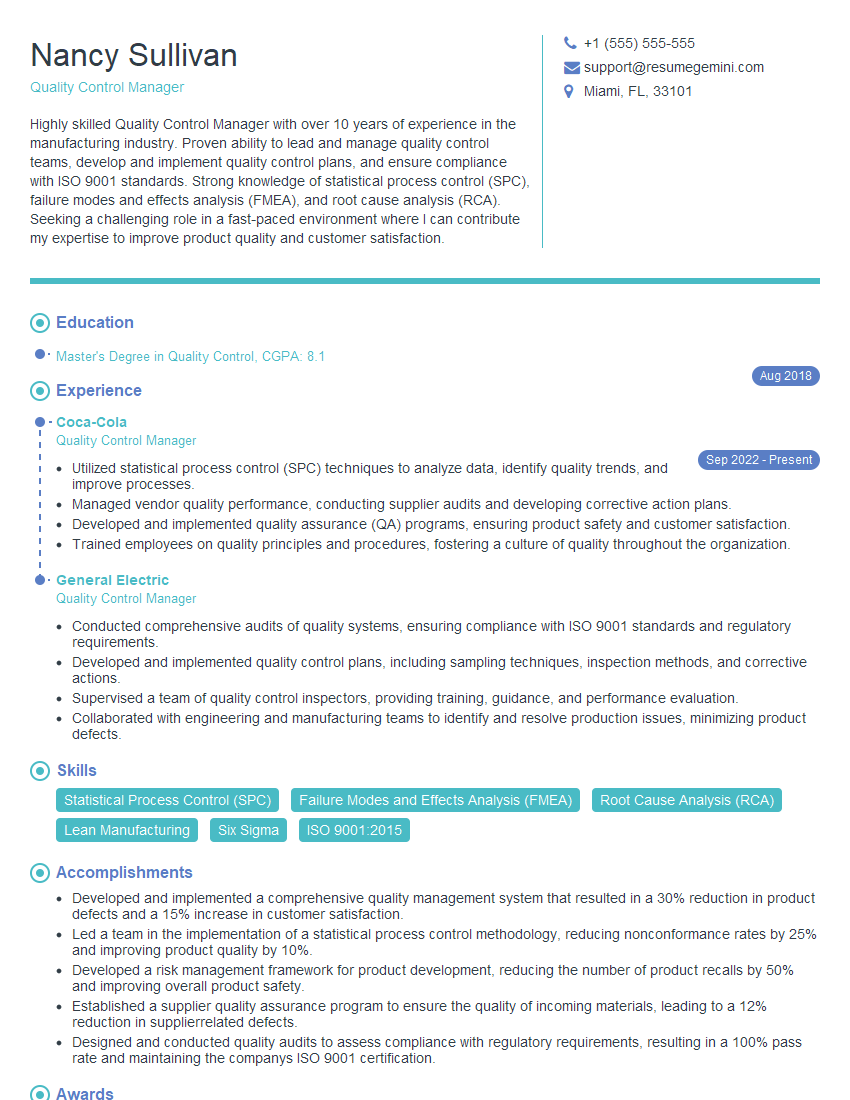
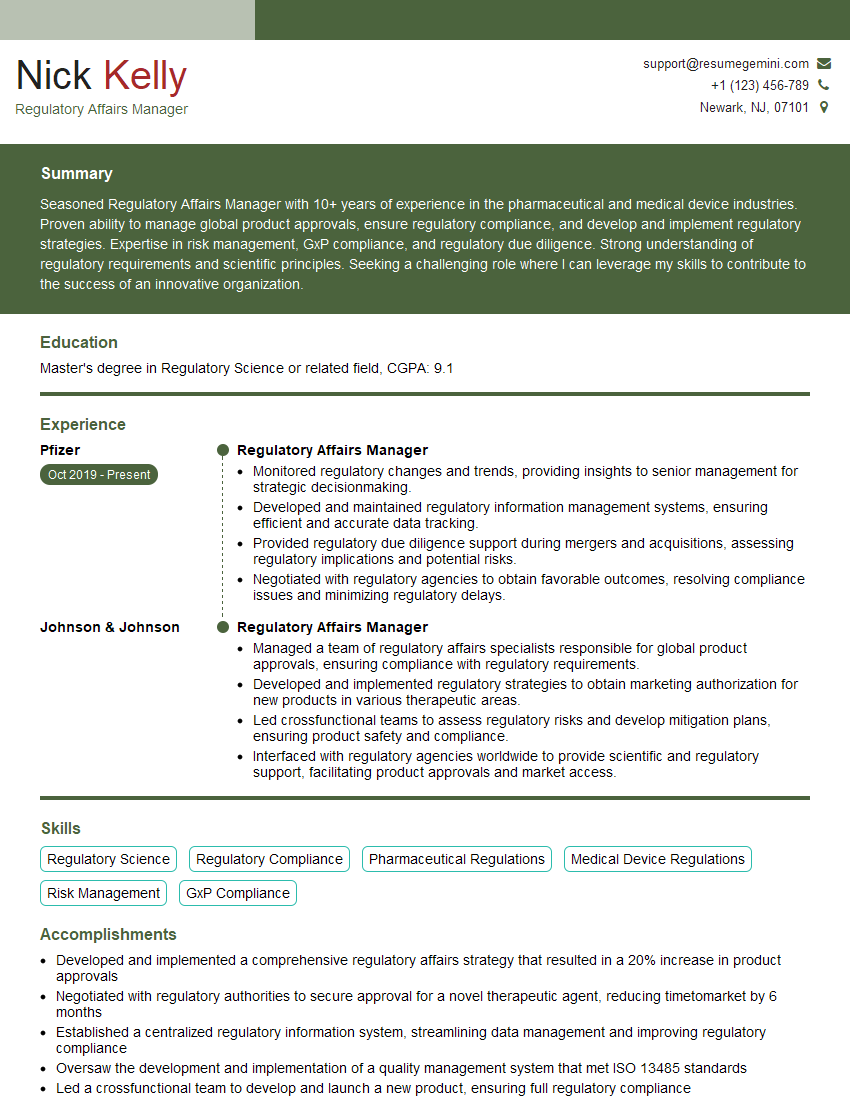
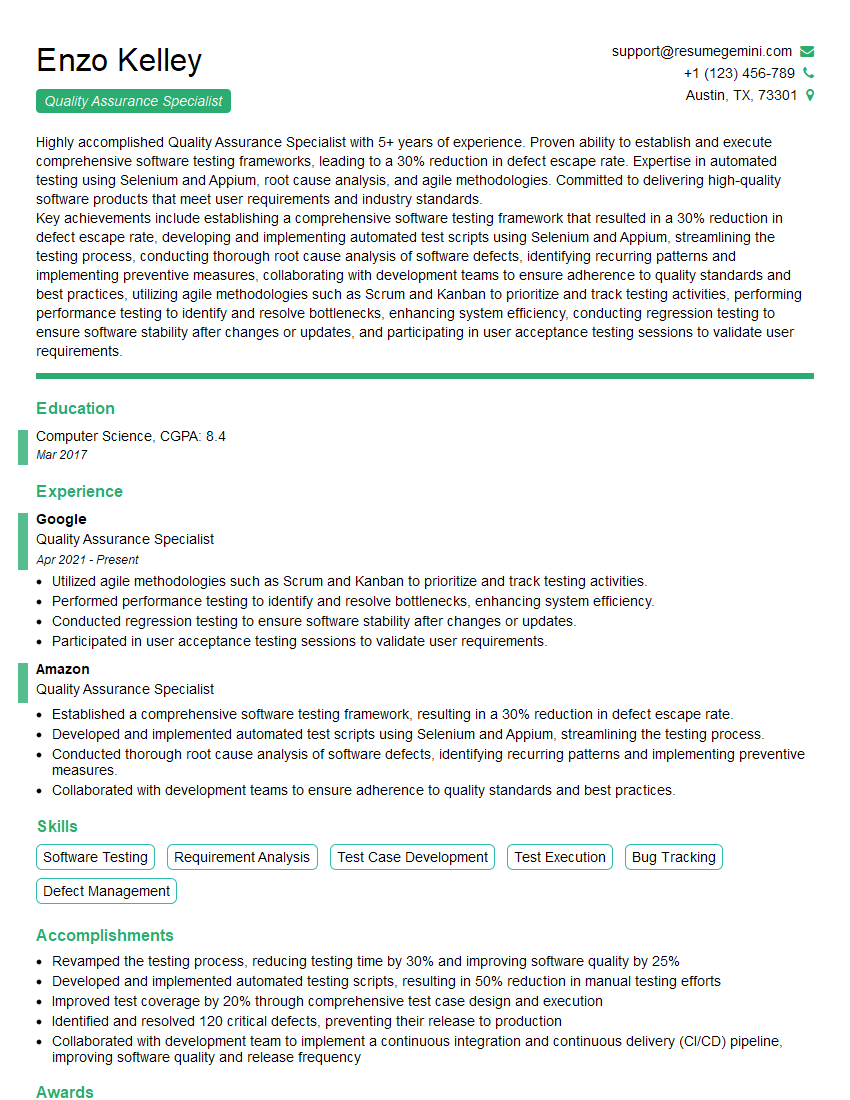
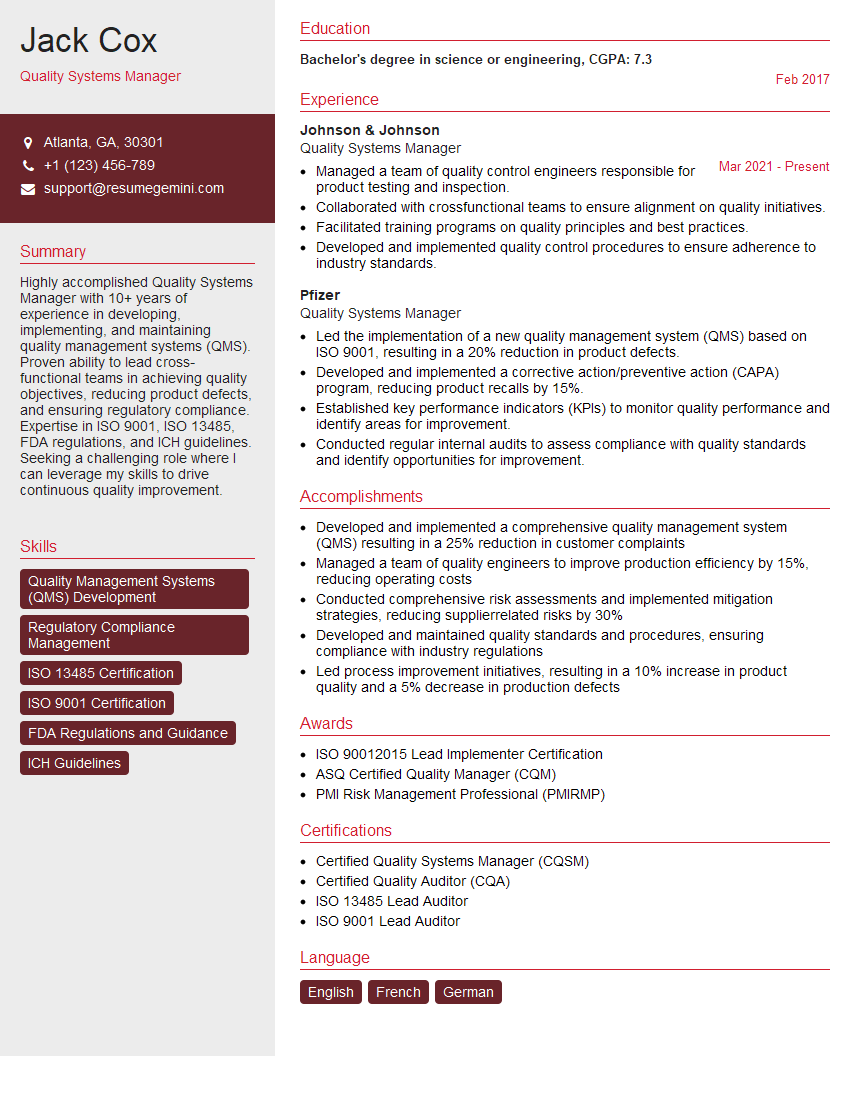
Mastering HACCP principles and practices significantly enhances your career prospects in the food industry, opening doors to advanced roles and increased earning potential. To maximize your chances of landing your dream job, invest time in crafting a professional and ATS-friendly resume that highlights your skills and experience effectively. ResumeGemini is a trusted resource that can help you create a compelling resume tailored to the specific requirements of HACCP-related positions. We provide examples of resumes showcasing HACCP expertise to inspire and guide you. Take the next step towards your successful career today!

Explore more articles
Users Rating of Our Blogs
Share Your Experience
We value your feedback! Please rate our content and share your thoughts (optional).
What Readers Say About Our Blog
To the interviewgemini.com Webmaster.
Very helpful and content specific questions to help prepare me for my interview!
Thank you
To the interviewgemini.com Webmaster.
This was kind of a unique content I found around the specialized skills. Very helpful questions and good detailed answers.
Very Helpful blog, thank you Interviewgemini team.