Unlock your full potential by mastering the most common Prognosis and planning interview questions. This blog offers a deep dive into the critical topics, ensuring you’re not only prepared to answer but to excel. With these insights, you’ll approach your interview with clarity and confidence.
Questions Asked in Prognosis and planning Interview
Q 1. Explain your understanding of the difference between prognosis and forecasting.
Prognosis and forecasting, while related, have distinct focuses. Prognosis refers to predicting the likely outcome or course of a specific situation or individual, often involving clinical judgment and qualitative factors. Think of a doctor predicting the likely progression of a patient’s illness. Forecasting, on the other hand, is a more quantitative process that uses statistical methods and historical data to predict future trends or values for a larger population or system. Imagine predicting next year’s sales based on past sales data.
The key difference lies in the scope and methodology. Prognosis is often more specific and involves expert interpretation, while forecasting is broader and more reliant on statistical models. For example, a medical prognosis focuses on a single patient’s future health, using medical history and current symptoms. Sales forecasting, conversely, uses past sales data, market trends and economic indicators to predict future sales across an entire product line.
Q 2. Describe your experience using different forecasting methods (e.g., ARIMA, exponential smoothing).
My experience encompasses a range of forecasting methods. I’ve extensively used ARIMA (Autoregressive Integrated Moving Average) models for time series data, particularly where there’s seasonality or trend. ARIMA is powerful for identifying patterns and predicting future values based on past observations. I’ve also worked extensively with various exponential smoothing techniques, such as simple, double, and triple exponential smoothing. These are particularly useful when dealing with data that exhibits trends and seasonality but are less computationally intensive than ARIMA.
For example, I used ARIMA to forecast electricity demand for a utility company, accounting for seasonal variations (higher demand in summer) and long-term growth. For a retail client, I applied exponential smoothing to predict weekly sales of a new product line, adapting the model as new sales data became available.
Beyond these, I’m also familiar with other methods like regression analysis (useful for identifying relationships between variables), neural networks (for complex, non-linear relationships), and Monte Carlo simulations (for incorporating uncertainty into the forecasts).
Q 3. How do you handle uncertainty and risk in your prognosis?
Uncertainty and risk are inherent in any prognosis. My approach involves explicitly acknowledging and quantifying them. I employ several strategies:
- Scenario Planning: Developing multiple scenarios – best-case, worst-case, and most-likely – to illustrate the range of possible outcomes. This helps stakeholders understand the potential impact of different uncertainties.
- Sensitivity Analysis: Investigating how changes in key assumptions or input variables affect the prognosis. This helps identify the most critical uncertainties to monitor.
- Probabilistic Forecasting: Instead of providing a single point estimate, I often provide a probability distribution of possible outcomes. This conveys the level of uncertainty more effectively than a single number.
- Risk Assessment: Identifying and evaluating potential risks associated with the prognosis, including their likelihood and potential impact. This allows for proactive mitigation strategies.
For instance, while forecasting project completion times, I might consider scenarios such as equipment failure, unexpected delays, and resource availability issues. The sensitivity analysis would then show how much each of these scenarios could impact the final completion date.
Q 4. Explain your approach to developing a comprehensive planning strategy.
Developing a comprehensive planning strategy involves a systematic approach:
- Define Objectives: Clearly articulate the goals and desired outcomes of the plan. What are we trying to achieve?
- Analyze the Situation: Conduct a thorough assessment of the current situation, identifying strengths, weaknesses, opportunities, and threats (SWOT analysis). What are the relevant internal and external factors?
- Develop Strategies: Identify potential strategies to achieve the objectives, considering the SWOT analysis. How will we get there?
- Develop Action Plans: Break down the strategies into specific, measurable, achievable, relevant, and time-bound (SMART) actions. Who is responsible for each task, and what are the deadlines?
- Resource Allocation: Allocate the necessary resources (financial, human, technological) to support the action plans. What budget and staffing will be needed?
- Implementation and Monitoring: Implement the action plans and continuously monitor progress, making adjustments as needed. How will we track our progress and make adjustments along the way?
- Evaluation: Evaluate the effectiveness of the plan after implementation, identifying lessons learned for future planning. What worked well, and what could be improved?
This structured approach ensures a well-defined, actionable, and adaptable plan.
Q 5. Describe a time you had to revise a prognosis due to unexpected events.
During a project to forecast customer churn for a telecommunications company, we initially predicted a stable churn rate based on historical data and existing trends. However, a major competitor launched an aggressive marketing campaign that significantly disrupted the market. This unforeseen event led to a substantial increase in customer churn, rendering our initial prognosis inaccurate.
To address this, we immediately revised our prognosis by:
- Incorporating the competitor’s campaign data into our model to capture its impact.
- Conducting further market research to understand customer preferences and switching behavior.
- Adjusting our forecasting model to account for the increased churn rate.
This revised prognosis proved significantly more accurate, allowing the company to adjust its retention strategies accordingly.
Q 6. How do you measure the accuracy of your prognosis?
Measuring the accuracy of a prognosis depends on the nature of the prediction. For quantitative forecasts, metrics like Mean Absolute Error (MAE), Root Mean Squared Error (RMSE), and Mean Absolute Percentage Error (MAPE) are commonly used. These quantify the difference between predicted and actual values. A lower value indicates better accuracy.
For qualitative prognoses, accuracy is more challenging to measure objectively. We often rely on expert judgment, comparing the predicted outcome to the actual outcome and identifying any significant deviations. This often involves qualitative assessment of factors contributing to discrepancies and the efficacy of subsequent actions taken based on the prognosis.
For instance, in sales forecasting, MAPE is useful to measure prediction accuracy in percentage terms. However, in medical prognosis, accuracy might be assessed based on whether the predicted outcome (e.g., patient survival rate) aligns with actual observations, perhaps using a kappa statistic to account for inter-rater agreement among physicians involved in diagnosis and prognosis.
Q 7. What key performance indicators (KPIs) do you use to monitor the success of planning initiatives?
The KPIs used to monitor the success of planning initiatives vary depending on the context, but common examples include:
- On-time and on-budget completion: Measures the efficiency and effectiveness of project execution.
- Key milestone achievement: Tracks progress against critical project milestones.
- Resource utilization: Monitors the efficiency of resource allocation and usage.
- Customer satisfaction: Assesses the impact of the plan on customer satisfaction (if applicable).
- Return on investment (ROI): Measures the financial returns generated by the plan.
- Market share or sales growth: Tracks the impact of the plan on business performance.
The selection of specific KPIs should align with the overall objectives of the planning initiative. Regularly tracking and analyzing these metrics allows for course correction and ensures the plan remains aligned with its goals.
Q 8. How do you communicate complex prognosis and planning information to different audiences?
Communicating complex prognosis and planning information effectively requires tailoring the message to the audience’s understanding and needs. I utilize a tiered approach. For executive audiences, I focus on high-level summaries, key findings, and strategic implications, using concise bullet points and visually compelling charts. For technical audiences, I delve into the details, providing data-driven justifications and exploring underlying assumptions. For less technical stakeholders, I employ clear, simple language, avoiding jargon and using analogies or real-world examples to illustrate complex concepts. For instance, when explaining projected market share, I might compare it to the growth of a familiar company or product instead of using percentages and statistical models alone. Finally, I always encourage questions and facilitate open discussion to ensure clear comprehension and address any concerns.
- Executive Summary: High-level overview, key findings, strategic recommendations.
- Technical Deep Dive: Detailed data analysis, methodologies, and assumptions.
- Simplified Explanation: Clear, concise language, relatable examples, and analogies.
Q 9. Describe your experience with using data visualization tools for prognosis and planning.
Data visualization is crucial for effective prognosis and planning. I have extensive experience using tools like Tableau and Power BI to create interactive dashboards and reports that present complex data in a clear and intuitive manner. For example, I once used Tableau to visualize projected sales based on various market scenarios, allowing stakeholders to easily compare potential outcomes and identify key drivers of success. This involved creating interactive maps showing regional sales projections, line charts illustrating trends over time, and bar charts comparing different product performance scenarios. I also leverage the power of storytelling within data visualization. Instead of simply presenting charts, I craft a narrative around the data, highlighting key insights and guiding the audience through the information.
Q 10. What software or tools are you proficient in for prognosis and planning (e.g., Excel, R, Python)?
My proficiency in software tools for prognosis and planning is quite broad. I’m highly skilled in using Excel for data analysis, modeling, and forecasting. Beyond spreadsheets, I’m fluent in R and Python for more complex statistical modeling, predictive analysis, and simulation. R provides excellent capabilities for statistical modeling, particularly time-series analysis vital for forecasting. I use Python, especially libraries like Pandas and Scikit-learn, for data manipulation, machine learning techniques (like regression analysis for demand forecasting), and creating custom algorithms for specific planning problems. For example, I’ve used Python to build a simulation model to predict the impact of different pricing strategies on sales revenue. Finally, I’m also experienced with project management software like Asana and Jira for collaborative planning and tracking.
Q 11. How do you prioritize tasks and manage competing deadlines in a planning context?
Prioritizing tasks and managing competing deadlines is a core skill in planning. I employ a combination of techniques, including:
- Prioritization Matrices: Using frameworks like Eisenhower Matrix (urgent/important) to classify tasks and focus on high-impact activities.
- Project Management Software: Utilizing tools like Asana or Jira to track tasks, deadlines, and dependencies.
- Time Blocking: Allocating specific time blocks for focused work on critical tasks.
- Regular Review and Adjustment: Continuously monitoring progress, adjusting priorities as needed, and proactively addressing potential delays.
Q 12. How do you collaborate with cross-functional teams during the prognosis and planning process?
Collaboration is paramount in prognosis and planning. I foster effective teamwork by:
- Clear Communication: Establishing regular communication channels and actively sharing information.
- Shared Understanding: Ensuring that all team members have a clear understanding of goals, objectives, and responsibilities.
- Joint Problem Solving: Encouraging collaborative brainstorming and problem-solving sessions.
- Constructive Feedback: Providing regular feedback and actively seeking input from team members.
Q 13. Describe your experience with scenario planning.
Scenario planning is a critical component of robust prognosis and planning. My experience includes developing multiple plausible future scenarios, considering a range of factors such as economic conditions, technological advancements, and competitive dynamics. I typically employ a structured approach, starting with identifying key uncertainties and then developing different scenarios based on potential outcomes of those uncertainties. These scenarios may include a best-case scenario, a worst-case scenario, and several intermediate scenarios. For example, when planning for the launch of a new product, I developed three scenarios: optimistic (high market demand), pessimistic (low market demand), and most likely (moderate market demand). Each scenario had its own detailed financial projections and marketing strategies. By analyzing these alternative futures, we were better positioned to prepare for a variety of possible outcomes and to develop a resilient plan.
Q 14. How do you identify and mitigate potential risks in your planning?
Risk identification and mitigation is an integral part of my planning process. I use a systematic approach that includes:
- Risk Assessment: Identifying potential risks through brainstorming, SWOT analysis, and reviewing historical data.
- Risk Prioritization: Assessing the likelihood and impact of each risk, prioritizing those with the highest potential consequences.
- Risk Mitigation Strategies: Developing specific strategies to reduce the likelihood or impact of identified risks, such as contingency plans, insurance, or alternative solutions.
- Monitoring and Review: Regularly monitoring identified risks and adjusting mitigation strategies as necessary.
Q 15. How do you stay up-to-date with the latest trends and advancements in prognosis and planning?
Staying current in the dynamic fields of prognosis and planning requires a multi-faceted approach. I actively participate in professional organizations like the Institute of Operations Research and the Management Sciences (INFORMS) and attend their conferences and webinars. This provides access to cutting-edge research and best practices shared by leading experts. I also subscribe to relevant journals and industry publications, such as Foresight and Journal of Forecasting, to keep abreast of new methodologies and technological advancements. Furthermore, I regularly review online resources like research papers on platforms like arXiv and Google Scholar, focusing on areas such as machine learning for forecasting and advanced statistical modeling. Finally, I actively engage in online communities and discussion forums dedicated to forecasting and planning, allowing me to learn from the experiences and insights of others in the field. This combination of formal education, continuous reading, and active networking ensures I remain at the forefront of the industry.
Career Expert Tips:
- Ace those interviews! Prepare effectively by reviewing the Top 50 Most Common Interview Questions on ResumeGemini.
- Navigate your job search with confidence! Explore a wide range of Career Tips on ResumeGemini. Learn about common challenges and recommendations to overcome them.
- Craft the perfect resume! Master the Art of Resume Writing with ResumeGemini’s guide. Showcase your unique qualifications and achievements effectively.
- Don’t miss out on holiday savings! Build your dream resume with ResumeGemini’s ATS optimized templates.
Q 16. Explain your understanding of different planning horizons (short-term, long-term).
Planning horizons represent the timeframe over which a plan is developed and implemented. Short-term planning typically focuses on immediate actions and objectives, usually spanning a few weeks to a year. These plans often deal with tactical issues, such as resource allocation for a specific project or managing short-term fluctuations in demand. A marketing campaign or a production schedule for the next quarter are examples of short-term planning. Long-term planning, on the other hand, encompasses a longer timeframe, often extending to several years or even decades. It focuses on strategic goals and involves anticipating long-term trends and challenges, like market shifts, technological advancements, or regulatory changes. Strategic planning for expanding into new markets or developing new products falls under this category. The distinction between short-term and long-term planning is not always rigid; they are interconnected. Short-term plans often contribute to achieving long-term objectives, and long-term strategies require adjustments based on short-term feedback and circumstances.
Q 17. Describe your experience with capacity planning.
Capacity planning is a critical aspect of my work, involving the process of determining the resources (human, technological, financial) needed to meet projected demands. In a previous role at a telecommunications company, we faced a rapid increase in subscriber numbers. Through capacity planning, we projected future bandwidth needs, anticipated peak usage times, and determined the infrastructure upgrades required to ensure seamless service. This involved analyzing historical data, predicting future growth using time series analysis and forecasting models (like ARIMA or exponential smoothing), and considering potential scenarios like unexpected surges in demand during major events. We then developed a multi-year plan for network expansion, including the acquisition of new equipment, upgrades to existing infrastructure, and workforce expansion to support the upgraded systems. The process involved extensive collaboration with engineers, sales teams, and finance, ensuring alignment across different departments. Careful capacity planning allowed us to avoid service disruptions, maintain customer satisfaction, and maximize operational efficiency.
Q 18. How do you incorporate qualitative data into your quantitative prognosis?
Quantitative prognosis, while powerful, often benefits from incorporating qualitative data. Quantitative methods primarily rely on numerical data, allowing for statistical analysis and precise predictions. However, qualitative data, such as expert opinions, customer feedback, or market sentiment, provides crucial context and insights that numerical data alone cannot capture. For example, while sales data can show a decline in a particular product line, qualitative data – such as customer interviews revealing dissatisfaction with a new feature – can reveal the underlying reason for the decline. I typically use methods like Delphi techniques (gathering expert opinions iteratively) or scenario planning to integrate qualitative inputs. These qualitative insights help refine quantitative models, identifying potential biases or unforeseen factors and leading to more accurate and nuanced forecasts. The integration of both types of data allows for a more holistic and robust understanding of the future, leading to more effective plans.
Q 19. What is your approach to dealing with data limitations in prognosis and planning?
Data limitations are an unavoidable reality in prognosis and planning. My approach involves a multi-pronged strategy. First, I thoroughly assess the available data, identifying its strengths and weaknesses, such as missing values, biases, or inaccuracies. Second, I explore different data sources to supplement limited information. This could involve using publicly available data, conducting surveys, or consulting with domain experts. Third, I employ robust statistical techniques that are less sensitive to data limitations. For instance, robust regression methods are less influenced by outliers, while Bayesian approaches allow for incorporating prior knowledge to compensate for missing data. Finally, I acknowledge the inherent uncertainties associated with data limitations and present my prognosis with confidence intervals or probability distributions rather than point estimates. Transparency about data limitations is crucial to building trust and realistic expectations around the plan.
Q 20. How do you handle conflicting priorities in your planning process?
Conflicting priorities are inevitable in planning. My approach involves a structured process to prioritize competing demands. I start by clearly defining all objectives and their relative importance using techniques like scoring or weighted ranking. This often involves discussions with stakeholders to reach a consensus on priorities. Next, I analyze the trade-offs involved in pursuing different objectives. For instance, investing heavily in research and development might require sacrificing short-term profits. Using tools such as cost-benefit analysis helps objectively assess these trade-offs. Finally, I develop plans that balance competing priorities, often involving compromises and iterative adjustments. This might involve phasing projects, allocating resources strategically, or revisiting priorities based on new information. Transparent communication with all stakeholders throughout the process is crucial to managing expectations and building buy-in around the final plan.
Q 21. Describe your experience with developing and implementing contingency plans.
Developing and implementing contingency plans is vital for effective planning. My approach begins with identifying potential risks and disruptions that could impact the achievement of the plan’s objectives. This involves brainstorming sessions, risk assessment matrices, and reviewing historical data to identify potential problems. For each identified risk, I develop a corresponding contingency plan that outlines specific actions to mitigate the risk’s impact. This might include alternative strategies, resource allocation adjustments, or communication protocols. Contingency plans need to be regularly reviewed and updated based on the changing environment and new information. The implementation of a contingency plan may involve rapid decision-making and resource reallocation. For example, in a supply chain management context, a contingency plan might involve identifying alternative suppliers to address potential disruptions due to natural disasters or political instability. Regular testing and simulations of contingency plans ensure their effectiveness and preparedness.
Q 22. How do you measure the return on investment (ROI) of planning initiatives?
Measuring the ROI of planning initiatives requires a multifaceted approach, going beyond simple cost-benefit analysis. We need to consider both tangible and intangible returns.
- Tangible Returns: These are easily quantifiable, such as cost savings from improved efficiency, increased revenue from successful new product launches, or reduced risks from mitigating potential problems. For example, if a strategic plan led to a 15% reduction in operational costs, that’s a direct, measurable ROI.
- Intangible Returns: These are harder to measure but equally important. Examples include improved employee morale, enhanced brand reputation, increased market share, or strengthened stakeholder relationships. We can quantify these indirectly, perhaps through surveys measuring employee satisfaction or market research assessing brand perception.
- Key Performance Indicators (KPIs): Defining and tracking relevant KPIs is crucial. These metrics should align directly with the planning initiative’s goals. For instance, if the plan aimed to improve customer satisfaction, we’d track metrics like Net Promoter Score (NPS) and customer churn rate.
- Attribution Modeling: It’s vital to establish a clear link between the planning activities and the achieved results. This involves tracking various factors and using attribution models to determine the relative contribution of each factor to the overall outcome. This can be complex, requiring sophisticated analytical techniques.
Ultimately, ROI calculation should be tailored to the specific planning initiative. A comprehensive approach considers both short-term and long-term impacts, providing a holistic view of the initiative’s value.
Q 23. How do you use data analysis to inform your prognosis?
Data analysis is the cornerstone of effective prognosis. I use a variety of techniques to extract insights from data and inform my forecasts. This involves a structured process:
- Data Collection: Gathering relevant data from diverse sources, including internal databases, market research reports, industry benchmarks, and economic indicators. The quality of data is paramount; garbage in, garbage out.
- Data Cleaning and Preprocessing: Handling missing values, outliers, and inconsistencies to ensure data accuracy and reliability. This step often involves considerable effort.
- Exploratory Data Analysis (EDA): Using visualization and summary statistics to understand data patterns, identify trends, and uncover potential relationships. This helps generate hypotheses and refine our analytical approach.
- Predictive Modeling: Employing statistical and machine learning techniques, such as regression analysis, time series forecasting, or neural networks, to build predictive models. The choice of model depends on the data and the nature of the problem.
- Model Evaluation and Validation: Assessing the accuracy and reliability of the predictive models using appropriate metrics, such as mean absolute error (MAE) or R-squared. It’s crucial to validate the model using unseen data to prevent overfitting.
- Scenario Planning: Using the predictive models to simulate different future scenarios, allowing us to understand potential risks and opportunities and develop contingency plans.
For instance, in predicting sales for a new product, I might use regression analysis to model the relationship between marketing spend, price, and sales, incorporating external factors such as economic growth and competitor activity.
Q 24. Describe a situation where your planning prevented a negative outcome.
In a previous role, we were launching a new software product. Initial market research indicated high demand, but our planning process revealed a critical supply chain vulnerability. Our initial production estimates didn’t account for potential delays in sourcing a key component.
Through detailed supply chain analysis and risk assessment, our planning team identified the potential bottleneck. We developed a contingency plan, including securing alternative suppliers and adjusting the launch timeline. This prevented a significant delay and potential loss of revenue. The proactive planning ensured a successful product launch, avoiding a substantial negative impact on the company.
Q 25. What are some common challenges you face in prognosis and planning, and how do you overcome them?
Prognosis and planning present several challenges:
- Uncertainty and Volatility: The future is inherently uncertain. Economic downturns, unexpected technological disruptions, or unforeseen geopolitical events can significantly impact forecasts. We address this through scenario planning, considering a range of possible futures and developing flexible plans.
- Data Limitations: Insufficient, inaccurate, or incomplete data can hinder accurate prognosis. We mitigate this by employing data triangulation, combining data from multiple sources, and implementing robust data validation techniques.
- Bias and Subjectivity: Human biases can unconsciously influence predictions. We address this by using objective data-driven methodologies, incorporating diverse perspectives, and employing rigorous review processes.
- Communication and Collaboration: Effective planning requires collaboration across different departments and stakeholders. We employ transparent communication strategies, facilitate collaborative workshops, and utilize project management tools to ensure alignment and efficient execution.
Overcoming these challenges requires a combination of robust methodologies, advanced analytical skills, and strong communication and collaboration capabilities.
Q 26. How do you ensure alignment between your prognosis and the overall business objectives?
Aligning prognosis with business objectives requires a top-down and bottom-up approach. We start by understanding the overarching strategic goals of the organization and then translate them into specific, measurable objectives for each planning initiative.
- Strategic Alignment: Each prognosis and planning exercise must be clearly linked to the company’s overall strategic plan. This ensures that our efforts are focused on achieving the most important business priorities.
- Key Performance Indicators (KPIs): We define KPIs that directly measure progress towards both the overall business objectives and the specific goals of each planning initiative. This provides a clear and measurable link between prognosis and business performance.
- Regular Monitoring and Review: We continuously monitor the progress of our plans and compare actual results to our forecasts. Regular review meetings allow us to identify any deviations from the plan and make necessary adjustments. This iterative approach keeps the prognosis and planning aligned with evolving business needs.
- Open Communication and Feedback: We maintain open communication channels with all stakeholders to ensure that everyone understands the alignment between prognosis, plans, and business objectives. Feedback loops allow us to refine our approach and address potential misalignments promptly.
This iterative and collaborative process ensures that our prognosis and plans directly contribute to the organization’s success.
Q 27. How do you adapt your planning approach to different business contexts?
My planning approach is adaptable and context-dependent. The specific methods and techniques I use vary considerably depending on the business context. Factors such as industry dynamics, market conditions, competitive landscape, and internal organizational structure influence my approach.
- Industry-Specific Knowledge: I tailor my approach to the unique characteristics of the industry. For example, planning for a technology company will differ significantly from planning for a manufacturing firm.
- Market Analysis: A deep understanding of the market dynamics, including customer behavior, competitive pressures, and macroeconomic factors, is essential in shaping my planning approach.
- Organizational Structure: The organizational structure, decision-making processes, and internal resources influence how I develop and implement plans. A decentralized organization requires a different approach than a highly centralized one.
- Resource Constraints: Resource availability, including budget, time, and personnel, influences the scope and complexity of the plans.
- Risk Management: The level of risk tolerance within the organization determines the degree of contingency planning and risk mitigation strategies incorporated into the plans.
For example, in a rapidly evolving technology market, the planning process would emphasize agility, responsiveness, and adaptation to changing circumstances, possibly incorporating agile methodologies. In contrast, a more stable, mature industry might benefit from a more traditional, long-term planning approach.
Q 28. Describe your experience with using predictive modeling techniques.
I have extensive experience with various predictive modeling techniques, including regression analysis, time series forecasting, and machine learning algorithms. My experience spans various applications, from sales forecasting and risk assessment to resource allocation and customer churn prediction.
- Regression Analysis: I’ve used linear and multiple regression to model the relationship between various factors and the outcome variable. This is particularly useful in predicting sales based on factors like marketing expenditure and pricing.
- Time Series Forecasting: I’ve employed ARIMA and exponential smoothing models to forecast time-dependent data, such as sales, website traffic, or stock prices. This helps in making short-term and long-term predictions.
- Machine Learning Algorithms: I’ve applied machine learning algorithms, such as decision trees, random forests, and neural networks, for more complex forecasting problems where the relationships between variables are not clearly understood. These methods are particularly powerful in handling large datasets and identifying non-linear relationships.
- Model Selection and Evaluation: The choice of model depends on the specific problem and data characteristics. I carefully evaluate model performance using appropriate metrics, such as accuracy, precision, recall, and F1-score, to select the best-performing model. Cross-validation techniques are crucial here to avoid overfitting.
I always prioritize model interpretability alongside accuracy, ensuring that the results are understandable and actionable for business decision-making. A highly accurate but opaque model is of limited use.
Key Topics to Learn for Prognosis and Planning Interview
- Forecasting Techniques: Understanding various forecasting methods (e.g., time series analysis, regression models) and their applications in different business contexts. Consider the strengths and weaknesses of each approach.
- Risk Assessment & Mitigation: Identifying potential risks and developing strategies to mitigate them. This includes understanding qualitative and quantitative risk analysis techniques and their practical application in planning projects.
- Scenario Planning: Developing multiple potential future scenarios and outlining corresponding plans for each. Practice creating detailed scenarios based on different assumptions and uncertainties.
- Strategic Planning: Aligning prognosis with organizational goals and developing actionable plans to achieve them. This includes understanding strategic frameworks and their application in the context of prognosis and planning.
- Data Analysis & Interpretation: Effectively using data to inform prognosis and planning decisions. Focus on interpreting key metrics and communicating insights clearly and concisely.
- Resource Allocation & Optimization: Efficiently allocating resources (time, budget, personnel) to maximize the chances of achieving planned outcomes. This includes understanding optimization techniques and constraint management.
- Communication & Collaboration: Effectively communicating plans and prognoses to stakeholders at all levels. Practice explaining complex concepts in a clear and understandable way.
- Monitoring & Evaluation: Developing mechanisms to monitor progress against plans and evaluate the accuracy of prognoses. This includes understanding key performance indicators (KPIs) and using data to make adjustments as needed.
Next Steps
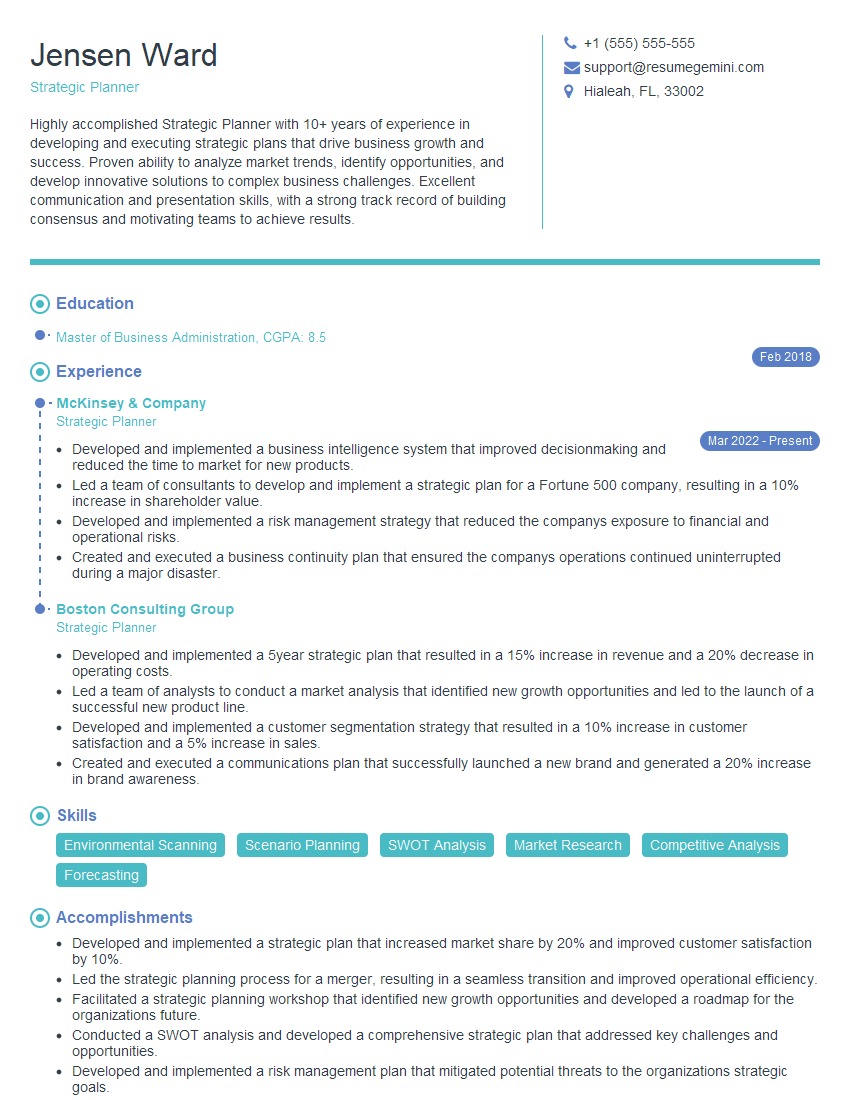
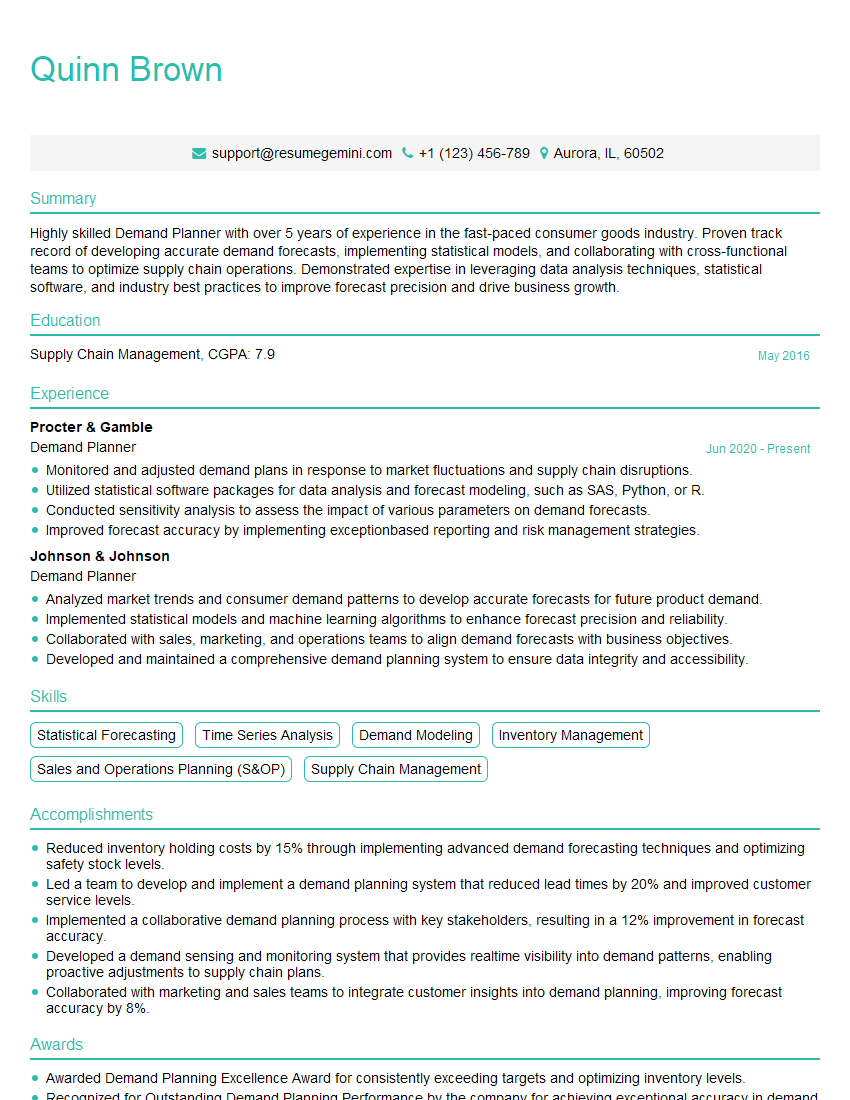
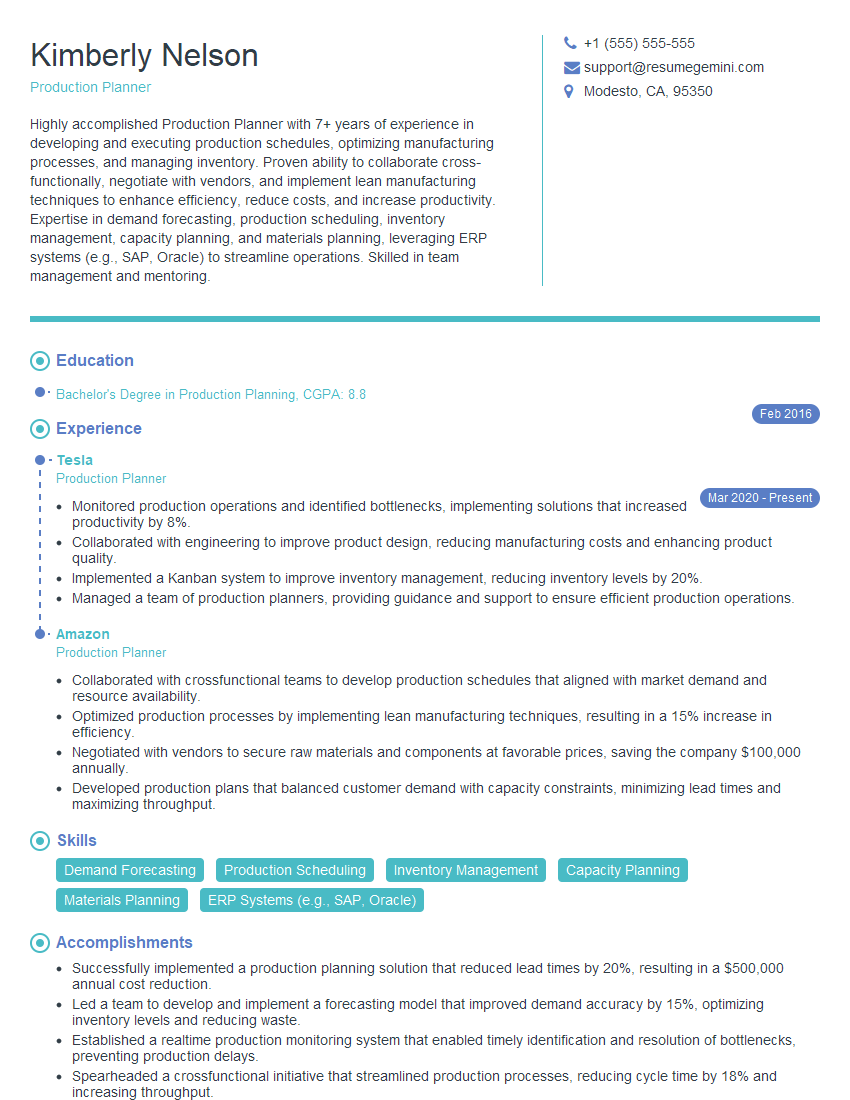
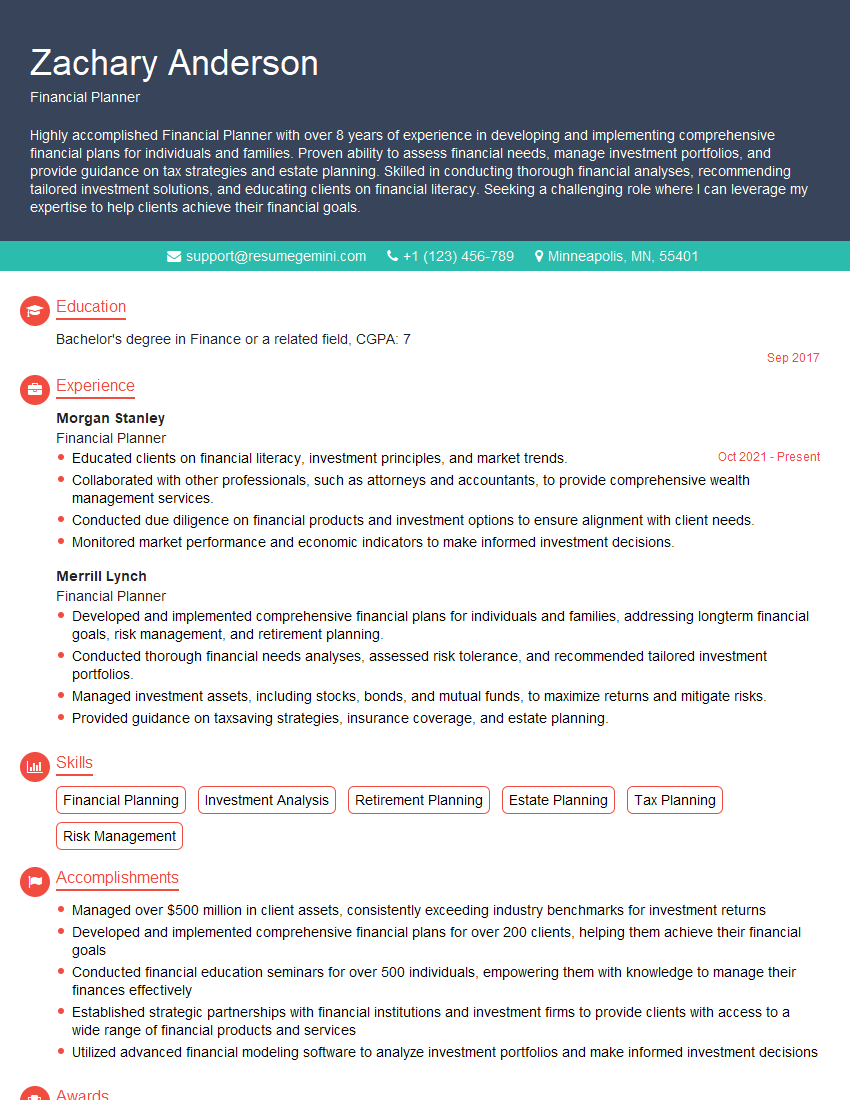
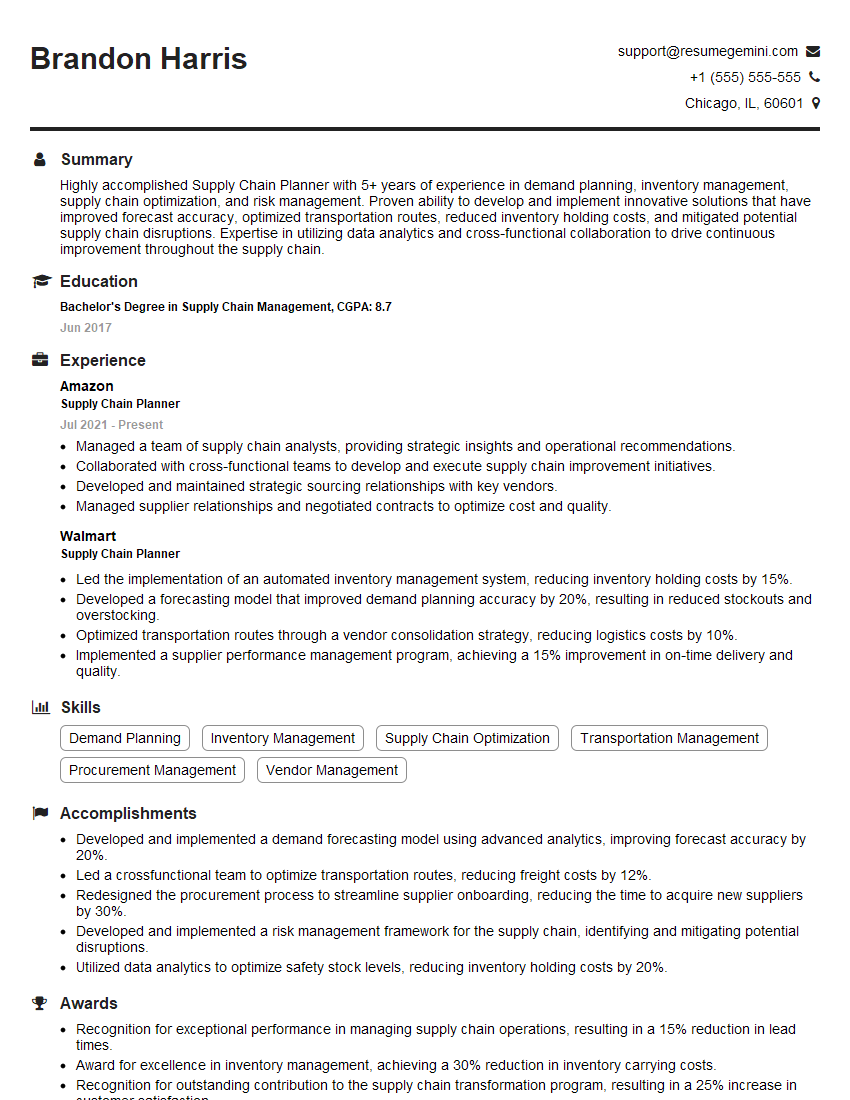
Mastering prognosis and planning is crucial for career advancement in many fields, demonstrating your ability to anticipate challenges, make informed decisions, and drive strategic initiatives. To enhance your job prospects, focus on creating a strong, ATS-friendly resume that highlights your relevant skills and experience. ResumeGemini is a trusted resource to help you build a professional resume that stands out. Examples of resumes tailored to prognosis and planning are available to guide you through the process.
Explore more articles
Users Rating of Our Blogs
Share Your Experience
We value your feedback! Please rate our content and share your thoughts (optional).
What Readers Say About Our Blog
To the interviewgemini.com Webmaster.
Very helpful and content specific questions to help prepare me for my interview!
Thank you
To the interviewgemini.com Webmaster.
This was kind of a unique content I found around the specialized skills. Very helpful questions and good detailed answers.
Very Helpful blog, thank you Interviewgemini team.