The right preparation can turn an interview into an opportunity to showcase your expertise. This guide to HACCP Procedures Implementation interview questions is your ultimate resource, providing key insights and tips to help you ace your responses and stand out as a top candidate.
Questions Asked in HACCP Procedures Implementation Interview
Q 1. Define HACCP and its seven principles.
HACCP, or Hazard Analysis and Critical Control Points, is a preventative food safety management system. It’s a proactive approach, focusing on identifying and controlling potential hazards throughout the food production process to ensure the final product is safe for consumption. Instead of reacting to problems after they occur, HACCP anticipates and prevents them.
The seven principles of HACCP are:
- Principle 1: Conduct a Hazard Analysis: Identify potential biological, chemical, and physical hazards that could occur at each stage of food production.
- Principle 2: Determine Critical Control Points (CCPs): Identify steps in the process where control can be applied and is essential to prevent or eliminate a hazard or reduce it to an acceptable level.
- Principle 3: Establish Critical Limits: For each CCP, establish measurable limits (e.g., temperature, time, pH) that must be met to prevent or eliminate the hazard.
- Principle 4: Establish Monitoring Procedures: Define how and how often CCPs will be monitored to ensure they are under control.
- Principle 5: Establish Corrective Actions: Outline steps to take when monitoring indicates that a CCP is not under control.
- Principle 6: Establish Verification Procedures: Develop methods to confirm that the HACCP system is working effectively.
- Principle 7: Establish Record-Keeping and Documentation Procedures: Maintain detailed records of all HACCP activities.
Q 2. Describe the critical control points (CCPs) in a specific food production process (e.g., canning, meat processing).
Let’s consider meat processing, specifically ground beef production. Several CCPs exist:
- Receiving and Inspection of Raw Materials: Checking for signs of spoilage, contamination, or temperature abuse. Failure to reject unsuitable meat is a critical hazard.
- Grinding: The grinding process itself can increase the surface area of the meat, promoting bacterial growth. Monitoring temperature is crucial here.
- Mixing (if applicable): If additional ingredients are added, ensuring proper mixing and preventing cross-contamination is a CCP.
- Temperature Control During Processing and Storage: Maintaining proper refrigeration temperatures (below 4°C or 40°F) throughout the process is vital to inhibit bacterial growth. This is arguably the most important CCP.
- Packaging: Ensuring proper packaging to maintain temperature and prevent contamination is crucial.
- Metal Detection: Detection of metal contaminants before the final packaging stage is a crucial CCP.
In canning, CCPs would focus on achieving proper heat treatments to destroy microorganisms (like Clostridium botulinum), sealing integrity to prevent recontamination, and proper cooling to avoid spoilage.
Q 3. Explain the difference between a hazard and a risk.
A hazard is a biological, chemical, or physical agent that has the potential to cause harm. Think of it as the *potential* for danger. For example, Salmonella bacteria in poultry is a hazard.
A risk is the likelihood that a hazard will cause harm. It considers both the probability of the hazard occurring and the severity of its consequences. The risk of Salmonella contamination in poultry might be high if sanitation practices are poor, but low if excellent sanitation is maintained.
So, a hazard is the *what*, and the risk is the *how likely* and *how bad* it will be.
Q 4. How do you conduct a hazard analysis?
A hazard analysis is a systematic process of identifying and evaluating potential hazards in a food production process. It typically involves:
- Gathering Information: Collecting data on ingredients, processes, equipment, and past incidents.
- Identifying Potential Hazards: Listing all possible biological (e.g., bacteria, viruses), chemical (e.g., pesticides, cleaning agents), and physical (e.g., glass, metal) hazards at each step.
- Evaluating the Severity of Hazards: Assessing the potential severity of each hazard (e.g., mild illness vs. death).
- Assessing the Likelihood of Occurrence: Estimating how likely each hazard is to occur, considering factors like frequency of occurrence in the past and effectiveness of controls.
- Prioritizing Hazards: Ranking hazards based on their severity and likelihood of occurrence. Focus on the most serious and likely hazards.
Tools like decision trees and flowcharts can assist in a systematic approach.
Q 5. What are the different types of hazards in food production?
Food production hazards are broadly categorized into three types:
- Biological Hazards: These include bacteria (e.g., Salmonella, E. coli, Listeria), viruses (e.g., Norovirus, Hepatitis A), parasites (e.g., Toxoplasma gondii), and fungi (e.g., molds).
- Chemical Hazards: These involve naturally occurring toxins (e.g., aflatoxins in peanuts), pesticide residues, cleaning and sanitizing chemicals, and heavy metals.
- Physical Hazards: These are foreign objects that can contaminate food, such as glass, metal, plastic, bone, or insects.
Understanding the specific hazards relevant to a particular food product and process is critical for an effective HACCP plan.
Q 6. How do you establish critical limits for CCPs?
Critical limits define the boundaries within which a CCP must be controlled to prevent or eliminate a hazard. They are measurable and specific. Setting critical limits involves considering:
- Scientific Data: Using scientific literature, research, and industry standards to determine safe levels.
- Experience and Expertise: Drawing on knowledge of food science, microbiology, and food safety practices.
- Legal Requirements: Adhering to relevant food safety regulations and guidelines.
Example: For a CCP of cooking temperature for ground beef, the critical limit might be a minimum internal temperature of 71°C (160°F) for 15 seconds to eliminate E. coli. This is based on scientific studies showing this temperature-time combination effectively kills the pathogen.
Q 7. What monitoring procedures would you implement for a CCP?
Monitoring procedures describe how and how often a CCP will be checked to ensure it remains under control. Effective monitoring requires:
- Frequency: Determining how often measurements are taken (e.g., every hour, every batch).
- Method: Specifying the tools and techniques used for monitoring (e.g., thermometers, timers, visual inspection).
- Responsibility: Assigning personnel responsible for monitoring each CCP.
- Record Keeping: Requiring accurate and timely documentation of all monitoring data.
Example: For the ground beef cooking temperature CCP, monitoring might involve using calibrated thermometers to check the internal temperature of multiple patties at regular intervals during cooking. Temperature readings are then recorded on a monitoring sheet, signed and dated.
Q 8. Describe corrective actions taken when a CCP is not met.
When a Critical Control Point (CCP) – a step in food production where a hazard can be prevented, eliminated, or reduced to an acceptable level – is not met, immediate corrective actions are crucial. This isn’t about assigning blame; it’s about ensuring food safety. The process begins with identifying the deviation from the established parameters. For example, if the temperature of a cooked product during holding falls below the required 60°C (140°F), that’s a deviation.
Next, we isolate the affected product. Depending on the severity and nature of the deviation, this might involve segregating a batch, discarding it entirely, or even initiating a full facility shutdown, until the root cause is identified and corrected. We then document the deviation thoroughly, including the time, location, the specific CCP involved, the extent of the deviation, and the actions taken.
Corrective actions might include retraining staff on proper procedures, recalibrating equipment, adjusting production processes to better control the CCP, or improving sanitation practices. After corrective actions, we need to verify their effectiveness. This might involve re-testing the product or monitoring the CCP for an extended period. All corrective actions and verification results are meticulously documented to demonstrate ongoing control and continuous improvement.
For instance, in a poultry processing plant, if the final cooking temperature of chicken breasts consistently falls below the safe minimum, corrective actions might involve: replacing or repairing malfunctioning thermometers; reviewing and adjusting the cooking time; conducting staff training on proper temperature monitoring and recording; and implementing a more robust CCP monitoring system with alarms to alert staff of temperature deviations. The effectiveness of these actions would then be verified through repeated temperature checks and monitoring over several production runs.
Q 9. What record-keeping systems are essential for HACCP compliance?
Robust record-keeping is the backbone of HACCP compliance. It’s not just about ticking boxes; it’s about providing concrete evidence of your commitment to food safety. The essential records include:
- HACCP Plan: The documented plan itself, including a description of the product, intended use, flow diagram, hazard analysis, CCPs, monitoring procedures, corrective actions, verification procedures, and record-keeping procedures.
- CCP Monitoring Records: Detailed logs showing the regular monitoring of each CCP. This might include temperature readings, pH levels, time-temperature indicators, or visual inspections. Frequency of monitoring depends on the CCP. For instance, monitoring the temperature of a cooking process might occur every 15 minutes.
- Corrective Action Records: Documentation of any deviations from the HACCP plan, including the root cause analysis, corrective actions taken, and verification of their effectiveness. This information is crucial for demonstrating a proactive approach to food safety.
- Calibration Records: Records proving that all equipment used for monitoring CCPs (thermometers, pH meters, etc.) is regularly calibrated and accurate.
- Supplier Records: Documentation of the source of ingredients, verifying their safety and compliance with relevant regulations.
- Staff Training Records: Proof that employees involved in food handling have received adequate HACCP training.
- Cleaning and Sanitation Records: Logs documenting cleaning and sanitation procedures.
Maintaining these records is crucial not just for compliance audits but also for continuous improvement. By regularly reviewing these records, you can identify areas of weakness and implement further preventative measures.
Q 10. How do you verify the effectiveness of the HACCP plan?
Verifying the effectiveness of a HACCP plan is an ongoing process, not a one-time event. It’s like regularly servicing a car to ensure it continues running smoothly. We use a multi-pronged approach to assess its performance:
- Internal Audits: Regularly scheduled internal audits by trained personnel to assess compliance with the HACCP plan. These audits should assess every aspect, from ingredient handling to sanitation practices.
- CCP Monitoring Data Review: Analyzing the data collected during CCP monitoring to identify trends, potential issues, and areas for improvement. This is crucial in spotting patterns before they escalate into serious problems.
- Product Testing: Regularly testing finished products to verify that they meet safety standards and that the HACCP plan is effectively mitigating hazards.
- Review of Corrective Actions: Evaluating the effectiveness of any corrective actions implemented in response to deviations from the plan.
- Management Review: A formal review of the HACCP plan by management, to evaluate its overall effectiveness and identify areas for improvement. This ensures the plan reflects current best practices and is aligned with the company’s overall food safety objectives.
For example, regular microbiological testing of finished products can provide objective evidence that the HACCP plan is effective in preventing microbial contamination. If testing reveals consistently high microbial counts, it signals a failure in the HACCP plan, requiring immediate investigation and revision.
Q 11. Explain the role of validation in HACCP.
Validation in HACCP refers to obtaining objective evidence that the measures put in place within the HACCP plan are capable of consistently controlling the identified hazards. It’s about proving that your system works as intended, not just assuming it does. It’s like testing a safety net before relying on it to catch a fall. Validation is often achieved before the HACCP plan is fully implemented.
This involves scientifically demonstrating the effectiveness of specific controls at each CCP. For example, if a CCP involves a heat treatment to eliminate a specific pathogen, validation would involve conducting experiments to determine the time and temperature required to consistently achieve the desired level of pathogen reduction. This data then forms the basis for setting the critical limits within the CCP monitoring process.
Validation methods might include: microbiological studies, temperature mapping, challenge studies (introducing a known hazard to assess the effectiveness of control measures), and simulations. The results of these validation studies are critical in establishing the parameters of the HACCP plan and ensuring that the critical limits are scientifically justified and effective. These are then documented as part of the HACCP plan.
Q 12. How do you handle HACCP deviations?
Handling HACCP deviations requires a systematic and documented approach. The initial response focuses on immediate corrective action to prevent further contamination or hazard. This involves isolating affected products, determining the extent of the problem, and initiating corrective actions as described previously.
The investigation into the root cause of the deviation is crucial. A thorough investigation involves reviewing all relevant documentation and interviewing staff to understand what went wrong. This might lead to identifying problems with equipment, processes, training, or even supply chain issues. It helps to use a root-cause analysis technique like the 5 Whys, systematically drilling down to the underlying cause.
Once the root cause is identified, corrective actions are implemented to prevent recurrence. These might include retraining employees, improving equipment maintenance, modifying production procedures, or upgrading equipment. The effectiveness of these corrective actions needs verification. This could involve re-testing the products or monitoring the CCP over several production cycles.
All actions – corrective actions, investigation findings, and verification results – are meticulously documented. This documentation provides evidence of proactive food safety management and assists in continuous improvement.
Q 13. What are the legal requirements related to HACCP in your region?
(Note: This answer requires tailoring to a specific region. The following is a general example and needs replacing with region-specific details.)
In many jurisdictions, HACCP is a legal requirement for specific food categories. For example, the European Union (EU) mandates HACCP for numerous food sectors, including meat, poultry, dairy, and seafood. Regulations often specify requirements for the structure of the HACCP plan, record-keeping, and verification procedures. Failure to comply can lead to significant penalties, including fines, product recalls, and even business closure.
Regulatory bodies usually provide guidelines and resources to assist businesses in implementing HACCP. It’s essential for food businesses to stay informed about any updates to regulations, as these regulations can be quite complex and vary depending on the type of food being produced and the specific region.
Consult the relevant food safety authority in your region (e.g., the FDA in the USA, the FSA in the UK, etc.) for the most up-to-date and accurate information regarding legal requirements for HACCP compliance in your area. They can provide helpful guidelines and training materials. Ignoring these regulations can have severe consequences for both your business and the consumers you serve.
Q 14. Describe your experience with HACCP implementation in a specific food production environment.
During my time at [Name of Company], a large-scale bakery, I was involved in the full implementation of a HACCP plan. This involved a comprehensive hazard analysis, identifying potential biological, chemical, and physical hazards at each stage of production – from flour handling to packaging the final product.
One critical CCP identified was the baking process, specifically achieving the correct internal temperature to eliminate potential pathogens like E. coli. We validated the baking process through temperature mapping and microbiological testing, establishing the critical limits for internal temperature and baking time. We implemented a robust monitoring system, with automated temperature probes and detailed logging of all baking cycles. This involved training staff in the proper use of these systems and the importance of accurate record-keeping.
We also established a robust system for managing deviations from the HACCP plan. During the initial implementation phase, there were a few instances of deviations – primarily due to minor equipment malfunctions. However, our detailed record-keeping and immediate corrective actions meant that no compromised products reached the market. The implementation also involved substantial staff training, ensuring everyone understood their roles and responsibilities in maintaining food safety. The success of the implementation was reflected in consistent adherence to the plan and improved product safety standards.
The process involved careful coordination between the production team, quality control, and management. Regular audits and reviews ensured that the HACCP plan remained relevant and effective over time. The overall result was a significant improvement in food safety practices and a robust system for managing potential hazards.
Q 15. How do you integrate HACCP with other food safety management systems?
HACCP isn’t a standalone system; it’s best implemented as part of a comprehensive food safety management system. Think of it as the cornerstone, built upon a foundation of prerequisite programs (PRPs). Effective integration involves aligning HACCP principles with other systems like GMPs (Good Manufacturing Practices), SSOPs (Sanitation Standard Operating Procedures), and traceability systems.
For example, effective cleaning and sanitation (part of GMPs and SSOPs) are crucial PRPs that directly support HACCP by controlling potential biological hazards. Similarly, a robust traceability system allows for rapid identification and removal of contaminated products should a hazard occur, a critical aspect of corrective actions within the HACCP plan. The key is to ensure all systems work in harmony, not in isolation. A strong internal audit program regularly checks the effectiveness of the entire integrated system.
Career Expert Tips:
- Ace those interviews! Prepare effectively by reviewing the Top 50 Most Common Interview Questions on ResumeGemini.
- Navigate your job search with confidence! Explore a wide range of Career Tips on ResumeGemini. Learn about common challenges and recommendations to overcome them.
- Craft the perfect resume! Master the Art of Resume Writing with ResumeGemini’s guide. Showcase your unique qualifications and achievements effectively.
- Don’t miss out on holiday savings! Build your dream resume with ResumeGemini’s ATS optimized templates.
Q 16. Explain your understanding of prerequisite programs (PRPs).
Prerequisite Programs (PRPs) are the foundational elements of any food safety management system, providing the essential hygiene and operational controls necessary for HACCP to function effectively. They’re the ‘before’ steps, setting the stage for HACCP’s hazard analysis and control measures. Think of them as the groundwork before building a house – you can’t build a solid house without a strong foundation.
Examples include good hygiene practices for personnel, proper building maintenance and pest control, effective sanitation procedures (SSOPs), and supplier control. PRPs address general food safety issues, while HACCP targets specific biological, chemical, and physical hazards that can occur within the production process. A strong PRP program prevents many hazards from ever arising, significantly reducing the burden on the HACCP plan.
Q 17. How do you communicate HACCP effectively to all staff?
Effective communication is paramount for HACCP success. It’s not enough to just create a plan; staff must understand it, own it, and actively participate in its implementation. My approach involves a multi-pronged strategy:
- Interactive Training: Hands-on training sessions tailored to different roles and responsibilities, using clear, simple language and real-world examples.
- Visual Aids: Flowcharts, diagrams, and videos make complex concepts easier to understand. Visual aids are especially helpful for those who are not native English speakers or have limited literacy skills.
- Regular Communication: Regular meetings, newsletters, and updates keep staff informed of changes and reinforce key principles. Open communication channels encourage feedback and address any concerns.
- On-the-Job Coaching: Supervisors provide ongoing support and guidance, ensuring staff are applying HACCP principles correctly in their daily tasks. This approach helps maintain consistent adherence to the plan.
- Incentivization: Recognizing and rewarding staff for their commitment to food safety promotes a culture of ownership and responsibility.
For instance, in a previous role, I created a simple, illustrated guide explaining the seven HACCP principles, which significantly improved staff understanding and compliance.
Q 18. What are some common challenges in implementing HACCP and how do you overcome them?
Implementing HACCP can present several challenges. Lack of management commitment, insufficient training, and inadequate resources are common hurdles. However, proactive strategies can mitigate these issues:
- Resistance to Change: Address concerns through clear communication and demonstrate the benefits of HACCP. Involve staff in the implementation process to foster ownership.
- Lack of Resources: Secure necessary funding and equipment upfront. Prioritize essential resources and develop a phased implementation plan if needed.
- Data Collection and Analysis: Establish a robust data collection system and train staff in data analysis. Use technology to streamline the process.
- Keeping Up with Changes: Establish a system for regularly reviewing and updating the HACCP plan to reflect changes in regulations, processes, and best practices.
For example, I once overcame resistance to change by involving employees in a brainstorming session to identify potential hazards and develop control measures. This helped build consensus and ensure the plan reflected their practical experience.
Q 19. How do you stay updated on changes in HACCP regulations and best practices?
Staying current is crucial in the ever-evolving field of food safety. I actively engage in several strategies to ensure my knowledge remains up-to-date:
- Professional Organizations: Membership in organizations like the International HACCP Alliance provides access to resources, publications, and networking opportunities.
- Industry Publications and Journals: Regularly reviewing journals and publications keeps me informed about regulatory changes and new research findings.
- Conferences and Workshops: Attending industry events facilitates learning from experts and networking with other professionals.
- Regulatory Websites: Regularly checking websites of relevant regulatory bodies ensures I stay informed on new rules and guidelines.
- Online Courses and Certifications: Engaging in online learning modules helps keep my skills and knowledge sharp.
For instance, I recently completed a course on the latest advancements in microbiological testing techniques, directly improving my ability to manage and control potential hazards.
Q 20. Describe your experience with HACCP audits and inspections.
I have extensive experience with HACCP audits and inspections, both internal and external. I’ve participated in numerous audits, conducting them, and being audited. My approach is proactive and thorough. Internal audits identify weaknesses before external inspections and allow for corrective actions. I prepare for external audits by ensuring our documentation is complete, accurate, and readily accessible. I familiarize myself with the specific requirements of the auditing body and ensure compliance with all relevant regulations.
During audits, I welcome questions and provide clear, concise answers. I actively participate in the process, viewing it as an opportunity to identify areas for improvement and demonstrate our commitment to food safety. Following an audit, I document all findings, implement corrective actions, and conduct follow-up audits to verify effectiveness. This rigorous approach ensures continuous improvement and strengthens our food safety management system.
Q 21. How do you develop and implement a HACCP plan from scratch?
Developing a HACCP plan from scratch involves a systematic, step-by-step approach:
- Conduct a Hazard Analysis: Identify potential hazards (biological, chemical, physical) at each stage of the food production process. This involves reviewing recipes, ingredient specifications, and production steps.
- Determine Critical Control Points (CCPs): Identify the steps where control is essential to prevent or eliminate hazards. Use decision trees and hazard analysis tools to help make this determination.
- Establish Critical Limits: Set measurable limits for each CCP to ensure safety. Examples include temperature thresholds, pH levels, or moisture content.
- Establish Monitoring Procedures: Define how each CCP will be monitored, including the frequency, method, and personnel responsible.
- Establish Corrective Actions: Develop procedures to follow if monitoring indicates a deviation from critical limits. This ensures rapid responses to prevent hazardous products from entering the market.
- Establish Verification Procedures: Implement methods to verify the effectiveness of the HACCP plan, including regular audits, record review, and microbiological testing.
- Establish Record-Keeping and Documentation: Maintain detailed records of all aspects of the HACCP plan, including hazard analysis, monitoring data, corrective actions, and verification results.
Throughout the entire process, it’s crucial to involve all relevant personnel, fostering a collaborative approach. Regular review and updates are essential for maintaining the effectiveness of the plan over time. For instance, when creating a HACCP plan for a bakery, I would pay close attention to ingredient sourcing, baking temperatures, and cooling procedures to mitigate risks associated with bacterial growth and cross-contamination.
Q 22. Explain the importance of traceability in a HACCP system.
Traceability in a HACCP system is paramount. It’s the ability to track a food product’s journey from its origin (farm, supplier) through every stage of production, processing, distribution, and ultimately, to the consumer. This allows for swift identification of the source of contamination in case of a food safety incident, preventing widespread illness and damage to brand reputation. Think of it like a detective’s meticulous investigation – every step leaves a trail.
- Ingredient Tracking: Knowing exactly which farm supplied which batch of lettuce, for example, is crucial.
- Processing Records: Detailed logs of cooking temperatures, holding times, and packaging dates provide a chronological record of the product’s journey.
- Distribution Records: Tracking shipment details—dates, locations, and delivery vehicles— helps pinpoint affected batches in the case of a recall.
Without robust traceability, identifying the root cause of a contamination event becomes a complex, time-consuming, and potentially unsuccessful process. It also makes recall processes infinitely more difficult and costly.
Q 23. How would you handle a food safety crisis or recall situation?
Handling a food safety crisis or recall is a multi-stage, high-pressure process that requires swift and decisive action. My approach is rooted in a well-defined crisis management plan that includes pre-established communication protocols, rapid response teams, and access to up-to-date traceability records.
- Immediate Containment: Identify the affected product(s), isolate it from further distribution, and halt production of the affected line immediately.
- Notification & Communication: Inform relevant authorities (FDA, USDA etc.) immediately. Communicate transparently with customers, suppliers and stakeholders regarding the nature of the issue and steps being taken. This ensures confidence and reduces potential panic.
- Investigation & Root Cause Analysis: Conduct a thorough investigation using the traceability information to pinpoint the source of the problem. This is critical for future preventative measures.
- Recall Execution: Initiate the recall, coordinating with distributors and retailers. This includes tracing products and providing instructions for removal from shelves.
- Corrective Actions: Implement corrective actions based on the root cause analysis to prevent recurrence. This could involve process improvements, supplier audits, or equipment upgrades.
- Post-Recall Analysis: After the recall is complete, a detailed review is crucial to improve existing HACCP plans and crisis response protocols.
For example, in a past experience involving contaminated poultry, we used our robust traceability system to pinpoint the affected batches within 24 hours, allowing for swift recall and minimizing further risk.
Q 24. How do you ensure the ongoing effectiveness of a HACCP plan?
Ensuring the ongoing effectiveness of a HACCP plan is an iterative process. It’s not a ‘set it and forget it’ type of system; it demands regular review, updates, and adjustments to keep pace with evolving conditions, new regulations, and emerging food safety challenges.
- Regular Monitoring: Consistent monitoring of CCPs (Critical Control Points) through regular testing and record-keeping is fundamental. Deviations need immediate investigation and corrective action.
- Internal Audits: Conduct regular internal audits to evaluate the effectiveness of the HACCP plan. These audits should be performed by personnel who are independent of the day-to-day operations.
- Management Review: The HACCP team should meet regularly with management to review performance data, address deviations, and plan for future improvements. This ensures top-level buy-in and resource allocation.
- Record Keeping: Maintaining comprehensive records of all HACCP activities is crucial for verification and continuous improvement. These records should be readily accessible and easily auditable.
- Employee Training: Regular training for all staff ensures consistent application of the HACCP plan. Employees should understand their roles and responsibilities in the food safety system.
- Adaptation to Change: The HACCP plan must be updated to reflect changes in the production process, ingredient sourcing, or new food safety regulations.
Think of it as regular car maintenance. You wouldn’t drive your car without regular oil changes and inspections; likewise, a HACCP plan needs continuous attention to remain effective.
Q 25. What software or tools do you have experience with for managing HACCP?
I’ve worked extensively with several software and tools for managing HACCP, each with its own strengths and weaknesses. My experience includes using both dedicated HACCP software solutions and integrating HACCP functions into broader ERP (Enterprise Resource Planning) systems.
- Dedicated HACCP Software: Examples include programs that allow for real-time monitoring of CCPs, automated alert systems for deviations, and comprehensive record-keeping functionalities. These programs often offer features for creating and managing HACCP plans, conducting audits, and generating reports.
- ERP Integration: I’ve used ERP systems that incorporate modules for HACCP management. This approach integrates food safety data with other operational data, creating a more holistic view of the business.
- Spreadsheet Software: While less sophisticated, spreadsheets can be used for simpler HACCP systems, but manual data entry increases the risk of errors. This approach is usually not ideal for larger or more complex operations.
My choice of software depends on the complexity of the organization and its specific needs. For example, a small bakery might successfully use spreadsheet software, whereas a large processing plant requires robust, dedicated HACCP software.
Q 26. Describe your experience with training employees on HACCP procedures.
Training employees on HACCP procedures is crucial for the success of any food safety program. It’s not enough to just have a plan in place; employees must understand their roles and responsibilities in maintaining food safety. My approach to training is multifaceted and includes:
- Interactive Training Sessions: I conduct interactive training sessions that go beyond simply presenting the HACCP plan. I use case studies, practical exercises, and group discussions to ensure comprehension and engagement.
- Hands-On Training: I incorporate hands-on training to allow employees to practice critical procedures and become comfortable with the relevant equipment and tools.
- Regular Refreshers: Regular refresher courses and updates are essential, particularly if there have been changes to procedures or regulations.
- Visual Aids and Documentation: I use visual aids such as flowcharts and checklists to reinforce learning and make complex information easier to understand.
- Assessment & Feedback: Training should include assessment methods, such as quizzes or practical tests, to ensure employees have grasped the key concepts. Regular feedback loops enable continuous improvement in training effectiveness.
I’ve found that tailored training, reflecting the specific roles of individuals within the company, dramatically improves the effectiveness and understanding of the HACCP plan. For instance, production line workers receive different training than the quality control team.
Q 27. Explain your understanding of allergen control within a HACCP system.
Allergen control is a critical aspect of HACCP, especially given the increasing prevalence of food allergies. It’s about preventing cross-contamination and ensuring that products are correctly labeled to protect consumers with allergies. This involves a multi-pronged approach:
- Allergen Identification: The first step is identifying all potential allergens present in the facility and in the ingredients used. This includes the ‘big eight’ allergens (milk, eggs, peanuts, tree nuts, soy, wheat, fish, and shellfish), as well as any other allergens relevant to the specific products being manufactured.
- Prevention of Cross-Contamination: Implementing measures to prevent cross-contamination is crucial. This includes dedicated equipment, cleaning procedures, and effective segregation of ingredients.
- Labeling: Accurate and compliant labeling is essential. All products must be clearly labeled with any potential allergens present.
- Supplier Management: Working closely with suppliers to ensure that ingredients are free from contamination and correctly labeled is a vital part of allergen control. Regular audits and communication with suppliers are needed.
- Employee Training: Employees must receive specific training on allergen awareness, handling procedures, and the importance of preventing cross-contamination.
Imagine a bakery that produces both wheat and gluten-free products. Strict protocols must be in place to ensure that gluten-free products aren’t contaminated with wheat flour during processing or packaging. This could involve dedicated equipment, separate areas for production, and thorough cleaning procedures between batches.
Q 28. How do you incorporate GMPs into your HACCP plan?
Good Manufacturing Practices (GMPs) are the foundation upon which a robust HACCP plan is built. GMPs are a set of general guidelines that cover aspects of sanitation, hygiene, equipment maintenance, and personnel practices. They ensure that the production environment is clean, safe, and conducive to producing safe food. The HACCP plan cannot exist independently of these essential GMPs; it builds upon them.
- Sanitation: GMPs dictate rigorous sanitation procedures, ensuring equipment and surfaces are thoroughly cleaned and disinfected to prevent contamination.
- Pest Control: GMPs establish methods to prevent pest infestation, protecting food products from potential contamination.
- Personnel Hygiene: GMPs outline hygiene standards for personnel, including handwashing, appropriate attire, and the avoidance of behaviors that can contaminate food.
- Facility Maintenance: GMPs dictate regular equipment maintenance, ensuring proper functioning and minimizing the risk of breakdown or contamination.
- Raw Material Handling: GMPs establish procedures for receiving, storing, and handling raw materials to prevent spoilage and contamination.
For example, a GMP might dictate that all food-contact surfaces must be cleaned and sanitized after each use. This directly supports a HACCP plan’s goal of preventing contamination at critical control points.
Key Topics to Learn for HACCP Procedures Implementation Interview
- Hazard Analysis: Understanding the principles of hazard identification and risk assessment within a food production environment. This includes identifying biological, chemical, and physical hazards.
- Critical Control Points (CCPs) Identification: Learning to effectively pinpoint CCPs in various food processes, applying the HACCP decision tree, and justifying your selections.
- Establishing Critical Limits: Defining measurable parameters for each CCP to ensure safety and quality. This includes understanding the scientific basis for limit setting and the implications of exceeding these limits.
- Monitoring Procedures: Developing and implementing effective monitoring systems for each CCP, including frequency, methods, and record-keeping practices.
- Corrective Actions: Defining clear procedures for addressing deviations from critical limits, including investigation, corrective actions, and verification.
- Verification Procedures: Implementing methods to verify the effectiveness of the HACCP plan, including regular reviews and audits.
- Record Keeping and Documentation: Maintaining accurate and comprehensive records of all HACCP-related activities, ensuring traceability and compliance.
- HACCP Plan Implementation and Management: Understanding the practical aspects of successfully implementing and managing a HACCP plan within a food facility, including team training and ongoing maintenance.
- Regulatory Compliance: Familiarity with relevant food safety regulations and standards (e.g., FDA, USDA) and how they relate to HACCP implementation.
- Problem-solving and troubleshooting within a HACCP framework: Analyzing real-world scenarios and applying your knowledge to resolve potential food safety issues.
Next Steps
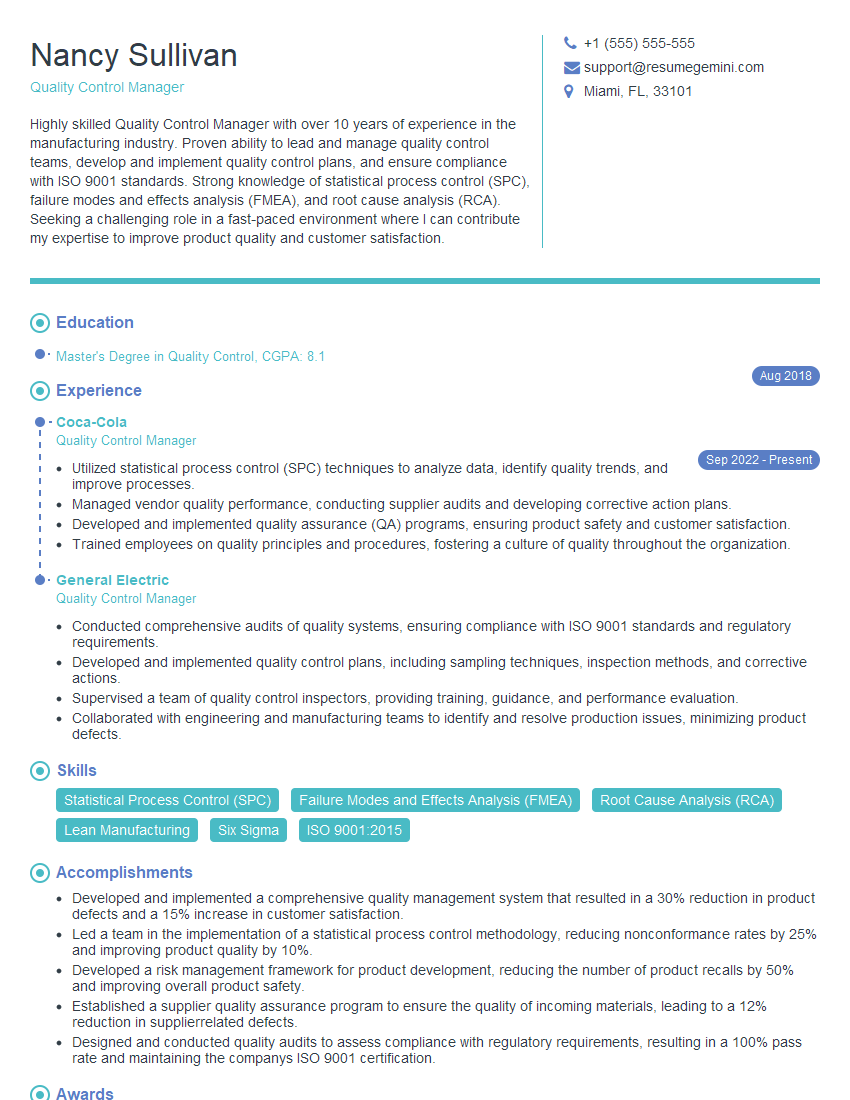
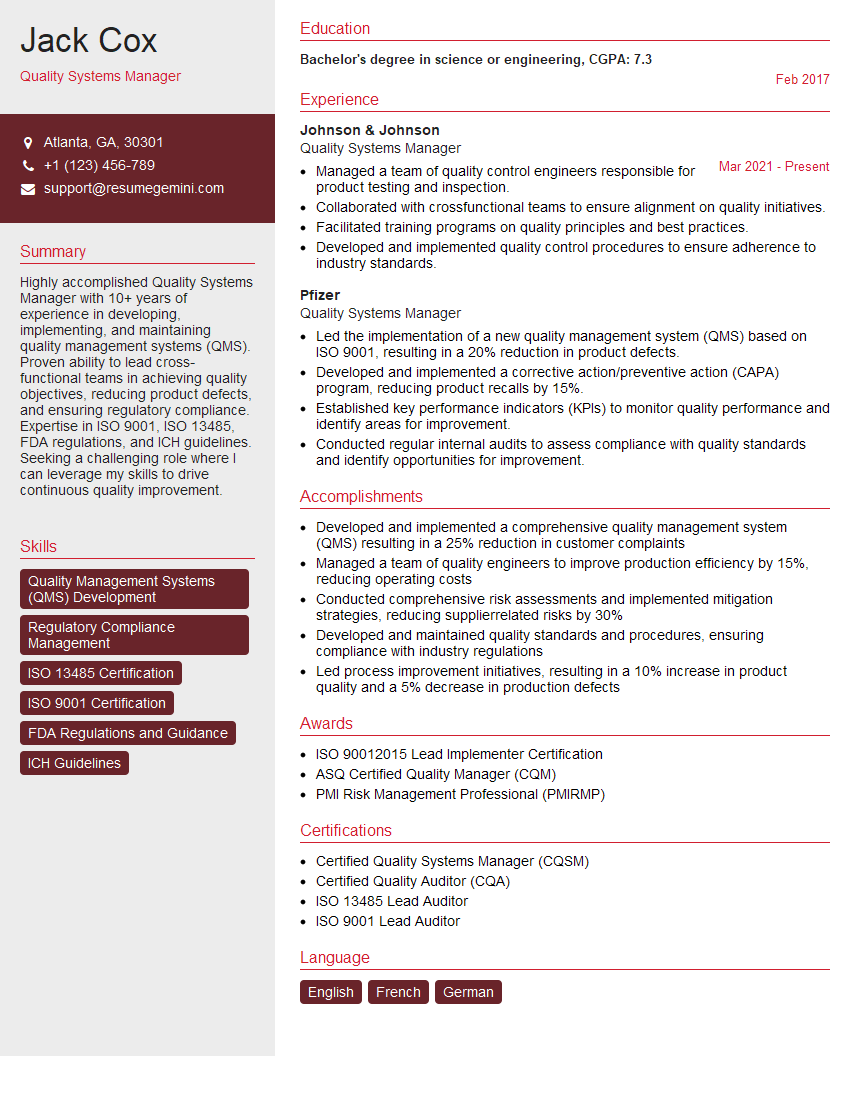
Mastering HACCP Procedures Implementation significantly enhances your career prospects in the food industry, opening doors to roles with greater responsibility and higher earning potential. A strong resume is crucial for showcasing your expertise and securing your dream job. Create an ATS-friendly resume that highlights your HACCP knowledge and experience to increase your chances of getting noticed by recruiters. ResumeGemini is a trusted resource to help you build a professional and impactful resume. Examples of resumes tailored to HACCP Procedures Implementation are available to guide you, allowing you to present your skills and experience in the best possible light.

Explore more articles
Users Rating of Our Blogs
Share Your Experience
We value your feedback! Please rate our content and share your thoughts (optional).
What Readers Say About Our Blog
To the interviewgemini.com Webmaster.
Very helpful and content specific questions to help prepare me for my interview!
Thank you
To the interviewgemini.com Webmaster.
This was kind of a unique content I found around the specialized skills. Very helpful questions and good detailed answers.
Very Helpful blog, thank you Interviewgemini team.