Every successful interview starts with knowing what to expect. In this blog, we’ll take you through the top Use of music as a tool for social, emotional, and cognitive development interview questions, breaking them down with expert tips to help you deliver impactful answers. Step into your next interview fully prepared and ready to succeed.
Questions Asked in Use of music as a tool for social, emotional, and cognitive development Interview
Q 1. Explain the connection between music and emotional regulation.
Music and emotional regulation are deeply intertwined. Music’s ability to evoke strong emotions makes it a powerful tool for managing and understanding feelings. Think about how a sad song can make you cry or an upbeat tune can lift your spirits. This is because music engages multiple brain regions associated with emotion processing, including the amygdala and limbic system.
For example, listening to calming music can slow heart rate and reduce cortisol (a stress hormone), leading to a sense of relaxation. Conversely, expressing emotions through playing an instrument or singing can provide a healthy outlet for pent-up feelings, facilitating emotional release and self-awareness. Music therapists often use this principle by guiding clients to select or create music that reflects their current emotional state, offering a non-verbal way to explore and process difficult emotions.
Q 2. Describe different music therapy techniques for addressing anxiety.
Several music therapy techniques effectively address anxiety. One common approach is guided imagery with music, where clients listen to calming music while visualizing peaceful scenes or positive outcomes. This combines the relaxation response induced by music with the cognitive benefits of imagery.
Active music-making, such as playing relaxing instruments like the piano or creating soundscapes with simple percussion, can also be therapeutic. The act of creating music provides a distraction from anxious thoughts and promotes a sense of control and accomplishment.
Another technique involves using music-assisted relaxation. This might involve slow, repetitive melodic patterns or nature sounds incorporated into a musical piece, helping to regulate breathing and reduce physiological arousal associated with anxiety. Finally, improvisational music therapy allows clients to express their anxieties non-verbally through spontaneous musical creation, providing a safe space to process and release emotional tension.
Q 3. How can music be used to improve cognitive skills in children with autism?
Music therapy offers unique benefits for children with autism spectrum disorder (ASD) by targeting various cognitive skills. Music’s structured nature can help improve attention and focus. Repetitive rhythmic patterns in songs or instrumental pieces can create a predictable and calming auditory environment, making it easier for children to concentrate.
Music also enhances memory and sequencing. Learning songs and musical patterns helps children develop memory skills and understand temporal sequences. For example, learning to play a simple melody on an instrument requires remembering the order of notes. Moreover, music improves communication and language skills. Singing songs together fosters social interaction and encourages vocalization, potentially improving verbal communication. Finally, music engages multiple sensory modalities simultaneously (auditory, visual, kinesthetic), leading to improved sensory integration, a crucial aspect of therapy for many individuals with ASD.
Q 4. What are the benefits of using music to enhance social skills in adolescents?
Music offers powerful avenues for enhancing social skills in adolescents. Group music therapy provides a safe and supportive environment for collaborative learning and interaction. Playing music together in a band or ensemble requires cooperation, communication, and teamwork, fostering valuable social skills.
Music also allows for non-verbal expression and communication. Adolescents who struggle with verbal expression can communicate their thoughts and feelings through music, building self-confidence and facilitating connection with peers. Learning to actively listen to others’ musical contributions strengthens empathy and understanding, crucial for social interactions. Furthermore, participating in musical performances builds self-esteem and confidence, making it easier to interact with others in social settings. The shared experience of creating and performing music builds a sense of community and belonging.
Q 5. Discuss the role of rhythm and melody in cognitive development.
Rhythm and melody play crucial roles in cognitive development. Rhythm helps develop temporal processing skills, improving the ability to understand and predict patterns in time. This is crucial for language development, as understanding speech relies on the ability to perceive rhythmic variations.
Melody aids in the development of auditory discrimination and memory. Recognizing and remembering melodic patterns enhance musical memory but also improves overall auditory processing skills, which transfer to other areas like language comprehension. For instance, learning to distinguish between different melodies helps children discern sounds and patterns in speech, improving their vocabulary and listening comprehension. In essence, rhythm and melody provide a framework for understanding patterns, sequence, and organization—fundamental cognitive skills that extend far beyond the realm of music.
Q 6. How would you adapt a music therapy session for a client with limited mobility?
Adapting a music therapy session for a client with limited mobility requires careful consideration and creativity. Instead of focusing on physically demanding activities, I would emphasize passive music experiences, such as listening to carefully selected music tailored to the client’s preferences and emotional needs.
I could incorporate music and movement therapy adapted to the client’s physical capabilities. This might involve using simple hand gestures or head movements to respond to the music, or using assistive technology to allow the client to control musical elements electronically. I would also focus on sensory integration, utilizing different textures or instruments that can be explored tactilely, even if the client cannot manipulate them fully. Communication and emotional expression would be central; I might use techniques like vocalizations, humming, or nonverbal cues to elicit responses and gauge the client’s emotional state.
Q 7. Explain how you would assess a client’s musical preferences and abilities.
Assessing a client’s musical preferences and abilities involves a multi-faceted approach. I would begin with a structured interview, gathering information about their musical background, listening habits, and any prior musical experiences. This might include questions about preferred genres, instruments, and favorite songs.
Next, I would use informal observation during a music-listening session to assess their emotional responses to different musical styles and tempos. I would also conduct informal assessments of their musical abilities, observing their ability to follow rhythmic cues, sing along, or play an instrument if they have prior experience. Formal assessments like standardized music aptitude tests may be used if necessary, depending on the specific therapeutic goals. The process is tailored to the individual, emphasizing a collaborative and respectful approach, ensuring that the assessment is both comprehensive and comfortable for the client.
Q 8. Describe a situation where you had to modify a music therapy plan.
Modifying a music therapy plan is a crucial aspect of providing effective and personalized care. It often stems from a client’s changing needs, responses to interventions, or unforeseen circumstances. For example, I was working with a young boy diagnosed with autism who initially responded well to structured drumming activities focusing on rhythm and motor skills. However, after several sessions, he became increasingly agitated and withdrawn during these structured exercises. Observing his nonverbal cues and consulting with his parents, we realized the structured environment was overwhelming. We modified the plan by incorporating more improvisational elements, using quieter instruments like hand chimes and shakers, and shifting the focus from structured rhythms to free exploration of sound. This change led to a significant improvement in his engagement and emotional regulation.
Another instance involved an adult client recovering from a stroke who was experiencing difficulty with expressive language. The initial plan emphasized singing familiar songs to stimulate vocal production and improve breath control. However, his frustration levels were high, impacting his progress. We adjusted the plan by focusing initially on receptive music activities, such as identifying instruments or following simple musical patterns. This built his confidence and reduced anxiety, paving the way for a gradual reintroduction of singing activities.
Q 9. What are the ethical considerations in using music therapy?
Ethical considerations in music therapy are paramount. The core principles revolve around beneficence (acting in the client’s best interest), non-maleficence (avoiding harm), autonomy (respecting the client’s choices and self-determination), justice (ensuring fair and equitable treatment), and fidelity (maintaining trust and professional boundaries).
- Confidentiality: Protecting client information is crucial. This includes maintaining the privacy of session content, treatment plans, and any personal details shared.
- Informed Consent: Clients or their legal guardians must have a clear understanding of the therapy process, goals, and potential risks before starting treatment. This includes addressing any cultural or religious sensitivities that might impact the use of music.
- Dual Relationships: Avoiding conflicts of interest is vital. This means refraining from engaging in any personal or professional relationships outside the therapeutic context that could compromise the client’s well-being or the therapeutic process.
- Competence: Music therapists must only practice within the scope of their training and experience. Referral to other professionals is necessary when expertise in a specific area is lacking.
- Cultural Sensitivity: Understanding and respecting cultural differences is essential. Music therapy interventions must be adapted to suit the client’s background, beliefs, and preferences to ensure culturally sensitive and effective treatment.
Q 10. How do you measure the effectiveness of a music therapy intervention?
Measuring the effectiveness of music therapy interventions is a multifaceted process. It goes beyond simply observing changes in mood or behavior and requires a systematic approach combining both qualitative and quantitative data.
- Quantitative Measures: These include standardized assessments like rating scales (e.g., for anxiety, depression, or social skills), physiological measures (e.g., heart rate variability, blood pressure), and performance-based tests (e.g., measuring improvements in motor skills or cognitive function).
- Qualitative Measures: These involve gathering subjective data through interviews, observations, and client self-reports. This can include narratives from the client describing their experiences and perceptions of improvement, observations of changes in behaviour or emotional expression during sessions, and feedback from caregivers or family members.
A comprehensive assessment involves tracking these measures both before, during, and after the intervention to evaluate changes and assess the overall effectiveness. For example, in working with a client experiencing PTSD, we might use a standardized anxiety scale pre- and post-intervention alongside weekly journal entries reflecting their emotional state, and observational notes from the sessions. Combining these offers a holistic view of the intervention’s impact.
Q 11. What are some common challenges faced in music therapy practice?
Music therapy, while deeply rewarding, presents several common challenges:
- Client Resistance: Some clients may be hesitant or resistant to participate fully in music-based therapies, requiring patience, flexibility, and creative approaches to build rapport and engagement.
- Resource Limitations: Access to appropriate instruments, facilities, and ongoing professional development can be limited, particularly in resource-constrained settings.
- Measurement Challenges: As discussed earlier, accurately and objectively measuring the effectiveness of interventions can be complex, requiring careful selection and implementation of assessment tools.
- Ethical Dilemmas: Navigating ethical considerations like confidentiality, informed consent, and dual relationships requires ongoing vigilance and reflection.
- Interprofessional Collaboration: Effective collaboration with other healthcare professionals, such as doctors, psychologists, and occupational therapists, is often crucial for providing holistic care, but communication barriers can hinder collaboration.
- Managing Client Expectations: It’s important to set realistic expectations with clients and their families about the potential benefits and limitations of music therapy.
Q 12. Explain the different approaches to music therapy (e.g., neurologic, psychodynamic).
Music therapy employs various approaches, tailored to the client’s specific needs and goals. Some key approaches include:
- Neurologic Music Therapy (NMT): This approach uses music to address cognitive, sensory, and motor deficits resulting from neurological conditions like stroke, traumatic brain injury, or Parkinson’s disease. It’s based on the understanding of how music interacts with the brain’s neural pathways, leveraging rhythmic entrainment, melodic intonation therapy, and other techniques to improve function.
- Psychodynamic Music Therapy: This approach views music as a symbolic language mirroring the unconscious mind. Through musical expression, clients can explore emotions, conflicts, and personal narratives that may be difficult to articulate verbally. The therapist helps clients interpret musical productions and gain insight into their emotional experiences.
- Behavioral Music Therapy: This approach uses music as a tool to reinforce positive behaviors and reduce maladaptive ones. It often involves shaping, operant conditioning, and other behavioral techniques, for instance, using music rewards to motivate participation in therapy activities or to improve attention span.
- Creative Music Therapy: This approach focuses on using music as a creative medium for self-expression and personal growth. Clients participate in composing, improvising, and performing music, using this creative process to explore emotions, foster self-discovery, and develop self-esteem.
Often, a blend of these approaches is used, creating a tailored and personalized intervention plan.
Q 13. How would you incorporate music technology into your therapy sessions?
Music technology significantly enhances music therapy sessions, offering a wider range of tools and possibilities. I regularly incorporate technology in several ways:
- Digital Audio Workstations (DAWs): Software like GarageBand or Ableton Live allows clients to compose and record their own music, fostering creativity and self-expression. This is particularly helpful for clients who might not have experience with traditional instruments.
- Music Therapy Apps: Numerous apps provide structured musical activities, interactive games, and biofeedback tools, making therapy more engaging and accessible. These apps are useful for improving focus, memory, and coordination.
- Virtual Reality (VR): VR technology can create immersive environments that enhance therapeutic experiences. For example, a client with anxiety might find it beneficial to experience a calming virtual nature scene while listening to relaxing music.
- Assistive Technology: For clients with physical limitations, adaptive instruments or assistive technology can make musical participation possible. This might include specialized keyboards, adapted percussion instruments, or music-making software controlled by eye-gaze or other assistive devices.
The choice of technology always depends on the client’s needs, goals, and preferences, and ethical considerations regarding data privacy are crucial.
Q 14. Describe your experience with improvisational music therapy techniques.
Improvisational music therapy is a powerful technique that allows clients to express themselves freely and authentically through spontaneous musical creation. It is particularly helpful in working with clients who find structured activities challenging or who struggle with verbal expression.
In my experience, improvisational sessions often begin with a brief exploration of instruments. I might suggest a specific sound or mood, but the client is encouraged to lead the musical journey. The therapist’s role is to provide a supportive and non-judgmental space, responding musically to the client’s expressions. This might involve mirroring the client’s melodic phrases, introducing complementary rhythms, or providing a harmonic framework that supports their exploration.
For instance, a client dealing with grief might begin with slow, melancholic improvisations on a piano. The therapist could respond with gentle chords or subtle melodic lines, reflecting the client’s emotional landscape. As the session progresses, the music might evolve, reflecting shifting emotions and a gradual journey towards healing and acceptance. The process allows for deep emotional processing and self-discovery through the safe and non-verbal medium of music.
Following an improvisational session, a crucial aspect is verbal processing, guiding the client to reflect on their musical experience and link it to their emotional state. This helps integrate the therapeutic experience and fosters greater self-awareness.
Q 15. How do you create a safe and supportive therapeutic environment using music?
Creating a safe and supportive therapeutic environment using music hinges on building trust and rapport. This begins with establishing a non-judgmental space where clients feel comfortable expressing themselves, even if that expression is initially hesitant or nonverbal. Think of it like creating a warm, inviting living room, not a sterile doctor’s office.
- Physical Environment: The room should be comfortable, with soft lighting, comfortable seating, and instruments readily accessible. Consider the temperature and any potential distractions like noise.
- Emotional Safety: Clear boundaries and expectations should be set from the outset. Confidentiality is paramount. I always explain the purpose of the session and how the client’s participation is completely voluntary. The client is in control.
- Active Listening and Empathy: Music therapy is as much about listening as it is about playing. I pay close attention to both verbal and nonverbal cues, reflecting back what I hear and see to validate the client’s experiences. I use mirroring techniques in both music and conversation.
- Building Rapport: Starting with simple, familiar activities, such as listening to preferred music or improvising simple rhythms, can help build a foundation of trust and comfort. It’s about establishing a connection on the client’s terms.
For example, with a child who is anxious about therapy, I might begin by simply listening to their favorite songs together. This creates a shared experience and lays the groundwork for deeper engagement.
Career Expert Tips:
- Ace those interviews! Prepare effectively by reviewing the Top 50 Most Common Interview Questions on ResumeGemini.
- Navigate your job search with confidence! Explore a wide range of Career Tips on ResumeGemini. Learn about common challenges and recommendations to overcome them.
- Craft the perfect resume! Master the Art of Resume Writing with ResumeGemini’s guide. Showcase your unique qualifications and achievements effectively.
- Don’t miss out on holiday savings! Build your dream resume with ResumeGemini’s ATS optimized templates.
Q 16. What are the limitations of music therapy?
While music therapy offers significant benefits, it’s crucial to acknowledge its limitations. It’s not a standalone cure-all for mental or physical health issues.
- Not a Replacement for Other Therapies: Music therapy is often most effective when used in conjunction with other therapeutic approaches, such as psychotherapy or medication. It’s a complementary, not a replacement therapy.
- Client Factors: The effectiveness of music therapy depends heavily on the client’s willingness to participate and engage actively. Some clients may struggle to connect with music or find the therapeutic process challenging.
- Therapist Skills and Training: The success of music therapy relies on the therapist’s skills, experience, and ability to tailor their approach to each individual’s needs. A poorly trained therapist may not be able to utilize the power of music effectively.
- Access and Availability: Access to qualified music therapists and affordable music therapy services can be a significant barrier for many individuals, particularly those in underserved communities.
- Measurable Outcomes: While the benefits are significant, quantifying those benefits in a consistently measurable way, for research purposes, can sometimes be challenging.
For instance, a client with severe trauma may require more intensive psychotherapy alongside music therapy to process their experiences effectively.
Q 17. How can music therapy be integrated with other therapeutic approaches?
Music therapy integrates seamlessly with various therapeutic approaches, enriching the overall therapeutic process. It’s like adding a vibrant color to a painting, deepening its impact.
- Psychotherapy: Music can be used to explore emotions and experiences expressed in talk therapy, providing a nonverbal outlet for difficult feelings. For instance, a client might compose a song reflecting their experiences with anxiety, allowing for a deeper understanding.
- Occupational Therapy: Music can improve motor skills, coordination, and cognitive function. Rhythmic activities can help improve fine motor skills in stroke recovery.
- Physical Therapy: Music can enhance physical rehabilitation by motivating and engaging patients during exercises. Rhythmic exercises, guided by music, can aid recovery.
- Speech Therapy: Singing and rhythmic activities can improve speech articulation and fluency.
For a client with PTSD, for example, we might use music to regulate their breathing and heart rate during trauma-focused cognitive behavioral therapy (CBT) sessions.
Q 18. Discuss the importance of collaboration in music therapy practice.
Collaboration is fundamental to effective music therapy practice. It’s a team effort, not a solo performance. Successful outcomes are achieved through effective communication and teamwork among all involved.
- Collaboration with Other Professionals: Regular communication and case conferencing with other therapists, physicians, educators, and family members helps to create a holistic treatment plan, ensuring that everyone is working towards the same goals.
- Client Involvement: The client should actively participate in the creation of the therapeutic plan and goals. Their input is essential, ensuring that the interventions are relevant and meaningful to them.
- Shared Goals and Outcomes: All stakeholders need a shared understanding of the client’s strengths, challenges, and desired outcomes, which are articulated clearly to ensure the treatment is effective.
- Communication and Documentation: Clear, concise documentation and regular communication between all parties involved are essential for maintaining consistency and transparency in the therapeutic process. Regular updates are key for this to be successful.
For a child with autism, for example, collaboration between the music therapist, the child’s teacher, and parents ensures consistent support and a cohesive therapeutic approach across settings.
Q 19. What are the key elements of a well-structured music therapy session?
A well-structured music therapy session involves a clear beginning, middle, and end, ensuring focus and progress. It’s about creating a framework that supports the client’s journey.
- Warm-up: The session typically begins with a warm-up activity that helps the client relax and focus, such as listening to calming music or engaging in simple rhythmic activities.
- Assessment and Goal Setting: An initial assessment helps determine the client’s musical preferences and therapeutic goals. Then we move into planned activities.
- Intervention Activities: These are tailored to address the client’s specific needs and goals, using various music-based techniques, such as songwriting, improvisation, lyric analysis, active listening, etc.
- Processing and Reflection: The session includes time for discussion and reflection on the experiences and emotions evoked during the music-based activities. This provides insights and helps the client to process.
- Cool-down and Summary: The session concludes with a cool-down activity that helps the client transition back to their usual state. A brief summary of the session and plans for the next session helps to provide structure and direction.
For example, a session with a client struggling with depression might begin with relaxing ambient music, move to songwriting to express emotions, and conclude with a guided visualization exercise accompanied by calming music.
Q 20. How do you address resistance or disengagement from a client during a music therapy session?
Resistance or disengagement during a music therapy session can stem from various factors, including anxiety, past trauma, or simply a mismatch in therapeutic approach. It’s crucial to respond with empathy and understanding.
- Understanding the Resistance: I would start by exploring the reasons behind the resistance. This might involve open-ended questions, active listening, and observation of nonverbal cues. What is making the client uncomfortable?
- Respecting Boundaries: If a client is unwilling to participate in a specific activity, I would respect their decision and explore alternative options that align with their comfort level. Collaboration is key.
- Collaborative Approach: I would invite the client to participate in choosing activities or modifying the approach to make it more appealing. Empowerment is important.
- Gradual Engagement: Instead of pushing the client into activities they are resisting, I would start with something simple and enjoyable, gradually introducing more challenging elements as they gain confidence and trust. Small steps, big results.
- Flexibility and Adaptation: The plan for the session should not be rigid. Being flexible and adapting the approach based on the client’s responses is vital. Sometimes the most powerful moments happen when we deviate from the plan.
For example, if a client is reluctant to sing, we might start with listening to music together and then move towards playing simple percussion instruments. We would always start by exploring what feels comfortable and safe.
Q 21. Explain the use of music in promoting self-esteem and confidence.
Music is a powerful tool for fostering self-esteem and confidence. It offers a non-threatening way to express oneself and experience success. It’s like giving someone a stage to shine, even if it’s just a small one.
- Creative Expression: Music provides a safe outlet for self-expression, allowing individuals to explore their emotions and experiences without the pressure of verbal articulation. Composing music can be incredibly empowering.
- Mastery and Achievement: Learning a musical instrument or mastering a musical skill provides a sense of accomplishment and boosts self-efficacy. The feeling of progress is incredibly motivating.
- Positive Feedback and Reinforcement: Positive feedback from the therapist, peers, or other listeners can significantly enhance self-esteem and reinforce confidence. Encouragement is vital.
- Group Music Therapy: Participating in group music therapy activities fosters a sense of belonging and shared experience, building confidence in social interactions and reducing feelings of isolation. Sharing experiences strengthens resilience.
- Performance Opportunities: Opportunities to perform, even in a small setting, can help individuals overcome self-consciousness and build confidence in public speaking and self-presentation. Sharing one’s talents is a confidence booster.
For example, a client who is shy might gain confidence by learning to play an instrument and then performing a short piece for their family. The sense of accomplishment and positive feedback are key here.
Q 22. Describe how music can be used to improve memory and attention.
Music’s impact on memory and attention stems from its ability to engage multiple brain areas simultaneously. Think of it like this: listening to a song isn’t just a passive activity; it involves processing melody, rhythm, harmony, and lyrics – all demanding cognitive resources. This multi-faceted engagement strengthens neural pathways, boosting memory consolidation and enhancing attention span.
For instance, using melodic recall techniques, where information is embedded within a song, can improve memorization of lists or facts. The rhythm and melody act as mnemonic devices, making the information more memorable and easily retrievable. Similarly, focusing on the intricacies of a complex musical piece can train attention skills, requiring sustained concentration and focus. Studies have shown that actively listening to and playing music can improve working memory capacity and selective attention.
Q 23. How do you adapt music therapy interventions for different age groups?
Adapting music therapy interventions across age groups is crucial, as developmental stages significantly influence musical preferences, cognitive abilities, and emotional responses. With infants and toddlers, we focus on sensory-motor integration through lullabies, simple songs, and rhythmic activities that promote bonding and language development. For example, using songs with repetitive patterns aids in language acquisition.
With children, we can incorporate musical games, songwriting, and instrument play to address social skills, emotional regulation, and cognitive development. Adolescents might benefit from songwriting workshops to express emotions, group music projects to enhance cooperation, or improvisational music to boost self-expression and creativity. For adults, therapy might focus on lyric analysis, guided imagery with music, or composing to address specific therapeutic goals like stress reduction or grief processing.
Older adults might enjoy reminiscence therapy using familiar songs from their past, or engage in gentle singing or instrumental play to maintain cognitive function and social engagement. Each age group presents unique opportunities to harness music’s therapeutic power in tailored and meaningful ways.
Q 24. What is your understanding of the neurobiological effects of music?
Music’s neurobiological effects are profound and multifaceted. It activates numerous brain regions, including the auditory cortex (processing sound), motor cortex (involved in movement when playing an instrument), limbic system (emotional processing), and prefrontal cortex (higher-level cognitive functions).
For example, listening to emotionally resonant music releases dopamine and endorphins, leading to feelings of pleasure and well-being. Playing a musical instrument strengthens neural connections, enhancing cognitive skills like memory and attention. Music therapy can stimulate brain plasticity, promoting the brain’s ability to adapt and reorganize itself, which is particularly beneficial for individuals recovering from neurological injuries or conditions like stroke.
Research using neuroimaging techniques like fMRI has provided valuable insights into these processes, demonstrating the widespread and interconnected brain activity stimulated by musical engagement. This understanding underpins the effectiveness of music therapy in addressing a wide range of conditions.
Q 25. How do you ensure cultural sensitivity in your music therapy practice?
Cultural sensitivity is paramount in music therapy. My approach involves actively seeking to understand the client’s cultural background, including their musical preferences, traditions, and beliefs. This means selecting music that resonates with their cultural identity, avoiding imposing my own musical preferences or biases.
For example, I might incorporate traditional folk songs or instruments from the client’s cultural background into therapy sessions, or adapt existing therapeutic interventions to fit within their cultural context. I also ensure that communication is culturally appropriate and respectful, paying attention to verbal and nonverbal cues. This collaborative and culturally sensitive approach ensures that the therapy is both effective and respectful of the individual’s unique identity.
Furthermore, ongoing education and self-reflection are essential in addressing my own implicit biases and ensuring I can effectively work with diverse populations.
Q 26. What are some evidence-based music therapy interventions for specific conditions (e.g., PTSD, depression)?
Evidence-based music therapy interventions vary depending on the specific condition. For PTSD, techniques like guided imagery and musical improvisation are often used to help process traumatic memories and manage emotional responses. The client might create music to express their experiences, or utilize music to create a safe and calming environment for processing trauma.
For depression, music therapy can involve active music making, such as playing an instrument or singing, to boost self-esteem and reduce feelings of isolation. Listening to uplifting music can also influence mood and emotional regulation. Group music therapy can foster social connection and provide a sense of community, which is particularly helpful for individuals experiencing social withdrawal.
It’s important to remember that music therapy is not a standalone treatment, but rather a complementary approach that can be integrated with other therapies like psychotherapy or medication. The specific interventions are tailored to the individual’s needs and preferences.
Q 27. Describe your experience with documentation and record-keeping in music therapy.
Thorough documentation and record-keeping are crucial for ethical and legal reasons. My documentation includes a detailed assessment of the client’s musical background, preferences, and therapeutic goals. Session notes meticulously record the interventions used, the client’s responses, and any observable changes. This includes details of the music used, the client’s emotional state, and any significant interactions during the session.
I maintain client confidentiality strictly, adhering to relevant professional guidelines and regulations. My documentation is organized, easily accessible, and stored securely, ensuring the integrity and confidentiality of client information. Accurate record-keeping is essential for monitoring progress, evaluating treatment effectiveness, and ensuring continuity of care. It also provides essential information for consultations with other healthcare professionals involved in the client’s care.
Q 28. How do you stay current with the latest research and advancements in music therapy?
Staying current involves a multi-pronged approach. I regularly read peer-reviewed journals like the Journal of Music Therapy and attend conferences and workshops presented by professional organizations such as the American Music Therapy Association (AMTA). Networking with other music therapists allows me to share best practices and learn from colleagues’ experiences.
Furthermore, I actively participate in continuing education programs and online courses focusing on new research findings and therapeutic techniques. Engaging in self-directed learning by reviewing research papers on specific conditions or interventions keeps me up-to-date on the evolving field of music therapy and ensures I am providing the most effective and evidence-based care to my clients.
Key Topics to Learn for Use of Music as a Tool for Social, Emotional, and Cognitive Development Interview
- Music Therapy Theories and Models: Understand foundational theories like neurologic music therapy, and various models used to apply music in therapeutic settings. Explore the differences and applications of each.
- Social Development through Music: Analyze how group music activities foster collaboration, communication, and social skills. Consider the impact of improvisation and ensemble playing on social interaction.
- Emotional Expression and Regulation with Music: Examine how music can be used to express emotions, manage stress, and improve emotional regulation skills. Discuss the use of music in addressing anxiety, depression, and trauma.
- Cognitive Development and Music: Explore the links between music and cognitive functions like memory, attention, and language development. Discuss the use of music in early childhood education and special education settings.
- Practical Applications in Diverse Settings: Consider the application of music therapy in various contexts – schools, hospitals, rehabilitation centers, community programs. Be prepared to discuss case studies or examples.
- Assessment and Treatment Planning: Understand the process of assessing a client’s needs and developing a personalized music therapy plan. Discuss relevant assessment tools and techniques.
- Ethical Considerations and Professional Boundaries: Demonstrate an understanding of professional ethics, confidentiality, and the boundaries of music therapy practice.
- Research and Evidence-Based Practice: Familiarize yourself with current research on the effectiveness of music therapy and be prepared to discuss evidence-based interventions.
- Technological Applications in Music Therapy: Explore the use of technology such as music software, adaptive instruments, and digital platforms in delivering music therapy services.
Next Steps
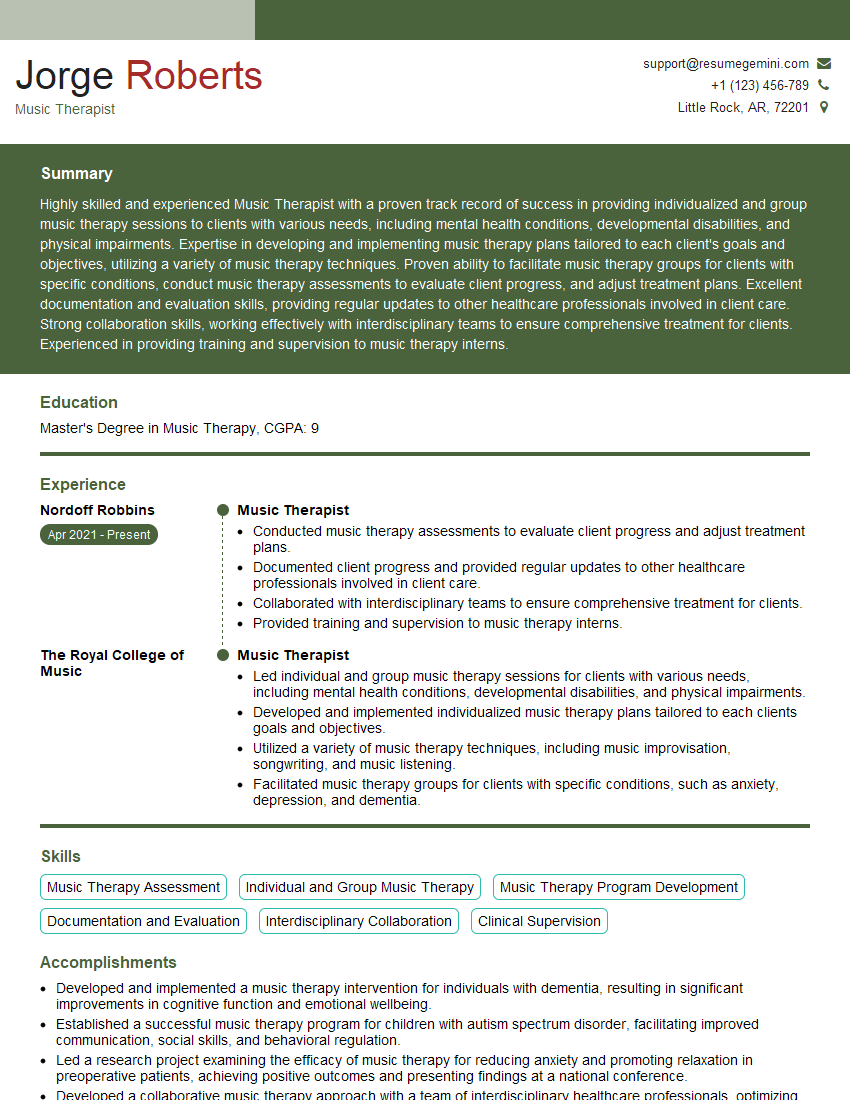
Mastering the use of music as a tool for social, emotional, and cognitive development opens doors to fulfilling and impactful careers in diverse fields. To maximize your job prospects, it’s crucial to present your skills and experience effectively. Crafting an ATS-friendly resume is key to getting your application noticed. ResumeGemini is a trusted resource that can help you build a professional and impactful resume tailored to highlight your unique qualifications. Examples of resumes specifically tailored to showcase expertise in the use of music as a tool for social, emotional, and cognitive development are available to guide you. Take advantage of these resources to present yourself as the ideal candidate.
Explore more articles
Users Rating of Our Blogs
Share Your Experience
We value your feedback! Please rate our content and share your thoughts (optional).
What Readers Say About Our Blog
To the interviewgemini.com Webmaster.
Very helpful and content specific questions to help prepare me for my interview!
Thank you
To the interviewgemini.com Webmaster.
This was kind of a unique content I found around the specialized skills. Very helpful questions and good detailed answers.
Very Helpful blog, thank you Interviewgemini team.