Every successful interview starts with knowing what to expect. In this blog, we’ll take you through the top Hearing Aid Dispensing and Management interview questions, breaking them down with expert tips to help you deliver impactful answers. Step into your next interview fully prepared and ready to succeed.
Questions Asked in Hearing Aid Dispensing and Management Interview
Q 1. Explain the different types of hearing aids available and their suitability for various hearing losses.
Hearing aids come in various styles, each suited to different hearing losses and lifestyles. The primary categories are:
- Behind-the-Ear (BTE): The aid sits behind the ear, with a tube connecting to an earmold inside the ear canal. These are generally robust and powerful, ideal for moderate-to-severe hearing loss, especially in children as they can accommodate more powerful amplification. They’re also suitable for individuals with significant ear canal issues.
- Receiver-in-the-Canal (RIC) and Receiver-in-the-Ear (RITE): Similar to BTEs, but the receiver (speaker) is located within the ear canal (RIC) or slightly further down the ear canal (RITE), offering a smaller, more discreet profile while still providing significant amplification. Good for mild to severe hearing loss.
- In-the-Canal (ITC): The aid fits completely inside the ear canal. They are smaller and less visible than BTEs but generally offer less power. Suitable for mild to moderate hearing loss.
- In-the-Ear (ITE): Fills a larger portion of the outer ear. They offer more power than ITC aids and may be a good choice for individuals with dexterity issues. Suitable for mild to moderate hearing loss.
- Completely-in-Canal (CIC): The smallest type, fitting entirely inside the ear canal. They are highly discreet but have limited power and may be difficult to handle for some people. Best for mild hearing loss in adults with good dexterity.
The choice of hearing aid depends on factors such as the degree and type of hearing loss, the patient’s anatomy (ear canal size and shape), lifestyle, dexterity, and cosmetic preferences. For example, a child with severe hearing loss would likely benefit from a BTE due to its power and durability, while an adult with mild loss might prefer a CIC for its discreetness.
Q 2. Describe the process of fitting a hearing aid, including patient assessment and verification.
Fitting a hearing aid involves a multi-step process. First, we conduct a thorough patient assessment including:
- Case History: Gathering information about the patient’s hearing loss, lifestyle, and expectations.
- Otoscopic Examination: Visual inspection of the ear canal and eardrum to rule out any contraindications (e.g., infection, excessive earwax).
- Audiological Evaluation: Performing pure-tone audiometry and speech audiometry to determine the type and severity of hearing loss.
Next, we select a suitable hearing aid based on the assessment. Then comes the fitting and verification stage:
- Hearing Aid Selection: Choosing the appropriate style and technology based on the patient’s needs and preferences.
- Real-Ear Measurement (REM): Using a tiny microphone placed in the ear canal to measure the sound output of the hearing aid, ensuring it delivers the prescribed amplification.
- Hearing Aid Programming: Adjusting the hearing aid’s settings to optimize sound quality and comfort.
- Counseling and Instructions: Educating the patient on how to use, care for, and troubleshoot the hearing aid.
- Follow-up Appointments: Scheduling appointments for fine-tuning and adjustments, addressing any concerns, and ensuring ongoing success.
Verification confirms the hearing aid is providing appropriate amplification and ensures the patient is satisfied with the outcome. Throughout the process, patient feedback is crucial to ensure a successful fit.
Q 3. How do you counsel patients on the use and maintenance of their hearing aids?
Counseling patients is vital for successful hearing aid use. I emphasize these key areas:
- Proper Handling and Insertion: Demonstrating the correct way to insert and remove the hearing aid, avoiding damage.
- Daily Cleaning and Maintenance: Explaining how to clean the hearing aid using appropriate tools and solutions, preventing wax buildup and malfunctions. I often use visual aids and show them the process directly.
- Battery Care: Discussing battery types, insertion techniques, and disposal procedures. I show them how to check battery life and how to properly dispose of used batteries.
- Troubleshooting Common Issues: Providing strategies for resolving common problems such as feedback (whistling), reduced volume, or battery issues.
- Realistic Expectations: Managing expectations about the limitations of hearing aids. Not all sounds will be perfectly restored, and some adjustment period is usually necessary.
- Communication Strategies: Suggesting strategies for improving communication in various situations, including using assistive listening devices.
I create a supportive and encouraging environment, addressing concerns and questions patiently. I encourage regular follow-up appointments for fine-tuning and to answer any arising questions. I often provide written materials reinforcing what we’ve discussed.
Q 4. What are the common challenges faced by hearing aid users, and how do you address them?
Hearing aid users face various challenges, including:
- Adjustment Period: The brain needs time to adapt to amplified sounds. Initial discomfort, feeling of fullness, or sounds seeming unnatural are common and usually resolve with time.
- Feedback (Whistling): Occurs when sound leaks from the ear canal, creating a high-pitched whistling sound. Proper fitting and earmold modifications usually resolve this.
- Occlusion Effect: The feeling of fullness or pressure in the ear, particularly noticeable with low-frequency sounds. This can be lessened with specific hearing aid adjustments.
- Difficulties in Noisy Environments: Hearing aids may struggle in complex acoustic environments. Directional microphones and noise reduction features can help.
- Maintenance and Care: Regular cleaning and battery changes can be daunting for some users. I help simplify the process through clear instructions and demonstrations.
- Cost: Hearing aids can be expensive, and ongoing maintenance adds to the cost. I discuss financing options and maintenance plans with patients.
I address these challenges through thorough initial fitting and counseling, frequent follow-up appointments, and proactive troubleshooting. I collaborate with patients to find solutions that fit their individual needs and lifestyle. I ensure they know they can contact me for help at any time.
Q 5. Explain the difference between conductive, sensorineural, and mixed hearing loss.
These terms describe different types of hearing loss based on the location of the problem:
- Conductive Hearing Loss: Sound waves are not efficiently transmitted from the outer or middle ear to the inner ear. Causes include earwax buildup, middle ear infections, or damage to the ossicles (tiny bones in the middle ear). It’s often treatable with medical intervention or surgery.
- Sensorineural Hearing Loss: Damage to the inner ear (cochlea) or auditory nerve prevents sound signals from being transmitted to the brain. This is usually caused by aging (presbycusis), noise exposure, certain medical conditions, or genetic factors. Hearing aids are frequently used to manage this type of loss, but often surgical intervention is not an option.
- Mixed Hearing Loss: A combination of conductive and sensorineural hearing loss. Patients experience problems with both sound transmission and signal processing in the inner ear. Management typically involves addressing the conductive component (medical or surgical) and using hearing aids to manage the sensorineural component.
Knowing the type of hearing loss is essential for selecting the appropriate management strategy. For example, a patient with solely conductive hearing loss may not need a hearing aid if the underlying cause is addressed successfully.
Q 6. Describe your experience with different hearing aid technologies, such as digital signal processing.
I have extensive experience with various hearing aid technologies, especially digital signal processing (DSP). DSP utilizes microprocessors to analyze incoming sounds, enhancing speech intelligibility and reducing unwanted noise. Key features I frequently utilize include:
- Directional Microphones: Focus on sounds coming from in front of the user, reducing background noise.
- Noise Reduction: Algorithms that identify and suppress unwanted background noise.
- Feedback Cancellation: Sophisticated algorithms that prevent the whistling sound (feedback).
- Frequency Compression: Moves higher frequency sounds (often lost in high-frequency hearing loss) to lower frequencies that are still audible.
- Automatic Gain Control (AGC): Adjusts amplification based on the surrounding sound levels, ensuring comfort in varying environments.
I have worked with numerous manufacturers and hearing aid platforms, allowing me to tailor the technology to the specific needs of each patient. For example, a patient with significant noise sensitivity might benefit from a hearing aid with advanced noise reduction and directional microphones. A patient with primarily high-frequency loss could greatly benefit from frequency compression. Staying up-to-date on the latest technologies is essential to provide optimal care.
Q 7. How do you perform real-ear measurements and interpret the results?
Real-Ear Measurements (REM) are crucial for verifying hearing aid fitting. A small probe microphone is placed in the ear canal to measure the actual sound level delivered by the hearing aid. This provides objective data rather than relying solely on the patient’s subjective feedback.
The process involves:
- Probe Microphone Placement: Carefully inserting the probe microphone into the ear canal while ensuring a comfortable and airtight seal.
- Sound Presentation: Presenting pure tones and speech signals through the hearing aid.
- Data Acquisition: Recording the sound levels in the ear canal using specialized software.
- Data Analysis: Comparing the measured sound levels to the target levels prescribed based on the audiogram. This allows for precise adjustments to the hearing aid’s amplification settings.
By comparing the measured output to the prescribed gain, we can identify discrepancies. For example, if the measured output is too high, we can reduce the gain. If it’s too low, we increase it. REM ensures the hearing aid delivers the correct amplification for optimal speech understanding and comfort, leading to a better outcome for the patient.
Q 8. How do you manage patient expectations regarding hearing aid benefit?
Managing patient expectations regarding hearing aid benefit is crucial for a positive patient experience. It involves a realistic and transparent discussion from the outset. I begin by explaining that hearing aids are assistive devices, not cures, and that the degree of benefit will vary depending on factors like the type and severity of hearing loss, the patient’s overall health, and their ability to adapt to amplification.
I use analogies to help patients understand. For instance, I might compare hearing aids to eyeglasses: glasses correct vision, but don’t make everything perfectly clear all the time. Similarly, hearing aids improve hearing, but may not restore it completely, especially in challenging listening environments.
I also involve patients in the process by actively seeking their expectations. What are their goals for hearing aid use? Are they hoping to hear better in conversations, on the phone, or in noisy places? A shared understanding of realistic expectations allows me to tailor amplification strategies and manage their hopes accordingly. Regular follow-up appointments are key for adjusting settings and addressing any concerns, helping to manage those expectations over time.
Q 9. What is your experience with troubleshooting hearing aid malfunctions?
Troubleshooting hearing aid malfunctions is a routine part of my practice. My approach is systematic. First, I gather information from the patient: When did the problem start? What are the specific symptoms? (e.g., no sound, intermittent sound, feedback, distorted sound). This helps narrow down the potential causes.
Then, I perform a visual inspection for any obvious issues – a clogged earwax filter, a damaged microphone, or a loose battery. I check battery voltage and ensure proper placement. Many problems are easily resolved by simple cleaning or battery replacement.
For more complex problems, I utilize specialized tools such as a real-ear measurement system to assess the hearing aid’s output and identify any deviations from the prescribed settings. If necessary, I’ll use a hearing aid analyzer to diagnose internal components. I am proficient in using manufacturer-specific software to adjust and repair the devices. My experience encompasses troubleshooting a wide range of brands and technologies, including digital, analog, and programmable hearing aids.
Q 10. How do you determine the appropriate amplification level for a patient?
Determining the appropriate amplification level is a critical step, requiring a combination of objective and subjective measures. It’s not simply about making sounds louder, but about delivering optimal clarity and comfort.
The process begins with a comprehensive hearing evaluation. This establishes the patient’s audiogram, which shows the degree and type of hearing loss at different frequencies. I then use a real-ear measurement (REM) system to objectively measure the sound levels delivered by the hearing aid into the ear canal. This ensures that the amplification matches the individual’s hearing loss profile.
Subjective feedback is equally important. I closely monitor the patient’s comfort level during fittings, gradually adjusting the amplification while considering their preferences. I use questionnaires and conversational speech tests to assess their ability to understand speech in various environments. This iterative process ensures the settings provide optimal benefit while avoiding discomfort or distortion.
Q 11. Describe your experience with various earmold materials and their properties.
I have extensive experience with various earmold materials, each with its own advantages and disadvantages. The choice depends on factors such as the patient’s comfort level, the severity of their hearing loss, and their lifestyle.
- Acrylic: A durable, hypoallergenic, and relatively inexpensive material. Good for most patients.
- Silicone: Soft, flexible, and comfortable, making it a good choice for patients with sensitive skin or those who need a custom fit. However, it’s less durable than acrylic.
- Hard Shell: Typically used for earmolds that need to be more durable, resistant to moisture, and able to withstand more rigorous activities.
- Soft Shell: Provides a custom fit and added comfort for patients who might have smaller ears or sensitive skin.
For example, an active individual might benefit from a hard acrylic earmold that is less susceptible to damage, while a patient with sensitive ears might prefer a soft silicone earmold. Choosing the right material is crucial for ensuring a comfortable and effective hearing aid experience.
Q 12. How do you handle patient complaints or dissatisfaction?
Handling patient complaints or dissatisfaction requires empathy, active listening, and a problem-solving approach. I start by letting the patient express their concerns without interruption. I use reflective listening techniques to ensure I understand their perspective fully.
Once I understand the issue, I systematically investigate the potential causes. This might involve re-evaluating the hearing aid fitting, checking for technical malfunctions, or addressing any concerns about comfort or appearance.
Depending on the situation, solutions might include adjusting the hearing aid settings, repairing or replacing the device, providing additional counseling or education, or referring the patient to another healthcare professional. My goal is always to find a resolution that meets the patient’s needs and restores their confidence in the hearing aid and our services. Following up with the patient after addressing the complaint is crucial to ensure satisfaction.
Q 13. What is your experience with different types of hearing aid accessories, such as Bluetooth connectivity?
I’m experienced with a variety of hearing aid accessories, with Bluetooth connectivity being a particularly popular and valuable addition. These accessories enhance the functionality and convenience of hearing aids significantly.
Bluetooth connectivity allows patients to stream audio directly from their smartphones, tablets, and laptops. This improves phone calls, music listening, and television viewing experiences. I often recommend Bluetooth accessories to patients who want a seamless integration of their hearing aids with their digital devices. Other accessories include remote controls for easy volume and program adjustments, telecoils for improved phone communication in specific situations, and various types of ear tips for comfort and secure fit. Staying updated on the latest technology and accessories allows me to offer patients the best possible options based on their individual needs and preferences.
Q 14. Explain your understanding of the ANSI standards for hearing aid measurements.
The ANSI (American National Standards Institute) standards for hearing aid measurements provide a framework for ensuring the accuracy and consistency of hearing aid fittings and evaluations. These standards define the procedures and equipment used to measure the acoustic output of hearing aids and their impact on sound clarity and audibility. Understanding these standards is essential for ensuring that the hearing aids are properly fitted and that the patient receives the best possible hearing benefit.
Key ANSI standards relate to real-ear measurement (REM), which is crucial for verifying the accuracy of hearing aid amplification. REM involves placing a tiny microphone in the patient’s ear canal to measure the actual sound levels produced by the hearing aid. This allows for precise adjustments to ensure optimal amplification and minimize distortion or discomfort. Adherence to ANSI standards ensures that hearing aid fittings are consistent across different clinics and professionals and improves the quality of patient care. It’s an integral part of my professional practice.
Q 15. How do you maintain accurate patient records and comply with HIPAA regulations?
Maintaining accurate patient records and adhering to HIPAA (Health Insurance Portability and Accountability Act) regulations is paramount in hearing aid dispensing. This involves a multi-faceted approach that prioritizes both patient privacy and efficient record-keeping.
- Secure Electronic Health Records (EHR): We utilize a HIPAA-compliant EHR system to store all patient information, including audiograms, case history, hearing aid fitting details, and financial transactions. Access is restricted to authorized personnel with unique login credentials.
- Data Encryption and Security Protocols: All data is encrypted both in transit and at rest, protecting against unauthorized access. We regularly update our system’s security software and follow best practices to prevent cyber threats.
- Patient Consent and Authorization: Before releasing any patient information, we obtain explicit written consent, ensuring transparency and respecting patient autonomy. This includes detailing how their information will be used and shared.
- Regular Audits and Training: We conduct regular audits of our record-keeping procedures and provide HIPAA compliance training to all staff to maintain awareness and prevent violations. This includes training on proper disposal of physical records.
- Physical Security: Physical records, if any, are stored in locked cabinets in secure areas, accessible only to authorized personnel.
For example, a patient’s audiogram is never left visible on a computer screen when not actively being used. All files are saved securely and regularly backed up to a cloud-based, encrypted server.
Career Expert Tips:
- Ace those interviews! Prepare effectively by reviewing the Top 50 Most Common Interview Questions on ResumeGemini.
- Navigate your job search with confidence! Explore a wide range of Career Tips on ResumeGemini. Learn about common challenges and recommendations to overcome them.
- Craft the perfect resume! Master the Art of Resume Writing with ResumeGemini’s guide. Showcase your unique qualifications and achievements effectively.
- Don’t miss out on holiday savings! Build your dream resume with ResumeGemini’s ATS optimized templates.
Q 16. Describe your experience with assistive listening devices (ALDs).
Assistive Listening Devices (ALDs) play a crucial role in enhancing communication for individuals with hearing loss in various environments. My experience encompasses a wide range of ALDs, including:
- FM Systems: I’ve fitted many patients with FM systems, which transmit sound directly from a speaker (like a teacher or lecturer) to a receiver worn by the patient. This minimizes background noise interference.
- Infrared Systems: I’m experienced with infrared systems often used in theaters or auditoriums, transmitting sound wirelessly via infrared light signals.
- Loop Systems: I’ve worked extensively with loop systems, which create a magnetic field that transmits sound directly to hearing aids equipped with a telecoil. These are commonly found in churches and some public spaces.
- TV Listeners: I regularly counsel patients on the benefits of various TV listeners, which connect directly to the TV to improve the clarity and volume of television audio.
I assess each patient’s needs individually to determine the most appropriate ALD. For instance, a student with hearing loss in a classroom would benefit greatly from an FM system, whereas someone attending a conference might need a personal amplifier. I also provide detailed instruction on how to operate and maintain these devices.
Q 17. How do you counsel patients on the financial aspects of hearing aid acquisition?
Counseling patients on the financial aspects of hearing aid acquisition is a crucial part of my role. It involves a sensitive and transparent approach, ensuring patients understand the costs involved and their available options.
- Detailed Cost Breakdown: I provide a clear, itemized breakdown of all costs, including the price of the hearing aids, fittings, adjustments, and any additional accessories. I explain any financing options upfront, avoiding any surprises.
- Insurance Coverage: I assist patients in navigating their insurance plans, helping them understand their coverage for hearing aids and any required documentation. I often work directly with insurance providers to streamline the claims process.
- Payment Plans: I offer various payment plans, including in-house financing options and collaborations with external financing companies, to make hearing aids accessible to a wider range of patients.
- Value Proposition: I emphasize the long-term value of hearing aids, highlighting how they can improve quality of life, social interactions, and overall well-being. I illustrate how investment in hearing health translates into a significant return in improved quality of life.
- Realistic Expectations: I manage patient expectations regarding costs by clearly outlining all potential expenses from the outset.
For example, I might explain that while a premium hearing aid offers advanced features, a more basic model might meet the patient’s needs equally well at a lower cost. The key is to find the best balance between technology and budget.
Q 18. What is your familiarity with different reimbursement methods for hearing aids?
My familiarity with reimbursement methods for hearing aids is extensive. I understand the complexities of various insurance plans, government programs, and private financing options.
- Private Insurance: I’m proficient in working with various private insurance providers, understanding their coverage guidelines, pre-authorization procedures, and claims submission processes. This involves working directly with insurance companies or third-party administrators.
- Medicare and Medicaid: I’m knowledgeable about Medicare and Medicaid coverage policies for hearing aids, including eligibility criteria and reimbursement limits. I’m aware of the limitations of Medicare coverage in this area.
- Veterans Affairs (VA): I understand the specific requirements and procedures for obtaining hearing aid coverage through the VA, guiding veterans through the application process.
- Private Financing Options: I’m familiar with various private financing companies that offer payment plans specifically tailored to hearing aid purchases.
Navigating the reimbursement landscape requires meticulous attention to detail and a strong understanding of each plan’s specific rules. For instance, one patient might need help filing appeals for denied claims, while another might qualify for a subsidized program.
Q 19. Describe your experience in managing a team of hearing aid dispensers or audiologists.
In my previous role, I managed a team of five hearing aid dispensers and two audiologists. My experience focused on fostering a collaborative and efficient work environment.
- Team Building and Communication: I fostered strong communication within the team through regular meetings, shared goals, and open dialogue. I established clear roles and responsibilities to avoid duplication of effort and ensure effective workflow.
- Training and Development: I provided ongoing training and development opportunities for the team, keeping them updated on the latest advancements in hearing aid technology and best practices in patient care. This included both in-house training and attendance at professional conferences.
- Performance Management: I implemented a performance management system that included regular performance reviews, goal setting, and constructive feedback to ensure consistent high-quality service delivery.
- Conflict Resolution: I developed strategies for resolving conflicts promptly and fairly, ensuring a positive and productive work environment.
- Scheduling and Workflow Optimization: I optimized appointment scheduling and daily workflows to ensure efficient use of resources and minimize patient wait times.
One successful strategy I employed was implementing a peer-mentoring program, where senior dispensers provided guidance and support to newer team members. This boosted team morale and fostered knowledge transfer.
Q 20. How do you stay updated on the latest advancements in hearing aid technology?
Staying updated on the latest advancements in hearing aid technology is crucial for providing patients with the best possible care. I actively engage in continuous professional development through several avenues:
- Professional Organizations: I’m a member of the American Academy of Audiology (AAA) and other relevant professional organizations. These offer regular publications, conferences, and webinars on cutting-edge hearing aid technologies.
- Industry Trade Shows: I attend major hearing aid industry trade shows to see new product demonstrations and network with other professionals.
- Continuing Education Courses: I regularly participate in continuing education courses and workshops focused on new hearing aid technologies, fitting techniques, and patient management strategies. This ensures compliance with continuing education requirements.
- Peer Networking: I actively network with other hearing aid professionals to share knowledge, discuss challenges, and stay abreast of new developments.
- Manufacturer Training: I attend manufacturer-sponsored training sessions to learn the specifics of their latest products and fitting protocols.
For example, I recently completed a course on the advanced features of a new hearing aid model that incorporates artificial intelligence for noise reduction. This keeps me at the forefront of my field.
Q 21. How do you communicate effectively with patients with varying levels of hearing loss?
Communicating effectively with patients with varying degrees of hearing loss is essential for successful hearing aid dispensing. It demands a flexible and adaptable approach.
- Assessment of Hearing Loss: I begin by carefully assessing the patient’s hearing loss and their communication preferences. I gauge their understanding and adjust my communication style accordingly.
- Clear and Simple Language: I use clear, simple language, avoiding jargon and technical terms whenever possible. I check for understanding throughout the conversation.
- Visual Aids: I utilize visual aids, such as diagrams or written materials, to supplement verbal communication. This helps in conveying complex information in an easily digestible format.
- Face-to-Face Communication: I prioritize face-to-face communication whenever possible, making sure to speak clearly and at a moderate pace. I maintain appropriate eye contact.
- Written Communication: I also utilize written materials, such as handouts or emails, to reinforce verbal instructions. This allows patients to review the information at their own pace.
- Patience and Empathy: I approach every interaction with patience and empathy, acknowledging that communicating with hearing loss can be frustrating and challenging.
For instance, with a patient experiencing significant hearing loss, I might use larger print materials, write down key instructions, and speak slowly and clearly, ensuring to check for comprehension frequently. It’s about creating an environment where the patient feels comfortable and understood.
Q 22. Explain your approach to patient education regarding hearing conservation.
My approach to patient education on hearing conservation is multifaceted and emphasizes proactive strategies. I believe in empowering patients to understand their hearing health and take control of their auditory well-being. I begin by explaining the importance of regular hearing check-ups, much like annual dental or eye exams, to detect problems early. I then tailor my explanation to the individual’s lifestyle and risk factors. For instance, individuals who work in noisy environments receive detailed instructions on using hearing protection, including different types of earplugs and their proper insertion techniques. For others, I emphasize the dangers of excessive headphone volume and prolonged exposure to loud sounds. I use visual aids like diagrams showing the impact of noise on the inner ear and provide printed materials summarizing key points. Finally, I encourage open communication, answering questions thoroughly and honestly, making sure they leave feeling informed and confident in their ability to protect their hearing.
For example, I recently worked with a construction worker who experienced significant hearing loss due to prolonged exposure to loud machinery. After a comprehensive hearing test and counseling, we developed a personalized hearing conservation program that included custom-fit earplugs, regular hearing check-ups, and education on the importance of taking breaks from noisy environments.
Q 23. Describe your experience with aural rehabilitation programs.
My experience with aural rehabilitation programs is extensive. Aural rehabilitation is crucial for maximizing the benefit patients receive from hearing aids, and it’s a key element of my practice. I typically incorporate several strategies tailored to the individual’s needs. These include auditory training exercises to improve sound discrimination and speech understanding, communication strategies to help individuals navigate challenging listening situations, and counseling to address the emotional and psychological impact of hearing loss. We often use technology in this process, such as noise-reduction software and speech-enhancement apps, integrated with their hearing aids.
For instance, a patient struggling with understanding speech in noisy restaurants might benefit from training exercises focused on identifying speech sounds in background noise, combined with strategies like facing the speaker directly and asking for clarification when needed. I also emphasize the importance of family involvement, providing education and support for spouses, family, and friends to help them understand the patient’s challenges and facilitate effective communication.
Q 24. How do you identify and address potential conflicts of interest in your practice?
Identifying and addressing potential conflicts of interest is paramount to maintaining ethical and professional standards. I meticulously avoid situations where personal gain could influence my clinical decisions. For instance, I always disclose any financial relationships with hearing aid manufacturers or suppliers to my patients, ensuring transparency. I prioritize patient needs above all else and will openly discuss various hearing aid options, even if they are not from my preferred supplier. I ensure that the hearing aid recommended is the most appropriate for the patient’s specific needs and hearing loss profile, not based on commission or incentives. I maintain detailed records of all interactions and recommendations, which are essential for accountability and adherence to ethical guidelines.
A practical example would be advising a patient on a less expensive, yet equally effective, hearing aid option when a more technologically advanced and expensive option may not be necessary for their specific needs. This decision demonstrates my commitment to patient welfare, even if it impacts my potential financial gain.
Q 25. How do you ensure the quality and accuracy of hearing aid fittings?
Ensuring the quality and accuracy of hearing aid fittings is crucial for patient satisfaction and hearing health. My process begins with a comprehensive hearing evaluation using modern audiometric equipment. This establishes a precise baseline of the patient’s hearing abilities, providing data essential for selecting the appropriate hearing aid style and programming. I then conduct detailed discussions to understand the patient’s lifestyle, listening preferences, and expectations. Following the fitting, meticulous real-ear measurements are conducted using advanced equipment to ensure the hearing aid delivers the correct amplification levels and frequency responses across a range of intensities. I follow up with regular check-ups for fine-tuning and adjustments, addressing any concerns or problems that may arise.
For example, if real-ear measurements show inconsistent amplification, we re-program the hearing aid or adjust its fit to optimize its performance. This iterative approach ensures the fitting meets the patient’s individual needs and expectations, leading to better hearing outcomes.
Q 26. What software or technology do you use to manage patient appointments and data?
To manage patient appointments and data effectively, I use a comprehensive electronic health record (EHR) system called HearingPro (this is an example, actual software names vary). This system allows for seamless scheduling, appointment reminders, and secure storage of patient data. The software includes modules for storing audiograms, hearing aid fitting details, patient history, and progress notes. It integrates with other diagnostic tools, allowing me to electronically transmit and receive test results. The system also provides reporting capabilities to track key performance indicators and identify trends. Data privacy and security are ensured through robust encryption and access controls, complying with all relevant HIPAA regulations.
Q 27. Describe your experience working within a team in a fast-paced environment.
Working effectively within a team in a fast-paced environment is second nature to me. I’ve consistently thrived in dynamic settings where collaborative effort is crucial. I strongly believe in open communication, active listening, and mutual respect. I’m adept at delegating tasks, providing clear instructions, and working collaboratively with audiologists, technicians, and administrative staff to ensure the smooth running of the clinic. I take initiative, anticipate potential challenges, and actively participate in problem-solving. I believe my organizational skills and ability to manage multiple priorities simultaneously allow me to contribute effectively to the team’s success while still providing individualized patient care.
For instance, during a particularly busy week with multiple patient appointments and equipment repairs, I collaborated with our audiology technician to prioritize tasks, ensuring that all patients received timely service and the equipment was repaired promptly. This involved effective communication and a willingness to assist colleagues when needed.
Q 28. Explain how you would handle a situation where a patient is unhappy with their hearing aid fitting.
Handling a situation where a patient is unhappy with their hearing aid fitting requires empathy, patience, and a systematic approach. First, I would actively listen to the patient’s concerns without interruption, validating their feelings. I would then ask clarifying questions to fully understand the nature of the problem. This might involve reviewing the initial hearing assessment, discussing any changes in the patient’s listening environment since the fitting, or assessing the functionality of the hearing aid itself. Based on this information, I would determine the appropriate course of action, which could involve adjusting the hearing aid’s settings, recommending a different hearing aid model, or exploring other solutions such as communication strategies or additional counseling. The goal is to work collaboratively with the patient to find a solution that improves their hearing experience and restores their confidence in the care they receive.
For example, a patient might complain that their hearing aid whistles excessively in certain situations. A thorough examination might reveal that the earmold is not properly fitted, causing feedback. Addressing this issue through adjustment or replacement would resolve the problem and improve the patient’s satisfaction.
Key Topics to Learn for Hearing Aid Dispensing and Management Interview
- Patient Assessment and Counseling: Understanding different types of hearing loss, conducting thorough audiological evaluations, and effectively communicating with patients about their hearing needs and available solutions.
- Hearing Aid Technology and Selection: Familiarity with various hearing aid styles, features (e.g., directional microphones, noise reduction), and fitting procedures. Being able to match technology to specific patient needs and preferences.
- Hearing Aid Fitting and Verification: Mastering the process of programming and verifying hearing aid functionality, ensuring optimal performance and patient satisfaction. Understanding real-ear measurements and their importance.
- Troubleshooting and Repair: Developing problem-solving skills to diagnose and address common hearing aid issues, providing prompt and effective solutions to maintain patient satisfaction.
- Hearing Aid Maintenance and Care: Educating patients on proper hearing aid care, including cleaning, handling, and troubleshooting minor problems. Understanding warranty procedures and repair options.
- Audiology and Hearing Science Fundamentals: Possessing a solid understanding of the anatomy and physiology of the auditory system, various types of hearing loss, and the impact on communication.
- Practice Management and Compliance: Understanding the administrative aspects of running a hearing aid dispensing practice, including record-keeping, billing, and adherence to regulatory standards.
- Sales and Communication Skills: Developing strong interpersonal skills to build rapport with patients, effectively communicate technical information, and address concerns in a compassionate manner. Understanding sales strategies and ethical practices.
- Rehabilitation and Aural Rehabilitation: Understanding the importance of aural rehabilitation and strategies to help patients adapt to hearing aids and improve communication skills.
Next Steps
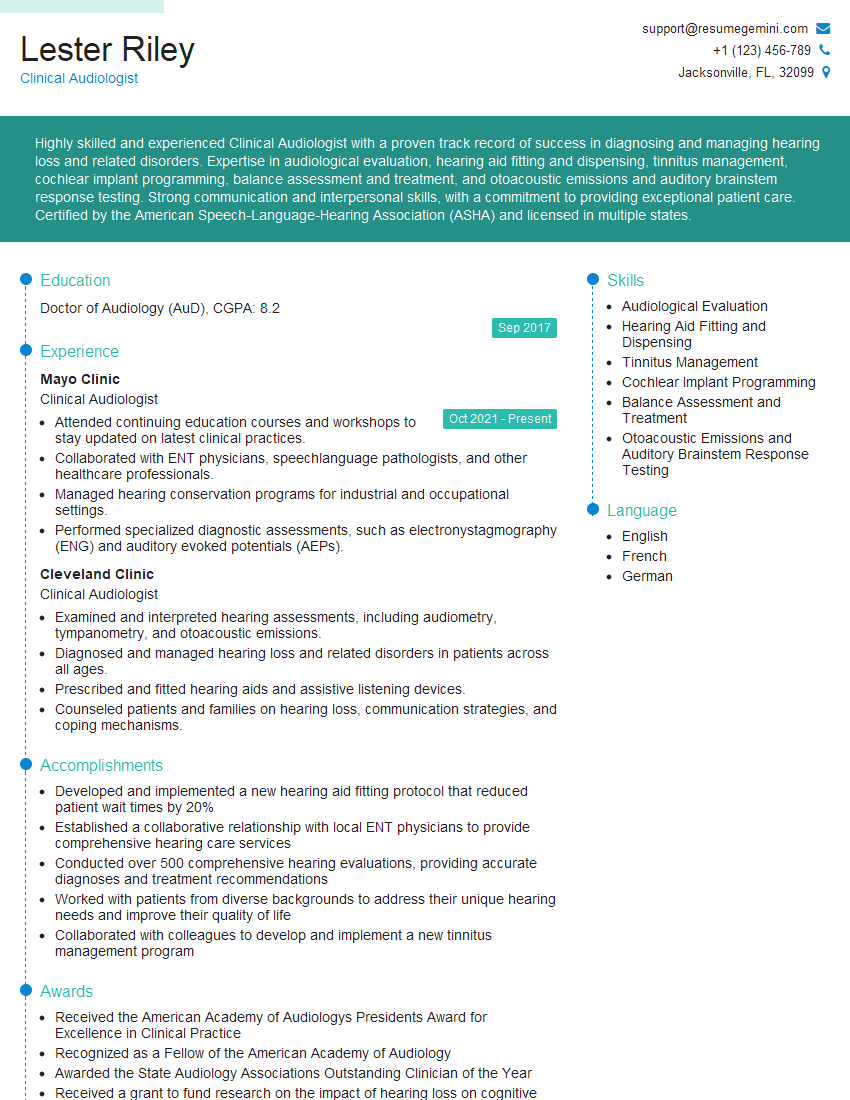
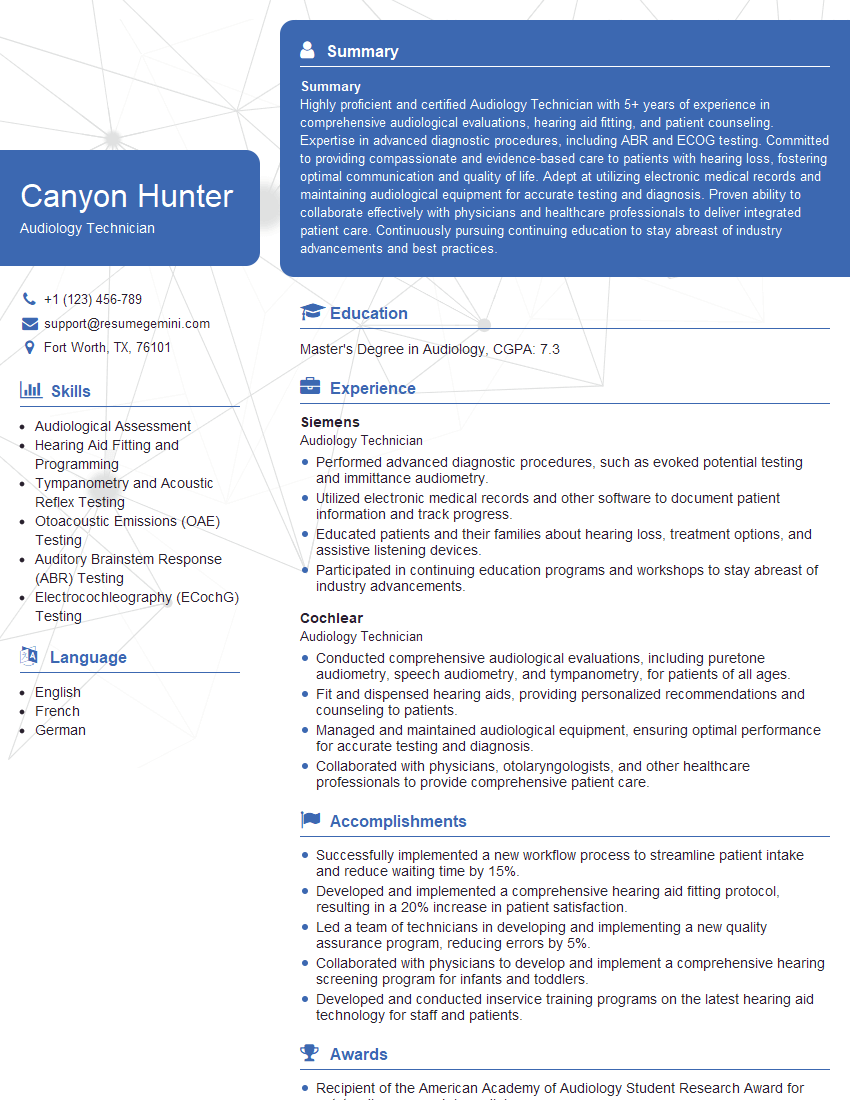
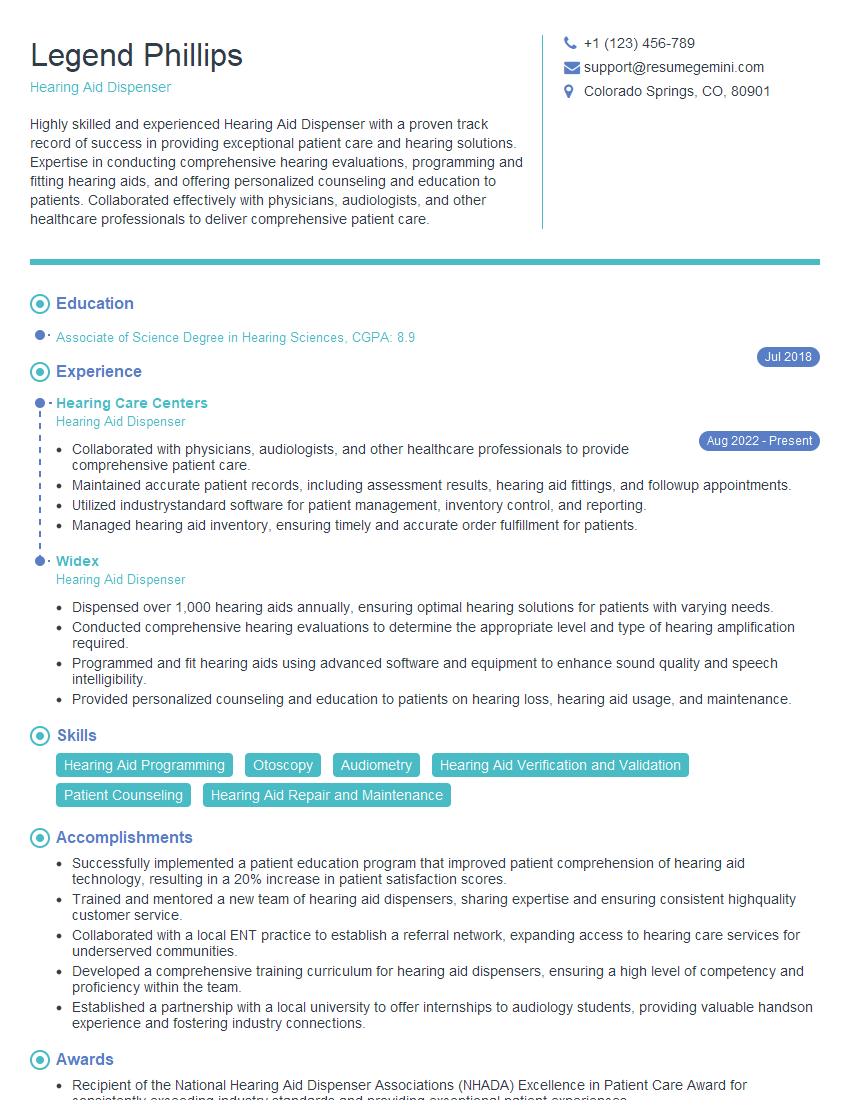
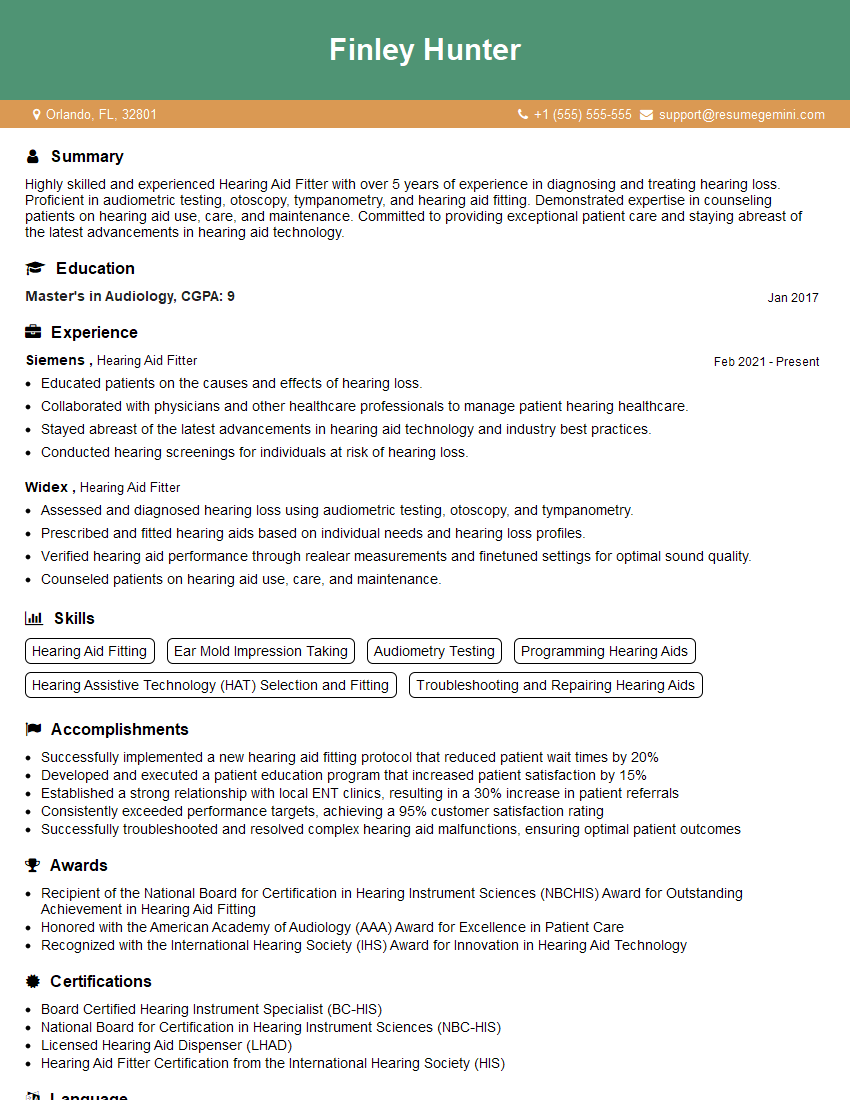
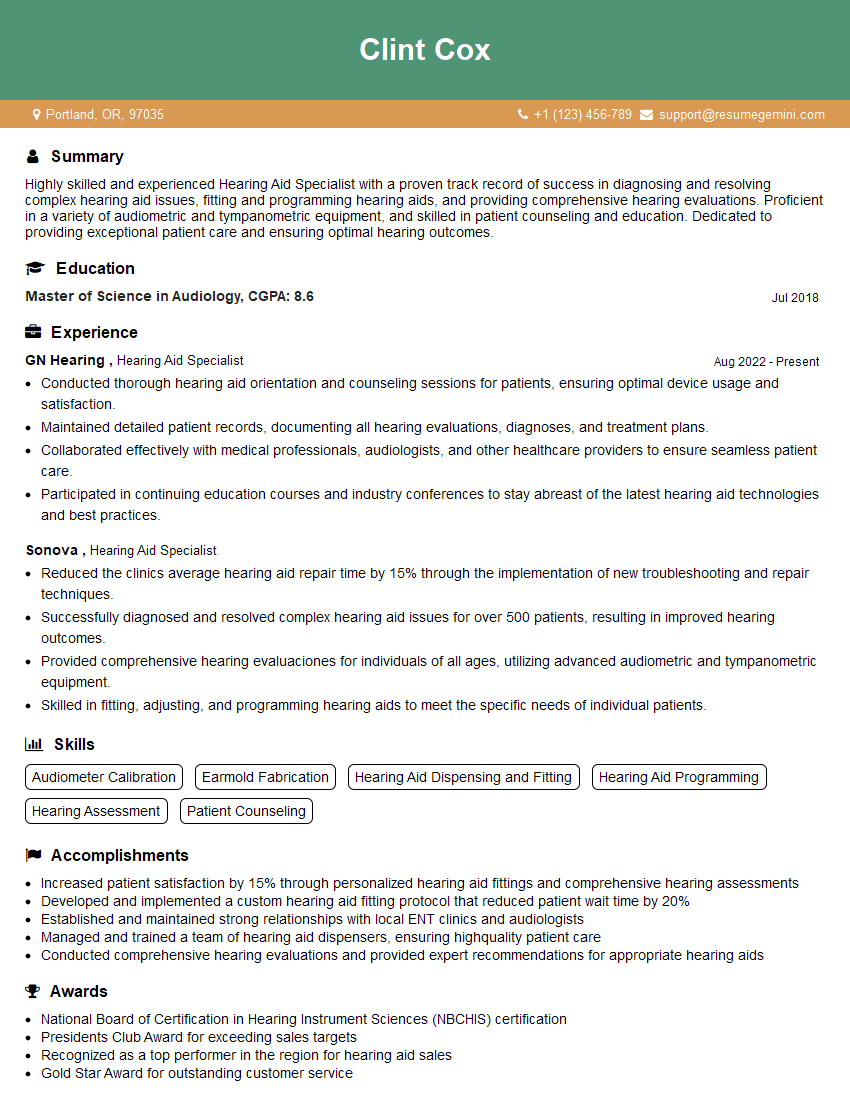
Mastering Hearing Aid Dispensing and Management is crucial for career advancement in this rewarding field. It opens doors to leadership roles, specialized areas, and increased earning potential. To significantly enhance your job prospects, create an ATS-friendly resume that highlights your skills and experience effectively. ResumeGemini is a trusted resource to help you build a professional and impactful resume. Examples of resumes tailored to Hearing Aid Dispensing and Management are available to guide you, providing a strong foundation for your job search.

Explore more articles
Users Rating of Our Blogs
Share Your Experience
We value your feedback! Please rate our content and share your thoughts (optional).
What Readers Say About Our Blog
To the interviewgemini.com Webmaster.
Very helpful and content specific questions to help prepare me for my interview!
Thank you
To the interviewgemini.com Webmaster.
This was kind of a unique content I found around the specialized skills. Very helpful questions and good detailed answers.
Very Helpful blog, thank you Interviewgemini team.