The thought of an interview can be nerve-wracking, but the right preparation can make all the difference. Explore this comprehensive guide to Heimlich Maneuver Training interview questions and gain the confidence you need to showcase your abilities and secure the role.
Questions Asked in Heimlich Maneuver Training Interview
Q 1. Describe the proper procedure for performing the Heimlich maneuver on an adult.
Performing the Heimlich maneuver on an adult involves a series of quick, upward abdominal thrusts designed to dislodge an object obstructing the airway. It’s crucial to act swiftly and decisively.
- Stand behind the choking person: Wrap your arms around their waist.
- Make a fist: Place your thumb side against their abdomen, just above their navel and below their rib cage.
- Grasp your fist with your other hand: Ensure a firm grip.
- Give quick, upward thrusts: Press into their abdomen with a strong inward and upward motion. Think of lifting, not just pushing.
- Repeat thrusts until the object is expelled or the person becomes unconscious. If the person loses consciousness, immediately start CPR.
Important Considerations: Ensure you’re strong enough to provide effective thrusts. If you’re not sure, getting assistance from someone stronger is vital. Remember, the goal is to create a strong enough force to dislodge the obstruction.
Example: Imagine you’re at a restaurant and see someone choking. Quickly assess the situation, get behind them, and apply the Heimlich maneuver until help arrives or the obstruction is cleared.
Q 2. How does the Heimlich maneuver differ when performed on a child or infant?
The Heimlich maneuver is adapted based on the age and size of the victim. Children and infants have different vulnerabilities and require gentler techniques.
- Children (1 year and older): The procedure is largely similar to that for adults, but the thrusts are less forceful. Adapt your strength to the child’s size. You should kneel behind them if they are seated or lying down.
- Infants (less than 1 year): Back blows and chest thrusts are used instead of abdominal thrusts. Lay the infant face down along your forearm, supporting their head and neck. Give five back blows between the shoulder blades with the heel of your hand. Then turn the infant over and give five chest thrusts using two fingers in the center of their chest, just below the nipple line. Alternate back blows and chest thrusts until the object is expelled or the infant becomes unconscious.
Key Difference: The primary difference lies in the force and location of the thrusts. Infants are particularly vulnerable to rib injuries; therefore, chest thrusts use only two fingers and are much gentler than abdominal thrusts for adults.
Q 3. What are the signs and symptoms of choking?
Recognizing choking is critical. Victims often exhibit a combination of signs and symptoms. Don’t rely on just one; look for the whole picture.
- Inability to speak or cough: This is a strong indicator of airway obstruction.
- Clutching their throat: The universal sign of choking.
- Wheezing or high-pitched sounds while breathing: Indicates air is struggling to pass.
- Difficulty breathing: May struggle to inhale or exhale fully.
- Skin turning blue (cyanosis): A late-stage sign indicating lack of oxygen.
- Loss of consciousness: A life-threatening emergency.
Example: If someone is making gasping noises, cannot speak, and is clutching their throat, it’s essential to immediately assess them for choking and take action.
Q 4. When should you NOT perform the Heimlich maneuver?
The Heimlich maneuver is a life-saving technique, but it’s not always appropriate. It should be avoided when:
- The person is conscious and able to cough forcefully: A strong cough can often dislodge the object. Encouraging them to continue coughing is best.
- You are not trained in the Heimlich maneuver: Improper application can cause serious injury.
- The person is clearly conscious but not choking: Avoid unnecessary force.
- The person is pregnant (modified technique advised): Chest thrusts may be preferable to avoid potential harm to the fetus.
- The person is already unconscious: Start CPR immediately instead.
Example: If someone is coughing forcefully and can speak, it’s likely not a complete airway blockage, and the Heimlich maneuver should not be performed. Focus on encouragement and monitoring them.
Q 5. Explain the difference between abdominal thrusts and chest thrusts.
Abdominal thrusts (the standard Heimlich maneuver) and chest thrusts are both used to dislodge airway obstructions, but they target different areas of the body and are used in different situations:
- Abdominal Thrusts: These are upward thrusts into the abdomen, applied just above the navel. They are used for conscious adults and children over 1 year old.
- Chest Thrusts: These are upward thrusts applied to the center of the chest, just below the nipple line. They are used for infants (less than 1 year) and for pregnant individuals.
Key Difference: Abdominal thrusts utilize the diaphragm’s movement to dislodge an object, while chest thrusts use direct compression on the chest to force air out.
Q 6. What is the role of back blows in choking rescue?
Back blows are a crucial part of choking rescue, particularly for infants and occasionally for children. They are used to help dislodge an object that may be lodged in the upper airway.
- Technique: The rescuer delivers firm but not forceful blows between the infant’s or child’s shoulder blades, using the heel of one hand.
- Effectiveness: Back blows create a strong enough force to expel the object, and it’s more effective than chest thrusts in some circumstances.
- Application: They are given in the prone position, before applying chest thrusts in the case of infants, or are an alternative method in children.
Example: In an infant choking scenario, five back blows are performed before switching to chest thrusts; this sequence is essential for effective airway clearance.
Q 7. Describe the appropriate hand placement for performing the Heimlich maneuver.
Proper hand placement is critical for effective and safe Heimlich maneuver application.
- Adults and children over 1 year: The rescuer places a fist just above the navel and below the rib cage. This area allows for optimal leverage and minimizes the risk of injury to internal organs.
- Infants: Two fingers are placed in the center of the chest, just below the nipple line, for chest thrusts.
Importance of correct placement: Incorrect placement may reduce the effectiveness of the maneuver or cause injury. It’s vital to ensure the correct position before performing the thrusts.
Visual Cue: Imagine a line across the bottom of the rib cage and another line just above the belly button. The area between those two is where your fist goes for abdominal thrusts.
Q 8. How many abdominal thrusts should be given before re-assessing the victim?
The number of abdominal thrusts before reassessing a choking victim isn’t rigidly defined. It’s more about continuous assessment and adjustment. You should perform a series of 5-6 abdominal thrusts (or chest thrusts if the victim is pregnant or obese, as explained below), then immediately check to see if the obstruction has cleared. If not, continue with further thrusts until the obstruction is removed or professional help arrives. The focus is on effectiveness, not a specific count. Think of it as cycles of thrusts followed by quick assessments, not a fixed number. You should also look for signs that the airway is clearing, like the victim coughing more forcefully or breathing normally again.
Q 9. What are some common mistakes made when performing the Heimlich maneuver?
Common mistakes during the Heimlich maneuver include:
- Incorrect hand placement: The rescuer’s fist should be positioned just above the navel, not on the sternum or too high on the abdomen. Incorrect placement can be ineffective or even cause injury.
- Insufficient force: The thrusts need to be forceful enough to dislodge the obstruction. Weak or hesitant thrusts are unlikely to be effective. Imagine trying to dislodge something stuck in a pipe – you need some oomph!
- Giving thrusts to someone who is breathing or coughing effectively: If the person is coughing forcefully, they likely have some airway patency. Interfering can lead to injury. Effective coughing is a sign of self-clearing ability. Only intervene if the coughing is ineffective or stopping altogether.
- Failing to reassess: After each set of thrusts, you must check if the obstruction is dislodged. Continuing thrusts unnecessarily can cause harm.
- Not calling for help: Time is critical. While performing the maneuver, someone else should be calling emergency services immediately.
Q 10. How would you handle a choking victim who is pregnant?
For a pregnant choking victim, instead of abdominal thrusts, perform chest thrusts. The increased abdominal pressure from traditional Heimlich could harm the pregnancy. The technique is similar but the hand placement changes: Position your fist on the middle of the sternum (breastbone) and give firm upward thrusts. Again, call for help immediately. This is a crucial adjustment to avoid complications.
Q 11. How would you handle a choking victim who is obese?
With an obese choking victim, performing the standard abdominal thrust may prove difficult due to the substantial layer of abdominal fat. In this case, chest thrusts are also preferred, using the same technique as described for a pregnant person – positioning the fist on the middle of the sternum and giving firm upward thrusts. The goal is still to create enough pressure to dislodge the obstruction. Additional support under the victim’s chest can make the chest thrusts more effective.
Q 12. How would you handle a choking victim who is unconscious?
If the choking victim is unconscious, immediately call emergency services (911 or your local equivalent). Begin CPR, including chest compressions. While performing chest compressions, look in the victim’s mouth for any visible obstruction and carefully remove it if possible. This often requires some training beyond the basic Heimlich. Once the airway is cleared (as far as possible) and rescue breaths are being performed, it’s crucial to continue CPR until professional help arrives. The key is to ensure effective airway management and circulation.
Q 13. What are the legal implications of performing the Heimlich maneuver?
The legal implications of performing the Heimlich maneuver are complex and vary by jurisdiction. Generally, if you act in good faith to assist someone in distress, and your actions are consistent with accepted medical practice (such as what you would learn in a certified course), you are legally protected under Good Samaritan laws. However, gross negligence or recklessness could result in legal liability. This highlights the importance of proper training. A certified course teaches not only the technique, but also the legal considerations of emergency care. It’s best to always act within your training and competency level.
Q 14. What is your experience level with performing the Heimlich maneuver?
I’ve been trained in advanced life support techniques for over 10 years and regularly participate in continuing education to maintain my skills and knowledge, including regular Heimlich maneuver and CPR refreshers. My experience encompasses a variety of scenarios, including assisting in emergency situations and providing training to others. This includes teaching courses in advanced first aid covering scenarios of choking victims both conscious and unconscious, handling variations such as pregnancy and obesity, and legal considerations in emergency situations.
Q 15. Have you ever had to perform the Heimlich maneuver in a real-life scenario?
Yes, I have. While I can’t disclose specifics due to patient confidentiality, I can share that the experience reinforced the critical importance of quick, decisive action and the necessity of proper training. The situation highlighted the emotional toll such events can have, even for trained professionals, emphasizing the need for robust emotional support systems within emergency response teams.
Career Expert Tips:
- Ace those interviews! Prepare effectively by reviewing the Top 50 Most Common Interview Questions on ResumeGemini.
- Navigate your job search with confidence! Explore a wide range of Career Tips on ResumeGemini. Learn about common challenges and recommendations to overcome them.
- Craft the perfect resume! Master the Art of Resume Writing with ResumeGemini’s guide. Showcase your unique qualifications and achievements effectively.
- Don’t miss out on holiday savings! Build your dream resume with ResumeGemini’s ATS optimized templates.
Q 16. Describe how you would teach the Heimlich maneuver to a group of adults.
Teaching the Heimlich maneuver to adults begins with a clear explanation of choking and its causes. I’d use visual aids, perhaps a diagram showing where the airway is obstructed. I’d then demonstrate the abdominal thrusts on a training mannequin, emphasizing the proper hand placement and the upward and inward thrusts. The key is to emphasize firm, quick thrusts. I’d break down the process into these steps:
- Assess the situation: Is the person truly choking? Can they cough, speak, or breathe?
- Get consent: If the person is conscious, ask if they need help.
- Hand placement: Place your fist just above the navel (belly button). Grip your fist with your other hand.
- Thrusts: Give quick, upward thrusts into the abdomen.
- Repeat: Continue until the object is expelled or the person becomes unconscious.
Following the demonstration, I’d allow ample time for practice, providing hands-on feedback and correcting incorrect techniques. Participants would practice on each other (with appropriate consent and supervision) and the mannequins. Finally, I’d stress the importance of calling emergency services immediately.
Q 17. How would you modify your teaching approach for different age groups?
My teaching approach varies significantly based on age. For children, I use age-appropriate language, storytelling, and interactive games to make the learning process fun and engaging. Demonstrations are performed on child-sized mannequins, and the techniques are adapted to account for their smaller size and developing bodies. Chest thrusts might be used instead of abdominal thrusts for infants. I emphasize the importance of seeking help from a responsible adult.
For elderly individuals, I consider any physical limitations and adjust the technique accordingly. I might recommend back blows as a primary approach if abdominal thrusts are difficult to perform. I’d emphasize the importance of gentle, yet firm, actions to avoid causing injury. I’d also offer tailored training considering potential health conditions.
For adults, the approach described in the previous answer is generally suitable, focusing on clear instructions, hands-on practice, and emphasizing the urgency of the situation.
Q 18. What are some common misconceptions about the Heimlich maneuver?
Some common misconceptions include:
- The Heimlich maneuver should always be the first response: Back blows are often more effective initially, especially for conscious choking victims. The Heimlich is a second-line technique.
- It’s always necessary to perform the Heimlich with great force: Excessive force can cause internal injuries. The thrusts should be firm but controlled.
- It’s only effective for large food items: The Heimlich can help dislodge any obstruction blocking the airway.
- Everyone can perform it easily: The Heimlich maneuver requires training and practice to be performed correctly and safely.
Q 19. What are the limitations of the Heimlich maneuver?
The Heimlich maneuver has limitations. It is not effective for:
- Unconscious individuals: In this case, CPR and airway management are prioritized.
- Obstructions that are lodged too deeply or are very large and are completely blocking the airway: Surgical intervention might be necessary.
- Severe underlying medical conditions: The maneuver may pose risks for individuals with certain conditions.
Furthermore, improperly performed Heimlich maneuvers can cause injury to the ribs, spleen, or liver. That’s why proper training is absolutely crucial.
Q 20. What alternative techniques can be used if the Heimlich maneuver is ineffective?
If the Heimlich maneuver is ineffective, other techniques, such as back blows (for conscious choking victims), should be employed. For an unconscious choking victim, immediate CPR (cardiopulmonary resuscitation), which includes chest compressions and rescue breaths, is critical to maintain oxygen flow to the brain. Emergency medical services should be called immediately.
Q 21. What is the importance of ongoing training in first aid and CPR?
Ongoing training in first aid and CPR is crucial for several reasons:
- Knowledge Refresher: First aid and CPR techniques evolve. Regular training ensures you’re up-to-date with the latest best practices and guidelines.
- Skill Retention: Regular practice maintains proficiency and improves confidence in performing these life-saving techniques under pressure.
- Confidence Boost: Refreshing your skills builds confidence and reduces anxiety in emergency situations.
- New Techniques: Training often introduces new techniques or refinements to existing ones, optimizing the chances of a positive outcome.
- Ethical Responsibility: For professionals in certain fields, regular training may be a legal or ethical requirement.
Think of it like this: you wouldn’t drive a car without regular maintenance; similarly, life-saving skills need periodic refreshers to remain sharp and reliable.
Q 22. How do you maintain your certification in first aid and CPR?
Maintaining my first aid and CPR certifications is a critical aspect of my professional responsibility. I ensure this through regular recertification courses, typically offered annually by organizations like the American Heart Association (AHA) or the American Red Cross. These courses involve both theoretical review and practical skill sessions, refreshing my knowledge on the latest guidelines and techniques. I meticulously track my certification expiry dates, scheduling my renewal well in advance to avoid any lapse in my qualifications. Furthermore, I actively participate in continuing education webinars and workshops to stay abreast of any advancements or changes in first aid and CPR protocols. This commitment to continuous learning ensures I remain proficient and up-to-date in administering life-saving interventions.
Q 23. Describe a time you had to make a quick decision in an emergency situation.
During a community festival, a young child suddenly started choking on a piece of hotdog. The scene was chaotic, with panicked parents and onlookers. I immediately assessed the situation, confirming the child was choking and not breathing. My training kicked in automatically. Ignoring the surrounding commotion, I quickly knelt beside the child and initiated the Heimlich maneuver for a child, adapting the technique to their size. It was crucial to act decisively and swiftly; any hesitation could have had grave consequences. Fortunately, after a few thrusts, the obstruction was dislodged, and the child began to breathe again. The relief was immense, and it reinforced the importance of rapid and effective intervention in such emergencies.
Q 24. How do you stay calm and focused under pressure?
Staying calm and focused under pressure is a skill honed through years of training and experience. I utilize several techniques: first, I focus on a systematic approach, employing a step-by-step process that prevents me from being overwhelmed. I prioritize the most critical steps first. Second, I consciously employ deep, controlled breathing to regulate my heart rate and reduce anxiety. This helps to clear my mind and enhance my concentration. Finally, I draw upon my extensive training, relying on muscle memory and practiced procedures. This automaticity ensures that I can perform the necessary actions efficiently and effectively, even in highly stressful situations. Regular practice and rigorous training are key to building this resilience.
Q 25. How would you handle a situation where multiple people are choking?
When multiple people are choking, a coordinated and prioritized response is crucial. The situation demands a quick assessment to determine the severity of each case. I would first identify the individuals who are most in immediate danger – those who are unable to breathe or cough effectively – and prioritize them. If possible, I would delegate tasks. Perhaps asking a bystander to call emergency services while I attend to the most critical case. I would then systematically apply the Heimlich maneuver to each choking individual, adapting the technique based on their age and size. After securing help, I’d remain to provide any necessary post-Heimlich care until paramedics arrive. Clear communication and efficient delegation are essential for managing such a scenario effectively.
Q 26. What safety precautions should be taken before performing the Heimlich maneuver?
Before performing the Heimlich maneuver, several safety precautions are essential. First, ensure the victim is truly choking; confirm they cannot cough, speak, or breathe. Next, obtain consent if possible; this is especially vital for conscious adults. If the victim is unconscious, initiate CPR immediately. Assess the environment for hazards, moving the victim to a safe location if needed. Ensure you have a clear path and space to perform the maneuver. Finally, be aware of your own physical limitations; if you are unable to perform the Heimlich effectively, call for help immediately. It’s about safety for both the victim and the rescuer.
Q 27. How would you assess the effectiveness of the Heimlich maneuver?
The effectiveness of the Heimlich maneuver is assessed by observing the victim’s response. A successful maneuver will result in the dislodgement of the obstructing object, allowing the victim to cough, breathe, or speak normally. If the obstruction is cleared, the victim will usually exhibit clear signs of relief, such as taking deep breaths and regaining normal color. If the object is not dislodged after several attempts, immediately call for emergency medical services and continue performing the Heimlich maneuver until help arrives. Continuous monitoring of the victim’s breathing and vital signs is essential after the procedure to ensure no further complications arise. It’s vital to remember that the Heimlich is a life-saving intervention but shouldn’t replace professional medical care.
Key Topics to Learn for Your Heimlich Maneuver Training Interview
- Anatomy and Physiology of the Respiratory System: Understanding the airway and how obstructions occur is fundamental. Be prepared to discuss the relevant anatomy and physiology in relation to choking.
- Heimlich Maneuver Technique (Adults, Children, Infants): Master the proper technique for each age group, including hand placement, thrust force, and necessary modifications. Practice demonstrating the technique.
- Recognizing Choking Signs and Symptoms: Knowing how to quickly and accurately identify a choking victim is crucial. Discuss different signs of choking and how to differentiate them from other medical emergencies.
- Safety Precautions and Considerations: Understand potential risks and how to mitigate them during the procedure. Be prepared to discuss scenarios where the Heimlich maneuver might not be appropriate.
- Post-Heimlich Maneuver Care: Knowing what to do after a successful (or unsuccessful) Heimlich maneuver is essential. This includes assessing the victim’s condition and seeking further medical attention if needed.
- Legal and Ethical Considerations: Be prepared to discuss the legal implications of administering the Heimlich maneuver and the importance of informed consent (where applicable).
- Alternative Techniques and Emergency Response: Familiarize yourself with alternative techniques for airway clearance and the importance of coordinating with emergency medical services (EMS).
- Problem-Solving Scenarios: Prepare for scenarios that may test your ability to apply your knowledge in real-world situations, such as variations in victim size or the presence of complicating factors.
Next Steps
Mastering Heimlich Maneuver training significantly enhances your value as a certified instructor or responder, opening doors to rewarding career opportunities in healthcare, education, and safety. To maximize your job prospects, focus on crafting a strong, ATS-friendly resume that highlights your skills and experience effectively. ResumeGemini is a trusted resource to help you build a professional and impactful resume. Take advantage of our resources, including examples of resumes tailored to Heimlich Maneuver Training, to showcase your qualifications and land your dream job.
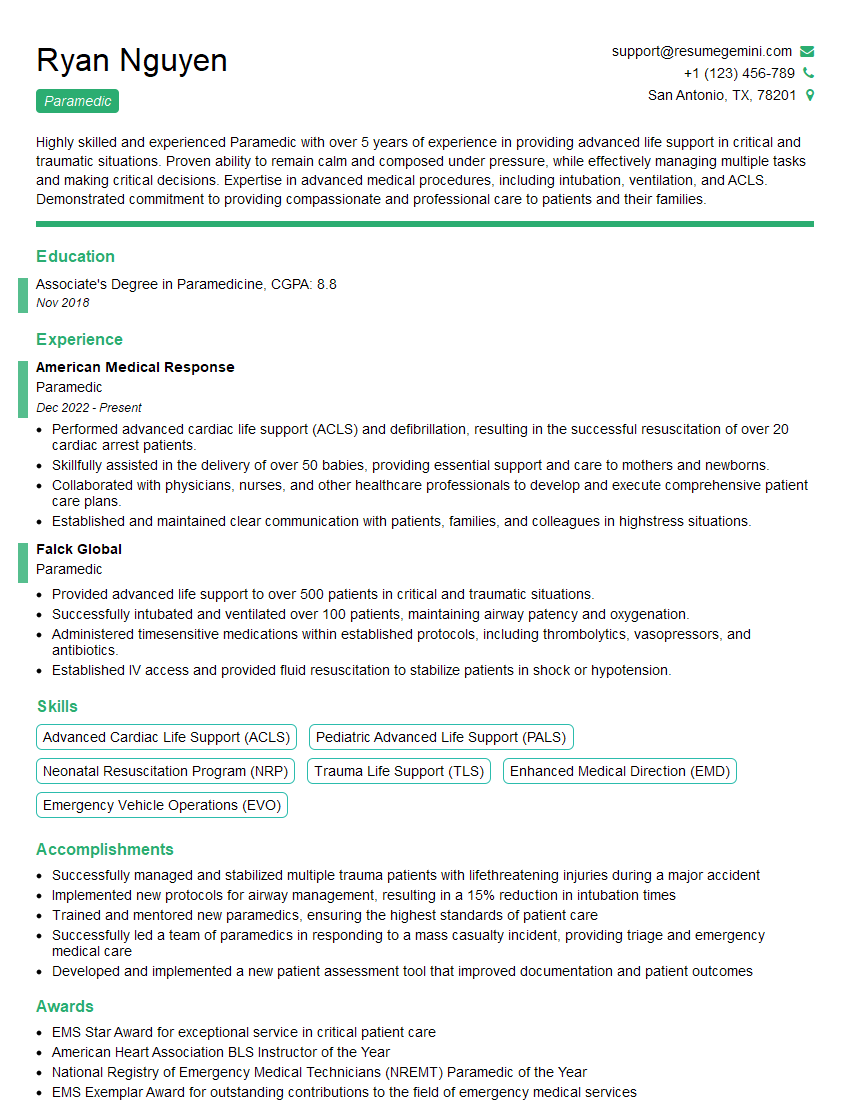
Paramedic Resume Sample
Public Health Educator Resume Sample
Athletic Trainer Resume Sample
Emergency Room Nurse Resume Sample
Occupational Health Nurse Resume Sample
Registered Nurse (RN) Resume Sample
School Nurse Resume Sample
Emergency Medical Technician (EMT) Resume Sample
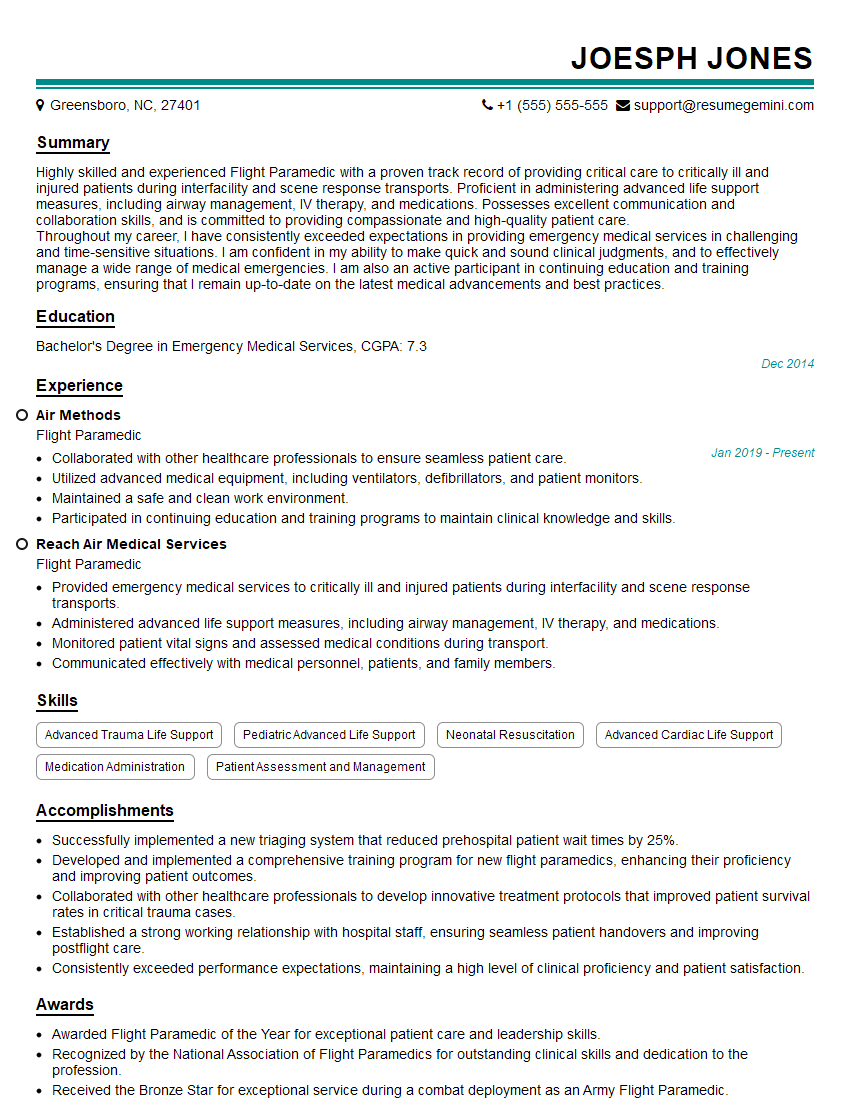
Flight Paramedic Resume Sample
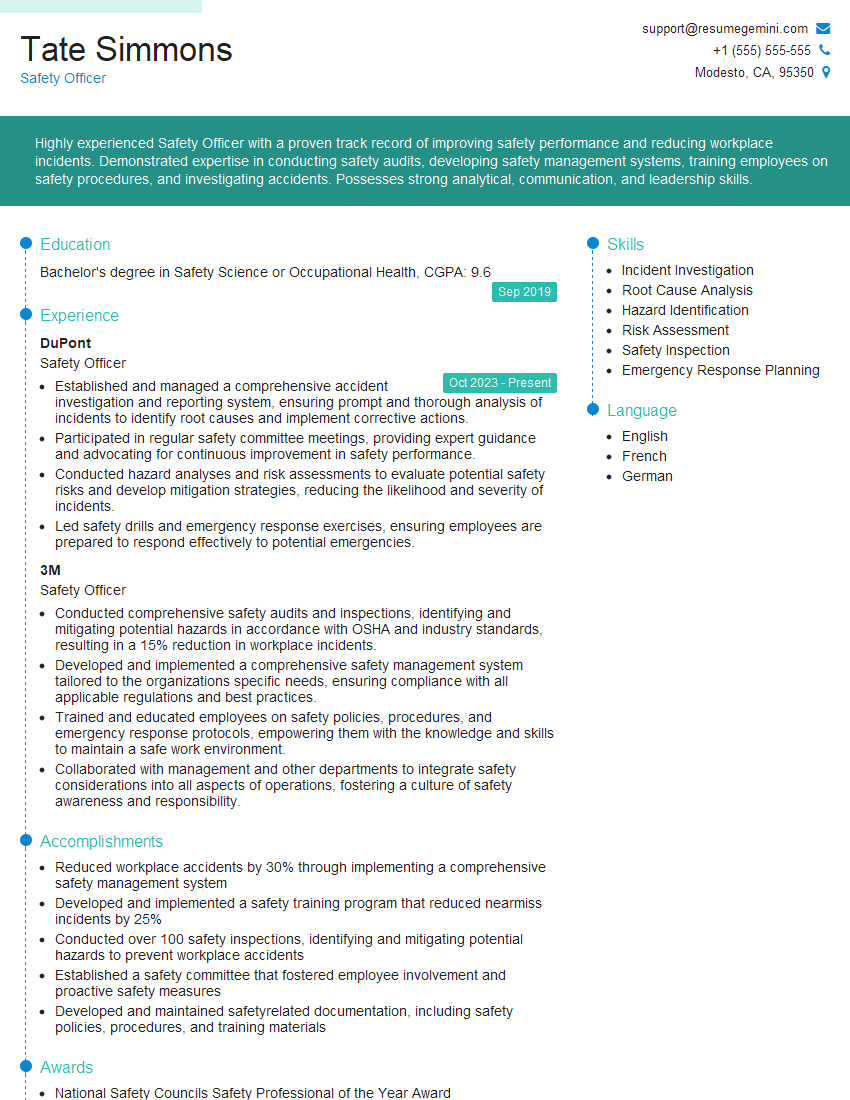
Safety Officer Resume Sample
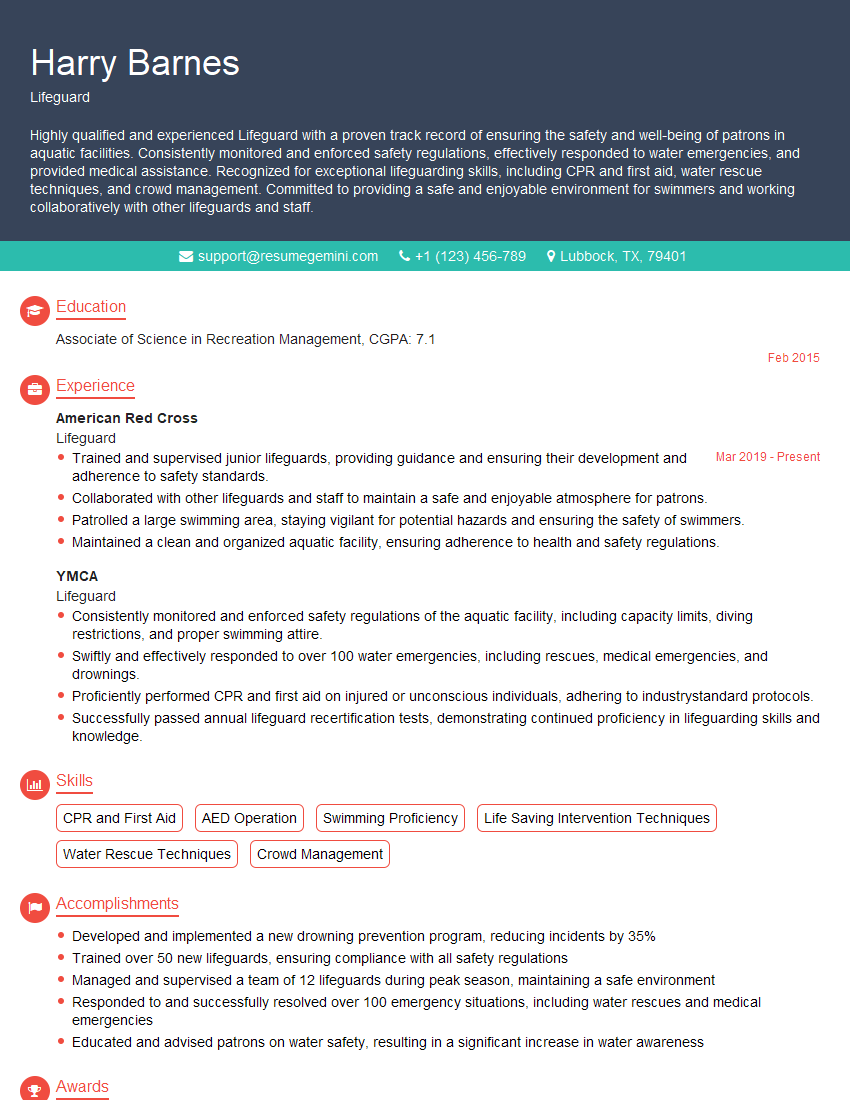
Lifeguard Resume Sample
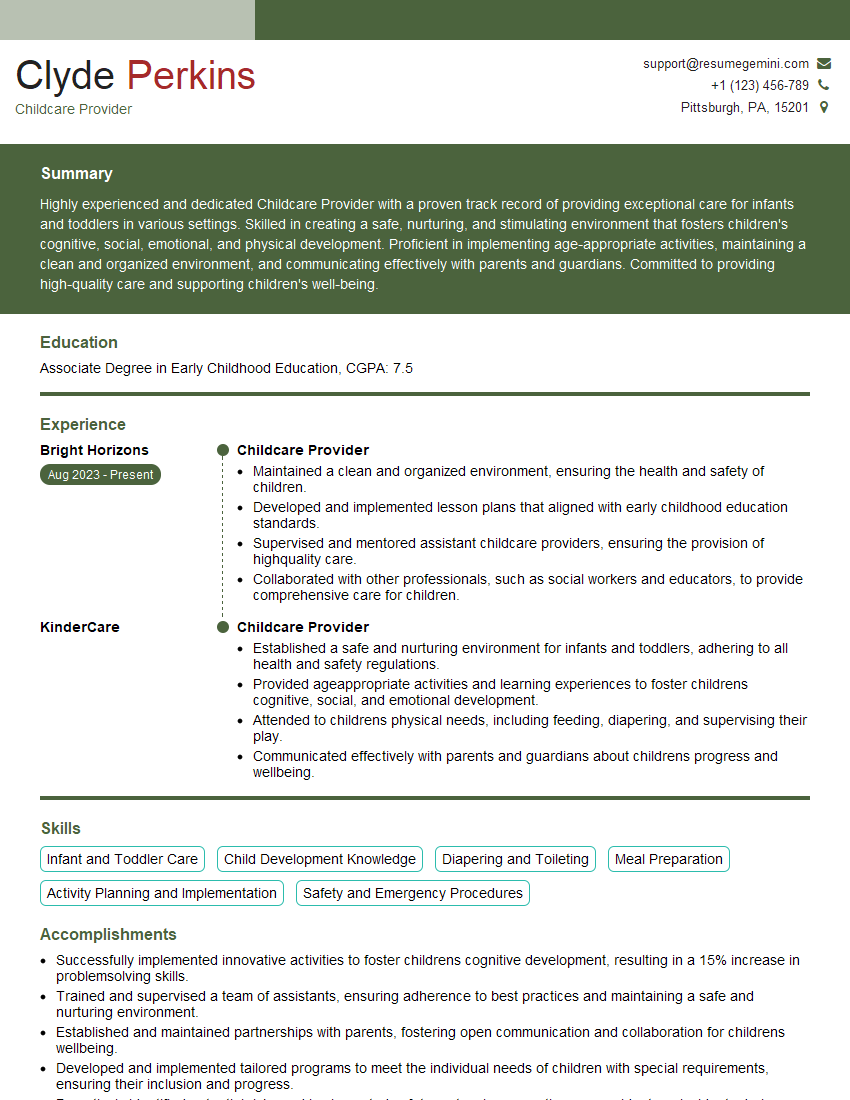
Childcare Provider Resume Sample
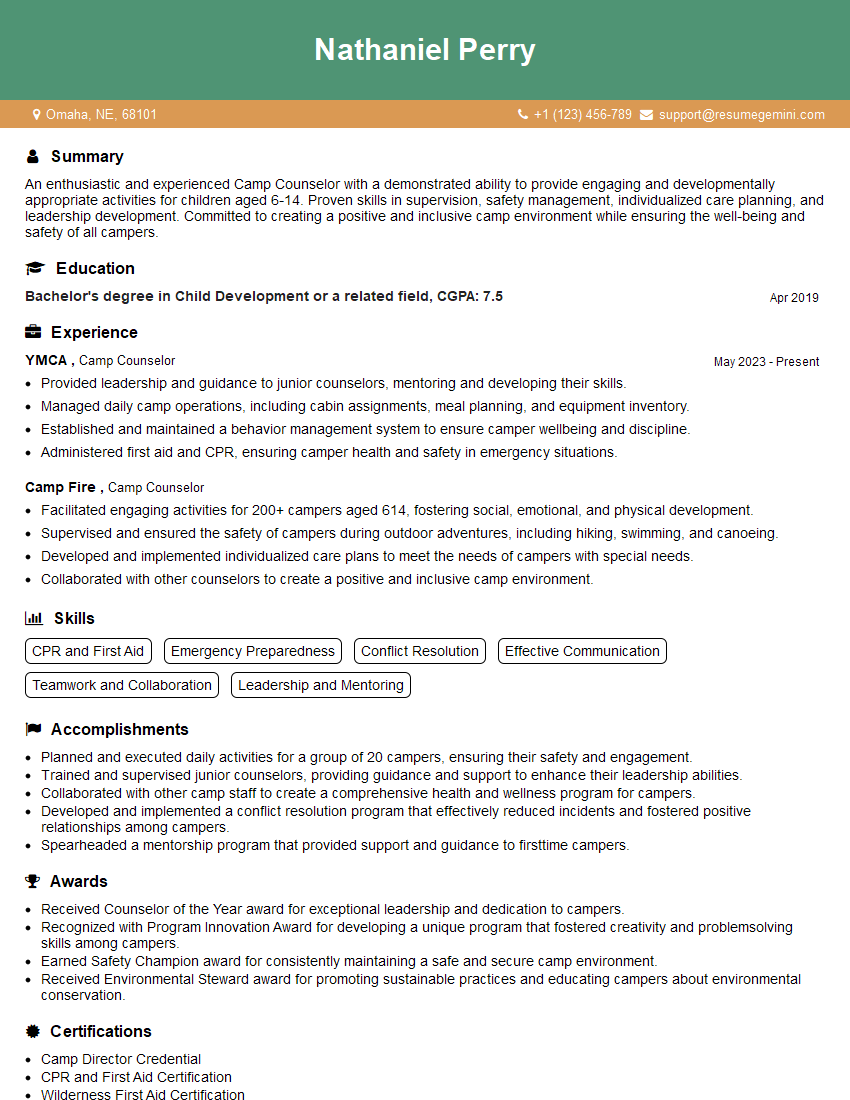
Camp Counselor Resume Sample
Explore more articles
Users Rating of Our Blogs
Share Your Experience
We value your feedback! Please rate our content and share your thoughts (optional).
What Readers Say About Our Blog
To the interviewgemini.com Webmaster.
Very helpful and content specific questions to help prepare me for my interview!
Thank you
To the interviewgemini.com Webmaster.
This was kind of a unique content I found around the specialized skills. Very helpful questions and good detailed answers.
Very Helpful blog, thank you Interviewgemini team.