Feeling uncertain about what to expect in your upcoming interview? We’ve got you covered! This blog highlights the most important Hydrogen Plant Operation interview questions and provides actionable advice to help you stand out as the ideal candidate. Let’s pave the way for your success.
Questions Asked in Hydrogen Plant Operation Interview
Q 1. Explain the different methods of hydrogen production.
Hydrogen production methods can be broadly categorized into two main types: those that utilize fossil fuels and those that leverage renewable energy sources. Let’s explore these in detail.
- Steam Methane Reforming (SMR): This is currently the dominant method, involving reacting natural gas (methane) with steam at high temperatures (700-1100°C) and pressures in the presence of a catalyst (typically nickel). This produces a mixture of hydrogen and carbon monoxide (syngas), which then undergoes a shift reaction to increase hydrogen yield. SMR is cost-effective but contributes to greenhouse gas emissions.
- Coal Gasification: Similar to SMR, but uses coal instead of natural gas. This process is also less efficient and produces more CO2 emissions than SMR.
- Electrolysis: This is a green method, using electricity to split water (H₂O) into its constituent elements, hydrogen, and oxygen. The efficiency and cost of electrolysis are heavily reliant on the cost and source of electricity used. Different types exist, such as alkaline, proton exchange membrane (PEM), and solid oxide electrolysis (SOE), each with unique advantages and disadvantages regarding efficiency, operating temperature, and cost.
- Photoelectrochemical (PEC) Water Splitting: This uses sunlight to directly split water into hydrogen and oxygen, offering a truly sustainable approach. It’s still under development, with challenges in efficiency and scalability.
- Biological Hydrogen Production: Certain microorganisms can produce hydrogen through various metabolic pathways. This approach is still at a research and development stage, with significant potential for future applications.
The choice of method depends on factors such as cost, availability of resources, environmental concerns, and desired hydrogen purity.
Q 2. Describe the safety procedures for operating a hydrogen plant.
Safety in hydrogen plant operation is paramount. Hydrogen’s flammability and low ignition energy necessitate rigorous safety protocols. Here are key aspects:
- Leak Detection and Prevention: Regular inspections, leak detection systems (e.g., ultrasonic detectors), and proper sealing of equipment and pipelines are crucial. We use specialized equipment to detect even minute leaks.
- Ventilation and Purge Systems: Adequate ventilation to prevent hydrogen accumulation in hazardous concentrations is essential. Purge systems are used to remove hydrogen from equipment before maintenance or shutdown.
- Emergency Shutdown Systems (ESD): ESD systems are designed to automatically shut down the plant in case of emergencies, such as high pressure, temperature excursions, or leaks, minimizing the risk of accidents. These systems are regularly tested and maintained.
- Personal Protective Equipment (PPE): Workers must use appropriate PPE including flame-resistant clothing, safety glasses, and respiratory protection in designated areas.
- Training and Procedures: Comprehensive training programs are essential for all personnel involved in hydrogen plant operation. Detailed standard operating procedures (SOPs) are created and strictly adhered to.
- Hydrogen Monitoring and Alarms: Continuous monitoring of hydrogen concentrations in various areas of the plant is critical, with alarms triggered if levels exceed safe limits. This allows for swift response and mitigation of potential hazards.
Regular safety audits and drills further enhance safety protocols, ensuring the plant operates within the strictest safety guidelines.
Q 3. What are the key performance indicators (KPIs) for a hydrogen plant?
Key Performance Indicators (KPIs) for a hydrogen plant are essential for assessing efficiency, productivity, and safety. These KPIs can be grouped into several categories:
- Production KPIs: Hydrogen production rate (kg/h or Nm³/h), hydrogen purity (%), yield (%), and on-stream factor (percentage of time the plant is operational).
- Energy Efficiency KPIs: Specific energy consumption (SEC) in kWh/kg H₂, energy conversion efficiency, and thermal efficiency.
- Quality KPIs: Hydrogen purity, trace impurities (e.g., CO, CO₂, CH₄), and moisture content.
- Safety KPIs: Number of safety incidents, leak detection rate, emergency shutdown system response time, and compliance with safety regulations.
- Economic KPIs: Production cost per kg of hydrogen, operating cost, and return on investment (ROI).
Continuous monitoring and analysis of these KPIs are vital for optimizing plant operation and identifying areas for improvement. We use data analytics to track performance, identify trends, and make informed decisions to enhance efficiency.
Q 4. How do you ensure the quality and purity of produced hydrogen?
Ensuring hydrogen quality and purity involves multiple steps throughout the production process. The specific methods vary depending on the production technology and desired applications.
- Purification Processes: Techniques like Pressure Swing Adsorption (PSA), membrane separation, and cryogenic distillation are frequently employed to remove impurities such as carbon monoxide, carbon dioxide, and methane from the hydrogen stream. PSA is particularly common.
- Process Control: Precise control of process parameters such as temperature, pressure, and flow rates is critical to maintain optimal hydrogen production and purity. Advanced control systems and automation play an essential role.
- Quality Monitoring: Continuous monitoring of hydrogen purity and composition using online gas analyzers is essential. This allows for immediate detection and correction of any deviations from the desired specifications. We employ Gas Chromatography (GC) regularly for detailed analysis.
- Regular Maintenance: Regular maintenance of equipment, including catalysts and purification systems, is vital for ensuring consistent hydrogen quality. This helps prevent degradation and maintain optimal performance.
The exact quality standards are determined by the end-use application. For example, fuel cell applications require higher purity levels compared to industrial applications.
Q 5. What are the common challenges in hydrogen storage and transportation?
Hydrogen storage and transportation present significant challenges due to its low density and flammability. Here are some key issues:
- Low Energy Density: Hydrogen’s low volumetric energy density requires large storage tanks or high-pressure systems for a given amount of energy. This impacts transportation costs and infrastructure requirements.
- Embrittlement: Hydrogen can cause embrittlement in certain metals, leading to material degradation and potential failure of storage tanks and pipelines. Material selection is critical to mitigate this risk.
- Leakage: The small size of hydrogen molecules can lead to leakage from storage tanks and pipelines. This necessitates robust sealing and leak detection systems.
- Safety Concerns: The flammability and potential for explosion necessitate stringent safety regulations and protocols for handling, storage, and transportation.
- Transportation Costs: Transporting hydrogen is expensive, whether through pipelines, trucks, or ships, due to its low energy density and the need for specialized infrastructure.
Research and development focus on addressing these challenges, exploring advanced storage materials (e.g., metal hydrides, carbon nanotubes), improved pipeline technologies, and innovative transportation methods (e.g., liquid hydrogen transport).
Q 6. Explain the role of instrumentation and control systems in hydrogen plant operation.
Instrumentation and Control Systems (ICS) are the backbone of safe and efficient hydrogen plant operation. They monitor critical parameters, automate processes, and ensure plant safety.
- Sensors and Transmitters: A wide range of sensors monitor temperature, pressure, flow rate, gas composition, and level. These sensors provide real-time data to the control system.
- Distributed Control Systems (DCS): DCS is the central brain of the plant, managing and controlling all aspects of the process. This sophisticated system allows for automated control and optimization of the process.
- Safety Instrumented Systems (SIS): SIS is responsible for safety-critical functions, such as emergency shutdown and interlocks, providing an independent layer of protection.
- Supervisory Control and Data Acquisition (SCADA): SCADA systems provide a centralized platform for monitoring and controlling the plant from a central location. We use SCADA interfaces extensively to supervise the entire process and receive real-time alerts.
- Data Logging and Analysis: Data logging systems record all relevant process parameters, enabling historical analysis and process optimization. This data informs predictive maintenance strategies.
The ICS is crucial for ensuring safe and efficient operation, maximizing production, minimizing downtime, and optimizing energy consumption. Regular calibration and maintenance of the instrumentation are critical for reliable operation.
Q 7. Describe your experience with troubleshooting hydrogen plant equipment malfunctions.
Troubleshooting hydrogen plant equipment malfunctions requires a systematic approach. My experience involves a combination of theoretical knowledge, practical skills, and problem-solving strategies. Here’s a typical process:
- Identify the Problem: Start by carefully assessing the symptoms of the malfunction, using all available data from the ICS, including alarms, sensor readings, and historical data.
- Isolate the Source: Systematically check components in the affected area to pinpoint the root cause. This might involve checking sensors, actuators, valves, and other equipment.
- Diagnose the Fault: Once the source is identified, diagnose the specific fault. This could involve examining wiring, checking for leaks, or inspecting the equipment for physical damage. We often utilize diagnostic tools and software for this purpose.
- Implement Corrective Actions: Based on the diagnosis, implement the necessary corrective actions. This may involve repairing damaged components, replacing faulty sensors, or re-calibrating instruments.
- Verify the Solution: After implementing the corrective actions, carefully verify that the problem is resolved and the plant is operating normally. Monitor the system for a period to ensure there is no recurrence.
- Document Findings: Finally, thoroughly document the problem, the troubleshooting process, and the corrective actions taken. This information is invaluable for future troubleshooting and preventive maintenance.
I’ve dealt with various malfunctions, including compressor failures, leaks in high-pressure lines, and issues with purification systems. My approach has always been systematic and data-driven, ensuring swift resolution with minimal downtime and maximum safety.
Q 8. How do you maintain the integrity of high-pressure hydrogen systems?
Maintaining the integrity of high-pressure hydrogen systems is paramount due to hydrogen’s inherent properties – its low density, high diffusivity, and potential for embrittlement. A multi-pronged approach is essential.
Material Selection: We utilize materials specifically designed for high-pressure hydrogen service, such as high-strength, low-alloy steels or specialized austenitic stainless steels known for their resistance to hydrogen embrittlement. Regular material testing, including ultrasonic inspection and chemical analysis, ensures ongoing integrity.
Regular Inspection and Maintenance: This includes visual inspections for leaks, corrosion, and damage, as well as non-destructive testing (NDT) techniques like radiography and magnetic particle inspection. We follow strict preventative maintenance schedules for valves, pressure relief devices, and other critical components.
Leak Detection and Repair: Implementing robust leak detection systems, including online hydrogen analyzers and specialized leak detection agents, is critical. Repair procedures must adhere to strict safety protocols and use approved welding techniques to ensure a sound, leak-free system.
Pressure Management: Precise pressure control and monitoring are crucial. Pressure relief valves are regularly tested and calibrated to ensure they function correctly, preventing over-pressurization. Safety interlocks and emergency shutdown systems further enhance safety.
Operational Procedures: Stringent operating procedures, including proper startup, shutdown, and emergency response protocols, are crucial. Operator training and competency assessments are regularly conducted to ensure adherence to safety standards. For example, we conduct regular drills to ensure staff can safely respond to leaks or other emergencies.
Q 9. What are the environmental considerations related to hydrogen production?
Environmental considerations in hydrogen production are significant and depend heavily on the production method. Green hydrogen production, primarily through electrolysis powered by renewable energy, minimizes environmental impact. However, other methods present challenges.
Greenhouse Gas Emissions: Steam methane reforming (SMR), a common hydrogen production method, generates significant CO2 emissions. Carbon capture, utilization, and storage (CCUS) technologies are being explored to mitigate this.
Water Consumption: Electrolysis consumes considerable amounts of water, particularly in arid regions. Efficient water management and recycling strategies are needed to minimize environmental impact. We focus on closed-loop systems whenever possible.
Air Emissions: Some production methods, like SMR, can release other pollutants, such as nitrogen oxides (NOx) and particulate matter. Strict emission control measures are necessary to comply with environmental regulations.
Waste Management: Proper disposal or recycling of byproducts is essential. For example, in SMR, handling and managing spent catalyst is critical. This includes specialized storage and disposal processes.
Land Use: Large-scale hydrogen production facilities require significant land area. Careful site selection to minimize ecological disruption is crucial. We prioritize sites with minimal impact on sensitive ecosystems.
Q 10. Explain the process of hydrogen purification.
Hydrogen purification removes impurities from the produced hydrogen stream, ensuring high purity for various applications, such as fuel cells.
Pressure Swing Adsorption (PSA): This is a common method that utilizes adsorbent materials to selectively remove impurities like CO, CO2, and N2 at high pressure. When the pressure is reduced, the adsorbed impurities are released, resulting in a purified hydrogen stream.
Membrane Separation: This technique uses specialized membranes that selectively permeate hydrogen while retaining impurities. This method is particularly useful for removing smaller impurities like methane.
Cryogenic Distillation: At very low temperatures, hydrogen’s boiling point is significantly lower than most impurities, making it possible to separate hydrogen through fractional distillation.
Methanation: This process converts trace amounts of CO to methane (CH4) through a catalytic reaction, which is then easily removed. This step is often used before PSA to remove CO efficiently.
The choice of purification method depends on the feedstock and desired hydrogen purity. For instance, PSA is widely used for large-scale hydrogen production due to its scalability and efficiency. We often employ a combination of techniques to achieve the desired purity level. For example, methanation followed by PSA is very common in SMR plants.
Q 11. What is your experience with different types of electrolyzers?
My experience encompasses various electrolyzer technologies, each with its strengths and weaknesses.
Alkaline Electrolyzers: These are mature technologies known for their cost-effectiveness and relatively simple operation. However, they typically operate at lower current densities and may have limitations in terms of dynamic response.
Proton Exchange Membrane (PEM) Electrolyzers: PEM electrolyzers offer higher efficiency and faster response times compared to alkaline electrolyzers. They are particularly suitable for applications requiring high purity hydrogen and flexible operation. However, they are generally more expensive and require more sophisticated control systems. I’ve worked extensively with both types of PEM, including those using different membrane materials.
Solid Oxide Electrolyzers (SOE): SOE electrolyzers operate at high temperatures, offering high efficiency and the potential to integrate with other high-temperature processes. They are still under development but show promise for large-scale hydrogen production.
My experience includes troubleshooting, maintenance, and performance optimization of each type. For instance, I’ve led the effort to improve the lifetime of PEM electrolyzers in a specific application by adjusting operating parameters and implementing preventive maintenance strategies.
Q 12. Describe your experience with steam methane reforming (SMR).
Steam methane reforming (SMR) is a widely used industrial process for hydrogen production. It involves reacting methane (natural gas) with steam at high temperatures and pressures in the presence of a catalyst to produce hydrogen and carbon dioxide.
Process Description: The process typically involves several stages: primary reforming, secondary reforming (if required to achieve a high conversion of methane), shift conversion to reduce CO concentration, and CO2 removal.
Catalyst Management: Careful catalyst management is critical for optimal efficiency and longevity. This involves regular monitoring of catalyst activity and potentially replacing deactivated catalyst.
Process Optimization: Optimizing SMR involves adjusting parameters like steam-to-methane ratio, temperature, and pressure to maximize hydrogen production while minimizing energy consumption. I have experience using advanced process control strategies to achieve this.
Safety Considerations: SMR plants operate at high temperatures and pressures, requiring robust safety systems and procedures. Strict adherence to safety protocols and regular safety inspections are crucial to prevent accidents. For example, I’ve been involved in designing and implementing emergency shutdown systems for SMR units.
In my experience, efficient operation of an SMR plant demands a deep understanding of process chemistry, thermodynamics, and control systems. We constantly monitor key parameters, and use modelling and simulation tools to optimize performance.
Q 13. How do you manage hydrogen plant energy efficiency?
Managing hydrogen plant energy efficiency is crucial for economic viability and environmental sustainability. Strategies focus on optimizing individual processes and integrating renewable energy sources.
Process Optimization: This includes optimizing operating parameters in SMR or electrolysis, minimizing energy losses through insulation, and using efficient heat recovery systems.
Renewable Energy Integration: Utilizing renewable energy sources like solar and wind power to supply electricity for electrolysis dramatically reduces the carbon footprint and can improve overall efficiency.
Waste Heat Recovery: Capturing and reusing waste heat from processes like SMR significantly improves energy efficiency. This can be used for preheating feedstock or generating steam.
Advanced Control Systems: Implementing advanced process control strategies, such as model predictive control (MPC), can optimize energy consumption by dynamically adjusting operating parameters based on real-time conditions.
Energy Audits: Regular energy audits identify areas for improvement, leading to informed decisions on upgrading equipment or implementing new energy-saving technologies.
For example, in one project, we implemented a waste heat recovery system that reduced overall energy consumption by 15%, significantly improving the plant’s economic performance and environmental profile.
Q 14. Explain the concept of hydrogen embrittlement and its prevention.
Hydrogen embrittlement is a phenomenon where hydrogen atoms penetrate metal lattices, causing them to become brittle and prone to cracking. This is particularly concerning in high-pressure hydrogen systems.
Mechanism: Hydrogen atoms diffuse into the metal, accumulating at grain boundaries and other defects. This leads to internal pressure buildup and crack initiation and propagation.
Prevention: Several strategies are employed to mitigate hydrogen embrittlement.
Material Selection: Choosing materials with inherent resistance to hydrogen embrittlement is crucial. This often involves selecting specialized grades of steel or other alloys.
Surface Treatments: Coatings or surface treatments can create a barrier, preventing hydrogen from diffusing into the metal. This might involve specialized coatings, or even processes that modify the metal’s surface structure.
Hydrogen Purification: Ensuring high-purity hydrogen minimizes the concentration of harmful impurities that can exacerbate embrittlement.
Stress Management: Minimizing residual stresses during fabrication and operation is important. Proper welding techniques and stress-relieving treatments can be implemented to achieve this.
Regular Inspection: Ongoing inspection and monitoring are crucial to detect early signs of embrittlement.
For example, in a previous project where hydrogen embrittlement was a concern, we implemented a combination of selecting a hydrogen-resistant steel grade, applying a protective coating to the critical components, and incorporating a rigorous inspection program, leading to a significant reduction in failures.
Q 15. What safety protocols do you follow when handling hydrogen gas?
Handling hydrogen presents unique safety challenges due to its flammability and low ignition energy. Our protocols begin with rigorous training for all personnel, emphasizing the inherent risks. We strictly adhere to a permit-to-work system for all high-risk activities, ensuring proper risk assessments and control measures are in place before work commences. This includes regular leak detection checks using specialized equipment like thermal cameras and gas detectors, ensuring immediate identification and mitigation of any leaks. Furthermore, we maintain a comprehensive emergency response plan with dedicated emergency shutdown systems and well-rehearsed drills. Personal protective equipment (PPE), including flame-resistant clothing, respirators and safety glasses, is mandatory in designated areas. We also implement strict procedures for ventilation, ensuring sufficient airflow to prevent hydrogen accumulation. A critical aspect is the proper grounding and bonding of equipment to prevent static electricity buildup, a potential ignition source. Finally, we meticulously document all safety procedures and incidents, using this data for continuous improvement of our safety protocols. For example, a recent near-miss incident involving a small hydrogen leak prompted an immediate review of our leak detection procedures, leading to the implementation of additional sensors in high-risk areas.
Career Expert Tips:
- Ace those interviews! Prepare effectively by reviewing the Top 50 Most Common Interview Questions on ResumeGemini.
- Navigate your job search with confidence! Explore a wide range of Career Tips on ResumeGemini. Learn about common challenges and recommendations to overcome them.
- Craft the perfect resume! Master the Art of Resume Writing with ResumeGemini’s guide. Showcase your unique qualifications and achievements effectively.
- Don’t miss out on holiday savings! Build your dream resume with ResumeGemini’s ATS optimized templates.
Q 16. How do you perform regular maintenance on hydrogen plant equipment?
Regular maintenance is paramount for ensuring the safe and efficient operation of a hydrogen plant. Our maintenance program follows a preventive and predictive approach, relying heavily on scheduled inspections, routine testing, and data analysis. This includes visual inspections of equipment for wear and tear, pressure testing of pipelines and vessels, and analysis of gas purity and composition. We utilize vibration analysis and other advanced diagnostic techniques to detect potential problems before they lead to equipment failure. For instance, we perform regular checks on the compressors’ lubrication systems, checking oil levels and quality to prevent damage and extend the lifespan of these critical components. Furthermore, regular cleaning of heat exchangers and other components is crucial to prevent fouling and maintain optimal efficiency. We meticulously document all maintenance activities and results, using this data to optimize our maintenance schedule and anticipate potential issues. Our maintenance team receives ongoing training to stay updated on best practices and to handle new technologies. For example, we’ve recently started implementing remote monitoring and diagnostics to enable proactive maintenance and reduce downtime.
Q 17. Describe your experience with hydrogen compression and liquefaction.
I have extensive experience in both hydrogen compression and liquefaction, having worked on several large-scale projects. Hydrogen compression typically involves multi-stage compressors to achieve the high pressures required for storage and transportation. I’m familiar with various compressor types, including reciprocating, centrifugal, and diaphragm compressors, each suited to different pressure and flow rate requirements. Liquefaction, on the other hand, involves cooling hydrogen to its boiling point (-253°C) to reduce its volume significantly. This process typically involves a combination of cryogenic refrigeration cycles, often using nitrogen or helium as a refrigerant. I have firsthand experience optimizing these processes to enhance efficiency and reduce energy consumption, focusing on factors such as compressor staging, heat exchanger design, and insulation. In one project, we implemented a new control system that reduced energy consumption in the liquefaction process by 15%, showcasing the impact of careful process optimization. Understanding the thermodynamics and fluid mechanics behind these processes is crucial for efficient and safe operation.
Q 18. What are the different types of hydrogen storage methods?
Several methods exist for storing hydrogen, each with advantages and disadvantages depending on the application. The most common include:
- Compressed gas storage (CGS): Hydrogen is compressed into high-pressure cylinders or tanks. This is a widely used method, but it’s energy-intensive and requires robust, heavy-duty storage vessels.
- Liquefied gas storage (LGS): Hydrogen is liquefied and stored in cryogenic tanks, significantly reducing its volume. This method is suitable for large-scale storage, but maintaining the extremely low temperatures (-253°C) requires significant energy and specialized equipment.
- Metal hydrides: Hydrogen is absorbed into certain metals, creating a solid-state storage medium. This is a safe and efficient method, but the cost and reversibility of the process can be a limiting factor.
- Chemical storage: Hydrogen is chemically bound to other elements (e.g., ammonia) for transportation and later release through a chemical process. While offering high storage density, this method requires additional processing steps to release the hydrogen.
Q 19. How do you ensure compliance with safety regulations in a hydrogen plant?
Ensuring regulatory compliance is an absolute priority in hydrogen plant operations. We maintain a robust safety management system that aligns with all relevant national and international standards and regulations. This includes conducting regular internal audits and third-party inspections to verify adherence to safety protocols and environmental regulations. We meticulously document all safety procedures, maintenance records, and emergency response activities. Our team receives ongoing training on the latest safety regulations and best practices. We also actively participate in industry forums and collaborate with regulatory bodies to stay informed about evolving standards. In the event of a non-compliance, we immediately implement corrective actions, meticulously documenting the incident, root cause analysis and preventative measures, ensuring that the issue is addressed promptly and effectively. For example, a recent audit highlighted the need to update our emergency shutdown procedures, leading to a comprehensive review and revision of our protocols.
Q 20. Explain the process of hydrogen plant start-up and shut-down.
The start-up and shut-down procedures for a hydrogen plant are carefully defined and strictly followed to ensure safety and prevent equipment damage. Start-up involves a phased approach, beginning with pre-start checks including verifying equipment integrity and ensuring sufficient utility supplies. We then proceed to gradually bring online the different plant sections, closely monitoring parameters such as pressure, temperature, and gas purity. A detailed checklist is used at each stage to ensure all steps are completed correctly. Shut-down is equally important and involves a systematic process to safely depressurize and purge the system, ensuring that no hydrogen remains in the equipment or pipelines. This process involves carefully venting the hydrogen to a safe location, typically a flare stack, or using a hydrogen recovery system. Emergency shut-down procedures are readily available and practiced regularly, ready for immediate implementation in case of any abnormalities. For example, a pre-programmed sequence of actions is triggered upon detection of any critical parameter deviation, ensuring a safe and controlled shut-down. Documentation of start-up and shut-down procedures is crucial for maintaining a safety record.
Q 21. Describe your experience with hydrogen plant automation systems.
I have significant experience with hydrogen plant automation systems, using programmable logic controllers (PLCs) and distributed control systems (DCS) to monitor and control various aspects of plant operation. These systems play a critical role in optimizing plant efficiency, ensuring safe operation, and minimizing human error. I’m proficient in using SCADA (Supervisory Control and Data Acquisition) systems to monitor real-time data from various plant sensors, providing insights into plant performance and alerting operators to any anomalies. Advanced control algorithms, such as predictive control and model predictive control (MPC), can optimize the plant’s operating conditions, maximizing efficiency and minimizing energy consumption. For example, a PLC-based system might automatically adjust the flow rates of hydrogen based on the pressure readings from various parts of the pipeline. Furthermore, I have experience with integrating safety systems such as emergency shut-down systems (ESD) into the automation architecture, enhancing overall plant safety. The seamless integration of these systems is paramount to preventing accidents. My experience includes troubleshooting, maintenance, and upgrading automation systems, ensuring optimal system performance and reliability.
Q 22. How do you handle emergencies and unexpected events in a hydrogen plant?
Handling emergencies in a hydrogen plant requires a multi-faceted approach prioritizing safety and minimizing damage. Our plant utilizes a comprehensive emergency response plan, regularly practiced through drills. This plan outlines procedures for various scenarios, including leaks, fires, equipment malfunctions, and power outages.
- Leak Detection and Response: We employ a network of sensors for real-time leak detection. Upon detection, the area is immediately evacuated, the source isolated (if possible), and emergency responders are deployed to contain and repair the leak using specialized equipment and techniques. For example, a small leak might be repaired using a sealant, while a larger one might require shutting down the affected system and implementing a controlled venting procedure.
- Fire Suppression: The plant is equipped with various fire suppression systems tailored for hydrogen fires, including specialized foam systems and inert gas flooding. Our personnel receive regular training on fire extinguisher operation and emergency response protocols.
- Equipment Malfunctions: Our control system provides automated shutdowns and safety interlocks for critical equipment. Highly trained technicians diagnose and repair malfunctions using diagnostic tools and established procedures. We emphasize preventative maintenance to minimize unexpected failures.
- Post-Incident Analysis: After each incident, a thorough investigation is conducted to determine the root cause, identify improvements in procedures or training, and prevent similar events in the future. These findings are documented and shared across the team.
Think of it like this: a well-rehearsed orchestra; each member knows their role in responding to a specific cue (emergency). Effective communication and coordination are critical for a successful outcome.
Q 23. Explain your understanding of hydrogen plant process control.
Process control in a hydrogen plant is crucial for maintaining safe and efficient operations. It involves using a combination of hardware (sensors, actuators, valves) and software (control systems, SCADA) to monitor and regulate various parameters such as pressure, temperature, flow rates, and composition of hydrogen streams.
We utilize a Distributed Control System (DCS) which allows for precise control and monitoring of the entire plant. This system collects data from various sensors throughout the plant and uses sophisticated algorithms to maintain process parameters within predefined ranges. For example, the DCS automatically adjusts the flow of reactants to maintain the desired production rate and prevent unsafe operating conditions. It also features alarm systems that alert operators to deviations from normal operating parameters, allowing for timely intervention.
Advanced process control techniques such as model predictive control (MPC) can optimize the plant’s performance by predicting future process behavior and making proactive adjustments. Imagine it like a sophisticated autopilot for a plane, ensuring smooth and efficient operation. Regular calibration and maintenance of sensors and actuators are essential for accurate process control.
Q 24. What is your experience with data analysis and reporting in hydrogen plant operation?
Data analysis and reporting are integral to efficient hydrogen plant operation and continuous improvement. Our plant collects vast amounts of data from various sources, including the DCS, laboratory analysis, and maintenance logs. This data is analyzed to identify trends, predict potential issues, and optimize plant performance.
We use various tools and techniques for data analysis, such as statistical process control (SPC), data visualization software, and predictive modeling. For example, SPC charts help us track process variables over time to identify deviations from the norm. Predictive models can forecast production yields based on historical data and process parameters. This allows for proactive adjustments and preventative maintenance, reducing downtime and improving efficiency.
Regular reports are generated for management, highlighting key performance indicators (KPIs) such as production rates, energy consumption, and equipment uptime. This data provides insights into operational efficiency, areas for improvement, and the overall health of the plant. We also conduct root cause analysis of incidents and deviations to prevent future recurrence, ensuring continuous improvement and a safer work environment.
Q 25. How do you contribute to a safe and efficient work environment?
Contributing to a safe and efficient work environment is my top priority. This involves adhering to all safety regulations, actively participating in safety training and drills, and promoting a culture of safety among colleagues.
- Safety Procedures: I strictly follow all established safety procedures and protocols, including the use of personal protective equipment (PPE) and lockout/tagout procedures for maintenance activities.
- Hazard Identification and Risk Assessment: I actively participate in hazard identification and risk assessment activities, identifying potential hazards and recommending preventive measures. For instance, suggesting improvements to the layout of equipment to minimize the risk of accidents or proposing better signage for improved safety awareness.
- Incident Reporting: I promptly report all incidents, near misses, and unsafe conditions to my supervisor, contributing to a proactive safety culture.
- Training and Mentoring: I actively participate in training new employees and mentoring colleagues to ensure that everyone is aware of and adheres to safety procedures.
- Continuous Improvement: I actively seek opportunities to improve safety protocols and procedures through participation in safety meetings and suggesting enhancements based on my observations.
A safe and efficient environment isn’t just about following rules; it’s about fostering a culture where everyone feels responsible and empowered to contribute to a safer workplace for themselves and their colleagues.
Q 26. Describe your experience with hydrogen plant optimization techniques.
Hydrogen plant optimization focuses on maximizing production efficiency, minimizing energy consumption, and reducing operational costs while maintaining safety. My experience involves implementing various optimization techniques, both operational and process-based.
- Process Optimization: This involves fine-tuning process parameters such as temperature, pressure, and flow rates to achieve optimal performance. We use advanced control strategies such as model predictive control (MPC) to predict and adjust process variables in real-time, maximizing yield and minimizing waste. For example, optimizing the steam-to-methane ratio in a steam methane reformer (SMR) can significantly improve hydrogen production efficiency.
- Energy Efficiency Improvements: We focus on reducing energy consumption by implementing energy-saving measures, such as improving insulation, optimizing heat recovery systems, and using more efficient equipment. For instance, implementing a waste heat recovery system can significantly reduce overall energy consumption.
- Preventative Maintenance: Regular and well-planned preventative maintenance reduces downtime, improves equipment longevity, and optimizes production. Using predictive maintenance techniques, such as vibration analysis, helps us anticipate equipment failures and perform maintenance proactively.
- Data-driven Optimization: We leverage data analytics and machine learning to identify patterns and trends in operational data, allowing us to make data-driven decisions to improve plant performance. This may involve using algorithms to optimize cleaning cycles or predicting equipment failures based on historical data.
Optimization is an ongoing process; it’s a continuous cycle of monitoring, analyzing, and making adjustments to improve overall efficiency and performance.
Q 27. How familiar are you with different hydrogen fueling technologies?
I am familiar with several hydrogen fueling technologies, each with its own advantages and disadvantages depending on the application. These technologies broadly fall into two categories: compressed gas and liquid hydrogen.
- Compressed Hydrogen (CGH): This is a widely used method involving storing hydrogen under high pressure in tanks. The pressure levels vary, with 200-700 bar being common. This technology is relatively mature and readily available, but it requires robust and heavy tanks, limiting its energy density.
- Liquid Hydrogen (LH2): LH2 requires cryogenic temperatures (around -253°C) for storage. This technology offers higher energy density compared to CGH but needs specialized cryogenic tanks and infrastructure, adding complexity and cost.
- Other Technologies: While less common at the present, other technologies are under development, such as hydrogen storage using metal hydrides or other advanced materials. These methods aim to improve storage safety and density.
The choice of fueling technology depends on factors such as the application (e.g., fuel cell vehicles, industrial use), the required storage capacity, the transportation distance, and the cost considerations.
Q 28. Explain your experience with hydrogen leak detection and repair.
Hydrogen leak detection and repair is a critical aspect of hydrogen plant safety. We utilize a multi-layered approach to detect and promptly address leaks.
- Leak Detection Systems: The plant is equipped with a network of fixed gas detectors placed strategically throughout the facility to monitor hydrogen concentrations in the air. These detectors trigger alarms if hydrogen levels exceed predefined thresholds, immediately alerting operators to potential leaks.
- Portable Leak Detectors: We use portable, hand-held leak detectors to perform regular inspections and investigate potential leaks. These detectors are sensitive to even small amounts of hydrogen, allowing for quick identification of the leak source.
- Leak Repair Procedures: Our trained personnel are well-versed in safe leak repair procedures. The specific method varies depending on the size and location of the leak. Small leaks may be repaired using specialized sealants, while larger leaks might require isolating the affected section and using welding or other repair techniques.
- Regular Maintenance: Regular maintenance of equipment and pipelines is critical to prevent leaks. This includes inspections for corrosion, damage, and any signs of weakness in the system.
- Emergency Procedures: In case of a significant leak, our emergency response plan outlines procedures to evacuate the area, isolate the affected system, and utilize appropriate ventilation to disperse hydrogen.
Think of leak detection and repair as a proactive safety net. Regular inspection, prompt response, and well-defined procedures ensure a safe operational environment.
Key Topics to Learn for Hydrogen Plant Operation Interview
- Hydrogen Production Methods: Understand the various methods of hydrogen production (electrolysis, steam methane reforming, etc.), their efficiencies, and environmental impacts. Be prepared to discuss the advantages and disadvantages of each.
- Plant Safety and Regulations: Demonstrate a thorough understanding of safety protocols, emergency procedures, and relevant industry regulations pertaining to hydrogen handling and storage. This includes familiarity with HAZOP studies and risk assessments.
- Process Control and Instrumentation: Explain your knowledge of the instrumentation and control systems used in hydrogen plants, including sensors, actuators, and programmable logic controllers (PLCs). Be ready to discuss troubleshooting and process optimization techniques.
- Hydrogen Purification and Compression: Describe the processes involved in purifying hydrogen to the required specifications and the principles behind its compression and storage. This includes understanding pressure vessels and associated safety measures.
- Energy Efficiency and Optimization: Discuss strategies for improving the energy efficiency of hydrogen production and the entire plant operation. Showcase your ability to analyze data and identify areas for improvement.
- Quality Control and Assurance: Explain your understanding of quality control measures used to ensure the purity and consistency of the produced hydrogen, and how to address potential quality issues.
- Maintenance and Troubleshooting: Demonstrate your practical experience with preventative and corrective maintenance procedures. Be prepared to discuss common problems and their solutions within a hydrogen plant environment.
- Environmental Considerations: Discuss the environmental impact of hydrogen production and utilization, including carbon footprint reduction strategies and compliance with environmental regulations.
Next Steps
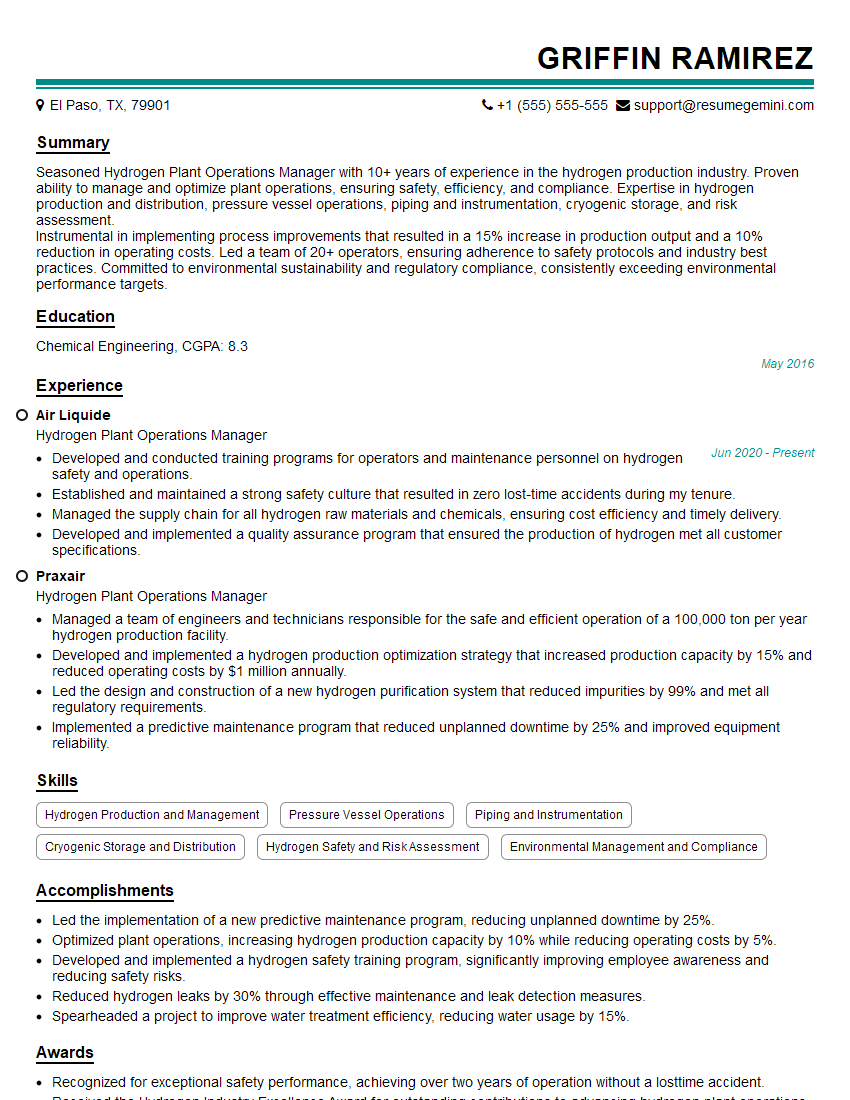
Mastering Hydrogen Plant Operation is crucial for a successful and rewarding career in the burgeoning green energy sector. This specialized knowledge opens doors to challenging and impactful roles with significant growth potential. To maximize your job prospects, creating an ATS-friendly resume is essential. ResumeGemini is a trusted resource to help you build a professional and effective resume that highlights your skills and experience. Examples of resumes tailored to Hydrogen Plant Operation are available to guide you through this process.
Explore more articles
Users Rating of Our Blogs
Share Your Experience
We value your feedback! Please rate our content and share your thoughts (optional).
What Readers Say About Our Blog
To the interviewgemini.com Webmaster.
Very helpful and content specific questions to help prepare me for my interview!
Thank you
To the interviewgemini.com Webmaster.
This was kind of a unique content I found around the specialized skills. Very helpful questions and good detailed answers.
Very Helpful blog, thank you Interviewgemini team.