Feeling uncertain about what to expect in your upcoming interview? We’ve got you covered! This blog highlights the most important Hydrologic Engineering Center’s River Analysis System (HEC-RAS) interview questions and provides actionable advice to help you stand out as the ideal candidate. Let’s pave the way for your success.
Questions Asked in Hydrologic Engineering Center’s River Analysis System (HEC-RAS) Interview
Q 1. Explain the different types of boundary conditions used in HEC-RAS.
Boundary conditions in HEC-RAS define the water levels or flows at the beginning and end of your modeled river reach. Think of them as the ‘inputs’ that dictate how water moves through your system. Incorrect boundary conditions can severely skew your results.
- Upstream Boundary Conditions: These define the water level or flow entering the model at the upstream end. Common types include:
- Normal Depth: Calculates the water depth based on the given flow and channel geometry. Simple but assumes a constant flow.
- Water Surface Elevation: Specifies a fixed water level at the upstream boundary. This is useful when you have a reliable gauge reading at that location.
- Rating Curve: Relates water level to discharge. This is very useful when you have flow data from a nearby station but need to establish a consistent relationship with the water level.
- Flow Hydrograph: A time series of flow values. This is crucial for unsteady flow analysis, representing how the flow varies over time (like during a flood event).
- Downstream Boundary Conditions: These define the water level or flow leaving the model at the downstream end. Common types include:
- Water Surface Elevation: Specifies a fixed water level. Useful for scenarios where you know the downstream water level (like at a reservoir or a confluence with a larger river).
- Normal Depth: Similar to upstream, but for the downstream end. Useful when the downstream flow is significant.
- Flow: Specifies a constant flow leaving the model. This is less common and can be problematic unless the downstream condition is very well defined.
- Weir/Culvert: Simulates structures that control the flow based on water levels. Useful for realistic modeling of man-made structures.
Choosing the appropriate boundary condition is critical for accurate simulation. For example, using a fixed water surface elevation as a downstream boundary during a flood event might not be accurate if the downstream water level is also dynamic.
Q 2. Describe the process of calibrating and validating a HEC-RAS model.
Calibration and validation are essential steps to ensure your HEC-RAS model accurately represents the real-world system. It’s like testing a scientific hypothesis; you need evidence to support your model’s predictions.
Calibration: This involves adjusting model parameters (like Manning’s roughness coefficients or cross-section geometry) to match observed data. You typically use historical flow and water level data from gauging stations. This iterative process involves:
- Initial Model Setup: Define the geometry, boundary conditions, and initial estimates for model parameters.
- Comparison with Observed Data: Run the model and compare simulated water levels and flows to measured data.
- Parameter Adjustment: Based on the comparison, adjust parameters to improve the model’s agreement with observed data. This might involve adjusting Manning’s n values in specific reaches to account for variations in channel roughness.
- Iteration: Repeat steps 2 and 3 until a satisfactory match is achieved. Good calibration requires careful consideration of uncertainties and sensitivity analysis.
Validation: After calibration, validation uses independent data (data not used in the calibration process) to assess the model’s predictive capability. This confirms that your calibrated model can accurately predict conditions under different circumstances. If the validated model performs poorly, it implies a fundamental flaw in model setup or chosen parameters, requiring a re-evaluation of the entire process.
For instance, if your calibration used data from a single flood event, you would validate the model using data from a different flood event or even normal flow conditions to check its robustness and general applicability.
Q 3. How do you handle unsteady flow conditions in HEC-RAS?
HEC-RAS handles unsteady flow conditions through its unsteady flow solver. Unsteady flow means that the water levels and discharges change over time, which is the case during most flood events, dam releases, or rapid changes in upstream flow. Imagine a sudden downpour—the river’s response is dynamic, not static.
The unsteady flow analysis in HEC-RAS solves the Saint-Venant equations, which are partial differential equations that describe the conservation of mass and momentum in an open channel flow. This is a computationally intensive process which requires appropriate time-step selection, often guided by the Courant number, which should be kept below 1 for numerical stability. Numerical techniques like the implicit or explicit methods are employed to solve these equations over a specified time period.
In practical terms, an unsteady flow analysis in HEC-RAS requires the user to define a time series of boundary conditions (like inflow hydrographs) and specify time steps for the simulation. The output provides water surface profiles and flow velocities at different times throughout the simulation period, providing a detailed depiction of the dynamic behavior of the river system.
Q 4. What are the limitations of HEC-RAS?
While HEC-RAS is a powerful tool, it has limitations:
- Simplified Hydraulics: HEC-RAS employs simplified assumptions, such as one-dimensional flow in most cases (though 2D capabilities are available). Real-world flow is often more complex, with three-dimensional effects and secondary currents.
- Data Requirements: Accurate model results rely heavily on accurate input data (cross-sections, boundary conditions, roughness coefficients). Incomplete or poor quality data will lead to inaccurate predictions.
- Computational Cost: Unsteady flow simulations, especially for large river systems, can be computationally expensive and time-consuming.
- Model Calibration Uncertainty: Calibration requires judgment and expertise. Different users might obtain slightly different calibrated parameters, even with the same data. Uncertainty analysis is thus crucial.
- Limited representation of complex features: While advancements have been made, representing highly complex features like sediment transport or intricate bridge hydraulics still presents challenges.
Understanding these limitations is crucial for appropriate model application and interpretation of results. It’s important to acknowledge the inherent uncertainties associated with any HEC-RAS model and communicate these uncertainties effectively.
Q 5. Explain the difference between steady and unsteady flow analysis in HEC-RAS.
The key difference lies in how the flow conditions change over time:
- Steady Flow Analysis: Assumes that flow conditions (water levels and discharges) remain constant over time. It’s a simplified approach, suitable for situations where flow changes are slow and insignificant. Think of a gently flowing river with a relatively constant discharge.
- Unsteady Flow Analysis: Accounts for changes in flow conditions over time. This is essential for modeling events like floods or dam releases where water levels and discharges vary significantly over short periods. Imagine a flash flood—the water levels and flows change rapidly.
Choosing between steady and unsteady analysis depends on the specific application and the nature of the flow conditions. While steady flow analysis is computationally simpler, it can be insufficient for capturing the dynamics of a river during a flood event or other rapidly changing conditions.
Q 6. How do you incorporate rainfall data into a HEC-RAS model?
Rainfall data is incorporated into HEC-RAS indirectly, typically through the use of a hydrological model. HEC-RAS itself doesn’t directly simulate rainfall; it simulates the resulting river flow. Think of it this way: rainfall is the cause, river flow is the effect. HEC-RAS models the effect.
The process usually involves these steps:
- Hydrological Modeling: Use a hydrological model (e.g., HEC-HMS) to transform rainfall data into runoff hydrographs. The hydrological model simulates the processes of rainfall, infiltration, and runoff generation.
- Inflow Hydrograph Generation: The output from the hydrological model is an inflow hydrograph—a time series of flows at the upstream boundary of your HEC-RAS model.
- HEC-RAS Simulation: Use the inflow hydrograph as an upstream boundary condition in your HEC-RAS model to simulate the river’s response to the rainfall.
This approach allows for a more accurate and comprehensive representation of the entire process, from rainfall to river flow response. It accounts for the time delay between rainfall and the peak river flow, a key feature of many hydrologic events.
Q 7. Describe the process of creating a cross-section in HEC-RAS.
Creating cross-sections in HEC-RAS is crucial as they define the geometry of the river channel. Think of them as slices through the river, showing its width, depth, and shape at various points along its length. Accurate cross-sections are fundamental for precise hydraulic calculations.
The process typically involves:
- Survey Data Acquisition: Obtain data from field surveys, typically using techniques like bathymetric surveys or LiDAR. This data provides elevation information at various points across the river channel.
- Cross-Section Creation in HEC-RAS: In the HEC-RAS interface, you enter the coordinates (distances from a reference point and elevations) of each point along the cross-section. You can either manually enter data or import data from external sources.
- Cross-Section Editing: Once created, you can edit and refine the cross-sections to ensure accurate representation. This might involve smoothing irregularities or adjusting elevations based on additional data or expert judgment.
- Stationing: Assign a stationing (distance along the river) to each cross-section. This allows HEC-RAS to link the cross-sections together along the river reach.
- Geometry Review: Review the created cross-sections and ensure they accurately represent the river channel’s geometry. This may involve checking the cross-section area at different water elevations.
The accuracy of your cross-sections significantly influences the accuracy of your model. Inaccurate cross-sections can lead to substantial errors in water level and flow predictions.
Q 8. Explain the importance of roughness coefficients in HEC-RAS.
Roughness coefficients in HEC-RAS are crucial because they represent the resistance to flow within a river channel or other waterway. Think of it like friction – a smooth, concrete-lined channel will have a lower roughness coefficient than a rocky, natural riverbed. This resistance affects the water’s velocity and ultimately the water surface elevation. In HEC-RAS, these coefficients are typically input as Manning’s n values. The Manning’s equation, a cornerstone of open-channel hydraulics, directly incorporates ‘n’ to calculate flow velocity. A higher Manning’s n means more resistance and slower flow for a given slope and hydraulic radius. Choosing the appropriate roughness coefficient is critical for accurate model results. Incorrect values can lead to significant errors in predicted water surface elevations, velocities, and flood extents. For instance, using a smooth channel roughness for a vegetated area will significantly underestimate flood levels. Selecting the appropriate ‘n’ often involves a combination of field measurements, experience, and utilizing established roughness coefficient tables based on the channel’s characteristics, like vegetation type, channel material, and flow conditions.
Q 9. How do you model bridges and culverts in HEC-RAS?
Modeling bridges and culverts in HEC-RAS involves defining them as hydraulic structures within the model’s geometry. For bridges, you’d typically define the bridge deck as a control structure that restricts flow, creating a constriction in the channel. HEC-RAS allows you to specify bridge pier geometry, which influences energy losses and flow patterns. You also define the approach channel geometry upstream and downstream of the bridge. For culverts, you define them as conduits with specific shapes (e.g., circular, rectangular, box) and dimensions. HEC-RAS uses energy principles to calculate the flow through the culvert, considering factors like inlet and outlet control. You might need to specify entrance and exit losses, depending on the culvert’s design. An important aspect of both bridge and culvert modeling is correctly defining the conveyance capacity of the structure. Underestimation can lead to inaccurate flood predictions, while overestimation can provide a false sense of security. A detailed topographic survey and accurate design drawings are essential for reliable modeling. Imagine a scenario with a poorly designed culvert during a heavy rainfall event. An inaccurate HEC-RAS model could significantly underestimate the extent of flooding downstream, leading to inadequate flood mitigation measures.
Q 10. Describe the different types of hydraulic structures that can be modeled in HEC-RAS.
HEC-RAS is capable of modeling a wide array of hydraulic structures, going beyond simple bridges and culverts. This includes:
- Weirs: Structures designed to control water flow over a designed crest.
- Spillways: Controlled discharges from dams or reservoirs.
- Gates: Structures that regulate flow, including radial gates, sluice gates, and roller gates.
- Pump Stations: Can be modeled to represent flow adjustments caused by pumping.
- Flow dividers: Structures that split flow into different channels.
- Dams: Complex structures which often require detailed input and potentially integration with reservoir modeling software.
Q 11. How do you account for sediment transport in HEC-RAS?
HEC-RAS includes sediment transport capabilities but it’s not its primary focus. It offers various sediment transport models, typically using empirical equations like the Ackers-White or Yang equations. These models require input parameters, such as sediment size distribution, concentration, and bed material properties. The model then computes sediment transport rates based on the calculated flow conditions. The sediment transport routines are typically coupled with the water surface profile calculations. It’s important to note that sediment transport modeling in HEC-RAS is computationally intensive, and its accuracy depends heavily on the quality of the input data and the suitability of the chosen sediment transport equation for the specific river conditions. For instance, using a model not appropriate for cohesive sediments in a river dominated by clay will lead to inaccurate predictions of sediment transport and channel evolution.
Q 12. Explain the concept of water surface profiles in HEC-RAS.
Water surface profiles in HEC-RAS represent the elevation of the water surface along the river channel at a specific flow rate. Imagine plotting the water level along the length of a river. This profile is determined by the interaction of flow discharge, channel geometry, and roughness. HEC-RAS calculates these profiles by solving the energy equation along the channel reach. Different flow conditions (e.g., subcritical, critical, supercritical) result in different profile shapes. Understanding water surface profiles is crucial for identifying areas prone to flooding or for designing hydraulic structures. For example, steep water surface profiles indicate high flow velocities, which might necessitate erosion protection measures. A smoothly varying profile shows relatively stable flow conditions. Analyzing water surface profiles is a fundamental step in many hydrologic and hydraulic analyses, such as flood forecasting and designing river restoration projects.
Q 13. How do you analyze water quality parameters using HEC-RAS?
HEC-RAS’s primary focus is on hydraulics, not water quality. While it doesn’t directly solve water quality transport equations, it can be coupled with other water quality models. This is usually done by transferring flow data (discharge, water surface elevation, velocity) from HEC-RAS to a dedicated water quality model. This approach enables a more comprehensive analysis, connecting hydraulic conditions with the transport and fate of pollutants. For example, you might use HEC-RAS to simulate flow patterns in a river and then use a separate model like QUAL2K to simulate the movement of bacteria or other contaminants. The integrated approach combines the strengths of each software to achieve more precise and useful results.
Q 14. Describe the process of generating water surface elevation maps in HEC-RAS.
Generating water surface elevation maps in HEC-RAS involves several steps. First, you need to define the river geometry accurately. This is often done by importing cross-sectional data from surveys. Next, you specify the boundary conditions, including upstream and downstream flow rates (or water levels). Then, you set the roughness coefficients and define any hydraulic structures present. After running the simulation, HEC-RAS computes water surface elevations at each cross-section for your specified flow conditions. This data can then be exported and used to create contour maps, illustrating flood inundation extents at various water levels. These maps are crucial for flood risk management, urban planning, and emergency response planning. For example, such maps can help delineate flood-prone areas for land-use planning, allowing for avoidance of construction in high-risk zones.
Q 15. How do you interpret HEC-RAS output results?
Interpreting HEC-RAS output involves understanding the various tables and graphical outputs generated by the software. It’s like reading a detailed report on the river’s behavior under specific conditions. Key aspects to focus on include:
- Water Surface Elevations: These show the height of the water at different locations along the river for a given flow. This is crucial for determining flood inundation areas.
- Velocities: HEC-RAS provides water velocity data, which is vital for assessing erosion potential and scour at bridge piers or other structures. Higher velocities usually indicate higher risk.
- Cross-Sectional Data: Examining how water depth and velocity vary across the river’s cross-section at different locations provides insights into the flow characteristics.
- Energy Grade Lines: These lines represent the total energy of the water and are crucial for understanding hydraulic jumps and energy losses. They help identify areas where energy dissipation is significant.
- Hydrographs: Time series data showing water level changes at specific locations over time. Useful for understanding the flood event’s duration and peak.
For instance, I once used HEC-RAS to analyze a flood event. By reviewing the water surface elevation data, I was able to accurately delineate the flood extent and identify areas with the highest flood risk. The velocity data helped me assess potential damage to a nearby bridge.
Career Expert Tips:
- Ace those interviews! Prepare effectively by reviewing the Top 50 Most Common Interview Questions on ResumeGemini.
- Navigate your job search with confidence! Explore a wide range of Career Tips on ResumeGemini. Learn about common challenges and recommendations to overcome them.
- Craft the perfect resume! Master the Art of Resume Writing with ResumeGemini’s guide. Showcase your unique qualifications and achievements effectively.
- Don’t miss out on holiday savings! Build your dream resume with ResumeGemini’s ATS optimized templates.
Q 16. What are some common errors encountered while using HEC-RAS?
Common errors in HEC-RAS often stem from data issues or incorrect model setup. These include:
- Incorrect Geometry Data: Errors in surveying data, inaccurate cross-section representation, or missing data points lead to inaccurate results. Imagine building a model of a building with inaccurate blueprints – the outcome won’t be reliable.
- Boundary Condition Issues: Improperly defined upstream or downstream boundary conditions (like flow or water level) can significantly skew results. It’s like trying to simulate the flow of water in a pipe without knowing the pressure at either end.
- Roughness Coefficient Errors: Using inappropriate Manning’s roughness coefficients (a measure of how much friction the river bed exerts on the flow) drastically affects the simulated water levels and velocities. This is akin to assuming a smooth, polished pipe when dealing with a rough, corroded one.
- Solver Convergence Problems: Sometimes the solver (the numerical engine that solves the equations) might fail to converge to a solution, indicating potential issues in the model setup or data. This requires careful review and adjustment of the model parameters.
- Incorrect Hydraulic Structures Data: Errors in defining weirs, culverts, or other hydraulic structures within the model will greatly impact the simulated flow.
Q 17. How do you troubleshoot issues in HEC-RAS?
Troubleshooting in HEC-RAS involves a systematic approach:
- Check Data Quality: Begin by thoroughly reviewing all input data, including cross-sections, boundary conditions, and roughness coefficients. Are the data complete, accurate, and consistent? Graphical inspection of the geometry data is extremely helpful.
- Review Model Setup: Examine the model’s parameters, such as the solver type, time step, and convergence criteria. Are they appropriate for the problem?
- Simplify the Model: If the model is complex, try simplifying it by removing less critical components to identify if a specific part is causing the problem.
- Consult the HEC-RAS Documentation: The official documentation and tutorials are invaluable resources for resolving common issues.
- Utilize the HEC-RAS Help Files and Forums: The software has extensive help files, and online forums are a great place to ask questions and find solutions from experienced users.
- Iterative Process: Troubleshooting HEC-RAS often requires an iterative process. You make changes, run the model, assess the results, and then refine the model further. It’s like debugging a program – you identify and fix problems iteratively.
For example, I once encountered convergence issues. By systematically reviewing my data and reducing the time step, I resolved the problem.
Q 18. Describe your experience using HEC-RAS for flood inundation mapping.
I’ve extensively used HEC-RAS for flood inundation mapping. My experience includes several projects involving various scales and complexities. For example, I was part of a team that modeled a large river basin to assess the impact of a potential dam failure. We used high-resolution DEM (Digital Elevation Model) data coupled with HEC-RAS to simulate the flood wave propagation and delineate the inundation areas. The resulting flood maps were crucial for emergency planning and land use management decisions.
Another project involved mapping the flood risk in a coastal area, incorporating tide and storm surge data into the model setup. This highlighted areas vulnerable to storm surges and flooding. The creation of these maps allows for targeted interventions to protect critical infrastructure and vulnerable populations.
In both cases, post-processing the results with GIS software like ArcGIS was vital for producing visually clear inundation maps, allowing stakeholders to easily understand the flood risk.
Q 19. Explain your experience with the different solvers available in HEC-RAS.
HEC-RAS offers several solvers, each with its strengths and weaknesses. I have experience with the following:
- Steady Flow Solver: This solver is used for analyzing the flow conditions at a single point in time and is relatively simpler to use. Useful for analyzing design conditions under a specific flow scenario.
- Unsteady Flow Solver: This solver is used for analyzing the changes in flow conditions over time. This is crucial for modeling flood events where flow is dynamic. It’s more computationally intensive but provides a much more comprehensive view of flood behavior.
- Dynamic Wave Solver: This is a more complex unsteady flow solver that considers the full momentum equations, making it ideal for modeling complex hydraulic phenomena like hydraulic jumps and backwater effects.
- Diffusive Wave Solver: This simplified unsteady flow solver is computationally less intensive. Appropriate for large-scale models or cases where precise modeling of flow details is less critical.
The choice of solver depends entirely on the project’s specific requirements. For example, a steady flow solver is appropriate for designing a bridge, but an unsteady flow solver is essential for simulating a dam break.
Q 20. How do you handle data uncertainty in HEC-RAS modeling?
Handling data uncertainty is paramount in HEC-RAS modeling. We can’t avoid it, as many input parameters are uncertain. Methods to address this include:
- Sensitivity Analysis: This involves systematically varying input parameters (like Manning’s n or boundary conditions) to understand their influence on the output. This helps identify the most sensitive parameters and focus on reducing uncertainties in those.
- Monte Carlo Simulation: This statistical method involves running the model multiple times with different input parameters randomly drawn from probability distributions. The results provide a range of possible outcomes, quantifying the uncertainty in the predictions.
- Ensemble Modeling: This involves running the model with multiple sets of input data that represent different scenarios or levels of uncertainty. The combined results give a range of likely outcomes.
- Using Probabilistic Data: When possible, use probabilistic data (data with associated uncertainties, e.g., a range of Manning’s n) instead of single-point estimates. This directly incorporates uncertainty into the model.
For instance, in one project I used Monte Carlo simulations to assess the uncertainty in predicted flood depths due to variations in rainfall and riverbank roughness. This allowed us to communicate the range of potential flood impacts to stakeholders, rather than a single, potentially misleading, deterministic prediction.
Q 21. Describe your experience with data preprocessing for HEC-RAS.
Data preprocessing for HEC-RAS is critical. A well-prepared dataset significantly increases the accuracy and reliability of the model. My experience encompasses:
- Data Acquisition: This involves collecting all necessary data, such as cross-sectional geometry, river bathymetry (depth measurements), boundary conditions, and roughness coefficients. Sources include topographic surveys, LiDAR data, and historical discharge records.
- Data Cleaning and Validation: This crucial step involves checking for inconsistencies, errors, and outliers in the data. This might involve checking for unrealistic elevations or discontinuities in cross-sections.
- Data Processing and Transformation: The raw data often needs processing to be compatible with HEC-RAS. This might include converting data formats, creating cross-sections from survey data, and interpolating missing data.
- Quality Control: Before importing data into HEC-RAS, I always perform a thorough quality check. This includes visual inspection of cross-sections and verification of boundary conditions to ensure data plausibility.
For example, I once spent considerable time cleaning up and validating surveyed cross-sections before importing them into HEC-RAS. A single misplaced point could drastically affect the accuracy of the model results. Taking the time for meticulous data preprocessing ensures a reliable and robust model.
Q 22. How do you ensure the quality and accuracy of your HEC-RAS models?
Ensuring the quality and accuracy of HEC-RAS models is paramount. It’s a multi-step process that begins even before model creation. I prioritize meticulous data acquisition and verification. This includes rigorously checking the accuracy of cross-sections, channel geometry, boundary conditions (upstream and downstream flows, water levels), and roughness coefficients. Inaccurate data is the leading cause of model errors.
Secondly, I employ a robust model calibration and validation strategy. Calibration involves adjusting model parameters to match observed data, often from historical water level gauges or flow measurements. Validation uses independent data not used in calibration to confirm the model’s predictive capability. Discrepancies are analyzed and corrected iteratively until satisfactory agreement is achieved. This often requires exploring alternative modeling approaches or refining data sources.
Finally, sensitivity analysis plays a crucial role. By systematically altering input parameters and observing the model’s response, I can identify which parameters significantly influence the results. This helps to understand the uncertainty associated with the model and focus on improving the accuracy of critical data. Documentation of every step, from data acquisition to calibration results, is essential for transparency and reproducibility.
Think of it like building a house. You wouldn’t start building without blueprints (data), ensuring the foundation is solid (data validation), and checking the walls are straight (calibration). Only then can you confidently say your house (model) is built accurately.
Q 23. Explain your experience using GIS software in conjunction with HEC-RAS.
GIS software is indispensable in my HEC-RAS workflow. I use it extensively for several tasks, starting with data pre-processing. I import and process topographic data (DEMs) to create the model’s terrain surface. This includes cleaning and processing data, correcting inconsistencies, and extracting necessary information for accurate channel representation. I use GIS tools to automatically delineate the river network, extract cross-sections at specified intervals along the channel, and create accurate planform geometry.
Furthermore, GIS allows me to seamlessly integrate various data sources such as land use maps, soil type information, and rainfall data. This contextual information can be used to refine model parameters like roughness coefficients or to conduct more detailed hydrological analyses. Finally, GIS provides powerful visualization tools to present the model results in a user-friendly and informative manner, including flood inundation maps, velocity fields, and water surface profiles. I typically use ArcGIS or QGIS, but my expertise extends to other GIS software as needed.
For example, in a recent project, I used ArcGIS to create a high-resolution DEM from LiDAR data, which significantly improved the accuracy of the river geometry and the subsequent flood inundation mapping in HEC-RAS.
Q 24. Describe your experience with different HEC-RAS applications (e.g., 2D modeling).
My experience with HEC-RAS spans both 1D and 2D modeling applications. 1D modeling, which simulates flow in a single channel dimension, is suitable for relatively simple river systems where lateral flow is minimal. I have extensive experience setting up and running 1D steady and unsteady flow simulations in HEC-RAS, including the use of various boundary conditions and rainfall inflow hydrographs. I’m proficient in analyzing the results to determine water surface elevations, velocities, and flow depths.
However, in many complex scenarios, the limitations of 1D modeling become apparent. This is where 2D modeling becomes essential. 2D modeling simulates flow in two dimensions (plan view), capturing the effects of lateral flow, overbank flooding, and complex flow patterns. I’m proficient in creating and running 2D unsteady flow models in HEC-RAS, employing techniques such as mesh refinement to accurately represent complex channel geometries. 2D modeling allows for a more realistic representation of flood inundation, providing detailed information about the extent and depth of flooding in floodplains.
For instance, in one project involving a coastal area prone to storm surges, 2D modeling was crucial to accurately predict the extent of inundation and associated velocities, offering far more detail than a 1D model could provide.
Q 25. What are the advantages and disadvantages of using HEC-RAS compared to other hydraulic modeling software?
HEC-RAS is a widely used and respected hydraulic modeling software, offering several advantages. It’s user-friendly with a well-documented interface, boasts a large and active user community providing ample support, and is regularly updated with new features and improvements. It’s also freely available, making it accessible to a wide range of users. Its versatility in handling both 1D and 2D simulations, coupled with its extensive post-processing capabilities, makes it a powerful tool for a wide array of hydraulic modeling applications.
However, HEC-RAS also has some limitations. The computational demand for large, complex 2D models can be significant, requiring powerful computers and considerable processing time. Its meshing capabilities, while improving, can still be challenging for extremely complex geometries. Compared to some commercial software packages with more advanced features, HEC-RAS might lack specific capabilities or advanced numerical schemes found in more specialized software.
Ultimately, the choice of software depends on the specific project needs. For many applications, HEC-RAS’s strengths significantly outweigh its limitations, making it an excellent choice for a wide range of river engineering problems.
Q 26. How would you approach modeling a complex river system with multiple tributaries using HEC-RAS?
Modeling a complex river system with multiple tributaries using HEC-RAS involves a structured approach. It starts with data acquisition, ensuring comprehensive data covering the entire river system. This includes cross-sections for the main channel and all tributaries, accurate representation of the river geometry, and appropriate boundary conditions for each tributary and the main channel outlet.
Next, the model is created in HEC-RAS, setting up each tributary as a separate reach, ensuring proper connection points with the main channel. This could involve creating a network of reaches and junctions, using the appropriate geometric data for each reach. Care must be taken to accurately represent the confluence points of the tributaries with the main channel.
Calibration and validation are critical, potentially requiring a phased approach. Starting with smaller sub-basins, then gradually expanding to incorporate the entire system, this approach allows for better control and identification of potential issues within each section. Finally, the model results are carefully analyzed, focusing not only on overall system performance but also on the interaction and influence of each tributary. This might involve running various scenarios to assess the impact of each tributary on downstream flooding.
Imagine it as building a model railroad system. You start with each individual track segment (tributary) before carefully connecting them to the main track (main channel). The overall performance of the system depends on how well each segment is built and connected.
Q 27. Describe a challenging HEC-RAS project you worked on and how you overcame the challenges.
One challenging project involved modeling a highly urbanized river system prone to flash flooding. The challenge lay in accurately representing the complex interactions between the river channel, numerous storm drains, and highly varied land cover. The available data was fragmented and of varying quality. Some areas had high-resolution LiDAR data, while others relied on older, less precise topographic maps.
To overcome this, I used a multi-phased approach. First, I painstakingly verified and reconciled the disparate data sources, using GIS to identify and address inconsistencies. I employed techniques like interpolation and data fusion to create a more comprehensive and accurate representation of the river system’s geometry. Then, I developed a 2D model to capture the intricate flow patterns within the urban environment, meticulously calibrating it against historical flood events and rainfall data.
The incorporation of storm drain data, which required detailed modeling of their hydraulic properties and connections to the river, posed a significant hurdle. I used a combination of field surveys and available infrastructure data to create a comprehensive representation of the storm drainage system within the 2D model. This resulted in a model capable of accurately predicting both riverine and urban flooding, improving the accuracy of flood hazard assessments in this highly complex urban environment.
Q 28. Explain your understanding of the different types of HEC-RAS licenses and their capabilities.
HEC-RAS licensing options are designed to cater to various users and needs. There’s generally no cost associated with downloading and using the software. However, some advanced features and capabilities may require a license, or access to support and training may vary based on the level of support contract. There are different levels of support and access to training materials based on your licensing options.
The core functionalities of HEC-RAS, including 1D and 2D modeling, are generally accessible without specific licensing requirements. However, certain add-ons or specialized modules might require separate licenses. This includes advanced modules dealing with sediment transport or water quality modeling. Different licensing tiers might also provide access to technical support from the developers, priority in receiving updates, and tailored training sessions.
It’s advisable to check the official HEC-RAS website for the most up-to-date information on licensing options and associated capabilities. The licensing structure is designed to allow for flexibility depending on users’ needs and resources, from academic use to large-scale professional projects. Choosing the appropriate licensing option ensures access to the appropriate tools and support for each project.
Key Topics to Learn for Hydrologic Engineering Center’s River Analysis System (HEC-RAS) Interview
- Hydraulic Modeling Fundamentals: Understanding the underlying principles of open-channel flow, energy equations, and Manning’s equation is crucial. Be prepared to discuss their application within HEC-RAS.
- HEC-RAS Interface and Data Input: Mastering the software interface, including geometry input (cross-sections, reach data), boundary conditions (water surface elevations, flow rates), and roughness parameters is essential for practical application.
- Steady and Unsteady Flow Simulations: Demonstrate a clear understanding of the differences between steady and unsteady flow modeling and the appropriate selection based on project requirements. Be ready to interpret results from both.
- Water Surface Profile Computations: Understand how HEC-RAS computes water surface profiles, including the backwater and drawdown curves. Be able to explain the significance of critical depths and control points.
- HEC-RAS 2D Modeling: Familiarize yourself with the capabilities of HEC-RAS 2D for modeling complex flow patterns in floodplains and other areas with irregular geometries.
- Data Analysis and Interpretation: Practice interpreting HEC-RAS output, including water surface elevations, velocities, and flow depths. Be prepared to discuss the implications of your findings in a practical context.
- Calibration and Verification: Understand the process of calibrating and verifying HEC-RAS models using observed data. This demonstrates practical experience and problem-solving skills.
- Floodplain Analysis and Design: Know how to apply HEC-RAS to analyze floodplains, design flood control structures, and assess flood risks.
- Sediment Transport Modeling (if applicable): If the job description mentions sediment transport, be prepared to discuss the sediment modules within HEC-RAS and their applications.
- Problem-Solving and Troubleshooting: Anticipate common issues encountered during HEC-RAS modeling and demonstrate your ability to troubleshoot and resolve them.
Next Steps
Mastering HEC-RAS significantly enhances your career prospects in hydrologic engineering, opening doors to challenging and rewarding projects. To maximize your chances of landing your dream job, it’s crucial to present your skills effectively. Creating an ATS-friendly resume is key to getting your application noticed. ResumeGemini is a trusted resource to help you build a compelling and professional resume that highlights your HEC-RAS expertise. Examples of resumes tailored to HEC-RAS positions are available to help guide you.

Project Engineer Resume Sample
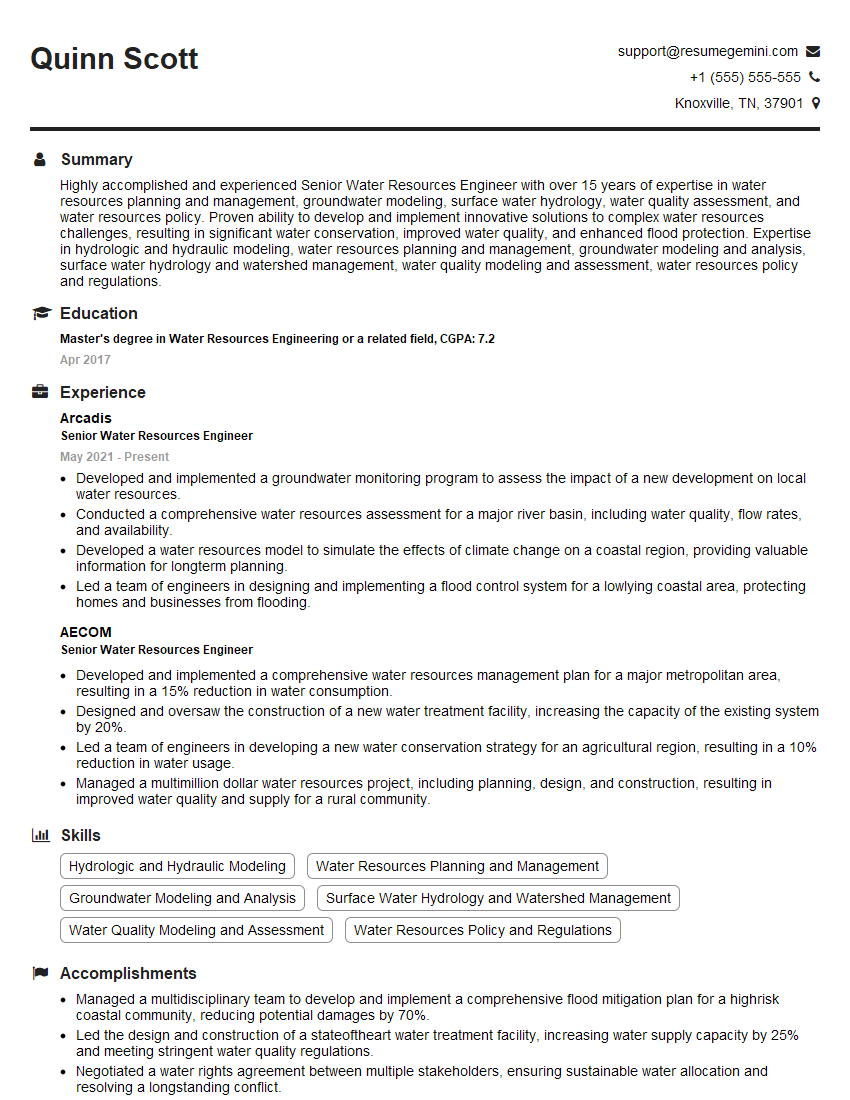
Senior Water Resources Engineer Resume Sample

Data Analyst Resume Sample

Research Scientist Resume Sample

Infrastructure Engineer Resume Sample
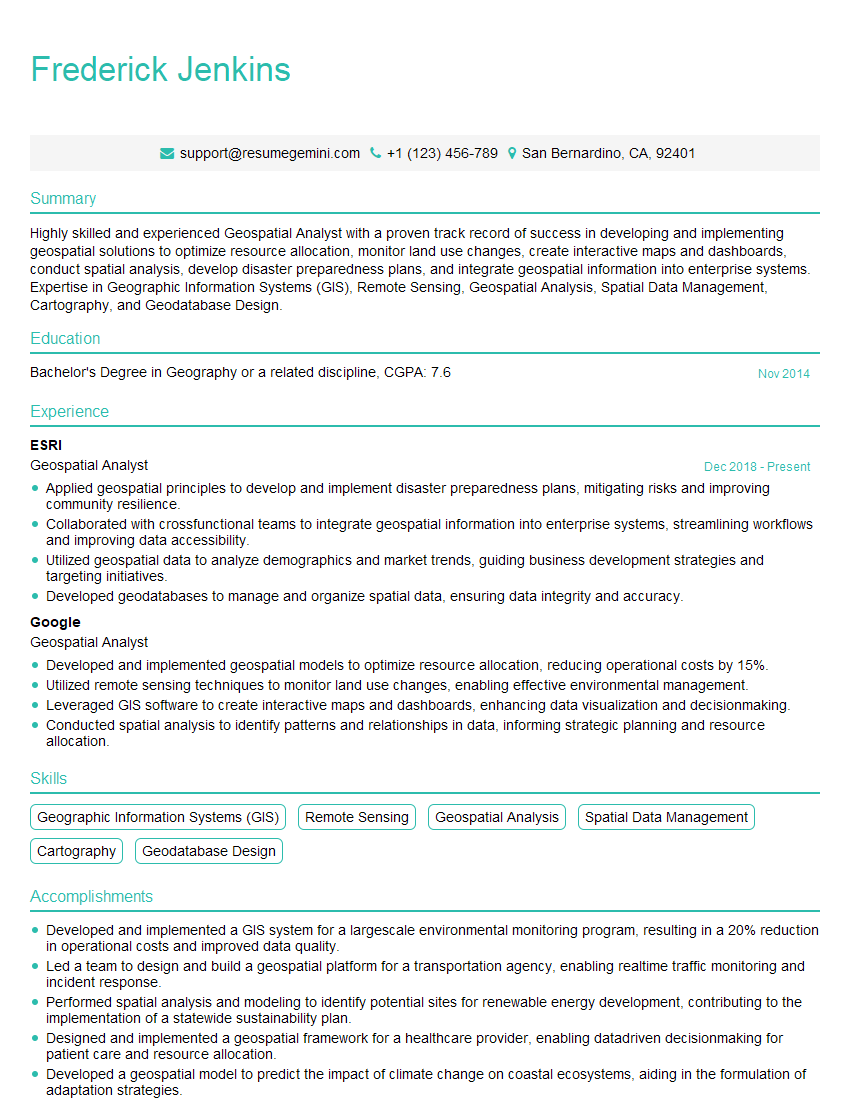
Geospatial Analyst Resume Sample

Civil Engineer Resume Sample

Drainage Engineer Resume Sample

Hydraulic Engineer Resume Sample

Environmental Engineer Resume Sample
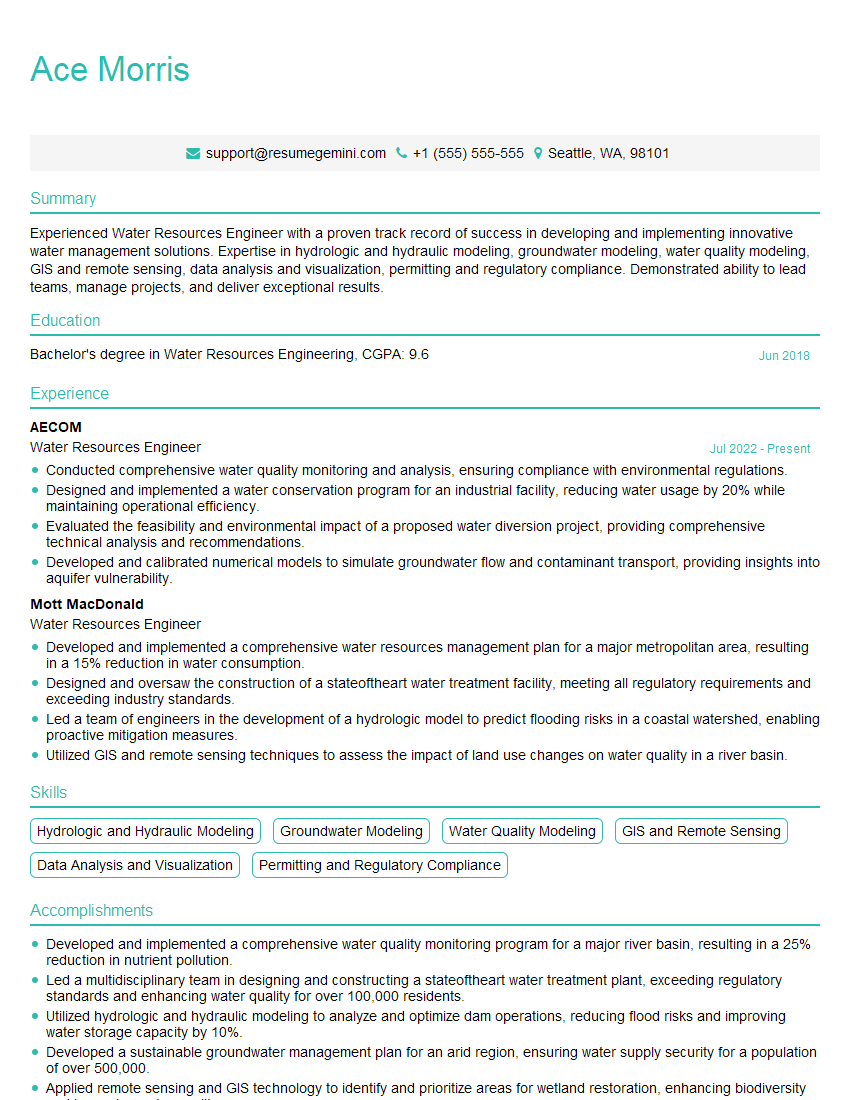
Water Resources Engineer Resume Sample

Floodplain Manager Resume Sample

Hydrologic Modeler Resume Sample

Hydrologist Resume Sample
Explore more articles
Users Rating of Our Blogs
Share Your Experience
We value your feedback! Please rate our content and share your thoughts (optional).
What Readers Say About Our Blog
To the interviewgemini.com Webmaster.
Very helpful and content specific questions to help prepare me for my interview!
Thank you
To the interviewgemini.com Webmaster.
This was kind of a unique content I found around the specialized skills. Very helpful questions and good detailed answers.
Very Helpful blog, thank you Interviewgemini team.