The right preparation can turn an interview into an opportunity to showcase your expertise. This guide to Injury Prevention Research interview questions is your ultimate resource, providing key insights and tips to help you ace your responses and stand out as a top candidate.
Questions Asked in Injury Prevention Research Interview
Q 1. Explain the epidemiological triangle in the context of injury prevention.
The epidemiological triangle is a fundamental model in public health, illustrating the interaction of three elements necessary for a disease or, in this case, an injury to occur. These elements are the host (the person who is injured), the agent (the cause of the injury, such as a motor vehicle, a sharp object, or a hazardous substance), and the environment (the context in which the injury occurs, including physical surroundings, social conditions, and healthcare access).
For example, consider a bicycle accident. The host is the cyclist, the agent could be a motor vehicle or a pothole, and the environment encompasses factors like road design, traffic density, the cyclist’s skill level, and the presence or absence of bicycle infrastructure.
Understanding the interaction of these three elements is crucial in injury prevention. Interventions can target any one or a combination of these factors. For instance, improving road safety (environment), enforcing helmet laws (host), or improving vehicle safety features (agent) can all reduce the likelihood of bicycle-related injuries.
Q 2. Describe the Haddon Matrix and its application in injury prevention strategies.
The Haddon Matrix is a powerful tool for systematically analyzing the factors contributing to injuries and developing prevention strategies. It categorizes injury causation into three phases – pre-event, event, and post-event – and examines these phases across three perspectives: host, agent, and environment. This creates a 3×3 matrix, providing a comprehensive overview of potential interventions.
Example: Consider a pedestrian struck by a car.
- Pre-event: Interventions could focus on improving pedestrian education (host), vehicle maintenance (agent), or street lighting (environment).
- Event: Interventions could involve seatbelts or airbags (agent) or reducing the impact of the collision (event).
- Post-event: Interventions could involve rapid emergency medical services (environment) or improved trauma care (host).
The Haddon Matrix encourages a holistic approach to injury prevention, moving beyond simply blaming the individual and addressing the complex interplay of factors involved in an injury.
Q 3. What are the key differences between prospective and retrospective cohort studies in injury prevention research?
Both prospective and retrospective cohort studies are observational designs used in injury prevention research to investigate the relationship between exposures (risk factors) and outcomes (injuries). The key difference lies in the timing of data collection.
In a prospective cohort study, participants are identified and followed over time to observe the occurrence of injuries. Researchers collect data on exposures before the outcome occurs, allowing for stronger causal inference. This design is more resource-intensive and time-consuming but provides more robust evidence.
In a retrospective cohort study, researchers identify a group of participants who have already experienced the exposure of interest and look back in time to determine their injury outcomes. This approach is less costly and time-consuming, but relies on existing data which may be incomplete or biased, impacting the reliability of conclusions.
For example, a prospective study might follow a group of children for several years, recording their participation in sports and tracking the incidence of sports-related injuries. A retrospective study might examine the medical records of a group of individuals with spinal cord injuries to determine the frequency of previous motor vehicle accidents.
Q 4. How do you evaluate the effectiveness of an injury prevention intervention?
Evaluating the effectiveness of an injury prevention intervention requires a rigorous approach. This typically involves comparing injury rates in an intervention group (receiving the intervention) with a control group (not receiving the intervention).
Key steps include:
- Defining clear outcome measures: This might include the number of injuries, severity of injuries, or injury-related deaths.
- Employing appropriate statistical methods: Techniques like chi-square tests, t-tests, or regression analysis are used to compare injury rates between the groups, adjusting for potential confounding factors.
- Assessing the generalizability of findings: Consider the characteristics of the study population and determine how well the results can be applied to other populations.
- Monitoring long-term effects: The impact of interventions may not be apparent immediately and long-term follow-up is often needed.
Furthermore, cost-effectiveness analyses can determine the efficiency of the intervention relative to its cost. A successful intervention demonstrably reduces injury rates while being cost-effective.
Q 5. What are some common statistical methods used to analyze injury data?
Analyzing injury data requires statistical methods appropriate to the type of data and research question. Common techniques include:
- Descriptive statistics: Summarizing injury rates, severity, and location using measures like means, standard deviations, percentages, and rates.
- Regression analysis: Examining the relationships between risk factors and injury occurrence. This can include logistic regression (for binary outcomes like injury/no injury) or Poisson regression (for count data like number of injuries).
- Survival analysis: Analyzing time-to-event data, such as time until injury occurrence or time until recovery.
- Time series analysis: Analyzing trends in injury rates over time to identify patterns and evaluate the impact of interventions.
The choice of statistical method depends on the specific research question and the nature of the injury data collected.
Q 6. Discuss the importance of risk factor identification in injury prevention.
Risk factor identification is paramount in injury prevention. It involves systematically identifying factors that increase the likelihood of an injury. These factors can be categorized into several domains including individual (e.g., age, gender, behavior, risk-taking propensity), environmental (e.g., road design, workplace hazards, community safety), and agent-related (e.g., product design flaws, weapon availability).
Example: In the context of motor vehicle crashes, risk factors could include speeding (individual), poor road conditions (environmental), and vehicle design flaws (agent).
Once risk factors are identified, targeted interventions can be developed to modify or eliminate these risks. This might involve educational campaigns to promote safe driving behavior, improving road infrastructure, or implementing stricter vehicle safety standards. Identifying modifiable risk factors allows for evidence-based intervention strategies that address the underlying causes of injuries.
Q 7. Explain the concept of injury surveillance and its role in public health.
Injury surveillance is the ongoing, systematic collection, analysis, and interpretation of data on injuries. It’s crucial for public health because it provides a picture of the injury burden within a population, allowing for the identification of high-risk groups, trends, and the evaluation of prevention efforts. This data informs resource allocation, policy decisions, and the development of targeted interventions.
Key elements of injury surveillance include:
- Data sources: These may include hospital records, police reports, death certificates, and surveys.
- Data analysis: Statistical techniques are used to describe injury patterns, identify trends, and evaluate risk factors.
- Dissemination of information: Findings are shared with policymakers, healthcare providers, and the public to inform prevention efforts.
For example, surveillance data might reveal an increase in bicycle-related head injuries among young adults, leading to campaigns promoting helmet use and improved bicycle infrastructure.
Q 8. Describe your experience with designing and implementing injury prevention programs.
Designing and implementing injury prevention programs requires a multi-faceted approach, combining rigorous research, community engagement, and practical strategies. My experience spans various settings, from designing school-based concussion prevention programs to developing workplace safety initiatives for manufacturing facilities. For example, in a school setting, we developed a program integrating educational modules on helmet use, proper tackling techniques, and recognizing concussion symptoms. This involved creating age-appropriate materials, training teachers, and monitoring the program’s effectiveness through pre- and post-intervention surveys and injury tracking.
In the workplace, we focused on ergonomics and hazard identification, conducting job hazard analyses to pinpoint risk factors and implementing changes such as workstation adjustments and safety training programs. We also used data analysis to track changes in workplace injury rates post-intervention. A key aspect of my approach is iterative program development; we continuously evaluate and refine our programs based on feedback and data analysis to maximize their impact.
- Needs assessment: Identifying the specific injury problem and the population affected.
- Program design: Creating evidence-based strategies that address identified risk factors.
- Implementation: Training staff, disseminating materials, and engaging the community.
- Evaluation: Monitoring program effectiveness through data collection and analysis.
Q 9. How do you ensure the ethical considerations are addressed in injury prevention research?
Ethical considerations are paramount in injury prevention research. We strictly adhere to the principles of beneficence, non-maleficence, respect for persons, and justice. This means prioritizing the well-being of participants, obtaining informed consent, ensuring confidentiality, and ensuring equitable access to participation in the study and to any benefits derived from the research. For example, before conducting any study involving children, we obtain informed consent from both the children and their parents or guardians, clearly outlining the study’s purpose, procedures, potential risks and benefits, and their right to withdraw at any time. We also ensure data anonymity, using unique identifiers instead of names and storing data securely. Our Institutional Review Board (IRB) reviews all research protocols to ensure ethical compliance.
Transparency in data reporting is critical. We are very careful to ensure our results accurately reflect our findings, avoiding any bias or manipulation. We also consider the potential for unintended consequences of our interventions and seek to mitigate those risks whenever possible. For instance, while a safety intervention might reduce one type of injury, it might unintentionally increase another. We carefully consider these potential trade-offs and factor them into our overall risk assessment.
Q 10. What are some challenges in translating research findings into effective prevention strategies?
Translating research findings into effective prevention strategies faces several challenges. One major hurdle is the gap between research findings, which often occur in controlled settings, and the complex realities of real-world environments. For example, a highly effective intervention in a laboratory setting may not be as successful when implemented in a diverse community with limited resources. Another challenge is overcoming human behavioral factors. Even with evidence-based interventions, changing ingrained habits and attitudes can be difficult.
Furthermore, funding limitations often restrict the scope and duration of implementation efforts, making it difficult to sustain long-term positive change. Finally, disseminating research findings to relevant stakeholders – policymakers, healthcare providers, and community leaders – in a way that is accessible and actionable, requires effective communication and collaboration.
To bridge this gap, we employ strategies like community-based participatory research (CBPR), which involves actively engaging the community in all stages of the research process, from problem identification to intervention design and evaluation. This participatory approach ensures interventions are culturally relevant and sustainable, increasing their chances of success in real-world settings.
Q 11. Discuss your experience with grant writing or funding applications for injury prevention research.
I have extensive experience in grant writing and securing funding for injury prevention research. My success has been built on crafting compelling narratives that highlight the significance of the research problem, the innovative nature of the proposed approach, and the potential impact of the expected outcomes. For example, in a recent grant application for a study on bicycle helmet use among adolescents, I emphasized the high incidence of bicycle-related head injuries, the effectiveness of helmet use in reducing these injuries, and the innovative approach we used to promote helmet use through a community-based intervention involving peer education and social marketing techniques.
I carefully tailor each proposal to the specific funding agency’s priorities and guidelines, demonstrating a clear understanding of their mission and funding criteria. I pay meticulous attention to budget justification, providing detailed explanations for all expenses and ensuring alignment with the proposed activities. Strong collaboration with co-investigators and community partners strengthens the application by demonstrating a broad base of support and expertise.
Q 12. What are some limitations of using administrative data for injury prevention research?
Administrative data, such as hospital discharge records or police reports, offer valuable insights for injury prevention research, but they have limitations. One major limitation is the potential for underreporting or misclassification of injuries. For example, minor injuries might not be reported to healthcare facilities or law enforcement, leading to an underestimation of the true burden of injury. Additionally, the coding and classification systems used in administrative databases may not always be consistent or detailed enough to capture the nuances of injury types and mechanisms.
Another limitation is the lack of detailed information on individual risk factors or contextual factors that contribute to injuries. Administrative data often lack information on personal characteristics, behavior, and environmental exposures that are critical for understanding injury causation. For instance, while an administrative database might record a fracture, it may not provide information about the circumstances surrounding the injury (e.g., type of fall, use of safety equipment). Finally, the data may be susceptible to selection bias, as certain populations might be more likely to have their injuries recorded than others. These limitations emphasize the need to complement administrative data with other data sources, such as surveys or in-depth case studies, to obtain a more comprehensive understanding of injuries and develop effective prevention strategies.
Q 13. Explain the concept of injury severity and how it’s measured.
Injury severity refers to the extent of damage caused by an injury, encompassing various aspects of the harm experienced by the individual. It’s not simply about whether an injury occurred but also its impact on the person’s physical, psychological, and social well-being. Measuring injury severity is multidimensional and often involves combining several metrics.
Common measures include:
- Abbreviated Injury Scale (AIS): A six-point scale (1-6, with 6 being the most severe) assessing the severity of each individual injury.
- Injury Severity Score (ISS): A summary measure combining the AIS scores of the three most severe injuries, providing a single overall severity score.
- Glasgow Coma Scale (GCS): Used to assess the level of consciousness in patients with head injuries.
- Length of hospital stay: A measure reflecting the severity and duration of treatment required.
- Disability measures: Assessing limitations in physical function, mental health, and participation in daily activities post-injury (e.g., using questionnaires or functional assessments).
The choice of measures depends on the specific injury type and research goals. For example, in a study on motor vehicle crashes, ISS might be a suitable measure, whereas for a study on falls among older adults, disability measures might be more relevant. Combining various measures provides a comprehensive assessment of injury severity.
Q 14. Describe the importance of community engagement in injury prevention initiatives.
Community engagement is critical for successful injury prevention initiatives. It ensures that interventions are relevant, acceptable, and sustainable within the target population. Without community involvement, programs may be poorly designed, fail to reach their intended audience, or be rejected altogether. For example, a program designed to reduce pedestrian injuries might fail if it doesn’t consider the community’s specific needs, such as the lack of sidewalks or streetlights.
Community engagement involves several steps:
- Needs assessment: Engaging community members to identify their concerns and priorities.
- Collaboration: Working with community leaders, organizations, and residents to design and implement the intervention.
- Cultural sensitivity: Ensuring that the program is culturally appropriate and respects the values and beliefs of the community.
- Sustainability: Building community capacity to maintain the program over the long term.
By actively involving the community, we ensure programs are not only effective but also culturally appropriate, increasing their likelihood of success and long-term sustainability. This participative approach fosters a sense of ownership and responsibility, enhancing the community’s commitment to the program and its success.
Q 15. What are some examples of effective injury prevention interventions for specific populations (e.g., children, elderly)?
Effective injury prevention interventions vary significantly depending on the population. For children, we focus on education and environmental modifications. For instance, teaching children about road safety, proper helmet use (cycling, skating), and safe playground practices are crucial. Environmental modifications include creating safer playgrounds with age-appropriate equipment and reducing traffic speed in school zones. These interventions are often delivered through school-based programs, community initiatives, and parental education campaigns.
With the elderly, the focus shifts towards addressing age-related vulnerabilities such as falls. Interventions include home safety assessments (identifying and removing tripping hazards), exercise programs focusing on balance and strength training, and medication reviews to minimize side effects that increase fall risk. We also utilize assistive devices like walkers or canes and modify the environment to reduce fall hazards (e.g., grab bars in bathrooms). Community-based fall prevention programs are particularly effective in this population.
Another example is sports-related injuries. For athletes, we focus on proper training techniques, use of appropriate protective gear, and conditioning programs to improve muscle strength, flexibility, and balance. The application of injury prevention strategies varies depending on the type of sport and age group.
Career Expert Tips:
- Ace those interviews! Prepare effectively by reviewing the Top 50 Most Common Interview Questions on ResumeGemini.
- Navigate your job search with confidence! Explore a wide range of Career Tips on ResumeGemini. Learn about common challenges and recommendations to overcome them.
- Craft the perfect resume! Master the Art of Resume Writing with ResumeGemini’s guide. Showcase your unique qualifications and achievements effectively.
- Don’t miss out on holiday savings! Build your dream resume with ResumeGemini’s ATS optimized templates.
Q 16. How do you assess the cost-effectiveness of an injury prevention program?
Assessing the cost-effectiveness of an injury prevention program requires a comprehensive approach. We typically use a cost-benefit analysis, comparing the costs of implementing the program (personnel, materials, marketing) against the benefits it yields. These benefits are often expressed in terms of reduced healthcare costs (hospitalizations, doctor visits), lost productivity, and improved quality of life. We quantify these benefits using statistical models that estimate the number of injuries prevented and the associated savings.
For example, we might calculate the cost per injury avoided. If a program costs $100,000 to implement and prevents 100 injuries, each injury avoided costs $1000. This figure can then be compared to the average cost of treating those injuries to determine if the intervention is cost-effective. We often employ sophisticated economic evaluation techniques like cost-utility analysis, which considers quality-adjusted life years (QALYs) to assess the overall value of the program.
Q 17. What are some key indicators used to evaluate the success of an injury prevention program?
Evaluating the success of an injury prevention program involves monitoring several key indicators. These include:
- Incidence rates: Changes in the rate of injuries before and after the program’s implementation. A significant reduction indicates success.
- Severity of injuries: A decrease in the severity of injuries even with a similar incidence rate demonstrates effectiveness in mitigating the impact.
- Program participation rates: High participation rates suggest program accessibility and acceptability.
- Changes in risk factors: Measuring changes in specific risk factors (e.g., helmet use, seatbelt use, alcohol consumption) that the program targets.
- Community knowledge and attitudes: Surveys or focus groups can assess changes in awareness and behaviors related to injury prevention.
- Healthcare utilization: Reduction in emergency room visits, hospitalizations, and related healthcare costs associated with the specific injuries the program targets.
By tracking these indicators, we can determine whether the program is achieving its intended goals and identify areas for improvement.
Q 18. Describe your experience with data management and analysis techniques.
My experience in data management and analysis encompasses a wide range of techniques. I’m proficient in using statistical software packages like R and SAS for data cleaning, manipulation, and analysis. I have extensive experience working with large datasets, employing techniques such as data imputation to handle missing values, and outlier detection to identify and manage unusual observations. I regularly use descriptive statistics, regression analysis (linear, logistic, and survival), and multilevel modeling to analyze data and draw meaningful conclusions. Furthermore, I’m experienced in data visualization using tools like Tableau and Python’s matplotlib library to effectively communicate research findings.
I also employ rigorous quality control measures at each stage of the data lifecycle, ensuring data accuracy and integrity. This includes developing clear data management plans, implementing robust data validation checks, and documenting all data processing steps to ensure reproducibility and transparency.
Q 19. Explain your understanding of different study designs used in injury prevention research (e.g., randomized controlled trials, case-control studies).
Injury prevention research utilizes a variety of study designs, each with its strengths and limitations. Randomized controlled trials (RCTs) are considered the gold standard, involving random assignment of participants to an intervention group and a control group. This design minimizes selection bias, allowing for strong causal inferences about the effectiveness of an intervention. However, they can be expensive and time-consuming, and may not always be feasible.
Case-control studies compare individuals with a particular injury (cases) to those without the injury (controls) to identify risk factors. These are often retrospective, using existing data, making them efficient and cost-effective but susceptible to recall bias and confounding factors. Cohort studies follow a group of individuals over time, monitoring their exposure to risk factors and subsequent injury occurrences. These provide valuable insights into the temporal relationship between exposures and outcomes but require significant time and resources.
Other designs include cross-sectional studies, which provide a snapshot of injury prevalence at a specific point in time, and ecological studies, which examine injury patterns at the population level. The choice of study design depends on the research question, available resources, and ethical considerations.
Q 20. What are some common biases that can affect injury prevention research?
Several biases can significantly affect injury prevention research. Selection bias occurs when the participants in a study are not representative of the broader population. Recall bias is a particular concern in retrospective studies, where participants may not accurately remember past events. Confounding refers to the influence of other factors on the relationship between the intervention and the outcome; for instance, socioeconomic status might influence both injury rates and access to preventive programs. Observer bias can occur when researchers’ expectations influence their observations or interpretations of data. Publication bias might occur because studies with positive findings are more likely to be published than those with null results, skewing the overall understanding of an intervention’s efficacy.
Addressing these biases requires careful study design, appropriate statistical techniques, and rigorous data analysis. For example, random assignment in RCTs helps to minimize selection bias, while blinding researchers and participants can reduce observer bias.
Q 21. How do you ensure the generalizability of your research findings?
Ensuring the generalizability of research findings is crucial for translating research into effective interventions. This requires careful consideration during the study design phase. A representative sample, encompassing the diverse characteristics of the target population (age, gender, ethnicity, socioeconomic status), increases the chances of generalizability. Clearly defining inclusion and exclusion criteria and documenting the characteristics of the study sample helps others assess the applicability of findings to other settings. Conducting multi-site studies and replicating studies in diverse settings can also bolster the generalizability of findings.
When interpreting results, we must consider the context of the study and acknowledge any limitations that might restrict generalizability. Clearly articulating the limitations of the study and the potential populations to which findings may not apply is an important aspect of responsible research dissemination.
Q 22. Describe your experience with using specific statistical software packages (e.g., R, SAS, SPSS).
Throughout my career, I’ve extensively utilized several statistical software packages for analyzing injury data and conducting epidemiological studies. My proficiency spans R, SAS, and SPSS, each offering unique strengths depending on the project’s needs. For instance, R, with its open-source nature and vast package library (like ggplot2 for visualization and survival for survival analysis), is my go-to for complex analyses and customized solutions. I frequently use R for building predictive models, like those assessing risk factors for workplace slips and falls. SAS, with its strengths in handling large datasets and its robust procedures for complex statistical modeling (including generalized linear mixed models crucial for longitudinal studies), is invaluable for population-level analyses. I’ve used SAS in large-scale studies examining the impact of public health interventions on injury rates. Finally, SPSS, with its user-friendly interface, is excellent for preliminary data exploration and simpler statistical tests; I often use it for initial descriptive analyses before moving to R or SAS for more advanced techniques. For example, I used SPSS to initially analyze survey data on safe driving practices before using R to build a predictive model for accident risk. My expertise encompasses data cleaning, statistical modeling, and visualization across all three platforms, ensuring the rigor and accuracy of my research findings.
Q 23. What are your thoughts on the future directions of injury prevention research?
The future of injury prevention research is incredibly exciting, driven by several key trends. First, we’re seeing a growing emphasis on big data analytics. The availability of massive datasets from wearable sensors, electronic health records, and social media provides unprecedented opportunities to identify subtle risk factors and personalize prevention strategies. For example, analyzing data from wearable accelerometers could reveal subtle gait abnormalities that increase fall risk, allowing for timely intervention. Second, artificial intelligence (AI) and machine learning are revolutionizing how we analyze and interpret data. AI can identify patterns in injury data that humans might miss, leading to more accurate risk prediction and more effective intervention strategies. Third, there’s a rising focus on personalized injury prevention. This involves tailoring prevention strategies to individual risk profiles, based on factors like age, occupation, genetics, and lifestyle. For example, designing bespoke exercise programs for individuals with specific musculoskeletal vulnerabilities could dramatically reduce injury risk. Finally, greater emphasis will be placed on interdisciplinary collaboration, bringing together experts from diverse fields like engineering, public health, and behavioral science to develop holistic and effective prevention strategies.
Q 24. Explain the importance of collaboration in injury prevention research.
Collaboration is absolutely paramount in injury prevention research. Injury prevention is rarely a problem solvable by a single discipline; it requires a multi-faceted approach. Consider a project focused on reducing workplace injuries: engineers might design safer equipment, ergonomists could assess workstation setups, and behavioral scientists could develop training programs. This requires effective communication and integration of diverse expertise. For instance, a study on reducing construction site falls might involve collaboration between engineers (to assess fall risks from scaffolding), epidemiologists (to identify contributing factors like fatigue), and occupational health professionals (to develop tailored training programs for workers). Furthermore, collaborating with community organizations and policymakers is crucial for translating research findings into effective public health interventions. Successful injury prevention strategies require broad input from stakeholders, ranging from researchers and policymakers to community members and industry representatives.
Q 25. Describe your experience with presenting research findings at conferences or publishing in peer-reviewed journals.
Presenting research findings and publishing in peer-reviewed journals are fundamental aspects of my work. I have presented my research at numerous national and international conferences, including the annual meetings of the American Public Health Association and the International Society for Prevention of Child Abuse and Neglect. I’ve found that these presentations not only disseminate findings but also foster collaborations and enrich my understanding of the field through feedback. I’ve also published extensively in high-impact peer-reviewed journals, including the American Journal of Public Health and the Injury Prevention journal. The peer-review process is vital for ensuring the rigor and validity of research before publication, contributing to the collective knowledge base. My publication record includes several original research articles, systematic reviews, and meta-analyses, all reflecting the different stages of my research process and my varied contributions to the field. For instance, a recent publication in Injury Prevention detailed the effectiveness of a community-based intervention to reduce bicycle-related injuries amongst children.
Q 26. How would you approach developing an injury prevention strategy for a specific workplace or community?
Developing an injury prevention strategy requires a systematic approach. First, I’d conduct a thorough risk assessment, identifying specific hazards and potential injury mechanisms. This might involve site visits, analyzing accident records, and conducting surveys of workers or community members (depending on the setting). For example, in a workplace setting, this might involve analyzing incident reports to identify common causes of workplace injuries, like slips, trips, and falls. In a community setting, it might entail analyzing crime statistics to identify high-risk areas for violent injury. Second, I’d analyze the findings to prioritize areas for intervention based on the frequency and severity of injuries. Once priorities have been established, I’d develop and implement evidence-based interventions, such as implementing ergonomic improvements, developing training programs, using personal protective equipment, or promoting community safety initiatives. Finally, I’d rigorously evaluate the intervention’s effectiveness to assess whether it’s achieving its objectives and make adjustments as needed. This might involve comparing injury rates before and after the intervention, conducting surveys, and engaging stakeholders in regular evaluation meetings.
Q 27. What are some innovative approaches to injury prevention research that you find promising?
Several innovative approaches in injury prevention research are particularly promising. One is the use of virtual reality (VR) for training and simulation. VR can provide immersive and realistic scenarios for practicing safe work procedures or rehearsing responses to emergency situations, leading to improved safety outcomes. For example, VR could be used to train construction workers on safe scaffolding practices. Another promising area is the use of wearable sensors and telematics to continuously monitor worker activity and identify early warning signs of injury risk. This could allow for timely interventions before injuries occur. For example, sensors could detect subtle changes in gait or posture, potentially indicating an increased risk of a fall. Finally, agent-based modeling offers a powerful tool for simulating complex interactions between individuals and the environment, allowing us to test different prevention strategies in a virtual setting before implementation in the real world. Agent-based models could be used to simulate the spread of an infectious disease and its impact on injury rates in a crowded environment.
Key Topics to Learn for Injury Prevention Research Interview
- Epidemiology of Injuries: Understanding injury incidence, prevalence, risk factors, and trends across different populations and settings. This includes analyzing data to identify high-risk groups and contributing factors.
- Injury Biomechanics: Applying principles of mechanics to understand the causes of injuries, analyzing forces and movements involved in injury mechanisms. Practical application includes designing safer equipment or environments based on biomechanical analysis.
- Injury Prevention Strategies: Developing and evaluating interventions to reduce injury risk. This encompasses a range of approaches, from educational programs and policy changes to technological solutions and environmental modifications. Consider cost-effectiveness analyses and ethical implications.
- Research Methods in Injury Prevention: Mastering quantitative and qualitative research designs, data collection methods (e.g., surveys, observational studies, experiments), statistical analysis, and the interpretation of research findings. Practical application involves designing and conducting rigorous studies to evaluate injury prevention interventions.
- Risk Factor Identification and Modification: Identifying modifiable and non-modifiable risk factors for specific injury types. This includes understanding the interplay between individual, environmental, and behavioral factors in injury causation.
- Data Analysis and Interpretation: Proficiency in statistical software (e.g., SPSS, R) and the ability to interpret complex datasets to draw meaningful conclusions about injury trends and the effectiveness of prevention programs.
- Dissemination of Research Findings: Effectively communicating research results through various channels (e.g., publications, presentations, reports) to inform policy and practice.
Next Steps
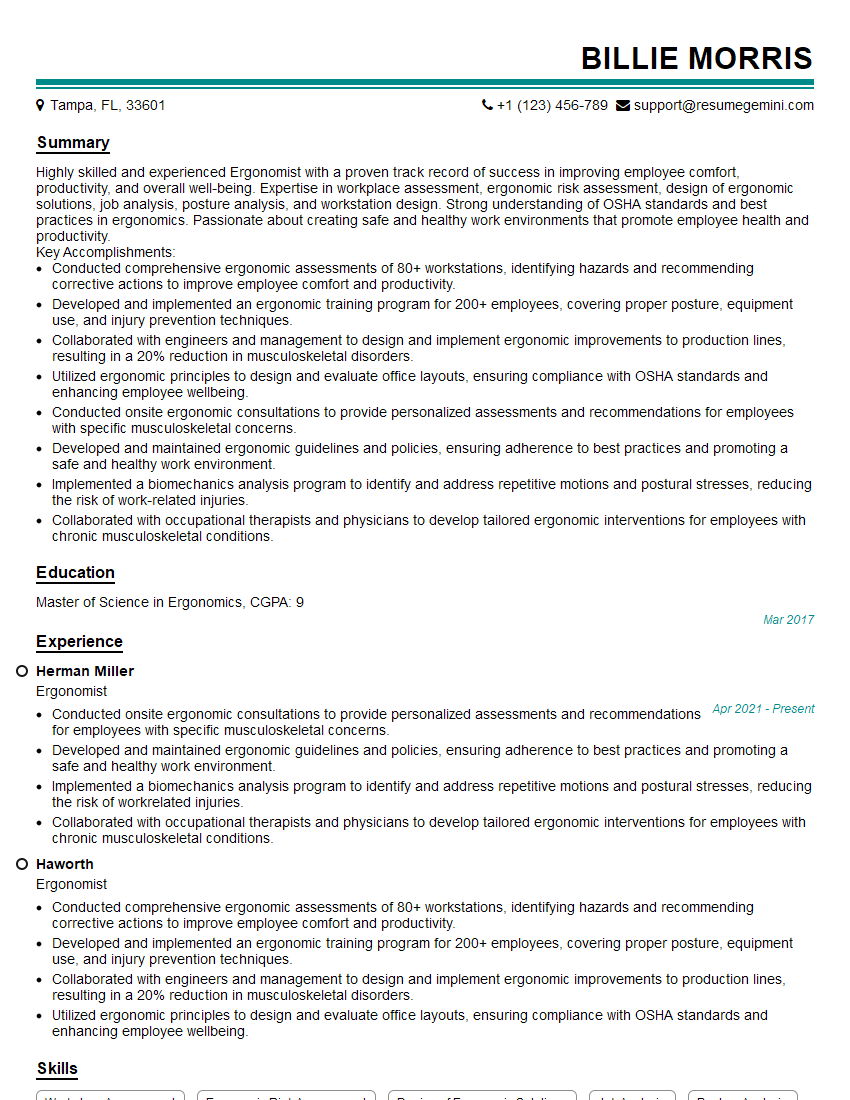
Mastering Injury Prevention Research opens doors to impactful careers contributing to public health and safety. To significantly enhance your job prospects, a well-crafted, ATS-friendly resume is crucial. ResumeGemini is a trusted resource that can help you create a professional and effective resume, maximizing your chances of landing your dream job. Examples of resumes tailored specifically to Injury Prevention Research are available to guide you through the process.
Explore more articles
Users Rating of Our Blogs
Share Your Experience
We value your feedback! Please rate our content and share your thoughts (optional).
What Readers Say About Our Blog
To the interviewgemini.com Webmaster.
Very helpful and content specific questions to help prepare me for my interview!
Thank you
To the interviewgemini.com Webmaster.
This was kind of a unique content I found around the specialized skills. Very helpful questions and good detailed answers.
Very Helpful blog, thank you Interviewgemini team.