Every successful interview starts with knowing what to expect. In this blog, we’ll take you through the top Installation of Doors and Windows interview questions, breaking them down with expert tips to help you deliver impactful answers. Step into your next interview fully prepared and ready to succeed.
Questions Asked in Installation of Doors and Windows Interview
Q 1. Explain the process of installing a standard double-hung window.
Installing a double-hung window involves precision and attention to detail. Think of it like building a finely crafted picture frame for your view. First, you carefully remove the old window, ensuring to protect the surrounding wall from damage. Then, you prepare the rough opening, making sure it’s perfectly square and plumb – this is crucial for a tight, weatherproof fit. Next, you install the new window frame, securing it using shims to level and plumb it. We’re aiming for perfection here, using a level and plumb bob constantly. Once the frame is perfectly aligned, you secure it with screws and construction adhesive. Then, carefully install the window sash, ensuring smooth operation and proper balance. Finally, you install the interior and exterior trim, finishing with caulking and weatherstripping to create a watertight and air-tight seal. This meticulous process is key to preventing drafts, energy loss and water damage.
- Rough Opening Preparation: Precise measurements are essential to ensure the new window fits snugly.
- Frame Installation: Shims are used to level and plumb the frame before securing it.
- Sash Installation: Proper installation ensures smooth operation and prevents sticking.
- Finishing: Caulking and weatherstripping seal the window, preventing air and water infiltration.
Q 2. Describe your experience with different types of window frames (e.g., vinyl, wood, aluminum).
I have extensive experience working with various window frame materials. Each has its strengths and weaknesses. Think of it like choosing the right tool for the job. Vinyl frames are popular for their low maintenance, durability, and affordability. They’re a great choice for homes in areas with harsh weather. However, they can be more difficult to repair if damaged. Wood frames, on the other hand, offer a classic, elegant look and can be customized. They’re excellent insulators but require regular maintenance, such as painting or staining, to prevent rot and insect damage. Finally, Aluminum frames are lightweight, strong, and resist corrosion, making them ideal for coastal areas. They are energy efficient but can conduct heat and cold, potentially affecting energy costs.
My experience allows me to select the optimal frame material based on the client’s budget, aesthetic preferences, and the specific environmental conditions of the location.
Q 3. How do you ensure proper weatherstripping and sealing during installation?
Proper weatherstripping and sealing are crucial to ensure the window’s performance and longevity. Imagine trying to keep water out of a boat with holes – it’s impossible! We use high-quality weatherstripping materials, carefully applied around the frame and sash to create a tight seal. This prevents drafts, air leakage, and water infiltration. We also use exterior-grade caulking, applied neatly and evenly to seal any gaps between the window frame and the rough opening. It’s important to select the right type of caulking for the material used. For example, a silicone-based caulk is very durable and long-lasting.
The quality of the weatherstripping and the precision of caulking application directly impacts the energy efficiency and durability of the window installation. A poorly sealed window will lead to higher energy bills and potential water damage over time.
Q 4. What safety precautions do you take when working at heights during window installation?
Safety is paramount when working at heights. Before I even start, I always assess the working area for potential hazards. This includes checking the stability of the ladder or scaffolding and ensuring I have the right safety equipment. I always wear a safety harness and use appropriate fall protection equipment such as safety lines or a secure scaffold. I also make sure the work area is clear of obstructions to avoid tripping hazards. Additionally, I always work with a partner, whenever possible, to ensure extra support and safety. Remember, safety is not just about rules, it’s about a mindset, a commitment to protecting yourself and others.
Q 5. Explain your experience with installing different types of doors (e.g., interior, exterior, sliding).
My experience spans various door types, each requiring specific techniques. Interior doors are relatively straightforward, focusing on precise measurements and alignment to ensure a smooth and quiet operation. Exterior doors demand more attention to detail, including weatherstripping and sealing to protect against the elements, similar to windows. I focus on creating a tight seal around the door frame, employing shims to make sure the door is properly aligned. Sliding doors present unique challenges, requiring careful adjustments to ensure smooth sliding and proper alignment of the track. My skillset allows me to quickly identify and resolve installation issues in order to provide a smooth, long-lasting finish.
Q 6. How do you handle situations where door frames are out of square?
Dealing with out-of-square door frames requires a systematic approach. Imagine trying to fit a square peg in a round hole – it won’t work! First, I carefully assess the extent of the misalignment. Then, I use shims strategically to bring the frame back into square. This is more of an art than a science; it requires patience and a keen eye for detail. I often use a combination of shims and construction adhesive to ensure a secure and stable installation. In extreme cases, I may need to adjust the frame itself to remedy the problem; however, it’s always best to work with the existing structure as much as possible. Accuracy and precision are crucial to ensure a well-functioning and aesthetically pleasing result.
Q 7. Describe your experience with installing various door hardware (e.g., hinges, locks, handles).
Installing door hardware is a meticulous process that requires attention to detail. It’s about more than just attaching parts; it’s about ensuring security and smooth operation. Think of it like assembling a complex puzzle. First, I carefully align the hinges, ensuring they are level and flush with the door and frame. This step is critical for the door’s smooth operation. Then, I install the locks, deadbolts, and handles, carefully following the manufacturer’s instructions and ensuring that the mechanism functions correctly. I use the right tools and pay attention to the tightness of each screw. Quality hardware is important, but it is the proper installation that assures its smooth function and long lifespan.
Q 8. How do you measure for a new door or window installation?
Accurate measurements are the foundation of a successful door or window installation. It’s not just about the rough opening; it’s about accounting for everything that affects the final fit. I start by checking the existing opening’s dimensions – height, width, and depth – using a high-quality measuring tape, verifying measurements multiple times for accuracy. Then, I assess the condition of the framing, looking for any rot, warping, or damage that might affect the new installation. For doors, I need to measure the jamb width (the frame) to select a suitable door, and for windows, I determine the exact size needed to fit within the existing frame. I always add a little extra margin for minor adjustments during installation. For example, if a window’s frame is slightly out of square, a few extra millimeters allow for minor shimming. Finally, I carefully note down all measurements, including the type of material and any unique features of the existing opening. Accurate measurement prevents costly mistakes down the line.
Q 9. What tools and equipment are essential for efficient door and window installation?
The right tools make all the difference in efficiency and precision. For door and window installation, my essential toolkit includes a level (both a standard and a laser level), measuring tapes (both standard and a long tape measure), a hammer, various screwdrivers (Phillips and flathead, different sizes), a cordless drill with various drill bits, a reciprocating saw, chisels, shims, a caulk gun, and safety glasses. Depending on the material and the project specifics, I might also use a circular saw, a nail gun, and specialized cutting tools for trim work. For example, when installing a door in a brick wall, a masonry bit for the drill is essential for drilling pilot holes for anchoring. Proper tools prevent damage to materials and ensure a clean, professional finish.
Q 10. Explain your experience with using different types of fasteners (e.g., screws, nails).
My experience with fasteners is extensive. I choose the appropriate fastener based on the material of the framing and the weight of the door or window. For instance, I wouldn’t use nails to secure a heavy exterior door into a wooden frame; instead, I’d opt for longer, stronger screws to provide a more secure and durable fastening. For lighter applications or when working with softer wood, nails may suffice. In cases where I’m working with brick or concrete, I’d use specialized masonry screws and anchors. For example, when installing a window in a brick wall, I’d use expansion anchors to securely attach the frame. I am also extremely mindful of the correct size and type of screw for the material and application. Using the wrong screw type could cause the fastener to strip or crack the wood. Always using appropriate-sized pilot holes ensures proper installation and prevents cracking or splitting.
Q 11. How do you ensure the structural integrity of the surrounding framing during installation?
Maintaining the structural integrity of the surrounding framing is paramount. Before starting any installation, I thoroughly inspect the existing frame for rot, damage, or weakness. Any compromised areas are addressed before proceeding. For instance, if there is rot, I’ll cut out and replace the affected sections, ensuring the replacement wood is properly treated and securely attached. I use shims to level and plumb the new frame, ensuring it is perfectly aligned with the existing structure. This prevents any stress on the surrounding framing and maintains the building’s overall structural soundness. Overtightening fasteners is also a no-no as it can cause stress on the framing and compromise the structural integrity.
Q 12. Describe your experience with installing windows and doors in different types of construction materials (e.g., brick, wood, stucco).
I’ve worked with a variety of construction materials – wood, brick, stucco, and more. Each presents unique challenges and necessitates specific techniques. For wood-framed houses, the installation is relatively straightforward. Brick requires more precision because of the material’s hardness; I use specialized tools and methods for creating secure anchor points. Stucco demands careful preparation and precise measurements to prevent damaging the surface. For example, when installing a window in brick, I’d use a masonry drill bit to create pilot holes for the fasteners and ensure they’re firmly anchored. Understanding the properties of each material is critical for a successful, lasting installation.
Q 13. How do you address issues related to air leakage or drafts after installation?
Air leakage and drafts are addressed through meticulous sealing and attention to detail. I use high-quality weatherstripping around the frame to create a tight seal between the door or window and the surrounding opening. In addition, I carefully caulk all gaps and seams, using a durable and weather-resistant sealant. I often employ expanding foam to fill any larger gaps or cavities in the frame, ensuring a completely airtight seal. A thorough inspection after the installation helps identify any remaining air leaks which can be addressed with further caulking or weather-stripping. This meticulous approach maximizes energy efficiency and comfort.
Q 14. What are your troubleshooting techniques for malfunctioning windows or doors?
Troubleshooting malfunctioning windows and doors often involves systematic investigation. I start by identifying the specific problem: is it sticking, binding, drafty, or something else? I then check for simple issues like loose screws, damaged weather stripping, or obstructions. If the problem persists, I may need to adjust the hardware, replace worn components, or even carefully realign the frame. For example, if a window is sticking, I will check the tracks for debris and clean them if necessary. If the problem is with the hinges, I might have to adjust them or replace them entirely. Understanding the mechanics of doors and windows is essential for effective troubleshooting and repair.
Q 15. How do you manage your time and resources effectively during an installation project?
Effective time and resource management is crucial for successful door and window installations. My approach involves a multi-step process starting with meticulous pre-installation planning. This includes carefully reviewing blueprints, confirming measurements on-site, and creating a detailed schedule that accounts for potential delays. I prioritize tasks based on their dependencies, ensuring that foundation work, like framing adjustments, is completed before window or door installation begins.
Resource management involves optimizing material usage to minimize waste and accurately estimating the needed manpower and tools. For instance, I ensure all necessary tools and materials, from specialized sealants to specific sized screws are readily available to avoid costly downtime. I also coordinate with suppliers to ensure timely delivery of materials. Regular progress checks against the schedule allow for adjustments and prevent project overruns. Think of it like a well-orchestrated symphony – each instrument (team member, tool, material) plays its part at the right time for a harmonious outcome.
Career Expert Tips:
- Ace those interviews! Prepare effectively by reviewing the Top 50 Most Common Interview Questions on ResumeGemini.
- Navigate your job search with confidence! Explore a wide range of Career Tips on ResumeGemini. Learn about common challenges and recommendations to overcome them.
- Craft the perfect resume! Master the Art of Resume Writing with ResumeGemini’s guide. Showcase your unique qualifications and achievements effectively.
- Don’t miss out on holiday savings! Build your dream resume with ResumeGemini’s ATS optimized templates.
Q 16. Describe your experience working with different types of glazing.
My experience encompasses a wide range of glazing types, from standard annealed glass to more specialized options like tempered, laminated, and insulated glass units (IGUs). Annealed glass is the most common and relatively inexpensive, while tempered glass offers significantly increased strength and safety, crucial for applications like shower enclosures and storefront windows. Laminated glass, consisting of multiple layers bonded together, is preferred where security and impact resistance are paramount, often found in hurricane-prone areas. IGUs, with their air or gas-filled cavities, provide superior insulation, reducing energy costs.
I’m proficient in handling the installation of all these types, understanding the unique characteristics and handling requirements of each. For example, tempered glass requires extra care during handling to prevent breakage, while IGUs necessitate precise sealing to maintain their thermal efficiency. Proper installation ensures longevity and optimal performance of the glazing, preventing issues like condensation or air leaks.
Q 17. What is your experience with installing impact-resistant windows?
I have extensive experience installing impact-resistant windows, a critical aspect in areas prone to severe weather events like hurricanes or high winds. These windows are typically constructed with laminated glass and reinforced frames, capable of withstanding significant impact. My experience covers various brands and types, ensuring I understand their specific installation requirements, including proper anchoring and sealing. Incorrect installation can compromise their performance, negating their protective capabilities.
A crucial part of impact window installation involves paying close attention to the manufacturer’s specifications. This includes using the correct fasteners, ensuring proper alignment within the frame, and meticulously sealing all gaps to prevent water ingress. For example, a poorly sealed impact window could compromise its integrity, and water damage could significantly reduce its lifespan and protective value.
Q 18. Explain your experience with different types of door thresholds and their installation.
Door thresholds come in various materials and styles, each offering different benefits and requiring specific installation techniques. Common types include aluminum, wood, and vinyl thresholds. Aluminum thresholds are durable and weather-resistant, ideal for exterior doors. Wood thresholds offer a more aesthetically pleasing option, though they might require more maintenance. Vinyl thresholds are relatively inexpensive and easy to install, often used for interior applications.
Installation depends on the threshold type and the door’s construction. For example, an aluminum threshold might require specific fasteners and expansion joints to accommodate temperature changes. Wood thresholds need to be properly sealed to prevent moisture damage. Regardless of the material, ensuring the threshold is level and properly sealed to the door and the flooring is crucial to prevent drafts and water damage. Incorrect installation can lead to warping or gaps, compromising the door’s weather-tight seal.
Q 19. How do you maintain a clean and organized worksite during installation?
Maintaining a clean and organized worksite is paramount for safety and efficiency. My approach begins with a pre-installation cleanup, removing any debris or obstructions that could impede the work. During the installation, I use drop cloths to protect floors and surfaces. Tools and materials are kept organized and readily accessible, minimizing wasted time searching for items. Waste is immediately disposed of in designated containers, following local regulations.
Regular sweeping and cleanup throughout the day keeps the site safe and allows for better visibility and quality control. At the end of each workday, I perform a thorough cleanup, leaving the area cleaner than I found it. This demonstrates professionalism and respect for the client’s property, showcasing a commitment to exceeding expectations. Think of it as leaving a clean canvas for the homeowners to enjoy their new doors and windows.
Q 20. Describe your experience with working independently and as part of a team.
I’m equally comfortable working independently and as part of a team. When working independently, I’m self-motivated and able to manage my time effectively to meet deadlines. I rely on strong organizational skills and problem-solving abilities to navigate challenges. A recent solo installation of a complex bay window involved meticulous planning and precise execution, resulting in a flawless outcome.
In a team setting, I’m a collaborative team player, contributing my expertise and assisting colleagues as needed. I excel in clear communication and readily share knowledge to ensure the team’s success. In one large-scale project, my ability to effectively communicate with both the construction manager and my fellow installers allowed us to complete the installation of multiple doors and windows ahead of schedule.
Q 21. What are some common mistakes to avoid during door and window installation?
Several common mistakes can significantly impact the performance and longevity of door and window installations. One frequent error is improper measurements. Inaccurate measurements lead to ill-fitting units and potential problems with functionality and weather sealing. Another is neglecting proper flashing and sealing. This exposes the structure to water damage, leading to rot and expensive repairs. Failing to ensure a proper level and plumb installation also creates problems, leading to operational difficulties and aesthetic issues.
Using the wrong fasteners or not securing units properly can result in instability and security vulnerabilities. Another common oversight is not properly preparing the framing or rough opening. Inaccurate preparation can lead to gaps, resulting in air leaks and compromised insulation. Avoiding these mistakes requires careful planning, attention to detail, and a thorough understanding of best practices. By addressing these potential pitfalls, I ensure installations are done correctly the first time, saving time, money, and client frustration.
Q 22. How do you handle customer concerns or complaints regarding installations?
Addressing customer concerns is paramount. My approach begins with active listening. I ensure I fully understand the issue before offering solutions. I treat every complaint as an opportunity to improve and build trust. For instance, if a customer complains about a slight gap around a newly installed window, I wouldn’t dismiss it. I’d carefully inspect the area, explain the potential causes (e.g., settling of the house, slight variations in framing), and offer solutions such as additional caulking or shimming, if necessary, to address their concerns to their satisfaction. Transparency and clear communication are key – I keep them informed about the process and timeframe for resolution.
I always maintain a professional and empathetic demeanor, reassuring them that their concerns are valid and I’m committed to finding a resolution. I document every interaction and the steps taken to resolve the issue for future reference and to demonstrate accountability. Follow-up is also crucial to ensure the customer is satisfied with the outcome.
Q 23. How do you ensure compliance with building codes and safety regulations during installation?
Compliance with building codes and safety regulations is non-negotiable. Before any installation, I meticulously review the relevant codes for the specific location and the project specifications. This includes checking for requirements related to energy efficiency (e.g., window U-values, air leakage), structural integrity (proper anchoring and flashing), and safety (e.g., guarding against falling hazards during the work). I’m familiar with local and national codes and regularly update my knowledge through professional development courses and resources.
For instance, when installing exterior doors, I always ensure proper weatherstripping and sealing to prevent air leakage and water intrusion, complying with energy efficiency standards. I also ensure that all window and door hardware is properly installed and functioning according to safety guidelines. I maintain detailed records of all inspections and approvals to demonstrate compliance throughout the process. If there are any discrepancies, I communicate them promptly to the relevant parties, seeking clarification and solutions before proceeding.
Q 24. Describe your experience with using various types of caulking and sealants.
My experience encompasses a wide range of caulking and sealants, each suited for specific applications. For example, I use silicone caulk for areas requiring high flexibility and water resistance, such as around bathtubs or exterior window frames. Acrylic latex caulk is better suited for interior applications and is easier to clean up. Polyurethane caulk offers excellent adhesion and durability, often used for filling larger gaps. I also have experience with specialized sealants like butyl tape for improved weather resistance and flashings around windows and doors. The choice depends on the substrate (material being sealed), the environment (interior or exterior), and the expected movement and stress on the joint.
I understand the importance of proper application techniques, including surface preparation (cleaning and priming where necessary) and ensuring proper curing time for optimal performance. I’ve encountered scenarios requiring different types of caulk to achieve superior results, such as combining a high-performance sealant with a paintable caulk for a smooth finish.
Q 25. Explain your experience with using power tools safely and effectively.
Safety is paramount when operating power tools. Years of experience have instilled in me a deep understanding of safe operating procedures for various tools, including circular saws, jigsaws, drills, and impact drivers. Before using any tool, I conduct a thorough inspection, ensuring it’s in good working order and the appropriate safety guards are in place. I always wear appropriate personal protective equipment (PPE), including safety glasses, hearing protection, and work gloves. I also ensure the work area is clear of obstructions and well-lit.
I follow strict safety protocols, including using the right tool for the job, maintaining a firm grip, and avoiding distractions. I’ve developed a keen awareness of potential hazards and employ preventive measures to mitigate risks. For example, when using a circular saw, I carefully plan my cuts to avoid kickback, and I always use a push stick for safer operation in tight spaces. Furthermore, I frequently review the manufacturer’s instructions and undergo regular training to stay up-to-date on best practices.
Q 26. How do you prepare for unexpected challenges or issues during installation?
Preparing for unexpected challenges is critical. I approach every installation with a proactive mindset, anticipating potential issues before they arise. This involves a thorough review of the installation plans, inspecting the site for potential obstacles (e.g., existing framing issues, hidden utilities), and having a contingency plan in place. I always carry a comprehensive toolkit, including common repair parts and alternative materials, to quickly address minor issues that may surface during the process.
For example, if I encounter unexpected framing discrepancies, I have the skills to make adjustments, ensuring the door or window fits perfectly and securely. My experience allows me to creatively solve problems using readily available materials, preventing delays and ensuring quality workmanship. Open communication with the client throughout the process is also essential, keeping them informed of any unforeseen difficulties and potential solutions. This approach minimizes surprises and maintains a positive customer experience.
Q 27. How do you prioritize tasks to complete the installation within a given timeframe?
Effective task prioritization is crucial for timely completion. I utilize a structured approach, starting with a detailed review of the installation plan, breaking down the project into smaller, manageable tasks. I then prioritize these tasks based on their dependencies and criticality, focusing on those that must be completed before others can begin. This often involves sequencing tasks to optimize workflow and minimize downtime.
For instance, I’d prioritize tasks such as preparing the rough opening, installing shims and flashing, before moving on to installing the window or door itself. This methodical approach helps avoid potential delays or errors that could affect the overall timeline. I continuously monitor progress and adjust the schedule as needed, communicating any delays or changes to the client promptly and transparently. Regularly checking my progress against the schedule helps me stay on track and deliver the project on time.
Q 28. What is your experience with warranty work or post-installation service?
I have extensive experience handling warranty work and post-installation service. This includes addressing any defects or issues that may arise after the initial installation, within the warranty period. I respond promptly to warranty claims, thoroughly investigating the issue to determine its cause and the appropriate course of action. My approach is always customer-centric, prioritizing quick and effective repairs or replacements to restore functionality and maintain customer satisfaction.
For example, if a customer reports a malfunctioning window mechanism after installation, I would promptly schedule a visit, diagnose the problem, and either repair the existing mechanism or replace it, as needed, all within the terms of the warranty. I maintain meticulous records of all warranty work, documenting the issue, the actions taken, and the outcome. This detailed record-keeping ensures accountability and provides valuable data for continuous improvement in our installation and service practices.
Key Topics to Learn for Your Installation of Doors and Windows Interview
- Understanding Door and Window Types: Familiarize yourself with various materials (wood, vinyl, fiberglass, aluminum), styles (sliding, hinged, casement), and their respective installation techniques. Be prepared to discuss the pros and cons of each.
- Measuring and Preparation: Master accurate measuring techniques for precise framing and installation. Understand the importance of proper site preparation, including leveling, shimming, and ensuring a structurally sound opening.
- Installation Techniques: Detail your knowledge of installing different types of doors and windows, including flashing, sealing, and weatherstripping. Practice explaining the step-by-step process for a typical installation.
- Hardware and Accessories: Demonstrate your familiarity with various locking mechanisms, handles, hinges, and other accessories. Understand the importance of proper installation and functionality.
- Troubleshooting and Problem-Solving: Be ready to discuss common installation challenges (e.g., uneven frames, difficult openings, weather leaks) and your strategies for resolving them. Highlight your experience with identifying and addressing potential issues proactively.
- Safety Procedures and Regulations: Emphasize your commitment to safety protocols, including the proper use of tools and personal protective equipment (PPE). Show your awareness of relevant building codes and regulations.
- Tools and Equipment: Demonstrate a comprehensive understanding of the tools and equipment necessary for efficient and accurate door and window installation. Be able to discuss their proper use and maintenance.
Next Steps
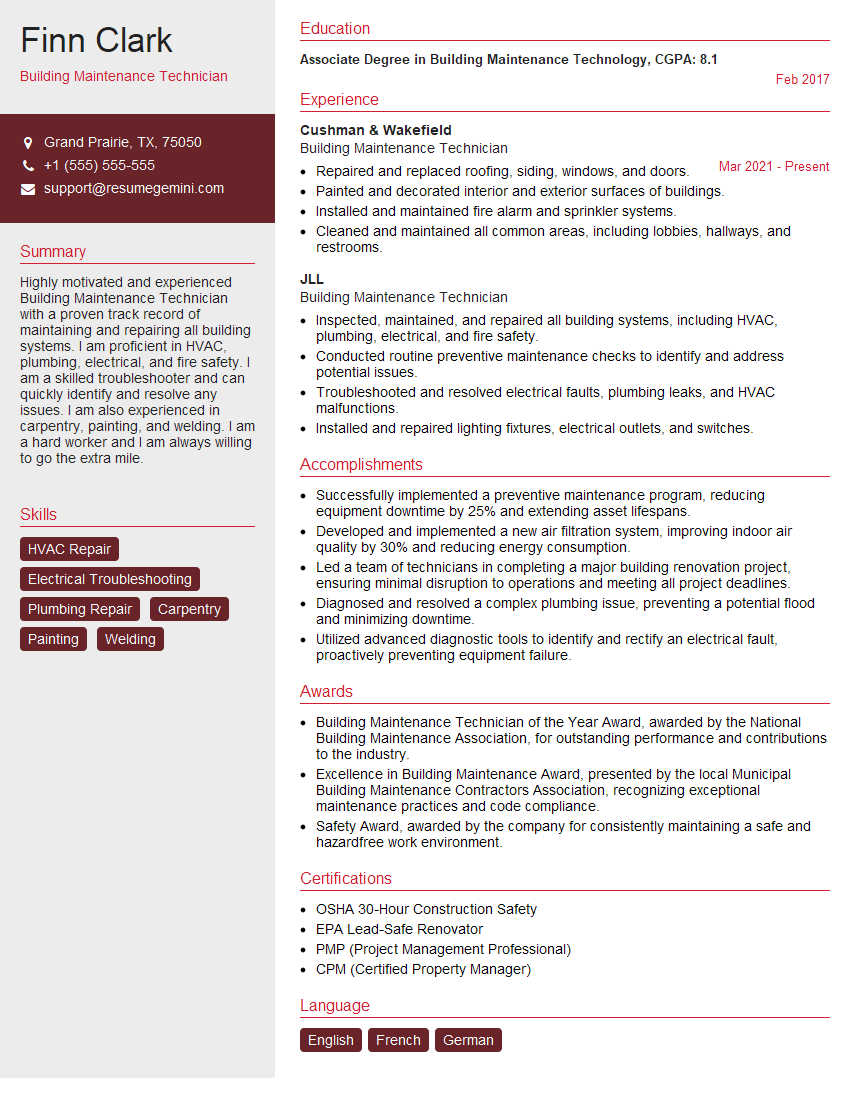
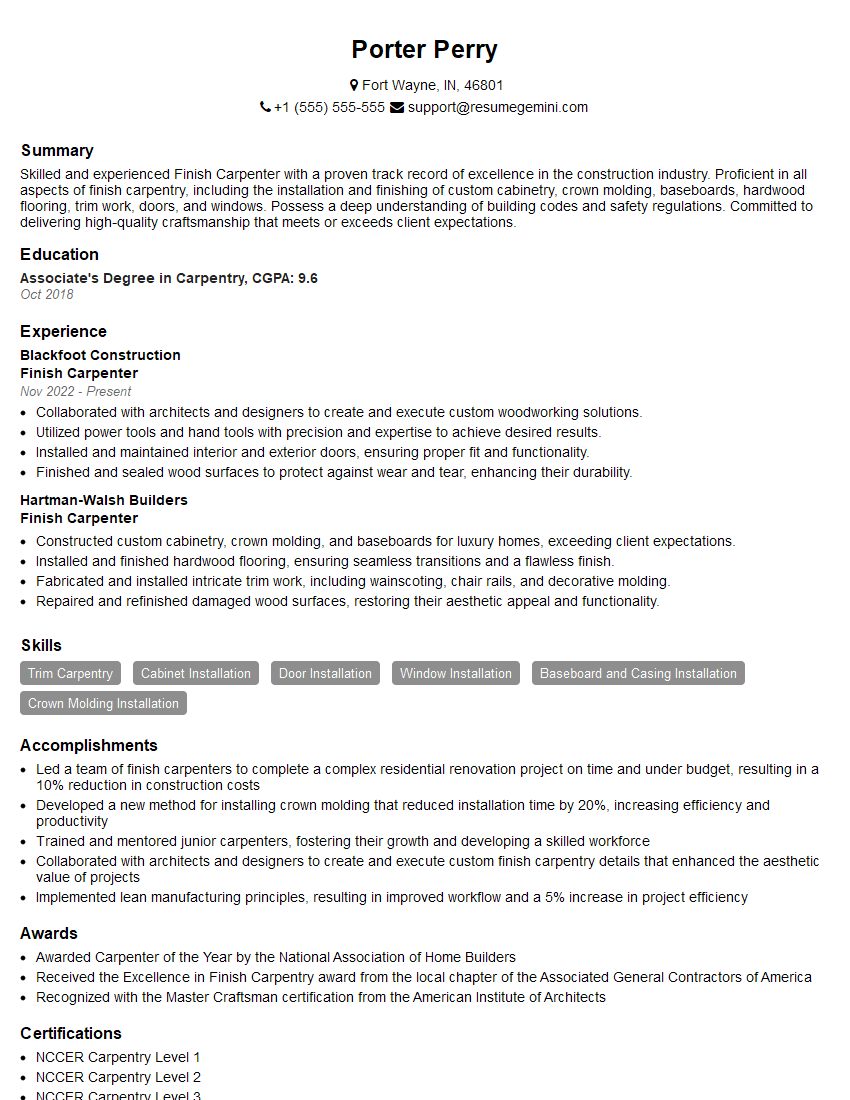
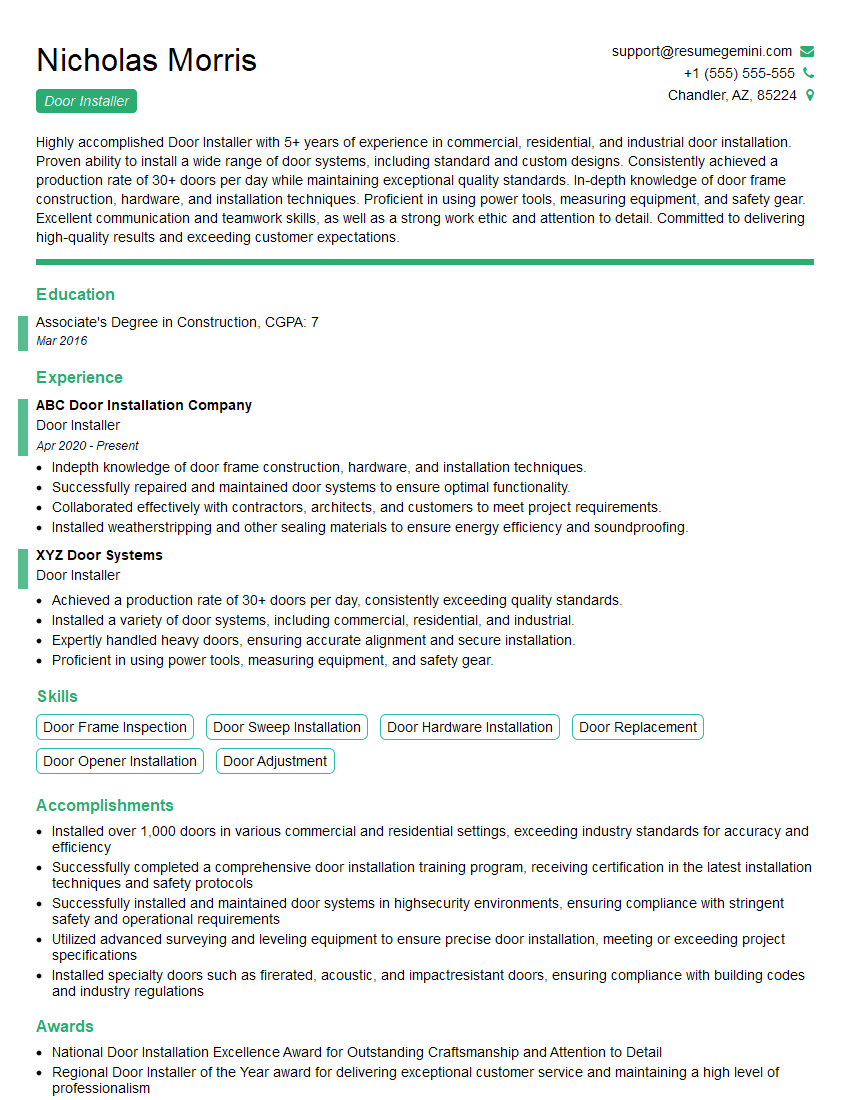
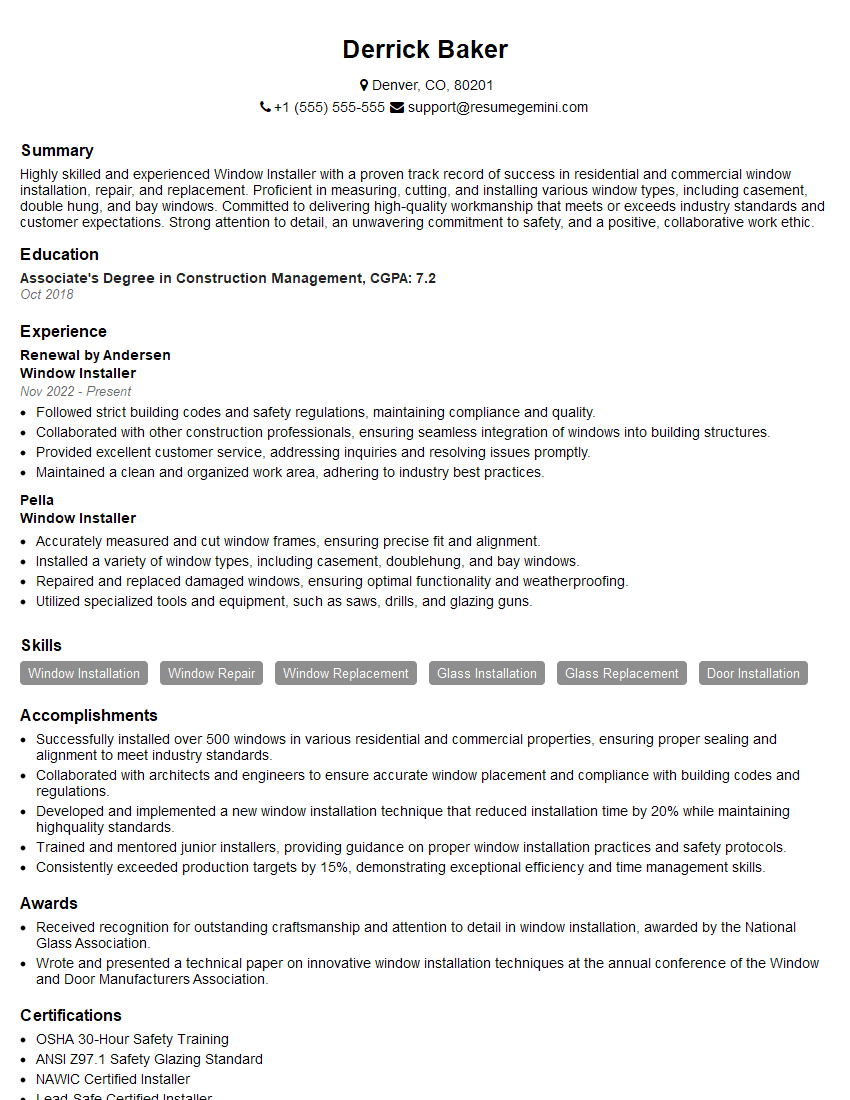
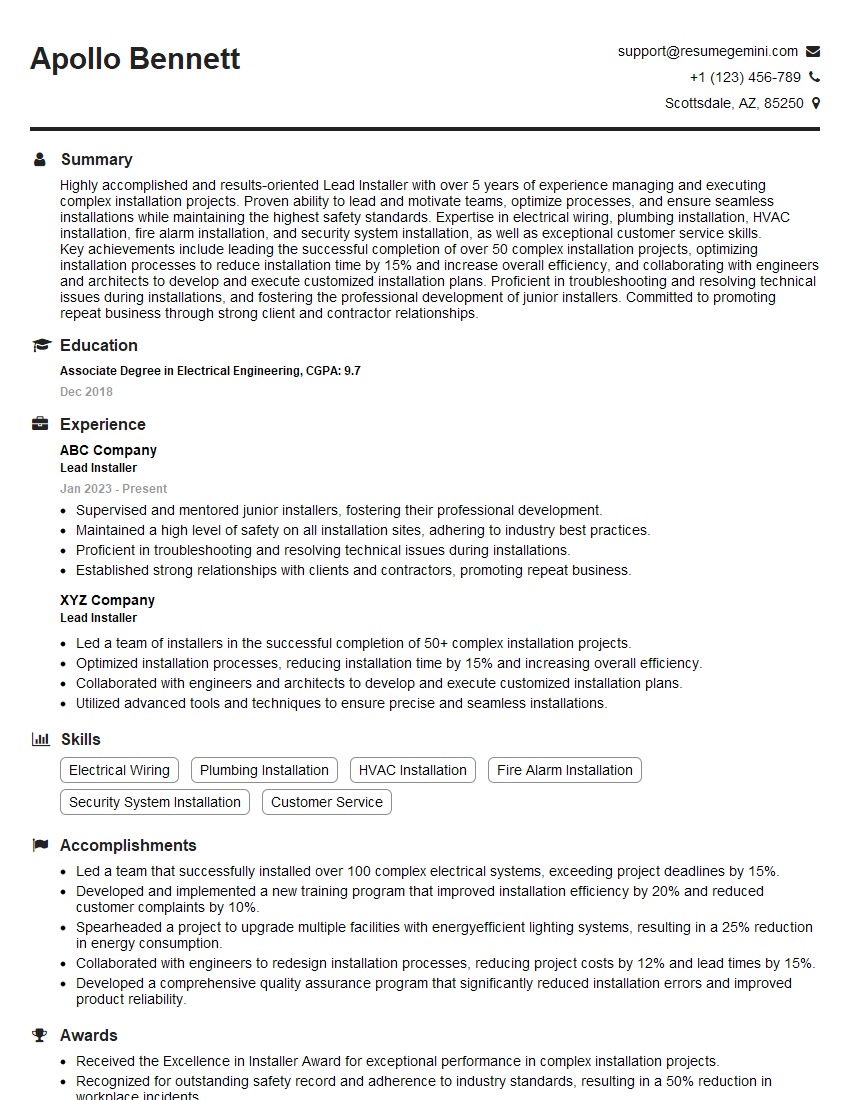
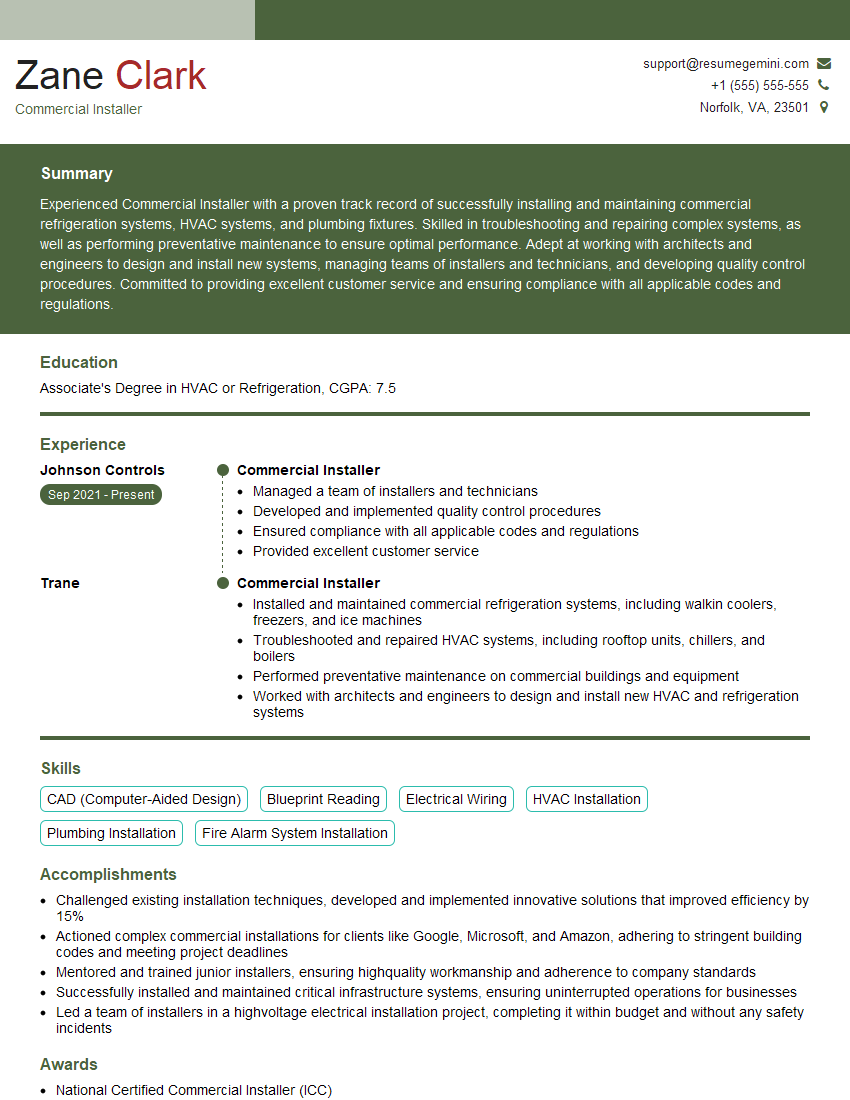
Mastering the installation of doors and windows opens doors to a rewarding career with excellent growth potential. Building a strong foundation in these skills will significantly increase your employability and earning power. To further enhance your job prospects, creating an ATS-friendly resume is crucial. ResumeGemini is a trusted resource that can help you build a professional resume that highlights your skills and experience effectively. ResumeGemini provides examples of resumes tailored specifically to the Installation of Doors and Windows field, making your job search even more efficient. Take the next step towards your dream career today!

Explore more articles
Users Rating of Our Blogs
Share Your Experience
We value your feedback! Please rate our content and share your thoughts (optional).
What Readers Say About Our Blog
To the interviewgemini.com Webmaster.
Very helpful and content specific questions to help prepare me for my interview!
Thank you
To the interviewgemini.com Webmaster.
This was kind of a unique content I found around the specialized skills. Very helpful questions and good detailed answers.
Very Helpful blog, thank you Interviewgemini team.