Interviews are opportunities to demonstrate your expertise, and this guide is here to help you shine. Explore the essential Risk Factor Management interview questions that employers frequently ask, paired with strategies for crafting responses that set you apart from the competition.
Questions Asked in Risk Factor Management Interview
Q 1. Explain the difference between inherent risk and residual risk.
Inherent risk and residual risk are two crucial concepts in risk management that often get confused. Inherent risk represents the risk level before any actions are taken to mitigate it. It’s the pure, unmanaged risk. Think of it as the potential for something bad to happen simply because of the nature of an activity or system. For example, the inherent risk of driving a car involves the possibility of accidents, regardless of how safely you drive.
Residual risk, on the other hand, is the risk that remains after you’ve implemented risk mitigation strategies. It’s the risk that you haven’t been able to eliminate or reduce to an acceptable level. Continuing the car example, even with seatbelts, airbags, and defensive driving, some residual risk of accidents still exists. The goal of risk management is not to eliminate all risk (often impossible), but to reduce the residual risk to an acceptable level, aligned with your risk appetite.
Q 2. Describe your experience with risk assessment methodologies (e.g., FMEA, PHA).
I have extensive experience utilizing various risk assessment methodologies, including Failure Mode and Effects Analysis (FMEA) and Preliminary Hazard Analysis (PHA). FMEA is a systematic approach to identifying potential failure modes within a system or process and assessing their severity, occurrence, and detectability. I’ve used FMEA in projects ranging from designing manufacturing processes to evaluating software applications. The output is typically a Risk Priority Number (RPN) which helps prioritize which failure modes need immediate attention.
PHA, a more qualitative method, focuses on identifying potential hazards and assessing their risk level early in a project’s lifecycle. It’s particularly useful for quickly evaluating high-level risks, especially in situations with limited data. I’ve utilized PHA in construction projects, ensuring safety protocols are in place before work commences. My experience spans across various industries, allowing me to adapt the methodology to the specific context and available data. I’m also proficient in other methods, such as Fault Tree Analysis (FTA) and Event Tree Analysis (ETA), depending on the complexity and nature of the project.
Q 3. How do you prioritize risks based on likelihood and impact?
Risk prioritization is a critical step in effective risk management. It involves ranking risks based on their likelihood and impact. I often use a risk matrix for this purpose. A simple risk matrix is a table where the likelihood of the risk occurring is plotted against the potential impact if it does occur. Both likelihood and impact are often scored qualitatively (e.g., Low, Medium, High) or quantitatively (e.g., 1-5 scale).
For example:
- Low Likelihood, Low Impact: Minor inconvenience, requires minimal resources to address.
- High Likelihood, Low Impact: Frequent minor problems, requires routine monitoring.
- Low Likelihood, High Impact: Rare but catastrophic event, requires significant contingency planning.
- High Likelihood, High Impact: Very likely to occur with significant negative consequences; requires immediate attention and robust mitigation strategies.
By plotting each risk on this matrix, we can visually prioritize those in the high-likelihood/high-impact quadrant, which demand immediate attention and resources. More sophisticated methods involve incorporating risk appetite and other qualitative factors.
Q 4. What are the key elements of a comprehensive risk management framework?
A comprehensive risk management framework should encompass several key elements. Firstly, it requires a well-defined risk appetite – the amount of risk an organization is willing to accept in pursuit of its objectives. This forms the basis for all subsequent decisions. Secondly, a robust risk identification process is crucial, utilizing brainstorming, checklists, and historical data to uncover potential threats. Next, a thorough risk assessment quantifies and qualifies the identified risks, considering likelihood and impact. The process then moves to risk response planning, where strategies like avoidance, mitigation, transfer, or acceptance are developed. Finally, a risk monitoring and review process ensures that the effectiveness of the chosen strategies is continuously evaluated and adjustments are made as needed. Regular communication and reporting are integral to the entire process, keeping stakeholders informed and engaged.
Q 5. Explain your understanding of Key Risk Indicators (KRIs) and how you use them.
Key Risk Indicators (KRIs) are measurable variables that signal the potential occurrence of a specific risk. They act as early warning systems, providing insights into the health of the risk management program and allowing proactive intervention. For instance, a KRI for a cybersecurity risk might be the number of successful phishing attempts. A high number suggests a potential breach and necessitates immediate action. I utilize KRIs by:
- Identifying Relevant KRIs: Selecting variables directly related to key risks, aligning with organizational objectives.
- Establishing Baselines and Thresholds: Defining acceptable ranges for each KRI and setting triggers for intervention.
- Monitoring and Reporting: Regularly tracking KRI values and generating reports to identify trends and potential issues. This involves using dashboards and other visual tools for clear communication.
- Responding to Alerts: Implementing predefined actions when KRIs exceed thresholds, ensuring timely mitigation.
The effectiveness of KRIs depends on their relevance, accuracy, and timely monitoring. Regular review and refinement are crucial.
Q 6. How do you develop and implement risk mitigation strategies?
Developing and implementing risk mitigation strategies involves a structured approach. First, we clearly define the risk and its potential impact. Then, we brainstorm a range of mitigation options. This often involves considering various strategies, including:
- Avoidance: Eliminating the risk altogether by not undertaking the activity or project.
- Mitigation: Reducing the likelihood or impact of the risk through actions like implementing controls or improving processes.
- Transfer: Shifting the risk to a third party, such as through insurance or outsourcing.
- Acceptance: Acknowledging the risk and accepting the potential consequences, perhaps due to low likelihood or impact.
Once the optimal strategy is chosen, a detailed implementation plan is developed, including timelines, responsibilities, and resource allocation. This plan is meticulously documented and regularly reviewed. Post-implementation, we monitor the effectiveness of the chosen strategy, making adjustments as needed to ensure the residual risk remains within acceptable limits. Key performance indicators (KPIs) are established to measure the success of the mitigation efforts.
Q 7. Describe a time you identified a critical risk that others overlooked.
During a large-scale software implementation project, the team focused heavily on technical risks, like data migration and system integration. However, I identified a significant risk related to user adoption. While the technical aspects were meticulously planned, the team hadn’t adequately considered the potential for resistance from users accustomed to the old system. This could have led to project failure despite the technical success.
I proposed conducting extensive user training and change management initiatives. This included workshops, individualized support, and clear communication highlighting the benefits of the new system. My proactive identification of this ‘soft’ risk, often overlooked in technology projects, ensured a smooth transition and successful user adoption, ultimately contributing significantly to the project’s overall success. It highlighted the importance of considering human factors and organizational change when managing risks.
Q 8. How do you communicate risk information to different stakeholders?
Communicating risk effectively hinges on tailoring the message to the audience’s understanding and needs. I employ a multi-faceted approach.
- Executive Summaries: For senior management, I provide concise overviews focusing on high-level impacts and strategic implications. This might include a summary of top 5 risks and their potential financial impact.
- Detailed Reports: For project teams or risk committees, I offer comprehensive reports with detailed risk analyses, mitigation strategies, and contingency plans. These reports often include heat maps and risk registers.
- Visual Aids: I utilize charts, graphs, and dashboards to simplify complex data, making it easily digestible for diverse audiences. For instance, a simple color-coded risk matrix quickly communicates the severity and likelihood of various risks.
- Interactive Presentations: For engaging larger groups or facilitating discussions, I leverage interactive presentations to encourage questions and collaborative problem-solving. This allows for real-time clarification and adjustments.
- Regular Updates: Maintaining consistent communication is crucial. I establish regular reporting cycles tailored to each stakeholder’s needs, ensuring they stay informed and engaged.
For example, while a CEO might only need a high-level overview of potential financial losses, a project manager requires detailed information on specific tasks and their associated risks.
Q 9. What software or tools have you used for risk management?
Throughout my career, I’ve utilized a range of software and tools to support risk management. My experience includes:
- Microsoft Project: For project planning and tracking, allowing for the identification of potential schedule-related risks.
- Jira: Integrating risk management within agile project management workflows, allowing for real-time risk assessment and mitigation updates.
- Risk Management Software (e.g., Archer, MetricStream): These platforms provide comprehensive functionalities for risk identification, assessment, response planning, monitoring, and reporting, often including features like dashboards and automated reports.
- Spreadsheets (Excel, Google Sheets): While simpler, spreadsheets are still valuable for creating and maintaining risk registers, probability and impact matrices, and other essential risk documentation.
- Collaboration Tools (e.g., Microsoft Teams, Slack): Facilitating communication and collaboration among stakeholders in real-time, essential for effective risk management.
The choice of tool depends heavily on project size, complexity, and organizational resources. For smaller projects, a spreadsheet might suffice, whereas larger, more complex projects might demand a dedicated risk management software solution.
Q 10. How do you manage risks in projects with tight deadlines and limited resources?
Managing risks under tight deadlines and resource constraints requires a focused, prioritization-driven approach.
- Prioritization: Employing a risk scoring matrix (likelihood x impact) to identify high-priority risks that demand immediate attention. This helps focus resources on the most critical threats.
- Risk Avoidance: Where feasible, actively avoid known risks by modifying the project scope or approach. For example, if a specific technology is risky and presents a tight deadline, choosing a more proven alternative might be the best option.
- Risk Mitigation: For unavoidable risks, develop detailed mitigation plans that include specific actions, responsibilities, and timelines. This could involve adding buffer time to the schedule or securing additional resources.
- Risk Transfer: Consider transferring some risks, such as through insurance or outsourcing specific tasks to specialized vendors.
- Contingency Planning: Develop backup plans to address potential setbacks. If a critical resource becomes unavailable, having a pre-defined alternative ensures project continuity.
- Agile Methodology: Adopting an agile approach fosters flexibility and adaptability, allowing for rapid response to emerging risks.
For example, in a software development project with a tight deadline, prioritizing and mitigating risks related to coding errors or critical dependencies would be crucial. This might involve implementing robust testing procedures and contingency plans for critical failures.
Q 11. Describe your experience with risk registers and reporting.
Risk registers and reporting are fundamental aspects of my risk management process. I’ve extensive experience in both developing and maintaining these.
Risk Registers: I use risk registers to systematically document identified risks, their likelihood, potential impacts, proposed mitigation strategies, owners, and status. The register typically includes columns for: Risk ID, Risk Description, Category, Likelihood, Impact, Mitigation Strategy, Owner, Status, Target Completion Date, and Actual Completion Date.
Reporting: My reporting approach is tailored to the audience. For instance, executive summaries focus on key risk indicators (KPIs) like the number of high-priority risks or the overall risk exposure. Detailed reports for project teams may include comprehensive risk analyses, including probability and impact matrices, and visual aids such as heat maps or charts.
I’ve used various methods for reporting including regular updates in project meetings, automated email alerts triggered by changes in risk status, and formal reports presented to management committees.
Q 12. What is your approach to risk monitoring and review?
Risk monitoring and review is an ongoing, iterative process. My approach involves:
- Regular Monitoring: Establish a monitoring cadence based on the project’s risk profile. High-risk projects may require daily monitoring, while lower-risk projects might only need weekly checks.
- Key Risk Indicators (KRIs): Defining and tracking KRIs to proactively identify potential problems. For instance, in a construction project, KRIs could include schedule slippage, cost overruns, or safety incidents.
- Risk Audits: Conducting regular risk audits to validate the effectiveness of existing mitigation strategies and identify any new emerging risks.
- Lessons Learned: Capturing lessons learned from past risks and incidents to improve future risk management processes.
- Escalation Procedures: Establishing clear escalation procedures for handling significant or unexpected risks. This ensures timely intervention and appropriate decision-making.
For instance, during a product launch, I’d monitor sales figures, customer feedback, and technical support issues to identify any potential risks impacting market penetration or product stability. This would inform further monitoring activities and potentially trigger necessary mitigation actions.
Q 13. How do you handle conflicting priorities in risk management?
Conflicting priorities in risk management are inevitable. My approach involves:
- Prioritization Framework: Employing a well-defined framework, such as a risk scoring matrix (likelihood x impact), to objectively prioritize risks based on their potential impact and likelihood. This allows for clear justification when resources need to be allocated strategically.
- Stakeholder Collaboration: Facilitating open communication and collaboration among stakeholders to identify shared priorities and reach consensus on resource allocation. This often involves transparently discussing trade-offs and potential consequences of prioritizing one risk over another.
- Data-Driven Decision Making: Using data and analysis to support prioritization decisions. This includes reviewing risk assessments, impact analyses, and other quantitative data to make informed decisions.
- Documentation and Transparency: Maintaining clear and detailed documentation of risk assessment, prioritization decisions, and resource allocation. This ensures transparency and accountability.
For example, if a project faces both a high-likelihood schedule risk and a low-likelihood but high-impact financial risk, a prioritization matrix will help determine which to address first, potentially through stakeholder collaboration and a discussion on the acceptable level of risk.
Q 14. Explain your understanding of regulatory compliance and its impact on risk management.
Regulatory compliance plays a significant role in risk management. Non-compliance can lead to substantial financial penalties, reputational damage, and even legal action.
My understanding of regulatory compliance includes:
- Identifying Applicable Regulations: The first step is to accurately identify all applicable regulations relevant to the industry and specific operations. This may include industry-specific standards, data privacy regulations (e.g., GDPR, CCPA), and other relevant legal frameworks.
- Integrating Compliance into Risk Management: Regulatory compliance is not separate from risk management, but an integral part. Non-compliance itself is a significant risk. Risk assessments need to explicitly address potential regulatory breaches.
- Developing Compliance Controls: Implementing robust internal controls and processes to ensure ongoing compliance with all relevant regulations. This might include regular audits, documentation review, and employee training.
- Monitoring and Reporting: Establishing systems for monitoring compliance and generating reports to demonstrate adherence to regulatory requirements. These reports will likely be part of overall risk reporting.
- Proactive Approach: Proactively adapting to changes in regulations and best practices is crucial. Regular review and updating of policies and procedures is essential to maintaining compliance.
For instance, in the financial services industry, understanding and complying with regulations such as KYC (Know Your Customer) and AML (Anti-Money Laundering) is paramount. Failure to comply with these regulations represents significant legal and financial risks.
Q 15. How do you incorporate qualitative and quantitative data in risk assessments?
A comprehensive risk assessment requires a balanced approach, integrating both qualitative and quantitative data. Qualitative data provides context and insights into the nature of risks, while quantitative data offers measurable values for likelihood and impact. Think of it like this: qualitative data paints the picture, while quantitative data provides the numbers to understand the picture’s scale.
For example, a qualitative assessment might involve expert interviews to understand the potential impact of a new regulation on a business. This would help identify the potential risks associated with non-compliance. Quantitative data could then be used to estimate the financial penalties for non-compliance (a monetary value) and the likelihood of an audit uncovering the non-compliance (a probability).
We often use techniques like risk matrices, which plot qualitative assessments (e.g., likelihood as ‘low,’ ‘medium,’ ‘high’) against quantitative assessments (e.g., impact measured in dollars or potential project delays). Combining these gives a more nuanced and realistic understanding of the overall risk landscape.
- Qualitative Data Sources: Interviews, surveys, brainstorming sessions, SWOT analysis.
- Quantitative Data Sources: Historical data, statistical analysis, simulations, financial models.
Career Expert Tips:
- Ace those interviews! Prepare effectively by reviewing the Top 50 Most Common Interview Questions on ResumeGemini.
- Navigate your job search with confidence! Explore a wide range of Career Tips on ResumeGemini. Learn about common challenges and recommendations to overcome them.
- Craft the perfect resume! Master the Art of Resume Writing with ResumeGemini’s guide. Showcase your unique qualifications and achievements effectively.
- Don’t miss out on holiday savings! Build your dream resume with ResumeGemini’s ATS optimized templates.
Q 16. How do you measure the effectiveness of risk mitigation strategies?
Measuring the effectiveness of risk mitigation strategies requires a multi-faceted approach, focused on both leading and lagging indicators. Lagging indicators tell us what has already happened; leading indicators predict future performance.
Lagging Indicators: These measure the outcome of risk mitigation efforts. For instance, if a key risk is supply chain disruption, a lagging indicator would be the number of supply chain disruptions experienced after implementing a new mitigation strategy (e.g., diversifying suppliers). We’d compare this to the number of disruptions before the strategy was put in place.
Leading Indicators: These measure the progress towards mitigating the risk. Using the same example, leading indicators could include metrics like the percentage of suppliers diversified, the number of successful supplier relationship management training completed, or the improvements in supplier risk rating scores.
Beyond these, key performance indicators (KPIs) tailored to the specific risk and mitigation strategy are crucial. Regular monitoring and reporting, alongside post-implementation reviews, are essential for continuous improvement. We’d use statistical methods (e.g., A/B testing, regression analysis) to analyze data and assess whether the implemented mitigation strategy is significantly reducing the frequency or severity of the identified risks.
Q 17. Describe your experience with scenario planning and stress testing.
Scenario planning and stress testing are critical tools in my risk management arsenal. Scenario planning helps anticipate a range of possible future states, considering various combinations of factors that could influence risk events. This is less about predicting the future precisely and more about exploring different plausible futures to see how those changes impact risk profiles.
Stress testing is a more focused approach. It involves subjecting a system or a specific risk to extreme, hypothetical shocks (e.g., a sudden and significant drop in the market, a major cyberattack) to assess its resilience and identify vulnerabilities. It’s like deliberately causing a controlled ‘disaster’ to see how well the system (or our mitigation plan) holds up.
For example, in a financial institution, scenario planning might involve considering potential impacts of different macroeconomic scenarios (e.g., high inflation, recession, geopolitical instability) on loan defaults. Stress testing could focus on simulating the impact of a major market crash or a failure of a critical banking system component.
I’ve used both techniques extensively, especially in financial services and energy sectors. The results inform strategic decision-making, aid in developing contingency plans, and help prioritize resource allocation for risk mitigation.
Q 18. What is your understanding of Value at Risk (VaR)?
Value at Risk (VaR) is a statistical measure of the potential loss in value of an asset or portfolio over a specific time period and confidence level. It essentially quantifies the worst-case expected loss under normal market conditions. For instance, a VaR of $1 million with a 95% confidence level over a one-day period means there’s a 5% chance of losing at least $1 million in a single day, given normal market conditions.
VaR is typically calculated using historical data or simulations to model the distribution of potential losses. It’s a widely used risk management tool in finance, allowing investors and financial institutions to assess the level of market risk they are taking on.
However, it’s important to acknowledge VaR’s limitations. It doesn’t capture tail risks (extremely low probability but high impact events), and it often relies on assumptions about the distribution of returns that might not always hold true in reality. Hence, using VaR alone should not be the sole metric for evaluating the overall risks faced by a financial institution.
Q 19. How do you use data analytics to identify emerging risks?
Data analytics plays a pivotal role in identifying emerging risks. By analyzing large datasets, we can uncover patterns and anomalies that might indicate potential future problems. This proactive approach allows for early identification and mitigation, preventing them from escalating into larger crises.
For example, we can use machine learning algorithms to identify trends in social media that might predict reputational risks, or analyze sensor data from physical infrastructure to identify potential equipment failures before they cause disruption. We could also monitor news sources and other textual data for hints of developing issues, using natural language processing (NLP) techniques.
Specific techniques include:
- Predictive modeling: Using historical data to predict future events.
- Anomaly detection: Identifying outliers and deviations from established patterns.
- Network analysis: Understanding the interconnectedness of risks and their potential cascading effects.
- Text mining and sentiment analysis: Analyzing unstructured text data (news, social media) for insights into emerging risks.
Effective data analytics requires access to relevant data, robust analytical tools and skills, and the ability to interpret results in the context of business objectives and risk appetite.
Q 20. Explain the importance of risk appetite and tolerance in risk management.
Risk appetite and tolerance are fundamental concepts in risk management. Risk appetite defines the amount of risk an organization is willing to accept in pursuit of its strategic objectives. It’s a high-level, strategic decision about the overall risk profile the company wants to adopt. Risk tolerance, on the other hand, sets the boundaries within which the company will operate. It represents the acceptable deviation from the risk appetite.
Think of it as a target (risk appetite) and a margin of error (risk tolerance). A company with a high risk appetite might be willing to accept a wider range of risks to achieve ambitious growth targets. A company with a low risk appetite will likely focus on mitigating most risks to protect existing value and stability.
Clearly defining risk appetite and tolerance is crucial for several reasons:
- Strategic alignment: Ensures risk management decisions align with the organization’s strategic goals.
- Resource allocation: Guides resource allocation towards mitigating risks most relevant to the organization.
- Decision-making: Provides a framework for consistent decision-making on risk issues.
- Performance measurement: Provides benchmarks against which to measure the effectiveness of risk management strategies.
Q 21. How do you build consensus and buy-in for risk management initiatives?
Building consensus and buy-in for risk management initiatives requires a collaborative and communicative approach, focusing on transparency and demonstrable value. It’s not enough to simply implement measures; you need everyone to understand and support them.
Key steps include:
- Communicating the ‘why’: Clearly articulate the rationale behind the risk management initiatives, explaining how they benefit the organization and individuals.
- Engaging stakeholders: Involve key stakeholders throughout the process, soliciting their input and feedback. This helps foster a sense of ownership.
- Demonstrating value: Show how the implemented measures deliver tangible results. Regularly report on progress and highlight successful risk mitigation stories.
- Tailoring communication: Adapt communication styles to different audiences and leverage various channels (meetings, presentations, reports).
- Addressing concerns: Acknowledge and address any concerns or resistance openly and transparently.
- Building trust: Demonstrate competence and integrity in handling risks and communicating about them.
- Training and education: Provide training to ensure everyone understands their roles and responsibilities in the risk management process.
Ultimately, building consensus is a journey, not a destination. It requires consistent effort, ongoing communication, and a willingness to adapt to feedback and evolving circumstances. I’ve found that success relies heavily on building relationships and actively listening to stakeholders’ concerns.
Q 22. How do you manage risks related to third-party vendors?
Managing risks associated with third-party vendors is crucial for any organization. It involves a multi-faceted approach focusing on due diligence, ongoing monitoring, and contractual safeguards. Think of it like choosing reliable partners for a crucial project – you wouldn’t just trust anyone.
- Due Diligence: Before engaging a vendor, a thorough assessment is vital. This includes reviewing their financial stability, security practices (e.g., ISO 27001 certifications), insurance coverage, and reputation. We use questionnaires, audits, and reference checks to gather this information.
- Contractual Agreements: Clearly defined service level agreements (SLAs) and contracts are essential. These should specify responsibilities, performance metrics, liabilities, and consequences for non-compliance. Key clauses cover data security, breach notification, and indemnification.
- Ongoing Monitoring: Regular performance reviews and security audits are needed to maintain oversight. We set up key risk indicators (KRIs) to track performance and identify potential problems early. This might involve reviewing vendor reports, conducting site visits, or using third-party monitoring tools.
- Incident Response Plan: A plan should be in place detailing procedures in case of a security breach or other critical incident involving the vendor. This ensures swift and coordinated action to minimize damage.
For example, if we’re outsourcing data processing, we would meticulously examine the vendor’s data security protocols, their disaster recovery plans, and their compliance with relevant regulations (like GDPR or CCPA). Failure to adequately manage third-party vendor risk can lead to significant financial losses, reputational damage, or legal issues.
Q 23. Describe your experience with risk transfer mechanisms (e.g., insurance).
Risk transfer, primarily through insurance, is a key component of a comprehensive risk management strategy. It’s like having a safety net in case something unexpected happens. I’ve extensive experience in procuring and managing various insurance policies to mitigate potential financial losses.
- Types of Insurance: I’ve worked with various types, including general liability, professional liability (Errors & Omissions), cyber liability, and directors & officers liability insurance. The selection depends on the specific risks faced by the organization.
- Policy Negotiation: I’m proficient in negotiating favorable policy terms, including coverage limits, deductibles, and exclusions. This requires understanding the nuances of insurance contracts and advocating for the best possible protection.
- Claims Management: In the event of a claim, I’ve experience guiding the process, working with insurers, and ensuring appropriate documentation is provided to support the claim.
- Risk Assessment and Premium Optimization: The selection of insurance policies is not arbitrary. It’s driven by a comprehensive risk assessment that identifies critical exposures. This informs the appropriate coverage levels and helps optimize premiums to ensure cost-effectiveness.
For instance, when launching a new product with potentially high liability, we would secure comprehensive product liability insurance to protect against potential lawsuits arising from product defects. This protects the company from potentially crippling financial losses.
Q 24. How do you adapt your risk management approach to different industries or sectors?
Adaptability is paramount in risk management. Different industries face unique challenges. My approach involves understanding the specific regulatory environment, industry best practices, and the nature of the risks prevalent in each sector.
- Regulatory Compliance: Industries like finance and healthcare are heavily regulated. My approach in these sectors involves ensuring strict adherence to regulations (e.g., HIPAA, SOX, GDPR) and implementing robust compliance programs.
- Industry-Specific Risks: The risks in manufacturing (e.g., product safety, supply chain disruptions) are vastly different from those in technology (e.g., cybersecurity breaches, data privacy violations). I tailor my approach to address these unique industry-specific concerns.
- Risk Appetite: Organizations have varying risk tolerances. A startup might be comfortable with higher risks to pursue aggressive growth, while an established firm might prioritize risk aversion and stability. I align my approach with the organization’s specific risk appetite.
For example, working with a pharmaceutical company would require a strong emphasis on regulatory compliance (FDA regulations) and product liability, whereas working with a technology company would prioritize cybersecurity and data privacy risks.
Q 25. What are your strengths and weaknesses in risk management?
My strengths lie in my analytical skills, strategic thinking, and proactive approach to risk management. I excel at identifying and assessing potential risks, developing effective mitigation strategies, and communicating complex information clearly to diverse audiences.
However, like anyone, I also have areas for improvement. While I’m comfortable with data analysis and quantitative risk assessment, I aim to further develop my expertise in qualitative risk assessment techniques, particularly those that involve stakeholder engagement and complex scenarios with high uncertainty.
Q 26. How do you stay current with changes and best practices in risk management?
Staying current in risk management is an ongoing process. I leverage multiple avenues to remain informed about the latest trends, best practices, and emerging risks.
- Professional Certifications: Maintaining relevant certifications (e.g., Certified Risk and Information Systems Control (CRISC), Certified in Risk and Information Systems Control (CRISC)) keeps my knowledge up-to-date and validates my expertise.
- Industry Publications and Conferences: Regularly reviewing industry publications, attending conferences, and participating in webinars allow me to learn from leading experts and stay abreast of changes in the field.
- Networking: Engaging with other professionals through professional organizations expands my network and facilitates knowledge sharing.
- Continuous Learning: I actively seek opportunities for professional development, including online courses and workshops, to expand my skillset and expertise.
By embracing these strategies, I ensure my risk management approaches remain effective and aligned with the latest developments in the field.
Q 27. Describe a situation where a risk was not properly addressed. What was the outcome and what did you learn?
In a previous role, we underestimated the potential impact of a supplier’s bankruptcy on our operations. We had a dependency on a single supplier for a critical component, and we lacked a robust contingency plan. When the supplier went bankrupt, it led to production delays, lost revenue, and reputational damage.
The outcome highlighted the importance of supplier diversification and robust contingency planning. We learned the critical need for multiple sourcing options, thorough due diligence on key suppliers, and a detailed plan to manage disruptions. Now, we actively monitor supplier health, regularly assess our supply chain resilience, and have detailed plans in place to mitigate similar risks in the future. This experience reinforced the importance of proactive risk management and the potentially high cost of underestimating risks.
Q 28. How do you handle situations where there is uncertainty or incomplete data?
When faced with uncertainty or incomplete data, a structured approach is crucial. My strategy involves a combination of scenario planning, sensitivity analysis, and expert judgment.
- Scenario Planning: I develop different scenarios based on various assumptions about the uncertain factors. This allows us to explore the potential impact of different outcomes.
- Sensitivity Analysis: This technique examines the impact of changes in key variables on the overall risk profile. It helps identify the most critical uncertainties and informs decision-making.
- Expert Judgment: Involving experts with relevant knowledge and experience helps compensate for the lack of data and provides valuable insights based on their practical knowledge.
- Data Collection and Gap Analysis: We prioritize identifying the specific data gaps and proactively seek out information to reduce uncertainty.
For example, if we’re assessing the market risk of a new product launch, and market data is limited, we might use scenario planning to simulate different market conditions (optimistic, pessimistic, most likely), incorporate expert opinions on market trends, and then assess the project’s sensitivity to various market sizes.
Key Topics to Learn for Risk Factor Management Interview
- Risk Identification & Assessment: Understanding methodologies like SWOT analysis, FMEA (Failure Mode and Effects Analysis), and hazard identification techniques. Practical application: Analyzing a hypothetical project or business scenario to identify potential risks.
- Qualitative & Quantitative Risk Analysis: Applying probability and impact matrices to prioritize risks. Practical application: Calculating risk scores and prioritizing mitigation efforts based on different risk levels.
- Risk Response Planning: Developing strategies for risk mitigation, avoidance, transference, and acceptance. Practical application: Creating a risk register and outlining specific actions for each identified risk.
- Risk Monitoring & Control: Establishing key risk indicators (KRIs) and implementing a monitoring system to track progress and adjust plans as needed. Practical application: Developing a reporting framework for communicating risk status to stakeholders.
- Regulatory Compliance & Frameworks: Understanding relevant industry regulations and frameworks (e.g., ISO 31000) impacting risk management. Practical application: Analyzing a case study to identify compliance gaps and recommend solutions.
- Risk Communication & Reporting: Effectively communicating risk information to various stakeholders, tailoring the message to their needs and understanding. Practical application: Designing clear and concise risk reports for different audiences (e.g., executive management, project teams).
- Data Analysis & Modeling in Risk Management: Utilizing statistical methods and software to analyze risk data and build predictive models. Practical application: Interpreting outputs from risk models and translating the findings into actionable insights.
Next Steps
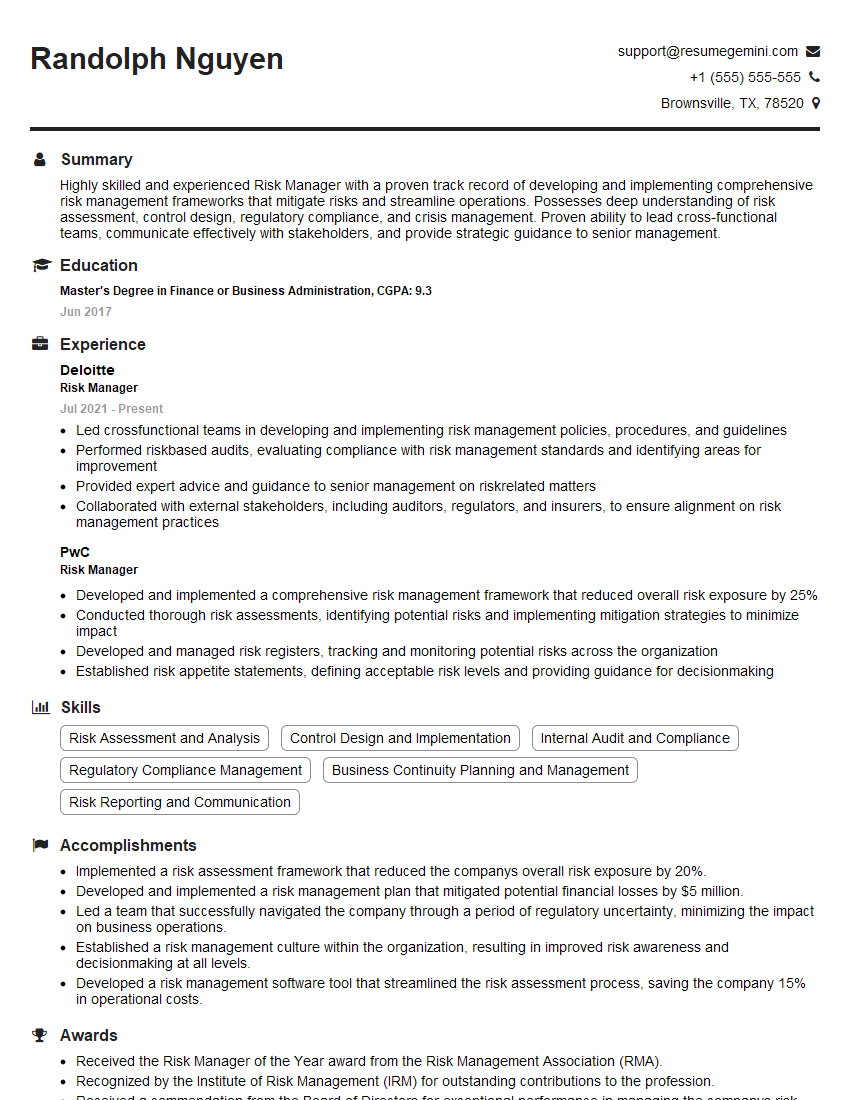
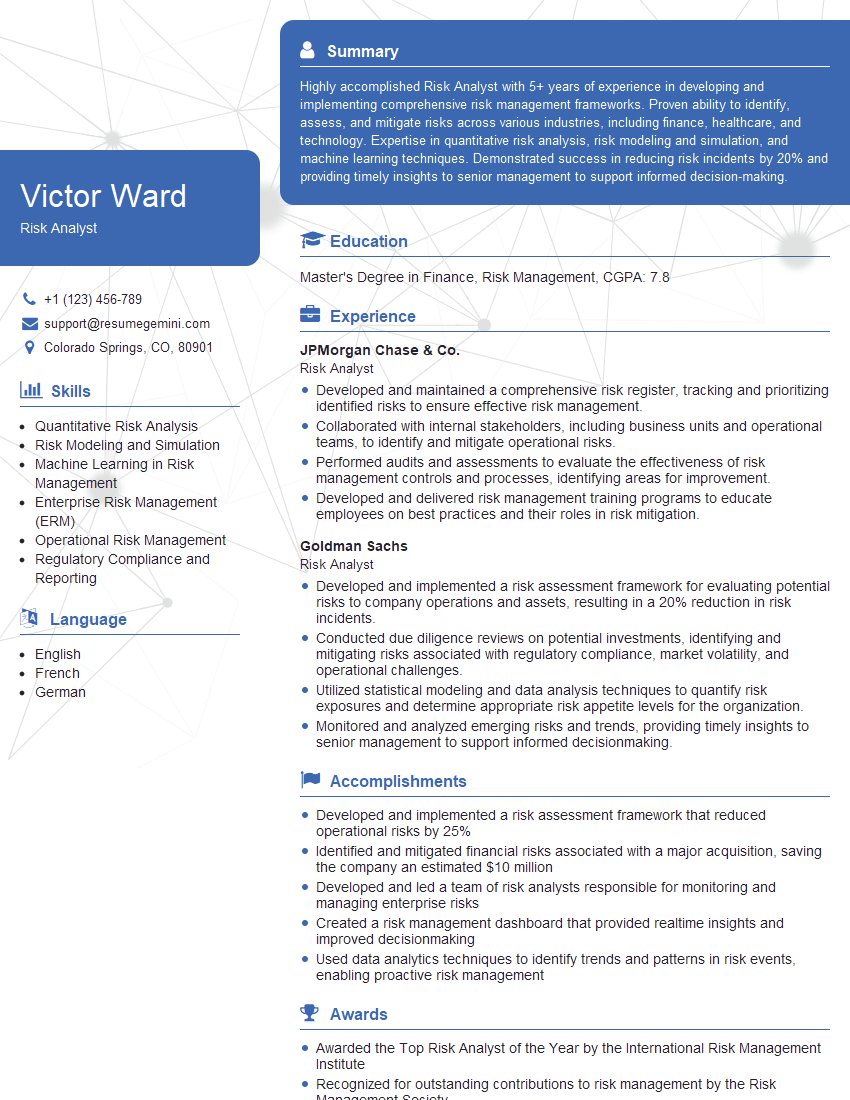
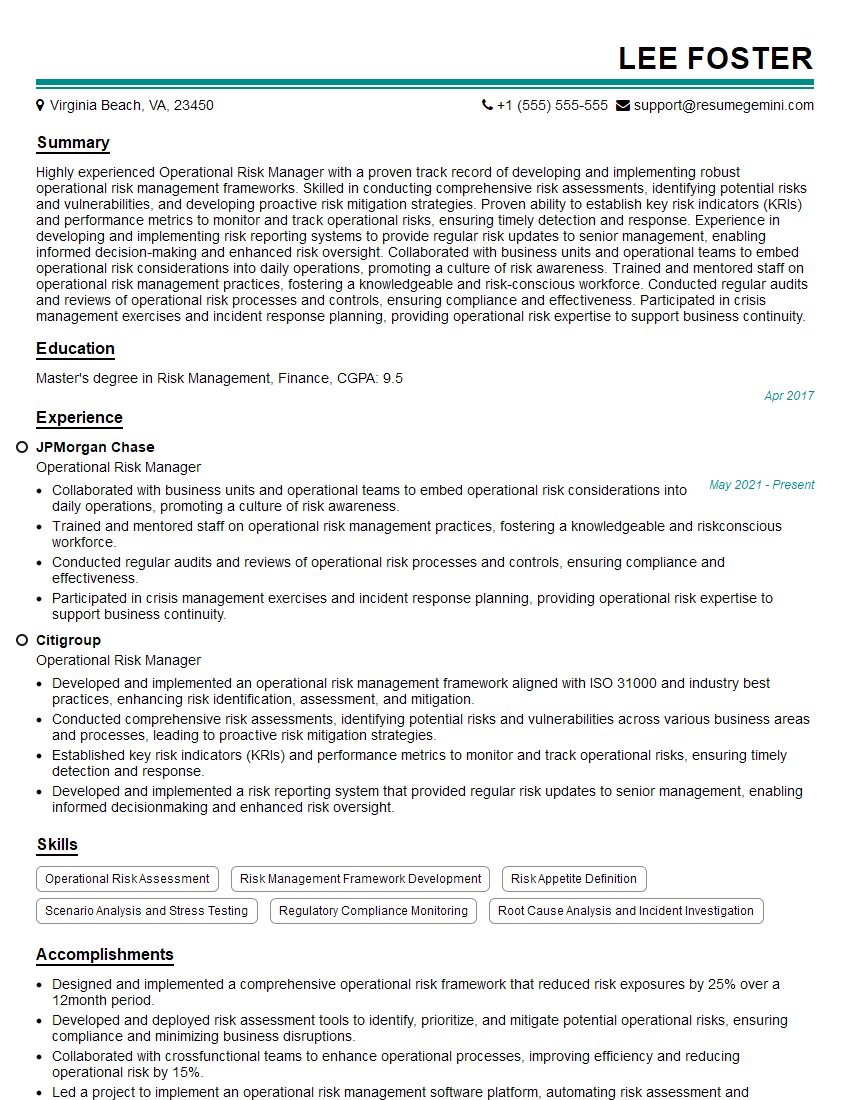
Mastering Risk Factor Management is crucial for career advancement in today’s dynamic business environment. Proficiency in this area demonstrates valuable skills in critical thinking, problem-solving, and strategic planning – highly sought-after qualities in many industries. To maximize your job prospects, it’s essential to present your skills effectively. Creating an ATS-friendly resume is key to getting your application noticed by recruiters. ResumeGemini is a trusted resource that can help you build a compelling and effective resume tailored to the specific requirements of Risk Factor Management roles. Examples of resumes tailored to this field are available to guide you. Take the next step toward your dream career – craft a resume that highlights your expertise and secures your interview.
Explore more articles
Users Rating of Our Blogs
Share Your Experience
We value your feedback! Please rate our content and share your thoughts (optional).
What Readers Say About Our Blog
To the interviewgemini.com Webmaster.
Very helpful and content specific questions to help prepare me for my interview!
Thank you
To the interviewgemini.com Webmaster.
This was kind of a unique content I found around the specialized skills. Very helpful questions and good detailed answers.
Very Helpful blog, thank you Interviewgemini team.