Feeling uncertain about what to expect in your upcoming interview? We’ve got you covered! This blog highlights the most important Instrumentation and Control Systems Management interview questions and provides actionable advice to help you stand out as the ideal candidate. Let’s pave the way for your success.
Questions Asked in Instrumentation and Control Systems Management Interview
Q 1. Explain the difference between open-loop and closed-loop control systems.
The core difference between open-loop and closed-loop control systems lies in their feedback mechanisms. An open-loop system, also known as a feedforward system, operates without feedback. It simply executes a predetermined command without considering the actual output. Think of a toaster: you set the time, and it operates for that duration regardless of whether the bread is actually toasted. The output is independent of the desired outcome.
In contrast, a closed-loop system, or feedback control system, uses feedback to constantly compare the actual output with the desired setpoint. Based on this comparison, it adjusts the control action to minimize the error. A thermostat is a perfect example: it measures the room temperature (feedback) and adjusts the heating or cooling accordingly to maintain the desired temperature. The system continuously monitors the output and makes adjustments to ensure it matches the setpoint.
In essence: Open-loop is pre-programmed and doesn’t self-correct; closed-loop is self-regulating and continuously monitors its performance.
Q 2. Describe different types of control valves and their applications.
Control valves are essential components in automated systems, regulating the flow of fluids (liquids or gases). Several types exist, each suited for different applications:
- Globe Valves: These are widely used due to their simplicity and versatility. They offer good throttling characteristics (ability to precisely control flow) and are suitable for a variety of services, including on/off and modulating applications. However, they can be prone to cavitation and noise at high flow rates.
- Ball Valves: These valves use a rotating ball to control flow, offering quick on/off operation. They are not ideal for precise flow control (throttling) as they are typically either fully open or fully closed. They are preferred where quick shut-off is crucial, such as emergency shutdown systems.
- Butterfly Valves: Featuring a rotating disc, they offer good flow capacity and are used for larger lines where cost-effectiveness is a priority. They’re usually suitable for on/off applications but can also be used for throttling with appropriate actuators, though not as precise as globe valves.
- Diaphragm Valves: Ideal for slurries and viscous fluids, the diaphragm separates the process fluid from the valve mechanism, preventing leakage and contamination. They are typically used in applications requiring leak-tight shut-off and corrosion resistance.
- Control Valves (General): These are specially designed valves with characteristics optimized for precise flow control. These are driven by actuators, which receive signals from controllers to adjust the valve position accordingly, and often use technologies like pneumatic, electric, or hydraulic actuation.
Application Examples: Globe valves are commonly used in chemical processes for precise flow control; ball valves are essential in pipeline emergency shutdowns; butterfly valves are often seen in water treatment plants; and diaphragm valves are used for handling corrosive chemicals in the pharmaceutical industry. The selection of a valve depends heavily on the specific application’s needs, including flow rate, pressure, fluid properties, and required control precision.
Q 3. What are the common types of industrial sensors and their principles of operation?
Industrial sensors are the eyes and ears of an automation system, providing critical data for control and monitoring. Here are some common types:
- Temperature Sensors: These measure temperature using various principles like thermocouples (measuring voltage differences), RTDs (resistance temperature detectors – measuring resistance change), and thermistors (measuring resistance change, highly sensitive). Each has a different range, accuracy, and cost profile.
- Pressure Sensors: They measure pressure using different methods, including strain gauge (measuring deformation), capacitive (measuring capacitance changes), and piezoelectric (measuring charge generation due to pressure). Applications range from monitoring process pressure to measuring level indirectly.
- Flow Sensors: Measuring the flow rate of fluids, they utilize various methods like differential pressure (measuring pressure drop across a restriction), ultrasonic (measuring time of flight of sound waves), and electromagnetic (measuring voltage induced by fluid flow). Selection depends on the fluid type and flow characteristics.
- Level Sensors: These measure the level of liquids or solids in tanks or vessels using different technologies like ultrasonic (measuring echo time), radar (measuring signal reflection), and capacitive (measuring capacitance changes). Accuracy and suitability vary with the application’s specific conditions.
- pH Sensors: These measure the acidity or alkalinity of a solution using electrodes sensitive to hydrogen ion concentration. They’re critical in chemical and wastewater treatment processes.
Principles of Operation: Each sensor type converts a physical quantity (temperature, pressure, etc.) into an electrical signal (voltage, current, or resistance) that can be interpreted by a control system. Calibration is crucial to ensure accurate measurements.
Q 4. Explain the concept of PID control and its tuning methods.
PID control is a widely used feedback control algorithm that adjusts the control output based on three parameters: Proportional (P), Integral (I), and Derivative (D).
- Proportional (P): This term provides an immediate response proportional to the error (difference between setpoint and process variable). A larger error results in a larger control action. However, it may lead to steady-state error (the process variable never reaches the setpoint exactly).
- Integral (I): This term addresses the steady-state error by accumulating the error over time. It gradually reduces the error, even if it’s small. However, it can lead to overshoot and oscillation if not properly tuned.
- Derivative (D): This term anticipates future error by considering the rate of change of the error. It helps prevent overshoot and oscillations by dampening the control action. However, it can be sensitive to noise in the system.
Tuning Methods: Several methods exist for tuning PID controllers, including:
- Ziegler-Nichols Method: This is a quick, empirical method that uses the ultimate gain and period to determine the PID parameters.
- Cohen-Coon Method: This method provides PID settings based on process parameters like gain, dead time, and time constant.
- Auto-tuning: Many modern controllers have auto-tuning features that automatically determine optimal PID parameters through online testing.
The best tuning method depends on the specific application and process characteristics. Effective tuning is crucial for optimal performance and stability.
Q 5. How do you troubleshoot a malfunctioning control loop?
Troubleshooting a malfunctioning control loop involves a systematic approach. Here’s a step-by-step process:
- Identify the Problem: Clearly define the deviation from the expected behavior. Is the process variable consistently off the setpoint? Are there oscillations? Is the controller in manual or automatic mode?
- Check the Controller: Verify the controller’s settings, including setpoint, PID gains, and alarm limits. Ensure it’s in automatic mode.
- Examine the Sensor: Ensure the sensor is correctly calibrated and functioning properly. Verify its readings against a known accurate measurement.
- Inspect the Actuator: Check the valve or actuator for proper operation. Check for leaks, blockages, or mechanical issues. Verify power supply and communication signals.
- Analyze the Process: Consider factors affecting the process, such as changes in feedstock, ambient conditions, or equipment malfunction. Look for any unusual operating conditions that might be influencing the loop performance.
- Review the Loop Diagram: Examine the complete loop to identify potential bottlenecks or process limitations.
- Data Logging and Analysis: Analyze the historical data to detect patterns and trends that may reveal the root cause of the problem. Modern systems provide excellent logging capabilities for such purposes.
- Implement Corrective Actions: Based on the findings, implement corrective actions, such as adjusting PID settings, replacing faulty sensors or actuators, or modifying the process itself. Document all changes and their effects.
Troubleshooting is often an iterative process. Start with the most straightforward checks and proceed methodically to pinpoint the root cause. Using a structured approach is crucial for efficiency and accuracy.
Q 6. What is SCADA and its role in industrial automation?
SCADA (Supervisory Control and Data Acquisition) is a system used to monitor and control industrial processes. It integrates data from various sensors and devices across a geographically dispersed area, providing a centralized view of the entire operation. SCADA systems collect data from the field devices through PLCs and other interfaces and transmit that data to a central supervisory computer. This computer, often referred to as the Human Machine Interface (HMI), presents the data and allows operators to interact with the system and control various aspects.
Role in Industrial Automation: SCADA plays a vital role in industrial automation by:
- Monitoring: Providing real-time visualization of process parameters like temperature, pressure, flow, and level, allowing operators to promptly identify deviations from normal operating conditions.
- Control: Enabling remote control of field devices, allowing operators to adjust parameters and optimize the process from a central location.
- Data Logging and Reporting: Storing historical data and generating reports for analysis and optimization purposes, which can assist in improving process efficiency and reducing downtime.
- Alarm Management: Providing timely alerts and notifications on abnormal events, ensuring prompt intervention and preventing potential disasters.
Examples of SCADA applications include power generation, oil and gas pipelines, water treatment plants, and manufacturing facilities. SCADA systems are designed to enhance efficiency, improve safety, and optimize production in various industrial settings.
Q 7. Describe your experience with Programmable Logic Controllers (PLCs).
I have extensive experience with Programmable Logic Controllers (PLCs) throughout my career. My experience encompasses various PLC platforms, including Siemens, Allen-Bradley, and Schneider Electric, and programming languages such as Ladder Logic, Structured Text, and Function Block Diagram. I have been involved in all stages of PLC implementation, starting from requirements gathering, system design, and programming, through to commissioning, testing, and maintenance.
Specific examples of my experience include:
- Designing and implementing PLC control systems for automated packaging lines, optimizing throughput and minimizing downtime.
- Developing PLC programs for batch processes, ensuring accurate recipe management and precise control of process parameters.
- Integrating PLCs with SCADA systems, providing a centralized monitoring and control interface for large industrial facilities.
- Troubleshooting and resolving PLC system malfunctions, identifying and rectifying issues to minimize production interruptions.
- Utilizing advanced PLC programming techniques, such as state machines and data structures, to improve program efficiency and readability.
I am proficient in using PLC programming software and hardware, including HMI configuration and network communication protocols such as Ethernet/IP and Profibus. I regularly engage in continuous professional development to stay abreast of the latest advances in PLC technology and its applications within industrial automation.
Q 8. Explain the function of a Distributed Control System (DCS).
A Distributed Control System (DCS) is a sophisticated control system used in industrial processes to monitor and control numerous variables across geographically dispersed locations. Imagine a large oil refinery; a DCS manages everything from temperature and pressure in different reactors to the flow rates of various chemicals. It’s essentially a network of interconnected controllers, sensors, and actuators that work together to automate and optimize the process.
Here’s a breakdown of its key functions:
- Data Acquisition: Sensors throughout the process continuously collect data on temperature, pressure, flow, level, etc. This data is transmitted to the DCS.
- Process Control: The DCS uses sophisticated algorithms and control strategies (PID controllers, advanced process control, etc.) to maintain the process variables within specified setpoints. For example, it might adjust valve positions to maintain a specific temperature in a reactor.
- Supervisory Control: Operators can monitor the entire process from a central control room via human-machine interface (HMI) screens. They can also manually override automatic control actions if needed.
- Data Logging and Historical Trending: The DCS continuously logs process data, enabling operators and engineers to analyze past performance and identify trends.
- Alarm Management: The DCS monitors process variables and triggers alarms if any deviations from normal operating conditions occur. This ensures timely responses to potential problems.
- Security and Redundancy: Modern DCS systems incorporate robust security features and redundancy mechanisms to prevent unauthorized access and ensure reliable operation.
Think of it like the nervous system of a large industrial plant, coordinating the actions of many different parts to achieve a common goal.
Q 9. What are the safety considerations in Instrumentation and Control Systems?
Safety is paramount in Instrumentation and Control Systems (ICS). A failure can have catastrophic consequences, leading to equipment damage, environmental pollution, and even loss of life. Several key safety considerations must be addressed:
- Functional Safety: This involves designing the system to prevent hazardous events. This often involves using safety instrumented systems (SIS) that operate independently of the process control system to shut down the process if a dangerous condition is detected. Examples include emergency shutdown (ESD) systems.
- Hardware Redundancy and Fail-Safe Mechanisms: Critical components are often duplicated or triplicated to ensure continued operation even if one component fails. Fail-safe designs ensure that if a component fails, the system defaults to a safe state.
- Software Verification and Validation: Rigorous testing is crucial to ensure the software controlling the process is free from errors that could lead to unsafe conditions. This often involves simulations and testing in a controlled environment.
- Operator Training: Operators need extensive training to understand the system and respond appropriately to alarms and emergencies.
- Emergency Shutdown Systems (ESD): These systems are designed to quickly shut down the process in case of a hazardous event. Regular testing and maintenance are vital.
- Safety Instrumented Systems (SIS): These independent systems monitor critical process parameters and initiate safety actions if necessary. They are designed to a higher safety integrity level (SIL) than the basic process control system.
- Lockout/Tagout Procedures: These procedures are critical for preventing accidental starts during maintenance or repairs.
In practice, achieving safety requires a multi-layered approach involving robust design, rigorous testing, and meticulous maintenance practices.
Q 10. How do you ensure the accuracy and reliability of instrumentation?
Ensuring accuracy and reliability of instrumentation is critical for maintaining the integrity of the entire control system. This involves a combination of proactive measures and ongoing monitoring:
- Calibration: Regular calibration against traceable standards is essential. This ensures that instrument readings are accurate and consistent. Calibration procedures should be documented and followed strictly.
- Regular Maintenance: Preventative maintenance schedules should be established to detect and correct minor issues before they escalate. This might involve cleaning sensors, checking connections, and lubricating moving parts.
- Sensor Selection: Choosing the right sensor for the application is critical. Factors to consider include accuracy, range, response time, and environmental conditions.
- Signal Conditioning: Proper signal conditioning is crucial to minimize noise and interference, ensuring accurate signal transmission.
- Data Validation: Implement data validation checks to detect and filter out erroneous readings. This might involve range checks, plausibility checks, and consistency checks.
- Redundancy: Using redundant sensors or instruments allows for cross-checking of readings and identification of faulty sensors.
- Documentation: Maintaining detailed records of calibration, maintenance, and repairs is vital for tracking instrument performance and ensuring compliance with regulations.
For example, in a pharmaceutical manufacturing process, inaccurate temperature readings could lead to product spoilage or even safety hazards. Therefore, rigorous calibration and maintenance are not just best practices—they’re essential for quality control and regulatory compliance.
Q 11. Describe your experience with various communication protocols (e.g., Modbus, Profibus).
I have extensive experience with various industrial communication protocols, including Modbus, Profibus, and others such as Ethernet/IP, Foundation Fieldbus, and HART. Each protocol has its strengths and weaknesses, making it suitable for different applications.
- Modbus: A simple and widely used serial communication protocol, ideal for smaller systems and applications requiring low cost and ease of implementation. I’ve used Modbus extensively for connecting PLCs to various field devices like sensors and actuators in numerous projects.
- Profibus: A more sophisticated fieldbus protocol offering higher speed and data capacity than Modbus. It’s well-suited for larger, more complex industrial automation systems. I’ve utilized Profibus in projects requiring real-time control and high data throughput, such as automated assembly lines.
- Ethernet/IP: A common industrial Ethernet protocol, offering high bandwidth and the ability to integrate different devices from various vendors. Its use in large-scale industrial networks, including those using programmable automation controllers (PACs) is quite common. I’ve worked with Ethernet/IP in large-scale process automation projects requiring advanced networking capabilities.
- Foundation Fieldbus: A digital fieldbus technology offering sophisticated capabilities for process automation and control. It enables intelligent field devices with built-in processing capabilities, simplifying system architecture and enhancing diagnostics. I’ve leveraged this in high-integrity safety systems.
- HART (Highway Addressable Remote Transducer): A communication protocol used to communicate with smart field instruments over existing 4-20mA analog signals. I’ve used HART to configure and diagnose smart transmitters and valves, adding diagnostics capabilities to existing systems.
My experience spans both the selection and implementation of the appropriate protocol based on factors such as system size, data rate requirements, cost constraints, and required level of interoperability.
Q 12. Explain your experience with industrial network architectures.
My experience with industrial network architectures encompasses various topologies and protocols, tailored to specific application requirements. I’ve worked with both simple and complex architectures, including:
- Star Topology: Common in smaller systems, where all devices connect to a central hub or switch. This is simple to implement and maintain but has a single point of failure.
- Ring Topology: Data flows in a closed loop. This provides redundancy as data can travel in both directions. It’s less common now due to the complexity of management.
- Bus Topology: Devices are connected to a shared communication bus. This is cost-effective but can be prone to bottlenecks and interference.
- Mesh Topology: Highly redundant architecture offering multiple paths for communication. This is ideal for critical applications requiring high availability and fault tolerance, like safety-critical systems.
Beyond topology, my experience includes designing and implementing networks using different protocols and layering: I have successfully designed and implemented industrial control networks using a mix of fieldbuses (like Profibus and Foundation Fieldbus) for field device communication and Ethernet-based networks for higher-level communication and supervisory control. This approach utilizes the best features of each type of network for optimized performance and reliability. In addition to the protocols mentioned previously, I’m familiar with the design principles behind industrial firewalls and network segmentation for security.
My approach always begins with a thorough understanding of the application requirements and a risk assessment to determine the optimal architecture for safety, reliability, and cost-effectiveness.
Q 13. How do you perform calibration and maintenance of instrumentation equipment?
Calibration and maintenance of instrumentation equipment are crucial for ensuring accuracy and reliability. My approach is systematic and follows established best practices.
- Calibration: I use calibrated reference standards traceable to national or international standards. Calibration procedures are documented and followed precisely, ensuring accuracy and repeatability. Calibration results are recorded and used to generate calibration certificates.
- Preventative Maintenance: I develop and implement preventative maintenance schedules based on manufacturer recommendations and operational experience. This involves regular inspections, cleaning, and lubrication to prolong instrument lifespan and minimize downtime. For example, checking sensor connections, cleaning pressure transducers, and verifying flow meter operation.
- Corrective Maintenance: When issues arise, I troubleshoot the problem systematically, using diagnostic tools and techniques to identify the root cause. This might involve replacing faulty components or repairing damaged parts. Thorough documentation of all maintenance activities is maintained.
- Loop Testing: Before commissioning or after maintenance, loop testing is performed to verify that the instrument and control loop are functioning correctly. This involves checking signal transmissions and control responses.
- Spare Parts Management: Maintaining a sufficient inventory of spare parts is critical for minimizing downtime in case of failures. This also involves lifecycle management of instrumentation.
All maintenance activities are documented meticulously, ensuring traceability and compliance with relevant standards and regulations. For example, in a water treatment plant, precise level measurements are critical for process control, therefore regular calibration and maintenance of level sensors are paramount.
Q 14. What is the role of a historian in an industrial control system?
A historian in an industrial control system acts as a long-term data repository, storing process data collected by the DCS or other control systems over extended periods. Think of it as a detailed and organized record of everything that has happened in your process.
Key roles of a historian include:
- Data Archiving: The historian stores vast amounts of historical process data, including real-time data, alarms, and events. This data is typically stored in a relational database or a specialized time-series database.
- Data Retrieval and Analysis: The historian allows operators and engineers to easily retrieve and analyze historical data. This enables identification of trends, troubleshooting of issues, and optimization of processes.
- Reporting and Trending: The historian provides tools for generating reports and creating trends of key process variables. This data can be used for performance monitoring, regulatory compliance, and continuous improvement.
- Event Reconstruction: In the event of an incident or malfunction, the historian can provide detailed data for reconstructing events and understanding the root cause.
- Batch Reporting and Analysis: In batch processes, the historian can track and analyze data for individual batches, enabling detailed performance evaluation and optimization.
- Predictive Maintenance: Data stored in the historian can be used for predictive maintenance, identifying patterns that predict potential equipment failures.
In a nutshell, the historian provides a valuable resource for understanding past performance, optimizing current operations, and improving future decision-making. It’s an indispensable tool for continuous improvement and regulatory compliance.
Q 15. Describe your experience with data acquisition and logging systems.
Data acquisition and logging systems are the backbone of any effective industrial control system. They’re responsible for collecting data from various sensors, processing it, and storing it for later analysis and decision-making. My experience spans several systems, from basic PLC-based data logging to sophisticated SCADA (Supervisory Control and Data Acquisition) systems with historian functionalities.
For instance, in a previous role at a water treatment plant, I implemented a system using a Programmable Logic Controller (PLC) to collect data on water flow rates, pH levels, and chlorine concentrations. This data was then logged to a local database and visualized on a HMI (Human Machine Interface) for operators. This allowed for real-time monitoring and efficient troubleshooting. In another project, involving a large-scale manufacturing process, we used a SCADA system with a historian to track production parameters, detect anomalies, and perform predictive maintenance analysis.
I’m proficient in configuring various communication protocols like Modbus, Profibus, and Ethernet/IP to ensure seamless data acquisition from diverse field devices. Furthermore, I have experience with various data analysis techniques to extract meaningful insights from the collected data, contributing significantly to optimizing the process and reducing operational costs.
Career Expert Tips:
- Ace those interviews! Prepare effectively by reviewing the Top 50 Most Common Interview Questions on ResumeGemini.
- Navigate your job search with confidence! Explore a wide range of Career Tips on ResumeGemini. Learn about common challenges and recommendations to overcome them.
- Craft the perfect resume! Master the Art of Resume Writing with ResumeGemini’s guide. Showcase your unique qualifications and achievements effectively.
- Don’t miss out on holiday savings! Build your dream resume with ResumeGemini’s ATS optimized templates.
Q 16. How do you handle emergency shutdowns and safety interlocks?
Emergency shutdowns (ESDs) and safety interlocks are critical safety mechanisms that prevent accidents and protect personnel and equipment. My approach involves a multi-layered strategy, ensuring redundancy and fail-safe design principles.
First, I always meticulously analyze the hazards associated with a particular process to identify potential failure points. This analysis guides the design of ESDs and safety interlocks. For example, in a chemical processing plant, a high-temperature alarm might trigger an automatic shutdown of the reactor, preventing a potential explosion. Safety interlocks prevent hazardous conditions by blocking a process step if the necessary preconditions aren’t met. Imagine a machine requiring a safety gate to be closed before operation; the interlock ensures the machine remains inactive until the gate is properly secured.
I also conduct thorough testing and validation of these systems to ensure their proper functioning. This includes simulated ESDs and regular inspections of safety interlocks. Finally, comprehensive documentation is vital for troubleshooting and maintenance. Understanding the logic behind each ESD and interlock is crucial for swift and effective response in case of an incident.
Q 17. Explain your experience with different types of industrial actuators.
Industrial actuators are the ‘muscles’ of an automation system, converting electrical or pneumatic signals into mechanical movement. My experience encompasses several types, including:
- Pneumatic actuators: These use compressed air to generate force. They are simple, robust, and well-suited for hazardous environments, but can be less precise than other options. I’ve worked extensively with pneumatic valves and cylinders in applications ranging from material handling to process control.
- Hydraulic actuators: These use pressurized liquids for powerful movement. They offer high force and speed capabilities but require more complex maintenance and are less suitable for precise positioning. I was involved in a project using hydraulic actuators for a large press operation.
- Electric actuators: These use electric motors for precise and controlled movement. They are cleaner, more efficient, and offer better control compared to pneumatic or hydraulic counterparts. My experience includes working with servo motors, stepper motors, and electric linear actuators in robotics and precision manufacturing processes.
Choosing the right actuator depends on the specific application’s requirements, considering factors like force, speed, precision, environment, and cost. My expertise lies in selecting and integrating the most suitable actuator based on a thorough assessment of these factors.
Q 18. What is your experience with process simulation software?
Process simulation software plays a crucial role in designing, optimizing, and troubleshooting industrial control systems before implementation. This significantly reduces risks and costs associated with real-world testing. My experience includes using popular process simulators such as Aspen Plus, HYSYS, and MATLAB/Simulink.
For example, I used Aspen Plus to simulate a chemical reactor process to optimize operating parameters and predict the reactor’s behavior under various conditions. This allowed us to identify potential bottlenecks and make adjustments to the design before constructing the actual reactor. Similarly, I employed Simulink to model and simulate the control system’s response to different disturbances, ensuring its stability and robustness.
Proficiency in these tools allows for comprehensive analysis, identifying potential problems early in the design phase. This leads to more efficient and reliable systems, minimizing downtime and improving operational safety.
Q 19. Describe your experience with control system design using ladder logic.
Ladder logic is a graphical programming language commonly used to program PLCs. My expertise in ladder logic extends to designing and implementing control systems for various industrial processes.
I’ve used ladder logic to develop control programs for automated assembly lines, material handling systems, and process control loops. For example, I developed a ladder logic program to control a conveyor system, incorporating sensors and actuators to ensure synchronized movement and automated part handling. A key aspect of my approach involves employing structured programming techniques to enhance readability, maintainability, and debugging capabilities.
//Example Ladder Logic snippet (Illustrative): //Input: Sensor detecting part presence (I:0.0/0) //Output: Conveyor motor activation (O:0.0/0) // //---|---[I:0.0/0]---|---(O:0.0/0)---|--- //
This example shows a simple program where the conveyor motor activates only when a part is detected. I have experience creating much more complex programs involving timers, counters, math functions, and more sophisticated control algorithms.
Q 20. Explain the concept of redundancy and its importance in industrial control systems.
Redundancy in industrial control systems refers to incorporating backup components or systems to ensure continuous operation even in case of a failure. It is critical for ensuring high availability, safety, and reliability, particularly in safety-critical applications.
For example, in a power plant, redundant power supplies, control systems, and safety systems are essential to prevent catastrophic failures. If one system fails, the redundant system automatically takes over, maintaining continuous operation and preventing a shutdown. Redundancy can be implemented at various levels: hardware redundancy (multiple PLCs or sensors), software redundancy (duplicate programs), or functional redundancy (alternate control strategies).
The importance of redundancy cannot be overstated. The cost of downtime in industrial processes is often substantial, and safety risks are significant. By incorporating redundancy, we drastically reduce the impact of equipment failures and maintain a high level of safety.
Q 21. How do you ensure the cybersecurity of an industrial control system?
Cybersecurity is paramount in modern industrial control systems. These systems are increasingly connected, making them vulnerable to cyber threats. My approach to ensuring cybersecurity involves a multi-layered strategy:
- Network segmentation: Isolating the control network from the corporate network reduces the impact of a potential breach. This involves the use of firewalls and other network security devices.
- Access control: Implementing strong authentication and authorization mechanisms restricts access to the control system to authorized personnel only. This includes using strong passwords, multi-factor authentication, and role-based access control.
- Regular patching and updates: Keeping the system software and firmware up-to-date is vital to mitigate vulnerabilities. This requires a well-defined patching and update management process.
- Intrusion detection and prevention: Implementing intrusion detection and prevention systems helps to identify and respond to malicious activities. Regular security audits are crucial to identify weaknesses and improve the system’s security posture.
- Employee training: Educating employees about cybersecurity best practices is crucial in preventing human error, a significant vulnerability in many systems.
Cybersecurity is an ongoing process requiring constant vigilance and adaptation to evolving threats. A proactive approach, involving regular security assessments and implementation of robust security measures, is vital for protecting industrial control systems from cyberattacks.
Q 22. Describe your experience with different types of control system architectures.
Control system architectures dictate how various components of an instrumentation and control system (ICS) interact. My experience encompasses several types, each with its strengths and weaknesses. These include:
- Distributed Control Systems (DCS): These are modular systems with geographically distributed controllers. Each controller manages a specific part of the process, improving redundancy and scalability. I’ve worked extensively with DCS platforms like Emerson DeltaV and Honeywell Experion, utilizing their features for advanced process control and alarm management. For example, in a large refinery project, the DCS was crucial in managing the complex interactions between various unit operations, ensuring optimal performance and safety.
- Programmable Logic Controllers (PLCs): PLCs are robust, cost-effective systems ideal for smaller applications or discrete control tasks. I’ve used PLCs such as Allen-Bradley and Siemens S7 extensively in projects involving machine automation and supervisory control. A recent example was automating a bottling plant’s packaging line, where PLCs managed individual machines and coordinated their actions for efficient operation.
- Supervisory Control and Data Acquisition (SCADA) Systems: SCADA systems provide a centralized overview of a process, often spanning large geographical areas. These systems excel at data visualization, reporting, and remote control. I’ve integrated SCADA systems with both DCS and PLC systems, creating a holistic view of operations. In a water treatment plant project, the SCADA system allowed operators to monitor water quality parameters across multiple facilities, making timely interventions possible.
- Advanced Process Control (APC) integrated systems: These architectures go beyond basic control, incorporating advanced algorithms for optimization and improved efficiency. I’ve worked on projects integrating model predictive control (MPC) and other APC techniques directly within DCS and SCADA environments.
My experience allows me to select the optimal architecture based on factors such as process complexity, scalability requirements, budget constraints, and safety considerations.
Q 23. Explain your experience with advanced process control (APC) techniques.
Advanced Process Control (APC) significantly improves process efficiency and profitability by optimizing operations beyond the capabilities of basic PID controllers. My experience includes implementing and tuning several APC techniques, including:
- Model Predictive Control (MPC): MPC uses a dynamic model of the process to predict future behavior and optimize control actions. I’ve successfully implemented MPC in a chemical plant to minimize energy consumption while maintaining product quality. This involved developing a process model, tuning the MPC controller, and integrating it with the existing DCS.
- Multivariable Control: This approach handles interactions between multiple process variables, improving overall performance. I’ve used multivariable control techniques in a refinery to optimize crude distillation unit operations, resulting in increased throughput and reduced energy costs.
- Real-time Optimization (RTO): RTO optimizes setpoints for multiple variables based on economic objectives. I’ve integrated RTO algorithms into several projects to maximize profitability by optimizing process variables according to market demands and operational constraints. This required careful consideration of economic objectives and process constraints.
My approach always involves rigorous testing and validation to ensure the APC system’s stability and performance before full implementation. Performance metrics are continuously monitored to identify areas for further improvement and adjustment.
Q 24. How do you handle conflicting priorities in a project involving instrumentation and control systems?
Conflicting priorities are common in ICS projects, often stemming from budget limitations, schedule pressures, and varying stakeholder expectations. My approach to handling these conflicts involves a structured methodology:
- Clearly Define Objectives and Constraints: The first step is to establish a shared understanding of project goals, including performance, cost, and safety requirements. This often involves facilitated sessions with all stakeholders.
- Prioritization Matrix: A prioritization matrix, using factors like risk, impact, and urgency, helps rank competing priorities. This facilitates objective decision-making and clarifies trade-offs.
- Risk Assessment: Identifying and assessing potential risks associated with each priority helps to focus efforts on mitigating critical issues. This step frequently utilizes techniques like FMEA (Failure Mode and Effects Analysis).
- Communication and Collaboration: Open communication and collaborative problem-solving are crucial. Regular meetings with stakeholders, coupled with transparent reporting, ensure alignment and minimize misunderstandings.
- Contingency Planning: Developing a contingency plan for potential delays or changes in priorities allows for proactive adaptation. This includes defining alternative solutions and fallback strategies.
For instance, in a recent project, conflicting demands between schedule and budget required a thorough cost-benefit analysis of each proposed solution, enabling a balanced approach that met essential goals without compromising safety or critical performance criteria.
Q 25. Describe your experience with the lifecycle of an instrumentation and control project.
The lifecycle of an ICS project is a systematic process encompassing several key stages:
- Conceptual Design: Defining project scope, objectives, and high-level requirements. This stage often includes process simulations and preliminary hazard assessments.
- Basic Engineering: Developing detailed designs, including P&IDs (Piping and Instrumentation Diagrams), specifications for equipment and instruments, and preliminary control strategies.
- Detailed Engineering: Producing detailed drawings, specifications, and procurement documentation. This stage is critical for ensuring the accuracy and consistency of the design.
- Procurement and Construction: Purchasing equipment, instruments, and materials, and carrying out the installation and wiring. Rigorous quality control measures are essential during this phase.
- Commissioning and Start-up: Testing and validating the ICS, including loop testing, functional testing, and system integration testing. This often involves close collaboration with vendors and contractors.
- Operation and Maintenance: Ensuring ongoing operation and maintenance of the system, including calibration, repair, and upgrades. Regular maintenance schedules and proactive monitoring are crucial.
My experience covers all these stages, emphasizing the importance of adhering to industry standards and best practices throughout the lifecycle to ensure project success and operational safety.
Q 26. What is your experience with HAZOP studies and safety instrumented systems (SIS)?
Hazard and Operability studies (HAZOP) and Safety Instrumented Systems (SIS) are critical for ensuring process safety. My experience includes:
- HAZOP Studies: I’ve participated in numerous HAZOP studies, applying a structured methodology to identify potential hazards and develop mitigation strategies. This involves systematically reviewing the process using guide words (e.g., ‘no,’ ‘more,’ ‘less’) to identify deviations from normal operating conditions and their potential consequences. A recent example involved a HAZOP study for a new chemical reactor, leading to the implementation of additional safety interlocks and alarm systems.
- Safety Instrumented Systems (SIS): I’m proficient in designing, implementing, and maintaining SIS, which are independent safety systems designed to mitigate major process hazards. This includes selecting appropriate safety instrumented functions (SIFs), specifying safety instrumented equipment (SIF), conducting SIL verification and validation, and ensuring compliance with relevant safety standards (e.g., IEC 61508, ISA 84.01). For example, I was involved in designing a SIS for a high-pressure gas pipeline, ensuring the timely shutdown of the system in case of a pressure surge.
My experience ensures a proactive approach to safety, integrating safety considerations into every phase of the project, from conceptual design to ongoing maintenance.
Q 27. Explain your experience with different types of industrial instrumentation calibration standards.
Calibration standards ensure the accuracy and reliability of industrial instrumentation. My experience encompasses various standards and best practices:
- National Institute of Standards and Technology (NIST): NIST traceable standards are the foundation for accurate calibration. I’ve used NIST traceable equipment and procedures for calibrating a wide range of instruments, including pressure transmitters, temperature sensors, and flow meters. This ensures the measurements are consistently accurate and comparable across different facilities.
- Industry-Specific Standards: Many industries have specific calibration standards and practices. I’m familiar with industry standards such as those used in oil and gas, pharmaceuticals, and food processing. For example, in the pharmaceutical industry, strict Good Manufacturing Practices (GMP) guidelines dictate rigorous calibration procedures to maintain product quality and consistency.
- Calibration Procedures and Documentation: Following documented calibration procedures is crucial to ensure traceability and compliance. I’ve developed and implemented calibration procedures for various instruments and processes, ensuring that calibration records are meticulously maintained and easily accessible for audits.
My experience emphasizes the critical role of proper calibration in ensuring accurate process measurement, control, and safety. A well-defined calibration program, using traceable standards and documented procedures, is essential for maintaining operational integrity.
Key Topics to Learn for Instrumentation and Control Systems Management Interview
- Process Control Fundamentals: Understanding PID controllers, feedback loops, and control strategies (e.g., cascade control, feedforward control). Be prepared to discuss their practical applications in various industrial processes.
- Instrumentation Hardware and Sensors: Familiarize yourself with different types of sensors (temperature, pressure, flow, level), their operating principles, calibration methods, and limitations. Be ready to discuss troubleshooting common sensor issues.
- Control System Design and Implementation: Explore different control system architectures (e.g., distributed control systems (DCS), programmable logic controllers (PLCs)). Understand the process of designing, implementing, and commissioning control systems in real-world scenarios.
- Data Acquisition and Analysis: Gain proficiency in data acquisition techniques and the use of software for data analysis and visualization. Understanding data interpretation and its use in process optimization is crucial.
- Safety Instrumented Systems (SIS): Understand the importance of safety in industrial control systems and the role of SIS in preventing hazardous events. Knowledge of safety standards and regulations is essential.
- Troubleshooting and Maintenance: Develop your ability to diagnose and resolve control system malfunctions. This involves understanding fault detection, root cause analysis, and preventative maintenance strategies.
- Advanced Control Techniques: Explore advanced control strategies such as model predictive control (MPC) and adaptive control, and their applications in complex processes. This demonstrates a deeper understanding of the field.
- Industrial Communication Protocols: Familiarize yourself with common industrial communication protocols like Profibus, Modbus, Ethernet/IP, and their role in integrating different parts of a control system.
Next Steps
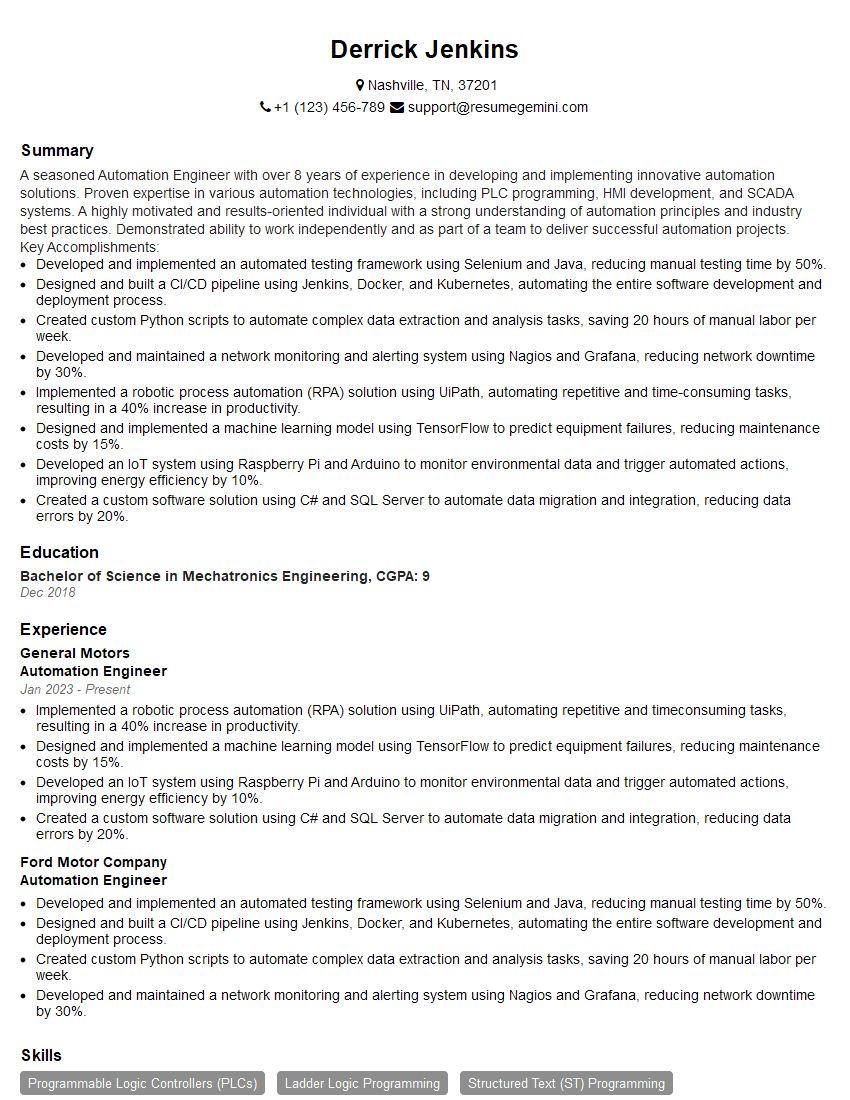
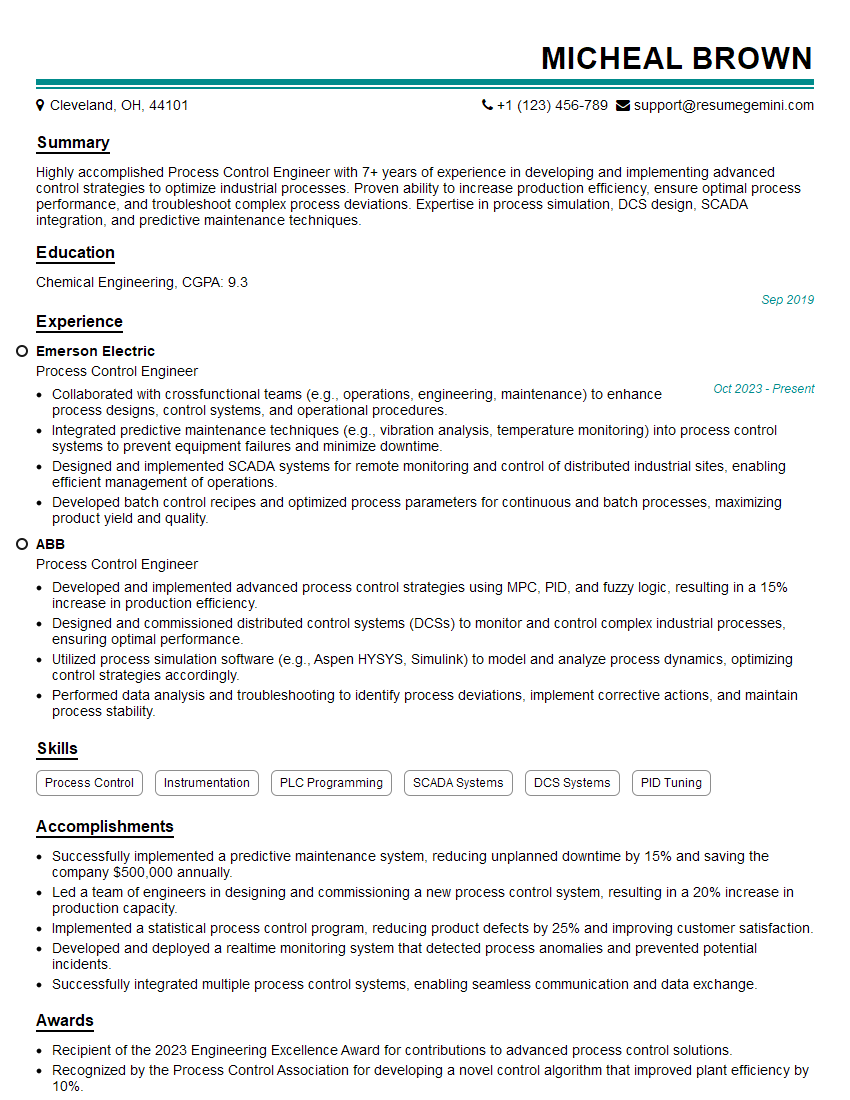
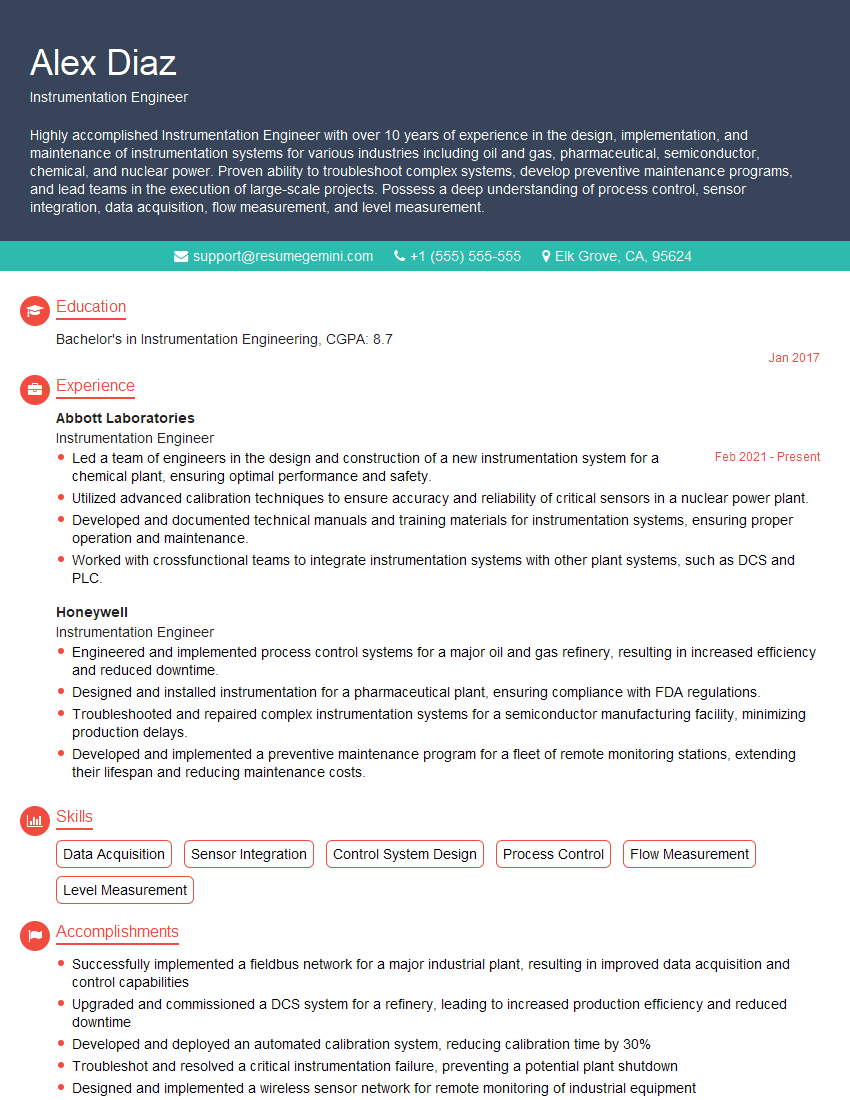
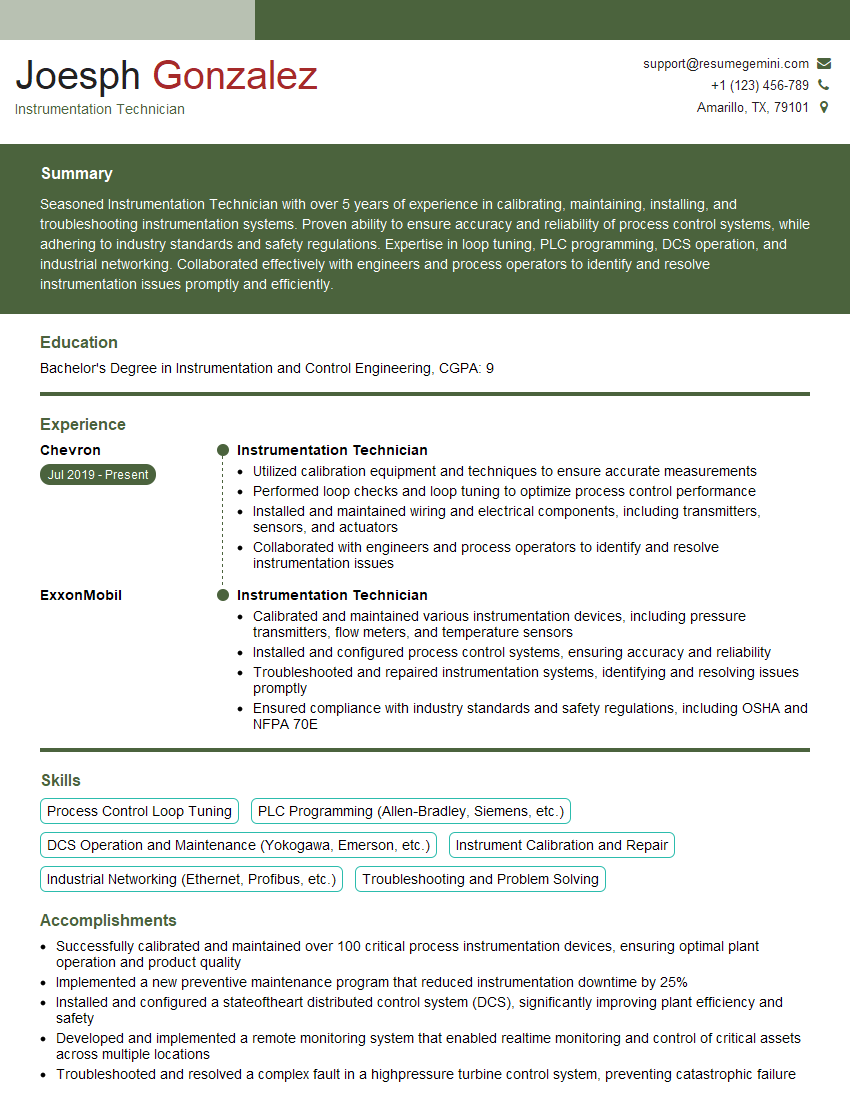
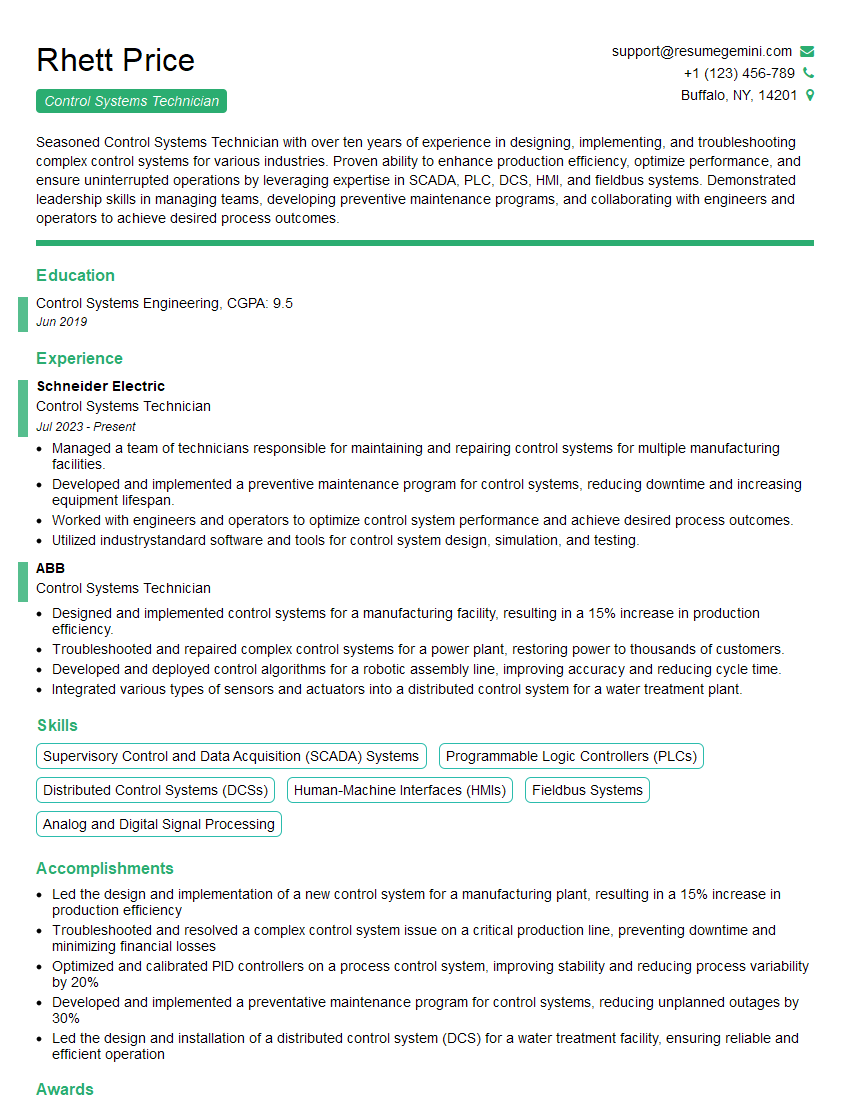
Mastering Instrumentation and Control Systems Management opens doors to exciting and rewarding career opportunities in various industries. A strong understanding of these principles is vital for success in roles demanding technical expertise and problem-solving abilities. To significantly boost your job prospects, creating a compelling and ATS-friendly resume is crucial. ResumeGemini is a trusted resource to help you build a professional and effective resume that highlights your skills and experience. They offer examples of resumes tailored specifically to Instrumentation and Control Systems Management to help you create the perfect application.

Explore more articles
Users Rating of Our Blogs
Share Your Experience
We value your feedback! Please rate our content and share your thoughts (optional).
What Readers Say About Our Blog
To the interviewgemini.com Webmaster.
Very helpful and content specific questions to help prepare me for my interview!
Thank you
To the interviewgemini.com Webmaster.
This was kind of a unique content I found around the specialized skills. Very helpful questions and good detailed answers.
Very Helpful blog, thank you Interviewgemini team.