Cracking a skill-specific interview, like one for Interpretation of Building Codes, requires understanding the nuances of the role. In this blog, we present the questions you’re most likely to encounter, along with insights into how to answer them effectively. Let’s ensure you’re ready to make a strong impression.
Questions Asked in Interpretation of Building Codes Interview
Q 1. Explain the difference between IBC and IRC.
The International Building Code (IBC) and the International Residential Code (IRC) are both model building codes, meaning they are not laws themselves but serve as a basis for local building codes. The key difference lies in their scope. The IBC is a comprehensive code covering all types of buildings except one- and two-family dwellings, townhouses, and similar structures. It addresses a vast array of building systems, including structural, fire protection, plumbing, mechanical, and electrical aspects. Think of it as the overarching code for larger, more complex projects. The IRC, on the other hand, is specifically tailored for one- and two-family dwellings and similar low-rise residential buildings. It provides simpler, more streamlined requirements focusing primarily on residential construction.
For example, a high-rise apartment building would be governed by the IBC, while a single-family home would fall under the IRC. However, even with this distinction, many jurisdictions adopt and amend these model codes, resulting in variations across different locations. Therefore, always consult the specific local code for the jurisdiction where you are working.
Q 2. Describe your experience interpreting building code sections.
Throughout my career, I’ve gained extensive experience in interpreting building code sections. My approach involves a systematic breakdown of the code language, identifying key phrases, and understanding the intent behind the requirements. This often involves cross-referencing various sections to ensure a complete understanding. For instance, I once worked on a project where the code referenced a specific table detailing allowable stresses for different wood species. This required me not only to understand the table itself but also to understand the relevant factors that might modify the values given within the table (e.g., moisture content, load duration).
Another instance involved deciphering ambiguous wording concerning fire-rated assemblies. I had to carefully review the code’s definitions, illustrations, and explanatory notes to ensure the proposed design met the code’s intent, ultimately resolving it by consulting accepted industry practices and manufacturer’s data. My experience spans various aspects of building codes, from structural design to life safety systems, equipping me with a holistic understanding of their interconnectedness.
Q 3. How do you handle conflicting code requirements?
Conflicting code requirements are a common challenge. My approach is hierarchical. First, I try to identify the source of the conflict. Does it stem from the adoption of multiple codes, amendments, or conflicting interpretations of a single code section? Once identified, I apply a prioritized approach, typically resolving the conflict based on the order of precedence.
- Local Ordinances: Local amendments always supersede the model code.
- State Regulations: State regulations often modify or amend model codes.
- Model Codes (IBC/IRC): The model code serves as the basis, unless superseded.
- Engineer’s Judgment: If the conflict remains unresolved, an engineer’s judgment based on sound engineering practice, professional standards, and safety considerations often plays a role, often necessitating submitting a variance or special inspection request.
For example, if a local amendment allows a different fire-resistance rating than the IBC, the local amendment governs. Documentation is crucial; I meticulously record the conflict, the resolution process, and the rationale behind the final decision.
Q 4. What are the key elements of a building permit application?
A complete building permit application needs to demonstrate that the proposed construction complies with all applicable building codes and regulations. Key elements generally include:
- Completed Application Form: This includes the project address, applicant information, and a description of the work.
- Site Plans: These show the location of the building on the lot, property lines, and surrounding features.
- Building Plans: Detailed architectural, structural, mechanical, electrical, and plumbing drawings, showing dimensions, materials, and other pertinent information.
- Specifications: A written description of the construction methods, materials, and finishes.
- Calculations and Reports: Engineering calculations (structural, geotechnical, etc.), and any specialized reports required.
- Fees: The required permit fees are vital for processing the application.
The specific requirements can vary depending on the jurisdiction and complexity of the project. Omitting any essential element can lead to delays or rejection of the application.
Q 5. Explain the process of plan review and what you look for.
Plan review is a critical step to ensure a project meets building codes before construction begins. I meticulously review all submitted documents. My review process involves verifying compliance with all applicable codes and standards, checking for potential safety hazards, and assessing the structural integrity of the design. This involves:
- Code Compliance Check: Comparing all aspects of the plans against the requirements of the applicable codes.
- Structural Review: Analyzing structural calculations, ensuring adequate foundation design, framing, and load-bearing capacity.
- Life Safety Systems Review: Verifying compliance with fire codes, including means of egress, fire suppression systems, and smoke detection.
- Accessibility Review: Ensuring compliance with accessibility codes for people with disabilities.
- Energy Efficiency Review: Checking compliance with energy efficiency standards.
I’m adept at using both traditional plan-review methods and digital tools to streamline the review process and ensure accuracy. If any issues are identified, I prepare detailed reports outlining the necessary corrections, communicating clearly with the applicant to guide them towards code compliance.
Q 6. How do you identify and address code violations?
Identifying code violations involves a thorough inspection of the construction process and the finished product. This usually begins with a visual inspection, comparing the as-built condition against the approved plans and the applicable building code. Common violations may include improper electrical wiring, insufficient fire-rated wall assemblies, or inadequate structural supports.
My approach includes:
- On-site Inspection: A physical examination of the construction site.
- Plan Comparison: Comparing the as-built condition with the approved plans.
- Code Cross-referencing: Checking specific code sections applicable to the detected issues.
- Documentation: Creating detailed reports with photographs and descriptions of the violations.
Addressing violations requires a collaborative approach. I work with the contractor to develop a corrective action plan, ensuring the violations are remediated to meet the code’s requirements. This might involve issuing a stop-work order until the violations are rectified or proposing alternative solutions that satisfy the code’s intent.
Q 7. Describe your experience with code enforcement procedures.
My experience with code enforcement procedures spans various aspects, from initial inspections and issuance of violation notices to pursuing legal action when necessary. This has included working closely with other inspectors, contractors, engineers, and legal counsel to resolve code violations in a fair and efficient manner.
I have experience with:
- Issuing Stop-Work Orders: When significant safety hazards or code violations are identified.
- Issuing Violation Notices: Formally documenting code violations and outlining corrective actions required.
- Mediation and Negotiation: Working with contractors to find solutions that address the violations without resorting to more severe measures.
- Legal Proceedings: In cases where violations are not corrected despite repeated warnings.
Effective code enforcement ensures public safety and the quality of construction. It also requires careful balancing between enforcing the letter of the law and utilizing a practical, problem-solving approach to resolve issues fairly and efficiently.
Q 8. How familiar are you with accessibility codes (ADA)?
My familiarity with the Americans with Disabilities Act (ADA) accessibility codes is extensive. I’ve worked directly with them for over [Number] years, applying them to a wide range of projects, from small renovations to large-scale commercial developments. I understand not just the letter of the law but also the spirit, aiming for truly accessible designs that benefit everyone. This includes a deep understanding of things like accessible routes, parking, signage, restroom design, and appropriate adjustments for people with various disabilities. I frequently consult the ADA Standards for Accessible Design and am aware of the ongoing interpretations and updates.
For instance, I recently worked on a project where we had to navigate the complexities of designing an accessible ramp that met both ADA guidelines and the structural requirements of the building. This involved careful consideration of slope, landing areas, and handrail specifications.
Q 9. How do you stay updated on building code changes and amendments?
Staying updated on building code changes is critical. I use a multi-pronged approach. First, I subscribe to professional journals and newsletters published by organizations like the International Code Council (ICC). These publications provide regular updates on code changes and interpretations. Second, I actively participate in continuing education courses and seminars offered by accredited organizations. These courses are crucial for understanding nuances and the practical application of new codes. Finally, I maintain a network of colleagues in the field. Regular discussions and sharing of information with experienced professionals ensure I’m aware of both official updates and practical experiences interpreting and applying the codes.
Q 10. Explain the significance of fire-rated assemblies.
Fire-rated assemblies are crucial for life safety in buildings. They’re designed to resist the spread of fire for a specified period, providing occupants with valuable time to escape and firefighters with time to respond. These assemblies, including walls, floors, and doors, are tested and rated based on their ability to withstand fire’s intense heat and flames. The ratings, such as a ‘1-hour fire rating,’ indicate the duration the assembly can withstand standard fire conditions. This helps compartmentalize fires, preventing their rapid spread and limiting damage.
For example, a 2-hour rated wall between two apartments will significantly slow the spread of fire from one unit to another. The importance cannot be overstated; proper design and installation of fire-rated assemblies are vital for protecting lives and property.
Q 11. Describe your understanding of structural load calculations.
My understanding of structural load calculations is thorough. I’m proficient in using software like [mention software names e.g., RISA, ETABS] to perform analysis. I understand how to calculate dead loads (weight of the building materials), live loads (occupancy loads, furniture, etc.), and snow loads (relevant in specific climates). I consider various factors such as wind loads, seismic loads (earthquakes), and soil conditions. The goal is to design a structure that can safely support all anticipated loads without exceeding its capacity. This involves understanding structural elements like beams, columns, and foundations and how they interact to distribute the loads effectively. I always verify my calculations with independent peer reviews.
For instance, calculating the snow load on a roof in a high-snow region requires careful consideration of the roof’s geometry and the local snow load standards. Underestimating these loads could have catastrophic consequences.
Q 12. How do you interpret and apply occupancy classifications?
Occupancy classifications dictate the design requirements for a building based on its intended use. Different occupancy types (like residential, commercial, educational, assembly, etc.) have different code requirements related to things such as egress (exits), fire protection, and accessibility. Accurate classification is crucial. Misclassifying a building can lead to inadequate safety features, potentially endangering occupants.
For instance, an assembly occupancy, such as a theatre, requires more stringent egress provisions than a residential occupancy. Understanding these classifications helps ensure adequate safety measures are in place for the specific type and number of occupants.
Q 13. What is your experience with energy efficiency codes?
I have significant experience with energy efficiency codes, including familiarity with standards like [mention standards e.g., ASHRAE 90.1, LEED]. I’m proficient in using energy modeling software [mention software e.g., EnergyPlus] to analyze the energy performance of buildings and identify opportunities for improvement. This includes understanding building envelope design (insulation, windows), HVAC system selection, lighting systems, and the use of renewable energy technologies. My goal is to design buildings that minimize energy consumption and reduce environmental impact while complying with all relevant codes.
For example, in a recent project, I used energy modeling to optimize the building’s orientation and glazing to maximize natural daylighting and minimize heating and cooling loads.
Q 14. How do you handle appeals or disputes regarding code interpretations?
Appeals and disputes regarding code interpretations are handled professionally and methodically. First, I review all relevant documentation and code provisions to ensure a thorough understanding of the issue. I’m careful to document my interpretations clearly. If a dispute arises, I aim to resolve it through open communication and collaboration with all stakeholders. Sometimes, this involves presenting my rationale clearly and using supporting evidence from codes and accepted engineering practices. In more complex or persistent cases, mediation or arbitration might be necessary. It’s important to maintain a professional demeanor and focus on finding a solution that ensures compliance and building safety.
For instance, I once successfully resolved a dispute regarding the allowable height of a building by carefully referencing the specific code sections related to height restrictions and zoning regulations.
Q 15. Explain your approach to resolving code conflicts with contractors.
Resolving code conflicts with contractors requires a collaborative and systematic approach. My first step is always to carefully review the conflicting sections of the code and any relevant project specifications. I then meticulously compare the contractor’s proposed method with the code requirements, identifying the precise points of disagreement. This often involves consulting supplemental code interpretations, manufacturer’s data, and other relevant resources.
Next, I engage the contractor in a professional discussion, clearly explaining the code requirements and highlighting the potential safety or compliance issues. I present alternative solutions that meet both the code and the project needs. I find it helpful to use visual aids like diagrams or sketches to illustrate points of contention. If necessary, I would suggest submitting a formal request for clarification or variance to the relevant authority having jurisdiction (AHJ). Documentation of this entire process is crucial. For instance, in a recent project, a contractor wanted to use a specific type of non-compliant framing material. After demonstrating how this choice violated the fire-resistance requirements outlined in IBC Section 2603, we collaborated to find a comparable compliant material with minimal project impact.
Career Expert Tips:
- Ace those interviews! Prepare effectively by reviewing the Top 50 Most Common Interview Questions on ResumeGemini.
- Navigate your job search with confidence! Explore a wide range of Career Tips on ResumeGemini. Learn about common challenges and recommendations to overcome them.
- Craft the perfect resume! Master the Art of Resume Writing with ResumeGemini’s guide. Showcase your unique qualifications and achievements effectively.
- Don’t miss out on holiday savings! Build your dream resume with ResumeGemini’s ATS optimized templates.
Q 16. Describe your experience with specific building materials and their code implications.
My experience spans a wide range of building materials, and I’m intimately familiar with their respective code implications. For example, the use of engineered wood products (like LVL and PSL) requires careful attention to their allowable stresses and span limitations as defined in relevant standards like the American Wood Council’s publications. Similarly, the application of fire-rated gypsum board necessitates understanding its specific fire resistance rating (F rating) and installation requirements as detailed in codes like the International Building Code (IBC). The use of certain types of insulation depends on their R-value and fire safety classifications.
I also understand the code implications of using sustainable materials. For instance, while many codes encourage the use of recycled content, the material must still meet specific performance requirements. Understanding the code’s requirements for sustainable materials allows for appropriate material selection and proper documentation for green building certifications. One project involved incorporating a recycled-content concrete; understanding its compressive strength and ensuring it met the IBC’s requirements was vital.
Q 17. How do you use building code references and resources effectively?
Effective use of building code references and resources is essential for accurate interpretation. I begin by identifying the relevant code sections based on the project type and location. I always refer to the most up-to-date edition of the code. Beyond the primary code document (like the IBC or local amendments), I utilize supplementary resources like authoritative interpretations issued by the code-writing organizations, technical manuals from material manufacturers, and case studies from similar projects.
I prioritize understanding the code’s intent, not just its literal wording. I cross-reference different code sections to ensure consistency and avoid contradictory interpretations. For example, if a section addresses fire safety but interacts with structural requirements, I ensure both aspects are satisfied. Using an organized system for storing and referencing codes and related documents ensures I can quickly find information and support my decisions.
Q 18. What software or tools do you use for building code interpretation?
In my work, I leverage various software and tools to aid in code interpretation and compliance. I use digital versions of building codes (often accessed through subscription services) that allow for keyword searches and efficient navigation through the extensive code volumes. I also use spreadsheet software to organize material data, calculate loads, and compare compliance requirements against proposed designs. Furthermore, 3D modeling software can help visualize the project and ensure proper code application in the design phase. Cloud-based platforms are invaluable for sharing and collaborating on documentation with contractors and stakeholders.
Q 19. How would you explain a complex code section to a non-technical person?
Explaining complex code sections to a non-technical person necessitates clear and concise communication. I use analogies and everyday language to explain technical concepts. Instead of focusing on specific code language, I emphasize the underlying goal or safety principle. For instance, instead of reciting the exact wording of a fire-resistance rating, I explain its significance in terms of how long a specific material can withstand fire, preventing its spread.
I start by summarizing the essential points, then break down the information into smaller, manageable chunks. Visual aids like diagrams or simplified flowcharts prove effective. I encourage questions and address them patiently. It’s crucial to validate their understanding by asking them to summarize the explanation in their own words. For example, to explain egress requirements, I’d compare the required exit widths to those found in a familiar building, such as a movie theater.
Q 20. What is your experience with different building code editions?
My experience encompasses various editions of several building codes, including multiple editions of the International Building Code (IBC) and local amendments. I understand that codes are periodically updated to incorporate new technologies, safety advancements, and updated standards. Therefore, it is crucial to use the edition most current in the relevant jurisdiction at the time of design and construction. The differences between code editions might significantly affect design choices; for instance, changes in energy efficiency requirements or structural provisions could require significant modifications to the construction plan.
Familiarity with previous code editions is beneficial when working on existing buildings requiring renovations or additions. This requires understanding how code requirements have evolved over time. Understanding the different editions helps anticipate potential challenges in achieving compliance across various projects.
Q 21. How do you ensure compliance with local, state, and federal codes?
Ensuring compliance with local, state, and federal codes requires a multi-layered approach. First, I identify the governing authorities and the specific codes applicable to the project. This may involve consulting local building departments, reviewing state building regulations, and understanding any applicable federal standards (e.g., accessibility guidelines under the ADA). Each code might have specific requirements, amendments, and interpretations.
Second, I use a checklist-based approach, systematically evaluating compliance at each stage of the project. This includes design review, material selection, construction observation, and final inspections. Regular communication with the AHJ ensures all parties are aligned on interpretation and compliance. Finally, meticulous record-keeping and documentation are paramount to demonstrate adherence to all relevant codes. This might involve maintaining detailed logs of inspections, material certifications, and any variances obtained from the AHJ. Throughout the process, staying informed about code changes and attending relevant professional development opportunities is essential for staying abreast of current requirements.
Q 22. Describe a situation where you had to make a difficult decision based on code interpretation.
One challenging situation involved interpreting the accessibility requirements of the International Building Code (IBC) for a renovation project in an older building. The client wanted to add a new restroom, but the existing building didn’t meet current accessibility standards. The code allowed for some exceptions for alterations to existing buildings, but determining which exceptions applied and how to achieve compliance in a cost-effective manner required careful consideration.
The difficulty stemmed from balancing the letter of the code with the spirit of ensuring accessibility. Simply meeting the minimum requirements wouldn’t necessarily provide the best user experience. For example, the code might allow for a slightly narrower doorway than ideal for wheelchair access. However, I advocated for exceeding the minimum requirements in certain instances to create a truly accessible space, while working within the client’s budget and the limitations of the older structure. This involved extensive research, consultation with accessibility experts, and several revisions to the plans to find an optimal solution.
Ultimately, we developed a plan that satisfied both code requirements and offered improved accessibility for users with disabilities, highlighting the importance of understanding the underlying principles behind the code rather than simply adhering to its bare minimum.
Q 23. How do you maintain accurate records and documentation related to building code compliance?
Maintaining accurate records and documentation is crucial for building code compliance. My approach involves a multi-layered system to ensure both completeness and ease of access. This starts with digital record-keeping using a cloud-based system to easily store and share documents. I use a specific folder structure for each project, including subfolders for permits, plans, inspections, and correspondence. Each document is clearly labelled with its revision number and date.
Furthermore, I maintain a detailed log of all code interpretations, decisions, and any deviations from the standard. This log includes the rationale behind each decision, references to relevant code sections, and notes on any discussions with officials or other stakeholders. This detailed logging helps demonstrate due diligence and provides an auditable trail for future reference.
Finally, I regularly back up all data to an external hard drive and cloud storage to protect against data loss. This comprehensive system ensures easy access to all project-related information while also meeting the requirements for transparent and accountable documentation.
Q 24. What is your understanding of the legal ramifications of building code violations?
Building code violations carry significant legal ramifications. Depending on the severity and nature of the violation, penalties can range from fines and stop-work orders to legal action resulting in significant financial penalties and even criminal charges. For instance, violations related to fire safety or structural integrity can lead to severe repercussions, including potential liability for injuries or damages.
Furthermore, violations can impact insurance coverage. Insurers may refuse to cover damages resulting from code violations, leaving the owner financially responsible. In addition, the responsibility for correcting the violations often falls on the owner or contractor, adding considerable time and expense to the project. A history of code violations can also damage a contractor’s reputation, leading to a loss of future business.
Therefore, thorough understanding and adherence to building codes is not merely a best practice; it is a legal necessity to protect both the client and the professional’s interests. Proactive code compliance is always more efficient and cost-effective than dealing with the consequences of a violation.
Q 25. How familiar are you with life safety codes?
I am highly familiar with life safety codes, which are critical components of the overall building code. My expertise includes understanding and applying provisions related to fire protection systems, means of egress, emergency lighting, and accessibility requirements impacting life safety. I am proficient in interpreting codes such as NFPA (National Fire Protection Association) standards, which are frequently adopted into local building codes.
I understand the importance of these codes in preventing loss of life and minimizing injuries during emergencies. My experience encompasses plan review, inspection, and ensuring compliance across various building types – from high-rise buildings to smaller residential structures. For instance, I’ve reviewed plans to ensure adequate fire suppression systems, correctly sized and placed exits, and appropriate emergency lighting for all occupancies.
Beyond mere compliance, I actively look for ways to enhance life safety features beyond the minimum code requirements wherever feasible. This proactive approach leads to safer and more resilient buildings for the community.
Q 26. What are your strengths and weaknesses in relation to building code interpretation?
My strengths lie in my methodical approach to code interpretation. I’m highly detail-oriented and possess a strong understanding of the underlying principles behind the code, enabling me to resolve ambiguous situations. My experience spans numerous building types and jurisdictions, giving me a broad perspective on diverse code applications.
One area where I am constantly striving to improve is staying abreast of the latest code changes and updates. The building code is constantly evolving, and it requires a dedicated effort to remain current. I am actively involved in professional development, attending seminars, and engaging with online resources to maintain my knowledge base and ensure I’m always applying the most up-to-date regulations. This ongoing learning is crucial to providing the most effective and reliable code interpretation services.
Q 27. Describe your experience with the plan review process for different building types.
My experience with the plan review process encompasses a variety of building types, including residential (single-family and multi-family), commercial, and institutional structures. The process generally involves a thorough review of submitted plans to ensure compliance with all applicable codes and regulations. This includes checking for compliance with structural requirements, fire safety, accessibility, mechanical, electrical, and plumbing systems.
For instance, in reviewing a high-rise residential building, the focus shifts towards complex fire protection systems, ensuring adequate evacuation routes, and verifying the structural integrity to withstand high winds and seismic activity. In a commercial building, the review emphasizes the needs of occupants, ensuring compliance with occupancy regulations and accessibility codes. Each building type presents unique challenges, requiring a nuanced understanding of the specific requirements detailed within the respective code sections.
Throughout the plan review process, I prioritize clear communication with the project team, providing timely feedback and addressing any discrepancies or areas requiring clarification. This collaborative approach results in a smoother approval process and helps prevent costly modifications during construction.
Q 28. How do you prioritize tasks when managing multiple building code projects?
When managing multiple building code projects, effective prioritization is essential. My approach involves using a project management system that allows me to assign tasks with deadlines and track progress. I prioritize projects based on several factors, including deadlines, potential impact of delays, and client urgency.
For example, projects with impending deadlines or those with significant potential impact (e.g., projects involving public safety) receive higher priority. I also consider the complexity of the project and the resources required to complete it. Simple projects might be tackled concurrently with more complex ones, utilizing time effectively.
Regular communication with clients and stakeholders is crucial for managing expectations and addressing any unforeseen issues promptly. Utilizing project management tools allows for transparent monitoring of progress and enables proactive adjustments to ensure all deadlines are met while maintaining accuracy and quality in code interpretation for every project.
Key Topics to Learn for Interpretation of Building Codes Interview
- Code Organization and Structure: Understanding the hierarchical structure of building codes (e.g., IBC, IRC), including chapters, sections, and tables, and how to effectively navigate them.
- Fundamental Code Requirements: Mastering core concepts such as occupancy classifications, fire safety regulations, structural design criteria, accessibility standards, and energy efficiency provisions.
- Code Application and Interpretation: Developing skills in applying code provisions to specific building designs and scenarios, including understanding exceptions, amendments, and interpretations.
- Practical Application: Analyzing building plans and specifications to identify code compliance issues, proposing solutions, and documenting findings. This includes working with various construction drawings and specifications.
- Conflict Resolution: Understanding how to resolve conflicts between different code sections or between code requirements and project goals, using sound judgment and problem-solving skills.
- Legal and Regulatory Aspects: Familiarity with the legal implications of building codes and their enforcement procedures.
- Emerging Technologies and Sustainable Design: Understanding how advancements in building materials, technologies, and sustainable design practices impact code interpretation and implementation.
- Plan Review Process: Understanding the typical steps in a plan review process, including submittal requirements and common challenges.
- Code Updates and Revisions: Staying current with changes and updates to building codes and relevant standards.
Next Steps
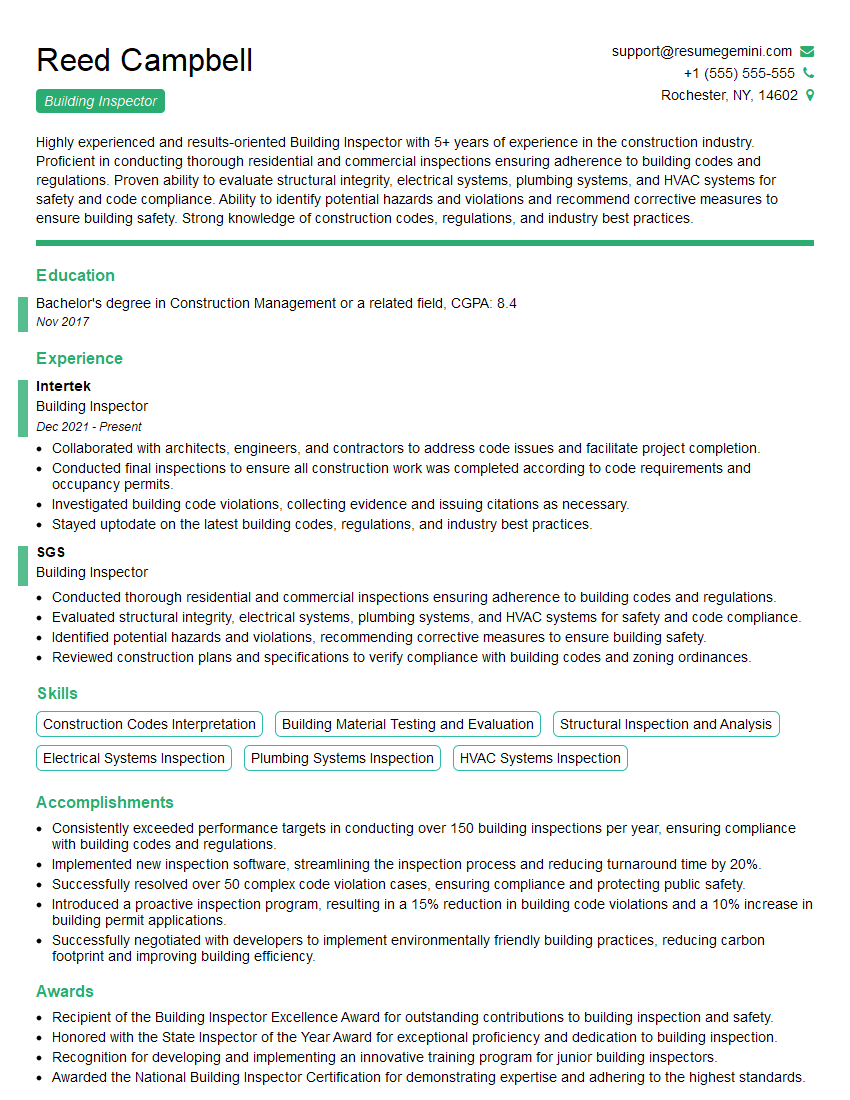
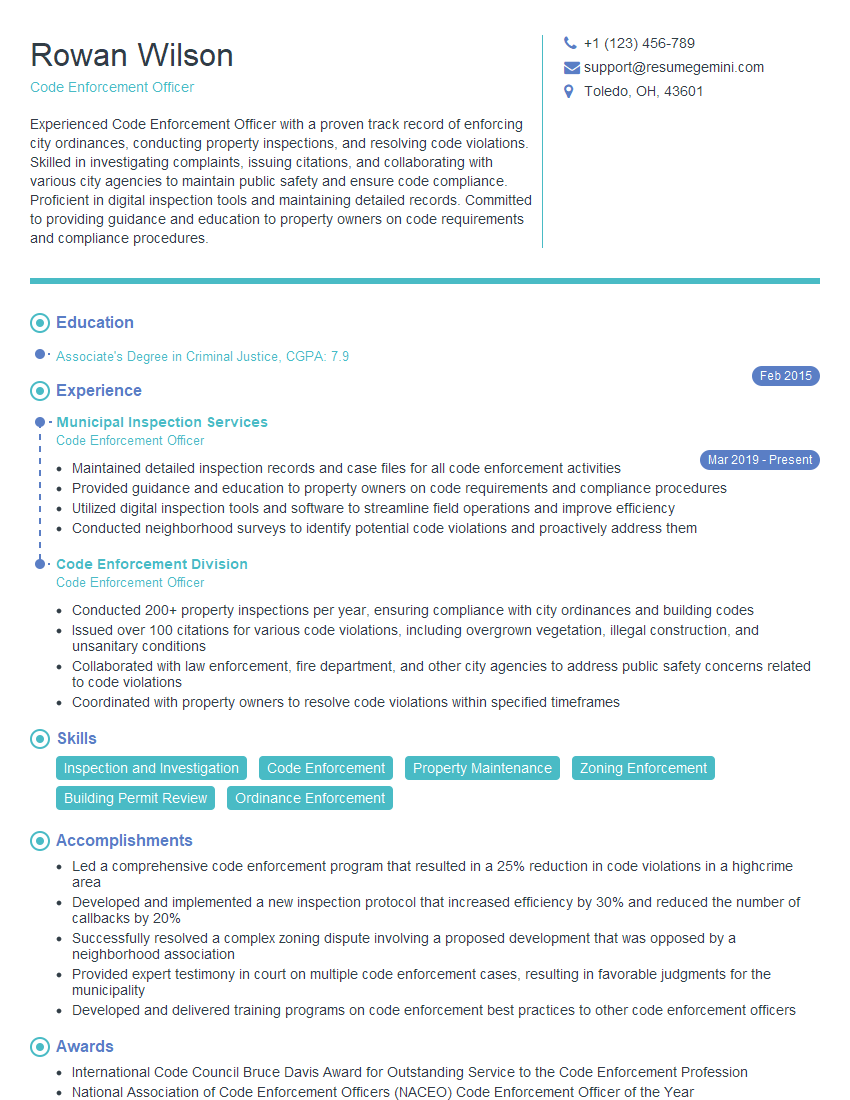
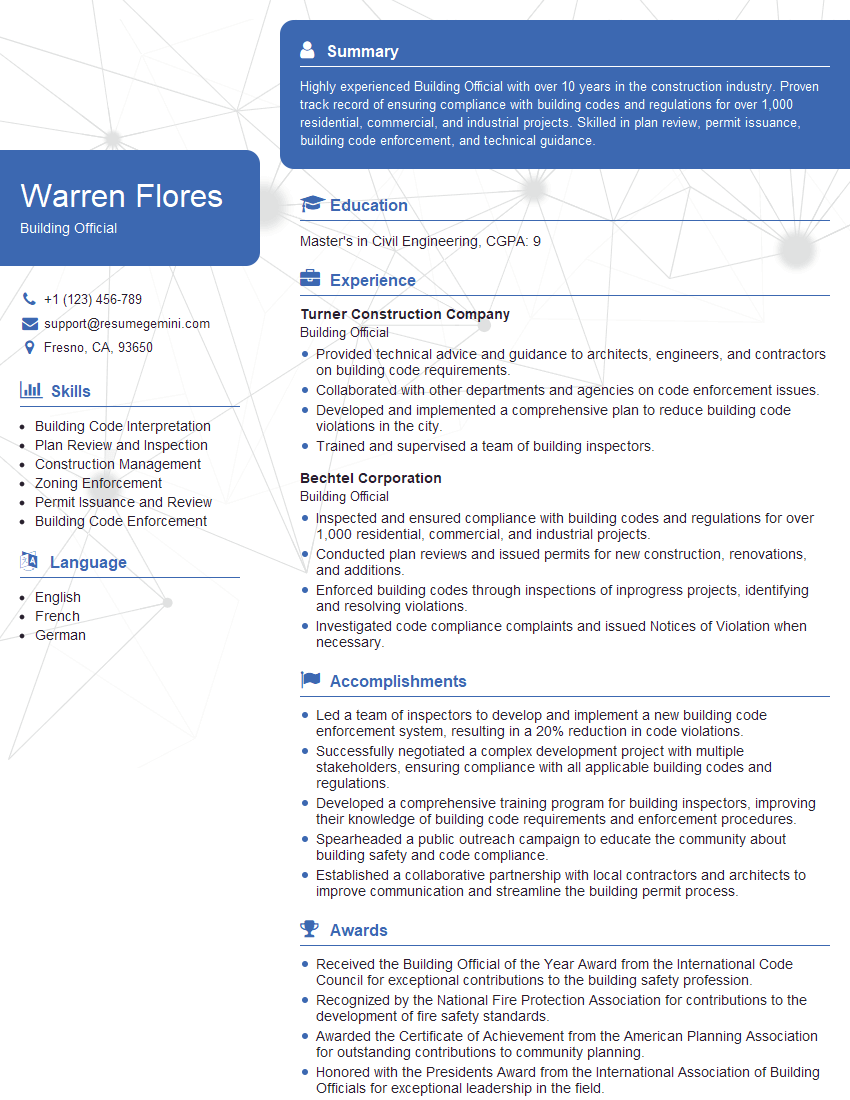
Mastering the interpretation of building codes is crucial for career advancement in the construction and design industries. A strong understanding of these regulations demonstrates expertise, ensuring compliance, and minimizing risks. To significantly enhance your job prospects, it’s vital to create a compelling and ATS-friendly resume that showcases your skills and experience. We highly recommend using ResumeGemini to build a professional resume that highlights your qualifications effectively. ResumeGemini provides examples of resumes tailored to the field of Interpretation of Building Codes, helping you present your skills in the most impactful way possible. Take the next step towards your dream career – craft a standout resume with ResumeGemini.
Explore more articles
Users Rating of Our Blogs
Share Your Experience
We value your feedback! Please rate our content and share your thoughts (optional).
What Readers Say About Our Blog
To the interviewgemini.com Webmaster.
Very helpful and content specific questions to help prepare me for my interview!
Thank you
To the interviewgemini.com Webmaster.
This was kind of a unique content I found around the specialized skills. Very helpful questions and good detailed answers.
Very Helpful blog, thank you Interviewgemini team.