The right preparation can turn an interview into an opportunity to showcase your expertise. This guide to Interpretive Methods interview questions is your ultimate resource, providing key insights and tips to help you ace your responses and stand out as a top candidate.
Questions Asked in Interpretive Methods Interview
Q 1. Explain the difference between positivist and interpretive research paradigms.
Positivism and interpretivism represent fundamentally different approaches to research. Positivism, rooted in the natural sciences, assumes an objective reality that can be measured and understood through empirical observation. Researchers using a positivist paradigm aim to identify causal relationships and generalize findings to larger populations. They typically employ quantitative methods like experiments and surveys. Think of a clinical trial testing the effectiveness of a new drug – the focus is on measurable outcomes and statistical significance.
In contrast, interpretivism emphasizes the subjective nature of reality and the importance of understanding the meanings individuals ascribe to their experiences. Interpretive researchers focus on understanding the ‘why’ behind human actions and beliefs, rather than simply measuring ‘what’ happens. Qualitative methods, such as interviews, ethnography, and textual analysis, are commonly used. Imagine a study exploring the experiences of patients coping with a chronic illness – the researcher would delve into individual narratives and interpretations of their condition.
The key difference lies in their epistemological stances: positivism believes in objective truth discoverable through scientific methods, while interpretivism acknowledges multiple, socially constructed realities.
Q 2. Describe the key characteristics of grounded theory methodology.
Grounded theory methodology is a qualitative approach that aims to develop theories inductively from data. It’s ‘grounded’ because the theory emerges directly from the data collected, rather than being imposed beforehand. Key characteristics include:
- Constant comparative analysis: Data is analyzed iteratively, comparing new data to existing categories and refining them as needed. Think of it as a continuous feedback loop between data collection and analysis.
- Emergent theory: The theoretical framework is not predetermined; instead, it develops organically as the data analysis progresses.
- Saturation: Data collection continues until no new insights or categories emerge.
- Coding: Data is broken down into meaningful units (codes) that represent key concepts and themes.
- Memoing: Researchers write memos to document their analytical reflections and insights.
For example, a researcher studying workplace stress might collect interview data, code the transcripts for recurring themes (e.g., workload, management style, work-life balance), and then develop a theory explaining how these factors interact to contribute to stress.
Q 3. What are the strengths and limitations of phenomenological research?
Phenomenological research seeks to understand the essence of lived experiences. It aims to describe the ‘what it’s like’ of a phenomenon from the perspective of those who have experienced it.
Strengths:
- Provides rich, in-depth understanding of lived experiences.
- Offers valuable insights into complex phenomena that are difficult to quantify.
- Gives voice to marginalized perspectives.
Limitations:
- Findings may not be generalizable to broader populations due to the small sample sizes often employed.
- Researcher bias can influence the interpretation of data.
- Data analysis can be time-consuming and challenging.
- It can be difficult to achieve complete objectivity.
For example, a study exploring the experiences of individuals recovering from substance abuse would focus on providing a deep understanding of their unique journeys and challenges.
Q 4. Explain the concept of hermeneutic circle.
The hermeneutic circle is a fundamental concept in interpretive research. It describes the cyclical process of understanding where our prior understanding (preconceptions, biases) influences how we interpret new information, and this new information, in turn, shapes our understanding.
Imagine reading a novel. Your initial understanding of the characters and plot is shaped by your own life experiences and expectations. As you read further, you encounter new details that challenge or refine your initial assumptions. This process of going back and forth between your prior understanding and new evidence continues until a more comprehensive and nuanced interpretation emerges.
This iterative process is crucial in interpretive research as it acknowledges the role of the researcher’s background and pre-understandings in the interpretation of data.
Q 5. How would you approach data analysis using thematic analysis?
Thematic analysis is a widely used qualitative method for identifying, analyzing, and reporting patterns (themes) within data. Here’s a step-by-step approach:
- Familiarization: Immerse yourself in the data (transcripts, documents, etc.).
- Coding: Identify recurring words, phrases, or ideas and assign codes to represent them.
- Generating themes: Group related codes into potential themes, which capture the broader patterns in the data.
- Reviewing themes: Refine and revise the themes based on the entire dataset, ensuring they are well-supported by evidence.
- Defining and naming themes: Develop clear definitions for each theme and assign descriptive names.
- Writing up: Present the findings in a coherent and insightful narrative, supported by illustrative quotations from the data.
For instance, in analyzing interview transcripts about customer satisfaction, you might identify themes such as product quality, customer service, and pricing.
Q 6. What are some common methods for ensuring rigor in interpretive research?
Rigor in interpretive research is crucial for ensuring the trustworthiness and credibility of findings. Several methods contribute to this:
- Reflexivity: Researchers explicitly acknowledge their own biases and perspectives and how these might influence the research process and interpretation of data. Keeping a reflective journal is a common practice.
- Audit trail: Detailed documentation of all research stages, including data collection, analysis, and interpretation. This allows for scrutiny and replication.
- Triangulation: Using multiple data sources (e.g., interviews, observations, documents) to corroborate findings and enhance validity.
- Member checking: Returning findings to participants for feedback to confirm the accuracy of interpretations.
- Peer debriefing: Discussing the research process and findings with colleagues to receive critical feedback.
These methods enhance the transparency and trustworthiness of the research, making it more robust and convincing.
Q 7. Discuss the ethical considerations involved in conducting interpretive research.
Ethical considerations in interpretive research are paramount. Key issues include:
- Informed consent: Participants must fully understand the research aims, procedures, and potential risks before agreeing to participate. This includes clarifying how data will be used and protected.
- Confidentiality and anonymity: Protecting the identities and sensitive information of participants is crucial, especially when dealing with vulnerable populations.
- Researcher reflexivity and bias: Researchers must be mindful of their own biases and ensure they do not unduly influence data collection or interpretation. Transparency about potential biases strengthens the ethical standing of the research.
- Power dynamics: Researchers should be aware of power imbalances between themselves and participants and take steps to mitigate potential exploitation or harm.
- Data security and storage: Data must be stored securely and ethically, complying with relevant data protection regulations.
Careful consideration of these issues ensures that interpretive research is conducted responsibly and respects the rights and well-being of participants.
Q 8. How do you address researcher bias in interpretive research?
Researcher bias is a significant concern in interpretive research, as it can distort the findings and misrepresent the participants’ perspectives. Addressing it requires a multi-pronged approach focusing on transparency, reflexivity, and rigorous methodological choices. Think of it like trying to photograph a landscape – you need to be aware of your own position and how your lens might be distorting the image.
- Member checking: Sharing interpretations with participants to ensure accuracy and identify biases. For example, after conducting interviews, I would share my initial analysis with participants and ask for feedback to ensure I’m accurately reflecting their experiences.
- Triangulation: Using multiple data sources (e.g., interviews, observations, documents) to cross-validate findings and minimize bias. Imagine trying to understand a story – you’d look at multiple accounts, not just one.
- Reflexivity journaling: Regularly documenting personal thoughts, feelings, and potential biases that might influence the research process. This allows for ongoing critical self-reflection and reduces subconscious bias creeping into interpretations.
- Peer debriefing: Discussing the research process and findings with colleagues to gain external perspectives and identify potential biases that might have been overlooked.
By implementing these strategies, researchers can significantly reduce the influence of personal biases and enhance the trustworthiness of their interpretive findings.
Q 9. Explain the concept of reflexivity in qualitative research.
Reflexivity in qualitative research refers to the critical self-reflection of the researcher on their own role and influence in the research process. It acknowledges that the researcher is not a neutral observer but an active participant who shapes the research process and its interpretations. It’s like acknowledging that the camera itself influences the photograph – where you point it and how you frame it will shape what’s seen.
It involves continuously examining:
- Personal biases and assumptions: How do my own beliefs and experiences shape my interpretations of the data?
- Researcher-participant interaction: How does my presence and interactions with participants influence their responses and behaviors?
- Data collection methods: How do the chosen methods (interviews, observations, etc.) affect the data gathered and interpretations drawn?
- Analytical choices: How do my analytical approaches and theoretical frameworks influence the results and conclusions?
Reflexivity is crucial for enhancing the trustworthiness and validity of qualitative research by acknowledging the researcher’s subjectivity and actively mitigating its influence on the research process.
Q 10. Describe your experience with different qualitative data collection methods (e.g., interviews, observations, document analysis).
My experience encompasses a wide range of qualitative data collection methods. I’ve found each method to be valuable, though their appropriateness depends heavily on the research question.
- Semi-structured interviews: I’ve extensively used these to explore in-depth perspectives on complex topics. A recent project involved interviewing educators about their experiences with implementing new curriculum; the semi-structured format allowed flexibility to explore their responses in detail.
- Observations: Participant observation offers a rich understanding of social settings and behaviors. I once spent several weeks observing interactions within a community garden, documenting communication patterns and social dynamics.
- Document analysis: Examining written documents (reports, letters, policy documents) provides valuable contextual information and historical perspectives. For example, I’ve analyzed policy documents to understand the evolution of a particular social program and its impact.
I strive to employ a combination of methods, which offers greater depth and validation of findings through triangulation.
Q 11. How would you analyze narrative data?
Narrative data analysis involves exploring the stories people tell to understand meaning and experiences. It’s not just about summarizing the data, but interpreting the underlying structure, themes, and narrative strategies used by the individuals.
My approach typically involves these steps:
- Transcription: Accurate transcription of the narratives is essential.
- Immersion and reading: Repeated reading of the narratives to get a sense of the overall story and identify recurring themes.
- Coding and categorization: Identifying key words, phrases, and themes within the narratives and assigning codes to represent these themes. This often involves iterative refinement, as you discover new themes and patterns.
- Storytelling and interpretation: Weaving together the identified themes and codes to construct a coherent narrative and interpretation of the data. Here, careful attention to the narrative structure and the context of the stories is crucial.
- Verification and validation: Triangulating findings with other data sources and member-checking to ensure accuracy and trustworthiness.
Software like NVivo can assist in this process, but the interpretive skill lies in understanding the human experience embodied in the stories.
Q 12. What software are you familiar with for qualitative data analysis?
I’m proficient in several software packages for qualitative data analysis. NVivo is my primary tool, offering strong capabilities in managing large datasets, coding, and visualizing relationships between themes. ATLAS.ti is another robust option I’ve used, particularly for its strengths in network analysis. For smaller datasets or specific tasks, I utilize more specialized software like MAXQDA. My familiarity extends to spreadsheet software (Excel) for basic data management and visualization and word processing software for report writing.
Q 13. How would you determine the sample size for an interpretive study?
Sample size in interpretive research isn’t determined by statistical power, as in quantitative research. Instead, it’s guided by the principle of data saturation. The goal is to continue sampling until no new information or themes emerge from the data.
Factors influencing sample size include:
- Research question: A broader research question may require a larger sample.
- Data richness: Data-rich participants might reduce the necessary sample size.
- Data type: In-depth interviews often require smaller samples than surveys.
- Resource constraints: Time and resources will influence practical limits on the sample size.
It’s an iterative process. I start with a pilot study, then refine the sample size based on the saturation point of the emerging themes.
Q 14. Explain the concept of saturation in qualitative data analysis.
Saturation in qualitative data analysis refers to the point where no new information or themes emerge from the data collected. It signals that further data collection is unlikely to yield any significant new insights. Think of it like filling a glass with water; once it’s full, adding more water won’t change the level.
Reaching saturation is crucial for ensuring the trustworthiness and validity of the research findings. It indicates that the data collected is sufficiently comprehensive to address the research question and generate meaningful interpretations. The identification of saturation is subjective; it relies on the researcher’s judgment regarding the redundancy or novelty of emerging themes. However, careful documentation of the data collection process, and clear articulation of the decision to stop data collection based on saturation, are key for transparency.
Q 15. What are some common challenges in conducting interpretive research?
Interpretive research, while offering rich insights into human experiences, presents unique challenges. One major hurdle is the inherent subjectivity involved. Unlike quantitative methods with their focus on numerical data, interpretive research delves into meanings, interpretations, and perspectives, which can vary widely among individuals and contexts. This subjectivity necessitates rigorous reflexivity – a constant awareness of the researcher’s own biases and assumptions and their potential influence on the research process and interpretation.
Another common challenge is the time-consuming nature of data collection and analysis. Gathering rich qualitative data, such as through in-depth interviews or ethnographic observations, often requires significant time and resources. The subsequent analysis, involving detailed coding, theme identification, and interpretation, is also a labor-intensive process. Furthermore, establishing credibility and generalizability of findings can be difficult. The deep focus on specific contexts can make it challenging to generalize conclusions to broader populations.
Finally, managing the ethical dimensions of interpretive research is crucial. Researchers must obtain informed consent from participants, ensure their anonymity and confidentiality, and be mindful of the potential impact of the research on the participants’ lives. Balancing these ethical considerations with the need for authentic data can present a complex challenge.
Career Expert Tips:
- Ace those interviews! Prepare effectively by reviewing the Top 50 Most Common Interview Questions on ResumeGemini.
- Navigate your job search with confidence! Explore a wide range of Career Tips on ResumeGemini. Learn about common challenges and recommendations to overcome them.
- Craft the perfect resume! Master the Art of Resume Writing with ResumeGemini’s guide. Showcase your unique qualifications and achievements effectively.
- Don’t miss out on holiday savings! Build your dream resume with ResumeGemini’s ATS optimized templates.
Q 16. How do you ensure the trustworthiness and credibility of your findings in interpretive research?
Ensuring trustworthiness and credibility in interpretive research relies on establishing rigor through multiple strategies. First, prolonged engagement in the field allows for a deeper understanding of the context and participants’ perspectives, enhancing the richness and validity of the findings. The more time spent immersed in the setting, the more nuanced insights can emerge.
Second, triangulation, using multiple data sources (interviews, observations, documents), strengthens the validity of interpretations by confirming patterns across various data streams. For instance, if interview data supports observations made in the field, confidence in the interpretation increases. Third, member checking involves sharing the preliminary findings with participants to ensure that the interpretation accurately reflects their lived experiences. This feedback is essential for refining the analysis and minimizing misinterpretations.
Fourth, reflexivity, as mentioned earlier, is paramount. Researchers must explicitly address their own biases and the influence they may have had on the research process and interpretations. This transparency enhances the credibility of the research. Finally, detailed and clear descriptions of the research methods, data collection and analysis processes enhance the auditability and replicability of the study. This allows other researchers to evaluate the rigor and validity of the findings.
Q 17. Compare and contrast different types of qualitative interviews (e.g., structured, semi-structured, unstructured).
Qualitative interviews vary in their level of structure, each offering different benefits and challenges. Structured interviews use predetermined, standardized questions, ensuring consistency across interviews. Think of a survey with open-ended questions. This approach is efficient for large-scale studies but may limit the richness and depth of responses.
Semi-structured interviews are more flexible, employing a guide with key questions but allowing for follow-up questions based on the participant’s responses. This is a popular approach in interpretive research, balancing structure with flexibility to explore emerging themes. Imagine a conversation with a pre-planned agenda, but space for deviations.
Unstructured interviews are highly flexible, resembling a guided conversation with open-ended questions, allowing the participant to direct the flow. This method is ideal for exploring sensitive or complex topics, but requires strong interviewing skills and careful analysis to manage the diversity of responses. It’s more like a spontaneous conversation with broad guiding themes.
The choice depends on the research question and context. If consistency is paramount, structured interviews are preferred; if deep understanding is the goal, semi-structured or unstructured might be more appropriate.
Q 18. Explain the difference between inductive and deductive reasoning in qualitative research.
Inductive and deductive reasoning represent different approaches to qualitative data analysis. Deductive reasoning starts with a pre-existing theory or hypothesis and tests it against the data. The researcher begins with a framework (e.g., a theory about organizational culture) and seeks to confirm or refute this framework through data analysis. It’s like starting with a map and then exploring the terrain to see if the map matches reality.
Inductive reasoning, conversely, starts with the data and develops theory from patterns and themes observed in the data. The researcher allows the data to speak for itself, identifying emerging themes and generating theory based on the observed patterns. It’s like exploring the terrain first and then drawing a map based on what has been discovered.
Interpretive research often uses a combination of both. A researcher might begin with a broad research question (deductive element) and then use inductive reasoning to identify patterns and themes within the data, leading to the development of new theoretical insights.
Q 19. Describe your experience using different coding schemes in qualitative data analysis.
My experience with coding schemes encompasses various approaches, each suitable for different research goals. Thematic coding, a widely used method, involves identifying recurring themes and patterns in the data. For example, in studying employee experiences, I might identify themes such as ‘work-life balance,’ ‘job satisfaction,’ and ‘organizational support.’ I would then code segments of interview transcripts or field notes that relate to these themes.
In vivo coding uses phrases or words directly from the participant’s language to represent themes. This retains the richness and nuance of participant voices. For instance, if a participant frequently used the term ‘being swamped,’ this phrase could become a code reflecting the participants’ experience of overwhelming workload.
Framework coding uses a pre-defined framework or coding system based on existing theory or literature to analyze the data. This approach is useful when testing a specific theory or comparing findings across studies. For example, using Maslow’s hierarchy of needs as a framework to analyze employee motivation.
Choosing the appropriate coding scheme depends on the research question and the nature of the data. I often use a combination of these approaches to benefit from the strengths of each.
Q 20. How would you write a compelling research report based on interpretive findings?
A compelling research report based on interpretive findings should go beyond simply presenting the data; it should tell a story. The report should begin with a clear and engaging introduction that outlines the research problem, its significance, and the research questions. The methodology section should provide a detailed description of the research design, data collection techniques, and data analysis procedures, ensuring transparency and rigor.
The findings section should present the key themes and interpretations in a clear, concise, and engaging manner. Using rich quotes from participants can help to illustrate the findings and bring the voices of the participants to life. Visual aids like tables or figures can be used to summarize complex data. The discussion section should interpret the findings in relation to the existing literature, highlight the significance of the findings, and address any limitations of the study. The conclusion should summarize the key findings, their implications, and potential areas for future research.
The entire report should be written in a style that is accessible to a wider audience, avoiding overly technical language and jargon. A compelling narrative helps to make the research more engaging and memorable.
Q 21. How do you handle conflicting interpretations in your data?
Conflicting interpretations in qualitative data are inevitable and present an opportunity for deeper understanding. Instead of dismissing contradictory findings, I embrace them as valuable insights. I begin by systematically reviewing the data related to the conflicting interpretations. I examine the context of the data, looking for factors that might explain the differences. For instance, are there demographic differences among participants whose responses conflict?
Then, I explore the potential for multiple interpretations, acknowledging that participants’ experiences and perspectives are complex and multifaceted. Instead of aiming for a single, unifying interpretation, I might present the different interpretations, supported by the evidence, and discuss the factors contributing to their differences. This approach reflects the complexity of human experience and enhances the richness and nuance of the analysis. Transparency about the contradictions, along with a considered discussion of the various interpretations, is vital to build credibility and trustworthiness. It allows the reader to participate in interpreting the data rather than just passively receiving conclusions.
Q 22. What are some common criteria for evaluating the quality of interpretive research?
Evaluating the quality of interpretive research hinges on several key criteria, all aimed at ensuring trustworthiness and rigor. It’s not about finding objective truth, but demonstrating the validity and meaningfulness of your interpretations. Think of it like crafting a compelling narrative – it needs to be coherent, well-supported, and resonate with the reader.
- Richness of Description: The research should provide detailed, nuanced accounts of the phenomenon under study. Thin descriptions are insufficient; we need depth and texture.
- Reflexivity: Researchers must acknowledge their own biases and perspectives and how these might have shaped their interpretations. Transparency is crucial. Imagine a detective investigating a crime – their personal experience and prejudices can influence their conclusions. Acknowledging these biases helps the reader assess the findings critically.
- Coherence: The interpretations should be logically consistent and well-integrated with the data. There shouldn’t be significant gaps or contradictions.
- Analytic Depth: The research should move beyond simply summarizing data to offering insightful interpretations that illuminate the underlying meaning and significance. This requires sophisticated analytical skills.
- Transferability (or Applicability): While generalizability isn’t the primary goal, the findings should be relevant and applicable to other contexts, even if not directly generalizable. This means clearly articulating the context and limitations of the study.
- Impact and Significance: The research should contribute to the existing body of knowledge and offer new insights into the phenomenon studied. It should make a contribution to the field.
Q 23. How do you integrate theory and data in interpretive research?
Integrating theory and data in interpretive research is a cyclical, iterative process, not a linear one. It’s a conversation between what you already know (theory) and what you discover (data).
It often begins with a theoretical framework that guides your initial data collection and analysis. For example, if you’re studying workplace culture using the lens of symbolic interactionism, you’ll look for how individuals create meaning through interactions, symbols, and shared understandings. As you analyze the data (interviews, observations, documents), you’ll refine and even revise your theoretical understanding based on what emerges from the data. You might discover unexpected patterns or nuances that challenge your initial assumptions. This process of constant refinement continues throughout the research process, creating a dynamic interplay between theory and data.
Imagine building a house: the theory is your blueprint, providing a general structure. The data is the brick-and-mortar, revealing the details of what’s actually possible and sometimes forcing you to adapt the blueprint along the way.
Q 24. Explain your understanding of different theoretical frameworks used in interpretive research (e.g., symbolic interactionism, social constructivism).
Several theoretical frameworks underpin interpretive research, each offering a unique lens through which to understand human experience and social phenomena.
- Symbolic Interactionism: This framework focuses on how individuals create meaning through their interactions with others and the symbols they use. It emphasizes the social construction of reality and the role of communication in shaping individual identities and social structures. For example, studying how a specific workplace uses jargon to create an insider/outsider dynamic illustrates this.
- Social Constructivism: This perspective emphasizes the socially constructed nature of knowledge and reality. It argues that knowledge isn’t objective but is shaped by social, cultural, and historical contexts. Research using this framework might explore how a particular social group constructs its identity and understanding of the world.
- Ethnomethodology: This approach focuses on the methods people use to make sense of their everyday lives. It emphasizes the practical reasoning and common-sense knowledge that guide our actions and interactions. For example, research on how hospital staff coordinate their actions during an emergency would use this framework.
- Feminist Theory: This offers various perspectives, focusing on gender, power, and inequality in social life. It often critiques traditional research methods for their biases and seeks to empower marginalized voices. A study exploring women’s experiences in a male-dominated profession would benefit from this framework.
The choice of theoretical framework depends on the research question and the phenomenon under study. It’s crucial to justify the chosen framework and explain how it shapes the research process and interpretations.
Q 25. Describe a time you had to overcome a challenge in analyzing qualitative data.
In a study on the impact of social media on body image among adolescents, I encountered challenges in analyzing the vast amount of qualitative data from semi-structured interviews and online forums. The sheer volume of textual data was initially overwhelming. I initially tried to manually code all the data, but it proved inefficient and prone to inconsistency.
To overcome this, I employed a mixed-methods approach, incorporating computer-assisted qualitative data analysis software (CAQDAS). This allowed me to systematically code the data, identify recurring themes, and track the relationships between different concepts more effectively. This software helped me manage the large dataset and develop a robust coding scheme, revealing patterns I might have missed with manual coding alone. I also employed a rigorous inter-rater reliability check with a colleague to ensure objectivity and consistency in coding.
Q 26. How do you present your findings to a non-academic audience?
Presenting interpretive research findings to a non-academic audience requires careful consideration of the audience’s knowledge and interests. The goal is to communicate the key findings in a clear, engaging, and accessible manner, without sacrificing the depth of the analysis.
I typically use storytelling techniques, focusing on illustrative examples and anecdotes from the data. Instead of technical jargon, I use plain language and visuals such as charts, graphs, or images to convey complex information. I also tailor the presentation to the specific context and needs of the audience. For instance, if presenting to policymakers, I would focus on the practical implications of the research findings and potential solutions to the problem under study.
Think of it like translating a complex academic paper into a compelling narrative—emphasizing the story and its relevance rather than the methodology.
Q 27. How do you ensure the transferability of your research findings?
Ensuring the transferability of interpretive research findings is crucial, even though generalizability in the traditional sense is often not the primary goal. It’s about demonstrating the relevance and applicability of the findings to other contexts.
This is achieved through detailed descriptions of the context in which the study was conducted, including the participants, setting, and methods. By providing rich contextual information, readers can assess the extent to which the findings resonate with their own experiences or contexts. Furthermore, clearly articulating the limitations of the study and the specific conditions under which the findings are likely to hold increases the trustworthiness of the interpretation. This acknowledges that the interpretation is specific to the studied context, making its application to other contexts more thoughtful and measured.
Q 28. Discuss the role of interpretation in understanding human behavior.
Interpretation plays a fundamental role in understanding human behavior. It’s not simply about observing actions but about deciphering the meaning behind those actions. Human behavior is rarely purely rational or determined by external factors alone; it is richly informed by our interpretations of the world around us and how these interact with our beliefs, values, and experiences.
For instance, consider someone who gives a large donation to charity. We might observe the act, but interpretation is needed to understand the motivation behind the action. Was it driven by altruism, a desire for social recognition, or tax benefits? The same action could stem from different motivations and interpretations are key to distinguishing between these possibilities.
Interpretive methods, by focusing on meaning-making, help us move beyond superficial descriptions of behavior to gain a deeper understanding of the underlying reasons, beliefs, and contexts that shape human actions.
Key Topics to Learn for Interpretive Methods Interview
- Hermeneutics and Interpretation: Understanding the philosophical foundations of interpretive methods, including different schools of thought and their implications for research.
- Qualitative Data Analysis: Mastering techniques like thematic analysis, grounded theory, and narrative analysis to extract meaning from qualitative data sources such as interviews, texts, and observations. Practical application: Analyzing interview transcripts to identify recurring themes and patterns.
- Contextual Understanding: Developing the ability to analyze data within its specific social, historical, and cultural context. Practical application: Interpreting the meaning of a historical document based on its historical context.
- Critical Discourse Analysis: Exploring how power relations and ideologies are embedded within language and communication. Practical application: Analyzing political speeches to uncover underlying power dynamics.
- Ethnographic Research Methods: Understanding the principles and practices of participant observation, fieldwork, and ethnographic interviewing. Practical application: Describing the process of conducting participant observation in a specific setting.
- Interpretative Frameworks: Familiarity with various theoretical frameworks used in interpretive research, such as symbolic interactionism, phenomenology, and constructivism.
- Validity and Reliability in Interpretive Research: Understanding the challenges and strategies for establishing the trustworthiness and credibility of interpretive research findings.
- Ethical Considerations: Addressing ethical issues related to data collection, analysis, and reporting in interpretive research.
- Presenting Interpretive Findings: Effectively communicating research findings through written reports, presentations, and visual aids.
Next Steps
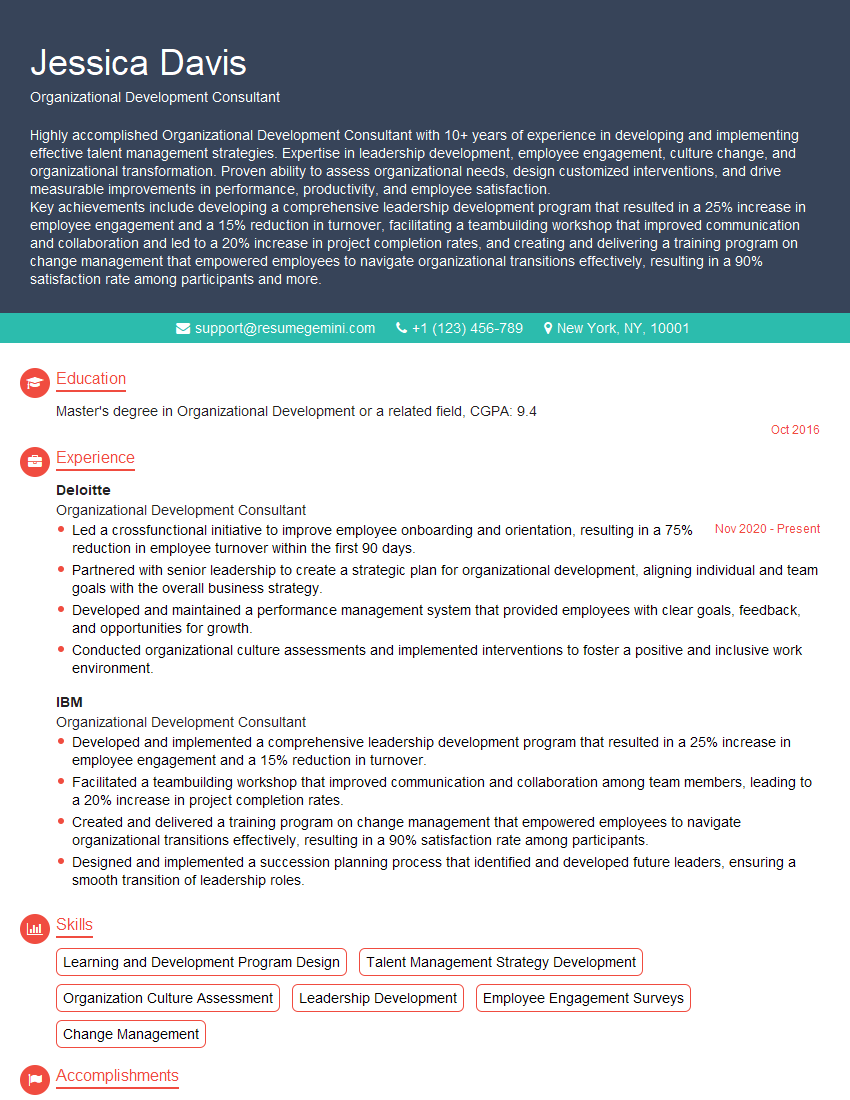
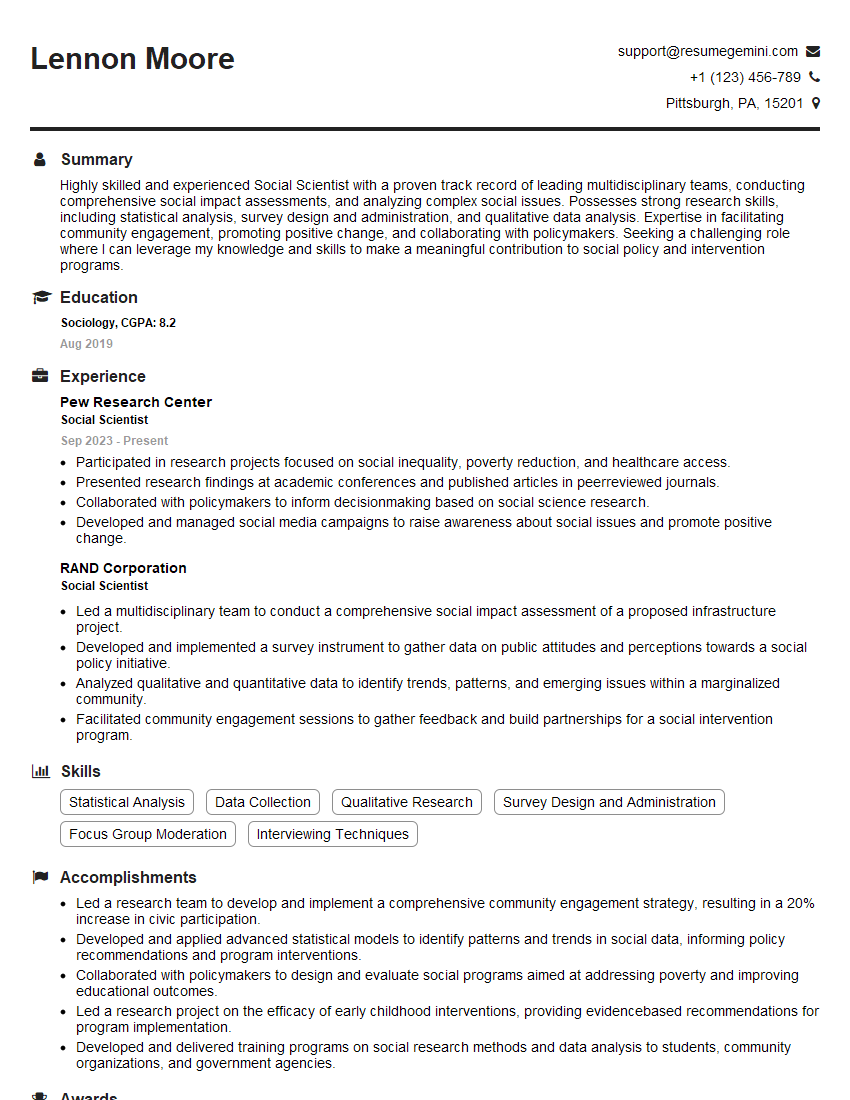
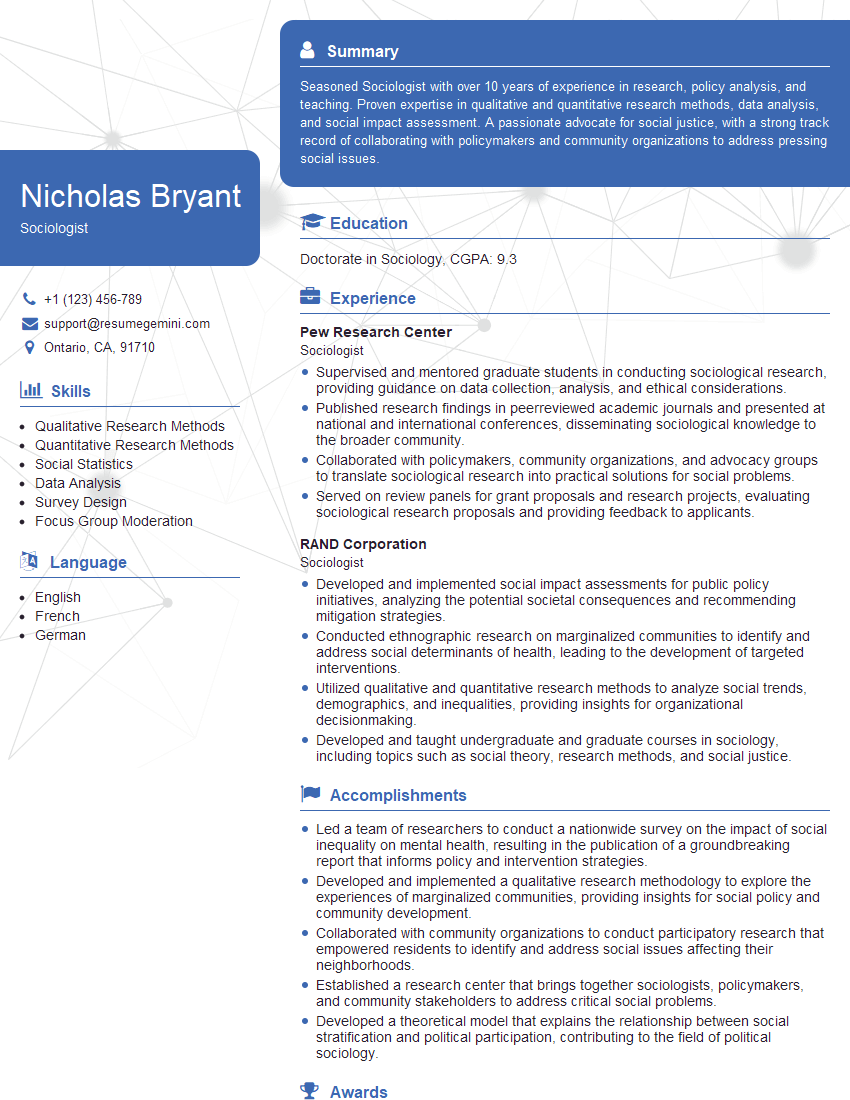
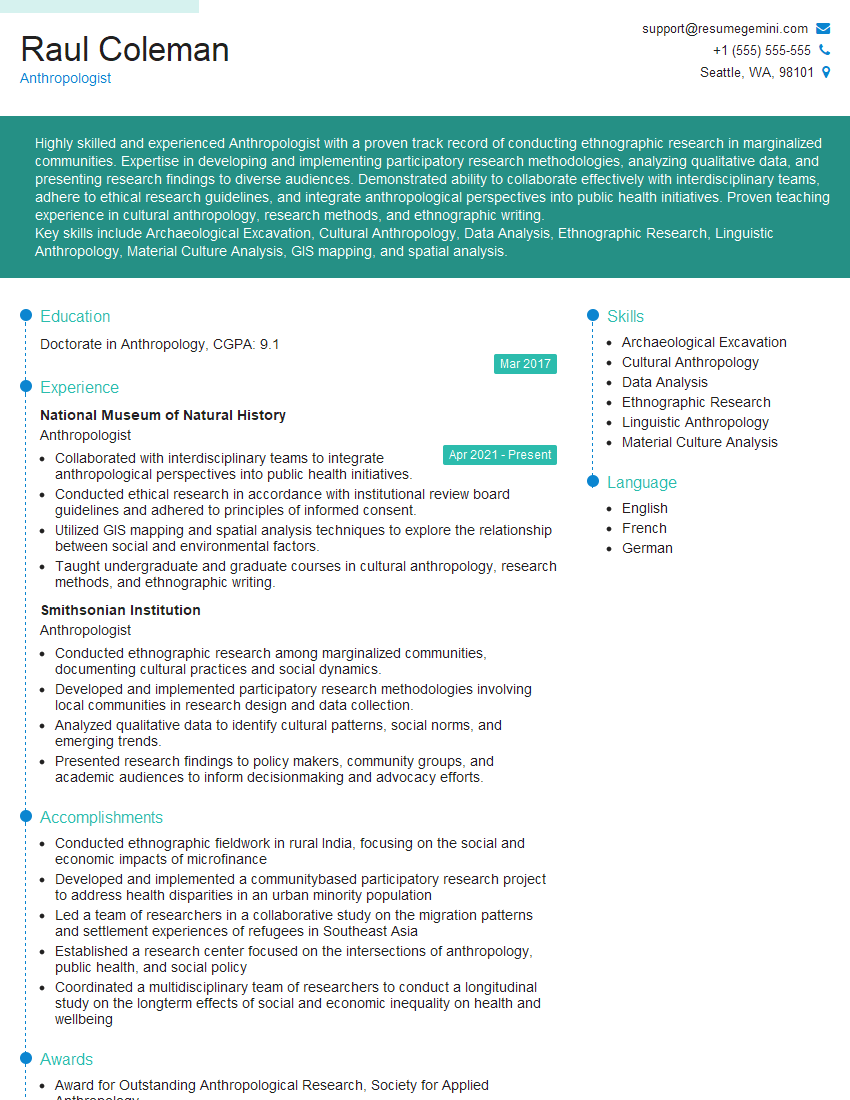
Mastering interpretive methods significantly enhances your analytical and communication skills, opening doors to rewarding careers in research, social sciences, humanities, and beyond. A strong grasp of these methods is highly valued by employers seeking individuals capable of critical thinking, insightful analysis, and effective communication. To increase your job prospects, create an ATS-friendly resume that effectively highlights your skills and experience. We highly recommend using ResumeGemini to build a professional and impactful resume. ResumeGemini provides examples of resumes tailored to Interpretive Methods, helping you showcase your expertise effectively.
Explore more articles
Users Rating of Our Blogs
Share Your Experience
We value your feedback! Please rate our content and share your thoughts (optional).
What Readers Say About Our Blog
To the interviewgemini.com Webmaster.
Very helpful and content specific questions to help prepare me for my interview!
Thank you
To the interviewgemini.com Webmaster.
This was kind of a unique content I found around the specialized skills. Very helpful questions and good detailed answers.
Very Helpful blog, thank you Interviewgemini team.