Interviews are opportunities to demonstrate your expertise, and this guide is here to help you shine. Explore the essential Construction Tools and Materials interview questions that employers frequently ask, paired with strategies for crafting responses that set you apart from the competition.
Questions Asked in Construction Tools and Materials Interview
Q 1. What are the key safety considerations when using a circular saw?
Safety is paramount when operating a circular saw. Think of it like this: a circular saw is a powerful tool that can easily cause serious injury if not handled correctly. The key safety considerations revolve around preventing kickback, avoiding contact with the blade, and managing dust and debris.
- Blade Guard: Always ensure the blade guard is in place and functioning correctly. This prevents accidental contact with the spinning blade.
- Firm Grip: Maintain a firm two-handed grip on the saw, keeping your body balanced and away from the blade’s path.
- Proper Cutting Technique: Avoid forcing the saw; let the blade do the work. Keep the saw moving smoothly and steadily. Use a push stick for narrow cuts to keep your hands away from the blade.
- Eye and Hearing Protection: Always wear safety glasses or a face shield to protect your eyes from flying debris. Hearing protection is also crucial to mitigate the noise.
- Dust Collection: Connect a dust collection system to the saw or use a shop vacuum to minimize inhalation of harmful dust particles.
- Work Area: Ensure a clean and well-lit work area with ample space. Clear the area of any obstructions that could cause a trip or fall.
- Material Support: Securely support the material being cut to prevent it from moving unexpectedly. A sawhorse or clamp is your friend.
- Kickback Prevention: Be aware of the dangers of kickback, which occurs when the blade binds or catches in the material. This can send the saw flying backward, causing serious injuries. Use the right blade for the material and avoid cutting into nails or other metal objects.
Ignoring these precautions can result in serious injury, from minor cuts to severe lacerations and even amputation. Always prioritize safety when using power tools.
Q 2. Explain the difference between various types of concrete mixes.
Concrete mixes vary significantly in their strength, workability, and intended application. Think of it like baking a cake – you wouldn’t use the same recipe for a delicate sponge cake as you would for a sturdy loaf. The main differences lie in the proportions of cement, aggregates (sand and gravel), and water.
- Normal Strength Concrete: This is a common mix suitable for many applications like foundations, footings, and slabs. It offers a good balance of strength and workability.
- High-Strength Concrete: This mix uses more cement, resulting in increased compressive strength. Ideal for applications requiring high load-bearing capacity like bridge piers or high-rise buildings.
- Lightweight Concrete: This mix incorporates lightweight aggregates like expanded clay or shale, reducing the overall weight of the concrete. Useful in situations where weight is a concern, like building roofs or upper floors.
- High-Performance Concrete (HPC): HPC incorporates admixtures to enhance its properties such as strength, durability, and workability. It’s often used in specialized projects needing extremely high performance.
- Ready-Mix Concrete: This is pre-mixed concrete delivered to the job site by a concrete truck. It comes in various strengths and mixes tailored to specific needs.
- Self-Consolidating Concrete (SCC): This specialized mix flows easily into complex formwork without the need for vibration. Ideal for congested reinforcement or intricate shapes.
The selection of concrete mix depends heavily on the project’s requirements. Factors to consider include the load-bearing capacity, the environmental conditions, the workability needed, and the budget. Misjudging the mix can result in structural failure, which highlights the importance of accurate specification.
Q 3. How do you select appropriate fasteners for different materials?
Choosing the right fastener is critical for ensuring structural integrity and a lasting result. It’s like choosing the right tool for the job; a screwdriver isn’t suitable for hammering nails. Consider these factors when selecting fasteners:
- Material Type: The material being fastened dictates the type of fastener needed. Wood requires wood screws, while metal may need bolts or self-tapping screws. Concrete requires specialized anchors or masonry nails.
- Material Thickness: The thickness of the material influences fastener length. The fastener must penetrate sufficiently to achieve secure fastening. Too short, and the joint will fail; too long, and it can cause damage.
- Load Requirements: The anticipated load determines the strength and size of the fastener. A heavy load necessitates stronger and larger fasteners.
- Environmental Conditions: External factors like moisture or corrosive environments necessitate using corrosion-resistant fasteners, such as stainless steel screws.
- Aesthetic Considerations: In some instances, the fastener’s appearance is important. Hidden fasteners might be preferred for a cleaner look.
Examples: For joining two pieces of lumber, you might use wood screws. For securing metal sheets to a steel frame, you’d choose bolts. For hanging pictures on a concrete wall, you’d opt for masonry anchors.
Incorrect fastener selection can lead to structural weakness, compromised aesthetics, and premature failure of the construction. Always consult relevant standards and specifications when choosing fasteners.
Q 4. Describe the process of ordering and tracking construction materials.
Ordering and tracking construction materials is a crucial aspect of project management that affects both budget and schedule. It’s a process that requires meticulous planning and efficient execution.
- Material Takeoff: Begin by creating a detailed material takeoff from the construction drawings, specifying the quantity and type of each material required. This forms the basis of your order.
- Supplier Selection: Choose reliable suppliers based on their reputation, pricing, delivery time, and material quality. Often, multiple suppliers are used to ensure timely delivery.
- Order Placement: Submit formal purchase orders to the selected suppliers, including detailed specifications, quantities, and delivery schedules.
- Order Confirmation: Confirm the order with suppliers, ensuring they understand the specifications and delivery requirements.
- Delivery Tracking: Use tracking numbers and delivery schedules provided by the supplier to monitor the arrival of materials. Regular communication with the supplier is key.
- On-Site Inspection: Upon arrival, inspect the materials to verify that the quantities, types, and quality meet the specifications. Report any discrepancies immediately.
- Inventory Management: Implement an efficient inventory management system to track materials on-site. This helps in preventing theft, damage, and material shortages.
Effective material ordering and tracking minimize delays and cost overruns. Using software or spreadsheets aids in better organization and tracking.
Q 5. What are the common causes of material defects and how can they be prevented?
Material defects can significantly impact the quality and durability of a construction project. They can range from minor imperfections to major structural flaws. Understanding common causes and prevention methods is crucial.
- Manufacturing Defects: These arise during the manufacturing process, like cracks in bricks, warped lumber, or faulty concrete mixes. Prevention involves thorough quality control at the manufacturing level and careful inspection upon delivery.
- Transportation Damage: Rough handling during transportation can cause damage to materials, such as dents in sheet metal or broken tiles. Proper packaging and careful handling during transport are essential to prevent this.
- Improper Storage: Exposure to moisture, extreme temperatures, or sunlight can degrade materials. Providing appropriate storage conditions, like a dry and sheltered area, is vital for preserving material quality.
- Poor Handling: Incorrect handling on the construction site, such as dropping materials or using improper equipment, can also lead to defects. Training and supervision of workers is key.
Preventing material defects requires a multi-pronged approach involving rigorous quality control at every stage, from manufacturing to on-site handling. Regular inspections and adherence to proper storage procedures are indispensable.
Q 6. Explain the importance of proper material storage and handling.
Proper material storage and handling are not merely good practices; they are essential for the success of any construction project. Think of it as caring for valuable ingredients before baking a cake – neglecting them can ruin the final product.
- Protection from the elements: Materials should be protected from moisture, sunlight, and extreme temperatures to prevent deterioration and damage. This often involves covering materials or storing them in covered areas.
- Organized storage: Materials should be organized and easily accessible to minimize delays and improve efficiency. Proper labeling and stacking are crucial.
- Safety considerations: Materials should be stored safely to prevent accidents, such as stacking materials securely to prevent collapse.
- Security: Measures should be in place to prevent theft or vandalism of materials, especially valuable items.
- First-in, first-out (FIFO) system: This method ensures that older materials are used before newer ones to minimize the risk of spoilage or obsolescence.
Neglecting proper material storage and handling can lead to material loss, damage, delays, increased costs, and even safety hazards. Implementing these practices not only protects materials but also enhances overall project efficiency.
Q 7. Describe your experience with different types of scaffolding.
My experience encompasses several types of scaffolding, each with its own strengths and weaknesses, chosen based on the specific project needs. Think of it like choosing the right vehicle for a journey – a small car is suitable for city driving, but a truck is needed for heavy loads.
- Tube and Clamp Scaffolding: This is a versatile system using standardized tubes and clamps, allowing for easy assembly and configuration. It’s suitable for a wide range of applications but requires skilled labor for safe erection.
- System Scaffolding: This pre-engineered system uses prefabricated components, speeding up assembly and ensuring consistency. It’s safer and faster than tube and clamp but can be more expensive.
- Cuplock Scaffolding: This system utilizes a unique locking mechanism, offering superior strength and stability. It is faster to erect than tube and clamp but may require specialized training.
- Frame Scaffolding: This system uses prefabricated frames, offering excellent stability and simplicity of erection. Suitable for simpler projects, but less versatile than others.
- Suspended Scaffolding: This type uses ropes or cables to suspend the platform from above, ideal for high-rise buildings or situations where ground-based scaffolding is impractical.
The choice of scaffolding depends on factors like the height of the structure, the complexity of the project, the available space, and safety regulations. I’ve worked extensively with all these types, ensuring safe and efficient access for workers on various projects.
Q 8. How do you ensure the safe operation and maintenance of heavy equipment?
Safe operation and maintenance of heavy equipment is paramount for preventing accidents and ensuring project efficiency. It’s a multi-faceted process encompassing pre-operational checks, regular maintenance, operator training, and adherence to safety regulations.
Pre-Operational Checks: Before starting any equipment, a thorough inspection is crucial. This includes checking fluid levels (oil, coolant, hydraulic fluid), tire pressure, brakes, lights, and any visible damage. Think of it like a pre-flight checklist for an airplane – essential for a safe takeoff.
Regular Maintenance: Scheduled maintenance, following the manufacturer’s recommendations, is vital. This includes lubrication, filter changes, component inspections, and repairs as needed. Regular maintenance prevents small problems from escalating into costly breakdowns and safety hazards. Imagine neglecting your car’s oil changes – eventually, the engine will suffer.
Operator Training: Operators must be properly trained and certified on the specific equipment they operate. This includes understanding the machine’s controls, safety features, and potential hazards. A poorly trained operator is a recipe for disaster.
Safety Regulations: Strict adherence to all relevant safety regulations, including wearing appropriate Personal Protective Equipment (PPE) like hard hats and safety glasses, is mandatory. Safety isn’t optional; it’s non-negotiable.
For example, on a recent project involving excavators, we implemented a daily pre-start checklist, mandatory operator training, and regular maintenance schedules, resulting in zero equipment-related incidents.
Q 9. What are the different types of welding equipment and their applications?
Welding is a crucial process in construction, and various equipment caters to different needs and materials. The most common types include:
Shielded Metal Arc Welding (SMAW): Also known as stick welding, this process uses a consumable electrode coated with flux to protect the weld from atmospheric contamination. It’s versatile, portable, and relatively inexpensive, ideal for outdoor work and repairs.
Gas Metal Arc Welding (GMAW): Or MIG welding, this process uses a continuous wire electrode fed automatically, providing faster welding speeds. It’s widely used for joining steel, aluminum, and other metals, and is popular for its clean welds.
Gas Tungsten Arc Welding (GTAW): Also called TIG welding, this process utilizes a non-consumable tungsten electrode and a shielding gas (usually argon) to produce high-quality welds. It’s known for its precision and is frequently used for welding thin materials and stainless steel.
Flux-Cored Arc Welding (FCAW): Similar to MIG welding, this uses a tubular electrode containing flux, suitable for outdoor work where shielding gas might be impractical.
The choice of welding equipment depends on factors such as the material being welded, the required weld quality, the welding environment, and the budget. For instance, TIG welding is preferred for intricate stainless steel work in a controlled environment, while stick welding might be more suitable for on-site repairs in a less controlled setting.
Q 10. Explain your experience with different types of hand tools used in construction.
My experience with hand tools is extensive, covering a wide range used in various construction tasks. Some examples include:
Measuring Tools: Tape measures, levels (spirit levels and laser levels), squares (speed squares and framing squares) are essential for accurate measurements and ensuring structural integrity. Imagine building a house without these – it would be disastrous!
Cutting Tools: Hacksaws, reciprocating saws, and various types of chisels are used for cutting wood, metal, and other materials. Choosing the right tool for the job is key to efficiency and safety.
Driving and Fastening Tools: Hammers, screwdrivers (Phillips and flathead), wrenches, and impact drivers are used for fastening and joining different components. The proper use of these tools minimizes damage and injury.
Striking Tools: Sledgehammers, mallets, and punches are used for heavier-duty applications such as demolition and shaping materials.
Prying Tools: Crowbars, wrecking bars, and pry bars are used for demolition, separating materials, and leverage.
Proper maintenance of these tools, such as sharpening blades and keeping them clean and oiled, extends their lifespan and improves safety and efficiency. I always emphasize the importance of using the right tool for the specific task – a poorly chosen tool can lead to damage, injuries, or even project delays.
Q 11. Describe the process of reading and interpreting construction drawings.
Reading and interpreting construction drawings requires a systematic approach and understanding of various symbols, notations, and scales. It’s like reading a complex map that guides the entire construction process.
Understanding Scales and Dimensions: Construction drawings use scales to represent actual dimensions. Understanding the scale is fundamental to interpreting the size and placement of elements.
Identifying Views and Sections: Drawings typically include plans (top views), elevations (side views), sections (cutaway views), and details (enlarged views of specific components). Each view provides different information about the structure.
Interpreting Symbols and Annotations: Construction drawings utilize a standardized set of symbols and annotations to represent different building components, materials, and dimensions. A key or legend is usually included to explain these symbols.
Understanding Specifications: Drawings often refer to accompanying specifications that provide detailed information on materials, construction methods, and tolerances.
For example, a detail drawing might show the exact dimensions and arrangement of reinforcing bars in a concrete column, while a floor plan would depict the layout of rooms and their dimensions. The ability to read and understand these drawings is crucial for accurate construction.
Q 12. How do you manage material waste and promote sustainability on a construction site?
Managing material waste and promoting sustainability on a construction site is crucial for environmental responsibility and cost efficiency. This involves a combination of planning, execution, and post-construction practices.
Careful Planning: Accurate material estimations and optimized designs minimize waste from the outset. This means precise quantity takeoffs and efficient material handling procedures.
Waste Segregation and Recycling: Implementing a robust waste management system is essential, with clearly marked containers for different types of waste (wood, metal, concrete, etc.). This allows for efficient recycling and reduces landfill waste.
Reuse and Repurposing: Where possible, salvaged materials should be reused or repurposed. This not only reduces waste but can also be cost-effective.
Sustainable Material Selection: Choosing sustainable materials, such as recycled content products or locally sourced materials, reduces the environmental impact of the project. This minimizes transportation costs and emissions.
Employee Training: Training construction workers on waste reduction techniques, proper material handling, and safe disposal practices is vital for promoting sustainable practices throughout the project lifecycle.
For example, on a recent project, we implemented a waste audit system to monitor material consumption and waste generation, allowing us to track progress and identify areas for improvement. This resulted in a significant reduction in waste and a more sustainable outcome.
Q 13. What are the different types of lumber and their uses?
Lumber comes in various types, each with specific properties and applications. The most common types include:
Softwoods: Generally from coniferous trees (like pine, fir, spruce), softwoods are typically less dense and easier to work with than hardwoods. They are commonly used for framing, sheathing, and general construction.
Hardwoods: From deciduous trees (like oak, maple, cherry), hardwoods are denser, stronger, and more durable. They are often used for flooring, cabinetry, furniture, and high-end finishes.
Engineered Wood Products: These are manufactured products combining wood fibers or veneers with adhesives. Examples include plywood, oriented strand board (OSB), and laminated veneer lumber (LVL). They offer consistency, strength, and cost-effectiveness in various applications.
The selection of lumber depends on the intended use and structural requirements. For example, framing lumber (typically softwood) requires strength and dimensional stability, while flooring might use hardwood for durability and aesthetic appeal. Engineered wood products offer versatility, often substituting for solid lumber in specific applications.
Q 14. Explain the difference between different types of concrete finishes.
Concrete finishes vary significantly, impacting both the appearance and durability of the finished product. The choices depend on the intended use and aesthetic preferences.
Broomed Finish: A textured finish created by brushing the concrete surface with a broom while it’s still wet. This provides slip resistance and a rustic look, often used for driveways and patios.
Troweled Finish: A smooth finish achieved by using a steel trowel to level and compact the concrete surface. This creates a sleek, polished appearance suitable for interior floors and countertops.
Exposed Aggregate Finish: An attractive finish where the aggregate (stones and pebbles) is exposed by washing away the cement paste from the surface. This results in a unique, textured look often used for decorative pavements and walkways.
Stamped Finish: A textured finish created by pressing textured stamps into the concrete surface while it’s still wet. This mimics the appearance of other materials, such as brick or stone, offering aesthetic versatility.
Stained Finish: Applying a stain to the concrete surface after it has cured adds color and enhances the texture. This allows for creative expression and custom designs.
The selection of the concrete finish depends on various factors such as the location, intended use, aesthetic requirements, and budget. For example, a broomed finish might be suitable for an outdoor patio due to its slip resistance, while a troweled finish is often preferred for interior floors for its smooth, clean look.
Q 15. What are the safety precautions for working at heights?
Working at heights is inherently risky, so meticulous safety precautions are paramount. Think of it like climbing a mountain – you wouldn’t attempt it without proper gear and training. The core principle is preventing falls. This involves a multi-layered approach.
- Fall Protection Systems: This includes harnesses, lanyards, and anchor points. The harness should be properly fitted and regularly inspected. Lanyards must be appropriately rated for the height and task. Anchor points need to be strong enough to support the weight of the worker and must be properly installed.
- Scaffolding: Properly erected and maintained scaffolding provides a stable working platform. Regular inspections are vital, checking for any damage or instability. Always ensure scaffolding is within load capacity.
- Personal Protective Equipment (PPE): Beyond harnesses, workers need hard hats, safety footwear with slip-resistant soles, and high-visibility clothing to increase visibility.
- Training and Competence: Workers must be thoroughly trained in the safe use of equipment and procedures for working at heights. Regular refresher training is crucial.
- Safe Access and Egress: Workers should have safe access to and from the work area, avoiding precarious routes or makeshift solutions. Ladders should be correctly positioned and secured, only used for their intended purpose.
For instance, on a recent high-rise project, we used a comprehensive fall arrest system with double-point anchor lines and daily inspections. This prevented any falls and ensured worker safety.
Career Expert Tips:
- Ace those interviews! Prepare effectively by reviewing the Top 50 Most Common Interview Questions on ResumeGemini.
- Navigate your job search with confidence! Explore a wide range of Career Tips on ResumeGemini. Learn about common challenges and recommendations to overcome them.
- Craft the perfect resume! Master the Art of Resume Writing with ResumeGemini’s guide. Showcase your unique qualifications and achievements effectively.
- Don’t miss out on holiday savings! Build your dream resume with ResumeGemini’s ATS optimized templates.
Q 16. How do you identify and address potential hazards related to construction tools and equipment?
Identifying and addressing hazards related to construction tools and equipment is a proactive, ongoing process, much like a doctor’s regular check-up on a patient. It’s not a one-time event.
- Pre-use Inspections: Before every use, tools and equipment should be thoroughly inspected for damage, wear, and tear. This includes checking cords for fraying (on power tools), ensuring guards are in place, and verifying that everything is functioning correctly.
- Regular Maintenance: Scheduled maintenance is crucial. This involves cleaning, lubricating, and replacing worn parts. Maintaining equipment according to the manufacturer’s instructions is non-negotiable.
- Safe Storage and Handling: Tools and equipment should be stored properly to prevent damage and accidents. This includes securing equipment to prevent theft and using appropriate storage racks for tools.
- Hazard Identification and Risk Assessment: A thorough risk assessment should identify potential hazards associated with specific tools and equipment. This should consider the task, the work environment, and the experience level of the workers. Example: A risk assessment for using a jackhammer might include hearing protection, vibration dampening gloves, and a designated work area.
- Lockout/Tagout Procedures: For machinery or equipment requiring servicing or repairs, lockout/tagout procedures are vital to ensure that power is safely disconnected and the equipment cannot be accidentally restarted.
In a recent project, a thorough pre-use inspection of a crane revealed a loose cable. Addressing this early prevented a potential catastrophic failure.
Q 17. Explain your experience with different types of adhesives and sealants.
My experience with adhesives and sealants is extensive, encompassing various applications and material types. It’s like having a toolbox filled with specialized glues, each perfect for a different job.
- Epoxy Resins: Excellent for structural bonding, offering high strength and durability. I’ve used them in repairing cracked concrete and bonding steel components. They require careful mixing and a relatively short working time.
- Silicone Sealants: Versatile sealants that are water-resistant and flexible. I commonly use them for sealing windows, doors, and joints in various materials, from wood to metal.
- Polyurethane Sealants: These offer excellent adhesion and flexibility, often used in exterior applications where resistance to UV radiation and weathering is crucial. I’ve employed them in sealing expansion joints in concrete.
- Acrylic Sealants: Suitable for interior applications where paintability is needed. These are often used to seal gaps in drywall or trim.
- Construction Adhesives: These range from contact adhesives (like those used for laminate flooring) to construction adhesives for bonding various materials in diverse situations. I used construction adhesives for installing window frames and kitchen cabinets
Selecting the right adhesive or sealant is crucial; the wrong choice can lead to failure. For example, using silicone sealant on a surface that needs to be painted would not work well because many paints do not adhere to silicone.
Q 18. What is your experience with using laser levels and measuring tools?
Laser levels and measuring tools are indispensable in modern construction. Accuracy is paramount, and these tools provide the precision needed. Think of them as the surgeon’s scalpel for construction.
- Laser Levels: I’m proficient in using various types, from self-leveling rotary lasers for large-scale projects to smaller line lasers for more precise tasks. Laser levels ensure accurate leveling and alignment of walls, foundations, and other structural components.
- Measuring Tapes: Essential for quick and accurate measurements. I prefer tapes with durable casings and clear markings.
- Total Stations: These advanced surveying instruments combine laser technology with electronic distance measurement for highly accurate measurements over long distances and challenging terrain.
- Digital Levels: These provide highly accurate readings and electronic data recording for quick and efficient leveling.
In one project, a laser level proved crucial in ensuring the precise alignment of prefabricated wall panels, minimizing adjustments and speeding up the construction process. Accuracy with these tools prevents rework and ensures a quality finish.
Q 19. Describe your experience with different types of roofing materials.
My experience encompasses a wide variety of roofing materials, each suited to different applications and climates. Choosing the right material is crucial, just like selecting the right clothing for different weather conditions.
- Asphalt Shingles: The most common type, offering a balance of cost and durability. Different grades offer varying lifespans and weather resistance.
- Tile Roofing: Highly durable and aesthetically pleasing, but more expensive than asphalt shingles. Clay and concrete tiles are common choices.
- Metal Roofing: Long-lasting and resistant to harsh weather conditions, often used in areas with high winds or snow loads. Materials include aluminum, steel, and copper.
- Built-up Roofing (BUR): Commonly used for flat roofs, involving layers of asphalt and felt. This offers excellent waterproofing.
- Single-Ply Membranes: Modern roofing systems using materials like EPDM (ethylene propylene diene monomer) or TPO (thermoplastic polyolefin). These are durable and relatively easy to install.
For a recent project in a high-wind area, we opted for a metal roofing system to ensure long-term performance and resist damage from strong winds.
Q 20. How do you maintain inventory control of construction materials?
Maintaining accurate inventory control of construction materials is essential for efficient project management and cost control. It’s like managing a well-stocked supermarket – you need to know what you have, what you need, and when you need it.
- Detailed Material Lists: Creating comprehensive material lists at the beginning of a project is crucial. This list should include quantities, specifications, and suppliers.
- Regular Inventory Checks: Conducting regular inventory checks helps track material usage and identify any discrepancies or shortages.
- Using Inventory Management Software: Software solutions simplify inventory tracking, allowing for real-time monitoring of stock levels and automated ordering of materials when supplies are low. This can prevent delays due to material shortages.
- Proper Storage and Labeling: Materials must be stored properly to prevent damage and loss. Clear labeling is crucial for easy identification and tracking.
- Waste Management: Implementing waste reduction strategies can save money and minimize environmental impact. Tracking waste generation helps improve efficiency and reduce material usage.
On a previous project, we used a cloud-based inventory management system, which significantly improved our ability to track materials, minimizing waste and ensuring timely delivery of supplies.
Q 21. Explain the importance of proper personal protective equipment (PPE).
Proper Personal Protective Equipment (PPE) is crucial for preventing injuries and ensuring worker safety. It’s the first line of defense on a construction site, similar to a firefighter’s protective gear. Without it, workers are significantly more vulnerable.
- Hard Hats: Protect against falling objects.
- Safety Glasses or Goggles: Protect eyes from flying debris and dust.
- Hearing Protection: Essential in noisy environments to prevent hearing damage.
- Gloves: Protect hands from cuts, abrasions, and chemical exposure. Different types of gloves are needed for different tasks (e.g., cut-resistant gloves, chemical-resistant gloves).
- High-Visibility Clothing: Increases visibility in dimly lit or busy areas.
- Safety Footwear: Steel-toed boots protect feet from falling objects and punctures. Slip-resistant soles prevent falls.
- Respiratory Protection: Needed when working with hazardous materials or in dusty environments.
- Fall Protection Equipment: Harnesses, lanyards, and other equipment are crucial when working at heights.
Enforcing strict PPE usage is non-negotiable. We conduct regular safety briefings to remind workers of the importance of PPE and ensure everyone uses the appropriate equipment for the task at hand. A worker’s well-being is our top priority.
Q 22. Describe your experience with different types of insulation materials.
My experience encompasses a wide range of insulation materials, from traditional fiberglass batts and rigid foam boards to more advanced options like spray foam and cellulose. Understanding their properties is crucial for effective building design.
- Fiberglass batts and rolls: These are cost-effective and widely used for their ease of installation in wall cavities and attics. However, they can settle over time, reducing their effectiveness. I’ve found that proper installation, including careful attention to air gaps and consistent density, is key to maximizing their performance.
- Rigid foam boards (e.g., XPS, EPS): These provide excellent R-value per inch, making them ideal for applications where space is limited, such as foundation walls or roofing. I’ve used them extensively in projects requiring high thermal performance and moisture resistance. Proper sealing of the edges is paramount to prevent thermal bridging.
- Spray foam insulation: This offers superior air sealing and fills irregularities in the structure, leading to a more energy-efficient building envelope. My experience includes both open-cell and closed-cell spray foam, choosing between them depends on the specific project requirements regarding moisture management and thermal performance.
- Cellulose insulation: A sustainable option made from recycled paper, cellulose provides good insulation and sound dampening properties. I’ve seen its successful application in both new construction and retrofit projects, though proper moisture control is critical in this application.
Selecting the right insulation depends on factors such as budget, climate, structural design, and desired R-value. I always consider the whole-building approach, ensuring all elements contribute to optimal energy efficiency.
Q 23. What are the different types of masonry units and their uses?
Masonry units are fundamental building blocks, and their choice significantly impacts structural integrity, aesthetics, and cost. Different types serve distinct purposes.
- Bricks: These are versatile units offering durability, fire resistance, and aesthetic appeal. They come in various sizes, colors, and textures, suitable for load-bearing walls, facades, and decorative features. I’ve worked with clay bricks, concrete bricks, and even reclaimed bricks, each having unique properties.
- Concrete Blocks (CMUs): These are larger and lighter than bricks, making them efficient for constructing walls quickly. Their hollow cores can be filled with insulation for enhanced thermal performance. I often specify CMUs for non-load-bearing interior and exterior walls in commercial and residential projects.
- Stone: Natural stone, like granite or limestone, provides exceptional strength and longevity but is more expensive. It is frequently used for foundations, veneer, and accent walls, requiring specialized handling and installation techniques. I prioritize sustainable sourcing practices when specifying natural stone.
- Glass Blocks: These offer excellent light transmission and thermal insulation. I’ve incorporated them in interior partitions to create privacy while maintaining brightness.
The selection process depends on the project’s structural demands, budget, aesthetic preferences, and local building codes. For example, in seismic zones, I might prioritize stronger units like engineered stone or reinforced concrete blocks.
Q 24. How do you calculate material quantities for a construction project?
Accurately calculating material quantities is critical for efficient project management and cost control. It involves careful planning and meticulous measurements.
My process typically involves these steps:
- Detailed Drawings and Specifications: I begin with comprehensive plans that clearly define dimensions and quantities of each material.
- Take-offs: I systematically extract material quantities from the drawings, calculating areas, volumes, and lengths needed. Software like AutoCAD or dedicated take-off programs can automate this process.
- Waste Factor: I incorporate a waste factor to account for material losses during cutting, handling, and installation. This factor varies depending on the material and the complexity of the project, typically ranging from 5% to 20%.
Waste Factor = (Total Material Required * Waste Percentage) / 100 - Material Ordering: Based on the calculated quantities plus the waste factor, I prepare a detailed material order, ensuring sufficient supplies are available on time.
- Verification and Adjustments: I regularly verify quantities during construction, making necessary adjustments as the project progresses. This helps prevent material shortages or unnecessary overstocking.
For example, calculating concrete needed for a foundation involves calculating the volume of the foundation, accounting for the dimensions and shape, and then adding a waste factor of around 10% to account for spillage and imperfections. This ensures adequate concrete is ordered to complete the task.
Q 25. Describe your experience with different types of demolition tools and techniques.
Demolition requires careful planning and execution to ensure worker safety and minimize environmental impact. My experience covers a variety of tools and techniques:
- Manual Demolition: This involves using hand tools like sledgehammers, wrecking bars, and chisels for smaller-scale projects. It’s labor-intensive but precise, allowing for selective removal of materials. I often use this for intricate work or where heavy machinery can’t access the area.
- Mechanical Demolition: This utilizes heavy machinery such as excavators with demolition attachments, hydraulic breakers, and grapple claws. This is far more efficient for large-scale projects but requires careful planning to prevent damage to surrounding structures. Safety protocols and site supervision are paramount here. I make sure to have a detailed demolition plan in place, including fall protection measures and proper disposal methods.
- Controlled Demolition (Implosion): For very large structures, controlled demolition using explosives may be necessary. This is a highly specialized process requiring extensive planning, permits, and expert supervision, focusing on safety and minimizing environmental impact. I personally only oversee projects involving this process in conjunction with specialized demolition contractors.
The choice of tools and techniques depends on factors like the size and type of structure, the presence of hazardous materials (asbestos, lead paint), and the desired level of material salvage. Safety is always the top priority; I always insist on following all safety regulations and proper personal protective equipment (PPE).
Q 26. What are the key considerations for selecting appropriate building materials based on climate and environmental factors?
Climate and environmental factors heavily influence material selection. Ignoring these can lead to structural problems, energy inefficiency, and even environmental damage.
- Climate Considerations: In hot, arid climates, materials with high thermal mass and reflectivity (e.g., light-colored stucco or brick) are preferred to minimize heat absorption. In cold climates, insulation and materials with good thermal resistance are crucial. High humidity regions require moisture-resistant materials to prevent mold and rot.
- Environmental Impact: Sustainable materials like recycled content products, sustainably harvested timber, and locally sourced materials reduce carbon footprint and environmental impact. I always consider the embodied energy of a material – the total energy consumed in its production, transportation, and installation.
- Durability and Longevity: Choosing durable materials reduces long-term maintenance costs and the need for frequent replacements. Proper material selection increases the lifespan of a building, reducing the need for frequent renovations and landfill waste.
For instance, in a coastal area prone to hurricanes, I’d specify stronger materials like impact-resistant windows and reinforced concrete to withstand high winds. In a region with frequent freeze-thaw cycles, I’d avoid materials susceptible to cracking due to moisture expansion.
Q 27. How do you ensure compliance with building codes and safety regulations related to materials and tools?
Compliance with building codes and safety regulations is non-negotiable. My approach involves a multi-faceted strategy:
- Thorough Knowledge of Codes: I stay up-to-date on all applicable building codes, including those related to material specifications, installation methods, and safety requirements. This includes regular review of updates and changes through industry publications and continuing education.
- Material Certifications and Testing: I always specify materials that meet or exceed the required standards, verifying certifications and test reports from reputable sources. I also perform on-site testing whenever necessary to verify material properties.
- Safety Procedures and Training: I implement strict safety protocols on all projects, including the correct use of personal protective equipment (PPE), safe handling procedures for different materials and tools, and regular safety training for the entire team. All workers are required to be familiar with emergency procedures and to report any safety concerns immediately.
- Regular Inspections: I conduct regular inspections throughout the project to ensure compliance with codes and safety protocols, documenting findings and addressing any deficiencies immediately. This includes working closely with inspectors and addressing any issues raised during the inspection process.
Non-compliance can lead to serious consequences, including project delays, fines, and even legal action. Proactive compliance saves time, money, and protects the safety of everyone involved.
Q 28. Explain your experience with using and maintaining power tools.
Extensive experience with power tools is essential in construction. My proficiency extends from basic operation to advanced techniques, coupled with a strong emphasis on safety and maintenance.
- Tool Selection: I carefully select the right tool for each job, considering factors like power requirements, ergonomics, and safety features. I prioritize tools with safety mechanisms like blade guards and automatic shutoff switches.
- Safe Operation: I adhere strictly to manufacturer’s instructions and safety guidelines when using any power tool. This includes using appropriate PPE like safety glasses, hearing protection, and dust masks. I make sure to maintain a safe working distance from others while operating power tools.
- Regular Maintenance: I perform routine maintenance on all power tools, including cleaning, lubrication, and blade sharpening. Regular inspection for wear and tear prevents accidents and extends the tool’s lifespan. I keep detailed logs for each tool, including maintenance dates and any repairs made.
- Troubleshooting and Repair: I possess the skills to diagnose and repair minor issues with power tools. However, for major repairs or servicing, I utilize qualified technicians to prevent potential hazards.
For example, when using a circular saw, I always ensure the blade is sharp and securely attached, use a push stick for close cuts, and maintain a firm grip to prevent kickback. I often demonstrate to my team the proper usage and safety measures of each tool before allowing them to use it.
Key Topics to Learn for Construction Tools and Materials Interview
- Hand Tools & Power Tools: Understanding the function, safe operation, and maintenance of common hand tools (hammers, saws, levels) and power tools (drills, saws, nail guns). Consider the differences between various types within each category (e.g., circular saw vs. miter saw).
- Material Properties & Selection: Knowing the characteristics of different construction materials (lumber, concrete, steel, masonry) and how to select the appropriate material for a given application. This includes understanding material strengths, weaknesses, and limitations.
- Safety Procedures & Regulations: Familiarity with OSHA standards and best practices for safe tool handling, material storage, and jobsite safety. Be prepared to discuss specific safety protocols related to different materials and tools.
- Construction Drawings & Specifications: Interpreting blueprints, specifications, and other construction documents to understand material requirements and project scope. This includes identifying symbols, dimensions, and material callouts.
- Estimating & Costing: Understanding the basics of estimating material quantities and associated costs for a construction project. This includes familiarity with unit pricing and different cost estimation methods.
- Problem-Solving & Troubleshooting: Be ready to discuss your experience in identifying and resolving problems related to tool malfunctions, material defects, or unexpected site conditions. Highlight your ability to think critically and find solutions under pressure.
- Sustainable Building Materials & Practices: Demonstrate awareness of environmentally friendly construction materials and techniques, and their impact on project costs and sustainability goals.
Next Steps
Mastering Construction Tools and Materials is crucial for career advancement in the construction industry. A strong understanding of these topics demonstrates your technical expertise and commitment to safety, ultimately leading to greater responsibility and earning potential. To significantly boost your job prospects, create an ATS-friendly resume that highlights your skills and experience effectively. ResumeGemini is a trusted resource that can help you build a professional and impactful resume. We provide examples of resumes tailored to the Construction Tools and Materials field to help guide you. Use ResumeGemini to craft a resume that truly showcases your capabilities and gets you noticed!

Materials Coordinator Resume Sample
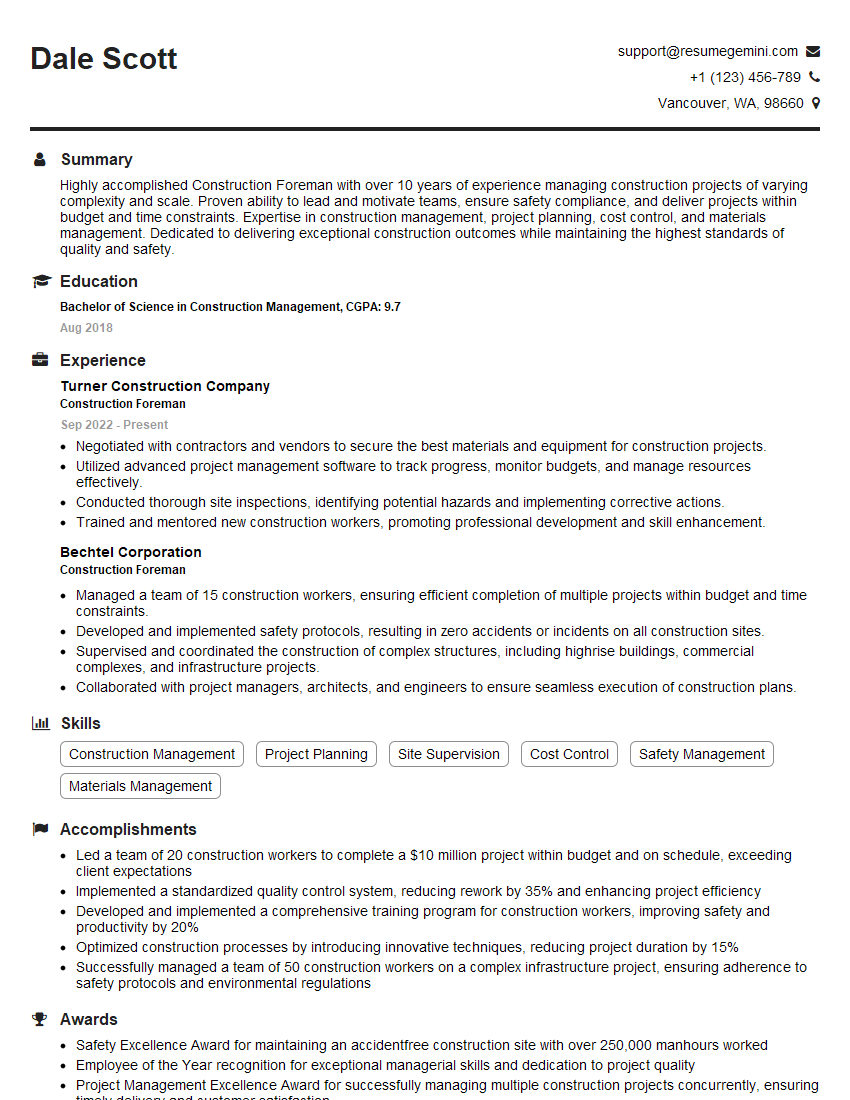
Construction Foreman Resume Sample

Construction Superintendent Resume Sample

Scheduling Manager Resume Sample

Cost Estimator Resume Sample

Field Engineer Resume Sample

Equipment Technician Resume Sample

Site Supervisor Resume Sample

Heavy Equipment Mechanic Resume Sample

Quality Control Inspector Resume Sample
Explore more articles
Users Rating of Our Blogs
Share Your Experience
We value your feedback! Please rate our content and share your thoughts (optional).
What Readers Say About Our Blog
To the interviewgemini.com Webmaster.
Very helpful and content specific questions to help prepare me for my interview!
Thank you
To the interviewgemini.com Webmaster.
This was kind of a unique content I found around the specialized skills. Very helpful questions and good detailed answers.
Very Helpful blog, thank you Interviewgemini team.