Preparation is the key to success in any interview. In this post, we’ll explore crucial Interstate Transfer Execution interview questions and equip you with strategies to craft impactful answers. Whether you’re a beginner or a pro, these tips will elevate your preparation.
Questions Asked in Interstate Transfer Execution Interview
Q 1. Explain the process of interstate household goods transfer.
Interstate household goods transfer is a complex process involving the careful planning and execution of moving household belongings across state lines. It’s much more than simply loading a truck; it’s a coordinated effort requiring adherence to regulations, meticulous inventory management, and efficient communication throughout the entire journey.
The process typically begins with a detailed inventory of the household goods. This inventory serves as the foundation for everything that follows, including cost estimation, transportation planning, and claims management. Next, a reputable moving company is selected, preferably one licensed and insured for interstate moves. A binding estimate or non-binding estimate is obtained, clearly outlining all costs involved. This is crucial for budget management. The move itself includes the packing of items (either by the customer or the movers), loading, transportation, unloading, and unpacking (if that service is selected). Finally, a thorough inspection is conducted at the destination to ensure the safe arrival of all items as per the initial inventory.
For example, I once managed the relocation of a family from New York to California. This involved coordinating the packing of their belongings, utilizing a specialized long-haul trucking company, and meticulously tracking the shipment’s progress via GPS and regular communication with the driver and the family. We also ensured all appropriate paperwork and insurance documentation was in order. The process concluded with a thorough post-move inspection and final settlement.
Q 2. Describe your experience managing interstate relocation budgets.
Managing interstate relocation budgets requires a keen eye for detail and a proactive approach. It’s essential to obtain multiple, detailed quotes from reputable movers, comparing not just the base price but also additional costs like packing materials, insurance, and potential fuel surcharges. I always recommend getting both binding and non-binding estimates to understand the range of potential costs.
My experience involves creating detailed spreadsheets that break down every expense, from initial consultations to final delivery charges. This allows for clear tracking and potential adjustments as needed. For instance, if unforeseen circumstances arise during the move, such as a need for additional packing materials, I can quickly assess the impact on the overall budget and communicate potential cost changes transparently to the client. I often collaborate with clients to establish a contingency fund to cover such unexpected expenses. Regular communication with movers regarding any potential cost increases is crucial to keep the project within the allocated budget.
Q 3. How do you handle unexpected delays or complications during an interstate transfer?
Unexpected delays and complications are inevitable in interstate transfers. My approach emphasizes proactive risk mitigation and robust contingency planning. This includes maintaining open communication with the moving company, the client, and any other relevant stakeholders. Upon encountering an issue, I immediately assess the situation, identify the root cause, and develop a solution. This often involves exploring alternative transportation options, securing temporary storage if needed, and negotiating with the moving company to minimize the impact on the client.
For example, if a truck experiences mechanical failure, I would immediately arrange for a replacement truck, keeping the client informed every step of the way. I would also document all communication and any expenses incurred due to the delay. Transparency is crucial during these situations to maintain client trust and manage expectations effectively. I believe in a proactive approach; having backup plans in place prevents small problems from escalating into major crises.
Q 4. What are the key compliance regulations for interstate household goods transportation?
Interstate household goods transportation is heavily regulated at both the federal and state levels. The primary federal agency is the Federal Motor Carrier Safety Administration (FMCSA). Movers must comply with numerous regulations, including obtaining the necessary licenses and permits, adhering to safety standards for their vehicles and drivers, and providing accurate and transparent pricing information. These regulations are designed to protect consumers from fraud and ensure the safe transportation of their belongings.
Key compliance regulations include the proper publication of tariffs, adherence to weight and size limits, and compliance with the household goods transportation regulations. Movers are required to provide customers with a copy of their tariff, which outlines their pricing structure and services. They must also accurately complete and submit the required documentation, including Bills of Lading, to ensure compliance. Failure to comply can result in significant penalties and legal action. I have extensive experience ensuring compliance with all relevant FMCSA regulations and regularly attend industry updates to stay abreast of any changes in the regulatory landscape.
Q 5. Describe your experience with different modes of interstate transportation (truck, rail, etc.).
My experience encompasses various modes of interstate transportation, predominantly trucking, but also including rail in certain circumstances. Trucking is the most common method for household goods transportation due to its flexibility and door-to-door service. I have worked extensively with various trucking companies, choosing them based on their safety record, insurance coverage, and their ability to meet specific timeframes. Rail transportation is sometimes more cost-effective for extremely long distances or large volumes of goods, particularly for less time-sensitive moves.
Choosing the right mode depends on the factors such as the distance of the move, the volume of goods, the client’s budget, and the desired timeline. For instance, a shorter move might be best suited for trucking, while a cross-country move with a large amount of goods could be more economical with rail transport. I always carefully consider all options and make a recommendation based on a thorough cost-benefit analysis.
Q 6. How do you ensure timely and accurate documentation for interstate transfers?
Timely and accurate documentation is paramount in interstate transfers. This ensures transparency, accountability, and protects both the client and the moving company from disputes. My process involves using a combination of digital and physical documentation methods. I utilize specialized moving software to create and manage digital inventories, Bills of Lading, and other important documents. This system allows for easy access, sharing, and archiving of information.
Furthermore, I maintain a meticulous system of physical documentation, including copies of all contracts, estimates, invoices, and other relevant paperwork. I ensure every document is accurately completed and signed by all parties involved. This organized system facilitates efficient communication, enables quick resolution of any issues, and helps in case of any disputes. For instance, if there’s a discrepancy in the number of items received versus the inventory, the documentation serves as proof of what was initially shipped and helps resolve the discrepancy fairly.
Q 7. Explain your experience with inventory management in interstate transfers.
Inventory management is the cornerstone of successful interstate transfers. It’s not simply a list of items; it’s a dynamic process that begins with a detailed pre-move survey, progresses through the packing and loading stages, and concludes with a thorough post-move inspection. I use a comprehensive inventory system that includes descriptions of each item, condition assessments, and photographs where necessary.
My experience includes utilizing both manual and digital inventory methods, always prioritizing accuracy and detail. I’ve used inventory management software that allows for real-time updates and tracking. This system helps prevent discrepancies, facilitates quicker claims processing, and ensures the client’s peace of mind. For example, if a piece of furniture arrives damaged, I can quickly refer to the initial inventory photos and condition notes to assess the damage and process a claim smoothly. Accurate inventory management is not just about efficiency; it’s about maintaining trust and delivering a seamless moving experience.
Q 8. How do you handle claims and disputes related to damaged goods during interstate transfers?
Handling claims and disputes related to damaged goods during interstate transfers requires a systematic approach. It starts with meticulous documentation at every stage – from pickup to delivery. This includes detailed condition reports, photographic evidence, and the use of standardized damage reporting forms.
We rely heavily on the Bill of Lading (BOL), which serves as the contract between the shipper and the carrier, clearly outlining the condition of the goods upon pickup. Any discrepancies between the BOL and the delivery condition trigger a claims process.
This process involves initiating a claim with the responsible carrier, providing all supporting documentation. We negotiate with the carrier’s claims department, and if necessary, involve insurance providers. Evidence is paramount, so clear, timestamped photos and videos of the damage are crucial. We track the claim’s progress meticulously, escalating as needed until a fair resolution is reached, which usually involves compensation for the damaged goods or repair costs.
For example, if a shipment of furniture sustains damage during transit, we’d compile photos of the damage, a detailed report outlining the extent of the damage, a copy of the BOL noting the initial condition, and the carrier’s proof of delivery. This comprehensive documentation strengthens our case during the claims process.
Q 9. What is your experience with international and domestic transfers?
My experience encompasses both international and domestic transfers, though my expertise lies primarily in domestic interstate operations within the United States. In the domestic sphere, I’ve managed countless shipments across various states, handling diverse cargo types and working with a wide array of carriers. My understanding of the complexities of state-specific regulations and compliance requirements is extensive.
My international experience, while less extensive, includes participation in several projects involving cross-border shipments. This experience provided invaluable insights into the additional complexities of international shipping, including customs regulations, documentation requirements, and international incoterms. I’m familiar with various trade terms and the different responsibilities they assign to the shipper and consignee. This broad experience allows me to approach all transfer projects with a holistic view, adapting best practices to the specific circumstances.
Q 10. How do you coordinate with third-party vendors during interstate transfers?
Coordination with third-party vendors is central to efficient interstate transfers. This involves selecting reliable vendors—carriers, warehousing facilities, and specialized handling companies—based on factors such as their reputation, insurance coverage, and capacity. We establish clear communication channels, utilizing collaborative platforms and regular progress updates. We use Service Level Agreements (SLAs) to define expectations regarding timelines, quality, and cost.
For example, when dealing with a specialized carrier for oversized or delicate cargo, we’ll meticulously outline the handling requirements in the SLA, including specific instructions for loading, securing, and unloading. We ensure that all vendors are aware of the insurance requirements and claims procedures. Regular communication ensures that everyone is aligned and any potential issues are addressed proactively.
Regular performance reviews are conducted with vendors, and we maintain detailed records of their performance, allowing us to identify areas for improvement and make adjustments in our selection of partners as needed. A strong vendor network is crucial to our success.
Q 11. Explain your experience using TMS (Transportation Management Systems).
My experience with Transportation Management Systems (TMS) is extensive. I’ve worked with several leading TMS platforms, including (but not limited to) Oracle Transportation Management, SAP Transportation Management, and Blue Yonder. I’m proficient in using these systems to plan, execute, and track shipments. This includes route optimization, carrier selection, load planning, and real-time tracking of shipments. My skills extend to using TMS for reporting and analysis to identify inefficiencies and improve operational performance.
For instance, I utilize TMS features such as route optimization algorithms to determine the most efficient routes, taking into account factors such as distance, traffic patterns, and delivery deadlines. The system’s real-time tracking capabilities allow us to monitor shipment progress and proactively address any potential delays. The data generated by the TMS is crucial for performance analysis, enabling us to identify bottlenecks and areas for improvement in our logistics operations.
Q 12. How do you optimize the routing and scheduling of interstate transfers?
Optimizing routing and scheduling involves a multi-faceted approach. It starts with accurately forecasting demand and volume. We then leverage advanced algorithms within our TMS to calculate optimal routes, considering factors like distance, fuel costs, traffic patterns (using real-time data feeds), and delivery time windows. This process also incorporates carrier capacity, considering the type and size of vehicles available.
For instance, we might use a TMS with a sophisticated algorithm that considers real-time traffic data to dynamically adjust routes during transit, minimizing delays. We also employ strategies like consolidation – combining multiple smaller shipments into larger ones to improve efficiency and reduce overall costs. Careful consideration of delivery windows and prioritization of time-sensitive shipments are essential for effective scheduling.
Beyond the technical aspects, optimizing also involves strong communication with carriers and customers, ensuring timely updates and proactive management of any potential disruptions. Regular review and adjustments to our routing and scheduling strategies based on performance data ensure continual improvement.
Q 13. How do you ensure the security and safety of goods during interstate transit?
Ensuring the security and safety of goods during interstate transit is paramount. This begins with secure packaging and handling procedures, ensuring that goods are properly protected against damage and theft. We use appropriate packaging materials and techniques based on the nature of the goods. We also work with carriers that have robust security measures in place, such as GPS tracking, sealed containers, and driver background checks.
For high-value or sensitive goods, we might implement additional security measures such as specialized insurance, cargo monitoring systems, and even armed escorts, depending on the level of risk. We maintain detailed records of all shipments, including chain of custody information, to track the movement of goods and identify any potential security breaches. Regular training for our staff on security protocols is an ongoing process, emphasizing best practices in handling and securing shipments.
Furthermore, we stay abreast of industry best practices and regulatory changes concerning cargo security and adapt our procedures accordingly. Compliance with relevant regulations and adherence to strict security protocols are crucial aspects of our operations.
Q 14. What metrics do you use to measure the success of interstate transfer operations?
Measuring the success of interstate transfer operations requires a range of key performance indicators (KPIs). These metrics provide a comprehensive assessment of efficiency, cost-effectiveness, and on-time performance. Some of the most important KPIs we use include:
- On-Time Delivery Rate: Percentage of shipments delivered within the agreed-upon timeframe.
- Damage Rate: Percentage of shipments arriving with damage.
- Cost per Shipment: Total cost divided by the number of shipments, indicating operational efficiency.
- Transit Time: The average time it takes for a shipment to reach its destination.
- Customer Satisfaction: Measured through surveys and feedback.
- Carrier Performance: Measured by on-time delivery, damage rates, and adherence to service level agreements.
Regular monitoring and analysis of these KPIs allow us to identify trends, pinpoint areas for improvement, and make data-driven decisions to optimize our processes. This continuous improvement approach ensures that our interstate transfer operations remain efficient, reliable, and cost-effective.
Q 15. How do you manage risk in interstate transfer projects?
Managing risk in interstate transfer projects is paramount. It involves a proactive, multi-layered approach that anticipates potential problems and mitigates their impact. Think of it like building a sturdy bridge – you need a solid foundation to withstand any storm.
- Due Diligence & Planning: Thorough pre-planning is crucial. This includes verifying the legitimacy of the shipper and receiver, assessing the goods’ condition and fragility, and selecting reliable carriers with proven safety records and appropriate insurance coverage. A detailed route plan, considering potential delays due to weather or traffic, is essential.
- Carrier Selection & Monitoring: We carefully vet carriers, checking their licensing, insurance, and past performance. Real-time tracking systems and regular communication with drivers help monitor the shipment’s progress and identify potential issues early.
- Insurance & Contingency Planning: Comprehensive insurance is a must, covering cargo loss, damage, theft, and delays. We also develop contingency plans to address unforeseen circumstances, such as accidents or natural disasters. For example, having backup carriers ready to step in if the primary carrier experiences problems ensures timely delivery.
- Documentation & Compliance: Meticulous documentation is crucial. This includes bills of lading, insurance certificates, and other relevant paperwork ensuring compliance with all federal and state regulations. Proper documentation acts as a safeguard against disputes and facilitates claims processing.
For instance, in one project involving the transfer of sensitive medical equipment, we proactively mapped out alternative routes to avoid known high-risk areas, and we implemented real-time GPS tracking to respond instantly to any deviations from the planned schedule.
Career Expert Tips:
- Ace those interviews! Prepare effectively by reviewing the Top 50 Most Common Interview Questions on ResumeGemini.
- Navigate your job search with confidence! Explore a wide range of Career Tips on ResumeGemini. Learn about common challenges and recommendations to overcome them.
- Craft the perfect resume! Master the Art of Resume Writing with ResumeGemini’s guide. Showcase your unique qualifications and achievements effectively.
- Don’t miss out on holiday savings! Build your dream resume with ResumeGemini’s ATS optimized templates.
Q 16. Describe your experience with different types of insurance for interstate transfers.
My experience spans various insurance types crucial for interstate transfers. Each type offers specific coverage to protect against various risks.
- Cargo Insurance: This is the cornerstone, covering loss or damage to goods during transit. Different coverage levels exist, from basic protection to all-risk policies covering a wide range of perils. We often choose policies that offer higher coverage limits for high-value goods.
- Motor Truck Cargo Insurance (for carriers): We verify that our carriers possess adequate motor truck cargo insurance, protecting us against liability for losses arising from carrier negligence. This is critical for ensuring we can recover losses if a carrier is at fault.
- Liability Insurance: This protects against potential liability for damage or injury caused during the transfer process. This is especially important when dealing with oversized or hazardous materials. We always ensure our own liability coverage is sufficient.
- Delay Insurance: For time-sensitive shipments, delay insurance can cover financial losses due to late delivery. This helps mitigate the impact of unexpected delays on our clients’ businesses.
Choosing the right insurance is like choosing the right safety gear for a particular job. Each situation needs appropriate protection, and a skilled broker can help determine the necessary coverage.
Q 17. How do you communicate effectively with clients throughout the interstate transfer process?
Effective communication is the lifeblood of successful interstate transfers. We utilize a multi-channel approach to keep clients informed every step of the way.
- Initial Consultation: We begin with a thorough consultation to understand the client’s needs, expectations, and concerns. This sets the stage for transparent and open communication throughout the process.
- Regular Updates: We provide regular updates via email, phone calls, or project management software, depending on client preference. These updates track the shipment’s progress, highlight potential delays, and address any questions or concerns proactively.
- Proactive Communication: We don’t wait for problems to arise. If we anticipate a potential issue, such as a delay, we promptly inform the client, providing clear explanations and offering solutions. This builds trust and reduces anxiety.
- Documentation & Reporting: We provide comprehensive documentation, including tracking numbers, delivery confirmations, and detailed reports, ensuring transparency and accountability.
For example, during a recent transfer of high-value art, we used a dedicated project management platform to provide real-time tracking and updates, including pictures and videos, to the client, making them feel fully involved and secure.
Q 18. How do you resolve conflicts or disagreements with clients or vendors?
Conflict resolution is an inevitable part of the process. Our approach emphasizes collaboration and finding mutually agreeable solutions.
- Open Communication: We encourage open and honest dialogue with clients and vendors to identify the root cause of the disagreement. Active listening is crucial to understand their perspectives.
- Mediation & Negotiation: We often act as mediators, facilitating discussions between parties to reach a compromise. This might involve adjusting timelines, payment terms, or other aspects of the agreement.
- Formal Dispute Resolution: If negotiations fail, we may resort to formal dispute resolution mechanisms, such as arbitration or litigation, as a last resort. However, we always strive for amicable solutions.
- Documentation: We meticulously document all communication and agreements to provide a clear record of events and prevent future misunderstandings.
One instance involved a disagreement over a delivery delay caused by an unexpected blizzard. Through open communication and negotiation, we worked with the client to arrange for alternative transportation, minimizing the impact on their operations while maintaining transparency and mutual respect.
Q 19. Describe your experience with different types of contracts for interstate transfers.
Interstate transfers involve various contract types, each tailored to the specific needs of the project.
- Bill of Lading (BOL): The most common, acting as a contract for carriage of goods, specifying the terms of transport between the shipper and carrier. It details the goods, origin, destination, and other relevant information.
- Service Agreements: These contracts outline the services provided by the transfer company to the client, including specific responsibilities and obligations. This clarifies expectations and ensures a defined scope of work.
- Carrier Contracts: These contracts define the terms and conditions between the transfer company and the carrier, establishing responsibilities for transportation, insurance, and liability.
- Specialized Contracts: For specialized goods (hazardous materials, oversized loads), contracts may incorporate specific safety requirements, permitting, and insurance provisions.
Each contract must be carefully drafted and reviewed to ensure clarity, legal compliance, and protection for all parties involved. We work with legal counsel to ensure that contracts adequately reflect the risks and responsibilities involved.
Q 20. How do you handle customer service inquiries and complaints?
Customer service is a top priority. We aim to resolve inquiries and complaints promptly and efficiently.
- Dedicated Customer Service Team: We have a dedicated team to handle inquiries and complaints via phone, email, or online chat. This ensures quick response times and efficient issue resolution.
- Tracking & Follow-up: We carefully track all inquiries and complaints, ensuring timely follow-up and closure. We aim to keep the client informed every step of the way.
- Problem-Solving Approach: We adopt a proactive, problem-solving approach, identifying the root cause of the issue and implementing corrective actions to prevent recurrence.
- Customer Feedback: We actively solicit customer feedback to continuously improve our services and address any recurring concerns.
For example, if a client experiences a delay, we immediately investigate the cause, communicate transparently with the client, and offer compensation or alternative solutions to compensate for the inconvenience.
Q 21. What is your experience with tracking and tracing goods during interstate transfer?
Tracking and tracing goods during interstate transfer is critical for ensuring timely and secure delivery. We employ a combination of technologies and procedures for precise location and status updates.
- GPS Tracking: Real-time GPS tracking devices attached to shipments provide continuous location data, allowing us to monitor progress and identify any deviations from the planned route. This provides precise information for clients.
- Barcode & RFID Technology: We utilize barcode and RFID (Radio-Frequency Identification) technology to track individual packages or pallets throughout the transfer process, providing granular visibility into the movement of goods. This helps to track the precise location of individual items.
- Electronic Data Interchange (EDI): EDI facilitates the electronic exchange of documents and data between various parties involved in the transfer, streamlining communication and providing a comprehensive audit trail. EDI ensures all parties have the same information at the same time.
- Transportation Management Systems (TMS): We use TMS software to consolidate and analyze tracking data, providing a single, unified view of all shipments in progress. This system allows for better reporting and identification of potential delays.
This integrated approach ensures transparency and accountability, enabling us to promptly address any issues that may arise during the transfer and providing our clients with peace of mind.
Q 22. Explain your process for validating transfer requests and documentation.
Validating transfer requests and documentation is crucial for ensuring compliance and a smooth interstate transfer. My process begins with a thorough review of the request itself, checking for completeness and accuracy of information such as origin and destination addresses, the nature of the goods being transferred, and any special handling requirements. I then verify all supporting documentation. This includes things like permits, licenses, bills of lading, and any relevant certificates of origin or compliance. For example, if transporting hazardous materials, I would meticulously check for the proper Safety Data Sheets (SDS) and ensure all required Department of Transportation (DOT) documentation is in order. If any discrepancies or missing information is found, I proactively contact the client to clarify and rectify the situation before proceeding. A standardized checklist aids in this process, ensuring consistency and preventing oversight. This checklist ensures all necessary paperwork is accounted for and valid.
Q 23. How do you handle the transfer of sensitive or hazardous materials?
Handling sensitive or hazardous materials requires stringent adherence to regulations and safety protocols. The process begins with proper identification and classification of the materials. This ensures we utilize the correct packaging, labeling, and transportation methods. For sensitive materials, we ensure confidentiality throughout the process, employing secure storage and transportation methods. This could involve using tamper-evident seals, encrypted tracking systems, and specialized vehicles with enhanced security features. For hazardous materials, we strictly comply with DOT regulations, including the use of appropriate placards and markings, specialized containers, and trained personnel. I have extensive experience in coordinating with specialized carriers who possess the necessary permits and expertise to handle these materials safely and legally. For instance, I once oversaw the interstate transfer of a large quantity of radioactive isotopes; this required coordinating with specialized carriers, obtaining all the necessary permits from multiple state agencies, and meticulously documenting every step of the process.
Q 24. What technology or software are you proficient in for managing interstate transfers?
I’m proficient in a variety of software and technologies for managing interstate transfers. My core tools include Transportation Management Systems (TMS) such as Oracle Transportation Management and SAP TM, which streamline the entire process from request to delivery. These systems allow me to track shipments in real-time, manage documentation electronically, optimize routes for cost-efficiency, and generate comprehensive reports. I also utilize Geographic Information Systems (GIS) software to visualize routes, identify potential delays, and plan for contingencies. Furthermore, proficiency in Microsoft Excel and other data analysis tools is crucial for creating reports, analyzing costs, and identifying trends. I’m also familiar with various communication platforms used to keep clients, carriers, and other stakeholders informed throughout the transfer process.
Q 25. Describe your experience with international freight forwarding and customs clearance.
While my primary focus is interstate transfers, I have experience supporting international freight forwarding and customs clearance through collaboration with specialized logistics partners. This involves coordinating with freight forwarders who handle the international leg of the shipment, preparing the necessary documentation for customs clearance, and ensuring compliance with international trade regulations. For instance, understanding Incoterms (International Commercial Terms) is crucial for defining the responsibilities of each party in an international transaction. I’ve worked on projects where goods needed to be shipped overseas before being transported domestically, requiring close coordination with international freight forwarders to ensure smooth customs clearance and timely delivery to the final destination. This involves a deeper understanding of documentation like commercial invoices, packing lists, and certificates of origin, which are essential for customs compliance.
Q 26. How do you create and maintain positive relationships with clients and vendors?
Building and maintaining positive relationships with clients and vendors is fundamental to success in this industry. I believe in open communication, proactive problem-solving, and a commitment to exceeding expectations. I regularly check in with clients to provide updates and address any concerns. With vendors, I focus on building strong, collaborative relationships based on trust and mutual respect. This involves clear communication of expectations, fair negotiation, and a commitment to timely payments. For example, I’ve cultivated long-term relationships with several key carriers, which have proven invaluable in securing reliable and cost-effective transportation services. Regular feedback and performance reviews help maintain these relationships and ensure optimal performance. Building trust through consistent performance is key.
Q 27. Explain your experience with cost analysis and budget management for interstate transfers.
Cost analysis and budget management are critical aspects of interstate transfers. My approach begins with a thorough understanding of all potential costs involved, including transportation fees, insurance, handling charges, and any applicable taxes or duties. I utilize various tools and techniques to forecast costs accurately, considering factors such as distance, weight, volume, and the type of goods being transported. I develop detailed budgets that are shared with clients upfront and are regularly monitored throughout the transfer process. I identify and implement strategies to minimize costs without compromising safety or efficiency, such as optimizing routes and negotiating favorable rates with carriers. For example, I once identified a more efficient route that reduced transportation costs by 15% for a large-scale project without impacting the delivery timeline.
Q 28. How do you stay updated with changes in regulations and best practices in the interstate transfer industry?
Staying updated with changes in regulations and best practices is paramount. I actively monitor industry publications, attend conferences and webinars, and participate in professional organizations such as the Council of Supply Chain Management Professionals (CSCMP) to remain abreast of the latest developments. I also maintain a network of industry contacts and collaborate with regulatory agencies to ensure compliance. Subscription to relevant newsletters and online resources is another key strategy. I prioritize continuous learning to adapt to evolving technologies, regulatory changes, and best practices, ensuring that my expertise remains current and effective.
Key Topics to Learn for Interstate Transfer Execution Interview
- Regulatory Compliance: Understanding federal and state regulations governing interstate transfers, including licensing and permitting requirements. Practical application includes analyzing a hypothetical transfer scenario to identify potential compliance issues.
- Logistics and Transportation: Mastering the intricacies of planning and executing the physical transfer, including route optimization, carrier selection, and risk mitigation strategies. Practical application involves designing a logistics plan for a specific transfer scenario, considering factors like distance, time constraints, and cargo type.
- Documentation and Record-Keeping: Proficiency in accurate and thorough documentation throughout the entire transfer process, adhering to best practices and industry standards. Practical application includes creating a sample documentation package for a simulated transfer.
- Risk Management and Contingency Planning: Identifying and mitigating potential risks associated with interstate transfers, such as delays, accidents, and damage. Practical application involves developing a contingency plan to address unforeseen circumstances during a transfer.
- Technology and Systems: Familiarity with relevant software and technologies used to track, manage, and optimize interstate transfers. This could involve understanding specific software platforms or data analysis techniques used in the industry.
- Communication and Collaboration: Effective communication and collaboration with internal teams, external partners, and clients throughout the transfer process. Practical application includes outlining strategies for effective communication during a complex transfer involving multiple stakeholders.
Next Steps
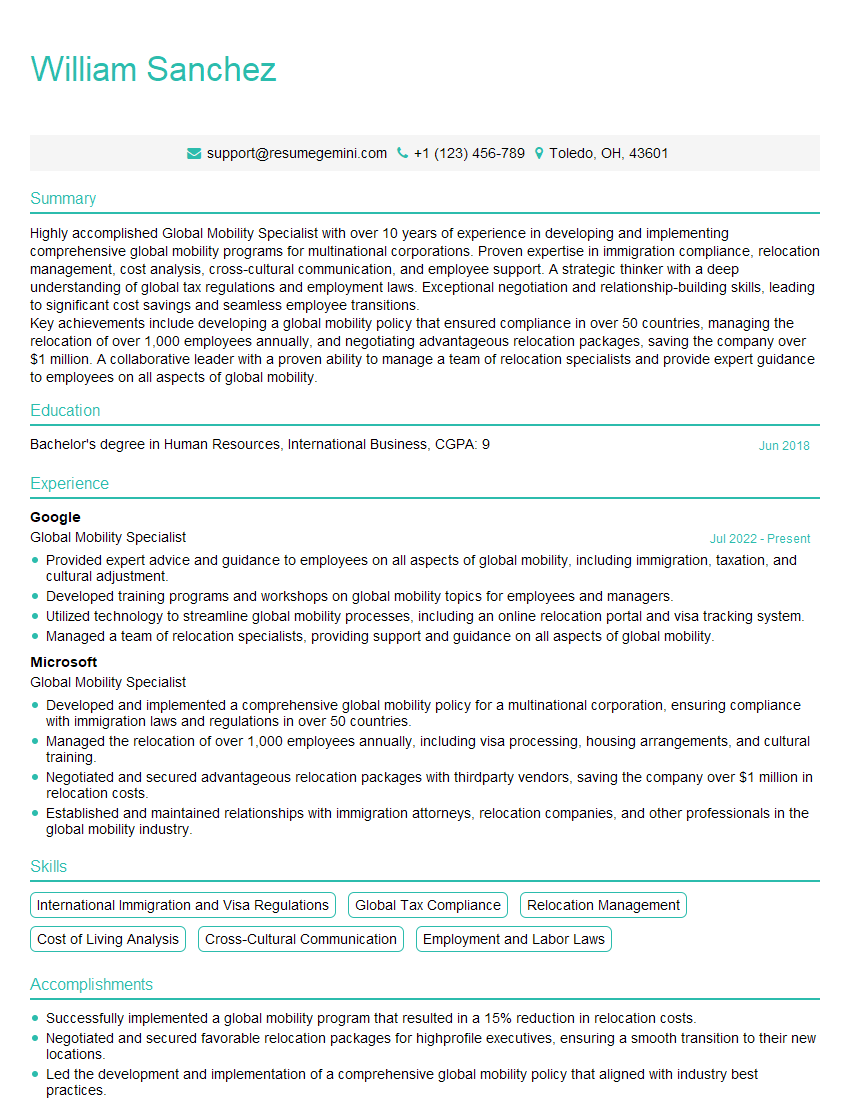
Mastering Interstate Transfer Execution is crucial for career advancement in logistics, supply chain management, and related fields. A strong understanding of these processes demonstrates valuable skills highly sought after by employers. To significantly boost your job prospects, creating an ATS-friendly resume is essential. ResumeGemini offers a powerful platform to build a professional and impactful resume, ensuring your qualifications stand out to recruiters. We even provide examples of resumes tailored specifically to Interstate Transfer Execution roles to help you get started. Take the next step in your career journey – build your best resume with ResumeGemini.
Explore more articles
Users Rating of Our Blogs
Share Your Experience
We value your feedback! Please rate our content and share your thoughts (optional).
What Readers Say About Our Blog
To the interviewgemini.com Webmaster.
Very helpful and content specific questions to help prepare me for my interview!
Thank you
To the interviewgemini.com Webmaster.
This was kind of a unique content I found around the specialized skills. Very helpful questions and good detailed answers.
Very Helpful blog, thank you Interviewgemini team.