Feeling uncertain about what to expect in your upcoming interview? We’ve got you covered! This blog highlights the most important Inverter Installation and Configuration interview questions and provides actionable advice to help you stand out as the ideal candidate. Let’s pave the way for your success.
Questions Asked in Inverter Installation and Configuration Interview
Q 1. Explain the different types of inverters (grid-tied, off-grid, hybrid).
Inverters are the heart of any solar power system, converting DC power from solar panels into AC power usable by household appliances. There are three main types:
- Grid-Tied Inverters: These are the most common type for residential installations. They are connected directly to the electrical grid. They only produce power when the grid is active and typically shut down during a grid outage for safety reasons. Think of them as working in tandem with the grid – feeding excess solar power back into it.
- Off-Grid Inverters: These are independent of the power grid. They are used in locations without grid access and often include battery storage. They directly power your home from the solar panels and stored energy, even during outages. This is like having your own self-sufficient power plant.
- Hybrid Inverters: These combine the functionality of both grid-tied and off-grid systems. They can operate connected to the grid and switch to off-grid operation during outages, using stored battery power. They are the most versatile option, providing both grid backup and grid interaction. This is like having the best of both worlds – grid connectivity when available and independent power when necessary.
The choice depends entirely on your energy needs and the presence (or absence) of a reliable grid connection.
Q 2. Describe the process of sizing an inverter for a specific application.
Sizing an inverter correctly is crucial for optimal system performance and safety. It involves careful calculation based on the expected DC power output from the solar array. Here’s a breakdown:
- Determine Solar Panel Array Output: Calculate the total wattage (kWp) of your solar panels. This information is typically found on the panel’s specifications.
- Consider Future Expansion: Account for potential future additions to your solar array. It’s wiser to slightly oversize the inverter than to undersize it.
- Check Inverter Specifications: Look for the inverter’s maximum input voltage and current ratings. Ensure these are compatible with your solar array’s output.
- Efficiency Considerations: Higher-efficiency inverters offer better power conversion and will improve your overall system output. This results in more energy produced over the lifetime of the system.
- Safety Factors: Always factor in a safety margin (typically 10-15%) to avoid overloading the inverter. This is an important precaution against unexpected issues.
Example: If your solar array produces 5 kWp, you should select an inverter with a capacity of at least 5.5 kWp to 6 kWp, considering future expansion and safety margin. Always consult with a qualified installer to ensure correct sizing.
Q 3. How do you ensure proper grounding and safety during inverter installation?
Proper grounding and safety are paramount during inverter installation. Improper grounding can lead to electrical shocks and fire hazards. Here’s how to ensure it:
- Grounding Rod: Install a dedicated grounding rod according to local electrical codes. This provides a safe path for fault currents to earth.
- Grounding Wire: Connect the grounding rod to the inverter’s grounding terminal using a heavy-gauge copper wire.
- Ground Fault Circuit Interrupter (GFCI): Use GFCI protection at the inverter’s input and output circuits. GFCIs detect ground faults and quickly interrupt the power, preventing shocks.
- Inspection: Ensure all grounding connections are secure and properly insulated. Have the installation inspected by a certified electrician to confirm compliance with codes.
- Disconnect Switches: Install properly rated disconnect switches on both the AC and DC sides of the inverter for safety during maintenance or repairs. This allows for complete power isolation.
Think of grounding like providing an escape route for electricity – ensuring it goes to earth instead of through you.
Q 4. What are the common safety precautions when working with inverters?
Working with inverters requires stringent safety precautions:
- Lockout/Tagout Procedures: Always follow lockout/tagout procedures before working on the inverter or any connected components. This ensures the power is completely isolated before touching anything.
- Personal Protective Equipment (PPE): Wear appropriate PPE, including insulated gloves, safety glasses, and closed-toe shoes. This protects against electrical shocks and other hazards.
- Proper Tools: Use the right tools for the job. Avoid using damaged tools that could cause a short circuit or injury.
- Work Area: Maintain a clean and organized work area. Clear any obstructions that could cause accidents.
- Training: Only qualified and trained personnel should work on inverter installations. Improper handling can be dangerous.
Safety is not just a guideline, it’s a critical part of the process. Think of safety as your most important tool.
Q 5. Explain the process of connecting an inverter to a solar array.
Connecting an inverter to a solar array requires precise and safe procedures:
- Verify Compatibility: Ensure the inverter’s input voltage and current ratings match the solar array’s specifications.
- DC Disconnects: Install DC disconnect switches at both ends of the array wiring.
- Wiring: Use appropriately sized and rated solar cables to connect the panels to the inverter’s DC input terminals. All connections should be properly crimped and protected from weather.
- Polarity: Observe correct polarity when connecting the positive (+) and negative (-) wires. Reverse polarity can damage the inverter.
- Grounding: Securely ground the entire array to the main grounding system.
- Overcurrent Protection: Add overcurrent protection (fuses or circuit breakers) to the DC side of the inverter to prevent damage during faults.
- Wiring Diagram: Follow the manufacturer’s wiring diagram carefully. Each inverter model has its specific connection requirements.
Imagine connecting the solar panels to the inverter as a delicate but crucial handshake. You need to make sure the connection is made properly, securely, and according to specifications.
Q 6. How do you troubleshoot a malfunctioning inverter?
Troubleshooting a malfunctioning inverter requires a systematic approach:
- Check for Error Codes: Most modern inverters display error codes that indicate the nature of the problem. Consult the inverter’s manual to interpret these codes.
- Inspect Wiring and Connections: Carefully examine all wiring and connections for loose wires, damage, or incorrect polarity.
- Check DC Input Voltage: Measure the voltage from the solar array to make sure it’s within the inverter’s operating range.
- Verify AC Output Voltage: Check if the inverter is producing the expected AC voltage. This usually requires a specialized multimeter that can handle high voltage.
- Inspect Circuit Breakers and Fuses: Ensure that all circuit breakers and fuses are not tripped.
- Check for Overheating: Inverters can overheat if poorly ventilated. Ensure adequate airflow.
- Monitor Environmental Factors: Extremely high or low temperatures can affect inverter performance.
- Consult Manufacturer’s Documentation: The manufacturer’s manual often includes comprehensive troubleshooting guides.
Think of troubleshooting like detective work, systematically eliminating possibilities until you find the root cause.
Q 7. What are the key performance indicators (KPIs) for an inverter?
Key Performance Indicators (KPIs) for an inverter help assess its efficiency and effectiveness:
- Efficiency (η): This indicates the percentage of DC power converted into AC power. Higher efficiency means less energy loss.
- Peak Power Output (kWp): The maximum AC power the inverter can produce.
- Maximum Input Voltage and Current: The maximum DC voltage and current the inverter can handle from the solar panels.
- Inverter Round Trip Efficiency (RTE): The energy efficiency of the complete process of converting DC to AC and then back to DC when used with batteries. A higher RTE is better.
- Power Factor (PF): Indicates how efficiently the inverter uses the AC power supplied to the grid. A power factor of 1 is ideal.
- Uptime: The percentage of time the inverter is operational. High uptime is essential for reliable energy generation.
- Mean Time Between Failures (MTBF): A measure of reliability, indicating the average time between failures.
Monitoring these KPIs helps in optimizing system performance and identifying potential problems early on.
Q 8. How do you monitor and maintain an inverter system?
Monitoring and maintaining an inverter system is crucial for ensuring optimal performance and longevity. It involves a multi-faceted approach combining regular inspections, data analysis, and preventative maintenance.
- Regular Inspections: Visually inspect the inverter for any signs of damage, loose connections, overheating, or unusual noises. Check the surrounding environment for potential hazards like debris or excessive vegetation.
- Data Monitoring: Most modern inverters have built-in monitoring capabilities, often accessible through a web interface or mobile app. Monitor key parameters such as AC output voltage and current, DC input voltage and current, operating temperature, and efficiency. Identifying trends or anomalies early on can prevent major issues.
- Preventative Maintenance: This includes cleaning the inverter’s vents and fans to ensure proper cooling. Tightening loose connections and checking grounding are also vital. Consult the manufacturer’s recommended maintenance schedule for specific guidelines on cleaning, inspections, and component replacements (like fan replacements). For example, a dusty inverter can overheat and reduce its efficiency considerably.
- Fault Logging: Many inverters log errors and faults. Regularly reviewing these logs can help identify recurring problems or predict potential failures. A well-maintained log provides invaluable data for troubleshooting.
Think of it like maintaining a car – regular checks and maintenance prevent breakdowns and ensure smooth operation. Consistent monitoring and maintenance of your inverter will significantly extend its lifespan and optimize its energy production.
Q 9. Explain the role of MPPT (Maximum Power Point Tracking) in an inverter.
MPPT, or Maximum Power Point Tracking, is a crucial feature in solar inverters that maximizes the energy harvested from solar panels. Solar panels don’t produce power at a constant rate; their output varies depending on sunlight intensity and temperature. The MPPT algorithm constantly monitors the voltage and current from the solar array and adjusts the inverter’s input to extract the maximum possible power at any given moment.
Imagine a water pump trying to extract the maximum water from a river with varying water flow. The MPPT acts like an intelligent controller, constantly adjusting the pump’s speed to extract the highest volume of water regardless of the river’s flow. Similarly, an MPPT algorithm dynamically adjusts the inverter’s input impedance to optimize energy harvesting from the solar panels.
Without MPPT, the inverter might not be able to extract the full potential of the solar panels, leading to lower energy production. This is especially important in situations with partial shading of the panels, where MPPT can significantly improve performance compared to inverters without this feature.
Q 10. What are the different communication protocols used in inverters (e.g., Modbus, RS485)?
Inverters utilize various communication protocols to interact with other devices and systems. Some common ones include:
- Modbus: A widely used serial communication protocol for industrial devices. It allows for the monitoring and control of inverters through a Modbus RTU (master/slave) or Modbus TCP (networked) configuration. This is essential for integration into building management systems or SCADA systems.
- RS485: A robust serial communication standard often used alongside Modbus RTU. It’s preferred for its ability to transmit data over longer distances and in noisy environments than RS232.
- CAN bus (Controller Area Network): A versatile bus system commonly used in automotive and industrial applications. It offers high speed and reliability for real-time communication.
- Ethernet/TCP/IP: These protocols provide network connectivity for remote monitoring and control through web interfaces or dedicated software. This is essential for large-scale installations or remote diagnostics.
- WiFi: Many modern inverters incorporate Wi-Fi for easy monitoring and control via a mobile app or web portal.
The specific protocol used depends on the inverter model and the requirements of the overall system. Understanding these protocols is critical for seamless integration and effective system management.
Q 11. Describe the process of configuring an inverter for different grid requirements.
Configuring an inverter for different grid requirements is a crucial step in ensuring safe and compliant operation. This process involves several key parameters that need to be set according to local grid codes and regulations.
- Grid Voltage and Frequency: The inverter must be configured to match the grid’s voltage and frequency. Incorrect settings can lead to grid instability or damage to the equipment.
- Grid Synchronization: The inverter needs to synchronize its output with the grid’s waveform to ensure seamless power injection. This often involves precise phase angle and frequency adjustments.
- Power Factor Control: This setting helps maintain the power factor at a specified level, contributing to overall grid stability. Many modern inverters can actively control the power factor to optimize grid performance.
- Anti-Islanding Protection: This is a critical safety feature that prevents the inverter from continuing to operate if the grid fails. It ensures that the inverter will disconnect from the grid automatically to prevent accidents involving utility workers who might be unaware that power is still being delivered.
- Reactive Power Control: Inverters can be configured to provide or absorb reactive power to improve voltage regulation within the grid.
It’s imperative to consult the local grid authority’s regulations and the inverter’s manual to ensure accurate configuration. Failure to do so can lead to grid violations, fines, or equipment damage. The process might involve using a PC software interface to enter these parameters, typically requiring specialized knowledge and calibration tools.
Q 12. How do you test the functionality of an inverter after installation?
Testing the functionality of an inverter after installation is crucial to ensure its proper operation and safety. This involves a series of tests, varying in complexity based on the inverter’s type and the system’s size.
- Visual Inspection: Begin with a thorough visual inspection, checking all connections, wiring, and grounding to ensure they are secure and compliant with safety regulations.
- Input Voltage and Current Measurement: Measure the DC voltage and current from the solar panels to verify that they are within the inverter’s operating range.
- Output Voltage and Current Measurement: Measure the AC voltage and current from the inverter’s output, ensuring they match the grid specifications.
- Power Output Measurement: Measure the total power output of the inverter to verify its performance against its specifications. This is done using a power analyzer.
- Grid Synchronization Test: Verify that the inverter’s output is properly synchronized with the grid. Specialized instruments may be needed for this test, depending on grid code requirements.
- Fault Detection Test: Simulate different fault conditions to check the inverter’s protection mechanisms and its responses to those faults.
- Safety Checks: Perform all necessary safety tests to verify that the system complies with relevant safety standards.
Thorough testing minimizes risks and ensures the system is running safely and efficiently. This step is vital for compliance and long-term reliable operation. Documentation of test results is critical for future reference and troubleshooting.
Q 13. What are the common causes of inverter failure?
Inverter failures can stem from various causes, often linked to environmental conditions, component wear and tear, or improper installation and maintenance.
- Overheating: Excessive heat due to inadequate ventilation, dust accumulation, or high ambient temperatures can damage components and shorten the inverter’s lifespan.
- Component Failures: Capacitors, transistors, and other components can fail over time due to wear and tear. This is often accelerated by high temperatures or voltage surges.
- Grounding Issues: Poor grounding can create electrical hazards and damage the inverter’s internal circuitry.
- Voltage Surges and Spikes: Sudden voltage fluctuations can severely damage sensitive inverter components.
- Moisture Ingress: Exposure to moisture or damp conditions can cause corrosion and short circuits.
- Software Glitches: Software bugs or firmware issues can lead to malfunctions or unexpected shutdowns.
- DC Input Issues: Problems with solar panels such as shading, mismatched strings, or faulty panels lead to overcurrent conditions and inverter failure.
Preventative maintenance, proper installation techniques, and regular inspections are essential to minimize the risk of inverter failures.
Q 14. How do you handle different inverter fault codes?
Handling inverter fault codes requires a systematic approach that combines an understanding of the specific codes, troubleshooting techniques, and safety protocols.
Each inverter manufacturer employs a unique set of fault codes, so consulting the inverter’s manual is crucial. The manual usually provides a detailed description of each code and possible causes.
Troubleshooting Framework:
- Identify the Fault Code: Locate the fault code displayed on the inverter’s screen or through its communication interface.
- Consult the Manual: Refer to the inverter’s manual to understand the meaning of the fault code and potential causes.
- Visual Inspection: Inspect the inverter and its connections for any obvious problems, such as loose wires, overheating components, or signs of damage.
- Data Analysis: Review the inverter’s performance data to identify trends or anomalies that might have contributed to the fault.
- Systematic Troubleshooting: Based on the manual and the visual inspection, systematically check the various components and connections to pinpoint the problem. For example, if the code suggests a ground fault, then test all grounding connections thoroughly.
- Component Replacement: If a faulty component is identified, replace it with an equivalent part, ensuring compatibility and safety regulations are met.
- Professional Assistance: If the problem cannot be resolved through basic troubleshooting, consider contacting a qualified electrician or inverter technician.
Safety is paramount. Always disconnect the inverter from the power source before performing any maintenance or repairs. Handling fault codes effectively requires a combination of technical skills, a methodical approach, and a respect for safety.
Q 15. Explain the concept of string sizing for solar inverters.
String sizing in solar inverters refers to the optimal configuration of photovoltaic (PV) modules connected in series to form a ‘string’. The goal is to maximize energy harvest while staying within the inverter’s input voltage and current limits. Think of it like organizing a team – you want the right number of players with compatible skill sets to achieve peak performance.
Improper string sizing can lead to underperformance. If strings are too short, the inverter won’t utilize its full capacity. If strings are too long, the voltage might exceed the inverter’s maximum input, leading to potential damage or shutdown. The process involves considering factors such as module voltage and current ratings, number of modules, string length, and ambient temperature. We use specialized software or calculations to determine the ideal string configuration for a given inverter and site conditions. For example, a 10kW inverter might optimally handle 10 to 12 PV modules per string, depending on their individual specifications.
A common challenge is dealing with shading. Even a small amount of shading on one module in a string can significantly reduce the power output of the entire string. In such cases, we might use techniques like microinverters or power optimizers to mitigate the shading losses and maximize individual panel output.
Career Expert Tips:
- Ace those interviews! Prepare effectively by reviewing the Top 50 Most Common Interview Questions on ResumeGemini.
- Navigate your job search with confidence! Explore a wide range of Career Tips on ResumeGemini. Learn about common challenges and recommendations to overcome them.
- Craft the perfect resume! Master the Art of Resume Writing with ResumeGemini’s guide. Showcase your unique qualifications and achievements effectively.
- Don’t miss out on holiday savings! Build your dream resume with ResumeGemini’s ATS optimized templates.
Q 16. Describe the difference between single-phase and three-phase inverters.
Single-phase inverters are suited for residential applications and smaller commercial systems, converting DC power from solar panels to single-phase AC power (120V or 240V depending on your region). Three-phase inverters are used in larger commercial and industrial projects, transforming DC power to three-phase AC power (208V, 240V, or 480V). The fundamental difference lies in the type of AC power they produce, mirroring the type of electrical service available at the location.
Think of it like comparing a single water pipe (single-phase) to three pipes (three-phase). Three-phase systems can handle larger loads more efficiently, making them ideal for high-power applications. Single-phase systems are simpler and often more cost-effective for smaller installations. For example, a typical house would use a single-phase inverter, while a factory would require a three-phase inverter to power its machinery.
Q 17. What are the advantages and disadvantages of different inverter technologies?
Several inverter technologies exist, each with advantages and disadvantages. Here are some of the most common:
- String Inverters: These are the most common and cost-effective. They are simple to install and maintain, but they are susceptible to shading issues as a single shaded panel impacts the entire string.
- Microinverters: Each panel has its own microinverter, maximizing energy harvest even with partial shading. They are more expensive than string inverters and can be complex to install.
- Power Optimizers: These sit between panels and the string inverter, providing similar benefits to microinverters but at a lower cost. They are a good compromise between string inverters and microinverters.
- Hybrid Inverters: These inverters integrate solar power with battery storage, offering improved energy independence and grid resilience. More expensive upfront, but offer longer-term energy savings and independence.
The choice of inverter technology depends on factors such as budget, system size, shading concerns, and energy storage needs. For instance, if cost is the primary factor, a string inverter might be sufficient. But if there is significant shading, microinverters or power optimizers would be more appropriate. If energy storage is required, a hybrid inverter is needed.
Q 18. How do you ensure compliance with relevant safety standards during installation?
Safety is paramount during inverter installation. Compliance with relevant standards (like NEC, IEC, or local regulations) is essential. These standards cover aspects like grounding, overcurrent protection, electrical isolation, arc flash mitigation, and proper wiring techniques. We adhere to these by employing several strategies:
- Lockout/Tagout Procedures: De-energizing equipment before working on it prevents accidental shocks.
- Grounding and Bonding: Ensuring proper grounding protects against electrical shocks and prevents voltage surges.
- Overcurrent Protection: Installing appropriate fuses or circuit breakers protects against short circuits and overloads.
- Appropriate PPE: Always using Personal Protective Equipment (PPE) such as insulated gloves and safety glasses.
- Inspections and Testing: Thoroughly inspecting wiring and connections, then performing insulation resistance and continuity tests to ensure proper function and safety.
For instance, before connecting the inverter to the array, we meticulously verify the ground connection and perform insulation resistance tests. Regular inspections and maintenance help us anticipate and prevent potential hazards. Documentation of all safety measures undertaken is also critical for compliance.
Q 19. Explain the process of integrating an inverter with battery storage systems.
Integrating an inverter with battery storage involves connecting the battery system to the inverter’s designated input/output ports. The process varies depending on the inverter and battery system’s specifications, however the general steps remain similar. The inverter acts as an interface, managing the flow of energy between the solar panels, the batteries, and the grid.
This usually involves configuring parameters within the inverter’s communication interface, specifying battery characteristics (voltage, capacity, chemistry), and establishing charging and discharging schedules. We must ensure compatibility between the inverter and battery system; not all inverters are compatible with all batteries. Some inverters might need specific firmware updates to support battery integration. The communication protocol between the battery and inverter, such as Modbus or CAN bus, must be properly configured.
Once the physical and software configurations are completed, the system undergoes testing to verify proper operation, battery charging, and energy discharge. Proper sizing is crucial; the battery should be able to handle the expected energy storage needs.
Q 20. How do you troubleshoot communication problems between an inverter and a monitoring system?
Troubleshooting communication problems between an inverter and a monitoring system requires a systematic approach. The first step is to check the most common factors:
- Physical Connections: Verify that all cables are securely connected and that there are no broken or damaged wires. A simple loose connection can disrupt communication.
- Network Settings: Confirm correct IP addresses, subnet masks, and gateway settings. Inconsistencies in network configurations are a frequent cause of communication failure.
- Firewall Settings: Check that firewalls aren’t blocking communication between the inverter and the monitoring system. Temporary disabling (with caution) can help diagnose firewall related issues.
- Communication Protocol: Ensure that both the inverter and monitoring system are using the same communication protocol (e.g., Modbus, Ethernet, or Wi-Fi). Check for protocol mismatch.
- Inverter Firmware: Outdated firmware can create incompatibility. Check for firmware updates on the inverter manufacturer’s website.
If the issue persists after checking these, you may need to use a communication tester or consult the inverter and monitoring system’s documentation for more advanced troubleshooting steps. Using a network cable tester helps determine if there is a network cable problem. Sometimes a system reboot is all that is required.
Q 21. Describe the importance of proper ventilation for inverters.
Proper ventilation is crucial for inverter operation and longevity. Inverters generate heat during operation, and insufficient ventilation can lead to overheating, reduced efficiency, and potential damage. Think of it like a car engine – it needs airflow to prevent overheating. An overheated inverter may shut down or even fail completely, interrupting solar energy production.
We ensure adequate ventilation by following manufacturer’s recommendations. This includes installing inverters in well-ventilated areas, maintaining sufficient clearance around the unit for airflow, and possibly using additional cooling measures if needed. Factors such as ambient temperature, inverter size, and installation location all influence the ventilation requirements. In extreme temperatures, we may need to employ external fans to assist with cooling. Regular cleaning to remove dust and debris from the ventilation openings also improves cooling efficiency and prolongs the lifespan of the inverter.
Q 22. Explain the role of surge protection devices (SPDs) in inverter installations.
Surge Protection Devices (SPDs), also known as surge arresters, are crucial in inverter installations to safeguard the equipment from voltage spikes and surges. These transients, often caused by lightning strikes or switching events on the power grid, can instantly damage sensitive electronics within the inverter, leading to costly repairs or complete system failure.
Think of an SPD as a lightning rod for your inverter. It diverts excess voltage to ground, preventing it from reaching the delicate components inside. They are typically installed on both the AC and DC sides of the inverter, offering comprehensive protection. A properly sized and installed SPD is a vital investment that significantly extends the lifespan and reliability of your inverter system.
- AC Side SPD: Protects against surges originating from the utility grid.
- DC Side SPD: Protects against surges stemming from solar panels, especially during lightning storms.
For example, during a severe thunderstorm, a nearby lightning strike could induce a massive voltage surge on the power lines. Without an SPD, this surge could fry the inverter’s control circuitry. However, with a properly functioning SPD, the surge is safely diverted to ground, leaving the inverter unharmed.
Q 23. How do you handle emergency situations during inverter installation or maintenance?
Emergency situations during inverter installation or maintenance require a calm, methodical approach, prioritizing safety above all else. My response depends on the nature of the emergency. For example:
- Electrical Shock: Immediate priority is to disconnect the power source completely and ensure the safety of personnel involved. Then, seek immediate medical attention for anyone affected.
- Fire: Immediately evacuate the area and call emergency services. Attempt to shut off the power at the main breaker only if it’s safe to do so. Never approach a fire unless trained to do so.
- Equipment Malfunction: Shut down the system according to the manufacturer’s instructions. Isolate the affected component and carefully assess the problem before attempting any repairs or troubleshooting. If unsure, consult the manufacturer’s technical support.
In all cases, thorough documentation of the incident, including the time, location, circumstances, and actions taken, is essential. This documentation assists in future incident analysis and prevention measures. Safety is paramount – if in doubt, always err on the side of caution and contact qualified professionals for assistance.
Q 24. What is the importance of proper documentation during and after installation?
Proper documentation is the cornerstone of a successful and maintainable inverter installation. It ensures accountability, simplifies troubleshooting, and facilitates future upgrades or replacements. This includes:
- Pre-installation survey: Detailed site assessment, including electrical drawings, system specifications, and any potential challenges.
- Installation records: Detailed logs of all components used, wiring diagrams, connection points, and any deviations from the original plan.
- Testing and commissioning reports: Documentation of all tests performed during and after installation, including performance data and compliance with relevant standards.
- As-built drawings: Updated drawings reflecting the actual installation. This is crucial for future maintenance or upgrades.
- Warranty information: Copies of all warranties for the inverter and related components.
Imagine trying to troubleshoot a faulty inverter years later without proper documentation. It’s a nightmare! Comprehensive records save time, money, and prevent unnecessary headaches down the line. It also protects both the installer and the client from disputes and ensures warranty claims can be processed effectively.
Q 25. What software or tools are you familiar with for configuring and monitoring inverters?
My experience encompasses a range of software and tools used for configuring and monitoring inverters. This includes:
- Manufacturer-specific software: Most inverter manufacturers provide proprietary software for configuring settings, monitoring performance, and troubleshooting issues. Examples include SMA Sunny Portal, SolarEdge Monitoring Portal, and Fronius Solar.web. These tools often offer remote monitoring capabilities.
- SCADA systems: Supervisory Control and Data Acquisition (SCADA) systems provide comprehensive monitoring and control of multiple inverters in larger installations. These often integrate with other building management systems.
- Data logging and analysis software: Tools like PVsyst or similar software packages are used to analyze performance data, assess system efficiency, and optimize operations.
- Multimeters and clamp meters: Essential for testing voltage, current, and continuity during installation and troubleshooting.
I am proficient in using these tools to analyze data, diagnose problems, and ensure optimal system performance. The selection of specific software depends on the inverter brand and the scale of the project. For instance, a small residential installation might only require the manufacturer’s dedicated software, while a large commercial project would leverage a SCADA system.
Q 26. Describe your experience with different brands of inverters.
I have extensive experience with a variety of inverter brands, including SMA, SolarEdge, Fronius, Enphase, and Huawei. My experience spans different inverter types, such as string inverters, microinverters, and power optimizers. Each brand has its unique characteristics, strengths, and weaknesses.
For example, SMA inverters are known for their robust design and advanced features, while SolarEdge stands out with its power optimizer technology and sophisticated monitoring capabilities. Fronius inverters are often praised for their user-friendly interfaces. My experience allows me to select the best inverter for a specific application based on factors such as budget, system size, and specific customer requirements.
I’m comfortable with the intricacies of each brand’s communication protocols, configuration settings, and troubleshooting techniques, ensuring seamless integration into different system designs.
Q 27. Explain your understanding of NEC (National Electrical Code) requirements for inverter installations.
The National Electrical Code (NEC) provides comprehensive guidelines for safe and efficient electrical installations, including inverter systems. My understanding of NEC requirements for inverter installations is thorough and includes:
- Grounding and bonding: Proper grounding and bonding are crucial to ensure safety and prevent electrical shocks. NEC Article 690 specifically addresses the requirements for photovoltaic systems.
- Overcurrent protection: Appropriate overcurrent protection devices, such as circuit breakers and fuses, are required to protect the inverter and other system components from overloads and short circuits.
- Wiring methods and materials: NEC dictates the type of wiring, conduits, and other materials that can be used in inverter installations to ensure safety and longevity.
- Disconnection means: Easily accessible disconnection means are required to allow for safe isolation of the inverter and the PV array.
- Clearances and spacing: Adequate clearances and spacing are necessary to prevent overheating and ensure safe access for maintenance.
Compliance with the NEC is not just a legal requirement; it’s essential for ensuring the safety and reliability of the entire system. Ignoring these guidelines can lead to fire hazards, electrical shocks, and system malfunctions. I always ensure that all my installations strictly adhere to the latest NEC standards and local regulations.
Q 28. How do you stay updated with the latest technologies and best practices in inverter installation and configuration?
Staying current in the rapidly evolving field of inverter technology is crucial. I utilize several methods to remain updated on the latest technologies and best practices:
- Industry publications and journals: I regularly read trade publications and journals, such as Solar Power World, Renewable Energy Magazine, and IEEE Xplore, to stay informed about new product releases, technological advancements, and industry best practices.
- Manufacturer training and certifications: I participate in training programs and obtain certifications offered by leading inverter manufacturers. This provides hands-on experience with the latest products and technologies.
- Professional development courses and seminars: I attend workshops and conferences to learn about new technologies, regulations, and best practices from industry experts.
- Online resources and forums: I utilize online resources, such as websites and forums dedicated to solar energy, to access the latest information and engage with other professionals in the field.
- Networking with industry professionals: I actively participate in industry events and network with other professionals to exchange knowledge and stay abreast of the latest developments.
Continuous learning ensures that I can provide clients with the most up-to-date and effective solutions, utilizing the latest and safest technologies. This commitment to professional development directly benefits my clients by ensuring that their inverter systems are optimized for performance, reliability, and longevity.
Key Topics to Learn for Inverter Installation and Configuration Interview
- Understanding Inverter Types: Explore different inverter technologies (e.g., grid-tied, off-grid, hybrid) and their applications. Consider the pros and cons of each type and their suitability for various installations.
- Safety Procedures and Regulations: Mastering safe working practices, including lockout/tagout procedures, electrical safety codes, and relevant industry standards is crucial. Be prepared to discuss your experience with these protocols.
- Wiring Diagrams and Schematics: Demonstrate your ability to interpret and work from complex wiring diagrams. Practice tracing circuits and understanding the flow of power within an inverter system.
- Installation Techniques: Be ready to discuss various installation methods, including mounting, grounding, and connecting inverters to solar panels, batteries (if applicable), and the electrical grid. Explain best practices for ensuring optimal performance and longevity.
- Configuration and Programming: Showcase your knowledge of configuring inverters using software or physical controls. This includes setting parameters such as MPPT tracking, voltage and frequency settings, and communication protocols.
- Troubleshooting and Diagnostics: Discuss common problems encountered during installation and configuration, such as faulty connections, communication errors, or performance issues. Detail your approaches to identifying and resolving these issues efficiently.
- Monitoring and Maintenance: Explain how to monitor inverter performance, interpret data from monitoring systems, and perform routine maintenance tasks to ensure optimal system operation.
- Power Calculations and System Sizing: Demonstrate your ability to calculate power requirements, select appropriately sized inverters, and design efficient solar power systems.
Next Steps
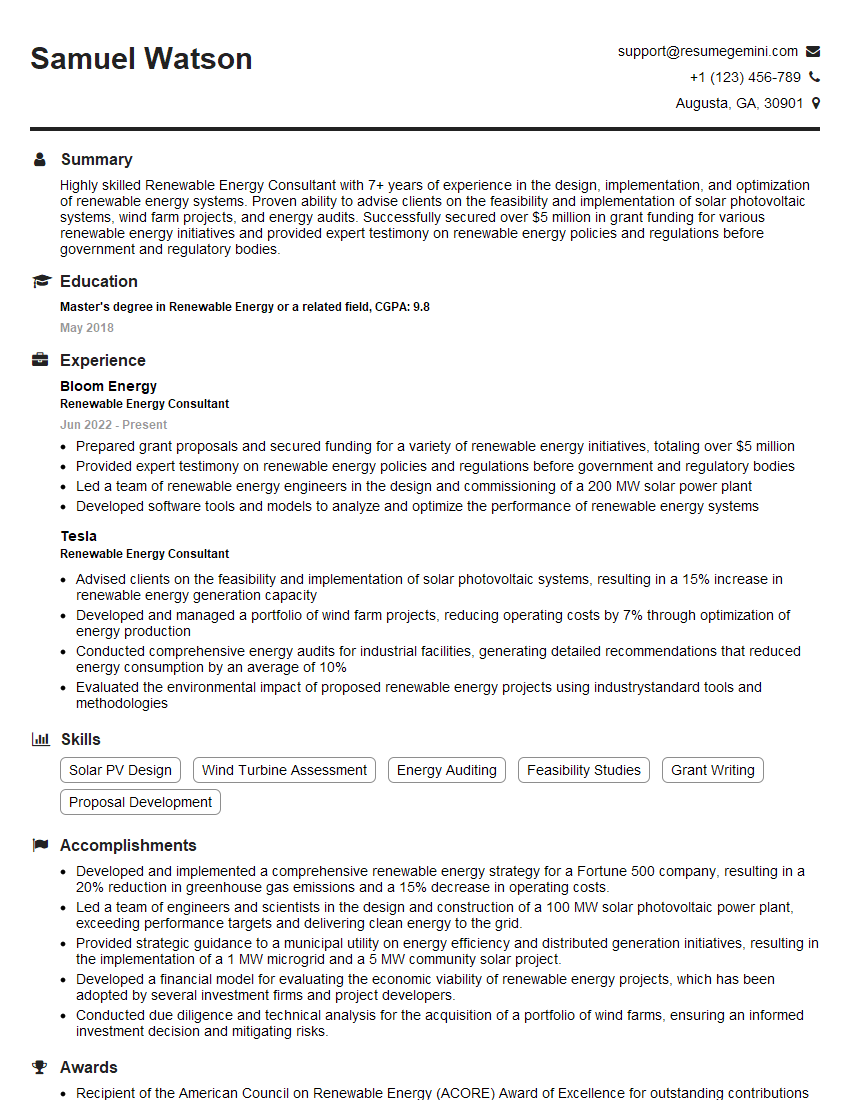
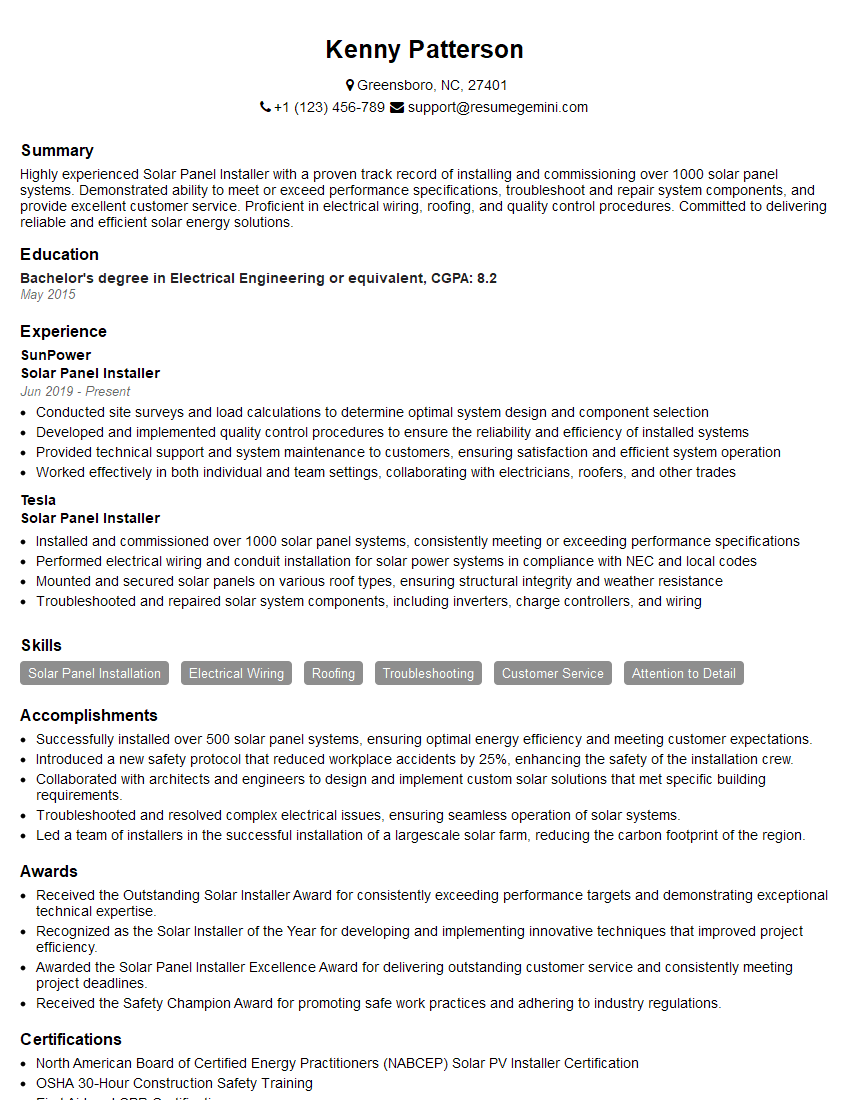
Mastering Inverter Installation and Configuration opens doors to exciting career opportunities in the rapidly growing renewable energy sector. To maximize your chances of landing your dream job, a well-crafted resume is essential. An ATS-friendly resume ensures your application gets noticed by recruiters and hiring managers. We strongly encourage you to leverage ResumeGemini, a trusted resource for building professional and impactful resumes. ResumeGemini provides examples of resumes tailored to Inverter Installation and Configuration, helping you present your skills and experience effectively. Invest time in creating a compelling resume – it’s your first impression and a crucial step in your career journey.
Explore more articles
Users Rating of Our Blogs
Share Your Experience
We value your feedback! Please rate our content and share your thoughts (optional).
What Readers Say About Our Blog
To the interviewgemini.com Webmaster.
Very helpful and content specific questions to help prepare me for my interview!
Thank you
To the interviewgemini.com Webmaster.
This was kind of a unique content I found around the specialized skills. Very helpful questions and good detailed answers.
Very Helpful blog, thank you Interviewgemini team.