The right preparation can turn an interview into an opportunity to showcase your expertise. This guide to ISO 90012015 Knowledge interview questions is your ultimate resource, providing key insights and tips to help you ace your responses and stand out as a top candidate.
Questions Asked in ISO 90012015 Knowledge Interview
Q 1. Explain the key principles of ISO 9001:2015.
ISO 9001:2015 is built upon seven key principles that guide organizations in establishing and maintaining an effective Quality Management System (QMS). These principles aren’t just suggestions; they’re the foundation for a robust and successful system. Think of them as the pillars holding up a strong house. Let’s explore each one:
- Customer focus: Understanding and meeting customer needs and expectations is paramount. This means actively seeking feedback, analyzing market trends, and continuously improving products and services to exceed customer satisfaction.
- Leadership: Leaders at all levels need to be actively involved in setting the QMS direction, creating a culture of quality, and providing the necessary resources. It’s about leading by example.
- Engagement of people: Empowering employees at all levels to contribute to the QMS is crucial. This involves providing training, fostering open communication, and recognizing contributions.
- Process approach: Managing processes effectively is key. This involves identifying, planning, monitoring, and controlling processes to ensure consistent outputs and meet objectives. Think of it like a well-oiled machine.
- Improvement: Continuous improvement is an ongoing cycle, not a one-time event. This involves identifying areas for improvement, implementing changes, and monitoring their effectiveness. It’s about always striving to be better.
- Evidence-based decision making: Decisions should be based on data and analysis, not gut feeling. This involves collecting and analyzing data to track performance, identify trends, and make informed decisions.
- Relationship management: Understanding and managing relationships with suppliers and other stakeholders is important for the overall success of the QMS. This creates a collaborative environment and ensures consistent quality across the supply chain.
Applying these principles ensures a proactive and effective QMS, leading to improved customer satisfaction, reduced costs, and increased efficiency.
Q 2. Describe the Plan-Do-Check-Act (PDCA) cycle and its application in a QMS.
The Plan-Do-Check-Act (PDCA) cycle is a fundamental methodology for continuous improvement. It’s a cyclical process, meaning it repeats continuously. Imagine it as a wheel constantly turning, driving continuous improvement. Let’s break down each phase:
- Plan: This stage involves identifying opportunities for improvement, setting objectives, and developing a plan to achieve those objectives. This might involve analyzing customer feedback, identifying process bottlenecks, or defining specific performance goals.
- Do: Here, the plan is implemented. This could involve testing a new process, training employees on a new procedure, or launching a new product or service.
- Check: This stage involves monitoring the results of the implemented plan and measuring its effectiveness against the objectives set in the planning stage. Data collection and analysis are crucial here. This might involve tracking key performance indicators (KPIs), gathering customer feedback, or conducting internal audits.
- Act: Based on the findings from the Check stage, this phase involves making adjustments and improvements to the process. This might include standardising successful changes, correcting deviations from the plan, or refining processes to improve efficiency.
In a QMS, the PDCA cycle is applied at all levels, from individual processes to the overall management system. For example, a company might use PDCA to improve its customer complaint handling process, reduce product defects, or enhance employee training programs.
Q 3. What is the difference between corrective and preventive action?
While both Corrective Action (CA) and Preventive Action (PA) aim to prevent recurrence, they address different situations:
- Corrective Action (CA): This addresses a problem that has already occurred. It’s about fixing the existing problem and preventing it from happening again in the same instance. Think of it like fixing a flat tire – you’re addressing the immediate problem and making sure it doesn’t happen again on that specific tire. A root cause analysis is essential.
- Preventive Action (PA): This focuses on preventing problems before they occur. It’s proactive, identifying potential problems and implementing measures to prevent them. Think of it like regularly rotating your tires – you’re proactively preventing future flat tires by addressing potential wear and tear.
Example: Let’s say a company experiences a production line breakdown due to machine malfunction (the problem). The corrective action would be to repair the machine and get the production line running again. The preventive action would be to implement a regular maintenance schedule to avoid future malfunctions.
Q 4. How does risk-based thinking influence the implementation of ISO 9001:2015?
Risk-based thinking is integral to ISO 9001:2015. It shifts the focus from simply reacting to problems to proactively identifying and managing potential risks and opportunities. Instead of waiting for issues to arise, organizations anticipate potential challenges and develop strategies to mitigate them.
Influence on Implementation:
- Context of the organization: Risk-based thinking helps define the organization’s context, including internal and external factors that could impact the QMS.
- Establishing objectives: It guides the setting of objectives, ensuring they are aligned with the organization’s risk profile.
- Resource allocation: It helps determine where to allocate resources effectively to address the most significant risks.
- Process design and control: Risk assessment informs the design and control of processes, ensuring they are resilient to potential disruptions.
- Continuous improvement: Risk-based thinking facilitates continuous improvement by allowing organizations to monitor and adjust their response to changing risk landscapes.
Example: A company manufacturing medical devices might identify the risk of contamination as a major concern. Through risk-based thinking, they would implement strict hygiene protocols, regular equipment sterilization, and rigorous quality checks to mitigate this risk.
Q 5. Explain the concept of ‘context of the organization’ as defined in ISO 9001:2015.
The ‘context of the organization’ refers to the internal and external issues that can affect the organization’s ability to achieve the intended outcome of its QMS. It’s essentially understanding the environment in which the organization operates.
Internal Factors: These include the organization’s structure, resources, capabilities, culture, and values. For example, the skills and experience of the workforce, the availability of technology, and the organizational culture all contribute to the internal context.
External Factors: These include market conditions, legal requirements, competitor activities, technological advancements, and social trends. For example, changing customer demands, new regulations, or economic downturns are all external factors to consider.
Understanding the context is crucial because it allows organizations to tailor their QMS to their specific circumstances and manage risks and opportunities effectively. It’s like a tailor making a suit; they must consider the individual’s body shape and preferences to create a perfect fit.
Q 6. Describe the requirements for documenting the quality management system.
ISO 9001:2015 doesn’t prescribe a specific documentation format but emphasizes the need for documented information to demonstrate the effectiveness of the QMS. The documentation must be appropriate for the size and complexity of the organization and the nature of its operations. It shouldn’t be overly burdensome but should clearly demonstrate compliance.
Types of Documented Information:
- Quality manual: A high-level overview of the QMS.
- Procedures: Detailed instructions for carrying out specific processes.
- Records: Evidence of activities and results.
- Forms: Standardized documents used for data collection.
- Work instructions: Step-by-step instructions for specific tasks.
Key Requirements:
- Identification and control: Documented information must be identified, controlled, and readily accessible.
- Protection: Documented information must be protected against unintended changes.
- Retrieval: Documented information must be easily retrievable when needed.
- Retention: Documented information must be retained for the appropriate time.
- Disposition: There should be a plan for discarding outdated or obsolete information.
The emphasis is on ensuring the documented information is fit for purpose and supports the effective operation of the QMS. Overly detailed or unnecessary documentation should be avoided.
Q 7. What are the requirements for internal audits under ISO 9001:2015?
Internal audits are a crucial element of ISO 9001:2015, providing an objective evaluation of the QMS’s effectiveness. They’re not just a box-ticking exercise but a valuable tool for continuous improvement. The requirements are multifaceted and must be approached systematically:
Planning: A plan should outline the scope, frequency, and methodology of audits, identifying areas to be audited and the auditors involved. It should also specify the criteria and methods to be used.
Conducting the audit: Audits should be conducted by competent and objective individuals. They should involve reviewing documented information, observing activities, and interviewing personnel. Auditors should carefully gather evidence to support their findings.
Reporting: Audit findings, including both strengths and weaknesses, should be documented in a formal report. This report should also identify any nonconformities observed.
Follow-up: Management should review audit findings and take appropriate actions to address any nonconformities. This might involve corrective or preventive actions to prevent recurrence of observed issues.
Competence: Auditors should be competent and trained to conduct audits effectively. They need to understand the requirements of ISO 9001:2015 and the specific processes being audited.
Objectivity: It’s crucial for auditors to maintain objectivity and impartiality during the audit process. They should be free from bias and report their findings fairly and accurately.
Regularly scheduled internal audits, coupled with corrective and preventive actions, help maintain the efficacy of the QMS and ensure that the organization continually meets the specified quality objectives.
Q 8. How do you ensure the effectiveness of the QMS?
Ensuring the effectiveness of a Quality Management System (QMS) is paramount. It’s not enough to simply have a documented system; it needs to be actively working to improve processes and achieve organizational objectives. This is achieved through a combination of approaches.
- Regular Internal Audits: These audits objectively evaluate the QMS’s conformity to the ISO 9001:2015 standard and the organization’s own documented procedures. Findings are documented, corrective actions are implemented, and effectiveness is verified. For instance, we might audit the calibration process of our measuring equipment to ensure accuracy and reliability.
- Management Review: A high-level management review critically examines the QMS’s performance, effectiveness, and suitability. This involves analyzing key performance indicators (KPIs) to identify areas for improvement. We discuss trends, customer feedback, and process performance data, making data-driven decisions. This is often a monthly or quarterly activity, depending on the organization’s complexity.
- Monitoring and Measurement: Continuously monitoring and measuring key processes against established metrics provides essential data on system performance. This could include tracking customer satisfaction scores, defect rates, or lead times. Identifying trends here helps proactively address issues before they become major problems.
- Corrective and Preventive Actions (CAPA): A robust CAPA process is essential. This involves identifying the root cause of nonconformities or potential issues and implementing actions to prevent recurrence. We use a structured approach, including root cause analysis tools like the 5 Whys, to ensure thoroughness. For example, if a product defect occurs, we’d trace it back to its origin, implement corrections, and prevent similar issues in the future.
- Continuous Improvement: This is the core principle of ISO 9001:2015. The QMS should be a dynamic system that constantly seeks improvement. This is achieved through various improvement methodologies like Plan-Do-Check-Act (PDCA) and Kaizen.
By systematically implementing these measures, we ensure our QMS is not just a set of documents but a living, breathing system that drives continuous improvement and consistently meets customer requirements.
Q 9. Explain the role of management review in maintaining the QMS.
The management review is a crucial mechanism for maintaining and improving the QMS. It’s a high-level, systematic examination of the QMS’s performance and effectiveness. It provides a platform for top management to review the overall health and direction of the QMS.
- Evaluating Performance: The management review assesses the effectiveness of the QMS in meeting objectives, including customer satisfaction, process performance, and resource allocation. We typically review key performance indicators (KPIs) and analyze trends over time.
- Identifying Opportunities for Improvement: The review process systematically examines areas for improvement within the QMS. This might involve evaluating the effectiveness of existing processes, identifying resource gaps, or assessing compliance with relevant regulations.
- Ensuring Continual Improvement: A key goal of the management review is to ensure continual improvement of the QMS. By identifying areas for improvement, the review process drives the implementation of corrective and preventive actions.
- Resource Allocation: The review provides a strategic perspective for resource allocation. Based on performance data and identified opportunities, management can make informed decisions on where to invest resources to optimize the QMS.
- Addressing Customer Needs: Management reviews consider customer feedback and expectations, ensuring the QMS remains aligned with market demands.
In essence, the management review ensures the QMS remains relevant, effective, and capable of delivering consistent results and driving continual improvement. It acts as a compass, guiding the QMS towards strategic objectives.
Q 10. Describe your experience with conducting management reviews.
In my previous role at [Previous Company Name], I played a key role in conducting management reviews. We held quarterly reviews, employing a structured agenda and employing data visualization tools like dashboards to present performance data. This ensured transparency and facilitated productive discussions.
My responsibilities included:
- Data Gathering and Analysis: Collecting and analyzing data from various sources, including internal audits, customer feedback, and process performance metrics.
- Agenda Preparation and Facilitation: Preparing a comprehensive agenda that covered all necessary aspects of the QMS and facilitating effective discussions among senior management.
- Documentation and Reporting: Documenting the review’s findings, actions, and responsibilities, ensuring clear and concise communication of outcomes.
- Follow-up on Actions: Tracking the progress of implemented actions from previous reviews and ensuring timely completion.
A memorable instance was when we identified a significant increase in customer complaints related to a specific product line. The management review helped us pinpoint the root cause – a newly implemented process that lacked sufficient validation. We implemented corrective actions, including retraining staff and refining the process, resolving the issue and preventing future recurrence. This experience underscored the effectiveness of the management review in proactively addressing potential problems.
Q 11. How would you address nonconformities identified during an audit?
Addressing nonconformities identified during an audit requires a systematic approach, following the principles of corrective and preventive action (CAPA). This is a crucial part of maintaining the effectiveness of the QMS. Here’s a step-by-step approach:
- Identify and Document the Nonconformity: Precisely document each nonconformity, including its location, nature, severity, and potential impact.
- Root Cause Analysis: Employ root cause analysis techniques (e.g., 5 Whys, Fishbone Diagram) to determine the underlying cause(s) of the nonconformity. Avoid focusing solely on symptoms.
- Develop Corrective Actions: Formulate specific, measurable, achievable, relevant, and time-bound (SMART) corrective actions to address the identified root causes. This might include process improvements, staff training, or equipment upgrades.
- Implement Corrective Actions: Execute the defined corrective actions meticulously, ensuring proper documentation at each stage.
- Verification of Corrective Actions: Verify the effectiveness of the implemented corrective actions. This might involve re-auditing the affected area or monitoring relevant KPIs.
- Preventive Actions: Consider and implement preventive actions to prevent similar nonconformities from recurring in the future. This is a proactive measure that adds robustness to the system.
- Documentation and Communication: Thoroughly document all aspects of the CAPA process, including the nonconformity, root cause analysis, corrective and preventive actions, and verification results. Ensure appropriate communication to relevant stakeholders.
Using this structured approach, we can ensure that the root causes of nonconformities are addressed effectively, preventing recurrence and enhancing the overall effectiveness of the QMS. For example, if an audit reveals inadequate training for a particular machine, the corrective action would be providing updated training to all operators, and a preventive action could be a more robust training program to prevent future skill gaps.
Q 12. Explain the concept of continual improvement in the context of ISO 9001:2015.
Continual improvement is the heart of ISO 9001:2015. It’s not a one-time event but an ongoing process of enhancing the QMS’s effectiveness. It’s about proactively seeking opportunities to improve processes, products, and services to better meet customer needs and organizational objectives.
The PDCA cycle (Plan-Do-Check-Act) is a fundamental tool for continual improvement:
- Plan: Identify an area for improvement, define objectives, and develop a plan for implementing changes.
- Do: Implement the planned changes and monitor their impact.
- Check: Evaluate the results of the changes and identify any necessary adjustments.
- Act: Take action to standardize successful changes and implement corrective actions for any shortcomings.
Continual improvement also involves utilizing data analysis, customer feedback, and internal audits to identify areas for improvement. In practice, this could look like analyzing defect rates to pinpoint process weaknesses or gathering customer feedback to gauge satisfaction and identify areas for product enhancement. The goal is to create a culture where improvement is seen as a continuous journey rather than a destination.
Q 13. Describe your experience with implementing corrective and preventive actions (CAPA).
My experience with implementing Corrective and Preventive Actions (CAPA) has been extensive. I’ve been involved in several CAPA projects, ranging from minor process adjustments to significant system overhauls. My approach is always methodical and data-driven.
Here’s a typical workflow I follow:
- Nonconformity Identification and Recording: Clearly define and document the nonconformity using a standardized format.
- Root Cause Investigation: Use appropriate tools such as the 5 Whys, fault tree analysis, or Ishikawa diagrams to identify the root causes of the nonconformity. This is crucial for effective prevention.
- Action Planning: Develop clear, actionable steps to address the root causes and prevent recurrence. This always includes assigning ownership and deadlines.
- Implementation and Verification: Implement the defined actions, meticulously tracking progress and verifying their effectiveness. This might involve follow-up audits or monitoring relevant KPIs.
- Documentation and Review: Maintain a complete record of the entire CAPA process, including the nonconformity report, root cause analysis, actions taken, verification results, and any lessons learned. This is essential for continuous improvement.
In one particular case, a recurring issue with a specific manufacturing process was resolved through a CAPA process. We identified the root cause as inconsistent operator training. By implementing a revised training program and improved quality control checks, we significantly reduced defects and improved product quality. This experience highlighted the importance of a well-defined CAPA process in maintaining a robust and effective QMS.
Q 14. How do you manage customer satisfaction within the framework of ISO 9001:2015?
Managing customer satisfaction within the ISO 9001:2015 framework is a critical aspect of ensuring the long-term success of any organization. It’s about consistently meeting and exceeding customer expectations. This is achieved through a multi-faceted approach:
- Understanding Customer Needs: Proactively understand and document customer requirements, both stated and unstated. This involves gathering feedback through surveys, feedback forms, direct communication, and market research.
- Meeting Customer Requirements: Ensure all processes are designed and implemented to meet identified customer requirements. This involves setting clear objectives and performance indicators (KPIs) to monitor progress.
- Monitoring Customer Satisfaction: Regularly monitor customer satisfaction levels through surveys, feedback forms, and complaint analysis. This provides valuable insight into areas needing improvement.
- Addressing Customer Complaints: Establish a robust process for handling customer complaints. This involves promptly acknowledging and addressing complaints and implementing corrective actions to prevent recurrence. Tracking complaint trends helps identify systemic issues.
- Continuous Improvement: Use customer feedback to drive continuous improvement in products, services, and processes. This is a cyclical process, constantly seeking ways to better serve customer needs.
For example, by regularly surveying our customers and analyzing the results, we might discover that delivery times are a major concern. This information allows us to improve our logistics process, resulting in faster and more reliable delivery, ultimately increasing customer satisfaction. The key is to treat customer feedback as a valuable resource for continuous improvement.
Q 15. What are the key clauses of ISO 9001:2015 and their significance?
ISO 9001:2015 is structured around a set of key clauses that define the requirements for a robust Quality Management System (QMS). These clauses aren’t isolated; they’re interconnected, forming a holistic approach to quality. Think of them as building blocks of a strong house – each one is crucial, and a weakness in one impacts the others.
Clause 4: Context of the organization: This sets the stage. It’s about understanding your organization’s internal and external context – its strengths, weaknesses, opportunities, and threats. Imagine you’re planning a road trip; this clause is about understanding your car’s condition, the route, and potential roadblocks. It involves identifying interested parties (customers, suppliers, employees, etc.) and their requirements.
Clause 5: Leadership: This emphasizes top management’s commitment to quality. It’s about setting the tone from the top, ensuring quality is a priority across the board. Think of a sports team – the coach’s leadership sets the team’s direction and focus.
Clause 6: Planning: This involves defining your QMS’s objectives, risks, and opportunities. It’s about creating a detailed roadmap for improvement, laying out actions needed to achieve your quality goals. It’s like creating a detailed project plan for your QMS.
Clause 7: Support: This covers resources – people, infrastructure, work environment, and monitoring of the QMS itself. It ensures your team has what it needs to succeed. This includes ensuring competent personnel, adequate facilities, and proper information management.
Clause 8: Operation: This section focuses on what you actually do – product realization, planning for production and service delivery. This could be designing a new product, manufacturing it, or delivering a service. It addresses operational controls and monitoring.
Clause 9: Performance evaluation: This focuses on monitoring, measuring, analyzing, and evaluating QMS performance. Think of it as your performance review for the QMS; it helps identify areas for improvement and measure progress. Includes monitoring customer satisfaction and nonconformity analysis.
Clause 10: Improvement: This outlines the need for continual improvement – addressing nonconformities and enhancing the QMS. It’s a cycle of learning and improvement, based on the findings from performance evaluation. This is where you take corrective and preventive actions and plan future improvements.
Career Expert Tips:
- Ace those interviews! Prepare effectively by reviewing the Top 50 Most Common Interview Questions on ResumeGemini.
- Navigate your job search with confidence! Explore a wide range of Career Tips on ResumeGemini. Learn about common challenges and recommendations to overcome them.
- Craft the perfect resume! Master the Art of Resume Writing with ResumeGemini’s guide. Showcase your unique qualifications and achievements effectively.
- Don’t miss out on holiday savings! Build your dream resume with ResumeGemini’s ATS optimized templates.
Q 16. Describe your experience with process mapping and analysis.
Process mapping and analysis are fundamental to a successful QMS. I have extensive experience using various techniques, including SIPOC (Suppliers, Inputs, Process, Outputs, Customers) diagrams and flowcharts. For example, in a previous role, we mapped our customer order fulfillment process. This revealed a significant bottleneck in the order processing stage. By visualizing the process, we identified redundant steps and improved communication between departments, resulting in a 20% reduction in order processing time.
My analysis goes beyond simply mapping; it includes identifying critical control points, potential failure points, and areas for improvement. I use data analysis techniques to assess process efficiency, effectiveness, and compliance. This involves gathering data, analyzing it for trends, and identifying root causes of problems. For example, analyzing customer complaint data revealed a recurring issue with product packaging. Addressing this through improved packaging design significantly reduced customer complaints.
Q 17. How do you ensure the competence of personnel involved in the QMS?
Ensuring personnel competence is crucial for a robust QMS. This involves a multi-faceted approach:
Training and Development: Providing employees with the necessary training, skills, and knowledge relevant to their roles and responsibilities. This includes initial training, refresher courses, and specialized training on new equipment or processes. We use competency matrices to clearly define required skills for each role.
Competency Assessment: Regularly evaluating employee performance and identifying any skill gaps. This can involve testing, observation, or performance reviews. We track training records to ensure ongoing competence.
Mentorship and Coaching: Providing opportunities for employees to learn from experienced colleagues. This fosters a culture of continuous learning and development.
Internal Audits: Using internal audits as a learning opportunity for employees. Observations made during audits can point to specific training needs.
By combining these methods, we create a culture of continuous learning and ensure that our employees have the skills and knowledge needed to perform their jobs effectively and contribute to the overall quality of our products and services.
Q 18. How do you handle customer complaints effectively?
Handling customer complaints effectively is paramount. My approach is based on a structured process:
Acknowledgement and Empathy: Quickly acknowledge the complaint and show empathy towards the customer’s frustration. This demonstrates that their concerns are valued.
Investigation: Thoroughly investigate the root cause of the complaint. Gather information from the customer and internal teams. This may involve reviewing documentation, interviewing staff, or examining the product itself.
Resolution: Develop a plan to resolve the complaint, offering a solution that satisfies the customer. This could involve a replacement product, a refund, or corrective action. The key is to be fair and timely.
Communication: Keep the customer informed of the progress being made. Regular updates ensure transparency and build trust.
Preventive Action: Once the root cause is identified, implement corrective and preventive actions to prevent similar issues from occurring in the future. This could involve changes to processes, training, or product design.
Documentation: Meticulously document the entire complaint handling process. This documentation is valuable for identifying trends, improving processes, and demonstrating compliance.
Through this systematic approach, we turn customer complaints into opportunities for improvement, strengthening our QMS and enhancing customer satisfaction.
Q 19. Explain your understanding of documented information in ISO 9001:2015.
Documented information in ISO 9001:2015 is the lifeblood of the QMS. It’s more than just paperwork; it’s the evidence that your QMS is working effectively. This includes everything from policies and procedures to records of training, audits, and customer feedback. It needs to be controlled to ensure its accuracy, accessibility, and retention. Think of it like the meticulous record-keeping of a historical archive.
ISO 9001:2015 emphasizes the importance of only keeping necessary documentation. There is no requirement for a large paper-based system. The focus is on making sure that the necessary information is available to the right people at the right time and that it remains current and accurate. This might involve using electronic systems for document management, ensuring version control and accessibility.
Having a clear process for creating, reviewing, updating, approving, distributing, and archiving documented information is crucial. This ensures that information remains accurate and accessible, and that obsolete or inaccurate information is removed. Failure to manage documented information can result in inconsistencies in operations and a decreased ability to demonstrate compliance with the standard.
Q 20. How do you ensure the effective communication of quality management system information?
Effective communication is the cornerstone of a successful QMS. Information must flow seamlessly within the organization and with external stakeholders like customers and suppliers. This requires a multi-pronged approach:
Communication Channels: Establish clear communication channels, such as regular meetings, email updates, intranet platforms, and feedback mechanisms. The right channel should be selected based on the information being communicated.
Communication Methods: Employ varied methods – written reports, presentations, training sessions, and informal conversations. Different people respond to different communication styles.
Responsibility & Accountability: Assign responsibility for communicating specific information and ensure accountability for its accuracy and timeliness. This prevents miscommunication and ensures everyone is on the same page.
Regular Feedback: Establish mechanisms for gathering feedback on the effectiveness of communication. Surveys, interviews, or suggestion boxes can help identify areas for improvement.
For instance, regular management reviews are critical. They provide a platform for disseminating information about performance, identifying opportunities, and coordinating actions for improvement. Clear communication ensures alignment and a shared understanding of quality goals across the entire organization.
Q 21. Describe your experience with internal audits and the reporting process.
Internal audits are a critical element of the QMS, providing an objective evaluation of its effectiveness. My experience includes planning, conducting, and reporting on internal audits according to ISO 19011 guidelines. I’ve led audits across various departments and functions, covering areas such as production, quality control, and administration. I utilize a risk-based approach to prioritize audit areas, focusing on high-risk processes and critical control points.
The audit process involves a thorough review of documented information, observation of processes, and interviews with personnel. The findings are documented in a detailed report, clearly outlining any nonconformities, observations, and recommendations. The report should be objective, factual, and free from personal bias. After the audit, a management review meeting is held to discuss the findings and to develop a corrective action plan. Following this, a follow-up audit is performed to verify the effectiveness of the corrective actions.
Reporting is crucial; it needs to be clear, concise, and easily understood by management and staff. Using dashboards and visual aids can help convey key findings and highlight areas needing immediate attention. The goal is to use the audit findings to drive continuous improvement within the QMS.
Q 22. How familiar are you with ISO 9001:2015 Annex SL?
ISO 9001:2015 Annex SL is a crucial part of the standard. It’s the common framework that all ISO management system standards, like ISO 14001 and ISO 45001, now follow. Think of it as a standardized blueprint for how these standards are structured. This ensures consistency across different management systems, making it easier to integrate them within an organization. The Annex SL dictates specific requirements for the structure, content, and terminology used in the standard, including clauses such as context of the organization, leadership, planning, support, operation, performance evaluation, and improvement. It improves clarity and reduces ambiguity making it easier to understand and implement across various organizations globally. I have extensive experience working with Annex SL and using its common structure to seamlessly integrate multiple management systems.
Q 23. Explain the importance of monitoring and measuring the QMS.
Monitoring and measuring the Quality Management System (QMS) is absolutely vital for ensuring its effectiveness. It’s like checking the vital signs of a patient – you need to know if everything is functioning as intended. Without this, you’re essentially operating blindly. The ISO 9001:2015 standard emphasizes this through clauses on performance evaluation. We monitor and measure aspects such as customer satisfaction, process effectiveness, product conformity, and the overall effectiveness of the QMS itself. This data helps us identify areas for improvement and ensures that the system continuously meets customer requirements and relevant regulatory expectations. For example, regularly reviewing customer feedback surveys, tracking defect rates, and analyzing process cycle times allows for proactive adjustments and continuous improvement. If we find the defect rate consistently high in a particular area, we immediately investigate the underlying cause and implement corrective actions, perhaps improving employee training or upgrading equipment.
Q 24. What are some common challenges in implementing ISO 9001:2015, and how would you address them?
Implementing ISO 9001:2015 presents several common challenges. One major hurdle is resistance to change within the organization. People may be resistant to new procedures or documentation requirements. Another common problem is a lack of top management commitment. Without leadership buy-in, the implementation becomes extremely difficult. Inadequate training for employees can also hinder the process, leading to errors and inconsistencies. Finally, insufficient resources, whether financial or personnel-related, can greatly impede a successful implementation. To address these, I employ a multi-pronged approach. This includes clearly communicating the benefits of the certification to all levels, providing comprehensive training tailored to different roles, involving employees in the implementation process, securing necessary resources upfront, and demonstrating clear leadership commitment and active participation from top management. I also leverage change management strategies to promote adoption and foster a positive attitude towards the implementation of the QMS.
Q 25. Describe your experience with the transition from a previous ISO 9001 version to ISO 9001:2015.
I’ve been involved in several transitions from previous ISO 9001 versions (e.g., 2008) to the 2015 version. The most significant difference was the shift towards a risk-based thinking approach. The 2015 version emphasizes proactive risk identification and management throughout the QMS. The transition process required a thorough review of existing processes and procedures, identifying potential risks and opportunities, and integrating them into our QMS documentation. We used gap analysis to pinpoint areas needing improvement and prioritized activities based on their impact and likelihood. It involved intensive training for the staff on the new requirements and a significant update of our documentation to align with the new structure and requirements of Annex SL. For example, we mapped out our existing processes, analyzing potential risks at each stage and implemented controls to mitigate those risks. This involved updating our internal audit process, focusing on risk identification and review in line with the updated standard’s focus on risk-based thinking.
Q 26. How do you ensure the effectiveness of the internal audit program?
Ensuring the effectiveness of an internal audit program is crucial for maintaining a robust QMS. I achieve this through several key strategies. Firstly, I use a risk-based approach to audit planning, focusing on high-risk areas of the business first. Secondly, I ensure that the auditors are properly trained and competent, possessing the necessary knowledge and skills to perform effective audits. Thirdly, I maintain a robust audit program schedule, ensuring that all areas of the QMS are audited regularly. Furthermore, I employ a combination of audit methodologies, including observation, interviews, and document review to ensure comprehensive coverage. Post-audit, I use the audit findings to identify corrective actions, monitor their effectiveness, and improve the QMS. Regular review meetings with management are held to discuss audit findings and improvements, ensuring continuous improvement in the system. A key element is selecting auditors with relevant experience and providing them with continuous professional development to remain current on best practices and audit techniques. This approach not only ensures that the audits are effective but also fosters a culture of continuous improvement within the organization.
Q 27. How would you identify and mitigate risks to the QMS?
Identifying and mitigating risks to the QMS is a continuous process. I start by conducting a thorough risk assessment, considering various factors such as internal and external contexts, process capabilities, and stakeholder requirements. This typically involves brainstorming sessions and workshops with cross-functional teams to gather diverse perspectives and identify potential threats. Once potential risks are identified, I analyze their likelihood and potential impact. This allows for prioritization of risks based on their severity. For example, a risk with high likelihood and significant impact would require immediate attention. Mitigation strategies are then developed and implemented, which can include things like improving processes, enhancing employee training, investing in new equipment, or revising documentation. These mitigation strategies are then monitored to measure their effectiveness, and the risk assessment and mitigation plan are reviewed and updated regularly to stay current with changing circumstances. The effectiveness of these plans are also subject to regular audits to verify their effectiveness, a key element of a proactive and effective risk management strategy.
Key Topics to Learn for ISO 9001:2015 Knowledge Interview
Ace your interview by mastering these core concepts. Remember to focus on practical application and problem-solving!
- Understanding the Context of the Organization: Analyze how the ISO 9001:2015 standard aligns with an organization’s strategic direction and operational needs. Consider how different organizational structures might influence implementation.
- Risk-Based Thinking: Explore the importance of proactive risk identification, assessment, and mitigation within a Quality Management System (QMS). Practice applying risk-based thinking to real-world scenarios.
- Leadership and Commitment: Discuss the critical role of leadership in driving QMS effectiveness. Understand how top management commitment translates into tangible actions and results.
- Process Approach: Understand the importance of mapping, analyzing, and improving processes to achieve desired outcomes. Be prepared to discuss process improvement methodologies and their application within an ISO 9001:2015 framework.
- Internal Audits and Corrective Actions: Discuss the purpose and methods of internal audits. Describe how to effectively implement corrective actions and prevent recurrence of nonconformities.
- Management Review: Explain the purpose and key elements of a management review meeting. Understand how data analysis informs management decisions regarding QMS performance.
- Continual Improvement: Demonstrate a clear understanding of the Plan-Do-Check-Act (PDCA) cycle and its role in driving continual improvement of the QMS. Be ready to discuss examples of improvement initiatives.
- Documentation and Records Management: Understand the principles of effective documentation control, record management, and their importance in maintaining a compliant QMS.
Next Steps
Mastering ISO 9001:2015 knowledge significantly enhances your career prospects in quality management and related fields, opening doors to leadership roles and higher earning potential. A well-crafted resume is crucial for showcasing your expertise to potential employers. Make sure your resume is ATS-friendly to maximize its visibility to recruiters.
We strongly recommend using ResumeGemini to build a professional and effective resume. ResumeGemini provides tools and resources to create a compelling document that highlights your ISO 9001:2015 knowledge and experience. Examples of resumes tailored to ISO 9001:2015 roles are available to guide you.
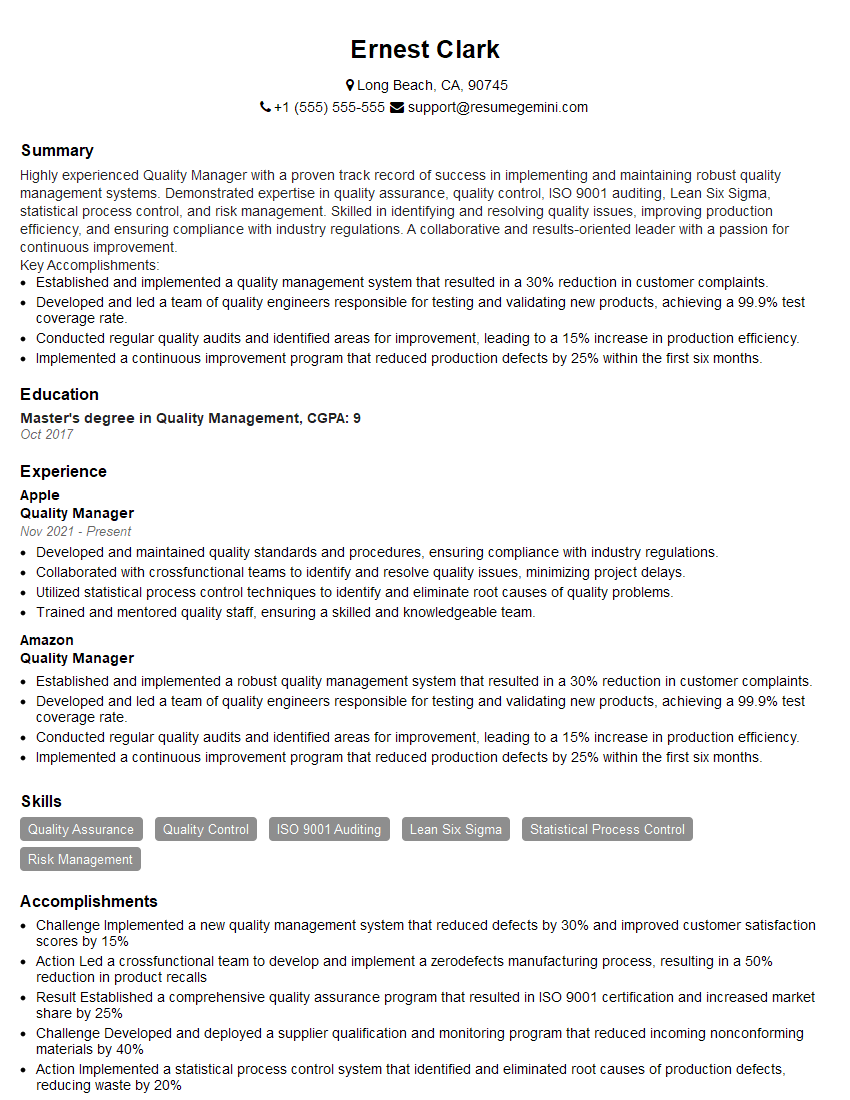
Quality Manager Resume Sample
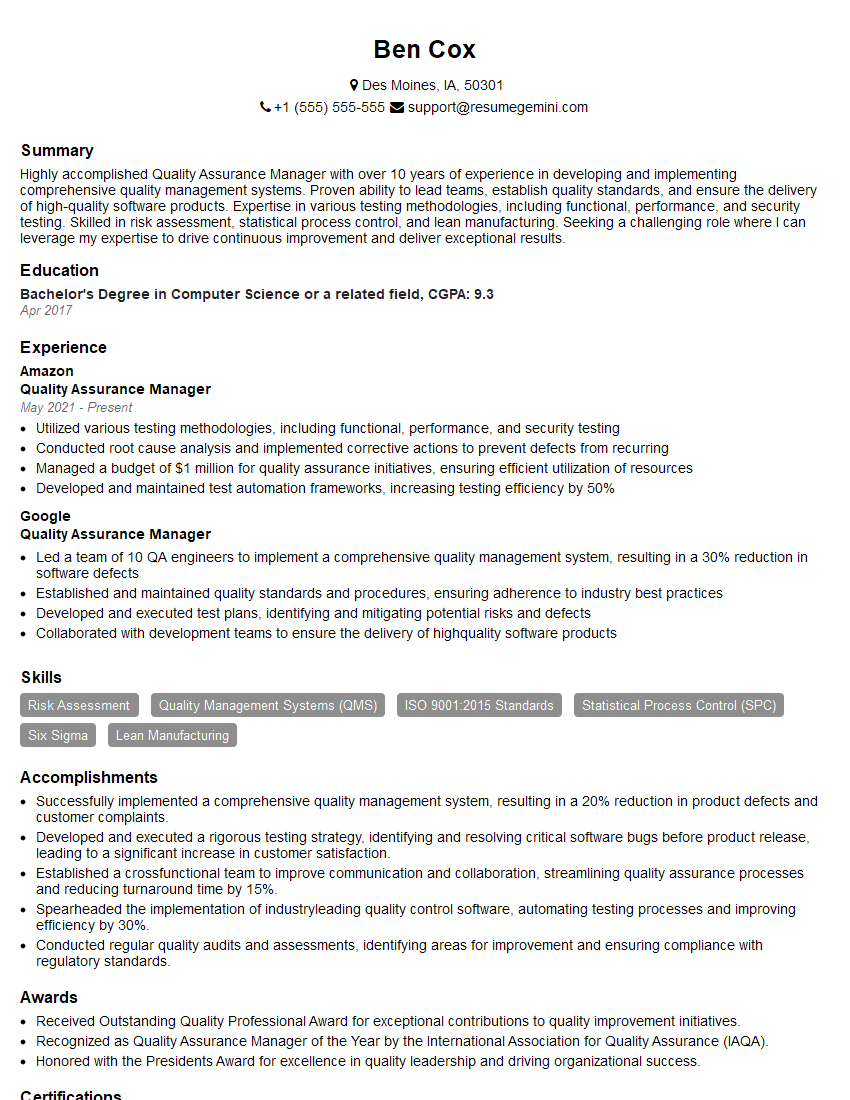
Quality Assurance Manager Resume Sample
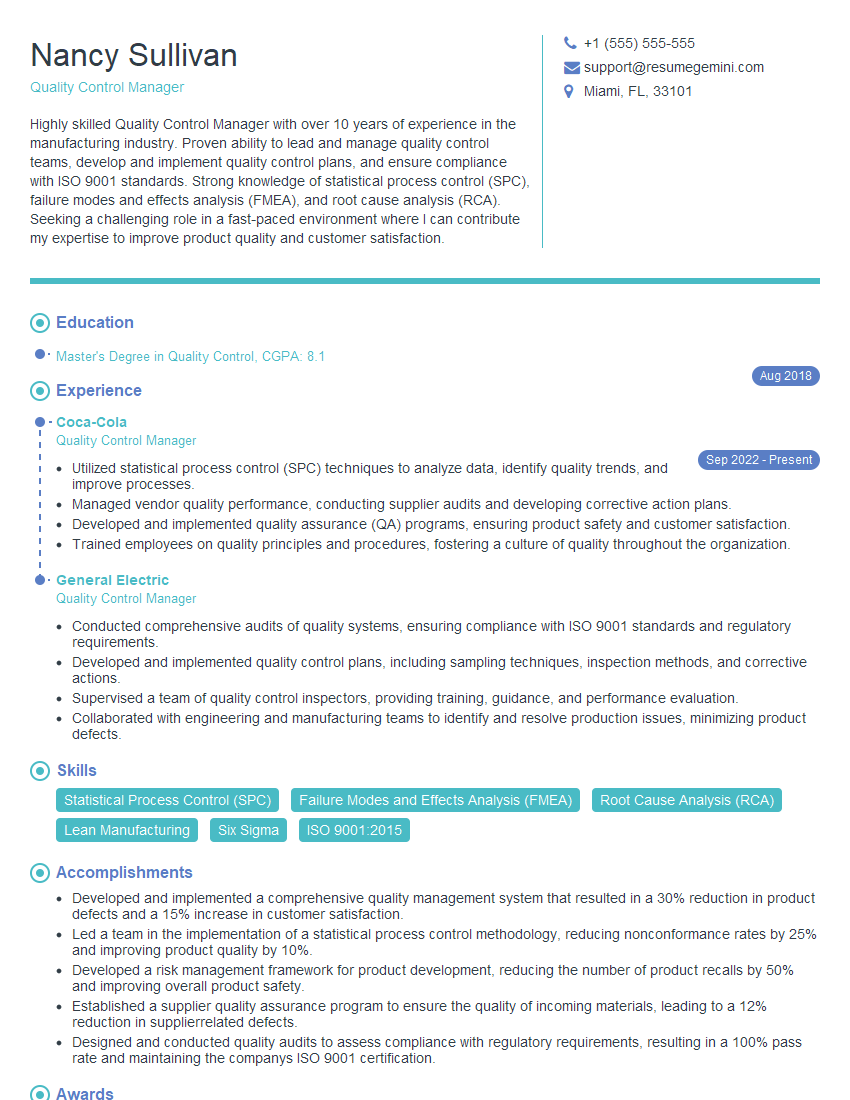
Quality Control Manager Resume Sample
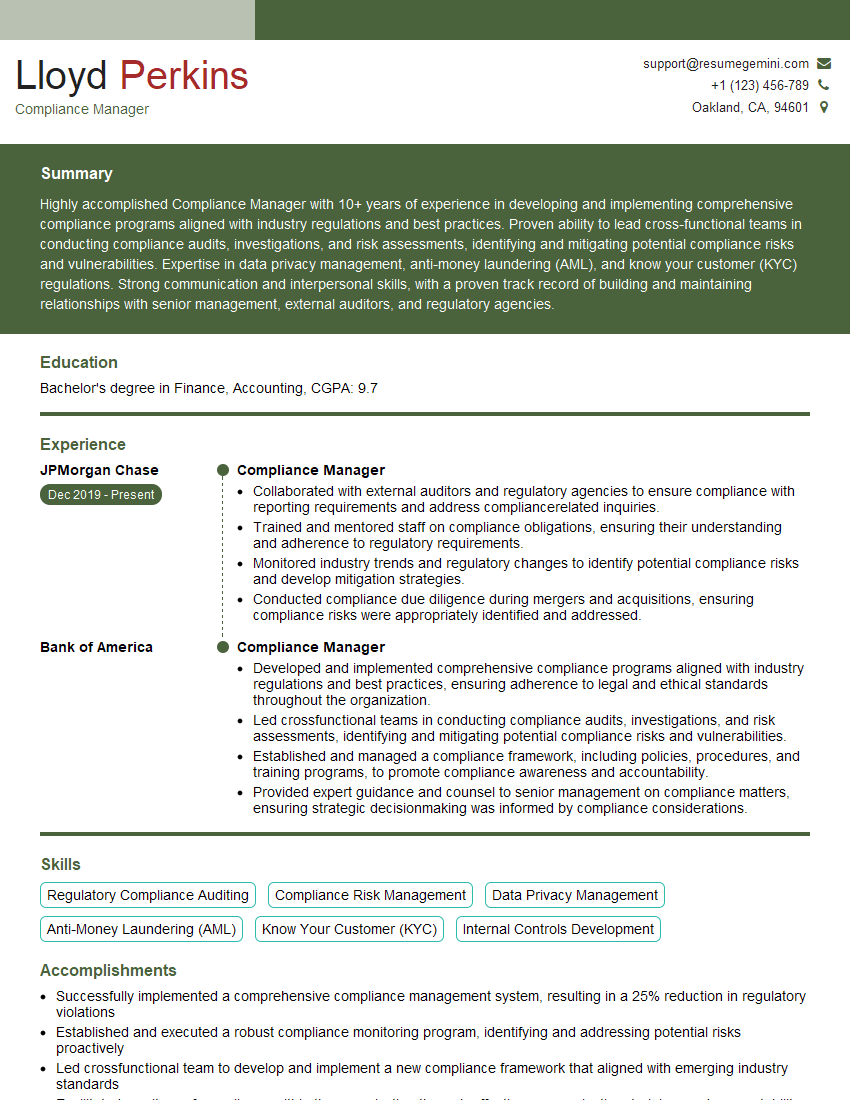
Compliance Manager Resume Sample

Compliance Officer Resume Sample
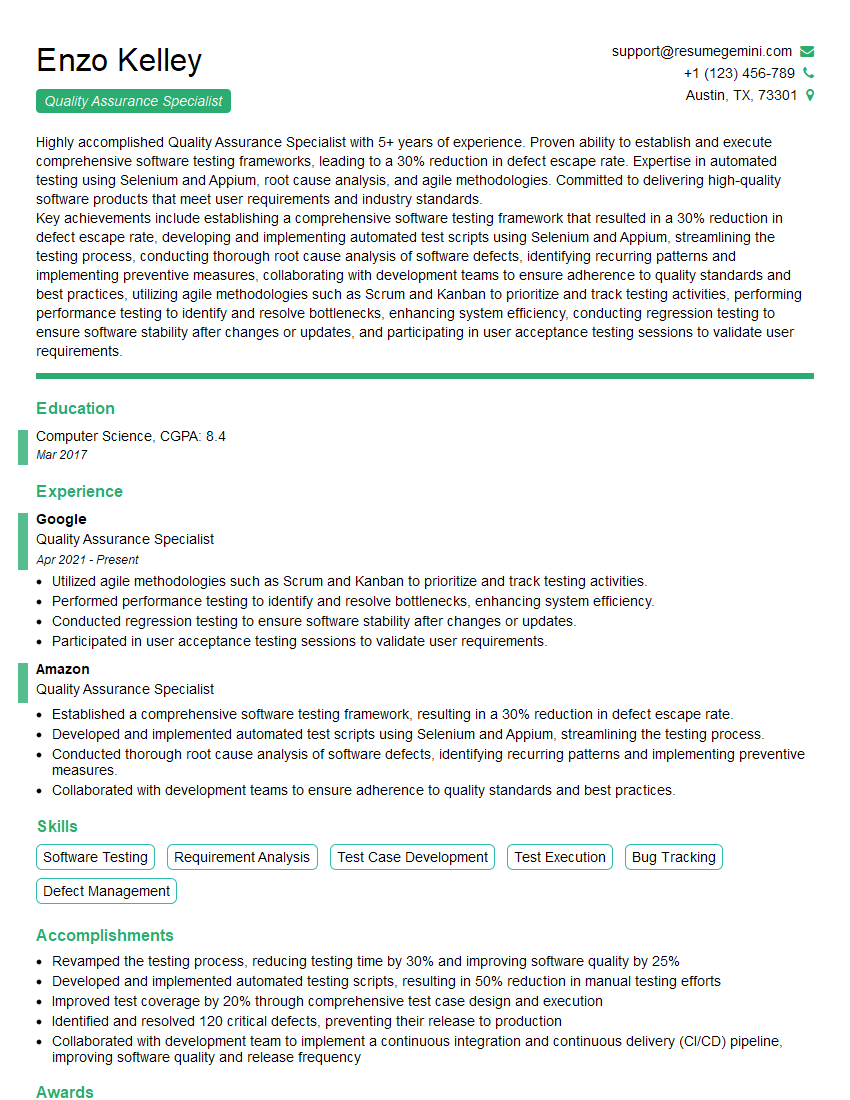
Quality Assurance Specialist Resume Sample
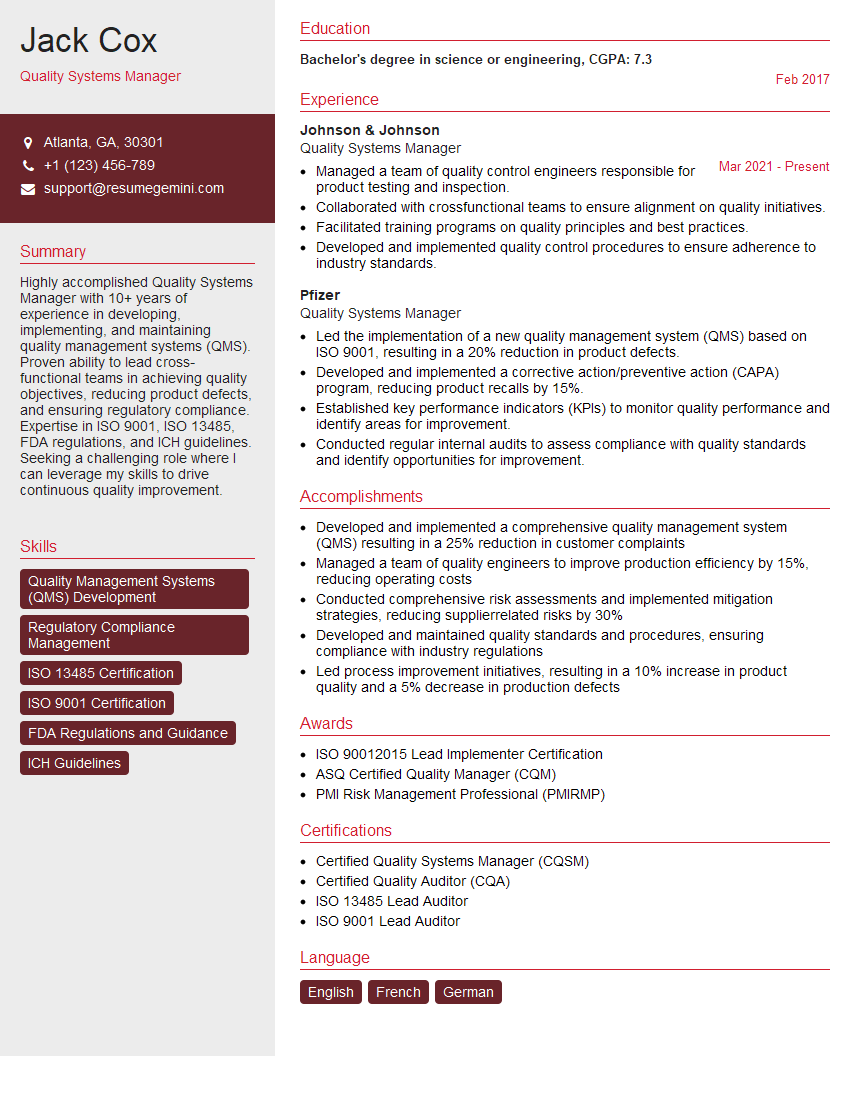
Quality Systems Manager Resume Sample
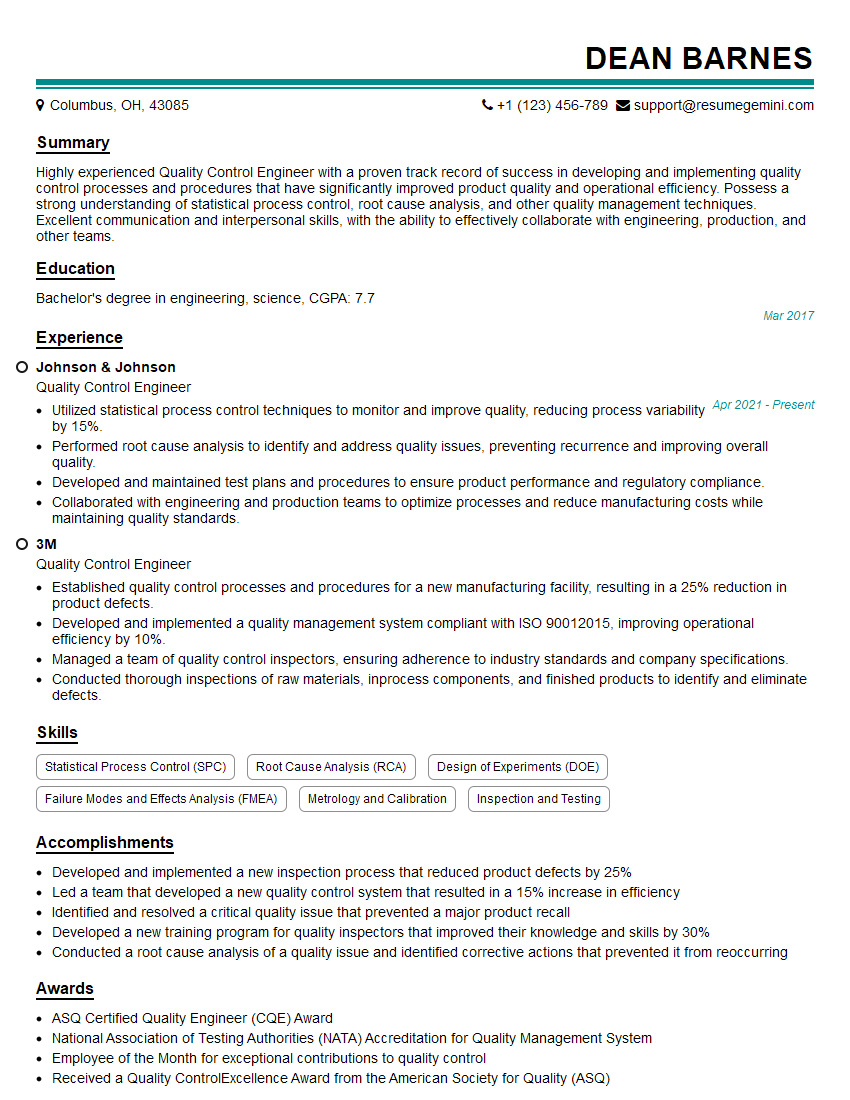
Quality Control Engineer Resume Sample
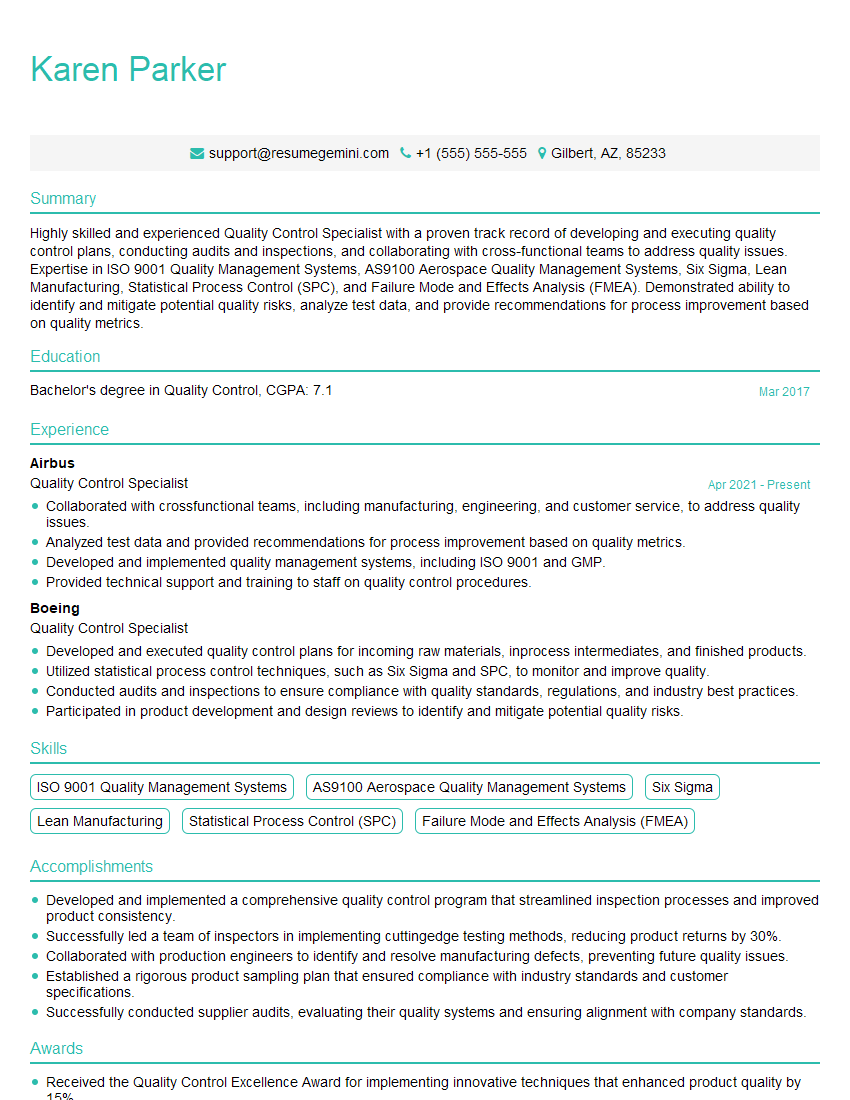
Quality Control Specialist Resume Sample
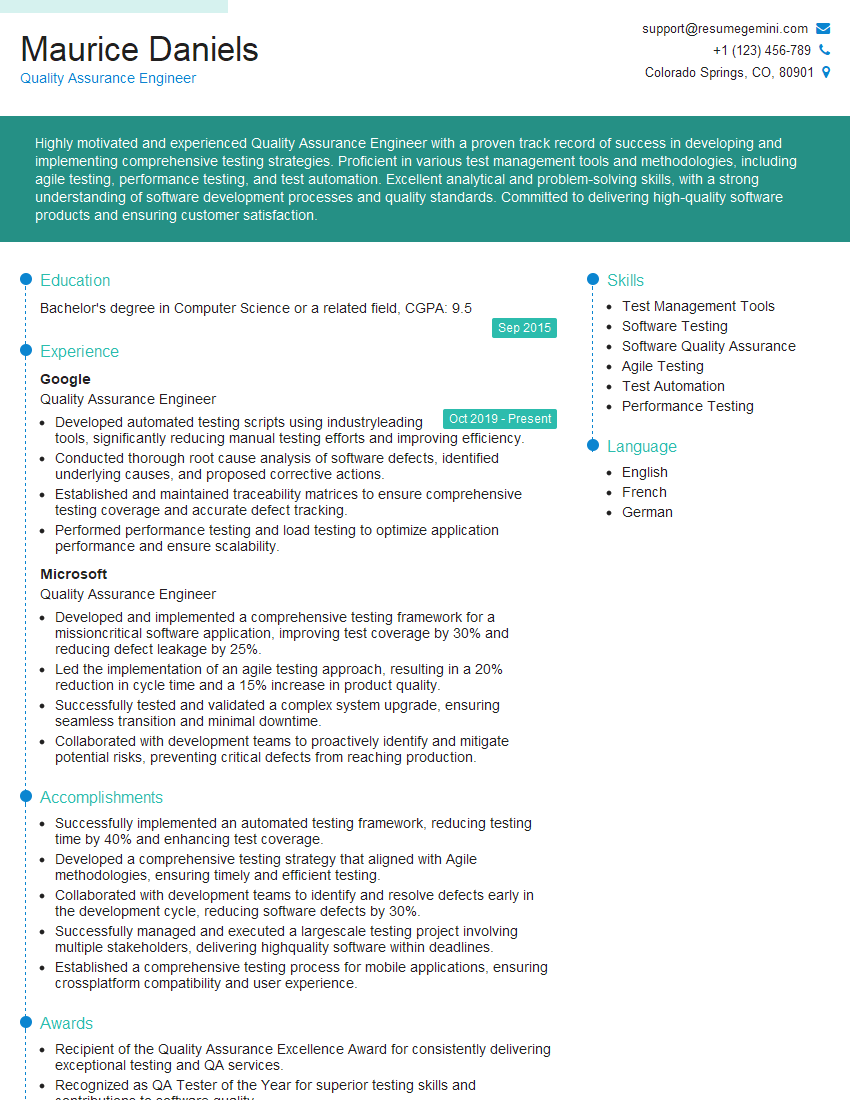
Quality Assurance Engineer Resume Sample
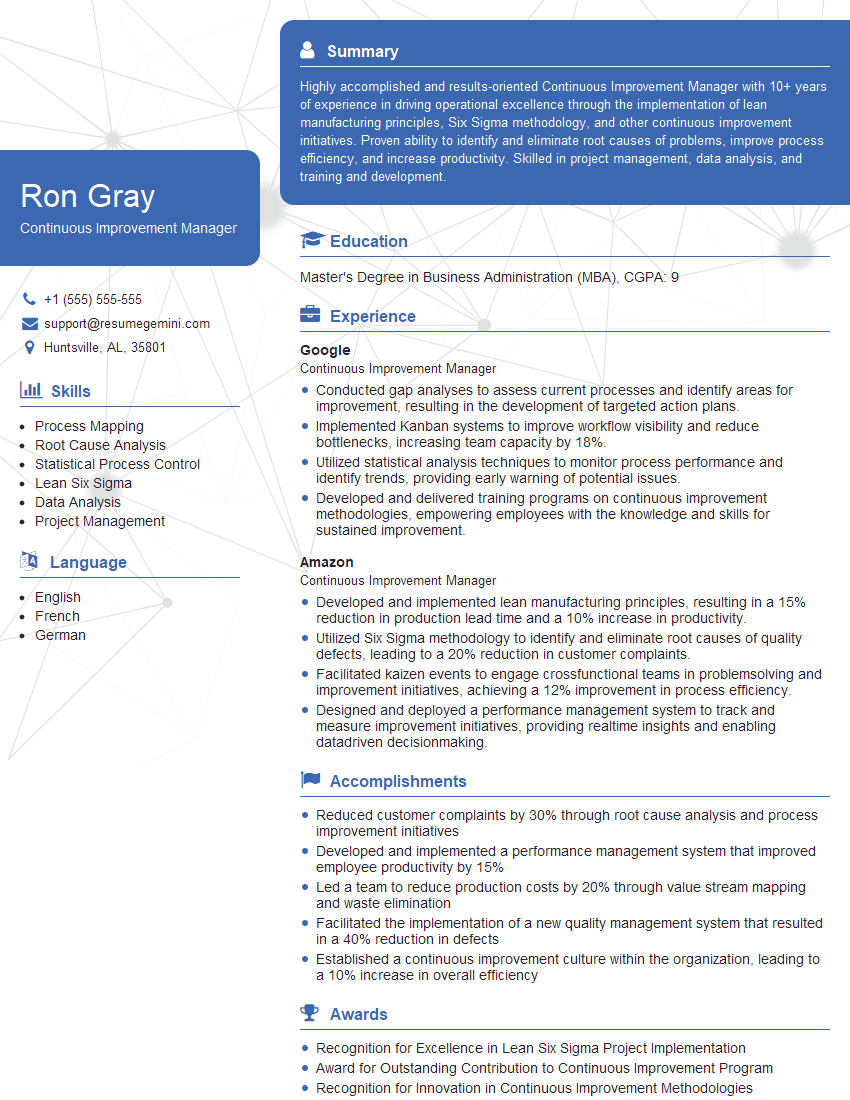
Continuous Improvement Manager Resume Sample
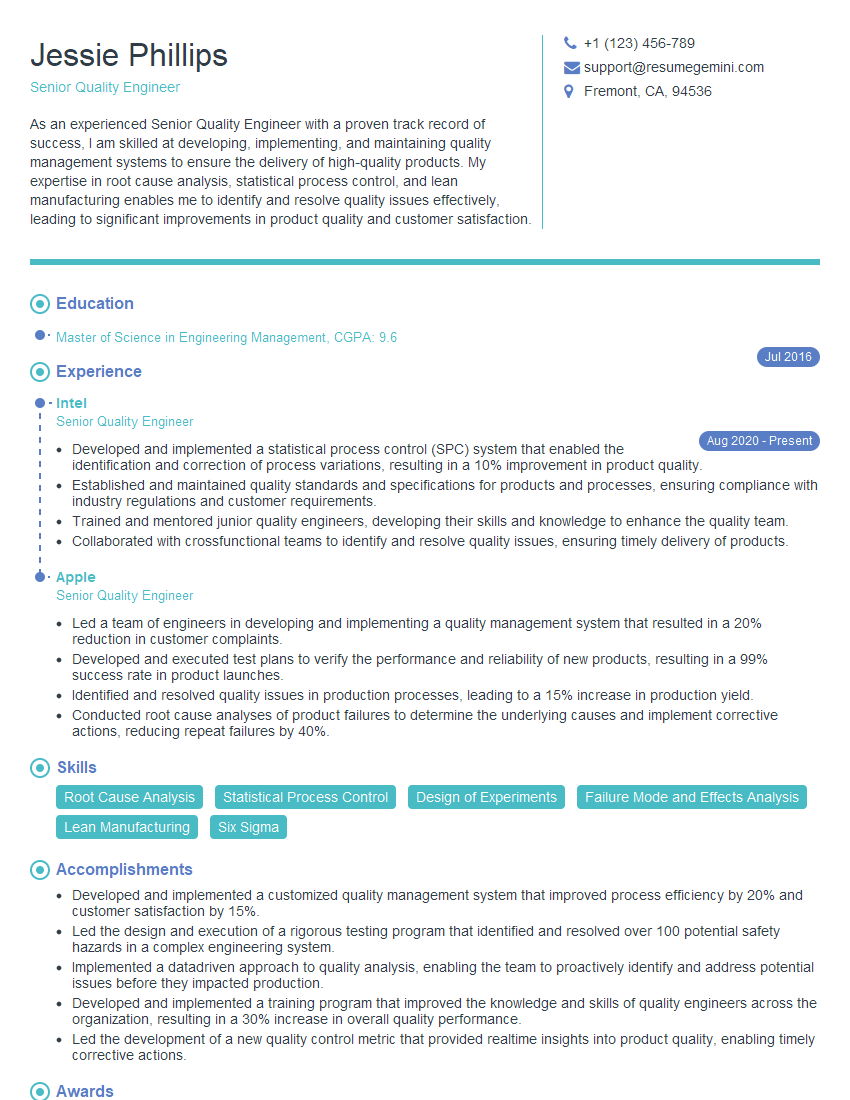
Senior Quality Engineer Resume Sample
Explore more articles
Users Rating of Our Blogs
Share Your Experience
We value your feedback! Please rate our content and share your thoughts (optional).
What Readers Say About Our Blog
To the interviewgemini.com Webmaster.
Very helpful and content specific questions to help prepare me for my interview!
Thank you
To the interviewgemini.com Webmaster.
This was kind of a unique content I found around the specialized skills. Very helpful questions and good detailed answers.
Very Helpful blog, thank you Interviewgemini team.