Interviews are opportunities to demonstrate your expertise, and this guide is here to help you shine. Explore the essential PV System Inspection interview questions that employers frequently ask, paired with strategies for crafting responses that set you apart from the competition.
Questions Asked in PV System Inspection Interview
Q 1. Explain the difference between a visual inspection and a performance test of a PV system.
A visual inspection and a performance test are both crucial parts of a comprehensive PV system assessment, but they focus on different aspects.
Visual Inspection: This is a largely qualitative assessment, focusing on the physical condition of the system. Think of it like a thorough visual check-up. It involves observing the modules for cracks, discoloration, hotspots (often revealed by discoloration or even blistering), and signs of physical damage like hail impact. It also includes checking the wiring, connections, mounting structures, and the overall cleanliness of the panels. The goal is to identify any obvious issues that might be impacting performance or pose a safety hazard.
Performance Test: This is a quantitative evaluation of the system’s energy production. It measures the actual output of the system against its expected output, often using specialized equipment. This involves measuring the voltage, current, and power output at various points in the system, and comparing it to historical data or manufacturer specifications. A performance test will pinpoint issues like underperforming modules, faulty inverters, or shading problems that may not be visible during a visual inspection.
For example, a visual inspection might reveal a loose wire, while a performance test might show that one string of modules is producing significantly less power than the others, indicating a problem that requires further investigation.
Q 2. Describe the common causes of PV module degradation and how to identify them during an inspection.
PV module degradation is a natural process, but it can be accelerated by various factors. Understanding these factors is key to effective inspections.
- Potential Induced Degradation (PID): This is a common issue, especially in humid environments, where a potential difference between the module frame and the cell leads to current leakage and degradation. It manifests as discoloration, often starting at the edges of the cells.
- Microcracks: These tiny fractures in the silicon cells can reduce efficiency and are often difficult to see without close inspection. Look for subtle lines or discoloration in the cells. They can also be detected using electroluminescence imaging.
- Hotspots: These are areas on a module that overheat due to shading, cell defects, or faulty connections. Hotspots often appear as discolored areas and can accelerate degradation. Thermal imaging is particularly useful for identifying these.
- Corrosion: Moisture and other environmental factors can cause corrosion of the metal components, leading to electrical problems and decreased performance. This might show as rust or discoloration around connections.
- Delamination: This refers to the separation of layers within the module, often appearing as a bubble or lifting of the cell from the substrate. It can lead to reduced light absorption.
Identifying these problems during an inspection requires careful visual observation, close-up examination of individual cells, and the use of specialized equipment like thermal imaging cameras and electroluminescence imaging systems.
Q 3. What are the key safety precautions you would take during a PV system inspection?
Safety is paramount during a PV system inspection. Here’s a list of key precautions:
- Lockout/Tagout (LOTO): Always follow LOTO procedures to disconnect the system from the grid before any work is performed. This prevents accidental electrocution.
- Personal Protective Equipment (PPE): This includes insulated gloves, safety glasses, and arc-flash protective clothing depending on the system voltage. Appropriate footwear is also critical. Never work on a live PV system without proper PPE.
- Grounding: Ensure that the system is properly grounded before starting work. Grounding prevents electrical shock by providing a safe path for fault currents.
- Awareness of potential hazards: Be mindful of working at heights, and use appropriate fall protection gear. Be aware of potential hazards around the site, such as other equipment, or animals.
- Emergency procedures: Know and have access to emergency contacts and procedures in case of an accident. Have a plan for getting help quickly.
Following these safety protocols ensures the safety of the inspector and prevents potential accidents or injuries.
Q 4. How do you interpret the results of a thermal imaging scan of a PV array?
Thermal imaging uses infrared radiation to detect temperature differences. In a PV array, a thermal image reveals the temperature of individual cells and strings. This information is vital for identifying problems.
Interpretation:
- Uniform Temperatures: A relatively uniform temperature distribution across the array indicates healthy modules and good performance.
- Hotspots: Significantly hotter cells or strings compared to their neighbors indicate potential problems like shading, microcracks, or faulty bypass diodes. This is a critical finding that requires further investigation. Hotspots can lead to rapid degradation of the module.
- Cold Spots: Unusually cold areas might indicate a problem with the electrical connections or a faulty module. The temperature difference is the key indicator here.
The temperature differences are crucial – not the absolute temperature. A hotspot is relative to the surrounding cells. The thermal image should be analyzed in conjunction with other inspection data, such as I-V curve tracing, for a complete assessment.
Q 5. How would you troubleshoot a PV system with low output?
Troubleshooting a PV system with low output requires a systematic approach:
- Visual Inspection: Begin with a thorough visual inspection to look for obvious issues like shading, debris on modules, damaged wiring, or loose connectors.
- Performance Testing: Conduct performance tests to measure the system’s voltage, current, and power output. Use a multimeter and a suitable current clamp to obtain accurate measurements at each stage of the system.
- String Testing: Isolating individual strings will help you pinpoint the location of the problem. Compare the output of each string to identify underperforming ones.
- Module-Level Diagnostics: If a specific string is underperforming, you can use a module-level power optimizer or specialized tools to check individual module performance. Electroluminescence testing or I-V curve tracing can also help isolate faulty modules.
- Inverter Check: Verify the inverter is functioning correctly by checking its output and error codes. An inverter malfunction can severely limit system output.
- Check Wiring and Connections: Inspect all wiring and connectors for any damage or loose connections. These can significantly reduce power flow.
- Environmental Factors: Consider environmental factors such as shading, temperature, and soiling, which can significantly impact production.
By systematically checking each component, you can effectively identify and troubleshoot the cause of low output.
Q 6. What are the common indicators of faulty inverters?
Faulty inverters can significantly reduce or completely eliminate PV system output. Identifying problems requires a combination of observation and testing.
- Error Codes: Most inverters display error codes that indicate specific problems. Consult the inverter’s manual to understand the meaning of these codes.
- Reduced Output: A faulty inverter will often show reduced AC output compared to the DC input from the array. This discrepancy should raise a red flag.
- Overheating: Excessive heat from the inverter is a common sign of problems, such as internal failures or poor ventilation.
- Alarms or Warning Signals: Listen for audible alarms or check for visual warning lights on the inverter. These often indicate malfunctions.
- No Output: The inverter might fail completely, resulting in zero AC output.
- Unusual Sounds: Strange noises, like buzzing, humming, or clicking sounds, could signal internal problems.
It’s important to use appropriate safety measures when inspecting or testing inverters due to high voltage and possible arc-flash hazards.
Q 7. Describe the procedure for testing the grounding system of a PV array.
Testing the grounding system of a PV array is essential for safety. It ensures that fault currents have a safe path to earth, preventing electrical shocks and fires. The procedure involves using a ground resistance tester, also known as a megohmmeter.
- Disconnect the System: Before starting, completely disconnect the PV array from the inverter using appropriate LOTO procedures.
- Identify Grounding Points: Locate all grounding points within the system, including the array ground, inverter ground, and any other relevant grounding connections.
- Ground Resistance Measurement: Connect the ground resistance tester between the grounding point and a known ground electrode. The tester will provide the ground resistance value in ohms. A low ground resistance value (typically below 5 ohms, but specific requirements vary based on location and codes) indicates a good ground connection. A high value suggests a problem.
- Check for Continuity: Measure the continuity between the grounding points to ensure proper electrical contact between them. A lack of continuity indicates an interruption in the ground path.
- Document Findings: Record all measurements and observations in a detailed report. This allows for comparisons to acceptable standards and tracking of future changes.
Regular testing of the grounding system is vital for maintaining the safety and integrity of the PV array.
Q 8. How do you identify and document potential fire hazards associated with PV systems?
Identifying fire hazards in PV systems requires a systematic approach, focusing on areas where electrical faults, overheating, or flammable materials pose risks. We visually inspect all components for signs of damage, such as cracked or melted wiring, loose connections, arcing, or signs of overheating like discoloration or burning.
- Wiring and Connections: We meticulously check for proper wire sizing, secure connections, and absence of corrosion. Loose or improperly crimped connections generate heat and are a major fire risk. I always check for sufficient clearance around wiring and ensure it’s properly routed, avoiding sharp bends or contact with metal surfaces.
- Inverters: We inspect inverters for overheating, unusual noises, or damaged ventilation. Overheating inverters can be a significant fire hazard, especially in hot climates or poorly ventilated areas. We check for appropriate ventilation around the unit and look for any accumulation of dust or debris.
- Module Mounting: We evaluate the mounting hardware for corrosion, looseness, or damage. A compromised mounting system can result in loose modules, which could potentially cause short circuits. We also check for shading that might lead to uneven heating and potential hotspots.
- Surrounding Environment: We assess the proximity of the PV system to flammable materials such as dry vegetation, structures, or storage areas. We document any such risks, suggesting mitigation measures where necessary.
All findings are meticulously documented with photographs and detailed descriptions, including location, severity, and recommendations for remediation. For instance, I might note ‘Loose connection on positive wire at string combiner box, Location: South array, recommendation: immediate tightening and inspection for burning/damage’. This level of detail ensures clear communication and facilitates timely corrective action.
Q 9. Explain the importance of proper documentation during a PV system inspection.
Proper documentation during a PV system inspection is paramount for several reasons. It acts as a legal record, provides a baseline for future inspections, and supports informed decision-making regarding maintenance and repairs. Think of it as a complete health report for the solar system.
- Liability Protection: Thorough documentation protects both the inspector and the owner from liability in case of future incidents. Clear records demonstrate due diligence and can help resolve disputes.
- Tracking System Performance: Documentation allows for tracking system performance over time. Changes in efficiency or potential problems can be identified by comparing data from subsequent inspections. For instance, a gradual decrease in output might signal degradation of the modules.
- Maintenance Scheduling: A well-documented inspection provides a roadmap for future maintenance. Identifying potential issues early allows for proactive repairs, preventing costly breakdowns and extending the system’s lifespan.
- Insurance Claims: Comprehensive documentation is essential for insurance claims. Clear records of defects or damage greatly expedite the claims process.
Our reports typically include photographs, detailed descriptions of observed conditions, test results, system schematics, and recommendations for maintenance or repairs. We use standardized reporting formats to ensure consistency and clarity.
Q 10. What are the typical components of a PV system that require regular inspection and maintenance?
Regular inspection and maintenance are crucial for optimal performance and safety of a PV system. Key components requiring attention include:
- PV Modules: Visual inspection for cracks, hotspots (using thermal imaging), soiling, and physical damage. Testing of individual module performance can be done with a multimeter.
- Wiring and Connections: Checking for corrosion, loose connections, insulation damage, and appropriate wire sizing.
- Inverters: Inspecting for operational errors, overheating, and proper ventilation. Performance data is typically monitored electronically.
- Mounting System: Evaluating the structural integrity of the racking system, checking for corrosion, and ensuring secure fastening to the structure.
- Grounding System: Testing for proper grounding continuity and ensuring that there is no risk of electrical shock.
- DC and AC Disconnects: Verification of proper operation and safe functionality of disconnects.
- Combiner Boxes: Inspection of wiring, connectors, and fuses for proper function and safety.
The frequency of inspections depends on factors like environmental conditions and system age. However, a yearly comprehensive inspection, along with more frequent visual checks, is generally recommended. For example, in a harsh desert environment with significant dust accumulation, more frequent cleaning and inspection might be necessary.
Q 11. How do you determine the appropriate testing equipment for a specific PV system inspection?
Selecting the appropriate testing equipment depends heavily on the scope and objectives of the inspection. For a basic visual inspection, minimal equipment is needed; a more thorough inspection would require specialized tools.
- Multimeter: Essential for measuring voltage, current, and resistance in various parts of the system, including modules and wiring.
- Clamp Meter: Measures AC and DC current without interrupting the circuit; crucial for testing larger currents, and also checking for ground faults.
- Infrared (IR) Camera: Detects hotspots in modules and other components, indicating potential failures or overheating issues.
- Grounding Tester: Measures the grounding resistance to ensure electrical safety.
- Insulation Resistance Tester (Megger): Measures insulation resistance in wiring and components to detect potential short circuits.
- Solar I-V Curve Tracer: Provides a detailed analysis of module performance by creating an I-V curve that can identify various issues, like shading or damaged cells.
For example, if I’m inspecting a large commercial system, I’d likely utilize an I-V curve tracer, a clamp meter, and a thermal imaging camera. A smaller residential system might only require a multimeter and visual inspection tools. Safety equipment like insulated gloves and arc flash protection is always included.
Q 12. Describe your experience using infrared cameras for PV system diagnostics.
Infrared cameras are invaluable tools for PV system diagnostics. They allow for non-invasive detection of temperature variations, revealing potential hotspots and other anomalies invisible to the naked eye. Think of it like a thermal ‘x-ray’ for your solar system.
My experience includes using IR cameras to identify:
- Hotspots in Modules: These appear as localized areas of higher temperature on the module surface, often indicating cell damage, shading, or micro-cracks.
- Overheating Connectors and Wiring: Loose connections or high-resistance points in the wiring system generate heat and can pose a significant fire risk. IR cameras help us identify these before they escalate.
- Overheating Inverters: An unexpectedly high temperature in an inverter suggests potential problems that may need attention.
- Bypass Diode Activation: IR imaging can identify bypass diodes that are activated due to shading or cell failure, indicating localized problems within a module.
I use high-resolution thermal cameras and appropriate software to analyze the thermal images, creating detailed reports that document the locations and severity of any temperature anomalies. The analysis is often coupled with other inspection techniques to provide a complete diagnosis of potential problems.
Q 13. How do you assess the structural integrity of a PV mounting system?
Assessing the structural integrity of a PV mounting system is a critical aspect of a PV inspection. We’re looking for any signs of weakness or damage that could lead to system failure, and potentially harm to people or property.
Our assessment involves:
- Visual Inspection: We meticulously check all components—rails, clamps, mounting brackets, and the structural connections to the roof or ground—for signs of corrosion, looseness, damage, and misalignment.
- Fastener Inspection: We inspect all bolts, screws, and rivets for tightness and corrosion. Loose or corroded fasteners can compromise structural integrity.
- Structural Integrity Check: We assess the overall structural soundness of the system and verify the suitability of the mounting design for the environmental conditions, considering factors such as wind loading and snow load in appropriate locations.
- Grounding Verification: We check the grounding of the mounting system to ensure electrical safety.
For example, If we find evidence of significant corrosion or loosening of fasteners, we’ll recommend immediate repairs or replacement of affected components. This might involve using a torque wrench to tighten bolts to the manufacturer’s specifications or replacing corroded parts.
Q 14. What are the different types of PV modules and their relative advantages and disadvantages?
Several types of PV modules exist, each with its own advantages and disadvantages. The choice of module depends on factors such as budget, application, and environmental conditions.
- Crystalline Silicon Modules (Mono- and Polycrystalline): These are the most common type, made from silicon crystals. Mono-crystalline modules are generally more efficient but more expensive than polycrystalline modules, which have a slightly lower efficiency but are more cost-effective.
- Thin-Film Modules (Amorphous Silicon, Cadmium Telluride, Copper Indium Gallium Selenide): These modules use thin layers of semiconductor materials and are flexible and lighter, often suitable for building-integrated photovoltaics or applications where weight is a concern. However, they typically have lower efficiency than crystalline silicon modules.
- Perovskite Modules: A newer technology that shows promise with high efficiency potential and low manufacturing cost. However, the technology is still under development, and long-term durability is an ongoing area of research.
Advantages and Disadvantages Summary:
| Module Type | Advantages | Disadvantages |
|---|---|---|
| Mono-crystalline Silicon | High efficiency, long lifespan | High cost, brittle |
| Poly-crystalline Silicon | Lower cost than monocrystalline, good efficiency | Lower efficiency than monocrystalline |
| Thin-film | Lightweight, flexible, suitable for integration | Lower efficiency, potentially shorter lifespan |
| Perovskite | High efficiency potential, low manufacturing cost | Technology still under development, long-term durability under question |
The best module type depends on the specific project requirements. For instance, a residential system might use cost-effective polycrystalline modules, while a large-scale solar farm might opt for higher-efficiency monocrystalline modules.
Q 15. How do you interpret I-V curve data from a PV module?
The I-V curve, or current-voltage curve, is a graphical representation of a solar module’s performance. It plots the current (I) produced by the module against the voltage (V) at its terminals under specific conditions of irradiance and temperature. Analyzing this curve is crucial for assessing module health.
Interpreting the Curve: A healthy module shows a characteristic curve with a well-defined peak power point (MPP). The MPP is the point on the curve where the product of voltage and current is maximum, representing the module’s maximum power output. We look for:
- Short Circuit Current (Isc): The current when the voltage is zero. A significantly lower Isc than the manufacturer’s specifications suggests shading or cell damage.
- Open Circuit Voltage (Voc): The voltage when the current is zero. A lower Voc usually points to cell degradation or temperature effects.
- Maximum Power Point (MPP): The point of highest power output. A shift in the MPP indicates problems like cell mismatch or diode failure.
- Fill Factor (FF): A measure of how square the curve is; a high FF indicates efficient power production. A low FF implies internal resistances are high, potentially from cell damage, cracks, or faulty connections.
Practical Application: I use I-V curve tracers during site inspections to compare measured data with the manufacturer’s specifications. Discrepancies highlight potential issues needing further investigation. For instance, a significantly reduced MPP compared to the datasheet points towards performance degradation. We can then use this information to suggest maintenance or replacement.
Career Expert Tips:
- Ace those interviews! Prepare effectively by reviewing the Top 50 Most Common Interview Questions on ResumeGemini.
- Navigate your job search with confidence! Explore a wide range of Career Tips on ResumeGemini. Learn about common challenges and recommendations to overcome them.
- Craft the perfect resume! Master the Art of Resume Writing with ResumeGemini’s guide. Showcase your unique qualifications and achievements effectively.
- Don’t miss out on holiday savings! Build your dream resume with ResumeGemini’s ATS optimized templates.
Q 16. What are the common causes of rapid PV system degradation?
Rapid PV system degradation can severely impact energy production and system lifespan. Several factors contribute to this:
- PID (Potential Induced Degradation): This is a major concern, particularly in humid environments. It causes a slow, continuous current leakage within the module, reducing performance. Proper grounding and module design are crucial to mitigate PID.
- Cell Cracking and Micro-cracks: Physical damage to the cells, often due to handling, transportation, or hail, reduces their efficiency. Careful inspection during installation and regular visual checks are essential.
- Hot Spots: Shading or faulty cells can create hot spots, causing localized overheating and accelerating degradation. Regular thermal imaging can identify these.
- Bypass Diode Failure: Bypass diodes protect modules from shading. If a diode fails, the shaded portion of the module acts as a resistor, significantly reducing power output.
- Improper Installation: Incorrect wiring, grounding, or mounting can lead to early degradation and safety hazards.
Example: I once investigated a system with rapid power loss. Thermal imaging revealed multiple hot spots, and I-V curve tracing confirmed bypass diode failures in several modules. This highlighted the importance of regular thermal checks and prompt diode replacement.
Q 17. How do you identify and assess shading effects on a PV array?
Shading significantly impacts PV array performance, even partial shading can cause a substantial drop in overall output. Identification and assessment involve a combination of visual inspection and electrical measurements.
Identification:
- Visual Inspection: Look for trees, buildings, or other structures casting shadows on the array at different times of the day. Even small shadows can be problematic.
- Infrared (IR) Thermography: Thermal imaging helps identify shaded cells or strings through temperature differences. Shaded cells remain cooler than unshaded ones.
- I-V Curve Tracing: Analyzing the I-V curve of individual strings or modules can reveal the impact of shading; the curve will be distorted.
Assessment: Once shading is identified, we assess its impact:
- String Level Monitoring: Most modern inverters provide string level monitoring. This data helps identify which strings are affected by shading.
- Power Output Comparison: Compare the actual energy production with the expected output based on solar irradiance and other factors. A significant discrepancy often indicates shading.
- String Bypass Diodes: Bypass diodes limit the effect of shading. However, if they fail, the impact of shading increases drastically.
Practical Application: During a recent inspection, visual inspection revealed tree branches partially shading a portion of the array. IR thermography confirmed this, showing a significant temperature difference. I recommended tree trimming to mitigate the issue and improve overall system performance.
Q 18. Describe your experience working with different types of PV inverters.
My experience encompasses various PV inverter types, including string inverters, microinverters, and power optimizers. Each has its own advantages and challenges.
- String Inverters: These are the most common type, connecting multiple PV strings to a single inverter. They are cost-effective but vulnerable to shading issues – a single shaded panel can affect the entire string’s performance. I have experience troubleshooting faults in string inverters, including replacing faulty units and checking communication protocols.
- Microinverters: Each panel has its own microinverter, maximizing energy harvest even with partial shading. This increases system complexity and costs but offers superior performance reliability. I’ve worked on installations using various microinverter brands, focusing on their monitoring capabilities and data analysis.
- Power Optimizers: These devices operate at the panel level, similar to microinverters, but connect to a central string inverter. They offer a balance between cost and performance. My experience includes diagnosing communication problems with these optimizers and optimizing their settings.
Example: In one project, we switched from string inverters to microinverters to solve persistent performance problems caused by intermittent shading. The improved energy production justified the increased upfront costs.
Q 19. How do you verify the compliance of a PV system with relevant safety standards?
Verifying PV system compliance involves ensuring it adheres to all relevant safety standards, like NEC (National Electrical Code) in the US, or IEC standards internationally. This is crucial for system safety and longevity.
Compliance Verification Steps:
- Documentation Review: Check all system documentation, including permits, design plans, and installation reports. Make sure the installation meets the specified requirements.
- Visual Inspection: A thorough visual inspection is vital to check for any wiring errors, loose connections, damaged components, improper grounding, and compliance with safety regulations regarding clearances and protection.
- Grounding Checks: Verify the effectiveness of the grounding system using appropriate measuring instruments. Proper grounding is critical for electrical safety.
- Overcurrent Protection: Examine circuit breakers, fuses, and other overcurrent protection devices to confirm they are correctly sized and functioning properly.
- Isolation and Safety Procedures: Ensure proper isolation and lockout/tagout procedures are followed during inspection and maintenance.
- Testing and Measurements: Conduct electrical tests, including voltage, current, insulation resistance, and ground continuity tests, using appropriate instruments.
- Arc Flash Hazard Assessment: Assess the potential Arc Flash hazards and ensure the system incorporates measures to mitigate such hazards.
Practical Application: I frequently conduct pre-commissioning and commissioning testing to verify compliance. I use specialized test equipment and follow established safety protocols. Non-compliance leads to recommendations for corrective actions before the system is put into operation.
Q 20. How do you handle unexpected findings during a PV system inspection?
Unexpected findings during PV system inspections require a systematic approach. I follow these steps:
- Document the Finding: Accurately record the unexpected finding, including its location, nature, and any associated observations. Take detailed photos or videos.
- Safety First: If the finding poses a safety risk, immediately take steps to mitigate the risk, possibly by disconnecting the affected part of the system.
- Investigate the Cause: Thoroughly investigate the root cause of the unexpected finding. This may involve further testing or consultation with specialists.
- Determine the Severity: Assess the severity of the finding and its potential impact on system performance and safety.
- Develop a Solution: Based on the investigation and severity assessment, develop a suitable solution or remedial action. This could include repair, replacement, or system adjustments.
- Report and Recommend: Prepare a detailed report outlining the unexpected findings, their causes, the proposed solutions, and recommendations for preventing similar issues in the future.
Example: During a routine inspection, I discovered loose connections in a combiner box. This could have led to arcing and fire. I immediately rectified the issue, documented the finding, and recommended a complete inspection of all combiner boxes in the system.
Q 21. Describe your experience with data loggers and PV system monitoring software.
Data loggers and PV system monitoring software are essential for performance analysis and troubleshooting. My experience involves using various data loggers and software packages.
Data Loggers: I have experience installing and configuring various data loggers, ranging from simple devices measuring voltage and current to sophisticated units recording detailed environmental data and energy production. These loggers can be standalone or integrated into the monitoring system. Data is then retrieved for analysis.
PV System Monitoring Software: I’m proficient in using several PV system monitoring platforms. These platforms allow for remote monitoring of the system’s performance, analyzing energy production, identifying potential issues, and generating reports. This software often provides visualization tools, performance dashboards, and alerts based on predefined thresholds.
Practical Application: I utilize data loggers and monitoring software to track system performance over time, identify trends, and diagnose anomalies. For instance, a sudden drop in energy production, as detected by the monitoring software, might indicate a fault requiring investigation. The data logger’s historical data helps pinpoint the time of the event and its potential causes.
Q 22. Explain the process of reporting your findings from a PV system inspection.
Reporting PV system inspection findings requires a structured and comprehensive approach to ensure clarity and facilitate effective action. My process typically involves several key steps:
- Data Collection and Organization: I meticulously document all findings using a standardized checklist and detailed photographs. This includes visual inspections of panels, wiring, mounting structures, inverters, and the surrounding environment. I also record performance data from monitoring systems, if available.
- Analysis and Interpretation: I analyze the collected data to identify potential issues, assess their severity, and prioritize repairs or replacements. For example, a significant drop in panel voltage might indicate shading, while discoloration might suggest cell degradation.
- Report Generation: I prepare a detailed report that includes a summary of findings, specific observations with supporting images, diagnostic tests conducted, performance metrics, and recommendations for remediation or replacement. The report is formatted for easy understanding, even for non-technical clients. I use clear, concise language avoiding jargon wherever possible.
- Communication and Follow-up: I clearly communicate the findings and recommendations to the client, explaining the implications of each issue and answering any questions. I am available to discuss the report and provide any clarification needed.
- Documentation Archiving: I maintain a detailed archive of inspection reports, including photos and performance data. This provides a valuable resource for tracking the system’s health over time and identifying trends.
For example, I recently inspected a system where several panels exhibited significant hot spots. My report included infrared thermal images clearly showing these hot spots, along with recommendations for replacing the affected panels before they caused further damage.
Q 23. What are the key performance indicators (KPIs) used to assess the health of a PV system?
Key Performance Indicators (KPIs) for assessing PV system health are crucial for understanding its efficiency and identifying potential problems. Some of the most important KPIs include:
- DC Power Output: Measured in kilowatts (kW), this reflects the total power generated by the solar panels. A significant drop compared to the expected output indicates a problem.
- AC Power Output: Measured in kW, this is the power delivered to the grid after the inverter converts the DC power. Comparing this to the DC output helps identify inverter efficiency issues.
- Performance Ratio (PR): This KPI indicates the overall system efficiency and is calculated by dividing the actual AC output by the maximum possible output under ideal conditions. A lower PR suggests potential problems.
- Capacity Factor: This shows the actual power output relative to the system’s rated capacity. It is usually expressed as a percentage.
- Specific Yield: This measures the energy produced per installed kilowatt peak (kWp) over a specified period, such as a year. It’s a good indicator of system productivity.
- Inverter Efficiency: The efficiency of converting DC power from the panels to AC power for the grid. This can significantly impact overall system output.
- Panel Temperature: High panel temperatures reduce efficiency and can indicate shading or other issues. Infrared thermography is essential for detecting hotspots.
By regularly monitoring these KPIs, we can proactively identify potential problems and take preventative measures, extending the system’s lifespan and maximizing energy production.
Q 24. How do you determine if a PV system is suitable for remediation or replacement?
The decision to remediate or replace a PV system depends on several factors, including the age of the system, the extent of damage, the cost of repairs versus replacement, and the remaining lifespan. I use a cost-benefit analysis, factoring in:
- Severity of damage: Minor issues like loose connections or minor shading can often be remediated cost-effectively. Significant damage such as cracked panels, faulty inverters or widespread degradation often points to replacement.
- Repair cost vs. replacement cost: If the repair costs are a significant percentage of the replacement cost and the system’s lifespan is limited anyway, a replacement is generally a more sound investment.
- Remaining lifespan: A system nearing the end of its expected lifespan is a strong candidate for replacement, regardless of current functionality, as preventive replacement is beneficial.
- Availability of parts: For older systems, finding replacement parts may be difficult or expensive, making replacement more attractive.
- Warranty coverage: Existing warranties can cover some repairs, potentially influencing the cost-benefit analysis.
For example, a system with only a few damaged panels might be cost-effective to repair. However, a system with widespread degradation, age and a failing inverter is likely to be more efficient and cost-effective to replace rather than undergoing piecemeal repairs.
Q 25. What are the environmental considerations involved in PV system maintenance and inspection?
Environmental considerations are paramount in PV system maintenance and inspection. My practices include:
- Waste Management: Proper disposal of any replaced components, such as panels, inverters, and wiring, is crucial. I ensure that all waste is handled according to local regulations, often coordinating with certified recycling facilities specializing in solar waste.
- Chemical Handling: Some cleaning agents used for panel cleaning can be harmful to the environment. I utilize eco-friendly cleaning solutions to minimize this impact.
- Wildlife Protection: During inspections, I am mindful of potential impacts on local wildlife and ecosystems. This includes avoiding disturbing bird nests or other habitats.
- Minimizing Water Usage: Panel cleaning might require water. I minimize water consumption through efficient cleaning techniques, and in dry areas, prioritize dry cleaning methods.
- Carbon Footprint Reduction: By promoting efficient system operation, we indirectly reduce the system’s carbon footprint. Careful inspection and maintenance contribute to maximizing the lifespan and efficiency of these systems.
For instance, during a recent inspection, I discovered a bird’s nest near the array. Rather than disturbing the nest, I scheduled a return visit after the fledglings had left to conduct the full inspection without harm.
Q 26. Explain your understanding of microinverters and their role in PV system performance.
Microinverters are small inverters located at each individual solar panel or small string of panels, unlike central inverters that handle power from the entire array. They offer several advantages impacting PV system performance:
- Improved Efficiency: Microinverters optimize the power output of each panel individually, maximizing energy production even under partial shading or variations in panel performance. A shaded panel does not impact the output of other panels.
- Enhanced Safety: Since each panel is managed separately, a fault in one panel does not affect the operation of the rest of the system, significantly improving safety.
- Simplified Troubleshooting: By monitoring the output of each microinverter, it’s easier to pinpoint the source of any performance issues, allowing for more efficient troubleshooting and repairs.
- Increased System Lifetime: The reduced stress on individual components due to the decentralized nature of microinverters often leads to a longer system lifespan.
- Module-Level Monitoring: This allows for detailed data analysis of individual panels, providing valuable insights into system performance and potential issues.
Think of it like this: a central inverter is like a single water pump for your whole house, while microinverters are like individual pumps for each faucet. If one faucet has a problem, the others still work. This improves efficiency and reduces downtime significantly.
Q 27. How do you stay up-to-date with the latest advancements and technologies in PV system inspection?
Staying current in the rapidly evolving field of PV system inspection requires continuous learning and engagement. My approach involves:
- Industry Publications and Journals: I regularly read publications such as IEEE Xplore, Solar Power World, and other relevant journals to stay abreast of the latest technologies and best practices.
- Conferences and Webinars: Attending industry conferences and webinars provides valuable insights into new technologies, inspection techniques, and regulatory changes.
- Manufacturer Training: Many manufacturers offer training programs on their specific products, which are extremely beneficial for staying current with their technologies and troubleshooting methods.
- Networking with Peers: Discussing challenges and solutions with other professionals in the field helps to share knowledge and learn from real-world experiences.
- Online Resources and Certifications: Utilizing online resources and pursuing relevant certifications ensures my knowledge base remains updated and certified to current industry standards.
For example, I recently completed a training course on the latest infrared thermography techniques for identifying hot spots in solar panels. This enables me to detect emerging problems more effectively and accurately, leading to more precise diagnoses and efficient repairs.
Key Topics to Learn for PV System Inspection Interview
- Safety Procedures and Regulations: Understanding and adhering to all relevant safety protocols, including lockout/tagout procedures and personal protective equipment (PPE) requirements. Practical application: Explain your experience conducting pre-inspection safety checks and risk assessments.
- Visual Inspection Techniques: Mastering visual inspection methods to identify defects like cracks, hotspots, soiling, and module damage. Practical application: Describe your proficiency in using thermal imaging cameras and other diagnostic tools for visual inspection.
- Electrical Testing and Measurements: Knowledge of using multimeters, clamp meters, and other instruments to measure voltage, current, and resistance in PV systems. Practical application: Explain how you would troubleshoot a system with low voltage output.
- Performance Data Analysis: Interpreting data from inverters, monitoring systems, and other sources to assess system performance and identify areas for improvement. Practical application: Describe your experience analyzing performance data to identify potential system failures or inefficiencies.
- Troubleshooting Common PV System Issues: Identifying and diagnosing problems such as shading, grounding faults, and wiring issues. Practical application: Outline your approach to troubleshooting a system experiencing intermittent power outages.
- Reporting and Documentation: Creating comprehensive and accurate inspection reports, including photographic evidence and detailed observations. Practical application: Describe your experience with different reporting software and your ability to present findings clearly and concisely.
- Knowledge of different PV technologies: Understanding the various types of solar panels (monocrystalline, polycrystalline, thin-film), inverters, and racking systems. Practical application: Explain the advantages and disadvantages of different PV technologies.
- Understanding of system design and architecture: Familiarity with basic PV system design principles, including string sizing, array configuration, and grounding. Practical application: Discuss your understanding of how system design impacts performance and safety.
Next Steps
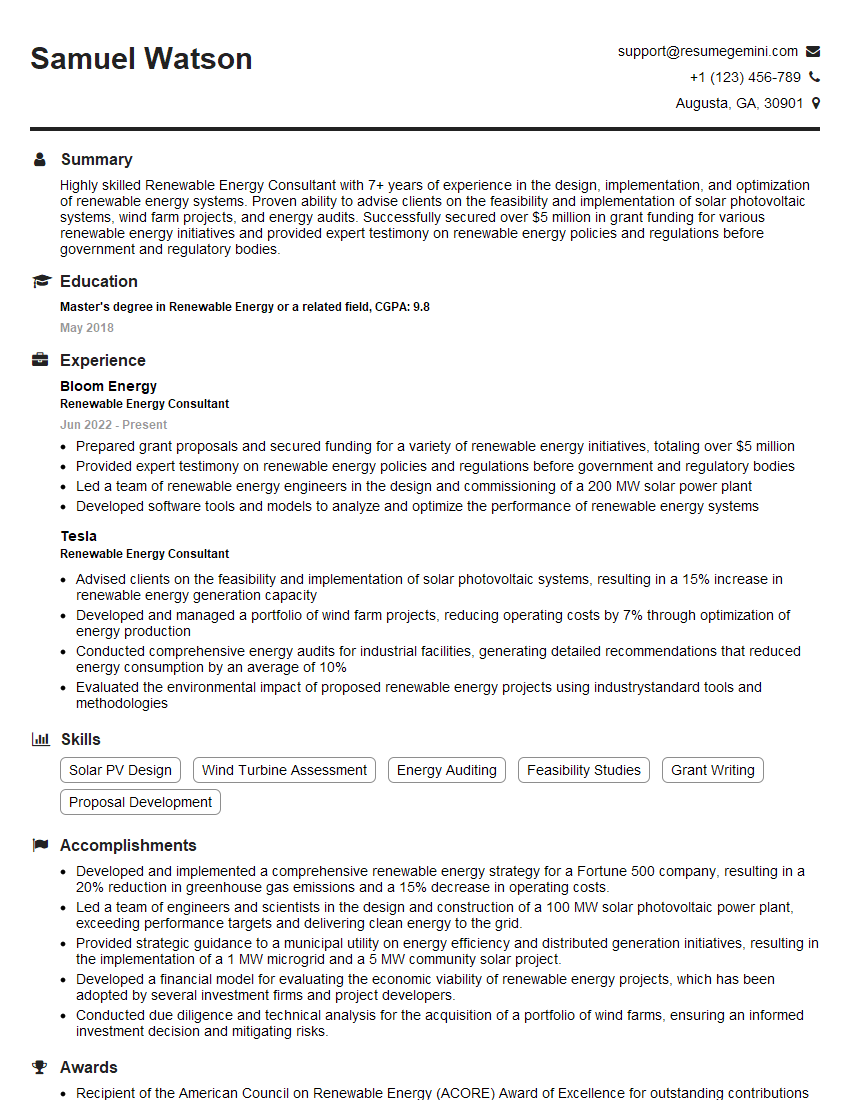
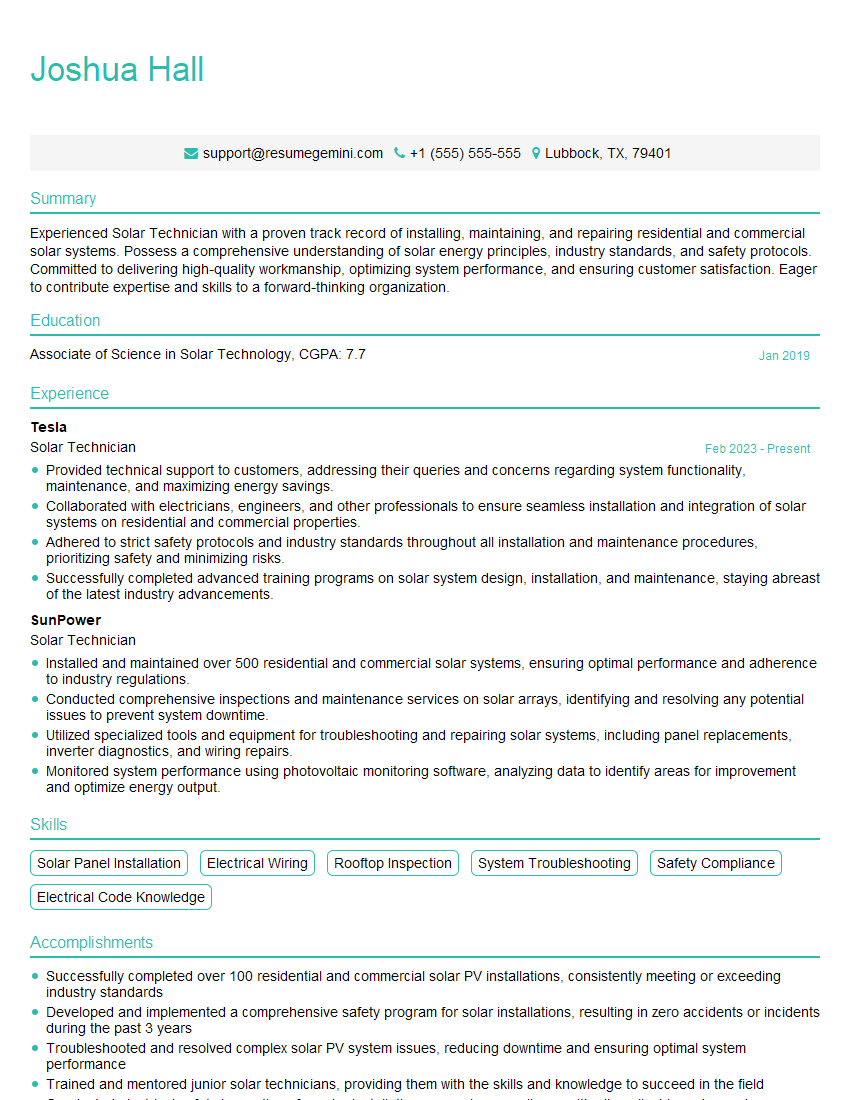
Mastering PV System Inspection opens doors to exciting career opportunities in a rapidly growing renewable energy sector. To maximize your job prospects, a strong, ATS-friendly resume is crucial. ResumeGemini is a trusted resource that can help you craft a professional and impactful resume, designed to get noticed by recruiters. Examples of resumes tailored specifically to PV System Inspection roles are available, ensuring your application stands out from the competition. Invest in your future; build a resume that reflects your skills and experience.
Explore more articles
Users Rating of Our Blogs
Share Your Experience
We value your feedback! Please rate our content and share your thoughts (optional).
What Readers Say About Our Blog
To the interviewgemini.com Webmaster.
Very helpful and content specific questions to help prepare me for my interview!
Thank you
To the interviewgemini.com Webmaster.
This was kind of a unique content I found around the specialized skills. Very helpful questions and good detailed answers.
Very Helpful blog, thank you Interviewgemini team.