Unlock your full potential by mastering the most common Knowledge of floor maintenance and repair techniques interview questions. This blog offers a deep dive into the critical topics, ensuring you’re not only prepared to answer but to excel. With these insights, you’ll approach your interview with clarity and confidence.
Questions Asked in Knowledge of floor maintenance and repair techniques Interview
Q 1. What types of floor coverings are you experienced with installing and maintaining?
My expertise spans a wide range of floor coverings, including hardwood (solid and engineered), laminate, tile (ceramic, porcelain, natural stone), vinyl (sheet and luxury vinyl plank), and carpet. I’m proficient in both the installation and maintenance aspects of these materials, understanding the unique characteristics and requirements of each.
- Hardwood: I’m experienced in various installation methods, including nail-down, glue-down, and floating systems, and adept at handling different wood species and finishes.
- Tile: My tile experience encompasses all aspects from substrate preparation and proper mortar selection to intricate pattern installations and grout application techniques.
- Carpet: I’m familiar with different carpet types (e.g., nylon, wool, polyester), installation techniques, and stretch/power-stretching methods for optimal fit and longevity. I also understand carpet cleaning and repair techniques.
- Laminate and Vinyl: I’m skilled in the proper installation procedures to prevent issues like moisture ingress and clicking/locking system alignment.
This broad experience enables me to provide comprehensive floor maintenance and repair solutions for diverse residential and commercial settings.
Q 2. Describe your experience with hardwood floor refinishing. What are the key steps?
Hardwood floor refinishing is a multi-step process that restores the beauty and longevity of worn hardwood floors. It involves careful preparation, sanding, staining (optional), and finishing. Think of it like giving the floor a complete makeover!
- Preparation: This crucial step involves protecting surrounding areas, removing furniture, and assessing the floor’s condition for any significant damage (e.g., deep gouges or rot) that may require pre-repair.
- Sanding: This is done using progressive grits of sandpaper, starting with a coarser grit to remove imperfections and gradually moving to finer grits to achieve a smooth surface. This often requires specialized sanding equipment and expertise to prevent damage.
- Cleaning: After sanding, the floor is thoroughly cleaned to remove dust and debris, which is critical for proper stain and finish adhesion. A powerful vacuum system is used, often followed by a damp mop.
- Staining (Optional): If desired, a stain is applied to enhance the wood’s color or change it entirely. The stain must be applied evenly and allowed to dry completely.
- Finishing: This typically involves applying multiple coats of polyurethane finish, allowing each coat to dry completely before applying the next. The finish protects the wood from wear and tear and enhances its beauty.
Proper refinishing significantly extends the life of your hardwood floors, saving you the expense of full replacement. I meticulously follow these steps to ensure a high-quality, durable finish.
Q 3. How do you identify and address common problems with tile and grout?
Identifying and addressing problems with tile and grout requires a keen eye and understanding of common issues. Cracked or chipped tiles are often a result of improper installation or structural movement. Grout problems include cracking, staining, and mildew.
- Cracked or Chipped Tiles: These usually require replacement. I carefully match the existing tiles as closely as possible, and I use appropriate adhesives and setting materials for proper installation.
- Cracked Grout: This often indicates underlying structural issues or improper grout selection. Repair involves removing the old, cracked grout and applying fresh grout with a proper sealant to prevent future problems.
- Stained Grout: Stains can be caused by spills or discoloration. I attempt cleaning with appropriate grout cleaning agents; however, if staining is severe, regrouting may be necessary.
- Mildew in Grout: Mildew thrives in damp environments. Thorough cleaning with a mildew-specific cleaner and proper ventilation are crucial. A grout sealer can also help prevent future mildew growth.
For example, if I find significant grout deterioration, I may investigate the underlying cause, such as poor ventilation or water intrusion, before addressing the cosmetic issues.
Q 4. What are the different methods for cleaning various floor types (e.g., hardwood, tile, carpet)?
Cleaning methods vary significantly based on the floor type. Using the wrong method can damage the floor or leave it looking dull.
- Hardwood: Use a damp (not wet) mop with a wood-specific cleaner. Avoid excessive water, which can damage the finish. Regular sweeping or vacuuming with a soft-bristled attachment is crucial.
- Tile: Tile is generally durable and can tolerate more vigorous cleaning. A damp mop with a suitable tile cleaner is effective. For tougher stains, a stronger cleaning agent may be necessary, but always test it in an inconspicuous area first.
- Carpet: Regular vacuuming is essential. Deep cleaning, using either a professional carpet cleaning machine or hiring a professional, should be done periodically to remove embedded dirt and allergens.
I always emphasize using manufacturer-recommended cleaning solutions and avoiding harsh chemicals that could damage the floor surface.
Q 5. Explain the process of stripping and waxing floors.
Stripping and waxing is a traditional floor maintenance method, mostly used for resilient floors like vinyl or older hardwood floors with a durable finish. It involves removing old wax and applying new wax for a shiny and protective layer. Think of it as giving your floor a complete ‘spa day’.
- Stripping: A specialized floor stripper is applied to the floor to dissolve the old wax. This requires proper ventilation and safety precautions due to the strong chemical composition of strippers. A floor machine is often used to scrub the stripper into the floor, and then the residue is rinsed away with clean water.
- Neutralizing: After stripping, a neutralizing solution is used to balance the pH of the floor. This prepares the surface for the new wax.
- Waxing: Once the floor is dry, several coats of floor wax are applied, typically using a floor buffer or applicator. Each coat is allowed to dry completely before applying the next. This ensures a durable, even finish.
- Buffing: After the wax has cured, a final buffing step polishes the surface, resulting in a high-gloss shine.
This method is less common now due to the availability of durable finishes and the environmental concerns associated with some waxes, but it’s still valuable for certain floor types and applications.
Q 6. How do you repair minor scratches and dents in hardwood floors?
Minor scratches and dents in hardwood floors can often be repaired without complete refinishing. The goal is to minimize the appearance of the damage and blend the repair seamlessly into the surrounding area.
- Scratches: Light scratches can often be removed with a wood floor cleaner and a light buffing with a soft cloth or pad. For deeper scratches, a wood filler matched to the floor’s color can be applied, sanded smooth, and then stained and finished to match.
- Dents: Small dents can sometimes be lifted by applying a damp cloth and then using an iron on a low setting to steam the wood. For deeper dents, wood filler is again the preferred solution. Often, a professional may choose to use an epoxy filler for a particularly tight match.
The key is to carefully match the filler color and finish to blend the repair with the existing floor. Using a small artist’s paintbrush is very helpful in this process.
Q 7. What safety precautions do you take when working with floor cleaning chemicals?
Safety is paramount when working with floor cleaning chemicals. These chemicals can be corrosive, irritating, or even toxic if mishandled. My safety procedures always prioritize risk reduction.
- Proper Ventilation: Always work in a well-ventilated area to prevent inhaling fumes. This often means opening windows and using fans.
- Personal Protective Equipment (PPE): I always wear appropriate PPE, including gloves, eye protection, and sometimes a respirator, depending on the chemicals used. This protects my skin and respiratory system from harmful exposure.
- Material Safety Data Sheets (MSDS): I always review the MSDS for any chemicals used before handling them. This provides information on hazards, handling procedures, and first aid in case of accidents.
- Safe Storage: Cleaning chemicals are stored properly and away from any sources of ignition or incompatible materials. They are always stored in clearly labeled containers.
- Disposal: Proper disposal of chemical containers and waste is crucial. I adhere to all local and state regulations regarding hazardous waste disposal.
Safety isn’t just a matter of following rules, it’s about ensuring a healthy and productive work environment. I always prioritize my safety and the safety of those around me.
Q 8. Describe your experience with carpet installation and repair.
My experience with carpet installation and repair spans over 15 years, encompassing residential and commercial projects. I’m proficient in all aspects, from initial site assessment and accurate measurement to the final finishing touches. This includes selecting appropriate padding based on subfloor conditions and the type of carpet, ensuring a level and stable base for installation. I’ve worked with various carpet types – from plush carpeting to commercial-grade nylon – and am experienced in handling different installation methods, including stretch-in, glue-down, and even the more specialized techniques required for stair installations. Repair work often involves patching damaged areas, seam repairs, and addressing issues like pet stains or water damage. A recent project involved replacing a heavily worn carpet in a busy office building, requiring careful planning to minimize disruption to the staff. We successfully installed new carpet during non-business hours, adhering to strict deadlines and achieving a seamless, high-quality finish.
I meticulously inspect the underlying subfloor for any damage before installation, ensuring a stable base. I also pay close attention to details like proper stretching to avoid ripples or wrinkles. My commitment to quality control ensures long-lasting installations that are both aesthetically pleasing and durable.
Q 9. What are the different types of floor adhesives, and when would you use each?
Floor adhesives are crucial for ensuring the longevity and stability of various floor coverings. The choice of adhesive depends largely on the type of flooring and the substrate. Here are some common types:
- Pressure-sensitive adhesives (PSA): These are commonly found in peel-and-stick vinyl tiles or underlayments. They’re convenient for DIY projects but might not be suitable for high-traffic areas or uneven surfaces.
- Water-based adhesives: These are environmentally friendly, easy to clean up, and suitable for many flooring types like hardwood, laminate, and vinyl. They have a longer open time, allowing for adjustments during installation.
- Solvent-based adhesives: These offer strong bonds and faster drying times, making them ideal for heavy-duty applications or areas requiring quick turnaround, such as commercial settings. However, they have stronger fumes and require more careful handling.
- Epoxy adhesives: Known for their exceptional strength and durability, epoxy adhesives are perfect for situations requiring a long-lasting, moisture-resistant bond, particularly in areas exposed to water or heavy wear, like garages or industrial settings. They require precise mixing and fast working times.
For instance, I would use a water-based adhesive for installing hardwood flooring in a residential setting due to its ease of use and low VOC content. In a commercial kitchen, however, I would likely opt for a solvent-based adhesive or even epoxy for its superior durability and moisture resistance.
Q 10. How do you assess the condition of a floor before starting a repair or maintenance project?
Assessing a floor’s condition is paramount before any repair or maintenance project. I use a methodical approach that includes a visual inspection, tactile examination, and sometimes, the use of specialized tools. The visual inspection involves looking for obvious signs of damage like cracks, holes, loose tiles, stains, or unevenness. Tactile examination helps assess the texture, firmness, and any signs of instability or softness underfoot. I look for squeaking or creaking sounds, which can indicate underlying issues.
For hardwood floors, I would also check for moisture content using a moisture meter, as high moisture can lead to warping or rotting. For concrete floors, I’d assess the levelness, presence of cracks or spalling, and the overall surface integrity. Documentation through photography and detailed notes is crucial. This thorough assessment helps me determine the best course of action, whether it’s a simple cleaning, minor repairs, or a more extensive renovation project. A recent project involved a concrete floor in a warehouse that showed signs of significant cracking and deterioration. My thorough assessment led to the recommendation of a full resurfacing rather than just a patching job, ensuring the long-term structural integrity of the floor.
Q 11. What tools and equipment are essential for floor maintenance and repair?
The essential tools and equipment for floor maintenance and repair vary depending on the type of floor and the specific task. However, some common essentials include:
- Hand tools: Putty knives, scrapers, hammers, chisels, measuring tapes, levels, utility knives.
- Power tools: Drills, sanders (both belt and orbital), saws (circular and jig saw), floor polishers.
- Specialized tools: Moisture meters, floor screeders (for concrete leveling), carpet stretchers.
- Safety equipment: Safety glasses, dust masks, ear protection, gloves.
- Cleaning supplies: Vacuum cleaners, floor cleaning solutions, mop and buckets.
For example, when working with hardwood floors, I’ll need various sandpapers, a sander, and wood filler. For carpet installation, a power stretcher is essential. Having the right tools at hand ensures efficiency and quality workmanship, while safety equipment is paramount to protect myself and my team.
Q 12. How do you handle unexpected issues that arise during a project?
Unexpected issues are a reality in any floor maintenance project. My approach involves a combination of preparation, problem-solving skills, and clear communication. Before starting, I carefully assess the site, discussing potential challenges with the client. If, for instance, I uncover unexpected subfloor damage during a carpet installation, I immediately document the issue with photographs and explain the necessary adjustments to the client, outlining the implications on the timeline and budget. I prioritize open communication to prevent misunderstandings and ensure the client is informed every step of the way.
For example, discovering hidden plumbing issues during a concrete floor repair required coordinating with a plumber, slightly delaying the project but ensuring the long-term success of the work. Adaptability and problem-solving are critical aspects of my work, allowing me to handle unforeseen circumstances effectively and efficiently.
Q 13. Describe your experience with concrete floor finishing techniques.
My experience with concrete floor finishing techniques encompasses various methods to achieve different aesthetic and functional results. I’m proficient in preparing the concrete substrate, including grinding, patching, and leveling. I’m skilled in applying various finishes, such as:
- Polished concrete: This involves grinding and polishing the concrete to a high-gloss sheen, creating a durable and aesthetically pleasing surface.
- Stained concrete: Applying acid stains or dyes to the concrete creates unique patterns and colors, enhancing the visual appeal.
- Epoxy coatings: These provide a protective layer, enhancing durability and chemical resistance.
- Stamped concrete: This technique replicates the look of other materials like brick or stone, offering versatility in design.
Recently, I finished a large warehouse floor using a polished concrete technique, which required meticulous attention to detail and the use of specialized diamond grinding tools to achieve a smooth, mirror-like finish. The final result was a durable, aesthetically pleasing, and easy-to-maintain floor.
Q 14. Explain your knowledge of different types of flooring sealants.
Floor sealants are essential for protecting flooring from wear and tear, moisture damage, and staining. Different types of sealants cater to various flooring materials and environmental conditions:
- Water-based sealants: These are environmentally friendly and easy to apply, suitable for hardwood floors and other porous materials. They offer good protection against moisture but may not be as durable as other options.
- Oil-based sealants: These provide a more durable and water-resistant finish, often used for hardwood floors in high-traffic areas. They can, however, take longer to dry and have stronger odors.
- Epoxy sealants: These are highly durable and resistant to chemicals and abrasion, making them suitable for concrete floors or areas with heavy wear and tear. They offer excellent protection against moisture and staining.
- Polyurethane sealants: These are clear coatings that enhance the appearance and provide protection against scratches and scuffs. They are commonly used for hardwood floors and other delicate surfaces.
The choice depends on the specific floor type, expected wear and tear, and environmental factors. For a high-traffic hardwood floor in a busy restaurant, I might recommend a durable polyurethane sealant. For a concrete floor in a garage, a strong epoxy sealant would be more appropriate. Proper application, including multiple coats and sufficient drying time, is crucial to ensure the sealant’s effectiveness.
Q 15. How do you ensure the longevity of floor coverings?
Ensuring the longevity of floor coverings involves a multifaceted approach encompassing proper installation, regular maintenance, and proactive damage prevention. Think of it like caring for a valuable piece of furniture – consistent attention pays off.
- Proper Installation: This is paramount. Substandard installation, even with high-quality materials, will lead to premature wear and tear. For example, uneven subflooring can cause tiles to crack or hardwood to warp. Using the correct adhesives and following manufacturer guidelines is crucial.
- Regular Cleaning: Regular, appropriate cleaning prevents dirt and debris from accumulating, which can scratch or dull the surface. Vacuuming regularly, using appropriate cleaning solutions (never harsh chemicals!), and promptly addressing spills are vital. For instance, using a slightly damp mop on hardwood, rather than a soaking wet one, avoids water damage.
- Protective Measures: Use mats at entrances to prevent dirt and grit from being tracked in. Place furniture pads under heavy pieces to avoid indentations. For high-traffic areas, consider using area rugs to reduce wear and tear.
- Addressing Issues Promptly: Don’t ignore small problems. A small scratch on a hardwood floor, if left unattended, can become a larger, more costly issue. Repair minor damage as soon as possible.
By following these steps, you can significantly extend the lifespan of your floor coverings and avoid costly replacements down the line.
Career Expert Tips:
- Ace those interviews! Prepare effectively by reviewing the Top 50 Most Common Interview Questions on ResumeGemini.
- Navigate your job search with confidence! Explore a wide range of Career Tips on ResumeGemini. Learn about common challenges and recommendations to overcome them.
- Craft the perfect resume! Master the Art of Resume Writing with ResumeGemini’s guide. Showcase your unique qualifications and achievements effectively.
- Don’t miss out on holiday savings! Build your dream resume with ResumeGemini’s ATS optimized templates.
Q 16. What are your preferred methods for removing stains from different types of flooring?
Stain removal techniques vary significantly depending on the flooring type. It’s crucial to test any cleaning solution on an inconspicuous area first to avoid damage.
- Hardwood Floors: For minor spills, blot immediately with a clean cloth. For more stubborn stains, use a wood cleaner specifically designed for your type of finish. Avoid excessive water.
- Tile Floors: Most tile can withstand more aggressive cleaning. Use a pH-neutral cleaner and a non-abrasive scrub brush. Grout can be cleaned with a grout brush and specialized cleaner.
- Carpet: Blot spills immediately. For set-in stains, use a carpet cleaner appropriate for the carpet’s fiber type. Professional carpet cleaning is often recommended at least annually.
- Vinyl/Laminate: Clean with a damp mop and a mild detergent. Avoid harsh chemicals or abrasive cleaners, as they can damage the surface.
Always refer to the manufacturer’s cleaning recommendations for your specific flooring.
Q 17. Describe your experience with epoxy floor installation.
I have extensive experience with epoxy floor installation, from small residential projects to large commercial installations. Epoxy flooring offers exceptional durability and is ideal for high-traffic areas that require chemical resistance. The process typically involves:
- Surface Preparation: This is the most critical step. The floor must be meticulously cleaned, ground, and primed to ensure proper adhesion of the epoxy.
- Epoxy Application: This typically involves multiple coats, each requiring careful mixing and application to achieve a smooth, even finish. Different techniques are used depending on the desired look (e.g., broadcast flakes for added texture and durability).
- Curing Time: Epoxy requires a specific curing time before it can be walked on or subjected to heavy use. This time varies depending on the specific epoxy product and environmental conditions.
- Post-Installation Care: Proper maintenance following installation is crucial for extending its life. This includes avoiding harsh chemicals and utilizing suitable cleaning products.
I’ve worked on epoxy projects in garages, workshops, and commercial kitchens, consistently delivering high-quality, durable results. One particularly challenging project involved repairing and recoating a heavily damaged epoxy floor in a busy industrial setting, requiring careful planning and efficient execution to minimize downtime.
Q 18. How do you estimate the time and cost required for a floor maintenance or repair project?
Estimating time and cost involves a thorough assessment of the project’s scope. I begin by performing a site visit to determine the following:
- Floor Area: This is a basic factor in determining materials and labor costs.
- Floor Type: Different floor types require different techniques and materials, impacting both time and cost.
- Extent of Damage/Repair: Minor repairs will take less time and cost less than major renovations.
- Accessibility: Difficult access can increase labor costs and time.
- Client’s Requirements: Specific client requests such as material choices or finish quality will influence the final cost.
Once this information is gathered, I can develop a detailed proposal outlining the project timeline and cost breakdown. I always provide transparent pricing to avoid any surprises for the client. For instance, I may provide a range of costs based on different material options. I pride myself on accurate estimates to ensure both client satisfaction and project profitability.
Q 19. What are some common causes of floor damage, and how can they be prevented?
Many factors contribute to floor damage. Understanding these helps in prevention.
- Water Damage: Water is a major culprit, causing warping, mold, and structural damage. Preventative measures include prompt spill cleanup, proper ventilation, and addressing leaks immediately.
- Impact Damage: Heavy objects, impacts, and dropped items can cause dents and cracks. Using protective mats and furniture pads helps minimize this.
- Abrasion: Foot traffic, dragging of furniture, and dirt and grit can scratch and wear down floors. Regular cleaning and protective measures such as mats are crucial.
- Chemical Damage: Harsh chemicals can damage many flooring types. Using appropriate cleaners and avoiding spills is vital.
- Improper Installation: As mentioned earlier, this is a leading cause of premature floor failure. It’s essential to use experienced and qualified installers.
Regular inspections and preventative maintenance significantly reduce the likelihood of damage, preventing costly repairs in the long run. Think of it like regular car maintenance; small, preventative measures prevent larger, more expensive problems later.
Q 20. How do you deal with customers who have complaints about your work?
Addressing customer complaints is paramount. I approach this with empathy and professionalism.
- Listen Carefully: I allow the customer to fully explain their concerns without interruption.
- Acknowledge their Feelings: I validate their feelings and show empathy for their frustration.
- Investigate the Issue: I thoroughly investigate the complaint to understand the root cause. Photographs and detailed notes are often helpful.
- Offer Solutions: Based on the investigation, I offer practical solutions, which may include repairs, replacements, or adjustments to the work.
- Follow Up: After addressing the complaint, I follow up with the customer to ensure they are satisfied with the resolution.
My goal is to resolve the issue to the customer’s satisfaction and maintain a positive professional relationship. Even if the complaint is not fully justified, a calm and professional response is always the best approach. Transparency and a willingness to find a resolution are key.
Q 21. Describe your experience with working in both residential and commercial settings.
I have extensive experience in both residential and commercial settings. While the scale and scope of projects differ, the principles of quality workmanship and customer satisfaction remain consistent.
- Residential: Residential work often involves smaller-scale projects, focusing on aesthetics and enhancing the home’s living space. Client interaction and personalized service are key. For example, I recently completed a hardwood floor installation in a Victorian home, paying close attention to detail to match the existing architecture.
- Commercial: Commercial projects tend to be larger, with a strong emphasis on durability, safety, and efficiency. Meeting deadlines and adhering to strict specifications are critical. I’ve worked on epoxy flooring for large warehouses and high-traffic retail spaces.
My adaptability and experience allow me to seamlessly transition between these environments, providing consistently high-quality work regardless of the project’s setting.
Q 22. What are the latest industry trends in floor maintenance and repair?
The flooring industry is constantly evolving, with a strong emphasis on sustainability, durability, and ease of maintenance. Three key trends stand out:
- Sustainable Materials: We’re seeing a significant increase in the use of recycled and reclaimed materials, such as bamboo, cork, and even certain types of engineered wood. These options reduce environmental impact and appeal to eco-conscious clients. For instance, I recently completed a project using reclaimed wood flooring, which gave the space a unique character while minimizing waste.
- Resilient Flooring: High-performance materials like luxury vinyl tile (LVT) and engineered hardwood are gaining popularity due to their durability, water resistance, and ease of maintenance. LVT, in particular, is incredibly versatile, mimicking the look of natural stone or hardwood at a fraction of the cost and with significantly less upkeep. I’ve found it particularly useful in high-traffic commercial spaces.
- Technological Advancements: Automated cleaning equipment and specialized floor coatings are improving efficiency and extending the lifespan of floors. For example, robotic scrubbers are becoming more common, allowing for faster and more consistent cleaning in large areas. I recently invested in a new type of UV-cured sealant which drastically reduces the drying time and improves the finish’s longevity.
Q 23. How do you prioritize tasks and manage your time effectively?
Effective time management is crucial in this field. I use a combination of strategies:
- Prioritization Matrix: I categorize tasks based on urgency and importance (Eisenhower Matrix). Urgent and important tasks are tackled first, followed by important but not urgent (planning and preventative maintenance). Less important tasks are delegated or scheduled for later.
- Detailed Scheduling: I use digital calendars and project management software to schedule tasks, allowing for buffer time between appointments and accounting for potential delays. This ensures I’m prepared for unexpected issues.
- Efficient Routing: When I have multiple jobs in a day, I optimize my route to minimize travel time. This is especially crucial in larger commercial projects where travel between locations can eat into productive time.
For example, if I have a large sanding job followed by a small repair, I’ll complete the sanding first to utilize my larger equipment most efficiently, and then move on to the smaller repair.
Q 24. Describe your experience working with different types of subflooring.
My experience encompasses a wide range of subflooring materials, each with its own unique characteristics and installation requirements.
- Plywood: A common choice for its strength and stability, particularly suitable for hardwood flooring. Proper grading and moisture content are vital to prevent issues like squeaking or buckling.
- OSB (Oriented Strand Board): A cost-effective alternative to plywood, often used in residential settings. However, it requires careful attention to moisture control as it’s more susceptible to damage.
- Concrete: A robust and durable subfloor, ideal for heavy-duty applications. However, it requires careful leveling and moisture mitigation to prevent issues with upper floor coverings.
- LVL (Laminated Veneer Lumber): Used for added strength and span, especially in situations where joists are spaced further apart.
I’ve encountered situations where the subfloor was damaged, requiring me to repair or replace sections before installing the final floor covering. Each case demands a careful assessment to choose the right solution for longevity and safety.
Q 25. Explain your understanding of the building codes related to flooring installation.
Understanding building codes is non-negotiable. I’m familiar with codes related to:
- Moisture Content: Strict limits exist on the moisture content of both the subfloor and the flooring material to prevent warping, buckling, and mold growth. These vary depending on the material used.
- Accessibility: Codes specify requirements for ramps, thresholds, and flooring materials to ensure accessibility for people with disabilities.
- Fire Safety: Certain flooring materials must meet fire-resistance standards, particularly in commercial or high-occupancy buildings.
- Installation Methods: Codes often dictate specific installation methods, such as fastening requirements for hardwood flooring or adhesives for tile.
Ignoring these codes can lead to costly repairs, legal issues, and safety hazards. I always consult the local building codes before starting a project and meticulously document my compliance.
Q 26. How do you maintain your tools and equipment?
Proper tool maintenance is critical for both safety and efficiency. My routine includes:
- Cleaning: Thorough cleaning after each use to remove dust, debris, and adhesive residue. This prevents damage and ensures the tools function optimally.
- Sharpening/Honing: Regular sharpening of blades (sanders, knives) is essential for clean cuts and efficient operation. I maintain a sharpening schedule to avoid dull tools, which can lead to uneven finishes or accidents.
- Storage: Proper storage in a dry, secure location prevents damage from moisture or accidental impacts. This also aids in quick identification and access.
- Regular Inspection: Periodically inspect tools for wear and tear, replacing or repairing parts as needed to avoid breakdowns during projects. This preventative maintenance saves time and money in the long run.
Think of it like a car; regular maintenance prevents larger, more expensive problems down the line.
Q 27. What is your experience with moisture damage to flooring?
Moisture damage is a significant concern. It can lead to warping, buckling, mold growth, and structural issues. My approach includes:
- Moisture Testing: Before starting any project, I conduct thorough moisture testing of the subfloor using a moisture meter. This helps identify areas with excessive moisture.
- Moisture Mitigation: If excessive moisture is detected, I work to identify and address the source, such as leaks or inadequate ventilation. This often involves consulting with other trades such as plumbers.
- Remediation: Depending on the severity of the damage, remediation may involve drying the subfloor using specialized equipment, replacing damaged sections, or applying moisture barriers.
- Preventative Measures: I recommend preventative measures to clients, such as proper ventilation, use of moisture barriers, and regular inspection for leaks.
I’ve had to address significant moisture problems in older homes, often requiring extensive repair and replacement of subflooring before new flooring could be installed. Early detection is key to limiting the damage and associated costs.
Q 28. How familiar are you with different types of floor leveling compounds?
I’m familiar with various floor leveling compounds, each with its own strengths and weaknesses:
- Self-Leveling Compounds: These compounds flow easily to create a perfectly level surface, ideal for large areas. The drying time varies depending on the product and the thickness of the application.
- Cement-Based Compounds: Strong and durable, but require more skill to apply evenly and can crack if not properly mixed and applied.
- Polymer-Modified Compounds: Offer excellent adhesion and flexibility, making them suitable for various subfloors. They tend to be more expensive than cement-based options.
The choice of compound depends on several factors, including the type of subfloor, the amount of leveling required, and the budget. I carefully assess each situation to select the most appropriate product for the job. For example, a thin application in a small area might call for a faster-drying, self-leveling compound while a significant irregularity in a large concrete slab might need a cement-based compound for superior strength.
Key Topics to Learn for Knowledge of Floor Maintenance and Repair Techniques Interview
- Floor Surface Types & Characteristics: Understanding the properties of various flooring materials (e.g., hardwood, tile, carpet, vinyl) including their strengths, weaknesses, and maintenance requirements. This includes recognizing different types of finishes and their impact on cleaning and repair.
- Cleaning & Maintenance Procedures: Practical application of appropriate cleaning methods for different floor types, including the use of specialized equipment and cleaning agents. This also covers preventative maintenance practices to extend the lifespan of flooring.
- Repair Techniques: Knowledge of common floor repairs, such as patching scratches, dents, and holes in various flooring materials. This includes understanding the use of appropriate fillers, sealants, and repair kits.
- Floor Finishing & Refinishing: Understanding the processes involved in applying and maintaining floor finishes, including sanding, staining, and sealing. This encompasses knowledge of different finish types and their suitability for various floor materials.
- Safety Procedures & Equipment: Proper handling of cleaning chemicals, use of safety equipment (e.g., respirators, gloves), and understanding workplace safety regulations related to floor maintenance. This also includes the safe operation and maintenance of floor cleaning equipment.
- Troubleshooting Common Floor Problems: Diagnosing and resolving common issues like squeaky floors, uneven surfaces, water damage, and pest infestations. This requires a practical understanding of root causes and effective solutions.
- Cost Estimation & Budgeting: Ability to estimate material and labor costs for floor maintenance and repair projects. This includes understanding factors influencing pricing and creating realistic budgets.
Next Steps
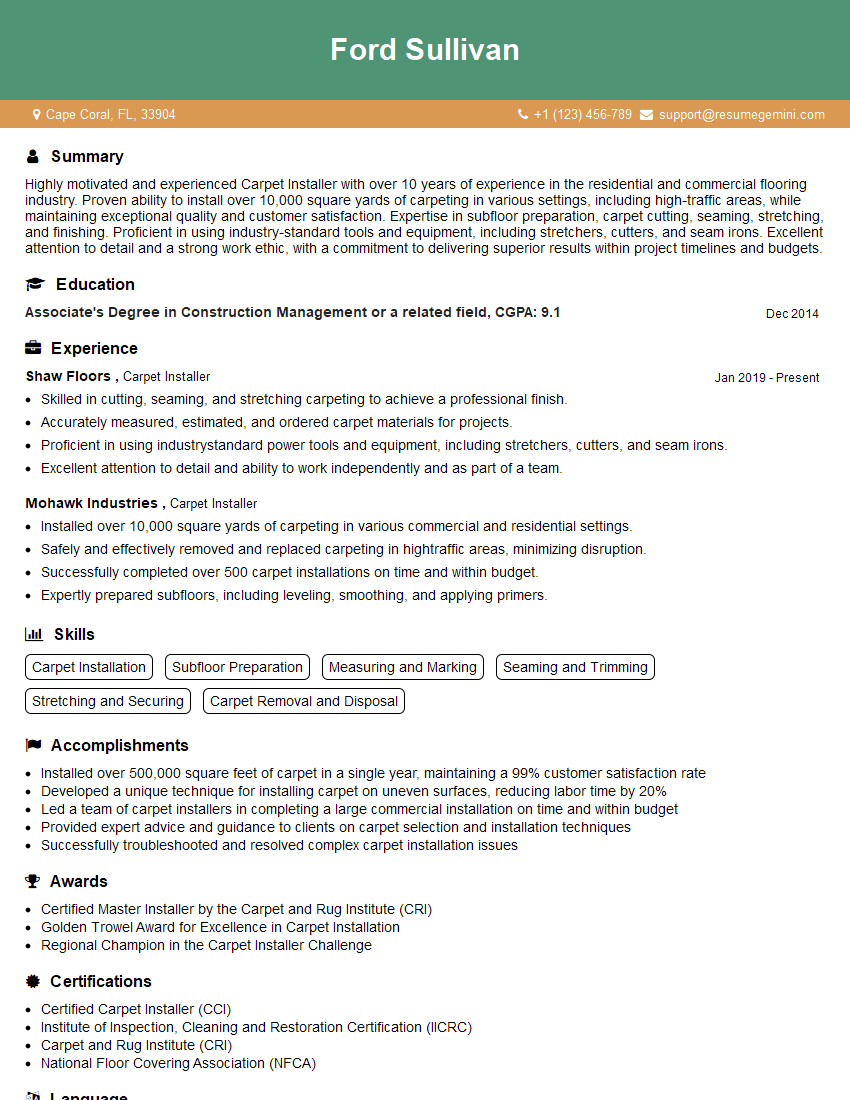
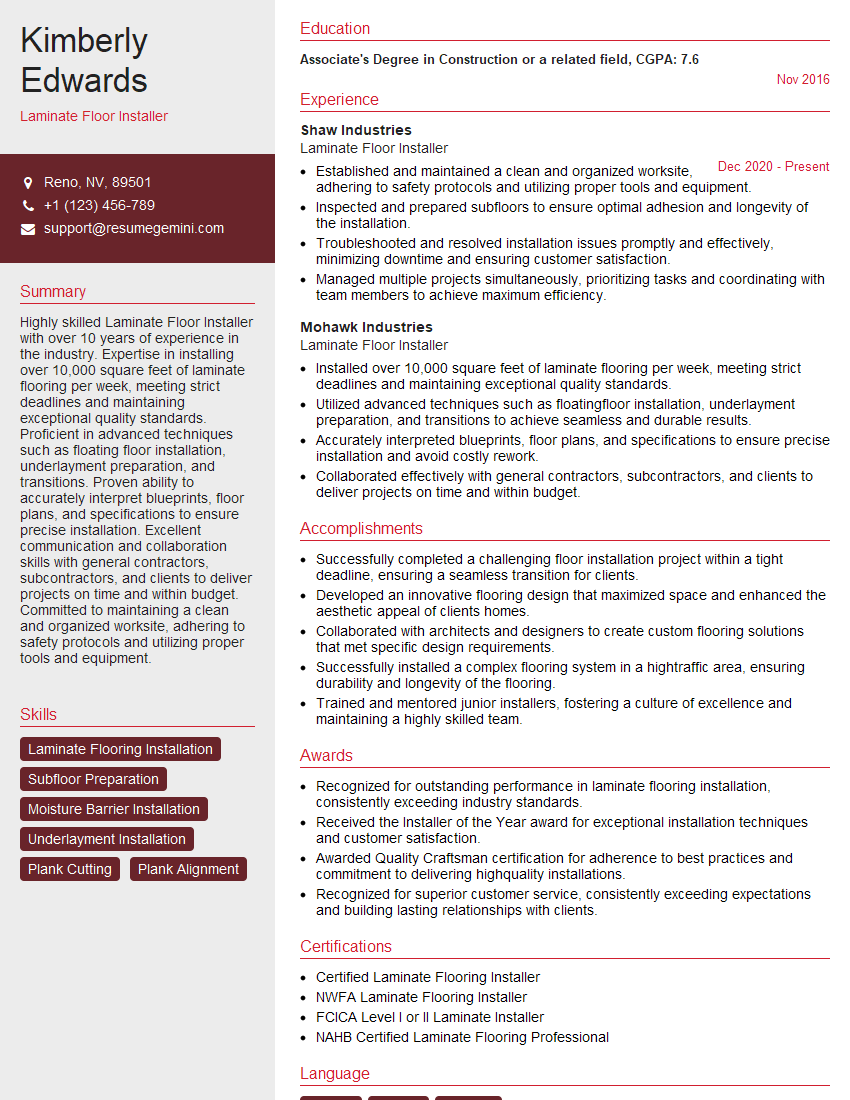
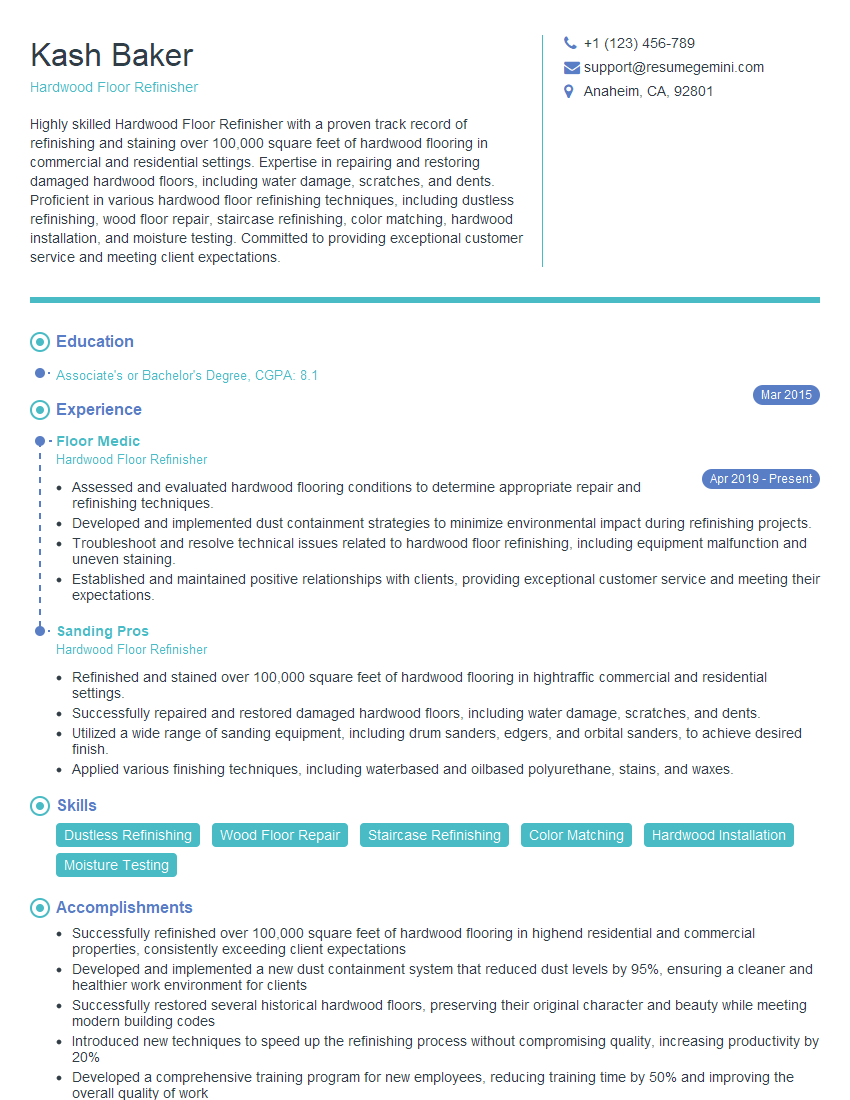
Mastering knowledge of floor maintenance and repair techniques is crucial for career advancement in this field, opening doors to higher-paying roles and increased responsibility. A well-crafted resume is your key to unlocking these opportunities. An ATS-friendly resume, optimized to highlight your skills and experience, significantly increases your chances of getting noticed by potential employers. ResumeGemini is a trusted resource to help you build a professional and impactful resume that showcases your expertise in floor maintenance and repair. Examples of resumes tailored to this specific field are available to guide you through the process, ensuring your application stands out from the competition.




Explore more articles
Users Rating of Our Blogs
Share Your Experience
We value your feedback! Please rate our content and share your thoughts (optional).
What Readers Say About Our Blog
To the interviewgemini.com Webmaster.
Very helpful and content specific questions to help prepare me for my interview!
Thank you
To the interviewgemini.com Webmaster.
This was kind of a unique content I found around the specialized skills. Very helpful questions and good detailed answers.
Very Helpful blog, thank you Interviewgemini team.