The right preparation can turn an interview into an opportunity to showcase your expertise. This guide to Knowledge of HIPAA and other regulatory guidelines interview questions is your ultimate resource, providing key insights and tips to help you ace your responses and stand out as a top candidate.
Questions Asked in Knowledge of HIPAA and other regulatory guidelines Interview
Q 1. Explain the key components of the HIPAA Privacy Rule.
The HIPAA Privacy Rule establishes national standards to protect individuals’ medical records and other personal health information held by covered entities and their business associates. Think of it as a shield protecting your sensitive medical data.
- Individual Rights: The rule gives patients significant control over their health information. They have the right to access their records, request corrections, and restrict certain disclosures. Imagine being able to review your medical history and ensure accuracy.
- Protected Health Information (PHI): This defines what type of information is covered – it’s basically any individually identifiable health information. This includes things like your name, address, medical records, and even your billing information.
- Uses and Disclosures: The rule permits certain uses and disclosures of PHI, such as treatment, payment, and healthcare operations. However, it also outlines strict requirements for obtaining authorization for other uses and disclosures. For instance, sharing your information with an insurance company for billing is permitted, but sharing it with a marketing firm requires your explicit consent.
- Notice of Privacy Practices (NPP): Covered entities must provide patients with a clear and concise notice explaining their rights and the entity’s privacy practices. It’s like a user manual for how your health information will be handled.
- Administrative Safeguards: These are the policies and procedures that covered entities must put in place to ensure compliance. Think of this as the rulebook for how the organization will protect your data.
Q 2. Describe the HIPAA Security Rule and its safeguards.
The HIPAA Security Rule specifies how covered entities must protect the confidentiality, integrity, and availability of electronic protected health information (ePHI). Think of it as a fortress protecting your digital health records.
- Administrative Safeguards: These focus on the policies and procedures for managing ePHI, such as security awareness training for staff (everyone needs to know the rules!), risk analysis (identifying potential threats), and security incident procedures (having a plan for when things go wrong).
- Physical Safeguards: These deal with the physical security of the locations where ePHI is stored, such as restricting access to server rooms and using surveillance systems. It’s about securing the physical space where the data lives.
- Technical Safeguards: These involve technology-based controls to protect ePHI. Examples include access controls (passwords and user IDs), audit controls (tracking who accesses what data and when), and data encryption (scrambling the information so only authorized users can understand it). These are like the digital locks and security systems.
Imagine a hospital using strong passwords, encrypting patient files, and regularly backing up their data – these are all examples of the Security Rule in action.
Q 3. What is the HIPAA Breach Notification Rule and when is it triggered?
The HIPAA Breach Notification Rule requires covered entities and business associates to provide notification following a breach of unsecured protected health information (PHI). This rule is triggered when there is unauthorized acquisition, access, use, or disclosure of ePHI that compromises the security or privacy of the information.
A breach is typically triggered when there’s a reasonable basis to believe that unauthorized access has occurred, and the risk of harm is significant. For example, if a laptop containing patient data is stolen, or if a hacker gains access to a database, a breach notification is required. The notification must be made to the affected individuals, the Secretary of Health and Human Services (HHS), and, in some cases, to the media.
The rule outlines specific timelines for notification, ensuring that individuals are informed as quickly as possible about potential risks to their health information.
Q 4. What are the penalties for HIPAA violations?
Penalties for HIPAA violations can be substantial and vary depending on the severity of the violation, the knowledge of the violation, and the level of culpability. Penalties can include:
- Civil Monetary Penalties (CMPs): These are monetary fines imposed by the Office for Civil Rights (OCR) at HHS. The amount can range from a few hundred dollars to many thousands of dollars per violation.
- Criminal Penalties: In cases of willful neglect or knowing and intentional disregard of HIPAA regulations, criminal penalties can be significant, including hefty fines and even imprisonment. These are reserved for the most serious violations.
- Corrective Action Plans: OCR may require covered entities to implement corrective action plans to address the identified violations. This involves making changes to ensure future compliance.
The penalties reflect the seriousness with which the government takes violations of this important legislation protecting patient privacy.
Q 5. Define protected health information (PHI).
Protected Health Information (PHI) is individually identifiable health information held or transmitted by a covered entity or its business associate, in any form or media, whether electronic, paper, or oral. This means any information that can be used to identify a person and relates to their past, present, or future physical or mental health or condition.
Examples include:
- Name
- Address
- Medical record numbers
- Social security numbers
- Dates of birth
- Diagnosis information
- Treatment information
- Payment information
It’s crucial to remember that even seemingly innocuous pieces of information, when combined, could potentially identify an individual. The Privacy Rule aims to protect this sensitive information from unauthorized disclosure.
Q 6. Explain the concept of minimum necessary use of PHI.
The minimum necessary standard means that covered entities and their business associates must limit the use, access, and disclosure of PHI to the minimum amount necessary to accomplish the intended purpose. Think of it like using only the right tool for the job – you wouldn’t use a sledgehammer to crack a nut.
For instance, if a doctor needs to consult a patient’s allergy information for a prescription, they shouldn’t access the entire medical record. They should only access the allergy information. This principle minimizes the risk of unauthorized disclosure and enhances patient privacy.
Implementing this standard often involves training staff on proper information handling practices, developing specific access control mechanisms within electronic health record systems, and establishing clear guidelines on data sharing.
Q 7. What are the permitted uses and disclosures of PHI under HIPAA?
HIPAA permits the use and disclosure of PHI without individual authorization for several purposes, primarily categorized as treatment, payment, and healthcare operations (TPO).
- Treatment: This includes providing, coordinating, or managing healthcare and related services. For example, sharing information between doctors within a healthcare system to coordinate care.
- Payment: This involves activities related to the billing and collection of healthcare charges. For example, sending a bill to an insurance company.
- Healthcare Operations: This includes activities such as quality assessment, quality improvement, and case management. For example, using patient data for quality improvement initiatives.
Beyond TPO, there are other permitted disclosures, such as those required by law, for public health purposes, or to prevent serious harm. Each of these permitted uses and disclosures must adhere to the minimum necessary standard and other privacy safeguards outlined in the HIPAA Privacy Rule.
It is essential to remember that while these uses are permitted, covered entities still need to ensure they are acting responsibly and implementing appropriate safeguards to protect PHI.
Q 8. Describe the role of a HIPAA Privacy Officer.
The HIPAA Privacy Officer is a critical role within any organization that handles Protected Health Information (PHI). They are responsible for developing, implementing, and maintaining the organization’s policies and procedures to ensure compliance with the HIPAA Privacy Rule. Think of them as the chief guardian of patient privacy. Their duties encompass a wide range, including:
- Developing and implementing privacy policies and procedures.
- Training employees on HIPAA privacy regulations.
- Responding to patient privacy complaints and inquiries.
- Conducting internal audits to ensure compliance.
- Managing the organization’s breach notification process.
- Staying abreast of changes in HIPAA regulations and best practices.
For example, a Privacy Officer might create a comprehensive policy on disclosing PHI to family members, ensuring it aligns with both HIPAA and the organization’s ethical guidelines. They would also be responsible for investigating any potential privacy breaches, determining the extent of the breach, and implementing corrective actions.
Q 9. What is a Business Associate Agreement (BAA) and why is it important?
A Business Associate Agreement (BAA) is a legally binding contract between a covered entity (like a hospital or doctor’s office) and a business associate (a third-party vendor) that handles PHI on behalf of the covered entity. It’s crucial because it ensures the business associate adheres to the same HIPAA standards as the covered entity. Imagine a hospital using a cloud service to store patient records – the BAA dictates how that cloud provider must protect the PHI they access. Without a BAA, the covered entity remains responsible for the business associate’s HIPAA compliance, even if they fail to protect patient data. A strong BAA outlines specific responsibilities, including:
- Data security measures the business associate must implement.
- Procedures for handling and disposing of PHI.
- The business associate’s obligation to report data breaches.
- The covered entity’s right to audit the business associate’s operations.
A well-drafted BAA is vital for protecting patient privacy and avoiding hefty fines associated with HIPAA non-compliance. It’s not just a formality; it’s a critical component of a robust HIPAA compliance program.
Q 10. How does HIPAA apply to electronic health records (EHRs)?
HIPAA applies to electronic health records (EHRs) in a significant way, extending all its provisions to the digital realm. The Privacy, Security, and Breach Notification Rules all apply to EHRs, mandating specific security measures to protect the confidentiality, integrity, and availability of ePHI (electronic Protected Health Information). This includes requirements for:
- Access control: Restricting access to ePHI based on roles and need-to-know principles.
- Data encryption: Protecting ePHI from unauthorized access through encryption both in transit and at rest.
- Audit trails: Tracking all access to and changes made to ePHI.
- Integrity checks: Ensuring the accuracy and completeness of ePHI.
- Breach notification: Promptly notifying affected individuals and the government of data breaches.
For instance, a hospital using an EHR system must ensure that only authorized personnel can access patient records, and that all access attempts are logged. Failure to comply with these provisions can result in significant penalties.
Q 11. Explain the different types of security safeguards under the HIPAA Security Rule.
The HIPAA Security Rule outlines three main categories of safeguards to protect ePHI: administrative, physical, and technical. Think of them as the three legs of a stool – you need all three for stability.
- Administrative safeguards: These are policies, procedures, and processes that govern how ePHI is handled. Examples include risk assessments, security awareness training for employees, and incident response plans.
- Physical safeguards: These are measures to protect physical access to ePHI, including locking doors, restricting access to server rooms, and protecting computers from unauthorized physical access.
- Technical safeguards: These involve using technology to protect ePHI. Examples include access control, data encryption, audit trails, and intrusion detection systems.
For example, a technical safeguard might involve implementing strong password policies and multi-factor authentication to restrict access to the EHR system. A physical safeguard could be installing surveillance cameras in server rooms, while an administrative safeguard would be creating a comprehensive policy for handling lost or stolen devices containing ePHI.
Q 12. Describe your experience with risk assessments related to HIPAA compliance.
I have extensive experience conducting HIPAA-related risk assessments. My approach involves a systematic process: first, identifying all assets containing PHI, then analyzing potential threats and vulnerabilities to those assets. This might include reviewing access controls, network security, and employee training procedures. Next, I assess the likelihood and potential impact of each threat. This is often done using a qualitative or quantitative approach based on the specific context. Finally, I recommend and implement appropriate security measures to mitigate those risks.
For example, in a recent assessment, we identified a vulnerability in a third-party vendor’s system that could have resulted in a breach. We then worked with the vendor to implement necessary security upgrades and updated the BAA accordingly. This risk assessment not only reduced the threat to patient data but also demonstrated to the regulatory bodies proactive efforts to protect patient information.
Q 13. How do you ensure the confidentiality, integrity, and availability of PHI?
Ensuring the confidentiality, integrity, and availability of PHI (CIA triad) is the cornerstone of HIPAA compliance. These three principles are interconnected and crucial for protecting patient data.
- Confidentiality: This involves restricting access to PHI to only authorized individuals. This is achieved through access controls, encryption, and strict adherence to privacy policies.
- Integrity: This means ensuring the accuracy and completeness of PHI. This is ensured through data validation, audit trails, and procedures to prevent unauthorized alterations.
- Availability: This means that PHI must be accessible to authorized users when needed. This necessitates robust system backups, disaster recovery plans, and effective system monitoring.
For instance, using strong passwords and encryption protects confidentiality. Regular data backups and system redundancy ensure availability. Maintaining audit logs helps track and investigate any unauthorized attempts to alter data, thereby supporting integrity. A layered approach combining all three is essential.
Q 14. What is your experience with HIPAA audits and investigations?
I’ve been involved in several HIPAA audits and investigations, both internal and external. In internal audits, I’ve led teams in reviewing policies, procedures, and technical controls to identify any gaps in compliance. This typically involves reviewing documentation, conducting interviews, and performing technical assessments. In external investigations, I’ve collaborated with regulatory bodies to provide information and documentation related to potential breaches or complaints.
For example, during one investigation triggered by a reported data breach, I was instrumental in identifying the root cause, determining the scope of affected PHI, and cooperating with the Office for Civil Rights (OCR) in their investigation. My experience in these situations has equipped me with a deep understanding of regulatory expectations and best practices for responding to audits and investigations, minimizing potential penalties.
Q 15. How would you respond to a suspected HIPAA violation?
Responding to a suspected HIPAA violation requires a prompt, thorough, and documented process. First, I would immediately assess the situation to determine the nature and extent of the potential breach. This involves identifying the affected information, the individuals involved, and how the violation occurred. Then, I would follow our organization’s established incident response plan, which should include steps for containment, investigation, remediation, and notification. This might involve securing the compromised data, interviewing witnesses, and reviewing logs. Depending on the severity of the breach, we may need to notify affected individuals, the OCR (Office for Civil Rights), and potentially law enforcement. Throughout this process, meticulous documentation is crucial to demonstrate compliance with regulatory requirements and to facilitate potential investigations.
For example, if an employee accidentally emailed protected health information (PHI) to the wrong recipient, I would immediately initiate the incident response plan. This would involve retrieving the email, determining who received it, and sending a follow-up email requesting deletion of the email. We would then document all actions taken and analyze how the error happened to prevent future incidents. If the breach involved a larger amount of data or posed a higher risk to individuals, we would likely notify the OCR and affected individuals as required by HIPAA’s Breach Notification Rule.
Career Expert Tips:
- Ace those interviews! Prepare effectively by reviewing the Top 50 Most Common Interview Questions on ResumeGemini.
- Navigate your job search with confidence! Explore a wide range of Career Tips on ResumeGemini. Learn about common challenges and recommendations to overcome them.
- Craft the perfect resume! Master the Art of Resume Writing with ResumeGemini’s guide. Showcase your unique qualifications and achievements effectively.
- Don’t miss out on holiday savings! Build your dream resume with ResumeGemini’s ATS optimized templates.
Q 16. What are your strategies for maintaining HIPAA compliance in a changing regulatory environment?
Maintaining HIPAA compliance in a dynamic regulatory landscape necessitates a proactive and adaptable approach. My strategies center around continuous monitoring, regular training, and staying abreast of updates. This includes subscribing to reputable sources for HIPAA news and updates, participating in relevant professional development activities, and actively engaging with industry experts. We’d conduct regular audits and risk assessments to identify vulnerabilities and ensure our safeguards remain effective. Technology plays a crucial role; we would leverage robust security tools such as encryption and access controls and regularly update our systems to patch security flaws. Furthermore, employee training is vital. This includes regular refresher courses on HIPAA regulations, best practices, and our organization’s specific policies and procedures. This training should be interactive and engaging, emphasizing the importance of protecting patient data and the consequences of non-compliance.
For example, the recent advancements in telehealth have necessitated revisions in our HIPAA compliance program. We’ve implemented stronger security protocols for video conferencing, updated our policies to cover the use of remote devices and applications, and conducted specialized training for staff on secure telehealth practices. Adapting to these changes proactively minimizes the risks associated with evolving technologies and regulatory updates.
Q 17. Explain the difference between PHI and ePHI.
Both PHI and ePHI relate to individually identifiable health information, but they differ in their format. PHI, or Protected Health Information, encompasses any individually identifiable health information held or transmitted in any form or media, whether electronic, paper, or oral. This includes things like names, addresses, medical records, diagnoses, and even payment information. ePHI, or electronic Protected Health Information, is a subset of PHI specifically referring to the electronic version of protected health information. It’s essentially any PHI that is created, received, transmitted, or stored electronically.
Think of it this way: A patient’s paper medical chart is PHI. If that same chart is scanned and stored on a computer, it becomes ePHI. The distinction is important because ePHI has unique security and privacy considerations, including the need for robust technical safeguards to protect against unauthorized access, use, disclosure, disruption, modification, or destruction.
Q 18. What is the role of the Office for Civil Rights (OCR) in HIPAA enforcement?
The Office for Civil Rights (OCR) is the main enforcement arm of HIPAA. They’re responsible for investigating complaints of HIPAA violations, conducting audits, and imposing penalties on covered entities and business associates that fail to comply with the law. They establish enforcement priorities, develop guidance documents, and provide resources to help organizations understand and meet their HIPAA obligations. The OCR’s actions can range from issuing warnings and corrective action plans to imposing significant financial penalties and even pursuing legal action. Their involvement underscores the seriousness of HIPAA compliance and the potential consequences of non-compliance.
For example, if a hospital experienced a data breach, the OCR might investigate to determine the cause, whether appropriate safeguards were in place, and whether the breach was reported correctly. Based on their findings, they could impose civil monetary penalties, depending on the severity of the violation and whether the organization acted in good faith to rectify the issue. The OCR plays a critical role in ensuring accountability and driving improvements in data privacy practices.
Q 19. Describe your experience with developing and implementing HIPAA compliance programs.
In my previous role, I led the development and implementation of a comprehensive HIPAA compliance program for a large healthcare system. This involved several key steps. First, we conducted a thorough risk assessment to identify vulnerabilities in our systems and processes. Based on this assessment, we developed policies and procedures that addressed these vulnerabilities. This included creating detailed protocols for data security, access control, employee training, and breach notification. We then implemented these policies and procedures, incorporating appropriate security technology such as encryption, firewalls, and intrusion detection systems. We also established a robust auditing process to monitor compliance with our policies and identify potential areas for improvement. Finally, we conducted regular employee training sessions to ensure everyone understood their roles and responsibilities in protecting patient data. The program’s success was demonstrated by the absence of any HIPAA violations and positive feedback from our internal and external audits.
A specific example is our implementation of a robust data loss prevention (DLP) system. This system monitored all data leaving the network, preventing sensitive PHI from being accidentally transmitted via email or other channels. This proactive measure significantly reduced the risk of unauthorized disclosures.
Q 20. How do you stay current with changes in HIPAA regulations?
Staying current with HIPAA regulations requires a multi-pronged approach. I subscribe to professional journals and newsletters that specialize in healthcare compliance. I also regularly check the OCR and HHS websites for updates, guidance documents, and enforcement actions. Attending industry conferences and webinars allows me to learn from experts and network with other compliance professionals. Participating in professional organizations dedicated to HIPAA compliance keeps me connected to the latest trends and best practices. Moreover, I maintain a network of trusted colleagues and consultants in the healthcare compliance field who provide insights and expertise.
For example, I actively monitor the OCR’s website for updates on enforcement actions and new guidance documents. This allows me to identify potential areas of vulnerability in our compliance program and take proactive steps to address them. This proactive approach is crucial in ensuring that we remain compliant in the face of ever-changing regulations.
Q 21. Explain the concept of de-identification of PHI.
De-identification of PHI involves removing or altering identifying information so that the remaining data is no longer considered PHI under HIPAA. The goal is to allow for the use and disclosure of health information for research, public health, or other purposes without compromising individual privacy. HIPAA provides a specific set of criteria for de-identification, including the removal of 18 identifiers, such as names, addresses, dates, and unique identifying numbers. However, even after de-identification, there’s still a risk of re-identification, so careful consideration is needed. Safe harbor methods, established by the HIPAA Privacy Rule, provide a clear path to de-identification, ensuring that the data is truly anonymized and protected.
For example, a researcher might want to analyze medical records to study the effectiveness of a new treatment. By removing all identifiers, they can analyze the data without violating HIPAA. However, they must meticulously follow the HIPAA guidelines for de-identification to ensure the data is truly anonymized and cannot be traced back to specific individuals.
Q 22. How do you handle requests for PHI from patients?
Handling patient requests for their Protected Health Information (PHI) is a crucial aspect of HIPAA compliance. My approach prioritizes verifying the patient’s identity through secure methods like photo ID and confirming their request aligns with HIPAA’s permitted disclosures. I’d then promptly process the request, adhering to any applicable timeframes outlined in our organization’s policies and HIPAA regulations. This might involve providing copies of medical records, or if the request is more complex, I’d guide the patient through the necessary steps, possibly involving our legal or compliance department.
For instance, if a patient requests their lab results, I would verify their identity and provide them a copy of the relevant documents. If they request a more comprehensive record, such as their complete medical history, I would guide them through the process of filling out any necessary forms and explain any associated fees. Throughout this entire process, I’d meticulously document the request and any actions taken, maintaining a detailed audit trail to comply with HIPAA’s record-keeping requirements.
This process emphasizes patient rights while maintaining the integrity and confidentiality of their PHI. Any information released is carefully screened to ensure it only contains the information specifically requested and no unintended data is disclosed.
Q 23. Describe your experience with HIPAA training and education programs.
I’ve consistently participated in comprehensive HIPAA training programs throughout my career. My experience encompasses both initial onboarding training and ongoing continuing education sessions covering updates to regulations, new technologies, and best practices. These programs typically include interactive modules, case studies, and assessments to ensure full comprehension. For example, I recently completed a training program on the implications of telehealth and remote access to PHI, which significantly enhanced my understanding of securing patient data in virtual environments. I also regularly attend webinars and conferences to stay abreast of changes in HIPAA and related legislation. This ongoing training isn’t just about meeting compliance requirements; it’s about actively fostering a culture of data privacy and security within the organization.
Q 24. What is your experience with data breach response planning?
My experience in data breach response planning involves developing and executing plans in accordance with HIPAA’s Breach Notification Rule. This includes participation in tabletop exercises simulating various breach scenarios, such as ransomware attacks or unauthorized access. I’m familiar with the steps involved in a breach response, starting with containment and eradication of the breach, followed by thorough investigation to determine the scope and impact. The next phase involves notifying affected individuals and the appropriate regulatory authorities, such as the OCR (Office for Civil Rights), as required by HIPAA regulations. I’ve been involved in developing and maintaining breach response plans that encompass all aspects of the process, from initial detection to post-breach recovery and improvement of our security measures.
In a real-world scenario, a suspected breach might trigger the incident response plan, involving a rapid assessment to determine the extent of the potential compromise. This could involve collaborating with IT security specialists, legal counsel, and public relations teams to manage the situation effectively. Documentation is paramount, meticulously recording every step of the process for auditing and reporting purposes.
Q 25. Explain the difference between administrative, physical, and technical safeguards under HIPAA.
HIPAA’s Security Rule mandates the implementation of administrative, physical, and technical safeguards to protect the confidentiality, integrity, and availability of ePHI (electronic Protected Health Information).
- Administrative safeguards focus on policies, procedures, and documentation. This includes things like risk analysis, workforce training, security awareness programs, incident response plans, and establishing and enforcing security policies. Think of it as the ‘people’ aspect of security.
- Physical safeguards address the security of the physical environment where ePHI is stored and processed. This covers things like access controls (locks, keycards), facility security (alarms, surveillance), workstation security (placement, locking), and protection against environmental hazards (fire, water). This is the ‘place’ aspect of security.
- Technical safeguards involve the technological measures to protect ePHI. This includes access controls (passwords, user authentication), audit controls (tracking access and modifications), integrity controls (ensuring data accuracy), and encryption (protecting data during transmission and at rest). This is the ‘technology’ aspect of security.
A good analogy is a bank. Administrative safeguards are the bank’s policies and procedures, the physical safeguards are the vault and security guards, and technical safeguards are the alarm systems, security cameras, and encryption of financial data.
Q 26. How do you balance patient privacy with the need for data sharing in healthcare?
Balancing patient privacy with the need for data sharing is a delicate but crucial aspect of healthcare. It requires a careful approach guided by HIPAA’s principles and the ethical considerations of patient autonomy. Data sharing must be limited to the minimum necessary information required for the specific purpose and must be done with appropriate authorizations, using data minimization techniques. The concept of ‘minimum necessary’ means only disclosing the smallest amount of information needed to accomplish the purpose.
For example, a patient’s HIV status might only be shared with their treating physician, relevant care team members, and potentially public health authorities in specific situations to prevent the spread of disease – always with proper consent and following established legal and ethical guidelines. This approach emphasizes transparency and patient control over their information. Employing de-identification and anonymization techniques, wherever feasible, further protects patient privacy while allowing for meaningful data analysis for research and quality improvement purposes.
Q 27. Describe your experience working with healthcare organizations to improve HIPAA compliance.
I have extensive experience working with healthcare organizations to bolster their HIPAA compliance. My contributions typically involve conducting risk assessments, identifying vulnerabilities in their current security posture, developing and implementing corrective action plans, and providing ongoing compliance support. This includes conducting HIPAA audits, reviewing policies and procedures, creating training materials, and providing guidance on appropriate technological safeguards.
For instance, I assisted a clinic in implementing a new electronic health record system by guiding them through the selection process, emphasizing the importance of HIPAA compliance features like data encryption and access controls. Following implementation, I provided training to staff on the proper use of the new system to ensure it was used in a compliant manner. I also helped them develop comprehensive incident response plans to ensure they were prepared to handle any potential security breaches.
Q 28. How would you approach developing a HIPAA compliance training program for new employees?
Developing a HIPAA compliance training program for new employees requires a multi-faceted approach focusing on engagement and practicality. The training should be modular, interactive, and tailored to different roles within the organization. It would start with an overview of HIPAA’s key principles – Privacy, Security, and Breach Notification – using clear and concise language, avoiding overly technical jargon.
The program should include interactive modules covering specific aspects of HIPAA, such as access controls, password management, and handling patient requests for PHI. Practical scenarios and case studies would be incorporated to demonstrate real-world applications of the regulations. The program would be concluded with a comprehensive assessment to evaluate understanding and retention of the material. Regular refresher training and updates on new regulations and best practices are also essential.
For instance, a hands-on module could simulate a scenario where new employees must identify and correctly respond to a phishing email designed to obtain PHI. This active learning approach makes the training more effective and increases employee understanding of how to protect patient data in real-world situations.
Key Topics to Learn for Knowledge of HIPAA and other regulatory guidelines Interview
- HIPAA Privacy Rule: Understanding Protected Health Information (PHI), permitted disclosures, and patient rights. Practical application: Analyzing scenarios to determine appropriate PHI handling.
- HIPAA Security Rule: Administrative, physical, and technical safeguards for electronic PHI (ePHI). Practical application: Evaluating the security of a hypothetical healthcare system.
- HIPAA Breach Notification Rule: Procedures for handling and reporting data breaches. Practical application: Developing a breach response plan.
- HITECH Act: Understanding its impact on HIPAA, particularly regarding business associates and enforcement. Practical application: Assessing the compliance of a business associate agreement.
- OMIG (Office of the Medical Inspector General) Guidelines (if applicable): State-specific regulations that may augment federal HIPAA requirements. Practical application: Identifying potential conflicts between state and federal regulations.
- Data Privacy and Security Best Practices: Beyond HIPAA, understanding broader data protection principles and security protocols. Practical application: Implementing robust data encryption and access control measures.
- Risk Assessment and Management: Identifying and mitigating potential HIPAA violations. Practical application: Conducting a thorough risk assessment for a healthcare organization.
Next Steps
Mastering HIPAA and other regulatory guidelines is crucial for career advancement in healthcare IT and related fields. A strong understanding of these regulations demonstrates your commitment to patient privacy and data security, making you a highly desirable candidate. To significantly boost your job prospects, create an ATS-friendly resume that highlights your relevant skills and experience. ResumeGemini is a trusted resource that can help you build a professional and effective resume tailored to the healthcare industry. We provide examples of resumes specifically crafted for candidates with expertise in HIPAA and other regulatory guidelines to help you showcase your qualifications effectively.
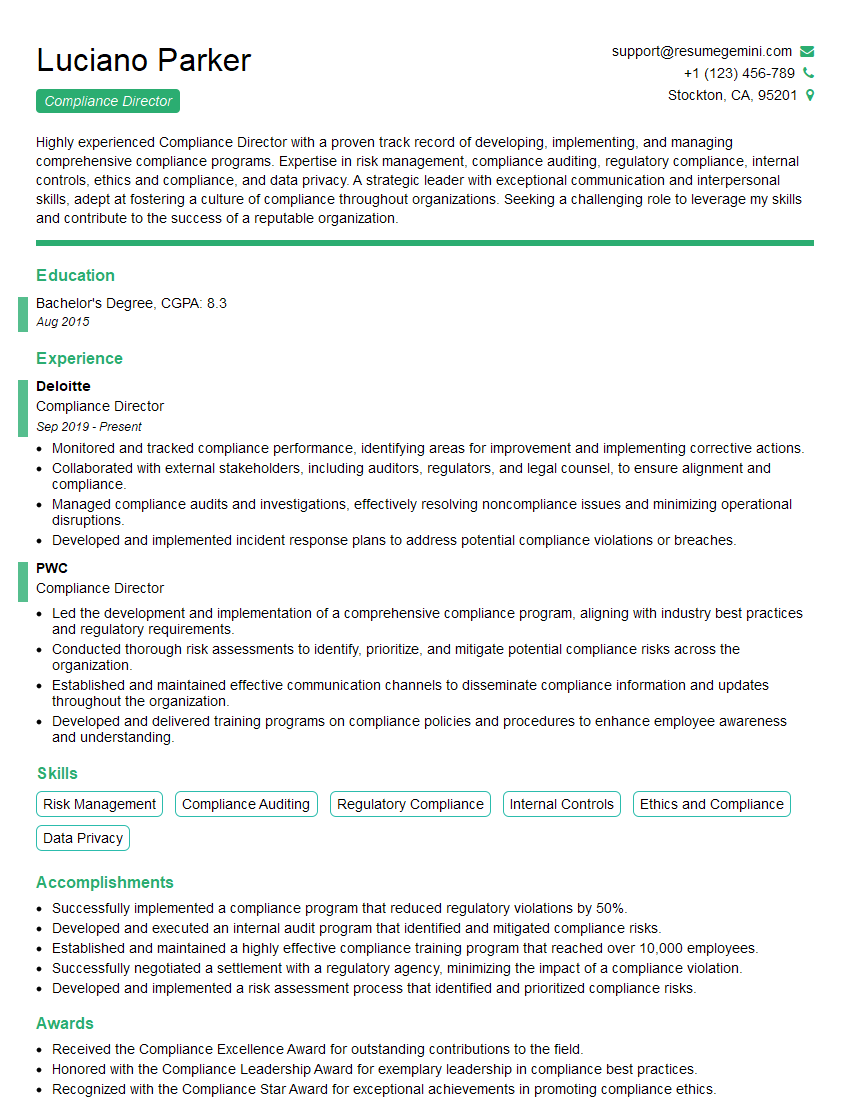
Compliance Director Resume Sample
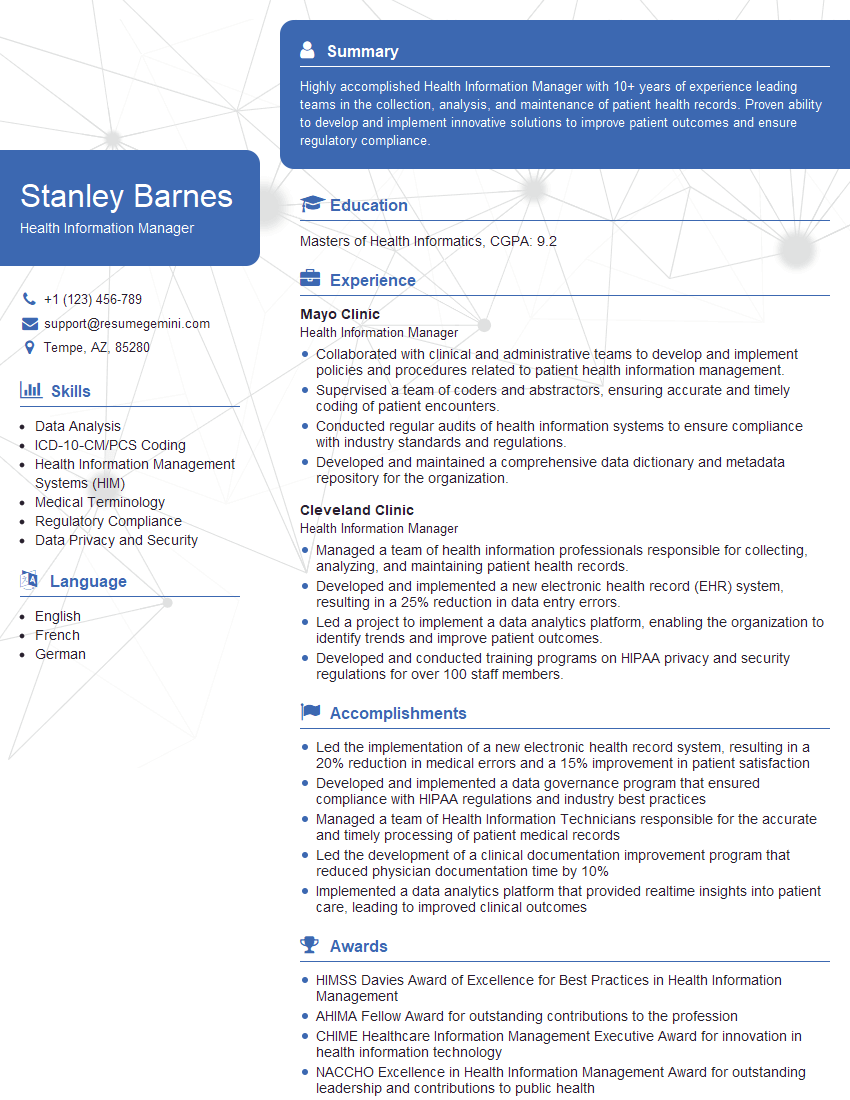
Health Information Manager Resume Sample
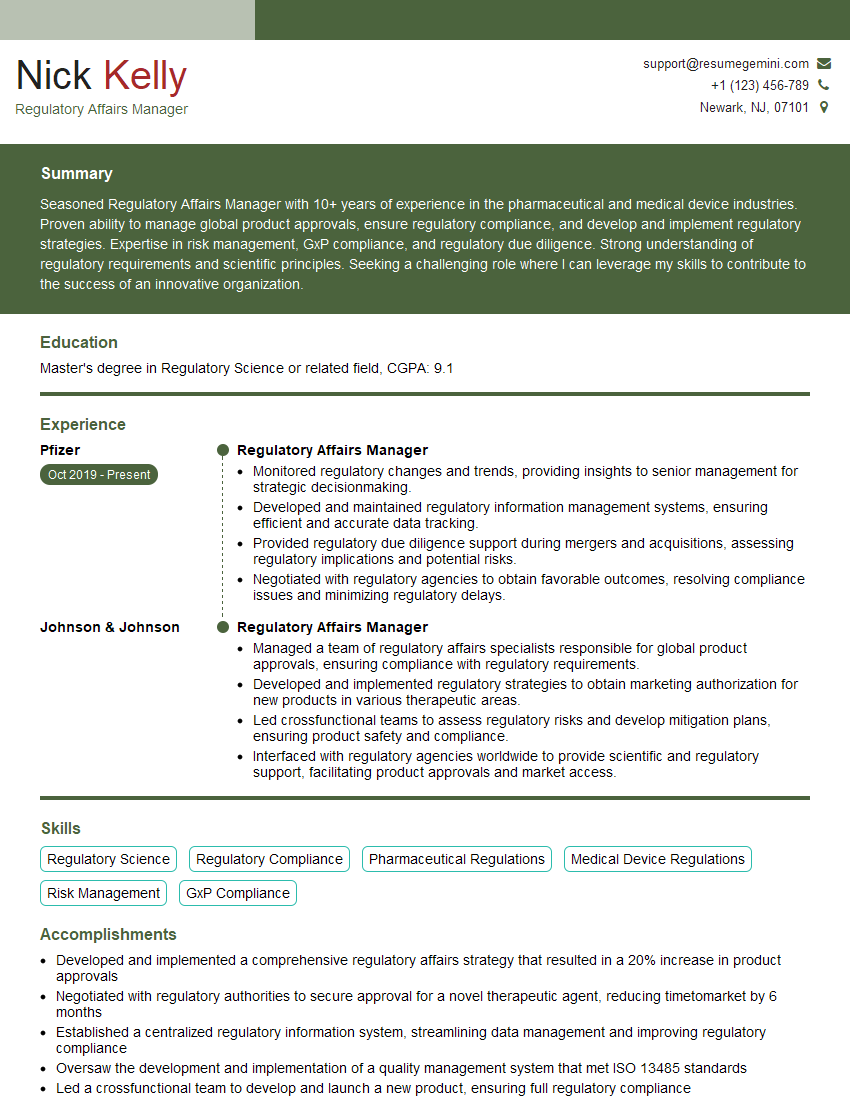
Regulatory Affairs Manager Resume Sample
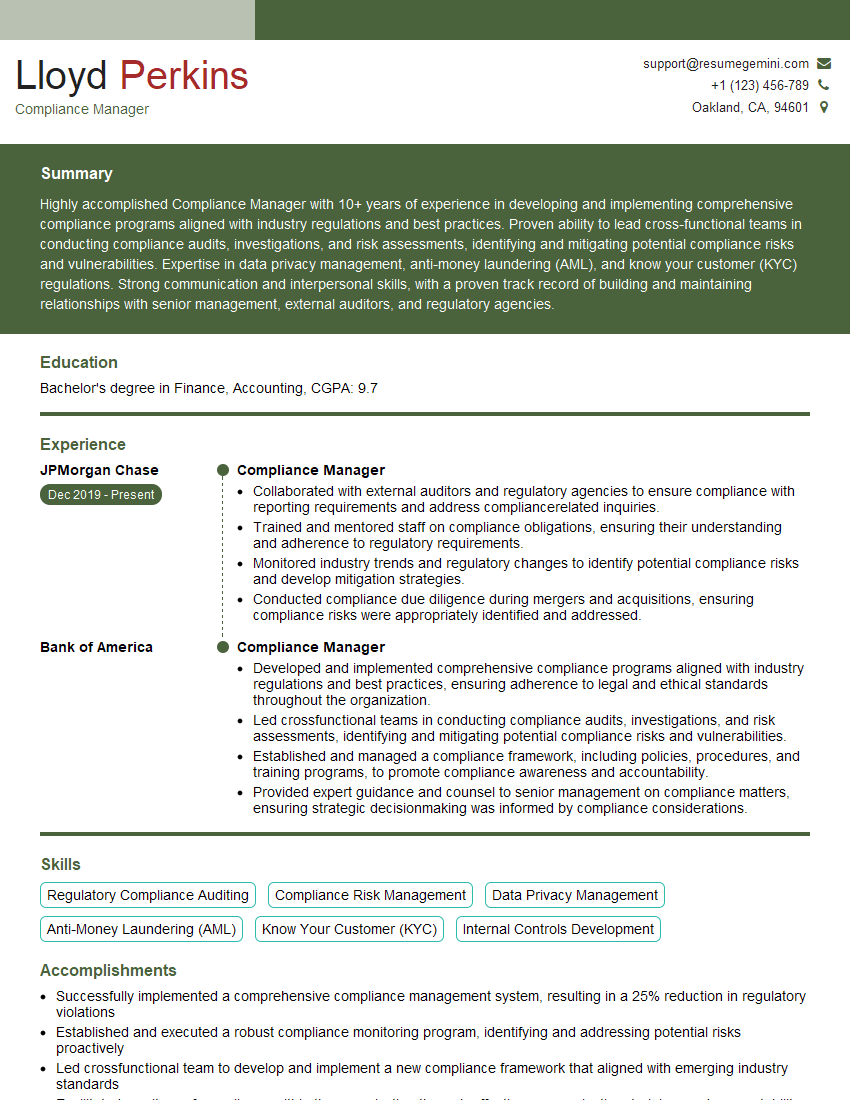
Compliance Manager Resume Sample
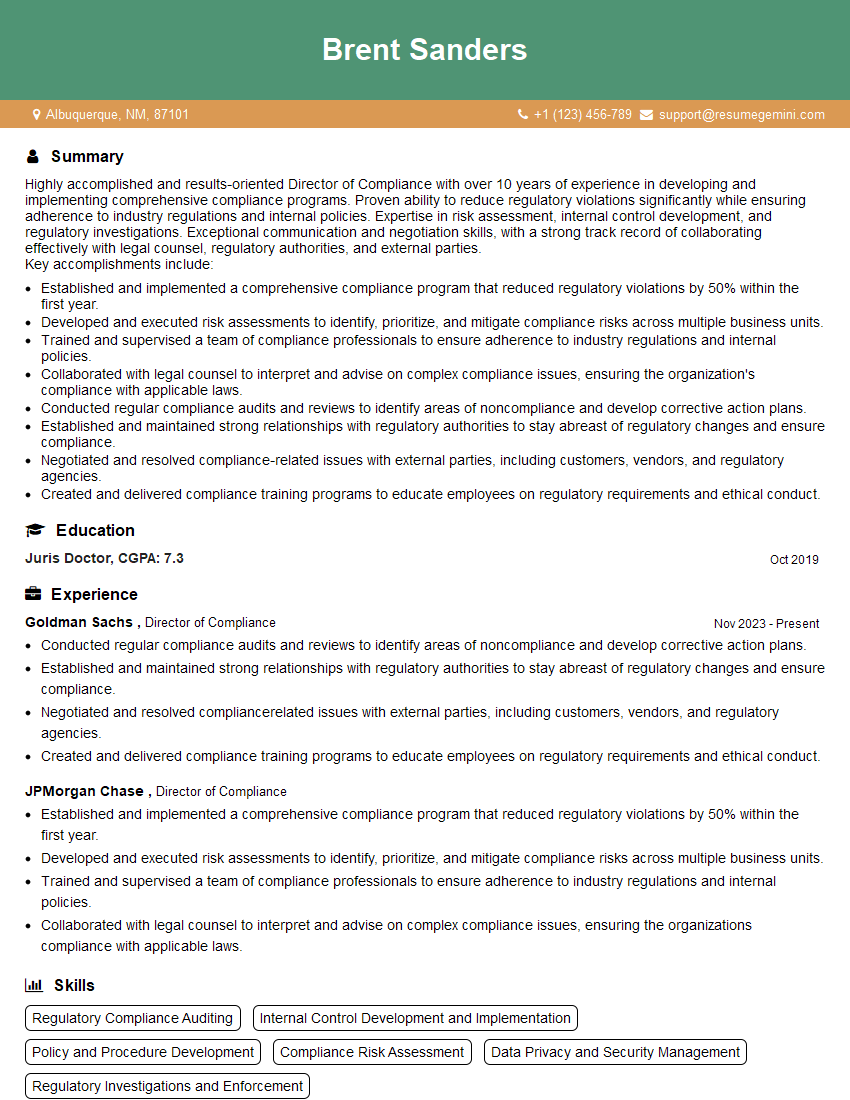
Director of Compliance Resume Sample
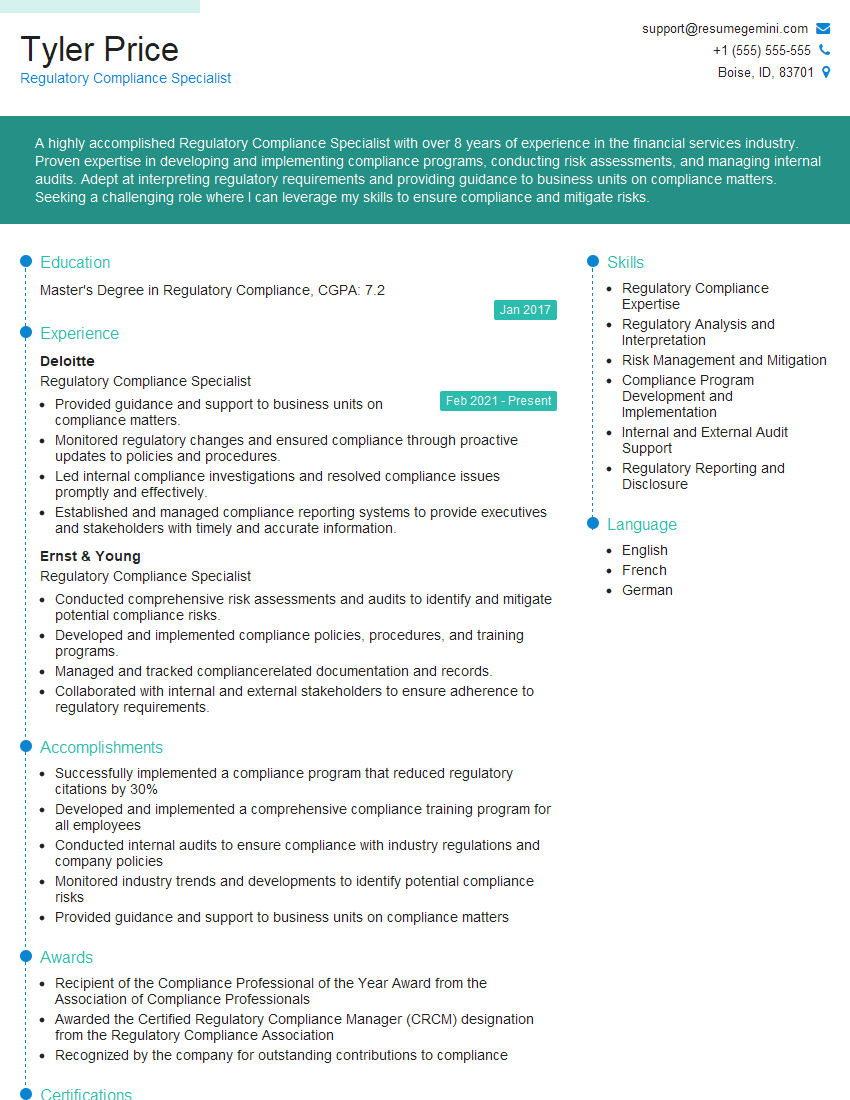
Regulatory Compliance Specialist Resume Sample
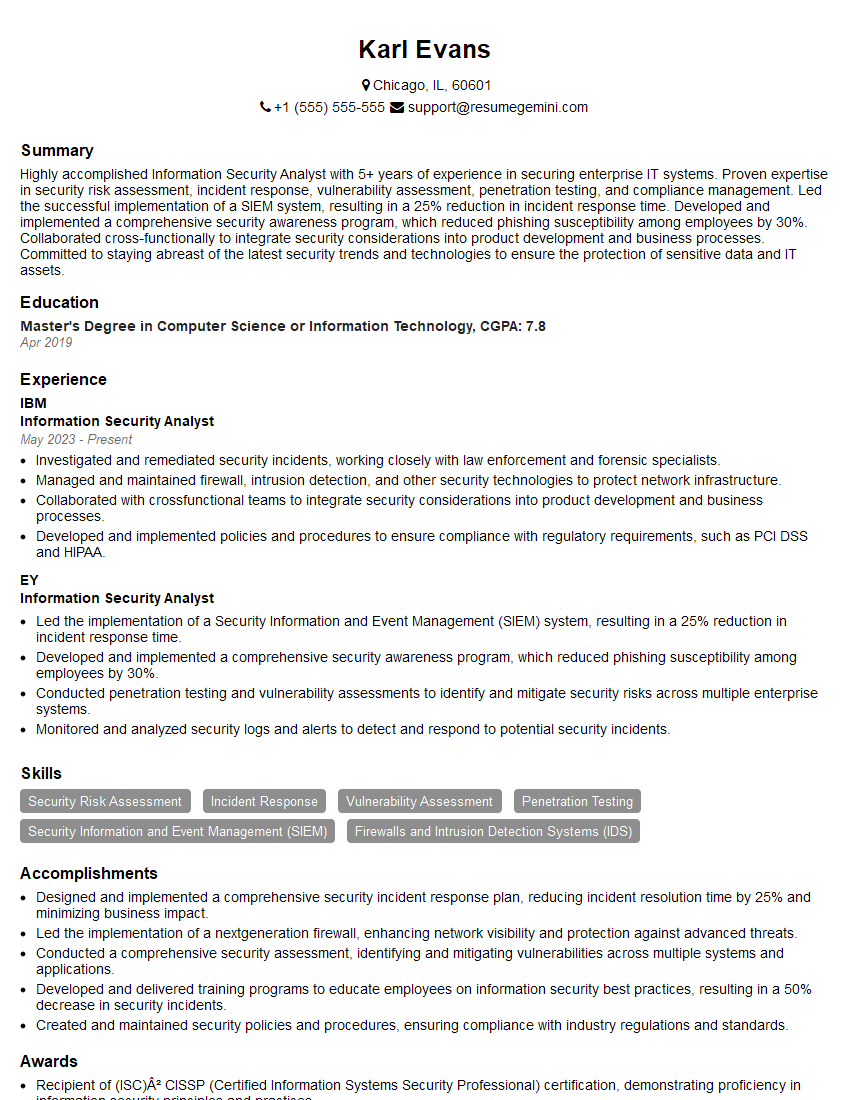
Information Security Analyst Resume Sample
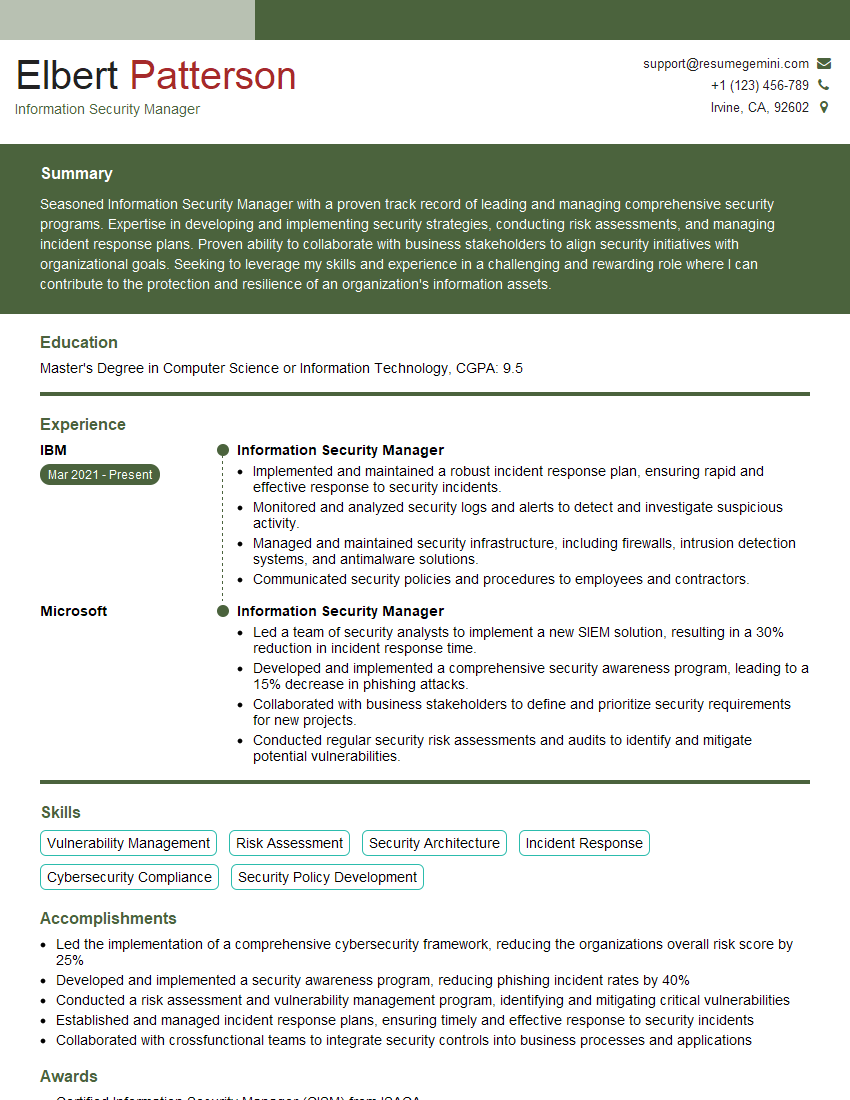
Information Security Manager Resume Sample
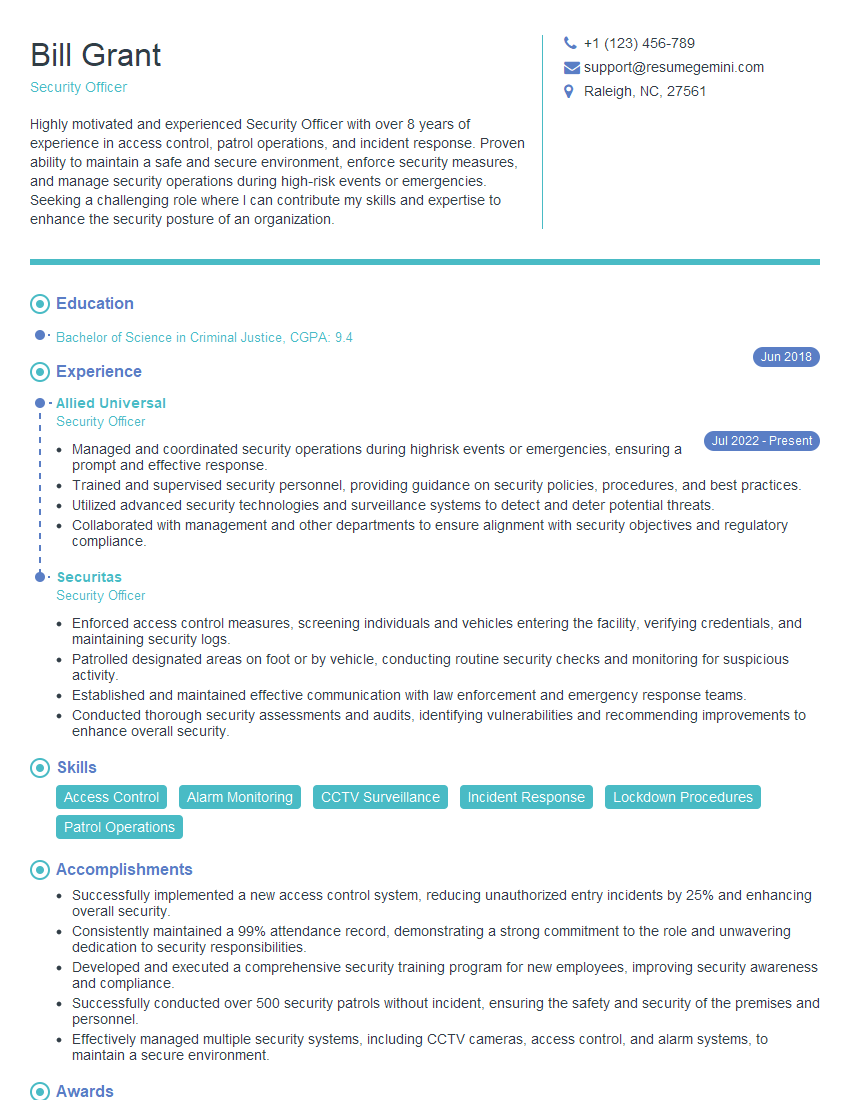
Security Officer Resume Sample
Explore more articles
Users Rating of Our Blogs
Share Your Experience
We value your feedback! Please rate our content and share your thoughts (optional).
What Readers Say About Our Blog
To the interviewgemini.com Webmaster.
Very helpful and content specific questions to help prepare me for my interview!
Thank you
To the interviewgemini.com Webmaster.
This was kind of a unique content I found around the specialized skills. Very helpful questions and good detailed answers.
Very Helpful blog, thank you Interviewgemini team.