Cracking a skill-specific interview, like one for Knowledge of Poultry Nutrition and Management, requires understanding the nuances of the role. In this blog, we present the questions you’re most likely to encounter, along with insights into how to answer them effectively. Let’s ensure you’re ready to make a strong impression.
Questions Asked in Knowledge of Poultry Nutrition and Management Interview
Q 1. Explain the key nutritional requirements of broiler chickens.
Broiler chickens, raised primarily for meat production, have distinct nutritional needs geared towards rapid growth and efficient feed conversion. Their diet must provide sufficient energy, protein, and essential nutrients to support this rapid growth phase.
- Energy: Broilers require high energy levels, typically provided by carbohydrates like corn and grains. Energy deficiency leads to poor growth and increased feed conversion ratio (FCR).
- Protein: High-quality protein is crucial for muscle development. The protein source should provide adequate amounts of essential amino acids like lysine, methionine, and arginine, often supplemented in broiler diets since they may be limiting in common feedstuffs.
- Amino Acids: These are the building blocks of protein, with lysine and methionine being particularly critical for broiler growth. Deficiencies can lead to reduced growth rate and poor feed efficiency.
- Vitamins and Minerals: These are needed in smaller quantities but play a vital role in metabolism, bone development, and immune function. Deficiencies can lead to various health problems.
- Minerals: Calcium and phosphorus are essential for bone development, while other minerals like zinc, manganese, and copper play essential roles in enzyme function and overall health.
Think of it like building a house – energy is the foundation, protein is the bricks and mortar, amino acids are the specific types of bricks, and vitamins and minerals are the finishing touches ensuring structural integrity and functionality. A deficiency in any of these would compromise the entire structure.
Q 2. Describe the differences in nutritional needs between laying hens and broilers.
Laying hens and broilers have significantly different nutritional requirements. While both need essential nutrients, the proportion and emphasis differ due to their distinct physiological functions.
- Laying Hens: Focus on calcium for eggshell formation, higher levels of specific amino acids for egg protein synthesis, and a balance of energy to support egg production. The emphasis is on sustained productivity over a longer period.
- Broilers: Priority is rapid growth in a shorter time frame, therefore a diet higher in energy and protein is essential to maximize weight gain and minimize feed cost per kilogram of meat.
An analogy would be an athlete training for a sprint (broiler) versus a marathon (laying hen). The sprinter needs quick energy bursts and rapid muscle growth, while the marathoner needs sustained energy and endurance.
The nutritional profile of the feeds reflects these differences: laying hen diets have a higher calcium concentration and a different amino acid profile compared to broiler diets. Ignoring these differences can lead to poor egg production (laying hens) or suboptimal growth (broilers).
Q 3. What are the common feed ingredients used in poultry diets, and what are their nutritional contributions?
Poultry diets commonly utilize a variety of ingredients, each contributing specific nutrients. The exact mix depends on factors like bird age, production goals, and cost considerations.
- Corn: Primary energy source, provides carbohydrates.
- Soybean Meal: Major protein source, rich in essential amino acids.
- Wheat: Another energy source, can replace a portion of corn.
- Meat and Bone Meal: Provides protein and minerals.
- Fish Meal: High-quality protein, rich in essential amino acids and beneficial fats.
- Calcium Carbonate (Limestone): Main source of calcium, crucial for eggshell formation in layers.
- Dicalcium Phosphate: Source of calcium and phosphorus.
- Vitamin and Mineral Premixes: Provide essential vitamins and minerals in adequate amounts.
For example, corn provides readily available energy, while soybean meal delivers essential amino acids for muscle growth. The careful blending of these ingredients ensures a balanced diet. The inclusion of limestone is critical in layer diets, highlighting the importance of tailoring feed formulations to specific production requirements.
Q 4. How do you calculate the nutrient content of a poultry feed formulation?
Calculating nutrient content requires a thorough understanding of the nutrient composition of each feed ingredient. This is typically done using a feed formulation software, but the principle is based on the following steps:
- Determine the Ingredient Composition: Obtain the nutrient content (crude protein, energy, amino acids, vitamins, minerals etc.) of each ingredient from laboratory analysis or reliable sources (feed ingredient databases).
- Establish the Target Nutrient Profile: Define the desired nutrient levels for the final feed based on the bird’s age, production stage, and nutritional requirements.
- Feed Formulation Software: Utilize specialized software that employs linear programming or other optimization techniques to determine the optimal mix of ingredients that meet the target nutrient profile while minimizing cost. This software takes into account the nutrient composition of each ingredient and their respective costs.
- Nutrient Calculation: The software calculates the nutrient content of the formulated diet by considering the proportion of each ingredient in the final mix. For example: If a diet contains 70% corn (with 9% CP) and 30% soybean meal (with 44% CP), the crude protein (CP) of the final diet would be calculated as: (0.7 * 9) + (0.3 * 44) = 19.5% CP.
Example: (0.7 * 9) + (0.3 * 44) = 19.5% CP This illustrates the basic principle of nutrient calculation, but actual calculations within feed formulation software are far more complex, considering multiple nutrients simultaneously.
Q 5. What are the signs of nutrient deficiencies in poultry?
Nutrient deficiencies manifest differently depending on the nutrient involved and the severity of the deficiency. Some common signs include:
- Poor Growth: Stunted growth, low weight gain, especially noticeable in young birds.
- Reduced Feed Efficiency: Birds consume more feed to gain the same amount of weight.
- Feather Problems: Dull, brittle feathers, feather picking, or abnormal feather development.
- Skeletal Deformities: Rickets (bone malformation) due to vitamin D or calcium deficiency, especially in young birds.
- Immune Deficiency: Increased susceptibility to diseases, higher mortality rates.
- Reproductive Issues: Reduced egg production, poor egg quality (thin shells), poor hatchability.
- Leg Weakness: Birds might have difficulty standing or walking. This could be caused by many things but is very important to consider as a sign of nutrient deficiency.
For example, a deficiency in vitamin D would manifest as rickets, while a lack of essential amino acids will likely hinder growth. Careful observation of the flock and knowledge of poultry nutrition are vital for early identification and corrective action.
Q 6. Explain the importance of amino acid balance in poultry nutrition.
Amino acid balance is crucial for optimal poultry production because amino acids are the building blocks of proteins, which are essential for growth, feather development, and immune function. An imbalance means that certain amino acids might be limiting, hindering the efficient use of other nutrients.
Think of it like assembling a LEGO model: you need all the right pieces (amino acids) in the right proportions to construct the complete model (protein). If you’re missing even one key piece, you won’t be able to complete the model. Similarly, if one essential amino acid is deficient, the bird cannot effectively use the other amino acids to build the necessary proteins, impacting growth and overall health. For example, lysine is often a limiting amino acid in many plant-based protein sources.
Maintaining the correct balance ensures that all amino acids are available in sufficient quantities, leading to improved growth rate, feed efficiency, and overall bird health. Feeding diets that provide the right balance optimizes protein synthesis and reduces the waste of other valuable nutrients.
Q 7. Discuss the role of vitamins and minerals in poultry health and production.
Vitamins and minerals, though required in smaller quantities, play a vital role in poultry health and production. They act as catalysts in various metabolic processes, influencing growth, reproduction, and immune function.
- Vitamins: Fat-soluble vitamins (A, D, E, K) and water-soluble vitamins (B complex, C) support many body functions. Deficiencies can lead to impaired vision, skeletal deformities, weakened immune system, and reduced growth.
- Minerals: Macrominerals (calcium, phosphorus, sodium, potassium, chloride, magnesium) and microminerals (iron, zinc, manganese, copper, iodine, selenium) are crucial for bone development, enzyme activity, and various metabolic processes. Deficiencies can result in skeletal abnormalities, anemia, impaired immune function, and reduced growth and reproduction.
For instance, vitamin A is crucial for vision and immune function. A deficiency can manifest as poor growth, blindness, and increased susceptibility to infections. Calcium is essential for eggshell formation and bone development. A deficiency will result in poor egg quality and skeletal problems. Proper supplementation and a balanced diet are essential to avoid these deficiencies and ensure optimal bird performance.
Q 8. How do you assess the quality of poultry feed?
Assessing poultry feed quality is crucial for optimal bird health and productivity. It involves a multi-faceted approach encompassing visual inspection, laboratory analysis, and considering the feed’s overall formulation.
Visual Inspection: This initial step checks for things like color, texture, and the presence of foreign materials (e.g., mold, insects, stones). Uniformity in color and texture indicates consistent ingredient mixing. The presence of off-odors or visible mold is a major red flag.
Laboratory Analysis: This is where the detailed assessment happens. Key parameters include:
- Nutrient Content: Analysis determines the levels of protein, fat, fiber, minerals (calcium, phosphorus, etc.), and vitamins. Deviations from the formulated levels indicate potential nutritional deficiencies.
- Mycotoxin Levels: Testing for mycotoxins (toxic compounds produced by fungi) is vital. Even low levels can significantly impact bird health and performance.
- Moisture Content: High moisture content promotes microbial growth and spoilage, reducing feed quality and increasing the risk of mycotoxin contamination.
- Microbial Analysis: This assesses the presence of bacteria, yeast, and molds, determining the feed’s microbial safety.
Formulation Review: A thorough review of the feed formulation ensures it meets the nutritional requirements of the specific poultry species and age group. This involves checking ingredient quality and ratios.
For example, a poultry farmer might visually inspect a batch of feed and notice an unusual dark discoloration. This triggers a laboratory analysis, revealing high levels of aflatoxin (a mycotoxin). This informs a decision to reject the batch and source feed from a different supplier.
Q 9. What are the common challenges related to mycotoxin contamination in poultry feed?
Mycotoxin contamination in poultry feed presents significant challenges, impacting bird health, productivity, and economic viability. These toxins, produced by various molds, are particularly problematic because they’re often undetectable by simple visual inspection.
Reduced Growth and Feed Efficiency: Mycotoxins interfere with nutrient absorption, leading to poor weight gain and increased feed consumption per unit of weight gain. This directly impacts profitability.
Immune Suppression: Mycotoxins weaken the birds’ immune systems, making them more susceptible to various diseases. This necessitates increased medication costs and potential mortality.
Liver and Kidney Damage: Certain mycotoxins are hepatotoxic (damaging to the liver) and nephrotoxic (damaging to the kidneys). These organ damages can lead to reduced productivity and mortality.
Reproductive Problems: Mycotoxins can negatively impact egg production, hatchability, and fertility, impacting breeding programs and overall production.
Economic Losses: The cumulative effects of reduced growth, increased mortality, and reduced production significantly decrease farm profitability.
For instance, aflatoxicosis (aflatoxin poisoning) can manifest as reduced egg production, poor hatchability, and immunosuppression in laying hens, leading to substantial financial losses.
Q 10. Explain different methods of feed delivery systems in poultry farms.
Poultry feed delivery systems aim for efficient and consistent nutrient delivery to birds, minimizing waste and ensuring uniform growth. The choice of system depends on the farm size, bird type, and management preferences.
Manual Feeding: In smaller operations, feed may be manually distributed using buckets or shovels. This is labor-intensive and less efficient for larger flocks.
Auger Systems: These use rotating augers to convey feed from storage to feeding points. They are suitable for larger farms and offer more efficient distribution compared to manual feeding.
Gravity Feed Systems: Feed is stored in elevated bins, and gravity facilitates its flow down to troughs or feeders. This system is relatively simple and low-maintenance but requires careful planning of bin placement.
Automated Feeders: These systems incorporate automated controls for feed distribution, often combined with sensors to monitor feed levels. This allows precise control over feed quantity and timing, improving efficiency and reducing labor costs. Some systems even incorporate programmed feeding schedules.
Pan Feeders: Common in broiler farms, these are shallow troughs that allow multiple birds to feed simultaneously.
Hopper Feeders: These are typically used for layers and breeders, allowing for individual bird access to feed.
For example, a large-scale broiler farm might utilize an automated auger system with pan feeders to ensure consistent feed delivery to thousands of birds, while a small-scale backyard operation might rely on simple manual feeding.
Q 11. Describe various methods used for monitoring poultry health.
Monitoring poultry health is crucial for early disease detection and prompt intervention. It involves a combination of approaches:
Visual Observation: Regular visual checks of birds identify abnormalities such as lethargy, ruffled feathers, respiratory distress, lameness, or changes in droppings consistency and color. These observations are critical for detecting early signs of disease.
Mortality Monitoring: Daily recording of bird deaths and cause of death helps track disease incidence and identify potential outbreaks.
Weight Monitoring: Regular weighing of birds assesses growth rates, indicating nutritional status and disease impacts. Significant deviations from expected growth curves warrant investigation.
Feed and Water Consumption Monitoring: Changes in feed and water intake may signal underlying health issues. Reduced consumption often indicates illness.
Performance Monitoring: Monitoring egg production (in layers), feed conversion ratio (FCR), and mortality rates provides key performance indicators that can reveal underlying problems.
Laboratory Diagnostics: In suspected disease outbreaks, laboratory tests (e.g., blood tests, fecal analysis, post-mortem examinations) help confirm diagnosis and guide treatment strategies.
For example, a sudden drop in egg production in a laying flock, coupled with increased mortality and changes in droppings, would prompt a thorough investigation involving both visual observations and laboratory diagnostics.
Q 12. How do you identify and manage common poultry diseases?
Identifying and managing poultry diseases requires a systematic approach.
Identification: Accurate disease identification depends on meticulous observation of clinical signs (symptoms), coupled with laboratory diagnostics. This involves considering factors like bird age, breed, housing conditions, and recent management practices.
Management Strategies:
Quarantine: Suspected diseased birds should be immediately isolated to prevent disease spread.
Treatment: Appropriate treatment, based on laboratory confirmation, should be administered. This may involve medication, supportive care, and adjustments to management practices.
Culling: Severely affected birds might need to be culled to prevent further spread of disease and reduce economic losses. This is particularly important for highly contagious diseases.
Biosecurity Measures: Reinforced biosecurity measures are essential to prevent recurrence.
For example, if a flock exhibits signs of Newcastle disease (respiratory distress, nervous symptoms), immediate quarantine, laboratory confirmation, and appropriate vaccination protocols will be implemented. Severely affected birds might need to be culled, and strict biosecurity measures will be crucial to prevent further spread.
Q 13. What are the biosecurity measures to prevent disease outbreaks on a poultry farm?
Biosecurity measures are crucial in preventing disease outbreaks on poultry farms. These measures aim to reduce the introduction and spread of pathogens.
Farm Isolation: The farm should be geographically isolated as much as possible, reducing contact with outside animals and people.
Vehicle and Personnel Control: Strict protocols for vehicle and personnel entry, including disinfection procedures, limit the introduction of pathogens.
Rodent and Pest Control: Implementing measures to control rodents and other pests reduces potential vectors for disease transmission.
Hygiene Protocols: Maintaining high hygiene standards throughout the farm, including regular cleaning and disinfection, reduces pathogen levels.
All-in/All-out System: Raising one flock at a time, thoroughly cleaning and disinfecting the facilities between flocks, prevents disease buildup.
Waste Management: Proper waste disposal and management prevents the buildup of pathogens.
Vaccination Programs: Implementing appropriate vaccination programs protects birds from common diseases.
Visitor Control: Restricting access to the farm and implementing procedures for visitors significantly reduces risk.
For instance, a farm might establish a strict footbath protocol at the entrance, requiring all personnel to disinfect their footwear before entering the poultry houses, helping prevent the introduction of pathogens via contaminated shoes.
Q 14. Explain the importance of environmental control in poultry production.
Environmental control in poultry production is paramount for optimal bird health, productivity, and welfare. It encompasses several key aspects:
Temperature Control: Maintaining appropriate temperatures based on the age and species of birds is crucial for their comfort and growth. Extreme temperatures can negatively affect productivity and immunity.
Ventilation: Good ventilation removes harmful gases (ammonia, carbon dioxide) and maintains proper air quality, crucial for respiratory health and preventing the build-up of moisture that can promote microbial growth.
Lighting Management: Appropriate light programs (intensity, duration, and photoperiod) influence bird behavior, egg production, and overall health.
Humidity Control: Maintaining proper humidity levels minimizes stress on birds and prevents respiratory problems. Excessive humidity promotes mold growth, increasing mycotoxin risks.
Litter Management: Regular monitoring and management of litter quality is crucial to maintain a dry and hygienic environment, preventing the build-up of pathogens and ammonia.
Air Quality: Monitoring levels of ammonia, carbon dioxide, and other gases is crucial to prevent negative impacts on respiratory health and bird welfare.
For example, a broiler farm might use sophisticated climate control systems to maintain optimal temperature and humidity levels, minimizing stress on the birds and maximizing growth rates. Improper ventilation could lead to high ammonia levels causing respiratory issues and reduced growth.
Q 15. What are the key factors influencing poultry housing design?
Poultry housing design is crucial for efficient production and bird welfare. Several key factors influence its optimal design. These can be broadly categorized into biosecurity, climate control, bird comfort, and economic considerations.
- Biosecurity: The design must minimize the risk of disease introduction and spread. This includes features like well-defined entry and exit points, strategically placed footbaths, and robust pest control measures. For example, a well-designed farm might have a dedicated change room for staff to prevent contamination.
- Climate Control: The housing must maintain a comfortable temperature and humidity for the birds, regardless of external weather conditions. This often involves ventilation systems, insulation, and heating/cooling options tailored to the climate and the bird’s specific needs. Think of it like designing a house for humans – you wouldn’t want a drafty house in the winter, and similarly, chickens need temperature regulation.
- Bird Comfort: The design needs to accommodate the birds’ natural behaviors, including nesting, perching, and dust-bathing. This means providing sufficient space, appropriate perches, and nest boxes, as well as litter material for dust bathing. Cramped conditions stress birds, negatively impacting their health and productivity.
- Economic Considerations: The design needs to be cost-effective to build and maintain, while also maximizing the efficiency of space and labor. Material choices, construction techniques, and the overall layout are all critical factors to consider. For example, automated feeding and watering systems reduce labor costs.
Career Expert Tips:
- Ace those interviews! Prepare effectively by reviewing the Top 50 Most Common Interview Questions on ResumeGemini.
- Navigate your job search with confidence! Explore a wide range of Career Tips on ResumeGemini. Learn about common challenges and recommendations to overcome them.
- Craft the perfect resume! Master the Art of Resume Writing with ResumeGemini’s guide. Showcase your unique qualifications and achievements effectively.
- Don’t miss out on holiday savings! Build your dream resume with ResumeGemini’s ATS optimized templates.
Q 16. Discuss the principles of poultry waste management.
Poultry waste management is critical for environmental protection and public health. Effective strategies focus on minimizing waste generation, proper storage, and responsible disposal or utilization. The principles involve:
- Minimizing Waste: This is achieved through efficient feeding practices, minimizing feed wastage, and optimizing bird health. Healthy birds convert feed more efficiently, reducing waste.
- Collection and Storage: Manure needs to be collected and stored in a manner that prevents runoff and leaching of nutrients into the environment. Properly sized and lined storage pits or solid-floor systems prevent pollution.
- Disposal or Utilization: Options include composting, anaerobic digestion to produce biogas, and land application as fertilizer. Composting, for instance, transforms manure into a valuable soil amendment.
- Regulations and Best Practices: Adhering to local and national regulations is paramount. Best practices involve regular monitoring of waste storage, minimizing odor, and managing potential pollution risks.
For example, a large-scale poultry operation might use anaerobic digestion to generate biogas for on-site energy production, turning a waste product into a valuable resource.
Q 17. What are the various poultry breeding strategies and their impact on production?
Poultry breeding strategies aim to improve traits like growth rate, feed efficiency, egg production, disease resistance, and meat quality. Several strategies are employed:
- Mass Selection: Selecting individuals based on their desirable traits and breeding them together. This is a relatively simple method but can be slow.
- Pedigree Selection: Tracking the ancestry of birds to identify superior bloodlines and selectively breed within those lines. It’s more precise than mass selection.
- Progeny Testing: Evaluating the performance of offspring to assess the breeding value of their parents. This helps in identifying superior parents based on their offspring’s performance.
- Crossbreeding: Mating birds from different breeds to combine desirable traits. This often leads to hybrid vigor (heterosis), where offspring outperform their parents.
- Inbreeding: Mating closely related birds to maintain uniformity and desirable traits within a line. However, it increases the risk of undesirable recessive genes expressing themselves.
These breeding strategies significantly impact production by increasing yield, improving feed efficiency, and enhancing the overall quality of poultry products. For example, crossbreeding might result in a broiler chicken with faster growth and better meat quality compared to its parent breeds.
Q 18. How do you maintain optimal flock health and hygiene?
Maintaining optimal flock health and hygiene is paramount for successful poultry production. A multi-faceted approach is required:
- Biosecurity: Strict biosecurity measures are essential to prevent the introduction and spread of diseases. This includes restricting access to the poultry house, implementing footbaths, and disinfecting equipment and vehicles.
- Vaccination: Vaccination programs protect against common poultry diseases. The specific vaccines used depend on the prevalent diseases in the area and the bird’s age.
- Hygiene: Maintaining a clean and dry environment is crucial. This involves regular cleaning and disinfection of the poultry house, proper manure management, and providing clean feed and water.
- Monitoring: Regular monitoring of the flock’s health is critical to detect any signs of illness early. This includes daily observation of bird behavior, feed consumption, and egg production.
- Veterinary Care: Regular veterinary checks are vital. A veterinarian can diagnose and treat any health problems, develop a vaccination plan, and provide advice on flock management.
For instance, a routine observation might reveal reduced feed intake, a key indicator of a potential health issue requiring immediate veterinary attention.
Q 19. Explain the concepts of feed conversion ratio (FCR) and its significance.
The Feed Conversion Ratio (FCR) is a key indicator of the efficiency of poultry production. It represents the amount of feed required to produce one unit of weight gain (in broilers) or one dozen eggs (in layers).
FCR = Total feed consumed / Total weight gain (or eggs produced)
Significance: A lower FCR indicates higher efficiency. Farmers strive for lower FCRs as it directly impacts profitability. A lower FCR means less feed is needed to produce the same amount of poultry meat or eggs, resulting in reduced feed costs and increased profit margins. For example, an FCR of 1.8 for broilers means that for every 1.8 kg of feed consumed, 1 kg of weight gain is achieved. Improvements in breeding, nutrition, and management practices all contribute to lowering FCRs.
Q 20. How do you analyze poultry production data to improve efficiency?
Analyzing poultry production data is crucial for improving efficiency and profitability. This involves collecting data on various parameters and using appropriate analytical techniques.
- Data Collection: Collect data on feed consumption, weight gain (or egg production), mortality rates, feed conversion ratio (FCR), and other relevant parameters at regular intervals.
- Data Analysis: Use statistical methods to analyze trends and identify areas for improvement. Tools like spreadsheets or statistical software can help in this process. This might involve calculating average values, identifying outliers, or using regression analysis to understand relationships between variables.
- Problem Identification: Identify areas where performance falls short of targets. For instance, high mortality rates may point towards a disease outbreak or poor management practices.
- Corrective Actions: Implement changes based on the data analysis to improve performance. This might involve adjusting feeding strategies, improving hygiene practices, or implementing new management techniques.
- Monitoring and Evaluation: Monitor the effectiveness of implemented changes and make further adjustments as needed. Regular tracking of key indicators ensures continuous improvement.
For example, consistently high mortality in a specific pen might suggest a problem with the pen’s environment (e.g., poor ventilation or overcrowding) that needs addressing.
Q 21. Describe the different types of poultry housing systems.
Poultry housing systems vary depending on factors like climate, scale of operation, and management practices. Common types include:
- Extensive Systems: Birds are allowed to forage freely, usually in a pasture or range. This is common for smaller operations or specific breeds. It’s less controlled but offers benefits in terms of natural behavior expression.
- Semi-intensive Systems: Birds are kept in enclosed shelters but with access to outdoor runs. This offers a balance between controlled environment and access to natural space.
- Intensive Systems: Birds are housed entirely indoors in controlled environments with high stocking densities. This is common in large-scale commercial operations and allows for precise control of environmental factors, but necessitates careful monitoring of bird welfare.
- Battery Cages (Layers): Individual or multi-tiered cages for egg-laying hens. While efficient for egg production, concerns about bird welfare have led to regulations and alternatives in many regions.
- Free-Range Systems: Birds have access to outdoor areas for foraging and natural behavior. This is often associated with higher welfare standards but requires more space and management.
The choice of system significantly impacts production efficiency, bird welfare, and environmental impact. For example, intensive systems are highly productive but require stringent management of hygiene and bird welfare.
Q 22. What is the impact of lighting programs on poultry production?
Lighting programs are crucial in poultry production, significantly impacting bird behavior, physiology, and ultimately, productivity. Think of it like setting the internal clock for your flock. By manipulating light exposure, we can influence key aspects of their life cycle.
Stimulating Laying in Hens: A well-designed lighting program is essential for optimal egg production. Increasing light intensity and duration gradually during the rearing phase and maintaining a consistent photoperiod (light-dark cycle) during the laying period stimulates hormonal changes leading to earlier sexual maturity and higher egg-laying rates. For example, a gradual increase from 8 hours of light to 16 hours over several weeks can significantly improve the onset of lay.
Influencing Growth in Broilers: In broiler chickens (meat birds), light manipulation can influence feed intake, growth rate, and uniformity. Extended periods of light can encourage feed consumption, accelerating growth. However, excessively long periods can lead to stress and reduced feed efficiency. Finding the optimal light schedule requires careful consideration of breed and age.
Improving Breeding Performance: Lighting programs are vital in breeding operations. Controlled lighting can synchronize the reproductive cycles of breeding hens and roosters, leading to improved fertility and hatchability. Strategic use of light can also be used to stimulate mating behaviors.
Reducing Stress and Cannibalism: Appropriate lighting can mitigate stress and subsequent behavioral issues such as feather pecking and cannibalism. Dimming the lights during periods of high activity can calm the birds. However, complete darkness should be avoided as it can encourage unwanted behaviors.
Improper lighting programs can lead to reduced egg production, slower growth rates, increased mortality, and other production problems. Therefore, the design and implementation of a lighting program must be tailored to the specific needs of the bird and the production goals.
Q 23. What are some strategies for minimizing feed costs?
Minimizing feed costs is a critical aspect of profitable poultry farming. This involves a multi-pronged approach focusing on feed formulation, sourcing, and management.
Optimizing Feed Formulation: This involves using less expensive feed ingredients while maintaining nutritional value. This requires a thorough understanding of nutrient requirements for different age groups and production phases. For example, utilizing locally sourced grains whenever possible can reduce transportation costs.
Strategic Sourcing: Negotiating with suppliers for bulk purchases and securing contracts can significantly reduce feed costs. Exploration of various suppliers and comparison-shopping are vital for finding the most cost-effective options without compromising quality.
Efficient Feed Management: Minimizing feed wastage through proper storage, handling, and feeder management is critical. Using the right type of feeder, regular cleaning to prevent spoilage, and ensuring proper feed distribution can prevent losses.
Improved Feed Conversion Ratio (FCR): A low FCR indicates efficient feed utilization. This can be achieved through improved flock management practices such as ensuring optimal environmental conditions, disease prevention, and minimizing stress.
Using Feed Additives Wisely: Feed additives such as enzymes or probiotics can improve nutrient digestibility and overall feed efficiency, ultimately lowering feed costs. However, careful evaluation of their cost-benefit is necessary.
For instance, I once worked with a farm that drastically reduced feed costs by switching to locally sourced corn and negotiating bulk purchase agreements. They also implemented a rigorous feed management program that minimized waste, resulting in a significant increase in profitability.
Q 24. How do you manage stress in poultry flocks?
Stress in poultry flocks significantly impacts productivity and health. Managing stress requires a holistic approach addressing various factors that can trigger it.
Environmental Control: Maintaining optimal temperature, humidity, ventilation, and lighting are fundamental. Sudden changes in these factors are major stress inducers. Think about it – birds are highly sensitive to their environment, just like humans.
Biosecurity: Strict biosecurity measures prevent the spread of diseases and parasites, major stress contributors. This includes careful cleaning and disinfection of facilities, controlled access, and proper waste management.
Stockmanship: Handling birds calmly and gently is vital. Rough handling increases stress hormones. Training farm workers on proper handling techniques is crucial.
Nutritional Management: Providing a balanced diet with all essential nutrients helps build resilience against stress. Nutritional deficiencies weaken the immune system, making birds more susceptible to stress.
Disease Prevention and Management: Prompt identification and treatment of disease outbreaks minimize stress on the affected flock and prevent the spread of illness. Vaccination programs are vital.
Social Factors: Overcrowding can lead to increased competition for resources and social stress. Maintaining proper stocking density is crucial. For example, the number of birds per square foot of space should be carefully calculated according to breed and age.
One farm I worked with experienced a significant drop in egg production due to heat stress. By installing a new ventilation system and improving shade structures, we were able to mitigate the stress, resulting in a remarkable increase in egg production.
Q 25. Describe your experience in troubleshooting issues related to poultry feed and nutrition.
Troubleshooting poultry feed and nutrition issues requires a systematic approach, combining observations, laboratory analysis, and practical experience.
Identifying the Problem: The first step is to carefully observe the flock for symptoms such as reduced feed intake, poor growth rates, unusual droppings, or increased mortality. Detailed records of feed intake, weight gain, and mortality rates are essential for tracking trends.
Laboratory Analysis: Feed samples should be sent to a reputable laboratory for analysis to check for nutrient deficiencies, contamination, or mycotoxins (fungal toxins).
Clinical Examination: If there are signs of illness, birds should be examined to rule out disease. Necropsies (animal autopsies) can help in diagnosis.
Reviewing Feed Formulation: The feed formulation should be reviewed to ensure it meets the nutritional requirements of the birds. This includes considering the age, breed, and production phase.
Dietary Adjustments: Based on the findings, adjustments may be needed to the feed formulation to correct any deficiencies or address any detected contaminants. This may involve adding specific vitamins, minerals, or amino acids.
Implementing Corrective Measures: Once the problem has been identified and the cause determined, appropriate corrective measures should be implemented to prevent further issues.
I remember an instance where a flock experienced poor growth and increased mortality. Laboratory analysis revealed high levels of aflatoxins in the feed. By switching to a new, uncontaminated feed source, the problem was resolved.
Q 26. What are your approaches to improving flock productivity and profitability?
Improving flock productivity and profitability involves a comprehensive approach integrating best practices in nutrition, management, and disease control.
Genetic Selection: Choosing high-performing breeds adapted to the local climate and production system significantly impacts productivity.
Optimal Nutrition: Providing a precisely balanced diet tailored to the specific needs of the birds, considering age, breed, and production phase. This maximizes growth, egg production, and feed efficiency.
Effective Disease Management: Implementing a strong biosecurity program and promptly addressing any disease outbreaks are vital for maintaining a healthy and productive flock. Vaccination programs are a critical component of this.
Environmental Control: Ensuring optimal environmental conditions – temperature, humidity, ventilation, and light – minimizes stress and maximizes productivity.
Record Keeping: Detailed record-keeping allows for meticulous monitoring of feed intake, weight gain, egg production, mortality rates, and other key performance indicators. This helps in identifying areas for improvement.
Regular Monitoring: Regularly monitoring the flock for any signs of illness or stress and taking prompt action are crucial for maintaining high productivity.
In one project, by improving the overall flock management, particularly through disease prevention and better environmental control, we achieved a 15% increase in egg production and a 10% reduction in mortality within six months.
Q 27. Discuss current trends and future prospects in poultry nutrition and management.
The poultry industry is constantly evolving, driven by increasing demands for sustainable and efficient production. Several key trends shape the future of poultry nutrition and management:
Precision Nutrition: The use of advanced technologies like sensors and data analytics is enabling farmers to monitor and adjust feed rations according to the real-time needs of the flock, resulting in improved efficiency and reduced waste. This personalized approach to nutrition is becoming increasingly important.
Sustainable Feed Ingredients: There is growing interest in incorporating alternative and sustainable feed ingredients to reduce reliance on traditional sources like soybean meal and fishmeal. This includes exploring insect-based proteins, single-cell proteins, and other novel ingredients. The environmental impact of feed production is a major consideration.
Improved Gut Health: A better understanding of the gut microbiome’s role in bird health and productivity is leading to the development of strategies for improving gut health through prebiotics, probiotics, and other approaches. A healthy gut is vital for efficient nutrient absorption.
Automation and Technology: Automation in feeding, environmental control, and monitoring is increasing, reducing labor costs and improving efficiency. Automated systems allow for precise control over various aspects of poultry production.
Enhanced Biosecurity: Stricter biosecurity measures are becoming increasingly important to prevent disease outbreaks and maintain flock health. This includes advancements in vaccination technology and disease surveillance.
The future of poultry nutrition and management involves a closer integration of technological advancements, a focus on sustainability, and a deeper understanding of bird physiology and behavior. This will ensure the industry remains competitive while meeting the demands of a growing global population.
Q 28. How do you stay updated on the latest research in poultry science?
Staying updated in poultry science requires a multi-faceted approach leveraging various resources.
Scientific Journals and Publications: I regularly read scientific journals such as Poultry Science, British Poultry Science, and other relevant publications to keep abreast of the latest research findings.
Industry Conferences and Workshops: Attending industry conferences and workshops provides opportunities to learn from experts and network with colleagues. This firsthand exposure to the latest innovations is invaluable.
Professional Organizations: Membership in professional organizations such as the American Society of Animal Science or the World’s Poultry Science Association provides access to publications, webinars, and networking opportunities.
Online Resources: Many online resources, including reputable websites and databases, provide up-to-date information on poultry science. However, careful evaluation of the source’s credibility is crucial.
Collaboration and Networking: Collaborating with other researchers and professionals in the field through discussions and exchange of information expands my knowledge and perspectives.
Continuous learning and staying updated are crucial in this rapidly evolving field. I also make it a point to attend training sessions and workshops regularly to enhance my practical skills.
Key Topics to Learn for Knowledge of Poultry Nutrition and Management Interview
- Nutrient Requirements: Understanding the specific nutritional needs of different poultry species (broilers, layers, turkeys) at various life stages. This includes protein, energy, vitamins, and minerals.
- Feed Formulation: Practical application of nutritional knowledge to formulate balanced and cost-effective poultry diets using available feed ingredients. Consider ingredient digestibility and nutrient bioavailability.
- Feed Management: Strategies for efficient feed storage, handling, and delivery to minimize waste and maintain feed quality. This includes understanding feed conversion ratios and optimizing feeding programs.
- Digestive Physiology: Knowledge of the avian digestive system and how it impacts nutrient absorption and utilization. Understanding the role of gut health in overall poultry performance.
- Nutritional Disorders and Diseases: Identifying and addressing nutritional deficiencies or imbalances that can lead to health problems in poultry. This includes recognizing symptoms and implementing appropriate corrective measures.
- Growth and Development: The impact of nutrition on growth rate, body composition, and overall productivity of poultry. Analyzing growth curves and optimizing nutrition for optimal performance.
- Environmental Factors: How environmental conditions (temperature, humidity, stocking density) influence nutrient requirements and overall poultry health. Adapting nutrition strategies based on environmental factors.
- Biosecurity and Hygiene: Maintaining optimal hygiene and biosecurity practices in poultry nutrition and management to prevent contamination and disease. Understanding the impact of feed hygiene on bird health.
- Sustainable Poultry Production: Implementing sustainable practices in poultry nutrition to minimize environmental impact while maintaining profitability. This includes exploring alternative feed sources and reducing feed waste.
- Economic Analysis: Evaluating the economic implications of different feeding strategies and optimizing cost-effectiveness while maximizing production efficiency.
Next Steps
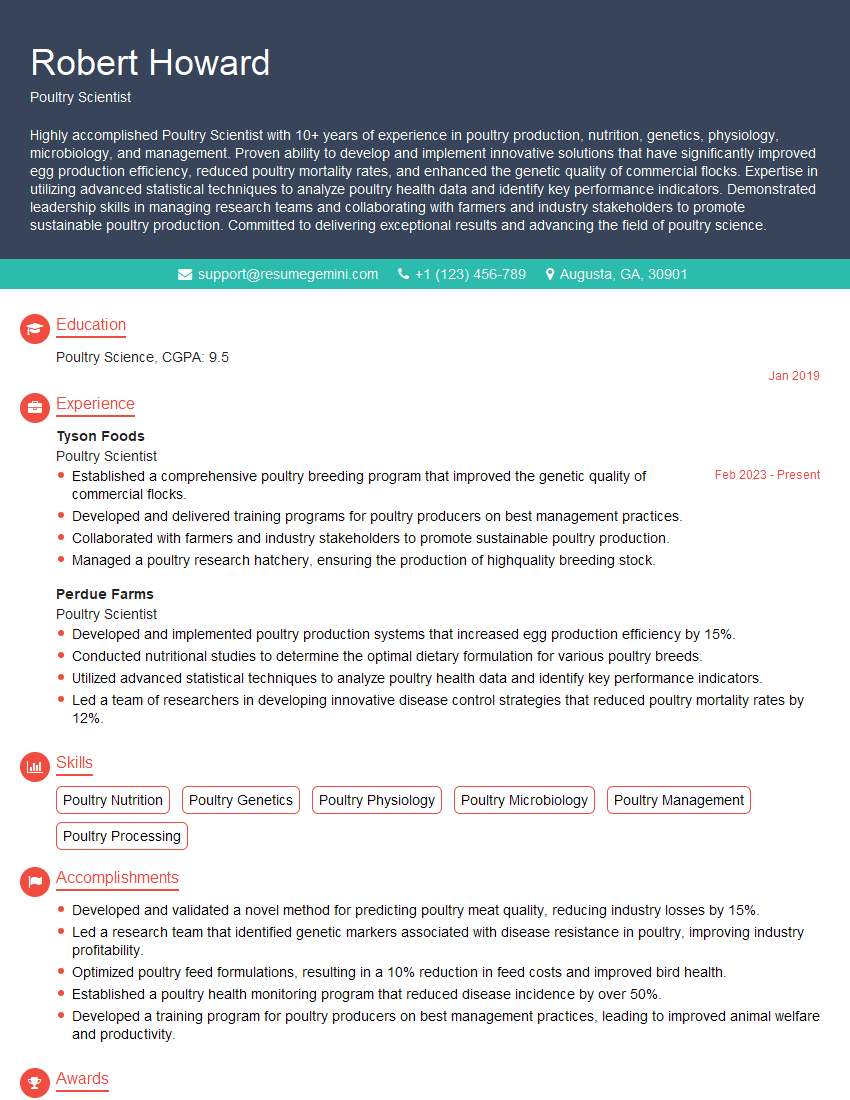
Mastering Poultry Nutrition and Management is crucial for career advancement in the poultry industry, opening doors to specialized roles and leadership positions. A strong resume is your first step toward showcasing your expertise. Create an ATS-friendly resume that highlights your skills and experience effectively. ResumeGemini is a trusted resource to help you build a professional and impactful resume. We provide examples of resumes tailored specifically to Knowledge of Poultry Nutrition and Management to guide your preparation. Invest the time to craft a compelling resume—it’s your key to unlocking exciting opportunities.


Explore more articles
Users Rating of Our Blogs
Share Your Experience
We value your feedback! Please rate our content and share your thoughts (optional).
What Readers Say About Our Blog
To the interviewgemini.com Webmaster.
Very helpful and content specific questions to help prepare me for my interview!
Thank you
To the interviewgemini.com Webmaster.
This was kind of a unique content I found around the specialized skills. Very helpful questions and good detailed answers.
Very Helpful blog, thank you Interviewgemini team.