The right preparation can turn an interview into an opportunity to showcase your expertise. This guide to Knowledge of Process Engineering interview questions is your ultimate resource, providing key insights and tips to help you ace your responses and stand out as a top candidate.
Questions Asked in Knowledge of Process Engineering Interview
Q 1. Explain your understanding of process simulation software (e.g., Aspen Plus, Hysys).
Process simulation software, like Aspen Plus and Hysys, are powerful tools used to model and analyze chemical processes. They allow engineers to virtually design, test, and optimize plants before physical construction, saving significant time and money. Think of it like a sophisticated video game for chemical engineers, but with real-world consequences! These programs use thermodynamic and kinetic models to predict the behavior of various components under different conditions. For instance, Aspen Plus can simulate a distillation column, predicting the composition of the distillate and bottoms streams based on input parameters like feed composition, pressure, and temperature. This eliminates the need for extensive and costly experimental work to determine optimal operating conditions. My experience includes using Aspen Plus extensively to model refinery processes, optimizing crude oil fractionation, and designing new reaction pathways for chemical synthesis. I’m proficient in setting up models, validating their accuracy against experimental data, and using the software to perform sensitivity analyses – essentially seeing how changes in one parameter affect the entire process.
Beyond steady-state simulations, Aspen Plus and Hysys also allow for dynamic simulations, which model the process’s response to changes over time. This is crucial for understanding how a process will react to disturbances, such as a sudden surge in feed flow or a change in temperature. These simulations are invaluable for designing effective control systems.
Q 2. Describe your experience with process control strategies (e.g., PID control, advanced control).
Process control strategies are essential for maintaining a process at its optimal operating conditions. PID (Proportional-Integral-Derivative) control is the workhorse of industrial control, and I’ve implemented it extensively. It adjusts the manipulated variable (e.g., valve position) based on the error between the desired setpoint and the actual measured value. The proportional term addresses the current error, the integral term corrects for accumulated error, and the derivative term anticipates future error. Imagine a thermostat: the proportional term immediately reacts to a temperature change, the integral term ensures the room reaches the desired temperature, and the derivative term anticipates overshooting.
Beyond basic PID control, I’ve significant experience with advanced control strategies like model predictive control (MPC) and cascade control. MPC uses a dynamic model of the process to predict future behavior and optimize control actions accordingly, leading to better performance and reduced variability. Cascade control involves using multiple control loops, where the output of one loop serves as the setpoint for another. This allows for tighter control and improved performance in complex processes. For example, in a reactor system, a temperature controller might cascade with a flow controller to precisely maintain temperature through manipulating the coolant flow.
Q 3. How do you approach process optimization problems?
Process optimization involves finding the best operating conditions for a process to maximize profit or efficiency. My approach is systematic and data-driven. It begins with a clear definition of the objective function – what we’re trying to optimize, such as maximizing yield, minimizing energy consumption, or improving product quality. This is then followed by identifying the key variables that influence the objective function. I then use a combination of techniques, including process simulation (Aspen Plus/Hysys), statistical methods, and potentially machine learning algorithms, to explore the design space and identify the optimal operating conditions. This often involves sensitivity analyses to understand the impact of changing different variables and constraint analysis to ensure we remain within safe and operational boundaries. A crucial aspect is validating the optimization results through experimentation or further simulation studies to ensure they reflect real-world performance.
For example, in optimizing a distillation column, I might use Aspen Plus to simulate various operating conditions, varying factors like reflux ratio and number of trays, to identify the configuration that yields the highest purity product while minimizing energy consumption. If the initial model doesn’t reflect reality, an iterative adjustment process, incorporating experimental data, is key to calibration.
Q 4. What are your preferred methods for process troubleshooting?
Process troubleshooting is a critical skill for any process engineer. My approach is methodical and follows a structured problem-solving methodology. It starts with clearly defining the problem and collecting data. This involves reviewing historical data, examining instrument readings, and conducting visual inspections. Then, I use a combination of techniques such as fault trees, cause-and-effect diagrams, and root cause analysis to systematically identify the root cause of the problem. This isn’t about guessing; it’s about systematically eliminating possibilities. Often, simple problems are masked by more complicated symptoms. For example, a seemingly complex issue with reactor performance might boil down to a simple instrumentation error or a faulty valve.
Once the root cause is identified, I develop and implement a corrective action, ensuring it’s tested and validated to prevent recurrence. Documentation of the troubleshooting process is essential, not only for future reference but also for continuous improvement.
Q 5. Explain your experience with process safety management systems (PSM).
Process safety management (PSM) systems are crucial for preventing accidents and protecting personnel and the environment. My experience encompasses understanding and implementing various elements of a robust PSM system, including hazard identification and risk assessment (HAZOP, LOPA), safe operating procedures, emergency response plans, and management of change. A strong PSM framework is not just a set of documents; it’s a culture of safety integrated into the very fabric of the organization. I’ve worked in settings where PSM principles were paramount, and I understand the importance of compliance, regular audits, and continuous improvement.
For example, I’ve been involved in developing safe operating procedures for handling hazardous materials, ensuring that personnel are trained and competent in safe work practices. Furthermore, I have experience with emergency response planning, which involves developing and testing procedures to effectively handle potential emergencies, such as equipment failures or releases of hazardous materials.
Q 6. Describe your experience with HAZOP studies.
HAZOP (Hazard and Operability) studies are systematic techniques used to identify potential hazards and operability problems in a process. I’ve participated in numerous HAZOP studies, both as a team member and facilitator. The process involves reviewing the process flow diagram (PFD) and piping and instrumentation diagram (P&ID) systematically, using guide words (e.g., ‘no,’ ‘more,’ ‘less,’ ‘part of’) to explore deviations from the intended design or operation. Each deviation is evaluated to determine the potential hazards and operability issues, and recommendations are made to mitigate the risks.
A HAZOP study requires a multi-disciplinary team, including process engineers, instrumentation specialists, and safety experts. The collaborative nature of HAZOP fosters a shared understanding of potential hazards and strengthens the overall safety culture.
Q 7. How familiar are you with different process flow diagrams (PFDs) and piping and instrumentation diagrams (P&IDs)?
Process flow diagrams (PFDs) provide a simplified representation of the process, showing the main equipment and flow streams. Piping and instrumentation diagrams (P&IDs) are more detailed, showing the piping, instrumentation, and control systems. I’m highly proficient in reading and interpreting both PFDs and P&IDs. These diagrams are fundamental to understanding a process, designing modifications, and troubleshooting problems. My experience includes using these diagrams extensively in process design, HAZOP studies, and commissioning and start-up activities. I understand the symbology, layout conventions, and the importance of clear and accurate documentation. A well-drawn P&ID is essentially the blueprint for safe and efficient operation. In essence, these are visual tools to navigate complex processes – akin to a detailed map guiding us through industrial terrain.
Q 8. What are the key considerations for designing a safe and efficient process?
Designing a safe and efficient process hinges on a holistic approach encompassing several critical factors. Safety is paramount, requiring rigorous hazard identification and risk assessment using methods like HAZOP (Hazard and Operability study) or What-If analysis. This involves identifying potential hazards (e.g., fire, explosion, toxicity) and implementing safeguards like emergency shutdown systems, pressure relief valves, and appropriate personal protective equipment (PPE).
Efficiency demands optimizing resource utilization (energy, materials, time) and minimizing waste. This often involves process intensification techniques, such as microreactors or membrane separators, to achieve higher yields and throughput in smaller footprints. Detailed process flow diagrams (PFDs) and process and instrumentation diagrams (P&IDs) are crucial for visualizing the process and ensuring proper equipment selection and integration.
- Material Selection: Choosing materials compatible with the process chemicals and operating conditions is vital to prevent corrosion and degradation.
- Environmental Considerations: Minimizing environmental impact requires evaluating waste streams and implementing pollution control measures, potentially incorporating sustainable technologies.
- Economic Viability: The design must be economically feasible, considering capital and operating costs, return on investment (ROI), and potential profitability.
For example, in designing a pharmaceutical manufacturing process, a critical consideration is the prevention of cross-contamination to ensure product purity and safety. This necessitates stringent cleaning validation procedures and dedicated equipment for different products.
Q 9. Explain your experience with process validation and qualification.
Process validation and qualification are crucial for demonstrating that a process consistently produces a product meeting predefined specifications and quality attributes. My experience includes both aspects, from designing validation protocols to executing tests and documenting results. I’m familiar with various validation approaches, including IQ (Installation Qualification), OQ (Operational Qualification), and PQ (Performance Qualification).
In a previous role, I was involved in validating a new continuous manufacturing process for a pharmaceutical active ingredient. This entailed developing detailed protocols for IQ (verifying the equipment’s proper installation and function), OQ (confirming the equipment operates within defined parameters), and PQ (demonstrating consistent product quality across a range of operating conditions). We used statistical methods to analyze the data collected during PQ, ensuring the process met the required specifications consistently.
Qualification involves ensuring that the equipment and systems used in the process are fit for their intended purpose. This often involves rigorous testing and documentation to meet regulatory requirements (like cGMP in pharmaceuticals). I have experience with various qualification protocols for different equipment, including reactors, centrifuges, and drying systems.
Q 10. Describe your knowledge of different unit operations (e.g., distillation, extraction, filtration).
Unit operations are the fundamental building blocks of chemical processes. My knowledge spans various unit operations, including distillation, extraction, filtration, crystallization, and drying. Each operation has unique principles and considerations for design and optimization.
- Distillation: Separates components based on their boiling points. I have experience designing and troubleshooting distillation columns, considering factors like reflux ratio, number of trays, and column diameter.
- Extraction: Separates components based on their solubility in different solvents. I’m familiar with various extraction techniques like liquid-liquid extraction and solid-liquid extraction and the selection of appropriate solvents.
- Filtration: Separates solids from liquids. I’ve worked with different filtration methods, including pressure filtration, vacuum filtration, and microfiltration, selecting the appropriate technique based on particle size and desired purity.
- Crystallization: Produces solid crystals from a solution. Understanding nucleation, growth, and crystal morphology is crucial for controlling crystal size and shape.
- Drying: Removes moisture from a material. Different techniques like spray drying, freeze drying, and fluid bed drying each have unique advantages and disadvantages, influencing the final product quality.
For instance, in optimizing a pharmaceutical purification process, selecting the appropriate extraction solvent and understanding its impact on yield and purity is critical. Similarly, choosing the right filtration method can significantly impact downstream processing efficiency.
Q 11. How do you handle process deviations and unexpected events?
Handling process deviations and unexpected events requires a systematic approach. My approach involves first ensuring the safety of personnel and equipment. Then, I move onto diagnosing the root cause of the deviation using tools such as statistical process control (SPC) charts and fault tree analysis. A thorough investigation is carried out to understand what caused the event. Once the root cause is identified, implementing corrective actions to prevent recurrence is crucial. This involves updating operating procedures, modifying equipment settings, or implementing process changes.
For example, if a sudden pressure drop is detected in a reactor, the immediate action is to shut down the system safely. Following a thorough investigation that might involve reviewing sensor data, analyzing samples, and interviewing operators, we might discover a leak in a pipe. Corrective actions might include repairing the leak and implementing regular leak detection protocols.
Detailed documentation of deviations and corrective actions is essential for continuous improvement and regulatory compliance. Post-incident reviews, lessons learned, and updates to safety protocols are fundamental in preventing future occurrences.
Q 12. What are your experiences with process instrumentation and sensors?
Process instrumentation and sensors are essential for monitoring and controlling process parameters. My experience includes selecting, installing, calibrating, and troubleshooting various instruments, ranging from simple temperature sensors to sophisticated mass flow meters and spectrometers. I understand the importance of proper sensor selection based on accuracy, range, and robustness.
I’ve worked with various sensor technologies, including thermocouples, RTDs (Resistance Temperature Detectors), pressure transducers, flow meters (Coriolis, ultrasonic, differential pressure), and level sensors. Understanding the limitations and potential sources of error for each sensor type is crucial for accurate process monitoring and control.
In a previous project, the accurate measurement of a highly viscous fluid’s flow rate was challenging. After careful evaluation of different flow meter technologies, we selected a Coriolis flow meter due to its high accuracy and suitability for viscous fluids. Proper calibration and regular maintenance ensured accurate and reliable measurements throughout the process.
Q 13. Explain your understanding of mass and energy balances.
Mass and energy balances are fundamental principles in process engineering. They are based on the laws of conservation of mass and energy, stating that mass and energy cannot be created or destroyed, only transformed. These balances are used to analyze and design processes, ensuring that material and energy flows are accounted for.
A mass balance ensures that the mass entering a system equals the mass leaving the system plus any accumulation within the system. Similarly, an energy balance ensures that the energy entering a system equals the energy leaving the system plus any accumulation within the system. These balances are crucial for designing efficient and safe processes, ensuring that there is no loss of valuable materials or energy.
For example, in designing a distillation column, a mass balance helps determine the amount of feed required to produce a desired amount of distillate and bottoms product. An energy balance helps determine the heating requirements to achieve the desired separation. Input mass = Output mass + Accumulation This simple equation forms the basis of complex process simulations.
Q 14. Describe your experience with process modeling and analysis.
Process modeling and analysis are integral to process design, optimization, and troubleshooting. I’m proficient in using various process simulation software packages like Aspen Plus and MATLAB to develop dynamic and steady-state models of chemical processes. These models can predict process behavior under various operating conditions, enabling optimization and troubleshooting before implementation.
My experience encompasses developing models for various processes, including reactors, distillation columns, and heat exchangers. These models incorporate thermodynamic and kinetic parameters to simulate various process scenarios. Analyzing model predictions helps in optimizing process parameters for maximum yield, efficiency, and safety.
For instance, I used Aspen Plus to model a chemical reactor to investigate the impact of different operating conditions (temperature, pressure, feed composition) on product yield. The model helped identify optimal operating conditions that maximized yield while minimizing energy consumption, guiding the design of the actual process.
Model validation against experimental data is crucial to ensure accuracy and reliability. I follow established techniques to validate models and refine them based on experimental observations. This iterative approach ensures that models accurately represent the real-world process.
Q 15. How do you ensure process compliance with environmental regulations?
Ensuring process compliance with environmental regulations is paramount in process engineering. It’s not just about ticking boxes; it’s about proactively minimizing environmental impact and upholding legal responsibilities. This involves a multi-faceted approach.
Thorough Regulatory Knowledge: Staying updated on all relevant local, national, and international environmental regulations is crucial. This includes permits, emission standards (e.g., for air and water pollutants), waste management guidelines, and reporting requirements. For example, understanding the intricacies of the Clean Air Act or the Clean Water Act in the US, or equivalent legislation in other regions, is vital.
Process Design for Minimization: From the outset, the process should be designed to minimize waste generation, emissions, and resource consumption. This involves incorporating techniques like waste minimization, recycling, and energy efficiency measures. For instance, designing a chemical process with closed-loop systems to prevent solvent losses.
Monitoring and Measurement: Implementing robust monitoring systems to track emissions, effluent quality, and energy consumption is essential. This data allows for continuous evaluation of compliance and timely detection of any deviations. Using continuous emission monitoring systems (CEMS) and regularly testing water discharge for pollutants are key examples.
Record Keeping and Reporting: Meticulous record-keeping is essential. This involves documenting all aspects of the process, including raw material usage, energy consumption, emissions, and waste disposal. Accurate and timely reporting to the regulatory authorities is crucial to demonstrate compliance.
Emergency Response Planning: A comprehensive emergency response plan should be in place to address potential spills, leaks, or other incidents that could lead to environmental violations. Regular drills and training are essential components of this plan.
In my previous role at Acme Chemical, I spearheaded the implementation of a new environmental management system that streamlined compliance procedures, reduced our waste by 15%, and improved our overall environmental performance significantly, leading to accolades from the regulatory bodies.
Career Expert Tips:
- Ace those interviews! Prepare effectively by reviewing the Top 50 Most Common Interview Questions on ResumeGemini.
- Navigate your job search with confidence! Explore a wide range of Career Tips on ResumeGemini. Learn about common challenges and recommendations to overcome them.
- Craft the perfect resume! Master the Art of Resume Writing with ResumeGemini’s guide. Showcase your unique qualifications and achievements effectively.
- Don’t miss out on holiday savings! Build your dream resume with ResumeGemini’s ATS optimized templates.
Q 16. What are your experiences with process data analysis and reporting?
Process data analysis and reporting are fundamental to optimizing processes and identifying areas for improvement. My experience encompasses various techniques and tools.
Data Acquisition and Cleaning: I am proficient in acquiring data from various sources, including process sensors, databases, and historians. Data cleaning is vital, involving handling missing data, outlier detection, and data transformation to ensure accuracy.
Statistical Analysis: I leverage statistical methods such as regression analysis, ANOVA, and hypothesis testing to understand relationships within the data and draw meaningful conclusions. For example, determining the impact of temperature changes on reaction yield.
Data Visualization: Creating clear and informative visualizations (charts, graphs, dashboards) is crucial for communicating insights effectively. This helps stakeholders quickly understand process performance and potential issues.
Reporting and Communication: I’m adept at creating comprehensive reports that summarize key findings, highlight areas for improvement, and support decision-making. These reports are tailored to the specific audience, whether it’s a technical team or senior management.
Software Proficiency: I have extensive experience with various data analysis tools, including statistical software packages like R and Python (using libraries like Pandas, NumPy, and Scikit-learn), and process simulation software such as Aspen Plus.
In a previous project, I used statistical process control techniques to identify and eliminate a bottleneck in a manufacturing process, leading to a 10% increase in production efficiency.
Q 17. Explain your understanding of statistical process control (SPC).
Statistical Process Control (SPC) is a powerful methodology used to monitor and control manufacturing processes. It uses statistical methods to identify variations in a process and determine if those variations are due to common cause (random) or special cause (assignable) variations. The goal is to reduce process variability and improve quality.
Control Charts: The core of SPC is the use of control charts, such as X-bar and R charts (for variables data) and p-charts and c-charts (for attributes data). These charts plot process data over time, showing the mean, standard deviation, and control limits. Points outside these limits often indicate the presence of special cause variations requiring investigation.
Capability Analysis: This determines if a process is capable of meeting specified requirements. It assesses the process’s ability to produce output within predefined tolerances.
Process Improvement: SPC helps identify root causes of variations, enabling process improvements to reduce variability and enhance quality and consistency.
Imagine baking cookies. Using SPC, we’d monitor factors like oven temperature and baking time to ensure consistent cookie size and quality. Control charts would visually display whether any deviations were random or due to something like a malfunctioning oven (special cause).
Q 18. Describe your experience with different types of process reactors.
Process reactors are the heart of many chemical and biochemical processes. My experience encompasses a wide range of reactor types, each with its strengths and weaknesses.
Batch Reactors: These are simple, versatile reactors where reactants are added, the reaction occurs, and the products are removed in batches. Ideal for small-scale production or processes with complex reaction kinetics.
Continuous Stirred Tank Reactors (CSTRs): These operate continuously, with reactants continuously fed and products continuously withdrawn. They provide excellent mixing but have lower conversion efficiency than other reactors for some reactions.
Plug Flow Reactors (PFRs): These are tubular reactors where the fluid flows through a long tube with minimal mixing, allowing for higher conversion efficiency. They are particularly suitable for gas-phase reactions.
Fluidized Bed Reactors: These use a gas stream to suspend solid particles, allowing for efficient heat and mass transfer. Commonly used in catalytic reactions and gas-solid processes.
In my work, I’ve designed and optimized processes using various reactor types, always considering factors such as reaction kinetics, heat transfer, mass transfer, and cost-effectiveness. For example, I designed a CSTR for a continuous polymerization process, ensuring consistent product quality and maximizing throughput.
Q 19. How do you approach the design of a new process?
Designing a new process is a systematic endeavor that requires a structured approach. It’s not simply about choosing equipment; it involves careful consideration of many factors.
Defining the Objectives: Clearly defining the product specifications, production capacity, quality requirements, and cost targets is the first step. This sets the foundation for the entire design process.
Process Synthesis: This involves identifying potential process routes and selecting the most suitable one based on factors like reaction kinetics, feasibility, safety, and environmental impact. Flow diagrams, process simulations, and economic evaluations play a major role here.
Process Simulation and Optimization: Process simulators (e.g., Aspen Plus) are invaluable for modeling the process, predicting performance, and optimizing operating parameters. This helps identify potential bottlenecks and areas for improvement before construction.
Equipment Selection and Sizing: Selecting appropriate equipment (reactors, pumps, heat exchangers, etc.) and determining their size based on the process requirements and operating conditions is crucial. Safety considerations are always paramount.
Process Control Design: Designing a robust process control system is vital to maintain stability and ensure consistent product quality. This involves selecting appropriate instrumentation, controllers, and control strategies.
Safety and Environmental Considerations: Safety and environmental protection are integral parts of the design. This includes implementing safety features, minimizing waste generation, and complying with environmental regulations.
In a recent project involving the development of a new biofuel production process, we used a phased approach, starting with lab-scale experiments, followed by pilot plant testing before moving to full-scale design. This iterative approach allowed us to refine the process and mitigate risks effectively.
Q 20. Explain your experience with process economics and cost estimation.
Process economics and cost estimation are critical aspects of process engineering. It’s about ensuring a process is not only technically feasible but also economically viable.
Cost Estimation Techniques: I am proficient in various cost estimation techniques, ranging from order-of-magnitude estimates to detailed cost breakdowns. This includes using cost indices, factor methods, and parametric methods.
Capital Costs: Estimating the cost of equipment, construction, and installation is a significant part of the process. This involves identifying the equipment needed, obtaining quotations from vendors, and accounting for installation costs.
Operating Costs: This encompasses costs related to raw materials, utilities (energy, water), labor, maintenance, and waste disposal. Predicting these costs accurately is crucial for profitability analysis.
Profitability Analysis: Conducting economic evaluations, such as discounted cash flow (DCF) analysis and return on investment (ROI) calculations, is essential to determine the economic viability of a process.
Sensitivity Analysis: Analyzing how changes in key parameters (e.g., raw material prices, production capacity) affect the profitability is essential for risk management.
In a past project, I developed a detailed cost estimate for a new chemical plant. My analysis highlighted potential cost savings through alternative process configurations and optimized equipment selection, contributing to the project’s overall success.
Q 21. How familiar are you with different types of process control valves?
Process control valves are essential components of any process control system. They regulate the flow of fluids (liquids, gases) and are available in various types.
Globe Valves: These are widely used and offer good controllability. They are suitable for a wide range of applications but can experience cavitation issues at high velocities.
Ball Valves: These offer quick on/off control and are relatively simple, but they may not provide precise flow regulation.
Butterfly Valves: These are economical choices for on/off or throttling applications. They are particularly suitable for large-diameter lines but offer less precise control than globe valves.
Control Valves (with actuators): These valves are equipped with actuators (pneumatic, electric, hydraulic) that automatically adjust the valve position to maintain desired process parameters. These are crucial for sophisticated control systems.
The choice of valve type depends on the specific application, considering factors like flow rate, pressure, temperature, fluid properties, required control accuracy, and cost. For example, in a high-pressure gas pipeline, a ball valve might be suitable for on/off operation, while a control valve with a pneumatic actuator would be used for precise flow control in a chemical reactor.
Q 22. Describe your knowledge of different types of pumps and compressors.
Pumps and compressors are the workhorses of process engineering, moving fluids and gases throughout a plant. They differ significantly in their operating principles and applications. Pumps handle liquids, while compressors handle gases. Let’s break down some common types:
- Pumps:
- Centrifugal Pumps: These are the most common, using a rotating impeller to increase fluid velocity, converting kinetic energy to pressure. They’re great for high-flow, low-pressure applications like water circulation. Think of a water pump in your house.
- Positive Displacement Pumps: These pumps trap a fixed volume of fluid and move it, resulting in high pressure. Subtypes include piston, diaphragm, and rotary pumps. These are suitable for viscous fluids or high-pressure applications like transferring chemicals in a refinery.
- Reciprocating Pumps: These use a piston to draw and expel fluid, creating a pulsating flow. They can handle high pressures and are used in applications demanding precise fluid movement.
- Compressors:
- Centrifugal Compressors: Similar to centrifugal pumps but for gases. They increase gas velocity and pressure using rotating impellers. Used widely in gas pipelines and chemical plants for large gas flow rates.
- Positive Displacement Compressors: These compress gas by reducing the volume in a chamber. Examples include reciprocating, screw, and rotary vane compressors. They provide higher pressure ratios than centrifugal compressors but may be less suitable for large gas volumes.
- Rotary Compressors: This is a broad category including screw, vane, and lobe compressors. They often offer continuous flow and are used in various industrial processes.
Choosing the right pump or compressor depends heavily on the specific application, considering factors such as fluid properties, flow rate, pressure requirements, and energy efficiency. For example, a high-viscosity fluid would require a positive displacement pump, whereas a low-viscosity fluid might be best suited for a centrifugal pump.
Q 23. Explain your understanding of process scale-up and scale-down.
Process scale-up and scale-down involve adjusting process parameters to maintain consistent product quality and process performance when changing the production scale. It’s crucial for transitioning from laboratory-scale experiments to pilot plant trials and finally to full-scale production or, conversely, for analyzing a full-scale process at a smaller scale for troubleshooting or optimization.
Scale-up: This involves increasing production capacity. Challenges include ensuring consistent mixing, heat transfer, and mass transfer at a larger scale. Scaling up might involve changes in reactor geometry, impeller design, or flow patterns. Successful scale-up requires careful consideration of dimensionless numbers (like Reynolds number, Nusselt number, etc.) to maintain process similarity. Pilot plants are vital in testing scale-up strategies before full-scale implementation.
Scale-down: This is usually done for research, troubleshooting, or process optimization. It involves reducing the production scale. This often presents challenges related to maintaining the similarity of the original process in the smaller-scale system. Careful consideration of the process dynamics and physical limitations is required. For example, a fully turbulent flow in a large reactor might become laminar in a smaller one, impacting reaction rates.
Both scale-up and scale-down are iterative processes and require a deep understanding of process engineering fundamentals and data analysis. Rigorous experimentation and modeling are essential for successful scaling, to ensure product quality and efficient use of resources.
Q 24. How familiar are you with different process design software (e.g., AutoCAD P&ID)?
I’m proficient in several process design software packages, including AutoCAD P&ID. AutoCAD P&ID is critical for creating detailed process and instrumentation diagrams, which are essential for designing, constructing, and maintaining process plants. I’m familiar with creating and modifying P&IDs, including inserting and annotating equipment, instruments, piping, and valves. I can develop and manage a project’s P&ID library, adhering to industry standards. Beyond P&IDs, my experience extends to other process simulation software like Aspen Plus and HYSYS, which are crucial for process modeling, simulation, and optimization.
For example, in a recent project, we used AutoCAD P&ID to design a new distillation column for a chemical plant. The software allowed us to accurately represent the equipment layout, piping systems, and instrumentation, facilitating clear communication among engineers and contractors. The resulting P&ID was vital for procurement, construction, and commissioning of the new unit.
Q 25. Describe your experience with project management in a process engineering context.
My project management experience in process engineering spans various stages, from conceptual design to commissioning. I’ve been involved in projects ranging from small modifications to large-scale plant expansions. I’m adept at developing project schedules, managing budgets, and coordinating diverse teams of engineers, technicians, and contractors. I use project management methodologies like Agile or Waterfall depending on project needs.
In one project, I led a team tasked with optimizing an existing chemical reactor. My responsibilities included defining project scope, setting deadlines, allocating resources, and tracking progress against the schedule. We utilized regular project meetings, progress reports, and risk assessments to ensure the project stayed on track and within budget. The project successfully concluded with improved reactor efficiency and reduced operating costs.
Q 26. How do you prioritize tasks and manage deadlines in a fast-paced process engineering environment?
Prioritizing tasks and meeting deadlines in a fast-paced environment requires a structured approach. I utilize techniques like:
- Prioritization Matrices: Employing tools such as Eisenhower Matrix (urgent/important) to classify tasks, ensuring critical tasks are addressed first.
- Work Breakdown Structure (WBS): Breaking down large projects into smaller, manageable tasks to improve clarity and focus.
- Critical Path Method (CPM): Identifying the most critical sequence of activities to ensure timely completion.
- Regular Task Reviews: Conducting daily or weekly reviews to track progress, identify potential delays, and adjust schedules as needed.
- Effective Communication: Maintaining clear and open communication with team members, stakeholders, and management to proactively address challenges.
In a recent project involving a plant shutdown for maintenance, I successfully managed competing priorities by applying a critical path analysis. This helped identify the most time-sensitive tasks and allowed us to allocate resources effectively, completing the shutdown on time, preventing significant production losses.
Q 27. Explain your understanding of root cause analysis techniques applied to process issues.
Root cause analysis (RCA) is critical for identifying and rectifying process issues. Several techniques are commonly used:
- 5 Whys: A simple yet effective method involving repeatedly asking ‘Why?’ to delve deeper into the cause of a problem, eventually uncovering the root cause.
- Fishbone Diagram (Ishikawa Diagram): A visual tool categorizing potential causes of a problem, allowing for a systematic investigation of various factors like materials, methods, manpower, machinery, and measurement.
- Fault Tree Analysis (FTA): A top-down approach using a logic diagram to identify possible failures and their contributing factors, leading to the root cause.
- Failure Mode and Effects Analysis (FMEA): A proactive technique evaluating potential failures, their severity, occurrence, and detectability, allowing for preventative measures.
For example, during a process upset resulting in off-spec product, I utilized the 5 Whys technique. By systematically asking why the product was off-spec, why the temperature was incorrect, why the control valve was malfunctioning, and so on, we pinpointed a faulty sensor as the root cause, leading to its replacement and process stabilization. The selection of the most appropriate RCA technique depends on the complexity of the issue and the available data.
Key Topics to Learn for Knowledge of Process Engineering Interview
- Process Flow Diagrams (PFDs) and Piping and Instrumentation Diagrams (P&IDs): Understanding how to interpret, create, and utilize these crucial diagrams for process understanding and troubleshooting.
- Material and Energy Balances: Applying fundamental principles to analyze and optimize process efficiency, including practical applications in mass and energy conservation calculations.
- Process Simulation Software (Aspen Plus, HYSYS, etc.): Demonstrate familiarity with relevant software and your ability to model and analyze complex process systems.
- Process Control and Instrumentation: Discuss your knowledge of control loops, sensors, actuators, and the principles of process automation.
- Process Safety and Hazard Analysis: Showcase your understanding of risk assessment methodologies (HAZOP, What-If analysis) and safety procedures within process engineering.
- Thermodynamics and Heat Transfer: Apply theoretical concepts to real-world scenarios, demonstrating your ability to solve problems related to energy efficiency and process optimization.
- Reactor Design and Operation: Discuss different reactor types, their applications, and the factors influencing their performance. This includes kinetics and design considerations.
- Separation Processes: Explain your understanding of various separation techniques (distillation, extraction, filtration etc.) and their selection based on process requirements.
- Process Optimization and Economics: Demonstrate your ability to analyze process economics, identify cost-saving opportunities, and optimize process performance for profitability.
- Environmental Considerations: Discuss your awareness of environmental regulations and sustainable practices within process engineering, including waste minimization and pollution control.
Next Steps
Mastering Knowledge of Process Engineering is crucial for a successful and rewarding career, opening doors to exciting opportunities in various industries. A well-crafted resume is your first impression; make it count! Building an ATS-friendly resume significantly increases your chances of getting noticed by recruiters. To help you create a compelling and effective resume that highlights your process engineering skills, we recommend using ResumeGemini. ResumeGemini provides a user-friendly platform and offers examples of resumes tailored to Knowledge of Process Engineering to help you showcase your expertise effectively. Invest in yourself and your future – build a resume that truly reflects your capabilities.
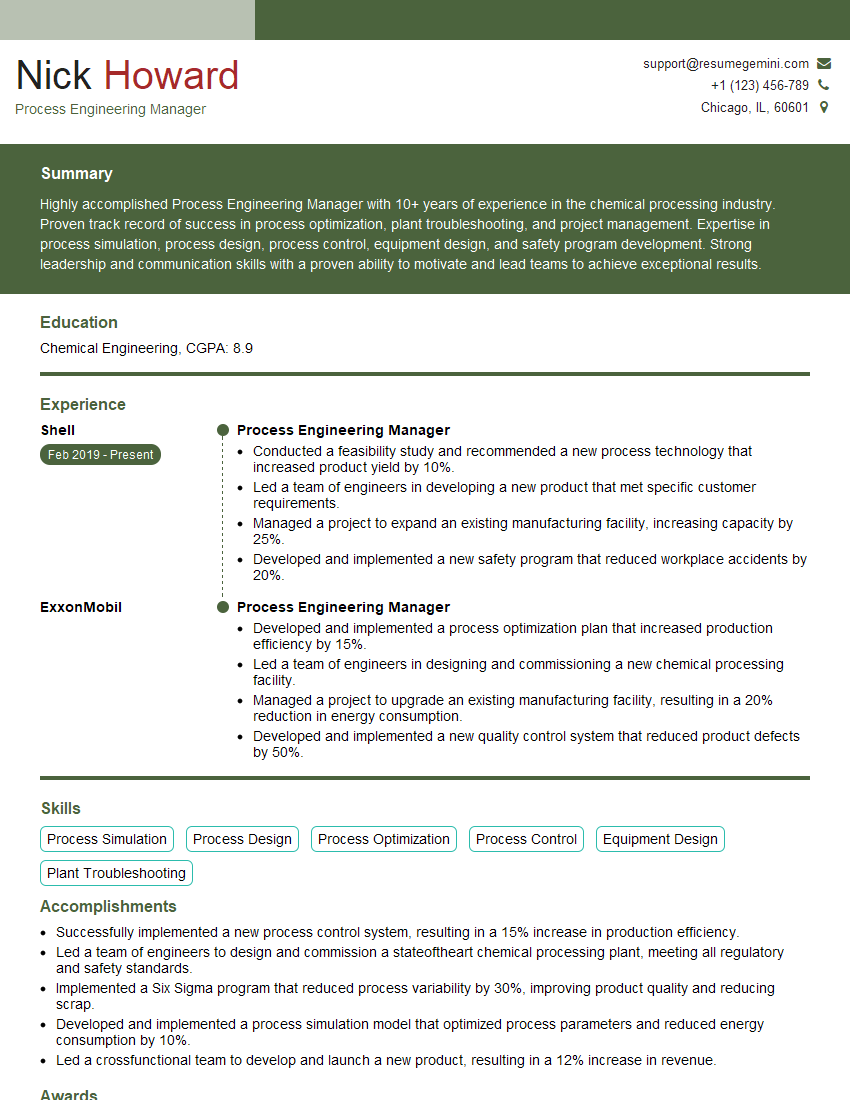
Process Engineering Manager Resume Sample
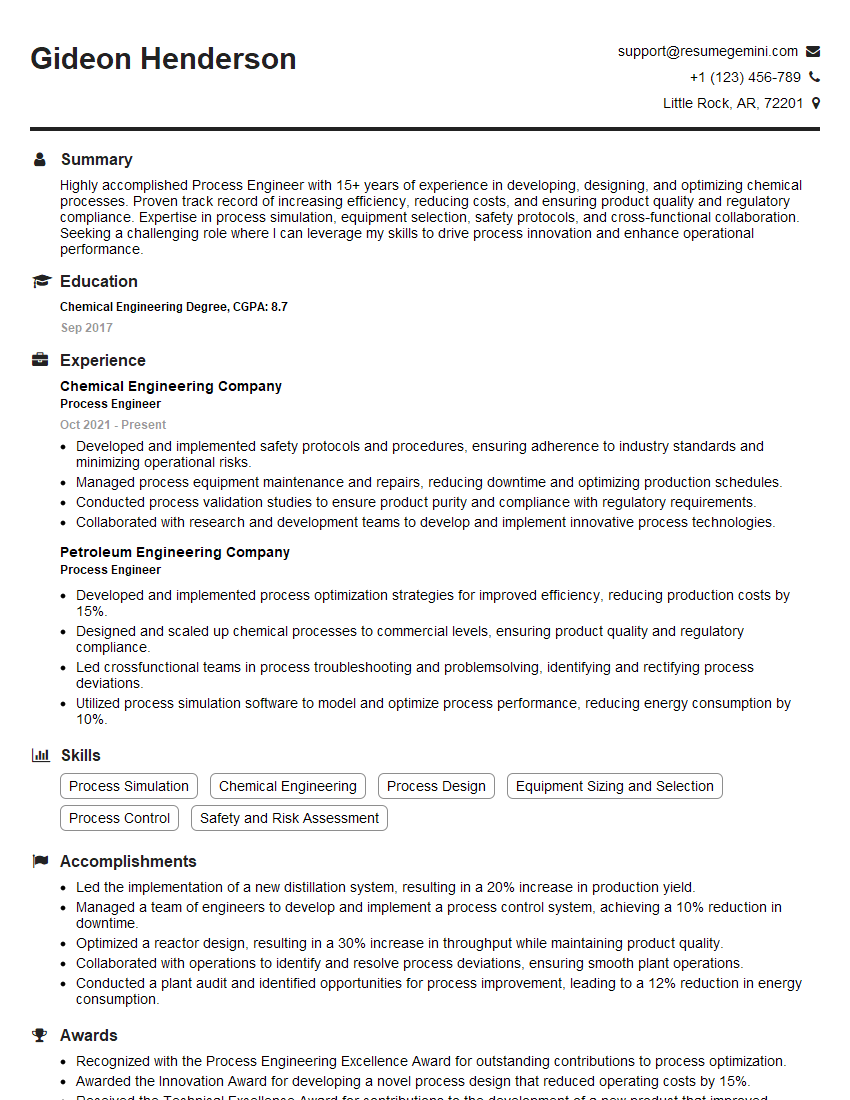
Process Engineer Resume Sample
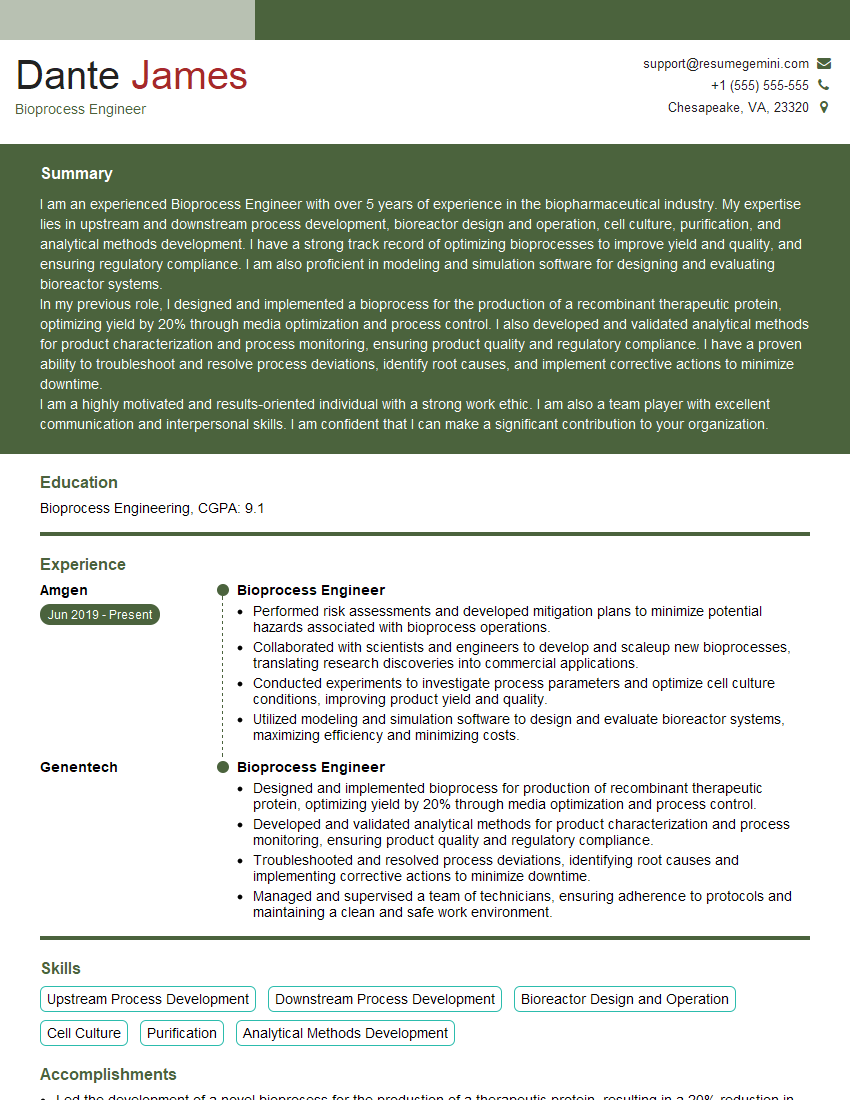
Bioprocess Engineer Resume Sample
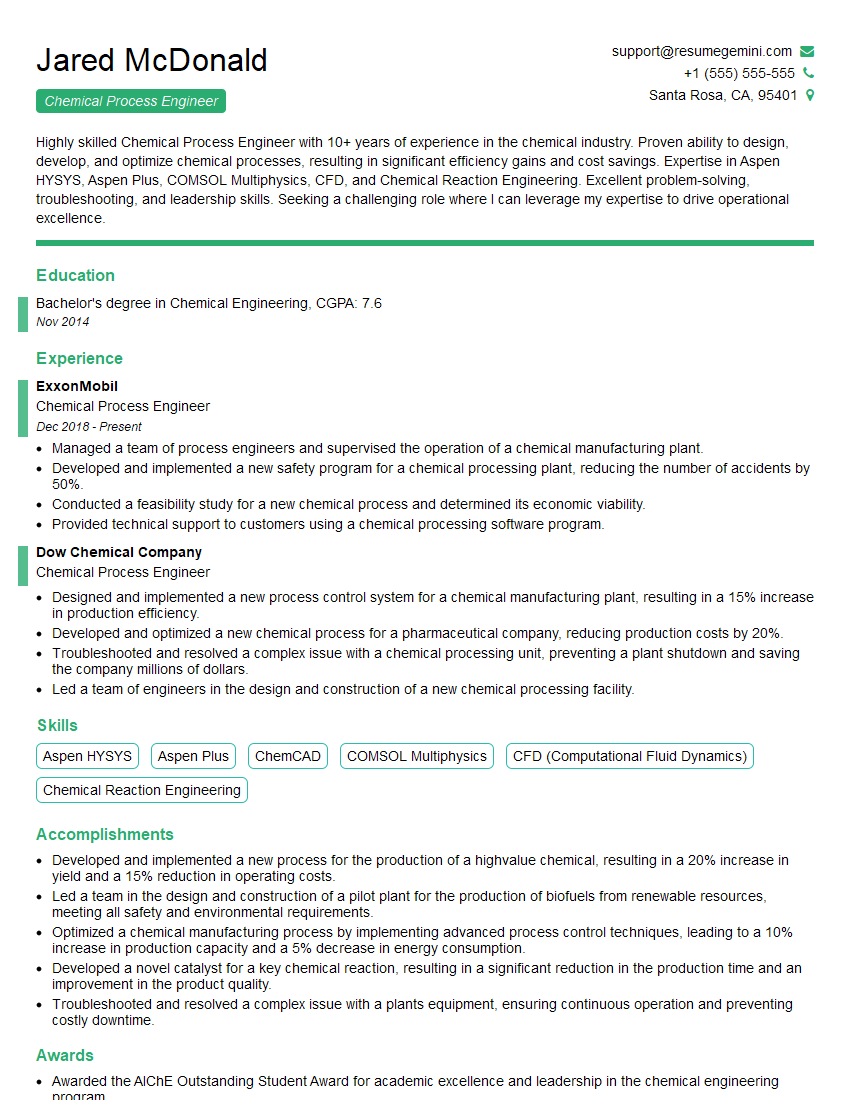
Chemical Process Engineer Resume Sample
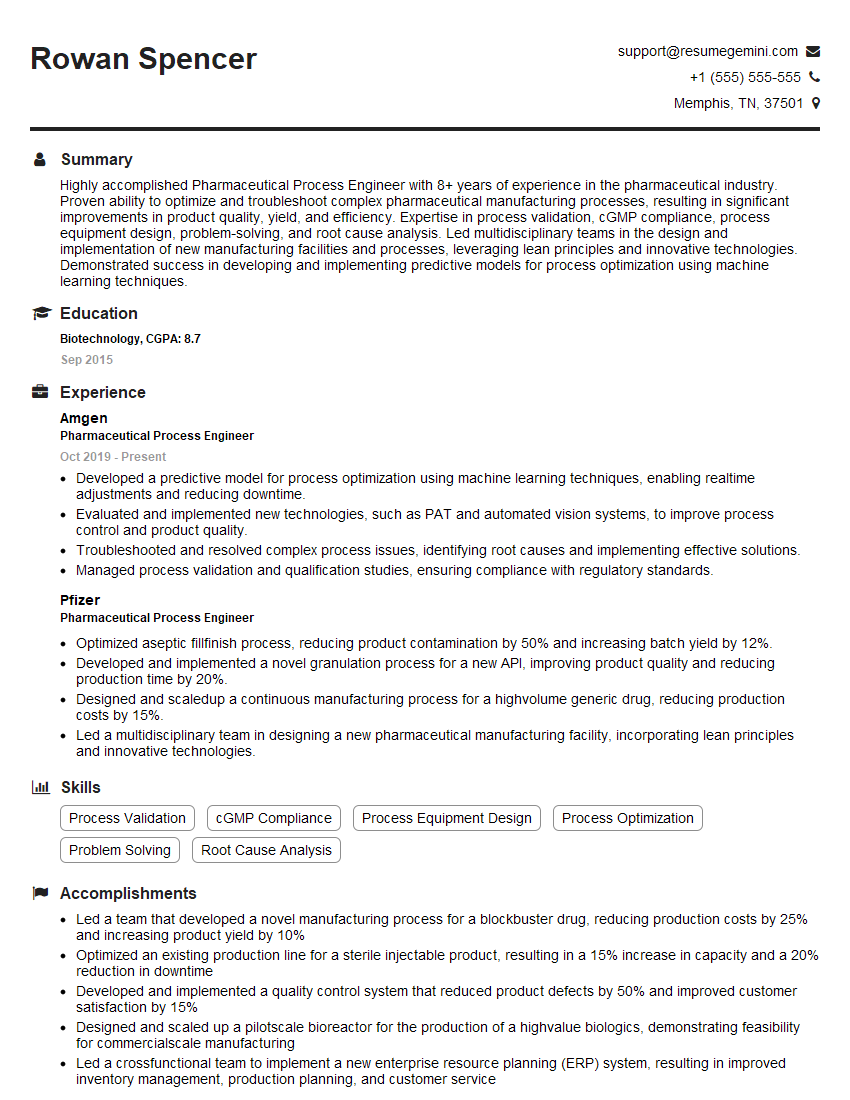
Pharmaceutical Process Engineer Resume Sample
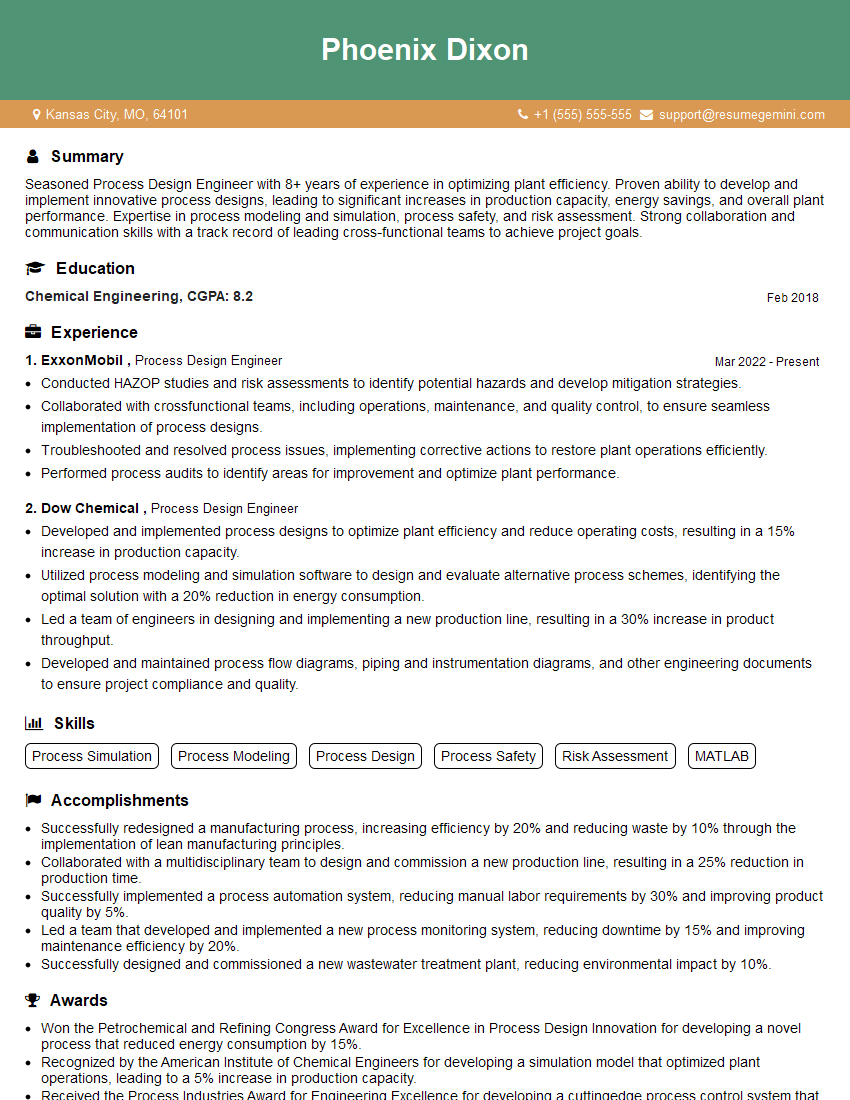
Process Design Engineer Resume Sample
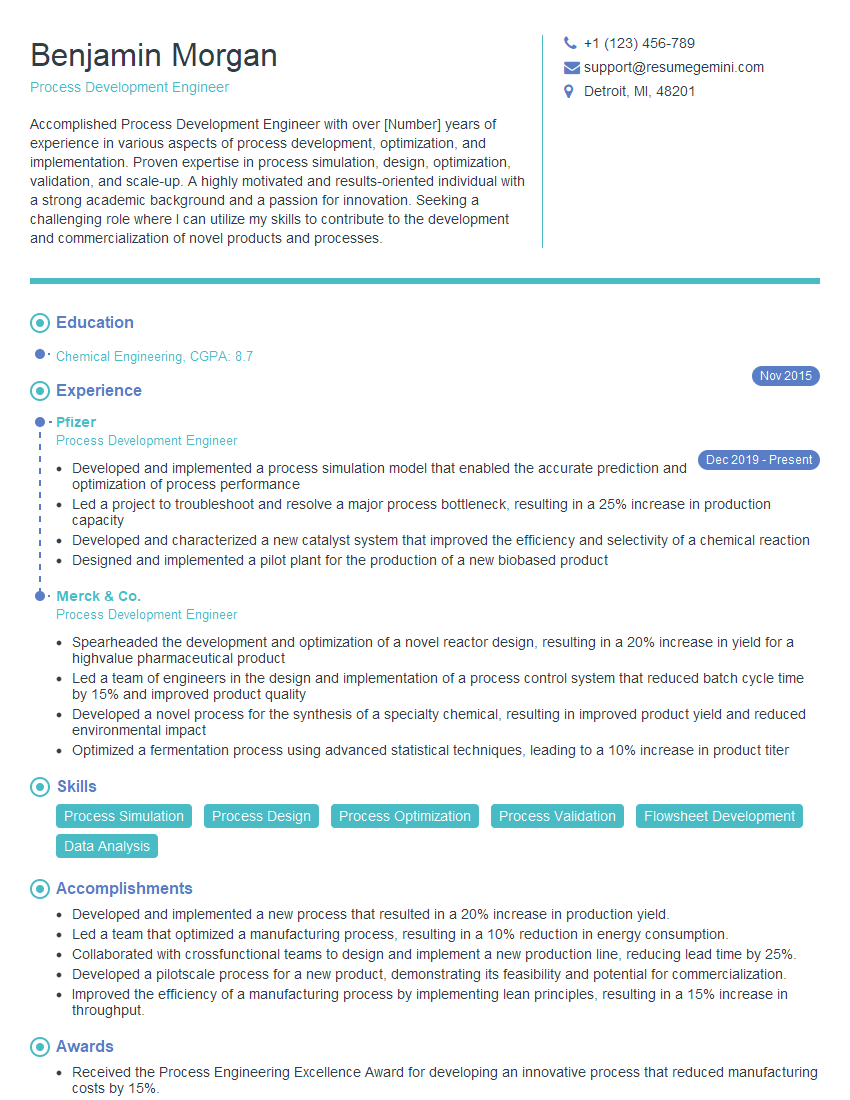
Process Development Engineer Resume Sample
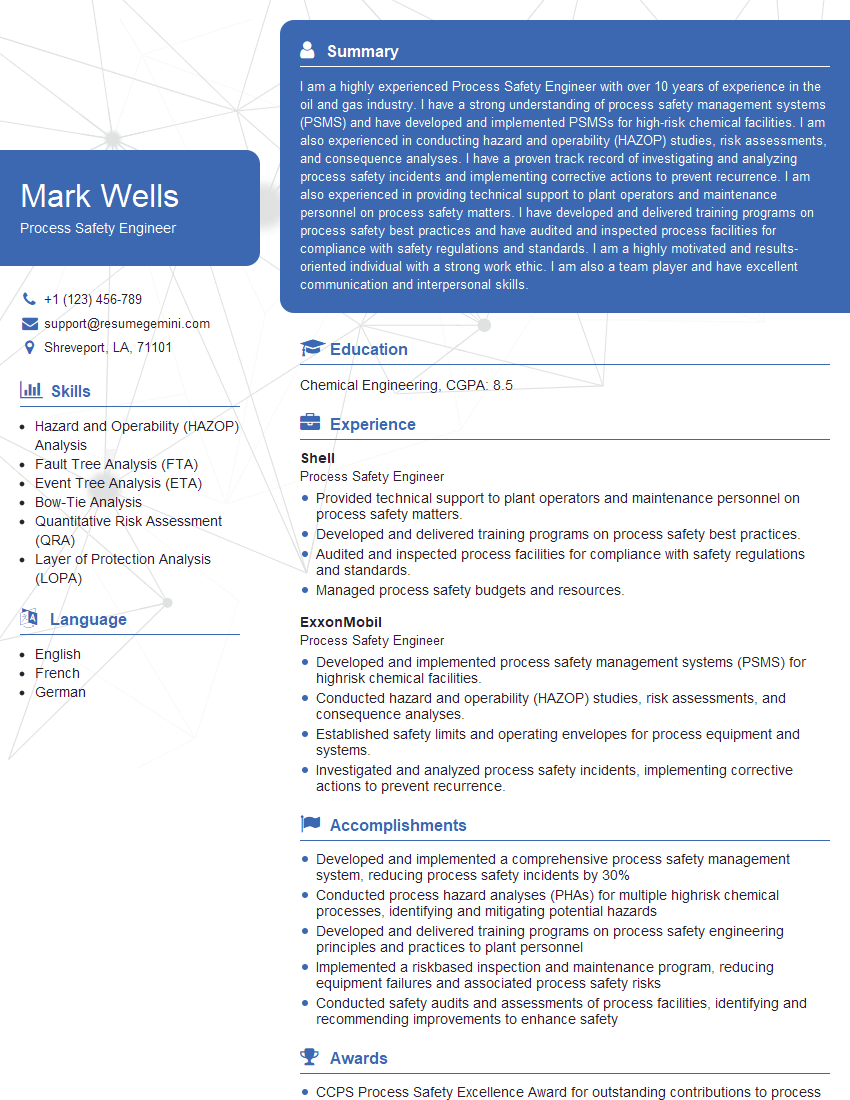
Process Safety Engineer Resume Sample
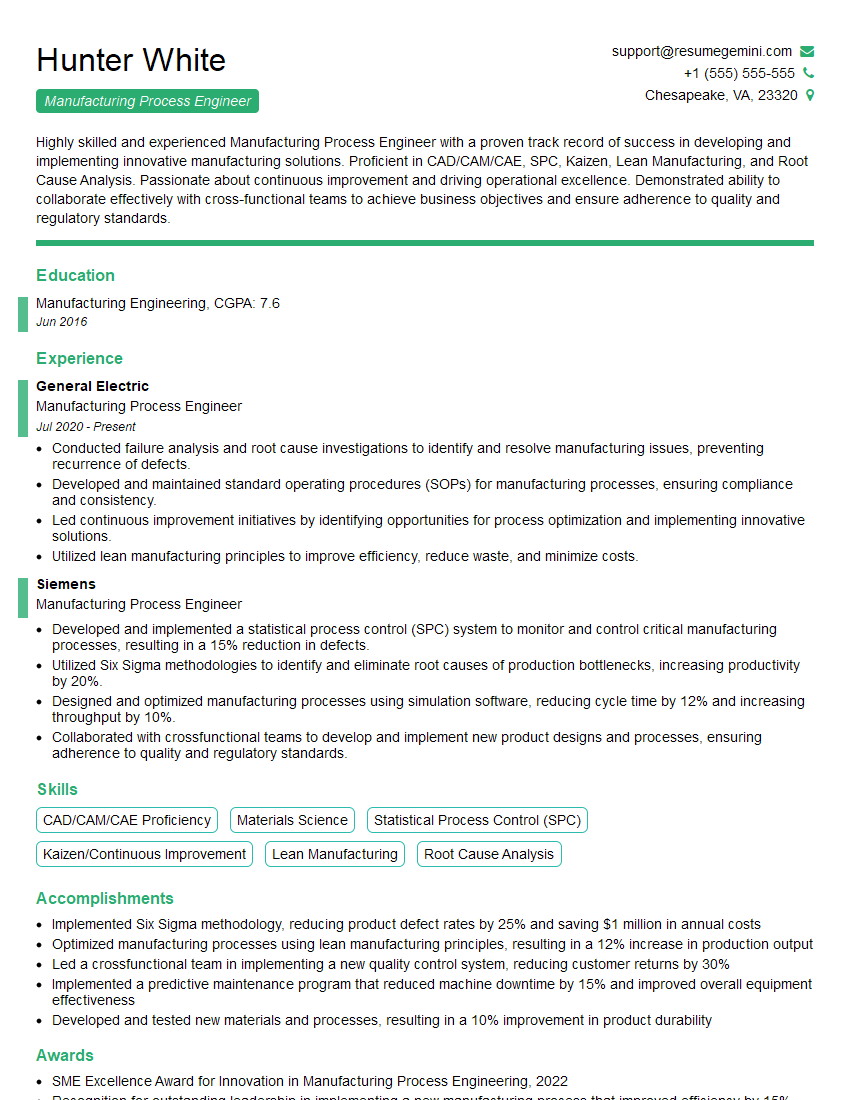
Manufacturing Process Engineer Resume Sample
Explore more articles
Users Rating of Our Blogs
Share Your Experience
We value your feedback! Please rate our content and share your thoughts (optional).
What Readers Say About Our Blog
To the interviewgemini.com Webmaster.
Very helpful and content specific questions to help prepare me for my interview!
Thank you
To the interviewgemini.com Webmaster.
This was kind of a unique content I found around the specialized skills. Very helpful questions and good detailed answers.
Very Helpful blog, thank you Interviewgemini team.