Interviews are opportunities to demonstrate your expertise, and this guide is here to help you shine. Explore the essential Knowledge of Wallpaper Styles, Trends, and History interview questions that employers frequently ask, paired with strategies for crafting responses that set you apart from the competition.
Questions Asked in Knowledge of Wallpaper Styles, Trends, and History Interview
Q 1. Describe the key differences between traditional and contemporary wallpaper styles.
Traditional and contemporary wallpaper styles differ significantly in their design aesthetics and intended effects. Think of it like comparing a classic novel to a modern graphic novel – both tell stories, but through vastly different means.
Traditional wallpaper often features intricate patterns, rich colors (like deep reds, golds, and blues), and ornate motifs. These designs frequently evoke historical periods, such as Victorian or Art Deco, often utilizing damasks, florals, and paisleys with a formal, symmetrical feel. They aim for a sense of grandeur and sophistication.
Contemporary wallpaper, on the other hand, embraces modern simplicity and minimalism. Clean lines, geometric patterns, bold colors or subtle neutrals, and abstract designs are common. The focus is on creating a clean, modern feel, often incorporating contemporary art influences. Think muted tones, large-scale graphics, or textured surfaces. The overall effect leans toward a more relaxed, less formal atmosphere.
- Traditional: Intricate patterns, rich colors, historical motifs, formal.
- Contemporary: Clean lines, geometric or abstract designs, bold or muted colors, minimalist.
Q 2. Name three prominent wallpaper design movements and their defining characteristics.
Three prominent wallpaper design movements, each with distinct characteristics, are:
- Arts & Crafts (late 19th – early 20th century): This movement championed handcrafted designs, natural motifs (flowers, leaves, and animals), and simple, elegant patterns. Think muted earth tones and a focus on organic forms, rejecting the mass production and overly ornate styles of the Victorian era. William Morris was a key figure, known for his beautiful floral and nature-inspired designs.
- Art Deco (1920s-1930s): Art Deco wallpaper is characterized by geometric shapes, stylized motifs, metallic accents, and a sense of luxury. Think bold colors like black, gold, and crimson, combined with sleek lines and often incorporating Egyptian, Aztec, or machine-age influences. It projects glamour and sophistication.
- Mid-Century Modern (1940s-1960s): This style features clean lines, simple geometric patterns, and a focus on functionality. The color palette often includes muted tones like greens, yellows, and browns, sometimes incorporating pops of brighter colors. Think of bold graphics, abstract patterns, and a less ornate approach compared to Art Deco.
Q 3. Explain the impact of technology on modern wallpaper production and design.
Technology has revolutionized wallpaper production and design in several ways:
- Digital Printing: Digital printing allows for incredibly detailed and customized designs, enabling the creation of virtually limitless patterns and colors. It’s also more efficient and cost-effective for smaller production runs, making it possible to create unique, personalized wallpapers.
- CAD Software: Computer-aided design (CAD) software empowers designers to create intricate and complex patterns with ease, allowing for greater precision and experimentation. This has opened new possibilities for innovative designs and pattern repeats.
- Material Innovation: Technological advancements have led to the development of new wallpaper materials with improved durability, washability, and texture. This includes the introduction of innovative non-woven substrates and advanced inks with enhanced color vibrancy and lightfastness.
- 3D Printing: While still emerging, 3D printing offers the potential to create highly textured and unique wallpaper designs, adding a new dimension to the possibilities of surface decoration.
In essence, technology has allowed for a significant increase in design flexibility, production efficiency, and the quality and variety of wallpaper available on the market.
Q 4. Discuss the use of different wallpaper materials (e.g., vinyl, non-woven, grasscloth) and their applications.
Different wallpaper materials offer varying properties and are suited for different applications. The choice often depends on the room’s function, desired aesthetic, and budget.
- Vinyl: Durable and washable, vinyl wallpaper is ideal for high-traffic areas like kitchens and bathrooms. It’s relatively easy to clean and resists moisture, making it a practical choice for busy households. However, it can sometimes appear less luxurious than other materials.
- Non-Woven: This material is easier to install than vinyl, as it doesn’t require pre-pasting. It hangs smoothly and is also more forgiving during installation. It’s also often breathable and less likely to shrink or expand compared to vinyl, but still offers good durability. A versatile choice for many rooms.
- Grasscloth: Made from natural fibers, grasscloth provides a luxurious, textured look. It’s environmentally friendly and adds warmth to a room. However, it’s more delicate than vinyl or non-woven and requires careful handling during installation and cleaning; it’s less durable in high-traffic areas.
Choosing the right material involves considering factors like durability, washability, ease of installation, cost, and the desired aesthetic.
Q 5. How would you select wallpaper to complement a specific interior design style (e.g., Victorian, minimalist)?
Selecting wallpaper to complement an interior design style requires a careful consideration of the existing décor. Think of the wallpaper as an important accessory that should enhance the overall style, not clash with it.
- Victorian: A Victorian interior typically calls for rich, detailed wallpapers. Damasks, floral patterns, or intricate paisleys in deep jewel tones (emerald green, ruby red, sapphire blue) would be appropriate. Consider embossed or textured papers to add depth.
- Minimalist: A minimalist space benefits from simple, clean lines and a neutral palette. Consider a wallpaper with a subtle texture, geometric patterns in muted tones (grays, beige, or soft whites), or even a solid color that adds a touch of sophistication without overwhelming the room’s simplicity.
The key is to maintain a cohesive look. Research images of interiors in the style you’re aiming for to get a sense of appropriate wallpaper choices. Avoid patterns or colors that clash dramatically with existing furniture, flooring, or artwork.
Q 6. What are some current trends in wallpaper design and color palettes?
Current wallpaper trends showcase a diverse range of styles and color palettes.
- Bold Geometric Patterns: Large-scale geometric designs in striking colors are making a statement, adding a modern and graphic touch to spaces.
- Textured Wallpapers: Adding depth and visual interest, textured wallpapers—from grasscloth to linen-look—create a tactile and luxurious feel.
- Nature-Inspired Designs: Bringing the outdoors in, botanical prints and nature-inspired motifs remain popular, offering a calming and refreshing aesthetic.
- Muted and Earthy Tones: Earthy neutrals like terracotta, sage green, and warm grays are prominent, creating serene and sophisticated environments.
- Tropical Motifs: Bold leafy greens, vibrant blooms, and exotic birds add a touch of lively energy.
Color palettes are shifting towards a balance of bold statements and calming neutrals, reflecting a desire for both visual excitement and tranquil spaces.
Q 7. Explain the concept of wallpaper pattern repeat and its importance in installation.
Wallpaper pattern repeat refers to the distance it takes for a pattern to completely repeat itself. It’s crucial for seamless installation.
Understanding pattern repeat is vital because it determines how much wallpaper you need to order and how to match the pattern at the seams. There are various types of repeats:
- Straight Match/Drop Match: The pattern aligns directly edge-to-edge.
- Half-Drop Match: The pattern aligns with the top edge of one strip meeting the middle of the next.
- Free Match: The pattern doesn’t need precise alignment.
Incorrectly matching the pattern can result in a visually jarring and unprofessional finish. Always check the wallpaper’s specifications for the pattern repeat before starting the installation. This information is typically provided on the wallpaper label or product description. The installer needs to carefully measure and mark the wall to ensure correct alignment throughout the hanging process. Failing to consider the pattern repeat can lead to significant material waste and installation delays.
Q 8. Describe your experience with different wallpaper installation techniques.
Wallpaper installation techniques vary depending on the type of wallpaper and the wall’s condition. For traditional paste-the-paper methods, I meticulously prepare the wall, ensuring it’s clean, smooth, and primed. Then, I carefully measure and cut the wallpaper panels, applying paste evenly to the back of each panel (or using pre-pasted varieties) before carefully hanging them, aligning patterns, and smoothing out any air bubbles. For paste-the-wall methods, paste is applied directly to the wall, offering a less messy experience and often better suited for textured papers. I’m also experienced with peel-and-stick options, which are simpler for smaller spaces or DIY projects, but demand extra care to avoid air bubbles and ensure a clean edge.
Beyond these basic techniques, I’ve specialized in hanging intricate patterns – like those requiring precise matching across multiple panels – which demands a high level of planning and attention to detail. I also have experience working with various substrates, from drywall to plaster and even textured surfaces, adjusting techniques accordingly to ensure a flawless finish. For instance, using a specialized adhesive is crucial on surfaces like concrete.
Q 9. How do you address challenges such as pattern matching and uneven walls during installation?
Pattern matching and uneven walls pose common challenges in wallpaper installation. For pattern matching, careful planning is key. I pre-hang panels, observing the pattern repeat and carefully marking the cuts. This often necessitates ‘booking’ the paper—laying panels face down, lining up the patterns, and making all cuts at once—to maintain precision. In some cases, subtle pattern shifts are unavoidable, and I’ll strategically place the panels to minimize the visual disruption. For instance, on a high feature wall, imperfections might be less noticeable.
Uneven walls necessitate preparation before even considering the wallpaper. I use a high-quality smoothing compound to fix minor imperfections; severe issues often require professional plastering. Before hanging, I use a plumb line and level to ensure straight vertical and horizontal lines, which serve as guides during the installation. This prevents the wallpaper from accentuating existing imperfections. The right adhesive can also make a difference; thicker adhesives can help fill small gaps.
Q 10. How would you advise a client on choosing wallpaper for a high-traffic area?
When advising a client about wallpaper for high-traffic areas, durability is paramount. I’d recommend vinyl wallpapers – they’re highly durable, washable, and resistant to scuffs and scratches. I’d also steer them toward subtle textures and designs rather than delicate patterns, which can show wear more easily. I would encourage them to consider the color palette, which might involve choosing more neutral shades or opting for a bold, yet forgiving print that can stand the test of time. Additionally, I’d highlight the importance of selecting a quality wallpaper from reputable brands, as this translates directly into its longevity.
For example, a busy hallway might benefit from a textured vinyl in a neutral tone; the texture hides minor wear, and the neutral color won’t show dirt easily. A family room, on the other hand, might allow for a more playful pattern, but again, the choice of vinyl ensures durability. I’ll emphasize the importance of professional installation, as this ensures a better outcome than a DIY approach that could shorten the life of the wallpaper.
Q 11. Explain the importance of considering light and shadow when selecting wallpaper.
Light and shadow play a significant role in how wallpaper appears. A dark room might make a heavily patterned wallpaper feel overwhelming, while the same paper in a brightly lit space could appear vibrant and exciting. Similarly, a light, pastel wallpaper might look washed-out in a dimly lit room, but glow beautifully in direct sunlight. The direction of the light source also matters; a textured wallpaper might cast interesting shadows in one light, but appear flat in another.
I usually advise my clients to consider the room’s lighting conditions before committing to a design. We may experiment with samples, placing them in various spots in the room at different times of the day to assess how the wallpaper interacts with light. For instance, a north-facing room receiving minimal direct sunlight might need a brighter, warmer wallpaper to avoid making the room feel cold and dull. Conversely, a south-facing room bathed in sunlight may benefit from cooler shades to prevent the room from appearing overexposed.
Q 12. Describe the process of preparing a wall for wallpaper installation.
Wall preparation is critical for a successful wallpaper installation. This involves several steps. First, I thoroughly clean the wall to remove dust, cobwebs, and any loose paint or plaster. Then, I repair any imperfections such as holes or cracks, using appropriate fillers and sanding down smooth. Once the surface is smooth, I check for any suction or loose areas which can cause the wallpaper to peel later. Next, I prime the wall with a suitable primer, which ensures proper adhesion of the wallpaper. The choice of primer depends on the wall type and the type of wallpaper. For instance, an oil-based primer is beneficial for walls with excessive moisture. Finally, I allow the primer to dry completely before beginning the installation process.
Failing to adequately prepare the wall can lead to a variety of problems, including peeling, bubbling, and an uneven finish. Proper preparation guarantees a long-lasting, high-quality result. I compare this stage to preparing a canvas before painting; a smooth, primed surface allows for a professional finish and the best adherence.
Q 13. What are the environmental considerations associated with wallpaper manufacturing and disposal?
Environmental considerations are increasingly important in wallpaper manufacturing and disposal. The manufacturing process can involve the use of volatile organic compounds (VOCs), which contribute to air pollution. Some wallpapers utilize PVC, a non-biodegradable material that adds to landfill waste. Sustainable wallpaper options now increasingly include natural fibers like bamboo, grasses, or recycled materials. These reduce the environmental footprint compared to traditional options. Similarly, the inks used are becoming more eco-friendly, with water-based options replacing solvent-based ones. Even the adhesives are evolving, with low-VOC options offering less environmental impact.
Disposal is also a key consideration. Although many wallpapers are easily removed and disposed of via normal waste streams, responsibly discarding the materials remains important. When possible, I promote the reuse of the wallpaper if the condition is good. For example, leftover panels can be used for other DIY projects or craft purposes. Understanding the environmental impact of the material I’m working with is a primary concern during project selection and completion.
Q 14. How do you stay updated on the latest wallpaper trends and design innovations?
Staying current on wallpaper trends and innovations requires a multi-pronged approach. I regularly attend industry trade shows and conferences, where I network with designers, manufacturers, and other professionals. I also subscribe to design magazines, both print and digital, and follow key industry blogs and social media accounts. This provides a steady stream of information on new materials, techniques, and design aesthetics. Exploring online design portfolios and Pinterest are also effective ways to observe current trends in home decor and interior design, providing a valuable source of inspiration.
Collaborating with interior designers and architects further broadens my perspective, offering exposure to diverse projects and unique design challenges. Moreover, I actively seek out continuing education courses and workshops focused on the latest wallpapering techniques and sustainable practices. This ensures I’m adept at both the practical side of installation and the environmentally conscious approach to the material and the overall project.
Q 15. Discuss the historical significance of specific wallpaper designs or patterns.
Wallpaper designs hold a fascinating historical record, reflecting cultural trends and technological advancements. For instance, the intricate damasks popular during the 18th-century Rococo period, with their opulent floral patterns and swirling motifs, signified wealth and sophistication. These designs, often hand-blocked, were meticulously crafted and represented a significant investment. Conversely, the simpler geometric patterns of the Arts and Crafts movement in the late 19th and early 20th centuries reflected a reaction against industrialization, emphasizing handcrafted quality and natural forms. Think of William Morris’s iconic designs with their stylized flowers and flowing lines – they embodied a return to nature and traditional craftsmanship. The bold graphic prints of the 1960s and 70s, often featuring psychedelic colors and abstract shapes, mirrored the social and artistic upheavals of that era. Each style, therefore, tells a story about its time, revealing societal values and artistic sensibilities.
Another significant example is the rise of Chinoiserie wallpapers in the 18th century. These designs, inspired by Chinese art and culture, reflected the growing global trade and fascination with the East. They frequently featured pagodas, birds, and fantastical landscapes, showcasing a blend of European artistic styles and exotic influences. Examining these historical designs provides valuable insight into the cultural and aesthetic preferences of different periods.
Career Expert Tips:
- Ace those interviews! Prepare effectively by reviewing the Top 50 Most Common Interview Questions on ResumeGemini.
- Navigate your job search with confidence! Explore a wide range of Career Tips on ResumeGemini. Learn about common challenges and recommendations to overcome them.
- Craft the perfect resume! Master the Art of Resume Writing with ResumeGemini’s guide. Showcase your unique qualifications and achievements effectively.
- Don’t miss out on holiday savings! Build your dream resume with ResumeGemini’s ATS optimized templates.
Q 16. Compare and contrast different wallpaper printing techniques (e.g., screen printing, digital printing).
Traditional screen printing and modern digital printing offer distinct advantages and disadvantages in wallpaper production. Screen printing, a time-honored technique, involves pushing ink through a stencil onto the wallpaper. It allows for rich color saturation and a textured, tactile quality, often prized for high-end or bespoke wallpapers. However, it’s a slower, more labor-intensive process, making it more expensive. Digital printing, on the other hand, uses inkjet technology to print directly onto the wallpaper roll. It’s much faster, enabling high-volume production and intricate designs with photorealistic detail. Digital printing allows for greater design flexibility and lower costs, but the resulting print might lack the tactile richness of screen-printed wallpaper.
For example, a client seeking a highly customized, textured wallpaper with a limited color palette might prefer screen printing for its unique aesthetic appeal. A client needing a large quantity of wallpaper with a complex, detailed design, such as a panoramic scene, might opt for the cost-effectiveness and speed of digital printing. The choice often depends on the desired aesthetic, budget, and production volume.
Q 17. How would you create a mood board showcasing various wallpaper options for a client?
Creating a mood board for a client begins with understanding their style preferences, the room’s function, and the desired atmosphere. I typically start by collecting images of wallpapers, fabrics, paint colors, furniture pieces, and even architectural details that reflect the client’s vision. I utilize physical samples whenever possible, alongside digital images, to get a better feel for textures and color interplay. I arrange these elements on a large board, digitally or physically, grouping similar colors, patterns, or textures. I consider the overall balance and flow, ensuring a cohesive and visually appealing presentation.
For instance, if a client wants a calming bedroom, I might include soft pastel-colored wallpapers, images of plush textiles, and nature-inspired elements. For a vibrant living room, the mood board might showcase bolder geometric prints, luxurious fabrics, and contemporary furniture. The mood board serves as a visual conversation starter, allowing the client to visualize the potential design and make informed decisions.
Q 18. Describe your experience working with different wallpaper suppliers and manufacturers.
My experience encompasses working with both large-scale wallpaper manufacturers and smaller, specialized suppliers. Large manufacturers, like
Building strong relationships with both types of suppliers is essential for access to diverse product offerings and responsive service. It allows for a flexible approach to various client needs and budgets.
Q 19. How do you manage client expectations regarding wallpaper selection and installation?
Managing client expectations is crucial for a successful wallpaper project. I begin by having detailed conversations to thoroughly understand their preferences, budget, and the room’s specific requirements (e.g., light levels, existing décor). I provide realistic timelines, outlining each step from selection to installation. I present samples in the client’s actual lighting to prevent unexpected color variations. I also emphasize the importance of considering the pattern repeat and how it will work with the room’s dimensions. I provide them with detailed information regarding the wallpaper’s properties—washability, durability, and maintenance.
I always encourage clients to order extra rolls to account for waste during installation, especially with complex patterns. Open communication and realistic expectations create a smoother workflow and avoid disappointments later on.
Q 20. How would you handle a situation where a client is dissatisfied with the chosen wallpaper?
Client dissatisfaction requires a proactive and empathetic approach. First, I listen carefully to their concerns, avoiding interruptions. I try to understand the nature of their dissatisfaction – was it the color, the pattern, the quality, or the installation? Then, I review the initial selection process, making sure the original samples accurately represented the final product. Depending on the issue, several solutions might apply. If the problem stems from a manufacturing defect, I work with the supplier to arrange a replacement or refund. If the dissatisfaction is due to a color mismatch or an installation error, I offer to rectify the situation, at my expense if necessary. Maintaining a professional and understanding demeanor is key to regaining client trust. In some cases, a compromise might be reached, such as offering a partial refund or suggesting alternative design solutions.
My goal is to resolve the situation fairly and amicably, ensuring a positive outcome, even if the initial choice didn’t meet expectations.
Q 21. What software programs are you proficient in for wallpaper design or visualization?
I’m proficient in several software programs relevant to wallpaper design and visualization. Adobe Photoshop is essential for image manipulation and creating high-resolution wallpaper designs. I use Adobe Illustrator for vector-based design, particularly for creating repeating patterns and clean, precise graphics. Autodesk 3ds Max is a valuable tool for creating three-dimensional visualizations, allowing clients to see how a wallpaper will look within a virtual representation of their room. This helps to alleviate concerns about scale, pattern repeat, and color accuracy. I also leverage SketchUp for creating quick 3D models, and sometimes use specialized wallpaper design software programs if needed for specific client projects.
Proficiency in these programs allows me to offer comprehensive design services, from initial concept to final visualization, ensuring clients have a clear understanding of the project’s outcome.
Q 22. Describe your experience working with bespoke wallpaper designs.
Bespoke wallpaper design allows for unparalleled creativity and personalization. My experience involves collaborating closely with clients to understand their vision, translating their ideas into unique designs, and managing the entire process from initial concept sketches to final installation. This often involves exploring various materials, patterns, color palettes, and even incorporating custom illustrations or photographic prints. For example, I recently worked with a client who wanted a wallpaper depicting their family’s travels. We meticulously sourced high-resolution photographs, digitally enhanced them, and arranged them into a cohesive, artistic narrative that spanned multiple panels. The process included multiple revisions based on client feedback, ensuring the final product perfectly reflected their desires and the aesthetic of their home.
Another significant aspect of my experience lies in understanding the technical limitations and possibilities of different printing methods and materials. This includes advising clients on appropriate substrates for specific applications, such as choosing a durable vinyl for high-traffic areas or a delicate linen for a more refined, luxurious feel. Ultimately, the goal is to deliver a stunning and functional piece of art that enhances the client’s space.
Q 23. How do you determine the appropriate quantity of wallpaper needed for a project?
Accurately calculating wallpaper quantity is crucial to avoid costly waste or shortages. The process begins with precise measurements of the walls to be covered. This includes accounting for windows, doors, and any other obstructions. I usually add 10-15% extra to compensate for pattern matching, waste during cutting, and potential imperfections. The roll width and length need to be factored in as well. Each roll covers a specific area, and different patterns require different matching techniques which affect the total usable area from a roll.
For example, a wallpaper with a large repeating pattern will require more careful planning and potentially more waste compared to a smaller, simpler pattern. A precise calculation usually involves converting the wall area into square feet or square meters, dividing it by the usable area per roll (accounting for pattern repeat), and then adding the extra percentage to ensure sufficient material. Software tools and online calculators can also help automate this process, but the accuracy relies on the initial measurements.
Q 24. What are some common wallpaper maintenance and cleaning techniques?
Wallpaper maintenance depends heavily on the type of material used. Generally, it’s advisable to avoid harsh chemicals and abrasive cleaners. For vinyl wallpapers, a damp cloth with mild soap can be sufficient for most cleaning needs. For delicate materials like silk or grasscloth, dusting regularly with a soft brush or feather duster is usually preferred. Spot cleaning should be done immediately to prevent stains from setting. Always test any cleaning solution on a hidden area first to ensure it doesn’t damage the wallpaper.
More robust wallpapers, such as those designed for high-moisture areas like bathrooms, may require less frequent cleaning but could tolerate more vigorous methods. Regular cleaning will prolong the life of your wallpaper, preventing the build-up of dust and dirt that can dull its appearance and potentially damage the surface. Consider using a vacuum cleaner with a soft brush attachment for delicate wallpapers or an electrostatic duster for minimal disturbance. Always remember to follow the manufacturer’s recommended cleaning instructions.
Q 25. How would you identify and address damage to existing wallpaper?
Identifying and addressing wallpaper damage requires careful assessment. Minor tears or scratches might be repairable with specialized wallpaper adhesives and a carefully applied patch. More extensive damage, like peeling or water stains, might require more drastic measures. The first step is to determine the cause of the damage – moisture, impact, or age-related degradation. The type of wallpaper greatly influences the repair strategy.
For example, a small tear in a vinyl wallpaper could be mended with a patch cut from a spare section (if available). Water damage often requires removing the affected area and replacing it. If the damage is widespread, it might be more cost-effective to replace the entire wall covering. Before attempting any repair, I always test the adhesive or cleaning solution in a hidden area to ensure compatibility and prevent further damage. This methodical approach saves time and resources, ensuring optimal results.
Q 26. Explain the ethical considerations in sourcing and using wallpaper materials.
Ethical sourcing and use of wallpaper materials are paramount. This involves selecting materials from sustainable sources, ensuring fair labor practices in manufacturing, and minimizing environmental impact throughout the lifecycle of the product. Choosing wallpapers made from recycled materials or those manufactured with eco-friendly inks contributes to environmental sustainability. Furthermore, it’s crucial to verify that the manufacturing processes adhere to ethical standards, ensuring fair wages and safe working conditions for workers involved in the production.
Transparency in sourcing is also key. Responsible companies will readily provide information about their supply chains and manufacturing processes. By opting for ethically produced wallpapers, clients not only contribute to a fairer and more sustainable world but also enhance the overall aesthetic and perceived value of their space. Choosing wallpapers with certifications such as FSC (Forest Stewardship Council) for wood-based materials or OEKO-TEX Standard 100 for textiles ensures that materials meet specific standards for environmental and social responsibility.
Q 27. How do you balance client preferences with design best practices when selecting wallpaper?
Balancing client preferences with design best practices is a crucial skill in interior design. While respecting client choices is essential, it’s equally important to guide them towards solutions that are both aesthetically pleasing and practically sound. This involves open communication, understanding their lifestyle and preferences, and subtly suggesting alternatives that might better suit the space and their needs. For example, if a client is drawn to a wallpaper pattern that’s too busy for a small room, I would offer options with similar colors or styles but with a more scaled-down pattern. This allows them to keep the elements they love while optimizing the overall design.
I often use mood boards and sample swatches to illustrate how different wallpapers will interact with existing décor, lighting, and room dimensions. This visual approach helps clients visualize the final result and makes it easier to make informed decisions. My approach is collaborative, working with the client as a partner rather than simply imposing my own aesthetic preferences. The goal is to create a space that truly reflects their personality while adhering to sound design principles.
Q 28. Describe a time you had to solve a creative challenge related to wallpaper selection or installation.
One particularly challenging project involved a client who wanted a dramatic, large-scale mural depicting a specific cityscape in their dining room. The challenge was finding a high-resolution image with sufficient detail for reproduction as a custom wallpaper and matching the perspective to the room’s unique shape and dimensions. Standard stock images didn’t have the required resolution or didn’t align perfectly with their vision.
To overcome this, I commissioned a professional photographer to take bespoke images specifically for the project, ensuring the necessary resolution and perspective. This required careful planning and extensive communication to capture the correct angle and lighting. We then worked with a specialized digital printing company to ensure seamless alignment across multiple wallpaper panels, perfectly replicating the intended perspective. The result was a stunning and highly personalized mural that completely transformed the space, exceeding the client’s expectations. It demonstrated the value of adapting creative solutions to unique project requirements and prioritizing collaboration with talented specialists.
Key Topics to Learn for Knowledge of Wallpaper Styles, Trends, and History Interview
- Historical Overview: A chronological understanding of wallpaper evolution, from early hand-printed designs to modern digital printing techniques. Consider key periods and their defining aesthetic characteristics.
- Major Styles & Patterns: Deep familiarity with various wallpaper styles (e.g., Baroque, Victorian, Art Deco, Mid-Century Modern, contemporary) and their associated patterns (e.g., damask, floral, geometric, abstract). Be prepared to discuss the nuances and historical context of each.
- Material & Production Techniques: Knowledge of different wallpaper materials (e.g., paper, vinyl, fabric, grasscloth) and their properties, alongside understanding of printing methods (e.g., screen printing, block printing, digital printing) and their impact on design and durability.
- Color Theory & Design Principles: Understanding how color palettes and design principles influence the selection and application of wallpaper in interior spaces. Be ready to discuss how wallpaper choices contribute to overall room ambiance and mood.
- Current Trends & Predictions: Stay abreast of current wallpaper trends and emerging styles. Consider factors influencing these trends (e.g., technological advancements, social influences, sustainability). Develop your ability to forecast future directions.
- Practical Applications: Be prepared to discuss how your knowledge can be applied to specific design challenges, such as choosing appropriate wallpaper for different room types, coordinating wallpaper with other design elements (e.g., furniture, textiles), and addressing client preferences and needs.
- Problem-Solving & Decision-Making: Prepare examples of situations where your expertise in wallpaper styles, trends, and history helped you solve a design problem or make an informed decision. This could involve overcoming a client’s objections, adapting a design to a specific space, or resolving technical issues during installation.
Next Steps
Mastering knowledge of wallpaper styles, trends, and history is crucial for career advancement in the design industry. A strong understanding of this subject showcases your expertise and allows you to confidently navigate client projects and design challenges. To significantly boost your job prospects, it’s essential to create an ATS-friendly resume that effectively highlights your skills and experience. ResumeGemini is a trusted resource that can help you build a professional and impactful resume tailored to this specific field. Examples of resumes tailored to showcasing expertise in Knowledge of Wallpaper Styles, Trends, and History are available to guide you.
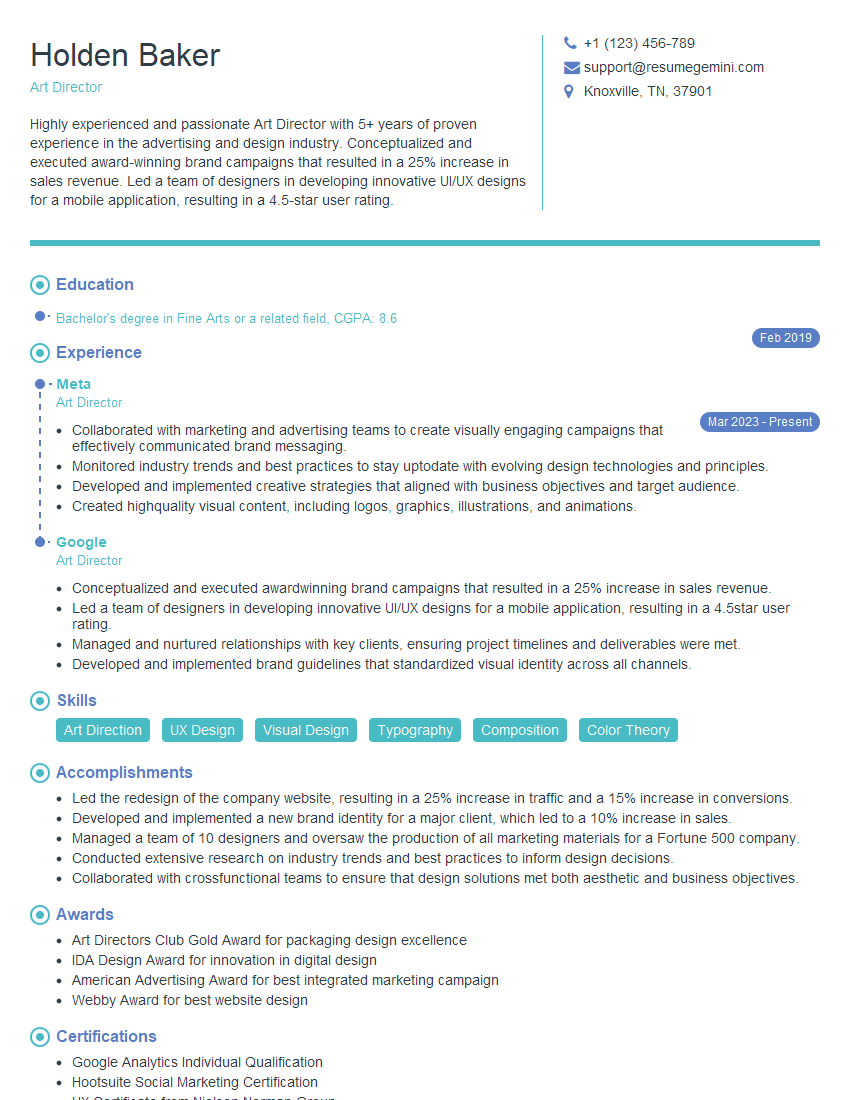
Art Director Resume Sample

Creative Director Resume Sample
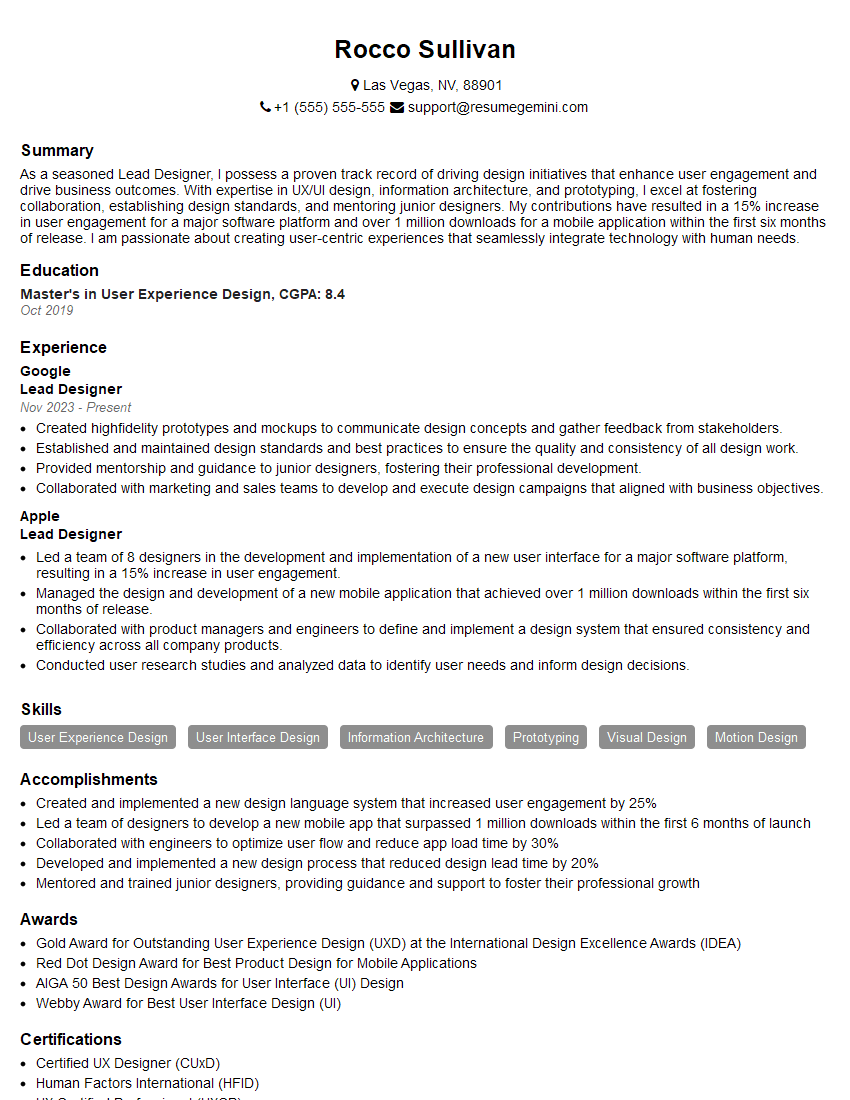
Lead Designer Resume Sample
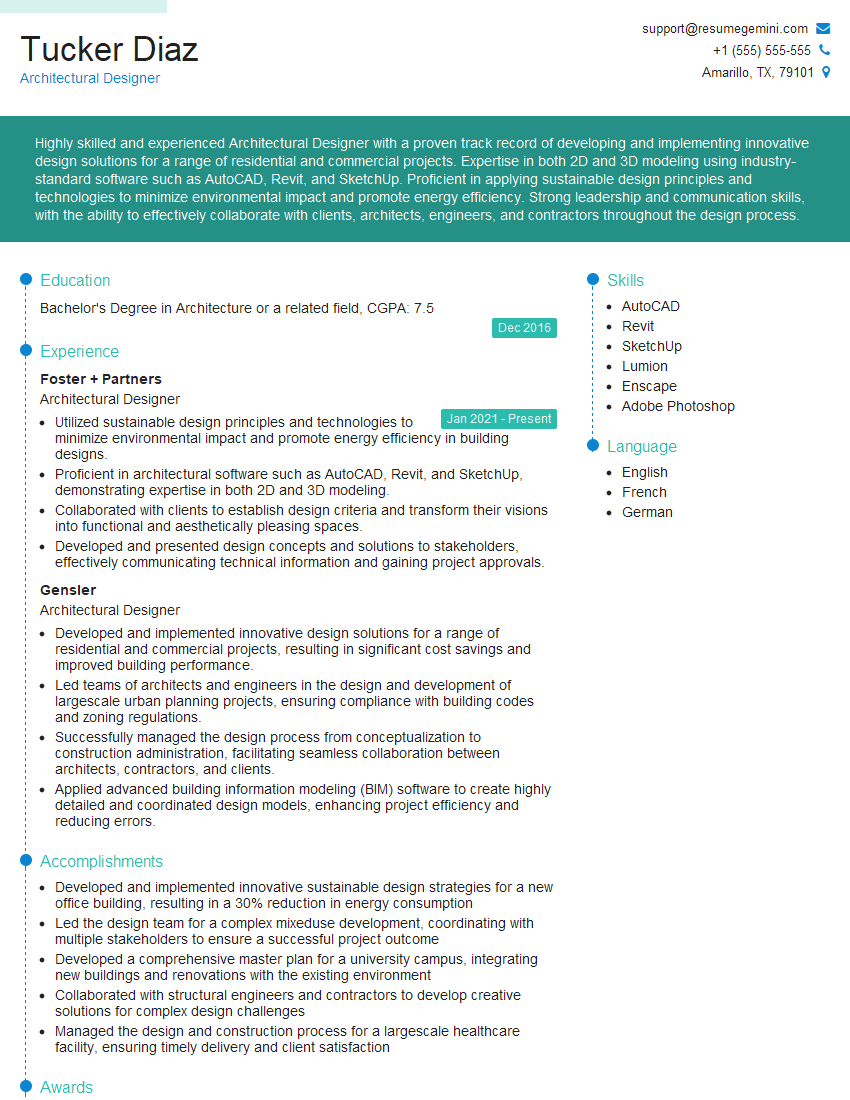
Architectural Designer Resume Sample
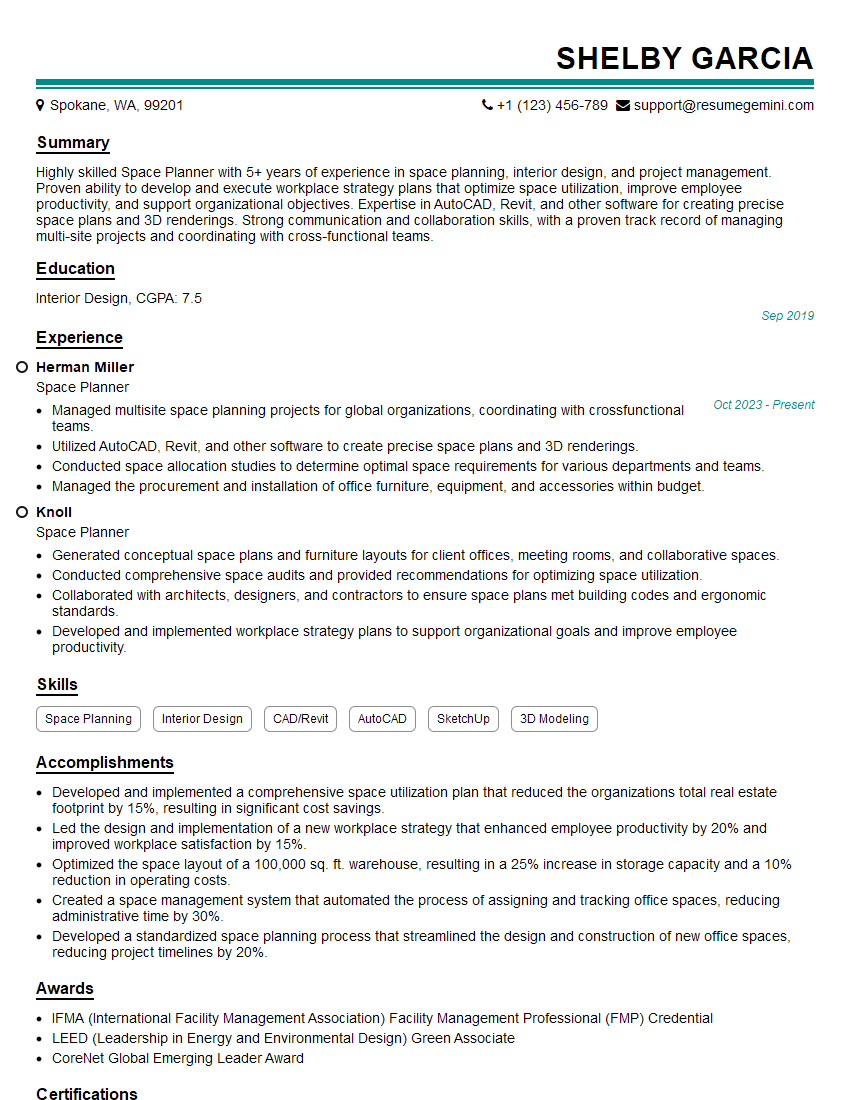
Space Planner Resume Sample
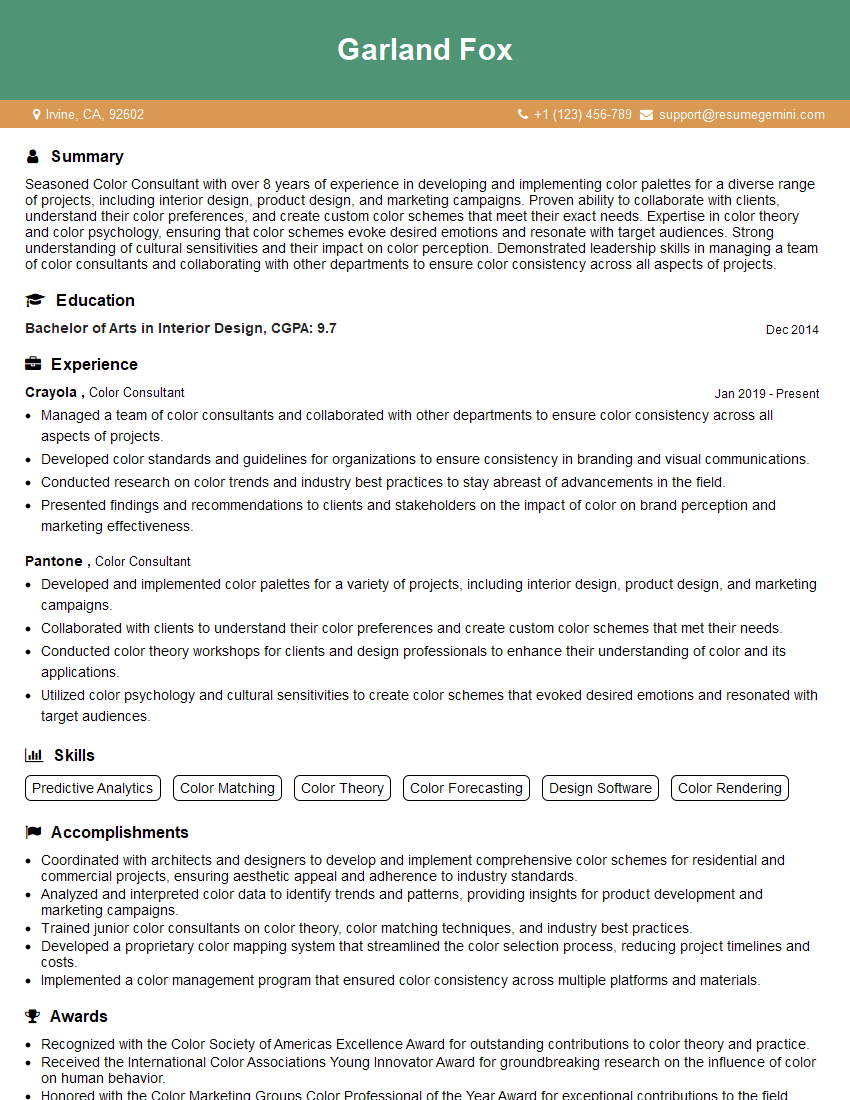
Color Consultant Resume Sample
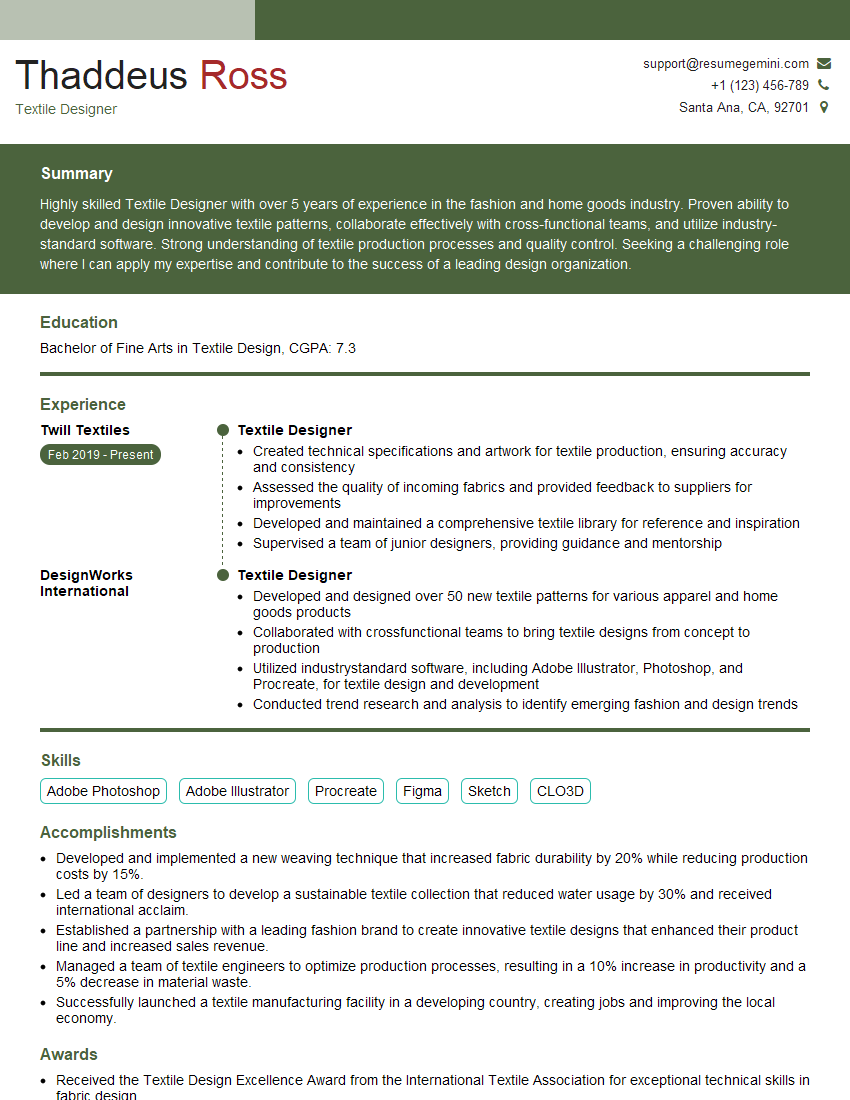
Textile Designer Resume Sample
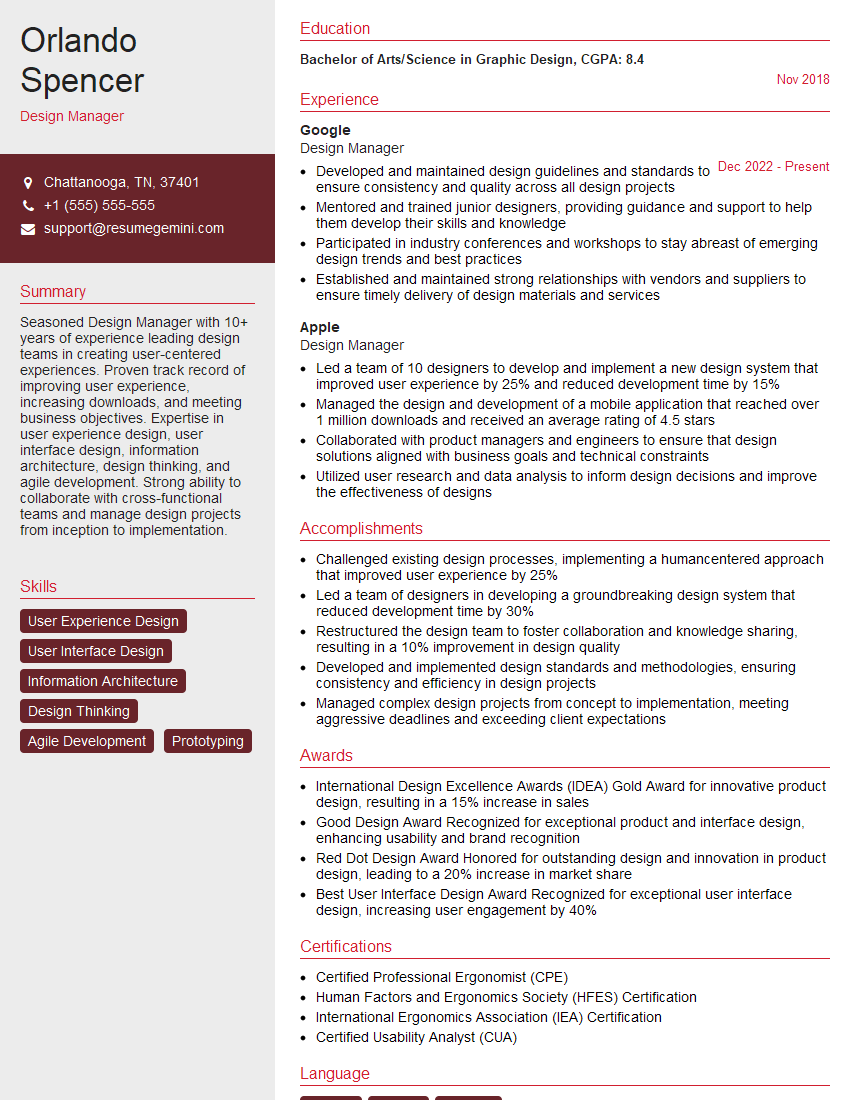
Design Manager Resume Sample
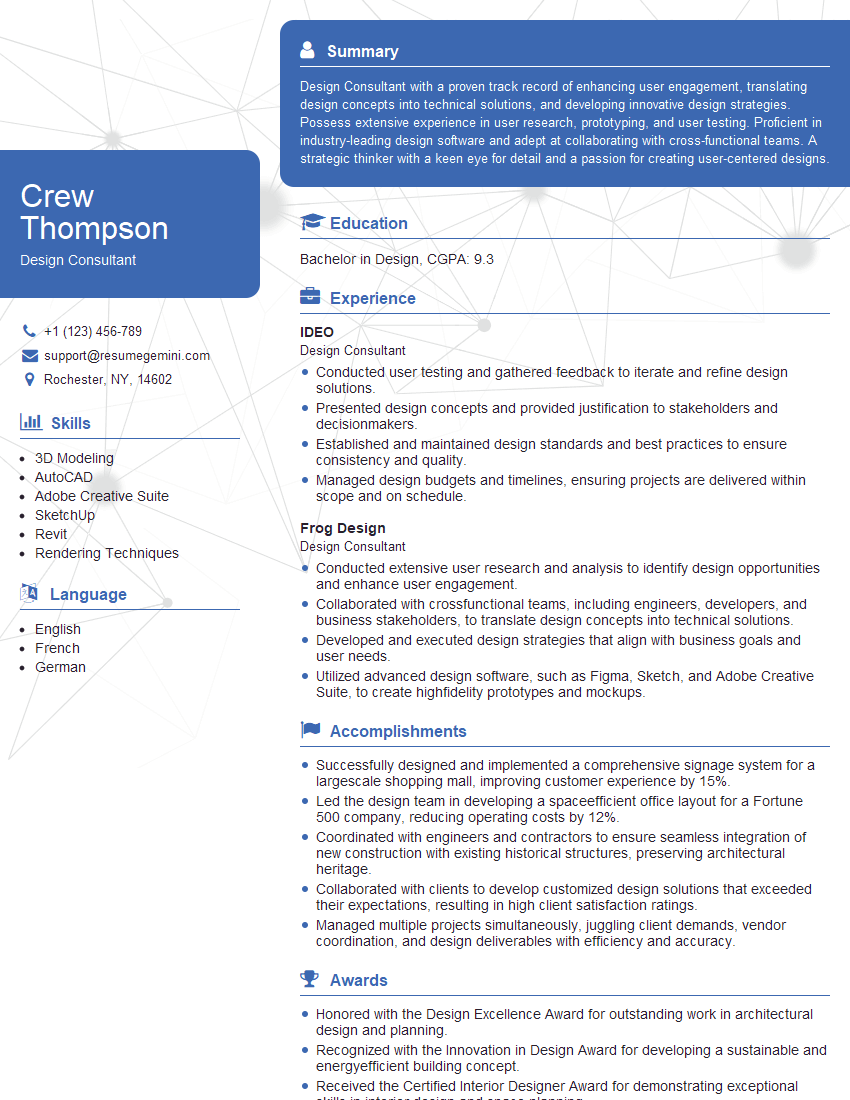
Design Consultant Resume Sample
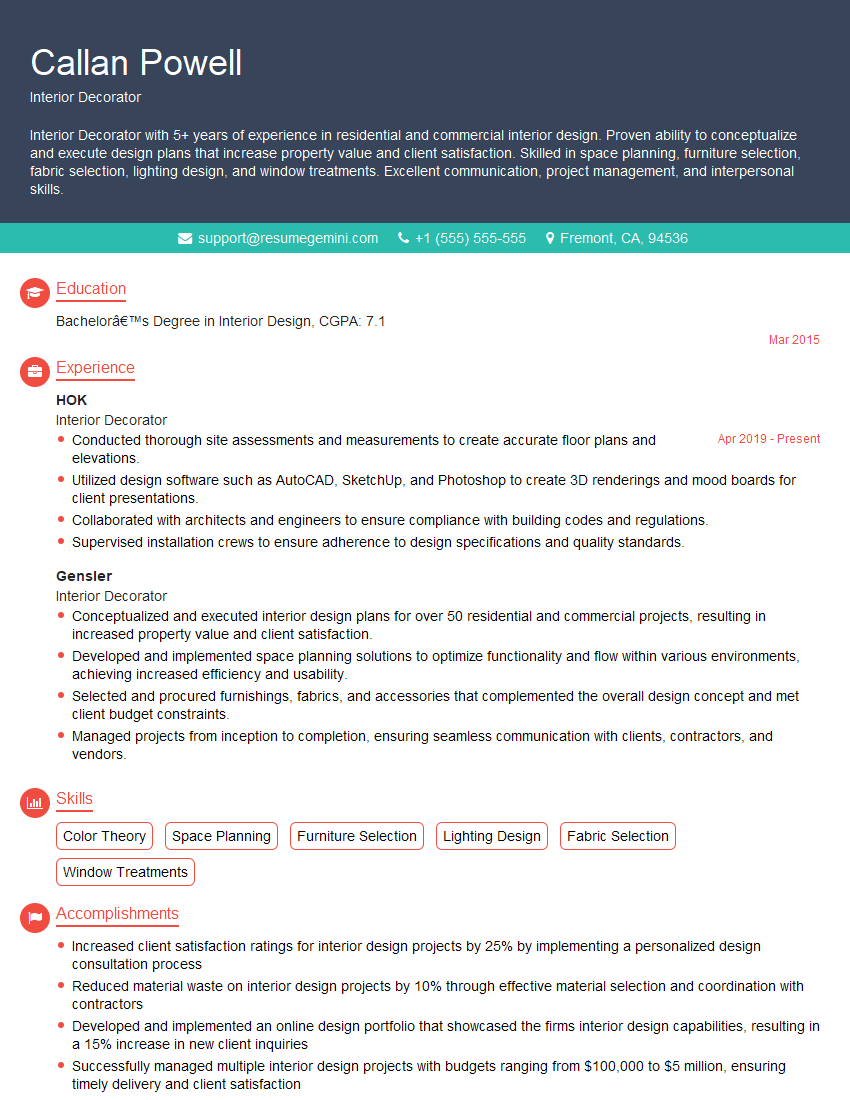
Interior Decorator Resume Sample
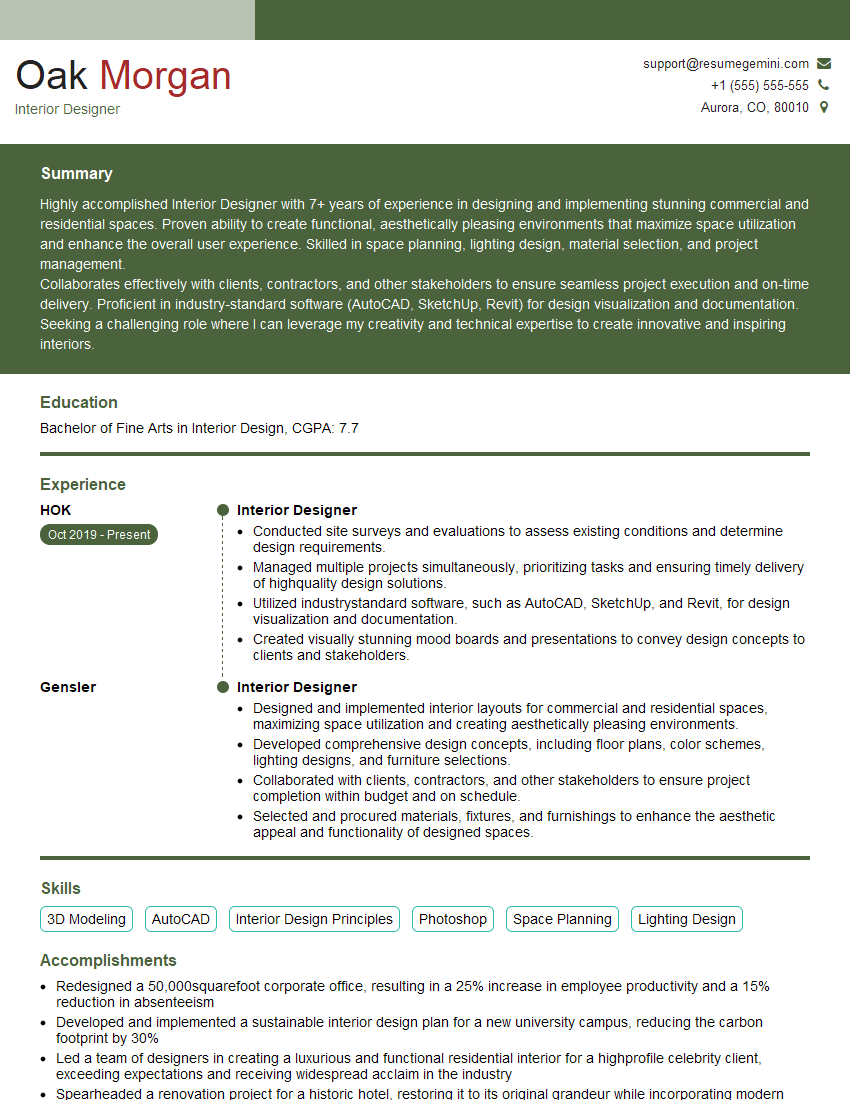
Interior Designer Resume Sample
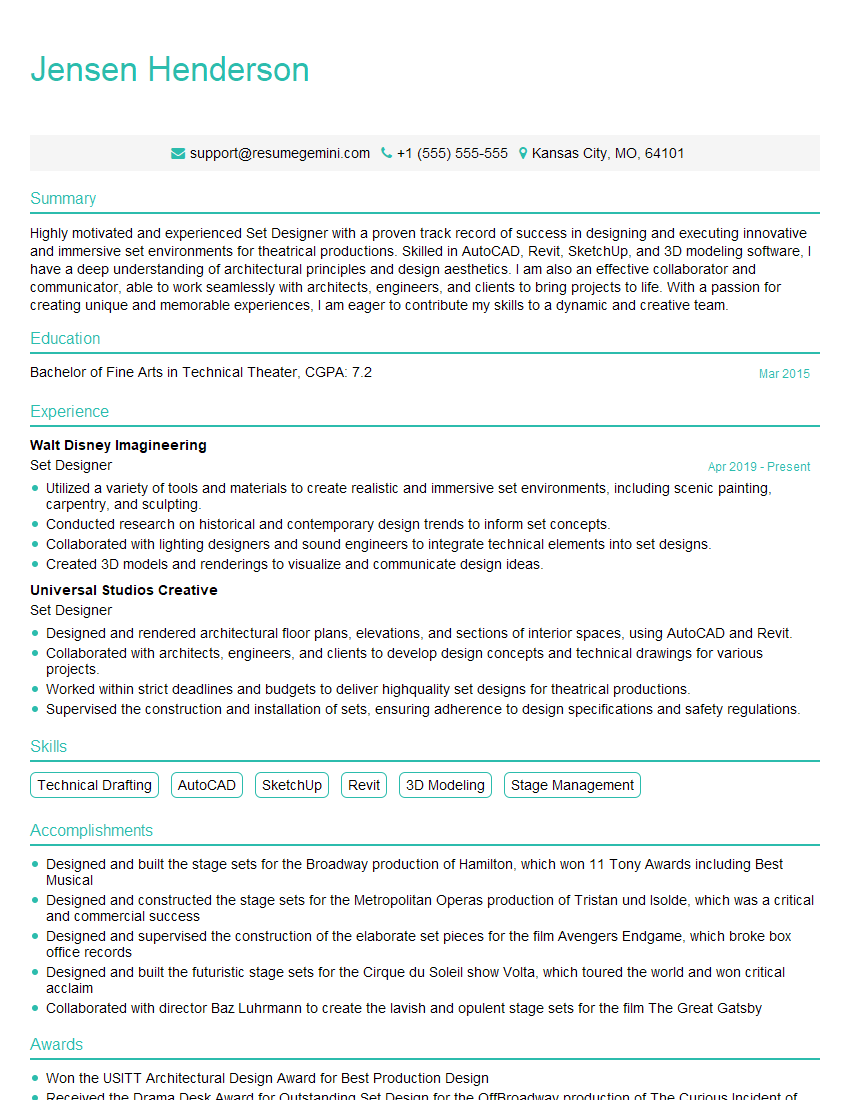
Set Designer Resume Sample
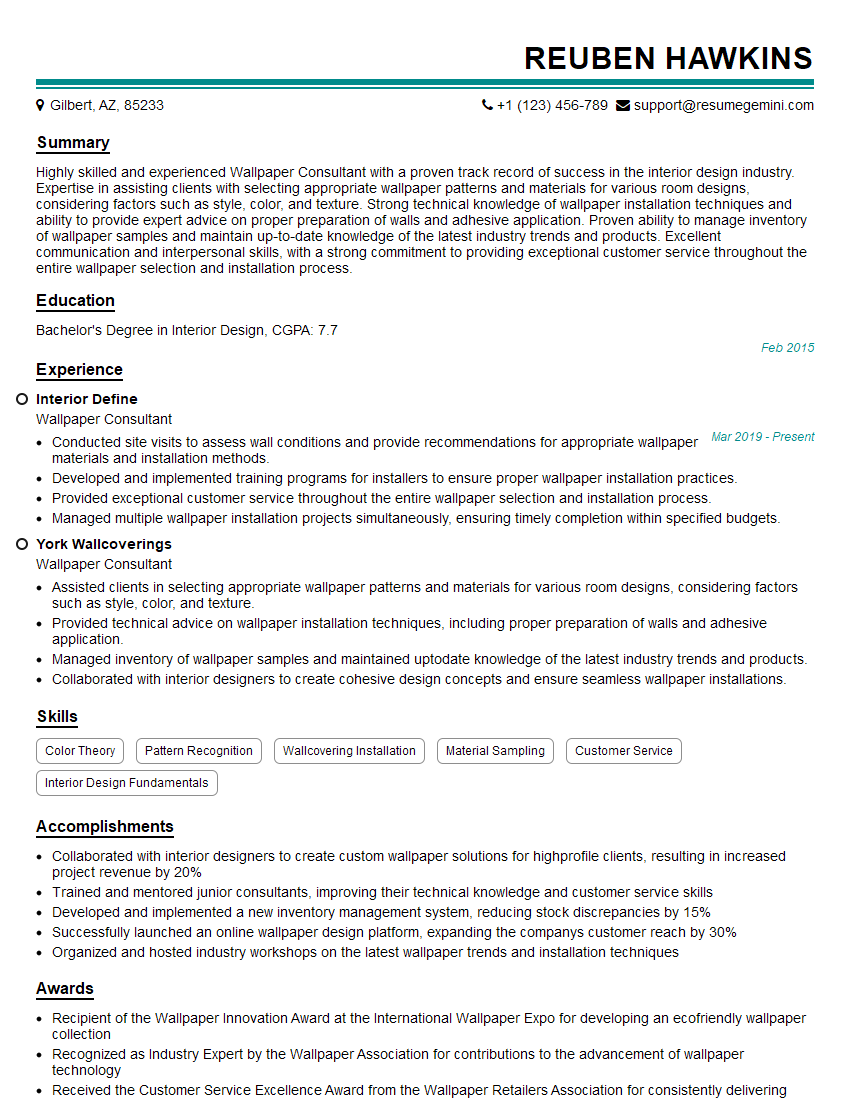
Wallpaper Consultant Resume Sample
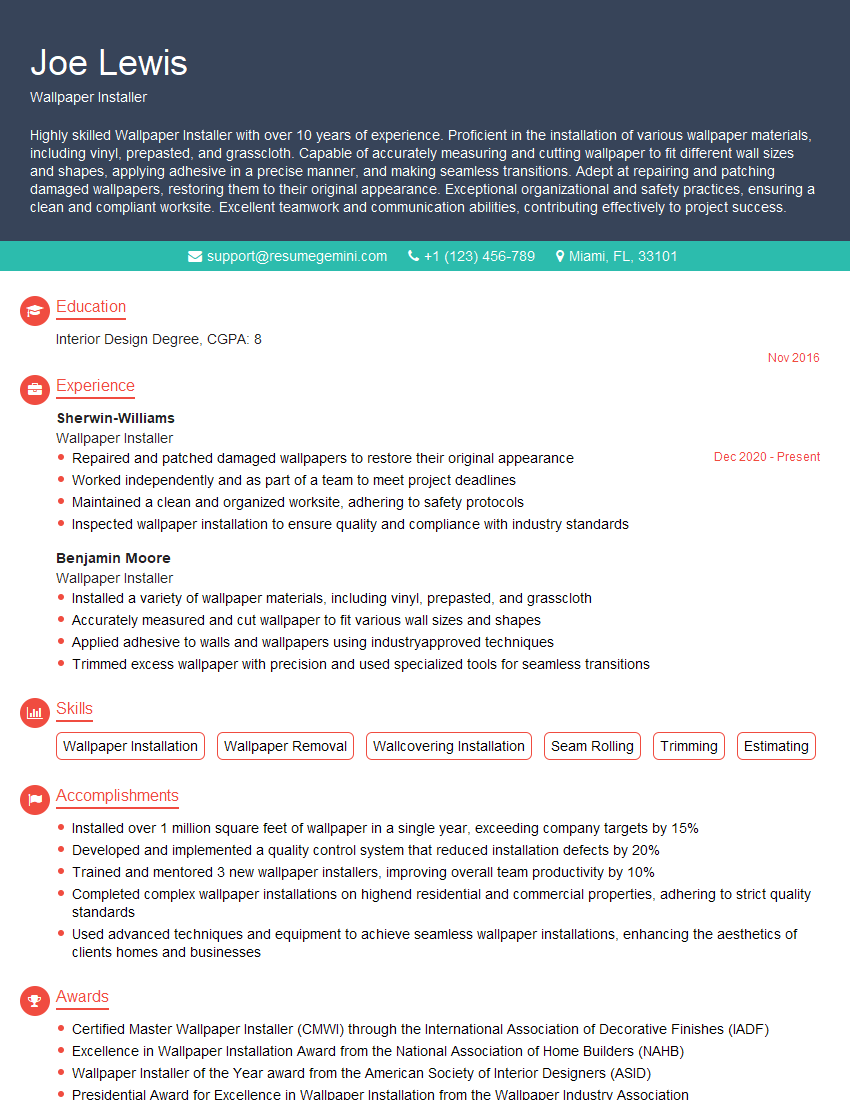
Wallpaper Installer Resume Sample
Explore more articles
Users Rating of Our Blogs
Share Your Experience
We value your feedback! Please rate our content and share your thoughts (optional).
What Readers Say About Our Blog
To the interviewgemini.com Webmaster.
Very helpful and content specific questions to help prepare me for my interview!
Thank you
To the interviewgemini.com Webmaster.
This was kind of a unique content I found around the specialized skills. Very helpful questions and good detailed answers.
Very Helpful blog, thank you Interviewgemini team.