Unlock your full potential by mastering the most common Laboratory Management and Quality Control interview questions. This blog offers a deep dive into the critical topics, ensuring you’re not only prepared to answer but to excel. With these insights, you’ll approach your interview with clarity and confidence.
Questions Asked in Laboratory Management and Quality Control Interview
Q 1. Explain your experience with implementing and maintaining a quality management system (QMS).
Implementing and maintaining a robust Quality Management System (QMS) is crucial for any laboratory to ensure consistent, reliable results and compliance with regulatory requirements. My experience involves a phased approach, starting with a thorough gap analysis against relevant standards like ISO 17025 or ISO 9001. This helps identify areas needing improvement. Next, I develop and document Standard Operating Procedures (SOPs) for all key processes, from sample handling and testing to instrument calibration and data management. These SOPs are then implemented through comprehensive training programs for all laboratory personnel.
Regular internal audits are critical to monitor adherence to SOPs and identify potential weaknesses. Corrective and preventive actions (CAPAs) are then meticulously documented and implemented to address any deficiencies. I also leverage management review meetings to track the performance of the QMS, identifying opportunities for improvement and proactively adapting to changes in regulations or technology. For example, in my previous role, we successfully implemented a new QMS based on ISO 17025, leading to a significant reduction in non-conformances and a demonstrable improvement in our accreditation audit scores.
Maintaining a QMS is an ongoing process. It requires consistent monitoring, regular updates to SOPs based on new findings or improved techniques, and continuous staff training to ensure everyone remains up-to-date with the latest protocols and best practices. This proactive approach helps not only to meet regulatory requirements but also to foster a culture of quality and continuous improvement within the laboratory.
Q 2. Describe your experience with LIMS software and data management.
Laboratory Information Management Systems (LIMS) are essential for efficient data management and sample tracking in modern laboratories. My experience includes working with several LIMS platforms, including [mention specific LIMS software if comfortable, e.g., Thermo Scientific SampleManager, LabWare LIMS], managing everything from system setup and configuration to user training and data migration. I’m proficient in designing workflows within the LIMS to streamline laboratory operations, ensuring accurate data capture and efficient reporting.
Data management is a critical aspect of LIMS. I ensure data integrity through the implementation of robust audit trails, appropriate access controls, and regular data backups. Furthermore, I’m experienced in integrating LIMS with other laboratory instruments and systems, automating data transfer and reducing manual entry, thereby minimizing errors. For instance, in a previous project, I successfully integrated our LIMS with our HPLC system, automating the transfer of chromatographic data, significantly reducing processing time and improving data accuracy. I am also familiar with data validation techniques and regulatory requirements concerning electronic data, ensuring compliance with guidelines like 21 CFR Part 11.
Q 3. How do you ensure the accuracy and reliability of laboratory test results?
Ensuring the accuracy and reliability of laboratory test results is paramount. This requires a multi-faceted approach encompassing several key aspects. Firstly, meticulous attention to detail during sample handling and preparation is crucial. This includes proper labeling, storage, and prevention of contamination. I implement strict SOPs to govern these procedures. Secondly, regular calibration and maintenance of laboratory equipment is non-negotiable. We employ a preventative maintenance schedule based on manufacturer recommendations and regularly validate equipment performance against certified reference materials.
Quality control (QC) samples, including blind samples and duplicates, are routinely analyzed to monitor the accuracy and precision of test methods. Any deviations from expected values are thoroughly investigated using a root cause analysis to identify and correct the problem. Furthermore, proficiency testing (PT) programs allow for external validation of results by comparing our performance with other laboratories. Finally, well-trained and competent personnel are essential to the process. Continuous training and competency assessment ensure that all laboratory staff are proficient in their roles and adhere to established SOPs. Think of it like baking a cake – you need precise measurements, the right equipment, and skilled hands to get a consistently delicious result. Our aim is the same level of precision and reliability in our laboratory results.
Q 4. What are your strategies for managing laboratory resources effectively?
Effective laboratory resource management is essential for efficiency and cost-effectiveness. My strategies involve several key steps. First, a thorough inventory management system tracks all consumables, reagents, and equipment, ensuring adequate supply and minimizing waste. This includes using inventory management software or spreadsheets to track usage and order new supplies in a timely manner. Second, I optimize workflow by analyzing processes and eliminating bottlenecks. This might involve re-organizing the lab layout, implementing automation where appropriate, or streamlining data analysis processes.
Third, staff scheduling is planned to ensure adequate coverage during peak times while maintaining efficiency. I utilize workforce management tools to track labor hours, ensuring that tasks are appropriately delegated and workloads are balanced. Finally, budget planning is crucial. This involves anticipating upcoming expenses, justifying capital purchases, and finding ways to conserve resources while maintaining the quality of our work. Regular review and monitoring of these aspects allow for continuous refinement of our resource management strategies to improve overall laboratory performance.
Q 5. How do you handle deviations from standard operating procedures (SOPs)?
Deviations from standard operating procedures (SOPs) are treated seriously and are opportunities for improvement. When a deviation occurs, it’s immediately documented, and a thorough investigation is conducted to determine the root cause. This investigation involves gathering information from personnel involved, reviewing data, and inspecting equipment. Once the root cause is identified, a corrective action is implemented to prevent recurrence. This corrective action is documented, and its effectiveness is verified.
Depending on the severity of the deviation, a formal deviation report may be required, which is reviewed by management to assess potential impact on the quality of results. If the deviation affects the validity of any test results, appropriate actions such as re-testing or reporting the deviation to clients are undertaken. This systematic approach ensures that deviations are handled professionally, potential problems are identified and corrected, and the overall quality of the laboratory’s work is maintained. For instance, a deviation might be a slightly higher-than-normal temperature in a sample storage area, requiring immediate investigation and documentation to ensure no sample integrity was compromised. We apply a similar level of attention to detail to all deviations regardless of severity.
Q 6. Explain your understanding of Good Laboratory Practices (GLP) and Good Manufacturing Practices (GMP).
Good Laboratory Practices (GLP) and Good Manufacturing Practices (GMP) are sets of principles that ensure the quality and reliability of data generated in a laboratory setting, applying particularly to different contexts. GLP principles primarily focus on non-clinical laboratory studies supporting the safety assessment of chemicals and products, emphasizing data integrity, documentation, and quality control. They ensure that tests are conducted in a controlled manner, yielding accurate and reliable results that can be used to support regulatory submissions.
GMP, on the other hand, focuses on manufacturing processes, ensuring the consistent production of high-quality products that meet specified requirements and are safe for use. While the core principles of quality, documentation, and control are shared between GLP and GMP, their specific applications and regulatory requirements differ significantly. GLP is more relevant to testing and analysis within a research or safety testing environment, whereas GMP guides the manufacturing and production of pharmaceuticals, medical devices, and food products. Understanding both sets of principles is vital for ensuring compliance, especially when a laboratory supports both research and production activities.
Q 7. How do you ensure the accuracy and precision of laboratory equipment?
Maintaining the accuracy and precision of laboratory equipment is critical for producing reliable results. This involves a combination of preventative maintenance and calibration. A preventative maintenance schedule, adhering to manufacturer recommendations, should be established for all instruments. This includes regular cleaning, inspection, and replacement of parts as needed. Calibration is crucial; this involves verifying the accuracy of the instrument against a traceable standard. A calibration schedule should be established, with the frequency of calibration depending on the instrument and its criticality. We typically use certified reference materials and traceable standards to perform calibrations.
Calibration certificates should be meticulously maintained and reviewed regularly to ensure traceability and compliance. Furthermore, regular performance verification checks should be performed between calibrations to detect any potential issues early. This might involve using QC samples or internal standards to monitor the instrument’s performance. For example, if a balance is regularly used for weighing samples, it’s calibrated against certified weights at specified intervals, and its performance is verified using a standard weight before each set of weighings. This proactive approach minimizes the risk of inaccurate results and ensures the reliability of laboratory data.
Q 8. Describe your experience with method validation and verification.
Method validation and verification are critical components of ensuring reliable and accurate laboratory results. Validation demonstrates that a method is suitable for its intended purpose, while verification confirms that a validated method continues to perform as expected.
My experience encompasses the full validation lifecycle, from initial method development and optimization to ongoing verification activities. This includes performing tests to demonstrate parameters such as accuracy, precision, linearity, range, limit of detection (LOD), limit of quantitation (LOQ), and robustness. For example, I’ve validated ELISA assays for various biomarkers, employing statistical analysis to ensure that the method meets predetermined acceptance criteria. Verification activities typically involve regular analysis of quality control samples alongside routine testing to check for any drift or degradation in method performance. If discrepancies arise, a thorough investigation is launched, potentially involving recalibration, instrument maintenance, or even revalidation.
I’ve also extensively utilized various statistical tools and software packages, such as ANOVA and regression analysis, to analyze the generated data and generate comprehensive validation reports. I always maintain meticulous documentation, which is crucial for regulatory compliance and traceability. In one instance, we identified a slight shift in the LOQ of a GC-MS method due to a change in the batch of reagents. By carefully analyzing the data and re-evaluating the method, we were able to adjust the procedure and restore the performance to acceptable levels.
Q 9. How do you manage laboratory safety and compliance with regulations?
Laboratory safety and regulatory compliance are paramount. My approach involves a multi-layered strategy that begins with a thorough understanding of all applicable regulations, such as GLP (Good Laboratory Practices), GMP (Good Manufacturing Practices) and OSHA standards. This knowledge guides the establishment of comprehensive safety programs, including:
- Risk Assessments: Regularly conducted risk assessments identify potential hazards and implement control measures like proper handling and disposal of hazardous materials, use of personal protective equipment (PPE), and engineering controls such as fume hoods.
- Safety Training: Comprehensive and regularly updated safety training programs for all personnel, covering topics such as chemical safety, fire safety, waste disposal, and emergency procedures.
- Standard Operating Procedures (SOPs): Detailed SOPs for all laboratory procedures, emphasizing safety protocols at each step.
- Emergency Preparedness: A well-defined emergency plan that outlines procedures for various scenarios, including chemical spills, fires, and equipment malfunctions, with regular drills and mock exercises.
- Maintenance and Calibration: Regular maintenance and calibration of equipment to minimize the risk of accidents and to ensure accuracy of results.
For instance, in a previous role, I developed a detailed chemical hygiene plan that resulted in a significant reduction in laboratory incidents. The plan included the implementation of a chemical inventory management system, which allowed for better tracking of hazardous materials and improved waste disposal practices.
Q 10. How do you investigate and resolve laboratory errors and discrepancies?
Investigating and resolving laboratory errors and discrepancies requires a systematic and thorough approach. The process usually starts with immediate documentation of the discrepancy, including all relevant details and observations.
My approach follows these key steps:
- Identify the Discrepancy: Clearly define the nature of the error or discrepancy—is it a result deviation, an instrument malfunction, or a procedural issue?
- Data Review: Carefully review all associated data, including raw data, calculations, and instrument logs.
- Root Cause Analysis: Employ a root cause analysis (RCA) technique, such as the 5 Whys method, to identify the underlying causes of the error. This might involve interviewing personnel, reviewing SOPs, or performing additional tests.
- Corrective Actions: Implement corrective actions to address the root causes and prevent recurrence. This might include retraining staff, revising SOPs, replacing faulty equipment, or improving data management practices.
- Preventive Actions: Implement preventive actions to avoid similar problems in the future. This can involve modifying the workflow, enhancing quality control measures, and using statistical process control (SPC).
- Documentation: Meticulously document the entire investigation process, including findings, corrective actions, and preventive actions.
For example, I once investigated a batch of samples with unexpectedly high variability. Through RCA, we discovered a temperature fluctuation in the incubator during incubation. Implementing temperature monitoring and alarms prevented this from happening again.
Q 11. Explain your experience with laboratory auditing and inspection procedures.
Laboratory auditing and inspection procedures are vital for ensuring compliance with regulations and maintaining high-quality results. My experience includes both conducting internal audits and participating in external inspections. Internal audits involve a systematic review of the laboratory’s systems and practices to ensure compliance with established SOPs, quality management systems (QMS), and regulatory requirements. These audits often incorporate checklists and sampling plans to ensure thoroughness and consistency.
External inspections are typically conducted by regulatory bodies or accreditation organizations. I’ve worked collaboratively with auditors during these inspections, providing documentation and answering questions. This demonstrates proficiency in maintaining organized records, data traceability, and transparent processes. A successful inspection outcome requires meticulous preparation, including compiling complete documentation, ensuring the laboratory complies with all relevant standards, and having readily available staff to answer questions from auditors. Preparing for inspections involves regularly reviewing SOPs, maintaining up-to-date calibration and maintenance records, and ensuring personnel are well-versed in laboratory protocols and policies.
I’ve always focused on continuous improvement. For instance, by analyzing previous audit findings, we proactively addressed deficiencies and strengthened our QMS, which led to consistently positive audit outcomes and improved laboratory efficiency.
Q 12. Describe your experience with statistical process control (SPC).
Statistical Process Control (SPC) is a powerful tool for monitoring and improving laboratory processes. It involves using statistical methods to analyze data and identify trends, variations, and potential problems before they significantly affect the quality of results.
My experience with SPC includes implementing control charts, such as Shewhart charts and CUSUM charts, to monitor various laboratory parameters, such as instrument calibrations, reagent performance, and assay precision. I’m proficient in interpreting control charts, identifying out-of-control situations, and taking appropriate corrective actions. For example, I implemented a Shewhart chart to monitor the precision of a particular HPLC method. The chart identified a gradual increase in variability, prompting investigation and ultimately the replacement of a worn HPLC column. This proactive approach prevented the generation of unreliable results and ensured the consistent quality of data.
SPC enables proactive rather than reactive problem-solving. By identifying trends early, we can prevent significant deviations from established quality standards and avoid costly rework or investigations.
Q 13. How do you handle non-conforming materials or results?
Handling non-conforming materials or results requires a structured approach to ensure the integrity of the data and prevent further problems. The process typically involves documenting the deviation, investigating the root cause, implementing corrective actions, and taking appropriate disposition decisions.
My approach includes:
- Immediate Identification and Documentation: All instances of non-conforming materials or results are immediately identified, documented, and reported following established protocols. This involves detailing the nature of the non-conformity, including the date, time, sample ID, and any observations.
- Root Cause Investigation: A thorough investigation is conducted to determine the root cause of the non-conformity, using appropriate tools like fault-tree analysis or 5 Whys, as discussed previously.
- Corrective and Preventive Actions: Corrective actions are implemented to resolve the immediate issue, and preventive actions are identified and implemented to prevent recurrence. This might involve retraining personnel, modifying procedures, or replacing faulty equipment.
- Disposition Decision: A decision is made on the appropriate disposition of the non-conforming materials or results. Options include rejection, re-testing, rework, or quarantine, depending on the nature and severity of the non-conformity.
- Documentation and Reporting: The entire process is meticulously documented, including the investigation, corrective actions, preventive actions, and the disposition decision. Reports may be prepared and submitted to relevant parties.
For example, a batch of reagents failing quality control checks would prompt a complete investigation, ultimately leading to the rejection of the reagents and the acquisition of a new batch. Proper documentation of the whole event is then critical to maintain audit trail and prevent the situation from repeating.
Q 14. How do you ensure the proper training and competency of laboratory personnel?
Ensuring the proper training and competency of laboratory personnel is crucial for maintaining high-quality results and laboratory safety. I’ve utilized a multi-faceted approach to achieve this:
- Needs Assessment: Regularly assess training needs based on individual roles, responsibilities, and new technologies or techniques.
- Comprehensive Training Programs: Develop and implement comprehensive training programs covering relevant topics like laboratory safety, specific analytical techniques, instrument operation, quality control, and data management. This might involve classroom-based training, hands-on training, and online modules.
- Mentorship and On-the-Job Training: Combine formal training with mentorship and on-the-job training to provide practical experience and guidance from experienced personnel.
- Competency Assessments: Regularly assess the competency of personnel using various methods, including written tests, practical examinations, and performance reviews. This ensures that personnel consistently meet the required skill level for their assigned tasks.
- Continuing Education: Encourage and support continuous professional development to keep up with advances in technology and best practices. This could include attending conferences, workshops, or pursuing further certifications.
- Documentation: Maintain meticulous records of all training activities, competency assessments, and continuing education efforts. This is essential for maintaining a clear audit trail and demonstrating compliance with regulatory requirements.
In one case, we introduced a new instrument into the lab and created a comprehensive training program to ensure all staff were proficient in its operation and maintenance, resulting in improved efficiency and data reliability.
Q 15. Describe your experience with calibration and maintenance of laboratory equipment.
Calibration and maintenance of laboratory equipment are crucial for ensuring accurate and reliable results. My experience encompasses a wide range of instruments, from basic analytical balances to sophisticated HPLC systems. This involves establishing and adhering to a preventative maintenance schedule, which typically includes regular cleaning, functional checks, and performance verification against traceable standards.
For instance, in a previous role, I managed the calibration of our analytical balances using certified weights, documenting each calibration event with detailed records, including date, results, and any corrective actions. For more complex equipment like HPLC systems, we followed manufacturer’s guidelines and employed external service contracts for specialized maintenance and repairs to ensure optimal performance and minimize downtime. We also implemented a system of preventative maintenance logs and alerts to proactively identify potential issues before they affected testing.
The process typically involves comparing the instrument’s readings to known standards, documenting the deviations, and making necessary adjustments to ensure accuracy within acceptable tolerances. Failure to properly calibrate equipment can lead to inaccurate results, compromising the validity of experiments and potentially impacting patient care or product quality. Therefore, meticulous record-keeping and adherence to established procedures are paramount.
Career Expert Tips:
- Ace those interviews! Prepare effectively by reviewing the Top 50 Most Common Interview Questions on ResumeGemini.
- Navigate your job search with confidence! Explore a wide range of Career Tips on ResumeGemini. Learn about common challenges and recommendations to overcome them.
- Craft the perfect resume! Master the Art of Resume Writing with ResumeGemini’s guide. Showcase your unique qualifications and achievements effectively.
- Don’t miss out on holiday savings! Build your dream resume with ResumeGemini’s ATS optimized templates.
Q 16. How do you manage laboratory waste and disposal according to regulations?
Laboratory waste management is a critical aspect of ensuring environmental safety and regulatory compliance. My approach focuses on segregation, proper labeling, and disposal according to local, national, and international regulations, which may vary greatly depending on the type of waste. We always categorize waste into specific streams such as general waste, infectious waste (if applicable), chemical waste, and sharps.
For example, we used color-coded containers for different waste types and maintained detailed logs tracking the quantities and types of waste generated and disposed. This detailed record keeping is crucial for auditing purposes and enables us to identify potential areas for waste reduction. Chemical waste is particularly important and necessitates a thorough understanding of compatibility and proper neutralization procedures before disposal. We worked closely with licensed waste disposal companies to ensure all waste was handled and disposed of according to regulations.
We also emphasized training for all lab personnel in proper waste handling techniques to minimize the risk of accidents and contamination. The safety of the personnel and the environment is a priority, and this aspect of lab management requires continuous attention to detail and adaptation as regulations and best practices evolve.
Q 17. How do you manage laboratory documentation and record-keeping?
Effective laboratory documentation and record-keeping are essential for ensuring data integrity, traceability, and compliance with regulatory requirements such as GLP (Good Laboratory Practice) and GMP (Good Manufacturing Practice). This involves maintaining detailed records of all experiments, tests, calibrations, and maintenance activities.
We utilized a combination of electronic and paper-based systems, depending on the specific needs of the laboratory. Electronic Laboratory Notebooks (ELNs) provide advantages in terms of searchability, version control, and data sharing. However, paper-based records might still be required for certain types of data or as backup in case of system failure. Regardless of the system, each record must include complete information such as dates, times, personnel involved, methods used, and raw data.
Furthermore, we implemented a robust system of data archiving, ensuring long-term accessibility and integrity of records. This includes secure storage, regular backups, and clear procedures for accessing and retrieving data. The archiving process also involves the secure disposal of obsolete records, ensuring compliance with data retention policies. Consistent application of these practices promotes transparency, helps with troubleshooting and investigation, and strengthens the overall credibility and quality of the laboratory’s work.
Q 18. Explain your experience with developing and implementing laboratory SOPs.
Developing and implementing Standard Operating Procedures (SOPs) is crucial for maintaining consistency, quality, and safety in a laboratory setting. My experience involves all stages – from initial drafting based on best practices and regulatory requirements to training personnel on their proper use and conducting periodic reviews for updates and improvement.
For example, I led the development of SOPs for various analytical techniques, such as PCR, cell culture, and spectrophotometry. These SOPs covered all aspects of the procedure, from sample preparation and instrument calibration to data analysis and reporting, ensuring standardization and reproducibility. Each SOP was written using clear, concise language and included visual aids like flowcharts to facilitate understanding.
Crucially, we also ensured that the SOPs were accessible to all laboratory personnel and were kept up-to-date with any changes in techniques, equipment, or regulations. Regular training and competency assessments were carried out to verify that personnel understood and correctly followed the SOPs. This systematic approach minimizes errors, enhances data reliability, and promotes a safe working environment. Effective SOPs are the bedrock of a well-functioning laboratory.
Q 19. How do you improve laboratory efficiency and productivity?
Improving laboratory efficiency and productivity requires a multifaceted approach that combines process optimization, technological advancements, and effective resource management. My experience in this area focuses on identifying bottlenecks, streamlining workflows, and implementing improvements to enhance turnaround time and overall productivity.
One example involved implementing a new LIMS (Laboratory Information Management System) to improve sample tracking, data management, and reporting. This system automated several manual processes, reducing errors and saving time. We also reorganized the laboratory layout to optimize workflow and improve the flow of samples and materials. This involved careful consideration of equipment placement and personnel movement to minimize wasted time and steps.
Another strategy involved implementing lean principles to identify and eliminate waste in our processes. This included reducing unnecessary steps, improving inventory management, and optimizing equipment utilization. Continuous monitoring of key performance indicators (KPIs), such as turnaround time, throughput, and error rates, allowed us to track progress and identify areas for further improvement. A culture of continuous improvement and open communication is also fundamental to achieving and maintaining efficiency.
Q 20. How do you communicate effectively with stakeholders, both internal and external?
Effective communication is essential for successful laboratory management. My experience involves communicating clearly and concisely with a wide range of stakeholders, including scientists, technicians, management, clients, and regulatory bodies. I adapt my communication style to suit the audience and the context, ensuring that information is conveyed accurately and efficiently.
For example, when communicating with clients, I focus on providing clear updates on project progress, addressing any concerns promptly and professionally. With internal stakeholders, I prioritize open and transparent communication, encouraging feedback and collaboration. When dealing with regulatory bodies, meticulous documentation and adherence to reporting requirements are paramount.
I use various communication channels, including email, reports, presentations, and meetings, selecting the most appropriate method for each situation. Active listening and the ability to explain complex scientific concepts in a readily understandable manner are key skills for building trust and maintaining strong working relationships. Clear, consistent, and well-targeted communication fosters cooperation and ensures that everyone is informed and aligned towards shared goals.
Q 21. Describe your experience with budget management and resource allocation in a laboratory setting.
Budget management and resource allocation are critical aspects of laboratory management, requiring careful planning, monitoring, and control. My experience involves developing and managing budgets, prioritizing resource allocation, and ensuring efficient use of funds.
This process typically begins with a thorough assessment of laboratory needs, considering factors such as personnel costs, equipment maintenance, consumables, and other operational expenses. Then, I would develop a detailed budget, allocating resources to different areas based on priorities and available funding. This involves justifying expenditures and demonstrating the return on investment for each item. Regular monitoring of expenses is crucial, allowing for timely adjustments if needed and helping to stay on track with budget targets.
Negotiating favorable contracts with suppliers and identifying cost-saving opportunities are additional important aspects. Furthermore, effective resource allocation includes optimizing the use of equipment, consumables, and personnel time to maximize productivity and minimize waste. Transparent budget management and clear communication regarding financial decisions contribute to the overall success and sustainability of the laboratory.
Q 22. How do you prioritize tasks and manage multiple projects simultaneously?
Prioritizing tasks and managing multiple projects in a laboratory setting requires a structured approach. I typically employ a combination of techniques, starting with a clear understanding of project deadlines and dependencies. I use project management tools like Gantt charts to visualize timelines and identify potential bottlenecks. Then, I prioritize tasks based on urgency and importance using methods like the Eisenhower Matrix (urgent/important), assigning each task a priority level. This allows me to focus on high-impact activities first while ensuring that less urgent but still important tasks are not neglected. For example, if a critical sample analysis is due within 24 hours and a routine equipment calibration is scheduled for next week, the sample analysis takes precedence. I also break down large projects into smaller, manageable tasks, making progress more visible and less overwhelming. Regular review and adjustment of the schedule are crucial to account for unexpected delays or changing priorities. Finally, effective communication with my team is paramount to ensure everyone is informed and working towards the same goals.
Q 23. Describe your experience with risk assessment and mitigation in a laboratory environment.
Risk assessment and mitigation are fundamental to safe and efficient laboratory operations. My experience involves conducting regular risk assessments using a structured approach, such as the HAZOP (Hazard and Operability) method. This involves identifying potential hazards associated with specific procedures, equipment, or chemicals. For each hazard, I assess the likelihood and severity of the potential consequences. For instance, working with volatile solvents presents a fire risk. We mitigate this by ensuring proper ventilation, using appropriate safety equipment, and implementing strict protocols for handling and storage. Once risks are identified, we develop and implement mitigation strategies. This might involve implementing engineering controls (e.g., fume hoods), administrative controls (e.g., standard operating procedures), or personal protective equipment (PPE). We also document all risk assessments and mitigation strategies, regularly reviewing and updating them as needed based on changes in procedures or equipment. This proactive approach ensures a safe and compliant laboratory environment.
Q 24. How do you ensure the chain of custody of samples?
Maintaining the chain of custody for samples is critical for ensuring the integrity and reliability of laboratory results. We use a comprehensive system involving unique sample identifiers, detailed logging of every step in the sample’s journey, and secure storage. Each sample receives a unique identification number at the point of collection, and this number is meticulously recorded in a laboratory information management system (LIMS). The LIMS tracks the sample’s movement, from collection to analysis, including the date, time, and individuals involved at each stage. Appropriate security measures are in place to prevent unauthorized access to samples. This includes secure storage facilities, limited access to sample areas, and documented procedures for sample handling. Whenever a sample leaves the lab, whether for sub-contracted testing or return to the client, a chain of custody form is used. This form documents the transfer of the sample, specifying the recipient and the date and time of transfer. Regular audits and internal reviews of the chain of custody procedures help ensure its effectiveness.
Q 25. Explain your experience with different analytical techniques used in the lab.
My experience encompasses a broad range of analytical techniques, including:
- Spectroscopy: UV-Vis, IR, NMR, and mass spectrometry (MS) for qualitative and quantitative analysis of various compounds.
- Chromatography: Gas chromatography (GC) and high-performance liquid chromatography (HPLC) for separating and identifying components in complex mixtures.
- Electrochemistry: Techniques like potentiometry and voltammetry for measuring electrochemical properties of substances.
- Microscopy: Optical and electron microscopy for visualizing samples at different magnifications.
Q 26. How do you handle customer complaints related to laboratory services?
Handling customer complaints is a crucial aspect of providing excellent laboratory services. My approach involves actively listening to the customer’s concerns, acknowledging their frustration, and showing empathy. I gather all the relevant information regarding the complaint, including the specific service, the date of service, and the nature of the issue. I then thoroughly investigate the complaint, reviewing the data, the procedures followed, and any relevant documentation. This investigation might involve talking to the technicians involved in the testing to verify the methodology. Once the investigation is complete, I communicate my findings to the customer, explaining the situation and outlining the steps taken to address their concerns. If a mistake was made on our part, I apologize sincerely and offer appropriate compensation or corrective action. This might include re-testing the sample or adjusting the billing. Maintaining clear and professional communication throughout the process is essential for resolving the complaint and preserving the customer relationship. We also use customer feedback to improve our processes and prevent future issues.
Q 27. Describe your experience with troubleshooting complex laboratory equipment.
Troubleshooting complex laboratory equipment requires a systematic and methodical approach. I begin by carefully reviewing the error messages and observing the equipment’s behavior. I then consult the instrument’s manual and troubleshooting guides, checking for common issues and suggested solutions. For example, if an HPLC shows erratic flow rates, I might check for blockages in the tubing or column, air bubbles in the system, or issues with the pump. If the manual doesn’t provide a solution, I might consult online resources, manufacturer support, or experienced colleagues. Sometimes, it requires a deeper understanding of the instrument’s internal components and workings. In these cases, I’ll work systematically, checking connections, power supplies, and other critical components. I meticulously document all troubleshooting steps, including the problem, the actions taken, and the results. This documentation is essential for future reference and for demonstrating adherence to quality control procedures. If the problem cannot be resolved in-house, we engage with the manufacturer’s service personnel.
Q 28. How do you stay updated on the latest advances and best practices in Laboratory Management and Quality Control?
Staying current with the latest advances and best practices in Laboratory Management and Quality Control is critical. I actively participate in professional organizations like the American Association for Clinical Chemistry (AACC) or similar organizations relevant to my specialization. Attending conferences and workshops allows me to learn about new techniques, technologies, and regulations. I also subscribe to relevant journals and publications, reading articles and research papers to stay informed about new developments in the field. Online resources, webinars, and training courses offer valuable opportunities for continuous professional development. Participating in internal training programs and mentoring junior colleagues reinforces my knowledge and provides opportunities to share my expertise. Regular review and updates of our laboratory’s standard operating procedures (SOPs) ensures our practices align with the latest best practices and regulations.
Key Topics to Learn for Laboratory Management and Quality Control Interview
- Laboratory Safety and Regulations: Understanding and implementing safety protocols, adhering to GLP (Good Laboratory Practice) and GMP (Good Manufacturing Practice) guidelines, and managing hazardous waste disposal.
- Quality Management Systems (QMS): Implementing and maintaining ISO 9001, ISO 17025, or other relevant quality standards; conducting internal audits and corrective actions; understanding CAPA (Corrective and Preventive Action) processes.
- Method Validation and Verification: Understanding the principles of method validation, including accuracy, precision, linearity, and range; performing method verification and troubleshooting.
- Calibration and Maintenance of Equipment: Developing and implementing calibration schedules for laboratory equipment; performing routine maintenance and troubleshooting; understanding the importance of preventative maintenance.
- Inventory Management and Procurement: Managing laboratory supplies and reagents; optimizing inventory levels; developing and implementing procurement procedures.
- Data Management and Analysis: Maintaining accurate and reliable laboratory records; using LIMS (Laboratory Information Management System) software; performing statistical analysis of data.
- Personnel Management and Training: Supervising and mentoring laboratory staff; developing and delivering training programs; ensuring compliance with safety and quality standards.
- Budgeting and Resource Allocation: Developing and managing laboratory budgets; allocating resources effectively; justifying expenditures.
- Troubleshooting and Problem-Solving: Identifying and resolving technical issues; implementing corrective actions; applying critical thinking skills to complex problems.
- Communication and Collaboration: Effectively communicating results and findings to both technical and non-technical audiences; collaborating with other departments and stakeholders.
Next Steps
Mastering Laboratory Management and Quality Control is crucial for career advancement in this dynamic field. A strong understanding of these principles opens doors to leadership roles, higher salaries, and greater influence within your organization. To make the most of your job search, focus on creating a resume that is both ATS-friendly (Applicant Tracking System-friendly) and highlights your key accomplishments. ResumeGemini is a trusted resource that can significantly enhance your resume-building experience, helping you create a professional document that effectively showcases your skills and experience. Examples of resumes tailored to Laboratory Management and Quality Control are available to guide you.
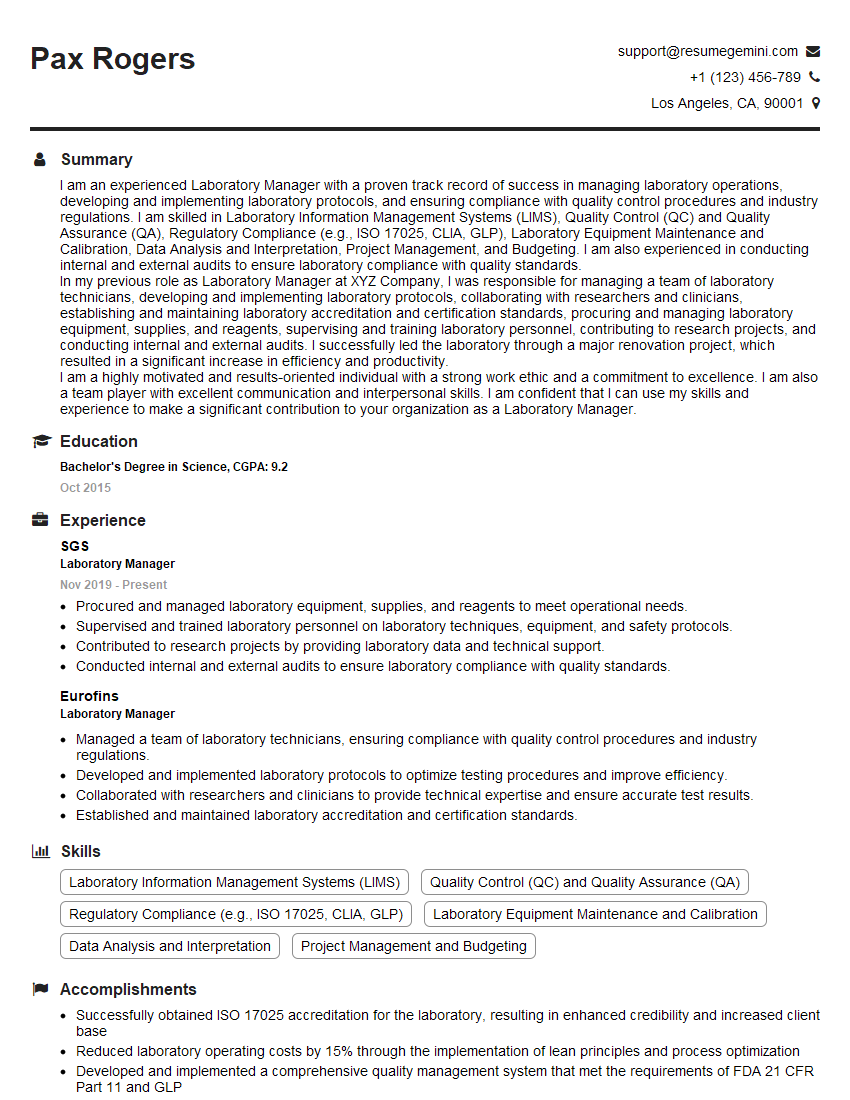
Laboratory Manager Resume Sample
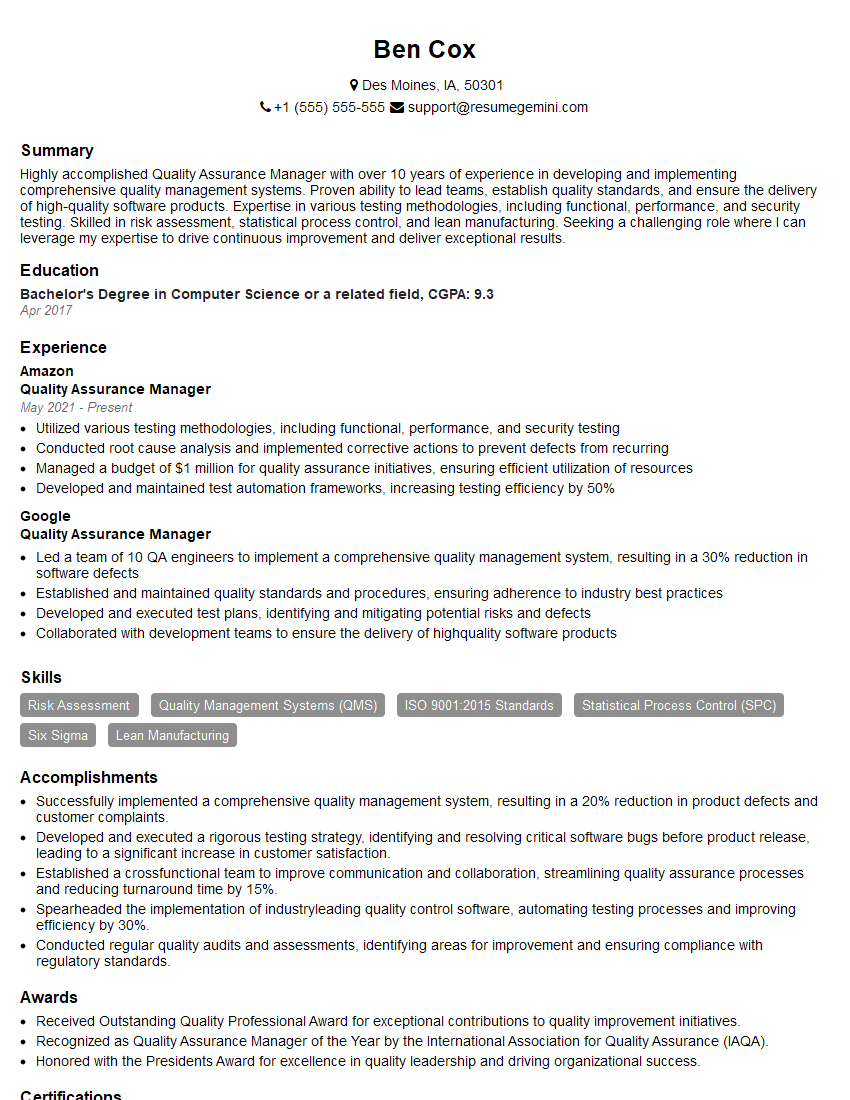
Quality Assurance Manager Resume Sample
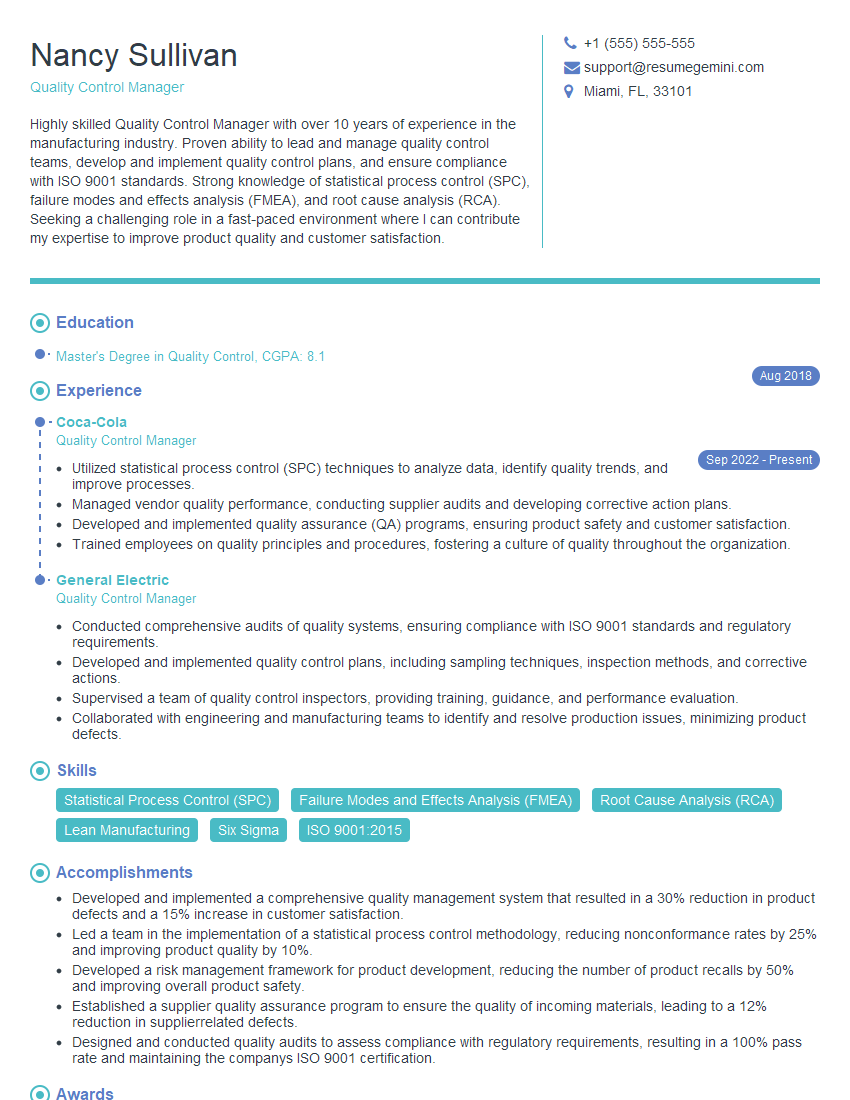
Quality Control Manager Resume Sample
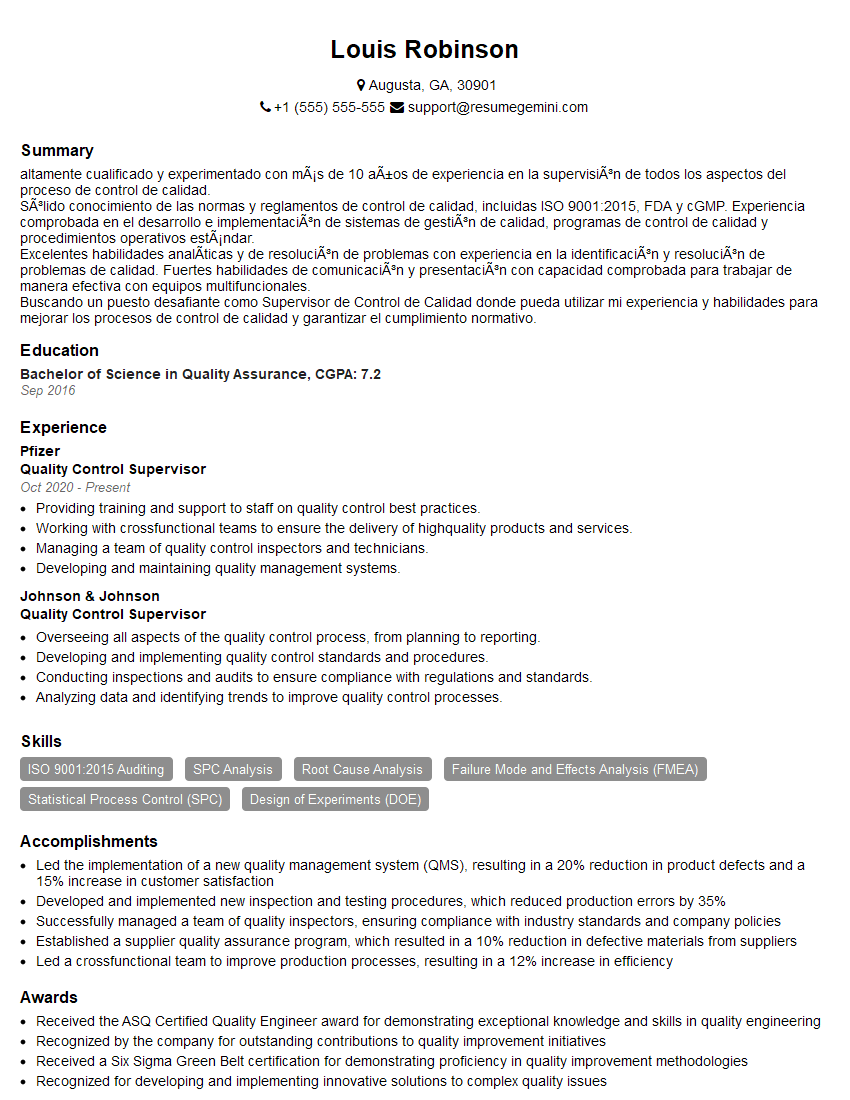
Quality Control Supervisor Resume Sample
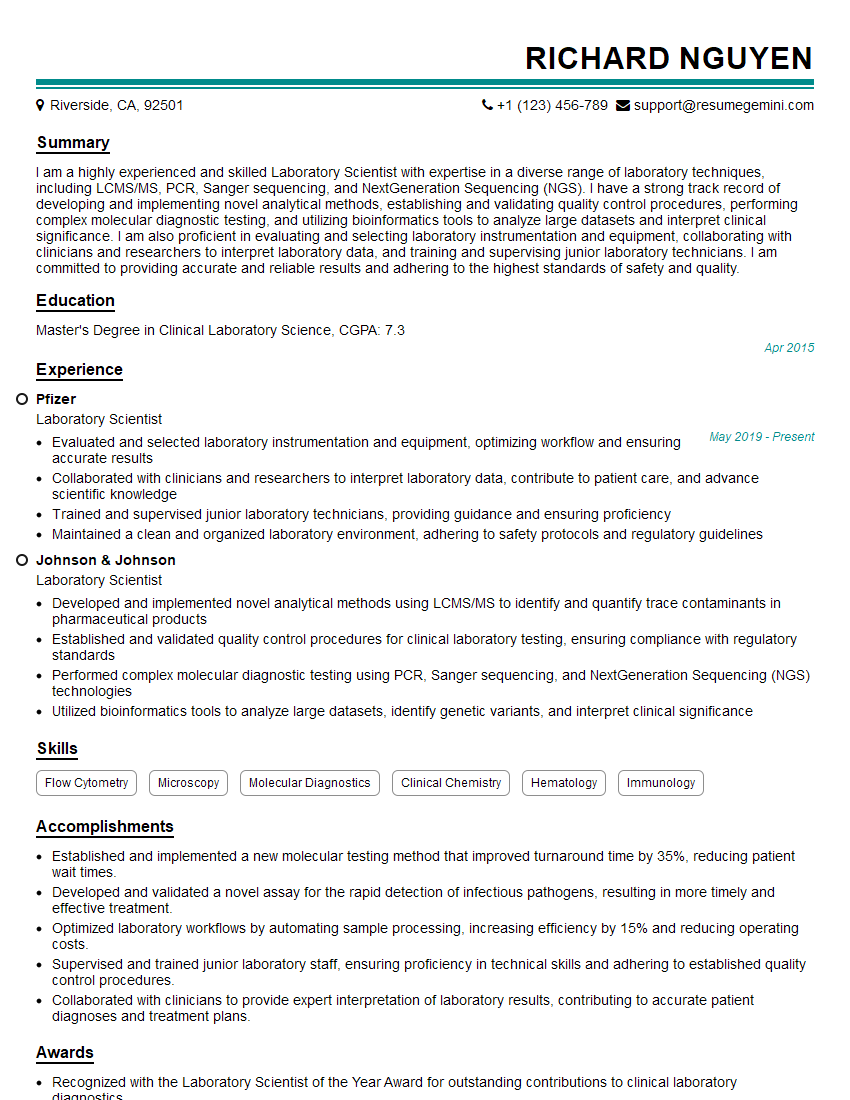
Laboratory Scientist Resume Sample
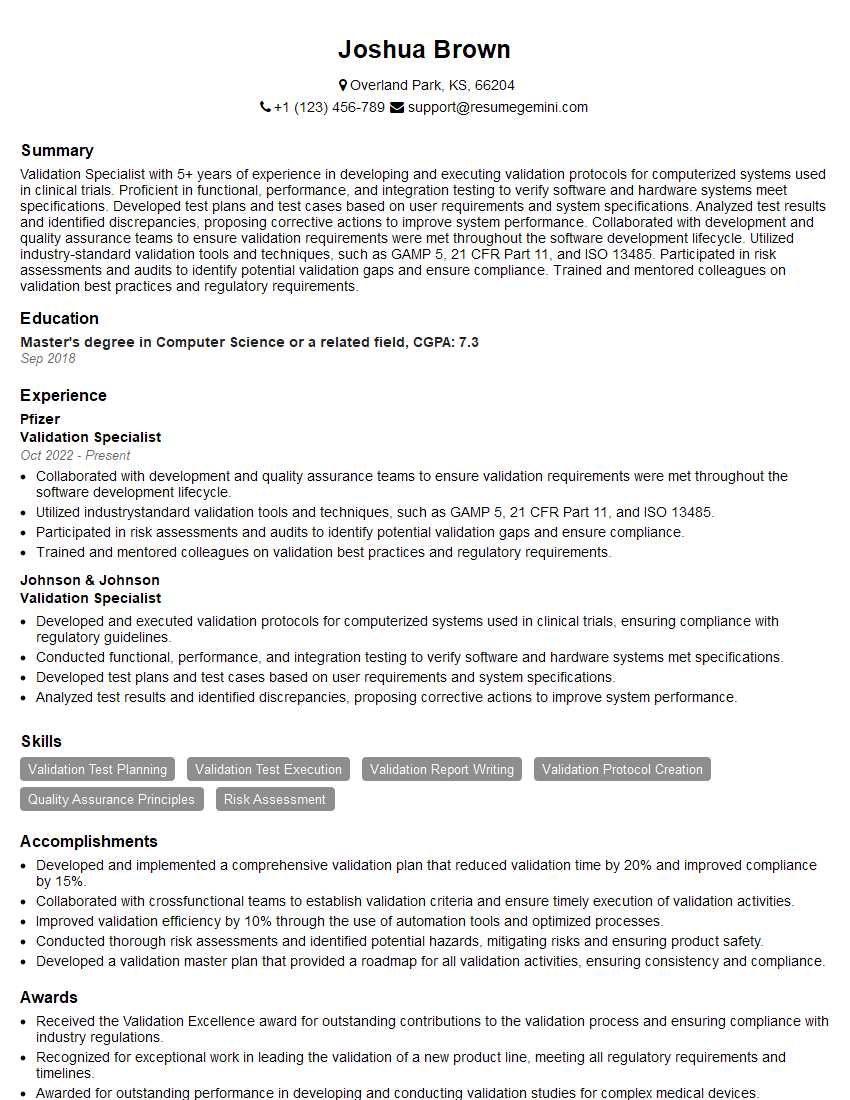
Validation Specialist Resume Sample
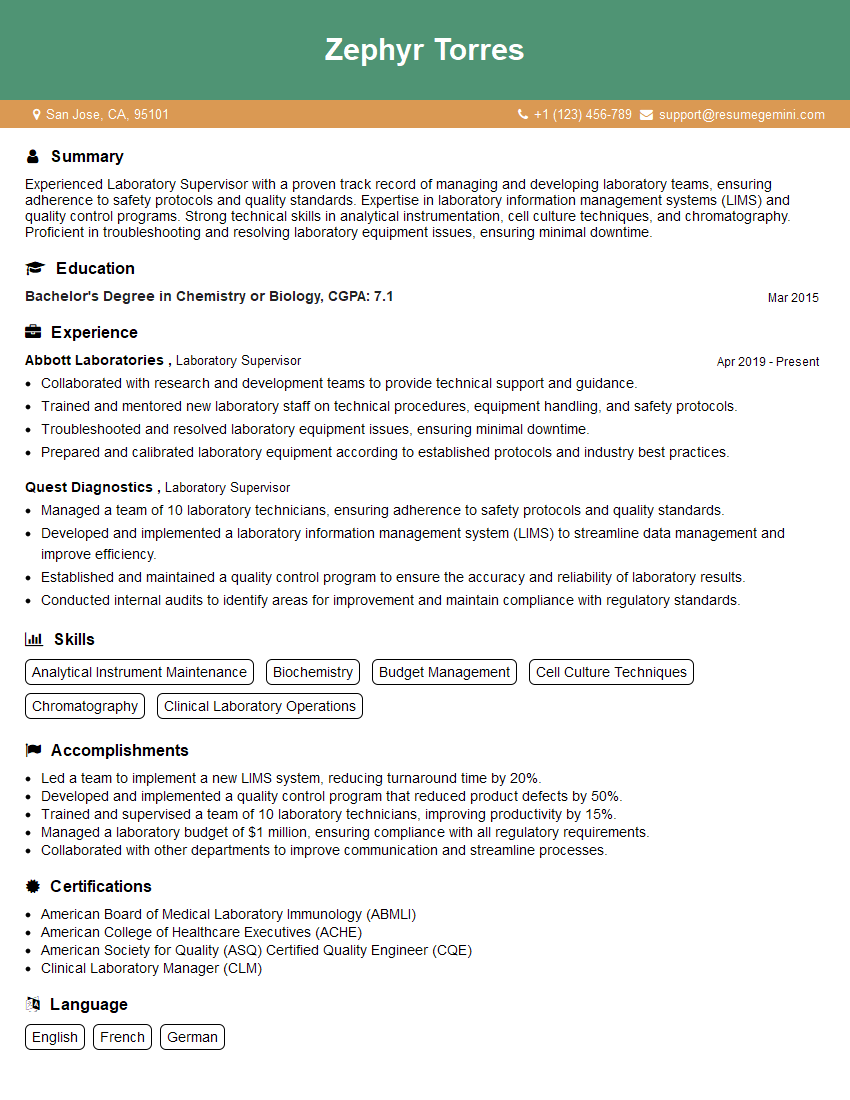
Laboratory Supervisor Resume Sample
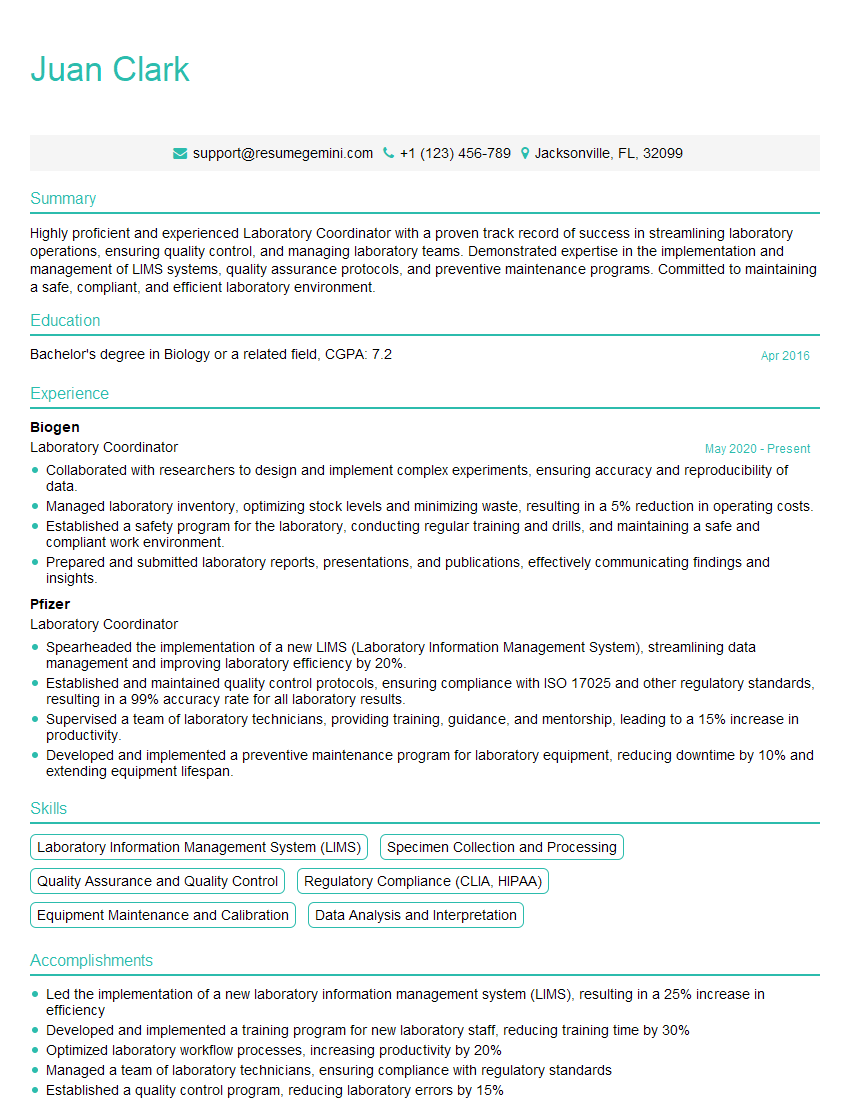
Laboratory Coordinator Resume Sample
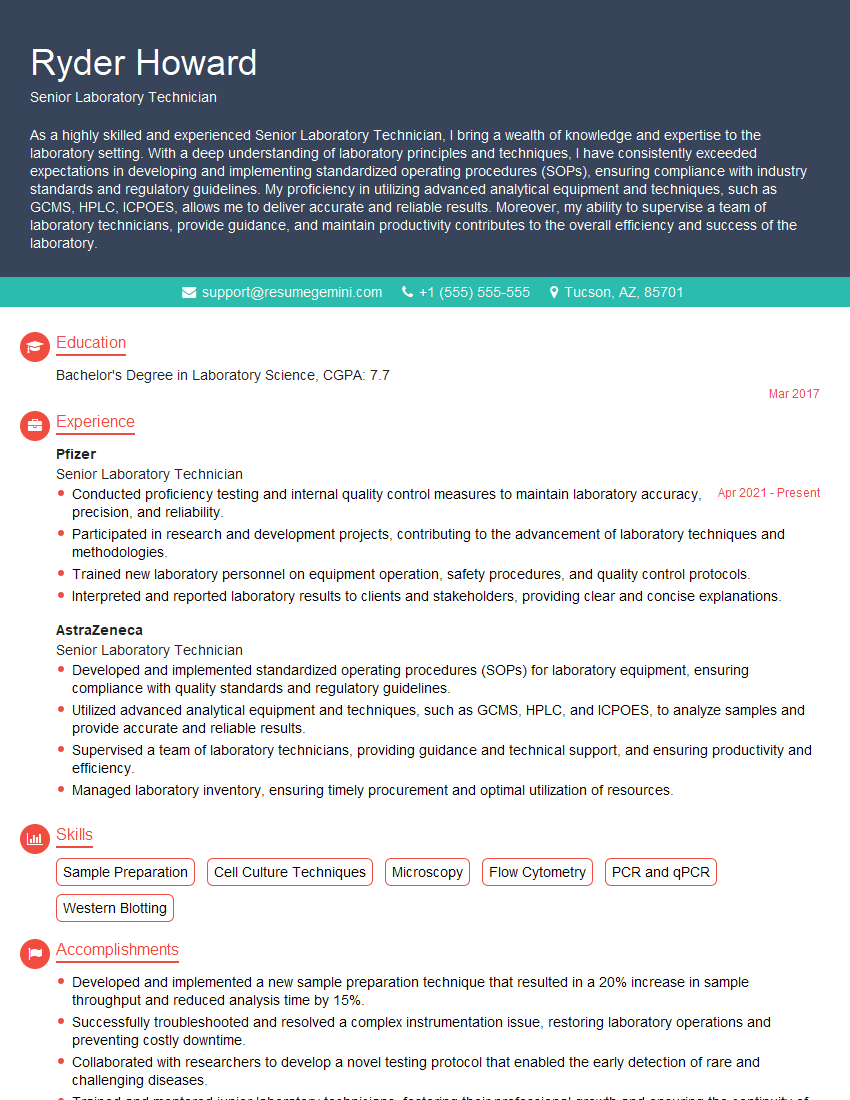
Senior Laboratory Technician Resume Sample

Quality Control Inspector Resume Sample
Explore more articles
Users Rating of Our Blogs
Share Your Experience
We value your feedback! Please rate our content and share your thoughts (optional).
What Readers Say About Our Blog
To the interviewgemini.com Webmaster.
Very helpful and content specific questions to help prepare me for my interview!
Thank you
To the interviewgemini.com Webmaster.
This was kind of a unique content I found around the specialized skills. Very helpful questions and good detailed answers.
Very Helpful blog, thank you Interviewgemini team.