Unlock your full potential by mastering the most common Life Cycle Analysis (LCA) interview questions. This blog offers a deep dive into the critical topics, ensuring you’re not only prepared to answer but to excel. With these insights, you’ll approach your interview with clarity and confidence.
Questions Asked in Life Cycle Analysis (LCA) Interview
Q 1. Explain the three phases of a Life Cycle Assessment (LCA): Goal and Scope Definition, Inventory Analysis, and Impact Assessment.
A Life Cycle Assessment (LCA) is a comprehensive method for evaluating the environmental impacts associated with a product, process, or service throughout its entire life cycle. It’s broken down into three crucial phases:
Goal and Scope Definition:
This initial phase sets the stage for the entire LCA. It defines the purpose of the study (e.g., comparing the environmental performance of two different packaging materials), identifies the product system (specifying the boundaries of what’s included in the analysis – from raw material extraction to end-of-life disposal), establishes the functional unit (a quantifiable unit of the product’s function that allows for comparison, e.g., transporting 1 ton of goods 100 km), and details the impact categories (the specific environmental concerns being assessed, e.g., global warming, eutrophication). Careful goal and scope definition is critical for a meaningful and relevant LCA.Inventory Analysis:
This phase involves meticulously compiling a detailed inventory of all energy and material inputs and environmental releases (emissions and waste) associated with each stage of the product’s life cycle. Data is collected using various methods, including material flow analysis, process engineering calculations, and databases like ecoinvent. The result is a comprehensive ‘cradle-to-grave’ account of resource use and environmental burdens.Impact Assessment:
Here, the inventory data is translated into a set of environmental impacts. This involves using characterization factors (weights reflecting the relative significance of different emissions and resource use on various environmental impacts) to convert the inventory data into indicators representing potential damage to the environment. Examples of impact categories include climate change (global warming potential), acidification, and ozone depletion. This phase provides a clearer picture of the overall environmental consequences of the product or process.
Imagine comparing the environmental impact of a reusable coffee cup versus a single-use disposable cup. The goal and scope would define the comparison, the inventory would list all materials and energy used to produce, use, and dispose of each, and the impact assessment would quantify the environmental damage of each option, like greenhouse gas emissions and waste generation.
Q 2. What are the different LCA methodologies (e.g., consequential, attributional)? Explain their differences and when each is appropriate.
Two primary LCA methodologies exist: attributional and consequential.
Attributional LCA:
This approach focuses on assigning environmental impacts to a specific product or process based on its current production and use patterns. It answers the question: “What are the environmental impacts of *this* product as it’s currently produced and used?” It’s often simpler to conduct but doesn’t consider potential changes in the system due to the study itself. For example, an attributional LCA of a specific brand of jeans would assess the impacts from raw materials to disposal, based on its current supply chain and production methods.Consequential LCA:
This more complex methodology investigates the potential environmental consequences of changing a product, process, or system. It simulates how shifts in demand or technology might influence the broader production system. For example, it could analyze the impact of switching to a plant-based burger instead of beef, considering shifts in agricultural practices and land use. This helps evaluate the true environmental changes resulting from adopting a new technology or product.
Choosing the right methodology depends on the study’s objective. Attributional LCA is suitable for comparing existing products or processes, whereas consequential LCA is better suited for assessing the impacts of potential future changes and policy scenarios. For instance, a company comparing two different packaging materials for its product would use attributional LCA, while a government evaluating the environmental implications of a carbon tax would lean towards consequential LCA.
Q 3. Describe the functional unit and its importance in LCA.
The functional unit is the quantifiable unit of a product’s function used to standardize and compare different products or processes in an LCA. It’s crucial for ensuring meaningful comparisons because different products perform different functions at different scales.
For example, if you’re comparing the environmental impacts of a gasoline car and an electric car, you can’t simply compare their total emissions over their lifetimes. This is because they offer different functions: one transports passengers using gasoline, the other uses electricity. A suitable functional unit could be “transporting one passenger 100 kilometers.” This allows you to compare the total environmental impact per functional unit across both cars, enabling a fair comparison of their environmental performance regardless of the difference in technology or energy source.
Without a well-defined functional unit, LCA results are not comparable. Choosing an appropriate functional unit involves careful consideration of the product’s intended function and what is relevant for the specific study goals. Poorly defined functional units can lead to flawed conclusions and misinterpretations of the LCA results.
Q 4. What are some common LCA software packages and their strengths and weaknesses?
Several software packages are available for conducting LCAs. Some popular ones include:
- SimaPro: A widely used commercial software known for its extensive database of environmental data and its user-friendly interface. Strengths include its comprehensive features and data accessibility; weaknesses can be its cost and the need for significant training to master all its capabilities.
- GaBi: Another leading commercial software offering similar features to SimaPro, with strengths in its flexible modeling capabilities and advanced impact assessment options. Similar to SimaPro, it has a higher price point and a steeper learning curve.
- Brightway2: An open-source LCA software package preferred by many researchers due to its transparency, customization, and flexibility. Its strengths include its open-source nature and community support, although its steeper learning curve and lack of a built-in database make it less suitable for beginners.
The choice of software depends on factors like budget, expertise, and the complexity of the LCA study. Larger companies with dedicated LCA teams may prefer commercial software for its comprehensive database and support, while researchers might opt for open-source options for customization and control.
Q 5. How do you handle data uncertainty and gaps in LCA studies?
Data uncertainty and gaps are common challenges in LCA studies. Addressing them requires a structured approach:
- Sensitivity Analysis: This technique systematically varies uncertain data inputs to assess their influence on the final LCA results. By understanding the sensitivity of the results to different data values, you can identify the crucial data points that need greater precision.
- Uncertainty Analysis: This goes a step further than sensitivity analysis by quantifying the uncertainty associated with the final results, often using statistical methods. This helps to express the confidence level of the conclusions drawn.
- Data Substitution and Allocation: When data gaps exist, researchers might use data from similar products or processes (substitution) or allocate data based on mass or energy flows (allocation) within certain assumptions. Transparency in these approaches is paramount.
- Literature Review and Expert Judgment: A thorough review of existing literature and consultation with experts in the relevant field can help fill data gaps and refine assumptions.
It’s essential to clearly document all assumptions and uncertainties in the LCA report. Transparency builds trust and helps future researchers improve upon the study. It also lets readers understand the limitations of the study, promoting responsible interpretation of results.
Q 6. Explain the concept of system boundaries in LCA.
System boundaries in LCA define the scope of the analysis, specifying which processes and materials are included and excluded from the assessment. These boundaries dictate what’s considered in the inventory analysis and impact assessment phases. Defining appropriate boundaries is a crucial step, as they significantly affect the results.
For example, in an LCA of a pair of jeans, the system boundaries could be defined as “cradle-to-grave,” encompassing all stages from cotton farming to disposal. Alternatively, a more narrow scope might focus only on the manufacturing phase, excluding raw material production and end-of-life management. The choice of boundaries depends on the study objectives. A broader scope will encompass more impacts but will also require more extensive data collection, while a narrower scope is less data-intensive but potentially misses important environmental aspects.
Clear and well-justified system boundaries are crucial for ensuring the accuracy and relevance of an LCA. Poorly defined boundaries can lead to biased or misleading results. It’s necessary to explicitly state the boundaries, including any exclusions and the rationale behind them, in the LCA report.
Q 7. What are some common impact categories assessed in LCA?
Numerous impact categories can be assessed in LCA, depending on the study’s goals and the availability of appropriate characterization factors. Some commonly assessed categories include:
- Climate Change (Global Warming Potential – GWP): Measures the contribution of greenhouse gas emissions to global warming.
- Acidification Potential (AP): Quantifies the contribution of emissions to acid rain.
- Eutrophication Potential (EP): Assesses the contribution of nutrient emissions (nitrogen and phosphorus) to water pollution.
- Ozone Depletion Potential (ODP): Measures the depletion of the stratospheric ozone layer by certain substances.
- Human Toxicity Potential (HTP): Assesses the potential toxicity of substances to human health through different exposure pathways.
- Ecotoxicity Potential (ETP): Evaluates the potential toxicity of substances to various ecosystems (plants, animals, and microorganisms).
- Resource Depletion (e.g., water depletion, fossil fuel depletion): Measures the consumption of finite resources.
The selection of impact categories should be driven by the study’s objectives and the potential environmental hotspots associated with the product or process being assessed. It’s also important to note that the relative importance of different impact categories may vary depending on regional contexts and priorities.
Q 8. What are the limitations of LCA?
Life Cycle Assessment (LCA) is a powerful tool, but it’s crucial to acknowledge its limitations. Think of it like a detailed map – it provides valuable guidance, but it’s not perfect and requires careful interpretation. Key limitations include:
- Data availability and quality: LCI data for certain materials or processes might be scarce, incomplete, or unreliable, leading to uncertainties in the results. For example, obtaining precise data on the energy consumption of a small-scale artisanal workshop can be challenging compared to a large-scale factory.
- System boundaries: Defining the scope of an LCA can be subjective. Choosing what to include (and exclude) significantly impacts the results. A narrow scope might miss crucial environmental impacts. For instance, an LCA of a plastic bottle might only consider the production phase and omit the end-of-life impacts like landfill space or incineration emissions.
- Allocation issues: When a process produces multiple outputs, assigning environmental burdens to each product can be complex and arbitrary. This is particularly problematic in complex industrial processes where by-products and co-products are difficult to assess accurately. For instance, assigning the environmental impact of a refinery processing crude oil into gasoline, diesel, and other petroleum products requires careful allocation techniques.
- Model limitations and uncertainties: LCIA (Life Cycle Impact Assessment) models used to translate inventory data into environmental impacts involve numerous assumptions and simplifications. Uncertainties in these models can propagate throughout the assessment, leading to varied results.
- Technological advancements: LCA results are snapshots in time. Technological changes and improved efficiency can alter environmental impacts rapidly, rendering some data quickly outdated. For example, advancements in solar panel manufacturing can dramatically reduce the environmental impacts compared to earlier models.
Q 9. How do you interpret LCA results and communicate findings to stakeholders?
Interpreting LCA results requires a critical and nuanced approach. It’s not simply about identifying the ‘worst’ performing product or process. We need to consider the relative magnitudes of different impacts, the uncertainties associated with the data, and the context within which the assessment was conducted.
Communicating findings to stakeholders, whether they are engineers, environmental managers, or consumers, involves tailoring the message to their level of understanding and their specific interests. This might involve:
- Clear and concise reporting: Presenting key findings using graphs, charts, and tables that clearly illustrate the main environmental burdens. Avoid overwhelming the audience with excessive technical detail.
- Transparency and sensitivity analysis: Openly communicating the limitations of the study and the uncertainties associated with the results. Demonstrating sensitivity analysis (e.g., exploring different assumptions and their impacts) enhances credibility.
- Targeted communication strategies: Using different communication formats depending on the audience. For instance, a scientific publication will differ significantly from a presentation for policymakers or a brochure for consumers.
- Comparative analysis: Presenting the results in the context of comparative alternatives. For instance, comparing the environmental footprint of different packaging materials (e.g., glass, plastic, paper) can facilitate informed decision-making.
- Focusing on actionable insights: Instead of simply presenting a list of impacts, emphasize the implications of the findings for improving sustainability. For example, suggest specific changes in materials, processes, or design that can reduce environmental burdens.
Q 10. Describe your experience with Life Cycle Inventory (LCI) databases.
My experience with LCI databases is extensive. I’ve worked with several widely used databases, including ecoinvent, GaBi, and SimaPro. I’m proficient in navigating these databases, selecting relevant data sets, and critically evaluating the data’s quality and relevance. I understand the importance of choosing databases that align with the geographic context and time frame of the LCA. For example, using ecoinvent data for a project in Europe makes sense, while data from a North American database might be less accurate. Understanding the methodology and limitations of each database is crucial for ensuring the reliability of the LCA. I’m also familiar with the challenges of data harmonization, especially when combining data from different sources. I’ve often found myself needing to adapt and combine data from multiple sources to ensure complete coverage of a product system.
I am experienced with using software which directly accesses and integrates data from these databases, which speeds up and streamlines the data acquisition process. These software allow for better management of data quality and traceability.
Q 11. How do you ensure the quality and reliability of LCA data?
Ensuring data quality and reliability is paramount in LCA. It’s like building a house – if the foundation is weak, the entire structure is compromised. My approach involves:
- Data validation: Critically evaluating the source, methodology, and accuracy of data from LCI databases. I always check for data inconsistencies, outdated information, and methodological limitations.
- Data uncertainty analysis: Quantifying the uncertainty associated with the data. This might involve using sensitivity analysis to assess the impact of data variability on the LCA results.
- Peer review: Involving colleagues or other experts in the review process to identify potential biases, errors, or limitations.
- Transparency and traceability: Maintaining a detailed record of all data sources, assumptions, and calculations. This ensures the reproducibility and auditability of the LCA.
- Data supplementation: When data is missing or unreliable, I employ various techniques for data supplementation, including literature reviews, expert elicitation, and mass-balance calculations.
For example, if a particular emission factor is missing from a database, I would research the available literature to find relevant data or resort to making reasonable assumptions, always clearly documenting these steps in the LCA report.
Q 12. Explain the concept of allocation in LCA and its challenges.
Allocation in LCA refers to the process of assigning environmental burdens to multiple products that are co-produced from a single process. Imagine a factory that produces both electricity and heat – how do you allocate the environmental impacts of the energy production process to each output? This is where allocation gets tricky.
Common allocation methods include:
- Mass allocation: Assigning burdens proportionally to the mass of each product.
- Energy allocation: Assigning burdens proportionally to the energy content of each product.
- Economic allocation: Assigning burdens proportionally to the economic value of each product.
The choice of allocation method can significantly impact the results. There’s no universally ‘correct’ method, and each has its limitations. For example, mass allocation might be inappropriate when one co-product has a much higher economic value and environmental concern than another. The challenges are choosing the most appropriate method given the context of the study and justifying the choice transparently. A lack of clear, justifiable allocation can lead to misleading and potentially controversial results.
Q 13. How do you address the complexities of modeling recycling and waste management in an LCA?
Modeling recycling and waste management in LCA adds significant complexity. The challenge lies in accurately capturing the environmental benefits (e.g., reduced resource use, reduced landfill space) and burdens (e.g., energy consumption during recycling, emissions from waste incineration).
Effective modeling often involves:
- System boundary definition: Clearly defining the scope of the recycling and waste management system, including collection, processing, and disposal stages. This often involves consideration of geographical regions and waste management infrastructure.
- Data acquisition: Gathering reliable data on recycling rates, energy consumption, emissions, and material recovery rates. This can involve collaboration with waste management companies, government agencies, and other stakeholders.
- Scenario analysis: Evaluating different scenarios, including variations in recycling rates, waste treatment technologies, and waste management infrastructure.
- Treatment of different waste streams: Identifying different waste streams, such as biodegradable waste and non-biodegradable waste, and modeling their separate management pathways.
For example, consider a plastic bottle. Its LCA needs to consider various scenarios depending on the end-of-life option: landfill, incineration, or recycling. Each scenario will have different environmental impacts, and correctly modeling these impacts is crucial for generating accurate and reliable results.
Q 14. What are some emerging trends in LCA?
Several exciting trends are shaping the future of LCA:
- Increased use of big data and AI: Integrating big data and AI techniques to improve data acquisition, processing, and interpretation. This includes using machine learning to predict environmental impacts or optimize product designs for sustainability.
- Focus on circular economy: Incorporating circular economy principles into LCA frameworks, considering the entire material cycle from cradle to cradle, and highlighting the value of waste reduction, reuse, and recycling.
- Development of more sophisticated impact assessment methods: Refining LCIA methods to better capture the complex interactions between environmental impacts and human health and well-being.
- Integration of social and economic considerations: Moving beyond purely environmental assessments by incorporating social and economic aspects to develop more holistic sustainability assessments. This includes aspects like fair labor practices and community impacts.
- Increased use of LCA in policymaking: Greater integration of LCA into environmental policies and regulations to guide sustainable production and consumption patterns.
For example, the use of AI to automate parts of the LCA process is an area of rapid development. This makes the assessments quicker, more cost-effective and more accessible.
Q 15. How can LCA contribute to sustainable product design?
Life Cycle Assessment (LCA) is a powerful tool for sustainable product design because it provides a comprehensive environmental profile of a product from its cradle to its grave. It allows designers to identify environmental hotspots – stages in the product’s lifecycle where the largest environmental impacts occur – and to systematically explore design alternatives to minimize these impacts.
For example, consider designing a plastic bottle. A traditional LCA might reveal that the majority of the environmental burden stems from the production of the virgin plastic resin. This knowledge empowers designers to explore alternatives, such as using recycled plastic, bio-based plastics, or completely different packaging materials altogether. Furthermore, LCA can inform decisions about product weight, material composition, and end-of-life management (recycling, composting, etc.), leading to significant reductions in greenhouse gas emissions, water consumption, and waste generation.
In essence, LCA shifts the design process from a purely functional and aesthetic focus to one that considers the entire environmental footprint of the product, fostering innovation and driving environmentally responsible design choices.
Career Expert Tips:
- Ace those interviews! Prepare effectively by reviewing the Top 50 Most Common Interview Questions on ResumeGemini.
- Navigate your job search with confidence! Explore a wide range of Career Tips on ResumeGemini. Learn about common challenges and recommendations to overcome them.
- Craft the perfect resume! Master the Art of Resume Writing with ResumeGemini’s guide. Showcase your unique qualifications and achievements effectively.
- Don’t miss out on holiday savings! Build your dream resume with ResumeGemini’s ATS optimized templates.
Q 16. How do you incorporate social and economic aspects into an LCA (Social LCA)?
Incorporating social and economic aspects into an LCA, creating a Social LCA (SLCA), expands the assessment beyond solely environmental considerations to encompass the broader societal impact of a product or service. This often involves a more qualitative approach compared to the quantitative nature of traditional environmental LCA.
We might use indicators such as:
- Social equity: Assessing the impact on workers’ rights, wages, and working conditions throughout the supply chain. For instance, ensuring fair labor practices in manufacturing plants.
- Community health and safety: Evaluating potential risks to local populations from pollution or resource extraction during production.
- Resource access and distribution: Examining the equity of access to resources required for production, and the distribution of benefits and burdens among stakeholders.
- Economic impacts: Considering job creation, economic activity in different regions, and the potential for economic growth.
These aspects are often integrated using qualitative methods like interviews, surveys, and expert elicitation, alongside quantitative data where available. The goal is to provide a holistic understanding of the social and economic implications alongside the environmental effects, enabling more informed and responsible decision-making.
Q 17. Describe your experience with different impact assessment methods (e.g., ReCiPe, IMPACT World+).
I have extensive experience with various impact assessment methods, including ReCiPe and IMPACT World+. These methods are crucial for translating the inventory data of an LCA (which quantifies resource use and emissions) into meaningful indicators of environmental impact. They differ in their characterization factors (which weigh the relative importance of different environmental stressors) and impact categories.
ReCiPe, for example, uses a midpoint approach, quantifying impacts across various categories like climate change, acidification, and eutrophication before optionally aggregating into endpoint indicators (human health, ecosystem quality, resources). IMPACT World+, on the other hand, is more focused on endpoint characterization, directly assessing impacts on human health, ecosystems, and resources.
The choice of method depends on the study’s objectives, the availability of data, and the desired level of detail. I’m proficient in using both and can select the most appropriate method for a given project, carefully considering the strengths and limitations of each.
Q 18. How do you handle conflicting results from different LCA studies?
Conflicting results from different LCA studies are common and often stem from variations in methodologies, data quality, system boundaries, and allocation procedures. Resolving these conflicts requires a critical and systematic approach.
My approach involves:
- Scrutinizing methodologies: Identifying differences in the chosen impact assessment methods, functional units (the amount of product or service being compared), and system boundaries (which stages of the lifecycle are included).
- Evaluating data quality: Assessing the reliability and completeness of the data used in each study. Are there significant uncertainties? Where did the data come from?
- Analyzing allocation procedures: Determining how shared resources or emissions were allocated among different products or processes in multi-product systems.
- Comparing results: Identifying specific areas of divergence and exploring the potential reasons for the discrepancies.
- Sensitivity analysis: Evaluating the impact of variations in data and assumptions on the overall results.
- Expert consultation: If discrepancies persist, I would seek input from other LCA experts to provide an independent perspective.
The goal is not necessarily to reach a single definitive result, but to understand the sources of uncertainty and variation, and to present a balanced interpretation of the findings, highlighting the strengths and limitations of each study.
Q 19. What are the ethical considerations in conducting an LCA?
Ethical considerations in conducting an LCA are paramount. Transparency, objectivity, and competence are crucial. A major ethical concern lies in potential bias – whether intentional or unintentional. For example, the choice of system boundaries, functional units, and impact assessment methods can influence the results. An LCA should be designed and conducted in a manner that avoids manipulation or misrepresentation of findings.
Other ethical aspects include:
- Data quality and accuracy: Using reliable and relevant data, and acknowledging uncertainties.
- Transparency and reproducibility: Documenting the methodology clearly, enabling others to replicate the study.
- Interpretation of results: Presenting findings in a clear and unbiased manner, avoiding oversimplification or overstatement.
- Confidentiality: Respecting confidentiality agreements and protecting sensitive information.
- Avoiding conflicts of interest: Ensuring that personal or professional interests do not influence the conduct or interpretation of the LCA.
By adhering to these principles, LCAs can contribute to truly sustainable decision-making, avoiding ‘greenwashing’ and promoting responsible use of resources.
Q 20. How do you use LCA to support sustainable supply chain management?
LCA is an indispensable tool for supporting sustainable supply chain management. By mapping the environmental impacts associated with each stage of the supply chain, from raw material extraction to product disposal, organizations can identify areas for improvement and implement targeted interventions.
For instance, an LCA might highlight that a significant portion of a product’s carbon footprint stems from transportation. This insight might lead to optimization of logistics, such as using more fuel-efficient transport, consolidating shipments, or sourcing materials closer to the manufacturing facility. Similarly, LCA can help identify opportunities for using recycled materials, improving energy efficiency in manufacturing processes, and promoting sustainable waste management practices throughout the entire supply chain. Ultimately, LCA fosters collaboration and transparency among supply chain partners, encouraging them to work together to reduce their collective environmental footprint.
Q 21. Explain the difference between cradle-to-grave and cradle-to-cradle LCA.
The key difference between cradle-to-grave and cradle-to-cradle LCA lies in their approach to the end-of-life stage of a product.
Cradle-to-grave LCA considers the environmental impacts from the extraction of raw materials (cradle) until the final disposal of the product (grave), typically landfill or incineration. It focuses on minimizing negative environmental impacts along the product’s life cycle.
Cradle-to-cradle LCA, on the other hand, adopts a circular economy perspective. It takes into account the potential for materials to be reused, recycled, or composted at the end of their useful life, effectively closing the loop. It seeks to design products that can transition seamlessly into new life cycles, minimizing waste and maximizing resource utilization. A cradle-to-cradle assessment would include the impacts of recycling, composting, or material reuse, highlighting the positive environmental benefits of such processes.
In essence, cradle-to-grave focuses on minimizing damage, while cradle-to-cradle emphasizes designing for beneficial reuse and regeneration.
Q 22. What is the role of sensitivity analysis in LCA?
Sensitivity analysis in Life Cycle Assessment (LCA) is crucial for evaluating the uncertainty inherent in the data and model used. It helps determine which input parameters have the most significant influence on the overall results, thereby highlighting areas requiring further investigation or data refinement. Imagine building a house – you wouldn’t want to underestimate the cost of foundation materials; similarly, in LCA, a sensitive parameter could significantly affect your environmental impact conclusions.
We perform sensitivity analysis by systematically varying input data (e.g., material properties, energy consumption) within their uncertainty ranges and observing the corresponding changes in the impact scores. Common techniques include:
- One-at-a-time analysis: Varying one parameter at a time while keeping others constant. This is simple but might miss interactions between parameters.
- Monte Carlo simulation: Randomly sampling input data based on their probability distributions, providing a more comprehensive picture of uncertainty and identifying the most influential parameters.
The results are typically visualized using tornado diagrams or sensitivity matrices to illustrate the impact of each input parameter on the overall assessment. This allows for targeted improvements in data quality or model refinement, improving the robustness and reliability of the LCA findings. For example, in an LCA of a product, if the sensitivity analysis reveals that the transportation stage is highly sensitive to the fuel type used, we might investigate cleaner fuel options or optimize the transportation route to mitigate the environmental impact.
Q 23. Describe your experience with LCA data visualization and reporting.
Data visualization and reporting are paramount in effectively communicating LCA findings. I have extensive experience using various software packages such as SimaPro, Gabi, and openLCA to generate clear and concise reports. My approach involves crafting compelling visuals, including charts, graphs, and maps, to convey complex data effectively to both technical and non-technical audiences.
For example, I’ve used Sankey diagrams to illustrate energy and material flows within a product system, highlighting hotspots for improvement. I’ve also employed geographical mapping to visualize spatially distributed impacts, such as emissions from different manufacturing facilities. Furthermore, I’ve developed interactive dashboards that allow stakeholders to explore LCA results in more detail based on their specific interests, such as focusing on a particular impact category or comparing different scenarios.
My reports consistently follow a structured format, starting with an executive summary, followed by a detailed methodology description, results presentation, and discussion of uncertainties and limitations. The inclusion of clear and concise visuals coupled with simple language ensures that the reports are easily understandable and actionable by a diverse range of stakeholders.
Q 24. How do you prioritize environmental impacts identified in an LCA?
Prioritizing environmental impacts in an LCA isn’t a straightforward process. It depends heavily on the context and the goals of the assessment. A common approach involves using weighting methods. These methods assign relative importance to different impact categories based on their contribution to overall environmental damage.
Weighting methods can be categorized as:
- Expert-based weighting: Experts assign weights based on their judgment and knowledge of the relative importance of different impacts. This is subjective but often provides valuable insights.
- Normalization and weighting: Impact categories are first normalized to a common scale (e.g., 0-1) and then weighted based on predetermined factors such as environmental damage potential or societal preferences. This is more objective but requires careful consideration of the chosen weighting factors.
Another crucial aspect is considering the audience and the intended use of the LCA. For instance, a government agency might prioritize impacts related to human health and ecosystem quality, while a company might focus on impacts directly related to its operations. A balanced approach involving both quantitative analysis (normalization and weighting) and qualitative considerations (expert judgment, stakeholder values) is typically necessary for effective impact prioritization.
Q 25. How do you incorporate climate change impacts into an LCA?
Incorporating climate change impacts into an LCA requires careful consideration of greenhouse gas (GHG) emissions across the entire life cycle. This involves identifying and quantifying emissions of various GHGs (CO2, CH4, N2O, etc.) and converting them into a common metric, typically CO2 equivalents (CO2e), using global warming potentials (GWPs). This allows for an aggregate assessment of the climate change contribution of the system under investigation.
Beyond simply quantifying GHG emissions, advanced LCAs can incorporate climate change impacts in a more nuanced way by:
- Considering climate change impacts beyond GHG emissions: for example, changes in land use and biodiversity can also significantly influence climate change.
- Using dynamic models: to simulate the evolution of GHG concentrations in the atmosphere over time, better representing the long-term effects of emissions.
- Including climate change impacts on system boundaries: for instance, climate change could affect resource availability or agricultural yields, and these should ideally be factored into the analysis.
Using climate change models and considering feedback loops are essential for a comprehensive analysis. For example, an LCA of a renewable energy system might assess not only the GHG emissions during manufacturing and operation but also the impacts of the changing climate on the system’s performance and lifespan.
Q 26. What are the key differences between LCA and other environmental assessments (e.g., EIA)?
While both LCA and Environmental Impact Assessment (EIA) aim to evaluate environmental performance, they differ significantly in scope, purpose, and methodology. LCA is a comprehensive cradle-to-grave analysis focusing on the environmental impacts associated with a product, process, or service throughout its entire life cycle. EIA, on the other hand, is a broader assessment focused on the potential environmental impacts of a proposed project or development, typically at a site-specific level.
Here’s a table summarizing the key differences:
| Feature | LCA | EIA |
|---|---|---|
| Scope | Product, process, service life cycle | Project or development site |
| Purpose | Compare alternatives, improve environmental performance | Inform decision-making on project approval |
| Methodology | Standardized (ISO 14040/44), quantitative | More qualitative and descriptive, often incorporating stakeholder engagement |
| Output | Environmental impact scores, hotspots | Environmental impact report, mitigation measures |
In essence, an LCA can be a component of a larger EIA, providing detailed environmental data for specific aspects of a project. For example, an EIA for a new factory might include LCAs of the products manufactured at the factory to assess their overall environmental performance.
Q 27. Describe your experience working with ISO 14040/14044 standards.
I have extensive experience working with the ISO 14040/14044 standards for LCA. These standards provide a structured framework for conducting LCAs, ensuring consistency, transparency, and comparability of results across different studies. My work consistently adheres to these standards, ensuring the credibility and reliability of my findings.
My experience includes:
- Defining the goal and scope: Clearly defining the functional unit, system boundaries, and allocation methods, which are essential steps according to ISO 14040.
- Inventory analysis: Thoroughly collecting and quantifying data on resource use and emissions throughout the product life cycle, complying with ISO 14044 guidelines.
- Impact assessment: Selecting appropriate impact assessment methods and evaluating the potential environmental consequences of the system under study.
- Interpretation: Critically analyzing the results, considering uncertainties, and communicating findings effectively, as outlined in ISO 14044.
I have successfully applied these standards in various projects, ensuring that our LCA studies meet the highest quality standards and provide reliable insights for decision-making. The adherence to these standards enhances the credibility of our LCAs and makes them easier to compare to other studies done according to the same principles. For example, when conducting a comparative LCA between different packaging materials, this methodological rigor is essential.
Q 28. How do you stay current with advancements in LCA methodologies and software?
Staying current in the rapidly evolving field of LCA requires a multi-faceted approach. I actively participate in professional organizations like the Society of Environmental Toxicology and Chemistry (SETAC) and the International Society for Industrial Ecology (ISIE), attending conferences, and engaging in discussions with fellow professionals. This exposure to cutting-edge research and new methodologies is invaluable.
I also regularly read scientific journals, such as the Journal of Cleaner Production and Environmental Science & Technology, and follow leading researchers and institutions in the field. This continuous learning keeps me abreast of the latest developments in impact assessment methodologies, life cycle inventory databases, and software applications.
Furthermore, I actively participate in online forums and communities dedicated to LCA. This provides opportunities to share experiences, learn from others, and stay informed about software updates and best practices. This constant engagement ensures that my LCA work is always informed by the latest advancements and best practices in the field, increasing its accuracy, robustness, and relevance for decision-making.
Key Topics to Learn for Life Cycle Analysis (LCA) Interview
- Goal and Scope Definition in LCA: Understanding how to define the functional unit, system boundaries, and the purpose of the LCA study. This is crucial for a robust and relevant analysis.
- Inventory Analysis: Mastering data collection methods, databases (e.g., ecoinvent), and software tools for quantifying material and energy flows throughout the product lifecycle.
- Impact Assessment: Familiarize yourself with various impact assessment methodologies (e.g., ReCiPe, IMPACT World+), understanding their strengths and limitations, and interpreting the results.
- Interpretation and Reporting: Learn how to effectively communicate LCA results, identify critical hotspots, and present recommendations for improvements based on the findings.
- Life Cycle Costing (LCC): Understand how to integrate economic considerations into your LCA, providing a holistic assessment of environmental and economic performance.
- Uncertainty and Sensitivity Analysis: Learn how to address uncertainties in data and model parameters, and perform sensitivity analyses to identify key influential factors.
- LCA Software Proficiency: Demonstrate familiarity with commonly used LCA software packages (mention specific ones if applicable to your target roles).
- Case Studies and Practical Applications: Prepare examples of LCA studies you’ve conducted or are familiar with, highlighting your problem-solving abilities and understanding of real-world applications across various industries (e.g., manufacturing, construction, food).
- Critical Evaluation of LCA studies: Be prepared to discuss the limitations of LCA and critically evaluate existing studies, demonstrating your understanding of methodological considerations.
Next Steps
Mastering Life Cycle Analysis is key to unlocking exciting career opportunities in sustainability and environmental consulting. A strong understanding of LCA principles and methodologies will significantly enhance your prospects. To maximize your chances, create an ATS-friendly resume that effectively highlights your skills and experience. ResumeGemini is a trusted resource to help you build a compelling and professional resume that gets noticed. Examples of resumes tailored specifically to Life Cycle Analysis roles are available to guide you.
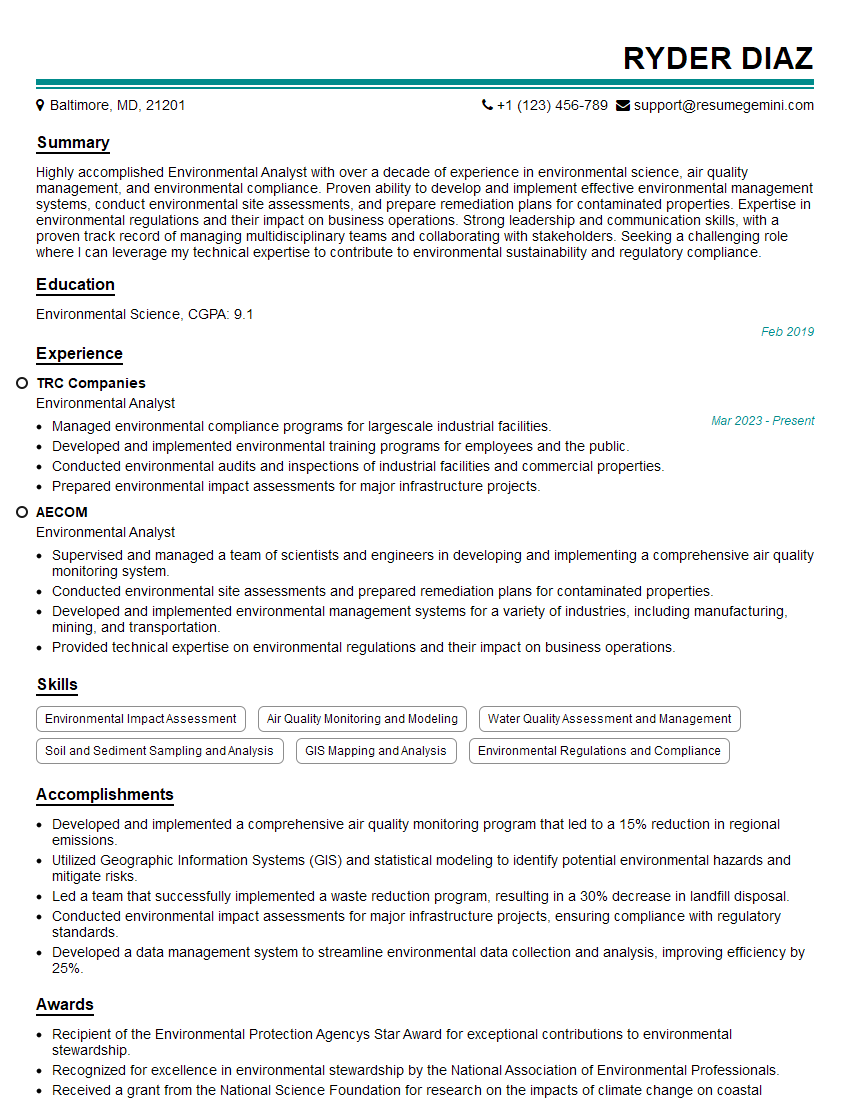
Environmental Analyst Resume Sample
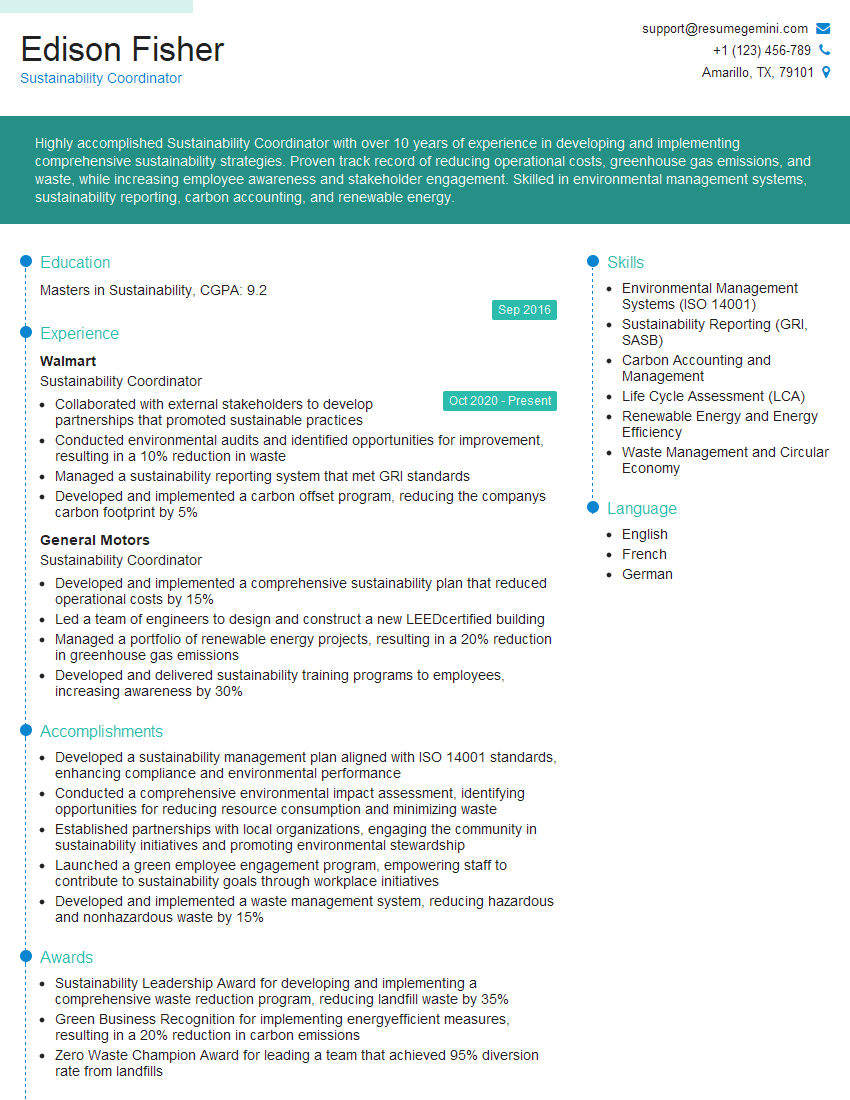
Sustainability Coordinator Resume Sample
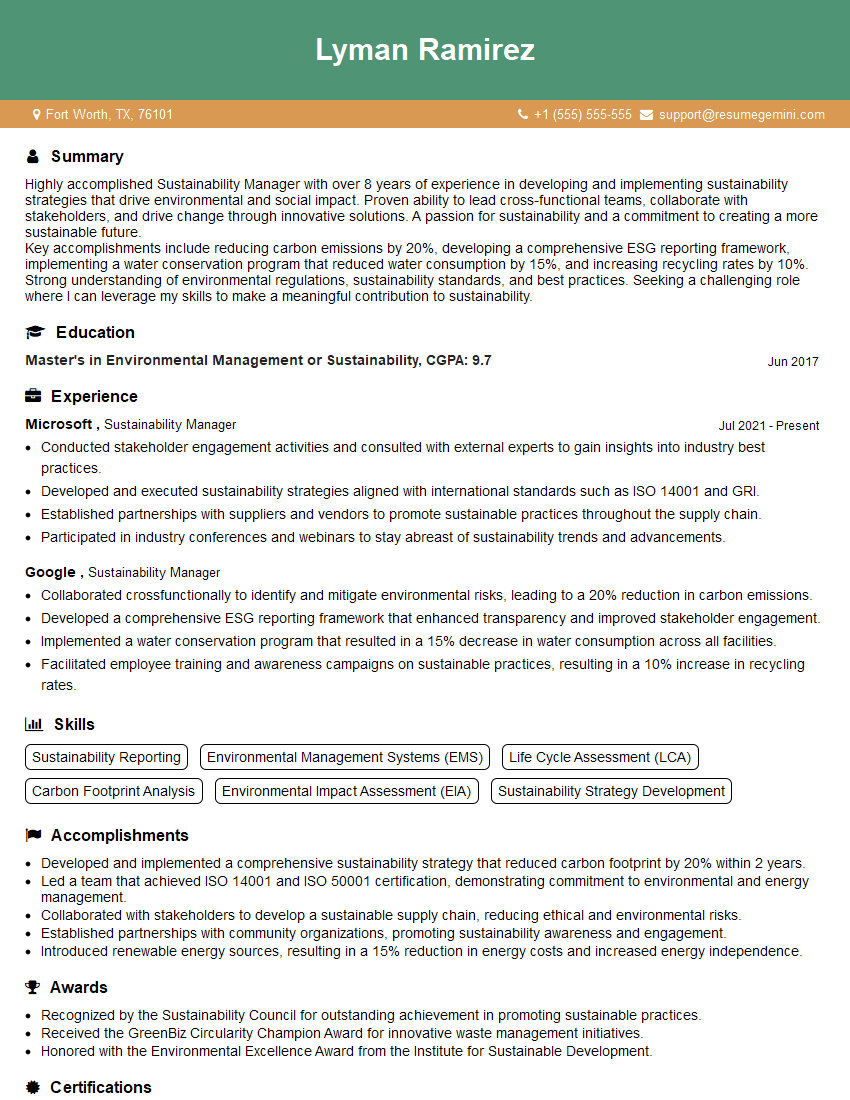
Sustainability Manager Resume Sample
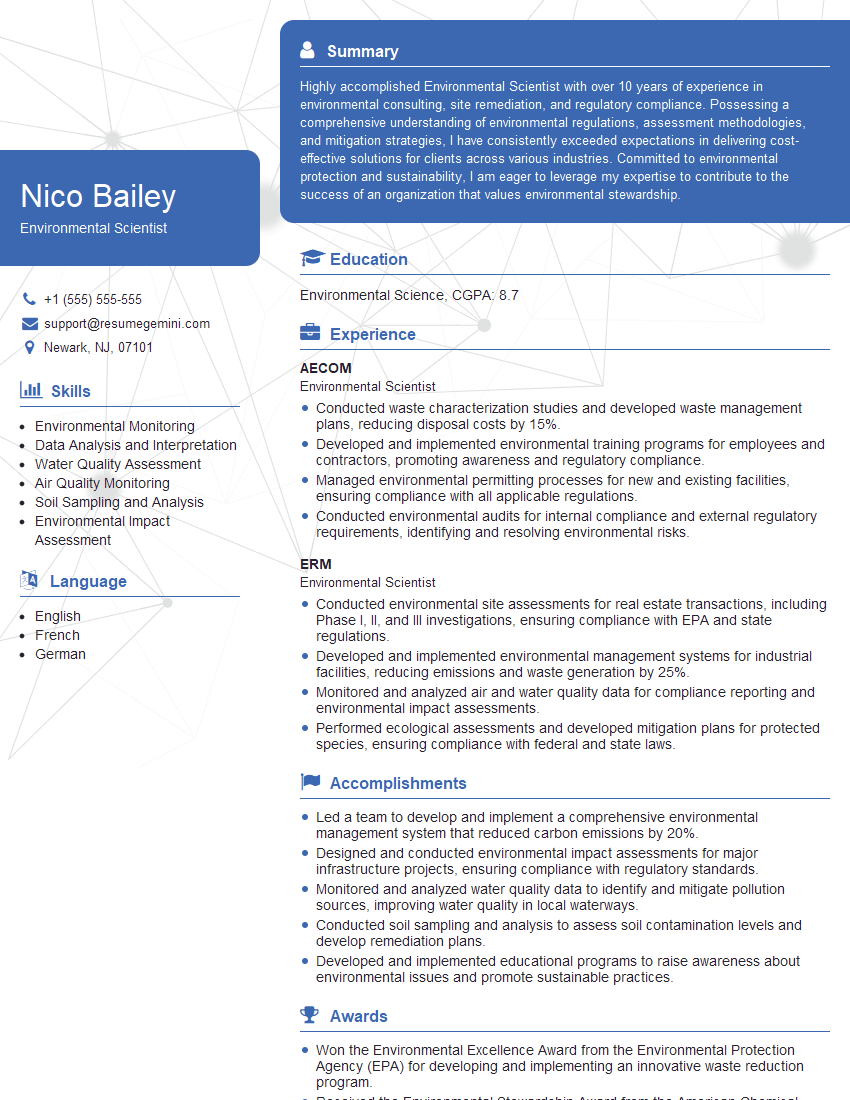
Environmental Scientist Resume Sample

Sustainability Consultant Resume Sample
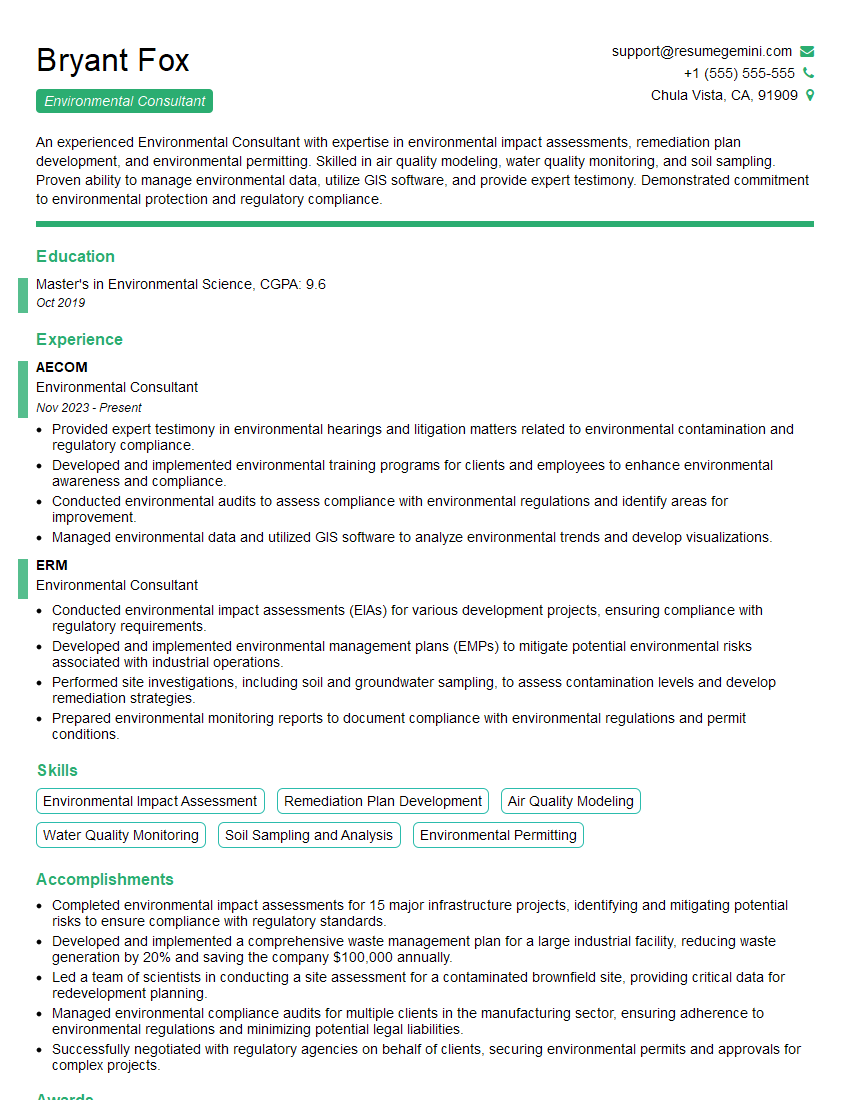
Environmental Consultant Resume Sample
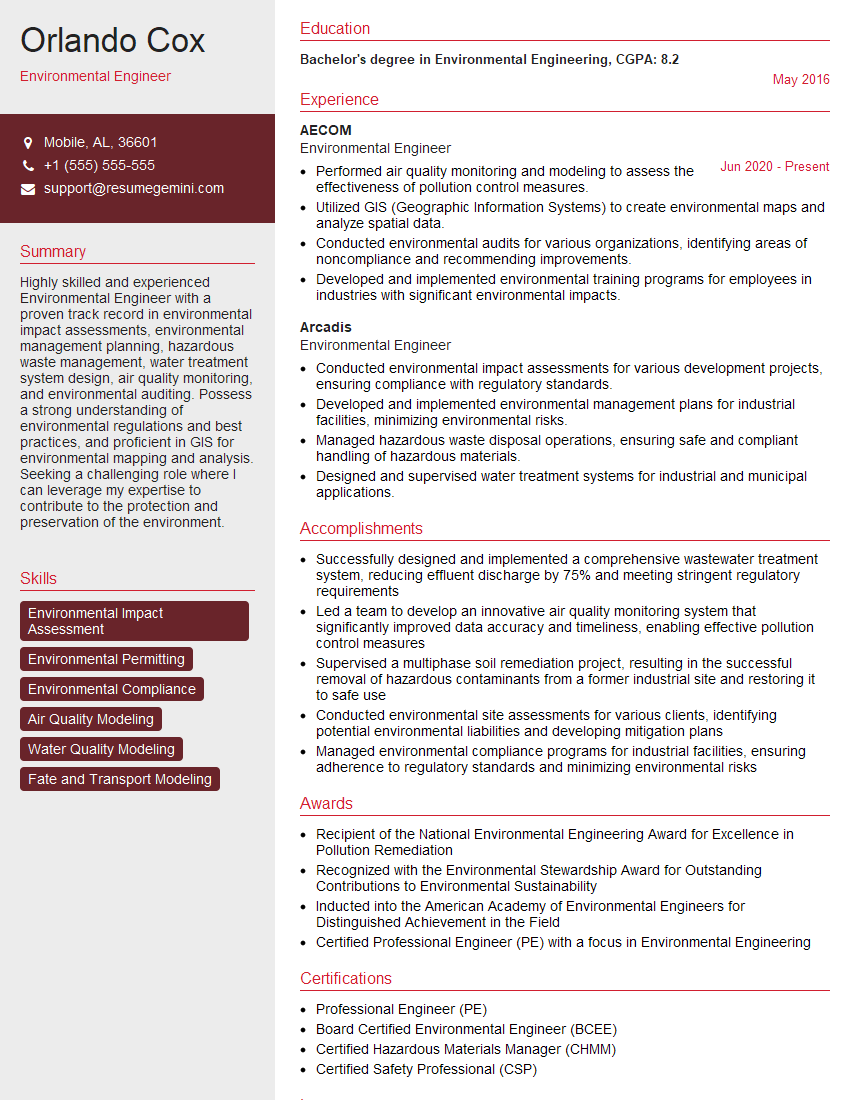
Environmental Engineer Resume Sample
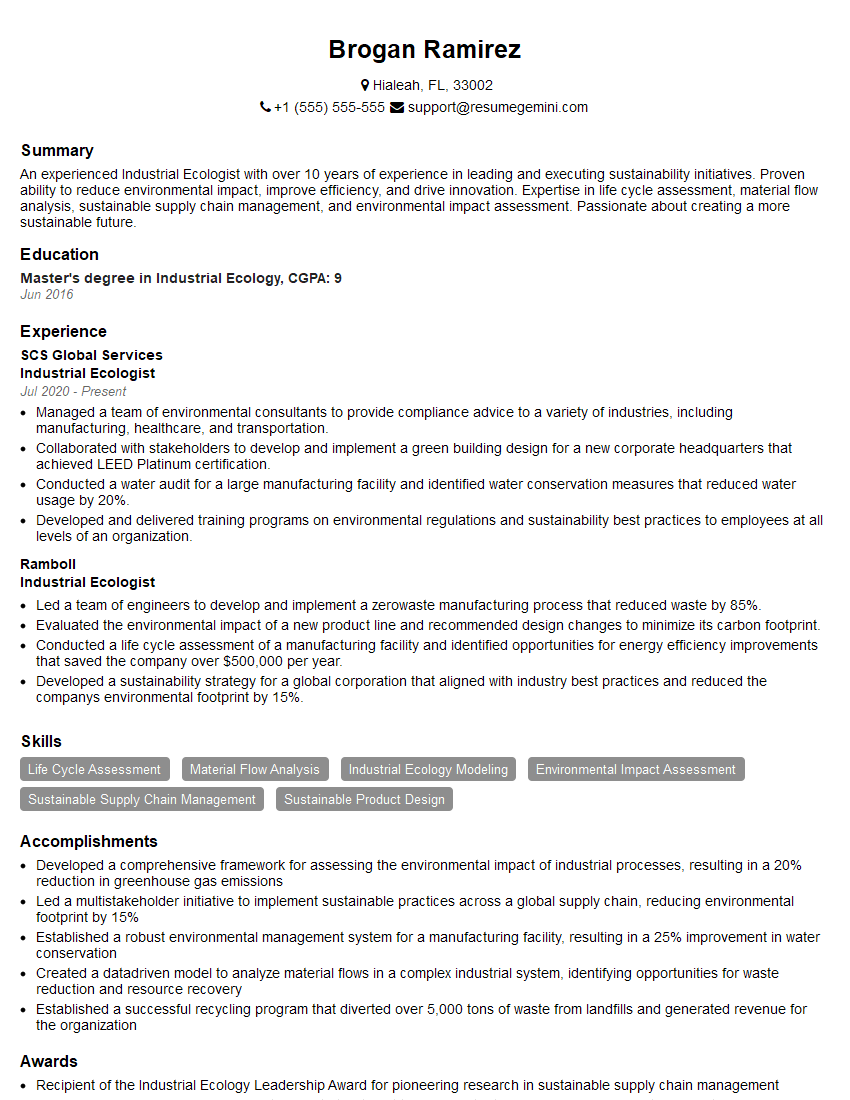
Industrial Ecologist Resume Sample
Explore more articles
Users Rating of Our Blogs
Share Your Experience
We value your feedback! Please rate our content and share your thoughts (optional).
What Readers Say About Our Blog
To the interviewgemini.com Webmaster.
Very helpful and content specific questions to help prepare me for my interview!
Thank you
To the interviewgemini.com Webmaster.
This was kind of a unique content I found around the specialized skills. Very helpful questions and good detailed answers.
Very Helpful blog, thank you Interviewgemini team.