Unlock your full potential by mastering the most common Light Rail Transit (LRT) Planning interview questions. This blog offers a deep dive into the critical topics, ensuring you’re not only prepared to answer but to excel. With these insights, you’ll approach your interview with clarity and confidence.
Questions Asked in Light Rail Transit (LRT) Planning Interview
Q 1. Describe your experience with different LRT system technologies (e.g., monorail, tram, light metro).
My experience encompasses various LRT technologies, each with its own strengths and weaknesses. Let’s start with light metro systems, which typically run on dedicated rights-of-way, often underground or elevated, offering higher speeds and capacity compared to other LRT types. I’ve worked on projects utilizing various rolling stock and signaling systems for light metro lines, focusing on optimization of operational efficiency and passenger flow. Trams, on the other hand, often operate on shared streets, providing better integration with the urban fabric but potentially facing slower speeds due to traffic congestion. My experience with tram systems includes route planning considering traffic flow and passenger accessibility, as well as integration with other transit modes. Finally, monorail systems, characterized by their single rail, offer a unique aesthetic and can be advantageous in specific terrains. However, they often face capacity limitations compared to other LRT technologies, a factor I’ve carefully considered during feasibility studies. For example, in one project, we compared the costs and benefits of a light metro line versus a tram system, ultimately opting for the latter due to its better integration with the existing urban environment and lower initial capital expenditure.
Q 2. Explain the process of conducting a ridership analysis for a proposed LRT line.
Conducting a ridership analysis for a proposed LRT line is a crucial step. It involves several phases. First, we define the study area and identify potential ridership segments (e.g., commuters, students, tourists). Next, we utilize various data sources, including census data, traffic counts, and origin-destination surveys, to understand existing travel patterns. We then develop a travel demand model, often using software like TransCAD or Cube, to predict future ridership based on factors like population growth, land use changes, and the proposed LRT line’s accessibility. This model projects passenger volumes at each station, allowing us to assess capacity requirements and optimize the frequency of train services. Sensitivity analyses are also crucial; we test how changes in fares, service frequencies, and competing transportation options would affect ridership projections. Finally, we prepare detailed reports summarizing the findings, which directly inform decisions regarding infrastructure design and operational strategies. For instance, in a recent project, our ridership analysis indicated a significantly higher-than-anticipated demand during peak hours, leading us to adjust the train frequency and platform size to accommodate the projected passenger flow.
Q 3. How do you incorporate environmental impact assessments into LRT planning?
Environmental impact assessments (EIAs) are paramount in LRT planning. We conduct EIAs to evaluate the potential effects of a proposed LRT line on air and noise pollution, water resources, biodiversity, and visual amenity. This process usually involves multiple steps. First, we identify potential environmental impacts through screening and scoping exercises. Next, we collect baseline environmental data and assess the significance of each identified impact. We then explore mitigation strategies—for example, using noise barriers to reduce noise pollution or employing green building materials to lessen the project’s carbon footprint. We also conduct public consultation sessions to incorporate community input and address concerns. The EIA findings are documented in a comprehensive report, which is often a key factor in obtaining regulatory approvals. In a recent project, the EIA revealed a potential negative impact on a local wetland. In response, we redesigned the alignment to minimize the footprint on the wetland, incorporating an elevated section to avoid disruption to the ecosystem.
Q 4. What are the key factors to consider when selecting the optimal alignment for an LRT route?
Selecting the optimal alignment for an LRT route involves carefully balancing numerous factors. Land use and development are key; the alignment should connect key areas and encourage transit-oriented development. Engineering feasibility must also be considered—factors like terrain, soil conditions, and proximity to existing infrastructure influence construction costs and challenges. Environmental impacts play a vital role, as mentioned previously; we seek alignments that minimize environmental disruption. Community acceptance is crucial, as alignments that negatively impact residents or businesses can lead to project delays and public opposition. Finally, cost-effectiveness requires careful evaluation of construction, operational, and maintenance costs along different potential alignments. We often use Geographic Information Systems (GIS) and cost-benefit analysis techniques to compare various alignments and identify the most suitable option. In one project, we assessed three potential alignments: one through a densely populated area, one along a major highway, and one through a less-developed region. After a thorough analysis, considering all the factors mentioned, we selected the alignment through the less-developed region due to its lower environmental impact and reduced construction costs, despite a slightly longer route.
Q 5. Discuss your experience with different LRT station design considerations (e.g., accessibility, capacity, aesthetics).
LRT station design considers numerous factors to ensure passenger comfort, safety, and accessibility. Accessibility is paramount; stations must be designed to accommodate people with disabilities, including ramps, elevators, tactile paving, and clear signage. Capacity depends on anticipated ridership; larger stations with multiple platforms and wider entrances are needed for high-volume lines. Aesthetics play an important role in creating a positive passenger experience, incorporating local architectural styles and creating a visually appealing environment. Integration with surrounding infrastructure is essential—stations should be seamlessly integrated with pedestrian walkways, bicycle lanes, and other modes of transportation. Security features, including surveillance cameras and adequate lighting, also need consideration. For example, in a recent project, we designed a station with a large central atrium to improve natural lighting and ventilation, while also incorporating architectural elements reflecting the local culture and history. Furthermore, we implemented a universal design approach, ensuring that all features were accessible to passengers of all abilities.
Q 6. How do you estimate the construction cost of an LRT project?
Estimating the construction cost of an LRT project is a complex process that requires a detailed understanding of the project scope and local conditions. We start by developing a detailed bill of quantities, specifying all materials, labor, and equipment needed. Then, we obtain unit costs for each item from contractors or use historical data from comparable projects. We also account for potential cost overruns by applying contingency factors—this percentage accounts for unforeseen circumstances and risks. Other important cost components include land acquisition, design fees, environmental mitigation measures, and project management expenses. Different estimation methods may be employed, including parametric estimating (using historical data and project characteristics to estimate cost), bottom-up estimating (estimating cost by individual components), and analogous estimating (using data from comparable projects). The final cost estimate often includes a range to represent the uncertainty inherent in large-scale projects. In a recent project, we used a combination of bottom-up and parametric estimation methods, which allowed us to develop a comprehensive and reliable cost estimate. This was regularly updated throughout the project lifecycle to reflect changes in design, material costs, and other factors.
Q 7. Explain your understanding of LRT integration with other modes of transportation.
LRT integration with other modes of transportation is vital for creating an efficient and interconnected transit network. This integration is often achieved through multimodal hubs, where LRT stations are co-located with bus terminals, railway stations, or bicycle sharing facilities. Seamless transfers between modes are crucial, minimizing passenger walking distances and transfer times. Fare integration, such as integrated ticketing systems allowing use of multiple modes with a single ticket, can simplify the passenger experience. Good accessibility to the station from surrounding areas, such as pedestrian and cycling infrastructure, is also important. The design of the station itself should support smooth transfers, with clear signage and intuitive layouts. In one project, we designed an LRT station that integrated seamlessly with an existing bus terminal and a commuter rail station. This included a shared concourse and a unified ticketing system, providing passengers with convenient and efficient access to multiple transportation options. The success of this integration was demonstrated by a significant increase in ridership on both the LRT and the other modes.
Q 8. Describe your experience with different LRT signaling and communication systems.
My experience encompasses a wide range of LRT signaling and communication systems, from traditional fixed-block signaling to the latest in CBTC (Communication-Based Train Control) technology. I’ve worked with various manufacturers’ systems, including Siemens, Alstom, and Thales, understanding their unique architectures and functionalities. This includes hands-on experience with system integration, testing, and commissioning. For example, on a recent project, we integrated a new CBTC system with an existing Automatic Train Protection (ATP) system, requiring meticulous planning and coordination to ensure seamless operation and safety. This involved understanding the intricacies of different communication protocols and data formats, such as Ethernet and proprietary protocols. I’ve also worked extensively with SCADA (Supervisory Control and Data Acquisition) systems for real-time monitoring and control of the LRT network, including troubleshooting and performance optimization.
In another project, we upgraded an older, less efficient signaling system to a more modern, digital system. This not only improved the capacity of the network but also enabled the implementation of advanced functionalities such as predictive maintenance, leading to cost savings and increased reliability. The transition required comprehensive planning, including stakeholder management, public communication, and meticulous safety protocols to minimize disruption to the service during the upgrade.
Q 9. How do you manage risks and uncertainties in LRT project planning?
Managing risks and uncertainties in LRT project planning requires a proactive and systematic approach. We utilize a combination of qualitative and quantitative risk assessment methods. This starts with identifying potential risks throughout the project lifecycle, from planning and design to construction and operation. We categorize risks by likelihood and impact, using techniques like SWOT analysis and probability and impact matrices. This allows us to prioritize our efforts and allocate resources effectively.
For instance, we might identify potential delays due to unforeseen geological conditions during construction. To mitigate this, we incorporate geotechnical surveys and contingency plans into the project schedule and budget. Similarly, we might anticipate potential public resistance during the construction phase. This is addressed through community engagement strategies and proactive communication. We also use Monte Carlo simulations to model uncertainties and assess the impact on project cost and schedule, enabling informed decision-making and scenario planning. Finally, robust change management processes are crucial to handle any unexpected changes or deviations throughout the project.
Q 10. What are the critical success factors for a successful LRT project implementation?
Successful LRT project implementation hinges on several critical success factors. Firstly, strong leadership and effective project management are paramount. This includes clear communication, collaboration, and conflict resolution among stakeholders, including government agencies, contractors, and the public.
- Comprehensive planning and design: A detailed feasibility study, environmental impact assessment, and robust design are crucial.
- Stakeholder engagement: Engaging the community early and often is vital to minimize opposition and secure support.
- Realistic budgeting and scheduling: Accurate cost estimation and realistic timelines are essential for project success.
- Risk management: A well-defined risk management plan and the ability to adapt to unexpected issues are vital.
- Effective procurement and contracting: Choosing reliable contractors and establishing clear contract terms is crucial.
- Quality control and assurance: Stringent quality control measures throughout construction and commissioning phases prevent future problems.
- Post-implementation review: A thorough review after project completion allows for lessons learned and improvements in future projects.
For example, a project’s success often hinges on securing the necessary permits and approvals from regulatory bodies in a timely manner. This requires proactive engagement with the relevant authorities and meticulous documentation.
Q 11. Explain your experience with using GIS software for LRT planning and analysis.
GIS (Geographic Information Systems) software is an indispensable tool in LRT planning and analysis. I have extensive experience using ArcGIS and QGIS, leveraging their capabilities for spatial data management, analysis, and visualization. We use GIS to analyze potential alignments, assess ridership demand, and optimize station locations. For example, we use spatial overlay analysis to identify optimal routes that minimize environmental impact and maximize accessibility to key destinations.
Furthermore, GIS helps us model the network’s capacity and performance under various scenarios. This includes simulating passenger flows, assessing congestion points, and optimizing the frequency of services. We also integrate GIS with other data sources, such as demographic data and land use information, to conduct comprehensive impact assessments and inform decision-making. Visualizing this data using GIS maps provides stakeholders with clear and intuitive representations of complex information, facilitating informed discussions and collaboration. This allows for identifying potential conflicts early on, leading to cost-effective solutions and successful project implementation.
Q 12. How do you develop a comprehensive LRT maintenance plan?
Developing a comprehensive LRT maintenance plan requires a proactive and systematic approach. It begins with a thorough asset register, documenting all system components, including track, rolling stock, signaling systems, and power supply. This is then used to create a preventive maintenance schedule, based on manufacturers’ recommendations and industry best practices.
The plan must encompass both predictive and preventative maintenance strategies. Predictive maintenance involves using data analytics and sensor technologies to identify potential failures before they occur, allowing for timely intervention. This can involve monitoring vibration levels in trains or tracking track geometry. Preventative maintenance includes regularly scheduled inspections and servicing to prevent issues from arising. We also incorporate a robust corrective maintenance system, with procedures for addressing unexpected failures quickly and efficiently. The plan must clearly define responsibilities, resources, and performance indicators to ensure effectiveness. Regular reviews and updates are essential to adapt to changing operational needs and technological advancements.
Q 13. Describe your experience with developing LRT operational strategies.
Developing LRT operational strategies involves a holistic approach that considers several factors. Firstly, we optimize service frequencies and headways to meet passenger demand, minimizing waiting times while maximizing efficiency. This might involve using data analytics to understand peak travel times and adjusting service levels accordingly. Secondly, we develop robust scheduling and dispatching procedures, often using sophisticated software to coordinate train movements and ensure punctuality. We also develop strategies to manage disruptions, including delays and emergencies, minimizing their impact on passengers. This might involve real-time passenger information systems and alternative transport options during outages.
Furthermore, we consider driver training and crew management procedures to ensure safe and efficient operations. Staff training programs are crucial for ensuring consistent service quality. Finally, we must constantly review and refine our strategies using operational data and performance metrics to ensure that we are continuously improving efficiency and passenger satisfaction. For example, implementing a dynamic routing system can help adjust service frequencies based on real-time passenger demand, optimizing resource allocation.
Q 14. How do you ensure the safety and security of LRT passengers and staff?
Ensuring the safety and security of LRT passengers and staff is paramount. This involves a multi-layered approach, starting with robust design and engineering. This includes designing stations and trains with safety features such as emergency exits, CCTV surveillance systems, and emergency communication systems. We implement stringent operational procedures, including driver training programs emphasizing safety protocols and regular system inspections to identify and address potential hazards. This also includes developing and regularly testing emergency response plans to ensure swift and effective responses to incidents.
Furthermore, effective security measures are crucial, including the use of surveillance cameras, security personnel, and access control systems to deter crime and ensure passenger safety. Public awareness campaigns educate passengers on safety guidelines and emergency procedures. Collaboration with law enforcement agencies is essential for a comprehensive security strategy. Finally, regular safety audits and reviews ensure the system’s continued safety and efficiency. This might involve simulating potential emergencies and testing the effectiveness of our response procedures.
Q 15. What are the key performance indicators (KPIs) for measuring the effectiveness of an LRT system?
Measuring the effectiveness of an LRT system requires a comprehensive set of Key Performance Indicators (KPIs). These KPIs can be broadly categorized into areas of ridership, operational efficiency, financial performance, and societal impact.
- Ridership KPIs: These focus on how many people are using the system. Examples include average daily ridership, ridership growth rate, peak hour load factor (how full trains are during peak times), and passenger satisfaction scores from surveys. A high load factor might indicate a need for increased service frequency.
- Operational Efficiency KPIs: These measure how well the system is running. Examples include on-time performance (percentage of trains arriving on schedule), vehicle availability (percentage of trains operational), mean time between failures (MTBF) for trains and signaling systems, and cost per passenger-km (a measure of operating efficiency).
- Financial Performance KPIs: These KPIs look at the financial health of the system. Examples include operating cost per passenger-km, farebox recovery ratio (percentage of operating costs covered by fares), return on investment (ROI), and cost-effectiveness compared to alternative transportation modes.
- Societal Impact KPIs: These consider the broader impact on the community. Examples include reduction in traffic congestion (measured by vehicle kilometers traveled), reduction in greenhouse gas emissions, improvement in accessibility for disadvantaged groups, and land value appreciation in areas served by the LRT.
By tracking these KPIs over time, we can assess the success of the LRT system, identify areas for improvement, and make data-driven decisions to optimize its performance. For instance, consistently low ridership on a particular line might indicate a need for marketing campaigns, route adjustments, or improved station amenities.
Career Expert Tips:
- Ace those interviews! Prepare effectively by reviewing the Top 50 Most Common Interview Questions on ResumeGemini.
- Navigate your job search with confidence! Explore a wide range of Career Tips on ResumeGemini. Learn about common challenges and recommendations to overcome them.
- Craft the perfect resume! Master the Art of Resume Writing with ResumeGemini’s guide. Showcase your unique qualifications and achievements effectively.
- Don’t miss out on holiday savings! Build your dream resume with ResumeGemini’s ATS optimized templates.
Q 16. Explain your understanding of LRT regulatory compliance requirements.
LRT regulatory compliance is crucial for ensuring safety, accessibility, and environmental sustainability. The specific requirements vary depending on the jurisdiction, but generally include adherence to:
- Safety regulations: These cover aspects like train control systems, emergency protocols, track maintenance, and safety inspections. This might involve complying with standards set by organizations like the Institute of Transportation Engineers (ITE) or similar bodies specific to the region.
- Accessibility regulations: These ensure the system is accessible to people with disabilities, including compliant station design, accessible vehicles, and clear communication systems. Compliance often involves meeting the requirements of the Americans with Disabilities Act (ADA) in the US or equivalent legislation elsewhere.
- Environmental regulations: These address the environmental impact of construction and operation, including noise pollution, air quality, and waste management. This might include adhering to environmental impact assessments and obtaining necessary permits.
- Land use regulations: These govern the use of land along the LRT corridor, including zoning regulations, building permits, and easements. Close collaboration with local planning authorities is essential here.
Non-compliance can lead to significant penalties, operational disruptions, and reputational damage. Therefore, a robust compliance program is vital, involving regular audits, staff training, and proactive engagement with regulatory bodies. For example, failure to meet accessibility standards could lead to legal challenges and hinder the system’s effectiveness in providing equitable access to transportation.
Q 17. How do you engage with stakeholders during the LRT planning process?
Engaging stakeholders is paramount in successful LRT planning. It’s not just about informing them; it’s about actively involving them in the decision-making process. My approach uses a multi-faceted strategy:
- Early and frequent communication: Initiating communication well before the planning phase begins builds trust and allows for addressing early concerns. I use various channels, such as public forums, workshops, online surveys, and newsletters.
- Targeted outreach: Different stakeholders have different needs and concerns. I segment stakeholders (residents, businesses, community groups, transit agencies, etc.) and tailor communication to their specific interests. For example, I’d engage local businesses about potential impacts on their operations, while engaging residents about accessibility and potential disruptions during construction.
- Interactive engagement: Passive information dissemination is insufficient. I utilize interactive tools like online mapping platforms, allowing stakeholders to visualize proposed routes and provide feedback. I also facilitate workshops and focus groups to gather qualitative data and build consensus.
- Transparency and accountability: Openly sharing information about project timelines, budgets, and decision-making processes builds credibility and trust. Transparency is key to addressing concerns and building consensus.
- Conflict resolution mechanisms: Establishing clear processes for handling disputes and feedback is crucial. This could involve establishing a stakeholder advisory committee or implementing a formal grievance procedure.
For example, in a recent project, we held a series of community open houses, followed by an online survey to gather feedback on different alignment options for the LRT line. This ensured wide participation and helped us incorporate diverse perspectives into the final design.
Q 18. Describe your experience with public transportation planning software and tools.
I have extensive experience with various public transportation planning software and tools. My proficiency includes:
- Geographic Information Systems (GIS) software: ArcGIS and QGIS are crucial for spatial data analysis, route planning, and visualizing the LRT network. I use them to model potential alignments, assess accessibility, and analyze land use patterns.
- Transit planning models: Software like TransModeler or Cube enables me to simulate passenger demand, optimize service frequency, and evaluate the performance of different operating scenarios. This allows for fine-tuning the system to maximize efficiency and meet anticipated demand.
- Cost-benefit analysis software: Specialized software packages facilitate the comprehensive economic evaluation of LRT projects, accounting for construction costs, operating expenses, and societal benefits. This helps determine project viability and prioritize investments.
- Data visualization tools: Tableau and Power BI are essential for presenting complex data in a clear and understandable manner to both technical and non-technical audiences, facilitating effective communication and stakeholder engagement.
I am also proficient in using various data formats and integrating data from different sources to create comprehensive models and reports. For example, using GIS, I can overlay population density data with proposed LRT stations to identify areas requiring increased service frequency or additional stations.
Q 19. What is your approach to resolving conflicts between different stakeholder interests in LRT planning?
Resolving conflicts between stakeholders requires a collaborative and diplomatic approach. My strategy focuses on:
- Identifying the root causes: Understanding the underlying reasons for disagreements is crucial. This often involves active listening and seeking to understand each stakeholder’s perspective.
- Facilitated dialogue and negotiation: Creating a neutral space for open communication and discussion where stakeholders can express their concerns and work towards mutually acceptable solutions. Techniques like mediation and collaborative problem-solving can be highly effective.
- Prioritization and trade-offs: Recognizing that not all stakeholder needs can be fully met, establishing a framework for prioritizing objectives and making informed trade-offs. This requires transparency and clearly defined criteria for decision-making.
- Compromise and consensus building: Working towards solutions that address the key concerns of all stakeholders, even if it means some compromises from each party. This approach fosters collaboration and buy-in from the community.
- Documentation and communication: Keeping detailed records of negotiations and decisions, and communicating them clearly to all stakeholders, is crucial for ensuring transparency and accountability.
For instance, in one project, a proposed LRT alignment conflicted with a local park. Through facilitated dialogue, we explored alternative alignments and incorporated community feedback, eventually finding a solution that minimized environmental impact while still providing essential transportation access.
Q 20. How do you incorporate resilience and adaptability into LRT system design?
Resilience and adaptability are crucial in LRT system design, considering the potential for disruptions from natural disasters, cyberattacks, or unexpected events. My approach involves:
- Redundancy and backup systems: Incorporating backup power systems, redundant communication networks, and alternative routing options to ensure continued operation during disruptions. This includes designing stations and tracks to withstand extreme weather events.
- Modular design: Designing the system with modular components that can be easily replaced or upgraded, allowing for faster recovery from damage and easier adaptation to future needs.
- Robust materials and construction: Using durable and weather-resistant materials and adhering to strict construction standards to minimize vulnerability to damage.
- Cybersecurity measures: Implementing robust cybersecurity protocols to protect the system from cyberattacks that could compromise operations or safety.
- Emergency response planning: Developing detailed emergency response plans that outline procedures for managing disruptions, ensuring passenger safety, and coordinating with emergency services.
For example, elevated sections of an LRT line might be designed to withstand high winds and seismic activity, while incorporating flood defenses in low-lying areas. This proactive approach ensures the system’s continued operation even in challenging conditions.
Q 21. How do you evaluate the economic viability of a proposed LRT project?
Evaluating the economic viability of an LRT project requires a comprehensive cost-benefit analysis. This involves:
- Estimating capital costs: This includes the costs of land acquisition, track construction, station building, vehicle procurement, and signaling systems. Detailed cost estimations are crucial.
- Projecting operating costs: This involves estimating the costs of labor, maintenance, energy, and administration. Detailed operational models are used for this projection.
- Quantifying benefits: This includes assessing the reduction in travel time, decreased congestion, improved air quality, increased property values, and economic development spurred by the LRT. These benefits often need to be monetized to be included in the analysis.
- Applying appropriate discount rates: Future benefits and costs are discounted to their present value, accounting for the time value of money. The selection of an appropriate discount rate is a key aspect of this evaluation.
- Conducting sensitivity analysis: Evaluating the impact of uncertainties on the project’s financial performance. This allows assessing the robustness of the project’s viability.
- Comparative analysis: Comparing the LRT project’s cost-effectiveness against alternative transportation solutions, such as bus rapid transit or road improvements.
The result of this analysis is a measure of the net present value (NPV) or benefit-cost ratio (BCR). A positive NPV or a BCR greater than 1 typically indicates that the project is economically viable. However, non-economic factors, like social and environmental considerations, should also be taken into account during the decision-making process.
Q 22. What are the key considerations for LRT station spacing and location?
Optimizing LRT station spacing and location is crucial for maximizing ridership and minimizing operational costs. It’s a complex balancing act involving several key considerations.
- Ridership Demand: Stations should be located in areas with high population density, employment centers, and key destinations to attract a large number of passengers. Analyzing population data, employment statistics, and origin-destination matrices is paramount. For example, locating a station near a major university or hospital will significantly boost ridership.
- Travel Time and Walking Distance: The distance between stations needs to balance convenient access for passengers with efficient overall travel time. Generally, a maximum walking distance of 800 meters (around half a mile) from a station is considered acceptable, but this can vary based on local conditions such as terrain and pedestrian infrastructure.
- Accessibility: Stations must be easily accessible for all users, including those with disabilities. This includes ensuring level access, ramps, elevators, and clear signage. We also need to consider the availability of adequate parking and connections with other modes of transportation.
- Cost: Construction costs increase with the number of stations. Therefore, a detailed cost-benefit analysis is crucial. We need to weigh the benefits of added convenience against the increased capital and operational expenses.
- Land Availability and Acquisition: Securing land for station construction can be challenging, especially in densely populated urban areas. The availability of suitable land parcels directly influences station placement.
In practice, we use Geographic Information Systems (GIS) software to overlay various datasets (population density, land use, traffic patterns, etc.) to identify optimal station locations. This allows for a data-driven approach, minimizing subjective bias and maximizing efficiency.
Q 23. Explain your understanding of different LRT funding mechanisms.
Light Rail Transit projects require significant funding, and securing it involves a variety of mechanisms.
- Government Funding: This is often the largest source, coming from federal, state, or municipal budgets. Funding can be allocated through grants, loans, or direct investment. Securing government funding usually requires a rigorous business case demonstrating the project’s economic and social benefits.
- Private Investment: Private sector participation can come through Public-Private Partnerships (PPPs), where private companies share the project risks and rewards with the government. This can involve design-build-finance-operate (DBFO) contracts, allowing private companies to handle various project aspects.
- Value Capture Financing: This mechanism leverages increased land values around LRT stations to generate revenue. This can include increased property taxes or the sale of development rights. For example, developing higher-density housing around stations increases land value and thus revenue.
- Fares and Operating Revenue: Once operational, LRT systems generate revenue through passenger fares. This revenue stream can contribute to ongoing operational costs and debt repayment.
- Grants and Subsidies: Various organizations and foundations may offer grants and subsidies to support specific project aspects, such as environmental mitigation or accessibility improvements.
The optimal funding mix depends on various factors, including the project’s size, local economic conditions, and government priorities. Developing a robust financial model that accounts for all revenue and expense streams is critical for securing funding and ensuring project sustainability.
Q 24. How do you balance the needs of different user groups (e.g., pedestrians, cyclists, transit users) in LRT planning?
Balancing the needs of different user groups is vital for successful LRT planning. It’s about creating a truly integrated transportation system.
- Pedestrian Infrastructure: Wide sidewalks, clearly marked crosswalks, pedestrian signals, and safe pedestrian crossings are necessary to ensure safe and convenient access to stations. This includes integrating pedestrian paths with the LRT alignment itself.
- Bicycle Integration: Secure bicycle parking at stations and dedicated bicycle lanes along LRT corridors are essential for integrating cycling into the transportation system. This promotes active transportation and reduces reliance on cars.
- Transit-Oriented Development (TOD): Planning for mixed-use development around stations promotes a walkable, vibrant environment. This can include residential, commercial, and recreational spaces, minimizing the need for car travel.
- Universal Design: Ensuring accessibility for all users, including people with disabilities, is not an add-on but a fundamental design principle. This includes ramps, elevators, tactile paving, and clear signage.
- Community Engagement: Active public consultation throughout the planning process is crucial to ensure that all user group concerns are addressed. This includes public forums, surveys, and workshops.
For example, in a recent project, we prioritized the creation of a large, central plaza next to the LRT station to serve as a gathering space for pedestrians, cyclists, and transit users alike. This design approach fostered a sense of community and made the station a more attractive and functional hub.
Q 25. Describe your experience with developing a communication plan for a major LRT project.
Developing a comprehensive communication plan is crucial for the success of any major LRT project. My approach typically involves these steps:
- Stakeholder Identification: Identifying all relevant stakeholders, including residents, businesses, community groups, government agencies, and construction contractors. This involves mapping out potential impacts and concerns of each group.
- Communication Channels: Choosing appropriate communication channels, such as websites, social media, newsletters, public meetings, and local media outlets, to reach different stakeholder groups effectively. Tailoring messages to resonate with each group is vital.
- Key Messages: Developing clear, concise, and consistent key messages about the project’s purpose, benefits, timeline, and potential impacts. Transparency is critical to build trust and reduce misinformation.
- Regular Updates: Providing regular updates about project progress, challenges, and mitigation strategies. This fosters transparency and maintains stakeholder engagement.
- Feedback Mechanisms: Establishing clear mechanisms for receiving feedback and addressing concerns from stakeholders. This includes online surveys, comment forms, and open forums. Active listening is crucial.
- Crisis Communication Plan: Developing a plan for addressing unexpected events or crises that may arise during construction or operation. This includes pre-defined communication protocols and designated spokespeople.
In a recent project, we utilized a combination of social media, local newspaper articles, and public forums to keep the community informed about the project’s progress. We actively responded to comments and concerns on social media, building a sense of community ownership. This proactive approach minimized negative publicity and fostered a positive relationship with the community.
Q 26. How do you address challenges related to land acquisition and right-of-way issues during LRT construction?
Land acquisition and right-of-way issues are frequent challenges in LRT construction. My approach involves a multi-faceted strategy:
- Early Engagement: Engaging with landowners and affected parties early in the planning process is critical. This allows for open communication, addressing concerns proactively, and exploring potential solutions before conflicts escalate.
- Fair Compensation: Offering fair and just compensation to landowners based on independent appraisals. Transparency and clear communication about the appraisal process are key.
- Negotiation and Mediation: Utilizing negotiation and mediation techniques to resolve disputes and reach mutually agreeable solutions. This can involve working with legal counsel and experienced mediators.
- Eminent Domain: As a last resort, using the power of eminent domain, the right of government to acquire private property for public use, with appropriate due process and compensation. This is a measure employed only when other avenues fail.
- Innovative Design Solutions: Exploring innovative design solutions to minimize land acquisition needs, such as elevated or underground sections of the line. This can reduce the number of properties affected and mitigate potential conflicts.
For instance, in one project, we successfully negotiated land acquisition with a reluctant landowner by offering them a larger parcel of land elsewhere in exchange for their property. This creative solution avoided costly legal battles and maintained a positive community relationship.
Q 27. What is your approach to evaluating the effectiveness of different LRT fare collection systems?
Evaluating LRT fare collection systems requires a multi-pronged approach focusing on efficiency, user experience, and revenue generation.
- Ridership Data Analysis: Analyzing ridership data to understand passenger flow patterns and identify bottlenecks or inefficiencies in the system. This helps in optimizing fare collection points and staffing levels.
- User Surveys and Feedback: Gathering feedback from passengers through surveys, focus groups, and online platforms to gauge their satisfaction with the fare collection system. This allows for identifying areas for improvement in user experience.
- Revenue Analysis: Tracking revenue generated by the system, analyzing fare evasion rates, and identifying potential sources of revenue loss. This helps in assessing the system’s financial performance.
- Technological Efficiency: Evaluating the technological efficiency of the system, including the reliability of equipment, processing speed, and maintenance costs. This includes assessing the cost-effectiveness of different technologies such as contactless payment systems versus traditional ticket vending machines.
- Cost-Benefit Analysis: Comparing the costs of implementing and maintaining different fare collection systems with the revenue generated and the improvement in user experience. This allows us to make informed decisions about the optimal system.
In a recent project, we compared a contactless payment system with a traditional ticket-based system. The data analysis showed that the contactless system significantly reduced wait times, improved passenger flow, and lowered operational costs while simultaneously increasing ridership. This data justified the investment in upgrading the system.
Q 28. Describe your experience with developing and implementing a comprehensive LRT emergency response plan.
A comprehensive LRT emergency response plan is crucial for ensuring passenger safety and minimizing disruption in case of incidents.
- Risk Assessment: Conducting a thorough risk assessment to identify potential hazards, such as derailments, fires, natural disasters, and security threats. This allows for prioritizing and planning for the most likely scenarios.
- Emergency Procedures: Developing clear and concise emergency procedures for different types of incidents, including evacuation protocols, communication protocols, and first-aid procedures. This needs to be easily understood by all personnel.
- Communication Protocols: Establishing communication protocols between LRT staff, emergency services, and passengers. This includes clear channels for reporting incidents, disseminating information, and coordinating responses.
- Emergency Equipment and Training: Ensuring adequate emergency equipment is available at all stations and on board trains, and providing regular training to staff on emergency procedures. This includes fire extinguishers, first-aid kits, and communication devices.
- Regular Drills and Exercises: Conducting regular drills and exercises to test the effectiveness of the emergency response plan and identify areas for improvement. This ensures preparedness and coordination among various stakeholders.
- Post-Incident Review: Conducting post-incident reviews to learn from any incidents and improve the effectiveness of the emergency response plan. Lessons learned are incorporated to prevent similar incidents.
In a previous project, we conducted a full-scale emergency evacuation drill involving all relevant stakeholders including emergency services and station staff. This drill highlighted some communication gaps and allowed for refinements to the response plan before the system went live. This proactive approach minimized the risk of serious incidents.
Key Topics to Learn for Light Rail Transit (LRT) Planning Interview
- Demand Forecasting and Analysis: Understanding methodologies for predicting future ridership and its impact on system design.
- Route Planning and Alignment: Analyzing geographical constraints, population density, and accessibility to optimize LRT routes. Practical application includes using GIS software and considering environmental impact assessments.
- Station Design and Placement: Balancing passenger capacity, accessibility needs (ADA compliance), and integration with surrounding infrastructure.
- System Integration and Intermodal Connectivity: Planning for seamless transfers between LRT and other transportation modes (buses, subways, etc.).
- Financial Planning and Funding: Understanding the complexities of project budgeting, cost estimation, and securing funding sources.
- Construction Management and Scheduling: Familiarity with project management techniques applied to large-scale infrastructure projects, including risk assessment and mitigation.
- Safety and Security Considerations: Designing for passenger safety, implementing security measures, and complying with relevant regulations.
- Environmental Impact Assessment: Understanding and mitigating the environmental effects of LRT construction and operation.
- Community Engagement and Stakeholder Management: Effectively communicating project plans to the public and addressing community concerns.
- Technology Integration (e.g., Intelligent Transportation Systems): Exploring the use of advanced technologies to improve efficiency and passenger experience.
Next Steps
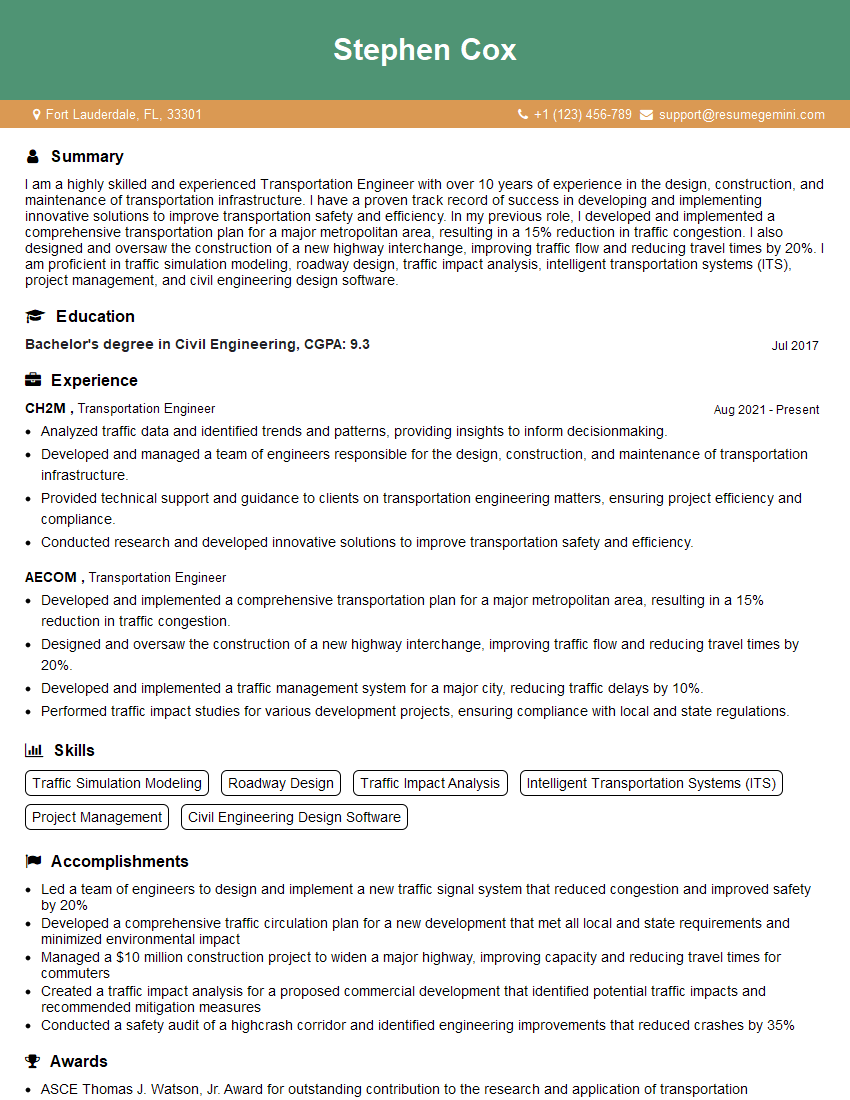
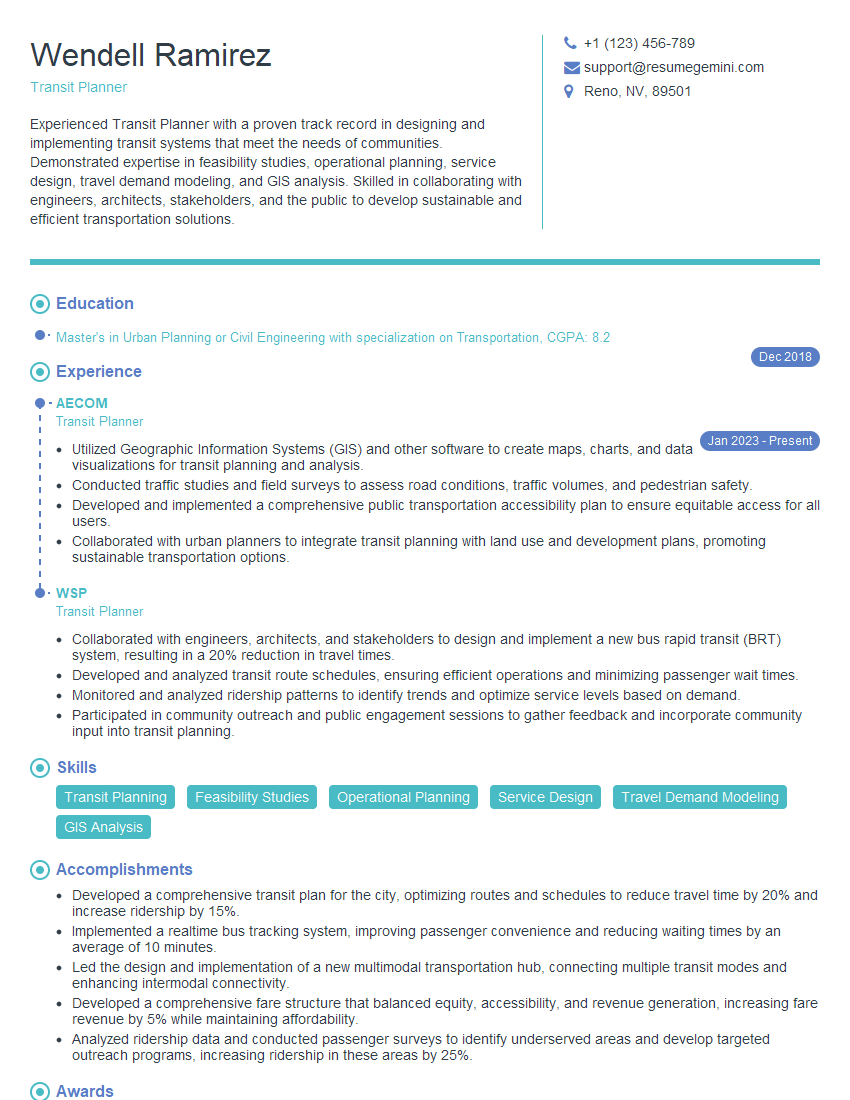
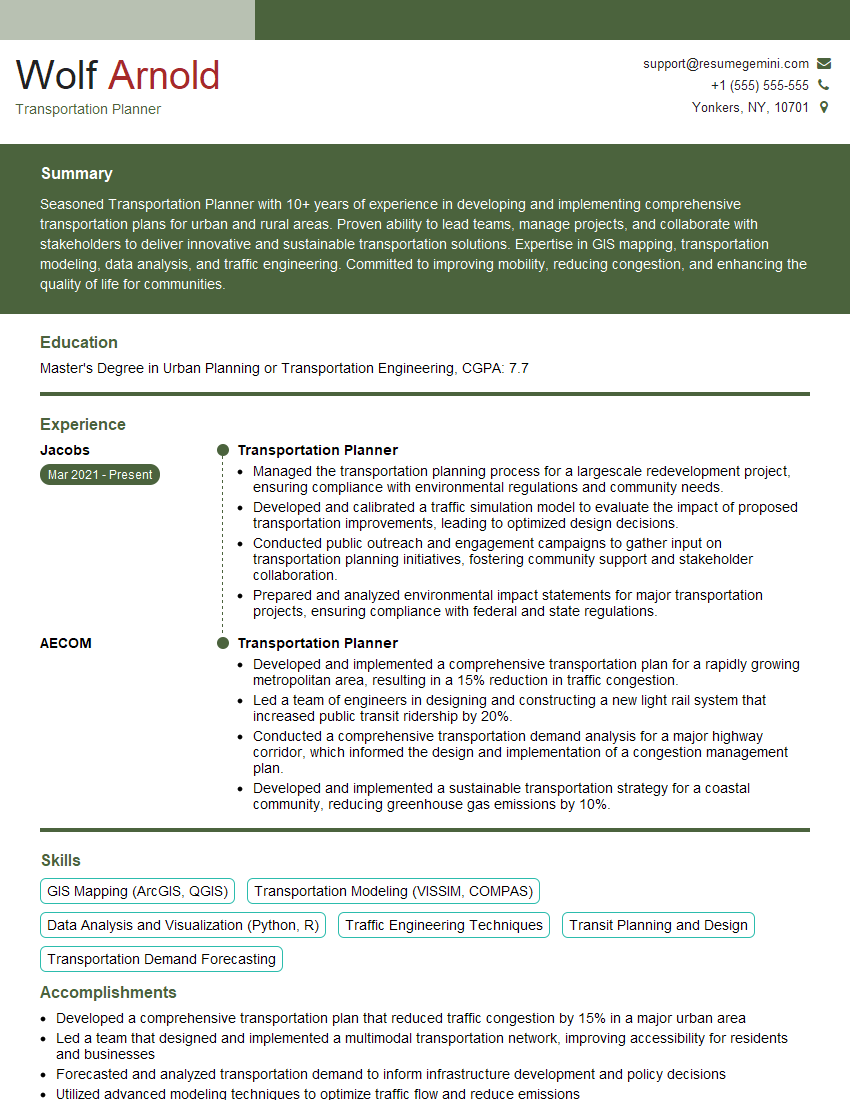
Mastering Light Rail Transit (LRT) Planning opens doors to a rewarding career in urban development and transportation engineering. A strong understanding of these key concepts will significantly enhance your interview performance and position you for success. To maximize your job prospects, it’s crucial to present your skills and experience effectively. Creating an ATS-friendly resume is key to getting your application noticed. We highly recommend using ResumeGemini to build a professional and compelling resume. ResumeGemini provides tools and examples tailored to help you craft a resume that highlights your LRT planning expertise. Examples of resumes tailored to Light Rail Transit (LRT) Planning are available to guide you.
Explore more articles
Users Rating of Our Blogs
Share Your Experience
We value your feedback! Please rate our content and share your thoughts (optional).
What Readers Say About Our Blog
To the interviewgemini.com Webmaster.
Very helpful and content specific questions to help prepare me for my interview!
Thank you
To the interviewgemini.com Webmaster.
This was kind of a unique content I found around the specialized skills. Very helpful questions and good detailed answers.
Very Helpful blog, thank you Interviewgemini team.