Interviews are more than just a Q&A session—they’re a chance to prove your worth. This blog dives into essential Maintenance of Microwave Antennas interview questions and expert tips to help you align your answers with what hiring managers are looking for. Start preparing to shine!
Questions Asked in Maintenance of Microwave Antennas Interview
Q 1. Explain the different types of microwave antennas and their applications.
Microwave antennas come in various types, each designed for specific applications. The choice depends on factors like frequency, bandwidth, gain, and the environment. Here are some key examples:
- Parabolic Antennas (Dish Antennas): These are the most common type, using a parabolic reflector to focus microwave signals. They offer high gain and directivity, making them ideal for long-distance point-to-point links, satellite communication, and terrestrial microwave systems. Think of them like a satellite TV dish, focusing the weak signal into a strong one.
- Horn Antennas: Simpler in design, horn antennas are used where a wider beamwidth is needed or where high gain isn’t crucial. They are often used as feed elements for larger antennas or in applications requiring a relatively wide radiation pattern. They’re like a megaphone for microwaves, spreading the signal more broadly.
- Helical Antennas: These antennas produce circularly polarized radiation, useful for satellite communication and situations where signal orientation is unpredictable. Their circular polarization allows them to receive signals even if the transmitting antenna is slightly misaligned.
- Microstrip Antennas: These are planar antennas etched onto a printed circuit board (PCB), suitable for compact applications like mobile devices and integrated circuits. While they generally have lower gain than larger antennas, their small size and ease of integration make them valuable.
- Reflector Antennas (other than parabolic): These include Cassegrain and Gregorian antennas which utilize multiple reflectors to achieve higher gain and better beam shaping. They are more complex but are used in high performance applications like deep-space communications.
The application dictates the antenna type. For instance, a long-haul microwave link between cities would use high-gain parabolic antennas, whereas a short-range wireless sensor network might employ smaller, lower-gain microstrip antennas.
Q 2. Describe the process of aligning a microwave antenna.
Aligning a microwave antenna is crucial for optimal signal strength and link quality. It’s a precise process involving several steps:
- Pre-alignment planning: This includes studying the site survey data to determine the ideal antenna placement and orientation. Factors like line-of-sight, obstructions, and Fresnel zone clearance are critical.
- Antenna mounting and initial positioning: The antenna is mounted securely on its mast or tower, ensuring it’s level and pointed in the general direction of the receiving antenna. Precise leveling is paramount.
- Using Alignment Tools: This can involve optical alignment tools (using lasers or collimation sights) to ensure the antennas are accurately aimed at each other. Some systems use sophisticated signal level indicators to help fine-tune the alignment. Professional equipment provides the greatest precision.
- Signal Optimization: Once roughly aligned, adjustments are made based on signal strength and quality. Signal level meters, spectrum analyzers, and network analyzers are used to monitor the signal and refine the antenna pointing until optimal signal parameters are obtained.
- Documentation and Testing: The final alignment is documented, including the exact azimuth and elevation angles. Comprehensive testing is performed to validate the link’s performance and ensure reliable communication.
I’ve personally used various alignment tools, including laser alignment systems and sophisticated signal analysis equipment. Precision is key – even minor misalignments can significantly impact performance. A misaligned antenna can lead to significant signal degradation or complete signal loss.
Q 3. How do you troubleshoot signal loss in a microwave link?
Troubleshooting signal loss in a microwave link requires a systematic approach. Here’s a step-by-step process:
- Check the obvious first: Ensure the equipment is powered on, and all cables are securely connected. This sounds basic, but it’s surprisingly often overlooked.
- Inspect the antennas: Look for physical damage, such as corrosion, loose connections, or misalignment. Environmental factors like wind or extreme weather can sometimes affect the antenna’s positioning or structural integrity.
- Verify signal levels: Use a spectrum analyzer or signal level meter to measure the signal strength at both ends of the link. A significant drop in signal level indicates a problem somewhere in the path.
- Check for interference: Microwave links can be susceptible to interference from other sources. A spectrum analyzer can pinpoint interfering signals. This interference might be caused by other microwave links, radar systems, or even atmospheric conditions.
- Investigate the transmission path: Look for any new obstacles that may have been erected since the link was established. Trees, buildings, or even atmospheric conditions (like heavy rain or fog) can cause signal attenuation.
- Examine the equipment: If the antenna and path are fine, test other equipment, including the microwave radio itself, for issues. Check for faulty components or errors within the system.
- Consult Technical Data: Refer to system documentation and specifications provided by the manufacturer. They often contain detailed troubleshooting procedures and parameters to check.
In one instance, I resolved a signal loss issue caused by a partially dislodged connector on one of the antennas. Another time, it was found to be caused by new high-rise buildings blocking the signal path.
Q 4. What are the common causes of microwave antenna malfunctions?
Several factors can cause microwave antenna malfunctions:
- Physical Damage: Wind, ice, lightning strikes, or accidental impacts can damage the antenna structure, reflector, or feed horn.
- Corrosion: Exposure to the elements can cause corrosion, particularly in coastal or humid environments. This can degrade the antenna’s performance and lead to signal loss.
- Misalignment: Over time, antennas can become misaligned due to wind, temperature changes, or settling of the supporting structure.
- Loose Connections: Poorly tightened connectors can lead to signal loss or intermittent operation.
- RF Interference: Nearby sources of RF interference can overwhelm the desired signal.
- Faulty Components: Issues with the antenna’s internal components, such as the feed horn or waveguides, can degrade performance.
- Environmental Factors: Heavy rainfall, fog, or snow can attenuate the microwave signal, although this doesn’t necessarily represent a malfunction of the antenna itself.
Regular inspection and preventative maintenance are crucial for identifying and mitigating these potential issues before they cause significant problems.
Q 5. Explain the importance of regular maintenance for microwave antennas.
Regular maintenance of microwave antennas is essential for ensuring reliable communication and preventing costly downtime. Neglecting maintenance can lead to signal degradation, service interruptions, and even complete system failure. The benefits include:
- Preventing Malfunctions: Regular inspections allow for early detection and repair of minor issues before they escalate into major problems.
- Maintaining Signal Quality: Proper maintenance ensures optimal signal strength and clarity, minimizing signal loss and interference.
- Extending Equipment Lifespan: By addressing issues promptly, the overall lifespan of the antenna and associated equipment is extended.
- Ensuring System Reliability: A well-maintained antenna system ensures the consistency and dependability of the communication link. This is especially important in critical applications where reliable communication is essential.
- Compliance with Regulations: Regular maintenance is often a requirement for meeting regulatory standards and compliance.
Think of it like car maintenance – regular servicing prevents major breakdowns and keeps your car running smoothly. The same is true for microwave antennas; preventative measures are far cheaper and less disruptive than emergency repairs.
Q 6. What safety precautions should be taken when working on microwave antennas?
Safety is paramount when working on microwave antennas. These are some key precautions:
- Lockout/Tagout Procedures: Always follow proper lockout/tagout procedures to prevent accidental energization of the system. This ensures the safety of personnel while working on the equipment.
- Personal Protective Equipment (PPE): Wear appropriate PPE, including safety harnesses, fall protection equipment, insulating gloves, and safety glasses. The height and potential for electrical hazards require extra precautions.
- High-Voltage Awareness: Microwave systems often operate at high voltages; therefore, thorough training and awareness of these dangers are essential.
- Weather Conditions: Never work on antennas during storms or high winds. Adverse weather can create hazardous conditions and increase the risk of accidents.
- Fall Protection: When working at heights, use appropriate fall protection equipment, including safety harnesses and lifelines. This is crucial to preventing serious injuries.
- RF Radiation Awareness: Be aware of potential RF radiation exposure and use appropriate shielding or safety measures if necessary. While the radiation levels at a given distance are usually safe, precautions should be taken in close proximity.
- Proper Training: Only trained and qualified personnel should work on microwave antennas. This ensures safe and efficient work practices.
I’ve always prioritized safety in my work, following strict procedures and using appropriate safety equipment. A safe work environment is not only vital for the well-being of the technicians, but also for the successful and timely completion of the maintenance tasks.
Q 7. Describe your experience with different types of antenna connectors.
My experience encompasses a wide range of antenna connectors, each with its own characteristics and applications. Some common types include:
- N-type connectors: These are robust and widely used for high-frequency applications, offering excellent performance and reliability. They are used in professional microwave links and equipment.
- SMA connectors: Smaller and more compact than N-type, SMA connectors are often preferred for smaller, portable equipment and applications where space is limited. They’re often used in test equipment.
- TNC connectors: Similar to N-type but with a threaded coupling, TNC connectors offer good performance and are often found in outdoor applications where a more secure connection is needed.
- BNC connectors: Bayonet Neill-Concelman connectors are commonly used for lower-frequency applications and are easier to connect and disconnect. Less robust and suitable for less demanding applications.
- Type 7-16 connectors: These have a smaller profile than N-Type but with good performance, and are a popular choice for some applications.
The choice of connector depends heavily on frequency, power handling, environmental conditions, and the size constraints of the application. I’ve encountered various situations where choosing the correct connector was critical to ensure optimal signal transfer and avoid costly failures.
Q 8. How do you diagnose and resolve problems related to antenna impedance mismatches?
Antenna impedance mismatch occurs when the impedance of the antenna doesn’t match the impedance of the transmission line, leading to signal reflections and reduced power transfer. Think of it like trying to pour water from a wide jug into a narrow-necked bottle – much of the water spills instead of going into the bottle. Diagnosing this involves using a Vector Network Analyzer (VNA). The VNA measures the reflection coefficient (S11), expressed in dB, which indicates the amount of signal reflected back. A perfect match is 0dB, while higher negative values indicate increased reflection.
To resolve a mismatch, we first pinpoint the source. Is it due to a faulty connector, damaged cable, or the antenna itself? We visually inspect connectors for damage and oxidation. We can also use a time-domain reflectometer (TDR) to identify cable faults. If the problem lies within the antenna, we might need to adjust its elements or replace it. Sometimes, adding a matching network (a circuit designed to match impedances) solves the issue.
For example, I once encountered a significant mismatch on a parabolic antenna. The VNA showed a high reflection coefficient. After careful inspection, we found a corroded connector. Replacing it immediately restored the proper impedance match, resulting in a significant improvement in signal strength.
Q 9. What tools and equipment are essential for microwave antenna maintenance?
Maintaining microwave antennas requires a specialized toolkit. Essential equipment includes:
- Vector Network Analyzer (VNA): For precise impedance measurements and antenna characterization.
- Spectrum Analyzer: To identify signal sources, interference, and antenna performance issues.
- Power Meter: To measure the transmitted and received power.
- Time Domain Reflectometer (TDR): To locate faults in coaxial cables.
- Antenna Alignment Tool: For precise alignment of the antenna.
- Cable and Connector Testing Equipment: To check for continuity, shorts, and open circuits.
- Insulation Resistance Tester (Megger): To assess the insulation integrity of the antenna and its supporting structure.
- Safety Equipment: Including fall protection, insulated tools, and proper personal protective equipment (PPE).
In addition to these tools, specialized software and documentation are crucial for interpreting measurements and ensuring compliance with safety and regulatory standards.
Q 10. Explain the concept of Fresnel zone clearance and its importance.
The Fresnel zone is the ellipsoidal volume of space around the direct path between a transmitting and receiving antenna. Maintaining Fresnel zone clearance is critical for minimizing signal diffraction and multipath interference. Imagine throwing a ball – a clear path is needed for a successful throw. Obstacles within the Fresnel zone act like a wall, blocking or distorting the signal.
The first Fresnel zone is the most important; obstructions in this area cause the greatest signal degradation. The size of the Fresnel zones depends on the frequency and distance between the antennas. We calculate the required clearance using formulas and software tools. Ensuring adequate clearance is vital for reliable communication. In practice, we use site surveys and obstacle analysis to verify that sufficient clearance is maintained.
I remember a project where a new building was constructed close to an existing microwave link. Calculations revealed that the building encroached on the Fresnel zone, leading to significant signal attenuation. We successfully mitigated this by adjusting antenna heights and relocating one of the antennas.
Q 11. How do you measure the gain and beamwidth of a microwave antenna?
Gain measures the antenna’s ability to focus transmitted power in a specific direction, while beamwidth is the angular width of the main lobe (the strongest part of the signal). Measuring these parameters involves using a calibrated antenna and a test range (ideally an anechoic chamber to minimize reflections).
We use a far-field measurement technique: the receiving antenna is placed far enough from the transmitting antenna (typically several times the antenna’s largest dimension) to ensure the signal is essentially plane waves. The received power is measured while varying the angle of the receiving antenna. The maximum received power determines the gain. The angles at which the power drops to half its maximum value determine the beamwidth (half-power beamwidth). We can also utilize specialized antenna measurement software to automate the process and provide precise results. Specialized antenna analyzers can also provide gain and beamwidth directly through automated processes.
For instance, in routine antenna maintenance, we routinely perform gain and beamwidth measurements to monitor performance and detect any degradation due to environmental factors or damage.
Q 12. Describe your experience with different types of antenna mounts.
I have extensive experience with various antenna mounts, including:
- Pole Mounts: Simple, cost-effective, suitable for smaller antennas.
- Rooftop Mounts: Designed for mounting on building rooftops, often incorporating tilt and azimuth adjustments.
- Tower Mounts: Used for larger antennas, offering precise adjustments and robust support for high winds.
- Wall Mounts: Attaching the antenna to a building wall, usually less flexible for adjustments.
- Lattice Tower Mounts: Used in environments where a free-standing tower or pole is appropriate.
The selection of the appropriate mount depends on factors such as antenna size, weight, wind loading, and site conditions. Proper installation and maintenance of antenna mounts are crucial for antenna stability and performance. A poorly installed mount can lead to antenna misalignment, signal degradation, and even structural damage.
Q 13. What are the effects of weather conditions on microwave antenna performance?
Weather conditions significantly impact microwave antenna performance. Heavy rain, snow, and ice can attenuate the signal by absorbing or scattering it. This is particularly pronounced at higher frequencies. Strong winds can cause antenna misalignment, resulting in signal degradation or loss. High humidity can increase the risk of corrosion on antenna components and connectors, affecting impedance matching and causing signal degradation over time. Extreme temperatures, both high and low, can affect the physical properties of the antenna materials, altering their electrical characteristics.
Regular inspections and maintenance are crucial to mitigate these effects. This includes checking for ice accumulation, corrosion, and loose connections. Weatherproof materials and protective coatings are used to enhance the longevity of the antenna and reduce the impact of weather. It’s also important to consider environmental factors during the design phase to select appropriate antenna materials and mounts for specific weather conditions.
Q 14. How do you identify and resolve problems related to antenna polarization?
Antenna polarization refers to the orientation of the electric field vector of the electromagnetic wave. Common polarizations are linear (vertical or horizontal) and circular (left-hand or right-hand). Mismatched polarization between transmitting and receiving antennas significantly reduces signal strength. Imagine trying to fit a square peg into a round hole.
We identify polarization problems by using a polarization analyzer or by carefully measuring the signal strength while rotating the receiving antenna. If the signal strength varies significantly during rotation, a polarization mismatch is likely. To resolve the issue, we can adjust the polarization of one or both antennas to match. This may involve physically rotating the antenna or using polarization correction devices. Accurate alignment is paramount for optimum signal strength and quality.
For example, I once encountered a significant signal loss due to a polarization mismatch at a point-to-point link. After verifying the polarization using a polarization analyzer, we precisely adjusted the receiving antenna, restoring the link to full operational capability.
Q 15. Explain your experience with microwave antenna testing equipment.
My experience with microwave antenna testing equipment encompasses a wide range of instruments, from basic signal generators and spectrum analyzers to sophisticated network analyzers and antenna pattern measurement systems. I’m proficient in using network analyzers to measure return loss (reflection coefficient), insertion loss, and gain across the operational frequency band of the antenna. This allows me to pinpoint any impedance mismatches or other performance issues. Spectrum analyzers are crucial for identifying unwanted signals or interference that might be affecting the antenna’s performance. Finally, antenna pattern measurement systems, which often involve a rotating antenna mount and a receiving antenna, are essential for verifying that the antenna’s radiation pattern meets specifications and identifying any anomalies such as sidelobe levels or beam pointing errors. For instance, during a recent project, we used an Anritsu MS276C spectrum analyzer to identify a narrowband interference source affecting a 2.4 GHz antenna, and subsequently resolved the issue through careful frequency planning.
Career Expert Tips:
- Ace those interviews! Prepare effectively by reviewing the Top 50 Most Common Interview Questions on ResumeGemini.
- Navigate your job search with confidence! Explore a wide range of Career Tips on ResumeGemini. Learn about common challenges and recommendations to overcome them.
- Craft the perfect resume! Master the Art of Resume Writing with ResumeGemini’s guide. Showcase your unique qualifications and achievements effectively.
- Don’t miss out on holiday savings! Build your dream resume with ResumeGemini’s ATS optimized templates.
Q 16. Describe your experience with preventative maintenance procedures for microwave antennas.
Preventative maintenance for microwave antennas is critical for ensuring reliable performance and minimizing downtime. My experience includes a structured approach focusing on several key areas. This begins with regular visual inspections, checking for physical damage such as corrosion, loose connections, bird nests, or ice build-up. I meticulously check waveguide integrity, ensuring proper sealing and eliminating leaks that could degrade performance. Regular tightening of all bolts and connections is crucial to maintain electrical and mechanical stability. Furthermore, I conduct thorough checks of the grounding system to ensure proper lightning protection. Finally, I monitor environmental factors like temperature and humidity, which can impact antenna performance. For example, we implement a schedule of quarterly inspections for all antennas in a particular deployment, including thermal imaging to detect any early signs of overheating. This approach has significantly reduced the number of unexpected failures and outages.
Q 17. How do you interpret microwave antenna performance data?
Interpreting microwave antenna performance data involves analyzing several key parameters. Gain is a fundamental metric, indicating how well the antenna amplifies the signal. Return loss measures how well the antenna is matched to the transmission line, with lower return loss indicating better matching and less power reflected back. Sidelobe levels quantify the power radiated in directions other than the main beam, which can lead to interference. Beamwidth determines the antenna’s angular coverage. I use specialized software to analyze data from network analyzers and antenna pattern measurements, visually inspecting the data for anomalies. For instance, unusually high sidelobe levels might indicate damage to the reflector surface or an alignment issue. A significant drop in gain could signal damage to the antenna elements or problems with the feed system. The interpretation process is akin to a detective investigation, where each data point provides a clue to the overall antenna health and performance.
Q 18. What are the common causes of interference in microwave links?
Interference in microwave links can stem from various sources. Other microwave links operating on nearby frequencies are a common culprit, especially if there’s insufficient frequency separation or inadequate antenna isolation. Non-microwave sources, such as radar systems, industrial equipment, and even some consumer electronics, can also cause interference. Atmospheric conditions like multipath propagation and rain fade can significantly degrade signal quality and cause interference. Physical obstructions, such as trees or buildings, can block the signal path or cause reflections. Finally, faulty equipment within the microwave link itself, such as damaged antennas or connectors, can introduce interference. Think of it like trying to have a clear conversation in a crowded room – unwanted signals are like people talking over each other.
Q 19. How do you mitigate the effects of multipath propagation on microwave links?
Multipath propagation, where the signal takes multiple paths to reach the receiver, causes signal distortion and fading. Several techniques can mitigate its effects. Space diversity, using two antennas spaced apart to receive signals, helps because it’s unlikely that both antennas will experience deep fades simultaneously. Frequency diversity uses multiple frequencies to transmit the same data; if one frequency suffers from multipath fading, another may be unaffected. Adaptive equalization is a signal processing technique that compensates for the distortion caused by multipath. Careful site planning, choosing locations with minimal multipath interference, plays a crucial role. For example, strategically positioning antennas to avoid reflections from buildings or terrain features can reduce the severity of multipath. Imagine trying to hear someone speaking across a lake: multiple reflections from the water’s surface will distort the sound, but moving closer or choosing a different angle can improve clarity.
Q 20. Describe your experience with different types of microwave antenna reflectors.
I have experience with several types of microwave antenna reflectors, each with its own characteristics and applications. Parabolic reflectors are the most common, focusing the signal into a narrow beam. Cassegrain reflectors use a subreflector to focus the signal onto the main reflector, allowing for a more compact design. Horn antennas provide a good compromise between gain and beamwidth. Other types include offset parabolic reflectors, which reduce blockage of the feed, and phased array antennas that can steer the beam electronically. The choice of reflector depends on factors such as required gain, beamwidth, frequency, and size constraints. For example, a large parabolic reflector is typically used in long-distance point-to-point links requiring high gain, while a horn antenna might be preferred in applications where a wider beam is needed or space is limited.
Q 21. How do you perform a site survey for a microwave antenna installation?
A site survey for microwave antenna installation is crucial for ensuring optimal performance and reliability. It begins with a thorough analysis of the proposed locations for both the transmitting and receiving antennas. This involves identifying potential obstructions, such as buildings, trees, or hills, that might block the signal path. The survey must also consider the Fresnel zone, which is the area around the direct line of sight that must be clear for optimal signal propagation. Detailed measurements of antenna heights and distances are made to ensure adequate clearance and to calculate the required antenna gain. Radio frequency (RF) propagation modeling software is often used to predict signal strength and potential interference. Furthermore, the survey assesses environmental conditions such as rainfall, temperature extremes, and wind loading to ensure the antenna can withstand the elements. The survey is essentially a detailed plan to avoid future signal problems. For example, a recent site survey revealed that a proposed antenna location had insufficient Fresnel zone clearance due to tree growth, so we had to adjust the antenna height and undertake some tree trimming to make the link viable.
Q 22. Explain your experience with different types of waveguide components.
My experience encompasses a wide range of waveguide components, crucial for guiding microwave signals in antenna systems. These components are the arteries of the system, ensuring efficient signal transmission. I’ve worked extensively with:
- Rectangular Waveguides: The most common type, used for their standardized dimensions and predictable performance. I’ve handled various sizes, understanding the importance of matching impedance for optimal power transfer. For instance, I once diagnosed a signal attenuation problem in a long-distance link by identifying a mismatch between two waveguide sections of different sizes.
- Circular Waveguides: Used in specific applications requiring circular polarization or better handling of higher-order modes. I’ve maintained systems employing these, including specialized testing and cleaning procedures to maintain signal integrity. One instance involved repairing a damaged section in a satellite ground station using specialized circular waveguide tooling.
- Waveguide Bends, Twists, and Transitions: These components introduce signal losses if not properly designed and installed. My experience includes careful inspection for any signs of damage or corrosion, and implementing precise alignment techniques to minimize losses. We once had a signal degradation issue traced to a slightly misaligned waveguide bend, easily rectified after a precise readjustment.
- Waveguide Filters and Couplers: Essential for signal filtering and splitting/combining. I understand the importance of their correct operation for system performance, and am experienced in troubleshooting issues related to their functionality. A memorable case involved isolating a faulty coupler that was causing spurious signal interference using a network analyzer.
Understanding the nuances of each component type, their limitations and potential failure points, is paramount for effective antenna maintenance.
Q 23. What are the key performance indicators (KPIs) for microwave antenna systems?
Key Performance Indicators (KPIs) for microwave antenna systems focus on signal quality, reliability, and overall system performance. These include:
- Gain (dB): Measures the antenna’s ability to amplify the signal. A drop in gain signals potential problems like misalignment or component degradation.
- Return Loss (dB): Indicates the amount of signal reflected back from the antenna. High return loss signifies impedance mismatches, requiring immediate attention.
- VSWR (Voltage Standing Wave Ratio): Closely related to return loss, it quantifies impedance matching. A high VSWR indicates signal reflections and power loss.
- Axial Ratio (dB): Measures the polarization purity of the signal. Deviation from the ideal value indicates polarization problems impacting signal quality.
- Beamwidth (degrees): Determines the antenna’s coverage area. Changes in beamwidth might be caused by physical damage or environmental factors.
- System Availability (%): Tracks the percentage of time the system is operational. Downtime directly impacts service quality and needs thorough investigation.
- Signal-to-Noise Ratio (SNR) (dB): Represents the ratio of signal power to noise power. Low SNR can result in poor signal quality.
- Bit Error Rate (BER): Measures the rate of errors in digital communication. A high BER signifies significant signal impairments.
Regular monitoring of these KPIs is crucial for proactive maintenance and preventing costly outages.
Q 24. Describe your experience with troubleshooting RF cable issues.
Troubleshooting RF cable issues requires a systematic approach, combining visual inspection with specialized testing equipment. My experience includes:
- Visual Inspection: Identifying physical damage like kinks, cuts, or corrosion is the first step. I’ve often found issues like water ingress or rodent damage that impacted signal quality.
- Continuity Testing: Using a Time Domain Reflectometer (TDR) helps pinpoint breaks, shorts, or impedance mismatches within the cable. I’ve used this extensively to locate precise points of failure in long cable runs.
- Signal Level Measurements: Using a spectrum analyzer or power meter allows precise measurement of signal strength at various points along the cable run. A significant drop indicates a problem area.
- Impedance Matching: Ensuring proper impedance matching between the cable, connectors, and equipment is crucial. Mismatches cause reflections and power loss. I regularly check connector integrity and replace damaged components.
I’ve effectively resolved numerous cable issues using this methodical approach, minimizing downtime and ensuring optimal system performance. For example, I once traced a persistent signal degradation problem to a corroded connector hidden within a junction box – a problem only detected through a combination of visual inspection and signal level measurements.
Q 25. How do you ensure the structural integrity of a microwave antenna tower?
Ensuring the structural integrity of a microwave antenna tower is paramount for both safety and system reliability. My approach involves:
- Regular Inspections: Visual inspections are crucial to identify any signs of rust, corrosion, damage to the structure, or looseness of bolts and connections. Detailed reports with photographic evidence are essential.
- Load Calculations and Wind Analysis: Understanding the tower’s load-bearing capacity in various weather conditions is critical. I collaborate with structural engineers to ensure the tower can withstand extreme weather events.
- Foundation Check: The tower’s foundation needs regular assessment to ensure stability. This involves looking for cracks, settlement, or erosion.
- Grounding System Verification: A robust grounding system is critical for lightning protection. I regularly test grounding resistance to ensure its effectiveness.
- Climbing and Rigging Safety: All climbing and maintenance activities must adhere to strict safety protocols, including proper personal protective equipment (PPE) and trained personnel.
Proactive structural maintenance prevents catastrophic failures, protects personnel, and guarantees uninterrupted service. Neglecting this aspect can lead to significant financial losses and safety hazards.
Q 26. Explain your experience with different types of microwave antenna feed systems.
Microwave antenna feed systems are the crucial link between the antenna and the radio equipment. My experience includes various types:
- Waveguide Feeds: Employing waveguides to transmit signals to the antenna element. I’m proficient in aligning and maintaining waveguide components for optimal signal transmission.
- Coaxial Cable Feeds: Using coaxial cables for signal transmission, often used for smaller antennas and shorter distances. I’ve handled various coaxial cable types, ensuring proper impedance matching and minimizing signal loss.
- Horn Antennas: Radiating elements integrated directly into the feed system. I’ve experience with different horn types (e.g., pyramidal, conical), understanding their radiation patterns and performance characteristics.
- Hybrid Feed Systems: Combining different feed types for specific applications, often required for increased performance or to support multiple frequency bands. Maintaining these systems requires a deep understanding of the interaction between different components.
Selecting the appropriate feed system for a given application is crucial. I consider factors like frequency, bandwidth, polarization, and system size when making recommendations and troubleshooting issues. The choice of feed system significantly impacts overall system performance and requires specialized knowledge for proper maintenance.
Q 27. How do you document and report your maintenance activities?
Documentation and reporting are vital for tracking maintenance activities and ensuring accountability. My process involves:
- Preventive Maintenance Schedules: Detailed schedules outlining routine inspections, cleaning, and testing procedures. These schedules are customized based on equipment type and operational conditions.
- Detailed Work Orders: For each maintenance task, a work order is generated, documenting the problem, actions taken, parts replaced, and results. This includes timestamps and signatures.
- Digital Asset Management System: Utilizing a system to store all relevant documentation, including schematics, maintenance logs, test results, and photographs. This facilitates quick access to historical data.
- Regular Reports: Generating reports summarizing maintenance activities, highlighting any significant issues, and providing recommendations for future improvements. These reports are shared with relevant stakeholders.
Thorough documentation ensures traceability, aids in troubleshooting future issues, and provides valuable insights for long-term system optimization.
Q 28. Describe a challenging microwave antenna maintenance issue you faced and how you resolved it.
One challenging issue involved a significant degradation in signal quality on a long-haul microwave link. Initial troubleshooting pointed to potential issues within the antenna system itself. The problem was intermittent, making diagnosis difficult. After eliminating cable and waveguide issues, we suspected a problem with the antenna’s reflector surface.
Resolution: We utilized specialized thermal imaging equipment to scan the reflector surface during operation. This revealed localized heating in a specific section, indicative of a manufacturing defect causing signal distortion. A detailed inspection confirmed a small imperfection in the reflector’s curvature. The solution was to carefully realign the affected section of the reflector using precision adjustment mechanisms, followed by thorough testing to verify signal quality restoration. This involved extensive use of sophisticated test equipment like a network analyzer and a spectrum analyzer to accurately measure the before and after performance. The successful resolution avoided a costly replacement and ensured the continued reliable operation of the critical link.
Key Topics to Learn for Maintenance of Microwave Antennas Interview
- Antenna Alignment and Adjustment: Understanding principles of boresighting, azimuth and elevation adjustments, and the use of specialized tools for precise alignment. Practical application includes troubleshooting signal loss due to misalignment and performing routine preventative maintenance.
- RF Signal Testing and Analysis: Mastering the use of spectrum analyzers, power meters, and other RF test equipment to diagnose signal strength, quality, and identify potential problems. Practical application includes identifying sources of interference and evaluating the performance of antenna systems.
- Troubleshooting Common Antenna Issues: Developing a systematic approach to diagnosing and resolving problems such as water ingress, corrosion, loose connections, and RF leakage. Practical application includes understanding the impact of environmental factors on antenna performance and implementing effective repair strategies.
- Understanding Antenna Types and Technologies: Familiarity with various antenna types (e.g., parabolic, horn, waveguide) and technologies (e.g., polarization, frequency bands). Practical application includes selecting the appropriate antenna for a specific application and understanding their limitations.
- Safety Procedures and Regulations: Knowledge of safety protocols related to working at heights, handling high-power RF signals, and following industry best practices. Practical application includes prioritizing safety in all maintenance activities and adhering to relevant regulations.
- Preventive Maintenance Schedules and Procedures: Developing and implementing routine inspection and maintenance schedules to ensure optimal antenna performance and longevity. Practical application includes creating and documenting maintenance logs and reporting on the overall health of antenna systems.
Next Steps
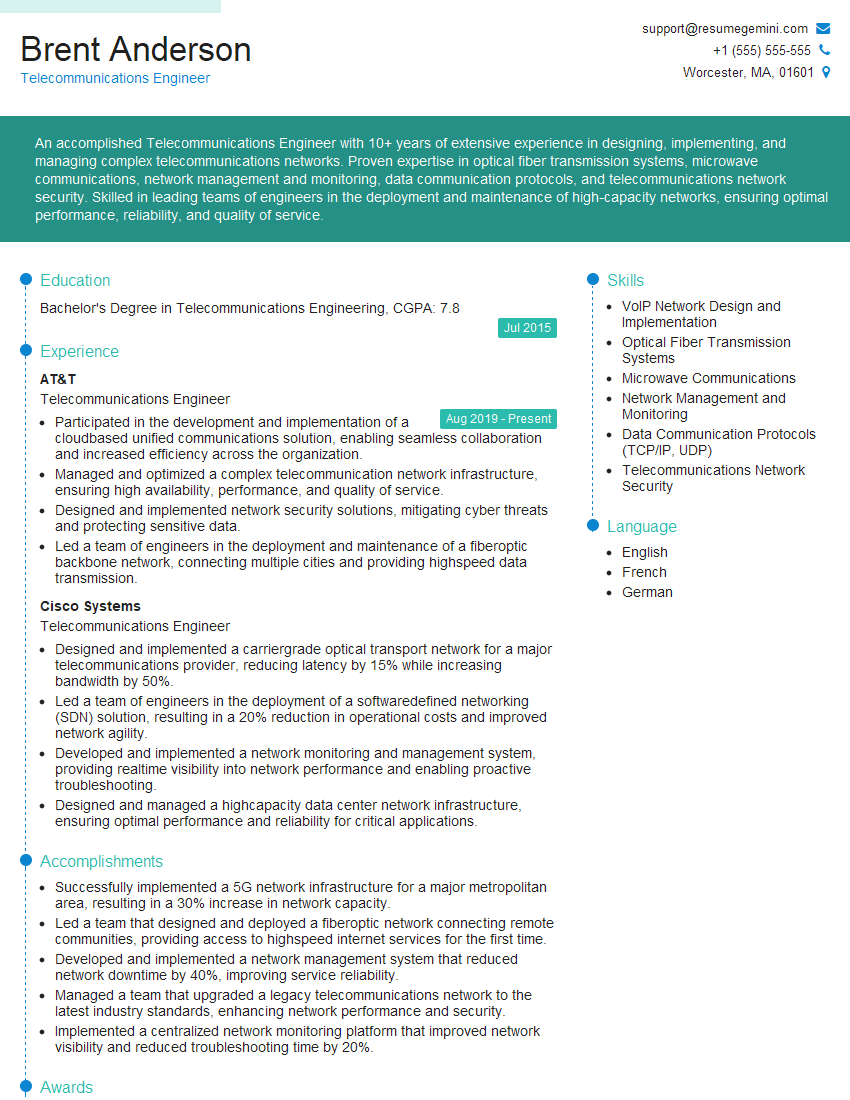
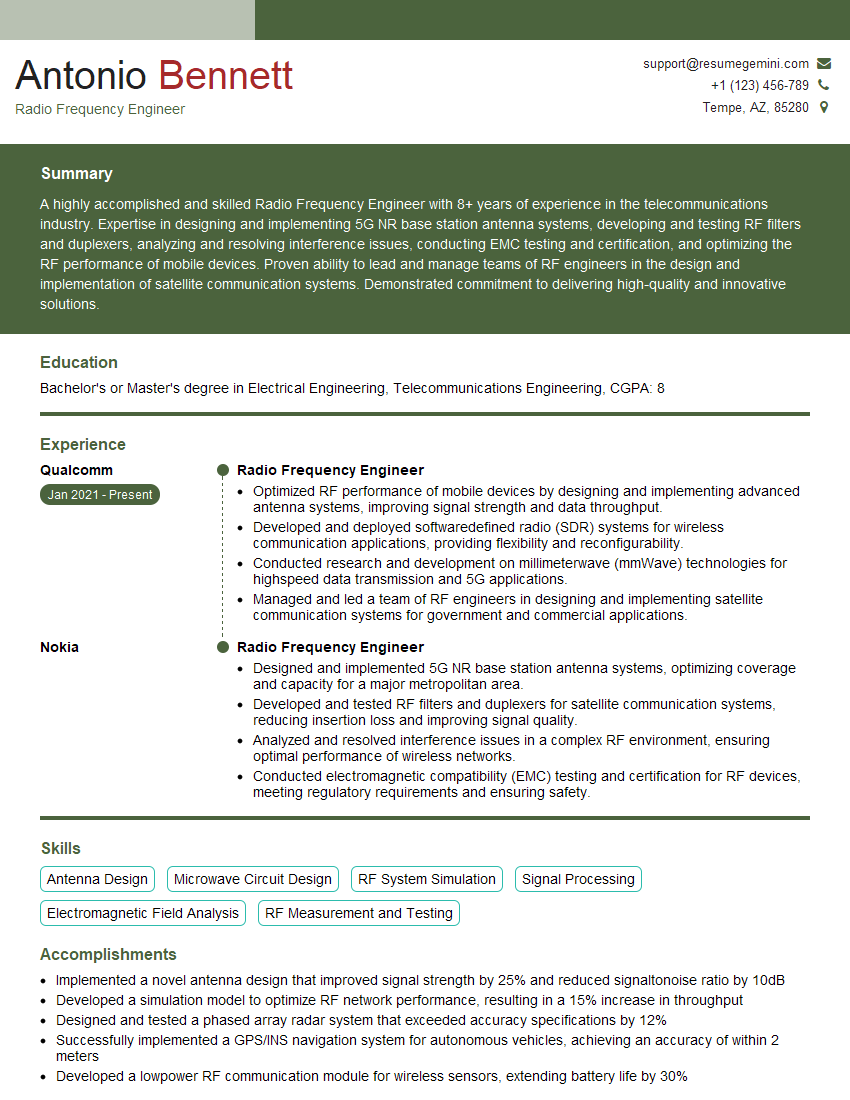
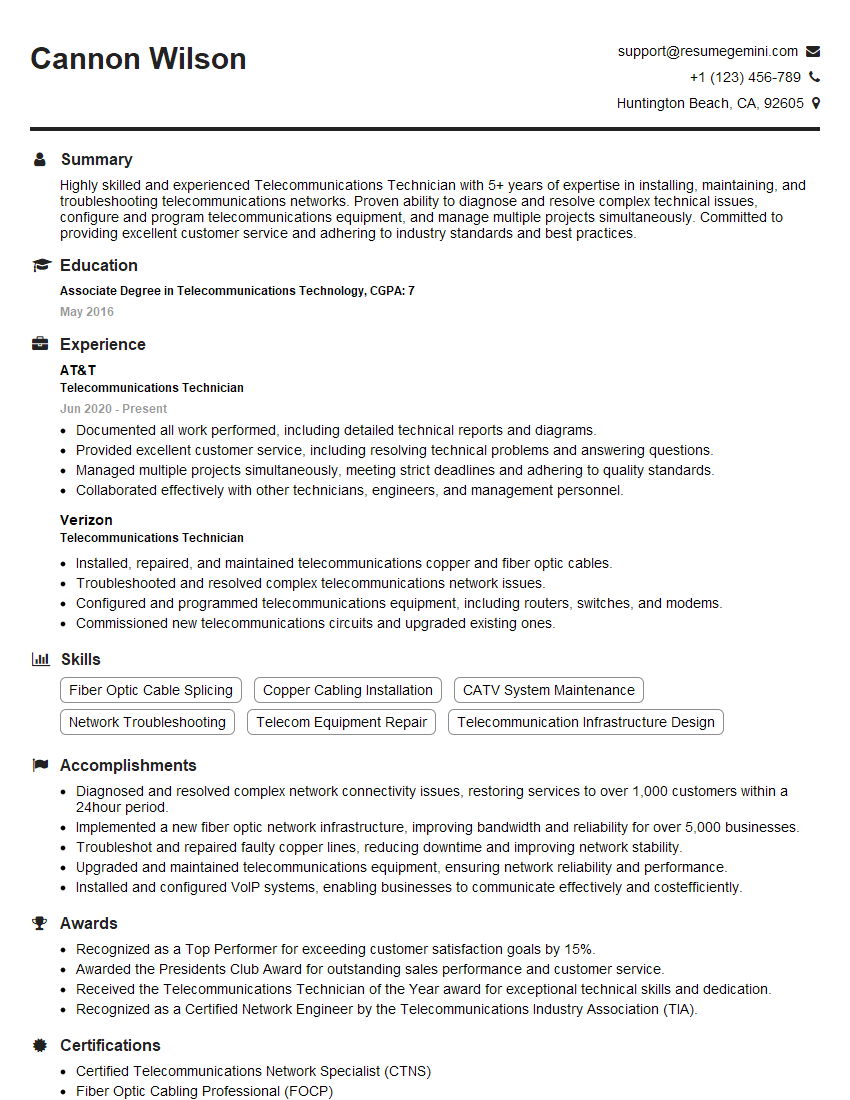
Mastering the maintenance of microwave antennas is crucial for career advancement in the telecommunications and related industries. Proficiency in this area demonstrates valuable technical skills and a commitment to operational efficiency. To significantly increase your job prospects, invest time in creating an ATS-friendly resume that highlights your expertise. ResumeGemini is a trusted resource that can help you build a professional and impactful resume, showcasing your skills effectively. Examples of resumes tailored to Maintenance of Microwave Antennas are available within ResumeGemini to help guide your resume creation process.

Explore more articles
Users Rating of Our Blogs
Share Your Experience
We value your feedback! Please rate our content and share your thoughts (optional).
What Readers Say About Our Blog
To the interviewgemini.com Webmaster.
Very helpful and content specific questions to help prepare me for my interview!
Thank you
To the interviewgemini.com Webmaster.
This was kind of a unique content I found around the specialized skills. Very helpful questions and good detailed answers.
Very Helpful blog, thank you Interviewgemini team.