Every successful interview starts with knowing what to expect. In this blog, we’ll take you through the top Performing statistical analysis using specialized software interview questions, breaking them down with expert tips to help you deliver impactful answers. Step into your next interview fully prepared and ready to succeed.
Questions Asked in Performing statistical analysis using specialized software Interview
Q 1. Explain the difference between Type I and Type II errors.
Type I and Type II errors are two types of errors that can occur in statistical hypothesis testing. Think of it like a courtroom trial: we’re trying to determine if the defendant is guilty (our hypothesis).
A Type I error, also known as a false positive, occurs when we reject the null hypothesis (the defendant is innocent) when it is actually true. In simpler terms, we’re saying the defendant is guilty when they’re actually innocent. The probability of making a Type I error is denoted by alpha (α), often set at 0.05 (5%).
A Type II error, also known as a false negative, occurs when we fail to reject the null hypothesis when it is actually false. We’re saying the defendant is innocent when they’re actually guilty. The probability of making a Type II error is denoted by beta (β). The power of a test (1-β) is the probability of correctly rejecting a false null hypothesis.
Example: Imagine testing a new drug. A Type I error would be concluding the drug is effective when it’s not. A Type II error would be concluding the drug is ineffective when it actually is effective.
Q 2. What are the assumptions of linear regression?
Linear regression assumes several key conditions for its results to be valid and reliable. Violating these assumptions can lead to inaccurate or misleading conclusions.
- Linearity: The relationship between the independent and dependent variables should be linear. A scatter plot can help visualize this. If the relationship is clearly non-linear, transformations might be needed (e.g., log transformation).
- Independence of errors: The errors (residuals) should be independent of each other. Autocorrelation (correlation between consecutive errors) violates this assumption and often occurs in time-series data. Techniques like Durbin-Watson test can detect this.
- Homoscedasticity (constant variance): The variance of the errors should be constant across all levels of the independent variable. A plot of residuals versus fitted values can reveal heteroscedasticity (non-constant variance), which can be addressed through transformations or weighted least squares.
- Normality of errors: The errors should be normally distributed. A histogram or Q-Q plot of the residuals can assess normality. While minor deviations are often tolerable, severe departures can affect the reliability of p-values and confidence intervals.
- No multicollinearity: In multiple linear regression, the independent variables should not be highly correlated with each other. High multicollinearity can inflate standard errors and make it difficult to interpret the individual effects of predictors. Variance Inflation Factor (VIF) is used to detect multicollinearity.
Failing to meet these assumptions can lead to inaccurate parameter estimates, unreliable p-values, and flawed conclusions. Diagnostic plots and statistical tests are crucial for assessing these assumptions.
Q 3. How do you handle missing data in a dataset?
Missing data is a common problem in datasets. How you handle it significantly impacts the results of your analysis. The best approach depends on the nature of the missing data (missing completely at random (MCAR), missing at random (MAR), or missing not at random (MNAR)) and the amount of missing data.
- Deletion methods:
- Listwise deletion (complete case analysis): Removes all rows with any missing values. Simple but can lead to significant loss of information if many data points are missing.
- Pairwise deletion: Uses available data for each analysis. Can lead to inconsistencies if different pairs of variables have different missing data patterns.
- Imputation methods:
- Mean/median/mode imputation: Replaces missing values with the mean, median, or mode of the available data. Simple but can underestimate variability and bias results.
- Regression imputation: Predicts missing values using a regression model based on other variables. Better than simple imputation but assumes a linear relationship.
- Multiple imputation: Creates multiple plausible imputed datasets, analyzes each, and then combines the results. A more sophisticated approach that accounts for uncertainty in the imputed values.
Example: If we’re analyzing customer survey data and some responses are missing, imputation might be preferable to listwise deletion if a lot of data would be lost. The choice of imputation method would depend on the nature of the missing data and the characteristics of the other variables.
Q 4. Describe different methods for outlier detection.
Outliers are data points that significantly deviate from the rest of the data. They can be caused by errors in data collection, measurement errors, or genuinely unusual observations. Identifying and handling outliers is important because they can heavily influence statistical analyses.
- Box plot: Visually identifies outliers as points outside the whiskers (typically 1.5 times the interquartile range from the quartiles).
- Scatter plots: Useful for visually identifying outliers in bivariate data.
- Z-scores: Data points with absolute Z-scores above a certain threshold (e.g., 3) are often considered outliers. A Z-score indicates how many standard deviations a data point is from the mean.
- Cook’s distance (regression): In regression analysis, Cook’s distance measures the influence of each data point on the regression coefficients. High Cook’s distance suggests an influential outlier.
- DBSCAN (density-based): A clustering algorithm that can identify outliers as points not belonging to any cluster.
Handling outliers: The approach depends on the context. Outliers can be removed, transformed (e.g., winsorizing or using robust methods), or kept if they represent genuine data points.
Example: In a study on income levels, a single individual reporting a million-dollar income might be an outlier compared to the rest of the sample.
Q 5. Explain the concept of p-values and their interpretation.
The p-value is a probability value that indicates the likelihood of obtaining results as extreme as or more extreme than those observed, assuming the null hypothesis is true. It does not measure the probability that the null hypothesis is true.
Interpretation:
- A small p-value (typically less than a significance level, often 0.05) provides evidence against the null hypothesis, suggesting that it might be false. This means the observed results are unlikely to have occurred by chance alone if the null hypothesis were true.
- A large p-value does not provide sufficient evidence to reject the null hypothesis. It doesn’t mean the null hypothesis is true, just that there isn’t enough evidence to reject it.
Example: If we’re testing whether a new teaching method improves student scores and obtain a p-value of 0.02, we would reject the null hypothesis (the method doesn’t improve scores) at the 0.05 significance level, suggesting there’s evidence that the new method is effective.
Important Note: P-values should be interpreted in the context of the research question, study design, and other relevant factors. A low p-value doesn’t automatically mean the finding is practically significant or important.
Q 6. What is the difference between correlation and causation?
Correlation and causation are often confused, but they are distinct concepts.
Correlation refers to a statistical association between two variables. If two variables are correlated, changes in one are associated with changes in the other. Correlation can be positive (both increase together), negative (one increases as the other decreases), or zero (no association).
Causation implies that one variable directly influences or causes a change in another. A causal relationship demonstrates a cause-and-effect relationship.
Key difference: Correlation does not imply causation. Just because two variables are correlated doesn’t mean one causes the other. There could be a third, unobserved variable (a confounder) influencing both.
Example: Ice cream sales and crime rates are often positively correlated. This doesn’t mean ice cream causes crime or vice-versa; a third variable like temperature likely influences both.
To establish causation, more rigorous methods like randomized controlled trials are needed to control for confounding variables.
Q 7. How do you choose the appropriate statistical test for a given dataset?
Choosing the appropriate statistical test depends on several factors:
- Research question: What are you trying to investigate? (e.g., comparing means, testing associations, examining proportions).
- Type of data: Is your data continuous, categorical (nominal or ordinal)?
- Number of groups: Are you comparing two groups or more?
- Assumptions of the test: Does your data meet the assumptions of the test (e.g., normality, independence)?
Examples:
- Comparing means of two independent groups: Independent samples t-test
- Comparing means of more than two independent groups: ANOVA
- Comparing means of two related groups (paired data): Paired samples t-test
- Testing association between two categorical variables: Chi-square test
- Testing association between two continuous variables: Pearson correlation (if data meets assumptions)
Statistical software packages often have guides or decision trees to help select the appropriate test based on the data characteristics and research question.
It’s crucial to carefully consider the assumptions of each test and check if they are met before interpreting the results.
Q 8. Explain the central limit theorem.
The Central Limit Theorem (CLT) is a fundamental concept in statistics. It states that the distribution of the sample means of a large number of independent, identically distributed (i.i.d.) random variables, regardless of the shape of their original population distribution, will approximate a normal distribution. This is true even if the original population is not normally distributed, provided the sample size is sufficiently large (generally considered to be at least 30).
Imagine you’re measuring the height of sunflowers in a field. The individual sunflower heights might have a skewed distribution – maybe there are a lot of short sunflowers and a few very tall ones. However, if you repeatedly take samples of, say, 30 sunflowers and calculate the average height for each sample, the distribution of these average heights will be approximately normal. This normality allows us to use the familiar properties of the normal distribution to make inferences about the population mean height.
The CLT is crucial because it allows us to use simpler, normal-based statistical methods even when the underlying data aren’t normally distributed. This is a significant simplification that facilitates numerous statistical tests and estimations.
Q 9. What is the difference between parametric and non-parametric tests?
Parametric and non-parametric tests differ fundamentally in their assumptions about the data. Parametric tests assume that the data are drawn from a specific probability distribution (often the normal distribution), and they make inferences based on the parameters of this distribution (like the mean and standard deviation). Non-parametric tests, on the other hand, are distribution-free; they make fewer assumptions about the underlying data distribution.
- Parametric tests: These are generally more powerful (i.e., more likely to detect a real effect if one exists) when their assumptions are met. Examples include t-tests, ANOVA, and linear regression. However, their power decreases significantly if the assumptions are violated.
- Non-parametric tests: These tests are robust to violations of distributional assumptions. They are less powerful than parametric tests when the assumptions of parametric tests are met but provide more reliable results when assumptions are not met. Examples include the Mann-Whitney U test, the Wilcoxon signed-rank test, and the Kruskal-Wallis test.
Choosing between parametric and non-parametric tests depends on the nature of your data and the strength of your assumptions. If you have normally distributed data and meet other assumptions (e.g., independence, homogeneity of variances), parametric tests are preferred. If your data are not normally distributed or violate other assumptions, non-parametric tests are a safer choice.
Q 10. Describe your experience with statistical software packages (e.g., R, SAS, SPSS, Python).
I have extensive experience with several statistical software packages, including R, SAS, and Python (with libraries like SciPy and Statsmodels). In my previous role, I predominantly used R for complex data analysis and visualization, leveraging its rich ecosystem of packages like ggplot2 for creating publication-quality graphics and dplyr for data manipulation. I’ve also used SAS for large-scale data management and analysis, particularly appreciating its robust procedures for handling missing data and its capabilities for complex experimental designs. Python, with its versatile libraries, has been invaluable for data preprocessing, exploratory analysis, and building machine learning models integrated with statistical inference.
For example, in one project, I used R to perform survival analysis on a large clinical trial dataset, utilizing the survival package. This involved model building, hazard ratio estimations, and visualization of survival curves. In another project, I employed Python’s SciPy library to conduct statistical tests on a dataset with non-normal distribution, selecting non-parametric tests based on the data characteristics.
Q 11. How do you perform hypothesis testing?
Hypothesis testing is a crucial statistical method used to make inferences about a population based on a sample. It involves formulating a null hypothesis (H0), which represents the status quo, and an alternative hypothesis (H1), which represents the effect we’re trying to detect. We then collect data, perform a statistical test, and calculate a p-value.
The p-value represents the probability of observing the obtained data (or more extreme data) if the null hypothesis were true. If the p-value is below a predetermined significance level (alpha, typically 0.05), we reject the null hypothesis in favor of the alternative hypothesis. If the p-value is above alpha, we fail to reject the null hypothesis.
Here’s a step-by-step approach:
- State the hypotheses: Define H0 and H1 clearly.
- Set the significance level (alpha): This determines the threshold for rejecting H0.
- Choose the appropriate statistical test: This depends on the type of data and research question (e.g., t-test, ANOVA, chi-square test).
- Collect and analyze data: Perform the chosen statistical test using software.
- Calculate the p-value: Determine the probability of observing the results if H0 is true.
- Make a decision: Reject or fail to reject H0 based on the p-value and alpha.
- Interpret the results: Explain the findings in the context of the research question.
It’s important to note that failing to reject the null hypothesis doesn’t necessarily mean the null hypothesis is true; it simply means we don’t have enough evidence to reject it.
Q 12. Explain your understanding of confidence intervals.
A confidence interval provides a range of plausible values for a population parameter (e.g., the population mean or proportion) based on a sample of data. It’s accompanied by a confidence level, which represents the probability that the interval contains the true population parameter. For example, a 95% confidence interval means that if we were to repeat the sampling process many times, 95% of the resulting confidence intervals would contain the true population parameter.
Let’s say we’re interested in estimating the average height of adult women in a city. We take a sample of 100 women and calculate a 95% confidence interval of (162 cm, 168 cm). This means we are 95% confident that the true average height of adult women in the city lies between 162 cm and 168 cm. The width of the confidence interval reflects the precision of the estimate – a narrower interval indicates higher precision. The confidence level reflects our certainty in the estimate.
Q 13. What are different methods for model selection?
Model selection is the process of choosing the best model from a set of candidate models to explain a phenomenon or predict an outcome. Several methods exist, each with its strengths and weaknesses:
- Information Criteria (AIC, BIC): These criteria penalize model complexity, balancing goodness of fit with the number of parameters. A lower AIC or BIC value generally indicates a better model.
- Cross-validation: This involves splitting the data into multiple subsets, training the model on some subsets, and evaluating its performance on the remaining subsets. This helps assess the model’s generalizability to unseen data.
- Stepwise regression (forward, backward, stepwise): These methods iteratively add or remove variables from the model based on statistical significance, aiming to find a parsimonious model with good predictive power.
- LASSO and Ridge regression: These techniques use regularization to shrink the coefficients of less important variables, preventing overfitting and improving model generalizability.
- Malllow’s Cp: A criterion for selecting the best subset of predictor variables in linear regression, balancing model fit with the number of variables.
The choice of method depends on the context, data characteristics, and the goals of the analysis. Often, multiple methods are used in conjunction to make a more informed decision.
Q 14. How do you assess the goodness of fit of a statistical model?
Assessing the goodness of fit of a statistical model evaluates how well the model fits the observed data. Several methods exist, depending on the type of model:
- R-squared (for regression models): This measures the proportion of variance in the dependent variable explained by the model. A higher R-squared indicates a better fit, but it’s crucial to consider model complexity and potential overfitting.
- Adjusted R-squared (for regression models): This is a modified version of R-squared that adjusts for the number of predictors in the model, penalizing the inclusion of irrelevant variables.
- Residual analysis (for various models): Examining the residuals (the differences between observed and predicted values) can reveal patterns or deviations from assumptions. Plots of residuals against predicted values, or normal probability plots of residuals, can help assess the model’s fit.
- Likelihood ratio tests (for many models): These tests compare the likelihood of the fitted model to a simpler model (e.g., a null model). A significant difference suggests that the fitted model provides a significantly better fit.
- Chi-square goodness-of-fit test (for categorical data): This test compares observed frequencies with expected frequencies under a specific model. A non-significant p-value indicates a good fit.
No single metric perfectly assesses goodness of fit; a comprehensive assessment often involves multiple methods and visual inspection of the data and model results. The interpretation of goodness-of-fit statistics always needs to be considered in context of the research question and the limitations of the chosen model.
Q 15. Describe your experience with data visualization techniques.
Data visualization is crucial for effectively communicating insights from statistical analysis. I’m proficient in creating various visualizations using tools like Tableau, R (with ggplot2), and Python (with libraries like matplotlib and seaborn). My experience encompasses a wide range of chart types, including:
- Histograms and density plots: To understand the distribution of a single continuous variable.
- Scatter plots: To explore the relationship between two continuous variables, identifying potential correlations.
- Box plots: To compare the distribution of a variable across different groups, highlighting median, quartiles, and outliers.
- Bar charts and pie charts: To display categorical data and proportions.
- Heatmaps: To visualize correlation matrices or other two-dimensional data.
- Interactive dashboards: To allow for dynamic exploration of data and facilitate interactive storytelling.
For instance, in a recent project analyzing customer churn, I used a combination of bar charts to show churn rates across different customer segments and a survival curve to visualize the probability of a customer remaining active over time. This provided a comprehensive understanding of the churn phenomenon.
Career Expert Tips:
- Ace those interviews! Prepare effectively by reviewing the Top 50 Most Common Interview Questions on ResumeGemini.
- Navigate your job search with confidence! Explore a wide range of Career Tips on ResumeGemini. Learn about common challenges and recommendations to overcome them.
- Craft the perfect resume! Master the Art of Resume Writing with ResumeGemini’s guide. Showcase your unique qualifications and achievements effectively.
- Don’t miss out on holiday savings! Build your dream resume with ResumeGemini’s ATS optimized templates.
Q 16. How do you handle multicollinearity in regression analysis?
Multicollinearity occurs when predictor variables in a regression model are highly correlated. This can inflate standard errors, making it difficult to accurately assess the individual effects of predictors and potentially leading to unstable coefficient estimates. I address multicollinearity using several techniques:
- Correlation matrix and Variance Inflation Factor (VIF): I start by examining the correlation matrix to identify highly correlated pairs. A VIF > 10 generally indicates problematic multicollinearity.
- Feature selection techniques: Methods like Principal Component Analysis (PCA) can reduce dimensionality by creating uncorrelated principal components from the original correlated variables. I carefully choose the components that capture the most variance.
- Regularization techniques: Ridge regression and Lasso regression shrink coefficients, reducing the impact of multicollinearity. The choice between Ridge and Lasso depends on whether variable selection is desired (Lasso performs variable selection).
- Domain knowledge: Often, understanding the underlying relationships between variables can guide decisions on which variables to include or exclude.
For example, in a model predicting house prices, I found high correlation between square footage and number of bedrooms. I used PCA to create uncorrelated components representing house size and other relevant features before running the regression.
Q 17. Explain your experience with time series analysis.
Time series analysis involves analyzing data points collected over time. My experience encompasses various techniques, including:
- ARIMA modeling: I’ve used ARIMA (Autoregressive Integrated Moving Average) models to forecast time series data, accounting for autocorrelations and trends.
- Decomposition methods: I regularly decompose time series into trend, seasonality, and residuals components to gain a better understanding of the underlying patterns.
- Exponential smoothing: I employ exponential smoothing methods, such as Holt-Winters, for forecasting, particularly useful when trends and seasonality are present.
- SARIMA and other advanced models: For more complex time series with seasonality, I use SARIMA (Seasonal ARIMA) models or other specialized models.
- Spectral analysis: This is employed to identify periodicities or cyclical patterns within a time series.
In a project forecasting energy consumption, I used SARIMA models to account for the strong seasonality (e.g., higher consumption in winter) and accurately predict future energy demand. Model validation was crucial, using techniques like AIC and BIC to select the best model.
Q 18. What is your experience with Bayesian statistics?
Bayesian statistics offers a powerful framework for incorporating prior knowledge into statistical inference. I have experience implementing Bayesian methods using software like Stan and R (with packages like rstanarm and brms). My experience includes:
- Bayesian linear regression: Estimating model parameters using Markov Chain Monte Carlo (MCMC) methods, obtaining posterior distributions rather than point estimates.
- Hierarchical Bayesian models: Modeling complex dependencies between different groups or levels of data, allowing for greater flexibility and borrowing of information across groups.
- Model comparison using Bayes factors: Assessing the relative support for different competing models.
In a clinical trial analysis, I used Bayesian methods to estimate the treatment effect, incorporating prior information on similar treatments. This allowed for more robust inferences, especially when the sample size was limited.
Q 19. Describe your experience with data cleaning and preprocessing.
Data cleaning and preprocessing are critical steps in any statistical analysis. My approach involves:
- Handling missing values: I use techniques like imputation (e.g., mean imputation, k-nearest neighbors) or removal of observations with missing data, carefully considering the impact on the analysis.
- Outlier detection and treatment: I identify outliers using box plots, scatter plots, or statistical methods like the interquartile range (IQR). Treatment strategies include removal, transformation (e.g., log transformation), or winsorization.
- Data transformation: I often apply transformations like log transformations or standardization to improve model performance or meet assumptions of statistical tests.
- Data scaling and normalization: I scale or normalize features to prevent features with larger values from dominating the analysis.
- Data type conversion and consistency checking: Ensuring data consistency across variables and appropriate data types for analysis.
In a project analyzing customer survey data, I cleaned inconsistent responses, imputed missing values using k-nearest neighbors, and standardized the numerical variables before conducting regression analysis.
Q 20. How do you validate your statistical models?
Validating statistical models is essential to ensure reliability and generalizability. My approach involves:
- Goodness-of-fit tests: I use appropriate goodness-of-fit tests (e.g., chi-squared test, Kolmogorov-Smirnov test) to assess how well the model fits the data.
- Cross-validation techniques: I employ techniques like k-fold cross-validation to assess model performance on unseen data and prevent overfitting.
- Residual analysis: I examine residuals to check for patterns or violations of assumptions (e.g., normality, homoscedasticity).
- Model diagnostics: I carefully review diagnostic plots and statistics to identify potential problems.
- Out-of-sample prediction accuracy: I assess the model’s predictive accuracy on a separate test dataset to evaluate its generalization performance.
In a fraud detection model, I used k-fold cross-validation to estimate the model’s accuracy and AUC (Area Under the Curve) and monitored the performance on a held-out test set to ensure it generalizes well to new data.
Q 21. Explain your approach to interpreting statistical results for non-technical audiences.
Communicating statistical results to non-technical audiences requires clear and concise language, avoiding jargon. My approach involves:
- Visualizations: Using charts and graphs to convey key findings effectively.
- Analogies and metaphors: Explaining complex concepts using relatable examples.
- Focusing on the story: Highlighting the key findings and their implications in a narrative format.
- Avoiding technical terms: Replacing statistical jargon with plain language explanations.
- Focusing on the ‘so what?’: Emphasizing the practical implications of the findings and their relevance to the audience.
For example, instead of saying “The p-value was less than 0.05,” I might say “Our analysis shows a statistically significant difference between the two groups, suggesting that the treatment is likely effective.” I always tailor my communication to the specific audience and their level of understanding.
Q 22. Describe a situation where you had to troubleshoot a statistical analysis.
During a project analyzing customer churn, I encountered unexpected high p-values in my logistic regression model despite strong prior belief in the relationships between predictor and outcome variables. Troubleshooting began with examining the data for outliers and influential points using diagnostic plots like Cook’s distance and leverage plots generated in R. I found several data points with extremely high leverage, distorting the regression line.
My solution involved a three-pronged approach: First, I carefully reviewed these data points for errors in data entry. I found a few incorrect entries which were corrected. Second, I investigated the nature of these influential points. They represented a small subset of customers with unique characteristics not well captured by the existing variables in my model. This led me to explore adding new variables to the model (such as customer tenure or interaction terms) to capture this nuance. Third, I explored robust regression techniques, less sensitive to outliers, using R’s lmrob function. These multiple approaches, using both diagnostic tools and methodological adjustments, not only provided a more accurate model but also offered a deeper understanding of the underlying data patterns and limitations of the initial model specification.
Q 23. How familiar are you with different sampling techniques?
I’m very familiar with various sampling techniques. The choice of sampling method heavily depends on the research question, budget, and population characteristics.
- Simple Random Sampling: Every member of the population has an equal chance of being selected. This is easy to implement but might not be representative if the population is diverse.
- Stratified Sampling: The population is divided into subgroups (strata), and random samples are drawn from each stratum. This ensures representation from all subgroups, useful when certain characteristics are crucial.
- Cluster Sampling: The population is divided into clusters, and some clusters are randomly selected for sampling. This is cost-effective when the population is geographically dispersed.
- Systematic Sampling: Every kth member of the population is selected after a random starting point. Easy to implement but susceptible to biases if the population has a cyclical pattern.
- Convenience Sampling: Selecting readily available subjects. Simple but highly prone to bias and not suitable for generalizable results.
In my experience, I’ve used stratified sampling when analyzing customer satisfaction across different demographics (age, income, etc.) to ensure a balanced representation of each group. I’ve also utilized cluster sampling when surveying students across multiple campuses, making data collection efficient.
Q 24. How do you handle categorical variables in statistical analysis?
Categorical variables, representing groups or categories, require special handling in statistical analysis. They cannot be directly used in many statistical models that assume numerical data. The common approach involves converting them into numerical representations.
- Dummy Coding (One-Hot Encoding): A categorical variable with ‘k’ levels is transformed into ‘k-1’ binary (0/1) variables. This is commonly used in regression models. For example, a variable with levels ‘Low’, ‘Medium’, and ‘High’ becomes two dummy variables: ‘Medium’ (1 if medium, 0 otherwise) and ‘High’ (1 if high, 0 otherwise). ‘Low’ becomes the reference category.
- Ordinal Encoding: If the categories have an inherent order (e.g., ‘Low’, ‘Medium’, ‘High’), assigning numerical values (1, 2, 3) that preserve the order can be done. However, this method assumes equal intervals between categories, which might not always be true.
- Label Encoding: Assigning integers (1, 2, 3…) to different categories. Only suitable if the order is meaningful.
The choice depends on the type of categorical variable and the statistical method used. I usually prefer dummy coding for regression analysis due to its flexibility and avoidance of imposing arbitrary numerical scales.
Q 25. What are your experiences with different regression models (linear, logistic, etc.)?
I have extensive experience with various regression models.
- Linear Regression: Predicts a continuous outcome variable based on one or more predictor variables. I’ve used it extensively for tasks like forecasting sales based on marketing spend or predicting house prices based on features.
- Logistic Regression: Predicts the probability of a binary outcome (0 or 1). I’ve applied this extensively in customer churn prediction, fraud detection, and credit scoring.
- Polynomial Regression: Models non-linear relationships between variables by including polynomial terms of the predictors. Useful when linear regression doesn’t fit the data well.
- Multiple Regression: Handles multiple predictor variables simultaneously. This is common in most real-world analyses where a dependent variable is influenced by several factors.
My experience includes model selection using techniques like AIC and BIC, as well as diagnostics for checking assumptions like linearity, normality of residuals, and homoscedasticity. I’m proficient in interpreting regression coefficients and assessing the statistical significance of predictors. In R, I frequently use the glm function for both linear and logistic regression.
Q 26. Explain your experience with A/B testing.
A/B testing, also known as split testing, is a crucial technique for evaluating the effectiveness of different versions of a webpage, advertisement, or other marketing material. My experience includes designing and analyzing A/B tests to optimize website conversions, email open rates, and user engagement.
A typical workflow includes defining a clear objective (e.g., increase click-through rate), selecting the metrics (e.g., clicks, conversions), randomly assigning users to different versions (A and B), collecting data, and then using statistical tests (typically t-tests or chi-square tests, depending on the metric) to compare the performance of the two versions. I frequently use statistical software like R or Python with libraries like statsmodels or scipy to perform these analyses. A key consideration is the sample size needed to achieve sufficient statistical power to detect a meaningful difference.
For example, in one project, I A/B tested two different email subject lines. Using a chi-squared test, I determined that one subject line significantly outperformed the other in terms of open rates, leading to a data-driven decision for future email campaigns. This involved careful consideration of statistical significance (p-value) and effect size to ensure that the observed difference was not just due to chance and was practically meaningful.
Q 27. What are your strengths and weaknesses in statistical analysis?
My strengths lie in my ability to clearly articulate complex statistical concepts and communicate results effectively to both technical and non-technical audiences. I’m adept at troubleshooting model issues and choosing the right statistical methods for different situations. I have strong programming skills in R and Python, allowing me to handle large datasets efficiently. I also pride myself on my attention to detail and ability to rigorously validate results.
A weakness I’m continually working to improve is my speed with newer, more specialized statistical methods. The field is constantly evolving, and while I’m quick to learn, staying completely up-to-date with every cutting-edge technique requires dedicated effort. I actively combat this by reading recent publications, attending workshops, and collaborating with colleagues on projects that utilize unfamiliar techniques.
Q 28. Describe your experience with data wrangling using tools like Pandas or dplyr.
Data wrangling is a significant part of my daily work. I’m highly proficient in using Pandas in Python and dplyr in R for data manipulation tasks.
My experience includes:
- Data Cleaning: Handling missing values using imputation (mean, median, mode, or more sophisticated methods), identifying and correcting outliers, dealing with inconsistent data formats, and removing duplicates.
- Data Transformation: Creating new variables (features) from existing ones, scaling and normalizing data, converting data types, and one-hot encoding categorical variables (as discussed earlier).
- Data Aggregation: Summarizing data using functions like
groupby()in Pandas andgroup_by()andsummarize()in dplyr to calculate summary statistics for different groups. I’ve used this extensively for reporting and visualizing data. - Data Merging: Combining data from multiple sources using
merge()orjoin()functions. This is crucial when working with data from different databases or files.
For example, in a recent project involving customer transaction data, I used Pandas to clean the data, handle missing transaction amounts by imputing with the median transaction amount for that customer, and then aggregated the data to calculate monthly spending per customer. This involved writing efficient and readable code leveraging Pandas’ powerful data manipulation capabilities. A typical example of data aggregation using pandas would look like this:
import pandas as pd
data = pd.DataFrame({'customer_id': [1, 1, 2, 2, 3], 'purchase_amount': [10, 20, 5, 15, 25]})
monthly_spending = data.groupby('customer_id')['purchase_amount'].sum()
print(monthly_spending)Key Topics to Learn for Performing statistical analysis using specialized software Interview
- Descriptive Statistics: Understanding and interpreting measures of central tendency (mean, median, mode), dispersion (variance, standard deviation), and data visualization techniques. Practical application: Summarizing key findings from a large dataset using histograms and boxplots.
- Inferential Statistics: Mastering hypothesis testing, confidence intervals, and regression analysis. Practical application: Determining if there’s a significant difference between two groups using a t-test, or predicting a variable based on other variables using linear regression.
- Statistical Software Proficiency: Demonstrating practical skills in at least one statistical software package (e.g., R, Python with relevant libraries like Pandas and Scikit-learn, SPSS, SAS). Practical application: Cleaning, transforming, and analyzing data efficiently; creating reproducible analysis workflows.
- Data Cleaning and Preprocessing: Handling missing data, identifying and addressing outliers, and transforming variables for analysis. Practical application: Ensuring data accuracy and reliability for robust statistical analysis.
- Experimental Design and Analysis: Understanding different experimental designs (e.g., A/B testing) and appropriate statistical methods for analysis. Practical application: Designing and analyzing experiments to draw valid conclusions.
- Interpreting Results and Communicating Findings: Effectively presenting statistical findings in a clear and concise manner, both verbally and in written reports. Practical application: Preparing a presentation summarizing key insights from a statistical analysis.
- Advanced Statistical Methods (optional, depending on role): Familiarity with techniques like ANOVA, MANOVA, time series analysis, or Bayesian statistics may be beneficial for more senior roles. Practical application: Solving complex analytical problems requiring advanced statistical modeling.
Next Steps
Mastering statistical analysis using specialized software is crucial for career advancement in data science, analytics, and research. It opens doors to diverse and rewarding opportunities, allowing you to contribute meaningfully to data-driven decision-making. To maximize your job prospects, creating an ATS-friendly resume is essential. ResumeGemini is a trusted resource to help you build a professional and impactful resume that highlights your skills and experience effectively. Examples of resumes tailored to showcasing expertise in performing statistical analysis using specialized software are available to help you get started.

Market Research Analyst Resume Sample

Financial Analyst Resume Sample

Data Analyst Resume Sample

Quantitative Analyst Resume Sample
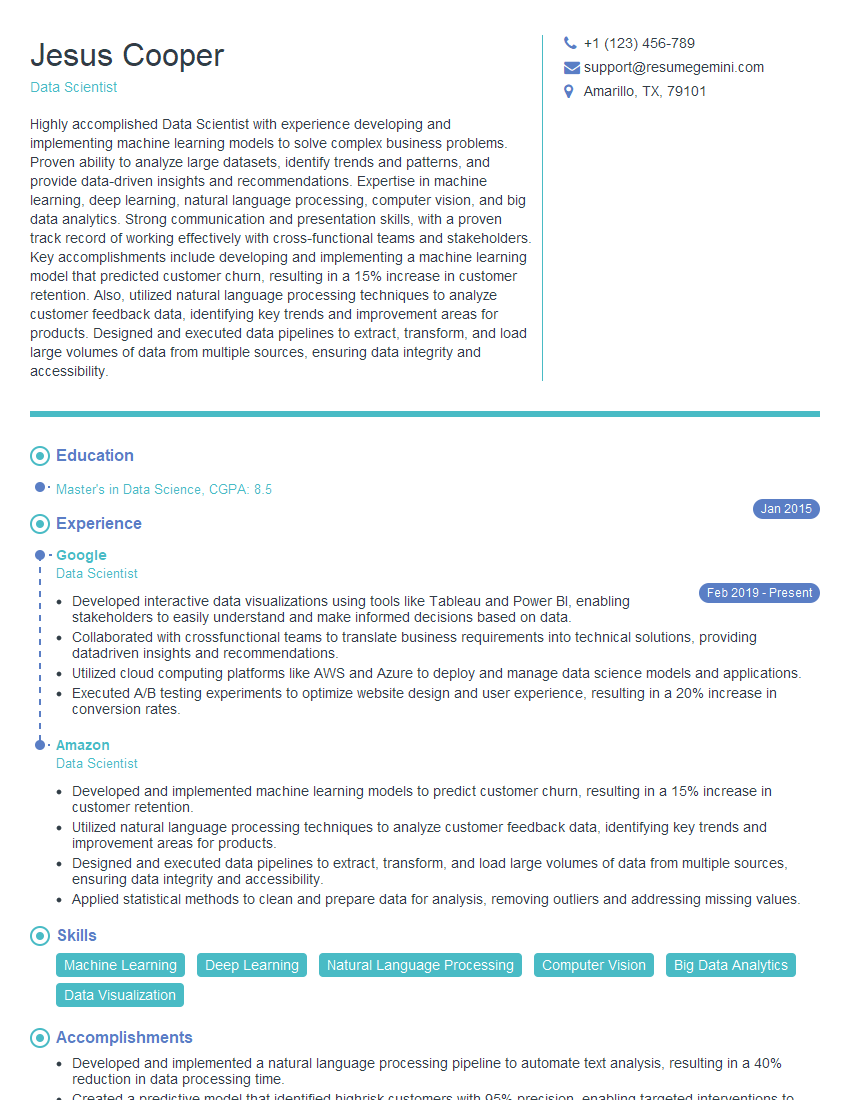
Data Scientist Resume Sample

Research Scientist Resume Sample
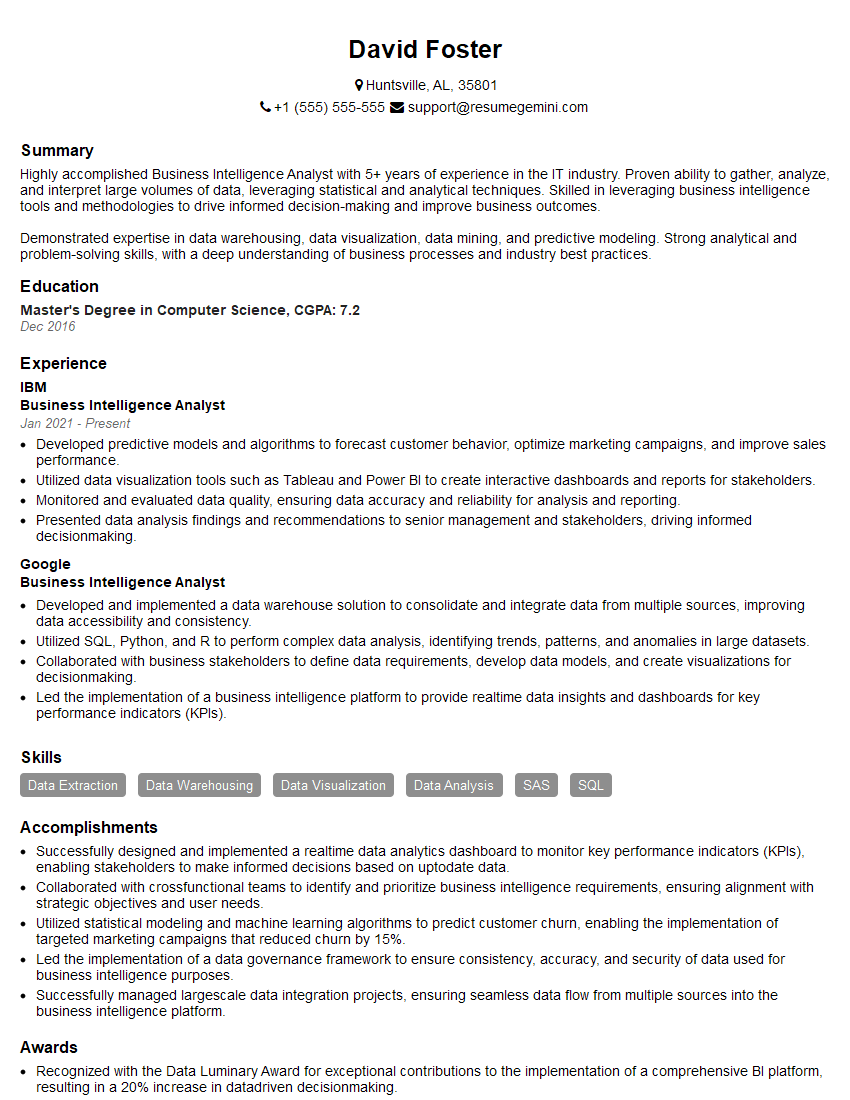
Business Intelligence Analyst Resume Sample

Actuary Resume Sample
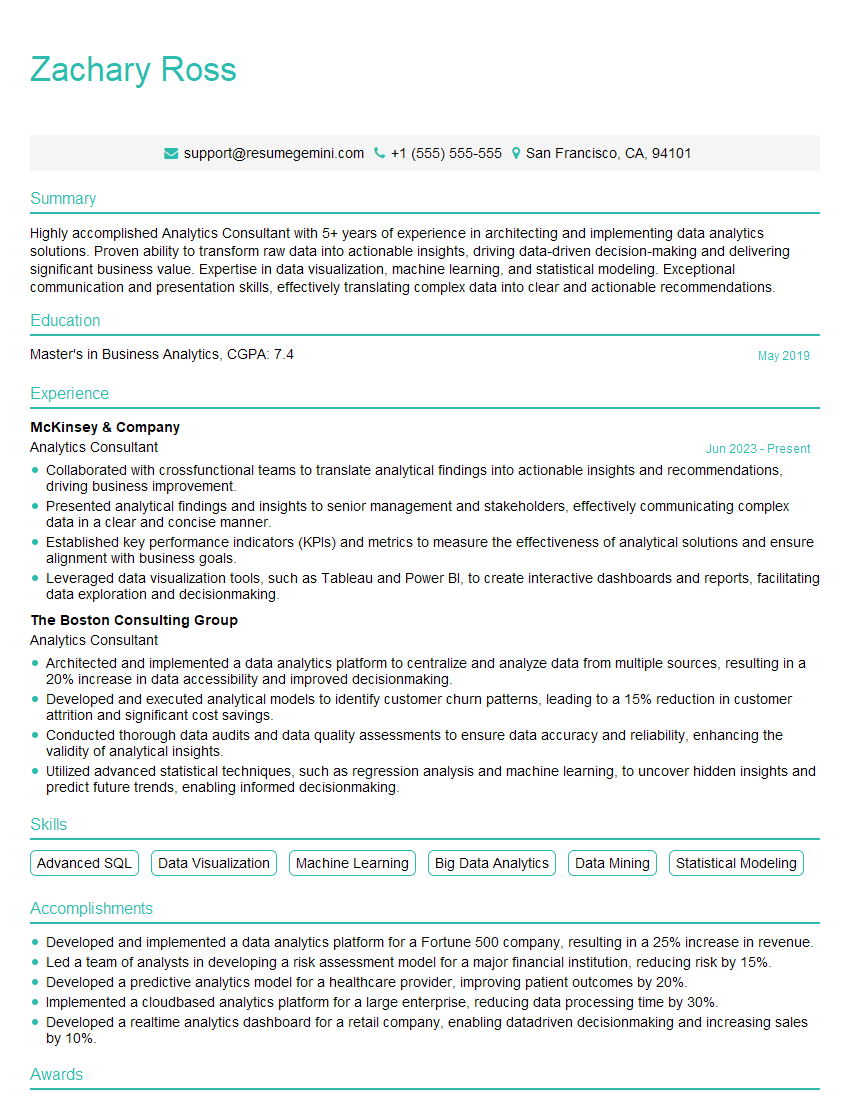
Analytics Consultant Resume Sample

Operations Research Analyst Resume Sample

Statistical Analyst Resume Sample
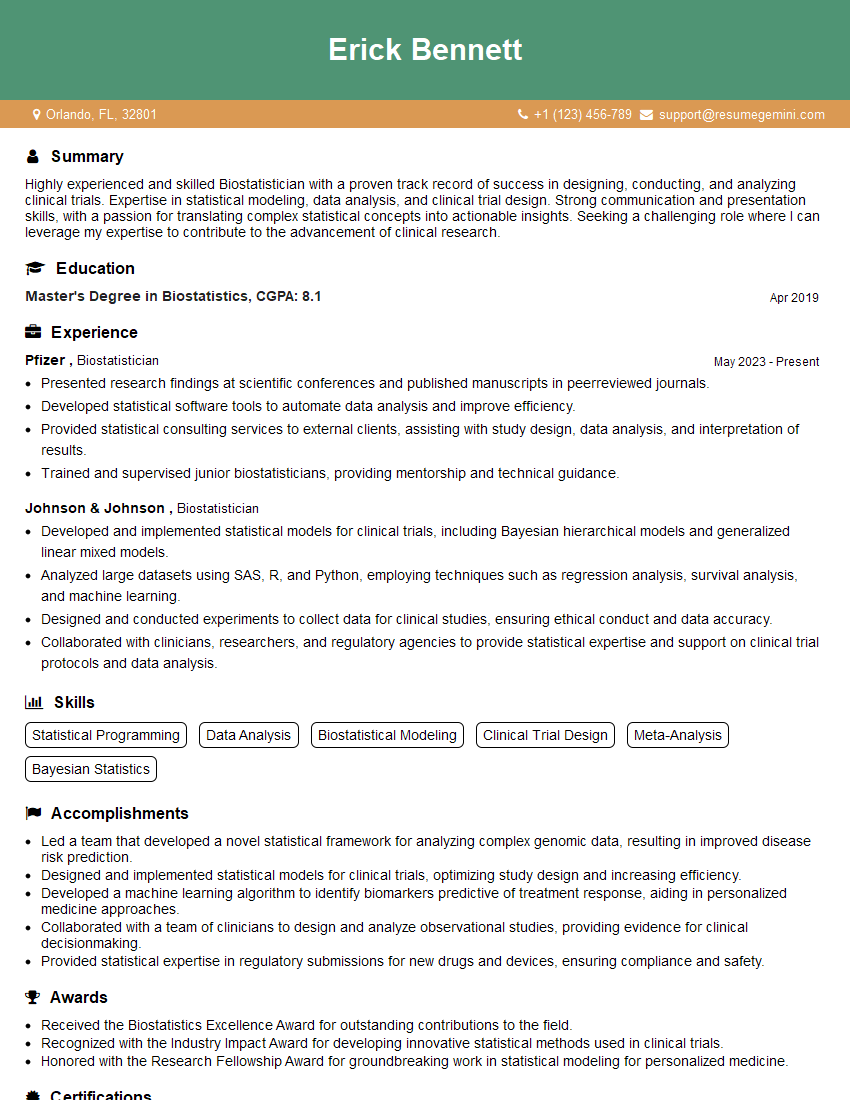
Biostatistician Resume Sample
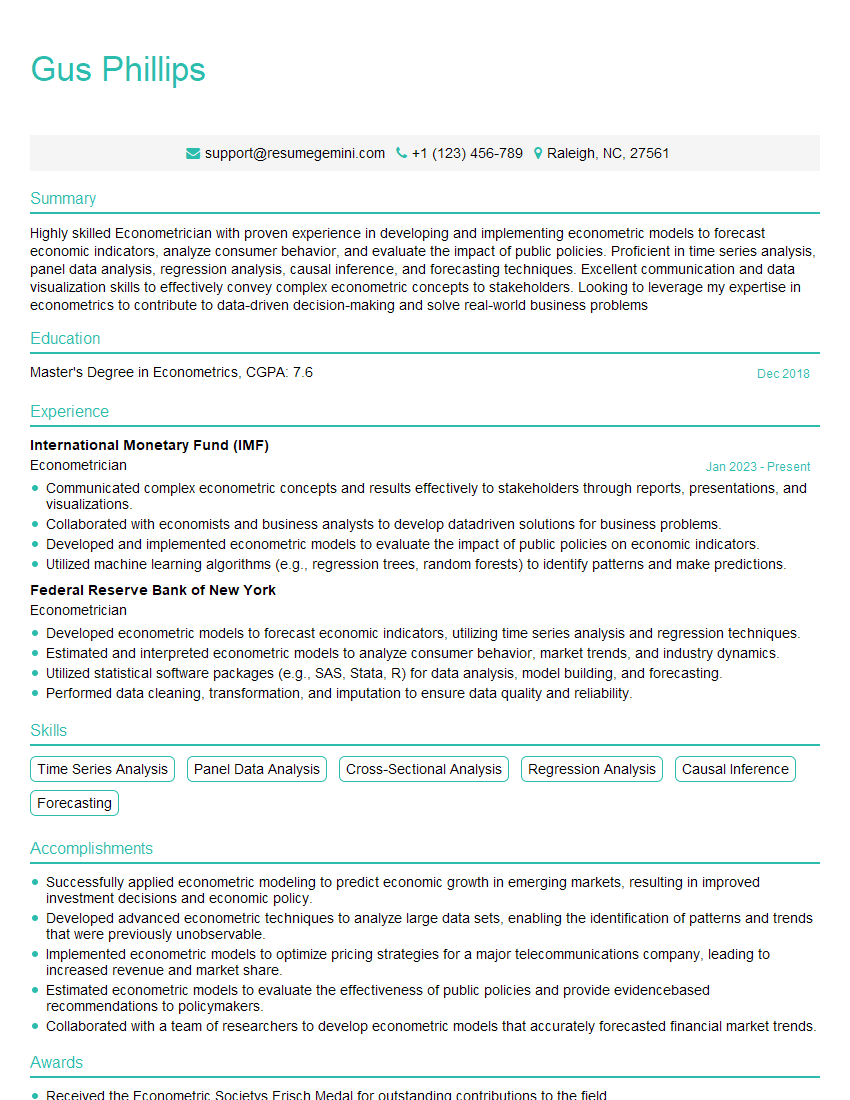
Econometrician Resume Sample

Machine Learning Engineer Resume Sample

Lead Data Scientist Resume Sample
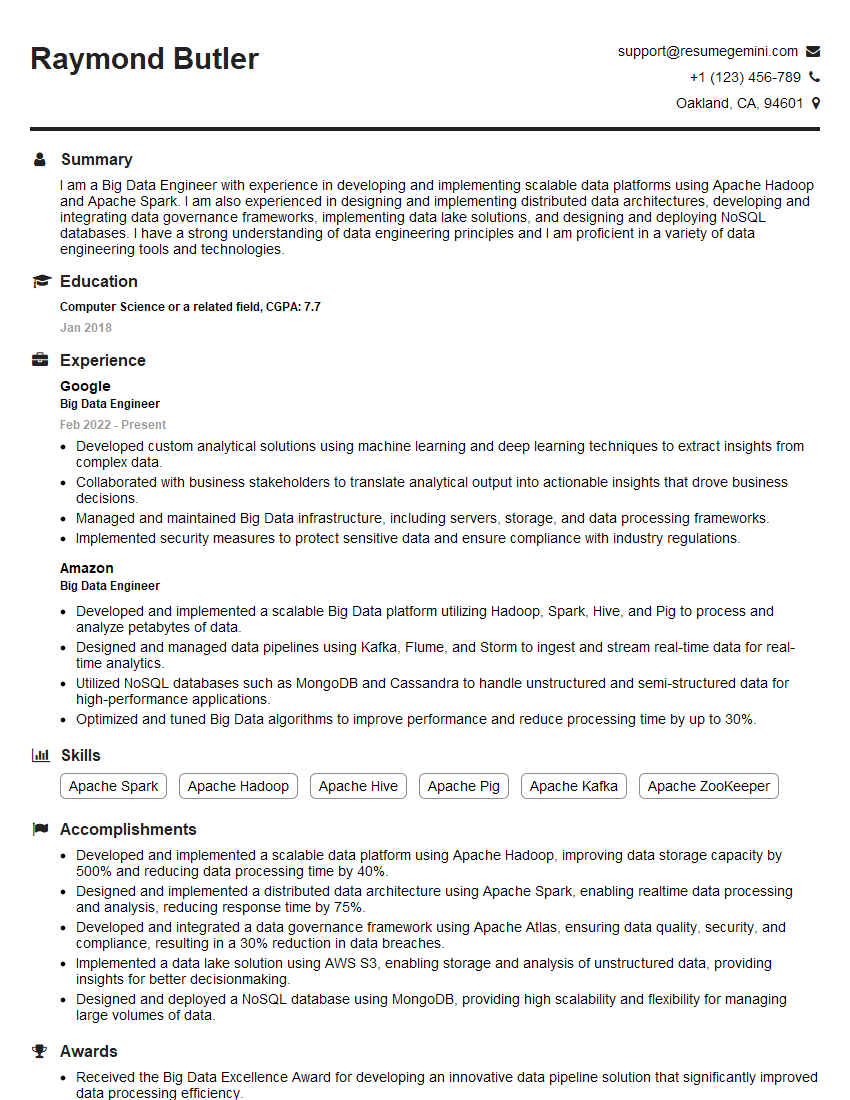
Big Data Engineer Resume Sample
- Market Research Analyst
- Financial Analyst
- Data Analyst
- Quantitative Analyst
- Data Scientist
- Research Scientist
- Business Intelligence Analyst
- Actuary
- Analytics Consultant
- Operations Research Analyst
- Statistical Analyst
- Biostatistician
- Econometrician
- Machine Learning Engineer
- Lead Data Scientist
- Big Data Engineer
Explore more articles
Users Rating of Our Blogs
Share Your Experience
We value your feedback! Please rate our content and share your thoughts (optional).
What Readers Say About Our Blog
To the interviewgemini.com Webmaster.
Very helpful and content specific questions to help prepare me for my interview!
Thank you
To the interviewgemini.com Webmaster.
This was kind of a unique content I found around the specialized skills. Very helpful questions and good detailed answers.
Very Helpful blog, thank you Interviewgemini team.