Interviews are more than just a Q&A session—they’re a chance to prove your worth. This blog dives into essential Medical Speech-Language Pathology interview questions and expert tips to help you align your answers with what hiring managers are looking for. Start preparing to shine!
Questions Asked in Medical Speech-Language Pathology Interview
Q 1. Describe your experience with differential diagnosis of dysphagia.
Differential diagnosis of dysphagia involves systematically identifying the underlying cause of swallowing difficulties. It’s like detective work, piecing together clues from various sources to arrive at an accurate diagnosis. This process requires a thorough understanding of anatomy, physiology, and the various conditions that can impact swallowing.
My approach begins with a comprehensive patient history, including medical history, medications, and current symptoms. I then conduct a clinical bedside swallow examination (BSE), observing the patient’s oral, pharyngeal, and esophageal phases of swallowing. This involves assessing things like oral motor strength, coordination, and the presence of any coughing, choking, or pocketing of food. I may also utilize instrumental assessments such as a modified barium swallow study (MBSS), a Fiberoptic Endoscopic Evaluation of Swallowing (FEES), or a scintigraphy depending on the clinical need.
For example, a patient presenting with coughing after swallows and reduced oral strength might be suspected of having a neuromuscular disorder. Further investigations like MBSS might reveal aspiration and pharyngeal residue, confirming the diagnosis and guiding treatment. Another patient with a history of stroke and delayed swallow initiation might be diagnosed with oropharyngeal dysphagia. The choice of assessment methods and the interpretation of the data are crucial for accurate diagnosis and appropriate management.
Q 2. Explain the various assessment tools you utilize for evaluating speech sound disorders in children.
Evaluating speech sound disorders in children requires a multifaceted approach. We use a combination of standardized tests, informal assessments, and observations to paint a complete picture.
- Standardized Tests: These provide a normative comparison of the child’s speech to same-aged peers. Examples include the Goldman-Fristoe Test of Articulation-3 (GFTA-3) and the Khan-Lewis Phonological Analysis (KLPA). The GFTA-3 assesses articulation in a picture naming task, while KLPA analyses phonological processes like consonant cluster reduction.
- Informal Assessments: These are more flexible, allowing for spontaneous speech sampling and assessing speech in different contexts. I might record the child’s conversational speech and analyze phonetic inventory, syllable structures, and error patterns. I may also use play-based activities to elicit speech sounds in a more naturalistic manner.
- Observations: Careful observation of the child’s oral-motor skills is essential. I observe tongue movement, lip closure, and jaw mobility, looking for any structural or functional issues that might contribute to speech sound difficulties.
It’s crucial to remember that no single test tells the whole story. Integrating findings from multiple assessment methods allows for a more comprehensive and accurate diagnosis, guiding appropriate intervention strategies.
Q 3. How do you adapt your therapy techniques for patients with cognitive impairments?
Adapting therapy for patients with cognitive impairments requires creativity and flexibility. The key is to simplify tasks, increase repetition, and focus on functional communication skills. We can’t just use the same techniques that work for neurotypical patients.
For example, if I’m working with a patient with dementia who has difficulty remembering words, I might use visual cues, gestures, or real objects during therapy. Instead of relying heavily on verbal instructions, I incorporate simple, repetitive actions to enhance learning and reduce frustration. I might use highly structured therapy methods such as cueing hierarchies (e.g., verbal cues, tactile cues, physical prompts), incorporating errorless learning and massed practice techniques.
Another strategy is to break down complex tasks into smaller, more manageable steps. Focusing on functional communication goals, such as asking for help or expressing basic needs, becomes the priority. The treatment environment also needs to be carefully structured and adapted to the patient’s individual needs, minimizing distractions and sensory overload. Regular collaboration with caregivers is crucial for consistent reinforcement outside of the therapy session.
Q 4. What are the common signs and symptoms of aphasia, and how do you differentiate between different types?
Aphasia is a language disorder affecting communication abilities due to brain damage, often caused by stroke. Symptoms vary depending on the area of the brain affected, and several types exist.
Common signs and symptoms include difficulty with speaking (expressive aphasia), understanding language (receptive aphasia), reading, writing, and repeating words. A patient might struggle to find words, use incorrect words, or speak in short, fragmented sentences.
Differentiating between types requires careful assessment of all language modalities. For example, Broca’s aphasia, often caused by damage to the frontal lobe, involves difficulty with fluent speech production, while Wernicke’s aphasia, involving the temporal lobe, results in fluent yet nonsensical speech. Global aphasia is a severe form impacting both expressive and receptive language significantly, while conduction aphasia involves difficulty repeating phrases despite understanding and producing relatively normal speech. A comprehensive language evaluation, which includes assessment of naming, fluency, comprehension, repetition, and reading/writing, is necessary to determine the specific type of aphasia.
Q 5. Describe your approach to managing patients with apraxia of speech.
Apraxia of speech is a motor speech disorder affecting the planning and programming of speech movements. Patients understand what they want to say but struggle to coordinate their mouth muscles to produce the intended sounds. My approach is highly structured and focuses on building motor plans and improving speech accuracy.
Treatment involves intensive, repetitive practice of speech sounds and words, often utilizing techniques such as articulatory kinematic analysis to understand the specific motor challenges. We may start with single sounds, gradually progressing to syllables, words, phrases, and sentences. I might use visual cues, tactile cues, or auditory modeling to aid the patient in producing the correct sounds. Tasks are often designed to be challenging but attainable, to ensure progress and maintain motivation. Melodic intonation therapy (MIT) or articulatory cueing can be effective strategies in some cases. Ultimately, the goal is to improve speech intelligibility and improve communication.
Q 6. How do you incorporate evidence-based practices into your treatment plans?
Evidence-based practice (EBP) is central to my work. I integrate the best available research, my clinical expertise, and the patient’s preferences to develop individualized treatment plans. I regularly review current literature in relevant journals and databases like PubMed and ASHA.
For example, when treating childhood stuttering, I utilize techniques supported by robust research, such as the Lidcombe Program, which involves parental involvement and positive reinforcement. Similarly, in treating dysphagia, I rely on evidence from MBSS studies to guide decisions regarding diet modifications and swallowing exercises. I use outcome measures to track the effectiveness of interventions and make necessary adjustments to treatment plans based on the patient’s response and progress.
Incorporating EBP ensures that I deliver high-quality, effective care and justify my treatment choices. It’s a dynamic process that requires continuous learning and adaptation.
Q 7. Explain your experience with augmentative and alternative communication (AAC) strategies.
Augmentative and alternative communication (AAC) systems support individuals with communication impairments. These range from simple picture cards to sophisticated electronic devices. My experience encompasses a wide range, from assessing communication needs and recommending appropriate AAC systems to training patients and their families on effective use.
I begin by conducting a comprehensive communication assessment to determine the individual’s strengths and weaknesses, communicative needs, and cognitive abilities. This might involve observing spontaneous communication, assessing receptive and expressive language, and analyzing their current communication methods. Then I recommend an appropriate AAC system, considering factors such as the patient’s age, cognitive abilities, physical limitations, and communication goals. This could involve a low-tech approach such as picture exchange communication systems (PECS), or high-tech options like speech-generating devices (SGDs). I provide training to the patient and caregivers on how to use the chosen system, including strategies for communication partner training, developing effective communication routines, and incorporating the AAC system into daily life. The aim is to enhance participation in social and environmental interactions.
Q 8. How do you collaborate with other members of the healthcare team (e.g., physicians, nurses, occupational therapists)?
Collaboration is crucial in healthcare. As a speech-language pathologist (SLP), I regularly participate in interdisciplinary team meetings with physicians, nurses, occupational therapists, and other professionals. This collaborative approach ensures holistic patient care. For example, with a patient experiencing aphasia after a stroke, I would work closely with the physician to understand the neurological impact and medication side effects. Simultaneously, I’d collaborate with the occupational therapist to coordinate therapies, ensuring that exercises don’t negatively impact speech therapy progress. We might share information about the patient’s swallowing difficulties and fatigue levels, ensuring the therapy plans complement each other rather than competing for the patient’s energy. Effective communication, shared goals, and mutual respect form the foundation of successful interdisciplinary collaboration. We utilize shared electronic health records (EHR) to keep track of progress and coordinate treatment.
Q 9. Describe your experience with fluency disorders, including assessment and treatment approaches.
Fluency disorders, like stuttering, affect the smooth flow of speech. My assessment involves detailed case history, including onset, severity, and situational factors. I use standardized assessments like the Stuttering Severity Instrument-4 (SSI-4) to quantify the severity. I also observe speech samples in different contexts (e.g., reading, conversation) and analyze speech characteristics like frequency, duration, and type of disfluencies. Treatment approaches are personalized. For children, I might use techniques like reducing speaking rate, incorporating easy onset of phonation, and modeling fluent speech. With adults, I might use strategies like cancellations (stopping and restarting), pull-outs (modifying a stutter mid-flow), and preparatory sets (planning how to say a word). A key element is helping the individual manage their emotional responses to stuttering. For instance, I’ve worked with a young boy who stuttered significantly and used techniques like positive self-talk and relaxation exercises, significantly improving his self-confidence and fluency.
Q 10. How do you assess and treat voice disorders in adults and children?
Voice disorder assessment in both adults and children starts with a detailed history focusing on voice use, medical history, and any potential contributing factors (e.g., vocal nodules, laryngitis). I utilize instrumental assessments like acoustic analysis (measuring pitch, intensity, and jitter) and videostroboscopy (visualizing vocal fold vibration). For children, I might also assess their vocal development and communicative skills. Treatment varies depending on the diagnosis and etiology. It may include vocal hygiene education (proper hydration, avoidance of vocal strain), voice therapy techniques (e.g., resonant voice therapy, Lee Silverman Voice Treatment (LSVT)), and referral to an ENT (ear, nose, and throat doctor) for medical management, especially when organic causes are suspected. I recall working with a teacher who had vocal nodules due to excessive vocal strain. We worked together on techniques to improve her vocal efficiency and breath support, which allowed her to use her voice effectively while reducing strain. In children, we often focus on building healthy vocal habits.
Q 11. What is your experience with managing patients with traumatic brain injury (TBI)?
Traumatic brain injury (TBI) can significantly impact communication and swallowing. My experience with TBI patients involves a comprehensive assessment of cognitive-linguistic abilities (attention, memory, language), speech production, and swallowing function. Assessments may include standardized tests and functional tasks. Treatment is highly individualized and may involve cognitive-linguistic rehabilitation to improve attention, memory, and language skills, alongside speech and language therapy to address articulation, fluency, and pragmatics (social use of language). Swallowing rehabilitation addresses any dysphagia and is often coordinated with other therapies. For instance, I’ve worked with a patient who experienced aphasia and dysphagia after a TBI. Our treatment combined strategies for improving language comprehension and production with swallowing exercises and dietary modifications, allowing him to regain functional communication and safe swallowing over several months.
Q 12. Explain your understanding of the physiological mechanisms underlying swallowing.
Swallowing, or deglutition, is a complex process involving multiple stages: oral, pharyngeal, and esophageal. The oral phase begins with food manipulation in the mouth, involving the tongue, lips, and jaw. The pharyngeal phase involves the triggering of the swallow reflex, initiating a coordinated sequence of muscle contractions that propel the bolus (food) through the pharynx and into the esophagus. The esophageal phase is the movement of the bolus through the esophagus into the stomach. Neurological control is crucial, involving cranial nerves and the brainstem. Physiological mechanisms include the precise timing of muscle contractions, coordination of the tongue, larynx, and pharynx, and the function of the upper esophageal sphincter. Problems in any stage can lead to dysphagia (swallowing disorders). Think of it like a well-orchestrated symphony – each instrument (muscle) plays its part at the precise moment, ensuring a smooth and efficient process. Impairments in any part can lead to problems in swallowing.
Q 13. Describe your experience with conducting bedside swallow evaluations.
Bedside swallow evaluations are quick, informal assessments conducted at the patient’s bedside, often in acute care settings. They involve observing the patient’s swallowing of different consistencies (e.g., thin liquids, pureed foods) and assessing for signs of aspiration (food or liquid entering the airway). I observe oral motor skills, noting any weakness, incoordination, or delay. I also assess the patient’s cough reflex and evaluate their ability to clear their throat after the swallow. It is crucial to watch for any signs of choking, coughing, or respiratory distress. These bedside evaluations are essential to determining the immediate safety of the patient’s swallowing, guiding decisions about diet modification and the need for more comprehensive instrumental assessments like a videofluoroscopic swallowing study (VFSS).
Q 14. How do you modify the diet of patients with dysphagia?
Dietary modifications for patients with dysphagia are crucial to preventing aspiration pneumonia and ensuring adequate nutrition. The modifications depend on the severity and nature of the dysphagia. For patients with mild dysphagia, changes might involve simply avoiding certain foods (e.g., nuts, sticky foods). For those with more significant difficulties, diet changes might include progressing from thin liquids to nectar-thick liquids, then honey-thick liquids, and finally to pureed foods. A common strategy is to recommend a modified barium swallow study to determine the appropriate diet. Some patients require a completely customized diet plan. I always collaborate with the patient, family, and dietician to ensure that the dietary recommendations are nutritionally appropriate, safe, and palatable. We often aim for a balance between safety and maintaining quality of life. The goal isn’t just to prevent aspiration, but to ensure the patient can still enjoy mealtimes and maintain adequate nutritional intake.
Q 15. What are the ethical considerations related to providing speech-language therapy?
Ethical considerations in speech-language pathology are paramount, guiding our practice to ensure patient well-being and professional integrity. These considerations encompass several key areas:
- Confidentiality: Protecting patient information is crucial. This includes adhering to HIPAA regulations and maintaining secure records. For example, I would never discuss a patient’s case with anyone not directly involved in their care without their explicit consent.
- Informed Consent: Patients (or their legal guardians) must fully understand the nature of therapy, its potential benefits and risks, and have the autonomy to choose participation. I always ensure I explain treatment goals and methods clearly and answer any questions thoroughly before beginning therapy.
- Competence: Providing services only within the scope of my training and expertise is essential. I would never attempt a treatment method outside my qualifications, and if faced with a situation beyond my expertise, I would refer the patient to a more qualified professional.
- Cultural Sensitivity: Respecting and understanding the diverse cultural backgrounds of my patients is critical to effective communication and treatment. I make a conscious effort to tailor my approach to each patient’s unique cultural context.
- Professional Boundaries: Maintaining appropriate professional relationships with patients is non-negotiable. I avoid dual relationships and prioritize the therapeutic relationship’s integrity.
- Advocacy: I actively advocate for my patients’ rights and access to appropriate services, ensuring they receive the care they need. This includes helping them navigate the healthcare system and accessing resources.
Career Expert Tips:
- Ace those interviews! Prepare effectively by reviewing the Top 50 Most Common Interview Questions on ResumeGemini.
- Navigate your job search with confidence! Explore a wide range of Career Tips on ResumeGemini. Learn about common challenges and recommendations to overcome them.
- Craft the perfect resume! Master the Art of Resume Writing with ResumeGemini’s guide. Showcase your unique qualifications and achievements effectively.
- Don’t miss out on holiday savings! Build your dream resume with ResumeGemini’s ATS optimized templates.
Q 16. Describe your experience with data collection and analysis in clinical practice.
Data collection and analysis are fundamental to effective speech-language therapy. In my practice, I use a variety of methods, including:
- Standardized Assessments: These provide objective measures of communication skills (e.g., Goldman-Fristoe Test of Articulation). I meticulously document the results, comparing them to normative data to track progress.
- Informal Assessments: These are tailored to the individual’s specific needs and communication context (e.g., language sample analysis during play). I use observation and recording to collect qualitative data and detailed descriptions of behavior.
- Progress Monitoring: Regular data collection throughout the therapy process allows me to monitor progress and adjust interventions as needed. I use graphs and charts to visually represent data and make changes clear. For example, I might track the number of correct articulations per session or the length of a child’s spontaneous utterance.
- Data Analysis: I analyze data to determine treatment effectiveness and identify areas requiring modification. This often involves comparing baseline data to post-intervention data, looking for trends and patterns. I might use statistical methods, depending on the data collected.
For instance, I recently worked with a child with articulation difficulties. By tracking their performance on specific sounds across several sessions, I could visually demonstrate progress and adjust the intervention to focus on sounds that weren’t improving as quickly.
Q 17. How do you develop and implement Individualized Education Programs (IEPs) for students with communication disorders?
Developing and implementing Individualized Education Programs (IEPs) for students with communication disorders is a collaborative process involving the student, parents, teachers, and the speech-language pathologist. The process typically follows these steps:
- Assessment: A comprehensive assessment is conducted to identify the student’s strengths and weaknesses in communication. This includes standardized and informal assessments.
- Goal Setting: Based on the assessment, measurable, achievable, relevant, and time-bound (SMART) goals are established. These goals specifically target the student’s communication needs and align with the curriculum.
- Service Delivery: The IEP outlines the specific services the student will receive, including the frequency, intensity, and type of therapy. This often specifies whether therapy will be delivered in the classroom, pull-out setting, or a combination.
- Implementation: The IEP is implemented, with regular monitoring of the student’s progress toward goals. This includes providing direct therapy, collaborating with teachers, and providing consultation and support to school staff.
- Review and Revision: The IEP is reviewed and revised at least annually, or more frequently if needed, to ensure it remains appropriate and effective. Adjustments to goals and services may be necessary as the student makes progress or encounters challenges.
For example, an IEP for a student with language delays might include goals targeting vocabulary development, sentence structure, and narrative skills. The IEP would outline how these goals would be addressed through individual and group therapy sessions, as well as through classroom-based support and collaboration with the teacher.
Q 18. How do you handle challenging patient behaviors during therapy sessions?
Challenging patient behaviors during therapy sessions require a multifaceted approach rooted in understanding the underlying cause of the behavior. I typically address these using a combination of strategies:
- Functional Behavior Assessment (FBA): I conduct an FBA to determine the function of the behavior (e.g., attention-seeking, escape from a task, sensory needs). This helps understand the reason behind the behavior, rather than simply labeling it as ‘bad’.
- Positive Behavior Support (PBS): This focuses on proactively teaching and reinforcing positive behaviors while reducing challenging behaviors through appropriate strategies. This could include teaching alternative communication methods or establishing clear expectations and routines.
- Environmental Modifications: Changing the therapy environment can significantly impact behavior. This could involve reducing distractions, providing sensory breaks, or adjusting the session structure.
- Collaboration with Caregivers: Close communication and collaboration with caregivers are critical. Consistency across settings is essential to maintain progress and prevent carry-over of learned behaviors.
- Communication and Patience: I prioritize clear and calm communication, allowing for time and space to de-escalate situations. Using positive reinforcement and praise for desired behavior is fundamental.
For example, if a child is exhibiting disruptive behaviors during a therapy session, I’d first try to understand why – is the task too difficult? Are they feeling overwhelmed? Then, I’d adjust the activity, provide breaks, or use positive reinforcement to redirect their behavior.
Q 19. Explain your understanding of the impact of cultural and linguistic diversity on communication.
Cultural and linguistic diversity significantly impacts communication. Understanding this impact is crucial for effective therapy. Factors to consider include:
- Language Differences: Patients may speak a different language or dialect, requiring culturally sensitive adaptations to assessment and treatment. This might involve using interpreters, bilingual materials, or adapting assessment procedures to account for language differences.
- Communication Styles: Cultural differences in communication styles (e.g., eye contact, personal space, directness) can influence interactions. Understanding these differences is essential for building rapport and avoiding misinterpretations.
- Cultural Beliefs and Practices: Cultural beliefs about health, illness, and treatment can impact patients’ participation and engagement in therapy. Respecting these beliefs and integrating them into treatment is vital.
- Bias and Stereotyping: Awareness of personal biases and avoiding stereotypes are critical for providing culturally competent care. Clinicians must actively work to avoid making assumptions about patients based on their cultural background.
For instance, I worked with a family from a culture where direct eye contact is considered disrespectful. Understanding this, I adapted my approach, ensuring that I didn’t misinterpret their lack of eye contact as disengagement. I focused instead on other indicators of engagement and understanding.
Q 20. How do you ensure effective communication with patients and their families?
Effective communication with patients and their families is the cornerstone of successful therapy. I prioritize this through several strategies:
- Active Listening: I actively listen to understand their perspectives, concerns, and goals. I avoid interrupting and use verbal and nonverbal cues to show that I’m engaged in the conversation.
- Clear and Simple Language: I use clear, concise, and jargon-free language, tailoring my communication to the audience’s understanding. I avoid using technical terms unless necessary, and when I do, I always explain them clearly.
- Empathy and Respect: I show empathy and respect for their experiences and feelings, creating a safe and trusting environment for open communication. This includes valuing their input and acknowledging their expertise on their child/family member’s needs.
- Regular Communication: I maintain regular contact with patients and their families, providing updates on progress, answering questions, and offering support. This might include regular progress reports, phone calls, or email correspondence.
- Visual Aids and Demonstrations: Using visual aids, demonstrations, and real-life examples helps clarify complex concepts and enhances understanding.
For example, I recently worked with a family who were anxious about their child’s progress. By actively listening to their concerns, explaining the treatment plan clearly, and providing regular updates, I built trust and fostered a collaborative partnership.
Q 21. Describe your experience with using technology in speech-language therapy (e.g., teletherapy, apps).
Technology plays an increasingly important role in speech-language therapy. My experience includes:
- Teletherapy: I utilize telehealth platforms for remote sessions, expanding accessibility to services for individuals in geographically isolated areas or with mobility challenges. This often involves utilizing video conferencing software, shared screens, and online assessment tools.
- Therapy Apps: I incorporate various apps designed to enhance therapy outcomes. These apps can provide engaging activities for practicing speech sounds, language skills, or cognitive abilities. I carefully select apps based on their evidence-based features and appropriateness for the individual’s needs and developmental level.
- Augmentative and Alternative Communication (AAC) Devices: I have experience using AAC devices, such as speech-generating devices, to support individuals with complex communication needs. This includes training patients and families on how to effectively use these devices.
- Data Management Software: I utilize electronic health record (EHR) systems for secure documentation of assessment results, treatment plans, and progress notes. This facilitates efficient record-keeping and enhances data analysis.
For example, I recently used a teletherapy platform to provide sessions to a child who lived in a rural area far from my clinic. This allowed the child to access timely therapy, improving their speech and language development despite geographical barriers.
Q 22. How do you measure the effectiveness of your therapy interventions?
Measuring the effectiveness of speech-language therapy interventions is crucial for ensuring client progress and justifying treatment. We use a multi-faceted approach, combining quantitative and qualitative data.
- Quantitative Measures: These involve standardized assessments administered pre- and post-treatment. Examples include articulation tests (like the Goldman-Fristoe Test of Articulation), language assessments (like the Clinical Evaluation of Language Fundamentals), and fluency measures (like the Stuttering Severity Instrument). We track scores to demonstrate objective improvement.
- Qualitative Measures: These capture the subjective aspects of progress. We use observation checklists to monitor communication skills in natural settings. We also rely on client and caregiver feedback through questionnaires and informal conversations, capturing their perception of changes in communication skills and overall quality of life. For instance, a parent might report increased participation in family conversations or a teacher might note improved classroom communication.
- Goal Attainment Scaling (GAS): This method allows us to collaboratively set individualized goals with clients and caregivers, rating their attainment on a scale. This provides a personalized and meaningful measure of success.
By combining these approaches, we build a comprehensive picture of treatment effectiveness, tailoring our interventions based on the data and client feedback. This iterative process ensures therapy remains focused and effective.
Q 23. Describe a situation where you had to adapt your therapy approach due to unexpected circumstances.
Once, I was working with a young child with severe apraxia of speech who experienced a sudden and unexpected illness requiring hospitalization mid-treatment. The initial treatment plan involved intensive articulation drills and motor planning activities. However, his illness left him fatigued and emotionally impacted.
I immediately adapted the therapy by reducing the intensity and duration of sessions. We focused on play-based activities incorporating speech elements, using toys and games he enjoyed. This gentler approach helped maintain engagement and progress without overwhelming him. We also incorporated his experience into therapy, validating his feelings and allowing him to express his frustrations through play and language, gradually reintroducing more structured activities as his energy and emotional state improved. This adaptable, client-centered approach ensured his progress continued, even amidst unexpected challenges.
Q 24. How do you maintain your professional development and stay current with best practices?
Maintaining professional development is paramount in our ever-evolving field. I actively participate in several strategies:
- Continuing Education Courses: I regularly attend workshops and seminars on new assessment and treatment techniques, focusing on areas like augmentative and alternative communication (AAC) or specific neurological disorders.
- Professional Organizations: Membership in the American Speech-Language-Hearing Association (ASHA) provides access to journals, webinars, and conferences, allowing me to stay updated on best practices and research findings. I also actively participate in local chapter meetings.
- Mentorship and Collaboration: I maintain close relationships with experienced colleagues, seeking their advice and engaging in collaborative case discussions. This peer-to-peer learning is invaluable.
- Independent Study: I frequently review the latest research articles and clinical guidelines in relevant journals, focusing particularly on emerging technologies in speech-language pathology.
This proactive approach ensures I am consistently implementing evidence-based practices and providing the best possible care for my clients.
Q 25. What are your strengths and weaknesses as a speech-language pathologist?
My strengths lie in my ability to build strong rapport with clients and their families, creating a safe and supportive therapeutic environment. I excel at adapting my approach to individual needs and preferences, demonstrating empathy and patience. I’m also a highly organized and detail-oriented clinician, meticulously documenting progress and ensuring treatment plans are aligned with evidence-based practices.
One area for improvement is delegating tasks more effectively, particularly within a team setting. I sometimes find it challenging to relinquish control, but I am actively working on improving my delegation skills to enhance team efficiency and my own work-life balance.
Q 26. What are your salary expectations?
My salary expectations are in line with the average salary range for experienced speech-language pathologists in this region, considering my education, experience, and qualifications. I am open to discussing a specific range after learning more about the compensation and benefits package offered for this position.
Q 27. Why are you interested in this position?
I am highly interested in this position due to [Organization’s Name]’s reputation for excellence in patient care and its commitment to [mention specific values or programs that resonate with you – e.g., evidence-based practice, interdisciplinary collaboration, community outreach]. The opportunity to work with [mention specific client populations or team members] and contribute to [mention specific goals or projects] aligns perfectly with my professional goals and aspirations.
Q 28. Where do you see yourself in five years?
In five years, I see myself as a highly skilled and respected speech-language pathologist within this organization. I envision expanding my expertise in [mention specific area of specialization], potentially taking on a mentorship role for junior colleagues. I also hope to be actively involved in research or professional development initiatives, furthering the advancements in our field and positively impacting the lives of our clients.
Key Topics to Learn for Medical Speech-Language Pathology Interview
- Neurological Foundations: Understand the impact of neurological conditions (aphasia, dysarthria, apraxia) on communication and swallowing. Be prepared to discuss relevant brain structures and pathways.
- Assessment and Diagnosis: Know the various assessment tools and procedures used to evaluate communication and swallowing disorders. Practice explaining your approach to differential diagnosis.
- Treatment Modalities: Familiarize yourself with evidence-based interventions for various communication and swallowing disorders. Be ready to discuss specific techniques and their application.
- Medical Terminology and Documentation: Demonstrate a strong understanding of medical terminology related to speech-language pathology. Practice charting and documenting patient progress effectively and efficiently.
- Interprofessional Collaboration: Highlight your experience and understanding of working effectively with other healthcare professionals (physicians, nurses, occupational therapists) within a medical setting.
- Ethical Considerations: Be prepared to discuss ethical dilemmas encountered in medical SLP practice and demonstrate your understanding of professional guidelines and regulations.
- Technology and Assistive Devices: Discuss your familiarity with technological advancements in assessment and intervention, including AAC devices and software.
- Data Analysis and Research: Understand the importance of data collection and analysis in tracking patient progress and contributing to evidence-based practice.
- Cultural Sensitivity and Diversity: Demonstrate awareness of cultural considerations in assessment and treatment approaches.
Next Steps
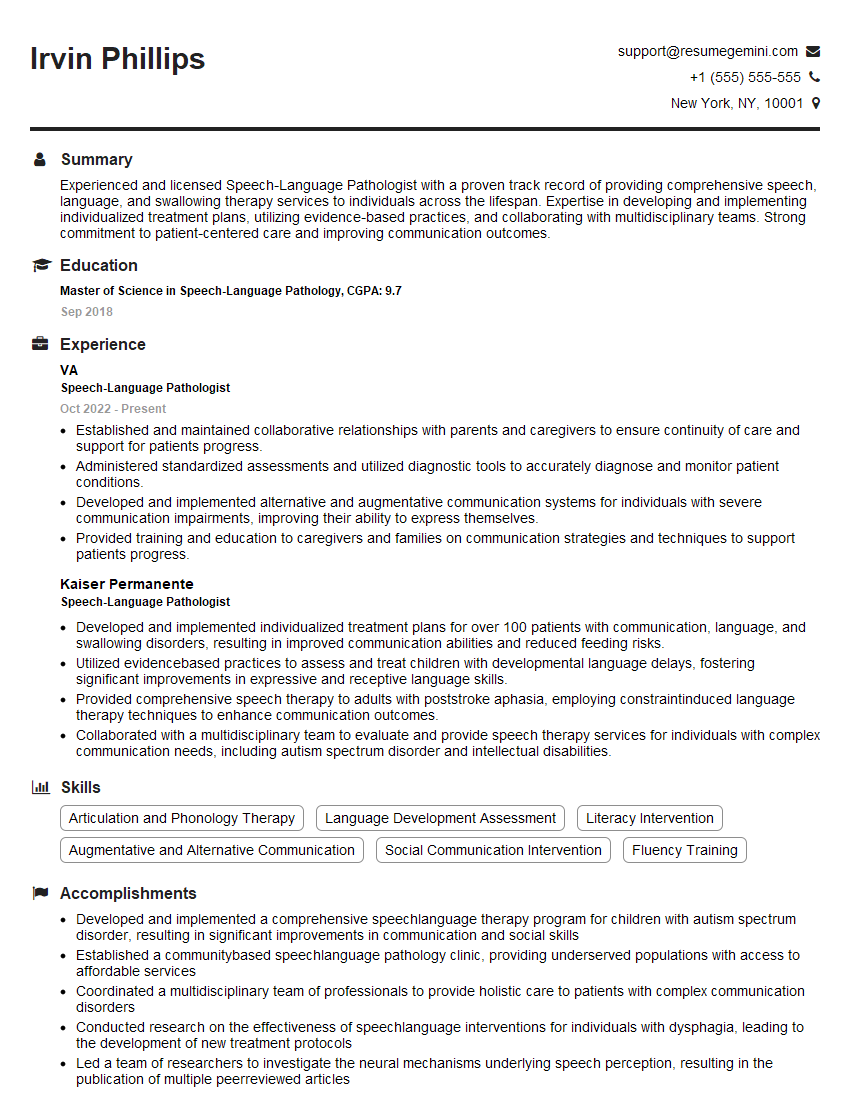
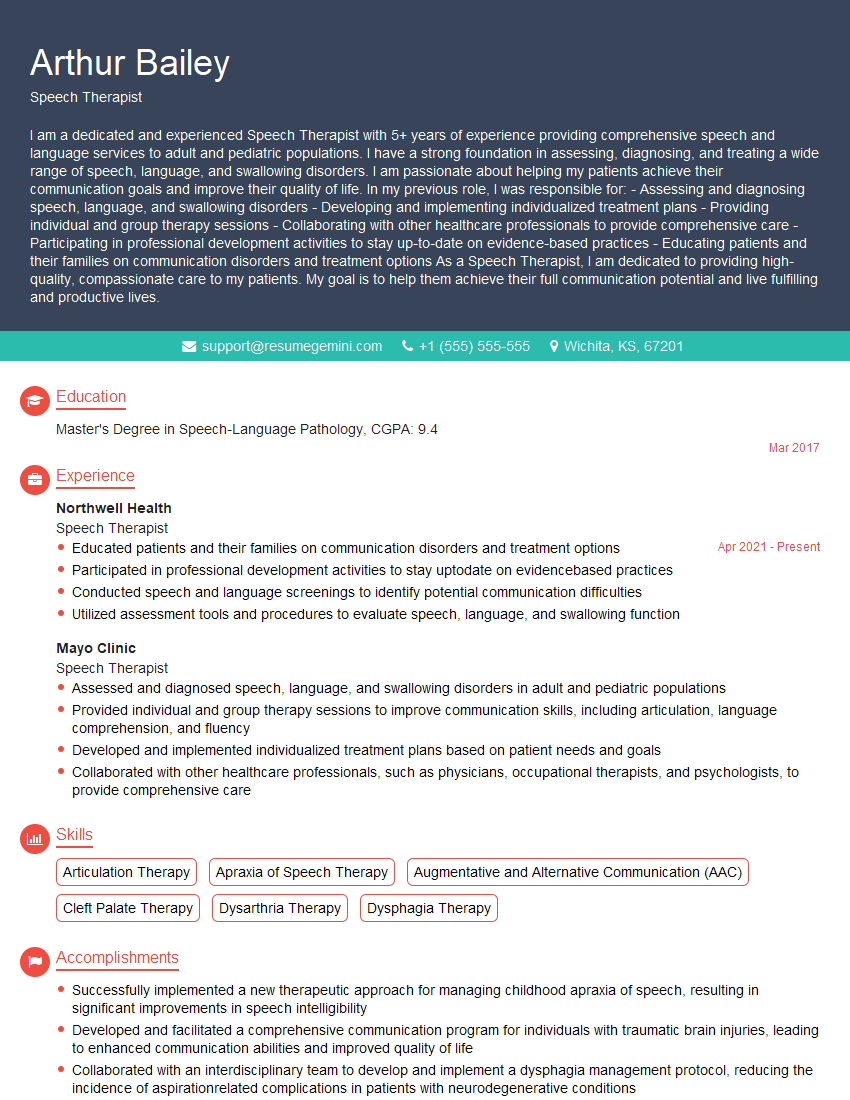
Mastering Medical Speech-Language Pathology opens doors to a rewarding career with diverse opportunities for growth and specialization. To maximize your job prospects, it’s crucial to present your qualifications effectively. An ATS-friendly resume is essential for navigating applicant tracking systems and securing interviews. ResumeGemini is a trusted resource for building professional, impactful resumes that highlight your skills and experience. They provide examples of resumes tailored to Medical Speech-Language Pathology to help you craft a compelling application that showcases your unique qualifications. Invest time in crafting a strong resume – it’s your first impression and a key step in launching your career.
Explore more articles
Users Rating of Our Blogs
Share Your Experience
We value your feedback! Please rate our content and share your thoughts (optional).
What Readers Say About Our Blog
To the interviewgemini.com Webmaster.
Very helpful and content specific questions to help prepare me for my interview!
Thank you
To the interviewgemini.com Webmaster.
This was kind of a unique content I found around the specialized skills. Very helpful questions and good detailed answers.
Very Helpful blog, thank you Interviewgemini team.