Unlock your full potential by mastering the most common Historical Knowledge and Storytelling interview questions. This blog offers a deep dive into the critical topics, ensuring you’re not only prepared to answer but to excel. With these insights, you’ll approach your interview with clarity and confidence.
Questions Asked in Historical Knowledge and Storytelling Interview
Q 1. Explain the difference between primary and secondary historical sources.
The distinction between primary and secondary historical sources is fundamental to historical research. Primary sources are materials created during the time period being studied, offering firsthand accounts. Think of them as eyewitness testimonies. Examples include letters, diaries, official documents, artifacts, and even oral histories recorded close to the events. Secondary sources, conversely, are interpretations and analyses of primary sources, created later by historians and other scholars. They offer perspectives and synthesize information from multiple primary sources. A textbook on the American Revolution would be a secondary source, while a letter written by a soldier during the war would be primary.
- Primary Source Example: A photograph taken during the Civil Rights Movement.
- Secondary Source Example: A history book analyzing the causes and effects of the Civil Rights Movement, drawing upon photographs, letters, speeches, and other primary sources.
Understanding this difference is crucial for evaluating the reliability and potential biases of historical information. Primary sources offer direct evidence, but require careful contextualization, while secondary sources provide valuable interpretations, but should be critically examined for their own biases and methodologies.
Q 2. Describe a time you had to analyze conflicting historical accounts. How did you resolve the discrepancies?
I recently analyzed conflicting accounts of the lead-up to the French Revolution. Some sources emphasized the role of Enlightenment ideals in fueling discontent, while others highlighted economic hardship as the primary driver. To resolve these discrepancies, I employed several strategies.
- Triangulation: I cross-referenced information across multiple primary sources – pamphlets, personal letters, official records, and even satirical cartoons – to identify common threads and points of contention. This helped me build a more nuanced understanding of the various factors at play.
- Contextual Analysis: I carefully examined the social, political, and economic context of each source. Understanding the author’s background, intended audience, and potential biases was crucial to interpreting their perspective accurately. For example, a letter from a nobleman might offer a different perspective than a journal entry from a peasant farmer.
- Comparative Analysis: I compared and contrasted the different interpretations, identifying areas of agreement and disagreement. I then looked for evidence that supported or refuted each claim. This involved assessing the reliability and credibility of each source based on its provenance and internal consistency.
Through this process, I concluded that both Enlightenment ideals and economic hardship contributed significantly to the revolution, but their relative importance varied depending on the social group and specific historical moment.
Q 3. What is your preferred method for conducting historical research?
My preferred method for conducting historical research is a multi-faceted approach that combines archival research with digital humanities techniques. I begin by formulating a clear research question, followed by identifying and accessing relevant primary sources – be it in physical archives or online databases.
- Archival Research: This involves meticulous examination of original documents, artifacts, and other materials found in libraries, museums, and other repositories. This process often involves careful note-taking, transcription, and cross-referencing.
- Digital Humanities Tools: I utilize digital tools like text analysis software to identify patterns and themes in large datasets of primary sources, such as collections of letters or newspaper articles. This allows for efficient analysis of vast amounts of data.
- Oral History: Where appropriate, I supplement archival research by conducting interviews with individuals who have lived through the historical period being studied. This provides valuable firsthand accounts.
Throughout this research process, I maintain a detailed research log, noting the sources consulted and my analytical process. This ensures transparency and allows me to revisit my work later.
Q 4. How do you ensure accuracy and objectivity in your historical narratives?
Ensuring accuracy and objectivity in historical narratives requires rigorous attention to methodology and a commitment to transparency.
- Source Evaluation: Critical evaluation of sources is paramount. This involves assessing the author’s credibility, potential biases, and the context in which the source was created. The reliability of a source is judged not by whether it supports my hypothesis, but by its internal consistency, external corroboration, and the author’s motivations.
- Multiple Perspectives: Presenting multiple perspectives is essential for avoiding bias. I actively seek out diverse voices and viewpoints to ensure a balanced and nuanced understanding of the past. This often includes acknowledging conflicting interpretations and highlighting areas of ongoing debate.
- Transparency of Methods: I clearly articulate my research methods and the rationale behind my interpretations. This allows readers to evaluate the validity of my conclusions and to assess potential limitations of the study.
- Peer Review: Before publication, I always submit my work for peer review by other historians. This provides an essential check on my interpretations and ensures that the work meets high scholarly standards.
While complete objectivity is an ideal, acknowledging the inherent limitations of historical research and the researcher’s perspectives contributes significantly to accuracy.
Q 5. Explain the concept of historical bias and how it impacts interpretation.
Historical bias refers to the systematic distortion of the past due to the perspectives and preconceptions of the historian or the sources themselves. It’s a crucial concept because it directly affects how we interpret historical events. Bias can manifest in various ways.
- Authorial Bias: Historians, despite striving for objectivity, bring their own background, beliefs, and values to their work. This can unconsciously shape their interpretations and choices of evidence.
- Source Bias: Primary sources often reflect the biases of their creators. For example, a government report might present a rosy picture of its achievements while ignoring negative aspects. A personal diary might reflect the prejudices and limited perspective of its author.
- Selection Bias: Historians often face a wealth of information and must make choices about what to include and exclude. This selection process, even if unintentional, can shape the overall narrative.
Recognizing and analyzing bias is crucial for understanding the limitations of any historical account. It necessitates a critical engagement with sources, comparing and contrasting different perspectives to develop a more comprehensive and balanced picture.
Q 6. How do you adapt your storytelling approach to different audiences?
Adapting my storytelling approach to different audiences is essential for effective communication. I tailor my narratives based on their prior knowledge, interests, and the desired level of detail.
- Academic Audiences: For scholarly audiences, I emphasize rigorous methodology, nuanced analysis, and extensive source citations. The focus is on in-depth understanding and critical evaluation.
- General Public: For a general audience, I prioritize clarity, engaging narratives, and relatable examples. Technical jargon is minimized, and the focus is on making the past accessible and relevant to contemporary concerns.
- Educational Settings: When presenting to students, I adjust my approach based on their age and learning objectives. This might involve using visual aids, interactive exercises, or storytelling techniques to enhance engagement.
In each case, the core historical information remains accurate, but the style, language, and level of detail are adjusted to ensure maximum comprehension and engagement.
Q 7. Describe your experience using visual aids (maps, images, etc.) to enhance historical understanding.
Visual aids are invaluable tools for enhancing historical understanding. They can make abstract concepts more concrete, bring the past to life, and engage viewers on multiple levels.
- Maps: Maps are particularly useful for illustrating geographical contexts, showing the movement of armies, trade routes, or the spread of ideas. For instance, mapping the expansion of the Roman Empire vividly demonstrates its territorial reach and influence.
- Images: Photographs, paintings, and other visual materials can bring the past to life by showing how people dressed, what their homes looked like, and the visual aspects of historical events. A photograph of a bustling 19th-century street conveys more than any written description could.
- Interactive Tools: Digital tools like timelines, 3D models, and virtual tours offer engaging ways to explore historical events and environments. A virtual tour of a medieval castle, for example, allows viewers to explore the castle’s architecture and imagine daily life within its walls.
In my work, I carefully select and integrate visual aids to complement written narratives, offering multiple pathways for audiences to engage with the past and deepen their understanding.
Q 8. What strategies do you employ to make complex historical information accessible and engaging?
Making complex historical information accessible and engaging requires a multi-faceted approach. It’s not simply about dumbing down the material, but rather finding creative ways to connect with the audience on an emotional and intellectual level.
Storytelling: History is inherently full of narratives. I focus on crafting compelling stories around key events and individuals, using vivid language and descriptive details to bring the past to life. For example, instead of simply stating facts about the Roman Empire, I might weave a narrative around a fictional Roman family, showcasing their daily lives and experiences within the context of the empire’s rise and fall.
Visual Aids: Maps, images, timelines, and even interactive elements greatly enhance understanding. A complex political landscape becomes much clearer with a well-designed map, and a timeline provides a crucial framework for understanding chronological events.
Analogies and Comparisons: Relating historical events to contemporary issues or situations helps audiences make connections and grasp the significance of the past. For instance, explaining the challenges of the Cold War through the lens of modern geopolitical tensions can create a relatable framework for understanding a complex historical period.
Multiple Formats: I utilize diverse formats such as podcasts, videos, articles, and interactive presentations, catering to different learning styles and preferences. A podcast might be ideal for a commute, while a video might enhance the learning experience for visual learners.
Q 9. How do you handle criticism of your historical interpretations?
Criticism is essential for rigorous historical scholarship. I embrace constructive criticism as an opportunity for growth and refinement. My response to criticism involves several steps:
Careful Consideration: I thoroughly review the criticism, examining the evidence and arguments presented.
Engagement: I engage with the critic in a respectful and professional manner, seeking clarification if needed. This could involve open dialogue or a written response, depending on the context.
Self-Reflection: I evaluate my own work, assessing the validity of the criticism and identifying areas for improvement. This might involve revisiting sources, conducting further research, or revising my interpretations.
Transparency: If necessary, I might revise my work or issue a clarification, acknowledging any errors or limitations in my previous analysis. Transparency is key to maintaining academic integrity.
Ultimately, the goal is not to avoid criticism but to learn from it and improve the accuracy and nuance of my historical interpretations.
Q 10. What are some common pitfalls to avoid when constructing a historical narrative?
Constructing a historical narrative involves several potential pitfalls. Avoiding these requires careful planning and execution.
Presentism: Judging past events solely through the lens of present-day values and beliefs is a major error. It’s crucial to understand the context of the time period being studied, avoiding anachronistic interpretations. For example, assessing the effectiveness of a 17th-century ruler using 21st-century standards of human rights would be a clear case of presentism.
Oversimplification: History is complex; reducing events to simplistic narratives can distort their true nature. Nuance and ambiguity must be acknowledged.
Bias: Historians, like all people, have biases. Recognizing and mitigating these biases is vital. Utilizing diverse sources and perspectives helps counter personal biases and create a more balanced and accurate account.
Ignoring Counter-Evidence: A well-crafted narrative doesn’t ignore contradictory information. Acknowledging and addressing counter-arguments demonstrates intellectual honesty and strengthens the overall interpretation.
Lack of Context: Historical events are deeply embedded in their context. Neglecting to adequately address political, social, economic, and cultural factors leads to incomplete and potentially misleading conclusions.
Q 11. Describe your experience with fact-checking and verification in historical work.
Fact-checking and verification are the cornerstones of reliable historical work. My process involves a multi-layered approach:
Source Evaluation: I critically examine the credibility, authorship, and potential biases of all sources. This includes evaluating primary sources (e.g., letters, diaries, official documents) and secondary sources (e.g., scholarly articles, books).
Cross-Referencing: I corroborate information by comparing accounts from multiple sources. Discrepancies are investigated further to determine their significance.
Contextualization: I analyze sources within their historical context, considering the circumstances under which they were produced.
Methodology Transparency: I clearly explain my source selection and methodology, allowing others to assess the reliability of my conclusions. This includes citing sources meticulously and adhering to established citation styles (e.g., Chicago, MLA).
For example, when researching a historical figure, I would consult multiple biographies, primary source documents such as letters or speeches, and relevant contemporary accounts to build a comprehensive and accurate portrayal, always acknowledging areas of uncertainty or ongoing debate.
Q 12. How do you engage with diverse perspectives and interpretations in history?
Engaging with diverse perspectives is crucial for a comprehensive understanding of history. It avoids a singular, potentially biased narrative.
Seeking Diverse Sources: I actively search for sources representing various viewpoints, including those from marginalized groups or perspectives that may have been historically overlooked or suppressed. This involves researching archives, libraries, and other repositories that might hold less-known materials.
Critical Analysis: I analyze these diverse perspectives critically, comparing and contrasting them to identify points of agreement and disagreement, as well as potential biases within each account.
Acknowledging Multiple Interpretations: I acknowledge the existence of multiple, sometimes conflicting, interpretations of historical events. I strive to present these interpretations fairly, explaining the evidence and arguments behind each.
Interdisciplinary Approach: I often draw upon insights from other disciplines (e.g., sociology, anthropology, economics) to enrich my historical analysis and gain a more nuanced understanding of the past.
For instance, when studying the impact of colonialism, I wouldn’t limit my research to colonial government documents but also actively seek out the perspectives and experiences of colonized peoples through oral histories, personal accounts, and indigenous scholarship.
Q 13. How familiar are you with different historical methodologies (e.g., quantitative, qualitative)?
I am familiar with various historical methodologies, recognizing that the best approach often involves a combination of qualitative and quantitative methods.
Qualitative Methods: These involve analyzing non-numerical data such as textual sources, oral histories, and visual materials to understand experiences, perspectives, and meanings. This might involve close reading of texts, thematic analysis, or ethnographic research methods.
Quantitative Methods: These involve analyzing numerical data to identify patterns and trends. This could range from statistical analysis of demographic data to econometric modelling of economic factors in historical contexts.
The choice of methodology depends on the research question and the availability of data. For example, studying the social impact of a specific law might involve qualitative analysis of legal documents and personal accounts, supplemented by quantitative analysis of crime statistics to identify trends before and after the law’s implementation.
Q 14. Explain the importance of context in historical analysis.
Context is paramount in historical analysis. Understanding the context in which an event or phenomenon occurred is essential for accurate interpretation and meaningful conclusions.
Social Context: This includes the prevailing social norms, values, and beliefs of the time period. Understanding social structures, hierarchies, and power dynamics is crucial. For example, analyzing women’s suffrage movements requires understanding the gender roles and social expectations of the time.
Political Context: Examining the political structures, ideologies, and power struggles of a particular era is vital. This involves understanding the political landscape, key players, and major events shaping the political environment.
Economic Context: Economic factors, such as trade patterns, technological advancements, and wealth distribution, significantly influence historical events and processes. Studying the Industrial Revolution requires a deep understanding of its economic drivers and consequences.
Cultural Context: Cultural practices, beliefs, and artistic expressions provide a rich understanding of a historical period. Analyzing religious movements, artistic styles, or popular culture allows a more complete picture.
Ignoring context leads to misinterpretations and potentially inaccurate conclusions. For example, judging a historical figure’s actions without understanding the prevailing social norms and political realities of their time can result in unfair or incomplete assessments.
Q 15. Discuss the ethical considerations involved in representing historical events.
Ethical representation of historical events is paramount. It involves a commitment to accuracy, avoiding bias, and acknowledging the limitations of our understanding. This means striving for objectivity, acknowledging multiple perspectives, and being sensitive to the potential for harm caused by misrepresentation. For instance, portraying a marginalized group’s experience solely through the lens of the dominant culture would be ethically problematic. It’s crucial to engage with diverse sources and interpretations, giving voice to those often silenced in the historical record. Furthermore, the ethical historian acknowledges their own biases and works diligently to mitigate their influence on the narrative. This could involve consulting with experts from diverse backgrounds or utilizing methodologies designed to uncover and address potential biases in source materials. The goal is to create a representation that is both factually accurate and socially responsible, fostering understanding rather than perpetuating harmful stereotypes or misinformation.
Career Expert Tips:
- Ace those interviews! Prepare effectively by reviewing the Top 50 Most Common Interview Questions on ResumeGemini.
- Navigate your job search with confidence! Explore a wide range of Career Tips on ResumeGemini. Learn about common challenges and recommendations to overcome them.
- Craft the perfect resume! Master the Art of Resume Writing with ResumeGemini’s guide. Showcase your unique qualifications and achievements effectively.
- Don’t miss out on holiday savings! Build your dream resume with ResumeGemini’s ATS optimized templates.
Q 16. How do you determine the reliability of historical sources?
Determining the reliability of historical sources requires a critical and multi-faceted approach. We must consider the source’s origin, authorship, purpose, context, and potential biases. For example, a personal diary might offer intimate details, but its reliability hinges on the author’s memory, potential biases, and the intent behind its creation. Conversely, an official government document might appear authoritative, but it could be crafted to serve a specific political agenda. Cross-referencing information from multiple independent sources is crucial. Looking for corroborating evidence strengthens the reliability of a claim. We also examine the source’s physical condition (is it damaged or altered?) and its provenance (its history of ownership and handling). Finally, the historian needs to be aware of their own biases and how they might influence their interpretation of the source.
Q 17. What are some effective techniques for building suspense and narrative arc in a historical context?
Building suspense and a compelling narrative arc in historical storytelling involves employing various techniques. One powerful approach is to create a sense of mystery or intrigue early on, introducing a central question or problem that drives the narrative. Think of the mystery surrounding the disappearance of certain artifacts in the context of ancient civilizations. Another approach uses foreshadowing – subtle hints or clues that hint at future events. This keeps the audience engaged and anticipating what will come next. Structuring the narrative around key turning points or pivotal moments can also create drama and tension. Furthermore, we can use vivid descriptions of characters, settings, and events to immerse the reader. Using flashbacks to reveal crucial backstory can also add depth and complexity to the narrative. Finally, pacing is vital. Strategically altering the pace – slowing down during moments of high tension or speeding up during less critical passages – can significantly impact the emotional impact of the story.
Q 18. How do you use storytelling to convey historical significance?
Storytelling is an incredibly effective way to convey historical significance. It allows us to connect with the past on a human level, making abstract historical events relatable and emotionally resonant. By focusing on individual stories within a broader historical context, we can illuminate the impact of events on real people’s lives. For example, detailing the struggles of a single family during the Great Depression helps to illustrate the wider economic hardship. Furthermore, narratives help to illustrate cause and effect. Through the telling of stories, we can explain how past decisions shaped the present. A well-crafted narrative can also challenge pre-conceived notions or interpretations, opening up space for a deeper understanding of the past. It’s essential to remember that storytelling should not be at the expense of historical accuracy, even when enhancing the narrative.
Q 19. Describe your experience working with archival materials.
My experience working with archival materials has been extensive. I’ve worked with various collections, ranging from personal letters and diaries to official government documents and visual media like photographs and maps. The process often begins with careful cataloging and organization of materials. Identifying relevant documents among vast collections requires meticulous research and strong analytical skills. I’ve mastered techniques for handling delicate materials, ensuring preservation through careful handling and proper storage conditions. The process of deciphering old handwriting, interpreting faded images, and navigating fragmented records requires patience and expertise. The work often involves cross-referencing sources to verify information and build a comprehensive understanding of the past. This process also often requires adapting to different archival systems and terminology.
Q 20. Explain the challenges of interpreting historical events through a modern lens.
Interpreting historical events through a modern lens presents significant challenges. Our present-day values, beliefs, and understanding of the world inevitably influence our interpretation of the past. This can lead to imposing our own perspectives onto past events, potentially misrepresenting their true nature. For instance, judging past actions based on contemporary standards of morality risks anachronism. Similarly, societal changes, such as evolving understanding of gender, race or sexuality, demand a nuanced approach to understanding historical events related to these concepts. The historian needs to actively acknowledge and grapple with their own biases while striving to understand the past on its own terms. This requires deep empathy, extensive research, and a willingness to challenge preconceived notions.
Q 21. How do you incorporate different forms of evidence (written, visual, oral) into your historical narratives?
Incorporating different forms of evidence—written, visual, and oral—is crucial for creating a rich and nuanced historical narrative. Written sources provide textual accounts, while visual materials like photographs or paintings offer visual context and perspective. Oral histories, collected through interviews with people who lived through an event, offer invaluable personal perspectives often missing from written sources. Each form of evidence carries its own strengths and limitations. Written accounts may be biased, while oral testimonies can be susceptible to memory lapses or distortions. The effective historian synthesizes these diverse sources, carefully weighing their strengths and weaknesses. For example, the account of a battle might be complemented by maps showing troop movements, soldiers’ letters providing individual accounts, and photographs or paintings showing the aftermath. By combining these, a more complete and complex picture emerges.
Q 22. Explain your understanding of historical periodization.
Historical periodization is the process of dividing history into distinct periods based on shared characteristics, significant events, or changes in societal structures. It’s like chaptering a very long book; each chapter represents a period with its own unique storyline, though connected to what came before and after. Think of it as a framework, not a rigid set of rules. Historians debate periodization constantly, as the lines between periods are often blurry and subjective.
For example, the commonly used periodization of European history includes the Ancient, Medieval, Renaissance, and Modern periods. However, these periods are not universally accepted, and their boundaries are frequently challenged. The transition from the Medieval to the Renaissance is particularly debated. Some historians might point to the Black Death as a pivotal event marking a shift, while others emphasize the gradual changes in intellectual and artistic trends.
Effective periodization requires careful consideration of various factors, including political events, social structures, economic developments, technological advancements, and cultural shifts. It’s a tool that helps us understand the flow of history, identify patterns, and make comparisons across time, even if the periods themselves are artificial constructs.
Q 23. How do you create a compelling narrative from seemingly disparate historical details?
Creating a compelling narrative from seemingly disparate historical details requires a keen eye for connections and a structured approach. It’s like being a detective piecing together clues. I start by identifying overarching themes or questions that connect the details. For instance, if I’m exploring the rise of industrialization, I might focus on the interconnectedness of technological innovation, social change, and economic growth. Then, I organize the details chronologically or thematically, building a storyline that reveals how these elements interacted and shaped the period.
This often involves emphasizing cause-and-effect relationships, highlighting key turning points, and creating vivid descriptions to bring the past to life. I might use a narrative structure like a classic story arc—introducing characters (key historical figures), building tension (challenges and conflicts), presenting a climax (a major event or turning point), and resolving the situation (long-term consequences). Ultimately, my goal is to make the past both understandable and engaging, showing how disparate details contribute to a larger, coherent story.
For example, when studying the French Revolution, seemingly unrelated details like the price of bread, Enlightenment philosophies, and the extravagance of the monarchy can be woven together to illustrate the underlying tensions that led to the revolution. By focusing on these connections and humanizing the historical actors, I craft a story that resonates with readers.
Q 24. What are your thoughts on the role of narrative in shaping historical understanding?
Narrative is absolutely crucial to shaping historical understanding; it’s how we make sense of the past. History isn’t just a collection of facts; it’s a story we tell ourselves about the past, using the available evidence. Different narratives emphasize different aspects of the past, leading to diverse interpretations. The narrative chosen, consciously or unconsciously, profoundly impacts how we understand the past’s causes, consequences, and significance.
Consider, for instance, the narrative surrounding the American Civil War. One narrative might focus on the economic causes, like slavery and industrialization. Another might emphasize the political divisions and ideological clashes between the North and the South. A third could highlight the human cost, focusing on the experiences of soldiers and civilians. Each narrative provides valuable insights but offers a different perspective and emphasis.
As historians, it’s crucial to be aware of our own narrative choices and biases. We should strive for accuracy and avoid manipulating the evidence to fit a pre-conceived narrative. Transparency regarding our interpretive choices and a recognition of the inherent limitations of our understanding are vital for responsible historical scholarship. The best narratives are those that are both compelling and grounded in solid evidence.
Q 25. How do you evaluate the impact of a historical event?
Evaluating the impact of a historical event involves a multifaceted approach that goes beyond simply stating immediate consequences. I consider short-term and long-term effects, examining its influence on various aspects of society—political, economic, social, and cultural. This involves analyzing changes in power structures, economic systems, social norms, and cultural expressions.
For example, when assessing the impact of World War I, I’d look beyond the immediate casualties and territorial changes. I’d analyze its long-term consequences, such as the rise of totalitarian regimes, the Treaty of Versailles’ contribution to World War II, the social and economic upheavals of the interwar period, and the significant shifts in global power dynamics.
My evaluation would also involve considering unintended consequences. Often, historical events have unforeseen ramifications that ripple through time. For instance, the invention of the printing press had a profound and largely unforeseen impact on the spread of literacy, religious reform, and political revolutions. A thorough evaluation requires examining both intended and unintended outcomes, along with the complex interplay of various factors contributing to the overall impact.
Q 26. Describe your understanding of causality in historical events.
Causality in historical events is rarely simple and straightforward; it’s often a complex interplay of factors. The idea of a single cause leading to a specific effect is rarely accurate. Instead, most historical events are the result of multiple interacting causes, some more significant than others. Historians use a variety of methods to analyze causality, often moving beyond simple linear models.
One approach is to identify proximate causes (immediate triggers) and underlying causes (deeper, long-term factors). For example, the assassination of Archduke Franz Ferdinand was the proximate cause of World War I, but the underlying causes were far more complex, encompassing nationalism, imperialism, militarism, and alliance systems. Identifying both proximate and underlying causes helps to create a more nuanced understanding of the historical event.
Another important consideration is the concept of contingency—the idea that historical events could have unfolded differently depending on minor changes in circumstances. Understanding contingency acknowledges that historical outcomes are not predetermined; they are influenced by chance occurrences and unpredictable events. Analyzing causality is a process of careful investigation, piecing together evidence, and weighing the significance of various factors to construct a plausible interpretation of past events.
Q 27. Discuss your familiarity with specific historical periods or events (relevant to the job)
My expertise spans several historical periods, but I have a particular interest in the social and economic transformations of the 19th and 20th centuries, including the Industrial Revolution, the rise of global capitalism, and the impact of World War I and World War II. My research has focused on the evolving relationship between technology, labor, and social movements during these periods. I have also extensively studied the history of social reform movements, particularly focusing on labor rights and women’s suffrage.
In addition, I possess a strong understanding of the history of the Cold War, including the ideological conflict between the US and the Soviet Union, the proxy wars, and the eventual collapse of the Soviet system. My knowledge extends to the impact of these global events on various regions and cultures around the world. I’m comfortable analyzing primary source material from these periods, such as government documents, personal letters, and oral histories, to construct detailed and nuanced historical accounts.
Q 28. How would you approach researching a historical topic unfamiliar to you?
When encountering an unfamiliar historical topic, I employ a systematic research approach. First, I conduct preliminary research using secondary sources like encyclopedias, textbooks, and scholarly articles to get an overview of the topic and its key themes. This helps me to establish a foundational understanding and identify relevant keywords for further research.
Next, I delve into primary source material—archival documents, letters, diaries, photographs, and other materials from the period—to gain a deeper and more nuanced understanding. This stage involves critical analysis of the sources, paying close attention to their context, authorship, and potential biases. I’d also utilize online databases and digital archives to access relevant primary sources.
Finally, I synthesize my findings from both primary and secondary sources to develop a comprehensive understanding of the historical topic. This includes identifying key events, analyzing cause-and-effect relationships, and evaluating the significance of the subject within its historical context. My research process is iterative, meaning I refine my understanding as I gather more evidence and refine my research questions.
Key Topics to Learn for Historical Knowledge and Storytelling Interview
- Historical Analysis & Interpretation: Understanding primary and secondary sources, evaluating bias, constructing historical arguments, and applying different historical methodologies.
- Narrative Structure & Craft: Developing compelling narratives, employing effective storytelling techniques (plot, character, setting, theme), and adapting your style to different audiences (academic, public, etc.).
- Historical Context & Accuracy: Demonstrating a deep understanding of the historical period and context relevant to your chosen narratives, ensuring factual accuracy and avoiding misrepresentations.
- Research & Evidence-Based Storytelling: Effectively researching and integrating historical evidence into your narratives, supporting claims with credible sources, and acknowledging limitations of available information.
- Audience Engagement & Communication: Tailoring your communication style to engage diverse audiences, using clear and concise language, and adapting your presentation to suit different platforms (written, oral, visual).
- Ethical Considerations in Historical Storytelling: Understanding the ethical responsibilities involved in representing historical events and individuals, and avoiding harmful stereotypes or biases.
- Problem-solving in Historical Interpretation: Demonstrating the ability to analyze complex historical issues, identify multiple perspectives, and synthesize information to create nuanced narratives.
Next Steps
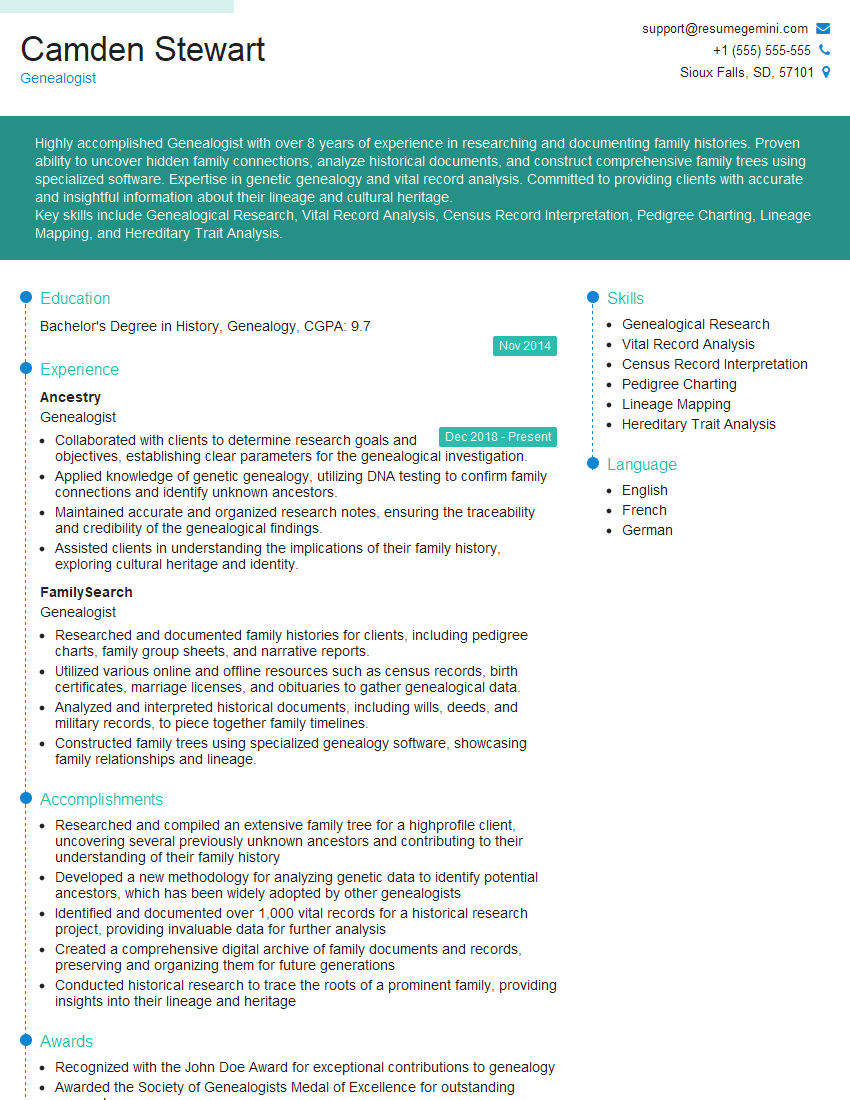
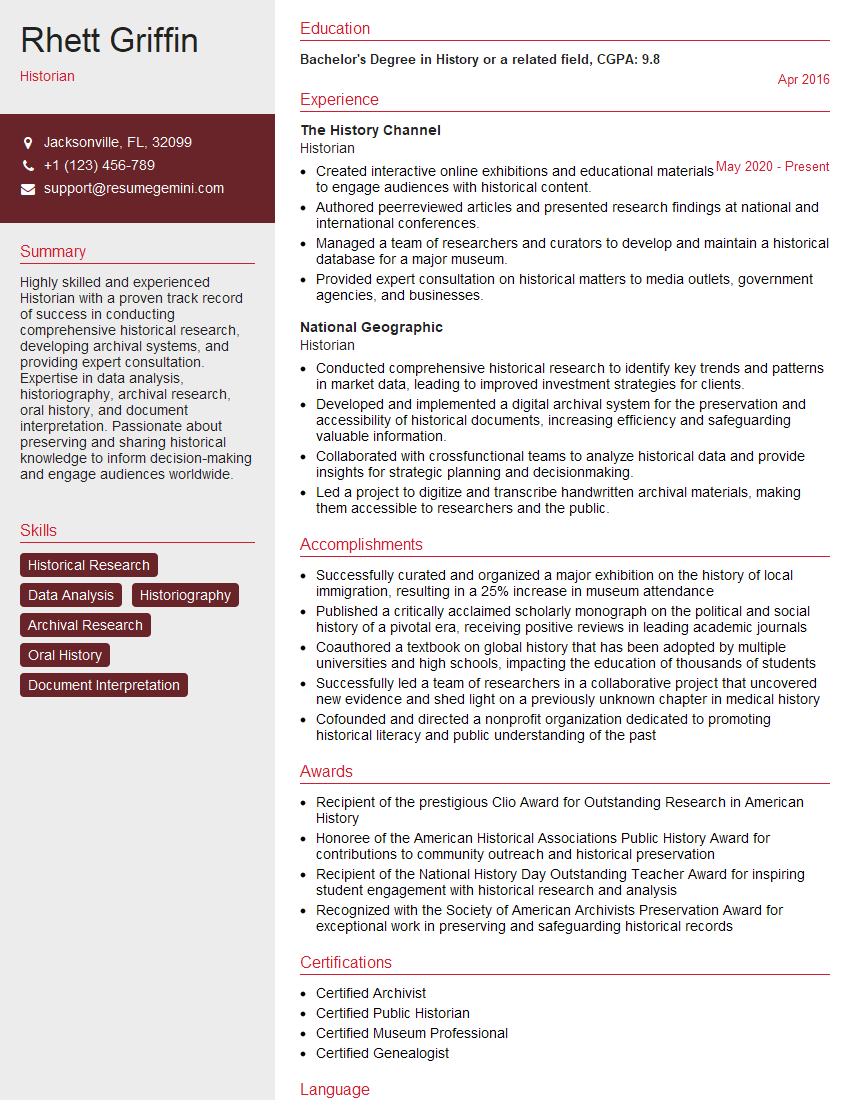
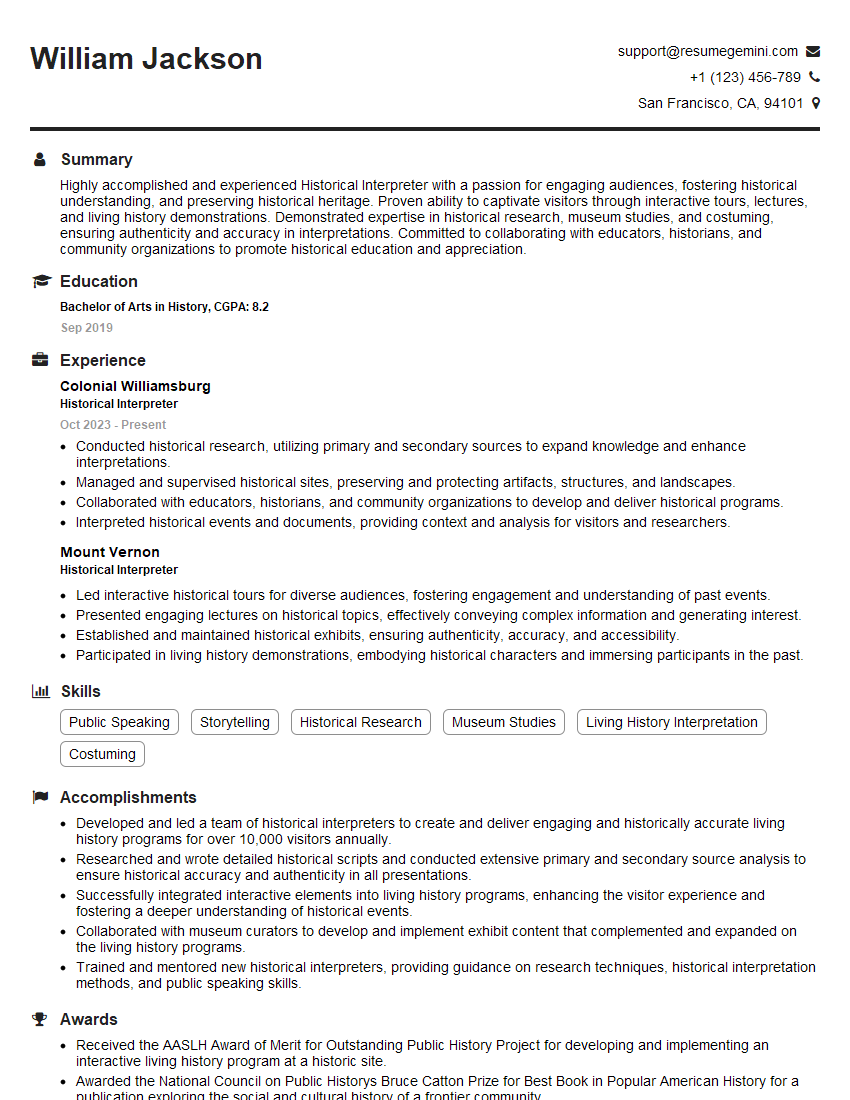
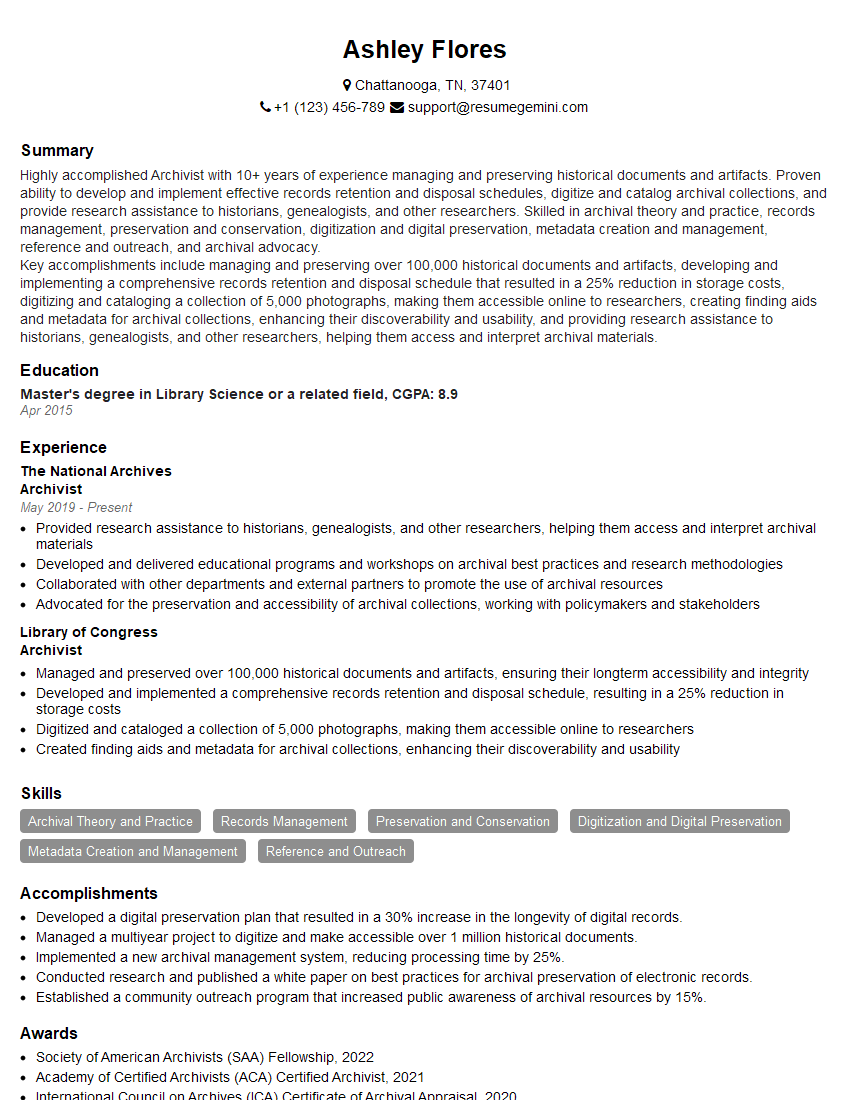
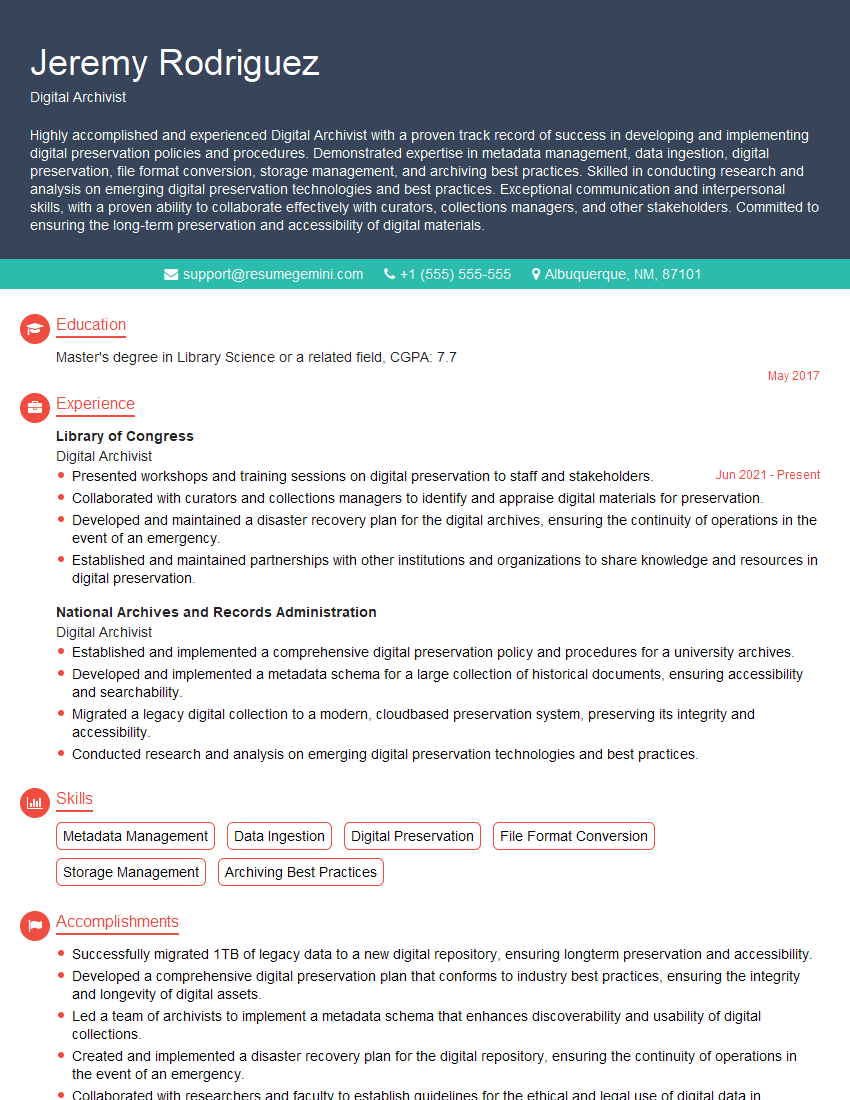
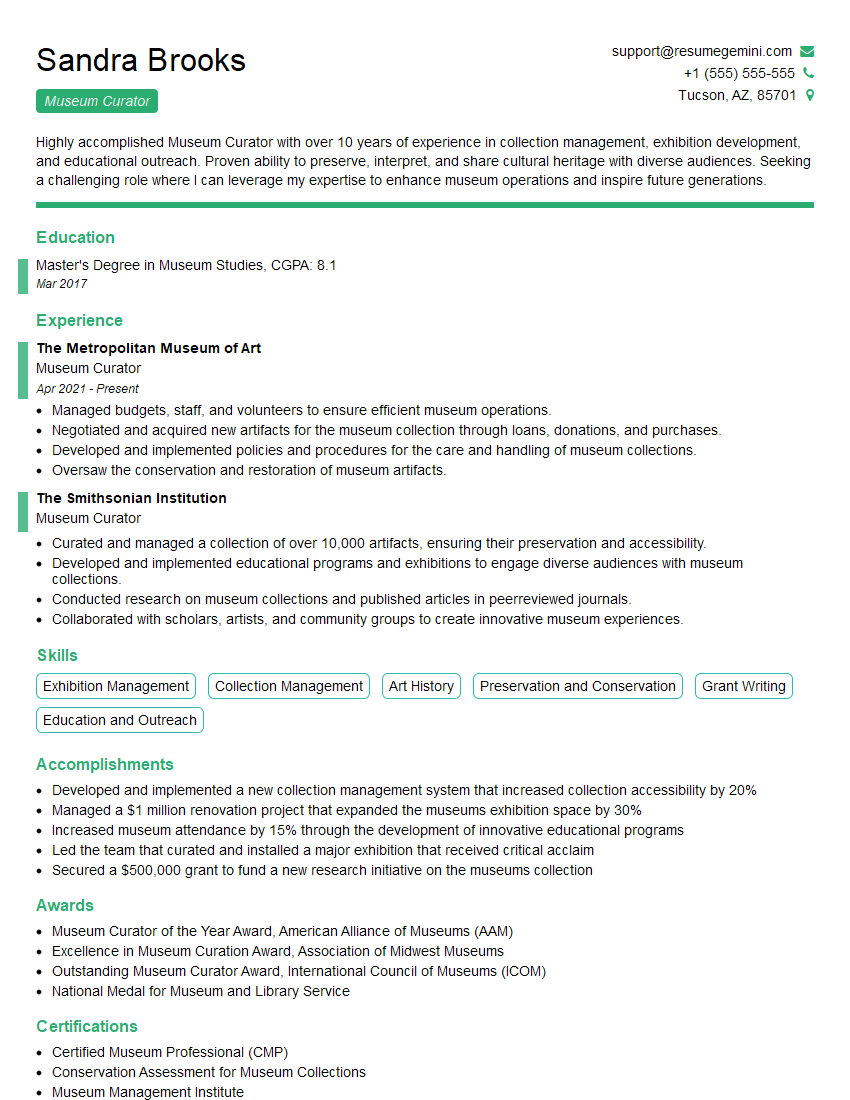
Mastering Historical Knowledge and Storytelling opens doors to exciting and impactful careers in museums, archives, education, journalism, and beyond. A strong resume is your key to unlocking these opportunities. Make sure yours is ATS-friendly, highlighting your skills and experience effectively. ResumeGemini is a trusted resource to help you craft a compelling and professional resume that showcases your unique abilities in this dynamic field. We provide examples of resumes tailored to Historical Knowledge and Storytelling to inspire you and guide your process. Take the next step and build a resume that reflects your expertise and ambition.
Explore more articles
Users Rating of Our Blogs
Share Your Experience
We value your feedback! Please rate our content and share your thoughts (optional).
What Readers Say About Our Blog
To the interviewgemini.com Webmaster.
Very helpful and content specific questions to help prepare me for my interview!
Thank you
To the interviewgemini.com Webmaster.
This was kind of a unique content I found around the specialized skills. Very helpful questions and good detailed answers.
Very Helpful blog, thank you Interviewgemini team.