Cracking a skill-specific interview, like one for Method Validation and Verification, requires understanding the nuances of the role. In this blog, we present the questions you’re most likely to encounter, along with insights into how to answer them effectively. Let’s ensure you’re ready to make a strong impression.
Questions Asked in Method Validation and Verification Interview
Q 1. Explain the difference between method validation and method verification.
Method validation and method verification are both crucial aspects of ensuring analytical methods produce reliable and accurate results, but they differ in scope and purpose. Think of it like building a house: verification checks if the house is built according to the blueprints (the method’s procedure), while validation ensures the house is fit for its intended purpose (meeting required performance characteristics).
Method verification is a simpler process that confirms that a previously validated method performs as expected in a specific laboratory environment. It involves demonstrating that the method gives acceptable results when transferred from one lab to another or when slight modifications are made. This usually involves a limited number of analyses.
Method validation, on the other hand, is a more extensive process that establishes documented evidence providing a high degree of assurance that a specific method will consistently produce results that are accurate, precise, and reliable for its intended purpose. It’s a comprehensive evaluation covering a range of parameters, designed before the method is used for routine testing.
Q 2. Describe the stages involved in method validation.
Method validation is a systematic process that usually involves these stages:
- Definition of Objectives: Clearly defining the intended use of the method and the analytes to be measured.
- Method Development (if needed): Developing or adapting a suitable analytical method.
- Protocol Establishment: Creating a detailed written procedure for the method, including every step of sample preparation, analysis and data handling.
- Validation Experimentation: Conducting experiments to evaluate the key validation parameters.
- Data Analysis and Reporting: Analyzing the experimental data to assess the method’s performance against pre-defined acceptance criteria. Preparing a comprehensive validation report documenting all findings.
- Method Approval: Obtaining approval from relevant stakeholders before the method’s implementation for routine use.
- Periodic Review and Revalidation: Regularly reviewing and revalidating the method to ensure its continued suitability.
Q 3. What are the key parameters evaluated during method validation?
The key parameters evaluated during method validation vary depending on the method’s purpose and the regulatory requirements, but some commonly assessed parameters include:
- Accuracy: How close the measured value is to the true value. Often assessed using recovery studies or comparison to a reference method.
- Precision: How reproducible the results are when the same sample is repeatedly analyzed using the same method. Includes repeatability (intra-assay precision) and intermediate precision (inter-assay precision).
- Specificity/Selectivity: The ability of the method to measure only the analyte of interest in the presence of other components (matrix effects).
- Linearity: The ability of the method to produce results that are directly proportional to the analyte concentration over a defined range.
- Range/Working Range: The concentration interval over which the method has been validated.
- Limit of Detection (LOD): The lowest concentration of analyte that can be reliably detected.
- Limit of Quantification (LOQ): The lowest concentration of analyte that can be reliably measured with acceptable accuracy and precision.
- Robustness: The ability of the method to remain unaffected by small, deliberate variations in parameters like temperature, pH, or reagent concentration.
- Ruggedness: The ability of the method to remain unaffected by changes in different lab environments or analysts.
Q 4. How do you determine the appropriate sample size for method validation?
Determining the appropriate sample size for method validation is crucial for obtaining statistically robust results. The sample size depends on several factors, including the desired level of confidence, the variability of the data, and the power of the statistical test used to analyze the results. There’s no single magic number. Regulatory guidelines usually don’t specify a sample size, but rather require sufficient data to demonstrate the method’s performance characteristics.
In practice, statistical software or power calculations are used to determine the required sample size. For instance, for assessing linearity, a minimum of five concentration levels is generally recommended with multiple replicates at each level. For other parameters, like accuracy and precision, the sample size needs to be large enough to ensure sufficient degrees of freedom for the statistical tests performed.
Consider consulting a statistician to ensure the chosen sample size is appropriate for the specific validation needs. Underestimating the sample size can lead to inaccurate conclusions and failed validations.
Q 5. What are the acceptance criteria for method validation parameters?
Acceptance criteria for method validation parameters are pre-defined limits within which the method’s performance should fall to be considered acceptable. These criteria vary depending on the analyte, the matrix, the intended use of the method, and the regulatory guidelines that apply. They are usually expressed as percentages or ranges.
For example, accuracy might require a recovery of 90-110%, while precision might require a relative standard deviation (RSD) below 5%. Specificity might require a clear separation of the analyte peak from interfering substances. The exact acceptance criteria must be defined *before* the validation studies begin and should be justified. These criteria should reflect the intended use of the method; a method used for environmental monitoring might have different acceptance criteria than one used for clinical diagnostics.
Q 6. Explain the concept of linearity in method validation.
Linearity in method validation refers to the ability of the analytical method to produce results that are directly proportional to the concentration of the analyte within a specific range. In simpler terms, if you double the concentration, you should ideally double the measured signal. This is essential for accurate quantification.
Linearity is usually assessed by analyzing a series of samples with known concentrations of the analyte spanning the intended range. A linear regression analysis is performed on the data, and the goodness of fit (e.g., R-squared value, correlation coefficient) is evaluated. A high R-squared value (close to 1) indicates a strong linear relationship. The deviation from linearity is also assessed – often visually by examining a graph of the data. If significant deviations from linearity occur, the method might need adjustments or its range may need to be restricted.
Q 7. How do you assess the accuracy of a method?
Assessing the accuracy of a method involves determining how close the measured values are to the true or accepted values. Several approaches can be used:
- Recovery Studies: Known amounts of analyte are added to a sample matrix (spiking), and the percentage of the added analyte that is recovered is calculated. High recovery percentages (typically within the 90-110% range) indicate good accuracy.
- Comparison to a Reference Method: The results obtained using the new method are compared to those obtained using a well-established and validated reference method. Statistical analysis (e.g., t-test, paired t-test) is used to assess the agreement between the methods.
- Analysis of Certified Reference Materials (CRMs): CRMs are materials with certified concentrations of the analyte(s) of interest. Analyzing CRMs and comparing the results to the certified values allows for an objective assessment of the method’s accuracy.
The choice of method for assessing accuracy depends on the availability of suitable reference materials and the nature of the analyte and matrix. All methods require rigorous documentation and statistical analysis to determine if the method meets pre-defined acceptance criteria.
Q 8. Describe the precision parameters (repeatability, intermediate precision, reproducibility).
Precision in method validation assesses the reproducibility of measurements. It’s how close repeated measurements of the same sample are to each other. We look at three key aspects: repeatability, intermediate precision, and reproducibility.
- Repeatability: This measures the variation in results obtained by the same analyst using the same equipment over a short period. Think of it like repeatedly weighing the same object on the same scale – the results should be very close.
- Intermediate Precision: This expands on repeatability by considering variations introduced by different analysts, different equipment, or different days. It gives a more realistic picture of precision in a routine lab setting. For instance, imagine several analysts using different HPLC instruments to measure the same sample across several days.
- Reproducibility: This is the broadest measure of precision. It considers variations obtained by different analysts, different labs, and even different methods (if applicable). It’s like comparing results from a method validated in multiple international laboratories.
Understanding these precision parameters is crucial because low precision can lead to inaccurate results and unreliable data, impacting the reliability of any conclusions drawn from the analytical method. High precision ensures consistent results, increasing the confidence in the method’s performance.
Q 9. What is the significance of the limit of detection (LOD) and limit of quantification (LOQ)?
The Limit of Detection (LOD) and Limit of Quantification (LOQ) are critical parameters defining the analytical method’s sensitivity. They represent the lowest concentration of an analyte that can be reliably detected and quantified, respectively.
- LOD (Limit of Detection): This is the lowest concentration of analyte that can be distinguished from the background noise with a certain level of confidence (typically 99%). Think of it as the point where you can confidently say, ‘Yes, there’s something here.’ A low LOD signifies a highly sensitive method capable of detecting even trace amounts of analyte.
- LOQ (Limit of Quantification): This is the lowest concentration of analyte that can be measured with acceptable accuracy and precision. It’s the point where you can not only detect the analyte but also provide a reliable, accurate quantitative measurement. It’s about saying, ‘Yes, there’s this much of it.’ A low LOQ is desirable for accurate analysis, especially in scenarios requiring precise measurements of low concentrations, such as environmental monitoring or pharmaceutical impurity analysis.
These limits are essential for determining the method’s applicability to a specific analytical task. A method with a high LOD/LOQ may not be suitable for applications requiring the determination of trace amounts of an analyte.
Q 10. How do you determine the LOD and LOQ?
Several approaches exist for determining LOD and LOQ, often involving statistical analysis of the background noise and signal from low-concentration samples. Common methods include:
- Standard Deviation Method: This method uses the standard deviation of the blank signal (noise) to calculate LOD and LOQ. The formulas generally involve multiplying the standard deviation by a factor (e.g., 3.3 for LOD, 10 for LOQ), though specific values may vary depending on regulatory guidelines.
LOD = 3.3 * σblank; LOQ = 10 * σblank - Visual Inspection Method: A simpler, less rigorous approach that visually assesses the signal-to-noise ratio in low-concentration samples. This involves plotting a calibration curve, observing where the signal consistently rises above the background noise.
- Signal-to-Noise Ratio Method: This method uses the ratio of the signal from low-concentration samples to the standard deviation of the blank signal to determine the detection and quantification limits.
The choice of method depends on several factors, including the complexity of the matrix, the instrumentation, and the regulatory requirements. Proper validation requires detailed documentation of the method used for LOD/LOQ determination.
Q 11. What is robustness testing and why is it important?
Robustness testing evaluates the method’s resilience to minor variations in experimental conditions. It’s essentially a ‘stress test’ that ensures the method produces reliable results even when minor deviations occur during routine use. These deviations might include changes in temperature, pH, reagent concentration, or instrument settings.
This is vital because lab conditions aren’t always perfectly consistent. Imagine slight variations in temperature affecting your chromatography results or fluctuations in the pH affecting enzymatic activity. Robustness testing helps you determine the acceptable range of these parameters, ensuring the method is reliable even with these unavoidable fluctuations. It helps prevent costly method failures and ensures consistent, reliable results.
Typical approaches involve systematically varying parameters within a specified range, then analyzing the impact of these variations on the method’s performance. This is documented in a detailed robustness report, indicating the acceptable operational range for each parameter.
Q 12. Explain the concept of specificity in method validation.
Specificity in method validation refers to the method’s ability to measure the target analyte accurately and without interference from other components in the sample matrix. It’s about being able to distinguish your specific analyte of interest from everything else present in the sample. Imagine trying to find a specific grain of sand (the analyte) on a beach filled with countless other grains of sand (interfering substances). A specific method will successfully isolate the grain of interest.
Lack of specificity leads to inaccurate measurements. If other compounds in the sample react similarly to the analyte in the assay, the results will be inflated, leading to false positives or inaccurate quantitation. Ensuring specificity is crucial in many applications, such as drug impurity analysis where detection of even minor impurities is vital for safety and efficacy.
Methods used to assess specificity can include comparing results obtained using various techniques (e.g., different chromatographic separations), analyzing samples with known interferents, and using spiking studies to assess the impact of potential interferents on the measurement of the analyte.
Q 13. What are the different types of validation methods?
There’s a variety of validation methods depending on the analytical technique and intended application. However, some common types include:
- Full Validation: A comprehensive approach involving all validation parameters (accuracy, precision, linearity, range, LOD, LOQ, robustness, specificity).
- Partial Validation: A more focused approach, necessary when only specific aspects of the method need verification (e.g., confirming linearity or robustness).
- Cross-validation: Comparing the results obtained by using two or more different analytical methods to ensure consistency.
- Internal Validation: Validation performed within a single laboratory.
- External Validation: Validation performed across multiple laboratories to assess inter-laboratory reproducibility.
The choice of validation method depends upon the intended use, regulatory requirements, and the inherent complexity of the method.
Q 14. Describe the process of documenting method validation results.
Method validation results are meticulously documented following established guidelines (e.g., ICH guidelines). A comprehensive report should include:
- Introduction: Clearly stating the purpose and scope of the validation.
- Materials and Methods: Detailed description of the analytical method, including reagents, equipment, and procedures. Specific conditions used during the validation should be outlined, including sample preparation techniques.
- Results: Presenting the raw data and statistical analysis of each validation parameter (with tables, graphs, and relevant calculations).
- Discussion: Interpreting the results, demonstrating compliance with predetermined acceptance criteria, and addressing any anomalies or deviations.
- Conclusion: Summarizing the validation findings and providing a clear statement of whether the method is deemed fit for purpose.
- Appendices: Including raw data, calculations, and supporting documentation. SOPs (Standard Operating Procedures) may also be included.
The report is often reviewed and approved by supervisors or designated personnel before being archived. Strict adherence to regulatory guidelines and good documentation practices (GDP) ensures the reliability and traceability of the validation results. Proper documentation is vital for regulatory compliance and for ensuring the long-term use and reliability of the validated method.
Q 15. What regulatory guidelines are relevant to method validation in your field?
Method validation, in my field, is governed by a number of stringent regulatory guidelines. The specific regulations depend heavily on the industry and the analyte being measured. For example, in pharmaceutical analysis, the primary guidelines are those issued by regulatory bodies such as the FDA (Food and Drug Administration) in the US, the EMA (European Medicines Agency) in Europe, and similar agencies worldwide. These guidelines, often found in documents like the ICH (International Council for Harmonisation) guidelines (e.g., ICH Q2(R1) Validation of Analytical Procedures), provide detailed specifications for various validation parameters.
These guidelines cover aspects like accuracy, precision, linearity, range, detection limit, quantitation limit, specificity, robustness, and system suitability. Failure to meet these guidelines can lead to significant consequences, including rejection of products, delays in market approvals, and legal repercussions. In other fields like environmental testing or food safety, EPA (Environmental Protection Agency) or equivalent national regulations are paramount.
- ICH Q2(R1): This is the cornerstone guideline for pharmaceutical method validation, providing a comprehensive framework for evaluating analytical methods.
- FDA guidelines: The FDA publishes specific guidance documents relevant to different types of analyses and products.
- National and regional regulations: Specific countries or regions may have their own regulatory requirements, often building upon international guidelines.
Career Expert Tips:
- Ace those interviews! Prepare effectively by reviewing the Top 50 Most Common Interview Questions on ResumeGemini.
- Navigate your job search with confidence! Explore a wide range of Career Tips on ResumeGemini. Learn about common challenges and recommendations to overcome them.
- Craft the perfect resume! Master the Art of Resume Writing with ResumeGemini’s guide. Showcase your unique qualifications and achievements effectively.
- Don’t miss out on holiday savings! Build your dream resume with ResumeGemini’s ATS optimized templates.
Q 16. How do you handle outliers in method validation data?
Handling outliers in method validation data is critical. A simple removal based on visual inspection alone is unacceptable; it requires a statistically sound approach. First, we must investigate the cause of the outlier. Was there a known error (e.g., a malfunctioning instrument, a sample preparation mistake)? If a clear cause is identified, the outlier can be justifiably excluded. Documentation of this exclusion is absolutely essential.
If no clear cause is identified, Grubbs’ test or Dixon’s test are commonly employed to determine if the outlier is statistically significant. These tests assess the probability that the outlier arose from the same population as the remaining data points. If the test indicates the outlier is statistically significant (meaning it’s unlikely to be part of the normal distribution), it can then be excluded, but again, full justification and documentation must be provided. Simply rejecting data without a clear rationale is a significant breach of good laboratory practices (GLP).
It’s crucial to remember that the decision to exclude an outlier should be justified and transparently documented. This rigorous approach safeguards the integrity of the validation study and ensures the reliability of the results.
Q 17. What statistical methods are commonly used in method validation?
Method validation relies heavily on statistical methods to ensure the reliability and accuracy of results. The specific methods depend on the parameter being validated. Some commonly used statistical tools include:
- Descriptive statistics: Mean, standard deviation, range, and median to summarise data.
- Linear regression: Used to assess linearity, calculating the correlation coefficient (r) and the coefficient of determination (r²) to determine the goodness of fit for calibration curves. A high R² value indicates a strong linear relationship.
- Analysis of variance (ANOVA): Used to compare the means of multiple groups, for example, in assessing the precision across different days or analysts.
- t-tests: Used for comparing two means, such as comparing the accuracy of a method to a reference method.
- Grubbs’ and Dixon’s tests: These tests, as previously mentioned, are used to identify and potentially remove outliers.
- Confidence intervals: Used to express the uncertainty associated with the estimated parameters, such as the mean or the slope of a calibration curve.
The choice of statistical method is crucial and must be appropriate for the type of data and the research question. Misapplication of statistical methods can lead to inaccurate conclusions and compromise the validity of the method.
Q 18. How do you ensure the integrity of your validation data?
Ensuring the integrity of validation data is paramount. It’s achieved through a combination of meticulous planning, rigorous execution, and thorough documentation. This involves several key aspects:
- Comprehensive SOPs: Standardized operating procedures (SOPs) must be followed meticulously, outlining each step of the process, from sample preparation to data analysis.
- Chain of custody: Maintaining a clear and unbroken chain of custody for all samples, ensuring traceability throughout the validation process.
- Instrument calibration and qualification: All instruments must be properly calibrated and qualified before use, and calibration records should be meticulously maintained.
- Data logging and audit trails: Utilizing electronic data systems with secure audit trails that record all changes and actions taken on the data.
- Data review and verification: Independent review of data by another qualified analyst to confirm accuracy and adherence to SOPs.
- Secure data storage: Data should be stored securely, following data integrity policies and regulatory requirements.
A strong emphasis on GLP (Good Laboratory Practice) guidelines is essential throughout the entire validation process. This includes detailed record-keeping, instrument maintenance, and proper training of personnel.
Q 19. Describe your experience with different analytical techniques (e.g., HPLC, GC, UV-Vis).
My experience encompasses various analytical techniques, including HPLC (High-Performance Liquid Chromatography), GC (Gas Chromatography), and UV-Vis (Ultraviolet-Visible Spectroscopy). I’ve used HPLC extensively for the separation and quantification of various compounds, including pharmaceuticals and environmental pollutants. I understand method development, optimization, and validation for various HPLC modes (e.g., reverse phase, normal phase, ion exchange).
GC has been instrumental in the analysis of volatile compounds, particularly in environmental and food safety contexts. I am experienced in both packed and capillary column GC, including the selection of appropriate columns and detectors based on the analytes of interest. UV-Vis spectroscopy provides a simpler, yet powerful technique for determining the concentration of compounds with suitable chromophores, often used for routine quality control and quantification.
In each case, my experience includes not just routine analysis, but also method development, validation, and troubleshooting. I’m adept at selecting the most appropriate technique for a given analytical challenge, considering factors such as sensitivity, selectivity, and sample matrix complexity. For example, I’ve successfully developed and validated HPLC methods for detecting trace impurities in pharmaceutical products and GC methods for analyzing pesticide residues in agricultural products.
Q 20. How do you troubleshoot common problems encountered during method validation?
Troubleshooting in method validation requires a systematic approach. I typically start by carefully reviewing the raw data and method parameters. A checklist is often used to ensure all aspects have been considered:
- Check instrument parameters: Verify that instrument settings (e.g., flow rate, temperature, wavelength) are correct and consistent with the validated method.
- Review sample preparation: Assess if the sample preparation procedure was followed accurately. Are there inconsistencies in sample handling or extraction efficiency?
- Assess reagent quality: Check the quality and purity of reagents and solvents. Are the reagents fresh and stored properly? Degradation can impact results.
- Investigate peak shape and resolution: Poor peak shape (tailing, fronting) or insufficient resolution between peaks can indicate problems with the chromatographic separation. Consider adjustments to the mobile phase, column, or flow rate.
- Examine calibration curve: Assess linearity and accuracy of the calibration curve. Are there outliers? A poor calibration curve requires investigation and may lead to the need for re-calibration.
- Consider matrix effects: Complex sample matrices can interfere with the analysis. If sample matrix effects are suspected, consider sample clean-up or alternative analytical strategies.
If a problem is persistent, a root cause analysis may be necessary, often involving a review of all aspects of the method, including the preparation of standards and the analytical process itself.
Q 21. What is a system suitability test, and why is it performed?
A system suitability test (SST) is a crucial part of any analytical method, performed before each analytical run to confirm the system is operating appropriately and that the results will be reliable. Think of it as a pre-flight check for an airplane – you wouldn’t take off without it! It ensures the instrument is functioning correctly and the conditions are suitable for generating acceptable data.
It’s not a validation parameter itself, but a quality control check. The SST typically involves analyzing a standard sample under the specified method conditions and evaluating several parameters, including:
- Retention time: Assessing the reproducibility of the retention time of the analyte(s) of interest.
- Peak area or height: Assessing the precision and sensitivity of the system.
- Peak symmetry: Evaluating the shape of the peaks to ensure optimal separation.
- Resolution: Assessing the separation between adjacent peaks (if applicable).
- Tailing factor: Measuring peak tailing, indicating column efficiency and appropriate separation.
If the SST parameters fail to meet pre-defined acceptance criteria, the analysis is stopped, and the instrument or method is investigated and corrected before proceeding. This proactive approach prevents the generation of unreliable results and ensures data integrity.
Q 22. Explain the role of quality control in method validation.
Quality Control (QC) plays a vital role in method validation by ensuring the analytical method consistently produces reliable and accurate results. Think of it as the ongoing ‘check-up’ for your method after it’s been validated. While validation demonstrates the method’s fitness for purpose initially, QC procedures confirm that this fitness is maintained over time. This involves regular checks through the analysis of control samples alongside test samples. These controls are known concentrations, and their analysis provides data to detect any drift in the method’s performance. For instance, if you’re validating a method for measuring the concentration of a drug in tablets, QC would involve regular analysis of control tablets with known drug concentrations to ensure that the method continues to provide accurate and precise results over time.
QC procedures can include various activities like:
- Regular calibration of equipment
- Analysis of quality control samples (QCS) with known concentrations
- Monitoring of precision and accuracy using control charts
- Review of results to identify any out-of-specification (OOS) results or trends
Deviations from established QC criteria would trigger an investigation to identify the root cause and prevent future issues. Essentially, QC provides ongoing evidence that the method remains fit-for-purpose and ensures the integrity of the data generated.
Q 23. Describe your experience with validation software.
I have extensive experience using various validation software packages, including Empower, Chromeleon, and OpenLab CDS. My proficiency extends beyond simple data acquisition and processing; I am adept at utilizing these platforms to design and execute validation studies, generate comprehensive reports, and perform statistical analysis of the results. For example, in a recent project involving the validation of a HPLC method, I used Empower software to automate the injection sequence, collect and process chromatographic data, and generate reports demonstrating compliance with regulatory requirements for parameters such as linearity, precision, accuracy, and specificity. I’m also comfortable with LIMS (Laboratory Information Management Systems) integration and using software to track and manage validation documentation. My experience includes troubleshooting software issues, optimizing workflows for efficiency, and adapting software to accommodate various analytical techniques and regulatory requirements.
Q 24. How do you stay updated on the latest regulations and best practices in method validation?
Staying current with regulations and best practices in method validation is crucial. My approach is multi-faceted. I actively participate in professional organizations like the AOAC INTERNATIONAL and USP, attending conferences and webinars to learn about the latest developments. I also subscribe to relevant journals such as the Journal of Pharmaceutical and Biomedical Analysis and regularly review updates from regulatory bodies such as the FDA and EMA. Furthermore, I maintain a network of colleagues within the analytical chemistry community and actively engage in discussions to share knowledge and stay abreast of emerging trends. This continuous learning ensures I apply the most current and robust validation approaches to my work, guaranteeing the highest level of quality and compliance.
Q 25. Describe a situation where you had to troubleshoot a failed validation study.
During a validation study for a new UV-Vis spectrophotometric method, we experienced unexpectedly high variability in the precision data. Initially, the results were outside the acceptable limits. Our troubleshooting process followed a systematic approach:
- Review of SOPs and Method: We meticulously reviewed the method’s Standard Operating Procedure (SOP) for any inconsistencies or omissions.
- Equipment Check: We verified the calibration and proper functioning of the spectrophotometer, checking wavelength accuracy and photometric linearity.
- Reagent Quality: We examined the quality and stability of the reagents and solvents used, considering their potential degradation or contamination.
- Sample Preparation: We re-evaluated the sample preparation procedure, carefully examining potential sources of variability, such as weighing errors or incomplete dissolution.
- Environmental Factors: We considered any environmental influences, such as temperature fluctuations, that could impact the analysis.
Ultimately, we discovered that minute variations in sample temperature during preparation were causing significant changes in absorbance readings. Implementing a tightly controlled temperature-regulated water bath during sample preparation resolved the issue, resulting in acceptable precision data and successful validation.
Q 26. How would you manage conflicting results between different validation runs?
Conflicting results between validation runs are a serious concern. The first step involves a thorough investigation to identify the source of the discrepancy. This involves a careful review of all aspects of the study, including:
- Raw Data Review: Scrutiny of raw data for any anomalies or errors.
- Instrument Checks: Verification of instrument calibration and maintenance logs.
- Reagent and Standard Review: Confirmation of reagent quality and stability, including expiry dates and storage conditions.
- Sample Handling: Examination of sample preparation and handling procedures, looking for inconsistencies.
- Method Evaluation: Assessment of the method’s robustness and suitability for the intended purpose.
If the source of the discrepancy cannot be identified and resolved, the affected data may need to be excluded from the overall assessment. Depending on the severity of the conflict, it might be necessary to conduct additional validation runs to clarify the situation. It is vital to thoroughly document the investigation and its findings to ensure transparency and compliance with regulatory guidelines. If after investigation the conflict remains unexplained, a more conservative approach to result interpretation should be taken and possibly further method development or optimization may be required.
Q 27. Explain the importance of standard operating procedures (SOPs) in method validation.
Standard Operating Procedures (SOPs) are the backbone of method validation. They provide detailed, step-by-step instructions for every aspect of the validation process, ensuring consistency and reproducibility. Imagine a recipe for baking a cake; without a precise recipe, you can’t guarantee the same result every time. Similarly, in method validation, SOPs ensure that the process is executed consistently across different analysts, laboratories, and even time. This consistency is paramount for obtaining reliable and reproducible results. Well-written SOPs minimize errors, ensure regulatory compliance, and facilitate easier transfer of methods between laboratories or personnel.
Key elements of a good SOP for method validation include:
- Detailed experimental protocols, including sample preparation, instrument settings, and data analysis procedures.
- Acceptance criteria for each validation parameter (e.g., linearity, precision, accuracy).
- Clearly defined roles and responsibilities of personnel involved in the study.
- Detailed instructions on data handling and reporting procedures.
- A section describing how to handle deviations and out-of-specification results.
Compliance with SOPs is fundamental for generating data that is reliable, consistent, and acceptable to regulatory authorities.
Key Topics to Learn for Method Validation and Verification Interview
- Accuracy and Precision: Understanding the difference, calculating these parameters, and interpreting their significance in method performance.
- Linearity and Range: Determining the linear working range of an analytical method and its practical implications for sample analysis.
- Specificity and Selectivity: Differentiating between these concepts and their importance in ensuring accurate results, especially in complex matrices.
- Limit of Detection (LOD) and Limit of Quantification (LOQ): Calculating and interpreting these limits and their role in method sensitivity.
- Robustness and Ruggedness: Exploring the difference and understanding how to assess the method’s resilience to variations in parameters.
- System Suitability Testing: Understanding the purpose and execution of system suitability tests to ensure the analytical system is performing adequately.
- Method Verification vs. Validation: Clearly defining and differentiating between these two crucial aspects of analytical method development.
- Regulatory Compliance: Understanding relevant guidelines (e.g., ICH guidelines) and their impact on method validation practices.
- Data Integrity and Documentation: Maintaining accurate and compliant records throughout the method validation process.
- Troubleshooting and Problem-Solving: Developing skills in identifying and resolving issues encountered during method validation or application.
- Statistical Analysis: Applying appropriate statistical methods for data analysis and interpretation in method validation.
Next Steps
Mastering Method Validation and Verification is crucial for career advancement in analytical chemistry and related fields. A strong understanding of these concepts demonstrates proficiency and opens doors to more challenging and rewarding roles. To maximize your job prospects, creating an ATS-friendly resume is essential. This ensures your qualifications are effectively communicated to potential employers. We highly recommend using ResumeGemini to build a professional and impactful resume. ResumeGemini provides a streamlined process and offers examples of resumes specifically tailored to Method Validation and Verification, helping you present your skills and experience in the best possible light.
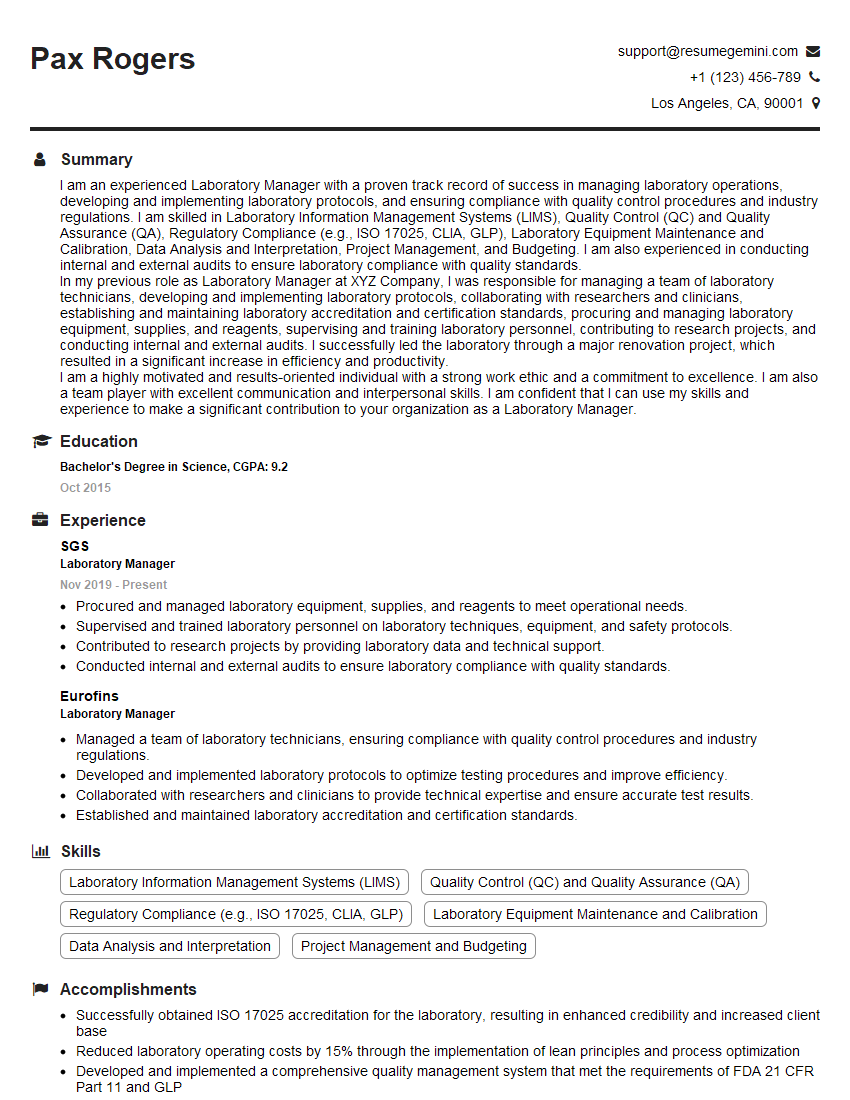
Laboratory Manager Resume Sample

Quality Assurance Manager Resume Sample

Quality Control Manager Resume Sample

Compliance Officer Resume Sample
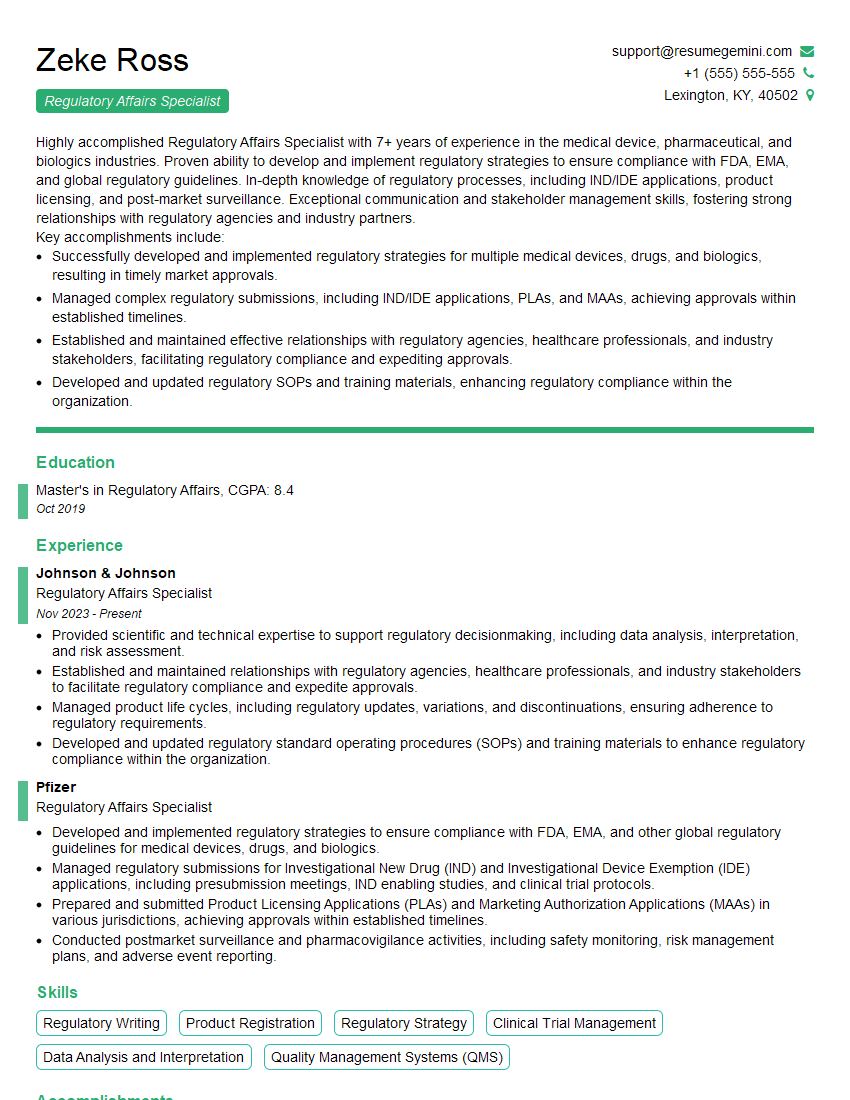
Regulatory Affairs Specialist Resume Sample

Quality Control Specialist Resume Sample
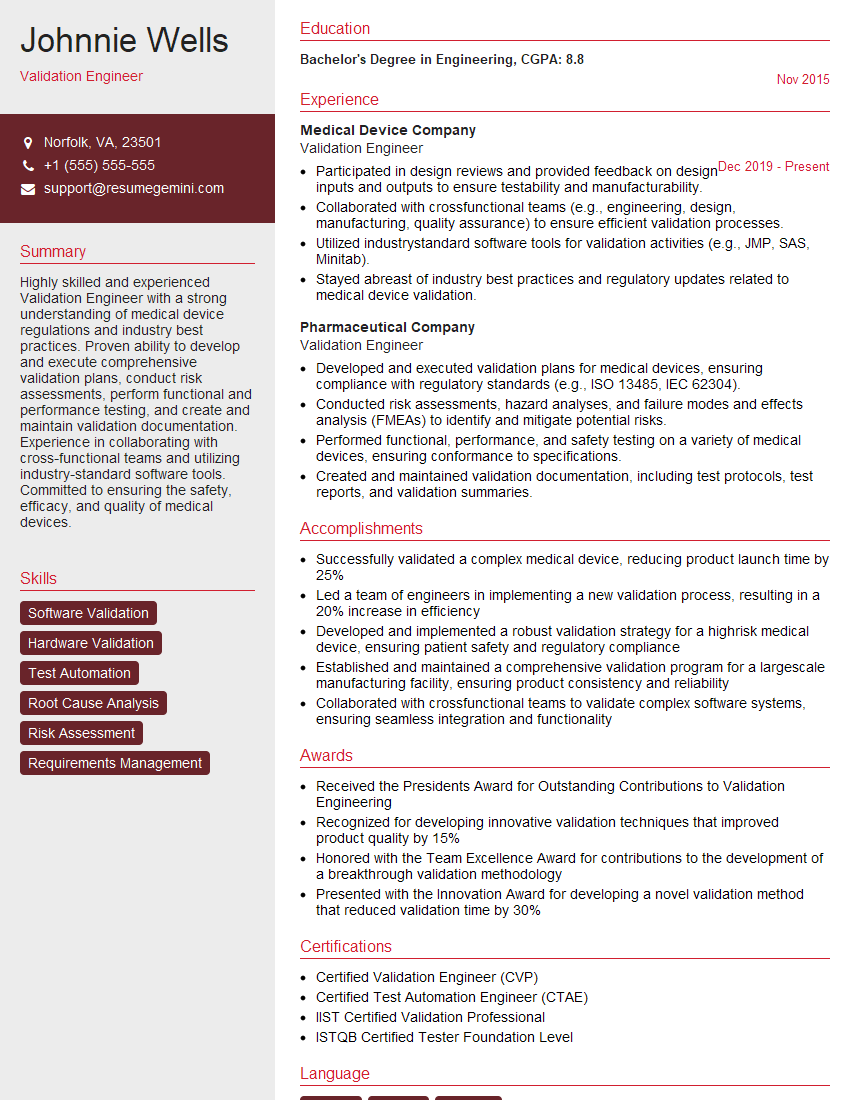
Validation Engineer Resume Sample
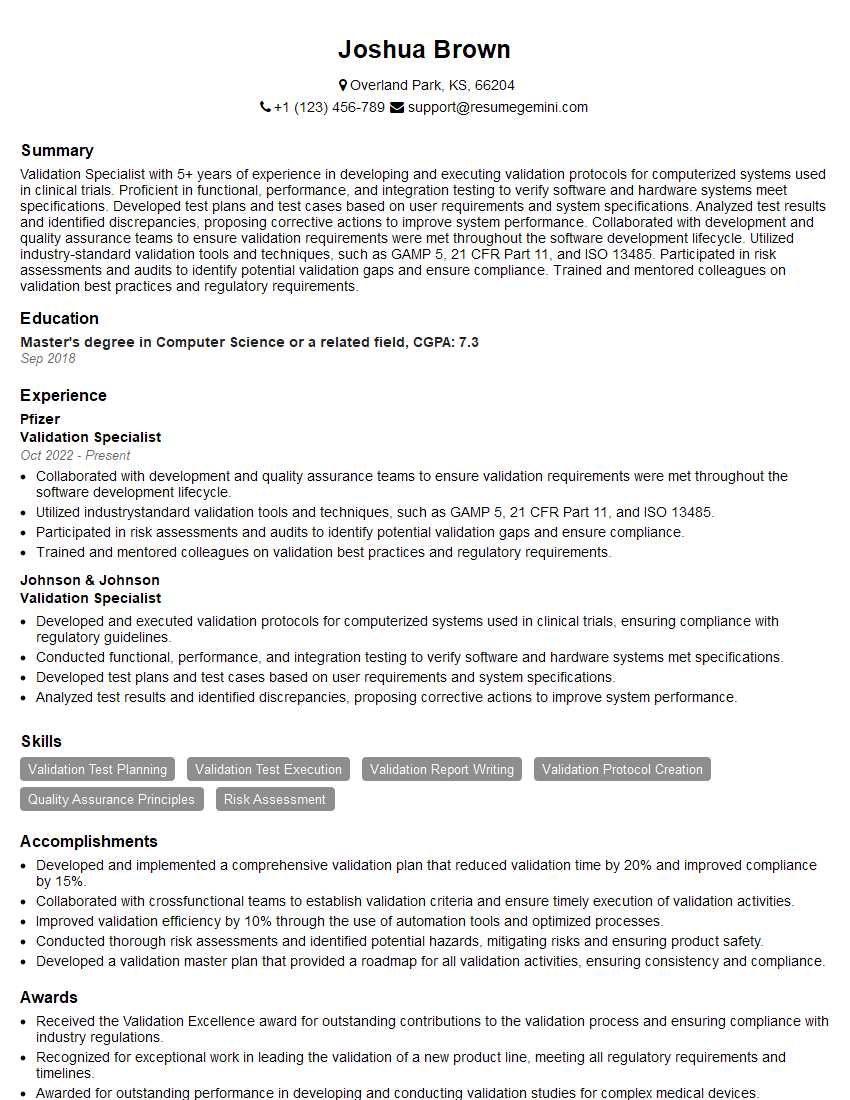
Validation Specialist Resume Sample

Laboratory Supervisor Resume Sample

Analytical Chemist Resume Sample

Metrology Technician Resume Sample
Explore more articles
Users Rating of Our Blogs
Share Your Experience
We value your feedback! Please rate our content and share your thoughts (optional).
What Readers Say About Our Blog
To the interviewgemini.com Webmaster.
Very helpful and content specific questions to help prepare me for my interview!
Thank you
To the interviewgemini.com Webmaster.
This was kind of a unique content I found around the specialized skills. Very helpful questions and good detailed answers.
Very Helpful blog, thank you Interviewgemini team.