Are you ready to stand out in your next interview? Understanding and preparing for Whitewater Reading interview questions is a game-changer. In this blog, we’ve compiled key questions and expert advice to help you showcase your skills with confidence and precision. Let’s get started on your journey to acing the interview.
Questions Asked in Whitewater Reading Interview
Q 1. Describe the process of reading a river’s hydraulics.
Reading a river’s hydraulics involves understanding how water flows, interacts with the riverbed and banks, and creates features like currents, eddies, and waves. It’s like reading a map, but instead of roads, you’re interpreting the river’s language of moving water.
The process starts with observation. Look for the river’s features: rocks, logs, changes in gradient (steepness), and the water’s surface texture. Fast water is often smoother on the surface, while slower water may be more chaotic. Note where water converges and diverges; this indicates pressure changes. Smooth stretches often lead to stronger currents or features downstream. Imagine a smooth, fast highway before a busy intersection – the intersection represents a feature, such as a hydraulic.
Next, consider the river’s gradient. Steeper sections usually mean faster water, creating more powerful currents and features. Finally, mentally visualize how the water flows around obstacles, creating areas of differing speed and pressure. This mental picture is crucial for anticipating your boat’s movement and choosing safe lines.
For example, a large rock in the middle of a river will create a V-shaped wave upstream and a slower eddy downstream. Understanding these patterns helps predict how your kayak or raft will behave near the rock.
Q 2. Explain the significance of eddy lines in whitewater navigation.
Eddy lines are the lines of turbulent water that form where a current meets an area of slower-moving water, typically along the riverbanks or behind obstacles like rocks. They’re crucial for whitewater navigation, serving as safe havens where you can rest, regroup, or plan your next move. Think of them as the calm before the storm, or a natural parking lot on the river.
Navigationally, they offer protection from strong currents. By entering an eddy, you can avoid being swept downstream uncontrollably. You can also use eddy lines to reposition your boat for a better approach to a rapid. For example, you might paddle across the current to an eddy line, then use its slower water to scout the rapid before entering.
Moreover, eddy lines also reveal hidden dangers. If an eddy line is unusually strong or agitated, it might indicate an unseen obstacle like a partially submerged log (a strainer) or a particularly powerful hole (a hydraulic) lurking beneath the surface. So, observing them thoroughly is crucial for safety.
Q 3. How do you identify potential hazards such as strainers and holes?
Identifying hazards like strainers and holes requires careful observation and an understanding of river hydraulics. Strainers are objects like submerged logs or branches that trap a boat, often resulting in capsize and entrapment. Holes are powerful recirculating currents that can hold a boat underwater, causing injury or drowning.
Strainers are often indicated by a buildup of debris or unusual surface texture, sometimes with water appearing to disappear or flow unusually slowly in a specific area. They’re frequently found at the edges of the river near vegetation or where debris has accumulated.
Holes are often marked by a swirling or rolling surface, a noticeable depression or ‘hole’ in the water, and a frothy appearance. Look for water that seems to be moving backward – this indicates the recirculating current of a hole. They frequently form behind rocks or in the plunge pools below large drops.
Always scout rapids thoroughly from shore, using binoculars if needed to look for these subtle signs. Remember, what you see on the surface is only a partial picture; many dangers lie hidden below.
Q 4. What are the key features to look for when scouting a rapid?
Scouting a rapid is essential for safe navigation. Look for the overall gradient, identifying the line of the strongest current and any significant obstacles or features like rocks, waves, and eddies. Think of it as a pre-flight check for your river journey.
- Line of Descent: Observe the main current’s path, identifying the safest and most efficient route through the rapid.
- Obstacles: Note all rocks, logs, and other obstructions, assessing their size, position, and potential impact on your boat.
- Hydraulics: Identify any holes, waves, or recirculating currents. Understanding their size and power is critical for choosing a safe line.
- Eddies: Locate eddy lines for potential rest areas, escape routes, or repositioning.
- Gradient Changes: Note any significant changes in the river’s gradient; steeper sections indicate faster, more powerful currents.
- Water Level: Observe the water level and compare it to previous trips or historical data to assess flow conditions.
Consider taking pictures or videos to better retain the details. This helps you to create a mental map of the rapid, enabling you to plan your run more effectively.
Q 5. How do you assess water volume and velocity?
Assessing water volume and velocity is key to understanding river conditions. Water volume, or discharge, refers to the amount of water flowing past a point in a given time; velocity describes the speed of that flow.
Water Volume: This is often difficult to gauge precisely without specialized equipment. However, visual cues can give a general idea. Higher water levels generally mean higher volume, as does wider river channels. Look for the river’s speed and the power of the currents and waves; faster, more powerful currents usually suggest higher volume.
Water Velocity: Observe the speed of the surface water – faster currents have higher velocities. Look at how quickly debris moves downstream; faster-moving debris indicates a higher velocity. The presence of powerful hydraulics or waves is a strong indicator of high velocity. You can also estimate velocity based on the river’s gradient; steeper sections usually have faster currents.
Experienced paddlers often develop an intuitive sense of volume and velocity by observing the river’s features and comparing them to previous experiences. However, it’s always prudent to consult river flow data from official sources when available.
Q 6. Explain the concept of hydraulic pressure and its impact on safety.
Hydraulic pressure is the force exerted by the water. In whitewater, it’s a significant safety concern, particularly in holes. These are areas where the water recirculates, creating a powerful, downward-pushing force that can pin a boat or person against the riverbed.
The pressure in a hole is created by the interplay of currents. Water flowing over a submerged obstacle can create a recirculating current, creating the characteristic ‘hole.’ The downward force can be immense, strong enough to trap a kayaker or raft under the surface. Even if initially able to escape the surface, the force can cause serious injury or even drowning.
Understanding hydraulic pressure involves recognizing the signs of these powerful recirculating currents: swirling water, a noticeable depression on the surface, and a generally chaotic water appearance. Avoiding these features is crucial. If caught, knowing effective escape techniques is essential and is usually taught through proper whitewater safety training.
Q 7. Describe different types of whitewater (Class I-VI) and their characteristics.
The International Scale of River Difficulty classifies whitewater rapids into six classes, each with distinct characteristics.
- Class I: Easy, slow-moving water with small waves. Minimal maneuvering required. Think of a gentle stream.
- Class II: Moderate, clear channel, some waves and small obstacles. Basic paddling skills are needed.
- Class III: Challenging, strong currents, waves, and obstacles. Good paddling skills and precise maneuvering are essential.
- Class IV: Very challenging, powerful currents, large waves, and complex obstacles. Advanced skills, precise boat control, and rescue ability are needed. Significant risk of injury.
- Class V: Extremely challenging, powerful, and unpredictable currents, large waves, and complex obstacles requiring exceptional skill and experience. The risk of injury is very high.
- Class VI: Extremely difficult, essentially unrunnable. These rapids are typically characterized by extreme danger, requiring specialized knowledge, skills, and equipment. Often involves significant risk of death.
Each class represents a significant increase in difficulty and risk. It’s vital to match your skill level with the class of river you choose to navigate.
Q 8. How do you choose a safe line through a rapid?
Choosing a safe line through a rapid is crucial for safe whitewater kayaking or rafting. It involves a combination of pre-trip planning, on-the-water observation, and quick decision-making. Think of it like navigating a complex maze – you need to identify the path of least resistance and avoid the dead ends.
- Pre-trip planning: Study river maps and scout the rapid from a safe vantage point, ideally from above. Look for the ‘cleanest’ water, identifying the smoother channels and avoiding obvious hazards.
- On-the-water observation: Once on the river, scan the rapid, identifying the main current, any obvious holes (areas where water recirculates violently), strainers (submerged debris that traps paddlers), and rocks.
- Choosing the line: The safest line is usually the one that avoids large rocks, holes, and strainers. Aim for a smoother section of water with a clear path downstream. You might have to maneuver around obstacles, often using eddy lines (areas where the water flows against the main current) to regroup and plan your next move.
- Maintain Momentum: Once you’ve chosen your line, maintain sufficient speed to avoid getting stuck in a hydraulic or swept into a hazardous area. If you feel like you’re losing momentum, a well-timed power stroke can help.
Example: Imagine a rapid with a large rock in the middle. The safest line might be to go to the right, hugging the calmer eddy line before shooting across the calmer downstream section.
Q 9. What are the common signs of a river changing its behavior?
Rivers are dynamic systems constantly changing their behavior. Recognizing these changes is vital for safety. Signs of change can be subtle or dramatic, and understanding them can save your life.
- Increased water levels: Obvious, but critical. Higher water levels mean faster currents, stronger hydraulics, and submerged obstacles that weren’t visible at lower flows. You’ll notice faster currents, wider spread and less defined channels.
- Changes in water color: Muddy or discolored water often signifies increased sediment load, indicating recent heavy rainfall upstream. This might mean increased currents and debris.
- Debris accumulation: Logs, branches, and other debris can create new hazards or alter the flow of the river. Look out for strainers (submerged log jams that trap paddlers), which are particularly dangerous.
- Changes in river sound: A noticeably louder roar or change in the sound profile of the river can indicate increased flow, constrictions, or significant changes in the riverbed.
- Unusual activity in the riverbanks: Look out for recent signs of erosion, landslides, or altered riverbanks. These could indicate instability and potential hazards downstream.
Example: A sudden change in water color from clear to muddy, coupled with increased flow rates, suggests a significant upstream event and demands heightened caution.
Q 10. Explain the difference between a ‘keeper’ and a ‘sleeper’ wave.
Both ‘keeper’ and ‘sleeper’ waves are types of hydraulic features in whitewater, but they differ significantly in their behavior and danger level.
- Keeper waves: These are waves that recirculate water, creating a “washing machine” effect. They are relatively predictable and generally manageable if approached correctly. A strong enough boat can break through them. However, getting caught in the recirculation zone can lead to exhaustion or even capsize.
- Sleeper waves: These are far more dangerous. They are underwater features, often large rocks or depressions, that create a powerful recirculating current just below the surface. They may appear as calm or smooth water from above, hence the name ‘sleeper.’ They can easily trap and capsize a boat, even without appearing to be a significant obstacle.
Example: A keeper wave might appear as a churning, visible recirculating current. A sleeper wave might look deceptively calm, only revealing its danger when a boat is already trapped in its recirculation zone.
Q 11. How do you identify and avoid potential hazards in low-water conditions?
Low water presents unique challenges. The river’s flow is reduced, exposing obstacles normally hidden beneath the surface. Navigation becomes trickier, and even minor impacts can have severe consequences.
- Exposed rocks and ledges: These become significantly more hazardous at low water as they are much closer to the surface. Careful scouting is essential.
- Riverbed obstacles: Rocks, gravel, and other riverbed features are far more likely to cause damage to your boat and injury to you.
- Strainers: These are even more dangerous in low water as the water flow may not have sufficient force to carry you over them and they will trap you easily.
- Reduced flow: A reduction in the water flow makes it harder to navigate the river, particularly if you lose your momentum, you may get stuck on a submerged obstacle.
Avoidance strategies: Careful scouting, choosing lines carefully, and selecting sections with smoother, deeper water are essential at low flow.
Q 12. How do you identify and avoid potential hazards in high-water conditions?
High water conditions present a different set of hazards, increasing the river’s power and unpredictability. The dangers are often amplified by increased speed, volume, and hidden obstacles.
- Increased current speed: This makes navigation significantly more difficult and dangerous. The higher volume of water will overwhelm you very quickly.
- Submerged hazards: Normally visible obstacles can be hidden, making it crucial to scout the river thoroughly. Underwater rocks and debris become lethal traps.
- Flash floods: Sudden increases in water levels can lead to dangerous situations requiring immediate evacuation.
- Debris: Flooded areas often carry significant debris, including large trees and other material that can damage equipment and injure paddlers.
Avoidance strategies: Avoid high-water paddling unless you’re extremely experienced, with the proper equipment and backup plans. Insist on careful scouting, and have an immediate plan for evacuation if needed. Choose smaller, less extreme rivers when water levels are high.
Q 13. Explain the importance of river awareness and situational assessment.
River awareness and situational assessment are paramount in whitewater. They form the foundation of safe paddling practices. These aren’t separate entities; they work together to create a holistic approach to safety.
- River awareness: This involves understanding the river’s character—its flow rate, gradient, typical hazards, and how these change with water levels. It involves studying maps, reading river guides, and gaining experience on various rivers.
- Situational assessment: This is a continuous process of observing your immediate surroundings. It includes evaluating the water’s current, observing potential hazards, considering your boat’s capabilities, and assessing your crew’s skill levels.
Example: Recognizing a rapid’s characteristics (e.g., a series of big waves followed by a tight squeeze) from prior knowledge (river awareness) enables you to make an informed judgment on which line to take or whether to portage altogether (situational assessment).
Q 14. How do you use visual cues to predict river behavior?
Visual cues are incredibly important for predicting river behavior. Experienced paddlers develop a keen eye for interpreting subtle clues that others might miss.
- Water surface texture: Smooth water often indicates deeper, calmer areas, while rough, choppy water suggests shallows, rocks, or stronger currents. Looking for a glassy appearance in the main current versus rough water could be very important.
- Current patterns: Observe how the water flows. Converging currents often indicate a stronger current in the confluence zone (where the currents meet), while diverging currents suggest calmer, slower flow in the space between.
- Hydraulic features: Look for recirculating water or waves that indicate the presence of submerged objects or significant changes in the riverbed.
- Debris: The location and movement of debris like leaves, branches, or foam can reveal the presence of hidden rocks or the direction of the main current.
- Riverbanks and vegetation: Erosion patterns, changes in vegetation, and the flow of water against banks can reveal clues about the river’s flow and potential hazards.
Example: Seeing a line of foam consistently deflected to one side of the river indicates a submerged rock or a stronger current on that side.
Q 15. Describe your experience with river rescue techniques.
My river rescue experience encompasses a wide range of techniques, from swift water rescue using throw bags and ropes to more complex scenarios involving kayaks and specialized rescue equipment. I’m proficient in various rescue methods, including the use of a swiftwater rescue sled and the different types of rope systems used for both self-rescue and assisting others. For instance, I’ve successfully performed a complex river rescue involving a pinned swimmer in a Class IV rapid, utilizing a Z-drag system to extract them from the hydraulic. This involved a coordinated effort with my team, and demonstrates my ability to work calmly and efficiently under pressure. My training includes certifications in Swiftwater Rescue Technician and Wilderness First Responder, continuously updated to maintain my competency.
My experience also extends to preventative measures, teaching clients how to self-rescue and avoid hazardous situations in the first place. I stress the importance of wearing proper personal flotation devices (PFDs), understanding river currents, and making educated decisions about river conditions. Understanding how to effectively use a throw bag, for example, can prevent a minor incident from escalating into a major rescue.
Career Expert Tips:
- Ace those interviews! Prepare effectively by reviewing the Top 50 Most Common Interview Questions on ResumeGemini.
- Navigate your job search with confidence! Explore a wide range of Career Tips on ResumeGemini. Learn about common challenges and recommendations to overcome them.
- Craft the perfect resume! Master the Art of Resume Writing with ResumeGemini’s guide. Showcase your unique qualifications and achievements effectively.
- Don’t miss out on holiday savings! Build your dream resume with ResumeGemini’s ATS optimized templates.
Q 16. What is your approach to risk management in whitewater situations?
My approach to risk management is a layered process, beginning long before we hit the water. It starts with thorough trip planning which includes checking river flows, weather forecasts, and recent river reports. I carefully assess the river’s characteristics—the rapids, the strainers (obstructions that can trap paddlers), the potential for flooding—and match the chosen route to the skill level of the group. Pre-trip safety briefings are paramount, ensuring everyone understands potential hazards, rescue protocols, and communication strategies.
On the river itself, constant vigilance is crucial. I continuously monitor river conditions, adjusting our plan as needed. We maintain a safety margin—for example, avoiding high-risk rapids when conditions deteriorate. If a participant faces a difficulty, we have pre-established communication strategies and support systems in place, ready to respond effectively. This is much more than just an intuitive response; it’s a proactive process, designed to pre-empt and mitigate potential problems. Think of it as driving defensively—anticipating potential dangers instead of reacting to them after they’ve occurred.
Q 17. How would you react to an emergency situation on the river?
My reaction to an emergency situation is guided by training and experience, focusing on a swift, calm, and coordinated response. The first priority is always to ensure the safety of myself and my clients. I utilize a systematic approach – using the acronym ‘RACE’ (Rescue, Alert, Care, Evacuate) to aid in decision making. If a paddler capsizes, for example, I’d immediately assess the situation, determine the level of risk involved and implement the appropriate rescue technique. I might use a throw bag, deploy a rescue boat, or directly swim to the person if necessary, depending on the conditions.
Simultaneously, I would alert emergency services or a pre-designated backup team, providing precise details on the location and nature of the incident. Once the person is safely out of the water, I’d assess their condition, administering first aid if needed. Finally, we’d evacuate the injured party and return to a safe location or proceed with the emergency evacuation plan.
Q 18. Describe your experience with different types of whitewater craft.
My experience encompasses a variety of whitewater craft, from kayaks (both sit-on-top and sit-inside) and canoes to inflatable rafts and stand-up paddleboards (SUPs). Each craft has its own handling characteristics and is suitable for different conditions and skill levels. I’m adept at maneuvering kayaks in technical rapids, utilizing edging and bracing techniques to maintain control. With rafts, I am comfortable with teamwork in larger groups, effectively managing the boat’s direction and responding to rapid changes in river conditions. I’ve also adapted to using SUPs in gentler sections, teaching clients the fundamental techniques for balance and navigation. Understanding the strengths and limitations of each type of craft is vital for risk mitigation and adapting to various river conditions.
My experience extends beyond mere operation; it includes maintenance and repair skills for each type of craft. This ensures I can address minor damages on the river and prolong trips without major interruptions.
Q 19. How do you communicate effectively with clients or team members on the river?
Effective communication is the cornerstone of safety on the river. I use a combination of verbal and non-verbal cues, adapting my communication style to the specific situation and the client’s experience level. Before any trip, I hold thorough safety briefings, utilizing clear and concise language, visuals, and demonstrations to convey essential information about the route, potential hazards, and the appropriate safety gear. On the river, I use a mix of verbal commands and hand signals, ensuring everyone understands instructions, even in noisy environments. Hand signals, in particular, are crucial to avoid confusion in case of shouting over loud rapids.
I also foster open communication amongst the group, encouraging participants to voice concerns or questions without hesitation. Building a strong rapport and fostering a sense of trust is essential for a positive and safe experience, emphasizing teamwork and mutual support.
Q 20. Explain the importance of pre-trip planning and safety briefings.
Pre-trip planning and safety briefings are not mere formalities; they are fundamental to risk management and ensuring a safe and enjoyable experience. Pre-trip planning involves a comprehensive assessment of the river, including water levels, weather forecasts, potential hazards, and the appropriate rescue protocols. It’s like creating a roadmap for the journey, outlining all possible scenarios and considering contingencies. This includes verifying the skill levels of all participants, selecting a route suitable for their abilities and tailoring the trip to those capabilities.
Safety briefings, on the other hand, transfer this knowledge to the participants, reinforcing the plan and ensuring everyone is on the same page. A clear briefing covers essential topics such as river etiquette, proper use of equipment (PFDs, helmets, throw bags), potential hazards, self-rescue techniques, and emergency procedures. It creates a shared understanding of what to expect and empowers each individual to react effectively in an emergency.
Q 21. How do you use weather forecasts to inform your river decisions?
Weather forecasts are critically important in informing river decisions, as they significantly impact river conditions. I routinely consult multiple weather sources, paying close attention to predicted rainfall, wind speeds, and temperature changes. Rainfall, even seemingly light showers upstream, can dramatically raise water levels in just a few hours, transforming a relatively benign river into a dangerous torrent. High winds can create challenging conditions on open water, impacting paddler control and increasing the risks of capsizing.
Using the forecasts, I assess the potential impacts on water levels and flow rates, adjusting the planned route or postponing the trip altogether if necessary. A seemingly minor change in forecast can dramatically alter the risk profile of the river. By carefully analyzing the data, I make informed decisions that prioritize the safety of myself and my clients. It’s not just about checking the forecast; it’s about interpreting it and understanding its implications on our trip plan.
Q 22. Describe your experience with using different types of safety equipment.
Safety equipment is paramount in whitewater kayaking. My experience encompasses a wide range, from personal protective equipment (PPE) to group safety gear. PPE includes helmets – crucial for head protection against rocks and boat impacts – and personal flotation devices (PFDs), which must be properly fitted and of Type III or V classification for whitewater. I’ve used various PFD styles, preferring those with high-visibility colors and multiple adjustment points for a secure fit. Beyond personal gear, I’m proficient in using throw bags for rescues, understanding different throw techniques based on the current and the victim’s location. I’ve extensive experience with safety kayaks, which are crucial for river rescue situations. Knowing how to effectively use and maintain these, including proper inflation and storage, is vital. Finally, I’m experienced with swiftwater rescue gear such as ropes, pulleys, and carabiners, understanding proper knot-tying and rigging techniques for complex rescues.
- Helmets: I always opt for helmets with a good fit, chin straps securely fastened, and sufficient coverage.
- PFDs: Type III or V PFDs are essential, ensuring proper buoyancy and minimizing risk of drowning.
- Throw Bags: Regular practice and understanding of different throw techniques are critical for effective rescues.
- Safety Kayaks: Maintenance and efficient use of safety kayaks are fundamental in swiftwater rescue scenarios.
Q 23. How do you maintain your own physical fitness for whitewater activities?
Maintaining physical fitness is not just beneficial, it’s essential for safe and enjoyable whitewater kayaking. My routine focuses on building strength, endurance, and flexibility – all crucial for paddling efficiency and swiftwater rescue response. I incorporate strength training, focusing on core strength, upper body power (for paddling), and lower body strength (for stability). I regularly perform exercises such as planks, pull-ups, squats, and deadlifts. Endurance training is equally important. This includes long-distance runs, swims, and kayaking trips on calmer waters to build stamina for extended paddling sessions. Flexibility is key to preventing injuries, so I include yoga and stretching routines to enhance range of motion and muscle recovery. Finally, I prioritize regular cardiovascular exercises to maintain a healthy heart and lungs, crucial for handling the physical demands of whitewater.
I also focus on nutrition and hydration. A balanced diet and consistent hydration are fundamental to optimizing energy levels and muscle recovery, which are especially important when engaging in high-intensity activities such as whitewater kayaking. A well-structured training plan, combined with mindful attention to diet and rest, ensures I’m always in peak physical condition for the challenges of whitewater kayaking.
Q 24. Describe your understanding of Leave No Trace principles in a river environment.
Leave No Trace (LNT) principles are ingrained in my approach to whitewater activities. It’s about minimizing our impact on the river environment, ensuring its preservation for future generations. In a river environment, this translates to several key practices. First, we plan ahead and prepare. This includes choosing appropriate campsites, knowing the river’s condition and carrying out all necessary waste. Second, we travel and camp on durable surfaces, avoiding sensitive ecosystems like riparian zones. Third, we dispose of waste properly, packing out everything we pack in, including human waste. We practice responsible campfires, only lighting them where permitted and extinguishing them thoroughly. We leave what we find; we do not disturb rocks, plants, or any other natural features. We minimize campfire impacts by using existing fire rings or stoves whenever possible. We respect wildlife by keeping a safe distance and leaving no food scraps behind. Finally, we consider others. We leave the river cleaner and more pristine than we found it, ensuring a positive impact on fellow river users. My guiding philosophy is always to leave no trace of our presence, allowing the river’s natural beauty and ecosystem to remain undisturbed.
Q 25. How do you address conflicts or challenging situations within a group setting on the river?
Addressing conflicts or challenges within a group setting on the river requires a proactive and collaborative approach. Open communication is key. I encourage group members to express their concerns or disagreements openly and respectfully, creating a safe space for honest dialogue. Active listening is equally important – understanding everyone’s perspective is crucial before proposing solutions. I believe in a collaborative problem-solving approach; involving all participants in the discussion, considering various opinions, and seeking a resolution that’s acceptable to everyone. If a conflict escalates, I’ll mediate, helping the involved parties find common ground, focusing on the shared goal of safety and enjoyment. If necessary, I’ll implement clear guidelines or rules, always emphasizing safety and teamwork. Prioritizing safety above all else is critical. If an individual’s behaviour compromises safety, I’ll address the issue directly and firmly, but always with respect.
For example, if a paddler is exhibiting reckless behavior, I would address the situation privately but firmly, emphasizing the potential consequences and the importance of adhering to safety protocols. If necessary, the group may have to adjust its plans to ensure everyone’s safety. It’s about balancing group cohesion with individual safety and the overall enjoyment of the experience.
Q 26. Explain your experience with different river systems and their unique characteristics.
My experience spans a variety of river systems, each with its unique characteristics. I’ve paddled the challenging class V rapids of the Grand Canyon, navigating its powerful currents and intricate canyons. This experience honed my skills in swiftwater rescue and high-angle rescue techniques. I’ve also navigated the playful class III rapids of the Nantahala River, emphasizing precise boat control and maneuvering in tight spaces. This involved practicing various paddling techniques and focusing on efficient teamwork within a group. I’ve explored the calmer waters of the Current River, focusing on different aspects such as enjoying the surrounding scenery, utilizing ecological awareness, and mastering different paddling strokes. Each river system demands a different approach: the Grand Canyon necessitates extensive planning, advanced paddling skills, and a thorough understanding of river rescue, while the Nantahala focuses on technical skills and precise maneuvering. The Current River, being calmer, offers an opportunity to hone paddling technique and enjoy the scenic beauty of the river. This diverse experience gives me a broad understanding of river dynamics and the ability to adapt my skills to diverse environments.
Q 27. How would you assess the suitability of a particular river section for a specific group?
Assessing the suitability of a river section for a specific group involves several factors. First, I consider the group’s experience level. Beginners require gentler, class I or II rapids, whereas experienced paddlers may comfortably tackle class IV or V. The river’s flow rate and water level are crucial. High water levels can make even relatively easy rapids more dangerous, while low water might expose hazards not present at higher flows. I assess the presence of hazards, including rocks, strainers (submerged obstacles that trap kayakers), and hydraulics (powerful recirculating currents). The river’s remoteness also plays a role; a remote section requires more preparation and self-sufficiency, potentially requiring additional rescue gear and expertise. Finally, I consider weather conditions and potential for flash floods. A thorough assessment of these factors, combined with careful observation of the river itself, allows me to determine the suitability of a particular section for a specific group, ensuring a safe and enjoyable experience for everyone.
Key Topics to Learn for Whitewater Reading Interview
- Fundamental Principles: Understanding the core concepts behind Whitewater Reading, including its theoretical underpinnings and the various methodologies employed.
- Data Interpretation and Analysis: Developing skills in effectively interpreting complex data sets related to Whitewater Reading and drawing meaningful conclusions. This includes identifying trends, patterns, and anomalies.
- Practical Applications: Exploring real-world scenarios and case studies where Whitewater Reading techniques are applied, such as risk assessment, predictive modeling, or strategic decision-making.
- Problem-Solving Strategies: Practicing problem-solving approaches specific to challenges encountered in Whitewater Reading, focusing on analytical thinking and creative solutions.
- Technological Proficiency: Familiarizing yourself with the software and tools commonly used in Whitewater Reading analysis and reporting.
- Communication and Presentation: Honing your ability to clearly and concisely communicate complex findings and recommendations related to Whitewater Reading to both technical and non-technical audiences.
- Ethical Considerations: Understanding the ethical implications and responsible use of Whitewater Reading methodologies and data.
Next Steps
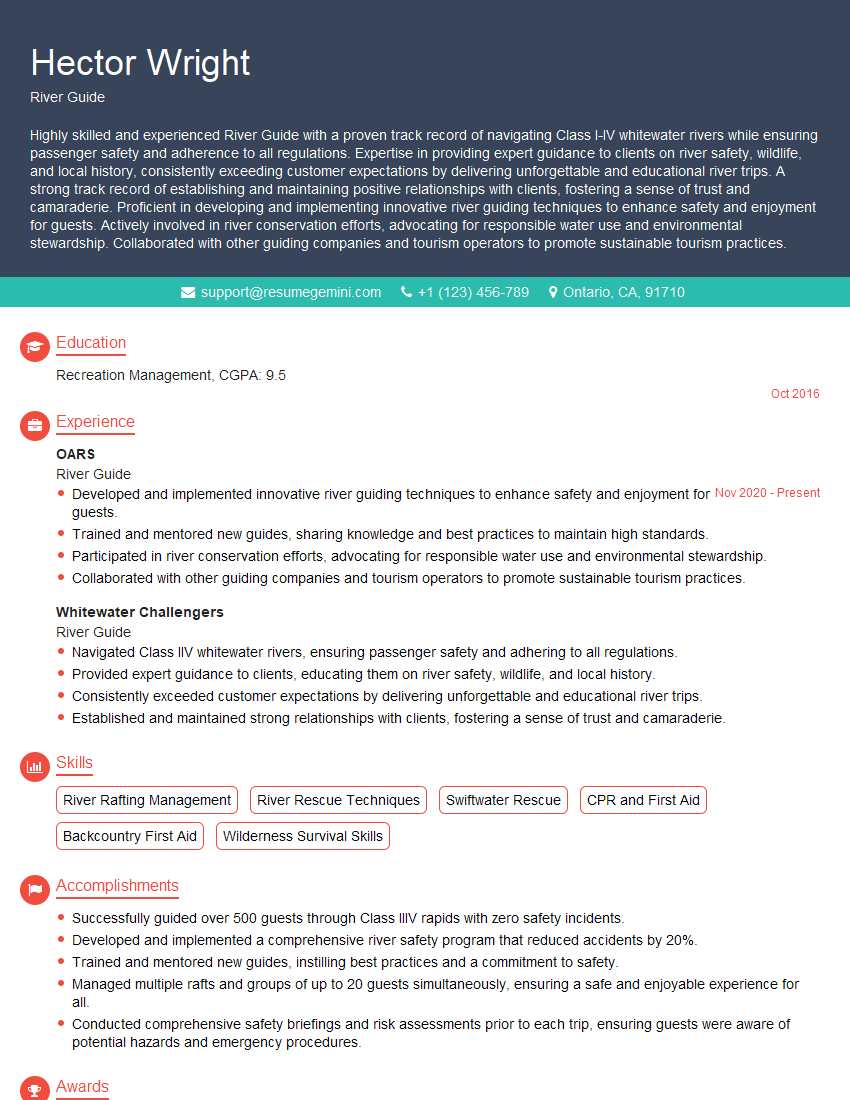
Mastering Whitewater Reading is crucial for career advancement in today’s data-driven world. A strong understanding of its principles and applications opens doors to exciting opportunities and positions you as a highly sought-after professional. To maximize your job prospects, creating an ATS-friendly resume is essential. This ensures your application is effectively screened by applicant tracking systems and reaches the hiring manager’s desk. We strongly recommend using ResumeGemini to build a professional, impactful resume. ResumeGemini provides the tools and resources to craft a compelling narrative that showcases your skills and experience. Examples of resumes tailored to Whitewater Reading are available to guide you through this process.
Explore more articles
Users Rating of Our Blogs
Share Your Experience
We value your feedback! Please rate our content and share your thoughts (optional).
What Readers Say About Our Blog
To the interviewgemini.com Webmaster.
Very helpful and content specific questions to help prepare me for my interview!
Thank you
To the interviewgemini.com Webmaster.
This was kind of a unique content I found around the specialized skills. Very helpful questions and good detailed answers.
Very Helpful blog, thank you Interviewgemini team.