Every successful interview starts with knowing what to expect. In this blog, we’ll take you through the top Microdiscectomy interview questions, breaking them down with expert tips to help you deliver impactful answers. Step into your next interview fully prepared and ready to succeed.
Questions Asked in Microdiscectomy Interview
Q 1. Describe the surgical technique of microdiscectomy.
Microdiscectomy is a minimally invasive surgical procedure used to treat lumbar disc herniation, a condition where a portion of the intervertebral disc bulges out and compresses nearby nerves, causing pain and other symptoms. The goal of the surgery is to remove the herniated portion of the disc, relieving pressure on the nerve root.
The procedure typically involves a small incision (around 1-2 inches) in the back, directly over the affected disc. Using specialized microsurgical instruments, the surgeon carefully dissects the muscles to expose the lamina (a part of the vertebra) and then removes a portion of the lamina (laminotomy) to access the disc. A microscope or magnifying loupe allows for precision and visualization of the delicate nerve structures. Once the herniated disc fragment is identified, it’s meticulously removed, often using specialized instruments such as Kerrison punches, curettes, and microforceps. The muscle layers are then carefully closed, and the incision is stitched up.
Imagine it like carefully cleaning out a small bit of debris from a delicate clock mechanism – the surgeon needs to work precisely to avoid damaging any of the surrounding healthy structures. After the surgery, the nerve root decompression is achieved.
Q 2. What are the indications for microdiscectomy?
Microdiscectomy is indicated for patients with sciatica or other neurological symptoms caused by a lumbar disc herniation that hasn’t responded to conservative treatment such as physical therapy, medication, and epidural steroid injections. This includes patients experiencing:
- Severe leg pain (sciatica) that radiates down the leg.
- Weakness or numbness in the leg or foot.
- Bowel or bladder dysfunction (in severe cases).
- Persistent pain despite conservative management lasting more than 6-8 weeks.
The decision to proceed with microdiscectomy should be made after a thorough assessment of the patient’s symptoms, physical examination, and imaging studies (MRI, CT scan).
Q 3. What are the contraindications for microdiscectomy?
Contraindications to microdiscectomy are relatively infrequent but include:
- Spinal stenosis that is not primarily caused by the disc herniation: In cases of severe spinal stenosis from other causes, microdiscectomy might not be the best option.
- Severe spondylolisthesis: Significant slippage of one vertebra over another can complicate the procedure.
- Severe osteoporosis: Brittle bones increase the risk of fracture during surgery.
- Active infection near the surgical site: Surgery is postponed until the infection is resolved.
- Uncontrolled bleeding disorders: This increases the risk of significant blood loss during and after the operation.
- Patient refusal or inability to cooperate: Informed consent is essential for any surgical procedure.
A thorough pre-operative assessment helps determine if a patient is a suitable candidate for microdiscectomy.
Q 4. Explain the different approaches to microdiscectomy (e.g., posterior, lateral).
The most common approach for microdiscectomy is the posterior approach, which involves accessing the disc through an incision in the back. However, a lateral approach can sometimes be used. This involves accessing the disc through a smaller incision made off to the side of the spine (minimally invasive). It’s generally used when accessing the disc from the posterior approach is too difficult or risky. The choice of approach depends on various factors, such as the location of the herniation, the patient’s anatomy, and the surgeon’s experience and preference.
The posterior approach is more commonly taught and practiced, offering a more direct route to the affected disc. The lateral approach, while less common, can be advantageous for certain disc locations, potentially resulting in less muscle dissection and faster recovery.
Q 5. What are the potential complications of microdiscectomy?
While generally safe, microdiscectomy carries potential complications, although these are relatively uncommon with experienced surgeons. These include:
- Infection: Although rare, infection at the surgical site can occur.
- Bleeding: While typically minor, significant bleeding can necessitate transfusion in rare cases.
- Dural tear: Accidental tearing of the dura mater (the protective membrane surrounding the spinal cord) can lead to cerebrospinal fluid leakage or meningitis. This is a serious complication, though rare with experienced surgeons.
- Nerve root injury: Although infrequent, damage to nearby nerve roots can lead to further neurological deficits. This is minimized with meticulous surgical technique.
- Recurrence of disc herniation: In some cases, the disc can herniate again. This is less common with a proper surgical technique.
- Persistent pain: Some patients may experience persistent pain despite successful surgery. This might be due to other underlying conditions.
It’s important to discuss potential complications with your surgeon before the procedure to understand the risks involved.
Q 6. How do you manage intraoperative bleeding during a microdiscectomy?
Managing intraoperative bleeding during a microdiscectomy is crucial. The amount of bleeding is usually minimal, but several techniques are employed to control it. These techniques often involve:
- Careful dissection: Using sharp instruments with precise technique minimizes tissue damage and bleeding.
- Cauterization: A small cautery device can seal small blood vessels to stop bleeding. Bipolar cautery is preferred to avoid damage to neural tissues.
- Bone wax: This can be applied to bleeding bone surfaces to stem the flow of blood.
- Sponges and suction: Surgical sponges and suction devices are used to remove blood and clear the surgical field.
- Pressure: Direct pressure applied to the bleeding site can stop bleeding.
In rare cases of significant bleeding, surgical techniques like ligation (tying off vessels) or selective vessel embolization might be needed. The surgeon’s expertise in managing bleeding is critical for a successful outcome.
Q 7. Describe your experience with different types of surgical instruments used in microdiscectomy.
My experience encompasses a wide range of surgical instruments used in microdiscectomy. These include:
- Microsurgical instruments: These specialized instruments provide enhanced precision and visualization, allowing for delicate manipulation in the confined surgical space. Examples include micro-scissors, micro-forceps, and micro-retractors.
- Kerrison rongeurs: These are used to remove small pieces of bone (lamina) for better access to the herniated disc.
- Curettes: These are used to carefully remove the herniated disc material.
- Suction devices: These are essential for removing blood and tissue debris during the procedure, maintaining a clear surgical field.
- Bipolar cautery: This device is employed to precisely coagulate small vessels, minimizing bleeding and maximizing safety to the nearby neural structures.
- Microscope or surgical loupe: These enhance magnification, providing a clearer view of the surgical field, which is crucial for precise dissection and preventing nerve root injury.
The selection of instruments depends on the specific surgical technique, anatomy of the patient, and preferences of the surgeon. Throughout my career I’ve continually updated my skills to utilize and leverage advancements in surgical technology.
Q 8. How do you assess the success of a microdiscectomy?
Assessing the success of a microdiscectomy involves a multi-faceted approach, going beyond simply the absence of pain. We look at a combination of factors, both subjective and objective. Subjectively, we assess the patient’s reported pain levels using validated scales like the Visual Analog Scale (VAS) or Oswestry Disability Index (ODI). A significant reduction in pain, ideally to a manageable level, is a key indicator of success. Objectively, we monitor improvements in neurological function. This might involve checking for improved muscle strength, reflexes, and sensation in the affected area. Imaging studies, such as MRI scans, may be repeated to confirm the successful removal of the disc herniation and the absence of any further compression on the nerve root. Finally, we evaluate the patient’s ability to return to their pre-operative activities of daily living. For example, a patient who could not walk without significant pain pre-operatively should be able to walk comfortably and resume their normal level of physical activity post-operatively. Ultimately, success is defined by a significant and sustained improvement in the patient’s quality of life.
Q 9. What are the typical post-operative instructions given to patients after microdiscectomy?
Post-operative instructions after a microdiscectomy are crucial for a smooth recovery. These instructions are tailored to the individual patient but generally include:
- Pain Management: Patients are instructed on how to manage their pain using prescribed medications, often a combination of analgesics and potentially anti-inflammatories. We emphasize the importance of taking medication as prescribed.
- Activity Modification: Initially, patients are advised to avoid strenuous activities, heavy lifting, and prolonged sitting or standing. We provide guidelines on gradually increasing activity levels as tolerated. This is often supported by physical therapy.
- Wound Care: Detailed instructions on keeping the incision clean and dry are provided. Patients are advised on when and how to remove bandages and signs of infection to watch out for.
- Follow-up Appointments: Regular follow-up appointments are scheduled to monitor healing progress, address any concerns, and adjust medication as needed. These appointments are vital for early detection and management of potential complications.
- Physical Therapy: We strongly encourage early involvement in a structured physical therapy program to improve strength, flexibility, and range of motion. Physical therapy is tailored to the individual needs of each patient.
We provide written instructions and often have nurses conduct detailed verbal instruction before discharge to ensure the patient thoroughly understands the post-operative care plan.
Q 10. How do you manage post-operative pain in microdiscectomy patients?
Post-operative pain management is a crucial aspect of microdiscectomy care. We employ a multi-modal approach, combining different methods to achieve optimal pain control. This often starts with a combination of oral analgesics, such as opioids for severe initial pain and non-steroidal anti-inflammatory drugs (NSAIDs) to reduce inflammation. We carefully monitor patients for signs of opioid-induced side effects and strive to wean them off opioids as quickly as possible, transitioning to less potent analgesics as pain subsides. Epidural analgesia may be used in the initial postoperative period to provide effective pain relief. Additionally, we strongly advocate for non-pharmacological approaches, such as ice packs, rest, and physical therapy. Regular communication with the patient is essential to assess their pain levels and adjust the pain management strategy accordingly. We also emphasize the importance of patient education to empower them to actively participate in their pain management.
Q 11. What are the common post-operative complications and how do you address them?
While microdiscectomy is generally a safe procedure, potential complications can occur. These include:
- Infection: This is a rare but serious complication, managed with antibiotics and potentially surgical debridement.
- Dural Tear: A tear in the dura mater (the protective membrane surrounding the spinal cord) can lead to cerebrospinal fluid leakage. This typically requires surgical repair.
- Persistent or Recurrent Pain: Not all patients experience complete pain relief. Further investigation and management strategies may be necessary.
- Nerve Root Injury: Although uncommon, nerve root damage can result in neurological deficits. This is usually related to pre-existing conditions and requires ongoing management.
- Bleeding: Hematoma formation can compress the spinal cord; this is a surgical emergency requiring immediate attention.
We proactively address these potential complications through meticulous surgical technique, close post-operative monitoring, and timely intervention when necessary. For example, if a patient reports worsening neurological symptoms or excessive bleeding, we immediately investigate and take appropriate action. Open communication with the patient is crucial for early identification and prompt management of any complications.
Q 12. Describe your experience with minimally invasive spine surgery techniques.
My experience with minimally invasive spine surgery (MISS) techniques, including microdiscectomy, is extensive. I’ve performed hundreds of microdiscectomies, consistently striving to refine my technique to minimize tissue trauma and maximize patient outcomes. This includes utilizing smaller incisions, specialized retractors, and advanced imaging to achieve precise surgical goals. For example, I routinely utilize intraoperative neurophysiological monitoring (IONM) to ensure the safety of nerve roots during the procedure. I also actively participate in continuing medical education to stay abreast of the latest advancements in MISS techniques and to adapt my approach based on the latest evidence. The goal is always to provide the most effective treatment with the least amount of invasiveness for the best patient outcome. My experience has shown that MISS techniques often lead to reduced pain, shorter hospital stays, faster recovery times, and improved cosmetic results compared to traditional open surgical procedures.
Q 13. What are the advantages and disadvantages of microdiscectomy compared to other surgical options?
Microdiscectomy offers several advantages over other surgical options for lumbar disc herniation, such as open discectomy or spinal fusion:
- Minimally Invasive: Smaller incisions lead to less tissue trauma, reduced pain, and faster recovery.
- Shorter Hospital Stay: Patients often go home the same day or the next day following surgery.
- Faster Recovery Time: Return to normal activities is typically quicker compared to open surgery.
- Less Scarring: The small incision results in minimal scarring.
However, microdiscectomy also has some disadvantages:
- Not Suitable for All Patients: It may not be appropriate for patients with severe spinal stenosis, instability, or certain types of disc herniations.
- Potential for Incomplete Disc Removal: In some cases, complete removal of the herniated disc material may not be possible through the minimally invasive approach.
- Steeper Learning Curve: The technique requires specialized training and expertise.
The choice between microdiscectomy and other surgical options depends on the individual patient’s specific condition, anatomical features, and surgeon’s expertise.
Q 14. How do you counsel patients on the risks and benefits of microdiscectomy?
Counseling patients on the risks and benefits of microdiscectomy is a critical part of my practice. I use a shared decision-making approach, ensuring the patient is fully informed and actively involved in the decision-making process. I start by explaining the condition clearly, using simple language and avoiding unnecessary medical jargon. I detail the surgical procedure, outlining both the potential benefits (pain relief, improved function) and the potential risks (infection, dural tear, nerve damage, persistent pain). I present realistic expectations, acknowledging that not every patient will achieve complete pain relief, and discuss alternative treatments like physical therapy and medication. I encourage the patient to ask questions and address any concerns they may have. I review relevant imaging studies together with the patient, showing them exactly what is being addressed. I also involve the family or caregiver as appropriate. The goal is to empower the patient to make an informed decision that aligns with their individual values and preferences, ensuring they feel fully supported throughout the process.
Q 15. How do you manage patient expectations regarding recovery time after microdiscectomy?
Managing patient expectations after a microdiscectomy is crucial for a positive recovery experience. I always begin by explaining that recovery is a journey, not a race, and that individual experiences vary greatly.
I provide a realistic timeframe, emphasizing that while most patients experience significant pain relief within a few weeks, full recovery, including a return to normal activities, can take several months. This timeframe depends on factors such as the severity of the herniation, the patient’s overall health, their adherence to the post-operative rehabilitation program, and their pre-operative activity level. For example, a young, active patient might take longer to return to high-impact sports than an older, less active patient.
I also discuss potential complications, however unlikely, like persistent pain or infection, to ensure transparency. Open communication, setting realistic goals, and providing consistent updates throughout the recovery process are key to managing expectations effectively. I often use analogies like a healing bone fracture to help patients visualize the gradual process of tissue repair and nerve regeneration.
Career Expert Tips:
- Ace those interviews! Prepare effectively by reviewing the Top 50 Most Common Interview Questions on ResumeGemini.
- Navigate your job search with confidence! Explore a wide range of Career Tips on ResumeGemini. Learn about common challenges and recommendations to overcome them.
- Craft the perfect resume! Master the Art of Resume Writing with ResumeGemini’s guide. Showcase your unique qualifications and achievements effectively.
- Don’t miss out on holiday savings! Build your dream resume with ResumeGemini’s ATS optimized templates.
Q 16. Describe your experience with different imaging techniques used in diagnosing conditions requiring microdiscectomy (e.g., MRI, CT).
Magnetic Resonance Imaging (MRI) is my primary imaging modality for diagnosing conditions requiring microdiscectomy. MRI provides excellent visualization of soft tissues, including the intervertebral discs and spinal cord, allowing for precise identification of disc herniations, nerve root compression, and other pathologies. The high resolution allows me to assess the size and location of the herniation, as well as the extent of any nerve root impingement.
Computed Tomography (CT) scans, while less ideal for soft tissue visualization, are helpful in assessing bony structures and identifying any fractures or other bony abnormalities that may contribute to the patient’s symptoms or complicate the surgery. Sometimes, a CT myelogram (CT scan with contrast dye injected into the spinal canal) can be used to further define the location and extent of nerve root compression.
In my experience, a combination of MRI and, in certain situations, CT scans offers the most comprehensive diagnostic information for surgical planning. I’ve had cases where MRI revealed a disc herniation, while a subsequent CT scan detected a small, previously unnoticed fracture that could have impacted surgical approach.
Q 17. How do you differentiate between a herniated disc and other spinal conditions requiring different surgical interventions?
Differentiating between a herniated disc and other spinal conditions is crucial for appropriate treatment. A thorough history, physical examination, and advanced imaging are necessary. A herniated disc is characterized by the displacement of the nucleus pulposus (the soft inner portion of the disc) beyond the confines of the annulus fibrosus (the outer ring of the disc), often compressing nearby nerves.
Conditions like spinal stenosis (narrowing of the spinal canal), spondylolisthesis (forward slippage of one vertebra over another), and facet joint arthritis can cause similar symptoms but require different surgical interventions. For example, spinal stenosis often necessitates a laminectomy (removal of a portion of the vertebral bone) to decompress the spinal canal, while spondylolisthesis might require spinal fusion. The physical exam, including neurological assessment, helps identify the location and nature of nerve root compression, guiding the diagnostic process. Detailed MRI studies are vital in distinguishing the underlying cause of the symptoms.
For instance, a patient presenting with leg pain and weakness may have either a herniated disc or spinal stenosis. MRI can clearly show the difference: a herniated disc would be a focal mass impinging on a specific nerve root, whereas spinal stenosis would be a diffuse narrowing of the canal affecting multiple nerve roots. The treatment plan depends heavily on this differentiation.
Q 18. What are the neurological monitoring techniques used during microdiscectomy?
Neurological monitoring during microdiscectomy is essential to ensure the safety and integrity of the spinal cord and nerve roots. We utilize somatosensory evoked potentials (SSEPs) and motor evoked potentials (MEPs) to continuously assess the function of these structures throughout the procedure. SSEPs measure the electrical activity of the sensory pathways, while MEPs monitor the motor pathways.
These techniques use surface electrodes placed on the patient’s limbs and scalp to record electrical signals. Changes in the amplitude, latency, or morphology of these signals can indicate potential injury to the spinal cord or nerves. If any significant changes occur, the surgeon can adjust their technique or immediately cease the procedure to prevent further damage. For instance, a sudden decrease in MEP amplitude might signal cord compression, prompting immediate action.
While not routinely used in every case, electromyography (EMG) may also be incorporated to assess the function of individual muscles and identify any evidence of nerve root injury. The use and selection of these monitoring techniques are tailored to the specific surgical needs and risks based on the patient’s individual situation.
Q 19. Explain the importance of nerve root identification during the procedure.
Precise nerve root identification is paramount during a microdiscectomy to ensure that the herniated disc material is removed without causing damage to the delicate nerve structures. Careful visualization and use of specialized instruments are crucial in this process. The surgical microscope provides magnification and excellent illumination, which enhances the surgeon’s ability to identify the nerve roots accurately.
During the procedure, gentle retraction of the nerve root away from the herniated disc is performed to achieve adequate visualization. The use of nerve root stimulators, which selectively stimulate individual nerve roots, helps confirm their identification. This feedback helps to prevent inadvertent injury and provides real-time confirmation of the nerve’s location.
The importance of this cannot be overstated. Incorrect nerve root identification can lead to significant neurological deficits, including permanent weakness or paralysis. Experienced surgeons prioritize meticulous dissection and nerve root identification techniques to minimize the risk of complications.
Q 20. How do you handle unexpected complications during a microdiscectomy?
Handling unexpected complications during a microdiscectomy requires a calm, decisive approach and a well-structured plan. Possible complications include excessive bleeding, dural tear (tear in the protective membrane surrounding the spinal cord), nerve root injury, and infection.
My approach is based on meticulous surgical technique, precise planning, and intraoperative monitoring to minimize the risk of these complications. However, if they arise, I address them promptly and decisively, using appropriate techniques to manage the specific problem. For instance, a dural tear might require a surgical repair, which involves closing the tear using sutures or a patch. Excessive bleeding might need careful coagulation or the use of specialized surgical sealants.
The availability of experienced anesthesiologists, skilled nurses, and readily available backup surgical instruments and equipment is critical in handling unexpected challenges. Post-operative care is immediately adjusted to address any identified issues to ensure a good outcome, minimizing long-term complications.
Q 21. Describe your experience with revision microdiscectomies.
Revision microdiscectomies, performed when a previous microdiscectomy has failed to provide adequate pain relief or has resulted in recurrent herniation or other complications, present unique challenges. Scar tissue formation from the previous surgery can make dissection more difficult and increase the risk of nerve root injury. The anatomy is altered, requiring a more modified surgical technique to achieve optimal decompression.
In my experience, a thorough preoperative review of the patient’s medical records and imaging studies is essential to understand the previous surgery and plan the revision procedure. It often requires a more extensive dissection and careful identification of the scar tissue and surrounding structures. The use of advanced imaging techniques, such as intraoperative neuronavigation, can be particularly beneficial in these situations.
Successful revision microdiscectomies necessitate a high level of surgical expertise and experience in managing complex spinal anatomy. These cases require a meticulous and thoughtful approach, which is key to achieve a favorable outcome for the patient despite the higher difficulty.
Q 22. How do you assess and manage dural tears during microdiscectomy?
Dural tears during microdiscectomy, while rare, are a serious complication. My approach to assessment and management is multi-faceted and begins with meticulous surgical technique. Prevention is key – careful dissection and gentle retraction are paramount.
Assessment: If a tear is suspected, even a small one, I immediately cease further manipulation. The surgical field is carefully irrigated to improve visualization. I look for cerebrospinal fluid (CSF) leakage, which is the hallmark sign. A careful inspection under the microscope is crucial to determine the size and location of the tear. Sometimes, using a surgical loupe with magnification is helpful before resorting to the microscope for initial detection.
Management: Management depends on the size and location of the tear. Small tears (less than 5mm) often seal spontaneously after meticulous repair of the surrounding dura. Larger tears require surgical closure, usually using absorbable sutures such as 6-0 or 7-0 nylon. I prefer to use a watertight suture technique, ensuring the dura is completely sealed. If there is significant CSF leakage, a lumbar drain may be placed temporarily to reduce intracranial pressure and aid in closure. Postoperatively, patients are closely monitored for any signs of CSF leak, such as headache or meningitis.
Q 23. What are the criteria for selecting appropriate candidates for microdiscectomy?
Selecting appropriate candidates for microdiscectomy involves a thorough evaluation to ensure the procedure offers the best chance of success and minimizes risks.
- Significant Sciatica: The patient must experience significant leg pain (sciatica) radiating down the leg, consistent with nerve root compression. This pain should be significantly impacting their quality of life.
- Failed Conservative Treatment: Patients should have undergone a trial of at least 6-8 weeks of conservative management, including physical therapy, medication, and epidural injections, with unsatisfactory pain relief.
- Neurological Deficit: While not always required, the presence of a demonstrable neurological deficit, such as weakness or sensory loss, can strengthen the indication for surgery.
- Imaging Confirmation: MRI or CT myelogram should clearly show a herniated disc impinging on a nerve root at the level corresponding to the patient’s symptoms. The imaging should also confirm the absence of other significant pathologies such as spinal stenosis.
- Patient’s Overall Health: The patient should be in reasonably good overall health to tolerate the surgery and anesthesia. Preoperative evaluation, including cardiac and pulmonary assessments, is essential.
For example, a patient with debilitating sciatica unresponsive to months of physical therapy and medication, with clear MRI evidence of a disc herniation causing nerve root compression, would be a suitable candidate. Conversely, a patient with mild back pain without significant radiculopathy and no clear imaging findings would not be.
Q 24. Explain your approach to addressing patient concerns and anxiety before the procedure.
Addressing patient concerns and anxiety is a crucial aspect of my practice. It significantly impacts their surgical experience and recovery.
My approach involves a detailed explanation of the procedure, including the benefits, risks, and potential complications, in terms easily understood by the patient. I encourage them to ask questions, and answer them honestly and openly. I show them images from their MRI or CT scan and point out the disc herniation that is causing their pain. I provide realistic expectations for recovery, explaining that it’s a gradual process.
I also emphasize the importance of following post-operative instructions carefully. I spend time reassuring them and addressing their concerns about pain management. Many patients benefit from meeting with a nurse or therapist before surgery to further clarify the process and answer additional questions. I believe a well-informed patient is a less anxious patient and a better surgical candidate. In some cases, referral to a psychologist or psychiatrist is appropriate for patients with significant anxiety.
Q 25. How do you utilize the microscope in microdiscectomy?
The operating microscope is indispensable in microdiscectomy. It provides significantly magnified visualization of the surgical field, allowing for precise dissection and nerve root preservation.
Use in Microdiscectomy: The microscope’s magnification allows me to clearly identify the nerve roots, the herniated disc material, and the surrounding anatomy with precision. The microscope’s coaxial illumination minimizes shadows and enhances visualization of the delicate structures within the spinal canal. It helps in identifying subtle bleeding points that could otherwise be difficult to see with naked eyes and minimizes damage during the procedure. Its illumination allows for effective use of microsurgical instruments.
For example, the microscope helps me safely remove the herniated disc fragment without causing any damage to the delicate nerve roots. Without the microscope’s magnification, the risk of nerve root injury would be significantly increased.
Q 26. What are your preferred methods for maintaining surgical sterility during the procedure?
Maintaining surgical sterility during microdiscectomy is paramount to prevent infection. My approach adheres to strict sterile protocols.
- Surgical Scrub and Gowning: All surgical personnel meticulously scrub their hands and arms and don sterile gowns, gloves, and masks.
- Sterile Drapes: The surgical field is draped with sterile drapes to create a sterile barrier.
- Sterile Instruments: All instruments used are sterilized according to hospital protocols either by steam sterilization or gas sterilization.
- Air Filtration: The operating room has a highly efficient air filtration system to minimize airborne particles and maintain a clean environment.
- Sterile Technique: The entire surgical team is rigorously trained in maintaining sterile technique throughout the procedure. Any breach of sterility is immediately rectified.
- Continuous Monitoring: The sterility of the field is constantly monitored throughout the procedure. Any concern leads to immediate remedial action.
Continuous vigilance and strict adherence to these protocols are crucial for preventing postoperative surgical site infections.
Q 27. How do you prevent or minimize nerve root injury during a microdiscectomy?
Preventing nerve root injury is the highest priority during microdiscectomy. This is achieved through meticulous surgical technique, precise instruments, and careful use of retractors.
Microsurgical Technique: The operating microscope allows precise visualization of the nerve roots, enabling safe removal of the herniated disc material without injuring the nerves. Gentle retraction is used to move nerve roots aside, rather than directly pulling on them. Specialized micro-instruments allow me to delicately remove the disc material and avoid direct contact with the nerve.
Intraoperative Neurophysiological Monitoring: In some cases, intraoperative neuromonitoring is used. This involves monitoring nerve conduction during the procedure. Any changes in nerve function can alert the surgeon to potential nerve damage in real-time. This allows for immediate adjustments to surgical technique.
Careful Dissection: Each step of the dissection is performed with extreme care. The use of blunt dissection minimizes the risk of iatrogenic nerve injury. I use a combination of blunt and sharp dissection to carefully separate the nerve roots from the disc material.
Q 28. What are your experience with different types of bone grafts or implants used in microdiscectomy?
In microdiscectomy, the use of bone grafts or implants is not routine. The goal of the procedure is to remove the herniated disc material and relieve nerve root compression, not to replace bone.
Situations where Bone Grafting May Be Considered: In rare cases, if there is significant instability of the spine, or if there’s a need for fusion as part of a more complex procedure, bone grafting might be considered. The choice of bone graft depends on several factors, including the patient’s bone quality, the size of the defect, and surgeon preference. Autografts (from the patient’s own body, such as iliac crest) are the gold standard, offering the best potential for fusion, although they have the risk of a separate donor site morbidity. Allografts (cadaver bone) or synthetic bone grafts may also be utilized, but carry different risks and benefits.
However, in the vast majority of microdiscectomy cases, bone grafting or implants are not necessary. The goal is to remove the offending disc material, allowing the spine to heal naturally. The use of these materials is generally avoided to minimize surgical time, bleeding, and the associated risks.
Key Topics to Learn for Microdiscectomy Interview
- Anatomy and Physiology: Thorough understanding of the lumbar spine, intervertebral discs, nerve roots, and their relationship to pain generation.
- Indications and Contraindications: Mastering the criteria for selecting appropriate candidates for microdiscectomy and recognizing situations where it’s not the best treatment option.
- Surgical Technique: Detailed knowledge of the different approaches (e.g., posterior, lateral), instrumentation, and meticulous steps involved in a successful microdiscectomy.
- Pre-operative Planning: Understanding the importance of thorough patient evaluation, imaging interpretation (MRI, CT), and formulating a comprehensive surgical plan.
- Intraoperative Management: Familiarity with potential complications, strategies for addressing them, and maintaining patient safety throughout the procedure.
- Post-operative Care and Rehabilitation: Knowledge of pain management, physical therapy protocols, and patient education for optimal recovery.
- Complications and Management: Deep understanding of potential complications (e.g., nerve injury, dural tear, infection) and the strategies for their prevention and management.
- Advanced Techniques and Emerging Technologies: Awareness of minimally invasive approaches, endoscopic techniques, and other advancements in microdiscectomy.
- Evidence-Based Practice: Ability to critically appraise relevant medical literature and apply research findings to clinical decision-making.
- Ethical Considerations: Understanding the ethical implications of surgical decision-making and patient autonomy.
Next Steps
Mastering the intricacies of microdiscectomy is crucial for career advancement in neurosurgery or spine surgery. A strong understanding of this procedure demonstrates expertise and opens doors to exciting opportunities. To maximize your chances of securing your dream role, crafting a compelling and ATS-friendly resume is paramount. ResumeGemini is a trusted resource that can help you build a professional and impactful resume, tailored to highlight your microdiscectomy expertise. Examples of resumes specifically designed for microdiscectomy specialists are available to help you create the perfect application.
Medical Doctor (MD) Resume Sample
Neurological Surgeon Resume Sample
Neurosurgeon Resume Sample
Orthopedic Surgeon Resume Sample
Operating Room Nurse Resume Sample
Certified Registered Nurse Anesthetist (CRNA) Resume Sample
Surgical Technician Resume Sample
Surgical Assistant Resume Sample
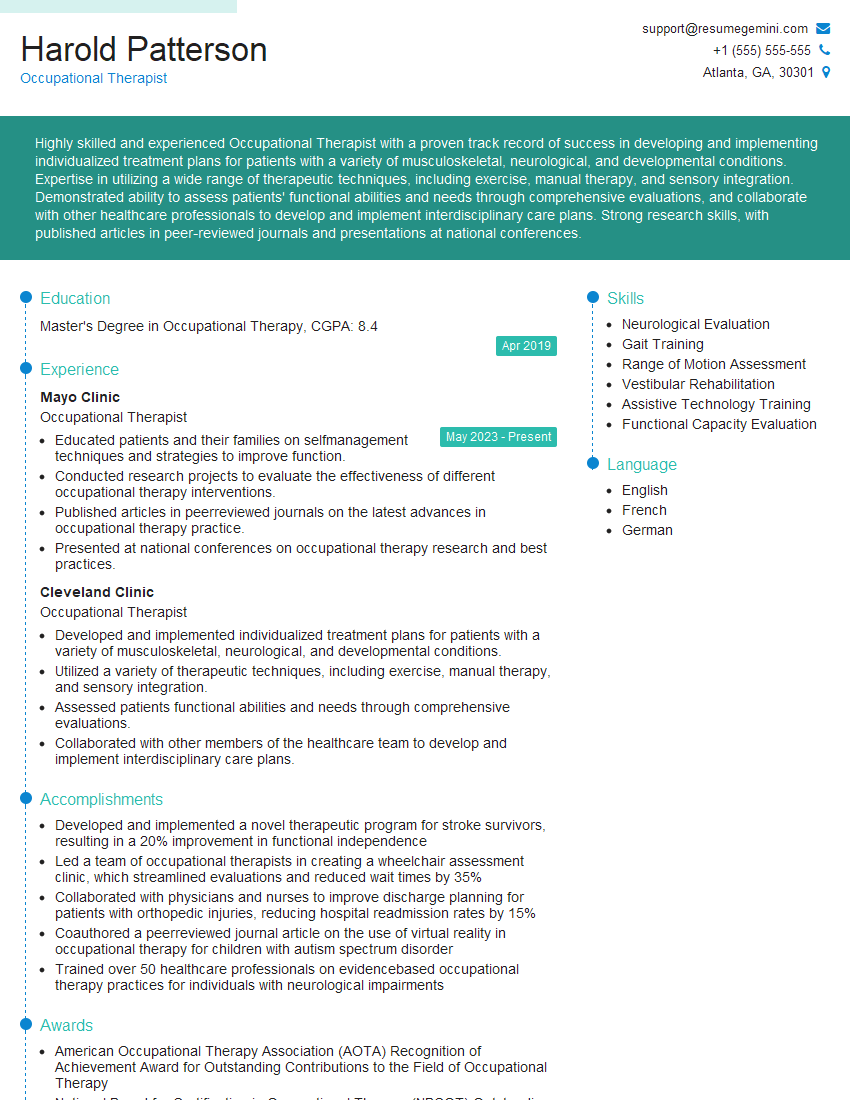
Occupational Therapist Resume Sample
Explore more articles
Users Rating of Our Blogs
Share Your Experience
We value your feedback! Please rate our content and share your thoughts (optional).
What Readers Say About Our Blog
To the interviewgemini.com Webmaster.
Very helpful and content specific questions to help prepare me for my interview!
Thank you
To the interviewgemini.com Webmaster.
This was kind of a unique content I found around the specialized skills. Very helpful questions and good detailed answers.
Very Helpful blog, thank you Interviewgemini team.