Interviews are opportunities to demonstrate your expertise, and this guide is here to help you shine. Explore the essential Module Mounting and Wiring interview questions that employers frequently ask, paired with strategies for crafting responses that set you apart from the competition.
Questions Asked in Module Mounting and Wiring Interview
Q 1. Explain the different types of module mounting techniques.
Module mounting techniques depend heavily on the application, environment, and the module’s size and weight. The goal is always secure, reliable attachment while considering factors like heat dissipation, vibration resistance, and ease of access for maintenance.
Through-Hole Mounting: This traditional method involves inserting the module’s leads or pins into holes on a printed circuit board (PCB) and soldering them in place. It’s robust but can be less space-efficient than surface mount.
Surface Mount Technology (SMT): Components are placed directly onto the surface of the PCB and soldered. This allows for higher density and automation, making it ideal for mass production. We’ll discuss this further in the next question.
Rack Mounting: Used for larger modules, this involves securing the module within a rack using various mechanisms like screws, rails, or cages. Standardization (e.g., 19-inch rack) ensures compatibility.
Free-Standing Mounting: Modules might be mounted on a chassis or directly to a surface, often with adhesive, brackets, or custom fixtures. This is common in applications where space constraints are less critical.
Encapsulation: The module is fully enclosed in a protective resin or potting compound, ideal for harsh environments or when protection against moisture or vibration is crucial. This makes maintenance more difficult.
Q 2. Describe your experience with surface mount technology (SMT).
I have extensive experience with Surface Mount Technology (SMT), having worked on everything from small consumer electronics to larger industrial control systems. My experience encompasses the entire process, from component placement and solder paste application to reflow soldering and inspection.
I’m proficient with various SMT machines and have hands-on experience with different solder paste types and profiles. I understand the importance of proper component orientation, placement accuracy, and ensuring good solder joints to prevent failures. For instance, in one project involving a high-frequency communication module, precise SMT placement was critical for optimal signal integrity. A single misplaced component could have resulted in significant signal loss or interference.
Troubleshooting SMT issues is a key part of my expertise. I can use tools like microscopes and X-ray inspection to identify issues such as bridging, tombstoning, or insufficient solder. I’m familiar with various rework techniques to correct these issues effectively.
Q 3. What are the safety precautions you follow when working with high-voltage wiring?
Safety is paramount when working with high-voltage wiring. My procedures always prioritize preventing electrical shock, arc flash, and fire hazards. This includes:
Lockout/Tagout (LOTO): Always de-energize the circuit and apply LOTO procedures before working on any high-voltage wiring. This prevents accidental energization.
Personal Protective Equipment (PPE): Wearing appropriate PPE is non-negotiable. This includes insulated gloves, safety glasses, and arc flash protective clothing as required by the voltage level.
Voltage Verification: Before touching any wire or component, always double-check (using a non-contact voltage tester) that the circuit is truly de-energized.
Grounding: Proper grounding of equipment and personnel prevents static electricity buildup and potential shock hazards.
Proper Tools: Using insulated tools appropriate for the voltage level is essential. Never use damaged or makeshift tools.
Awareness of Surroundings: Maintaining a clean, organized workspace reduces tripping hazards and minimizes the risk of accidental contact with live wires.
Q 4. How do you identify and troubleshoot faulty wiring in a module?
Identifying faulty wiring starts with a systematic approach. I’d begin by visually inspecting the module for obvious signs of damage, such as broken wires, loose connections, or burn marks. Then, I’d move on to more advanced troubleshooting techniques:
Continuity Testing: Using a multimeter, I’d check the continuity of each wire to ensure a complete, unbroken path. A break in continuity indicates a fault.
Voltage Testing: (Always with the power OFF initially, then carefully verifying with a non-contact tester) I would measure the voltage at various points in the circuit to identify any unexpected voltage drops or shorts.
Resistance Testing: Measuring resistance can help identify open circuits, shorts, or components with faulty resistance values.
Signal Tracing: For complex circuits, a signal tracer can be used to follow the path of a signal and identify points where the signal is lost or degraded.
Schematic Review: Referring to the circuit schematic allows me to understand the intended circuit path and more effectively isolate the faulty component or connection.
Once the problem is located, appropriate repairs, such as replacing faulty wires, resoldering connections, or replacing damaged components are undertaken, followed by thorough testing to ensure the repair was successful.
Q 5. What are your preferred methods for wire crimping and termination?
My preferred methods for wire crimping and termination prioritize both quality and efficiency. I use high-quality crimping tools appropriate for the wire gauge and connector type. For example, I would never use a tool rated for 22 AWG wire on 18 AWG wire.
I always ensure the wire is properly stripped and inserted into the connector before crimping. The crimp should be firm and create a secure, gas-tight connection. I avoid over-crimping or under-crimping as both can lead to poor connections or damage to the wire. After crimping, I visually inspect the connection for proper seating and any signs of damage. I also often do a pull test to verify the connection strength.
For high-reliability applications, I prefer using tools that provide visual confirmation of a proper crimp such as indent markers. For mass production environments, I would use automated crimping machines programmed to match our specific requirements and routinely calibrated for optimal performance.
Q 6. Explain your understanding of wire gauge and its importance in module design.
Wire gauge refers to the diameter of a wire, and it’s crucial in module design because it directly impacts the wire’s current-carrying capacity and resistance. Thicker wires (lower gauge number) have lower resistance and can handle higher currents. Conversely, thinner wires (higher gauge number) have higher resistance and are suitable for lower current applications.
Choosing the correct wire gauge is essential for safety and reliability. Using a wire that’s too thin for the intended current can lead to overheating, which can damage the module, cause a fire, or create a safety hazard. Using a wire that’s too thick is wasteful and may lead to other space and routing problems in the module.
For example, a power supply circuit delivering high current to a motor would require a much lower gauge wire than a sensor circuit carrying a small control signal. The appropriate gauge is determined through calculations considering the expected current draw, voltage drop limitations, and the length of the wire run.
Q 7. Describe your experience with different types of connectors and their applications.
My experience spans many connector types, each with unique applications:
Screw Terminals: Robust and reliable, ideal for high-current applications or where frequent disconnections are needed. Common in power supplies and industrial equipment.
Crimp Connectors: Efficient for mass production, requiring specialized crimping tools. Their reliability depends heavily on proper crimping techniques. Common in wiring harnesses.
Solder Terminals: Provide a strong, permanent connection, but require soldering expertise. Suitable for high-vibration or harsh environments.
PCB Edge Connectors: Used for interfacing PCBs, enabling quick and easy connection/disconnection. Common in modular systems.
Circular Connectors: Often used in industrial applications, including high-voltage and high-current needs. They provide reliable, waterproof, and rugged connections.
Ribbon Connectors: Designed for connecting multiple signals simultaneously, making them ideal for parallel communication interfaces.
Choosing the right connector depends on the specific application requirements, including current and voltage ratings, environmental factors, and the frequency of connection/disconnection.
Q 8. How do you ensure the proper grounding and shielding of modules?
Proper grounding and shielding are crucial for preventing electromagnetic interference (EMI) and ensuring the safe operation of modules. Grounding provides a low-impedance path for unwanted currents to flow to earth, preventing voltage spikes and noise. Shielding creates a barrier to prevent electromagnetic fields from entering or leaving the module, protecting sensitive circuitry.
To ensure proper grounding, I always use a dedicated ground plane on the PCB (printed circuit board) and connect it to the system ground via a heavy-gauge wire. I carefully inspect all ground connections for cleanliness and secure contact. For shielding, I often employ conductive enclosures, conductive coatings, or even specialized EMI gaskets to effectively block interference. For instance, in a project involving a sensitive RF module, we used a fully-enclosed metal casing with EMI gaskets around the seams to minimize external interference and maintain signal integrity. The effectiveness of grounding and shielding is always verified using EMI/EMC testing equipment.
Q 9. What are the common causes of short circuits in modules and how do you prevent them?
Short circuits, unfortunately, are a common problem in module assembly. They occur when an unintended conductive path allows current to flow outside the intended circuit. Common causes include solder bridges (accidental connections between adjacent pads), damaged components with exposed conductors, and physical damage to the PCB or wires.
Prevention is key. Careful soldering techniques are essential – I meticulously inspect each joint under magnification to avoid bridges. Using the appropriate amount of solder is crucial; too much leads to bridges, while too little results in poor connections. Proper handling of components is critical to prevent damage to their leads. We utilize anti-static workbenches and ESD (Electrostatic Discharge) protective equipment. Thorough visual inspection before and after assembly is part of our standard operating procedure. In addition, we implement design rules to maximize clearance between tracks and components on the PCB. For example, adding a layer of conformal coating can protect circuits from dust, moisture, and vibration-induced shorts in harsh environments.
Q 10. Explain your experience with different soldering techniques (e.g., through-hole, surface mount).
I have extensive experience with both through-hole and surface mount soldering techniques. Through-hole soldering involves inserting component leads through holes in the PCB and soldering them on the underside. This is a relatively straightforward technique, but it can be challenging with smaller components. I rely on good quality irons with adjustable temperature control and use appropriate solder fluxes. Surface mount soldering involves placing components directly onto the surface of the PCB. This technique requires greater precision and often utilizes specialized equipment like hot air rework stations or reflow ovens for larger scale projects. I’m proficient in various surface mount soldering techniques, including manual soldering with fine-tipped irons, and also experienced in programming and operating automated pick-and-place machines for high volume assembly.
My experience includes handling a variety of components with different lead sizes and pitch requirements. For example, I’ve successfully soldered delicate surface-mount components such as 0402 resistors and QFN packages while maintaining the highest standards of quality.
Q 11. How do you ensure the quality and reliability of your module mounting and wiring work?
Ensuring the quality and reliability of my work involves a multi-faceted approach. It begins with selecting high-quality components from reputable suppliers. I meticulously follow all design specifications and adhere to strict manufacturing standards throughout the assembly process. This includes using the right tools and techniques, conducting thorough visual inspections at each stage, and documenting every step. I also employ various quality control measures like functional testing and stress testing to ensure the modules can withstand environmental and operational stressors.
Using a clean and well-organized workspace is essential for minimizing errors. Implementing a robust traceability system allows us to track every component and assembly step, making it easier to identify and address any quality issues. Continuous improvement is always a priority; we regularly review our processes to identify and eliminate potential problems.
Q 12. What testing procedures do you use to verify the functionality of a completed module?
Testing procedures are vital to verify a module’s functionality. The specific tests depend on the module’s purpose, but generally include a combination of visual inspection, electrical tests, and functional tests. Visual inspection checks for any obvious flaws, like solder bridges, damaged components, or poor workmanship. Electrical tests involve using multimeters and oscilloscopes to verify voltage levels, current flow, and signal integrity at various points within the circuit. Functional tests assess the module’s overall performance and ensure that it meets its intended specifications. This might involve using specialized testing equipment or custom-designed test fixtures, depending on the module’s complexity.
For instance, if the module is a power supply, testing would include measuring the output voltage and current under various load conditions, while testing a sensor module might involve validating its output signal range and accuracy under different stimuli. Documentation of all test results is critical, allowing us to trace any issues and demonstrate successful completion of the quality control process.
Q 13. Describe your experience with automated assembly equipment for modules.
I have significant experience working with automated assembly equipment, including pick-and-place machines, reflow ovens, and automated optical inspection (AOI) systems. These systems significantly increase efficiency and consistency in module production, especially for high-volume applications. I’m proficient in operating, programming, and troubleshooting these machines. My experience includes setting up programs for various component types and sizes, optimizing machine parameters for optimal performance, and interpreting AOI results to identify and rectify defects.
In a previous role, we transitioned from manual assembly to a fully automated line, resulting in a significant improvement in production speed and a reduction in the defect rate. Understanding the capabilities and limitations of each piece of equipment is critical for effective utilization and problem-solving. For example, careful consideration must be given to component placement and orientation when programming pick-and-place machines, to avoid collisions and ensure proper component seating.
Q 14. How do you interpret and follow wiring diagrams and schematics?
Interpreting wiring diagrams and schematics is fundamental to my work. I approach this systematically, starting by understanding the overall function of the module. I then carefully analyze the schematic to identify the different components and their interconnections. I pay close attention to component designations, reference designators, and signal flow. Wiring diagrams provide a visual representation of the physical connections between components and the external connections of the module.
I utilize the schematic to verify that the wiring diagram accurately reflects the circuit design. I always cross-reference both documents and use them in conjunction with the bill of materials (BOM) to ensure component placement and wiring are correct. I am also familiar with various schematic capture software and tools for simulating circuit behavior.
Q 15. Explain your experience with different types of wire insulation and their properties.
Wire insulation is crucial for protecting wires from damage and ensuring electrical safety. Different types offer varying levels of protection against abrasion, chemicals, heat, and moisture. My experience encompasses a wide range, including:
- PVC (Polyvinyl Chloride): A common, cost-effective option offering good insulation and abrasion resistance. I’ve used this extensively in low-voltage applications where flexibility and ease of stripping are important.
- XLPE (Cross-Linked Polyethylene): Superior to PVC in heat resistance and chemical resistance, making it ideal for higher-voltage applications and environments with potential exposure to harsh chemicals. I’ve employed this in projects requiring higher reliability and longer lifespan.
- Teflon (PTFE): Exceptional heat and chemical resistance, suitable for applications with extreme temperature variations or exposure to aggressive chemicals. It’s used less frequently due to its higher cost, but its properties are invaluable in specialized situations.
- Silicone Rubber: Offers excellent flexibility, high-temperature resistance, and good dielectric strength. I’ve used this in applications needing high flexibility and resistance to extreme temperatures, such as automotive wiring in engine compartments.
Choosing the right insulation depends critically on the application’s specific demands. For instance, in a high-temperature industrial setting, PVC would be unsuitable, while XLPE or Teflon would be more appropriate. Ignoring these material properties can lead to wire failure, electrical hazards, and system malfunction.
Career Expert Tips:
- Ace those interviews! Prepare effectively by reviewing the Top 50 Most Common Interview Questions on ResumeGemini.
- Navigate your job search with confidence! Explore a wide range of Career Tips on ResumeGemini. Learn about common challenges and recommendations to overcome them.
- Craft the perfect resume! Master the Art of Resume Writing with ResumeGemini’s guide. Showcase your unique qualifications and achievements effectively.
- Don’t miss out on holiday savings! Build your dream resume with ResumeGemini’s ATS optimized templates.
Q 16. How do you manage and organize wiring harnesses to ensure efficient assembly and maintainability?
Organizing wiring harnesses is key to efficient assembly and maintainability. My approach involves a multi-step process:
- Detailed Schematic Design: Before any assembly begins, I create a comprehensive wiring diagram, specifying wire gauge, color codes, and routing paths. This serves as a blueprint for the entire harness.
- Harness Layout Design: Utilizing CAD software, I design the harness layout optimizing the space and minimizing wire crossings. This step is crucial to prevent shorts and simplify troubleshooting.
- Component Labeling and Organization: Each connector and wire is clearly labeled using heat-shrink tubing with alphanumeric identifiers. This makes tracing wires significantly easier during assembly and future maintenance.
- Harness Bundling and Routing: I use various techniques to bundle wires neatly, using cable ties and wire loom to create a clean and organized harness. Careful routing minimizes strain on wires and reduces the risk of damage.
- Documentation and Traceability: Every step of the process is meticulously documented with photographs and updated schematics. This ensures clear traceability for any potential future revisions or maintenance work.
Imagine trying to troubleshoot a malfunctioning system with a tangled mess of unlabeled wires. Organized harnesses, on the other hand, allow for swift and accurate identification and repair, minimizing downtime and costs.
Q 17. What is your experience with using different types of adhesives and fasteners for module mounting?
My experience with adhesives and fasteners for module mounting is broad and includes various materials and techniques based on the application requirements. I consider factors such as strength, temperature resistance, vibration resistance, and the substrate material.
- Adhesives: I’ve worked with epoxy resins for strong, permanent bonds in high-stress applications. For less demanding situations, I’ve used acrylic adhesives, known for their ease of use and quick curing times. Selecting the appropriate adhesive is crucial; for example, a high-temperature environment would necessitate a high-temperature epoxy resin.
- Fasteners: My experience encompasses various types of screws, bolts, nuts, and rivets, each chosen based on the material being fastened and the required load-bearing capacity. I also have experience using specialized fasteners such as standoffs for maintaining a specific distance between components.
- Specialized Techniques: For delicate components, I’ve employed techniques such as double-sided adhesive tapes for secure and clean mounting. In some cases, I have utilized pressure-sensitive adhesives with a protective liner to prevent premature bonding.
The key is understanding the properties of each material and selecting the most appropriate solution. Incorrectly chosen adhesives or fasteners can lead to component failure, vibration-related issues, and ultimately, system malfunction. Always adhere to manufacturer specifications and guidelines.
Q 18. How do you handle electrostatic discharge (ESD) concerns during module assembly?
Electrostatic discharge (ESD) can damage sensitive electronic components irreversibly. My approach to handling ESD concerns is proactive and comprehensive:
- ESD-Safe Workstations: I always work on properly grounded ESD mats and utilize ESD wrist straps connected to a grounded point. This prevents the buildup and discharge of static electricity.
- ESD Protective Packaging: Components are handled using anti-static bags and containers throughout the entire process. This prevents ESD damage during storage and transport.
- ESD-Safe Tools: I use tools made from ESD-safe materials, ensuring that the tools themselves won’t generate or conduct static electricity.
- Proper Grounding Techniques: All equipment and work surfaces are properly grounded to prevent static buildup. This includes ensuring that the power supply units are properly grounded.
- Regular Inspection and Maintenance: I regularly inspect all ESD protective measures to ensure their continued effectiveness.
I remember once, a colleague neglected to use an ESD wrist strap. A single static discharge destroyed a high-value component, leading to a significant delay and cost overrun. Following proper ESD precautions consistently avoids such costly and time-consuming mistakes.
Q 19. What is your experience with cable routing and strain relief techniques?
Cable routing and strain relief are critical for the longevity and reliability of any module. Improper routing can lead to wire breakage, signal degradation, and short circuits.
- Organized Routing: I follow clear pathways, avoiding sharp bends and kinks. Bundling wires together with cable ties or loom helps manage the bulk and prevent individual wires from being stressed.
- Strain Relief Techniques: I implement various strain relief techniques to protect cables at connection points and prevent them from being pulled or stressed. This often includes using cable clamps, grommets, or adhesive-backed strain relief boots.
- Proper Cable Management: I always ensure adequate clearance between cables and other components to prevent interference or damage. This includes consideration for potential heat sources.
- Flexibility and Movement Considerations: I take into account potential movement or vibration during the operation of the module and design the routing to accommodate these. This is especially important in environments with high levels of vibration.
Imagine a robot arm repeatedly bending a cable in the same place. Without proper strain relief, the cable will quickly fail. Careful planning prevents such failures, ensuring system reliability and avoiding costly repairs.
Q 20. How do you document your work and maintain traceability throughout the module assembly process?
Comprehensive documentation and traceability are paramount. My approach involves:
- Bill of Materials (BOM): A detailed BOM is created for each module, listing all components and their associated part numbers.
- Assembly Drawings and Schematics: These documents serve as a guide during assembly and for future reference. Revision control is implemented to track changes and updates.
- Step-by-Step Assembly Instructions: Clear instructions, including photos and diagrams, are provided to ensure consistent assembly procedures.
- Inspection Checklists: These checklists help ensure that all steps are completed correctly and that quality standards are met.
- Serial Numbers and Barcodes: Modules are labeled with unique serial numbers or barcodes for easy tracking throughout their lifecycle.
Imagine needing to trace the origin of a defective module. Meticulous documentation allows rapid identification of the assembly stage and potential root causes, making troubleshooting significantly simpler and more effective. It also helps with warranty issues and recall procedures.
Q 21. Describe your proficiency with various hand tools used in module mounting and wiring.
Proficiency with hand tools is essential for precise and efficient module assembly and wiring. My tool kit includes:
- Wire Strippers and Cutters: I use various types depending on the wire gauge and insulation type, ensuring clean and precise cuts to avoid damaging the wire conductor.
- Crimping Tools: These tools are crucial for creating reliable and secure connections to terminals and connectors.
- Soldering Irons: I have experience with different types of soldering irons, including those with adjustable temperature controls, for precise soldering tasks.
- Screwdrivers and Wrenches: A variety of screwdrivers (Phillips, flathead, etc.) and wrenches are necessary for securing components.
- Nut Drivers and Socket Sets: Used for fastening components efficiently, especially in tight spaces.
- Pliers (needle-nose, lineman’s): Essential for gripping small components, bending wires, and working in tight areas.
- Heat Guns: Used for heat-shrink tubing and other thermal applications.
Knowing which tool to use for a specific task and maintaining those tools properly is as important as the technical skill itself. Using the wrong tool can lead to damage to components, inefficient work, and safety hazards.
Q 22. Explain your understanding of IPC standards for electronics assembly.
IPC standards are crucial for ensuring the quality and reliability of electronics assemblies. They provide a comprehensive set of guidelines covering various aspects, from design and manufacturing to testing and inspection. Think of them as the industry’s best practices, codified to ensure consistency and high standards across different manufacturers. Key standards like IPC-A-610 (acceptability of electronic assemblies) and IPC-7351 (requirements for soldering) are widely used to define acceptable workmanship and ensure products meet specific performance criteria. For instance, IPC-A-610 specifies acceptable levels of solder joint quality, component placement accuracy, and overall cleanliness, preventing failures caused by poor workmanship. These standards are not just suggestions; compliance often forms a critical part of contracts and quality assurance audits.
- IPC-A-610: Defines the acceptability of electronic assemblies, including criteria for visual inspection.
- IPC-6012: Covers the requirements for cable and wire harness assemblies.
- IPC-7351: Details requirements for soldering, outlining acceptable soldering techniques and joint quality.
Understanding and applying these standards are essential for building robust and reliable electronic modules.
Q 23. How do you handle unexpected challenges or problems during module assembly?
Unexpected challenges are part and parcel of module assembly. My approach involves a structured problem-solving process. First, I meticulously document the issue, taking photos and noting any unusual observations. This step is critical for later analysis. Next, I isolate the problem by systematically testing components and sub-assemblies to pinpoint the root cause. I utilize diagnostic tools like multimeters, oscilloscopes, and logic analyzers as needed. If the problem is with a specific component, I replace it. If it’s a process issue, I review the assembly steps to identify and correct the flaw. Sometimes, collaboration with other engineers is required. For example, I once encountered intermittent shorts in a high-density module. After careful analysis, we discovered a manufacturing defect in the PCB that caused shorts under stress. Working with the PCB vendor, we redesigned the layout and resolved the issue.
Essentially, my strategy boils down to careful observation, systematic troubleshooting, and collaboration when necessary, always prioritizing a well-documented approach.
Q 24. What software or tools do you use to design or simulate module wiring?
For module wiring design and simulation, I utilize a combination of software tools. Altium Designer is my primary choice for schematic capture and PCB layout. It allows for efficient design, component placement, and routing optimization. For complex wiring harnesses, I also use specialized software like AutoCAD Electrical, which offers capabilities for detailed wiring diagrams and harness simulations. For thermal analysis, I frequently use ANSYS or similar Finite Element Analysis (FEA) software to predict and optimize heat dissipation within the module. In addition to the aforementioned, I find free and open source tools like KiCad quite helpful for simple projects.
The choice of software depends heavily on the project’s complexity and specific requirements. The key is selecting tools that streamline the design process, improve accuracy, and reduce the likelihood of errors in the final product.
Q 25. Describe your experience with different types of heat sinks and their applications in module cooling.
My experience encompasses various heat sink types, each with its own strengths and weaknesses. For example, passive heat sinks like extruded aluminum fins are widely used for their cost-effectiveness and ease of integration. They are excellent for dissipating heat from low-to-moderate power components. However, for higher power applications, active cooling solutions are often necessary. These involve using fans or liquid cooling systems in conjunction with a heat sink to enhance heat dissipation. I’ve also worked with heat pipes, which are highly effective at transferring heat over longer distances within a module. The choice of heat sink depends on several factors including power dissipation, available space, ambient temperature, and the cost constraints of the project. For example, in a compact mobile device, a small, highly efficient heat sink might be preferable, while a large server rack might accommodate a more substantial heat sink and active cooling system.
Understanding the thermal characteristics of different heat sink materials and their performance under various operating conditions is critical for ensuring reliable and safe operation of electronic modules.
Q 26. How do you ensure compliance with relevant safety and regulatory standards (e.g., UL, CE)?
Ensuring compliance with safety and regulatory standards is paramount. This starts during the design phase, where we incorporate considerations for electromagnetic compatibility (EMC), safety isolation, and power requirements. Throughout the assembly process, rigorous quality control checks are implemented to ensure adherence to specifications and guidelines. We maintain detailed documentation, including test results, for auditing purposes. For certifications such as UL and CE, we follow their respective guidelines and undergo rigorous testing by accredited laboratories. This includes environmental testing, electrical safety testing, and EMC compliance testing. Detailed records of these tests are kept and are essential for obtaining certification. Failure to meet these standards can lead to product recalls or even legal action.
Compliance is not just a checkbox; it’s an integral part of our design and manufacturing processes, reflecting our commitment to product safety and customer trust.
Q 27. What are your strategies for improving efficiency and reducing errors in module assembly?
Improving efficiency and reducing errors in module assembly involves a multi-pronged approach. We utilize lean manufacturing principles, focusing on eliminating waste and optimizing workflows. This includes implementing standardized work instructions, utilizing visual aids, and employing proper ergonomic design in the assembly area. We leverage automated assembly processes wherever possible, reducing human error and increasing throughput. Regular process audits and quality control checks are crucial in identifying and addressing potential problems early. Training and certification of assembly personnel are equally important. Finally, implementing a robust tracking system allows us to monitor key metrics such as assembly time, defect rates, and material usage, allowing for continuous improvement efforts. For example, implementing a Kanban system allowed us to reduce lead times and inventory while ensuring timely component availability.
Continuous improvement is an ongoing commitment, constantly seeking ways to optimize processes and enhance the overall quality and efficiency of our module assembly operations.
Q 28. Describe your experience with troubleshooting and repairing faulty modules in the field.
Troubleshooting faulty modules in the field requires a methodical and systematic approach. I begin by gathering as much information as possible, including error messages, symptoms, and operating conditions. Using appropriate diagnostic equipment, I perform a thorough visual inspection and then conduct targeted tests to isolate the problem. This often involves using multimeters, oscilloscopes, and other test equipment to check component functionality and signal integrity. Once the faulty component or area is identified, I determine whether repair is feasible or if a module replacement is necessary. I’ve had instances where a seemingly simple issue, such as a loose connection or a blown fuse, was the root of a significant problem. In other instances, more advanced diagnostics and equipment might be required to trace down intermittent faults or complex failures. Thorough documentation of the troubleshooting steps and findings is crucial, not only for resolving the current issue but also for preventing similar issues in the future.
In the field, resourcefulness and a broad skillset are invaluable for efficiently resolving issues and ensuring minimal downtime.
Key Topics to Learn for Module Mounting and Wiring Interview
- Mechanical Fasteners and Joining Techniques: Understanding various types of screws, bolts, rivets, and adhesives; their appropriate applications in module mounting; and considerations for strength, vibration resistance, and thermal expansion.
- Wiring Harness Design and Implementation: Designing efficient and robust wiring harnesses; selecting appropriate wire gauges and connectors; understanding color-coding and labeling standards; and implementing effective strain relief techniques.
- Electrical Safety and Compliance: Adherence to relevant safety standards (e.g., UL, IEC); understanding grounding and bonding principles; proper use of safety equipment; and implementing techniques to prevent short circuits and electrical hazards.
- Module Mounting Methods: Familiarity with various mounting methods, including surface mount, through-hole, and chassis mounting; understanding the advantages and limitations of each method; and selecting the optimal method based on application requirements.
- Troubleshooting and Diagnostics: Identifying and resolving common issues related to module mounting and wiring, such as loose connections, faulty components, and grounding problems; utilizing appropriate diagnostic tools and techniques.
- Thermal Management: Understanding heat dissipation principles and techniques for modules; selecting appropriate heat sinks and cooling solutions; and preventing overheating-related failures.
- Documentation and Schematics: Interpreting and creating wiring diagrams, schematics, and assembly instructions; understanding industry-standard documentation practices.
Next Steps
Mastering Module Mounting and Wiring opens doors to exciting opportunities in various industries, offering excellent career growth potential. A strong understanding of these skills is highly sought after, leading to rewarding roles with increasing responsibility and compensation. To maximize your job prospects, create a compelling and ATS-friendly resume that highlights your expertise. ResumeGemini is a trusted resource that can help you craft a professional resume that showcases your abilities effectively. Examples of resumes tailored to Module Mounting and Wiring are available to guide you in creating your own.

Electronics Technician Resume Sample
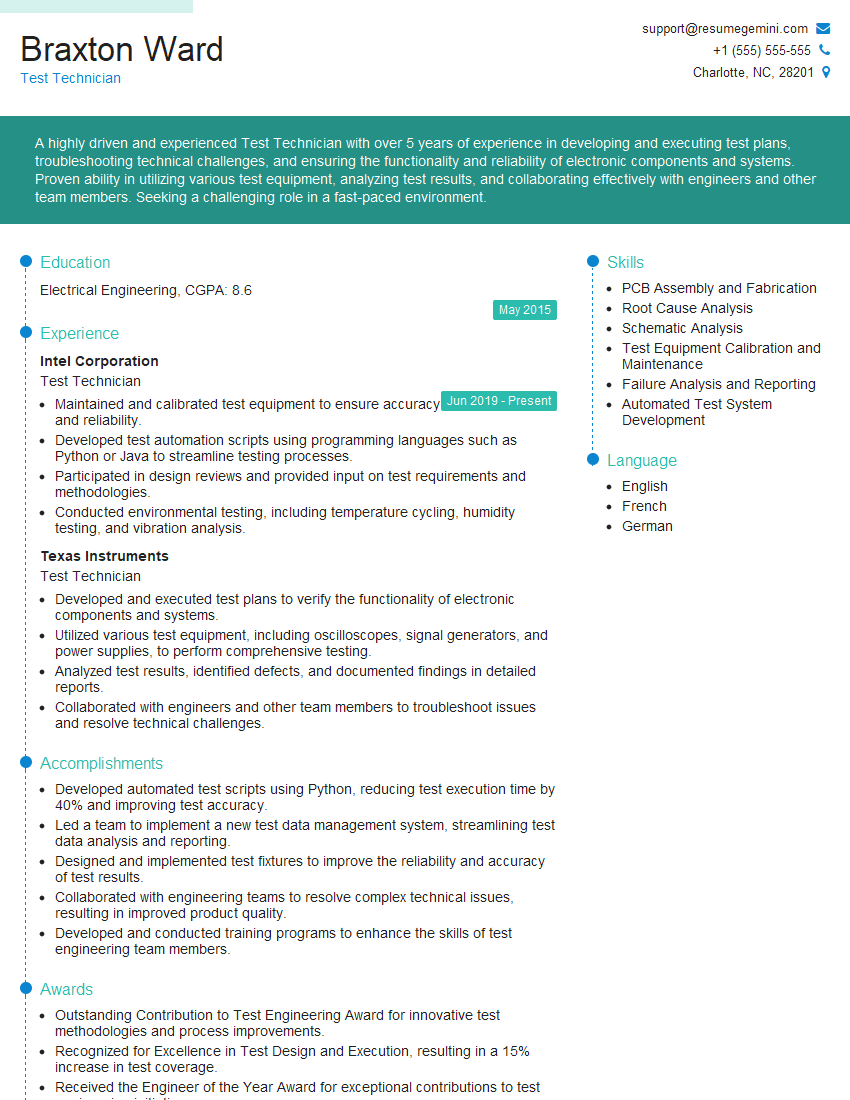
Test Technician Resume Sample
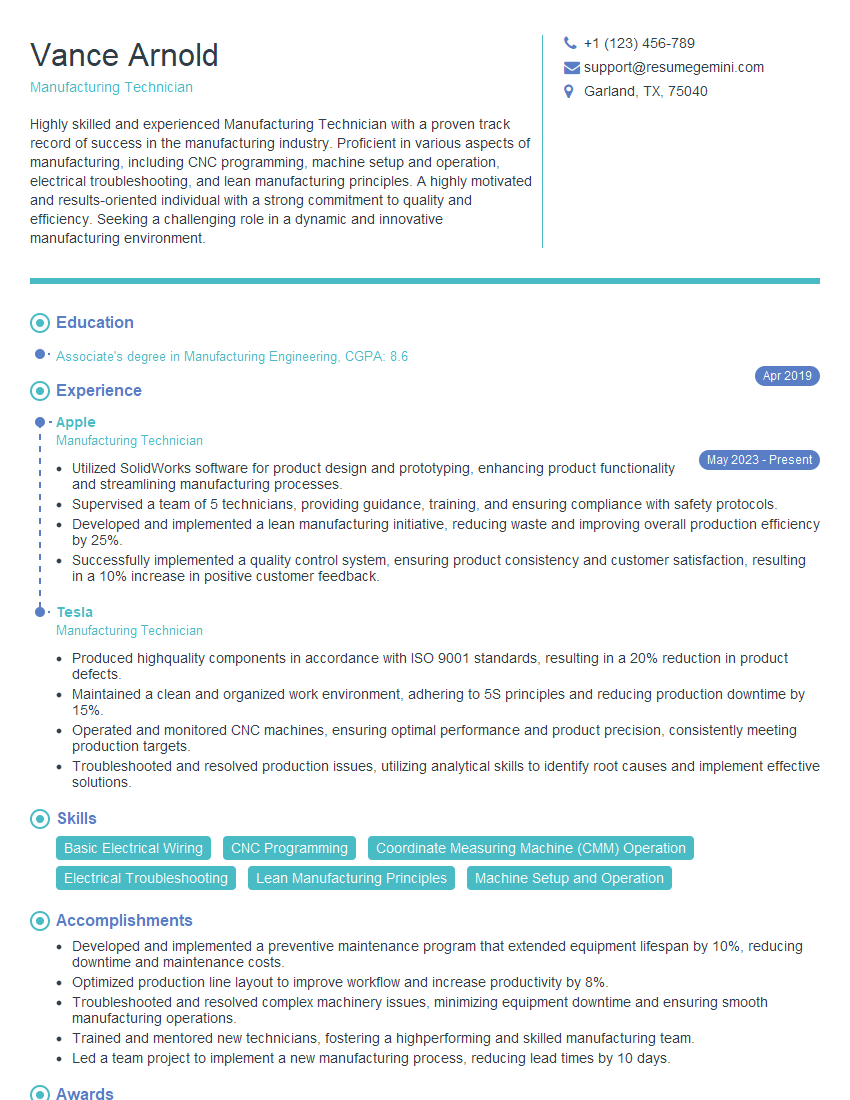
Manufacturing Technician Resume Sample
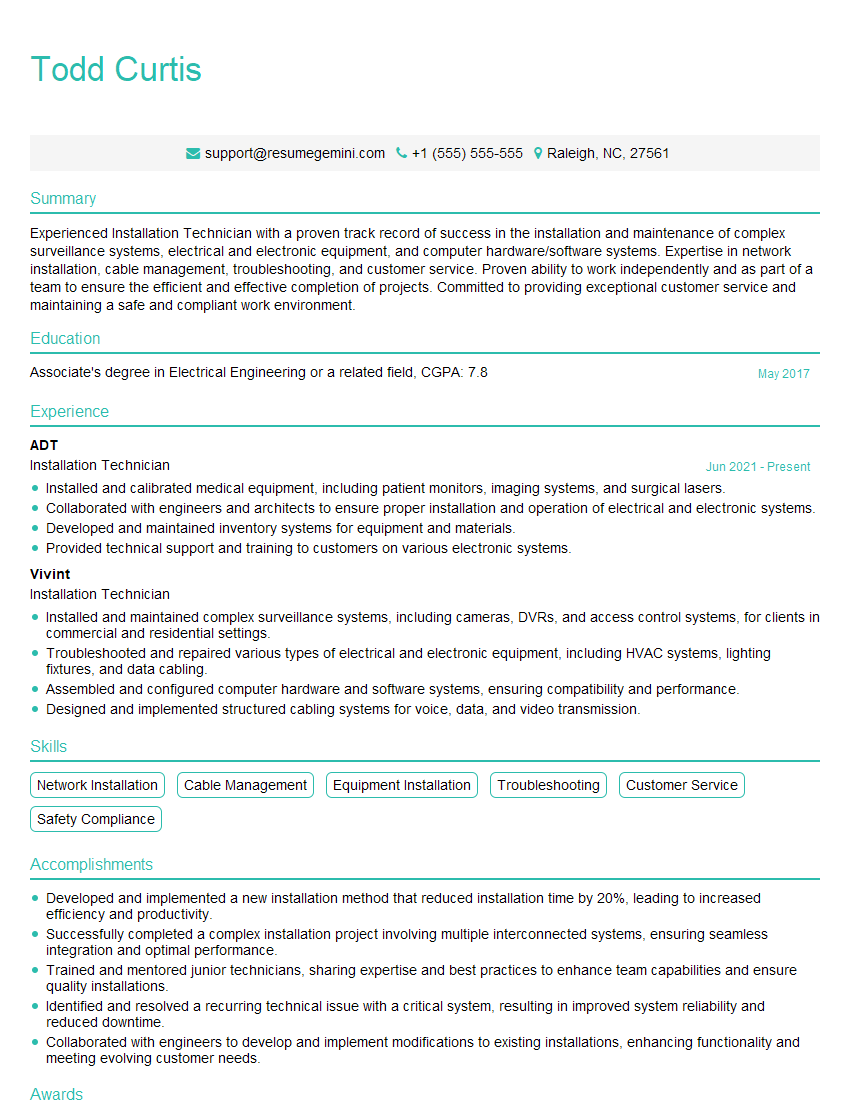
Installation Technician Resume Sample
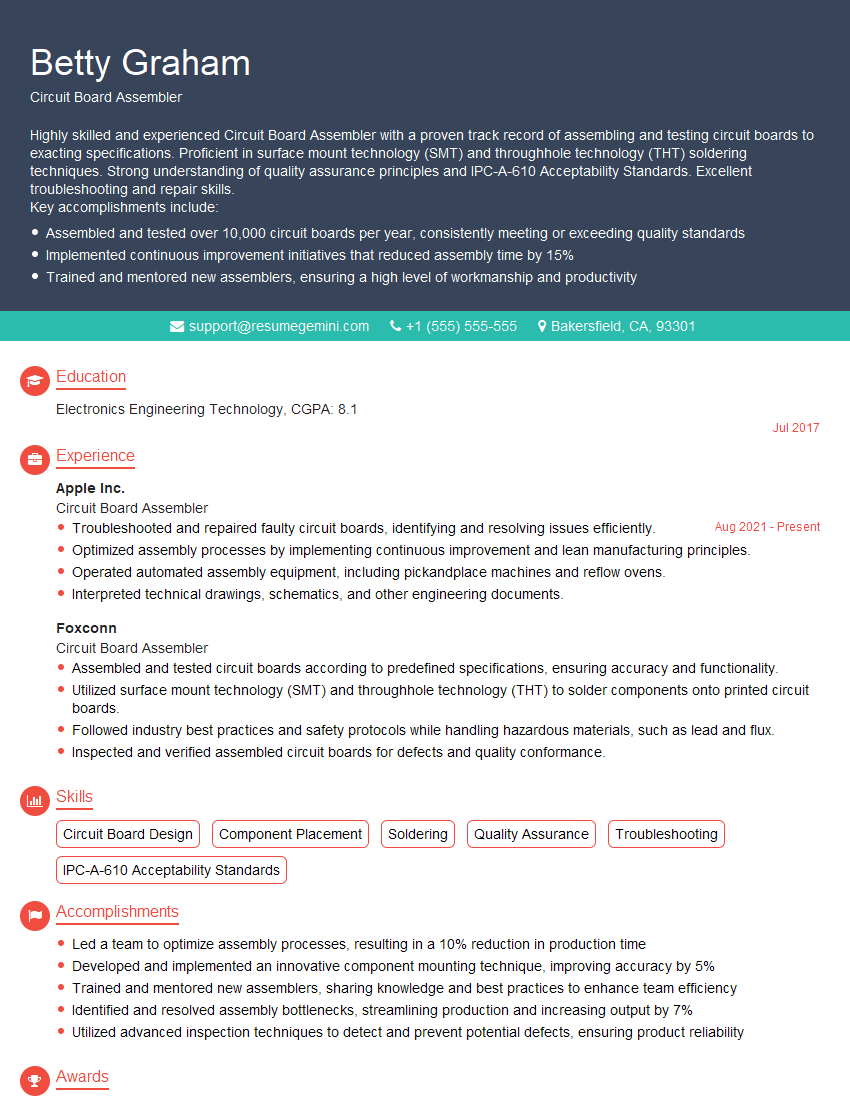
Circuit Board Assembler Resume Sample
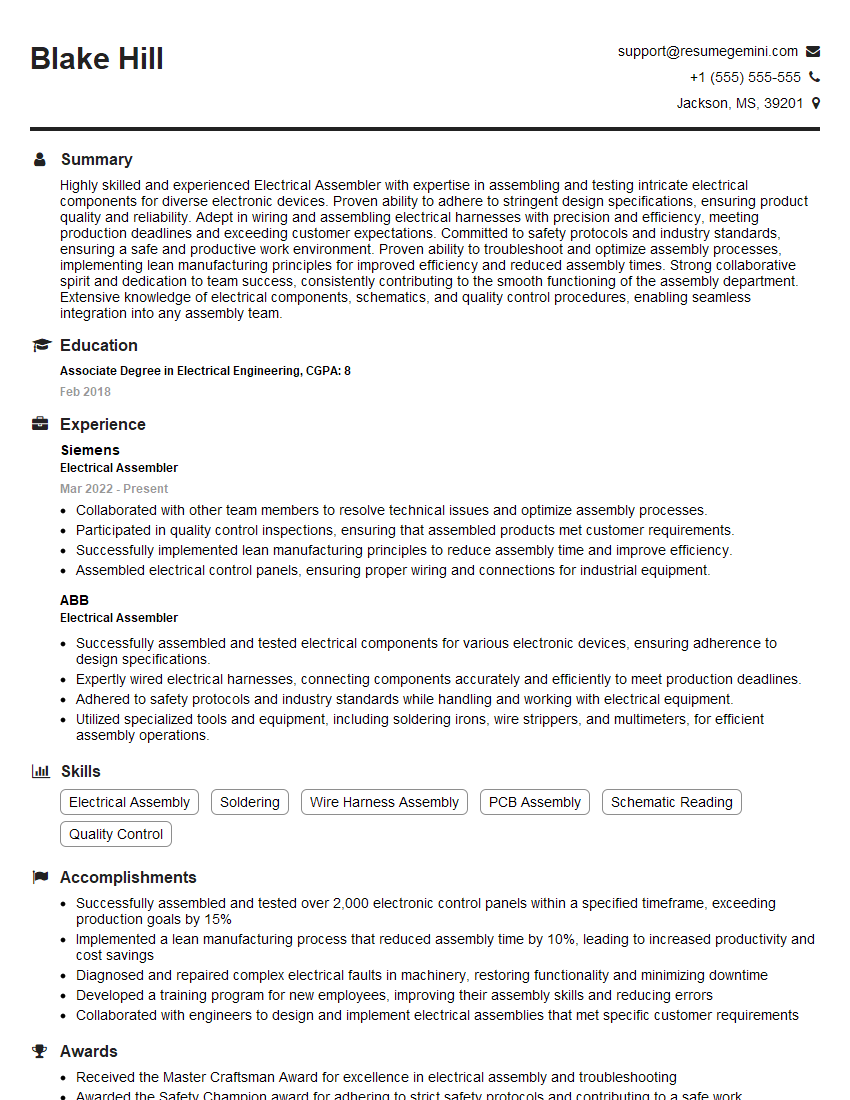
Electrical Assembler Resume Sample
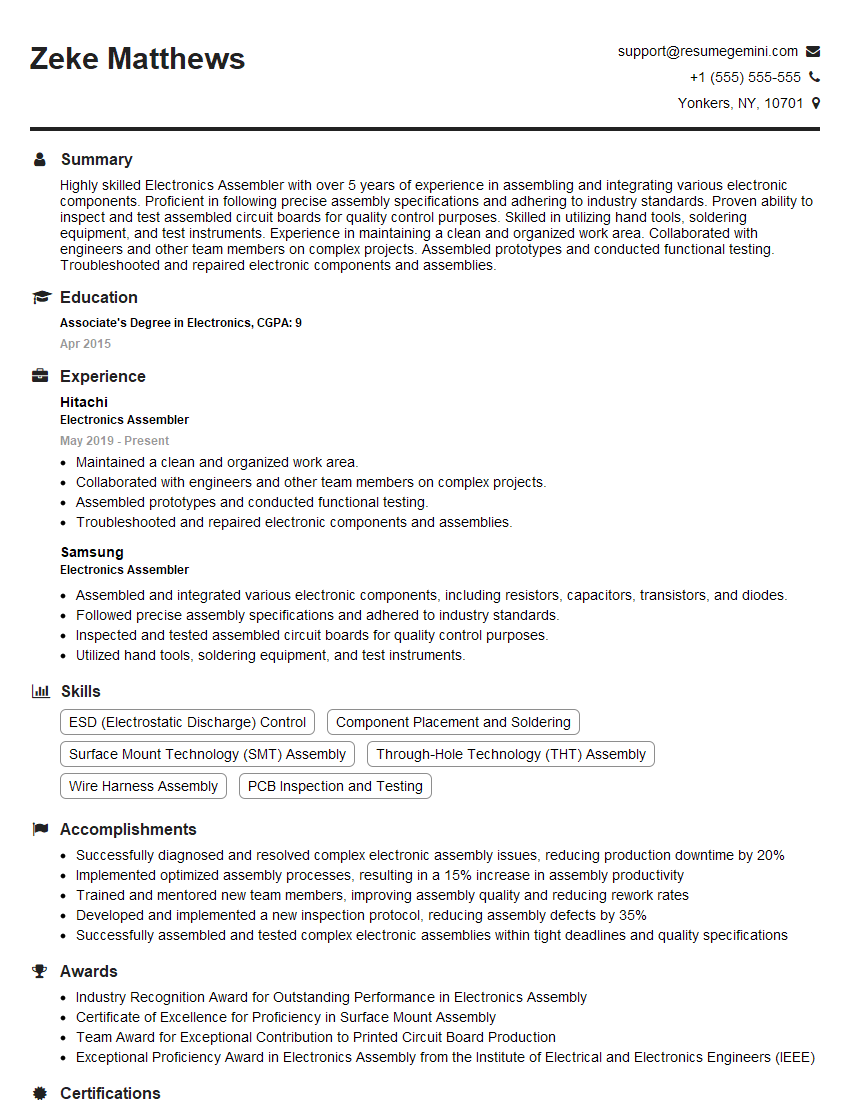
Electronics Assembler Resume Sample

Soldering Technician Resume Sample
Explore more articles
Users Rating of Our Blogs
Share Your Experience
We value your feedback! Please rate our content and share your thoughts (optional).
What Readers Say About Our Blog
To the interviewgemini.com Webmaster.
Very helpful and content specific questions to help prepare me for my interview!
Thank you
To the interviewgemini.com Webmaster.
This was kind of a unique content I found around the specialized skills. Very helpful questions and good detailed answers.
Very Helpful blog, thank you Interviewgemini team.