Interviews are more than just a Q&A session—they’re a chance to prove your worth. This blog dives into essential Steering and Navigation interview questions and expert tips to help you align your answers with what hiring managers are looking for. Start preparing to shine!
Questions Asked in Steering and Navigation Interview
Q 1. Explain the difference between inertial navigation and GPS.
Inertial navigation systems (INS) and GPS are both used for positioning and navigation, but they work fundamentally differently. INS uses internal sensors, primarily accelerometers and gyroscopes, to measure the vehicle’s acceleration and rotation. By integrating these measurements over time, it calculates velocity and subsequently position. Think of it like a sophisticated odometer and compass; it keeps track of how far and in what direction you’ve traveled. GPS, on the other hand, relies on a network of satellites orbiting Earth. These satellites transmit signals that are received by a GPS receiver, which then uses triangulation to determine its precise location. This is analogous to using landmarks to find your way.
The key difference lies in their dependency on external signals. INS is self-contained and works even without satellite signals, making it ideal for environments where GPS is unavailable or unreliable (e.g., underwater or indoors). However, INS suffers from drift – errors accumulate over time due to sensor inaccuracies and biases. GPS, while highly accurate, requires a clear line of sight to the satellites and is vulnerable to jamming or spoofing. Therefore, many navigation systems use a combination of both to leverage their respective strengths.
Q 2. Describe the Kalman filter and its application in navigation.
The Kalman filter is a powerful algorithm for state estimation, ideal for noisy sensor data. It’s particularly useful in navigation because it combines predictions from a model (e.g., a vehicle’s dynamics) with noisy measurements from sensors like GPS and IMUs (Inertial Measurement Units) to obtain the most likely state of the system – typically position, velocity, and orientation. It’s essentially a statistical filter that continuously updates its estimate based on new incoming data. Imagine you’re tracking a moving object with your eyes. Your brain uses the previous location and the current observed movement to predict its next location, adjusting its estimate based on new observations. The Kalman filter performs a similar function mathematically.
In navigation, the Kalman filter improves accuracy by reducing the impact of noise in sensor measurements. For instance, a GPS receiver might provide slightly noisy position data, while an IMU might drift over time. The Kalman filter fuses these inputs to provide a smoother, more accurate estimate of the vehicle’s position and trajectory.
//Simplified Kalman filter prediction step: x_predicted = F * x_previous + u; //State updateQ 3. How does sensor fusion improve navigation accuracy?
Sensor fusion combines data from multiple sensors to improve navigation accuracy and reliability. Individual sensors have limitations; for example, GPS can be affected by atmospheric conditions and multipath errors, while IMUs drift over time. By combining data from various sources—GPS, IMU, wheel encoders, cameras, lidar— sensor fusion algorithms leverage their individual strengths and mitigate their weaknesses. This synergistic approach yields a more comprehensive and robust understanding of the vehicle’s state.
For example, a system might use GPS for coarse position estimation, an IMU for short-term velocity and acceleration information, and wheel encoders for precise odometry measurements. Sensor fusion algorithms, such as the Kalman filter or extended Kalman filter, then optimally combine this information to generate a more accurate and reliable estimate of position, velocity, and orientation than would be possible with any sensor alone. This is similar to how we use multiple senses (sight, touch, hearing) to perceive our environment more accurately.
Q 4. What are the common sources of error in GPS navigation?
GPS navigation is susceptible to several sources of error, which can significantly impact accuracy. Some common sources include:
- Atmospheric effects: The ionosphere and troposphere can delay GPS signals, leading to ranging errors.
- Multipath errors: Signals can reflect off buildings or other surfaces before reaching the receiver, causing inaccuracies in distance measurements.
- Satellite geometry: The relative positions of the satellites affect the accuracy of triangulation; poor geometry can lead to larger errors.
- Receiver noise: Electronic noise in the receiver can affect signal processing and position calculation.
- Obstructions: Buildings, trees, or tunnels can block signals, resulting in signal loss or weak signals.
- Intentional or unintentional interference: Jamming or spoofing can deliberately disrupt GPS signals.
Understanding these error sources is crucial for designing robust navigation systems that can mitigate their effects. Techniques such as differential GPS (DGPS) and real-time kinematic (RTK) GPS improve accuracy by correcting for known error sources.
Q 5. Explain different path planning algorithms (e.g., A*, Dijkstra’s).
Path planning algorithms determine the optimal path from a starting point to a goal point, considering various constraints like obstacles and terrain. A* and Dijkstra’s algorithms are popular choices:
Dijkstra’s algorithm finds the shortest path in a graph with non-negative edge weights. It explores the graph systematically, expanding from the start node until the goal node is reached. It’s guaranteed to find the shortest path, but it can be computationally expensive for large graphs. Imagine it like exploring a maze by methodically checking every possible path until you find the shortest one.
A* algorithm is a heuristic search algorithm that improves upon Dijkstra’s by using a heuristic function to estimate the distance from a node to the goal. This heuristic guides the search towards the goal, making it much more efficient than Dijkstra’s for many scenarios. Imagine using a map to navigate a maze; you wouldn’t randomly explore all paths, but you would favor paths closer to the target. The heuristic function in A* provides this guidance.
Other path planning algorithms include Rapidly-exploring Random Trees (RRT) and Probabilistic Roadmaps (PRM), which are particularly well-suited for complex, high-dimensional spaces.
Q 6. How does SLAM (Simultaneous Localization and Mapping) work?
Simultaneous Localization and Mapping (SLAM) is a crucial capability for autonomous robots and vehicles. It solves the problem of building a map of an unknown environment while simultaneously localizing the robot within that map. This is challenging because the robot’s position is uncertain, and the map is incomplete and likely noisy.
SLAM works by repeatedly estimating the robot’s pose (position and orientation) and updating the map based on sensor data (e.g., from lidar, cameras, or sonar). Various techniques exist, such as extended Kalman filter SLAM (EKF-SLAM) and graph-based SLAM. These approaches maintain a representation of the map (e.g., a grid map or point cloud) and the robot’s pose, updating them iteratively as new sensor data becomes available. Imagine drawing a map while simultaneously trying to figure out where you are on that map; you use your movements and the things you see to refine both the map and your location. SLAM does this using sophisticated algorithms and sensor data.
Q 7. Describe the challenges of autonomous navigation in complex environments.
Autonomous navigation in complex environments presents several significant challenges:
- Perception: Accurately and reliably perceiving the environment, including dynamic obstacles (moving people, vehicles), is crucial. Robust object detection and tracking algorithms are necessary.
- Planning: Generating safe and efficient trajectories in cluttered, dynamic environments requires sophisticated path planning and motion control algorithms.
- Localization: Maintaining accurate localization in the presence of sensor noise, GPS outages, and perceptual ambiguity is essential.
- Decision-making: Making real-time decisions in complex and unpredictable situations, including handling unexpected events or failures, requires robust decision-making systems.
- Safety: Ensuring the safety of the vehicle and its surroundings, including collision avoidance and emergency response mechanisms, is paramount.
- Computational resources: Real-time processing of sensor data and execution of navigation algorithms require significant computational power.
Overcoming these challenges requires advancements in sensor technology, algorithms, and computing hardware. Research areas include robust sensor fusion, advanced path planning techniques, and development of reliable AI-based decision-making systems.
Q 8. What are the different types of map representations used in robotics navigation?
Robotics navigation relies on various map representations to depict the environment. The choice depends on the robot’s capabilities and the application’s demands. Common types include:
- Occupancy Grid Maps: These represent the environment as a grid of cells, each marked as occupied, free, or unknown. Think of it like a pixelated image of the world, where each pixel indicates whether something is present or not. They’re robust and widely used, particularly in Simultaneous Localization and Mapping (SLAM) algorithms. For example, a Roomba vacuum cleaner might use an occupancy grid to map your living room, avoiding obstacles.
- Topological Maps: These focus on the connectivity between different locations, represented as nodes and edges. They’re less detailed than occupancy grids but are efficient for large environments and high-level planning. Imagine a simplified map of a city showing only major intersections and roads – this is a topological map, useful for route planning but not for precise obstacle avoidance.
- Metric Maps: These provide precise geometric information about the environment, often using features like points, lines, and planes. They can be very accurate but computationally expensive. A self-driving car, needing precise positioning for safe operation, benefits greatly from a detailed metric map.
- Hybrid Maps: These combine aspects of different map types, often integrating the advantages of both occupancy grids and metric maps to achieve both accuracy and efficiency. For instance, a robot could use an occupancy grid for local navigation and a topological map for global path planning.
Q 9. Explain the concept of localization in robotics.
Localization is the process of determining a robot’s position and orientation within its environment. It’s like knowing where you are on a map. Accurate localization is crucial for navigation because the robot needs to know its current location before it can plan a path to its destination. Common approaches include:
- GPS-based localization: Using GPS signals to estimate the position. However, GPS signals can be unreliable or unavailable indoors or in urban canyons.
- Sensor-based localization: Using sensors like IMUs, LiDAR, and cameras to measure the robot’s movement and environment features. This approach often employs techniques like Kalman filtering or particle filtering to fuse sensor data and estimate the robot’s pose (position and orientation).
- Landmark-based localization: Identifying known features (landmarks) in the environment and using their positions to estimate the robot’s pose.
For example, a delivery drone might use GPS for initial localization and then switch to camera-based localization to precisely navigate the final approach to a building, avoiding obstacles like trees or power lines.
Q 10. How do you handle sensor noise and outliers in navigation systems?
Sensor noise and outliers are inevitable in robotics navigation. Handling them effectively is critical for robust performance. Strategies include:
- Filtering Techniques: Kalman filters and particle filters are powerful tools for estimating the robot’s state by fusing noisy sensor data and predicting future states. These algorithms effectively reduce the impact of random noise.
- Outlier Rejection: Techniques like RANSAC (RANdom SAmple Consensus) can identify and remove outliers that significantly deviate from the expected sensor readings. This is crucial because outliers can heavily influence the estimates and lead to erroneous navigation.
- Sensor Fusion: Combining data from multiple sensors is a very effective strategy. The discrepancies between sensor readings can provide additional cues to identify outliers and obtain a more accurate and robust estimate. For example, combining LiDAR with a camera allows the system to cross-check detected obstacles and improve the overall robustness.
- Robust Statistics: Using statistical methods that are less sensitive to outliers, such as median filtering instead of averaging. The median is less sensitive to extreme values than the mean.
Imagine a self-driving car’s LiDAR detecting a false obstacle due to a bird flying by. Outlier rejection algorithms would help to identify and ignore this false reading, preventing the car from taking evasive action unnecessarily.
Q 11. Discuss different coordinate systems used in navigation.
Robotics navigation often involves multiple coordinate systems to represent the robot’s position and orientation. Common systems include:
- World Coordinate System: A fixed, global coordinate system that serves as a reference for the entire environment. It’s like a map with a fixed origin.
- Robot Coordinate System: A coordinate system fixed to the robot, with its origin at the robot’s center. This system moves with the robot.
- Sensor Coordinate System: Each sensor has its own coordinate system, defined relative to the robot or the world. Transformations are necessary to relate sensor readings to the robot’s or the world’s coordinate systems.
Transformations between these coordinate systems are essential for accurate navigation. These transformations often involve rotation matrices and translation vectors. For example, a robot’s camera might detect an object at a specific position in its own coordinate system, but this needs to be transformed to the world coordinate system to determine the object’s location in the global map.
Q 12. Explain the concept of dead reckoning.
Dead reckoning is a navigation technique that estimates the current position of a robot based on its previously known position and its subsequent movements. It’s like navigating by keeping track of your steps. The robot integrates its motion measurements (e.g., from an IMU) over time to estimate its current position. While simple, it’s susceptible to accumulating errors.
For example, if a robot knows its initial position and measures its velocity and heading over time, it can use dead reckoning to estimate its current location. However, small errors in velocity or heading measurements will accumulate over time, leading to drift and increasing positional uncertainty. This is why dead reckoning is often used in conjunction with other localization methods to correct for these errors.
Q 13. What are the limitations of using only GPS for navigation?
While GPS is a valuable navigation tool, relying solely on it has significant limitations:
- Signal Availability: GPS signals are often blocked or weakened in urban canyons, tunnels, indoor environments, and dense forests. This makes GPS unreliable in many situations.
- Accuracy Limitations: GPS accuracy can be limited by atmospheric conditions, multipath effects (signals reflecting off buildings), and the inherent limitations of the GPS technology. Typical accuracy is around a few meters.
- Security Concerns: GPS signals are susceptible to jamming or spoofing, potentially compromising navigation integrity.
Imagine a delivery robot navigating a busy city center. GPS alone might be insufficient for safe and accurate navigation due to signal blockage and the need for precise localization to avoid pedestrians and other obstacles. Therefore, supplementary sensor systems like LiDAR or cameras are often used in combination with GPS to overcome these limitations.
Q 14. Describe different types of sensors used in navigation (e.g., IMU, LiDAR, cameras).
Many sensors contribute to robust navigation systems. Some key examples include:
- IMU (Inertial Measurement Unit): Measures acceleration and angular velocity. It provides information about the robot’s movement but suffers from drift over time due to integration of noisy sensor readings. It’s like having an internal accelerometer and gyroscope to sense motion, but without external references, it loses accuracy over time.
- LiDAR (Light Detection and Ranging): Uses lasers to create a 3D point cloud of the surrounding environment. It’s precise for mapping and obstacle detection, but it’s expensive and can struggle in adverse weather conditions such as heavy fog.
- Cameras: Provide visual information about the environment. Vision systems can be computationally intensive but offer rich contextual information, allowing for object recognition and scene understanding. They are prone to light changes affecting the image quality and are therefore usually combined with other sensor types.
- GPS (Global Positioning System): Provides global positioning information, accurate to within meters. As discussed before, it’s susceptible to signal blockage and limited accuracy.
- Wheel Encoders: Measure the rotation of the robot’s wheels. Useful for odometry, estimating the robot’s movement, but prone to slippage errors.
A sophisticated navigation system often integrates data from multiple sensors using sensor fusion techniques to enhance accuracy and robustness.
Q 15. How do you ensure robustness and reliability in a navigation system?
Ensuring robustness and reliability in a navigation system is paramount, especially in safety-critical applications like autonomous vehicles. It’s achieved through a multi-layered approach focusing on redundancy, fault tolerance, and rigorous testing.
Redundancy: Employing multiple sensors (GPS, IMU, LiDAR, cameras) provides backup if one system fails. If GPS is unavailable, the system can seamlessly switch to inertial navigation and map matching.
Fault Tolerance: The system should gracefully handle sensor failures or unexpected inputs. This involves sophisticated algorithms that can detect and correct errors, or switch to a degraded mode of operation. For example, Kalman filtering helps fuse data from multiple sensors and smooth out noisy measurements.
Sensor Fusion: Combining data from various sensors enhances accuracy and reliability. A Kalman filter, for instance, expertly combines GPS position data with IMU measurements to create a more precise and robust estimate of the vehicle’s pose (position and orientation).
Software Design: Modular and well-tested software architecture prevents cascading failures. Each module should have independent error handling and be thoroughly tested using simulations and real-world scenarios.
Real-time Performance: The system must process data and make decisions in real-time to respond promptly to changing conditions. This requires efficient algorithms and optimized software.
Imagine a self-driving car: If the primary GPS signal is lost, a robust system will seamlessly switch to its secondary sensor suite (LiDAR, camera vision) to continue navigating safely. This is achieved through robust sensor fusion and sophisticated algorithms.
Career Expert Tips:
- Ace those interviews! Prepare effectively by reviewing the Top 50 Most Common Interview Questions on ResumeGemini.
- Navigate your job search with confidence! Explore a wide range of Career Tips on ResumeGemini. Learn about common challenges and recommendations to overcome them.
- Craft the perfect resume! Master the Art of Resume Writing with ResumeGemini’s guide. Showcase your unique qualifications and achievements effectively.
- Don’t miss out on holiday savings! Build your dream resume with ResumeGemini’s ATS optimized templates.
Q 16. Explain the concept of waypoints and path following.
Waypoints and path following are fundamental concepts in navigation. Waypoints define a sequence of target locations, creating a desired path for a vehicle to follow. Path following algorithms then guide the vehicle along this path, adjusting its trajectory to account for obstacles or inaccuracies in the vehicle’s position and heading.
Waypoints: These are simply geographical coordinates (latitude, longitude, and sometimes altitude) specifying points along the desired route. Think of them as signposts guiding the vehicle. For example, in a delivery drone system, waypoints might be set as addresses of delivery locations.
Path Following: This involves controlling the vehicle’s steering and speed to follow the path defined by the waypoints. Different algorithms can be used depending on the application’s requirements. Pure pursuit is a popular algorithm, where the vehicle aims for a look-ahead point along the path. Other approaches may consider the curvature of the path to achieve smoother and more efficient movements. Consider a robot vacuum cleaner: It uses a simplified version of path following to navigate your home, avoiding obstacles and reaching all areas.
Q 17. What are the safety considerations for autonomous navigation systems?
Safety considerations for autonomous navigation systems are of utmost importance. They demand rigorous attention to detail and a layered approach to risk mitigation.
Sensor Reliability: Redundancy and fault tolerance are crucial to ensure that sensor failures don’t lead to accidents. This includes having backup sensors and algorithms that can operate even if some sensors are malfunctioning.
Emergency Stop Mechanisms: Safe and reliable emergency stop mechanisms must be in place, allowing humans to immediately halt the vehicle’s operation in case of critical situations.
Path Planning Safety: The path planning algorithm must consider safety margins around obstacles and adhere to traffic regulations and safety limits. Unexpected situations need consideration; what happens when a pedestrian unexpectedly enters the road?
Fail-Operational Design: Even with failures, the system should still be able to operate safely (though potentially in a degraded mode). The system should always prioritize safety over efficiency or performance.
Software Verification and Validation: Rigorous testing and validation using simulations and real-world testing are necessary to ensure that the system behaves as expected and that all potential failure scenarios are addressed. This includes the detection and avoidance of deadlocks or unpredictable behaviours.
For example, an autonomous vehicle must be able to reliably detect pedestrians and cyclists, maintain a safe following distance from other vehicles, and come to a complete stop in emergency situations. This requires sophisticated sensor fusion, path planning, and decision-making algorithms, backed up by rigorous testing and validation procedures.
Q 18. How do you deal with unexpected obstacles during autonomous navigation?
Handling unexpected obstacles during autonomous navigation requires a combination of proactive and reactive strategies.
Obstacle Detection and Recognition: Employ multiple sensors (LiDAR, radar, cameras) to detect obstacles. Advanced algorithms are used to classify these obstacles (pedestrian, vehicle, static object).
Path Replanning: When an obstacle is detected, the navigation system should replan the path to avoid the obstacle, using efficient algorithms to find a safe and optimal detour. Algorithms such as A* search are commonly used for finding optimal paths.
Obstacle Avoidance Maneuvers: The system needs to execute safe and efficient maneuvers to avoid the obstacle. This may involve slowing down, changing lanes, or stopping completely.
Safety Margins: The planned path should always include safety margins to account for uncertainties and potential errors in sensor measurements or the vehicle’s control system.
Imagine a robot navigating a cluttered warehouse. If it encounters an unexpected box on the floor, it should use its sensors to detect it, replan its path around the box, and continue its task without causing a collision. This involves real-time path planning and dynamic obstacle avoidance.
Q 19. Explain different types of steering mechanisms (e.g., Ackerman steering, four-wheel steering).
Steering mechanisms are crucial for controlling a vehicle’s direction. Different mechanisms offer varied advantages and disadvantages.
Ackerman Steering: This is the most common steering mechanism for cars and other wheeled vehicles. It uses two front wheels that pivot around a central point. The inner wheel turns at a sharper angle than the outer wheel, allowing for smooth turning. This is simple, efficient, and well-understood.
Four-Wheel Steering: This system allows all four wheels to turn. Different configurations are possible, such as all wheels turning in the same direction at low speeds for enhanced maneuverability (crab-like movement), or the rear wheels turning opposite the front wheels at high speeds for enhanced stability. It offers enhanced maneuverability and stability, especially at both low and high speeds, but comes with higher complexity and cost.
Other Mechanisms: Other less common steering mechanisms include tracked vehicles (like tanks) which have no need for steering as such, and mecanum wheels, allowing for omni-directional movement.
The choice of steering mechanism depends on the application’s requirements. Ackerman steering is sufficient for most cars, while four-wheel steering might be preferred for heavy vehicles or those needing improved maneuverability in tight spaces.
Q 20. Describe the role of a map in navigation.
A map is an essential component of any navigation system. It provides the system with crucial information about the environment, such as road networks, obstacles, landmarks, and the vehicle’s current location. The map acts like a blueprint, guiding the vehicle through its journey.
Role of a Map:
Localization: The map is used to determine the vehicle’s position and orientation (pose) within the environment. Algorithms compare sensor data (GPS, IMU, etc.) to the map to estimate the pose.
Path Planning: The map enables the navigation system to plan a safe and efficient path from the starting point to the destination, avoiding obstacles and adhering to traffic rules.
Decision Making: The map provides context for decision-making processes. For example, knowing the type of road (highway, residential street) allows the system to adjust speed and behavior accordingly.
Consider a GPS navigation system in a car. The map data determines the route displayed on the screen, and constantly updates the position of the car. This enables efficient route planning and guidance.
Q 21. What are the advantages and disadvantages of different mapping techniques?
Different mapping techniques have advantages and disadvantages. The choice depends on factors such as accuracy requirements, cost, and the type of environment.
GPS-based Mapping: Relatively inexpensive but less accurate, especially in urban canyons where signals can be blocked or reflected. Useful for large-scale mapping, but may lack the detailed information needed for precise navigation in complex environments.
LiDAR-based Mapping: Provides highly accurate 3D point clouds representing the environment. Expensive, but suitable for creating detailed maps for autonomous vehicles and other applications requiring high precision. It is less effective in adverse weather conditions like heavy fog.
Camera-based Mapping: Can create detailed maps using image processing techniques, but accuracy can be affected by lighting conditions and other factors. Cost-effective, and often used in conjunction with other sensors to enhance robustness and accuracy. It is very effective for detailed environment understanding and object recognition.
Simultaneous Localization and Mapping (SLAM): A technique that builds a map of an unknown environment while simultaneously tracking the vehicle’s position within that map. Widely used in robotics and autonomous navigation, but computationally intensive and can be sensitive to noise in sensor measurements.
For example, Google Maps relies heavily on GPS data and crowdsourced information for large-scale mapping. Autonomous vehicle companies frequently utilize LiDAR and camera-based mapping to create high-precision maps of their operational areas. Choosing the right technique is a critical decision in the design and implementation of any navigation system.
Q 22. How do you evaluate the performance of a navigation system?
Evaluating a navigation system’s performance involves assessing several key aspects. It’s not just about reaching the destination; it’s about how efficiently and reliably that happens. We use a multifaceted approach, focusing on accuracy, precision, robustness, and efficiency.
Accuracy: This measures how close the system’s estimated position is to the true position. We often use metrics like Root Mean Squared Error (RMSE) to quantify this. A low RMSE indicates high accuracy.
Precision: This refers to the consistency of the measurements. A precise system will provide similar position estimates over repeated measurements, even if those estimates are not perfectly accurate. We analyze the standard deviation of position estimates.
Robustness: This assesses the system’s ability to handle unexpected events, such as GPS signal loss, sensor noise, or unexpected obstacles. We test the system under various challenging conditions.
Efficiency: This considers the computational cost and power consumption of the navigation algorithms. We analyze processing time and energy usage.
Completeness: Does the system reliably find a path and follow it to completion? Metrics like path completion rate, and time taken to reach the goal are used.
For example, in autonomous vehicle navigation, we might simulate various scenarios, including dense traffic, poor visibility, and unexpected road closures, to evaluate the robustness of the system. We then compare the performance metrics against pre-defined thresholds to determine if the system meets the required standards.
Q 23. Explain the concept of global and local path planning.
Path planning is the process of finding a collision-free path from a starting point to a goal. It’s broadly divided into global and local path planning. Think of it like planning a road trip.
Global Path Planning: This is the high-level planning stage, like using Google Maps to plan a cross-country route. It considers the entire environment and finds an optimal path based on a map or model of the world. Algorithms like A*, Dijkstra’s algorithm, and rapidly exploring random trees (RRT) are commonly used. The output is a sequence of waypoints.
Local Path Planning: This is the low-level planning stage, analogous to navigating through city streets once you arrive. It deals with real-time obstacles and sensor information, refining the global path or creating a new path when needed. Techniques such as Dynamic Window Approach (DWA) and potential field methods are employed. The goal is to generate smooth and safe trajectories that can be tracked by the control system.
Imagine an autonomous robot navigating a warehouse. Global planning determines the optimal route between shelves, while local planning handles avoiding unexpected obstacles like pallets or people.
Q 24. Describe the role of control systems in navigation.
Control systems are crucial for implementing the navigation plan. They act as the bridge between the planned path and the actual movement of the vehicle or robot. Think of a steering wheel and accelerator in a car – that’s the control system acting on the plan (the route).
The control system receives the desired trajectory (from the local path planner) and uses feedback from sensors (like IMU, encoders, GPS) to compute the necessary control commands (steering angle, speed, etc.). Common control algorithms include PID controllers, model predictive control (MPC), and other advanced techniques. These algorithms continually adjust the vehicle’s motion to stay on the desired path, correcting for errors due to sensor noise, environmental disturbances, and model imperfections.
For instance, in a drone navigation system, the control system uses sensor data from the accelerometer, gyroscope, and GPS to adjust the propeller speeds, maintaining stability and following the planned flight path.
Q 25. How do you handle localization failures in a navigation system?
Localization failures, where the system loses track of its position, are a significant challenge in navigation. Handling these failures requires a robust and redundant system.
Sensor Fusion: Combining data from multiple sensors (GPS, IMU, LiDAR, cameras) allows the system to cross-check information and detect inconsistencies indicating a failure. If GPS fails, IMU and other sensors can provide short-term position estimation, assisted by map matching.
Recovery Strategies: Implementing strategies to recover from localization failures is crucial. This might involve stopping the vehicle, re-initializing the localization algorithm, or using a global positioning system to re-acquire the position.
Failure Detection: Incorporating algorithms to detect localization failures based on sensor data inconsistencies or unexpected changes in the estimated pose helps initiate recovery actions early.
Map-based localization: Using a map of the environment can help relocalize the system by matching sensor data to map features. This can mitigate failures in the GPS signal.
For example, in an autonomous car, if GPS is lost temporarily due to a tunnel or dense urban canyon, the vehicle might slow down, rely on inertial sensors for short-term localization, and attempt to re-acquire the GPS signal while using map-matching techniques and other sensors to estimate position.
Q 26. What is the importance of accurate sensor calibration in navigation?
Accurate sensor calibration is paramount for reliable navigation. Inaccurate calibration introduces systematic errors that can accumulate over time, leading to significant positional errors and control issues. Imagine a car with improperly aligned wheels – it won’t go straight!
Calibration involves determining the intrinsic and extrinsic parameters of each sensor. Intrinsic parameters describe the internal characteristics of a sensor (e.g., focal length for a camera, bias and scale factors for an IMU). Extrinsic parameters define the spatial relationship between different sensors (e.g., the relative position and orientation of a LiDAR sensor with respect to the vehicle’s coordinate system).
Improper calibration can cause systematic biases in the sensor data, leading to inaccurate position estimation, path planning errors, and potentially dangerous situations. A well-calibrated system is crucial for the accuracy and reliability of the navigation system.
Calibration procedures involve carefully designed experiments and algorithms that use known landmarks or sensor movements to estimate the sensor parameters. Regular recalibration, especially after maintenance or significant environmental changes, is essential.
Q 27. Explain how to deal with GPS signal loss in a navigation system.
GPS signal loss is a common problem in navigation, especially in urban canyons, tunnels, or under dense foliage. Handling this requires a layered approach involving redundancy and alternative localization methods.
Sensor Fusion: In the absence of GPS, the system should seamlessly transition to other sensors, such as IMUs, wheel encoders (for ground vehicles), or visual odometry (using cameras). This requires careful sensor fusion algorithms to combine data from different sensors and maintain a consistent estimate of the vehicle’s position.
Dead Reckoning: This technique uses sensor data (IMU) to estimate the vehicle’s position relative to a known starting point. While this is prone to accumulating errors over time, it can provide short-term position estimates when GPS is unavailable.
Map Matching: If a map is available, the system can match sensor data (e.g., from LiDAR or cameras) to features in the map to estimate the vehicle’s position. This method is especially useful in urban environments.
Emergency Stop: In critical situations where localization is completely lost and safety cannot be guaranteed, the system should trigger an emergency stop.
For example, a self-driving car encountering a tunnel would switch to inertial navigation and wheel odometry, while simultaneously attempting to reacquire the GPS signal upon exiting the tunnel.
Q 28. Describe your experience with a specific navigation project.
I worked on a project developing a navigation system for an autonomous underwater vehicle (AUV) designed for seabed mapping. The primary challenge was the lack of reliable GPS underwater. We addressed this by implementing a robust sensor fusion system integrating data from a Doppler Velocity Log (DVL), an Inertial Measurement Unit (IMU), and a depth sensor.
The DVL provided velocity information, the IMU measured orientation and acceleration, and the depth sensor measured the AUV’s depth. We used an Extended Kalman Filter (EKF) to fuse the sensor data and estimate the AUV’s position and orientation. We incorporated a detailed bathymetric map of the seabed which allowed us to perform efficient map matching and constraint-based positioning.
Furthermore, we developed a sophisticated obstacle avoidance system using sonar data, integrated with the path planning algorithm to ensure safe navigation. The project successfully demonstrated the AUV’s ability to autonomously navigate and map complex underwater terrains, highlighting the effectiveness of our sensor fusion and path planning strategies. This work also involved rigorous testing and validation of the system in real-world underwater environments. We were able to demonstrate high accuracy in the seabed map generated, even in environments with significant current and limited visibility.
Key Topics to Learn for Steering and Navigation Interview
- Fundamental Steering Principles: Understanding steering system architectures (mechanical, hydraulic, electronic), steering geometry, and the physics behind vehicle turning.
- Navigation System Components: Familiarity with GPS technology, inertial navigation systems (INS), map databases, sensor fusion techniques, and their integration in modern vehicles.
- Advanced Driver-Assistance Systems (ADAS): Knowledge of lane keeping assist, adaptive cruise control, automatic emergency braking, and their reliance on accurate steering and navigation data.
- Software and Algorithms: Understanding the software architecture behind navigation systems, including path planning algorithms, localization techniques, and map matching algorithms.
- Calibration and Testing: Familiarity with the methods and procedures used to calibrate steering and navigation systems, and the importance of rigorous testing and validation.
- Failure Modes and Diagnostics: Understanding potential failure modes in steering and navigation systems and the diagnostic techniques used to identify and rectify problems.
- Safety and Regulations: Knowledge of relevant safety standards and regulations governing the design and implementation of steering and navigation systems.
- Practical Application: Consider how these theoretical concepts translate into real-world scenarios, such as autonomous driving, advanced driver assistance systems, and improving vehicle handling and safety.
- Problem-Solving Approach: Practice approaching complex problems systematically, by breaking them down into smaller, manageable parts, and using a structured approach to finding solutions.
Next Steps
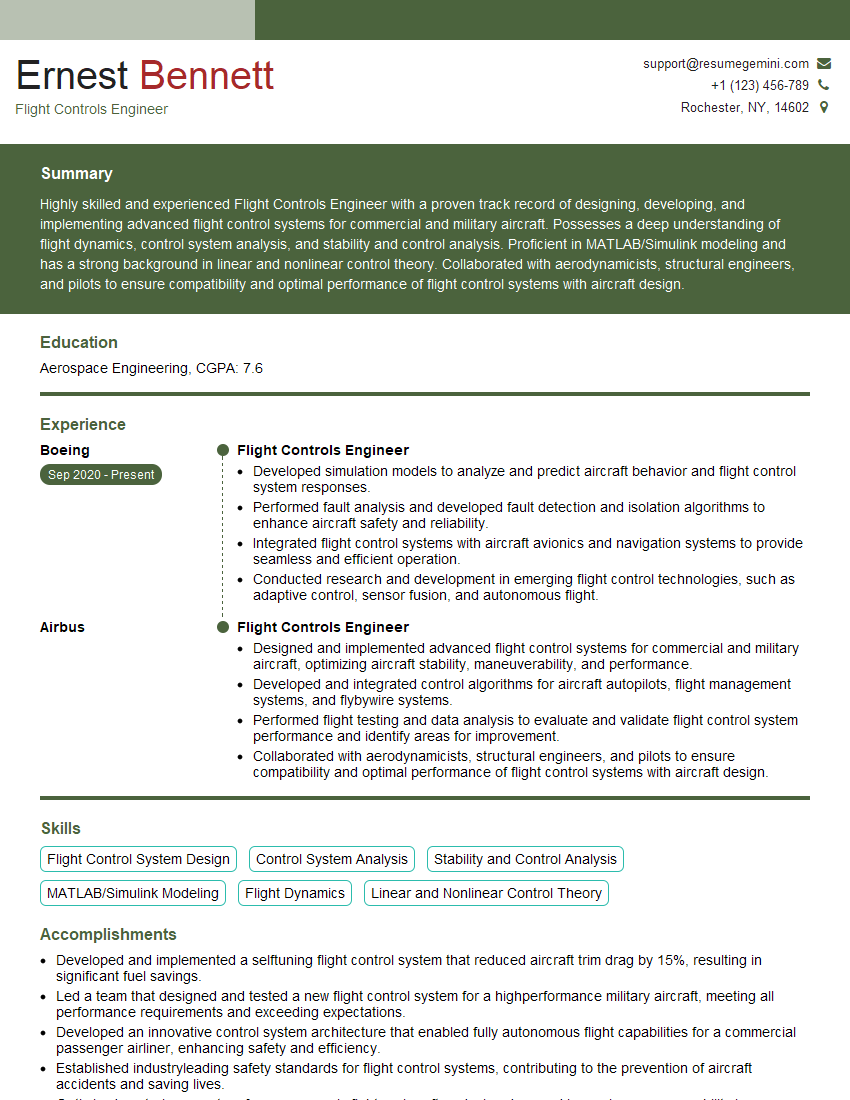
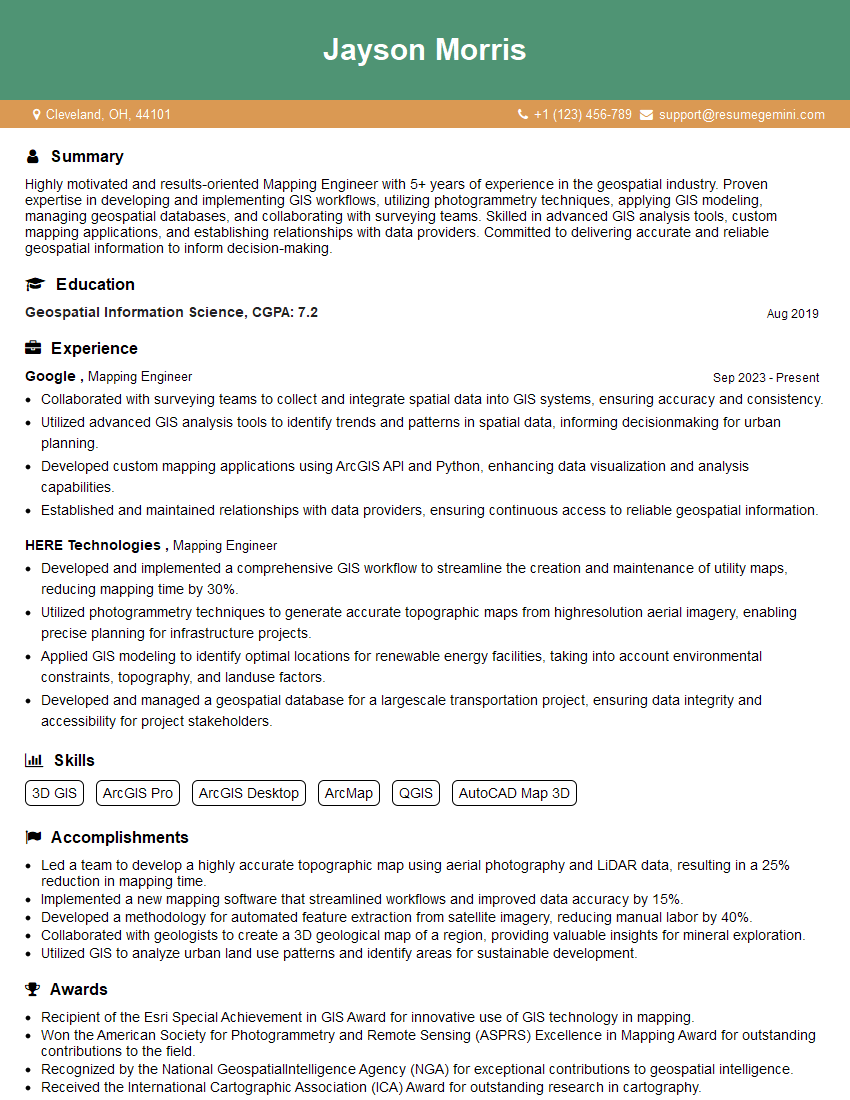
Mastering Steering and Navigation is crucial for a successful career in the automotive and related industries, opening doors to exciting roles with significant impact. To maximize your job prospects, invest time in crafting a compelling and ATS-friendly resume that showcases your skills and experience effectively. ResumeGemini is a trusted resource to help you build a professional resume that highlights your accomplishments and makes you stand out from the competition. Examples of resumes tailored to Steering and Navigation are available to help guide your resume creation process.
Explore more articles
Users Rating of Our Blogs
Share Your Experience
We value your feedback! Please rate our content and share your thoughts (optional).
What Readers Say About Our Blog
To the interviewgemini.com Webmaster.
Very helpful and content specific questions to help prepare me for my interview!
Thank you
To the interviewgemini.com Webmaster.
This was kind of a unique content I found around the specialized skills. Very helpful questions and good detailed answers.
Very Helpful blog, thank you Interviewgemini team.