Preparation is the key to success in any interview. In this post, we’ll explore crucial Mortar and Grout Application interview questions and equip you with strategies to craft impactful answers. Whether you’re a beginner or a pro, these tips will elevate your preparation.
Questions Asked in Mortar and Grout Application Interview
Q 1. What are the different types of mortar mixes and their applications?
Mortar mixes are categorized primarily by their strength and intended application. The type of cement, aggregate size, and the addition of lime or other admixtures all influence the final properties.
- Type N Mortar: A general-purpose mortar suitable for most masonry applications. It offers a good balance of strength and workability. Think of it as the ‘all-rounder’ for bricklaying, block laying, and general repairs.
- Type S Mortar: A higher-strength mortar, ideal for projects requiring increased durability and resistance to compressive stress. You’d use this for projects in high-traffic areas, or for load-bearing walls in demanding climate conditions. It’s stronger but can be less workable.
- Type M Mortar: The strongest type, offering superior compressive strength and water resistance. Applications include structures subjected to significant stress or where high durability is critical. This is perfect for high-rise construction or retaining walls, where the mortar must bear a lot of weight.
- Type O Mortar: A low-strength mortar, best suited for non-load-bearing applications such as interior brick veneers or where minimal compressive strength is required. Think of it for cosmetic or non-structural applications.
Choosing the right type depends heavily on the project’s requirements. Always consult building codes and engineering specifications to ensure compliance and safety.
Q 2. Explain the importance of proper mixing ratios for mortar.
Proper mixing ratios are crucial for achieving the desired mortar properties – strength, workability, and durability. Incorrect ratios can lead to weak mortar, poor adhesion, or cracking. Think of it like baking a cake – the right proportions of ingredients are essential for a successful outcome.
The exact ratios are specified by the manufacturer on the cement bag. They are usually given by weight, but sometimes volumetric ratios can be used, though these are less precise. Deviations, even small ones, can significantly affect the final product. For example, using too much water makes the mortar weak and susceptible to cracking, whereas too little water makes it difficult to work with.
Most mortar mixes require a consistent water-cement ratio. To achieve it, I always recommend using a consistent measuring approach, whether it’s a scale, or consistently filled buckets for both cement and aggregate. A good quality mixer also helps to ensure even distribution of water.
Q 3. Describe the process of preparing a substrate for mortar application.
Substrate preparation is paramount for successful mortar application. A poorly prepared surface will lead to poor adhesion, cracking, and ultimately, failure of the mortar. Think of it as creating a solid foundation for a house.
The process involves:
- Cleaning: Removing loose debris, dirt, dust, and any contaminants from the surface. A wire brush, pressure washer (low pressure), or even just a stiff broom might be necessary depending on the substrate.
- Moistening: Slightly dampening the substrate to prevent it from absorbing moisture from the fresh mortar too rapidly. This helps to avoid shrinkage cracks and ensures better adhesion. It is important not to oversaturate, just a light misting is enough.
- Priming (if needed): Depending on the substrate material, a primer might be necessary to improve adhesion. For example, highly absorbent surfaces might benefit from a bonding agent to seal pores.
- Repairing: Addressing any cracks, holes, or unevenness in the substrate. This could involve using patching compounds, fillers or even removing damaged sections.
The goal is to create a clean, even, and slightly damp surface that provides optimal conditions for mortar bonding.
Q 4. How do you ensure proper adhesion of mortar to various surfaces?
Ensuring proper adhesion is vital for the longevity and structural integrity of any mortar application. The key is to create a strong mechanical bond between the mortar and the substrate.
Techniques to enhance adhesion include:
- Thorough substrate preparation: As discussed earlier, cleaning, moistening, and priming are critical steps.
- Appropriate mortar selection: Choosing the right type of mortar for the substrate material and application is essential. For instance, you may need a special type of mortar for bonding to metal or certain types of stone.
- Proper mixing techniques: Consistent and thorough mixing ensures uniform workability and promotes good bonding.
- Effective application techniques: Applying the mortar in the correct manner, with proper pressure and tooling, contributes to good adhesion. This depends on the application – some need trowel work, others may require specialist equipment.
- Using bonding agents: For challenging substrates, bonding agents can significantly improve adhesion. These are chemical additives which improve the bonding properties of the mortar.
In practice, I always inspect the surface after application to check for any signs of poor adhesion, such as blistering or flaking, and rectify any issues promptly.
Q 5. What are the common causes of mortar cracking and how can they be prevented?
Mortar cracking is a common problem, often stemming from several factors.
- Shrinkage: As mortar dries, it shrinks, and if this shrinkage is restrained, cracking can occur. This is often exacerbated by rapid drying due to high temperatures or wind.
- Thermal expansion and contraction: Fluctuations in temperature cause the mortar and the substrate to expand and contract at different rates, leading to stress and cracking. This is especially prevalent in areas with large temperature swings.
- Poor substrate preparation: Uneven or contaminated surfaces prevent proper adhesion, resulting in cracks.
- Incorrect mixing ratios: Using too much or too little water weakens the mortar, making it prone to cracking.
- Movement in the substrate: Settlement or movement of the substrate can cause stress on the mortar, resulting in cracks. This is common with older buildings or those on unstable ground.
- Insufficient curing: Allowing the mortar to dry too quickly can lead to shrinkage cracks. Keeping the mortar moist during curing is key.
Preventing cracking involves addressing these factors through proper substrate preparation, using the correct mixing ratios, selecting appropriate mortar, and providing adequate curing.
Using control joints in larger masonry projects can also greatly reduce cracking risks. These are planned cracks that allow for expansion and contraction.
Q 6. Explain different grout types and their suitability for various applications.
Grout types vary widely in their composition and properties, influencing their suitability for different applications.
- Cement-based grout: A durable and versatile option for most applications. It offers good strength and water resistance, making it suitable for interior and exterior use. However, it can be more challenging to clean up.
- Epoxy grout: A high-performance grout with excellent strength, stain resistance, and water resistance. It’s ideal for areas with high moisture or heavy traffic, such as showers or commercial kitchens. It is generally more expensive than cement grout and requires a specific application technique.
- Unsanded grout: Used for narrow grout joints (typically less than ⅛ inch). Its fine consistency allows it to fill narrow gaps easily. It is better for delicate tile work.
- Sanded grout: Used for wider grout joints (typically more than ⅛ inch). The sand provides strength and prevents shrinkage. It’s more suitable for larger tiles or areas subjected to wear and tear.
The choice depends on factors like the joint width, the type of tile, the location (interior or exterior), and the expected level of traffic and exposure to moisture. Always check the manufacturer’s recommendations for specific applications and joint widths.
Q 7. How do you select the appropriate grout color and consistency?
Grout color and consistency are crucial for both aesthetics and performance. The color should complement the tiles and the overall design scheme of the space.
Color selection is a matter of personal preference, but it’s wise to consider the long-term implications. Darker colors can show dirt more readily. Always check color samples under different lighting conditions before making a decision.
Consistency is critical. The grout should be workable but not too runny, or it might settle unevenly or bleed into the tile. The manufacturer’s instructions should be followed meticulously to achieve the right consistency. Too thin, and it will shrink and crack; too thick, and it will be impossible to work with and may not fill the gap properly. I always mix small batches to ensure consistent color and consistency throughout the project. This prevents discrepancies in color and texture during the application.
Q 8. Describe the process of applying grout, including tools and techniques.
Grouting is the process of filling the spaces between tiles with a cementitious mixture to create a durable and aesthetically pleasing finish. It’s crucial for water resistance and structural integrity. The process begins with preparing the grout mix according to manufacturer instructions, ensuring the right consistency – not too thick (difficult to spread) nor too thin (likely to sag).
Tools & Techniques:
- Float: A rubber float is the primary tool, used to force grout into the joints and create a smooth surface. The technique involves holding the float at a 45-degree angle and pushing the grout into the gaps with firm, even pressure. Multiple passes are often needed.
- Grout Bag or Caulk Gun: For smaller joints or intricate designs, a grout bag or caulking gun allows for more precise application.
- Sponge: A damp sponge (never soaking wet) is used to remove excess grout from the tile surface, wiping in a diagonal motion across the joints to avoid disturbing the newly placed grout. This step must be done promptly before the grout sets.
- Joint Tool/Spacer: Especially useful for wider grout lines, a joint tool helps to ensure consistent grout depth and create clean lines.
Example: When grouting large format porcelain tiles, I often use a power grout float for efficiency and to ensure consistent pressure across the large surface area.
Q 9. How do you clean excess grout from tile surfaces?
Cleaning excess grout is critical to achieving a professional finish. The key is to act quickly, before the grout sets. The longer you wait, the harder it becomes to remove.
Technique: Use a damp (not soaking wet) sponge to wipe across the tiles, diagonally across the grout lines. Avoid scrubbing directly on the grout lines, as this can dislodge the newly applied grout. For stubborn residue, a grout haze remover might be necessary, but always test it in an inconspicuous area first. The process requires patience and attention to detail; multiple passes may be needed.
Example: I’ve found that using two sponges – one for initial cleaning and another for final wiping – is much more effective. The first sponge absorbs most of the excess, while the second refines the finish and ensures no residue remains.
Q 10. What are the best practices for sealing grout?
Sealing grout is essential for protecting it from staining and water damage. Unsealed grout is porous and susceptible to absorbing spills and dirt, leading to discoloration and potential mold growth. The type of sealer depends on the grout type and the application environment.
Best Practices:
- Choose the right sealer: Water-based sealers are generally easier to apply and clean up, while solvent-based sealers offer more durable protection. Always check the manufacturer’s recommendations for compatibility with your grout type.
- Allow sufficient curing time: Ensure the grout is fully cured before sealing (usually 24-72 hours, depending on the manufacturer’s instructions and environmental conditions). Applying sealer too soon can prevent proper curing and weaken the seal.
- Apply evenly: Use a brush or roller to apply a thin, even coat, following the instructions on the sealer’s packaging. Avoid over-application, as this can create a hazy look.
- Multiple coats: Depending on the sealer and the porosity of the grout, multiple coats may be necessary for optimal protection.
Example: For a high-traffic kitchen backsplash, I prefer using a high-quality penetrating sealer designed for enhanced stain resistance.
Q 11. Explain the importance of using appropriate safety equipment when working with mortar and grout.
Safety is paramount when working with mortar and grout. These materials contain chemicals that can irritate skin and lungs. Dust from both materials can also be a respiratory hazard.
Essential Safety Equipment:
- Dust Mask/Respirator: A high-quality N95 or better respirator is crucial to prevent inhaling dust particles.
- Gloves: Chemical-resistant gloves protect your hands from irritation and chemical burns.
- Eye Protection: Safety glasses or goggles prevent eye irritation from splashes or dust.
- Ventilation: Ensure adequate ventilation in the work area. A fan or open windows can significantly improve air quality.
- Protective Clothing: Long sleeves and pants minimize skin exposure.
Example: I always remind my team to take breaks and change their gloves regularly to avoid prolonged exposure to these materials.
Q 12. How do you handle different types of tile (ceramic, porcelain, natural stone)?
Different tile types require specific considerations during mortar and grout application. Porosity, water absorption, and surface texture all play a role.
Tile Types & Considerations:
- Ceramic Tile: Generally easy to work with and requires standard grout and mortar.
- Porcelain Tile: Dense and less porous than ceramic. May require a specific grout designed for low-porosity surfaces and potentially a modified thinset mortar for improved adhesion.
- Natural Stone (Marble, Granite, etc.): Requires careful handling to avoid scratching or staining. Use a grout and mortar specifically designed for natural stone. Specialized cleaning and sealing techniques are usually necessary.
Example: When working with natural stone, I always perform a test application in a hidden area to ensure compatibility and prevent unexpected reactions or staining.
Q 13. Describe your experience with various joint sizes and grout application techniques.
My experience encompasses a wide range of joint sizes and grout application techniques. The choice of technique depends on the joint width, tile type, and desired aesthetic.
Joint Sizes & Techniques:
- Narrow Joints (1/16” – 1/8”): These typically require a grout bag or caulking gun for precise application.
- Medium Joints (1/8” – 3/16”): A rubber float is the most common tool for these.
- Wide Joints (3/16” and above): A grout bag or joint tool is often used to ensure even fill and clean lines. A stiffer grout may be needed to prevent sagging.
Example: I’ve successfully applied grout to both 1/16” joints in a subway tile installation and 1/2” joints in a large format stone installation, adapting my techniques to achieve consistent results in each scenario.
Q 14. How do you troubleshoot common problems encountered during mortar and grout application?
Troubleshooting is a significant part of successful mortar and grout application. Common problems often stem from improper preparation or technique.
Common Problems & Solutions:
- Uneven Grout Lines: Caused by inconsistent pressure during application or improper cleaning. Solution: Re-grout the affected areas or use a grout saw to clean up the lines.
- Grout Sagging: Results from using grout that’s too thin or improper joint preparation. Solution: Use a thicker grout mix or add more polymer to the mix for better consistency.
- Efflorescence (White Powder): Caused by water migration through the grout and evaporation of salts. Solution: Clean the surface thoroughly with a suitable cleaning agent.
- Cracked Grout: Can be caused by using an incompatible grout or improper curing. Solution: Repair with appropriate patching material.
Example: I once encountered significant efflorescence on a newly grouted shower wall. Through careful investigation, I determined the underlying issue was improper waterproofing. Addressing this prevented further problems and maintained the integrity of the installation.
Q 15. What are the different methods for removing old grout?
Removing old grout requires careful consideration of the type of grout and the substrate. There are several methods, each with its own advantages and disadvantages. For softer, older grout, a grout saw or grout removal tool can be effective. These hand tools allow for precise removal without damaging the surrounding tiles. For tougher grout or larger areas, a rotary tool with a grout removal bit can significantly speed up the process. However, caution is crucial to avoid damaging the tiles. Finally, for extremely stubborn grout, a specialized grout removal chemical can be applied to soften the grout before scraping. This chemical method requires careful attention to safety precautions, including proper ventilation and protective gear. The choice of method depends on the project’s scale, the grout’s condition, and the skill level of the worker. For instance, a small bathroom renovation might be manageable with hand tools, while a large commercial project might necessitate the use of power tools and chemicals.
- Grout Saw/Grout Removal Tool: Ideal for smaller areas and precise work.
- Rotary Tool with Grout Removal Bit: Faster for larger areas but requires skill and caution.
- Chemical Grout Remover: Effective for stubborn grout but requires safety precautions.
Career Expert Tips:
- Ace those interviews! Prepare effectively by reviewing the Top 50 Most Common Interview Questions on ResumeGemini.
- Navigate your job search with confidence! Explore a wide range of Career Tips on ResumeGemini. Learn about common challenges and recommendations to overcome them.
- Craft the perfect resume! Master the Art of Resume Writing with ResumeGemini’s guide. Showcase your unique qualifications and achievements effectively.
- Don’t miss out on holiday savings! Build your dream resume with ResumeGemini’s ATS optimized templates.
Q 16. What is the proper curing time for mortar and grout?
The curing time for both mortar and grout is crucial for achieving optimal strength and durability. It’s influenced by several factors including the type of mortar/grout, the ambient temperature and humidity, and the thickness of the application. Generally, mortar requires a minimum of 24-72 hours for initial setting, but full curing can take several weeks, even up to 28 days for maximum strength. Similarly, grout requires a few hours to set initially, followed by a longer curing period of 24-72 hours, again depending on the type and the surrounding environmental conditions. Proper curing involves maintaining a consistent temperature and avoiding excessive moisture loss or early exposure to heavy traffic or stresses. During curing, it’s vital to keep the applied mortar and grout damp to prevent rapid drying and cracking. This can be achieved through misting with water and using curing compounds or membranes where necessary. I always advise checking the manufacturer’s instructions for specific curing recommendations as these can vary quite substantially between products.
Q 17. How do you determine the correct amount of mortar or grout needed for a project?
Accurately estimating the required amount of mortar or grout is essential for efficient project management and cost control. The calculation depends heavily on the specific project’s dimensions and the type of materials used. I typically start by calculating the area needing coverage for both the mortar and grout separately. For mortar, I would measure the total area of the surface to be mortared (e.g., the area of the brick wall or block wall) and then multiply it by the recommended coverage rate from the manufacturer’s specifications. Similarly, for grout, I’d calculate the total length of the grout lines, which is the total length of the gaps between the tiles. Then, I’d use the grout manufacturer’s recommendation for coverage per unit length to determine the needed quantity. It’s always advisable to add an extra 10-15% to account for waste and unforeseen circumstances.
For example, if I need to lay 100 square feet of brick, and the manufacturer specifies a coverage rate of 1 cubic foot of mortar per 25 square feet, I’d need at least 4 cubic feet of mortar. To be safe, I would order an extra 0.5 cubic feet (10% extra). Similar calculations will be performed for the required grout, although that will be in volume or in weight depending on what the manufacturer specifies.
Q 18. Describe your experience with using power tools for mortar and grout applications.
I have extensive experience using various power tools in mortar and grout applications. This includes angle grinders for cutting tiles and removing old grout (as mentioned earlier), and mixing drills for efficiently mixing large batches of mortar and grout. Safety is paramount when operating power tools. I always use appropriate personal protective equipment (PPE), including safety glasses, dust masks, and hearing protection. Understanding the limitations of each tool and using the correct attachments are crucial for achieving optimal results and avoiding damage. For example, I’d avoid using excessive force with a rotary tool to prevent tile damage, and I’d ensure the mixing drill is appropriately sized for the batch size to avoid overheating the motor. Regular maintenance and inspections of power tools are also essential to prevent accidents and ensure longevity. I have even utilized specialized grout saws for achieving certain finishes that are difficult to achieve using manual methods. Ultimately, proficiency with power tools is about precision, safety and efficiency in completing the task to a high standard.
Q 19. How do you ensure a consistent finish when applying mortar and grout?
Achieving a consistent finish when applying mortar and grout involves attention to detail and the right techniques. Firstly, consistent preparation is vital. This means ensuring the substrate is clean, level and properly dampened (where appropriate). Secondly, the application technique is critical; the mortar or grout should be applied evenly, with consistent pressure and depth. Using the right tools – a trowel for mortar and a rubber float for grout – is essential for creating smooth and even surfaces. For grout, it’s crucial to maintain a consistent grout line width across the area. Finally, proper tooling is important; this means removing excess material and cleaning the surface with a sponge to create a consistent finish. A consistent, even application of material combined with careful tooling ensures not only a visually appealing finish but also a structurally sound and watertight joint.
Q 20. What are your preferred methods for mixing mortar?
My preferred method for mixing mortar depends on the project’s scale. For smaller projects, a wheelbarrow and a shovel are perfectly adequate. I add water gradually to the dry mix, ensuring thorough mixing to achieve a uniform consistency free of lumps. For larger projects, a mortar mixer, which is a powered device, significantly improves efficiency and consistency. Regardless of the method, I strictly adhere to the manufacturer’s instructions on water-cement ratio. Inconsistent mixing can lead to variations in strength and appearance. I check the consistency regularly, ensuring a workable mix that is neither too dry nor too wet. A good mix is easily workable, with a smooth, creamy consistency. Adding the water gradually, starting with a slightly smaller amount than you think you need, is key to avoid making a mix that is too watery.
Q 21. What are some common mistakes to avoid when applying mortar and grout?
Several common mistakes can compromise the quality and longevity of mortar and grout applications. One frequent error is using the incorrect water-cement ratio. This can lead to weak mortar or grout, prone to cracking and failure. Another common mistake is insufficient curing. Allowing the mortar or grout to dry too quickly can cause cracking and reduced strength. Failing to properly prepare the substrate—cleaning and ensuring it’s level—is another common error. An uneven substrate will lead to an uneven finish and potential structural issues. Poor tooling can also result in a rough, uneven, or inconsistent finish. Finally, neglecting to wear appropriate PPE, like safety glasses and gloves, is not only unsafe but can also lead to compromised work quality. Preventing these mistakes involves thorough planning, careful execution, and attention to every step of the process.
Q 22. How do you maintain quality control during a large project?
Maintaining quality control on a large mortar and grout project requires a multi-faceted approach, starting even before the first trowel of material is mixed. It’s like baking a large wedding cake – you need precise measurements and consistent execution throughout the process.
- Material Quality Control: We begin by meticulously verifying the quality of all materials, including the type and batch number of mortar and grout, ensuring they meet project specifications. We use certified testing to check for consistency in properties like compressive strength and water retention. Any deviations are immediately flagged and addressed.
- Mixing Consistency: We implement standardized mixing procedures with exact measurements of water and additives, meticulously followed by every member of the team. This ensures uniform consistency across batches, avoiding variations that lead to weakness or discoloration.
- Application Standards: Clear guidelines are set for application techniques, including joint spacing, tooling methods, and curing procedures. Regular inspections are performed at key stages to ensure compliance with these standards. This is like checking the cake’s layers are even and properly stacked.
- Environmental Monitoring: We monitor temperature and humidity throughout the process because they significantly impact setting and curing times. Adjustments to the mix or application techniques are made as needed to compensate for fluctuating conditions. This is analogous to checking the oven temperature while baking.
- Documentation: Every step is documented, from material delivery receipts to daily progress reports and inspection notes. This allows us to trace any issues back to their root cause and provides a record of our quality assurance efforts.
- Team Training: Regular training is provided to the team to ensure everyone understands quality control procedures and their importance. A well-trained team is the cornerstone of a successful project.
By adhering to these steps, we ensure a consistently high quality finish, minimizing the risk of defects and rework.
Q 23. What are your skills in reading blueprints and specifications for mortar and grout work?
Reading blueprints and specifications is fundamental to my work. It’s like reading a recipe – it tells me exactly what ingredients I need and how they should be combined. I’m proficient in interpreting architectural drawings, structural details, and material specifications related to mortar and grout application. This includes understanding:
- Joint types and dimensions: Identifying different types of joints (e.g., concave, convex, v-shaped) and their specified dimensions to ensure proper aesthetics and structural integrity.
- Mortar and grout mixes: Interpreting specific requirements for mortar and grout mixes, including ratios of cement, sand, lime, and admixtures.
- Substrate preparation: Understanding the necessary steps for preparing the substrate, such as cleaning, priming, and moisture mitigation, to ensure optimal adhesion.
- Application methods: Recognizing and following specified application techniques, such as the appropriate tools, joint tooling methods, and curing procedures.
- Tolerances and quality control: Understanding the acceptable tolerances for joint widths, levels, and overall finish.
My experience encompasses a wide range of documentation styles, from traditional hand-drawn blueprints to digital models. I can effortlessly translate these into practical application instructions for my team.
Q 24. Describe your experience working with different types of building materials.
My experience extends to a diverse range of building materials, ensuring I can adapt my techniques to various substrates and project requirements. I’ve worked with everything from traditional brick and block to more contemporary materials such as precast concrete, stone, and glass tiles.
- Brick and Block: Experience includes working with various types of brick (clay, concrete) and block (concrete, CMU) and understanding how mortar selection impacts bond strength and aesthetics.
- Stone: Working with natural stone (like granite, marble) requires specialized knowledge of proper cleaning, preparation, and specific mortar types to avoid staining or damage.
- Precast Concrete: Understanding the specific needs of precast units, such as the appropriate cleaning methods and joint preparation before grouting, to ensure a watertight seal.
- Glass and Ceramic Tiles: Working with thin-set mortars and specialized grouts to ensure strong adhesion and achieve the desired finish, considering tile size, weight, and substrate.
This breadth of experience enables me to anticipate potential challenges and tailor my approach to achieve the best possible result with any given material.
Q 25. How do you address variations in temperature and humidity during the application process?
Temperature and humidity are critical factors influencing the setting and curing of mortar and grout. Ignoring these can lead to cracking, poor adhesion, and overall project failure. It’s like baking a cake – if the oven temperature is too high or too low, the cake will not turn out right.
- Temperature Control: Extreme temperatures, both hot and cold, can accelerate or retard the setting process. We adjust the water content of the mix in hot conditions to prevent rapid drying and cracking. In cold conditions, we may use accelerators or provide additional protection to prevent freezing.
- Humidity Control: High humidity can slow down drying and increase the risk of efflorescence (salt deposits on the surface). We control humidity through proper ventilation and the use of moisture barriers when needed. Conversely, low humidity can cause rapid drying and shrinkage cracking. We can mitigate this through protective coverings and misting during curing.
- Material Selection: We also carefully choose materials that are appropriate for the expected temperature and humidity conditions. Certain mortars and grouts are formulated to perform better in extreme conditions.
- Scheduled Application: When faced with extreme conditions, the application schedule may need to be adjusted to avoid peak times of temperature or humidity.
By closely monitoring conditions and adapting our techniques and material selection, we ensure the longevity and integrity of our work, regardless of the weather.
Q 26. What is your experience working with specialized mortars or grouts (e.g., epoxy, polyurethane)?
I have significant experience working with specialized mortars and grouts, including epoxy and polyurethane systems. These materials offer superior performance in specific situations, but require precise handling and application techniques.
- Epoxy Mortars/Grouts: Used for high-strength applications, chemical resistance, and applications requiring a waterproof seal. They have strict mixing ratios and short pot lives, requiring careful planning and execution to avoid waste.
- Polyurethane Mortars/Grouts: These are excellent for applications where high flexibility and movement accommodation are required, like seismic joints or areas subject to vibration. They expand and contract with the substrate, preventing cracking.
Working with these materials demands a high level of precision and adherence to manufacturer’s instructions. I have completed numerous projects utilizing these specialized systems, ensuring their correct application and achieving the desired outcomes.
For instance, on a recent project involving a large-scale industrial floor, the client specified the use of a high-performance epoxy grout to withstand heavy machinery and chemical spills. We followed the manufacturer’s instructions precisely, ensuring proper mixing, application, and curing times. The result was a durable, seamless, and chemically resistant floor that exceeded expectations.
Q 27. Describe a challenging mortar or grout application you overcame and how you solved it.
One challenging project involved installing a large-format tile mosaic on a curved wall with a complex design. The thin-set mortar was difficult to control, and maintaining uniform spacing and alignment of the tiles proved to be quite demanding. It was like trying to assemble a complex 3D puzzle under strict time constraints.
Our solution was a three-pronged approach:
- Customizable Backing System: We created a custom backing system using a flexible mesh and thin-set mortar to provide a supportive base that conformed to the curve of the wall. This minimized the stress on the thin-set mortar used to adhere the tiles.
- Modified Application Technique: Instead of applying the thin-set in the traditional way, we used a modified application technique that involved smaller batches of thin-set and precise trowel application to minimize material build-up and ensure proper adhesion.
- Precise Alignment: We used laser levels to maintain consistent alignment and spacing between the tiles, ensuring the final mosaic was visually stunning.
Through meticulous planning, adaptive techniques, and careful execution, we successfully completed the project, delivering a flawless and visually appealing outcome that showcased the complexity of the design.
Q 28. What are your skills in troubleshooting and problem-solving related to mortar and grout application?
Troubleshooting and problem-solving are integral parts of my daily work. I approach these challenges systematically, drawing on my experience and knowledge to identify the root cause and implement effective solutions. It’s like being a detective, gathering clues to solve the mystery of a construction issue.
My approach follows these steps:
- Careful Observation: I begin with a thorough visual inspection of the affected area, carefully noting the nature and extent of the problem (cracking, discoloration, poor adhesion, etc.).
- Data Gathering: I collect relevant data, including environmental conditions, material type and batch numbers, and application methods used.
- Root Cause Analysis: Based on the collected data, I analyze potential causes of the problem. Was it due to improper mixing, inadequate substrate preparation, environmental conditions, or material defects?
- Solution Implementation: I develop and implement a suitable solution, which may involve rework, material replacement, adjusting application techniques, or additional curing measures.
- Preventive Measures: To prevent recurrence of the problem, I identify preventive measures that can be integrated into future projects.
This systematic approach ensures effective problem resolution and improves the quality of my workmanship. I take pride in my ability to anticipate and resolve potential issues proactively, preventing costly delays and rework.
Key Topics to Learn for Mortar and Grout Application Interview
- Mortar Types and Selection: Understanding different mortar types (e.g., Type N, Type S, Type M), their properties, and appropriate applications for various projects.
- Mixing and Consistency: Mastering the proper techniques for mixing mortar to achieve the ideal consistency for optimal adhesion and workability. This includes understanding the impact of water content.
- Application Techniques: Developing proficiency in different application methods, including troweling, pointing, and grouting, while adhering to best practices for each.
- Grout Types and Selection: Familiarizing yourself with various grout types (e.g., cement-based, epoxy-based), their properties, and selecting the appropriate type for specific applications (e.g., tile, brick).
- Surface Preparation: Understanding the importance of proper substrate preparation, including cleaning, priming, and moisture control, to ensure strong bonding and longevity.
- Troubleshooting Common Issues: Developing problem-solving skills to address common challenges encountered during mortar and grout application, such as efflorescence, cracking, and poor adhesion.
- Safety Procedures and Regulations: Demonstrating knowledge of relevant safety protocols, including personal protective equipment (PPE) use and handling of potentially hazardous materials.
- Tools and Equipment: Familiarity with the various tools and equipment used in mortar and grout application and their proper usage and maintenance.
- Industry Standards and Best Practices: Understanding and adhering to relevant industry standards and best practices for quality workmanship and project success.
Next Steps
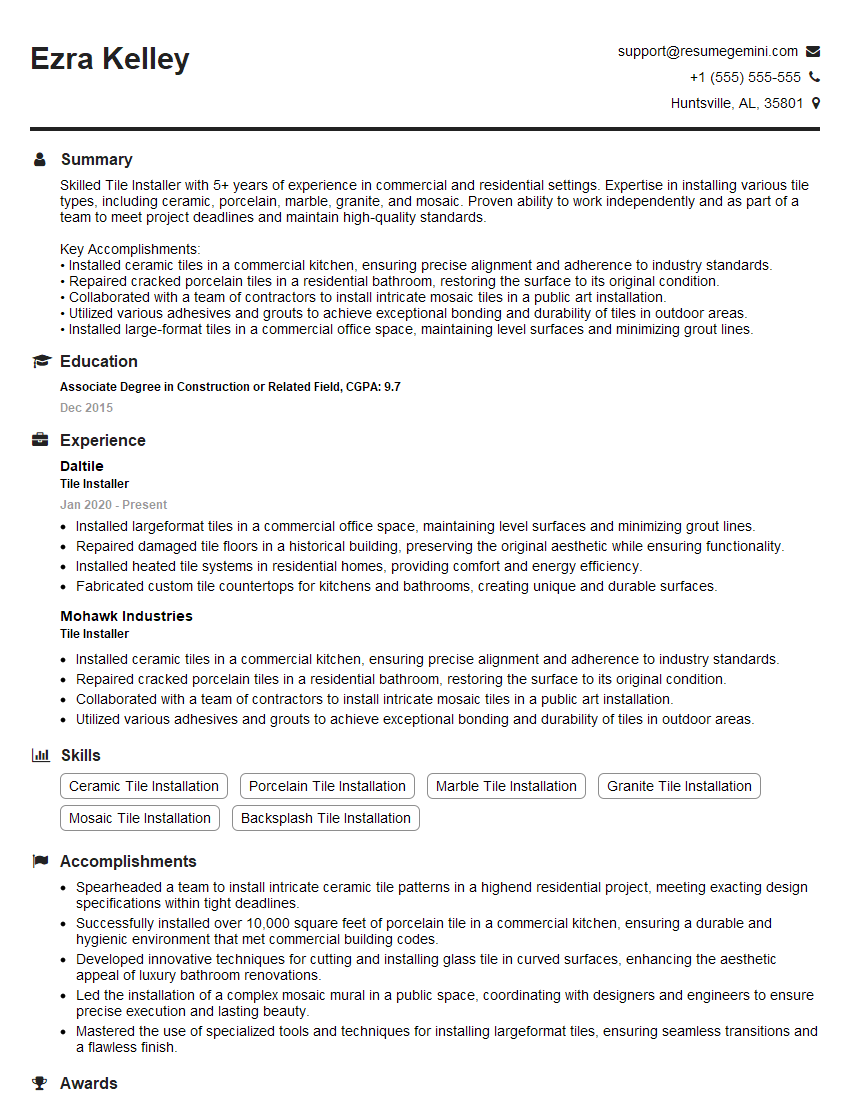
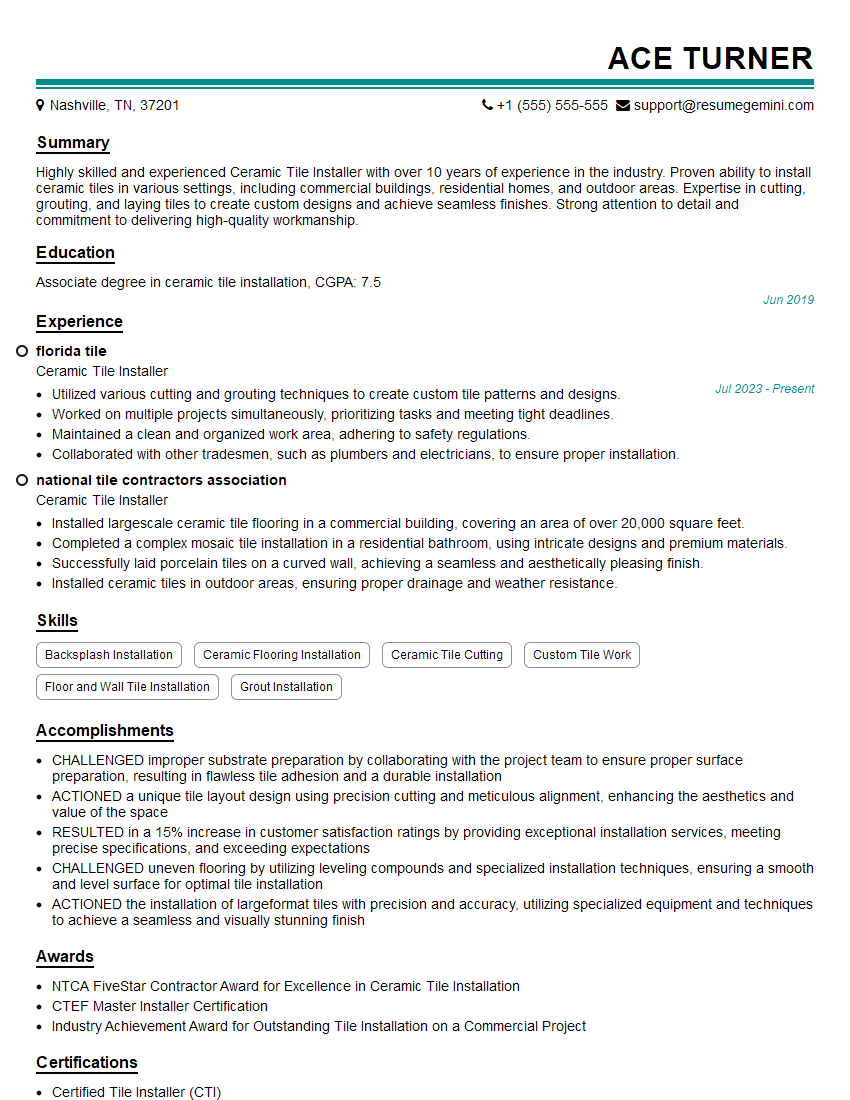
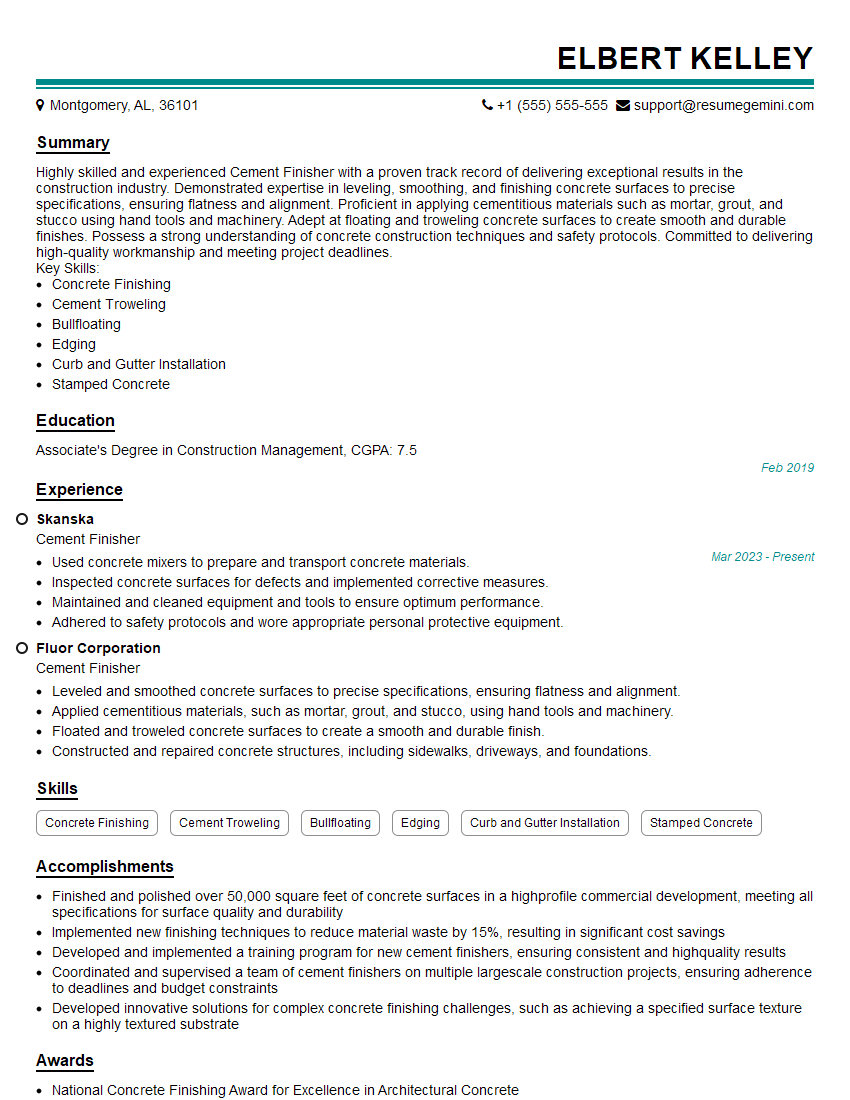
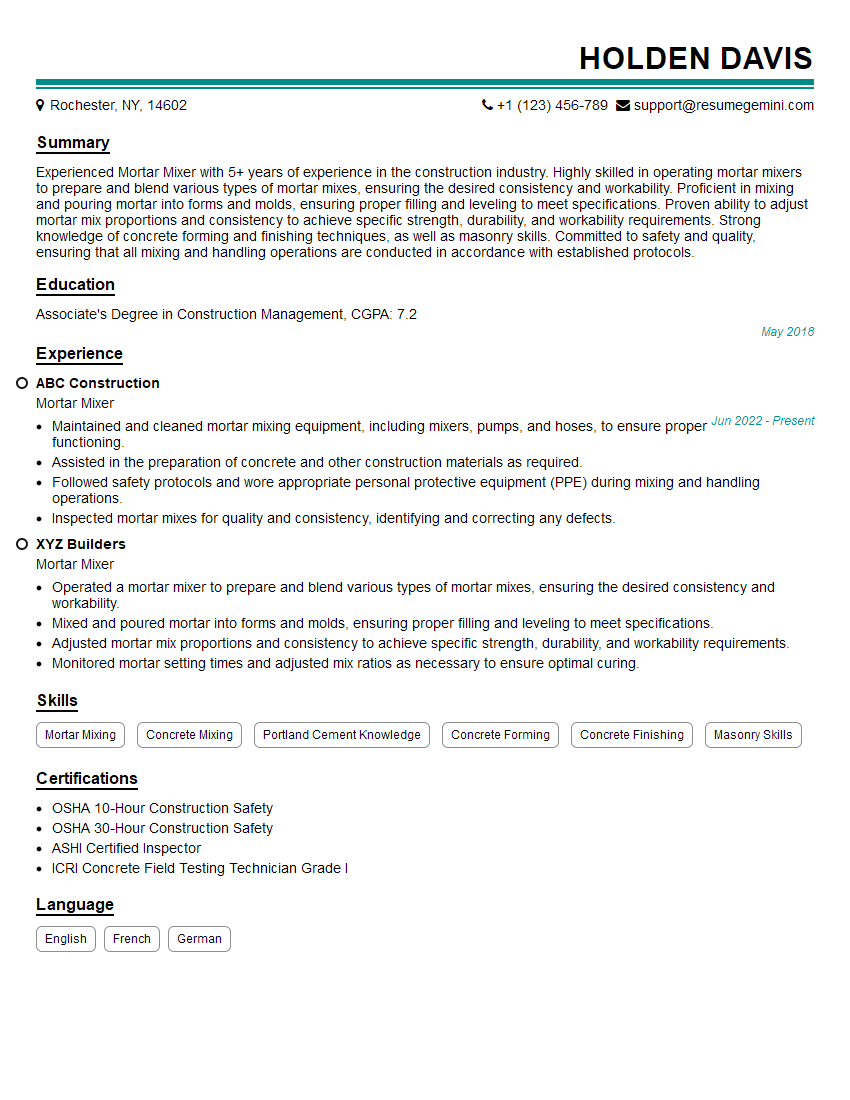
Mastering mortar and grout application is crucial for career advancement in construction and related fields. It demonstrates practical skills and attention to detail, highly valued by employers. To maximize your job prospects, create an ATS-friendly resume that clearly showcases your abilities. ResumeGemini is a trusted resource that can help you build a professional and impactful resume. Examples of resumes tailored to Mortar and Grout Application are available to help guide you. Take the next step towards your dream career today!

Explore more articles
Users Rating of Our Blogs
Share Your Experience
We value your feedback! Please rate our content and share your thoughts (optional).
What Readers Say About Our Blog
To the interviewgemini.com Webmaster.
Very helpful and content specific questions to help prepare me for my interview!
Thank you
To the interviewgemini.com Webmaster.
This was kind of a unique content I found around the specialized skills. Very helpful questions and good detailed answers.
Very Helpful blog, thank you Interviewgemini team.