The thought of an interview can be nerve-wracking, but the right preparation can make all the difference. Explore this comprehensive guide to Motor Control Center Maintenance interview questions and gain the confidence you need to showcase your abilities and secure the role.
Questions Asked in Motor Control Center Maintenance Interview
Q 1. Describe the typical components of a Motor Control Center (MCC).
A Motor Control Center (MCC) is essentially a centralized location for controlling and protecting electric motors. Think of it as the brain and nervous system for a factory’s machinery. Its components work together to start, stop, and protect motors from damage. Typical components include:
- Motor Starters: These devices initiate and stop the motors, managing the high inrush current during startup. Common types include magnetic starters, solid-state starters, and reduced-voltage starters.
- Overload Relays: These act as safety devices, tripping the circuit breaker if a motor draws excessive current, preventing overheating and potential damage.
- Circuit Breakers: These protect the entire circuit from overloads and short circuits, cutting the power in case of a fault. They’re the main power shut-off mechanism for each motor.
- Busbars: These are heavy copper conductors that distribute power to individual motor starters.
- Metering Devices: These can include ammeters, voltmeters, and power meters to monitor the motor’s performance.
- Control Wiring: This complex wiring system connects all components and allows for remote control and monitoring of the motors.
- Enclosure: The entire assembly is housed within a robust metal enclosure for safety and environmental protection. This enclosure is designed to prevent accidental contact and protect components from dust and moisture.
The exact configuration and components can vary greatly depending on the size and complexity of the industrial facility.
Q 2. Explain the purpose of an MCC in an industrial setting.
In an industrial setting, the MCC plays a vital role in ensuring efficient and safe operation of electric motors driving various machinery. It centralizes motor control, simplifying maintenance and troubleshooting. Imagine a large manufacturing plant with hundreds of motors powering conveyors, pumps, and production lines. Without an MCC, controlling and protecting these motors would be a logistical nightmare, involving a sprawling mess of individual control panels. The MCC organizes everything neatly, allowing for easier monitoring, protection, and maintenance of all motors in one place. This improves safety by ensuring proper protection and facilitates quick troubleshooting in case of failures.
Q 3. What are the common safety precautions when working on an MCC?
Safety is paramount when working on an MCC. Always follow these precautions:
- Lockout/Tagout (LOTO): This is the most crucial step. Before any work, ensure the power is completely isolated and locked out, preventing accidental energization. This involves physically locking out the circuit breaker and tagging it with a warning label.
- Verify Power is Off: Always use a voltage tester to confirm the absence of power at the disconnect switch and at the motor terminals before beginning any work.
- Proper PPE: Wear appropriate personal protective equipment (PPE), including safety glasses, insulated gloves, and safety shoes.
- Grounding: Ensure the MCC and any equipment being worked on are properly grounded to prevent static electricity build-up.
- Work Permits: Obtain necessary work permits and follow established safety procedures within the facility.
- Awareness of Surroundings: Be aware of potential hazards like moving equipment or hot surfaces.
Never compromise on safety procedures, even for seemingly simple tasks. A moment of carelessness can lead to severe injury or death.
Q 4. How do you troubleshoot a motor that won’t start?
Troubleshooting a motor that won’t start involves a systematic approach. Let’s use a simple, logical process:
- Visual Inspection: Check for obvious problems like tripped circuit breakers, loose connections, or damaged wiring. Look for any signs of overheating or physical damage to the motor or starter.
- Power Verification: Use a voltmeter to check for power at the motor terminals. If no power is present, trace the circuit back to the MCC and check for tripped breakers or other faults in the power supply.
- Starter Checks: Inspect the motor starter for any issues. Check if the coil is energized, and if the contactors are closing correctly. You might need to use a multimeter to check the voltage and continuity of various components within the starter.
- Overload Relays: Verify the overload relays are not tripped. Reset them if they are, but if they trip again immediately, this indicates a problem with the motor or its load.
- Motor Testing: If the previous steps don’t reveal the problem, the issue might lie with the motor itself. You might need to perform tests like checking the motor windings for shorts or opens using an insulation resistance tester (megger).
Remember to always follow safety procedures, especially LOTO, before performing any troubleshooting activities. Documenting your steps is crucial for efficient problem-solving and record keeping.
Q 5. What are the different types of motor starters used in MCCs?
Several types of motor starters are used in MCCs, each with its own advantages and disadvantages:
- Full-Voltage Starters (Across-the-Line Starters): These are the simplest and most economical, applying full line voltage directly to the motor. They are suitable for smaller motors where high inrush current isn’t a major concern.
- Reduced-Voltage Starters: These reduce the voltage applied to the motor during starting, thus reducing the inrush current and mechanical stress. Types include autotransformer starters, wye-delta starters, and resistance starters.
- Solid-State Starters (Soft Starters): These use power electronic devices to control the voltage and current applied to the motor, providing smooth acceleration and deceleration. They are ideal for applications requiring precise control and reduced mechanical stress.
- Variable Frequency Drives (VFDs): These are more sophisticated controllers that not only start and stop motors smoothly but also allow for precise speed control. They provide energy savings and improved motor performance.
The choice of starter depends on the motor size, load characteristics, and application requirements. A larger motor with a high inertia load might need a reduced-voltage or soft starter to avoid excessive strain on the mechanical system. A precise control application might necessitate a VFD.
Q 6. Explain the function of overload relays.
Overload relays are safety devices designed to protect motors from damage due to excessive current. They function by monitoring the current drawn by the motor and comparing it to a preset threshold. If the motor draws more current than the setpoint for a prolonged period (indicating an overload condition, perhaps due to a stalled rotor or excessive load), the overload relay trips, opening the circuit and de-energizing the motor. This prevents overheating and potential damage to the motor windings. They are essential for motor protection and to prevent costly repairs or replacements.
Think of it like a fuse, but instead of just blowing, it temporarily interrupts the circuit, giving you the chance to address the underlying problem before restarting.
Q 7. How do you test the integrity of a motor starter?
Testing the integrity of a motor starter involves verifying that all its components are functioning correctly. The specific tests depend on the type of starter, but a common approach involves:
- Visual Inspection: Check for loose connections, burnt components, or any physical damage.
- Coil Test: Measure the resistance of the starter coil using an ohmmeter. A significantly higher or lower resistance than the manufacturer’s specifications indicates a problem.
- Contactor Test: Verify the contactors are closing and opening properly when the starter coil is energized. Observe the contactors’ operation during a start/stop cycle. You can use a multimeter to check for continuity across the contacts when they are supposed to be closed.
- Overload Relay Test: Check the overload relays’ calibration using a dedicated testing device. This ensures they trip at the correct current levels.
- Functional Test: Simulate a motor start/stop cycle and observe the overall operation of the starter. Check for any unusual noises or vibrations. Monitor the current drawn by the motor during the test to confirm it’s within acceptable limits.
Remember to always follow safety procedures, especially LOTO, before performing any tests. Specialized testing equipment may be required for thorough testing, and it’s always beneficial to consult the motor starter’s manufacturer’s documentation.
Q 8. Describe the process of performing preventative maintenance on an MCC.
Preventative maintenance on a Motor Control Center (MCC) is crucial for ensuring its longevity and preventing costly downtime. It’s like regularly servicing your car – small, regular checks prevent major breakdowns later. A comprehensive preventative maintenance program involves a systematic approach, combining visual inspections with functional tests.
- Visual Inspection: This includes checking for loose connections, signs of overheating (discoloration, burnt wiring), corrosion, dust accumulation, and proper ventilation. Look closely at all terminals, busbars, and components.
- Tightening Connections: Loose connections are a major source of problems. Use a torque wrench to tighten all terminals to the manufacturer’s specifications. This prevents arcing and overheating.
- Cleaning: Remove accumulated dust and debris using compressed air (low pressure to avoid damage) or a vacuum cleaner with a brush attachment. Pay close attention to the areas around busbars and contactors.
- Testing: Use a multimeter to check for proper voltage and current levels. Test the insulation resistance of the wiring to ensure it’s within acceptable limits. Functionally test each circuit breaker, making sure they trip and reset correctly. Megger testing is crucial for larger installations.
- Lubrication: Moving parts, such as motor starters and circuit breaker mechanisms, require regular lubrication with the appropriate lubricant recommended by the manufacturer. Over-lubrication can be as harmful as under-lubrication.
- Documentation: Meticulous record-keeping is essential. Document all inspections, tests, and maintenance performed, including dates, findings, and any corrective actions taken. This historical data is invaluable for predicting potential failures and optimizing the maintenance schedule.
For instance, during a recent maintenance check, I noticed slight discoloration on a few terminals in an MCC. This indicated early signs of overheating. After tightening the connections, the discoloration disappeared, preventing a potential future failure.
Q 9. What are the common causes of MCC failures?
MCC failures can stem from various causes, often interrelated. Think of it as a domino effect – one problem can trigger others.
- Loose Connections: These are by far the most common cause, leading to increased resistance, heat generation, and eventual failure.
- Overheating: Overloaded circuits, loose connections, or faulty components can cause overheating, damaging insulation and components.
- Environmental Factors: Exposure to extreme temperatures, humidity, or corrosive substances can degrade components and shorten their lifespan.
- Faulty Components: Defective circuit breakers, contactors, or motor starters can cause failures. Regular inspection and testing can identify these early.
- Short Circuits: These can occur due to damaged insulation, rodent activity, or accidental contact. Immediate attention is required.
- Mechanical Wear and Tear: Over time, moving parts wear down, leading to malfunction. Regular lubrication helps prolong component life.
- Improper Grounding: Inadequate grounding can lead to dangerous voltage surges, component damage, and safety hazards.
For example, a recent failure I investigated was traced back to rodent damage that had created a short circuit, causing a cascade of problems including overheating and tripping of multiple circuit breakers.
Q 10. How do you identify and address short circuits in an MCC?
Identifying and addressing short circuits in an MCC requires a systematic and cautious approach. Safety is paramount – always de-energize the circuit before starting any troubleshooting.
- Visual Inspection: Carefully inspect all wiring and components for any signs of burning, melting, or physical damage. Look for scorch marks or discoloration.
- Testing with a Multimeter: Use a multimeter to check for continuity. A low resistance reading indicates a short circuit. Isolate sections of the circuit to pinpoint the location of the short.
- Thermal Imaging: Thermal imaging cameras are invaluable in locating short circuits, as they can detect heat generated by the fault even before visible damage appears.
- Trace Current Flow: If the location of the short is not immediately apparent, trace the current flow by carefully checking individual connections and components.
- Repair or Replacement: Once the short circuit is located, the damaged wiring or components must be repaired or replaced. Always adhere to proper wiring practices and use appropriately rated components.
In one instance, a seemingly minor short circuit went undetected for a while, resulting in significant overheating of a section of the busbar. Quick action prevented a major incident.
Q 11. Explain the difference between a fuse and a circuit breaker.
Fuses and circuit breakers both serve the purpose of protecting circuits from overcurrent, but they differ significantly in how they do so. Think of them as two different safety mechanisms.
- Fuse: A fuse is a one-time device that melts and breaks the circuit when an excessive current flows through it. Once blown, it needs to be replaced.
- Circuit Breaker: A circuit breaker is a reusable device that can be reset after it trips. It utilizes a thermal or magnetic mechanism to interrupt the current. They offer better protection and easier restoration of service.
The key difference lies in reusability. Fuses are sacrificial; circuit breakers are not. Circuit breakers also offer more sophisticated protection features such as overload and short-circuit protection.
Q 12. How do you interpret MCC wiring diagrams?
MCC wiring diagrams are essential for understanding the complex circuitry within an MCC. They’re essentially a roadmap. It is crucial to be able to read and interpret them effectively for troubleshooting and maintenance.
- Symbols: Familiarize yourself with the standard electrical symbols used in the diagrams. These represent various components like motor starters, circuit breakers, contactors, relays etc.
- Tracing Circuits: Trace the path of the wiring from the power source to the individual circuits. Pay attention to how components are connected and how the power is distributed.
- Line Diagrams: Understand the difference between line diagrams (showing connections) and schematic diagrams (showing functional relationships).
- Component Identification: Be able to identify the components using the diagram and their labels.
- Numbering and Labeling: Wiring diagrams use numbers and labels to denote wires, components, and terminals, allowing for tracing and fault isolation.
For instance, a recent problem involved a faulty motor. By carefully studying the MCC wiring diagram, I quickly identified the specific circuit breaker and motor starter associated with the faulty motor, enabling a speedy repair.
Q 13. What is the importance of grounding in an MCC?
Grounding in an MCC is critically important for safety and proper operation. It acts as a safety net. It provides a path for fault currents to flow to the earth, preventing dangerous voltage surges and protecting personnel from electric shock.
- Safety: Grounding prevents hazardous voltages from appearing on exposed metal parts of the MCC, ensuring the safety of personnel.
- Protection: It protects electrical equipment from damage by providing a low-resistance path for fault currents, which otherwise might cause overheating and fires.
- Noise Reduction: Proper grounding helps reduce electrical noise and interference, improving system stability and reliability.
- Overcurrent Protection: Grounding provides a path for overcurrent to flow to the earth, helping the protective devices (circuit breakers or fuses) operate effectively.
Imagine a scenario where grounding is deficient. A fault could lead to a dangerous voltage appearing on the MCC’s metal enclosure, posing a severe shock hazard. Proper grounding prevents this.
Q 14. How do you troubleshoot a faulty motor control circuit?
Troubleshooting a faulty motor control circuit requires a systematic approach, combining logical deduction with practical testing. Always prioritize safety: de-energize the circuit before starting any work.
- Visual Inspection: Start with a visual inspection of all wiring, connectors, and components for signs of damage or loose connections.
- Check Power Supply: Verify that the power supply to the MCC is present and within the correct voltage range using a multimeter.
- Examine Motor Starter: Inspect the motor starter components, including the contactor, overload relays, and auxiliary contacts, for any visible damage or signs of overheating.
- Test Overload Relays: Check if the overload relays are functioning correctly. They should trip when the motor draws excessive current.
- Check Control Wiring: Use a multimeter to test the control wiring for continuity and proper voltage levels to ensure signals are reaching the motor starter correctly.
- Motor Testing: If the control circuit is functioning correctly, test the motor itself for any internal faults or winding problems.
- Systematically Isolate: Use the MCC wiring diagram to isolate sections of the circuit and test each component individually to pinpoint the fault.
In a recent case, a seemingly malfunctioning motor was found to have a problem with its control wiring rather than a mechanical issue in the motor itself. Careful tracing of the wiring, using the schematic and multimeter, identified a broken wire.
Q 15. What are the common types of fuses used in MCCs?
Motor Control Centers (MCCs) utilize various fuse types depending on the application and current requirements. The most common include:
- Cartridge Fuses: These are cylindrical fuses with a replaceable element. They are simple, inexpensive, and offer good protection against overcurrents. Different ratings are available, from low amperage to very high amperage applications. I’ve used these extensively in smaller MCCs for lighting circuits and smaller motors.
- Dual-Element Fuses: These fuses have two elements – a fast-acting element for short-circuit protection and a time-delay element for overload protection. They provide more precise protection than standard cartridge fuses, preventing nuisance tripping while still offering quick reaction to faults. These are a common choice for motor protection, as they handle inrush currents better than single-element fuses.
- Current Limiting Fuses: These fuses rapidly interrupt the current flow upon a fault, effectively limiting the peak current to a value significantly lower than the fault current. This minimizes damage to equipment and wiring in case of short circuits. These are crucial for high-voltage, high-current applications to protect expensive equipment.
The selection of a fuse type depends on the motor’s characteristics (full-load current, inrush current), the wiring, and the overall system design. A proper fuse rating is critical – a fuse rated too high won’t offer adequate protection, while one rated too low might trip unnecessarily.
Career Expert Tips:
- Ace those interviews! Prepare effectively by reviewing the Top 50 Most Common Interview Questions on ResumeGemini.
- Navigate your job search with confidence! Explore a wide range of Career Tips on ResumeGemini. Learn about common challenges and recommendations to overcome them.
- Craft the perfect resume! Master the Art of Resume Writing with ResumeGemini’s guide. Showcase your unique qualifications and achievements effectively.
- Don’t miss out on holiday savings! Build your dream resume with ResumeGemini’s ATS optimized templates.
Q 16. Explain the function of a busbar in an MCC.
The busbar in an MCC is essentially the central power distribution point. Think of it as the highway system for electrical power within the MCC. It’s a rigid conductive bar or bars, usually made of copper or aluminum, that carry large amounts of current. Incoming power from the main power supply enters the MCC and is fed into the busbars. Individual branch circuits, each protecting a motor or other load, are then connected to these busbars via breakers or fuses.
The busbar’s function is to distribute power efficiently and safely to multiple circuits within the MCC. Its design ensures low resistance to current flow, minimizing voltage drops and heat generation. Proper sizing and installation of busbars are critical for safety and reliable operation. A poorly designed or installed busbar system could lead to overheating, fire hazards, and equipment damage.
Q 17. How do you test the insulation resistance of motor windings?
Testing the insulation resistance of motor windings is crucial for preventing electrical faults and ensuring safety. This is done using a megohmmeter (also known as a megger), a device that applies a high DC voltage to measure the insulation resistance between the windings and the ground, or between different windings. A low insulation resistance indicates potential damage or degradation of the winding insulation, which could lead to shorts or ground faults.
The procedure typically involves:
- Disconnecting the motor: Completely isolate the motor from the power supply using lockout/tagout procedures.
- Connecting the megohmmeter: Connect the megohmmeter leads to the appropriate motor terminals according to the manufacturer’s instructions. We usually test between each winding and ground, and between each winding phase.
- Applying the test voltage: Apply the recommended test voltage (usually 500V or 1000V DC, depending on the motor’s voltage rating).
- Reading the resistance: The megohmmeter displays the insulation resistance in megaohms (MΩ). A lower than expected reading suggests insulation degradation, while a very low reading (close to zero) indicates a major insulation failure.
- Recording the results: Document the readings for future reference and to track the insulation condition over time.
Acceptable insulation resistance values vary depending on the motor’s voltage rating and age. Manufacturer’s recommendations or relevant industry standards should be consulted.
Q 18. What are the safety procedures for working with high-voltage MCCs?
Working with high-voltage MCCs demands strict adherence to safety procedures. Negligence can lead to severe injury or death. These procedures are paramount and should be followed religiously:
- Lockout/Tagout (LOTO): This is the absolute first step. The power supply to the MCC must be completely isolated and locked out, with tags clearly indicating who is working on the equipment. Never rely solely on circuit breakers to ensure de-energization.
- Personal Protective Equipment (PPE): Appropriate PPE is essential, including insulated gloves, safety glasses, arc flash protective clothing (depending on the voltage and arc flash hazard analysis), and safety shoes.
- Voltage Testing: Before touching any component, always verify that the circuit is de-energized using a qualified voltage tester. Never trust assumptions.
- Grounding: Proper grounding is crucial to prevent dangerous voltage buildup. The MCC should be grounded according to the relevant electrical codes. Portable grounding devices are sometimes used during maintenance to prevent accidental energization.
- Proper Training: Only qualified and trained personnel should work on high-voltage MCCs. Regular refresher training is important to maintain proficiency in safety procedures.
- Emergency Procedures: A clear emergency plan should be in place, including procedures for contacting emergency services and performing first aid if necessary.
Remember, safety is non-negotiable. A thorough understanding of all safety procedures is essential for maintaining a safe working environment.
Q 19. Describe your experience with different types of motor controllers (e.g., VFDs, soft starters).
I have extensive experience with various motor controllers, including Variable Frequency Drives (VFDs) and Soft Starters.
VFDs (Variable Frequency Drives): I’ve worked with many VFDs from different manufacturers, controlling motors ranging from small fractional horsepower to several hundred horsepower. My work involved installation, configuration (including parameter settings for speed control, torque control, and motor protection), troubleshooting (diagnosing faults through error codes and analyzing current waveforms), and preventative maintenance. VFDs offer precise speed control and energy savings but require careful consideration of harmonic filters and motor compatibility.
Soft Starters: Soft starters are simpler and more cost-effective than VFDs, primarily used for reducing inrush current during motor starts. This protects the motor and the power supply. I’ve been involved in the installation and maintenance of several soft starter systems, primarily on larger motor applications where reducing mechanical stress during starting is important. This reduces the mechanical stress on the motor and drive train.
I’m familiar with different communication protocols used with these controllers (e.g., Modbus, Profibus, Ethernet/IP) and the importance of proper grounding and EMC considerations to prevent interference. In one project, we had issues with excessive harmonic distortion from several VFDs that were poorly filtered and required installing new harmonic filters to prevent damage to other equipment.
Q 20. How do you diagnose and repair problems with motor control circuits?
Diagnosing and repairing problems in motor control circuits involves a systematic approach. I usually start by:
- Visual Inspection: A thorough visual inspection of the MCC, cables, connectors, and components is the first step. Look for signs of overheating, loose connections, damaged insulation, or any other physical anomalies.
- Testing: Use appropriate testing instruments (multimeters, megohmmeters, clamp meters) to check voltage, current, resistance, and insulation resistance. This often pinpoints the faulty component.
- Schematic Review: Referencing the MCC schematic diagram is crucial for understanding the circuit’s logic and tracing the flow of power.
- Systematic Troubleshooting: Start with the most likely points of failure and work your way through the circuit logically. Use elimination to narrow down potential causes.
- Component Replacement: Replace faulty components after verifying their condition. Ensure the replacement parts have the correct ratings and specifications.
For instance, if a motor fails to start, I would first check the power supply to the MCC and then move towards the motor starter (breaker, contactor, etc.), checking for proper operation. If the problem persists, I’d test the motor windings and control circuits themselves. Each step is documented for future reference and to create a history of the maintenance performed.
Q 21. Explain your experience with lockout/tagout procedures in an MCC environment.
Lockout/Tagout (LOTO) procedures are paramount for safety in any MCC environment. My experience involves the consistent and rigorous application of these procedures before any maintenance or repair work. This includes:
- Identifying the energy sources: Determining all power sources feeding the MCC, including main breakers, branch circuit breakers, and any other potential energy sources.
- Isolating the energy sources: Properly de-energizing the circuits by turning off the main breaker and any other relevant breakers. This should be done according to established procedures, and often requires a second person to verify the lockout is successful.
- Applying lockout devices: Using appropriately rated lockout devices (padlocks, etc.) to physically prevent the re-energization of the circuits. Each person working on the equipment should have their own lock.
- Tagging the energy sources: Applying clear and legible tags to indicate who is performing the lockout and the reason for the lockout. This prevents accidental energization.
- Verifying the absence of energy: After the lockout procedures are complete, using a qualified voltage tester to confirm the complete absence of voltage in all relevant circuits before commencing any work.
- Removing lockout devices: The lockout devices should only be removed by the person who installed them once the work is complete and verified safe to do so.
LOTO is not just a set of rules; it’s a safety culture. Every team member is responsible for adhering to these procedures to ensure a safe working environment. I’ve witnessed firsthand the importance of strict LOTO practices preventing potential accidents and injuries. We regularly conduct training and safety audits to ensure compliance.
Q 22. How do you perform thermal imaging on an MCC?
Thermal imaging on a Motor Control Center (MCC) is a non-invasive method to detect overheating components. We use an infrared (IR) camera to capture thermal images, showing temperature variations across the MCC’s components. Hotter areas appear brighter, indicating potential problems. This is crucial for preventative maintenance because overheating can lead to catastrophic failures.
The process involves:
- Safety First: Lockout/Tagout procedures are paramount before any work on an MCC. The area should be de-energized to prevent arc flash hazards. Appropriate PPE, including safety glasses and insulated gloves, is also critical.
- Scanning the MCC: Systematically scan all components, including busbars, contactors, fuses, circuit breakers, and motor terminals. Focus on areas with high current flow. Pay close attention to connections, as loose connections are frequent sources of excess heat.
- Interpreting the Images: Compare the temperatures of similar components. A significant temperature difference (e.g., 10°C or more) between two identical components or a component exceeding its manufacturer’s specified temperature rating could point to a problem like loose connections, worn parts, or impending failures.
- Documentation: Record the thermal images and relevant temperature readings, along with timestamps and a detailed description of the findings. This provides a crucial baseline for future comparisons and assists in tracking potential issues.
For instance, I once used thermal imaging to identify a loose connection in a large motor starter within an MCC. The image clearly showed a significantly hotter connection point, which was subsequently tightened, preventing a potential fire hazard.
Q 23. What are the signs of overheating in an MCC?
Overheating in an MCC can manifest in several ways, often subtle at first but becoming increasingly obvious as the problem worsens. Early detection is critical to prevent major damage and downtime.
- Unusual warmth to the touch: Some warmth is expected from electrical components, but unusually high temperatures are a warning sign. Use caution; always use a non-contact thermometer.
- Discoloration: Components might show signs of discoloration, such as browning or charring, particularly around connection points. This indicates excessive heat.
- Burning smell: A distinct burning odor suggests insulation breakdown or overheating components. It necessitates immediate action.
- Tripping of circuit breakers or fuses: Frequent or unexplained tripping is a significant indicator of an overload or fault that might stem from overheating somewhere in the system. This could manifest as nuisance tripping.
- Alarming sounds: Buzzing, sizzling, or crackling sounds may signal an electrical arcing issue, a clear indication of excessive heat build-up and potential failure.
- Reduced efficiency and performance: Motors associated with an overheating MCC may start to underperform or shut down frequently. This could point to an overheating problem impacting the power supply.
Imagine a scenario where a motor consistently trips its breaker; thermal imaging would pinpoint overheating in the motor starter or the cabling, leading to a targeted solution and minimizing downtime.
Q 24. Describe your experience with using diagnostic tools for MCC troubleshooting.
I have extensive experience using various diagnostic tools for MCC troubleshooting. These tools help identify problems quickly and accurately, minimizing downtime and preventing costly repairs.
- Clamp meters: These are essential for measuring current draw in individual circuits, helping to detect overload conditions and imbalances.
- Power quality analyzers: These devices provide a detailed analysis of voltage fluctuations, harmonics, and other power quality issues that can impact MCC performance and contribute to overheating. Identifying harmonic distortion, for example, is crucial.
- Loop testers: Used to verify the integrity of control circuits and identify short circuits or open circuits, which can contribute to overheating and malfunction.
- Motor testing equipment: Used to check the insulation resistance and winding continuity of motors connected to the MCC to ensure that the motor itself isn’t causing the issue. Low insulation can cause arcing and heat buildup.
- Infrared (IR) cameras (as discussed earlier): Crucial for non-contact temperature measurement to identify overheating components.
In one instance, a power quality analyzer helped identify significant harmonic distortion caused by a nearby variable frequency drive (VFD). This distortion was contributing to overheating in the MCC, and by addressing the harmonic issue at the VFD, we resolved the problem.
Q 25. What is your experience with programmable logic controllers (PLCs) related to MCCs?
My experience with Programmable Logic Controllers (PLCs) in relation to MCCs is extensive. PLCs often control and monitor MCC operations, offering advanced control and monitoring capabilities. I’m proficient in various PLC programming languages (like Ladder Logic, Function Block Diagram, etc.) and can effectively troubleshoot PLC-related issues within an MCC system.
Specific tasks I’ve undertaken include:
- PLC Programming: Developing and modifying PLC programs to control motor starters, monitoring alarms, and implementing sophisticated control strategies.
- Troubleshooting PLC Logic: Diagnosing and resolving issues within the PLC program related to MCC control, including timing issues, logic errors, and communication failures.
- HMI Integration: Integrating Human-Machine Interfaces (HMIs) to provide operators with real-time monitoring and control of MCC systems. Effective visualization is crucial.
- Data Acquisition and Analysis: Utilizing PLC data logs to analyze trends, identify potential problems, and optimize MCC performance. Predictive maintenance benefits greatly from data analysis.
For example, I once worked on a project where we implemented a PLC-based system to monitor the temperature of critical MCC components, alerting maintenance personnel to potential overheating issues well in advance.
Q 26. Describe your experience with arc flash safety and mitigation techniques.
Arc flash safety is paramount in MCC maintenance. An arc flash is a sudden, high-energy release of electrical energy that can cause severe burns, hearing loss, and even death. My experience includes a deep understanding and implementation of arc flash mitigation techniques.
My approach encompasses:
- Arc Flash Hazard Analysis: Performing arc flash studies to determine the incident energy levels at various points within the MCC. This analysis dictates the required PPE.
- Personal Protective Equipment (PPE): Using appropriate PPE, including arc flash suits, face shields, and insulated gloves, according to the calculated incident energy levels. Proper PPE is non-negotiable.
- Lockout/Tagout (LOTO) Procedures: Strictly adhering to LOTO procedures to ensure that the MCC is completely de-energized before any work is performed. Proper LOTO procedures are a vital safeguard.
- Energy Control Devices: Utilizing energy control devices, such as circuit breakers and disconnect switches, to isolate sections of the MCC during maintenance. Isolation is key to mitigating risk.
- Grounding and Bonding: Ensuring proper grounding and bonding techniques to minimize the risk of electrical shock and arc flash hazards. Proper grounding and bonding are foundational to safety.
- Training and Awareness: Providing regular training and awareness programs for personnel involved in MCC maintenance on arc flash safety procedures. Training is an ongoing necessity.
I’ve personally witnessed the devastating effects of an arc flash incident, reinforcing the critical importance of implementing robust safety protocols.
Q 27. How do you document your maintenance activities on an MCC?
Detailed documentation is essential for effective MCC maintenance. It enables tracking of past work, aids in preventative maintenance planning, and facilitates troubleshooting.
My documentation practices include:
- Maintenance Logs: Maintaining a detailed log of all maintenance activities, including dates, times, personnel involved, work performed, and any findings.
- Inspection Checklists: Using pre-defined checklists to ensure consistent inspections and identification of potential problems. Checklists reduce the risk of overlooking critical areas.
- Thermal Images and Temperature Readings: Recording thermal images and temperature readings with timestamps, as discussed previously.
- Test Results: Documenting the results of all electrical tests, such as insulation resistance, continuity, and motor testing.
- Parts Replaced: Keeping a record of all parts replaced, including part numbers and dates of replacement.
- Photographs: Taking photographs of significant findings, damaged components, or completed repairs. Visual documentation is extremely helpful.
- Computerized Maintenance Management System (CMMS): Using a CMMS to manage and track all MCC maintenance activities digitally. CMMS platforms offer numerous benefits in the long run.
This comprehensive documentation ensures effective tracking of MCC health, enabling predictive maintenance and reducing the chances of unexpected failures.
Q 28. Explain your experience with different types of MCC configurations.
I’ve worked with various MCC configurations, each tailored to specific applications and power requirements. Understanding these configurations is critical for effective maintenance.
- Draw-out type MCCs: These are commonly used and offer easy component replacement and maintenance. Their modular design allows easy access.
- Fixed type MCCs: These are typically more compact but can make maintenance more challenging due to less accessibility. Maintenance is often more complex.
- Solid-state starters: Employing solid-state starters for motor control, which are increasingly common, require specialized knowledge of their operation and troubleshooting.
- AC and DC MCCs: I have experience maintaining both AC and DC motor control centers, each requiring different safety protocols and maintenance procedures. They have distinct electrical characteristics.
- Intelligent MCCs: Some modern MCCs include integrated monitoring and control systems that provide valuable data for preventative maintenance and advanced troubleshooting. Utilizing data from these systems is becoming increasingly common.
The specific configuration significantly impacts maintenance strategies. For example, a draw-out type MCC allows for easier replacement of faulty components, while a fixed type MCC may require more extensive work to address issues. Each configuration presents its own unique considerations in terms of maintenance and troubleshooting.
Key Topics to Learn for Motor Control Center Maintenance Interview
- Understanding MCC Components: Familiarize yourself with the various components within a Motor Control Center, including circuit breakers, contactors, overload relays, and fuses. Understand their function and interconnectivity.
- Safety Procedures and Lockout/Tagout: Mastering safe working practices, including proper lockout/tagout procedures, is crucial. Be prepared to discuss your experience and understanding of relevant safety regulations.
- Troubleshooting and Diagnostics: Develop your skills in identifying and resolving common MCC issues. Practice explaining your troubleshooting methodology and problem-solving approaches using examples.
- Preventive Maintenance Schedules: Understand the importance of routine maintenance and be able to discuss typical schedules and procedures for inspecting and maintaining MCC components.
- Electrical Drawings and Schematics: Demonstrate your ability to interpret electrical drawings and schematics to understand the layout and functionality of a Motor Control Center.
- Motor Control Theory: Review fundamental motor control principles, including starting methods (across-the-line, reduced voltage), motor protection, and different types of motor starters.
- Instrumentation and Monitoring: Understand how various instruments and monitoring systems are used to ensure the efficient and safe operation of a Motor Control Center.
- Advanced Control Systems (PLCs, HMIs): If applicable to the role, demonstrate familiarity with programmable logic controllers (PLCs) and human-machine interfaces (HMIs) used in modern MCCs.
- Documentation and Reporting: Be prepared to discuss your experience with documenting maintenance activities, generating reports, and maintaining accurate records.
Next Steps
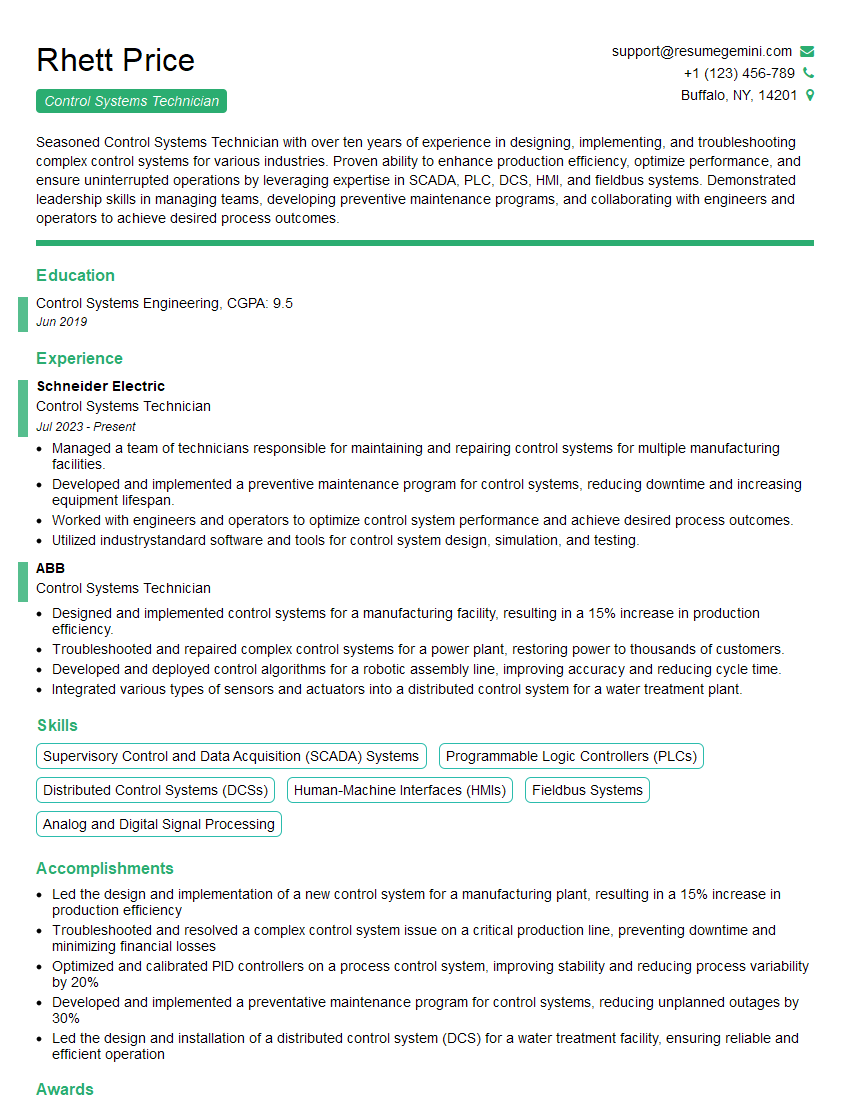
Mastering Motor Control Center Maintenance opens doors to rewarding careers with excellent growth potential. Proficiency in this area is highly sought after, leading to increased earning potential and career advancement opportunities. To maximize your job prospects, it’s crucial to have an ATS-friendly resume that highlights your skills and experience effectively. ResumeGemini is a trusted resource to help you build a professional and impactful resume that catches the eye of recruiters. We provide examples of resumes tailored to Motor Control Center Maintenance to guide you through the process. Invest time in crafting a strong resume – it’s your first impression with potential employers.

Explore more articles
Users Rating of Our Blogs
Share Your Experience
We value your feedback! Please rate our content and share your thoughts (optional).
What Readers Say About Our Blog
To the interviewgemini.com Webmaster.
Very helpful and content specific questions to help prepare me for my interview!
Thank you
To the interviewgemini.com Webmaster.
This was kind of a unique content I found around the specialized skills. Very helpful questions and good detailed answers.
Very Helpful blog, thank you Interviewgemini team.