The right preparation can turn an interview into an opportunity to showcase your expertise. This guide to Experience with different types of floor finishes interview questions is your ultimate resource, providing key insights and tips to help you ace your responses and stand out as a top candidate.
Questions Asked in Experience with different types of floor finishes Interview
Q 1. Describe the differences between hardwood, laminate, and vinyl flooring.
Hardwood, laminate, and vinyl flooring offer distinct advantages and disadvantages. Hardwood, a natural product, boasts elegance, durability, and potential for refinishing, but it’s expensive, requires significant maintenance, and can be scratched or damaged by water. Think of it as a classic, timeless piece of furniture that requires care.
Laminate flooring mimics the look of hardwood at a fraction of the cost. It’s relatively easy to install and maintain, resistant to scratches and spills, but it lacks the warmth and natural beauty of real wood; it can also feel less substantial underfoot and can be damaged by significant water exposure. It’s like a high-quality print of a painting – good looking, but not the original.
Vinyl flooring, including luxury vinyl plank (LVP) and luxury vinyl tile (LVT), provides impressive water resistance, durability, and affordability. It comes in various styles, mimicking stone, wood, or other materials. However, it can be less durable than hardwood or even high-quality laminate under heavy traffic, and the cheaper varieties may not feel as luxurious or natural underfoot. Consider it a versatile, practical option; think of it as a reliable workhorse.
Q 2. What are the advantages and disadvantages of using tile flooring in high-traffic areas?
Tile flooring is a popular choice for high-traffic areas due to its exceptional durability and easy maintenance. Its inherent strength means it can withstand heavy foot traffic, dropped objects, and even some abuse. Cleaning is usually straightforward; a quick sweep or mop often suffices. However, tile can be cold underfoot, prone to cracking under heavy impact if not properly installed, and can be quite noisy. A dropped heavy object can also create a lasting chip or crack. The grout lines between tiles can also collect dirt and grime, requiring more thorough cleaning. The initial installation cost is also relatively high compared to certain other flooring types.
To mitigate the disadvantages, underfloor heating can combat coldness. Careful selection of larger, more robust tiles can enhance durability, and regular grout cleaning using appropriate sealers is essential for hygiene and appearance. High-quality grout installation also reduces the chance of cracks from settlement.
Q 3. Explain the process of preparing a concrete subfloor for epoxy coating.
Preparing a concrete subfloor for epoxy coating is crucial for a long-lasting, aesthetically pleasing finish. A poorly prepared surface can lead to delamination, chipping, and overall failure of the epoxy. The process involves several critical steps:
- Cleaning: Thoroughly remove all dust, debris, grease, oil, and any existing coatings using a shop vacuum and a suitable detergent/degreaser. This is the most important step! A dirty surface will compromise adhesion.
- Repairing: Fill any cracks, holes, or imperfections in the concrete using a suitable patching compound designed for epoxy applications. Allow ample drying time before proceeding.
- Grinding: Grind the surface to achieve a profile conducive to epoxy adhesion. This is usually done with a diamond grinder to create a slightly rough surface and remove any laitance (a weak layer on the surface of the concrete). This step improves mechanical bonding.
- Priming: Apply an epoxy primer according to the manufacturer’s instructions. A primer ensures optimal adhesion between the concrete and the epoxy topcoat. Allow it to dry completely.
- Moisture Testing: Before the final epoxy coat, make sure the concrete moisture content is below the manufacturer’s recommended level. Excessive moisture will compromise the epoxy’s integrity.
Following these steps diligently ensures a durable and attractive epoxy coating.
Q 4. What are some common problems encountered during carpet installation, and how do you address them?
Carpet installation challenges often arise from improper preparation or unforeseen circumstances. Common problems include:
- Uneven Subfloor: An uneven subfloor results in wrinkles, bumps, and an unprofessional finish. Addressing this requires leveling the subfloor before installation using a self-leveling compound.
- Improper Acclimation: Carpet needs to acclimate to the room’s temperature and humidity before installation to avoid shrinkage or expansion. This step is often missed, leading to later problems. Follow manufacturer’s guidance precisely.
- Seaming Issues: Poorly seamed carpet is visually unappealing and can lead to premature wear. Careful measuring, cutting, and using the right tools are paramount.
- Stretching Problems: Incorrect stretching can cause wrinkles or buckling. Experience with stretching equipment is vital here.
- Poor Padding Selection: Inadequate padding can lead to discomfort, premature wear, and insufficient support for the carpet fibers.
Addressing these issues requires careful preparation, proper tools, and a keen eye for detail. Addressing problems as they arise is far better than trying to rectify them after the installation is complete.
Q 5. How do you determine the correct amount of flooring material needed for a project?
Accurately calculating flooring material is crucial to avoid costly mistakes and material waste. The process involves:
- Accurate Measurements: Carefully measure the length and width of each area requiring flooring. Account for all rooms, hallways, and irregular spaces. Sketch the area if necessary.
- Waste Factor: Add a waste factor (typically 5-10%, but more for complex layouts) to compensate for cuts, fitting, and potential damage. This accounts for real-world installation challenges.
- Square Footage Calculation: Multiply the length and width of each area to determine the square footage. Add the square footage of all areas to get the total.
- Material Conversion: Convert square footage to the units in which your flooring material is sold (e.g., square yards, square meters). Manufacturer packaging will often state this.
- Additional Considerations: Factor in any patterns that require matching and account for specific cuts to avoid wasted material (this is especially critical with materials with repeating patterns).
Overestimating material is always preferable to underestimating, especially considering potential errors in measurements or unforeseen circumstances during installation.
Q 6. What safety precautions should be taken when working with floor adhesives?
Floor adhesives contain volatile organic compounds (VOCs) that can be harmful if inhaled or if skin is exposed. Safety precautions are essential:
- Ventilation: Ensure adequate ventilation in the work area using fans or opening windows. This helps to dissipate VOCs.
- Respiratory Protection: Wear a NIOSH-approved respirator designed to filter out VOCs. Your respiratory system is your most vital asset.
- Eye Protection: Wear safety glasses to protect your eyes from splashes or fumes.
- Gloves: Wear appropriate chemical-resistant gloves to prevent skin contact with the adhesive.
- Skin Protection: Cover exposed skin to minimize contact with the adhesive. Long sleeves and pants are recommended.
- Follow Manufacturer’s Instructions: Always carefully read and follow the manufacturer’s instructions for handling and application. These guidelines provide important safety information.
Remember, prevention is key. By following these precautions, you protect yourself and ensure a safe work environment.
Q 7. Describe the different methods for cleaning and maintaining various types of floor finishes.
Cleaning and maintaining various floor finishes requires a tailored approach. Here’s a summary:
- Hardwood: Regular sweeping or vacuuming is essential, followed by damp mopping with a pH-neutral cleaner. Avoid excessive water, which can damage the wood. Consider periodic polishing or waxing to enhance protection and shine.
- Laminate: Sweep or vacuum regularly to remove dust and debris. Damp mop with a slightly damp (not wet) mop and a specialized laminate cleaner. Avoid harsh chemicals or abrasive cleaners.
- Vinyl: Regular sweeping or vacuuming suffices for daily maintenance. Damp mop with a mild detergent or vinyl-specific cleaner. Avoid abrasive cleaners or harsh chemicals.
- Tile: Sweep or vacuum regularly. Use a grout brush to clean grout lines. Damp mop with a mild detergent and water. Consider periodic sealing to prevent stains.
- Carpet: Regular vacuuming is critical. Spot clean spills immediately. Professional carpet cleaning is recommended periodically to remove deep-seated dirt and allergens.
- Epoxy: Regular sweeping or vacuuming is usually sufficient. Damp mopping with a mild detergent may be needed for heavier soils. Harsh chemicals should be avoided.
Remember to always test any cleaning solution on a small, inconspicuous area first to check for compatibility with the floor finish.
Q 8. What tools and equipment are essential for installing hardwood flooring?
Installing hardwood flooring requires a range of specialized tools. Think of it like building with precision – you need the right instruments for the job. Here’s a breakdown:
- Measuring Tools: Tape measure (preferably a long one!), framing square, chalk line for marking straight lines.
- Cutting Tools: Circular saw (for volume cutting), hand saw (for intricate cuts), miter saw (for precise angle cuts). A jigsaw is useful for curves.
- Installation Tools: Hardwood flooring installation tools such as a rubber mallet (for tapping planks into place without damaging them), pull bar (to help tighten planks together evenly), tapping block (protects the wood during hammering), and knee kicker (helps maneuver large boards without damaging them).
- Other Essentials: Safety glasses and dust mask are crucial for your health and safety. You’ll also need a moisture meter to check the subfloor and wood’s moisture content, a nail puller for any adjustments, and a power drill/driver (for fastening in certain situations).
Having the right tools not only ensures a smoother, more efficient installation but also minimizes the risk of damage to the expensive hardwood flooring. In one job, I discovered that using the wrong type of saw caused splintering and I had to re-cut many planks, increasing costs and timeline significantly. I learned the hard way the importance of using correct tools.
Q 9. Explain the importance of proper acclimation of hardwood flooring before installation.
Acclimation is the critical step often overlooked; it’s like letting a new pet adjust to its home before fully integrating it into the family. Hardwood flooring reacts to humidity changes; if installed directly from the packaging, it can expand or contract dramatically once in the house, leading to gaps, buckling, or cupping.
Proper acclimation involves storing the flooring in the room where it will be installed for several days, ideally at least 3-5 days, to allow it to adjust to the ambient temperature and humidity. This allows the wood to reach equilibrium with the environment, minimizing the chances of movement after installation. The length of acclimation depends on the wood species, humidity levels, and packaging. I usually check moisture content with a meter. For instance, a project I did in a very dry climate required a slightly longer acclimation period than one in a humid area.
Q 10. How do you handle uneven subfloors before installing flooring?
Uneven subfloors are the bane of any flooring installer’s existence – imagine trying to build a house on uneven land! Before installing any flooring, the subfloor must be level. Significant variations lead to problems like squeaking, uneven wear, and premature damage.
The approach depends on the severity: Minor unevenness can be addressed using self-leveling compound, which is poured over the subfloor to create a smooth surface. For more substantial irregularities, you might need to use a patching compound, plywood shims to fill gaps, or even more extensive subfloor repair using boards.
Remember, creating a level surface is paramount. A slight imperfection might go unnoticed now, but it will inevitably manifest later. I once had to redo a whole section of flooring because I hadn’t properly addressed a small subfloor dip – a lesson learned to always be thorough.
Q 11. What are the different types of grout, and which is best suited for which applications?
Grout is the mortar that fills in the spaces between tiles, providing structural support and a finished look. There are several types:
- Cement-based grout: Most common, durable, and water-resistant once cured. Suitable for most tile applications, including kitchens and bathrooms.
- Epoxy grout: Extremely durable, stain-resistant, and waterproof. Ideal for high-traffic areas and wet environments such as showers.
- Sanded grout: Contains sand for added strength and is used for wider grout lines (typically 1/8 inch and larger).
- Unsanded grout: Used for grout lines narrower than 1/8 inch to avoid a gritty texture.
Choosing the right grout depends on the tile type, location, and desired aesthetic. For instance, epoxy grout is better for a kitchen backsplash because of its stain resistance while cement grout would be suitable for floor tiles in a dry area.
Q 12. Describe your experience with different types of flooring underlayment.
Underlayment is like a mattress for your floor – it provides cushioning, sound insulation, and moisture protection. I’ve worked with several types:
- Foam underlayment: Provides excellent cushioning and sound dampening. It’s relatively inexpensive but can compress over time.
- Cork underlayment: Natural, sustainable, and offers good insulation and cushioning. It is slightly more expensive than foam.
- Rubber underlayment: Durable and effective at dampening sound and providing moisture protection. It’s more expensive than foam or cork, but also more durable.
- LVL (Laminated Veneer Lumber) underlayment: Is typically used over uneven subfloors to level them.
The best choice depends on factors like the type of flooring, subfloor condition, and budget. For example, I’d opt for rubber underlayment under a hardwood floor in a high-traffic area for added durability and comfort.
Q 13. How do you ensure a consistent and uniform finish during floor installation?
Consistency in flooring installation is key to a professional finish. It’s like painting a masterpiece; each brushstroke must be deliberate and precise. To ensure uniformity, I follow these steps:
- Careful Planning: Accurately measure the area, create a detailed layout, and ensure proper acclimation of materials.
- Precise Cutting: Use the appropriate tools for clean, accurate cuts, paying close attention to angles and transitions.
- Even Spacing: Maintain consistent spacing between planks using spacers to avoid gaps or unevenness.
- Proper Fastening/Adhesive: Use the correct method and amount of adhesive or fasteners depending on the flooring type, ensuring a secure bond.
- Regular Checks: During the process, I continually check for alignment, levelness and make any necessary adjustments. This helps catch inconsistencies early on.
One time, I noticed a slight gap developing between two sections of laminate; I stopped, corrected the alignment, and avoided a noticeable flaw that might have occurred later.
Q 14. What is your experience with repairing damaged flooring?
Repairing damaged flooring is a common task. The approach varies greatly depending on the type of flooring and the nature of the damage.
For hardwood, minor scratches can be buffed out, while more significant damage might require replacing individual planks. With laminate, damaged planks can usually be easily replaced. Tile repairs involve replacing individual tiles. In each case, color matching is crucial for a seamless repair. I always try to source replacement materials from the original batch if possible.
One job involved repairing water damage to hardwood. The extent was significant and required replacing multiple planks and refinishing the whole section to match the existing flooring. It demonstrates that good prevention (waterproofing in this case) is key and always worth considering.
Q 15. How do you calculate the cost of a flooring project, including materials and labor?
Calculating the cost of a flooring project involves a meticulous breakdown of materials and labor. First, we accurately measure the area to be covered, factoring in any irregular shapes or obstacles. Then, we determine the quantity of materials needed, adding a buffer for waste and potential mistakes. This is crucial, as underestimating can lead to project delays and cost overruns. For instance, if installing hardwood flooring in a 10ft x 12ft room, you’d need 120 square feet of flooring. However, add an extra 10% for cuts and waste – so you’d actually order around 132 sq ft.
Next, we obtain prices for the chosen materials from reputable suppliers, ensuring we compare quotes for the best value. Labor costs are estimated based on the type of flooring, installation complexity, and the prevailing hourly rates in the region. For example, installing engineered hardwood usually costs more per sq ft than vinyl plank, reflecting the increased skill and time required. A detailed breakdown, including material costs, labor costs (broken down by task, e.g., subfloor prep, installation, finishing), permits, disposal fees, and potential unforeseen expenses, is presented to the client before commencement. This transparent approach helps manage client expectations and fosters trust.
Finally, a contingency budget (typically 10-15% of the total cost) is included to account for unforeseen issues, such as damaged materials or unexpected subfloor problems. This comprehensive approach ensures accurate cost projections, avoiding unpleasant surprises during the project.
Career Expert Tips:
- Ace those interviews! Prepare effectively by reviewing the Top 50 Most Common Interview Questions on ResumeGemini.
- Navigate your job search with confidence! Explore a wide range of Career Tips on ResumeGemini. Learn about common challenges and recommendations to overcome them.
- Craft the perfect resume! Master the Art of Resume Writing with ResumeGemini’s guide. Showcase your unique qualifications and achievements effectively.
- Don’t miss out on holiday savings! Build your dream resume with ResumeGemini’s ATS optimized templates.
Q 16. What are the key considerations when choosing flooring for a bathroom or kitchen?
Choosing flooring for high-moisture areas like bathrooms and kitchens requires careful consideration of several key factors. Water resistance is paramount. Materials like ceramic tile, porcelain tile, and luxury vinyl plank (LVP) are excellent choices because they’re highly resistant to water damage. Natural stone, while beautiful, can be porous and requires sealing to prevent staining and water absorption.
Durability is another crucial aspect. The flooring must withstand heavy traffic, potential spills, and impacts. Ceramic and porcelain tiles are exceptionally durable, while LVP offers a balance of durability and affordability. Wood flooring, while aesthetically pleasing, is generally not recommended for these areas unless it’s specifically treated for moisture resistance.
Maintenance is equally important. Some materials require more upkeep than others. For instance, while tile is easy to clean, grout lines require regular cleaning to prevent mold and mildew. LVP is generally low-maintenance, but it can be susceptible to scratches if not properly protected. Choosing the right flooring depends on finding the optimal balance between aesthetics, durability, maintenance requirements, and budget. Always consult product specifications and consider the lifestyle and traffic patterns of the homeowner.
Q 17. Describe your experience with working with different types of flooring adhesives.
My experience encompasses a wide range of flooring adhesives, each with its own properties and applications. I’ve worked extensively with modified thin-set mortars for ceramic and porcelain tile installations. These are crucial for ensuring a strong bond and preventing tile movement or cracking. I’ve also used various types of construction adhesive for installing hardwood flooring, choosing the appropriate adhesive based on the subfloor type (concrete, plywood, etc.) and the type of wood being used (solid wood, engineered wood). For example, a moisture-curing urethane adhesive is excellent for solid hardwood on concrete.
I have significant experience with pressure-sensitive adhesives used with vinyl flooring, including luxury vinyl plank (LVP) and sheet vinyl. The proper selection depends on the substrate and the specific type of vinyl flooring. I always ensure the adhesive is compatible with both the flooring and the subfloor to guarantee a long-lasting and stable installation. Improper adhesive selection can lead to issues like lifting, buckling, or adhesive failure. Furthermore, I understand the importance of proper adhesive application techniques, including trowel selection and open time, to ensure optimal bond strength.
Throughout my career, I’ve consistently prioritized using environmentally friendly, low-VOC (Volatile Organic Compound) adhesives whenever possible to minimize the impact on indoor air quality. This commitment to safety and sustainability aligns with industry best practices and the needs of my clients.
Q 18. How do you handle customer complaints or unexpected problems during a flooring project?
Handling customer complaints or unexpected problems is an integral part of the flooring installation process. My approach is always proactive and focuses on open communication and problem-solving. When a complaint arises, I actively listen to the customer’s concerns, showing empathy and understanding. Then, I thoroughly investigate the issue, identifying the root cause. This might involve examining the installation, inspecting the materials, or assessing the subfloor. For example, if a customer complains about uneven tiles, I’ll check for improper subfloor preparation, incorrect thin-set application, or faulty tiles.
Once the cause is identified, I develop a clear and concise plan of action to resolve the issue. This might involve repairs, replacements, or adjustments to the installation. The solution is always presented to the customer, ensuring they understand the process and timeline. Transparency and regular updates are key to maintaining a positive relationship. I prioritize finding a solution that meets or exceeds the customer’s expectations, aiming to transform dissatisfaction into a positive experience. Documentation of the issue, resolution, and communication with the client is crucial for both legal and professional reasons.
Q 19. What is your experience with using specialized flooring tools and equipment?
My experience with specialized flooring tools and equipment is extensive. I’m proficient in using various types of saws, including circular saws, miter saws, and hand saws, for precise cutting of various flooring materials. I’m also skilled in operating flooring nailers and staplers for hardwood installations, ensuring consistent and secure fastening. I routinely use measuring tools like tape measures, levels, and squares to ensure accurate measurements and proper alignment during installation.
My expertise extends to the use of specialized tools for specific flooring types. For example, I’m proficient with tile cutters, wet saws, and grout floats for tile installations. Similarly, I’m experienced with using power trowels for smoothing self-leveling compounds for subfloor preparation. I am also familiar with and proficient in using specialized equipment like floor buffers and polishers for maintaining and refinishing existing floors. Safety is always paramount, and I ensure all equipment is properly maintained and used according to safety regulations.
Furthermore, I stay updated on the latest technology and tools available in the flooring industry, attending workshops and training sessions to expand my skills and knowledge. This allows me to efficiently and effectively complete any project, regardless of complexity.
Q 20. Describe your process for inspecting a floor before starting an installation.
Inspecting a floor before installation is crucial for preventing future problems and ensuring a successful project. My inspection process is thorough and systematic. It begins with a visual assessment, checking for any obvious damage, such as cracks, gaps, or unevenness in the subfloor. I then check for moisture using a moisture meter. High moisture content can lead to problems with many flooring types.
Next, I assess the levelness of the subfloor using a level and straight edge. Any significant variations need to be addressed before installation. This might involve grinding, patching, or using self-leveling compounds. I also examine the subfloor for any signs of previous water damage, insect infestation, or other potential problems. The condition of the existing underlayment (if present) is also thoroughly evaluated for damage or moisture.
Finally, I document my findings, including photographs, measurements, and a written report. This comprehensive inspection allows for accurate material estimations, appropriate installation methods, and a discussion with the client of potential challenges or costs associated with subfloor repair. Proactive subfloor preparation is key to a successful flooring installation and minimizes the chances of future problems.
Q 21. What are the different types of floor sealers and finishes available?
Floor sealers and finishes play a critical role in protecting flooring and enhancing its appearance. The choice depends on the flooring material and desired aesthetic. For hardwood floors, common sealers include polyurethane (water-based or oil-based), which offer durability and protection against scratches and stains. Oil-based finishes often provide a richer, warmer look, while water-based options are lower in VOCs and dry faster.
Other sealers and finishes include penetrating sealers for natural stone, which soak into the stone to protect it from within. These prevent staining but don’t significantly alter the appearance. Epoxy sealers offer exceptional durability and are often used in commercial settings. For tile, sealers are primarily used to protect the grout from moisture and staining. Several types of sealers are available, ranging from water-based to penetrating sealers.
The application method also varies depending on the chosen sealer or finish. Some are applied with a brush, roller, or spray, while others require specific tools like a squeegee for even application. Proper preparation of the floor before applying any sealer or finish is also crucial for optimal results. This ensures a smooth, even surface for the finish to adhere to, resulting in a beautiful and long-lasting finish.
Q 22. How do you ensure the proper ventilation when applying floor finishes?
Proper ventilation is paramount when applying floor finishes, especially those containing volatile organic compounds (VOCs). VOCs are released as the finish dries, and inadequate ventilation can lead to health issues for installers and occupants, as well as poor finish curing. Think of it like baking a cake – you need the right temperature and airflow for it to rise properly. Similarly, floor finishes need proper airflow to dry correctly.
- Before Application: Ensure the room is well-ventilated before starting. Open windows and doors, and consider using exhaust fans to increase airflow. For large projects, industrial-grade ventilation systems might be necessary.
- During Application: Maintain good ventilation throughout the application process. Avoid working in poorly ventilated spaces. Fresh air intake is crucial for both worker safety and the quality of the final finish.
- After Application: Continue ventilation for the drying time specified by the manufacturer. This often takes several days or even weeks, depending on the finish and environmental conditions. Regularly monitor the air quality to ensure adequate ventilation.
- Safety Precautions: Always wear appropriate respiratory protection such as respirators with appropriate cartridges, according to the Safety Data Sheet (SDS) of the specific floor finish.
Ignoring proper ventilation can lead to headaches, nausea, eye irritation, and even long-term health problems from VOC exposure. It can also result in a poorly cured finish, leading to cracking, peeling, and premature wear. Prioritizing ventilation is a critical step in ensuring both worker safety and a high-quality floor finish.
Q 23. Explain your experience with different types of wood flooring grades.
My experience encompasses various wood flooring grades, which directly impact the overall look, durability, and cost of a project. Grades are typically categorized by the presence of knots, color variations, mineral streaks, and other natural characteristics. Understanding these grades is crucial for meeting client expectations and managing project budgets.
- Premium Grades (e.g., Select, Premium): These grades feature minimal imperfections, resulting in a uniform and visually appealing floor. They typically command higher prices due to their superior aesthetics.
- Standard Grades (e.g., No. 1 Common, No. 2 Common): These grades contain more knots, color variations, and mineral streaks, but are still suitable for many applications. They represent a good balance between cost and appearance.
- Rustic Grades (e.g., Rustic, Character): These grades embrace natural characteristics, exhibiting significant knots, color variations, and other markings. They provide a unique and more natural look, often appreciated by clients seeking a specific aesthetic.
I work closely with clients to select the appropriate grade based on their preferences, budget, and the intended use of the space. A rustic grade might be ideal for a cabin, while a premium grade might be more suitable for a formal living room. Clearly communicating the differences between grades is key to avoiding misunderstandings and ensuring client satisfaction.
Q 24. What is your experience with moisture barriers and their importance in flooring installation?
Moisture barriers are essential components in flooring installation, particularly for wood flooring. They act as a shield, preventing moisture from the subfloor from migrating into the wood flooring, which could lead to warping, cupping, and other damage. Think of it as a raincoat for your floor, preventing damage from getting wet.
- Types of Moisture Barriers: Common moisture barriers include polyethylene sheeting, vapor retarders, and specialized membranes. The choice depends on the subfloor type and climate conditions.
- Installation: Proper installation is crucial. Overlaps should be sealed to prevent moisture penetration. The barrier should be completely sealed around the perimeter to avoid gaps.
- Importance: Moisture damage is one of the most common causes of wood floor failure. A properly installed moisture barrier significantly reduces this risk, extending the lifespan of the floor and minimizing costly repairs.
- Moisture Testing: Before installation, I always conduct a moisture test of the subfloor to determine the moisture content. This helps determine the necessity and type of moisture barrier required.
Ignoring moisture barriers can lead to significant problems, including costly repairs, replacement of the entire floor, and even structural damage in extreme cases. A proactive approach to moisture management is vital for successful flooring installation.
Q 25. Describe your familiarity with relevant building codes and safety regulations.
I am thoroughly familiar with relevant building codes and safety regulations pertaining to flooring installation, including those related to VOC emissions, fire safety, accessibility, and slip resistance. Staying updated on these codes is vital for ensuring compliance and maintaining worker safety.
- Local Building Codes: I always research and adhere to local building codes, which vary by region and jurisdiction. These codes dictate requirements for materials, installation methods, and safety standards.
- Occupational Safety and Health Administration (OSHA): I’m familiar with OSHA standards for workplace safety, including the use of appropriate personal protective equipment (PPE) such as respirators, gloves, and eye protection when working with floor finishes and adhesives.
- Americans with Disabilities Act (ADA): I’m knowledgeable about ADA guidelines regarding floor surfaces, ensuring they are level, slip-resistant, and compliant with accessibility requirements.
- Fire Safety Codes: I understand fire safety codes relating to flooring materials, ensuring the selection and installation of materials that meet fire-retardant standards.
Compliance with building codes and safety regulations is not merely a matter of legal compliance; it is a fundamental aspect of responsible and ethical practice, safeguarding both the workers’ well-being and the quality of the finished project. Non-compliance can result in project delays, fines, and even legal repercussions.
Q 26. How do you ensure the longevity and durability of the floor finish?
Ensuring the longevity and durability of a floor finish involves a multi-faceted approach, starting with proper substrate preparation and continuing through to ongoing maintenance.
- Substrate Preparation: A smooth, clean, and dry subfloor is essential for optimal adhesion. Any imperfections must be addressed before applying the finish.
- Proper Finish Selection: Choosing the right type of finish for the intended use is crucial. High-traffic areas require more durable finishes than low-traffic areas.
- Application Technique: Following the manufacturer’s instructions precisely is essential. This includes applying the correct number of coats, allowing adequate drying time between coats, and using the recommended tools and techniques.
- Regular Maintenance: Regular cleaning and occasional refinishing will prolong the life of the floor finish. Preventative maintenance is crucial to avoid extensive repairs.
Think of a car – regular maintenance (oil changes, tire rotations) keeps it running smoothly for longer. Similarly, regular cleaning and occasional refinishing of a floor prevents premature wear and tear, maximizing its lifespan and visual appeal. Proper preparation and application are the foundation, while ongoing maintenance is the key to long-term durability.
Q 27. What is your experience with sustainable and eco-friendly flooring options?
My experience with sustainable and eco-friendly flooring options is extensive. These options are increasingly popular due to growing environmental awareness and the desire for healthier indoor environments. Sustainability encompasses several aspects, including material sourcing, manufacturing processes, and recyclability.
- Bamboo Flooring: A rapidly renewable resource, bamboo flooring offers a sustainable alternative to traditional hardwood.
- Cork Flooring: Made from the bark of the cork oak tree, cork is a sustainable and renewable material with excellent insulation properties.
- Recycled Content Flooring: Flooring materials incorporating recycled content, such as recycled rubber or plastic, reduce landfill waste.
- Low-VOC Finishes: Choosing finishes with low or zero VOC emissions reduces the impact on indoor air quality and minimizes environmental impact.
I work with clients who prioritize sustainability, helping them select appropriate materials and finishes that align with their values. It’s not just about the aesthetics; choosing eco-friendly options contributes to a healthier environment and a smaller carbon footprint. The trend towards sustainability is not just a passing phase – it’s a crucial aspect of responsible construction and design.
Q 28. Describe a challenging flooring project and how you overcame the obstacles.
One particularly challenging project involved installing wide-plank reclaimed wood flooring in a historic home with significant unevenness in the subfloor. The wood planks were extremely delicate and prone to warping. The existing subfloor was far from level which presented a huge risk of warping.
The obstacles included:
- Uneven Subfloor: The significant variations in subfloor height posed a major challenge to achieving a level installation.
- Delicate Wood Planks: The reclaimed wood planks were prone to damage during handling and installation.
- Tight Timelines: The client was under pressure to complete the project within a strict timeframe.
To overcome these challenges, I employed the following strategies:
- Careful Subfloor Preparation: I spent considerable time leveling the subfloor, utilizing a combination of self-leveling compound and shims to address the unevenness.
- Expert Handling Techniques: The team used specialized tools and techniques to handle and install the delicate planks, minimizing the risk of damage.
- Phased Installation: We broke down the project into smaller, manageable phases to ensure quality control and prevent overwhelming the team. This included acclimating the wood to the environment.
- Meticulous Attention to Detail: Each plank was carefully inspected and installed to ensure a seamless and aesthetically pleasing result.
Through careful planning, meticulous execution, and a collaborative approach, we successfully completed the project, exceeding the client’s expectations and delivering a stunning, high-quality floor. This project reinforced the importance of thorough planning, problem-solving skills, and adaptable strategies in overcoming challenges in flooring installation.
Key Topics to Learn for Experience with different types of floor finishes Interview
- Types of Floor Finishes: Understanding the properties and applications of various floor finishes, including hardwood, tile, carpet, vinyl, laminate, concrete, and epoxy. This includes knowledge of different grades and qualities within each type.
- Installation Techniques: Familiarity with proper installation methods for each type of flooring, including subfloor preparation, adhesive selection, and finishing techniques. Be prepared to discuss challenges and solutions encountered during installation.
- Maintenance and Repair: Knowing how to maintain and repair different floor finishes is crucial. This includes cleaning methods, stain removal, scratch repair, and addressing common wear and tear issues. Discuss preventative maintenance strategies.
- Material Selection and Cost Analysis: Ability to analyze project requirements and select appropriate flooring materials based on factors such as durability, cost, aesthetics, and environmental impact. Be able to justify material choices based on cost-benefit analysis.
- Safety Procedures: Demonstrate understanding of safety protocols related to handling different flooring materials, using power tools, and working in various environments. This includes proper PPE usage and hazard identification.
- Sustainability and Environmental Considerations: Discuss environmentally friendly flooring options and their impact. Understand the lifecycle assessment of different materials and their potential contributions to sustainable construction practices.
- Troubleshooting and Problem Solving: Be prepared to discuss how you’ve identified and solved problems related to floor finish installations or repairs. Use the STAR method (Situation, Task, Action, Result) to structure your answers.
Next Steps
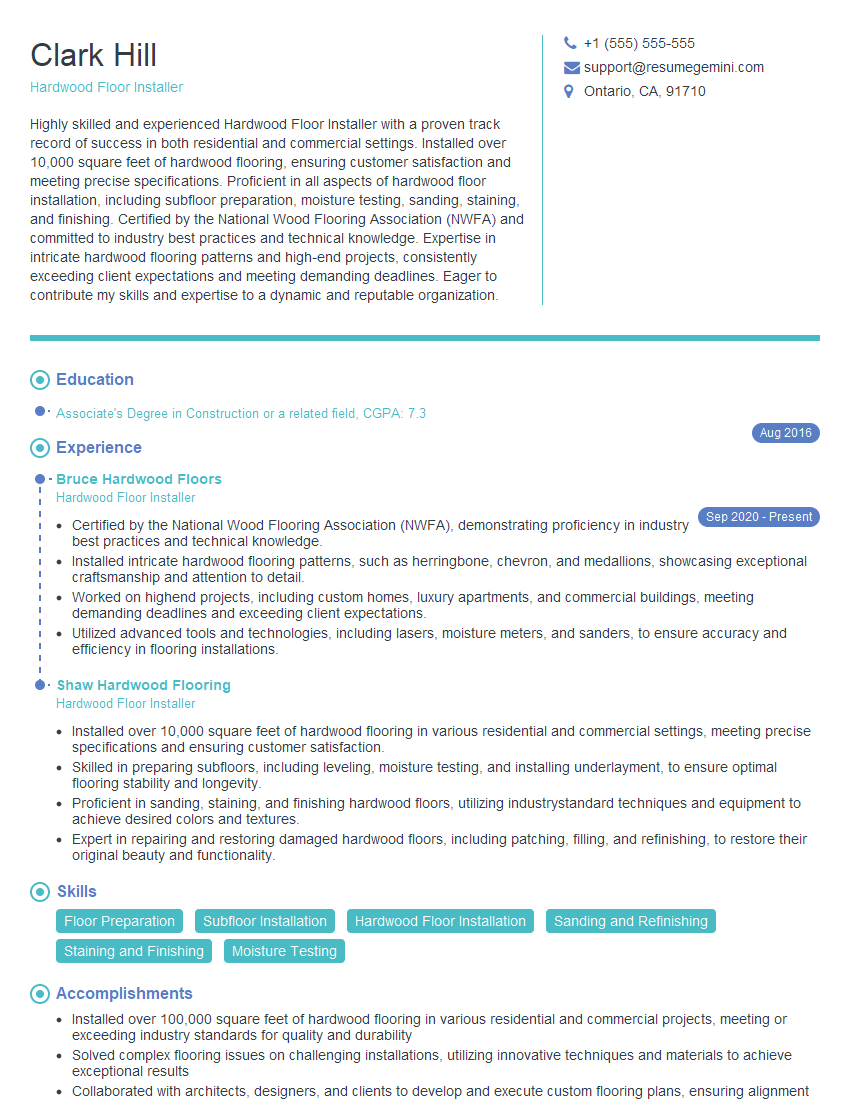
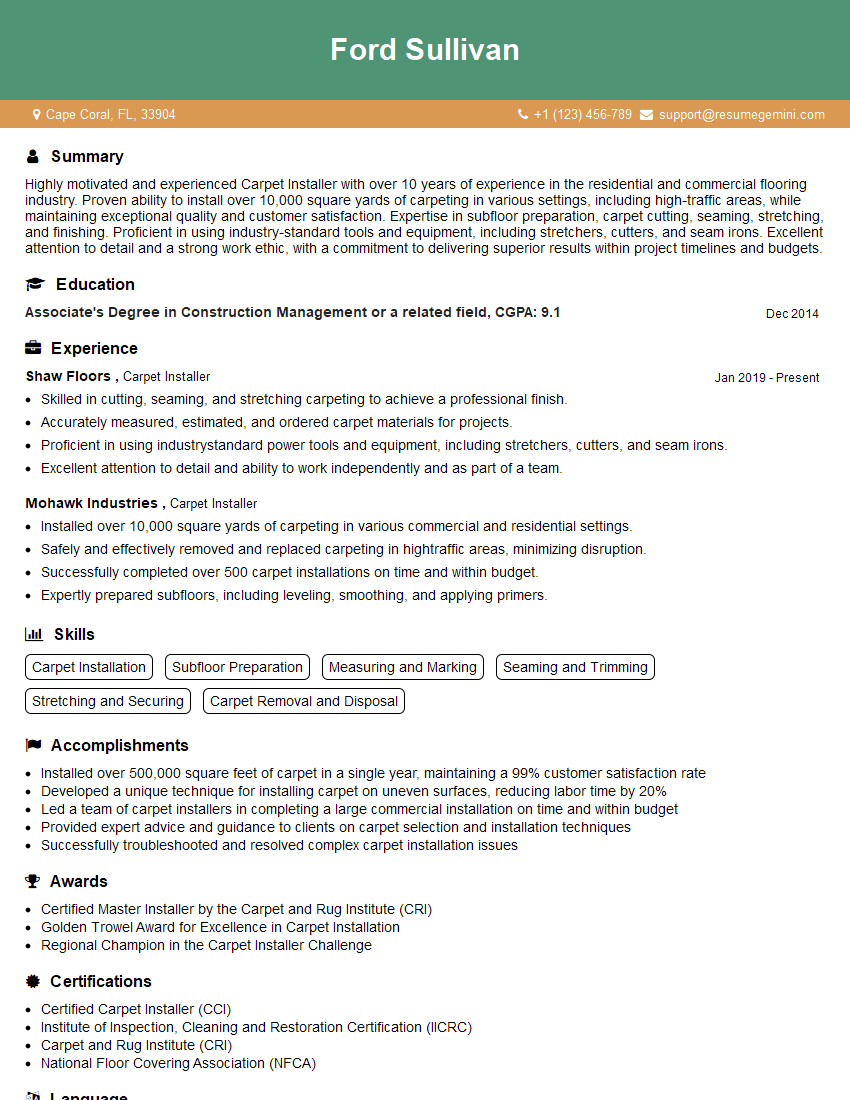
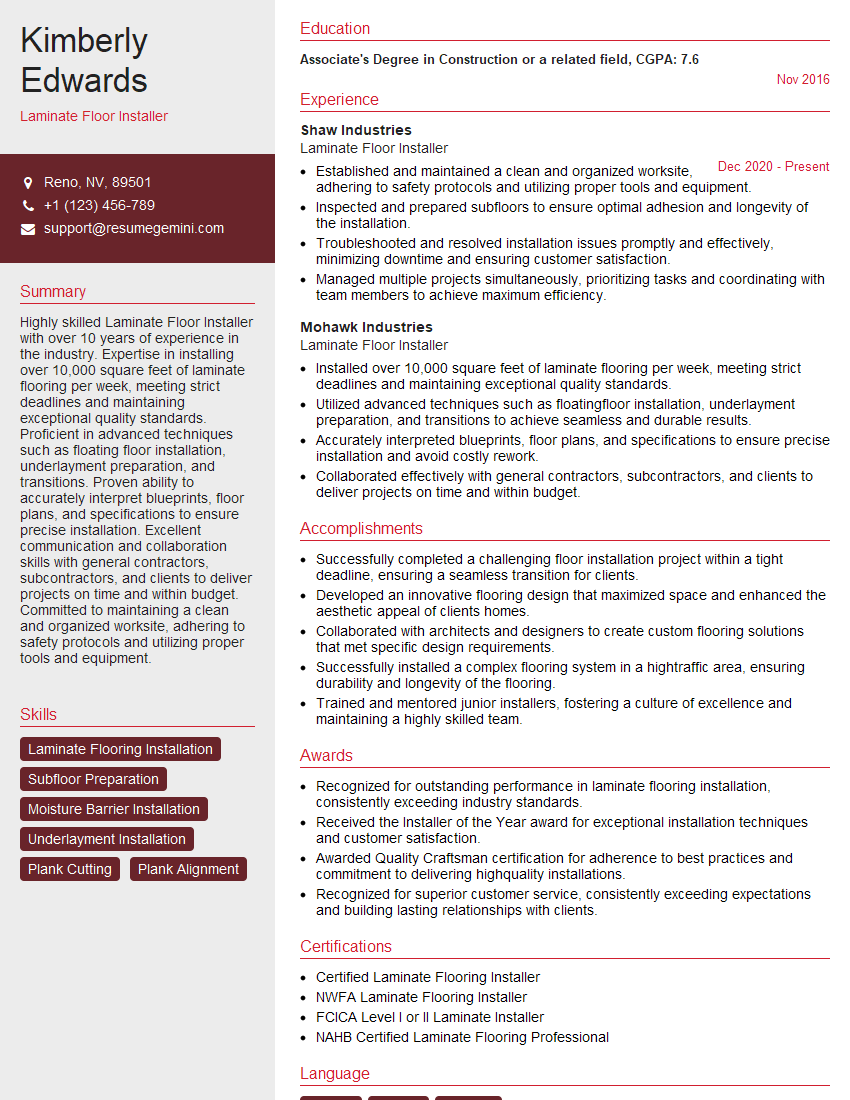
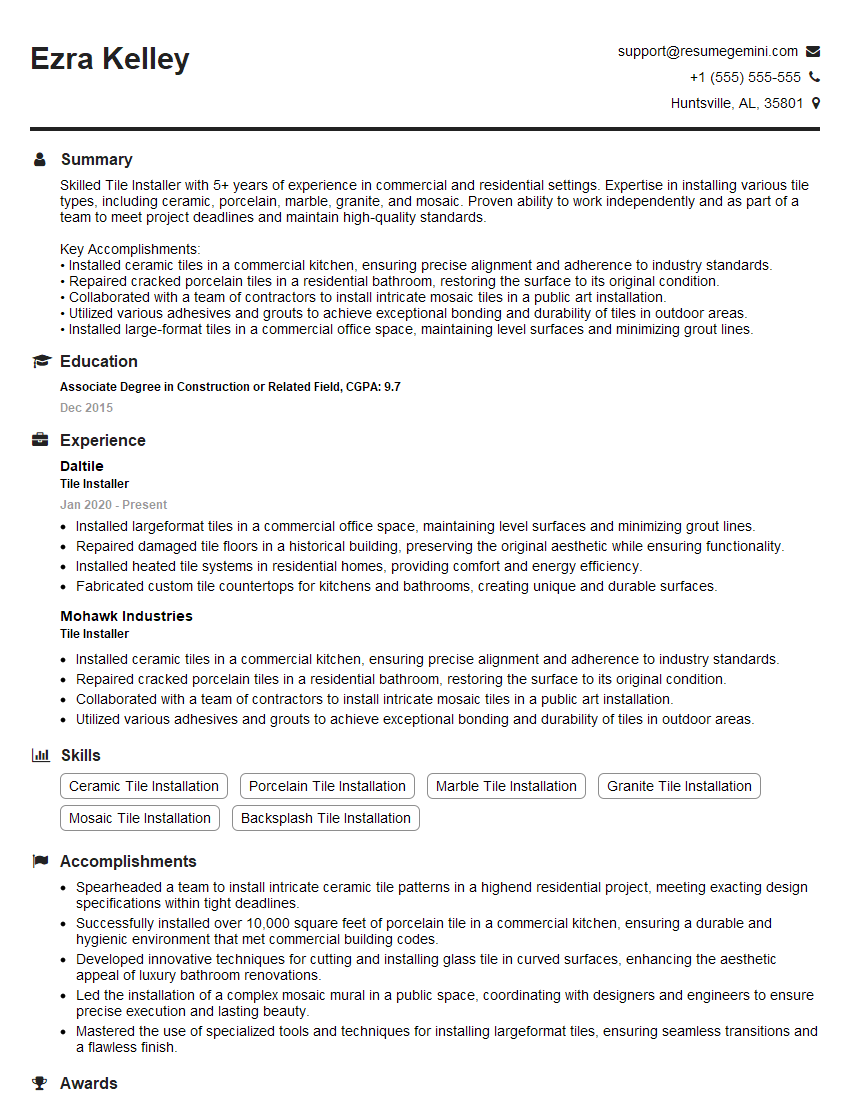
Mastering your knowledge of different floor finishes is essential for career advancement in the construction and flooring industries. A strong understanding of these materials, installation methods, and maintenance procedures showcases your expertise and professionalism. To enhance your job prospects, create an ATS-friendly resume that clearly highlights your skills and experience. ResumeGemini is a trusted resource to help you build a professional and effective resume. We provide examples of resumes tailored to showcase experience with different types of floor finishes to help you get started.

Explore more articles
Users Rating of Our Blogs
Share Your Experience
We value your feedback! Please rate our content and share your thoughts (optional).
What Readers Say About Our Blog
To the interviewgemini.com Webmaster.
Very helpful and content specific questions to help prepare me for my interview!
Thank you
To the interviewgemini.com Webmaster.
This was kind of a unique content I found around the specialized skills. Very helpful questions and good detailed answers.
Very Helpful blog, thank you Interviewgemini team.