Every successful interview starts with knowing what to expect. In this blog, we’ll take you through the top Motor Speech Disorders Evaluation and Treatment interview questions, breaking them down with expert tips to help you deliver impactful answers. Step into your next interview fully prepared and ready to succeed.
Questions Asked in Motor Speech Disorders Evaluation and Treatment Interview
Q 1. Describe the differential diagnosis process for apraxia of speech and dysarthria.
Differentiating apraxia of speech (AOS) and dysarthria requires a careful examination of speech characteristics and underlying neurological mechanisms. Both are motor speech disorders, but they stem from different neurological damage.
Apraxia of speech is a neurological speech disorder characterized by impaired motor planning and programming of speech movements. Individuals with AOS know *what* they want to say but struggle to execute the necessary movements to produce the sounds. Their errors are inconsistent and often include sound substitutions, additions, and omissions, especially on more complex words or phrases. They might also show groping behaviors with their articulators (tongue, lips, etc.) as they attempt to produce sounds.
Dysarthria, on the other hand, is a group of motor speech disorders resulting from weakness, incoordination, or spasticity of the muscles used for speech production. The errors in dysarthria are generally consistent and predictable. Think of it as a problem with *execution* of the movement itself, not the plan. The type of dysarthria (e.g., flaccid, spastic, ataxic) further helps pinpoint the underlying neurological cause.
The key to differential diagnosis lies in observing the types of errors made. A detailed speech assessment, including tasks like repetition of increasingly complex syllable sequences, sentence reading, and conversation, is essential. A thorough neurological examination helps determine the location and nature of the lesion. For example, a patient consistently substituting /b/ for /p/, but showing relatively intact muscle strength and tone, might suggest AOS, while a patient displaying weak and imprecise articulatory movements, along with decreased muscle tone, points towards a type of dysarthria.
Q 2. Explain the various assessment tools used to evaluate motor speech disorders.
Assessment of motor speech disorders relies on a multifaceted approach using a variety of tools. A comprehensive evaluation typically includes:
- Case history: Gathering information about the onset, progression, and associated medical conditions.
- Oral-motor examination: Assessing the strength, range of motion, and coordination of the articulators (lips, tongue, jaw, palate).
- Perceptual assessment of speech: Evaluating the intelligibility, fluency, and characteristics of articulation, phonation, resonance, and prosody (stress and intonation) using standardized and informal measures. The Frenchay Dysarthria Assessment (FDA) is a widely used example.
- Acoustic analysis: Using technology like spectrograms or acoustic analysis software to objectively measure speech parameters such as vocal intensity, frequency, and jitter (variations in vocal frequency).
- Instrumental assessment: Employing tools like electromyography (EMG) to measure muscle activity or videofluoroscopy to visualize articulatory movements. This is often used for more complex cases or when perceptual findings are unclear.
Specific tests depend on the suspected diagnosis and clinical presentation. For example, assessing repetition of complex multisyllabic words is crucial in differentiating between apraxia and dysarthria. Similarly, measuring the maximum phonation time provides objective data on respiratory support and phonatory efficiency.
Q 3. What are the key characteristics of flaccid dysarthria?
Flaccid dysarthria arises from damage to the lower motor neurons (LMNs), resulting in weakness and hypotonia (reduced muscle tone) of the muscles involved in speech. Think of it like a ‘tired’ or ‘weak’ speech mechanism.
Key characteristics include:
- Weakness: Reduced strength in the muscles controlling speech production.
- Hypotonia: Decreased muscle tone, leading to a flabby or limp feeling in the articulators.
- Atrophy: Wasting away of muscles over time in some cases.
- Fasciculations: Involuntary twitching of the muscles.
- Hypernasality: Excessive nasal resonance due to weakness of the velopharyngeal muscles.
- Breathy voice: Incomplete closure of the vocal folds due to weakness.
- Monotone speech: Reduced pitch and loudness variations.
Imagine a marionette with loose strings – the movements are weak and imprecise, reflecting the underlying muscle weakness. Common causes include Bell’s palsy, myasthenia gravis, and brainstem stroke.
Q 4. How would you assess oral motor skills in a patient with suspected motor speech disorder?
Assessing oral motor skills involves a systematic examination of the structures and functions contributing to speech production. This is a crucial part of evaluating any suspected motor speech disorder. The assessment should cover:
- Strength: Assess the strength of lip, tongue, and jaw muscles using manual resistance (gentle pressure against the articulators) and observation of tasks like lip pursing, tongue protrusion, and jaw opening.
- Range of motion: Evaluate the extent to which the articulators can move in various directions (e.g., tongue elevation, lateralization, jaw opening). This can be observed visually or through palpation.
- Coordination: Observe the precision and speed of movements during sequential motor tasks, like alternating motion rates (e.g., ‘puh-tuh-kuh’ repetitions), and assess for any dysmetria (inaccurate movement).
- Speed and accuracy: Assess the speed of repetitive movements like rapid tongue movements or lip puckering.
- Reflexes: Check for the presence and strength of oral reflexes (e.g., gag reflex, sucking reflex). Absence or abnormality of these reflexes can be an important diagnostic indicator.
Throughout the assessment, it’s crucial to observe the quality and efficiency of movement. Look for any signs of weakness, incoordination, or unusual patterns of movement. Careful observation and documentation are essential to guide the subsequent treatment plan.
Q 5. Describe the treatment approaches for apraxia of speech in adults.
Treatment for apraxia of speech in adults focuses on improving motor planning and programming skills. A multi-faceted approach is typically employed. Treatment strategies include:
- Articulatory-kinematic approach: This focuses on teaching precise articulatory movements through shaping, prompting, and tactile cues. It involves breaking down speech movements into smaller components and practicing them repeatedly.
- Melodic intonation therapy (MIT): This approach uses musical elements, including intonation and rhythm, to facilitate speech production, capitalizing on the relative preservation of melodic aspects in some individuals with AOS.
- Rate control strategies: Strategies such as pacing boards or metronomes help to regulate the rate of speech and improve fluency.
- Augmentative and alternative communication (AAC): In cases where speech remains significantly impaired, AAC can improve communication and participation. This might include picture boards, communication apps, or sign language.
- Computer-assisted therapies: Apps and software can provide structured practice and feedback, offering opportunities for repetitive practice in a motivating and engaging way.
The selection and sequencing of treatment techniques are individualized based on the patient’s specific needs and strengths. Regular assessment of progress is vital to adapt the treatment plan as needed.
Q 6. What are the common causes of spastic dysarthria?
Spastic dysarthria results from bilateral damage to the upper motor neurons (UMNs), leading to increased muscle tone (spasticity), weakness, and slow movements. The speech mechanism is stiff and inflexible.
Common causes include:
- Stroke: Bilateral damage to the corticobulbar pathways (the pathways connecting the brain to the brainstem).
- Multiple sclerosis (MS): A demyelinating disease affecting the UMNs.
- Cerebral palsy: A developmental disorder causing damage to the motor control areas in the brain.
- Traumatic brain injury: Damage to the UMNs due to head trauma.
The resulting spasticity affects articulatory precision, causing strained-strangled speech quality, along with slow rate, and reduced range of motion. Imagine a stiff, inflexible puppet.
Q 7. How do you differentiate between ataxic and hypokinetic dysarthria?
Ataxic and hypokinetic dysarthrias are both types of dysarthria, but they present with very different characteristics.
Ataxic dysarthria stems from damage to the cerebellum, the brain region coordinating movement. This results in incoordination and lack of precision in speech movements. The speech sounds ‘drunk’ or ‘slurred.’ Key features include irregular articulatory breakdowns, a scanning quality of speech (a slow, deliberate, and inaccurate production of syllables and words), and a variable rate.
Hypokinetic dysarthria, on the other hand, arises from damage to the basal ganglia, the brain structures controlling movement initiation and smoothness. Speech is characterized by reduced loudness, monotony, and difficulty initiating speech. Movements are reduced in amplitude and speed, resulting in a ‘monotonous’ and ‘mumbling’ speech quality. Rest tremor (a tremor in the articulators that is noticeable when the articulators are at rest), rigidity, and slow movements of the articulators are common.
Think of ataxic dysarthria as ‘uncoordinated’ and hypokinetic as ‘reduced’ in movement. The underlying neurological damage and consequent speech characteristics provide a clear basis for differentiation.
Q 8. Discuss the role of AAC in managing severe motor speech disorders.
Augmentative and Alternative Communication (AAC) plays a crucial role in managing severe motor speech disorders, especially when verbal communication is significantly impaired or absent. It provides individuals with a means to express their thoughts, needs, and wants. AAC systems encompass a wide range of tools and techniques, from low-tech options like picture exchange systems (PECS) and communication boards to high-tech options like speech-generating devices (SGDs).
My approach to AAC integration typically involves:
- Assessment of communication needs: A thorough evaluation identifies the individual’s strengths and weaknesses, considering their cognitive abilities, physical limitations, and communication goals.
- Individualized system selection: Choosing the right AAC system is paramount. Factors such as the individual’s age, cognitive abilities, and physical capabilities are key considerations. For example, a child with limited fine motor skills might benefit from a PECS system, while an adult with intact cognitive abilities might use an SGD with text-to-speech capabilities.
- Training and support: Comprehensive training for both the individual and their caregivers is vital to ensure successful AAC system integration. This includes teaching communication strategies, vocabulary development, and system operation.
- Ongoing monitoring and adjustment: Regular monitoring and adjustments are essential to ensure the AAC system remains effective and meets the individual’s evolving needs. This might involve adding new vocabulary, adjusting system settings, or exploring alternative communication strategies.
For instance, I worked with a patient with severe apraxia of speech who initially struggled with frustration. After implementing a customized SGD with a visual interface, he regained a sense of control and improved his quality of life. He was able to communicate his desires, participate in conversations, and reduce his frustration levels significantly. The key was tailoring the AAC system to his specific needs and providing thorough training and ongoing support.
Q 9. Explain your approach to managing dysphagia in a patient with motor speech impairment.
Managing dysphagia (swallowing difficulties) in a patient with motor speech impairment requires a multidisciplinary approach. Since many of the same muscles are involved in speech and swallowing, impairments in one often affect the other. My approach is coordinated with speech-language pathologists specializing in dysphagia, occupational therapists, and sometimes medical professionals.
Key aspects of my approach include:
- Comprehensive assessment: This involves a thorough evaluation of the patient’s swallowing mechanism using clinical bedside swallowing examination (including observations of oral, pharyngeal, and esophageal phases), as well as potentially instrumental assessments (videofluoroscopic swallowing study or FEES). We are looking for signs of aspiration (food or liquid entering the airway), residue, and the overall efficiency of the swallow.
- Treatment strategies: These are tailored to the specific swallowing impairments identified during the assessment. They may include postural adjustments (e.g., chin tuck, head turn), diet modifications (e.g., thickened liquids, pureed foods), swallowing maneuvers (e.g., Mendelsohn maneuver), and oral motor exercises. The treatment often incorporates strategies to compensate for any limitations in oral-motor control stemming from their motor speech disorder.
- Collaboration and communication: Close collaboration with the medical team (neurologists, gastroenterologists, etc.) is essential, especially if there are concerns about aspiration pneumonia or other medical complications.
For example, a patient with dysarthria and dysphagia might benefit from exercises that improve tongue strength and coordination to facilitate both swallowing and speech. We might use a combination of exercises focusing on lingual precision and range of motion, followed by exercises integrating those movements with actual swallowing attempts.
Q 10. Describe the principles of behavioral treatment for motor speech disorders.
Behavioral treatment for motor speech disorders relies on principles of operant conditioning and focuses on shaping and strengthening desired motor patterns. It’s a goal-oriented approach aimed at improving speech intelligibility and overall communication effectiveness.
Core principles include:
- Target selection: Identifying specific speech sounds, words, or phrases to be targeted for improvement based on a comprehensive assessment.
- Positive reinforcement: Providing immediate and consistent positive feedback (e.g., praise, tokens) for correct productions. This increases the likelihood of desired behaviors repeating.
- Shaping: Gradually progressing from simpler to more complex motor targets. Success at each stage builds confidence and motivates the patient.
- Feedback: Providing specific and frequent feedback regarding the accuracy and consistency of the patient’s productions. This includes auditory and visual feedback (e.g., using mirrors).
- Task variation: Utilizing a variety of tasks and contexts to promote generalization of learned skills.
- Practice and repetition: Consistent practice is crucial for skill development and retention.
Imagine working with a patient with apraxia of speech. We might begin by targeting isolated sounds, then progress to syllables, words, phrases, and finally sentences. Each correct production would be immediately reinforced with verbal praise, and incorrect productions would be gently corrected with modeling and cues. We would also integrate carryover activities into the patient’s daily life to facilitate generalization.
Q 11. What are the ethical considerations when working with patients with motor speech disorders?
Ethical considerations in working with patients with motor speech disorders are paramount. Our primary responsibility is to act in the best interests of our patients.
Key ethical considerations include:
- Informed consent: Ensuring that patients fully understand the nature of their condition, the treatment options, and the potential risks and benefits before initiating therapy.
- Confidentiality: Maintaining the strictest confidentiality regarding patient information and respecting their privacy.
- Competence: Providing only services within the scope of our expertise and continually seeking professional development to stay current with best practices.
- Cultural sensitivity: Recognizing and respecting the cultural background and beliefs of our patients and adapting our treatment approaches accordingly.
- Beneficence and non-maleficence: Always striving to do good and avoid harm. This includes carefully considering the potential impact of treatment interventions and being aware of any potential side effects.
- Justice and fairness: Ensuring equitable access to quality services and advocating for patient rights.
For example, when working with a patient who has limited cognitive abilities, we might need to modify our communication strategies and involve caregivers in the treatment process. Always obtaining informed consent from the patient (or their legal guardian) prior to treatment is crucial.
Q 12. How do you adapt your treatment approach based on the patient’s age and cognitive abilities?
Adapting treatment approaches based on a patient’s age and cognitive abilities is crucial for effective therapy. Children, adults, and elderly individuals differ significantly in their learning styles, attention spans, and cognitive processing abilities.
Adaptations for different age groups and cognitive levels might include:
- Children: Using play-based activities, incorporating visual aids, keeping sessions shorter and more frequent, and involving parents/caregivers actively.
- Adults: Engaging in more complex tasks, focusing on functional communication needs, and tailoring treatment to their work and social environments.
- Elderly individuals: Adjusting the pace of therapy, providing frequent breaks, incorporating memory aids, and considering any comorbidities that might impact treatment outcomes.
- Cognitive impairments: Utilizing simplified instructions, employing visual cues, breaking down complex tasks into smaller, manageable steps, and increasing repetition.
For instance, a young child with apraxia of speech might respond well to a game that involves producing target sounds while playing with toys. An adult with a similar condition might benefit from a more structured approach that focuses on improving speech intelligibility in various conversational contexts. A patient with dementia might need more visual support and repetitive drills to improve their ability to say specific words or phrases.
Q 13. Describe the use of instrumental assessment in evaluating motor speech disorders.
Instrumental assessment plays a vital role in objectively evaluating motor speech disorders and providing insights beyond those gleaned from traditional clinical observation. Several instrumental techniques are used to quantify the acoustic and physiological aspects of speech production.
Common instrumental assessments include:
- Acoustic analysis: Using software to analyze speech signals, providing objective measures of parameters such as intensity, frequency, and jitter/shimmer (measures of vocal tremor and instability).
- Electromyography (EMG): Recording the electrical activity of muscles involved in speech production to assess muscle activation patterns and coordination.
- Videofluoroscopy (VFSS): A dynamic radiographic procedure used to visualize the movements of the articulators during speech and swallowing, aiding in the diagnosis of dysphagia and certain motor speech disorders.
- Fiberoptic Endoscopic Evaluation of Swallowing (FEES): A minimally invasive procedure where a thin flexible endoscope is passed through the nasal cavity to visualize the pharynx and larynx during swallowing, helpful for identifying aspiration.
- Kinematic analysis: Using high-speed cameras to record articulatory movements during speech production, providing precise measurements of movement parameters such as speed, displacement, and timing. This is particularly useful in studying dysarthria and apraxia of speech.
For instance, acoustic analysis can quantitatively demonstrate the presence of tremor and reduced vocal intensity in a patient with essential tremor affecting speech. VFSS or FEES provide objective information regarding swallowing safety and efficiency in a patient with dysphagia secondary to a stroke. These assessments provide valuable data to inform the treatment plan and monitor progress.
Q 14. What are the limitations of current assessment and treatment methods for motor speech disorders?
Despite advances in our understanding of motor speech disorders, limitations remain in both assessment and treatment. These challenges need to be addressed for optimal patient outcomes.
Limitations include:
- Subjectivity in assessment: Traditional clinical assessments rely heavily on the clinician’s judgment, introducing potential bias and inconsistency.
- Lack of standardized measures: The absence of widely accepted standardized measures makes it challenging to compare findings across different clinicians and settings.
- Limited treatment efficacy for some disorders: Certain motor speech disorders, particularly those resulting from severe neurological damage, respond poorly to currently available treatments.
- Generalization of treatment gains: Transferring skills learned in therapy to real-world communication situations can be challenging for some individuals.
- High cost and accessibility of instrumental assessments: Instrumental assessments are often expensive and not readily available in all clinical settings.
- Individual variability in response to treatment: Patients respond differently to treatment, necessitating individualized approaches.
For instance, while behavioral therapy is effective for many individuals with apraxia of speech, some patients with severe neurological involvement might show minimal improvement. Similarly, the lack of standardized measures can make it challenging to compare the effectiveness of different treatment approaches. Ongoing research focuses on addressing these limitations, improving assessment methodologies, and developing novel treatments that better address the specific needs of individuals with motor speech disorders.
Q 15. How would you counsel a patient and their family about a newly diagnosed motor speech disorder?
Breaking the news of a motor speech disorder can be incredibly challenging. My approach prioritizes empathy, understanding, and empowerment. I begin by explaining the diagnosis in clear, non-technical terms, using analogies to help the patient and family grasp the concept. For example, if explaining apraxia of speech, I might compare it to a ‘miswiring’ in the brain’s communication pathways, affecting the ability to plan and execute speech movements. I then discuss the specific impact on the individual’s daily life, acknowledging their feelings of frustration, sadness, or even anger. It’s crucial to validate their emotions and emphasize that they are not alone. Next, I outline available treatment options, explaining the goals and potential outcomes of therapy. I highlight the importance of active participation and the role of the family in supporting the patient’s journey. Finally, I provide resources such as support groups and websites dedicated to motor speech disorders, ensuring they have access to continued information and support.
For instance, with a newly diagnosed dysarthria patient, I might say something like: “Imagine your muscles responsible for speech are a little weaker or less coordinated than they used to be. This can make it harder to speak clearly. We’ll work together to build strength and coordination, making speech clearer and easier.” This approach focuses on hope and collaborative effort.
Career Expert Tips:
- Ace those interviews! Prepare effectively by reviewing the Top 50 Most Common Interview Questions on ResumeGemini.
- Navigate your job search with confidence! Explore a wide range of Career Tips on ResumeGemini. Learn about common challenges and recommendations to overcome them.
- Craft the perfect resume! Master the Art of Resume Writing with ResumeGemini’s guide. Showcase your unique qualifications and achievements effectively.
- Don’t miss out on holiday savings! Build your dream resume with ResumeGemini’s ATS optimized templates.
Q 16. Explain the importance of interprofessional collaboration in managing motor speech disorders.
Interprofessional collaboration is paramount in managing motor speech disorders. These disorders rarely exist in isolation; they often co-occur with other conditions such as stroke, Parkinson’s disease, or traumatic brain injury. A team approach ensures comprehensive care. For example, a speech-language pathologist (SLP) focuses on communication and swallowing, while a neurologist assesses the underlying neurological condition, a physiatrist addresses physical impairments, and an occupational therapist assists with daily living skills. This collaborative environment allows for shared decision-making, a holistic treatment plan, and a more effective outcome. The team’s combined expertise provides valuable insights and prevents treatment fragmentation. Regular team meetings are critical for updating progress, coordinating interventions, and modifying treatment plans as needed.
Imagine a patient with Parkinson’s disease and severe dysarthria. The neurologist might adjust medication, influencing speech clarity. The occupational therapist can provide strategies for improving postural support to enhance speech production. The SLP works on specific speech exercises. This integrated approach creates synergy and significantly improves patient outcomes compared to a solely SLP-focused approach.
Q 17. Describe a case where you had to modify a treatment plan due to unexpected patient response.
I once treated a patient with apraxia of speech who, despite consistent therapy focusing on phonetic sequencing and articulatory practice, showed minimal improvement after several months. His frustration was palpable, and my initial treatment plan wasn’t yielding the expected results. After careful reassessment, I observed that he was experiencing significant cognitive fatigue during sessions, impacting his ability to engage actively. I modified the treatment plan to incorporate shorter, more frequent sessions, interspersed with periods of rest and relaxation. I also focused on functional communication strategies, emphasizing the patient’s ability to communicate effectively, rather than solely on perfect articulation. We integrated visual cues and gestures, recognizing that his cognitive load was significantly impacting his ability to perform tasks in therapy. This modified approach led to a considerable improvement in his functional communication, significantly improving his quality of life.
Q 18. How do you measure the effectiveness of your treatment interventions?
Measuring the effectiveness of treatment involves a multi-faceted approach. I utilize both quantitative and qualitative measures. Quantitative measures include standardized assessments like the Frenchay Dysarthria Assessment or the Apraxia Battery for Adults. These provide objective data on speech intelligibility, articulation, and fluency. Pre- and post-treatment scores reveal progress. Beyond standardized tests, I track functional communication improvements using informal measures, such as the patient’s ability to communicate effectively in everyday settings (e.g., ordering food, engaging in conversation). Qualitative measures focus on patient-reported outcomes. I regularly gather patient feedback on their perceived improvements in communication, confidence, and participation in daily life. I also involve family members in this process to gain a broader perspective. This integrated approach gives a more comprehensive view of treatment efficacy than relying on objective measures alone.
Q 19. What are the different types of augmentative and alternative communication (AAC) devices?
Augmentative and alternative communication (AAC) devices provide a critical pathway for individuals with severe motor speech disorders who struggle with verbal communication. These devices range from low-tech options to sophisticated high-tech systems. Low-tech options include picture exchange systems (PECS), communication boards with pictures or words, and gesture systems. These are relatively inexpensive and portable, but can be limited in their expressive capacity. High-tech options include speech-generating devices (SGDs), which use synthesized speech or digitized recordings. Some SGDs are sophisticated, allowing for customized vocabulary, sentence construction, and even facial expressions to convey emotion. There are also dedicated apps and software, making communication easier and more accessible. The choice of AAC device depends on the individual’s cognitive abilities, physical limitations, and communication needs. Careful assessment is key to identifying the most appropriate system.
Q 20. Describe the principles of neuromotor rehabilitation for motor speech disorders.
Neuromotor rehabilitation for motor speech disorders follows principles based on neuroplasticity—the brain’s ability to reorganize itself. The goal is to stimulate neural pathways and enhance motor control for improved speech production. This is often achieved through intensive, repetitive practice of speech tasks that are specifically tailored to the patient’s individual deficits. Therapy often focuses on building strength and coordination of the muscles involved in speech production through exercises that target specific articulatory movements. Sensory stimulation is also crucial, utilizing visual, auditory, and tactile feedback to improve accuracy and awareness of speech movements. Treatment also aims to improve respiratory support, phonation, and articulation depending on the specific disorder. For example, for dysarthria patients, tasks might focus on strengthening respiratory muscles or improving vocal fold coordination. For apraxia, tasks might focus on improved sequencing of speech sounds. The intensity, duration, and specific exercises will vary based on patient needs.
Q 21. Explain the role of sensory feedback in treatment of apraxia of speech.
Sensory feedback plays a critical role in the treatment of apraxia of speech. Because apraxia involves impaired motor planning and programming, enhancing sensory input helps the brain improve its ability to plan and execute speech movements. Treatment incorporates various sensory modalities. Visual cues such as mirrors or visual displays of articulatory movements (e.g., videos, pictures) provide visual feedback that helps the patient see and correct their errors. Auditory cues, such as listening to themselves or a model speaking the target sounds, allow for auditory monitoring. Tactile cues, involving manual guidance or placing fingers on the patient’s articulators to guide movements, provide a sense of the physical positioning of speech structures. This multisensory approach increases awareness of how speech movements feel, sound, and look, fostering improved motor planning and execution. For instance, I might use a mirror to show a patient the correct tongue placement during the production of a specific sound, combined with auditory feedback from the targeted sound, which reinforces the connection between the sensory experience and motor execution.
Q 22. What are the common compensatory strategies used for motor speech disorders?
Compensatory strategies for motor speech disorders aim to improve communication despite persistent speech difficulties. They don’t address the underlying cause but enhance functional communication. These strategies are tailored to the individual’s specific needs and abilities.
- Alphabet supplementation: Pointing to letters on an alphabet board or using a letter board app to spell words.
- Augmentative and alternative communication (AAC): Utilizing devices like speech-generating devices (SGDs) or picture exchange systems (PECS) to convey messages.
- Gestural communication: Using gestures, signs, or facial expressions to enhance understanding.
- Simplified speech: Using shorter sentences, slower rate of speech, and clear articulation.
- Written communication: Using writing or typing to communicate, especially beneficial when verbal communication is severely impaired.
For example, a patient with apraxia of speech might benefit from using a combination of gestures and an SGD to convey complex ideas, whereas a patient with dysarthria might use simplified speech and alphabet supplementation.
Q 23. How do you incorporate family members into the treatment process for motor speech disorders?
Incorporating family members is crucial for successful motor speech disorder treatment. They play a vital role in supporting the patient’s progress and general well-being. My approach involves:
- Education and training: I provide family members with a thorough understanding of the disorder, its impact, and treatment strategies. This includes information about the specific type of motor speech disorder, potential challenges, and the patient’s unique needs.
- Active participation: I encourage family members to actively participate in therapy sessions, learning how to use compensatory strategies, and providing consistent practice opportunities at home.
- Collaboration and communication: I establish open communication with family members, regularly updating them on the patient’s progress, challenges, and treatment modifications. This collaborative approach ensures everyone is on the same page and working towards the same goals.
- Emotional support: I address the emotional impact of the disorder on the family, providing guidance and resources to manage stress and cope with the challenges involved.
For instance, I might teach a family member how to use a specific AAC system with their loved one or provide strategies for facilitating communication during everyday activities. This shared responsibility significantly improves treatment outcomes.
Q 24. Describe your experience with using technology in the assessment or treatment of motor speech disorders.
Technology has significantly enhanced assessment and treatment of motor speech disorders. I regularly utilize:
- Speech analysis software: Programs that analyze acoustic and kinematic features of speech to objectively quantify speech deficits. This provides quantitative data to track progress and tailor treatment.
- AAC apps and devices: These provide personalized communication options, often integrating text-to-speech functionality and visual supports. I help patients select and effectively utilize these tools.
- Teletherapy platforms: These platforms enable remote therapy sessions, expanding access to care, especially beneficial for individuals in rural areas or with mobility limitations. Video conferencing allows for real-time assessment and treatment.
- Virtual reality (VR) programs: VR offers engaging and motivating environments for practicing speech exercises, enhancing patient motivation and engagement.
For example, I’ve used acoustic analysis software to demonstrate to a patient the improvements in their articulation after implementing a specific treatment technique, improving their understanding of their progress. Similarly, I’ve integrated AAC apps into therapy sessions to provide immediate communication support and practice.
Q 25. What continuing education have you pursued to stay updated on motor speech disorders?
Staying current in the field of motor speech disorders requires continuous professional development. I actively participate in:
- Professional conferences and workshops: Attending conferences like the American Speech-Language-Hearing Association (ASHA) convention to learn about the latest research, treatment techniques, and technological advancements.
- Continuing education courses: Completing courses focused on specific motor speech disorders (e.g., apraxia of speech, dysarthria), advanced assessment techniques, and the use of technology in treatment.
- Journal reading and literature review: Regularly reading peer-reviewed journals like the Journal of Speech, Language, and Hearing Research to stay abreast of the latest research findings.
- Mentorship and collaboration: Engaging in mentoring relationships with experienced colleagues and collaborating on research projects to expand my knowledge and refine my clinical skills.
Recently, I completed a course on the neurobiological basis of motor speech disorders, enhancing my understanding of the underlying mechanisms and improving my diagnostic abilities.
Q 26. How do you handle challenging or uncooperative patients with motor speech disorders?
Handling challenging or uncooperative patients requires patience, understanding, and a flexible approach. My strategy involves:
- Building rapport: Establishing a trusting and respectful relationship with the patient is paramount. This involves active listening, empathy, and understanding their perspectives and concerns.
- Adaptive strategies: Modifying treatment approaches to accommodate the patient’s needs, preferences, and abilities. This might involve adjusting the intensity, duration, or type of therapy activities.
- Collaboration and goal setting: Involving the patient in setting realistic and achievable goals, ensuring they feel a sense of control and ownership over their treatment. This collaborative approach increases motivation and engagement.
- Positive reinforcement: Focusing on the patient’s strengths and celebrating successes, no matter how small. This positive feedback helps build confidence and encourages continued participation.
- Involving caregivers: When appropriate, I collaborate with caregivers to develop strategies for managing challenging behaviors and supporting the patient’s engagement in therapy.
For instance, I might incorporate a patient’s favorite activities into therapy sessions to enhance motivation, or adjust the treatment intensity based on their fatigue levels.
Q 27. Describe your experience documenting and reporting on patient progress in motor speech disorders.
Accurate and thorough documentation is essential for tracking patient progress, informing treatment decisions, and ensuring continuity of care. My documentation process involves:
- Comprehensive initial evaluation: A detailed report outlining the patient’s background, presenting symptoms, diagnostic findings, and initial treatment goals. This includes specific measurements of speech intelligibility, rate, and accuracy.
- Regular progress notes: Detailed notes documenting each therapy session, including the activities completed, patient responses, and observed changes in speech abilities. This often includes data from standardized assessments.
- Use of standardized measures: Employing standardized assessments, such as the Frenchay Dysarthria Assessment or Apraxia Battery for Adults, to objectively measure progress over time.
- Qualitative and quantitative data: Recording both objective data (e.g., percentage of correct sounds) and subjective observations (e.g., patient’s motivation and overall communication effectiveness).
- Discharge summary: A comprehensive summary at the end of treatment, outlining the patient’s achievements, remaining challenges, and recommendations for future care.
I ensure my documentation is clear, concise, and readily understandable by other healthcare professionals, allowing for seamless transitions in care.
Q 28. What are some common challenges faced in treating patients with co-occurring dysphagia and motor speech disorders?
Treating patients with co-occurring dysphagia (swallowing difficulties) and motor speech disorders presents unique challenges. The close anatomical relationship between the structures involved in swallowing and speech means that difficulties in one area often impact the other.
- Careful assessment: A thorough assessment is crucial to identify the specific nature and severity of both dysphagia and the motor speech disorder. This involves a detailed speech and swallowing evaluation.
- Integrated treatment: A coordinated approach is essential, with a collaborative effort between speech-language pathologists specializing in both areas. This may involve a modified therapy approach that addresses both conditions simultaneously.
- Safety considerations: Prioritizing patient safety is paramount, especially regarding aspiration risk. Careful monitoring during therapy sessions and close collaboration with other healthcare professionals (e.g., gastroenterologists, nurses) are crucial.
- Fatigue management: Patients with both conditions may experience increased fatigue. Pacing therapy sessions, and providing rest breaks to minimize fatigue are important to increase tolerance and improve treatment effectiveness.
- Functional outcomes: Treatment focuses on improving both swallowing safety and communicative abilities, aiming for functional improvements in daily life.
For example, a patient with dysphagia and apraxia might require modifications to their diet and compensatory strategies to improve both swallowing safety and communication during mealtimes.
Key Topics to Learn for Motor Speech Disorders Evaluation and Treatment Interview
- Differential Diagnosis: Understanding and differentiating between various motor speech disorders (e.g., dysarthria, apraxia of speech) based on clinical presentation and assessment findings.
- Assessment Techniques: Mastering standardized and informal assessment tools, including perceptual assessment, acoustic analysis, and instrumental techniques (e.g., videofluoroscopy).
- Treatment Approaches: Developing proficiency in various treatment methodologies such as articulatory exercises, respiratory training, and strategies for improving intelligibility and communication effectiveness. Consider the evidence-based rationale behind different techniques.
- Case Study Analysis: Analyzing case studies to apply theoretical knowledge to practical scenarios. Focus on interpreting assessment data and developing individualized treatment plans.
- Interprofessional Collaboration: Understanding the role of collaboration with other healthcare professionals (e.g., SLPs, neurologists, otolaryngologists) in the comprehensive management of motor speech disorders.
- Technology in Assessment & Treatment: Familiarity with technological advancements in assessment and treatment, such as speech synthesis software and teletherapy platforms.
- Evidence-Based Practice: Critically evaluating research literature and applying evidence-based principles to clinical decision-making.
- Ethical Considerations: Understanding ethical principles and professional conduct relevant to the assessment and treatment of motor speech disorders.
- Cultural Competence: Recognizing the impact of cultural and linguistic diversity on assessment and treatment approaches.
- Long-Term Management & Prognosis: Understanding the long-term management strategies and factors influencing prognosis for individuals with motor speech disorders.
Next Steps
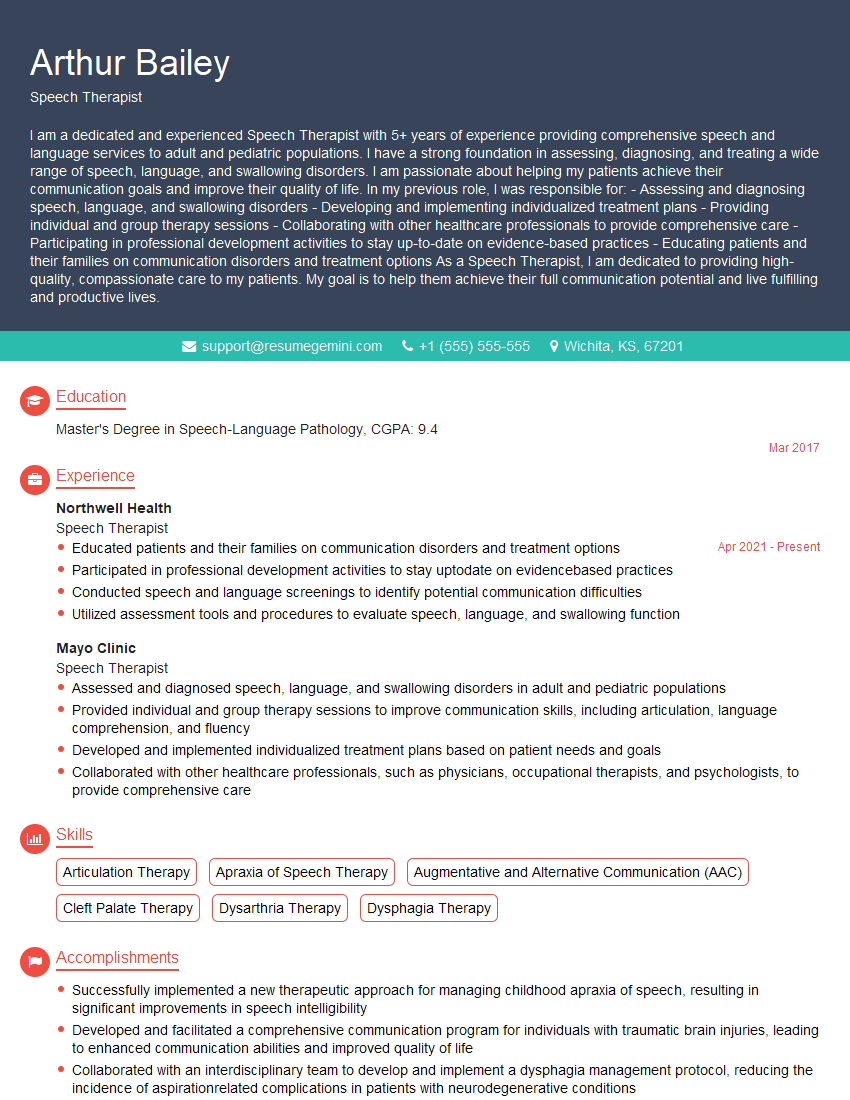
Mastering Motor Speech Disorders Evaluation and Treatment is crucial for career advancement in speech-language pathology. A strong understanding of these concepts will significantly enhance your job prospects and allow you to provide high-quality care to your patients. To maximize your chances of securing your ideal role, crafting a compelling and ATS-friendly resume is essential. We strongly recommend utilizing ResumeGemini, a trusted resource, to build a professional and effective resume that highlights your skills and experience. ResumeGemini offers examples of resumes tailored specifically to Motor Speech Disorders Evaluation and Treatment, ensuring your application stands out.
Explore more articles
Users Rating of Our Blogs
Share Your Experience
We value your feedback! Please rate our content and share your thoughts (optional).
What Readers Say About Our Blog
To the interviewgemini.com Webmaster.
Very helpful and content specific questions to help prepare me for my interview!
Thank you
To the interviewgemini.com Webmaster.
This was kind of a unique content I found around the specialized skills. Very helpful questions and good detailed answers.
Very Helpful blog, thank you Interviewgemini team.