Preparation is the key to success in any interview. In this post, we’ll explore crucial Radiation Protection Standards interview questions and equip you with strategies to craft impactful answers. Whether you’re a beginner or a pro, these tips will elevate your preparation.
Questions Asked in Radiation Protection Standards Interview
Q 1. Define ALARA principle and explain its application in radiation protection.
ALARA, which stands for “As Low As Reasonably Achievable,” is a fundamental principle in radiation protection. It emphasizes that radiation exposure should be kept as low as possible, taking into account economic and social factors. It’s not about eliminating all radiation exposure, which is often impractical, but rather about optimizing the balance between the benefits of a radiation-producing activity and the risks associated with the resulting exposure.
For example, in medical imaging, ALARA guides the selection of the appropriate imaging technique, the optimization of imaging parameters, and the use of protective measures like lead aprons. A physician wouldn’t order a CT scan if a simple X-ray would suffice. Similarly, in industrial settings using radioactive materials, ALARA dictates the implementation of engineering controls, administrative controls, and personal protective equipment to minimize worker exposure. The key is a risk-benefit analysis – making sure the benefit gained outweighs the radiation risk, while consistently striving to reduce the exposure levels as much as possible.
Q 2. Explain the difference between effective dose and equivalent dose.
Both effective dose and equivalent dose are used to quantify the biological effects of ionizing radiation, but they differ in how they account for the type and distribution of radiation in the body.
- Equivalent Dose: This measures the radiation absorbed by a specific tissue or organ, weighted for the type of radiation. Different types of radiation cause different biological effects at the same absorbed dose. For example, alpha particles are much more damaging than beta particles or gamma rays. The equivalent dose (in Sieverts, Sv) is calculated by multiplying the absorbed dose (in Grays, Gy) by a radiation weighting factor (WR) specific to the type of radiation.
- Effective Dose: This takes into account the equivalent dose to individual organs and tissues and then weights them according to their relative radiosensitivity. Some organs are more sensitive to radiation than others. For instance, the bone marrow is more sensitive than the skin. The effective dose (also in Sieverts, Sv) provides an overall estimate of the potential harm to the whole body from a radiation exposure.
In essence, equivalent dose focuses on the type of radiation and its effect on a specific organ, whereas effective dose considers the overall biological impact on the whole body based on the sensitivity of various organs. A simplified analogy is thinking about the different types of damage (equivalent dose) to different parts of a car (effective dose), which contributes to its overall functionality.
Q 3. What are the three basic principles of radiation protection?
The three basic principles of radiation protection are often summarized as Time, Distance, and Shielding (TDS). These principles provide a structured approach to minimizing radiation exposure.
- Justification: Any activity involving ionizing radiation must be justified; the potential benefits must outweigh the risks. This principle applies to a wide range of activities, from medical procedures to industrial processes using radioactive materials. A procedure should not be done unless it is deemed necessary.
- Optimization (ALARA): Radiation exposure should be kept As Low As Reasonably Achievable, taking into account economic and social factors. This expands on the concept of justification, providing a practical framework for reducing radiation exposure during activities already deemed justified.
- Dose Limits: Exposure limits must be established and enforced to prevent deterministic effects and limit the probability of stochastic effects. This helps safeguard individuals from the harmful consequences of excessive radiation exposure.
Q 4. Describe the different types of ionizing radiation and their respective hazards.
Ionizing radiation includes several types, each with distinct hazards:
- Alpha particles: These are relatively heavy, positively charged particles. They have high ionizing power but low penetrating power, meaning they are easily stopped by a sheet of paper or the outer layer of skin. However, if inhaled or ingested, they can cause significant internal damage.
- Beta particles: These are lighter, negatively charged particles with moderate ionizing power and penetrating power. They can penetrate several millimeters of tissue and are stopped by a thin sheet of aluminum or plastic.
- Gamma rays and X-rays: These are high-energy electromagnetic waves with low ionizing power but high penetrating power. They can penetrate deep into the body and require substantial shielding, such as lead or concrete, for protection.
- Neutrons: These are uncharged particles that can cause significant damage due to their interaction with atomic nuclei within the body. They require specialized shielding materials.
The hazards of ionizing radiation include both deterministic (tissue damage directly proportional to dose) and stochastic (cancer risk, genetic effects; probability increased with dose) effects. The severity of these effects depends on the type of radiation, the dose, and the duration of exposure.
Q 5. What are the regulatory requirements for radiation safety in your area/country?
(Note: This answer will vary depending on the specific area/country. The following is a generalized example and should not be taken as legal advice.)
Regulatory requirements for radiation safety vary widely, but generally, they involve licensing and registration requirements for facilities that use radiation sources. There are usually regulations for the design, construction, and operation of radiation facilities. These regulations set limits on radiation doses for workers and the public. Regular inspections and audits are frequently conducted to ensure compliance. Comprehensive training programs for radiation workers are mandated, along with procedures for radiation monitoring and emergency response planning. Detailed record-keeping is essential to track radiation doses and any incidents. The specific agencies responsible and the level of detail in the regulations will depend on the jurisdiction.
Q 6. Explain the concept of time, distance, and shielding in radiation protection.
Time, distance, and shielding are the three cardinal principles of radiation protection, forming a simple yet powerful strategy for minimizing exposure:
- Time: Reducing the time spent near a radiation source directly reduces the accumulated radiation dose. The shorter the exposure time, the lower the dose.
- Distance: Increasing the distance from a radiation source significantly reduces the radiation intensity. Radiation follows an inverse square law (discussed in the next answer). Doubling the distance reduces the intensity to one-fourth.
- Shielding: Using shielding materials that absorb radiation effectively reduces exposure. The type and thickness of shielding depend on the type of radiation. Lead is commonly used for gamma rays and X-rays, while other materials are effective for different types of radiation.
These principles are often used in combination. For example, in a nuclear power plant, workers might use a combination of short exposure times, maximum distance from sources, and appropriate shielding to minimize their radiation dose.
Q 7. How do you calculate radiation exposure using inverse square law?
The inverse square law states that the radiation intensity is inversely proportional to the square of the distance from the source. Mathematically, this can be expressed as:
I2 = I1 * (d12 / d22)Where:
I1is the initial intensity at distanced1I2is the intensity at distanced2
Example: If the radiation intensity is 100 mR/hr at a distance of 1 meter, what is the intensity at 2 meters?
I2 = 100 mR/hr * (1 m2 / 2 m2) = 25 mR/hr
Therefore, doubling the distance reduces the intensity to one-quarter of the original value. This law is crucial in radiation protection planning, allowing us to predict radiation levels at various distances from a source and to plan for appropriate distances to maintain safe exposure levels.
Q 8. What are the common methods for measuring radiation levels?
Measuring radiation levels involves using various instruments that detect ionizing radiation. The choice of instrument depends on the type and energy of the radiation, as well as the desired level of accuracy. Common methods include:
Geiger-Müller counters (GM counters): These are widely used for detecting beta and gamma radiation. They are relatively inexpensive, portable, and easy to use, providing a quick indication of radiation levels. Think of them as the ‘smoke detectors’ of the radiation world – they give a general alarm but don’t precisely measure the amount of radiation.
Scintillation detectors: These detectors use a scintillating material that emits light when struck by ionizing radiation. The light is then converted into an electrical signal, which is proportional to the radiation’s energy. Scintillation detectors are more sensitive and can measure a wider range of radiation types than GM counters, including alpha particles. They offer more precise measurements than GM counters, like a detailed weather report compared to a simple temperature reading.
Ionization chambers: These are used to measure higher radiation levels and offer excellent accuracy. They directly measure the ionization produced by radiation in a gas-filled chamber. Ionization chambers are often used for calibrating other radiation detectors and in situations requiring precise measurements.
Thermoluminescent dosimeters (TLDs): These passive detectors measure accumulated radiation dose over a period of time. They contain a material that stores energy when exposed to radiation and releases it as light when heated, allowing for a precise measurement of the total dose received. They’re like a ‘radiation diary’, recording accumulated exposure over time.
The choice of method depends heavily on the specific application. For example, a quick radiation survey might use a GM counter, while precise measurements in a nuclear power plant might require an ionization chamber. Similarly, monitoring individual radiation exposure usually involves TLDs or similar personal dosimeters.
Q 9. Explain the role of personal dosimetry in radiation protection.
Personal dosimetry plays a critical role in radiation protection by providing a quantitative measure of the radiation dose received by individual workers. This is crucial for ensuring that exposure levels remain below regulatory limits and for monitoring potential health effects. It’s like a personal ‘radiation health check’ for individuals working with radiation sources.
Personal dosimeters, such as TLDs, film badges, or electronic personal dosimeters (EPDs), are worn by individuals who may be exposed to ionizing radiation. These devices passively record the radiation dose over a specified period. After a period (e.g., a month), the dosimeter is sent to a calibration laboratory for processing and analysis, providing a detailed report of the accumulated dose. This data is essential for:
Dose monitoring: Tracking individual radiation exposure to ensure compliance with safety regulations.
Exposure assessment: Identifying areas or tasks that might lead to higher radiation exposure, allowing for adjustments in work practices or shielding.
Health surveillance: Determining if individuals have received doses that require further medical attention or monitoring.
Record keeping: Maintaining detailed records of individual radiation exposure for potential future health assessments.
Effective personal dosimetry programs are crucial for minimizing risks and protecting the health of radiation workers.
Q 10. Describe the different types of radiation detectors and their applications.
Radiation detectors vary greatly in their design and application, each tailored to specific radiation types and measurement needs. Here are a few examples:
Gas-filled detectors (GM counters, ionization chambers): These utilize the ionization of gas molecules by radiation to create a measurable electrical signal. GM counters are excellent for detecting beta and gamma radiation, providing a rapid response, while ionization chambers offer higher accuracy for measuring dose rates, particularly at higher exposure levels.
Scintillation detectors: These detectors utilize a scintillator material (e.g., sodium iodide) that converts ionizing radiation into light. This light is then detected by a photomultiplier tube, converting the light signal into an electrical signal for measurement. They are highly sensitive and can detect alpha, beta, and gamma radiation, offering good energy resolution.
Semiconductor detectors: These detectors utilize the ionization of a semiconductor material (e.g., silicon or germanium) to generate an electrical signal proportional to the radiation energy. They have excellent energy resolution, making them suitable for precise spectroscopic measurements. They are commonly used in environmental monitoring and nuclear safeguards.
Thermoluminescent dosimeters (TLDs): These passive detectors are used for personal dosimetry, as mentioned earlier. They measure cumulative radiation dose over time by detecting the light emitted when heated after exposure to radiation.
Applications of these detectors are vast. For instance, GM counters are used in radiation surveys, scintillation detectors in nuclear medicine imaging, and semiconductor detectors in research and environmental monitoring. The selection of a particular detector depends on the specific radiation type, energy range, required sensitivity, and the application itself.
Q 11. What are the safety procedures for handling radioactive materials?
Handling radioactive materials requires strict adherence to safety procedures to minimize exposure and prevent contamination. These procedures emphasize the ALARA principle – As Low As Reasonably Achievable. Key safety procedures include:
Time minimization: Limit the time spent near radioactive sources. The shorter the time, the lower the dose.
Distance maximization: Increase the distance from the radioactive source. Radiation intensity decreases with the square of the distance (inverse square law).
Shielding: Use appropriate shielding materials (e.g., lead, concrete) to reduce radiation exposure.
Proper handling techniques: Utilize specialized tools and techniques to minimize direct contact with radioactive materials. Always use tongs, manipulators, or other remote handling devices whenever possible.
Contamination control: Implement measures to prevent the spread of radioactive contamination, including the use of controlled areas, protective clothing (gloves, lab coats), and regular monitoring of work surfaces.
Waste disposal: Properly dispose of radioactive waste according to regulations to prevent environmental contamination.
Regular monitoring: Regularly monitor radiation levels and personal dose using appropriate instruments and dosimeters.
Strict adherence to these procedures is vital for maintaining a safe working environment and protecting the health of personnel.
Q 12. What are the emergency procedures in case of a radiation accident?
Emergency procedures for a radiation accident are designed to minimize exposure, prevent further contamination, and provide prompt medical attention. These procedures are specific to the nature of the accident (e.g., spill, fire) but generally involve the following steps:
Evacuation: Immediate evacuation of personnel from the affected area to a safe location.
Containment: Contain the radioactive material to prevent further spread of contamination.
Decontamination: Decontaminate personnel and equipment using appropriate methods.
Medical evaluation: Assess the radiation exposure of affected personnel and provide appropriate medical treatment.
Emergency response team: Activate the emergency response team to handle the situation according to established protocols.
Notification: Notify appropriate authorities (e.g., regulatory agencies, emergency services).
Each facility handling radioactive materials should have a detailed emergency plan tailored to its specific risks and local conditions. Regular drills and training are crucial for ensuring that personnel are prepared to respond effectively in case of an accident.
Q 13. Explain the importance of radiation safety training for personnel.
Radiation safety training is paramount for personnel who work with or near sources of ionizing radiation. This training ensures that individuals understand the risks associated with radiation exposure and can apply appropriate safety precautions. It’s like a ‘driver’s education’ for radiation workers, teaching them the rules of the road to safe handling.
Comprehensive training programs cover:
Basic principles of radiation physics and biology: Understanding how radiation interacts with matter and its potential biological effects.
Radiation protection standards and regulations: Knowing the legal and regulatory framework governing radiation safety.
Radiation detection and measurement techniques: Learning how to use radiation detection instruments and interpret the results.
Safe handling procedures for radioactive materials: Mastering the techniques for minimizing exposure and preventing contamination.
Emergency procedures: Understanding how to respond effectively in case of a radiation accident.
Personal protective equipment (PPE): Knowing how to use and maintain appropriate PPE.
Regular refresher training is essential to maintain competency and address evolving safety procedures and technology. This ensures that personnel remain proficient and confident in their ability to handle radioactive materials safely.
Q 14. How do you assess and mitigate the risks associated with radiation exposure?
Risk assessment and mitigation in radiation protection involve a systematic approach to identifying, evaluating, and controlling radiation hazards. The process typically includes:
Identifying potential radiation sources: Identifying all sources of ionizing radiation in the workplace, such as equipment, materials, or processes.
Estimating radiation exposure: Determining the potential dose to personnel from each radiation source using calculations, measurements, and modeling.
Evaluating risks: Assessing the likelihood and severity of potential adverse health effects from the estimated radiation exposure. This often involves comparing the estimated doses to regulatory limits and considering the potential for stochastic (probabilistic) and deterministic (certain) effects.
Implementing control measures: Developing and implementing control measures to reduce radiation exposure to the ALARA principle (As Low As Reasonably Achievable). Control measures can include engineering controls (e.g., shielding, ventilation), administrative controls (e.g., work procedures, training), and personal protective equipment (PPE).
Monitoring and evaluation: Regularly monitor radiation levels and personal doses, evaluating the effectiveness of control measures, and making adjustments as needed.
This systematic approach ensures that radiation protection efforts are effective, minimizing risks and protecting the health of personnel and the environment. For instance, if the risk assessment indicates a high probability of exposure above regulatory limits, additional shielding or alternative work practices might be implemented.
Q 15. Describe the process of radiation survey and monitoring.
Radiation survey and monitoring is the process of measuring and assessing the levels of ionizing radiation in a given environment. This is crucial for ensuring the safety of workers and the public. The process typically involves several steps:
- Planning and preparation: Defining the scope of the survey, selecting appropriate instruments, and establishing safety procedures.
- Instrument selection: Choosing the right instruments based on the type of radiation being measured (alpha, beta, gamma, X-rays, neutrons) and the expected radiation levels. Common instruments include Geiger-Müller counters, scintillation detectors, and survey meters.
- Measurement: Systematically measuring radiation levels at various locations. This might involve taking readings at fixed points, or performing area scans.
- Data recording and analysis: Accurately recording all measurements, including location, date, time, and instrument used. Analyzing the data to identify areas of higher radiation and assess potential risks.
- Reporting: Preparing a comprehensive report detailing the survey methodology, results, and conclusions. Recommendations for mitigating any identified risks are also included.
For example, a nuclear power plant would conduct regular radiation surveys to monitor radiation levels in various areas, ensuring that they remain within safe limits. Similarly, hospitals using radiation therapy equipment need to perform frequent surveys to monitor for radiation leaks and ensure patient and staff safety.
Career Expert Tips:
- Ace those interviews! Prepare effectively by reviewing the Top 50 Most Common Interview Questions on ResumeGemini.
- Navigate your job search with confidence! Explore a wide range of Career Tips on ResumeGemini. Learn about common challenges and recommendations to overcome them.
- Craft the perfect resume! Master the Art of Resume Writing with ResumeGemini’s guide. Showcase your unique qualifications and achievements effectively.
- Don’t miss out on holiday savings! Build your dream resume with ResumeGemini’s ATS optimized templates.
Q 16. What are the legal limits for radiation exposure for occupational workers?
Legal limits for occupational radiation exposure vary slightly depending on the country and regulatory body. However, they generally follow the recommendations of the International Commission on Radiological Protection (ICRP). A common standard limits the effective dose to 20 mSv per year averaged over five years, with a maximum of 50 mSv in any single year. This is for external radiation. Internal exposure limits are set separately, based on the specific radionuclide and its route of entry into the body. It’s crucial to remember that these limits are for occupational exposure only. The limits for members of the public are significantly lower.
For instance, a nuclear medicine technician working with radioactive isotopes would be subject to these limits and would need to be monitored regularly through personal dosimeters to track their radiation exposure.
Q 17. What are the different types of radiation shielding materials and their effectiveness?
Several materials effectively shield against different types of radiation. The effectiveness depends on the material’s density and atomic number, as well as the energy of the radiation.
- Lead: Highly effective against gamma rays and X-rays due to its high atomic number. Commonly used in X-ray rooms and nuclear medicine facilities.
- Concrete: Cost-effective for shielding against gamma rays and neutrons. Its effectiveness increases with thickness and density.
- Steel: Offers good shielding against beta particles and low-energy gamma rays.
- Water: Effective for neutron shielding, often used in nuclear reactors.
- Earth: A natural shielding material, particularly effective against beta and gamma radiation. Often used for the burial of low-level radioactive waste.
The choice of shielding material depends on the specific radiation type and energy, budget considerations, and the overall design of the facility. For example, a high-energy gamma ray source would require significantly more lead shielding than a low-energy beta emitter.
Q 18. Explain the concept of half-life in relation to radioactive materials.
Half-life is the time it takes for half of the atoms in a radioactive sample to decay. It’s a fundamental concept in understanding the behavior of radioactive materials. Each radioactive isotope has its unique half-life, ranging from fractions of a second to billions of years. After one half-life, half the original material remains; after two half-lives, one-quarter remains, and so on. This decay follows an exponential pattern.
For example, if a radioactive material has a half-life of 10 days and we start with 100 grams, after 10 days we’ll have 50 grams, after 20 days 25 grams, and after 30 days 12.5 grams. Understanding half-life is critical for determining the safe storage time and disposal methods for radioactive waste.
Q 19. How do you dispose of radioactive waste safely?
Safe disposal of radioactive waste is a complex and highly regulated process, varying based on the level of radioactivity. It involves several steps:
- Classification: Radioactive waste is categorized into different levels based on its radioactivity (e.g., low-level, intermediate-level, high-level).
- Treatment and conditioning: This may include techniques like volume reduction, solidification, encapsulation, and vitrification to stabilize the waste and reduce its mobility.
- Storage: Temporary storage may be required before final disposal. This often involves specialized facilities designed to safely contain the waste and prevent leakage.
- Disposal: Methods depend on the waste classification. Low-level waste may be disposed of in near-surface disposal facilities, while high-level waste typically requires deep geological repositories for long-term isolation.
The entire process is subject to stringent regulations and oversight to minimize environmental impact and protect public health. For instance, spent nuclear fuel from power plants, being high-level waste, requires exceptionally secure long-term geological storage solutions.
Q 20. What are the ethical considerations in radiation protection?
Ethical considerations in radiation protection are paramount. They revolve around:
- Beneficence: Maximizing the benefits of radiation applications (e.g., medical imaging, cancer therapy) while minimizing harm.
- Non-maleficence: Doing no harm. This includes minimizing radiation exposure to individuals and the environment.
- Justice: Ensuring equitable distribution of risks and benefits associated with radiation use. This means protecting all individuals, irrespective of their social standing or geographical location, from undue radiation exposure.
- Autonomy: Respecting the individual’s right to make informed decisions about their own radiation exposure, particularly in medical settings.
For example, ethical dilemmas can arise in deciding whether to proceed with a medical procedure involving ionizing radiation when the potential benefits are marginal compared to the risks. Transparent communication with patients is crucial in these scenarios.
Q 21. How do you ensure compliance with radiation safety regulations?
Ensuring compliance with radiation safety regulations requires a multi-faceted approach:
- Developing and implementing a comprehensive radiation safety program: This includes appointing a Radiation Safety Officer (RSO), establishing written procedures, and providing training to all personnel working with ionizing radiation.
- Regular radiation monitoring: Conducting routine radiation surveys, using personal dosimeters, and maintaining accurate records of all radiation exposures.
- Equipment maintenance and calibration: Ensuring that all radiation-producing equipment is properly maintained and calibrated to minimize radiation leaks and ensure accuracy of measurements.
- Emergency preparedness: Having plans in place to handle radiation accidents or emergencies.
- Regulatory compliance: Staying up-to-date with the latest regulations and reporting any incidents or non-compliances to the relevant authorities.
For example, a hospital using X-ray equipment needs to maintain detailed logs of equipment calibrations, employee training records, and radiation monitoring results to demonstrate regulatory compliance during inspections.
Q 22. Describe your experience with radiation safety audits and inspections.
My experience with radiation safety audits and inspections spans over 15 years, encompassing diverse settings such as hospitals, nuclear power plants, and research laboratories. I’ve conducted both internal audits to ensure compliance with our own safety protocols and external audits to verify adherence to regulatory standards. These audits involve a thorough review of all radiation-producing equipment, safety procedures, personnel training records, and emergency response plans. I utilize a systematic approach, employing checklists and standardized procedures to identify potential hazards and non-compliance issues. For instance, during an audit of a hospital’s radiology department, I discovered a malfunctioning interlock system on a linear accelerator. This immediately halted operations until the issue was rectified, preventing potential exposure to both patients and staff. I then provide detailed reports outlining findings, recommendations for corrective actions, and follow-up procedures to ensure that identified deficiencies are addressed promptly.
Q 23. Explain your understanding of the International Commission on Radiological Protection (ICRP) recommendations.
The International Commission on Radiological Protection (ICRP) is the leading international organization providing recommendations on radiation protection. Their recommendations are based on the principle of ALARA (As Low As Reasonably Achievable), emphasizing that radiation exposure should be kept as low as possible, taking into account social and economic factors. Key aspects include dose limits for occupational and public exposure, the justification of any radiation practice, and the optimization of protection and safety measures. The ICRP’s recommendations are not legally binding, but they serve as the foundation for national and international radiation protection regulations. For example, the ICRP’s emphasis on ALARA has led to the widespread adoption of shielding measures, optimized radiation beam techniques, and the use of monitoring devices in various fields.
Q 24. How do you communicate radiation safety information to non-experts?
Communicating radiation safety information to non-experts requires clear, concise language and relatable analogies. I avoid technical jargon and instead focus on explaining concepts using everyday terms. For instance, instead of talking about ‘absorbed doses’ in Grays, I explain radiation exposure in terms of the risk compared to things they already understand, like background radiation from the sun or the risk of a car accident. I utilize visual aids like charts and diagrams, and I tailor my communication to the audience’s level of understanding. For example, when speaking to patients about medical imaging procedures, I explain the benefits and risks clearly, answering questions in simple terms and addressing concerns. Similarly, when educating the public about nuclear power, I use analogies to explain the energy generation process and safety measures.
Q 25. Explain your experience with radiation emergency response plans.
My experience with radiation emergency response plans involves developing, reviewing, and implementing such plans for various facilities. This includes establishing clear communication protocols, defining roles and responsibilities, and outlining procedures for evacuation, decontamination, and medical treatment in case of a radiological incident. I’ve participated in numerous drills and exercises to test the effectiveness of these plans and identify areas for improvement. For example, I helped develop a plan for a research lab that involved the use of a specific emergency isotope and implemented a rigorous system of alarms, secure storage and a robust procedure for the event of a spill or release. This included the training of all personnel in the protocols of handling and reporting a radiological emergency.
Q 26. Describe your understanding of the National Council on Radiation Protection and Measurements (NCRP) reports.
The National Council on Radiation Protection and Measurements (NCRP) is a US-based organization that publishes authoritative reports on radiation protection issues. These reports provide detailed scientific assessments of radiation risks and recommend appropriate safety practices. I frequently consult NCRP reports for guidance on various radiation protection topics, such as radiation dose limits, shielding design, and risk assessment methodologies. Their recommendations influence national radiation safety regulations and are invaluable resources for establishing best practices in the field. For instance, the NCRP reports provide detailed guidance on establishing appropriate dose limits which guide the implementation of effective radiological protection measures in diverse workplaces.
Q 27. How do you manage radiation safety in different work environments (e.g., hospitals, research labs, industrial settings)?
Managing radiation safety varies across different work environments, requiring a tailored approach for each. In hospitals, the focus is on patient safety during medical procedures, ensuring proper equipment calibration, and following strict protocols for handling radioactive materials. In research laboratories, the emphasis is on controlling exposure to research personnel, employing appropriate shielding, and adhering to strict waste disposal procedures. Industrial settings may involve managing radiation sources used in various processes, demanding robust safety procedures, and specialized training for workers. Regardless of the setting, the core principles of ALARA, justification, and optimization remain central to the safety management strategy.
Q 28. Describe a situation where you had to resolve a radiation safety issue. What steps did you take?
During a routine inspection of a nuclear medicine department, I discovered a discrepancy in the records of radioactive waste disposal. The initial review suggested that some waste might not have been properly documented and disposed of in accordance with regulatory guidelines. My first step was to conduct a thorough review of all waste disposal records, comparing them against the inventory of radioactive materials. Then, I interviewed staff members involved in the waste management process to gather information and identify potential causes of the discrepancy. A physical inventory of stored waste was also conducted to compare against documentation. This revealed a minor administrative error in record-keeping rather than an actual safety issue. However, this allowed us to identify the procedural gap, revise our record-keeping protocols and to retrain the staff to ensure accuracy and compliance with regulations, preventing future errors and potential radiation safety problems.
Key Topics to Learn for Radiation Protection Standards Interview
- Fundamental Principles of Radiation Protection: Understand the ALARA principle (As Low As Reasonably Achievable), the concepts of time, distance, and shielding, and their practical application in various scenarios.
- Radiation Measurement and Instrumentation: Familiarize yourself with different types of radiation detectors (e.g., Geiger-Müller counters, scintillation detectors), their operational principles, and limitations. Be prepared to discuss calibration and quality control procedures.
- Regulatory Compliance and Standards: Study relevant national and international regulations and standards related to radiation protection. Understand the roles and responsibilities of regulatory bodies and the implications of non-compliance.
- Radiation Dosimetry and Risk Assessment: Learn how to calculate radiation doses, interpret dosimetry results, and assess potential risks associated with radiation exposure. Understand the concepts of effective dose and equivalent dose.
- Radiation Safety Practices and Procedures: Master safe handling procedures for radioactive materials, including transport, storage, and disposal. Be prepared to discuss emergency response protocols and contamination control techniques.
- Internal and External Radiation Protection: Differentiate between the two types of exposure and explain the mechanisms involved. Discuss relevant protection measures for each.
- Specific Applications of Radiation Protection Standards: Explore the unique challenges and approaches to radiation protection in different fields, such as medical imaging, nuclear power, and research.
- Problem-Solving and Case Studies: Practice solving practical problems related to radiation protection scenarios. Review case studies to enhance your understanding of real-world applications.
Next Steps
Mastering Radiation Protection Standards is crucial for advancing your career in this critical field. A strong understanding of these principles demonstrates your commitment to safety and your ability to contribute effectively to a team. To maximize your job prospects, it’s essential to present your qualifications effectively through a well-crafted, ATS-friendly resume. ResumeGemini is a trusted resource that can help you build a professional resume that highlights your skills and experience. They provide examples of resumes tailored to Radiation Protection Standards, ensuring your application stands out from the competition. Take the next step towards your dream career; build a compelling resume with ResumeGemini today.

Nuclear Engineer Resume Sample
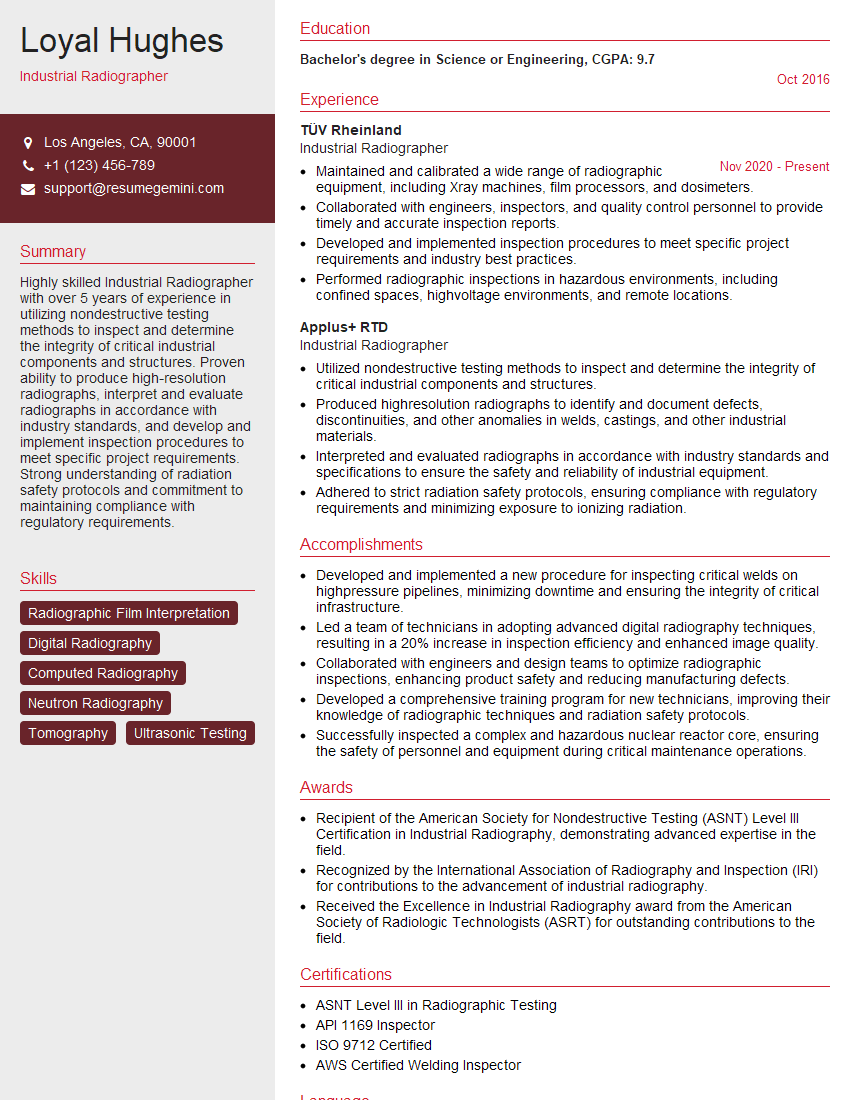
Industrial Radiographer Resume Sample
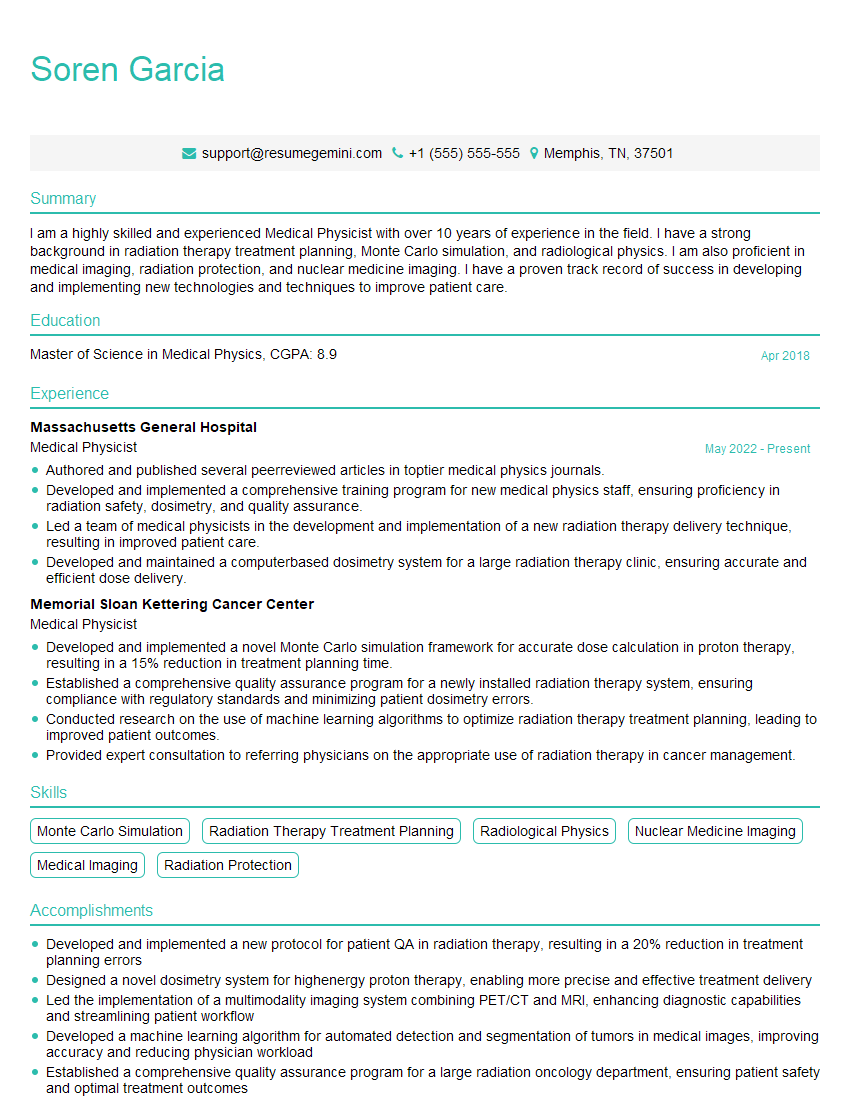
Medical Physicist Resume Sample
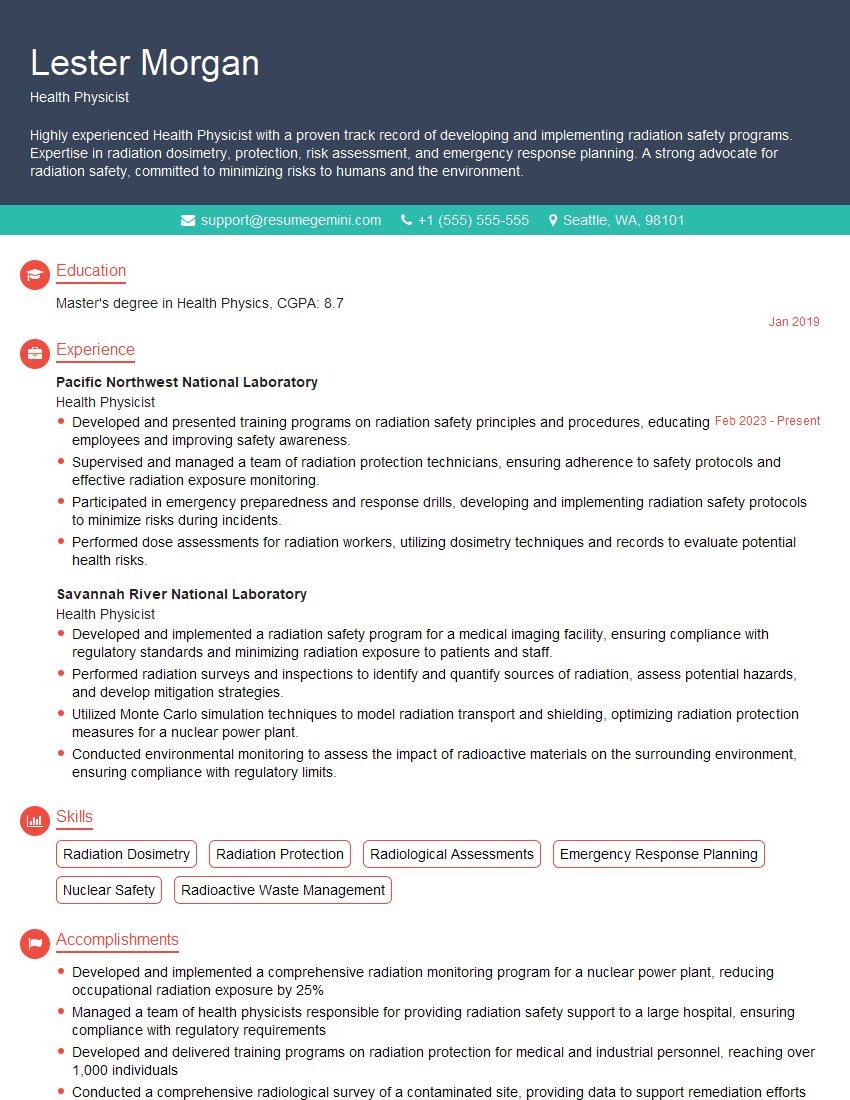
Health Physicist Resume Sample
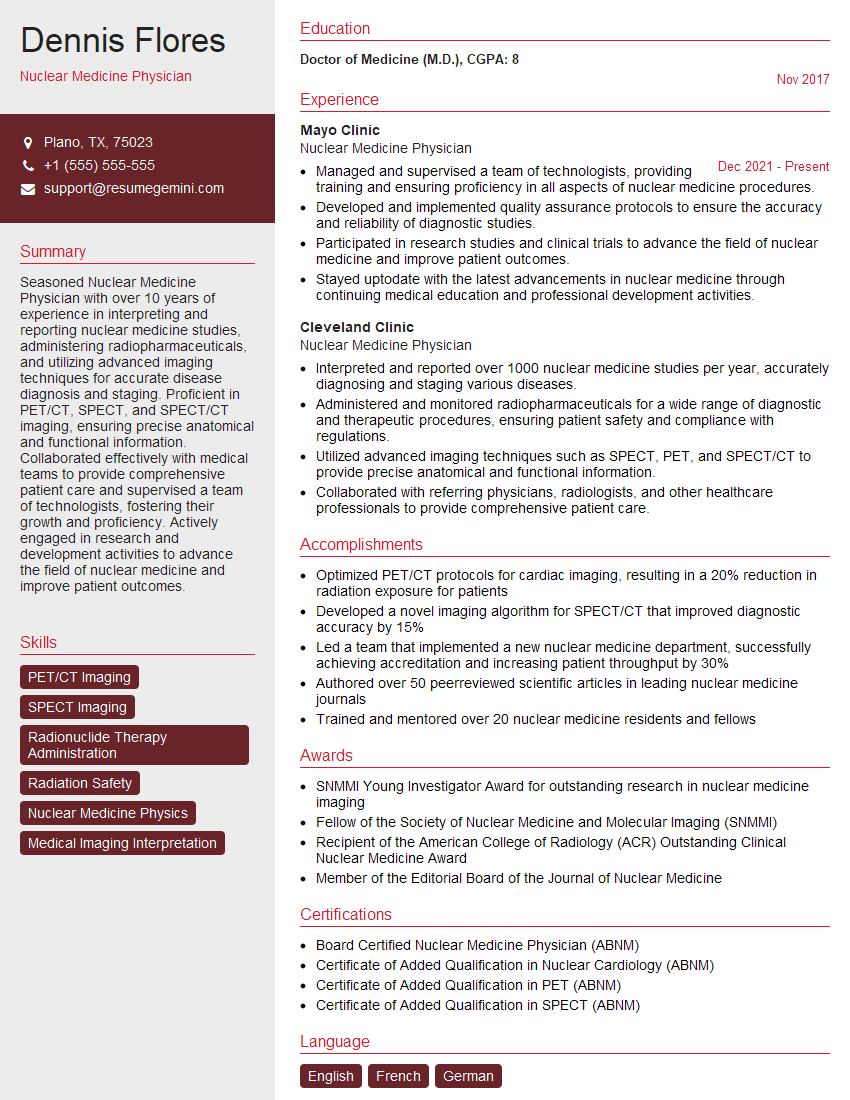
Nuclear Medicine Physician Resume Sample

Dosimetrist Resume Sample
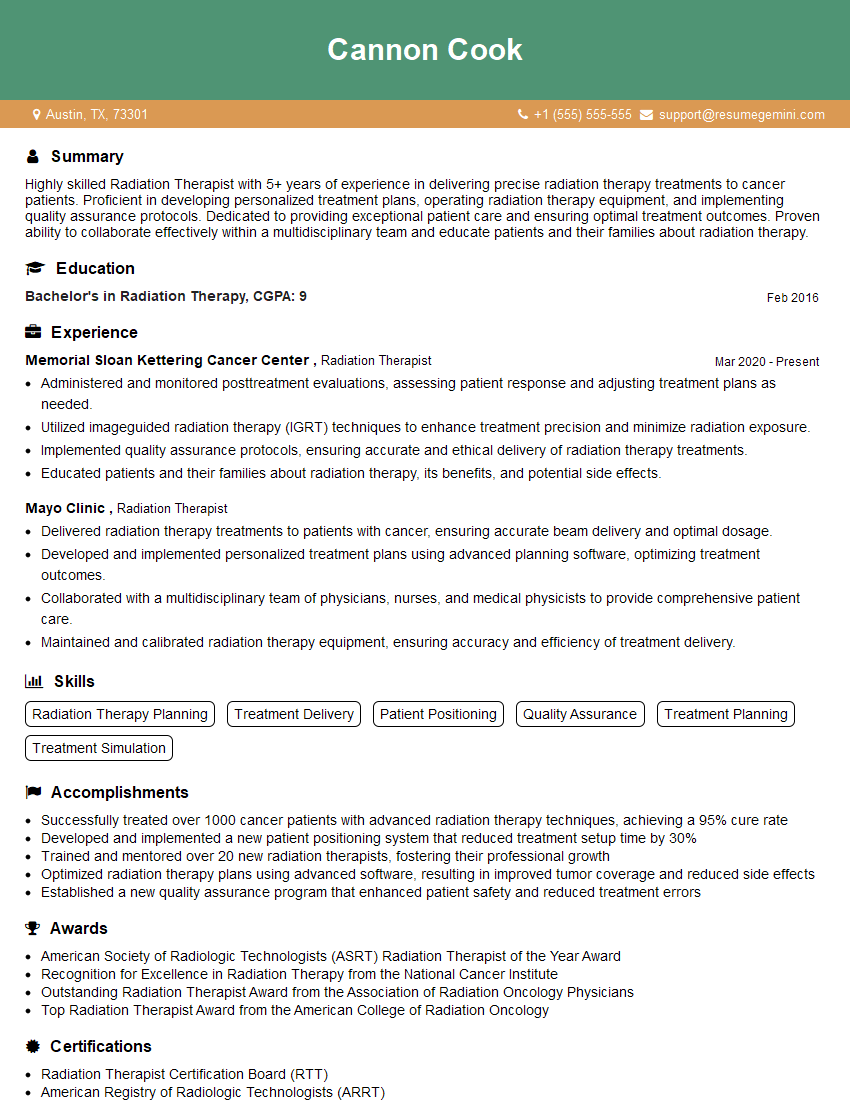
Radiation Therapist Resume Sample
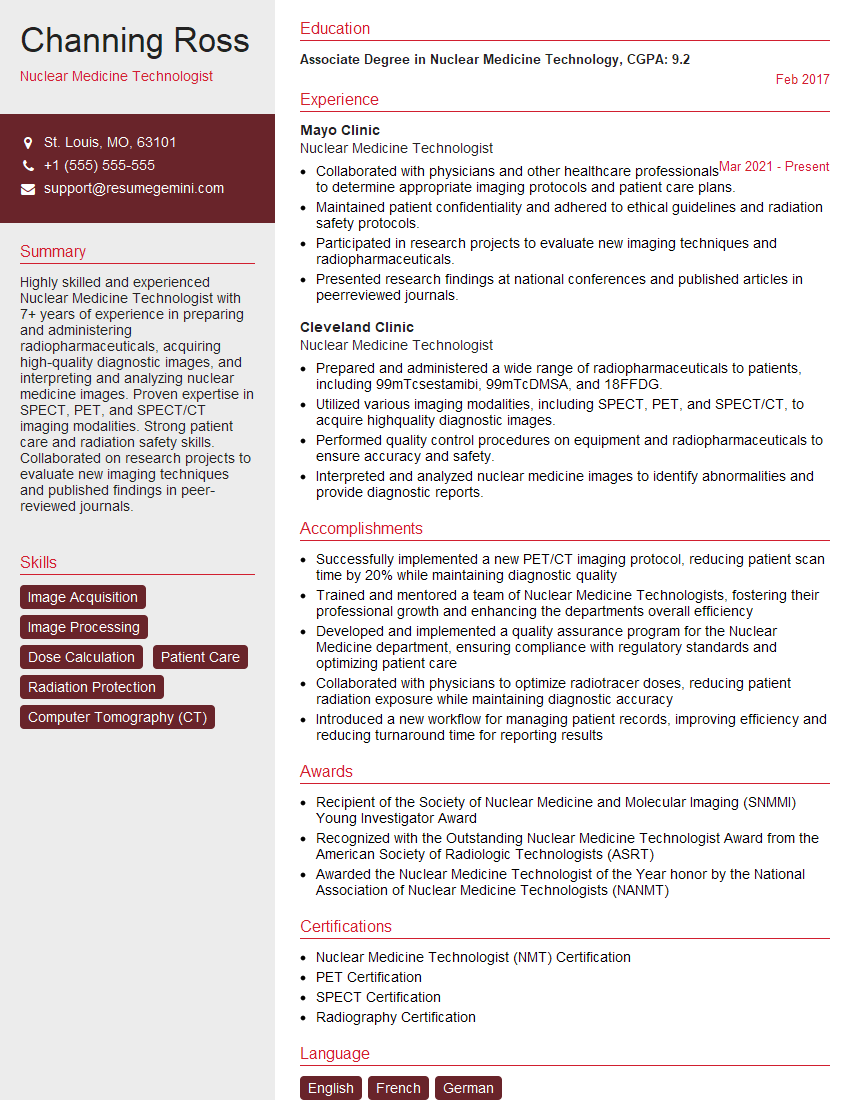
Nuclear Medicine Technologist Resume Sample

Radiation Safety Officer Resume Sample
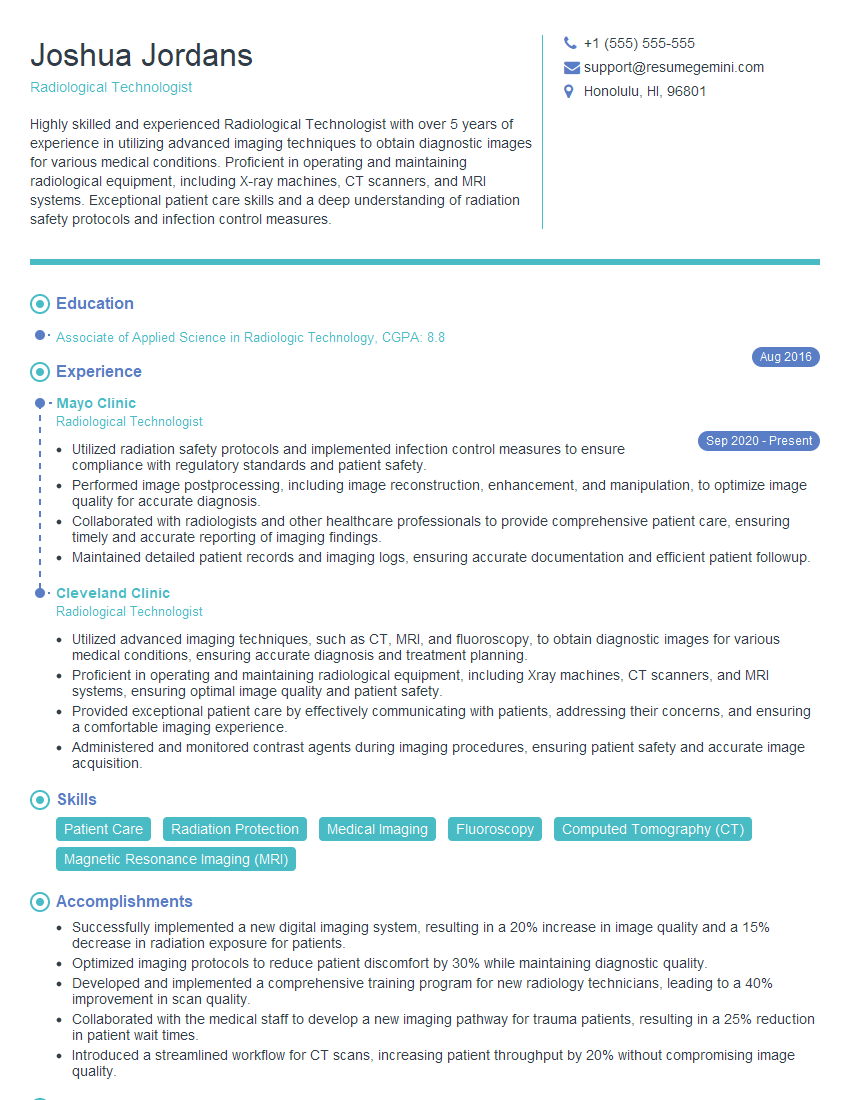
Radiological Technologist Resume Sample

Health Physics Technician Resume Sample
Explore more articles
Users Rating of Our Blogs
Share Your Experience
We value your feedback! Please rate our content and share your thoughts (optional).
What Readers Say About Our Blog
To the interviewgemini.com Webmaster.
Very helpful and content specific questions to help prepare me for my interview!
Thank you
To the interviewgemini.com Webmaster.
This was kind of a unique content I found around the specialized skills. Very helpful questions and good detailed answers.
Very Helpful blog, thank you Interviewgemini team.