Feeling uncertain about what to expect in your upcoming interview? We’ve got you covered! This blog highlights the most important Musician Performance interview questions and provides actionable advice to help you stand out as the ideal candidate. Let’s pave the way for your success.
Questions Asked in Musician Performance Interview
Q 1. Describe your experience with different musical genres.
My musical journey has spanned a diverse range of genres, allowing me to develop a versatile skillset. I’ve performed extensively in jazz, where improvisation and nuanced phrasing are paramount. Think of the intricate interplay between musicians in a bebop performance – that’s a key part of my experience. I’ve also worked extensively in classical music, honing my precision and technical proficiency, for instance, the demanding articulation and dynamics required in a Bach concerto. My experience also includes popular music, specifically rock and pop, which necessitates a focus on strong stage presence, audience engagement, and the ability to adapt to different performance styles. This broad experience allows me to bring unique perspectives to diverse musical projects.
- Jazz: Extensive experience in improvisation, phrasing, and ensemble playing.
- Classical: Proficient in reading complex scores, precise execution, and dynamic control.
- Pop/Rock: Skilled in stage performance, audience engagement, and adaptable playing styles.
Q 2. What software or digital audio workstations (DAWs) are you proficient in?
My proficiency in Digital Audio Workstations (DAWs) is crucial to my musical process, from composition to post-production. I’m highly proficient in Logic Pro X, which I use for recording, editing, mixing, and mastering. Its powerful MIDI capabilities are particularly useful for composing and arranging complex musical arrangements. I’m also comfortable with Ableton Live, especially for its strengths in live looping and electronic music production. Finally, my experience extends to Pro Tools, a widely used industry-standard DAW known for its robust features, particularly useful for professional recording sessions.
- Logic Pro X: Primary DAW for composition, recording, mixing, and mastering.
- Ableton Live: Used for live looping, electronic music production, and experimental composition.
- Pro Tools: Experienced in utilizing its features for professional recording and mixing.
Q 3. Explain your approach to music theory and its practical application.
Music theory is not just abstract knowledge for me; it’s the underlying framework upon which I build my musical expression. Understanding harmony, melody, rhythm, and form allows me to craft compelling musical narratives. For instance, a strong understanding of chord progressions enables me to create interesting harmonic movement, adding depth and emotional impact to my compositions. Similarly, a grasp of counterpoint allows me to write interesting melodic lines that intertwine effectively. I don’t just apply theory passively; I actively experiment, breaking rules and exploring unconventional approaches to achieve unique results. My practical application of theory often involves analyzing existing works, identifying the theoretical structures, and then using that understanding to inform my own creative process. This theoretical foundation allows me to improvise with fluency and confidence. It’s like having a solid grammatical foundation – you can then use it to write compelling stories in any genre.
Q 4. How do you handle stage fright or performance anxiety?
Stage fright is a common experience for performers, but I’ve developed strategies to manage it effectively. Preparation is key – thorough rehearsal eliminates much of the uncertainty and allows for a smooth performance. Furthermore, I focus on deep breathing exercises before going on stage. This helps calm my nerves and center my focus. Visualization techniques, where I mentally rehearse the performance successfully, also contribute significantly to reducing anxiety. Finally, I’ve found that connecting with the audience and focusing on sharing my music helps to shift my focus from my nerves to the joy of performance. Think of it like athletes practicing their routines: it’s not about eliminating nerves; it’s about managing them so they don’t affect performance.
Q 5. Describe your experience with improvisation and its role in your performances.
Improvisation is integral to my musical identity, especially within the context of jazz and certain contemporary styles. It’s a spontaneous creative process, requiring deep listening and a strong understanding of harmony and rhythm. A good example would be responding to a fellow musician’s solo in a jazz setting. My improvisation style blends technical proficiency with emotional expression – I aim to communicate a story or emotion through spontaneous musical phrases. Improvisation isn’t just about random notes; it involves making musical decisions in real time based on musical context and interaction with fellow musicians. It’s like having a musical conversation; a back-and-forth exchange of ideas expressed through sound. It requires both technical skills and creative intuition.
Q 6. How do you adapt your performance based on the audience and venue?
Adapting to different audiences and venues is critical. I consider the setting – an intimate club versus a large concert hall – and tailor my performance accordingly. For instance, a smaller, more intimate setting might call for a more subdued performance, perhaps focusing on quieter, more introspective pieces. A large concert hall might warrant a more amplified, energetic approach. Audience demographics also influence my choices. I adjust my song selection and presentation style to connect better with the audience’s background and preferences. It’s about reading the room and tailoring the experience to make it resonate with the specific audience in that specific setting. It’s like speaking to a group of experts versus speaking to a group of children: you adjust your language and presentation accordingly.
Q 7. What is your experience with music notation software and reading scores?
I am proficient in using music notation software like Sibelius and Finale. I’m comfortable reading and transcribing scores, a skill that’s essential for performing classical and other genres that rely heavily on written music. My ability to decipher and interpret musical notation is crucial for accurate performance and understanding the composer’s intent. It allows me to precisely execute complex musical passages and nuances often lost in improvisation-heavy genres. This ability also assists in arranging and adapting scores for different instrumentations. It’s like having a blueprint for constructing a musical performance. Accurate reading and comprehension are crucial for a flawless execution.
Q 8. Describe your experience with sound reinforcement and audio engineering.
My experience with sound reinforcement and audio engineering spans over a decade, encompassing both live performance and studio recording. I’m proficient in setting up and operating PA systems, including microphone placement, equalization (EQ), compression, and effects processing. I understand the importance of achieving a balanced mix, ensuring clarity and optimal sound for the audience. I’ve worked with various consoles, from smaller analog mixers to larger digital systems like Yamaha digital mixing consoles and Allen & Heath systems. In the studio, I’ve assisted engineers in tracking, mixing, and mastering, gaining valuable knowledge about signal flow, microphone techniques, and DAW software (Digital Audio Workstation) like Pro Tools and Logic Pro X. For example, during a recent outdoor concert, I successfully troubleshot a feedback issue by carefully adjusting the gain staging and using a notch filter to eliminate the offending frequency. This involved identifying the problematic frequency using an equalizer and then carefully attenuating it to eliminate the feedback without negatively impacting the overall sound.
Q 9. How do you maintain your instrument and equipment?
Maintaining my instrument and equipment is crucial for consistent performance. For my [insert instrument type, e.g., guitar], this involves regular cleaning, string changes (every 2-3 weeks depending on playing), and fretboard lubrication. I also have it inspected by a professional luthier annually for any potential issues. My audio equipment, such as microphones and cables, is meticulously stored in protective cases when not in use. I regularly inspect cables for damage and replace them as needed. Microphones are kept clean and free from dust. This preventative maintenance ensures my equipment operates optimally, minimizing the risk of malfunctions during performances. For instance, during a recording session, a faulty microphone cable caused a significant disruption. After that, I began a more rigorous inspection schedule, eliminating similar problems in the future.
Q 10. Explain your rehearsal techniques and preparation strategies.
My rehearsal techniques are centered around efficiency and detail. I start with a thorough review of the musical score, identifying any challenging passages or transitions. I then break down the piece into smaller, manageable sections, practicing each one until it’s mastered. I focus on dynamics, articulation, phrasing, and timing, paying close attention to the nuances of the music. I often record myself during rehearsals to identify areas needing improvement. Collaboration is key – when working with others, we establish clear communication, focusing on listening to each other and working towards a unified interpretation of the music. For instance, when preparing for a complex jazz arrangement, we spent several rehearsals focused solely on the challenging improvisation sections, gradually building confidence and developing our individual and collective improvisation skills. This meticulous approach ensures a polished and confident performance.
Q 11. What are your strengths and weaknesses as a musician?
My strengths lie in my musicality, adaptability, and technical proficiency. I possess a strong sense of rhythm and timing, and I’m able to quickly learn and adapt to new musical styles. I also have a deep understanding of music theory and harmony, allowing me to approach pieces with a comprehensive understanding. My weakness, however, is sometimes struggling with stage fright, particularly in high-pressure environments. To mitigate this, I practice mindfulness techniques and visualization exercises to build my confidence. I am working on overcoming stage fright by practicing more consistently in front of small audiences.
Q 12. Describe your collaboration experience with other musicians.
I value collaboration immensely. My experience includes working with diverse musicians in various genres. Effective collaboration hinges on clear communication, mutual respect, and a shared vision. I find that establishing a strong foundation of trust and understanding, combined with open communication about individual contributions and the overall direction of the music, leads to more creative and cohesive outcomes. For instance, during a recent project, I worked with a composer to develop a unique sound that integrated both acoustic and electronic elements – achieving a truly innovative outcome through open dialogue and willingness to experiment. Compromise and respecting the artistic input of others are essential.
Q 13. How do you handle constructive criticism and feedback?
I welcome constructive criticism and feedback as opportunities for growth. I approach feedback with an open mind, actively listening to the points being made and seeking to understand the reasoning behind them. I find that it’s helpful to clarify any points of confusion and ask for specific examples. While I might not agree with every piece of feedback, I always consider its value and use it to refine my performance. For instance, feedback on my stage presence led me to incorporate more engaging techniques, resulting in an improved audience connection. The ability to objectively evaluate criticism, even when challenging, is pivotal for continuous improvement.
Q 14. How do you approach learning new musical pieces or styles?
Learning new musical pieces or styles is a journey of exploration and understanding. I start by listening to recordings of the piece multiple times, paying attention to the overall structure, melody, harmony, and rhythm. I then break down the piece into smaller sections, working on each section individually before integrating them. I use a combination of techniques such as transcription (writing out the music), ear training, and analysis to fully grasp the piece. When learning a new style, I immerse myself in the genre, listening to various artists and studying their techniques. I may also seek out lessons or workshops to acquire the necessary skills. For example, learning to play flamenco guitar required dedicated study of techniques like rasgueado and alzapúa, incorporating detailed rhythmic patterns specific to the genre. The process is iterative, requiring persistent practice and refining the understanding of the music.
Q 15. Describe your experience with sight-reading music.
Sight-reading, the ability to perform music at first glance, is a fundamental skill for any professional musician. It’s not just about reading notes; it’s about understanding the context, rhythm, dynamics, and phrasing all simultaneously. My experience spans years of practice, ranging from simple melodies to complex orchestral scores. I approach sight-reading systematically, first scanning the piece for key signatures, time signatures, and overall structure. Then, I focus on the melody and rhythm, gradually adding harmony and articulation. Regular practice with varied musical styles and levels of complexity is key. For example, I regularly dedicate time to sight-reading excerpts from unfamiliar composers or pieces outside my usual repertoire to maintain agility and versatility. This constant engagement helps me develop a quick understanding of a piece’s essential elements even when faced with a new piece for the first time.
I find that active listening is also crucial. Even before I begin to play, I try to hear the piece in my head, mentally translating the visual information into sound. This mental rehearsal helps immensely in avoiding stumbling blocks when I perform the music for the first time.
Career Expert Tips:
- Ace those interviews! Prepare effectively by reviewing the Top 50 Most Common Interview Questions on ResumeGemini.
- Navigate your job search with confidence! Explore a wide range of Career Tips on ResumeGemini. Learn about common challenges and recommendations to overcome them.
- Craft the perfect resume! Master the Art of Resume Writing with ResumeGemini’s guide. Showcase your unique qualifications and achievements effectively.
- Don’t miss out on holiday savings! Build your dream resume with ResumeGemini’s ATS optimized templates.
Q 16. What are your goals for your musical career?
My musical goals are multifaceted. Short-term, I aim to solidify my position as a sought-after performer in [mention specific genre or field, e.g., classical chamber music] by securing consistent engagements at prestigious venues and festivals. I’m also focused on expanding my repertoire to include a wider range of styles and composers while refining my existing skills. Long-term, I envision myself leading innovative musical projects that blend different artistic disciplines, perhaps creating multimedia performances or composing my own works that combine my instrumental expertise with my passion for [mention related fields such as film scoring or electronic music]. Collaborating with other established artists is also a key aspect of my aspirations.
Ultimately, my goal is to leave a lasting impact on the musical landscape, whether through performance, composition, or education. The specific pathways might evolve, but the driving force behind my work remains the desire to share the power and beauty of music with audiences.
Q 17. How do you promote your musical work and build your brand?
Building a musical brand involves a multi-pronged approach that balances online and offline strategies. Online, I maintain a strong presence on social media platforms like Instagram, Facebook, and YouTube, regularly posting high-quality photos and videos of my performances and behind-the-scenes glimpses of my work. A professional website with high-resolution images, biographical information, and upcoming event listings is crucial. Furthermore, I actively engage with my audience, responding to comments and messages. I also utilize streaming platforms such as Spotify and Apple Music to make my recordings available.
Offline, networking is key. I attend concerts, workshops, and industry events to connect with other musicians, promoters, and potential collaborators. Building relationships with local venues and organizations ensures opportunities for performances. Finally, I believe in the power of direct engagement. A well-crafted email list allows me to directly communicate with fans about upcoming concerts and new releases.
Consistency is vital across all platforms; regular updates maintain audience engagement and reinforce my brand identity.
Q 18. What is your understanding of copyright and music licensing?
Copyright and music licensing are crucial aspects of the music industry that protect the rights of creators. Copyright protects original musical works – melodies, harmonies, lyrics – granting the creator exclusive rights to reproduce, distribute, display, and perform their work. This protection lasts for a significant period (typically the life of the author plus 70 years). Music licensing allows others to legally use copyrighted music in various contexts, such as film, television, advertising, or live performances. Different licenses exist, with varying degrees of permission and associated fees.
Understanding these aspects is critical for any musician. Registering your work with relevant copyright organizations is the first step to protecting your intellectual property. Knowing the various licensing options and navigating the legal framework enables you to collaborate legally and effectively with others. It is essential to carefully examine licensing agreements and seek legal advice when necessary to ensure compliance.
Q 19. Describe your experience with recording studio environments.
My experience in recording studios ranges from small, independent facilities to large, state-of-the-art studios. I’ve worked with various engineers and producers, gaining experience with diverse recording techniques and technologies. I understand the importance of preparation before entering the studio – having a clear vision for the final product, being familiar with the technology, and practicing the piece thoroughly. In the studio itself, effective communication with the engineer is crucial. The collaborative aspect of studio recording demands understanding technical specifications like microphone placement, levels, and signal processing. I am comfortable with various recording software, digital audio workstations, and other equipment.
For example, when recording a string quartet, understanding microphone techniques for capturing the nuances of each instrument’s timbre is essential. The ability to adjust my performance based on the engineer’s feedback is also key to creating a polished, professional recording.
Q 20. How do you manage your time effectively when working on multiple projects?
Juggling multiple projects requires a structured approach to time management. I use a combination of digital and analog tools. I begin by outlining all my commitments, categorizing them by priority and deadline. A digital calendar is essential for scheduling rehearsals, performances, recording sessions, and other appointments. I break down large projects into smaller, manageable tasks, assigning specific times for each. For example, if composing a new piece, I might allocate specific days for melody writing, harmony, orchestration, and revisions. This compartmentalization enhances focus and prevents feeling overwhelmed.
Beyond scheduling, prioritizing self-care is important. Sufficient rest, exercise, and breaks help maintain creativity and productivity. Regularly reviewing my schedule and making adjustments as needed is crucial for remaining flexible and efficient. This system allows me to adapt to unforeseen changes, ensuring effective utilization of my time.
Q 21. How do you handle technical difficulties during a performance?
Technical difficulties during a performance are inevitable. My approach is two-pronged: preparation and improvisation. Prior to a performance, I conduct thorough equipment checks, ensuring all instruments are properly tuned and functioning correctly. I also rehearse extensively in the performance space, if possible, to familiarize myself with the acoustics and identify any potential issues. During the performance, I maintain composure and assess the problem quickly. If possible, I try to subtly work around the issue; for example, if a string breaks, I might skip the affected passage or improvise a short, suitable replacement. If the problem is significant, I might pause briefly to address the issue, if it’s feasible, or enlist the help of stage technicians. My experience has taught me that a calm and professional demeanor is as important as the technical solution. It helps maintain the flow of the performance and reassures the audience.
Q 22. Describe your experience performing in different settings (e.g., clubs, concerts, studios).
My performance experience spans a wide range of settings, each demanding a unique approach. In intimate club settings, the focus is on direct audience interaction, often incorporating improvisational elements and a more conversational feel. The energy is high, but the atmosphere is close and personal. I’ve played everything from smoky jazz clubs with a small trio to bustling pubs with a full band. Concert performances, on the other hand, require a larger-scale presentation. These events demand meticulous planning, stage presence, and precise execution of the setlist. I’ve performed in large concert halls, outdoor festivals, and even some smaller theatre venues, adjusting my performance accordingly to suit the space and the audience’s expectations. Studio work is a completely different beast; it’s focused on technical precision and capturing the perfect take. This involves a deep understanding of microphone techniques, recording equipment, and the intricacies of layering and mixing. My work in studios ranges from recording albums to contributing to film scores and commercial jingles.
Q 23. Explain your process for composing or arranging music.
My compositional and arrangement process is iterative and often starts with a core idea – a melody, a rhythmic figure, or even a specific emotional feeling I want to evoke. I might begin with a simple piano sketch, exploring different harmonic progressions and melodic contours. Then, I’ll flesh it out by adding instrumentation, considering the timbre and textures of different instruments to create a sonic landscape. I frequently use digital audio workstations (DAWs) like Logic Pro X or Ableton Live to experiment with different sounds and arrange the parts. This digital environment allows for extensive layering, editing, and refining of the composition. Throughout this process, I continually listen back, making adjustments to ensure the music flows smoothly, maintains its emotional integrity, and meets the overall artistic vision. A crucial element is feedback – I often share my work with trusted colleagues and collaborators to gain fresh perspectives and refine the piece before finalizing it.
Q 24. What is your experience with music education and teaching?
My music education background significantly shapes my teaching philosophy. I hold a Bachelor of Music degree from [University Name], and I’ve had extensive experience teaching private lessons, group workshops, and masterclasses. My approach emphasizes a holistic understanding of music, encompassing theory, technique, and creative expression. I believe in fostering a supportive and encouraging learning environment, tailoring my teaching methods to suit individual student needs and learning styles. For example, I might use different methods for a young student starting out compared to an advanced student who is ready to explore more complex concepts. I find that understanding the student’s goals is key in building an effective plan. This ensures the education is practical, enjoyable, and leads to significant progress.
Q 25. How do you ensure your performances are engaging and captivating?
Engaging and captivating performances hinge on a multifaceted approach. Firstly, it’s about connecting with the audience. This involves eye contact, storytelling, and sharing the emotion behind the music. I often weave anecdotes into my performances, giving context and depth to the pieces I play. Secondly, it’s about the performance itself. A well-rehearsed performance with strong dynamics, varied tempos, and clear articulation creates excitement. I also pay careful attention to the visual aspects of the performance. This might involve using lighting effects, stage movement, or even incorporating visual elements into the show. Finally, it’s vital to read the audience and adapt my performance to their energy level. If the audience is receptive, I might extend improvisational sections or interact more directly with the crowd. If the audience is quieter, I might choose a more subdued and introspective setlist.
Q 26. What is your approach to practicing and maintaining your skills?
Maintaining my musical skills requires consistent and disciplined practice. My practice routine is structured, combining technical exercises with musical repertoire. I begin with technical warm-ups to improve dexterity and coordination. Then, I work on specific pieces, focusing on areas that require improvement. This might involve slow practice to refine details, or working on challenging passages repeatedly until they are fluent. I also set aside time for improvisation and exploring new musical ideas, keeping my playing fresh and creative. Regular performance keeps me sharp and allows me to test my skills in a real-world setting. Ultimately, the approach involves a balance between focused technical work and creative exploration to maintain both mastery and inspiration.
Q 27. Describe your understanding of music history and its influences on your style.
My understanding of music history profoundly influences my style. I’ve studied the evolution of various genres, from classical masters like Bach and Mozart to the innovations of jazz giants like Miles Davis and Charlie Parker. This historical perspective allows me to appreciate the evolution of musical forms, harmonies, and performance techniques. I find that understanding the context of a particular piece enhances my interpretation and allows me to bring a deeper understanding to my own playing. For example, my work often incorporates elements of both classical harmony and improvisational jazz techniques, creating a unique blend that reflects my broad musical background. I believe a strong historical understanding enables more informed artistic choices and enriches creative expression.
Q 28. How do you balance creative expression with technical proficiency?
Balancing creative expression with technical proficiency is a constant process. Technical skills form the foundation, providing the tools for expressing musical ideas. Without the necessary technique, creative ideas might remain unrealized. However, technical mastery alone is insufficient. Creativity lies in how these technical skills are used to convey emotion, tell stories, and evoke specific feelings. My approach involves finding the sweet spot between technical precision and artistic freedom. I strive for a seamless integration of the two, where technique serves as a vehicle for creative expression rather than a constraint. For instance, mastering a complex passage allows me to convey a certain level of emotional intensity or nuance that wouldn’t be possible with inadequate technical skills. The goal is to make the technical aspect invisible to the listener, allowing them to focus on the emotion and artistry of the performance.
Key Topics to Learn for Musician Performance Interview
- Musicality and Interpretation: Understanding and conveying the composer’s intent, stylistic nuances, and emotional depth within a performance. Consider how your choices enhance the overall message.
- Technical Proficiency: Demonstrating mastery of your instrument, including accurate intonation, rhythmic precision, and articulation. Be prepared to discuss your practice techniques and how you approach technical challenges.
- Stage Presence and Presentation: Projecting confidence, charisma, and connecting with your audience. Discuss experiences where you’ve engaged an audience and how you adapted your performance to different venues or situations.
- Repertoire and Selection: Understanding the appropriate repertoire for different contexts (auditions, concerts, specific venues). Be ready to discuss your repertoire choices and the reasoning behind them.
- Collaboration and Ensemble Work: (If applicable) Highlighting your ability to work effectively within an ensemble, communicate musical ideas, and contribute to a cohesive performance. Discuss roles you’ve played in a group setting.
- Improvisation and Creativity: (If applicable) Demonstrating your ability to improvise, create original musical ideas, and adapt to unexpected situations. Discuss how improvisation enhances your performance or composition.
- Music Theory and Analysis: A strong understanding of music theory enables insightful interpretation and critical self-evaluation. Be prepared to discuss relevant theoretical concepts related to your chosen repertoire.
- Problem-Solving in Performance: Addressing unexpected challenges during a performance (technical issues, memory lapses). Explain your strategies for maintaining composure and recovering gracefully.
Next Steps
Mastering musician performance is crucial for career advancement, opening doors to diverse opportunities in orchestras, ensembles, solo performances, teaching, and more. A strong resume is your first impression – make it count! Craft an ATS-friendly resume that effectively showcases your skills and experience to maximize your job prospects. ResumeGemini is a trusted resource that can help you build a professional, impactful resume, tailored to highlight your unique abilities as a musician. Examples of resumes specifically designed for musician performance professionals are available to guide you.
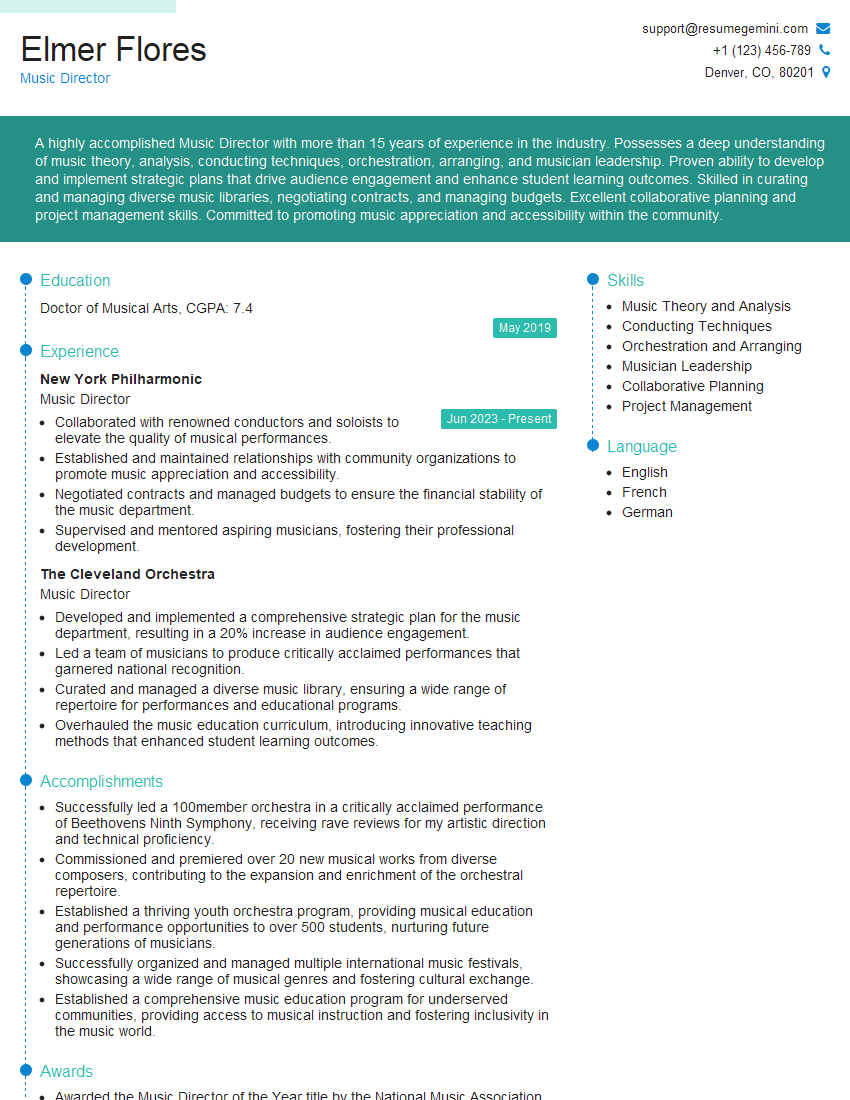
Music Director Resume Sample
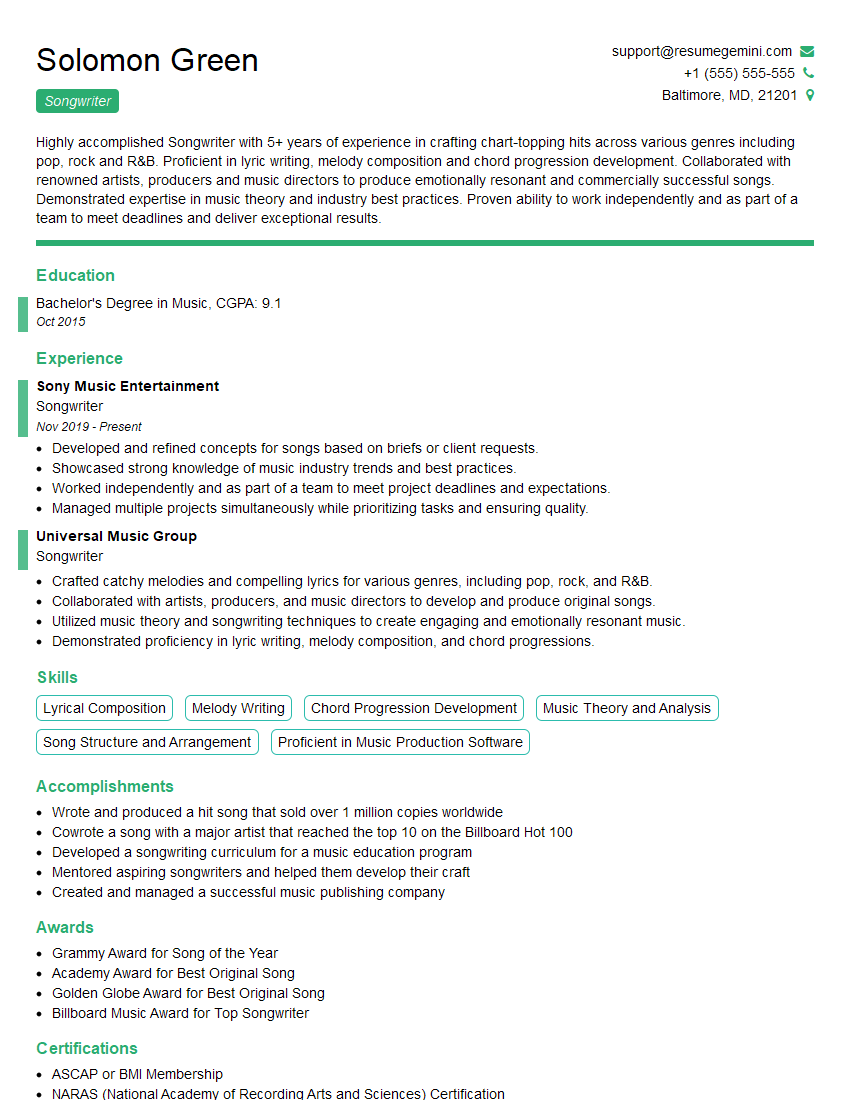
Songwriter Resume Sample
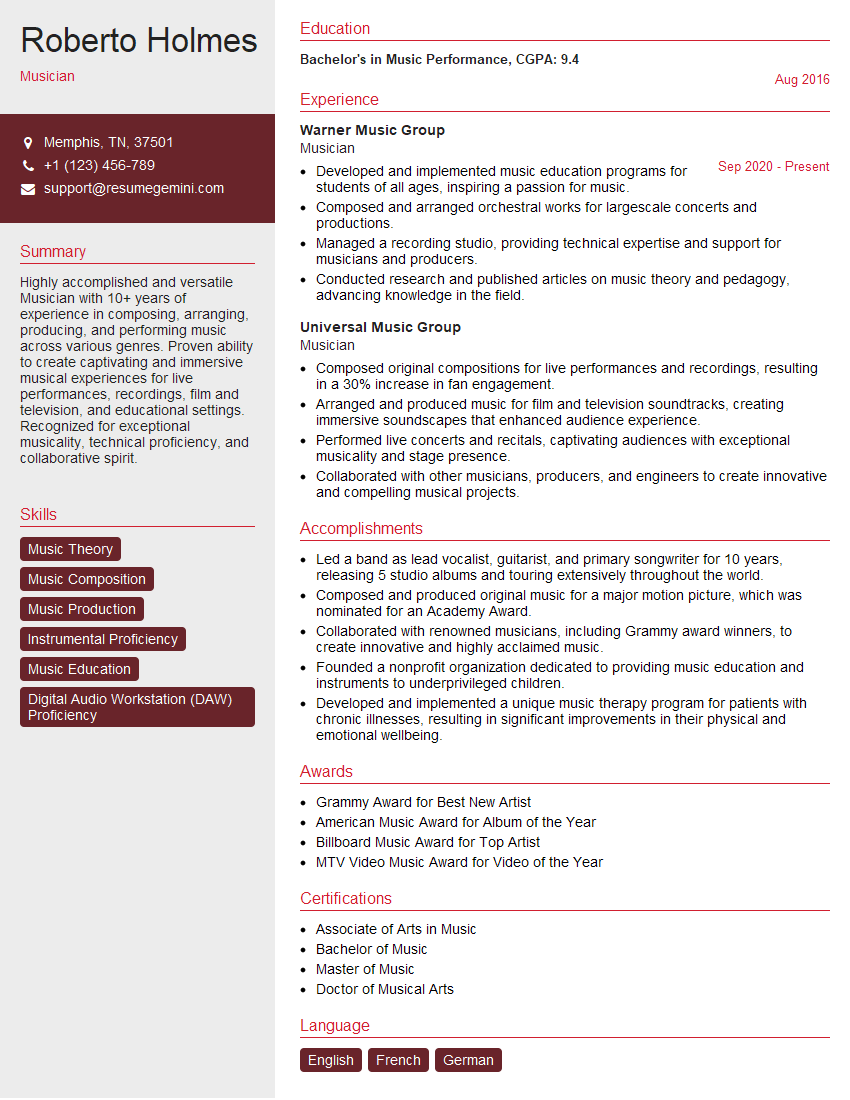
Musician Resume Sample
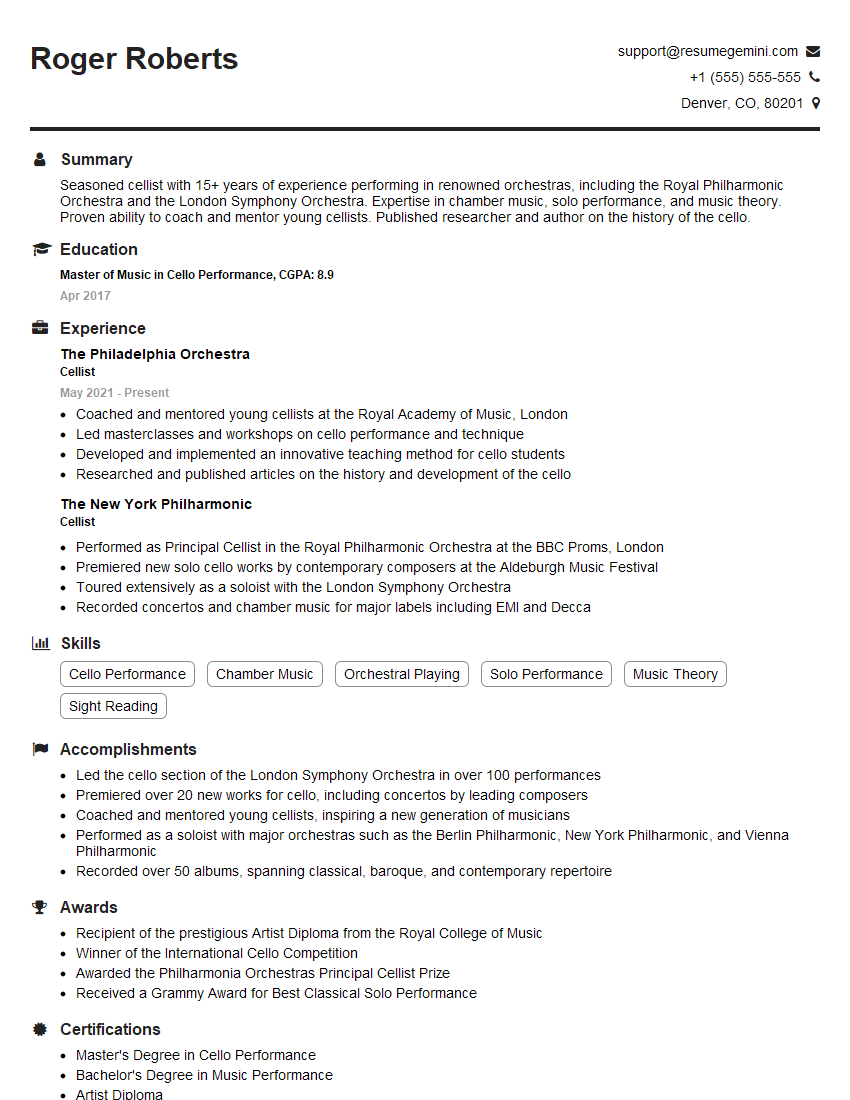
Cellist Resume Sample
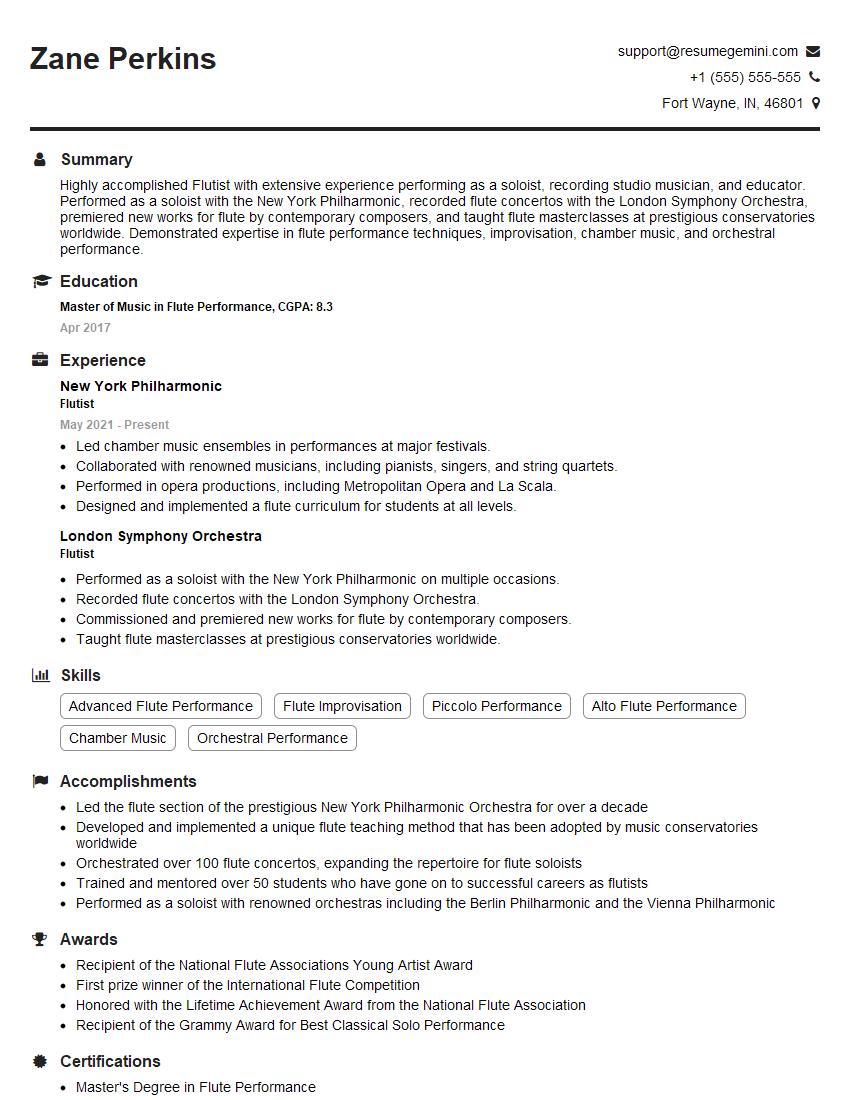
Flutist Resume Sample
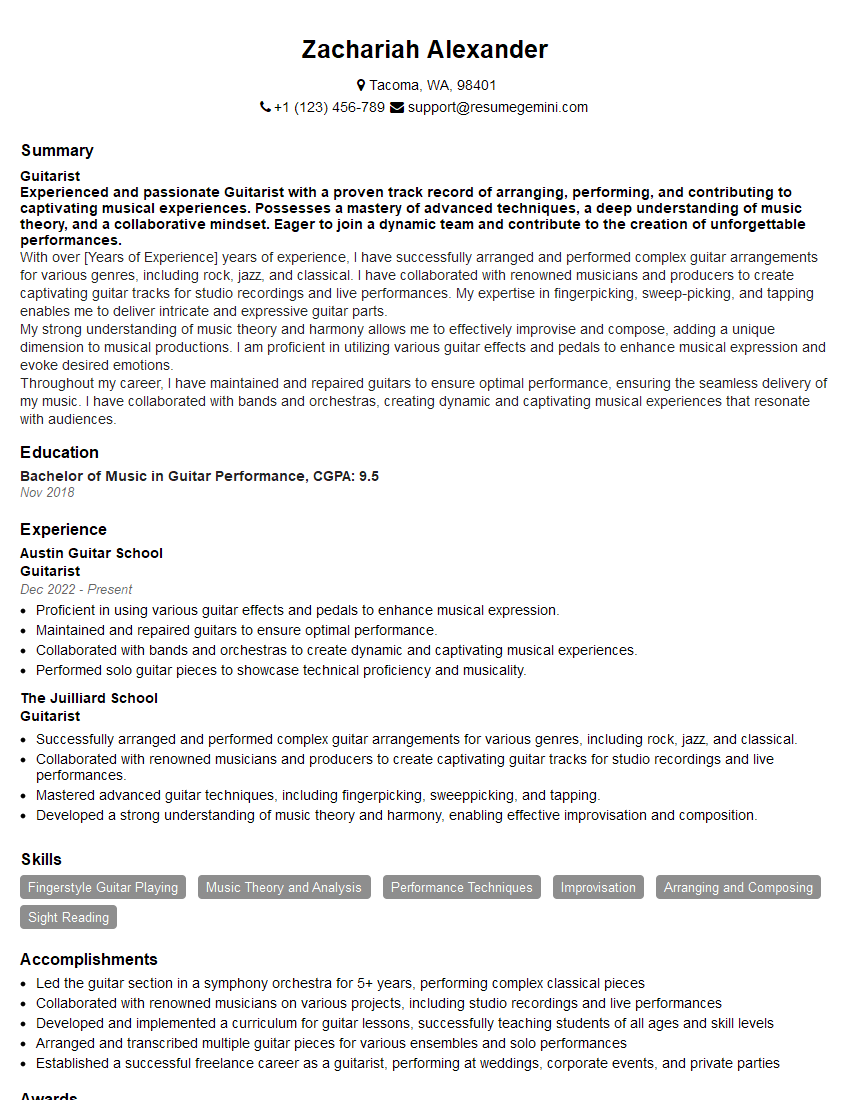
Guitarist Resume Sample
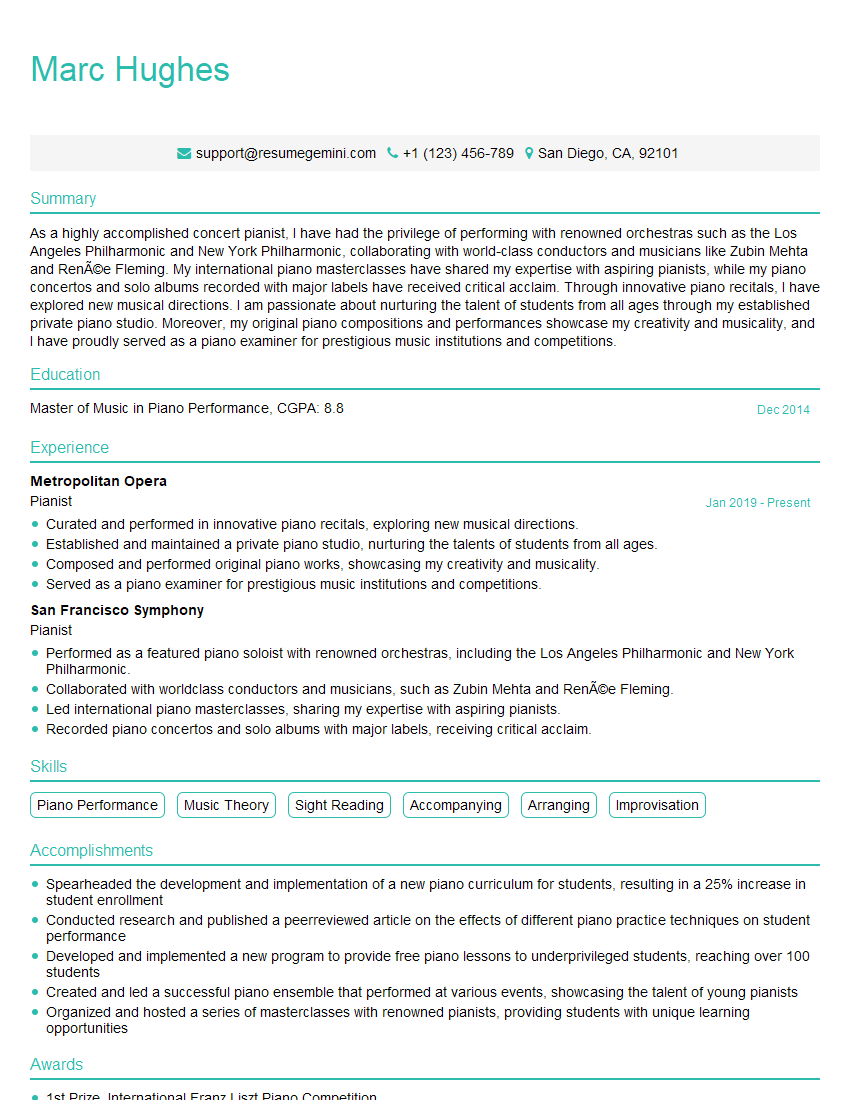
Pianist Resume Sample
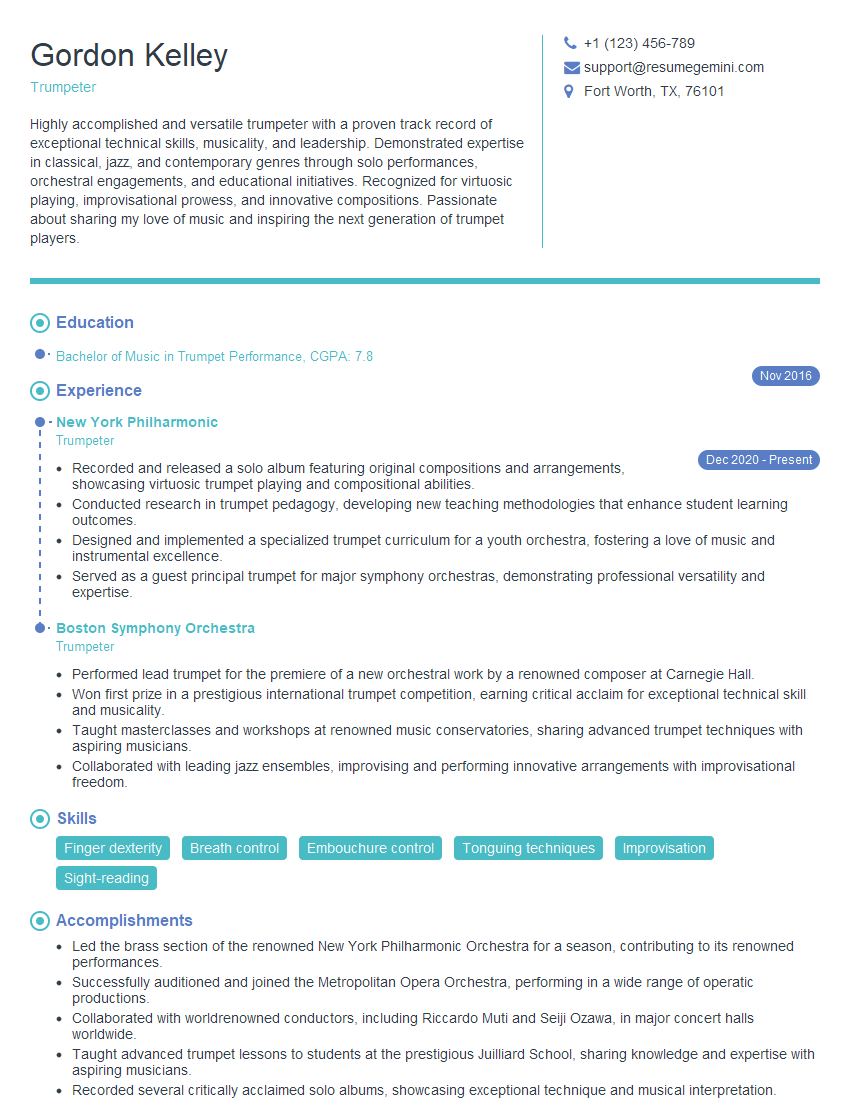
Trumpeter Resume Sample
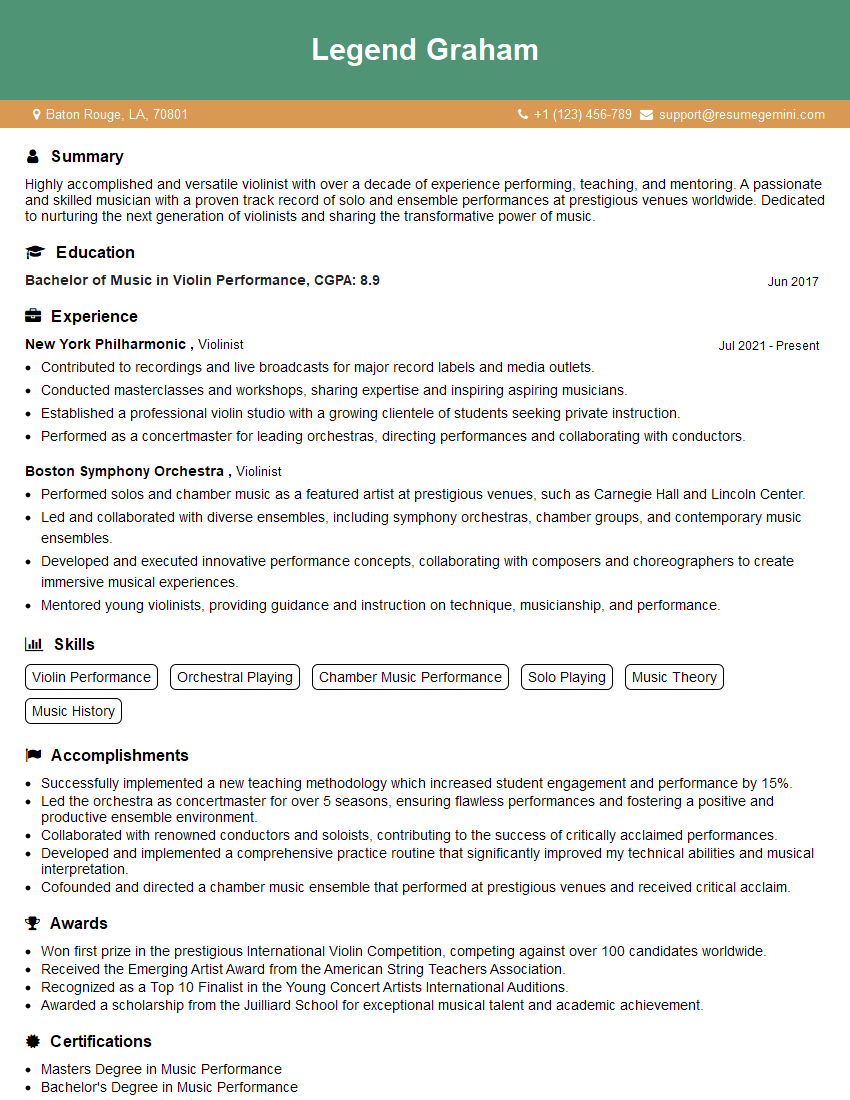
Violinist Resume Sample
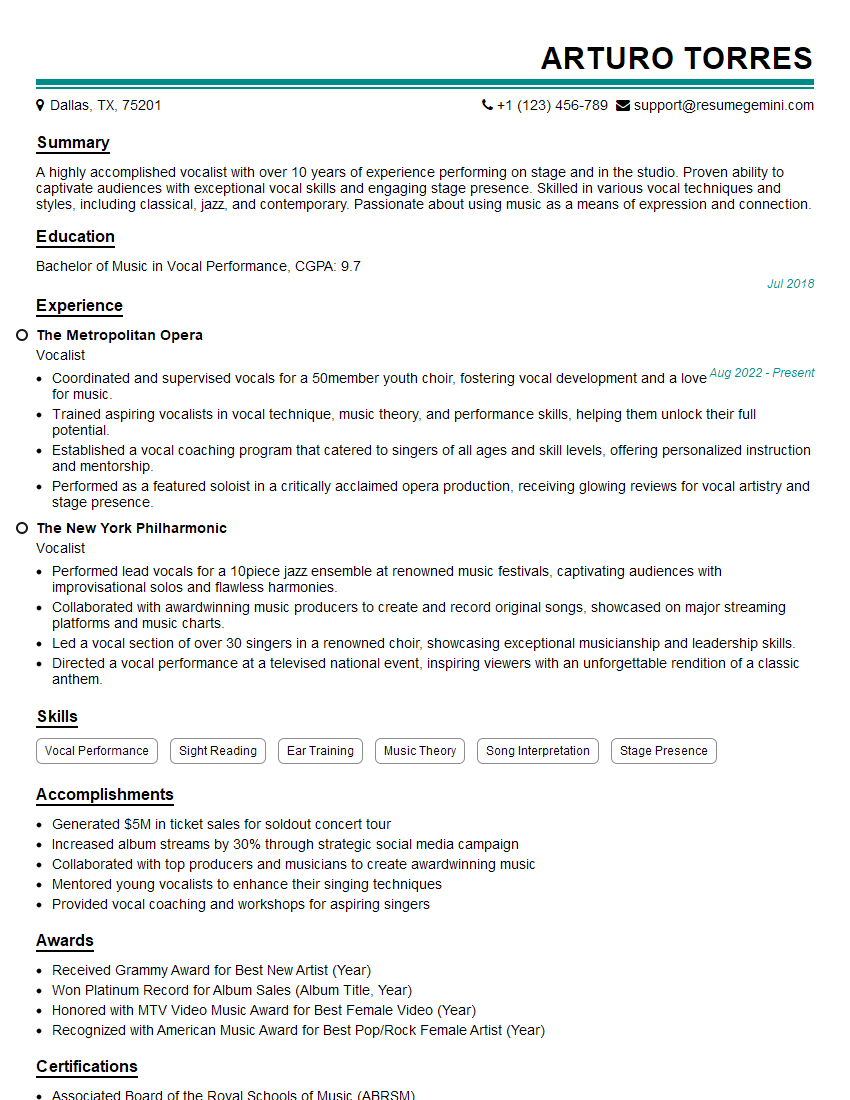
Vocalist Resume Sample
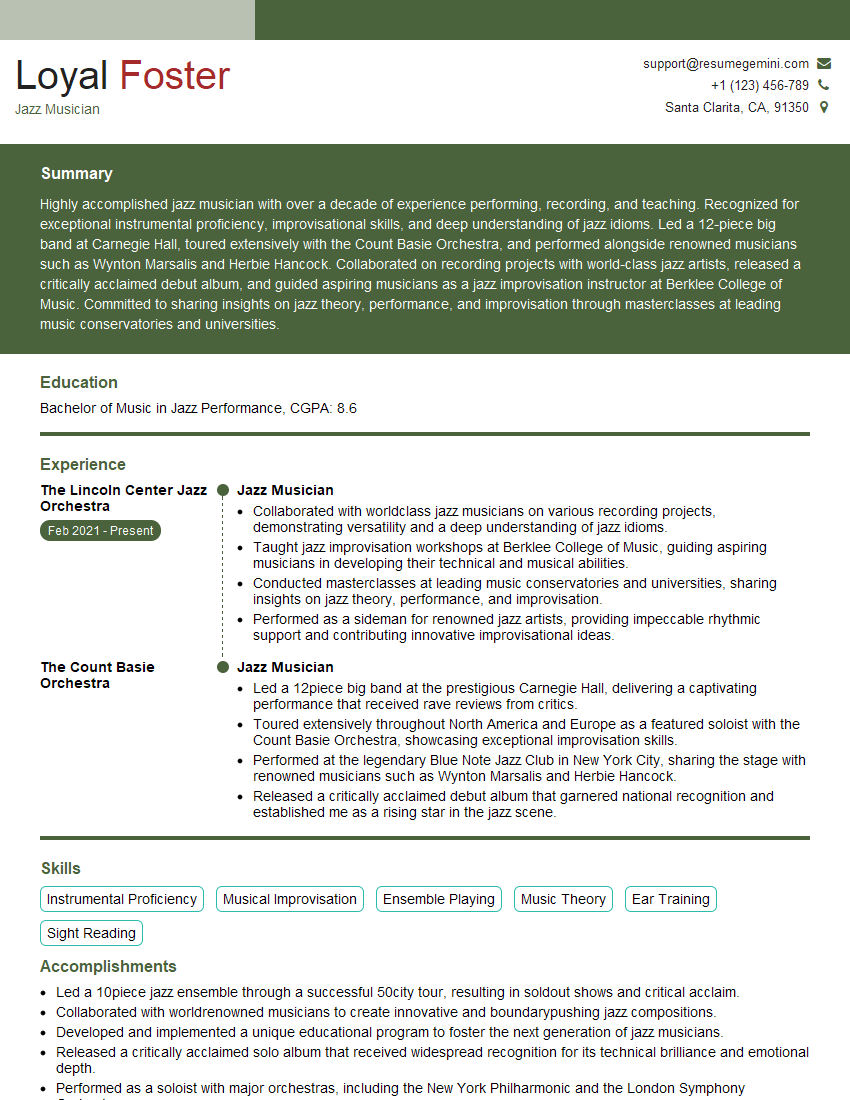
Jazz Musician Resume Sample
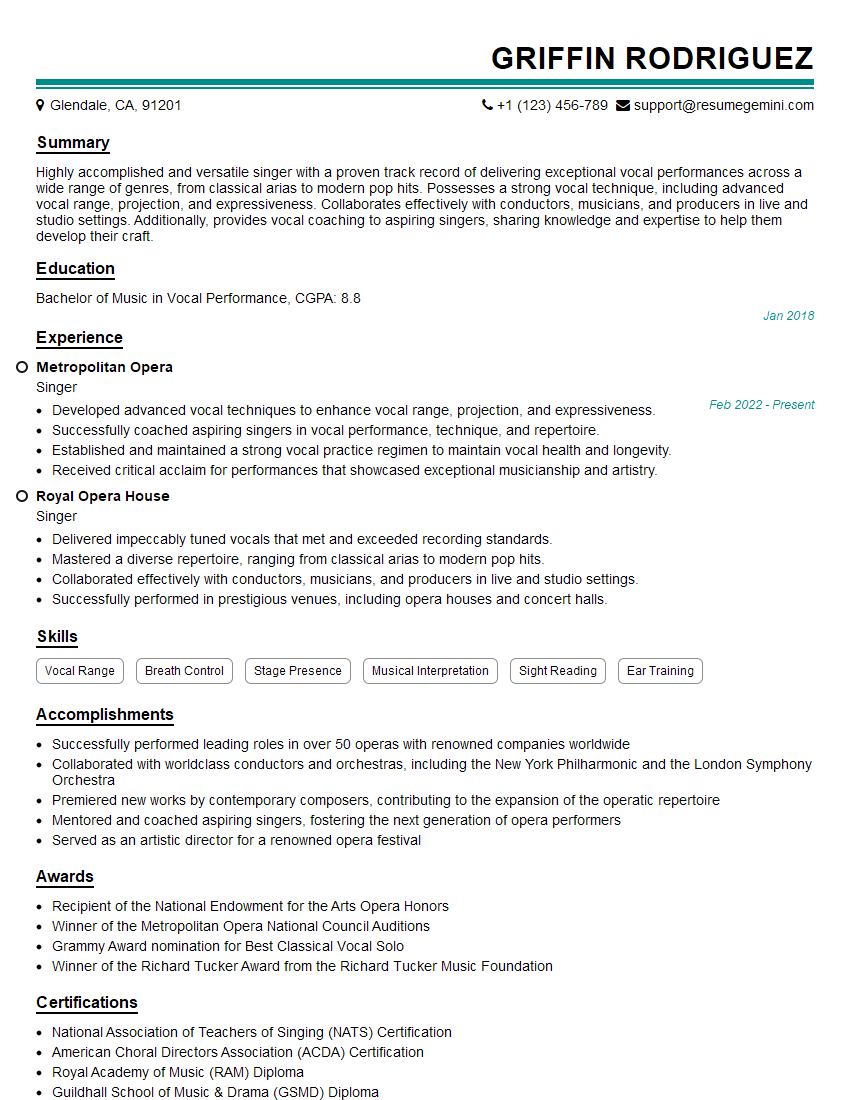
Singer Resume Sample
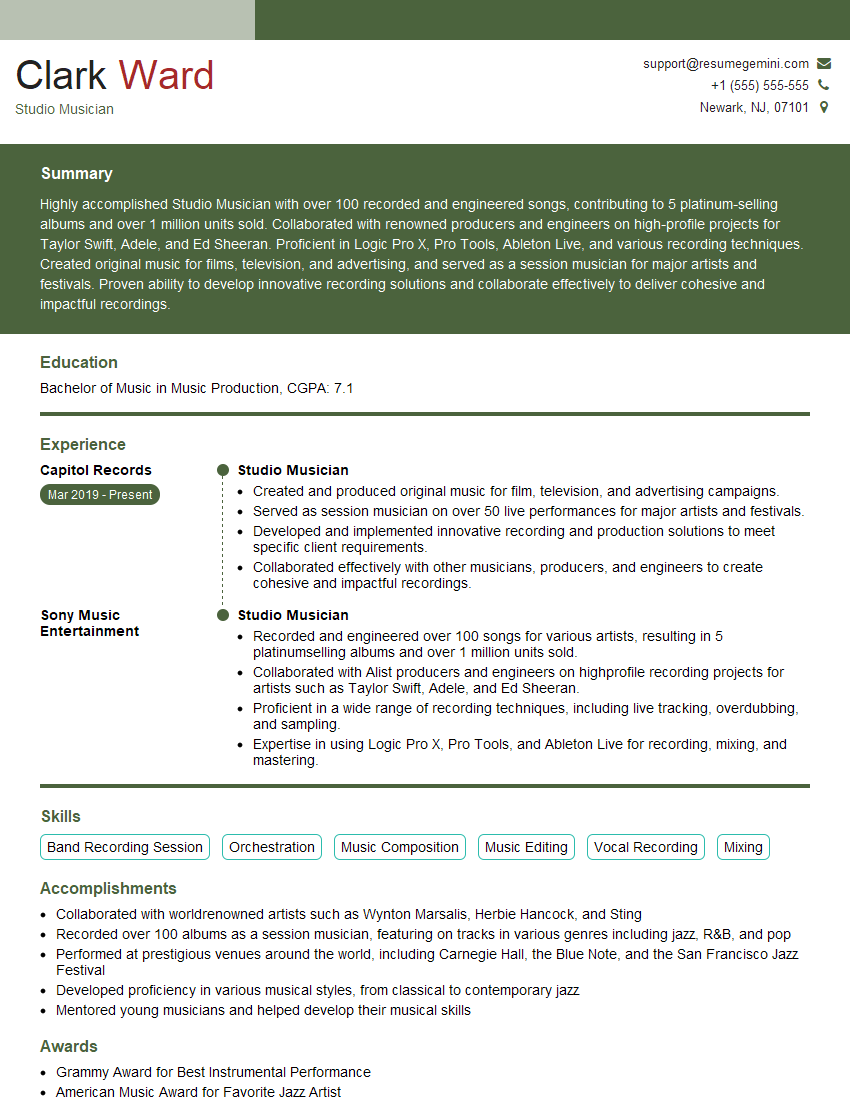
Studio Musician Resume Sample
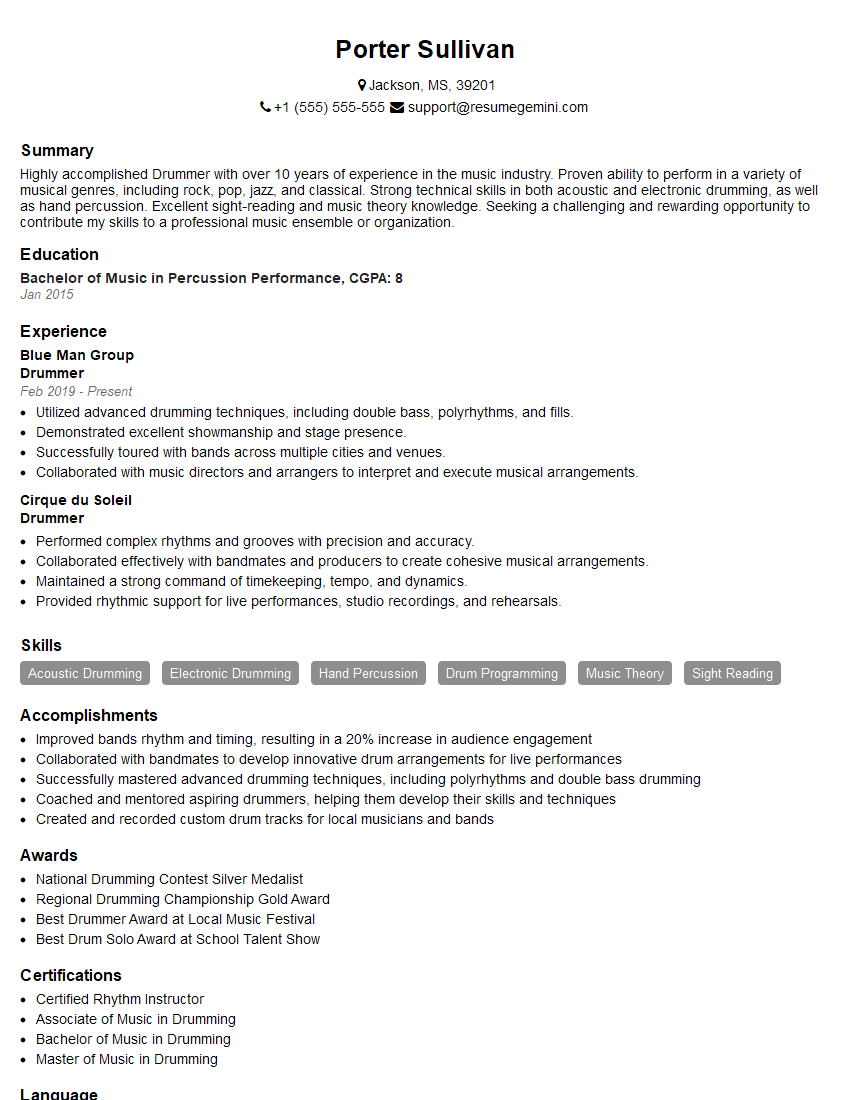
Drummer Resume Sample
Explore more articles
Users Rating of Our Blogs
Share Your Experience
We value your feedback! Please rate our content and share your thoughts (optional).
What Readers Say About Our Blog
To the interviewgemini.com Webmaster.
Very helpful and content specific questions to help prepare me for my interview!
Thank you
To the interviewgemini.com Webmaster.
This was kind of a unique content I found around the specialized skills. Very helpful questions and good detailed answers.
Very Helpful blog, thank you Interviewgemini team.