The thought of an interview can be nerve-wracking, but the right preparation can make all the difference. Explore this comprehensive guide to Neurological Speech Disorders Assessment and Treatment interview questions and gain the confidence you need to showcase your abilities and secure the role.
Questions Asked in Neurological Speech Disorders Assessment and Treatment Interview
Q 1. Explain the difference between aphasia, apraxia of speech, and dysarthria.
Aphasia, apraxia of speech, and dysarthria are all neurological speech disorders, but they stem from different underlying causes and manifest differently. Think of it like this: they all affect the ability to speak, but the ‘broken parts’ of the communication system are different.
- Aphasia: This is a language disorder affecting the ability to understand or express language. It’s a problem with the brain’s language centers, impacting word finding, grammar, comprehension, and reading/writing. Imagine a library with all the books (words) in place, but the librarian (the brain’s language processing center) can’t find the right books or understand their arrangement.
- Apraxia of speech: This is a motor speech disorder where the brain has difficulty planning and programming the movements needed for speech. The individual knows *what* they want to say, but their brain struggles to tell the muscles *how* to say it. It’s like having a perfectly written recipe, but struggling to follow the instructions to bake the cake.
- Dysarthria: This is also a motor speech disorder, but it’s caused by weakness, incoordination, or paralysis of the muscles used for speech (tongue, lips, vocal cords, etc.). This results in slurred, slow, or imprecise speech. It’s like having all the ingredients for the cake but having shaky hands that make it impossible to assemble it properly.
In short: Aphasia is a language problem; apraxia is a planning problem; and dysarthria is a muscle control problem.
Q 2. Describe your experience with assessment tools for aphasia.
My experience with aphasia assessment tools is extensive. I regularly utilize standardized tests like the Boston Diagnostic Aphasia Examination (BDAE), the Western Aphasia Battery (WAB), and the Aphasia Language Performance Scales (ALPS). The choice of test depends heavily on the individual’s suspected aphasia type and their overall cognitive and physical abilities.
For instance, the BDAE is comprehensive, providing detailed information across various language domains. The WAB offers a quantitative score allowing for better tracking of progress, while the ALPS is helpful for functional communication assessment in daily life situations. I also use informal assessments, such as conversational speech samples and observation of communication in real-life activities to complement the standardized tests. These informal methods provide insights into the client’s ability to communicate effectively in their daily lives, which may not be fully captured by the formal tests alone. This comprehensive approach ensures a detailed and accurate assessment.
Q 3. What are the common types of aphasia, and how do you differentiate them?
There are several common types of aphasia, often categorized based on the affected brain areas and the resulting language impairments. Key differentiators include fluency, comprehension, repetition, and naming abilities.
- Broca’s aphasia: Non-fluent aphasia characterized by difficulty producing speech, but relatively intact comprehension. Think of it as having the ideas but struggling to express them verbally. Speech may be slow, effortful, and grammatically simplified.
- Wernicke’s aphasia: Fluent aphasia where comprehension is severely impaired. Individuals may speak fluently but use nonsensical or paraphasic (word substitution) language. Their speech sounds grammatically correct, but it lacks meaning. Imagine a fluent speaker delivering a speech in a language you don’t understand – it sounds coherent, but the message is lost.
- Conduction aphasia: Characterized by difficulty with repetition, despite relatively preserved comprehension and fluent speech production. They often know what they want to say but struggle to repeat it correctly. It’s like having a clear understanding but struggling to relay the information accurately.
- Global aphasia: This is a severe form of aphasia involving significant impairment in all language modalities (speaking, listening, reading, writing). It often results from extensive brain damage.
- Anomic aphasia: Characterized by difficulty finding words (word-finding difficulties). Comprehension and fluency are usually intact, but conversation is often interrupted by pauses and circumlocutions (talking around the word).
Differentiating between these types requires a careful and comprehensive assessment that considers all aspects of language function.
Q 4. How do you assess dysarthria in adults?
Assessing dysarthria in adults involves a multi-faceted approach encompassing a thorough case history, oral-motor examination, and analysis of speech characteristics. I begin by understanding the patient’s medical history and the potential neurological cause of their dysarthria.
The oral-motor examination assesses the strength, range of motion, and coordination of the speech muscles. I observe the tongue, lips, jaw, and palate for any weakness, asymmetry, or involuntary movements.
The speech assessment focuses on several parameters, including:
- Intelligibility: How easily can I understand the patient?
- Articulation: Accuracy of individual sounds and their combinations.
- Rate: Speech speed.
- Prosody: Stress, intonation, and rhythm of speech.
- Resonance: Quality of the vocal sound (e.g., nasal quality).
I often use standardized assessment tools like the Frenchay Dysarthria Assessment, which provides a quantitative measure of dysarthria severity and type. Combining these assessments helps determine the specific type of dysarthria (e.g., spastic, flaccid, ataxic) and its severity, guiding subsequent treatment planning.
Q 5. What therapeutic approaches do you use for apraxia of speech?
Therapeutic approaches for apraxia of speech focus on retraining the motor planning and programming of speech movements. I often use a combination of techniques:
- Articulatory-kinematic approaches: These involve practicing specific speech sounds and sequences in isolation and then gradually integrating them into words and sentences. This may include using visual cues, tactile cues (touching the articulators), and auditory feedback to improve motor control.
- Multimodal approaches: This integrates visual, auditory, and tactile feedback to help the client learn and produce speech sounds. The use of visual cues like cards with mouth pictures, combined with listening to the target sounds can improve results.
- AAC strategies: Augmentative and alternative communication (AAC) methods, such as picture exchange systems, are used to help compensate for communication difficulties during the therapy process.
- Melodic Intonation Therapy (MIT): This approach utilizes intonation and rhythm to facilitate speech production, particularly helpful in cases with severe apraxia.
The specific therapeutic approach is tailored to the individual’s needs and the severity of their apraxia. Regular progress monitoring and adjustment of the therapy plan are crucial to ensure optimal outcomes.
Q 6. Describe your experience with augmentative and alternative communication (AAC) devices.
My experience with augmentative and alternative communication (AAC) devices is extensive, ranging from low-tech methods like picture boards and communication books to high-tech devices like speech-generating devices (SGDs). I believe in a person-centered approach to AAC, focusing on the individual’s specific needs and preferences.
For instance, I might recommend a simple picture board for a client with mild aphasia who primarily needs help with word-finding, whereas a client with severe aphasia might benefit from a sophisticated SGD with customizable vocabulary and synthesized speech. The choice of AAC device is dependent on the client’s cognitive abilities, physical limitations, and communication goals. I work closely with the client and their family/caregivers to choose, customize, and train them on using the AAC system, integrating it into their daily routines and communication settings.
Beyond simply providing a device, my role includes teaching effective communication strategies and maximizing the client’s ability to engage with others, building self-confidence and improving their quality of life.
Q 7. How do you adapt your treatment plan based on a patient’s cognitive abilities?
Adapting treatment plans based on a patient’s cognitive abilities is critical for effective therapy. A client with intact cognition can engage in complex tasks and abstract reasoning, allowing for more challenging therapeutic activities. However, a client with impaired cognition requires a different approach. I assess cognitive abilities like attention, memory, and executive function, using tools like the Mini-Mental State Examination (MMSE).
For example, a client with reduced attention span might benefit from shorter therapy sessions with frequent breaks, focusing on specific goals and employing highly engaging activities. Tasks are simplified and broken down into smaller, manageable steps. Visual aids and repetition are used to enhance learning. If a client has memory problems, I use repetition, cueing techniques, and external memory aids (e.g., written lists, calendars). This individualized approach ensures that the therapy remains stimulating, manageable, and effective for each patient, maximizing their progress and participation.
Q 8. Explain your approach to treating dysphagia (swallowing disorders).
Treating dysphagia, or swallowing disorders, requires a comprehensive approach that considers the individual’s unique needs and the underlying cause of the difficulty. My approach begins with a thorough evaluation, including a detailed case history, oral-motor examination, and potentially instrumental assessments like a videofluoroscopic swallow study (VFSS) or fiberoptic endoscopic evaluation of swallowing (FEES). This helps me pinpoint the specific swallowing impairments, such as oral-phase difficulties (e.g., difficulty chewing or forming a bolus), pharyngeal-phase problems (e.g., reduced tongue base retraction or delayed pharyngeal swallow), or esophageal issues.
Based on the assessment, I develop a personalized treatment plan that might include compensatory strategies, such as postural adjustments (e.g., head tilt or chin tuck) to improve bolus flow, or techniques to modify food consistency to make swallowing easier. If the underlying issue is a weakness, I incorporate exercises to strengthen the muscles involved in swallowing, such as lingual exercises for tongue strength or range-of-motion exercises. I also collaborate closely with the patient and their family to educate them about safe swallowing practices and strategies to implement at home.
For example, I recently treated a patient with Parkinson’s disease who experienced significant difficulty initiating the swallow. We started with simple exercises to improve oral motor strength and coordination, gradually progressing to more complex exercises involving bolus manipulation and swallowing. Simultaneously, we adjusted their diet to a softer consistency and explored compensatory techniques like the chin tuck to enhance swallowing safety and efficiency. Regular monitoring and reassessment were crucial to measure progress and adapt the treatment plan as needed.
Q 9. Describe a challenging case you’ve encountered and how you resolved it.
One particularly challenging case involved a young adult who suffered a severe stroke resulting in apraxia of speech and dysarthria. He struggled immensely with producing intelligible speech, impacting his communication and quality of life. The challenge wasn’t simply the severity of his impairments, but also his frustration and lack of motivation due to the significant impact on his social and professional life.
My approach involved a multi-faceted strategy. First, I focused on building his confidence and motivating him to actively participate in therapy. We started with simple speech exercises, gradually increasing complexity. I used a combination of techniques, including melodic intonation therapy (MIT) to leverage his preserved prosodic abilities and articulation drills to improve his motor control. We also incorporated augmentative and alternative communication (AAC) strategies, such as using a picture exchange system (PECS), to supplement his verbal communication and reduce his frustration during the initial stages of his recovery. Crucially, regular feedback and positive reinforcement played a significant role in boosting his morale and compliance.
Over several months, he showed gradual improvement in speech intelligibility and reduced reliance on AAC. The case highlighted the importance of tailoring therapeutic approaches not just to the neurological deficits, but also the patient’s emotional and psychological state. The successful outcome underscored the potential for significant rehabilitation even in cases with severe impairments through perseverance, a supportive approach, and integrating varied therapeutic strategies.
Q 10. How do you collaborate with other healthcare professionals (e.g., neurologists, occupational therapists)?
Collaboration is essential in treating neurological speech disorders. I regularly work with neurologists to understand the patient’s neurological diagnosis, prognosis, and medication regimen. This ensures that my treatment plan is aligned with the overall medical management. For instance, understanding the effects of medications on muscle tone is crucial when planning exercises for dysarthria.
Occupational therapists are invaluable partners, particularly when addressing the functional aspects of communication and swallowing. They might help with adaptations in daily living activities such as eating and drinking, or suggest modifications to improve the patient’s overall physical well-being, which directly impacts their progress in speech and swallowing therapy. For example, an OT may help to improve upper limb strength that affects feeding independence. Similarly, collaboration with dietitians ensures the patient receives nutritionally adequate and safe food and drink that aligns with their swallowing capabilities. This multidisciplinary team approach is vital to optimizing patient outcomes.
Q 11. What is your experience with evidence-based practice in neurological speech disorders?
Evidence-based practice is the cornerstone of my work. I consistently stay updated on the latest research findings in neurological speech disorders and integrate them into my clinical practice. I regularly review peer-reviewed journals and attend professional development workshops and conferences to enhance my knowledge and skillset. This ensures that I employ techniques with proven effectiveness and adapt my treatments based on the most current scientific evidence.
For instance, when treating apraxia of speech, I rely on techniques supported by robust research, such as constraint-induced language therapy (CILT) or specific articulation drills proven to improve motor planning and execution. I also use standardized assessment tools to ensure that my evaluations are reliable and objective and can measure patient improvement accurately. Evidence-based practice allows for continuous improvement and ensures that my patients receive the most appropriate and effective care.
Q 12. How do you measure the effectiveness of your treatment interventions?
Measuring the effectiveness of treatment interventions is crucial. I utilize a combination of objective and subjective measures. Objective measures include standardized assessment scales specific to the speech disorder. For example, I might use the Frenchay Dysarthria Assessment to quantify the severity of dysarthria or the Assessment of Intelligibility of Dysarthric Speakers to measure speech intelligibility improvements. I also track the patient’s performance on specific treatment targets, such as the number of correct articulations or the amount of food consumed without aspiration.
Subjective measures involve feedback from the patient, their family, and other healthcare professionals about the impact of the treatment on their communication and swallowing abilities. For example, patient-reported outcome measures (PROMs) like questionnaires assessing their quality of life and communication satisfaction provide valuable insights into the overall impact of the intervention. The combination of objective and subjective data creates a comprehensive picture of the treatment’s success and helps guide ongoing adjustments to the therapy plan. Regular monitoring and reassessments are key.
Q 13. Describe your understanding of the neurological basis of speech production.
Speech production is a complex process involving intricate coordination between multiple brain regions. The motor cortex, specifically Broca’s area, plays a critical role in planning and executing speech movements. The cerebellum helps refine the timing and coordination of these movements, ensuring smooth and fluent speech. The basal ganglia contribute to the automatic aspects of speech production, and the brainstem houses cranial nerves that control the muscles of the larynx, pharynx, tongue, and lips.
Damage to any of these areas can lead to various speech disorders. For example, damage to Broca’s area may result in Broca’s aphasia, characterized by non-fluent speech with grammatical errors. Damage to the cerebellum might lead to dysarthria, affecting the coordination and precision of speech movements. Understanding the neurological basis of speech production is essential for accurately diagnosing and treating speech disorders. This knowledge allows for a targeted therapeutic approach aimed at addressing the specific neurological impairments.
Q 14. What is your familiarity with different assessment scales for speech disorders?
I am familiar with a wide range of assessment scales used to evaluate speech disorders. The choice of assessment depends on the suspected disorder and the specific areas of concern. For example, for aphasia, I might use the Boston Diagnostic Aphasia Examination (BDAE) which is a comprehensive assessment, or the Western Aphasia Battery (WAB) for a detailed analysis of language skills.
For dysarthria, assessments such as the Frenchay Dysarthria Assessment or the Assessment of Intelligibility of Dysarthric Speakers (AIDS) are commonly used to evaluate the nature and severity of motor speech impairments. To assess apraxia of speech, I might employ the Apraxia Battery for Adults (ABA) or the Iowa Apraxia Battery for Adults (IABA). For swallowing disorders, the Mann Assessment of Swallowing Ability (MASA) and the videofluoroscopic swallow study (VFSS) are valuable tools. The selection and interpretation of these assessments require extensive clinical experience and a sound understanding of their strengths and limitations.
Q 15. How do you incorporate family members into the treatment process?
Family involvement is crucial for successful neurological speech disorder treatment. It’s not just about the patient; it’s about the entire communication ecosystem. I begin by explaining the diagnosis and treatment plan in a clear, concise manner, using relatable language and avoiding overly technical terms. I then actively involve family members in goal setting, helping them understand the patient’s strengths and challenges. This collaborative approach empowers families to actively participate in therapy sessions, reinforcing learned skills at home and providing valuable feedback on the patient’s progress. For example, I might teach family members specific communication strategies, such as using visual aids or simplifying sentences. Regular communication with the family – through phone calls, email, or progress reports – keeps everyone informed and on the same page. I also tailor home practice exercises to suit the family’s lifestyle and resources, ensuring that therapy isn’t an added burden but an integrated part of daily life.
For instance, with a patient recovering from a stroke, I would work with their spouse to incorporate simple conversational exercises during mealtimes, strengthening the patient’s ability to articulate needs and participate in family interaction. This holistic approach leverages the family’s support and understanding, significantly improving the patient’s progress and quality of life.
Career Expert Tips:
- Ace those interviews! Prepare effectively by reviewing the Top 50 Most Common Interview Questions on ResumeGemini.
- Navigate your job search with confidence! Explore a wide range of Career Tips on ResumeGemini. Learn about common challenges and recommendations to overcome them.
- Craft the perfect resume! Master the Art of Resume Writing with ResumeGemini’s guide. Showcase your unique qualifications and achievements effectively.
- Don’t miss out on holiday savings! Build your dream resume with ResumeGemini’s ATS optimized templates.
Q 16. What are your strategies for managing challenging patient behaviors?
Managing challenging patient behaviors requires a multifaceted approach rooted in understanding the underlying cause. Aggression, frustration, or withdrawal can stem from various factors – cognitive impairments, communication difficulties, pain, or even medication side effects. My first step is a thorough assessment to identify the triggers and patterns of these behaviors. This may involve reviewing medical records, observing the patient during therapy, and consulting with other healthcare professionals. Once the causes are understood, I employ strategies such as adapting the therapy environment to minimize triggers, modifying tasks to improve the patient’s success rate, and implementing positive reinforcement techniques. For example, if a patient becomes frustrated during articulation exercises, I might break down the tasks into smaller, more manageable steps, providing frequent praise and encouragement. For safety reasons, clear and consistent boundaries must be established. In cases of severe behavioral challenges, collaborating with a psychologist or psychiatrist is essential to rule out any underlying mental health conditions or to provide medication management.
Let’s say a patient with aphasia exhibits frustration during therapy. Instead of pushing them, I might incorporate relaxation techniques, like deep breathing exercises, before starting the session. I might also adjust the pacing and complexity of the exercises based on their current level of tolerance and engagement. Collaboration with caregivers is key to ensuring consistency in these strategies across all settings.
Q 17. How do you handle ethical dilemmas in speech therapy practice?
Ethical dilemmas in speech therapy are not uncommon. They often involve conflicts between patient autonomy, beneficence, and confidentiality. My approach is guided by the ASHA (American Speech-Language-Hearing Association) Code of Ethics, which emphasizes the importance of client welfare, professional competence, and upholding professional standards. For example, if a patient requests a treatment that I believe is not in their best interest, I would engage in a thoughtful discussion, explaining the potential risks and benefits of different approaches, while respecting their right to make informed decisions. Maintaining confidentiality is paramount, and I am meticulous in adhering to HIPAA regulations. If I find myself in a situation involving a conflict of interest, I would consult with supervisors, colleagues, or ethical review boards to ensure that I am making decisions in accordance with ethical principles and legal requirements. Documenting these considerations helps ensure transparency and accountability.
A potential ethical dilemma might arise if a patient’s family pressures me to withhold information from the patient regarding their prognosis. I would address this by explaining the importance of open and honest communication with the patient, whilst acknowledging the family’s concerns. I would explore ways to balance the need for honesty with the need to support the patient’s emotional well-being.
Q 18. What is your understanding of the impact of neurological disorders on communication?
Neurological disorders significantly impact communication in diverse ways, depending on the location and severity of the brain damage. Conditions like stroke, traumatic brain injury (TBI), Parkinson’s disease, and multiple sclerosis can disrupt various aspects of language and speech, leading to receptive and expressive language disorders, as well as problems with articulation, fluency, and voice production. A stroke affecting Broca’s area, for example, can result in non-fluent aphasia, characterized by difficulty producing speech, while damage to Wernicke’s area can cause fluent aphasia, characterized by impaired comprehension and the production of nonsensical speech. TBI can lead to a wide range of communication problems, including cognitive-linguistic deficits, affecting memory, attention, and executive functions. These impairments affect not only verbal communication but also nonverbal aspects such as facial expression, body language, and social interaction, impacting the individual’s overall quality of life and ability to participate in society. A thorough understanding of the neurological basis of communication disorders is crucial for effective assessment and treatment.
Imagine a patient with aphasia after a stroke; they might struggle to find the right words, producing fragmented or incorrect sentences. Their comprehension might also be affected, making it difficult to understand what others are saying. This drastically changes their ability to communicate their needs, participate in social situations, and maintain their independence. This highlights the importance of a comprehensive assessment focused on identifying the specific areas of communication impairment to then tailor the treatment plan.
Q 19. Describe your experience with different types of therapy techniques (e.g., melodic intonation therapy, constraint-induced language therapy).
My experience encompasses a wide range of therapy techniques for neurological speech disorders, selected based on the individual patient’s needs and diagnosis. Melodic Intonation Therapy (MIT) is particularly effective for non-fluent aphasia, using musical elements to facilitate speech production. The therapist uses a melodic pattern to help the patient produce words and phrases, gradually fading the melodic support as the patient’s speech improves. Constraint-Induced Language Therapy (CILT) focuses on intensive practice of the impaired language skills, limiting the use of compensatory strategies, such as gestures or writing. This forces the brain to reorganize and relearn lost language functions. Other techniques include aphasia therapy groups, which offer social interaction and practice opportunities in real-life communication scenarios. I also utilize evidence-based strategies like semantic feature analysis, promoting retrieval of words by analyzing their semantic characteristics and relationships. The choice of technique is always carefully considered, considering the patient’s cognitive abilities, motivation, and overall condition.
For example, with a patient exhibiting severe non-fluent aphasia, MIT could be the primary therapy, using melodic cues to stimulate speech production. Concurrently, I may incorporate CILT to encourage the spontaneous use of language, minimizing reliance on compensatory methods. The treatment plan is dynamic, and the choice of techniques and their combination is tailored to the patient’s individual responsiveness and progress.
Q 20. How do you maintain professional competency and stay updated with the latest research?
Maintaining professional competency is an ongoing process that requires dedication and proactive engagement. I actively participate in continuing education courses and workshops offered by ASHA and other reputable organizations, focusing on updates in assessment and treatment techniques for neurological speech disorders. I regularly review relevant peer-reviewed journals and research articles to stay abreast of the latest scientific findings and evidence-based practices. Networking with colleagues through professional organizations and attending conferences allows me to exchange knowledge and learn from other experts in the field. I also seek regular supervision and mentorship to review complex cases and refine my clinical skills. This commitment to lifelong learning ensures I am equipped to provide the most current and effective care for my patients.
Specifically, I subscribe to journals like “Aphasiology” and “Journal of Speech, Language, and Hearing Research” to keep updated on new research. I also actively participate in online professional development opportunities and attend relevant conferences to gain fresh perspectives and insights.
Q 21. Explain the difference between receptive and expressive language disorders.
Receptive and expressive language disorders represent two distinct aspects of communication impairment, often co-occurring but not always. Receptive language disorders involve difficulty understanding language, whether spoken or written. Individuals with receptive aphasia struggle to comprehend the meaning of words, sentences, or stories, despite being able to hear or see the words perfectly. They may miss the nuances of conversation or struggle to follow instructions. Expressive language disorders, conversely, involve problems with producing language. This can manifest as difficulty finding the right words, forming grammatically correct sentences, or articulating sounds clearly. Individuals with expressive aphasia might know what they want to say but struggle to put it into words. A patient might have difficulty understanding a complex sentence (receptive) while simultaneously struggling to articulate their own thoughts (expressive). Accurate assessment differentiates between these two types, guiding targeted therapy approaches.
For example, a patient might understand a simple request (“Please pick up the cup”) but struggle to produce a multi-sentence response (expressive problem). Another patient might easily follow simple instructions, but struggle to understand complex instructions with multiple steps, suggesting a receptive problem. It’s crucial to remember that many patients will present with a combination of both receptive and expressive challenges.
Q 22. What are the key components of a comprehensive assessment for neurological speech disorders?
A comprehensive assessment for neurological speech disorders requires a multi-faceted approach, going beyond simply identifying the problem. It aims to understand the underlying cause, the impact on the individual’s life, and to create a tailored treatment plan.
- Case History: This involves a detailed interview with the patient and their family to gather information about the onset of the disorder, medical history, and any relevant social or environmental factors. For example, understanding if the onset was sudden (like a stroke) or gradual (like a degenerative disease) is crucial.
- Oral-Motor Examination: A thorough assessment of the structure and function of the oral mechanism, including the lips, tongue, jaw, and palate. We look for any weakness, paralysis, or abnormal movements that might affect speech production. This often involves tasks like sticking out the tongue, puffing cheeks, and producing different speech sounds.
- Speech and Language Assessment: This is the core of the assessment. We evaluate various aspects of speech, including articulation, fluency, voice quality, language comprehension, and expression. Standardized tests and informal assessments are used to quantify the severity and nature of the deficits. For instance, we might use standardized tests to assess articulation accuracy or sentence repetition ability.
- Cognitive-Linguistic Evaluation: Neurological speech disorders often co-occur with cognitive impairments. Assessing attention, memory, and executive functions helps us understand the overall impact and tailor therapy accordingly. We might use tasks like remembering a series of words or following multi-step instructions.
- Hearing Screening: Hearing impairment can significantly impact speech and language, so a hearing screening is essential to rule out any sensory deficits contributing to the communication difficulties.
- Referral for additional testing (if necessary): Depending on the findings, further investigations like neuroimaging (MRI, CT scan) may be needed to pinpoint the neurological cause.
By combining these components, we build a holistic picture of the patient’s communication abilities and challenges, guiding us towards an effective and personalized intervention strategy.
Q 23. Describe your experience with using technology in speech therapy (e.g., telehealth).
Technology has revolutionized speech therapy, particularly with the advent of telehealth. I have extensive experience utilizing telehealth platforms for remote assessment and treatment of neurological speech disorders. This has been particularly beneficial for patients with mobility limitations or those living in rural areas with limited access to specialized care.
Using platforms like Zoom or specialized teletherapy software, I’ve conducted virtual sessions involving:
- Remote Assessment: Administering standardized tests and conducting oral-motor examinations remotely using video conferencing. This includes having the patient perform tasks in front of the camera while I provide feedback.
- Interactive Therapy Activities: Utilizing digital resources, such as online games and apps, to enhance engagement and motivation. For example, using apps that encourage articulation practice or provide visual cues for improving speech fluency.
- Home Exercise Programs: Developing and monitoring home exercise programs using video demonstrations and written instructions. I can then check on progress and adjust the program based on patient response.
- Data Tracking and Monitoring: Leveraging telehealth platforms to track patient progress objectively over time. This allows me to make data-driven adjustments to treatment and demonstrate progress to healthcare teams.
While in-person therapy offers advantages, telehealth has proven remarkably effective and efficient in many cases, expanding access to quality care and improving outcomes for my patients.
Q 24. How do you address the emotional and psychological needs of patients with neurological speech disorders?
Addressing the emotional and psychological needs of patients with neurological speech disorders is as crucial as the speech therapy itself. These conditions can significantly impact self-esteem, confidence, and social participation. A patient’s frustration, anxiety, or depression can impede their progress in therapy.
My approach involves:
- Empathy and Active Listening: Creating a safe and supportive therapeutic environment where patients feel comfortable expressing their feelings and concerns. This often involves actively listening and validating their experiences.
- Collaboration and Goal Setting: Working collaboratively with the patient to set realistic and achievable goals. This shared decision-making process empowers the patient and enhances their motivation.
- Cognitive Behavioral Therapy (CBT) Techniques: Incorporating CBT techniques to address negative thought patterns and coping mechanisms. For example, helping patients challenge negative self-talk or develop strategies to manage frustration during therapy exercises.
- Support Groups and Social Interaction: Connecting patients with support groups or social activities to foster a sense of community and reduce feelings of isolation. The support from others dealing with similar challenges can be invaluable.
- Referral to other professionals: When necessary, referring patients to psychologists, counselors, or psychiatrists for further emotional and psychological support.
Addressing the emotional aspects is not separate from the speech therapy; it’s an integral part of the comprehensive treatment, essential for maximizing progress and improving the overall quality of life.
Q 25. What are the common causes of apraxia of speech?
Apraxia of speech is a neurological disorder affecting the ability to plan and program the movements necessary for speech, despite having the physical capacity to speak. It’s not a problem of muscle weakness, but rather a problem of motor planning.
Common causes include:
- Stroke: Damage to the brain areas responsible for motor planning, often in the left hemisphere.
- Traumatic Brain Injury (TBI): Injury to the brain resulting in disruption of motor planning pathways.
- Neurodegenerative Diseases: Conditions like Alzheimer’s disease or Parkinson’s disease can progressively damage brain areas crucial for motor control, leading to apraxia.
- Brain Tumors: Tumors located in areas affecting motor speech control can cause apraxia.
- Genetic Factors: In some cases, apraxia can be linked to genetic conditions affecting brain development.
The specific cause will influence the severity and type of apraxia experienced, with some individuals demonstrating mild difficulties while others experience significant speech impairments.
Q 26. Describe your experience with working with patients with traumatic brain injury.
I have extensive experience working with patients who have sustained traumatic brain injuries (TBIs). The impact of TBI on speech and language can be highly variable, depending on the severity and location of the injury.
My approach involves:
- Comprehensive Assessment: A thorough assessment focusing on the specific deficits, including cognitive, linguistic, and motor speech impairments. This often includes standardized tests and observation of functional communication skills in real-life situations.
- Individualized Treatment Plans: Developing highly individualized treatment plans based on the unique needs and strengths of each patient. This takes into account their cognitive abilities, their communication goals, and their overall recovery trajectory.
- Targeting Multiple Domains: Often addressing multiple domains simultaneously, such as cognitive rehabilitation (attention, memory, problem-solving), language therapy (comprehension, expression), and speech therapy (articulation, fluency).
- Functional Communication: A strong emphasis on functional communication, focusing on strategies to improve communication in everyday situations. This may involve augmentative and alternative communication (AAC) methods if necessary.
- Collaboration with Interdisciplinary Teams: Working closely with other professionals, such as physiatrists, occupational therapists, and neuropsychologists, to coordinate care and ensure a holistic approach to rehabilitation.
Working with TBI patients requires patience, flexibility, and a deep understanding of the complex interplay of cognitive and communication skills. Seeing patients regain some level of independence and communication ability is incredibly rewarding.
Q 27. What are the long-term goals of rehabilitation for patients with aphasia?
Aphasia is a language disorder affecting comprehension, expression, or both, resulting from damage to the brain’s language centers. The long-term goals of aphasia rehabilitation are multifaceted and focus on improving communication and participation in life.
Long-term goals often include:
- Maximize Functional Communication: Enabling the patient to communicate effectively in their daily lives, including interacting with family, friends, and colleagues.
- Improve Language Comprehension and Expression: Improving both receptive and expressive language skills as much as possible, with a focus on practical application.
- Enhance Quality of Life: Improving the patient’s overall quality of life by increasing their independence, social participation, and emotional well-being.
- Develop Compensatory Strategies: Teaching strategies to compensate for persistent language deficits, such as using visual aids or alternative communication methods.
- Promote Independence: Enabling the patient to achieve the greatest degree of independence in their daily activities.
- Maintain and Enhance Cognitive Skills: Working to maintain and enhance cognitive skills, such as memory and attention, which are frequently impacted by aphasia.
The specific long-term goals are highly individualized and depend on the severity of the aphasia, the patient’s premorbid abilities, and their personal aspirations.
Q 28. How do you differentiate between developmental and acquired speech disorders?
The key difference between developmental and acquired speech disorders lies in their onset and underlying cause.
- Developmental Speech Disorders: These are present from birth or emerge during childhood development. They are not caused by a known neurological event or injury. Examples include articulation disorders (like lisps), phonological disorders (difficulty with speech sound patterns), and fluency disorders (like stuttering). These disorders originate from delays or deviations in the typical developmental trajectory of speech and language acquisition.
- Acquired Speech Disorders: These disorders arise after a period of normal speech and language development. They are caused by damage or injury to the central or peripheral nervous system. This damage can result from strokes, traumatic brain injuries, infections, tumors, or neurodegenerative diseases. Examples include aphasia, apraxia of speech, and dysarthria (problems with muscle control for speech).
The distinction is critical for diagnosis and treatment planning. Developmental disorders often require different intervention strategies compared to acquired disorders, which often focus on remediation of neurological deficits and functional communication strategies.
Key Topics to Learn for Neurological Speech Disorders Assessment and Treatment Interview
- Neuroanatomy and Physiology of Speech: Understanding the neural pathways and structures involved in speech production, comprehension, and language processing. This includes knowledge of the brain regions crucial for language and their interconnectedness.
- Assessment Methods: Mastering various assessment techniques such as standardized tests (e.g., Apraxia Battery for Adults), informal assessments, and observation protocols. Practice applying these methods to diverse clinical scenarios.
- Differential Diagnosis: Developing the ability to distinguish between different neurological speech disorders (aphasia, apraxia, dysarthria) based on presenting symptoms and assessment findings. This includes understanding the overlapping symptoms and nuances between different disorders.
- Treatment Approaches: Familiarize yourself with evidence-based intervention strategies for various neurological speech disorders. This includes understanding the theoretical underpinnings of different treatment modalities and selecting appropriate techniques based on individual patient needs.
- Case Study Analysis: Practice analyzing case studies to develop your diagnostic and treatment planning skills. Focus on identifying key features, formulating hypotheses, and developing effective intervention plans.
- Technology in Assessment and Treatment: Explore the role of technology in assessment (e.g., digital platforms for language testing) and treatment (e.g., AAC devices, speech therapy apps). Understanding the applications and limitations of these technologies is crucial.
- Evidence-Based Practice: Demonstrate your understanding of the importance of using evidence-based approaches in assessment and treatment. Be prepared to discuss current research and its implications for clinical practice.
- Ethical Considerations: Understand the ethical considerations related to assessment and treatment of individuals with neurological speech disorders, including informed consent, confidentiality, and cultural sensitivity.
Next Steps
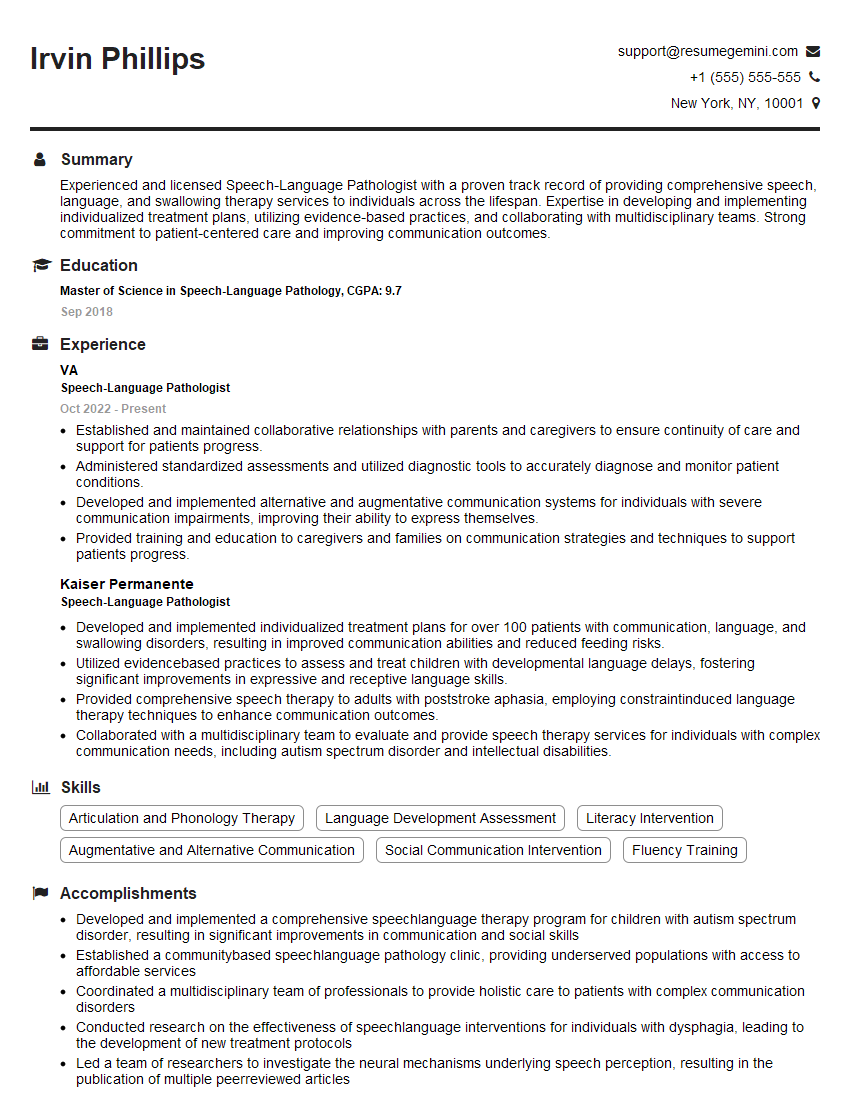
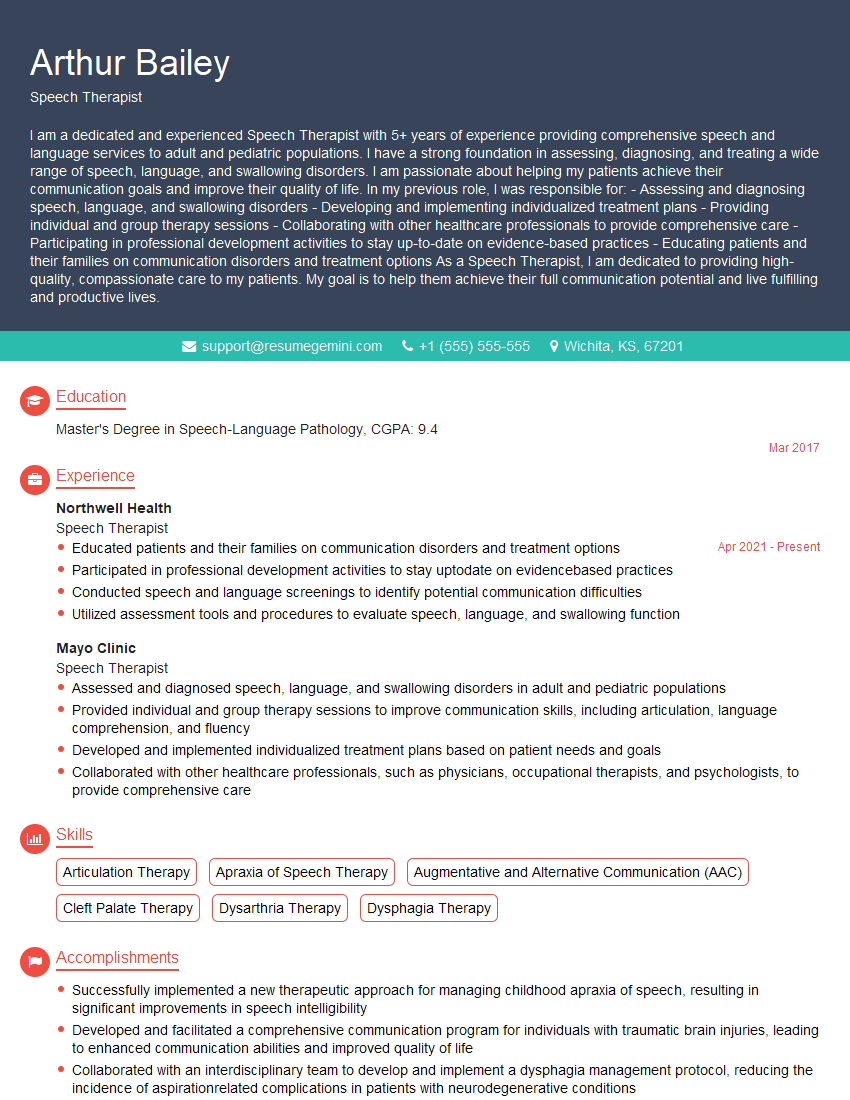
Mastering Neurological Speech Disorders Assessment and Treatment is crucial for career advancement in speech-language pathology. A strong understanding of these topics will significantly enhance your clinical skills and make you a highly competitive candidate. To further strengthen your job applications, focus on creating an ATS-friendly resume that effectively highlights your skills and experience. ResumeGemini is a trusted resource that can help you build a professional resume tailored to the specific requirements of this field. Examples of resumes tailored to Neurological Speech Disorders Assessment and Treatment are available through ResumeGemini to guide your resume development.
Explore more articles
Users Rating of Our Blogs
Share Your Experience
We value your feedback! Please rate our content and share your thoughts (optional).
What Readers Say About Our Blog
To the interviewgemini.com Webmaster.
Very helpful and content specific questions to help prepare me for my interview!
Thank you
To the interviewgemini.com Webmaster.
This was kind of a unique content I found around the specialized skills. Very helpful questions and good detailed answers.
Very Helpful blog, thank you Interviewgemini team.