Interviews are more than just a Q&A session—they’re a chance to prove your worth. This blog dives into essential Nomograph Construction interview questions and expert tips to help you align your answers with what hiring managers are looking for. Start preparing to shine!
Questions Asked in Nomograph Construction Interview
Q 1. Explain the fundamental principles of nomograph construction.
Nomograph construction hinges on representing a mathematical equation graphically. The fundamental principle is to create aligned scales for each variable in the equation such that a straight line connecting values on one scale intersects the other scales at points representing the solution. This is achieved by carefully selecting scale functions that translate the mathematical relationships into proportionate distances on the nomograph. Imagine it like a visual calculator – you input values on some scales, draw a straight line, and the answer magically appears where the line intersects the output scale.
For example, a simple nomograph might represent Ohm’s Law (V = IR), where voltage (V) is one scale, current (I) is another, and resistance (R) is the third. The scales are designed such that a straight line connecting specific values of current and resistance will intersect the voltage scale at the correct calculated voltage.
Q 2. Describe the different types of nomographs and their applications.
Nomographs come in various types, each suited for different equations and complexities:
- Parallel-Scale Nomographs: The most common type. Scales are parallel, and a straight line connects the values for a solution. Excellent for simple equations involving three variables. Example: Ohm’s Law nomograph mentioned above.
- N-Scale Nomographs: Extensions of parallel-scale types, handling more than three variables. The complexity increases with the number of variables.
- Circular Nomographs: Utilize circular scales arranged around a common center. They are particularly useful for equations involving trigonometric functions or those that benefit from a compact design. Example: Nomographs used in civil engineering for calculating curve design parameters.
- Z-Chart Nomographs: These feature a Z-shaped alignment of scales; effective for expressing complex relationships compactly.
Applications span various fields: engineering (calculating fluid flow, stress analysis), chemistry (determining reaction rates), aviation (flight calculations), and many more. Their simplicity makes them useful tools for quick estimations and visual analysis.
Q 3. How do you choose the appropriate scale for a nomograph?
Scale selection is crucial for creating a useful nomograph. The goal is to optimize the layout for readability and accuracy. Several factors are considered:
- Range of Variables: The scales must cover the expected range of values for each variable.
- Equation Form: The equation’s structure influences the scale functions. Linear equations allow for linear scales, while non-linear equations necessitate non-linear scales.
- Desired Accuracy: Higher accuracy necessitates more finely divided scales, potentially increasing the nomograph’s size.
- Nomograph Size: The available physical space constrains scale length and divisions.
The choice often involves iterative refinement. One might start with a simple linear scale, then adjust using logarithmic or other non-linear transformations to better distribute the data points and ensure clarity. Software tools can assist in this optimization process.
Q 4. What are the advantages and disadvantages of using nomographs?
Nomographs offer several advantages:
- Visual Clarity: They provide an intuitive visual representation of complex equations.
- Ease of Use: Simple to use, requiring only a straight edge to find solutions.
- Speed: They can provide quick estimations faster than manual calculations.
- Compactness: Can represent complex information in a compact form.
However, disadvantages exist:
- Limited Precision: Accuracy is restricted by the scale’s resolution.
- One-Time Construction: Creating a nomograph requires some design effort.
- Specific Equations: Each nomograph is specific to a particular equation.
- Interpolation Challenges: Accurate reading between scale markings can be difficult.
Q 5. Explain the process of aligning scales in a parallel-scale nomograph.
Aligning scales in a parallel-scale nomograph involves ensuring that the scales are parallel and that the distances between them are proportional to the coefficients in the equation. This proportionality is governed by the scale functions. Let’s consider a simple example with equation x + 2y = z:
1. Choose Scale Functions: For a linear equation, we can use linear scales for each variable. The scale function for x might be x' = kx, where x' is the position on the nomograph and k is a scaling constant. Similar functions would be used for y and z.
2. Determine Scale Lengths: The length of each scale will depend on the range of values for each variable and the desired accuracy.
3. Determine Spacing: The spacing between the scales is crucial. In our example, since the coefficient of y is twice that of x, the y-scale would be positioned closer to the z-scale than to the x-scale. The spacing is dictated by the equation’s structure.
4. Create and Align: Finally, the scales are constructed and aligned according to the selected scale functions and spacing. A straight line connecting points on the x and y scales will then intersect the z-scale at the corresponding solution. This step often requires trial and error and precision in measurement during manual construction. Software aids greatly in achieving precise alignment.
Q 6. How do you handle non-linear relationships in nomograph design?
Handling non-linear relationships is essential as many real-world phenomena are not linear. The key is selecting appropriate non-linear scale functions. Common choices include:
- Logarithmic Scales: Useful for equations involving exponential or power relationships. A logarithmic scale compresses a wide range of values into a manageable space.
- Power Scales: Apply when variables are raised to powers (e.g.,
x2,y1/2). - Custom Scales: Sometimes, custom scales might be necessary for highly complex non-linear relationships. These require careful mathematical analysis and often involve numerical methods or curve fitting techniques.
Choosing the correct scale is crucial for accurate representation. For example, if the equation includes an exponential term, a logarithmic scale would help to linearize the relationship, making it easier to construct a nomograph.
Q 7. Describe the process of constructing a circular nomograph.
Constructing a circular nomograph differs from parallel-scale construction. The process involves:
1. Equation Transformation: The equation must be transformed into a form suitable for circular representation. This often involves trigonometric functions or other transformations to align with the geometry of the circular scales.
2. Scale Function Selection: Appropriate scale functions are chosen for each variable. These scale functions are typically based on angles and radii, considering the circular nature of the nomograph.
3. Scale Design: The circular scales are designed, with markings placed according to the chosen scale functions. The relative positions and radii of the scales are key factors that define the equation represented.
4. Alignment and Verification: The scales are aligned at the center, and the construction is carefully verified by checking that a straight line drawn across the scales produces the correct solutions. This may involve drawing several lines and checking the results to make sure the nomograph accurately portrays the equation.
Circular nomographs are visually appealing and efficient for specific equations, especially those that naturally lend themselves to circular coordinates or trigonometric functions.
Q 8. How do you determine the accuracy of a nomograph?
Determining the accuracy of a nomograph involves several steps. First, you need to understand the inherent limitations of the underlying equation or data. Nomographs are visual approximations, not precise calculators. Their accuracy depends on factors such as the scale used, the precision of the plotted lines, and any inherent uncertainties in the input data. Second, you should test the nomograph against known data points. Select a range of input values, calculate the expected output using the original equation, and then compare this to the value obtained from the nomograph. The difference represents the error. Repeat this process with multiple data points to assess the accuracy across the nomograph’s range. Finally, you can quantify the accuracy using statistical measures such as the mean absolute error or the root mean square error. A smaller error indicates higher accuracy. Consider also the intended application: a nomograph for rough estimations might tolerate larger errors than one used for critical engineering calculations.
For example, if we constructed a nomograph for calculating the area of a rectangle (Area = Length x Width), we could test it with various combinations of length and width. Comparing the nomograph’s results with the exact calculations will show how accurately it represents the equation. Significant deviations suggest potential issues with the nomograph’s construction.
Q 9. What software or tools do you use for nomograph construction?
While nomographs can be constructed manually using drafting tools, modern software significantly streamlines the process. Many specialized engineering and scientific packages offer nomograph creation capabilities. However, general-purpose software like MATLAB, Python (with libraries like matplotlib or specialized nomograph packages), or even dedicated CAD software can also be used, especially if you have the necessary programming skills to write custom scripts for creating the scales and alignments. For simple nomographs, spreadsheet software like Excel can suffice, although it’s more limiting for complex designs. The choice of software depends on the complexity of the nomograph and your familiarity with the software. My personal preference leans towards Python due to its flexibility and extensive libraries for data analysis and visualization.
Q 10. How do you verify the correctness of a constructed nomograph?
Verifying a constructed nomograph involves rigorous testing and cross-checking. The first step is to ensure the scales are correctly constructed and that the relationships between the scales accurately represent the underlying equation. This often involves manually calculating values at several points along the scales and comparing these to the values obtained using the nomograph. If discrepancies arise, it signals an error in the construction process. Next, check the alignment of the scales. Points representing consistent solutions to the equation should lie on a straight line. Any significant deviations indicate alignment errors. Additionally, compare the results obtained from the nomograph to those calculated using the original equation or another reliable method. Significant discrepancies are an indicator of issues with the accuracy or construction of the nomograph. Finally, consider peer review: having another expert review your work can catch errors that you might overlook.
Consider an example of a nomograph for calculating the power of a pump. After construction, I’d meticulously test it against known data sets. Any significant divergence between the nomograph and the theoretical power calculation would require me to re-evaluate my construction process, checking scale accuracy and alignment.
Q 11. Explain the concept of ‘alignment charts’ in relation to nomographs.
Alignment charts, often used interchangeably with the term ‘nomograph,’ are a specific type of nomograph that uses parallel or concurrent scales to visually represent an equation. They typically involve three or more scales, and a straight line connecting points on the independent variable scales will intersect the dependent variable scale at the corresponding solution. The design of the alignment chart cleverly translates the mathematical relationship in the equation into a geometrical arrangement, making it possible to determine the solution through a simple alignment process. Different types of alignment charts exist, depending on the mathematical structure of the equation; for example, N-charts are commonly used for equations of the form x + y = z while Z-charts are applicable to equations of the form x*y = z. This is analogous to a slide rule where aligning two known values gives the solution on the third.
Q 12. How do you choose the appropriate type of nomograph for a given problem?
Selecting the appropriate nomograph type depends heavily on the nature of the equation. Simple equations like x + y = z can be easily represented by a parallel-scale nomograph. More complex equations might require using different types of scales (logarithmic, square root, etc.) or employing more advanced constructions like network nomographs. The number of variables also plays a significant role. For equations with three variables, a typical alignment chart is often suitable. For equations with more than three, it may become more complex, potentially requiring the creation of a more elaborate design, such as a network nomograph. The desired accuracy and ease of use are also crucial factors. Sometimes, a simpler, slightly less accurate nomograph might be preferred for ease of use over a more complex, highly precise one. Careful consideration of all these factors is critical in selecting an effective and user-friendly nomograph.
Q 13. Describe the process of creating a nomograph from a given equation.
Creating a nomograph from a given equation is a multi-step process. First, analyze the equation to determine the type of nomograph most suitable. This involves understanding the mathematical relationship between the variables. Next, select appropriate scales for each variable, often involving logarithmic or other transformations to linearize the equation. Then, based on the chosen scales and the equation, determine the appropriate spacing and layout for the scales. The positions of the scales are crucial and depend on the equation’s functional form and the scales selected. Once the scales are defined, they are plotted on a drawing. Carefully verify the accuracy by testing the nomograph with known values. Finally, add labels, titles and any other necessary annotations to ensure clarity and user-friendliness.
Let’s say we have the equation Area = Length * Width. For this, a simple alignment chart with parallel scales, one for length, one for width, and one for area, would be appropriate. We’d choose suitable scales (e.g., logarithmic to handle a wide range of values), plot them, and then verify its correctness by testing it using different Length and Width combinations, comparing the nomograph’s results with the direct calculations.
Q 14. How do you account for errors and uncertainties in the data used to construct a nomograph?
Accounting for errors and uncertainties is critical for creating a reliable nomograph. Begin by assessing the uncertainty associated with each variable in the equation. This could stem from measurement errors, inherent limitations of the data, or other sources of uncertainty. Next, propagate these uncertainties through the equation to determine the overall uncertainty in the calculated results. This can be done using standard error propagation techniques. When constructing the nomograph, incorporate these uncertainties into the scale design. This might involve widening the scales or adding error bars. Clearly indicate the uncertainty range on the nomograph itself to provide users with a clear understanding of the limitations of the nomograph. Finally, in the nomograph’s documentation, explicitly explain the sources of uncertainty and the method used to account for them, ensuring transparency and aiding users in interpreting the results appropriately.
For example, if we were creating a nomograph for calculating a material’s tensile strength, we’d account for uncertainties in the measurement of the load and elongation. These uncertainties would be reflected in the scale design and explicitly mentioned in the nomograph’s explanation.
Q 15. How do you improve the readability and clarity of a nomograph?
Improving a nomograph’s readability and clarity is crucial for its effective use. Think of it like designing a well-organized map – you want users to find their way around easily and quickly. This involves several key strategies:
- Clear Labeling: Each scale should have a clear, concise label indicating the quantity and units (e.g., ‘Pressure (psi)’). Avoid ambiguous abbreviations.
- Appropriate Scale Ranges: The scales should cover the expected range of values with enough resolution to obtain accurate readings. Avoid unnecessary expansion or compression of the scales.
- Consistent Units: Maintain consistent units throughout the nomograph. Inconsistent units can lead to errors and confusion.
- Well-Spaced Scales: Ensure sufficient spacing between scales to avoid visual clutter and allow easy alignment of a straightedge. The spacing should be proportional to the equation’s structure.
- Gridlines and Index Markers: Use clear gridlines and numbered index markers to aid in precise readings. These guide the user’s eye and improve the accuracy of estimations.
- Color and Contrast: Choose colors and line weights that provide good contrast and make the nomograph visually appealing and easy to read, especially for those with visual impairments. Avoid excessive colors.
- Instructions and Examples: Include clear instructions on how to use the nomograph, along with worked examples. A visual demonstration of how to use the straightedge is especially helpful.
For example, if a nomograph is designed for calculating heat transfer, using consistent units like Watts for power and Kelvin for temperature is essential. Clear labelling of these units on their respective scales is vital.
Career Expert Tips:
- Ace those interviews! Prepare effectively by reviewing the Top 50 Most Common Interview Questions on ResumeGemini.
- Navigate your job search with confidence! Explore a wide range of Career Tips on ResumeGemini. Learn about common challenges and recommendations to overcome them.
- Craft the perfect resume! Master the Art of Resume Writing with ResumeGemini’s guide. Showcase your unique qualifications and achievements effectively.
- Don’t miss out on holiday savings! Build your dream resume with ResumeGemini’s ATS optimized templates.
Q 16. Explain the role of nomographs in solving engineering problems.
Nomographs are invaluable tools in engineering for quickly solving complex equations without the need for lengthy calculations or specialized software. They provide a visual representation of the relationships between variables, enabling engineers to estimate solutions efficiently. Imagine needing to repeatedly calculate fluid flow rates under varying pressure and temperature conditions. A well-designed nomograph can provide instant estimates, accelerating the design process.
Consider the design of a pressure vessel. Nomographs can be used to rapidly determine the required wall thickness based on internal pressure, material strength, and vessel diameter. This avoids repetitive calculations and allows for quick exploration of different design parameters. They are particularly useful when dealing with iterative design processes where many variations need to be explored quickly.
Furthermore, nomographs offer a great way for engineers to quickly check the validity of results obtained from more complex computational models. They act as a sanity check, helping to identify potential errors.
Q 17. Describe the use of nomographs in other fields (e.g., medicine, finance).
While often associated with engineering, nomographs have found applications in diverse fields:
- Medicine: Nomographs are used in calculating drug dosages, assessing patient risk factors (e.g., cardiovascular risk), and interpreting medical test results. A classic example is the nomogram for calculating body surface area, crucial for determining appropriate drug dosages for children.
- Finance: Nomographs can simplify financial calculations, such as determining loan repayments, calculating investment returns, or assessing the risk of financial instruments. They can aid quick estimations in scenarios requiring rapid decision-making.
- Environmental Science: Nomographs can be used for quick estimation of pollutant dispersion, calculating water quality indices, and estimating the impact of environmental variables.
The key advantage across all these fields is their ease of use and immediate visualization of the relationships between variables, leading to quicker decision-making and improved efficiency compared to complex mathematical computations.
Q 18. What are some common challenges encountered during nomograph construction?
Constructing nomographs presents unique challenges:
- Equation Complexity: Transforming complex equations into a suitable form for nomographic representation can be difficult. Not all equations are easily amenable to nomographic construction.
- Scale Selection: Choosing appropriate scales for each variable is crucial for accuracy and readability. Poor scale selection can lead to inaccurate results or a cluttered nomograph.
- Alignment and Accuracy: Precise alignment of scales and construction of the nomograph is critical. Even small errors in construction can significantly affect the accuracy of readings.
- Software Limitations: While specialized software can assist, many aspects still require manual calibration and verification. It’s important to verify results through manual calculation or simulation.
- Data Limitations: If the data underlying the nomograph is inaccurate or incomplete, the nomograph itself will be flawed.
For example, dealing with equations containing transcendental functions or implicit relationships often requires advanced techniques like using auxiliary scales or transformations to make them nomographically feasible.
Q 19. How do you handle complex equations when constructing a nomograph?
Handling complex equations requires employing various techniques to transform them into a suitable form for nomographic representation. A common approach involves breaking down the complex equation into simpler, more manageable sub-equations. This can involve using:
- Algebraic Manipulation: Rearranging the equation to isolate variables or using logarithmic or other transformations to linearize the relationship.
- Auxiliary Scales: Introducing intermediate variables and scales to simplify the relationship between the primary variables. This often involves creating separate scales for intermediate calculations.
- Transformation Techniques: Using mathematical transformations, such as logarithmic or exponential transformations, to make the equation suitable for nomographic representation.
- Numerical Methods: For highly complex equations, numerical methods might be needed to generate data points for constructing the nomograph.
For instance, an equation involving exponential terms can be linearized by taking logarithms before constructing the nomograph. This is essentially creating a nomograph of the transformed equation and then ensuring users can get back to the solution of the original problem by including adequate conversion notes on the nomograph.
Q 20. Describe a time you had to debug or troubleshoot a nomograph design.
During the construction of a nomograph for calculating the trajectory of a projectile, I encountered an error where the calculated range was consistently off by a significant margin. After carefully reviewing the equation and the scale construction, I realized I’d made a mistake in the transformation applied to the angle of projection. The original equation included a trigonometric term, and in applying a transformation to simplify the nomograph, I mis-applied a trigonometric identity.
My debugging process involved:
- Rechecking the Equation: I thoroughly reviewed the original equation for errors and inconsistencies.
- Verifying Transformations: I painstakingly checked all mathematical manipulations and transformations applied to the equation during the simplification process.
- Testing with Known Values: I used known test cases to validate the nomograph’s results against manually calculated values. This helped pinpoint the range of values where the error was most pronounced.
- Iterative Refinement: Once I identified the error in the trigonometric transformation, I corrected it and iteratively refined the scale construction until the results aligned with the expected values.
This experience highlighted the critical importance of rigorous verification and thorough testing throughout the nomograph construction process.
Q 21. How do you incorporate user feedback into the nomograph design process?
Incorporating user feedback is vital for ensuring a nomograph’s usability and effectiveness. I typically use a combination of methods:
- Usability Testing: Conducting usability tests with target users allows direct observation of how they interact with the nomograph. This reveals areas for improvement regarding clarity, readability, and ease of use.
- Surveys and Questionnaires: Surveys provide quantitative and qualitative feedback on the nomograph’s effectiveness and areas needing improvement. They can be used to gauge user satisfaction with the nomograph.
- Iterative Design: Based on the feedback received, I revise the design iteratively. This might involve adjusting scale ranges, adding or modifying labels, or changing the overall layout for enhanced readability.
- Open Communication: Maintaining open communication with users throughout the design process is crucial for gathering valuable feedback and making necessary adjustments.
For example, after receiving feedback indicating difficulty in aligning the straightedge, I might incorporate thicker, bolder lines to improve visibility and accuracy. Similarly, user confusion on labels can be addressed by revising labels, using more understandable terminology, or creating short, simple instructions.
Q 22. Explain the importance of using appropriate units in nomograph construction.
Using consistent and appropriate units is paramount in nomograph construction because it directly impacts the accuracy and reliability of the results. Inconsistency in units leads to errors in calculations and misinterpretations of the nomograph’s output. For instance, if one variable uses meters and another uses centimeters, the resulting values on the nomograph will be wildly inaccurate.
Consider a nomograph designed for calculating the area of a rectangle. If length is expressed in meters and width in centimeters, the area calculated will be off by a factor of 100. Therefore, it’s crucial to clearly specify the units used for each variable (e.g., meters, kilograms, seconds) and maintain consistency throughout the nomograph’s design and application. This ensures that users can accurately input data and correctly interpret the nomograph’s readings.
Choosing the right units also involves considering the practical range of values. Selecting units that allow for a reasonable scale on the nomograph is essential for readability and usability. For example, using millimeters for measuring the length of a bridge might lead to a nomograph that is impractically large, while using kilometers for measuring the length of a pencil would be absurd.
Q 23. How do you assess the efficiency of a nomograph compared to other methods?
Assessing the efficiency of a nomograph compared to other methods like calculators or computer programs involves considering several factors. Speed and ease of use are key. Nomographs provide a visual, almost instantaneous solution, which can be quicker for single calculations than booting up a computer or using a calculator, especially when dealing with simple equations.
However, nomographs are less efficient for repeated calculations or for solving complex equations with multiple variables. In these cases, a computer program is far more advantageous due to its ability to handle vast amounts of data and complex algorithms.
- Speed: Nomographs offer quick solutions for single calculations within their defined range. Calculators and software are faster for repeated calculations or complex problems.
- Ease of Use: Nomographs are intuitive, requiring only a straightedge. Calculators and software demand specific inputs and knowledge of their interface.
- Accuracy: All three methods have inherent limitations. Nomograph accuracy depends on the precision of its construction and reading. Calculators and software are limited by their input accuracy and programming.
- Cost: Nomographs are generally inexpensive to produce and use. Software and advanced calculators may have higher initial costs.
Ultimately, the most efficient method depends on the specific task. For simple calculations with a limited set of inputs, nomographs are remarkably efficient and convenient. For anything more complex or requiring repeated calculations, a computer program or calculator would be superior.
Q 24. What are the limitations of nomographs?
While nomographs offer a unique visual and efficient solution for certain problems, they do have limitations:
- Limited Range of Applicability: Nomographs are best suited for representing relatively simple mathematical relationships. Complex equations with many interacting variables are difficult, if not impossible, to represent accurately on a nomograph.
- Interpolation Challenges: Precise interpolation between scale markings can be challenging, particularly if the scales are highly compressed or curved.
- Limited Accuracy: The precision of a nomograph is fundamentally limited by the resolution of its scales. Fine details are hard to represent accurately, leading to potential errors.
- Difficulties in Extrapolation: Extending the results beyond the defined scales of the nomograph can lead to inaccurate or unreliable estimations.
- Lack of Flexibility: Once a nomograph is constructed, changing parameters or adding additional variables often requires creating a new nomograph entirely.
These limitations should be carefully considered when deciding if a nomograph is the right tool for a particular problem. In many cases, alternative methods such as numerical software might be better suited for the task.
Q 25. Discuss the ethical considerations related to the use and interpretation of nomographs.
Ethical considerations in the use and interpretation of nomographs revolve around ensuring accuracy, transparency, and responsible use. It is crucial to:
- Verify the Nomograph’s Source and Methodology: Ensure the nomograph is from a reputable source and that its construction methodology is clearly documented and validated.
- Clearly Define Limitations: Clearly state the range of applicability, potential errors, and assumptions made in the nomograph’s creation. Users should be aware of its limitations.
- Avoid Misrepresentation: Nomographs should not be presented in a misleading or deceptive manner. Results should be interpreted accurately and cautiously, avoiding overgeneralization.
- Maintain Transparency: The underlying mathematical relationships should be clearly explained, allowing users to understand how the nomograph functions.
- Consider Context: The application of a nomograph must be appropriate to the context of the problem. Using a nomograph inappropriately or ignoring its limitations is unethical.
For example, a poorly constructed nomograph used in a critical engineering application could lead to catastrophic consequences. Therefore, ethical nomograph construction and use requires diligence, responsibility, and a commitment to accuracy.
Q 26. How would you explain the use of a nomograph to a non-technical audience?
Imagine a nomograph as a special type of ruler that helps you quickly solve a specific type of math problem. Instead of numbers, it uses scales for different parts of your problem. You find where the values for your problem are on these scales, then you draw a straight line between them. Where this line crosses the other scale gives you the answer!
For example, if we wanted to figure out the distance something travels based on its speed and time. A nomograph would have a scale for speed, a scale for time, and a scale for distance. If you know the speed (e.g., 60 mph) and time (e.g., 2 hours), you’d locate these values on their respective scales and draw a line between them. The point where the line crosses the distance scale would give you the answer (120 miles).
It’s like a shortcut that bypasses complicated calculations; a quick, visual way to get the answer!
Q 27. Describe your experience with different nomograph construction techniques.
My experience encompasses a wide range of nomograph construction techniques. I’ve worked extensively with both graphical methods, including the use of alignment charts and parallel scales for creating simple nomographs, and more advanced numerical approaches. I am proficient in using software packages to create complex nomographs for intricate equations and multi-variable problems.
For instance, I’ve built nomographs using standard methods of scale construction, such as logarithmic and linear scales, tailored to specific applications, such as calculating fluid flow rates in pipe systems or determining the power output of a wind turbine. I am also familiar with using various curve-fitting techniques to represent non-linear relationships graphically on the nomograph.
I have also utilized computational techniques for generating nomographs, especially when dealing with complex equations. This includes using numerical algorithms and software to optimize the alignment and positioning of scales for improved readability and accuracy. Furthermore, I possess expertise in leveraging software to refine the aesthetics of the nomograph, ensuring clarity and ease of use for the end user.
Key Topics to Learn for Nomograph Construction Interview
- Project Management in Construction: Understanding project lifecycles, scheduling techniques (like Gantt charts), resource allocation, and risk management strategies within the construction industry.
- Building Codes and Regulations: Familiarity with relevant building codes, safety regulations, and permit processes. Understanding how these impact project planning and execution.
- Construction Materials and Methods: Knowledge of various construction materials (concrete, steel, wood), their properties, and appropriate construction techniques. Be prepared to discuss material selection based on project needs.
- Cost Estimation and Budgeting: Ability to estimate project costs, develop budgets, and track expenses throughout the project lifecycle. Understanding cost-saving measures and value engineering.
- Quality Control and Assurance: Understanding quality control processes, inspection techniques, and methods for ensuring project quality meets specifications. Addressing potential quality issues and their solutions.
- Health and Safety on Construction Sites: Deep understanding of OSHA regulations and best practices for ensuring a safe work environment. Ability to identify and mitigate potential safety hazards.
- Teamwork and Communication: Construction projects require effective teamwork and communication. Be ready to discuss your experience collaborating with diverse teams and stakeholders.
- Problem-Solving and Decision-Making: Construction projects often present unexpected challenges. Be prepared to discuss your approach to problem-solving and decision-making under pressure.
Next Steps
Mastering the concepts of Nomograph Construction significantly enhances your career prospects within the industry, opening doors to diverse roles and higher responsibilities. To maximize your chances of landing your dream job, create a compelling and ATS-friendly resume that showcases your skills and experience effectively. ResumeGemini is a trusted resource to help you build a professional and impactful resume, ensuring your application stands out. Examples of resumes tailored to Nomograph Construction are available to guide you, providing a template for success. Invest the time to craft a standout resume – it’s your key to unlocking opportunities.

Data Analyst Resume Sample

Quantitative Analyst Resume Sample
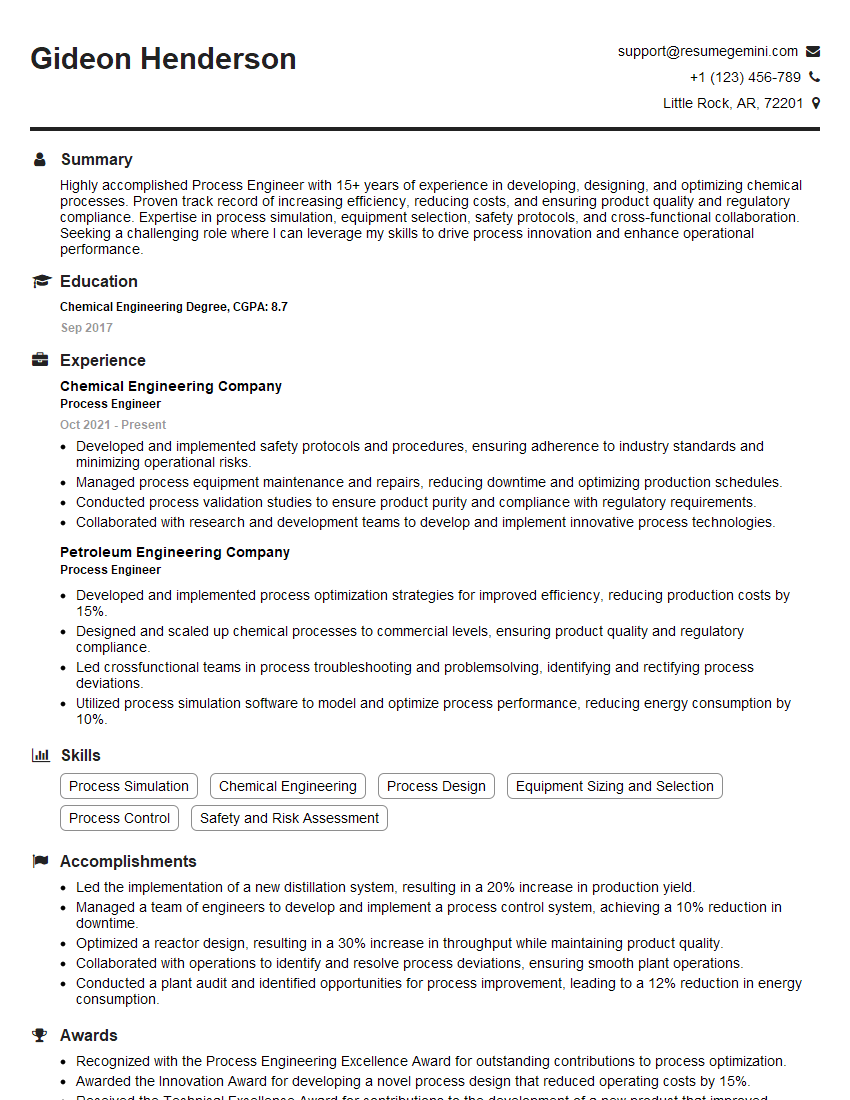
Process Engineer Resume Sample
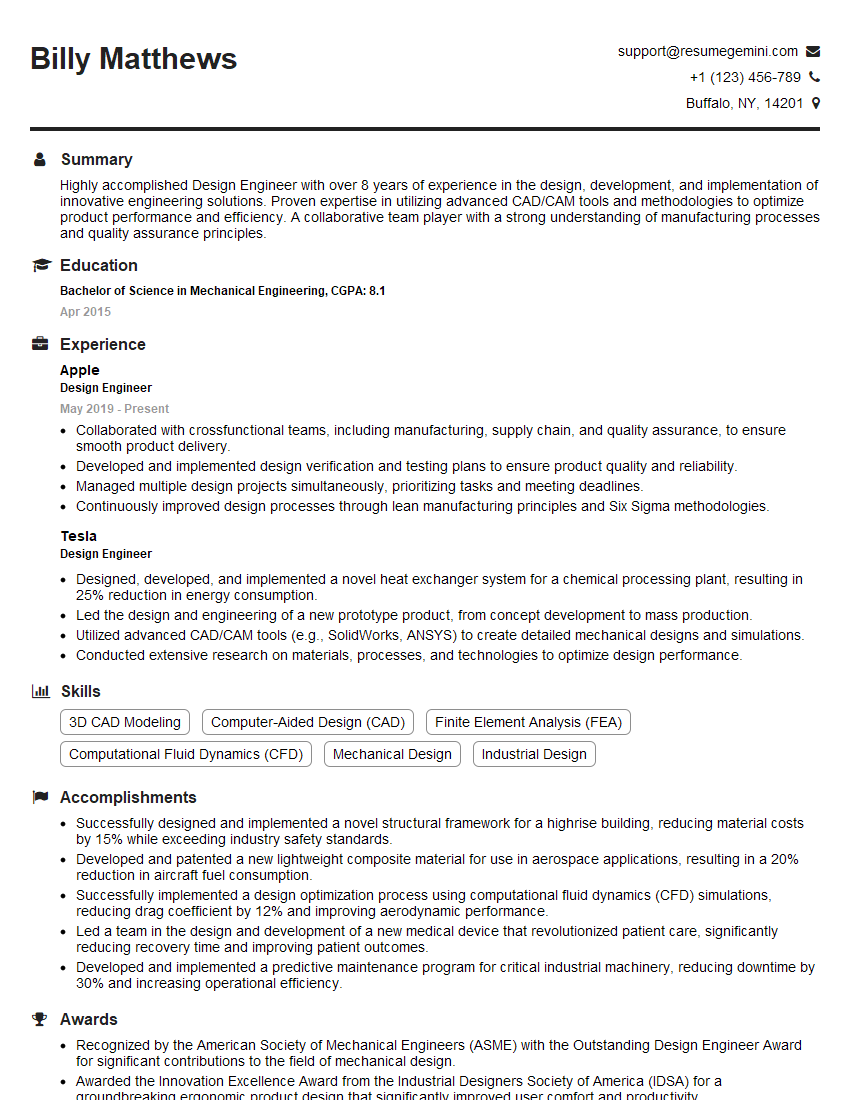
Design Engineer Resume Sample

Operations Research Analyst Resume Sample

Statistical Analyst Resume Sample

Chemical Engineer Resume Sample

Civil Engineer Resume Sample

Electrical Engineer Resume Sample

Industrial Engineer Resume Sample
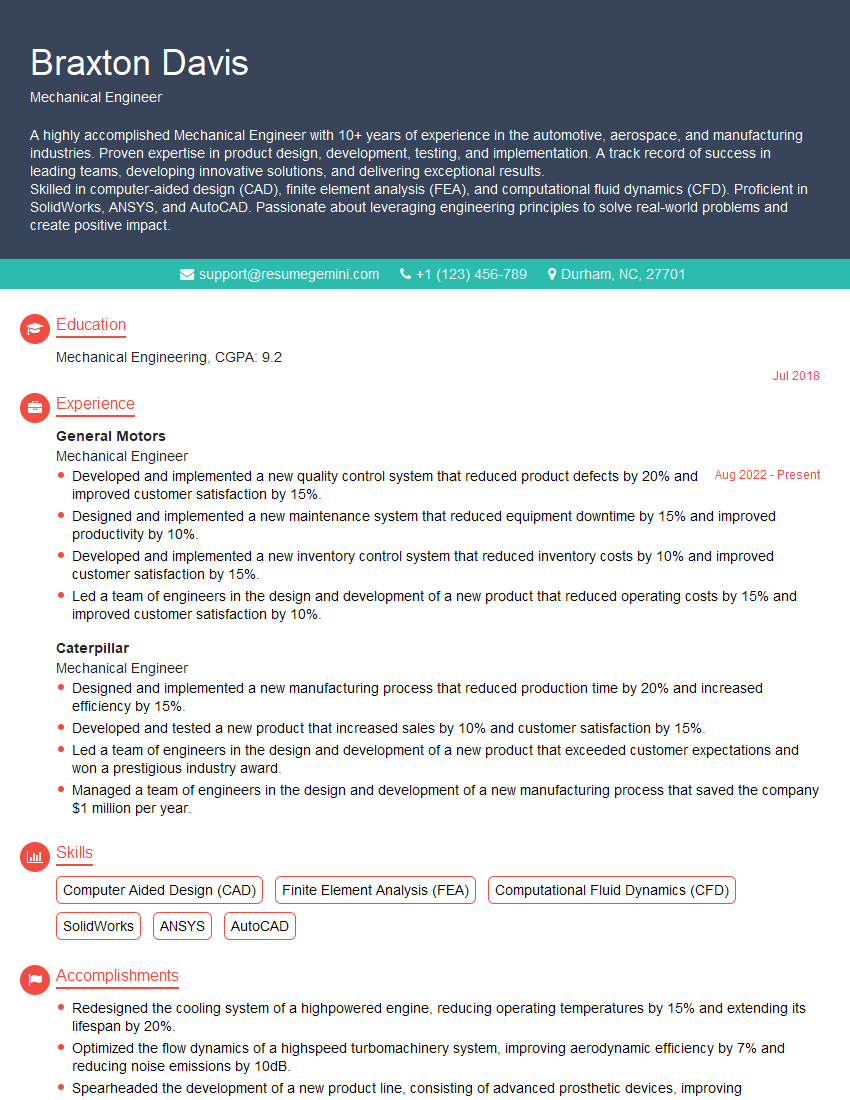
Mechanical Engineer Resume Sample

Engineering Analyst Resume Sample

Technical Illustrator Resume Sample

Scientific Illustrator Resume Sample

Technical Writer Resume Sample
Explore more articles
Users Rating of Our Blogs
Share Your Experience
We value your feedback! Please rate our content and share your thoughts (optional).
What Readers Say About Our Blog
To the interviewgemini.com Webmaster.
Very helpful and content specific questions to help prepare me for my interview!
Thank you
To the interviewgemini.com Webmaster.
This was kind of a unique content I found around the specialized skills. Very helpful questions and good detailed answers.
Very Helpful blog, thank you Interviewgemini team.