Interviews are more than just a Q&A session—they’re a chance to prove your worth. This blog dives into essential Electrical Equipment Troubleshooting and Repair interview questions and expert tips to help you align your answers with what hiring managers are looking for. Start preparing to shine!
Questions Asked in Electrical Equipment Troubleshooting and Repair Interview
Q 1. Describe your experience troubleshooting faulty electrical motors.
Troubleshooting faulty electrical motors involves a systematic approach combining visual inspection, electrical testing, and mechanical checks. I begin by visually inspecting the motor for obvious signs of damage, such as loose connections, burnt insulation, or mechanical wear. Then, I use a multimeter to check the motor windings for continuity and insulation resistance. A low insulation resistance indicates a potential short circuit, while an open circuit suggests a broken winding. I also check the motor’s current draw under load to identify potential issues like bearing wear or rotor imbalances. For example, I once worked on a motor in a manufacturing plant that was exhibiting excessive vibration. Initial inspection revealed nothing, but careful current measurements showed significantly higher-than-normal amperage. Further investigation pinpointed a failing bearing, which was replaced, resolving the vibration and preventing a catastrophic failure.
Next, I might use specialized equipment like a motor analyzer to perform more comprehensive tests, such as checking for phase imbalances or rotor defects. Finally, if the electrical and mechanical checks don’t reveal the problem, I might consider issues with the motor’s control circuit or power supply. The entire process hinges on a methodical approach, starting with the simplest checks and moving toward more complex diagnostics. This ensures efficient troubleshooting and minimizes downtime.
Q 2. How do you diagnose a short circuit in a wiring harness?
Diagnosing a short circuit in a wiring harness requires a methodical and safe approach. First, I visually inspect the harness for any obvious damage, such as frayed wires, cuts, or burn marks. This often reveals the culprit quickly. If a visual inspection is inconclusive, I use a multimeter to check for continuity between different wires and ground. A low resistance reading between two wires that shouldn’t be connected indicates a short circuit.
To pinpoint the exact location of the short, I might use a short circuit locator, a specialized tool that injects a signal into the harness and detects the point of the short. Alternatively, I can systematically disconnect sections of the harness while testing for continuity. Once I’ve isolated the shorted section, I repair it by replacing the damaged wires or connectors. For example, I once diagnosed a short in a vehicle’s wiring harness. It took only minutes to locate the short, which turned out to be a wire rubbing against the chassis. Properly securing the wire resolved the issue immediately.
Q 3. Explain the process of testing a three-phase motor.
Testing a three-phase motor involves several steps to ensure its proper operation and safety. First, I visually inspect the motor for any obvious damage. Then, I use a multimeter to check the continuity and insulation resistance of the motor windings. I’d look for open circuits or short circuits. Next, I measure the resistance between each winding pair to check for balanced phase resistance; significant differences would indicate problems within the windings.
I then perform a voltage test on each phase while the motor is disconnected from the power supply. This ensures proper voltage supply to all phases. After this, I’ll check the motor’s current draw under load. A high current draw, or an imbalance between phases, could point to a problem like a rotor imbalance or a faulty winding. Finally, I perform a mechanical check, listening for unusual noises like grinding or bearing problems, and checking for excessive vibration. For a thorough check, I may also use a motor analyzer for more detailed tests like checking for rotor defects or phase imbalances. It’s crucial to disconnect the motor from the power source before any testing for safety reasons.
Q 4. What are the common causes of overcurrent protection tripping?
Overcurrent protection devices, such as circuit breakers and fuses, trip for several reasons, all designed to prevent damage to equipment or fire hazards. The most common cause is an overload, where the current exceeds the device’s rating for an extended period. This can result from starting large motors, running too many appliances on one circuit, or a faulty appliance drawing excessive current.
Short circuits are another major culprit. A short circuit creates a low-resistance path, causing a surge in current. Faulty equipment, such as a motor with a shorted winding or a damaged appliance, can also lead to overcurrent protection tripping. Other potential causes are ground faults, where current leaks to ground, and power surges or spikes. Proper diagnosis requires careful investigation of the circuit and the equipment connected to it to identify and resolve the underlying cause. Ignoring the problem can result in further equipment damage or a fire hazard.
Q 5. How do you troubleshoot a malfunctioning PLC?
Troubleshooting a malfunctioning PLC (Programmable Logic Controller) involves a systematic approach. First, I’d review the PLC’s alarm logs and event history to identify any error messages or unusual events. Then, I’d check the physical connections and power supply of the PLC, and look for loose connections, damaged cables, or power supply issues. A faulty power supply can cause random malfunctions.
Next, I’d verify the PLC’s program and configurations. This could involve downloading the PLC’s program and checking for errors in the logic or configuration settings. I’d test input and output signals to ensure they are communicating correctly. This would involve checking the sensors, switches, actuators, and other devices connected to the PLC’s inputs and outputs. For example, a faulty sensor might send an incorrect signal, causing the PLC to malfunction. Specialized software and monitoring tools can greatly aid in checking I/O signals and tracking data flow. Finally, I might use diagnostic tools provided by the PLC manufacturer to perform deeper checks of the PLC’s hardware and software. The goal is to methodically eliminate possibilities until the root cause is identified.
Q 6. What safety precautions do you take when working with high voltage equipment?
Safety is paramount when working with high-voltage equipment. Before I even touch anything, I ensure that the power is completely isolated and locked out, using appropriate lockout/tagout procedures. I always use insulated tools and personal protective equipment (PPE), including insulated gloves, eye protection, and safety footwear. I never work alone; having a second person present allows for observation and assistance in case of an emergency. I also verify the absence of voltage using a non-contact voltage tester before starting any work.
I thoroughly check all tools and equipment to ensure they are in good condition and properly insulated. Before energizing any circuit, I carefully review the schematics and understand the potential hazards. After working on high voltage equipment, I always double check my work, ensuring that all connections are secure and properly insulated before the power is restored. Furthermore, I’m always aware of my surroundings and potential hazards. Following these safety protocols is absolutely essential for preventing serious injury or even fatality.
Q 7. Describe your experience with interpreting electrical schematics.
Interpreting electrical schematics is a fundamental skill for me. I’m proficient in reading and understanding a wide range of schematic diagrams, including ladder diagrams, one-line diagrams, and wiring diagrams, used across various industrial systems. I understand the symbols and conventions used to represent different components, such as motors, switches, relays, and sensors. I can trace signals and power flows through the circuit, understanding how the different components interact to achieve the system’s overall function.
For example, I recently used a schematic to troubleshoot a faulty control system in a water treatment plant. The schematic clearly showed the signal path from the level sensor to the pump control relay, allowing me to quickly identify a faulty connection in the relay’s wiring. Proficiency with electrical schematics is not just about understanding the symbols, but also about applying that understanding to real-world scenarios; this helps to diagnose issues quickly and efficiently, minimizing downtime and optimizing system performance. My experience covers a wide range of industrial electrical systems, and I regularly use schematics to plan, install and troubleshoot systems.
Q 8. How do you identify and resolve grounding issues?
Grounding issues, often manifested as electrical shocks or equipment malfunctions, stem from a lack of proper connection to earth. Identifying these issues requires systematic investigation. First, I’d visually inspect all grounding wires for damage, loose connections, or corrosion. A multimeter is crucial here; I’d test the continuity of the grounding path from the equipment to the grounding rod using the multimeter’s continuity test function. A low resistance reading (ideally close to zero ohms) indicates a good ground. High resistance or an open circuit signifies a problem.
Resolving grounding issues involves addressing the source of the problem. This could be as simple as tightening a loose connection, replacing a corroded wire, or even installing a new grounding rod if the existing one is inadequate. For more complex scenarios, I might employ a ground clamp to temporarily establish a known good ground to isolate the problem area. Always ensure the power is completely disconnected before any physical work begins to prevent electrical shock. Following established safety protocols is paramount in this process.
For example, I once worked on a faulty industrial oven where intermittent shocks were reported. A thorough inspection revealed a corroded grounding wire near the oven’s power inlet. Replacing that wire immediately resolved the issue.
Q 9. Explain the difference between AC and DC circuits.
The fundamental difference between AC (Alternating Current) and DC (Direct Current) lies in the direction of electron flow. In DC circuits, electrons flow consistently in one direction, like water flowing through a pipe. This is the type of current produced by batteries. AC circuits, on the other hand, involve electrons that periodically reverse their direction, oscillating back and forth. Think of it like a wave, constantly changing direction. This is the type of electricity supplied to our homes and industries by power grids.
This difference impacts circuit behavior significantly. DC circuits are simpler to analyze and often require less complex components. AC circuits, however, exhibit phenomena like inductive and capacitive reactance, requiring more sophisticated analysis techniques. Furthermore, the voltage and current in an AC circuit are constantly changing over time, requiring specific measurements and calculations to understand. In troubleshooting, understanding the type of circuit is critical for choosing the right tools and techniques.
Q 10. How do you test the continuity of a circuit?
Testing circuit continuity verifies if there’s an uninterrupted path for electrical current to flow between two points. This is typically done with a multimeter set to the continuity test mode (usually indicated by a diode symbol or a buzzing sound). One lead of the multimeter is connected to one point in the circuit, and the other lead to another. If the circuit is continuous, the multimeter will indicate a closed circuit (low resistance reading or a beep). If the circuit is open (broken), the multimeter will indicate an open circuit (high resistance or no beep).
For instance, to test the continuity of a wire, you’d place one multimeter probe at each end of the wire. A continuous beep confirms the wire’s integrity. This simple test is invaluable in diagnosing broken wires, faulty switches, or other circuit interruptions. It’s a fundamental step in any electrical troubleshooting process. Remember to always disconnect the power before performing continuity tests.
Q 11. How do you use a multimeter to troubleshoot electrical problems?
A multimeter is an essential tool for electrical troubleshooting. It allows for accurate measurement of voltage, current, and resistance. To troubleshoot, I would first identify the symptom—is there a lack of power, an overload, a short circuit, or something else? Then, I’d systematically check the various components of the circuit using the multimeter.
For example, if there’s no power, I’d first check the voltage at the power source using the multimeter’s voltage setting (DC or AC depending on the circuit type). Then, I’d trace the voltage along the circuit to pinpoint where the voltage drops to zero. This could indicate a broken wire, a tripped breaker, or a faulty component. If there’s an overload, I’d use the current setting to measure the current draw of the circuit and compare it to the circuit’s rated capacity. A short circuit would be indicated by a significantly higher current draw than expected. Resistance measurements help identify faulty components or open circuits.
Remember, safety is key; always power down the circuit before making measurements.
Q 12. What are the different types of electrical relays and their functions?
Electrical relays are electromechanical switches that use a small control current to switch a much larger power circuit. There are many types, each with a specific function. Some common types include:
- Electromechanical Relays: These are the most common type, using an electromagnet to actuate a switch. They’re simple, reliable, and relatively inexpensive.
- Solid-State Relays (SSRs): These use semiconductor devices instead of mechanical contacts. They are faster, have longer lifespans, and are more immune to mechanical wear, but can be more sensitive to voltage spikes.
- Time Delay Relays: These introduce a time delay before switching, crucial for applications like motor starting or sequence control. The delay can be adjustable.
- Overload Relays: These protect circuits from excessive current draw, automatically disconnecting the circuit if the current exceeds a preset threshold, preventing damage to equipment.
Their functions depend on the application. For instance, an electromechanical relay might control a large motor based on a signal from a PLC (Programmable Logic Controller), while an overload relay would protect a motor from damage due to overcurrent. Choosing the appropriate relay is crucial for proper circuit protection and functionality.
Q 13. Describe your experience with various types of electrical sensors.
My experience encompasses a wide range of electrical sensors, including:
- Temperature Sensors (Thermocouples, RTDs, Thermistors): Used for measuring temperature in various applications, from industrial ovens to HVAC systems. I understand the different characteristics and limitations of each type, allowing me to choose the appropriate sensor for a given application.
- Pressure Sensors: These measure pressure in pneumatic or hydraulic systems, providing critical data for process control or safety monitoring. I’m familiar with various types like strain gauge, capacitive, and piezoelectric pressure sensors.
- Proximity Sensors (Inductive, Capacitive, Photoelectric): Used for detecting the presence of objects without physical contact. My experience includes troubleshooting issues related to sensing range, sensitivity, and interference.
- Flow Sensors: These measure the flow rate of liquids or gases. I’ve worked with various types, including ultrasonic, differential pressure, and turbine flow sensors.
Understanding the principles of operation, calibration methods, and potential failure modes of each sensor type is crucial for effective troubleshooting. For example, I recently resolved an issue in a chemical plant where a faulty temperature sensor was causing incorrect process control. The sensor was replaced, recalibrated, and the process returned to normal.
Q 14. How do you troubleshoot a faulty circuit breaker?
Troubleshooting a faulty circuit breaker involves a careful and systematic approach. First, I’d visually inspect the breaker for any obvious signs of damage, such as burns, cracks, or loose connections. Then, I’d check if the breaker is actually tripped; this is often indicated by a visible switch in the ‘off’ position. If tripped, I’d try resetting it by switching it to the ‘off’ position and back to the ‘on’ position. If it immediately trips again, this suggests a persistent fault in the circuit it protects.
The next step is to determine the cause of the trip. I’d use a multimeter to measure the current draw of the circuit. If it’s significantly higher than expected, it could indicate a short circuit or an overload. I would then systematically investigate each component in the circuit to isolate the faulty element—this could be a damaged appliance, a malfunctioning wire, or something else.
If the breaker doesn’t trip but the circuit still doesn’t work, the problem might lie within the breaker itself. This requires replacing the faulty breaker. In such cases, I would use a breaker with the same amperage rating and type to ensure compatibility with the circuit.
Remember to always follow safety precautions; never work on live electrical circuits.
Q 15. Explain the principles of Ohm’s Law and its applications.
Ohm’s Law is the foundational principle governing the relationship between voltage, current, and resistance in an electrical circuit. It states that the current (I) flowing through a conductor is directly proportional to the voltage (V) applied across it and inversely proportional to its resistance (R). This relationship is expressed mathematically as: V = I * R
Applications: Ohm’s Law is universally applied in electrical troubleshooting and design. For example, if we know the voltage across a resistor and its resistance, we can calculate the current flowing through it. Conversely, if we measure the current and voltage, we can determine the resistance. This allows us to identify faulty components, such as resistors with unexpected resistance values indicating a potential failure. It’s crucial in circuit design to ensure components are appropriately sized to handle expected current and voltage levels, preventing overheating and failures. For instance, in designing a lighting circuit, understanding Ohm’s Law ensures that the wires and the power source can safely handle the current drawn by the bulbs without causing a fire hazard.
Imagine trying to fix a dimly lit lamp. Using a multimeter, you measure the voltage at the lamp socket (say, 120V), and the current (say, 0.5A). Applying Ohm’s law (R = V/I), you calculate the resistance (240Ω). If you know the lamp should have a resistance of, say, 200Ω, the difference points towards a problem with the lamp itself – possibly a broken filament.
Career Expert Tips:
- Ace those interviews! Prepare effectively by reviewing the Top 50 Most Common Interview Questions on ResumeGemini.
- Navigate your job search with confidence! Explore a wide range of Career Tips on ResumeGemini. Learn about common challenges and recommendations to overcome them.
- Craft the perfect resume! Master the Art of Resume Writing with ResumeGemini’s guide. Showcase your unique qualifications and achievements effectively.
- Don’t miss out on holiday savings! Build your dream resume with ResumeGemini’s ATS optimized templates.
Q 16. How do you identify and replace faulty components in electrical equipment?
Identifying and replacing faulty components requires a systematic approach. It begins with safe practices – always disconnect power before working on any electrical equipment! Next, I use a multimeter to measure voltages, currents, and resistances at various points in the circuit. Comparing these readings to the circuit’s schematic or wiring diagram helps pinpoint the faulty component.
For example, if a motor isn’t running, I might check the voltage at its terminals. If the voltage is present but the motor is still not running, the motor itself is likely faulty. If the voltage is absent, the problem might lie in the wiring or a preceding component, like a switch or fuse. I then use my knowledge of the circuit to systematically trace back the potential failure points, using the multimeter to check for continuity, shorts, or open circuits.
Once the faulty component is identified, I carefully remove it, ensuring I note its specifications (e.g., wattage, voltage, resistance) to ensure proper replacement. It’s crucial to replace the component with one having identical specifications to avoid damaging the circuit.
Q 17. Describe your experience with preventative maintenance on electrical equipment.
Preventative maintenance is crucial for ensuring the longevity and safe operation of electrical equipment. My experience includes regular inspections of electrical panels, checking for loose connections, corrosion, and overheating. I perform visual inspections of wiring, looking for signs of damage or fraying. I also test the insulation resistance of cables and motors using a megger to detect any degradation.
Regular cleaning of equipment, especially removing dust and debris from components, is a key part of preventative maintenance. Cleaning prevents overheating and improves efficiency. For motors, I often check and lubricate bearings as needed. I also create a schedule for preventative maintenance tasks, varying the frequency based on the criticality and usage of equipment. For example, high-usage industrial equipment might require monthly inspections, while less frequently used appliances may only need annual checks. Documenting all preventative maintenance activities is crucial for tracking equipment history and identifying potential problems before they become critical issues.
Q 18. How do you document your troubleshooting process?
Thorough documentation is essential for effective troubleshooting and repair. I always maintain a detailed log of my troubleshooting process, including the following:
- Date and time of the issue: Provides a timeline for analysis.
- Description of the problem: Clear and concise statement of the malfunction.
- Measurements taken: Recordings of voltage, current, resistance, etc., using the multimeter. I often include diagrams sketching the readings’ locations.
- Tests performed: List of tests conducted and their outcomes.
- Components checked and replaced: A record of parts checked, their condition, and replacements made.
- Corrective actions taken: Detailed description of the repair process.
- Verification of repair: Confirmation of the solution’s effectiveness.
This documentation allows me to quickly diagnose similar problems in the future and enables others to understand my work. Digital tools or a dedicated notebook, with clear images of wiring configurations and component markings, prove to be invaluable.
Q 19. How do you prioritize repairs based on urgency and criticality?
Prioritizing repairs involves assessing both urgency and criticality. I use a system that considers the following:
- Safety hazards: Repairs posing immediate safety risks (e.g., exposed wiring, sparking equipment) take top priority.
- Operational impact: Repairs impacting critical systems or causing significant downtime are prioritized higher.
- Cost implications: The potential cost of downtime or damage resulting from a delay in repair is considered.
- Severity of the fault: Major failures requiring complete component replacements are prioritized over minor issues.
I often use a matrix or a simple list to rank repairs based on these factors. For example, a safety hazard would be ranked highest, followed by critical system failures, and then other issues. This systematic approach ensures efficient resource allocation and minimizes disruption.
Q 20. What is your experience with different types of electrical wiring?
My experience encompasses various types of electrical wiring, including:
- Solid copper wire: Used in high-current applications and where vibration is a concern. Common in industrial settings.
- Stranded copper wire: More flexible than solid wire, ideal for applications requiring frequent bending or movement. Used in appliances and mobile equipment.
- Aluminum wire: Lighter and less expensive than copper, but requires special connectors and careful handling due to its susceptibility to oxidation. Used less frequently now in residential settings, more common in large-scale power transmission.
- Coaxial cable: Used for transmitting high-frequency signals, such as in cable television and internet connections.
- Fiber optic cable: Transmits data using light signals, offering high bandwidth and long transmission distances.
I am familiar with the appropriate safety precautions and installation techniques for each type. Understanding the properties of different wire types is essential to selecting the right wire for a specific application. Incorrect wire selection can lead to overheating, fire hazards, or poor signal quality.
Q 21. Describe your experience with various types of electrical connectors.
My experience covers a wide range of electrical connectors, each designed for specific applications:
- Screw terminals: Secure and reliable, commonly used in electrical panels and industrial control systems.
- Wire nuts: Simple and convenient for joining wires in residential wiring.
- Crimp connectors: Efficient for joining wires without soldering. Requires specialized tools.
- Solder joints: Excellent for creating strong, permanent connections, especially in high-vibration environments. Needs proper soldering technique.
- Receptacles and plugs: Household and industrial plugs (NEMA, IEC) and their corresponding sockets vary in amperage and voltage ratings. Choosing the correct type is crucial for safety.
- DB-9, DB-25, and other specialized connectors: Used in computer and data communication systems.
I understand the importance of selecting the appropriate connector for each application and ensuring proper installation to maintain electrical safety and integrity. Faulty connectors can lead to loose connections, arcing, overheating, and even fires.
Q 22. How do you troubleshoot problems related to power factor correction?
Power factor correction addresses the issue of lagging current in inductive loads, like motors and transformers. A low power factor means the electricity isn’t being efficiently used, leading to higher energy bills and increased strain on the electrical system. Troubleshooting starts with measuring the power factor using a power analyzer. This device measures voltage, current, and power, allowing calculation of the power factor.
Step-by-Step Troubleshooting:
- Measurement: First, measure the power factor at the main distribution panel and at individual loads. A low power factor (typically below 0.9) indicates a problem.
- Load Identification: Identify the major inductive loads contributing to the low power factor. This often involves reviewing load schedules and performing site surveys.
- Capacitor Sizing and Placement: Once the inductive load is identified, calculate the required capacitance for power factor correction using standard formulas. This involves considering the load’s kVA and desired power factor improvement. The capacitors are then installed as close as possible to the inductive load for maximum effectiveness.
- Verification: After installation, re-measure the power factor to verify improvement. If the power factor isn’t significantly improved, check the capacitor bank’s connections, inspect for any faulty capacitors, and re-evaluate the calculations.
Example: In a factory setting, we discovered a low power factor due to several large induction motors. By strategically placing capacitor banks near these motors, we improved the power factor from 0.7 to 0.95, resulting in significant cost savings and a more stable electrical system.
Q 23. What is your experience with electrical control systems?
My experience with electrical control systems spans over 10 years, encompassing design, installation, troubleshooting, and maintenance across various industrial settings. I’m proficient in working with programmable logic controllers (PLCs) from different manufacturers such as Allen-Bradley, Siemens, and Schneider Electric. I’ve extensively worked with both hardwired and networked control systems, including SCADA systems for supervisory control and data acquisition. This involves programming, configuring, and integrating PLCs with various field devices like sensors, actuators, and motor starters.
I’m comfortable working with various communication protocols including Ethernet/IP, Modbus, and Profibus. My experience extends to safety-related control systems, implementing and troubleshooting safety interlocks and emergency shutdown systems.
Q 24. Describe your experience with troubleshooting problems in industrial control systems.
Troubleshooting industrial control systems requires a systematic approach. I typically follow these steps:
- Safety First: Always prioritize safety by de-energizing circuits before working on them.
- Gather Information: Start by gathering as much information as possible – what happened, when did it happen, what were the symptoms, etc. Review any alarm logs or historical data.
- Inspect Hardware: Visually inspect all components, checking for loose connections, damaged wires, or signs of overheating. This includes the PLC, input/output modules, sensors, actuators, and wiring.
- Diagnostic Tools: Utilize diagnostic tools such as multimeters, oscilloscopes, and PLC programming software to identify the root cause. PLC software allows for monitoring of I/O signals, program execution, and error codes.
- Testing and Verification: After identifying and fixing the problem, thoroughly test the system to ensure it’s operating correctly.
Example: I once encountered a production line shutdown due to a PLC communication failure. Using the PLC’s diagnostics, I identified a faulty communication cable. Replacing the cable restored system functionality.
Q 25. Explain your understanding of National Electrical Code (NEC) standards.
My understanding of the National Electrical Code (NEC) is comprehensive. I’m familiar with all the relevant articles pertaining to industrial and commercial electrical systems. This includes requirements for wiring methods, grounding, overcurrent protection, and equipment installation. I understand the importance of adhering to NEC standards to ensure safety and compliance. I stay updated on the latest NEC revisions to maintain compliance and best practices. This understanding informs all aspects of my work, from design and installation to troubleshooting and maintenance.
For example, I ensure proper grounding techniques are implemented to mitigate electrical hazards, choose appropriate overcurrent protection devices to prevent equipment damage and fire, and use appropriate wiring methods to ensure long-term system reliability and safety.
Q 26. How do you handle unexpected equipment failures during operation?
Handling unexpected equipment failures requires a calm and methodical approach. My first priority is always safety. I immediately isolate the faulty equipment to prevent further damage or injury. Then, I follow these steps:
- Assess the Situation: Determine the extent of the failure, the potential hazards, and the impact on operations.
- Emergency Procedures: Implement any pre-defined emergency procedures, such as switching to backup systems or initiating shutdown protocols.
- Troubleshooting: Systematically troubleshoot the problem using diagnostic tools and my knowledge of the system.
- Repair or Replacement: Depending on the severity of the failure, I either repair the equipment or arrange for replacement.
- Documentation: Thoroughly document the incident, including the cause, the corrective actions taken, and any preventative measures to avoid future occurrences. This ensures a learning process.
Example: During a critical operation, a motor unexpectedly failed. I quickly isolated the motor, implemented emergency shutdown procedures, and diagnosed the problem using a multimeter. The failure was traced to a faulty bearing, which I replaced. This ensured minimal downtime and prevented further damage.
Q 27. What software and tools are you proficient in using for electrical diagnostics?
I’m proficient in using a wide range of software and tools for electrical diagnostics, including:
- PLC Programming Software: RSLogix 5000 (Allen-Bradley), TIA Portal (Siemens), Unity Pro (Schneider Electric).
- SCADA Software: Ignition, Wonderware InTouch.
- Power Analysis Software: Software used with power quality analyzers for data logging and analysis.
- Test Equipment: Multimeters (Fluke, Klein), Oscilloscopes, Clamp meters, Power quality analyzers.
- Specialized Software: Motor control software for VFDs, software for network testing and diagnostics.
I’m also adept at using various computer-aided design (CAD) software for schematics and panel layouts.
Q 28. Describe a challenging electrical repair you successfully completed.
One of the most challenging repairs involved a critical industrial oven that unexpectedly stopped working during a crucial production run. The oven’s control system, a complex PLC-based system, was displaying cryptic error codes. Initial troubleshooting pointed towards a possible hardware failure within the PLC itself, which would have resulted in significant downtime waiting for a replacement.
Instead of immediately assuming a PLC failure, I methodically checked all input and output modules, sensors, and wiring. I discovered a small, loose wire connecting a temperature sensor to the PLC’s input module. This loose connection was causing intermittent signal errors that manifested as cryptic error codes on the PLC’s display. The simple act of tightening this wire restored the oven’s functionality with minimal downtime. This experience highlighted the importance of a systematic, thorough approach even when dealing with sophisticated systems.
Key Topics to Learn for Electrical Equipment Troubleshooting and Repair Interview
- Electrical Safety Regulations and Practices: Understanding and applying relevant safety standards (e.g., OSHA, NEC) is paramount for safe and effective troubleshooting.
- Basic Electrical Theory: A solid grasp of Ohm’s Law, Kirchhoff’s Laws, and AC/DC circuits is fundamental to diagnosing electrical faults.
- Schematic Reading and Interpretation: The ability to understand and interpret electrical schematics is crucial for tracing circuits and identifying problem areas.
- Diagnostic Tools and Techniques: Familiarity with multimeters, oscilloscopes, and other diagnostic equipment, along with proficiency in using them effectively, is essential.
- Troubleshooting Methodologies: Mastering systematic troubleshooting approaches, such as the half-splitting method or using flowcharts, significantly improves efficiency and accuracy.
- Motor Control Circuits: Understanding the operation and troubleshooting of various motor control circuits (e.g., starters, relays, PLCs) is frequently required.
- Common Electrical Faults and their Causes: Experience identifying and diagnosing common issues such as short circuits, open circuits, and ground faults is highly valuable.
- Preventive Maintenance: Understanding the importance of and methods for preventative maintenance to minimize equipment downtime and extend lifespan.
- Soldering and Wiring Techniques: Practical skills in safe and efficient soldering and wiring are essential for repairs.
- Specific Equipment Knowledge: Depending on the job, in-depth knowledge of specific types of electrical equipment (e.g., transformers, generators, industrial controls) may be crucial. Research the specific equipment used by the company you are interviewing with.
Next Steps
Mastering Electrical Equipment Troubleshooting and Repair opens doors to exciting career opportunities with excellent growth potential. A strong foundation in these skills makes you a valuable asset in various industries. To maximize your job prospects, create an ATS-friendly resume that highlights your abilities. ResumeGemini is a trusted resource to help you build a professional and impactful resume. We provide examples of resumes tailored to Electrical Equipment Troubleshooting and Repair to guide you. Take the next step towards your dream career!
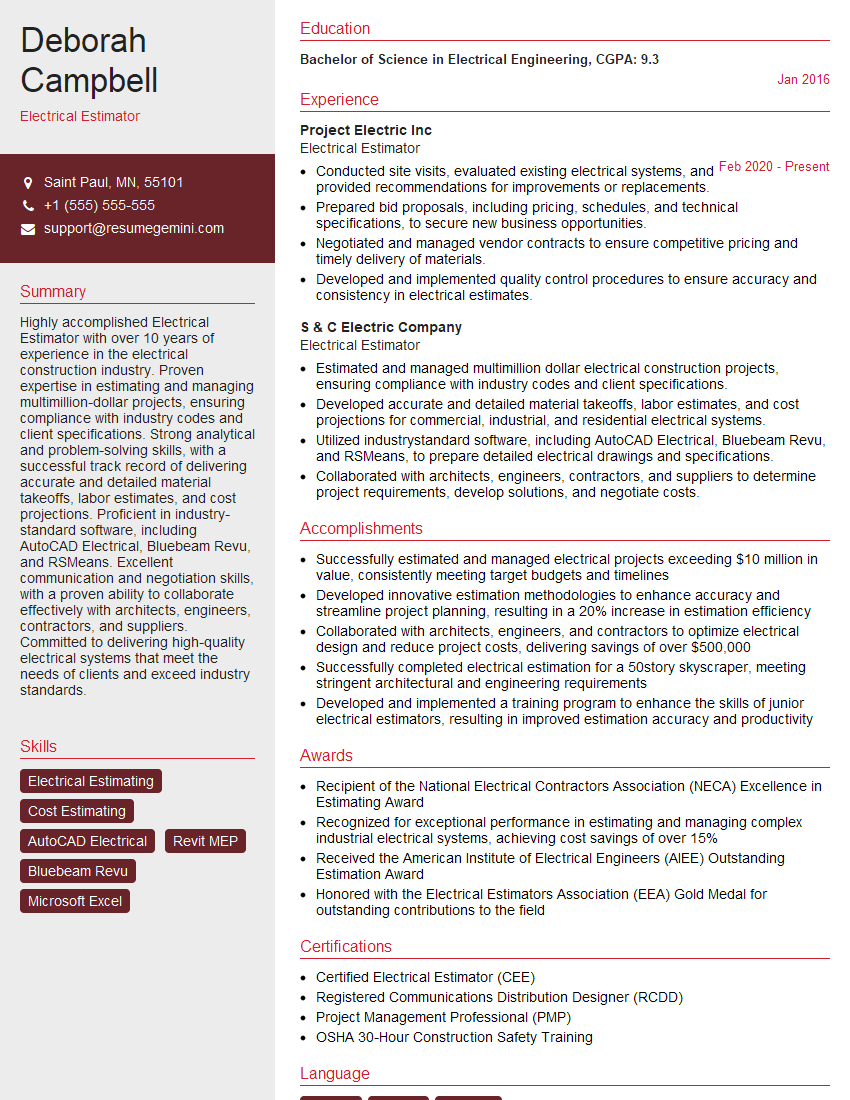
Electrical Estimator Resume Sample
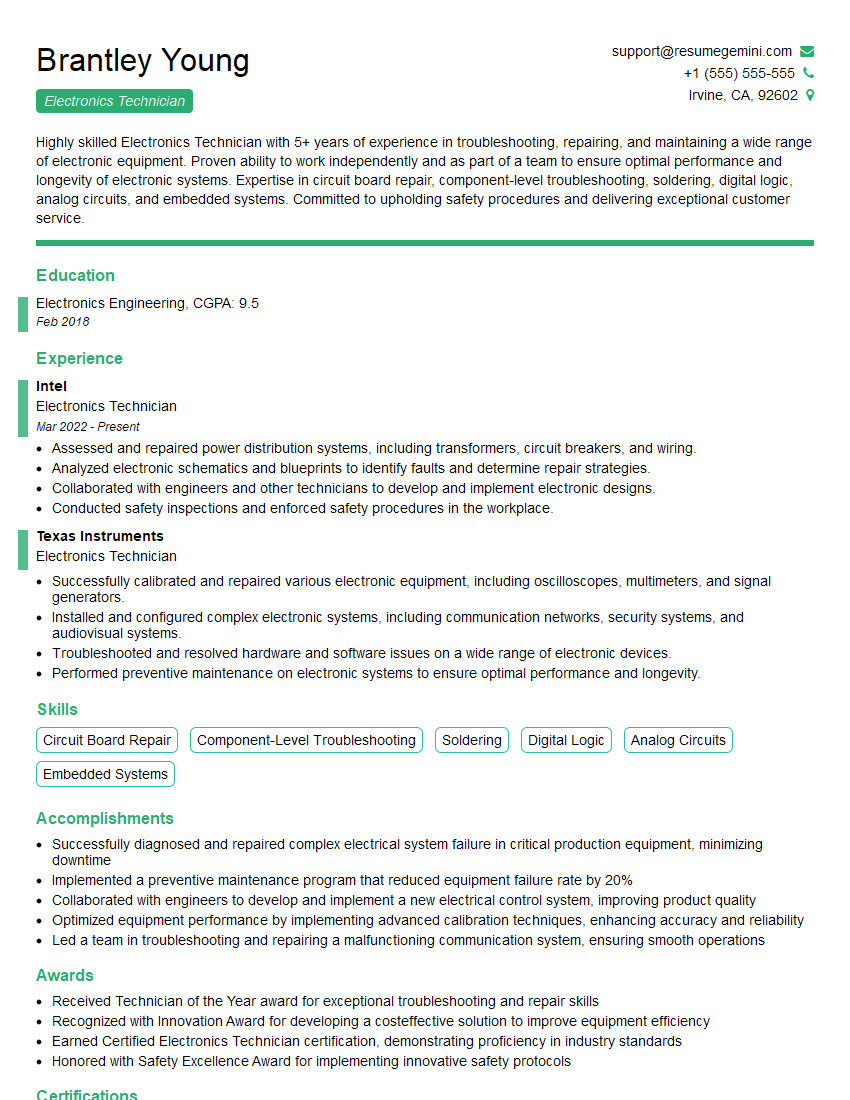
Electronics Technician Resume Sample
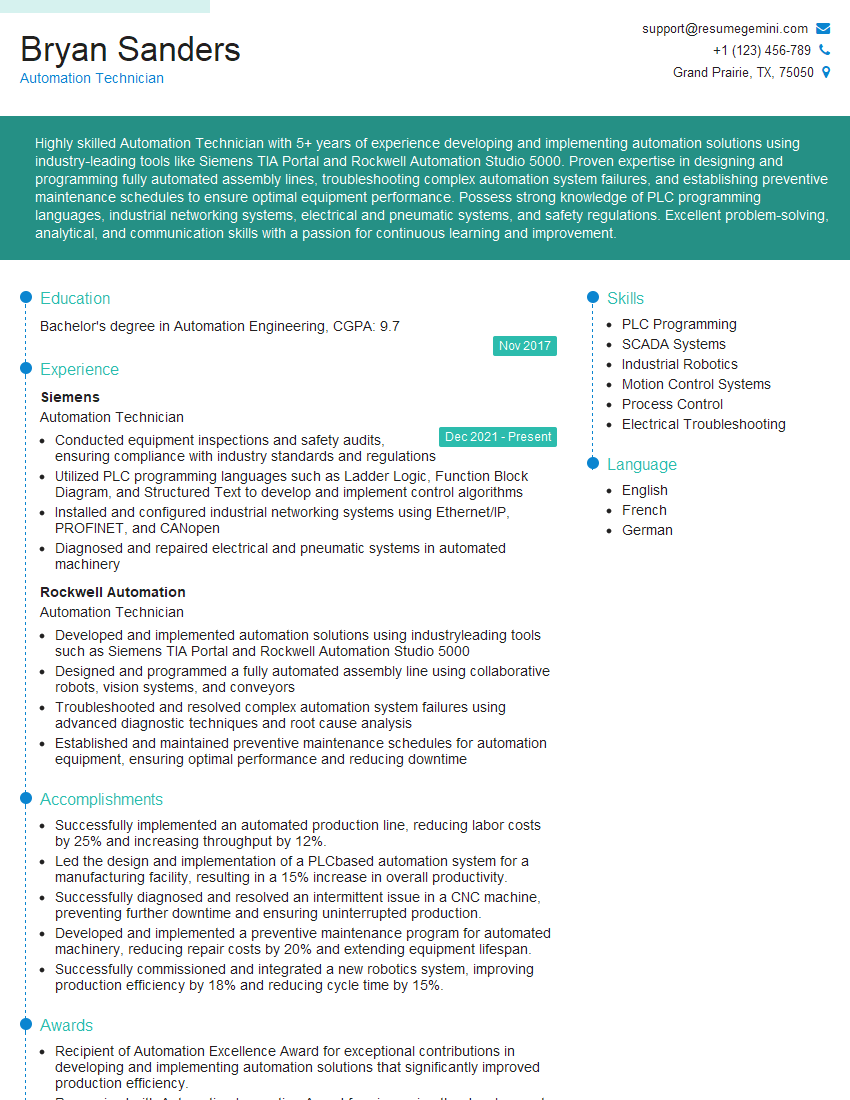
Automation Technician Resume Sample
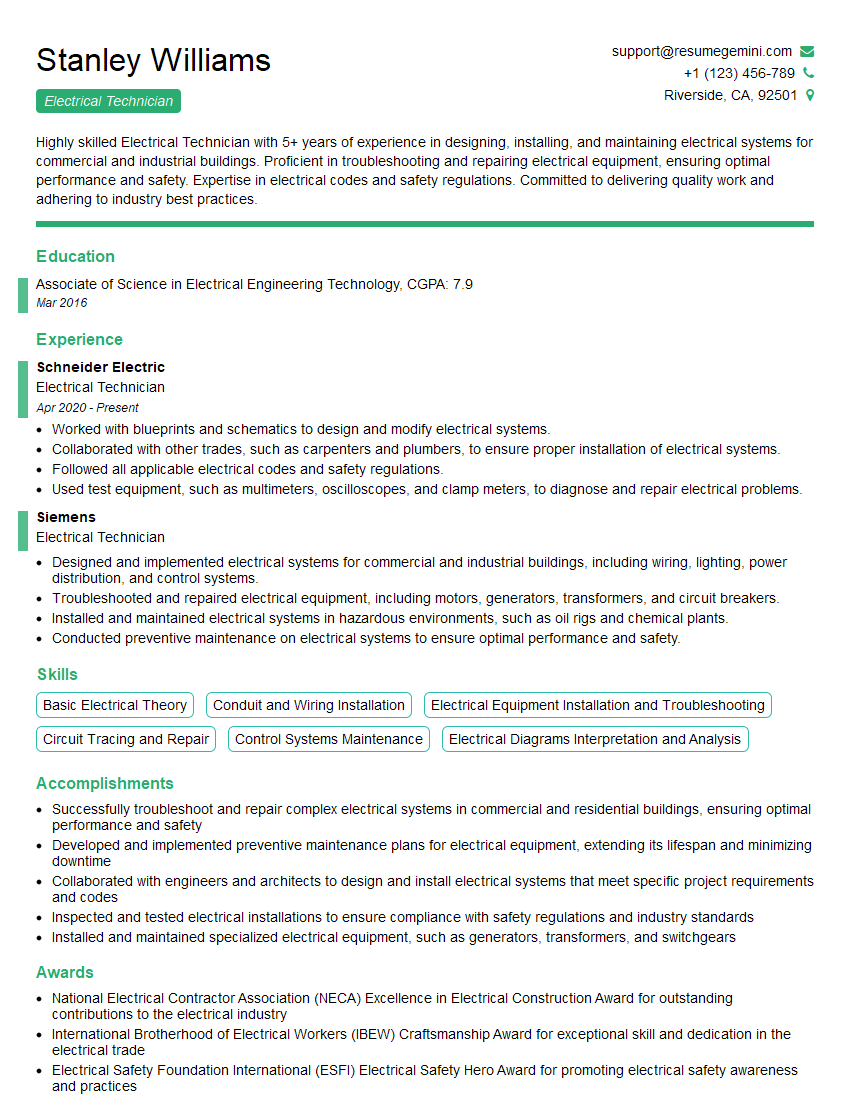
Electrical Technician Resume Sample
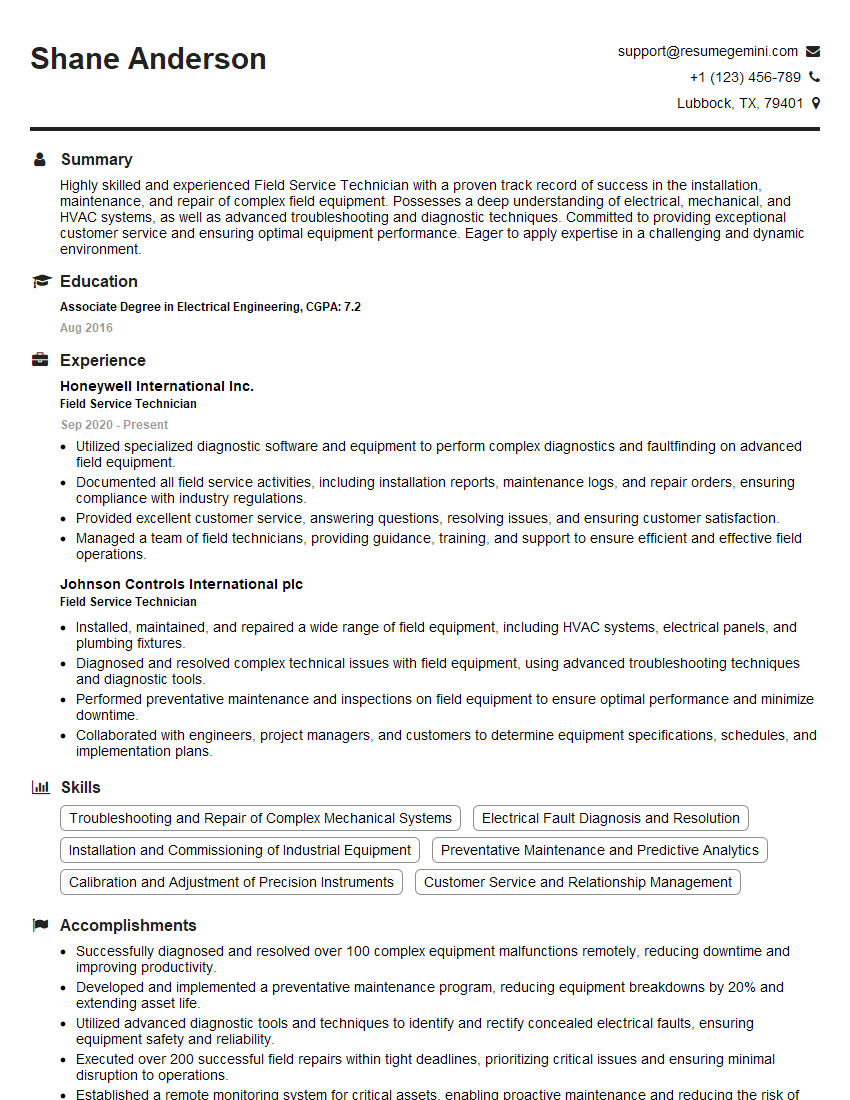
Field Service Technician Resume Sample
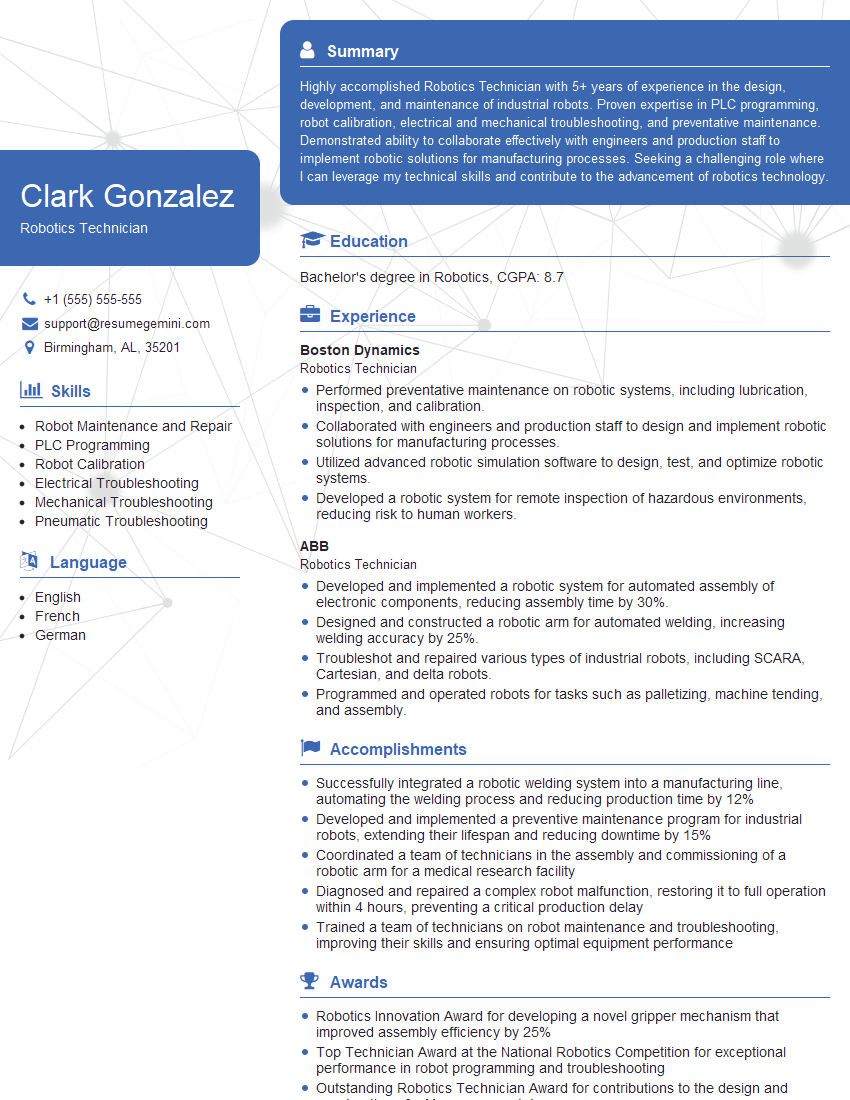
Robotics Technician Resume Sample
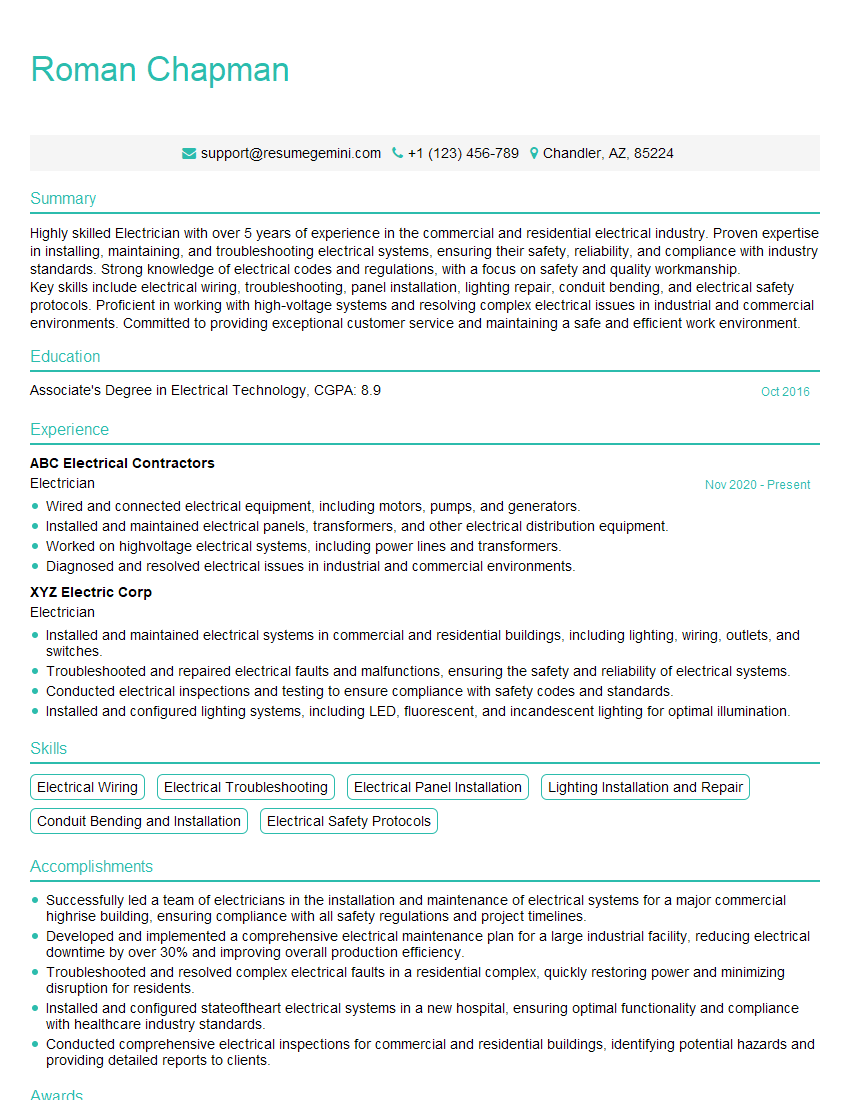
Electrician Resume Sample
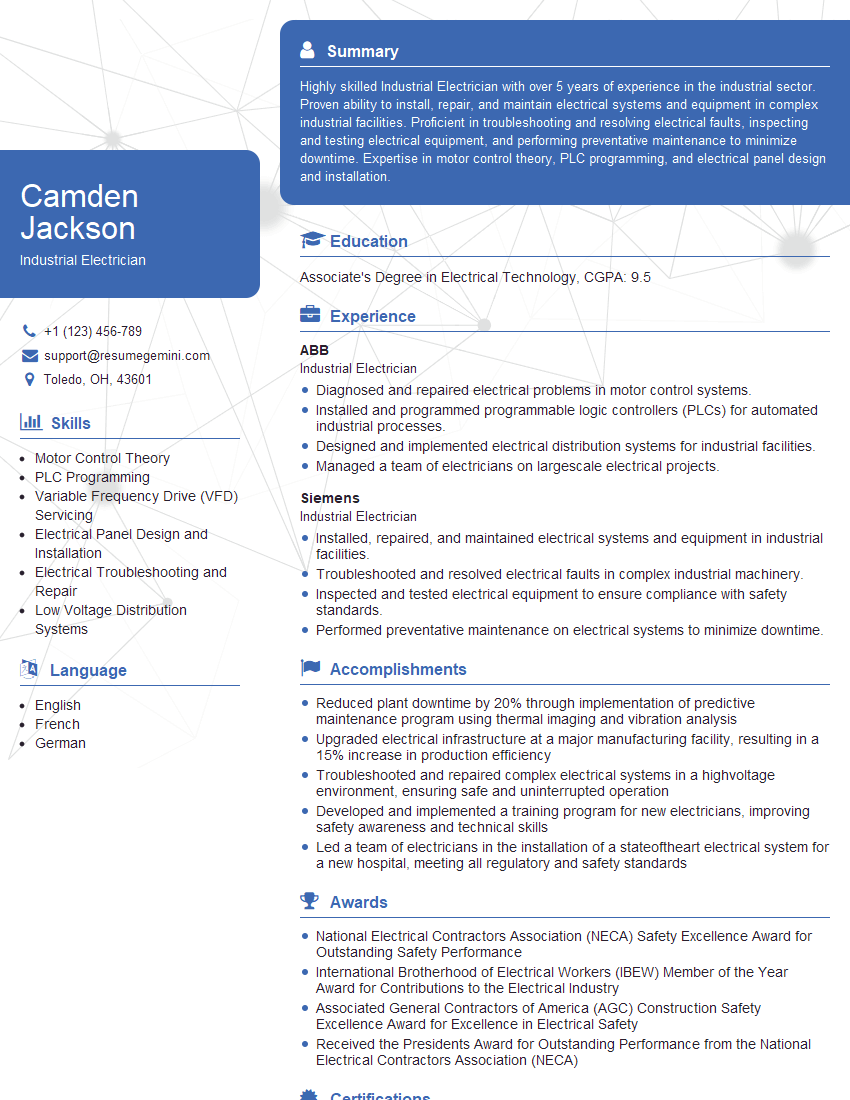
Industrial Electrician Resume Sample

Maintenance Electrician Resume Sample
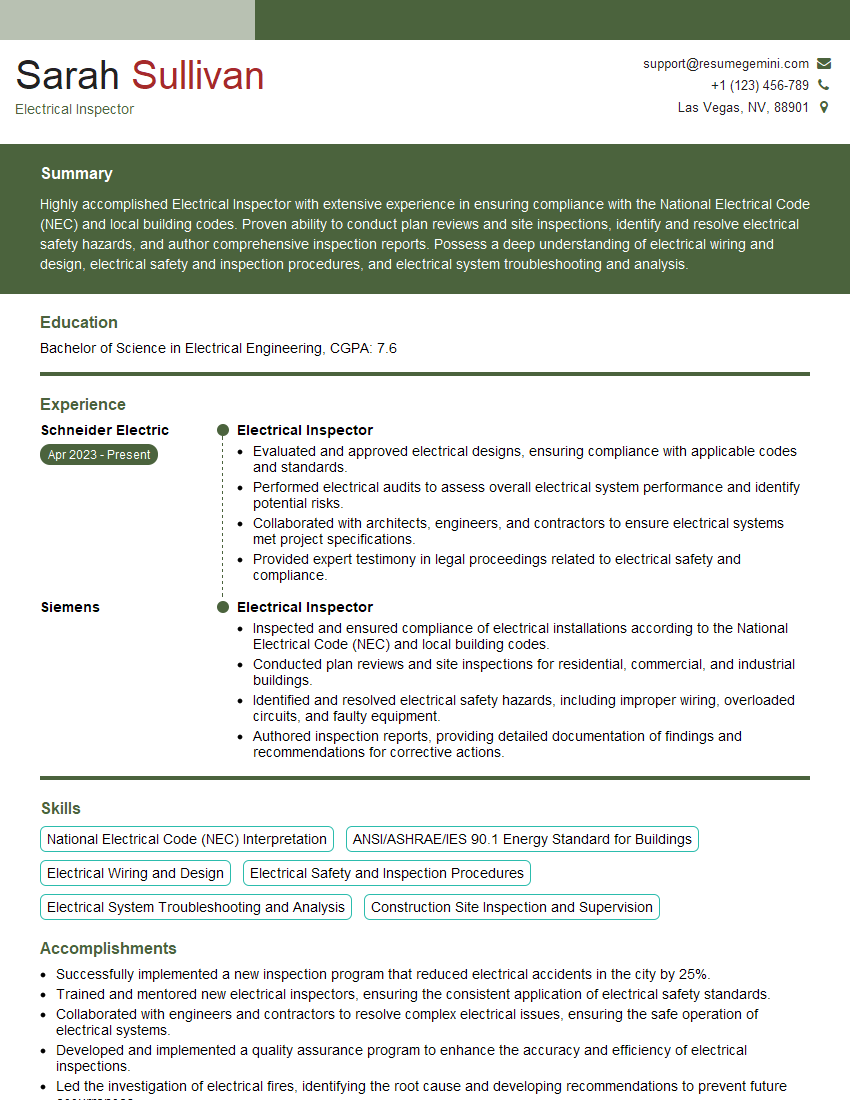
Electrical Inspector Resume Sample
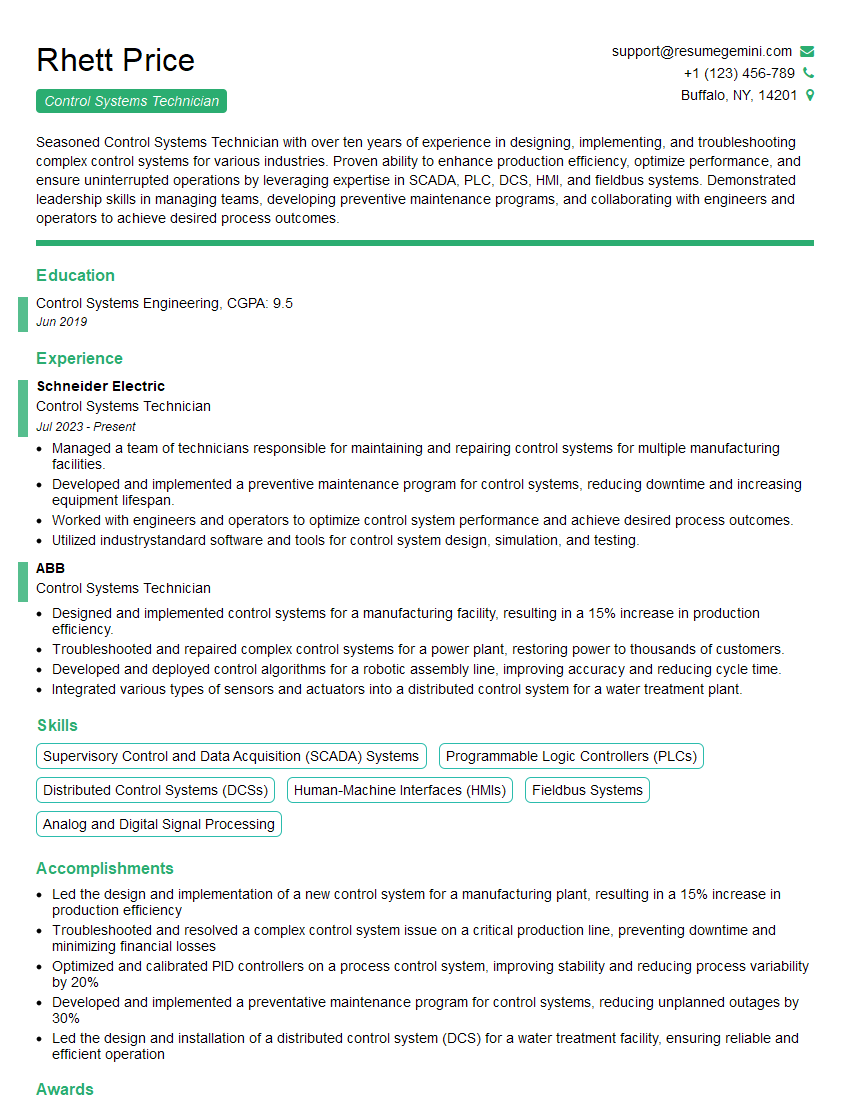
Control Systems Technician Resume Sample

Electrical Maintenance Technician Resume Sample
Explore more articles
Users Rating of Our Blogs
Share Your Experience
We value your feedback! Please rate our content and share your thoughts (optional).
What Readers Say About Our Blog
To the interviewgemini.com Webmaster.
Very helpful and content specific questions to help prepare me for my interview!
Thank you
To the interviewgemini.com Webmaster.
This was kind of a unique content I found around the specialized skills. Very helpful questions and good detailed answers.
Very Helpful blog, thank you Interviewgemini team.