Every successful interview starts with knowing what to expect. In this blog, we’ll take you through the top Nuclear Plant Systems interview questions, breaking them down with expert tips to help you deliver impactful answers. Step into your next interview fully prepared and ready to succeed.
Questions Asked in Nuclear Plant Systems Interview
Q 1. Explain the principle of nuclear fission.
Nuclear fission is the process where a heavy atomic nucleus, like Uranium-235, splits into two or more lighter nuclei. This splitting releases a tremendous amount of energy, primarily in the form of kinetic energy of the fission fragments and as gamma radiation. Think of it like breaking a really big, unstable ball into smaller, more stable pieces, releasing a burst of energy in the process.
The process is initiated by bombarding the heavy nucleus with a neutron. This neutron is absorbed by the nucleus, making it unstable and causing it to split. Importantly, this splitting also releases more neutrons, which can then go on to initiate further fission events, leading to a chain reaction. This chain reaction is what sustains the energy production in a nuclear reactor.
For example, when a Uranium-235 nucleus absorbs a neutron, it forms Uranium-236, which is highly unstable. This then fissions into two smaller nuclei (e.g., Krypton-92 and Barium-141), along with several neutrons and energy. These released neutrons are crucial for the continuation of the chain reaction, allowing for sustained power generation in a controlled manner within a nuclear reactor.
Q 2. Describe the function of a reactor pressure vessel.
The reactor pressure vessel (RPV) is the heart of a nuclear power plant, a massive, thick-walled steel vessel that houses the reactor core. Its primary function is to contain the nuclear fuel, the coolant (usually water), and the intense pressure and radiation generated during the fission process. Imagine it as a super-strong, radiation-proof pressure cooker.
The RPV’s design is critical for safety. Its thick walls withstand the immense pressure of the coolant, which is heated to high temperatures by the nuclear reaction. This pressure needs to be contained to prevent leaks or explosions. The steel also acts as a radiation shield, protecting the plant personnel and the environment from harmful radiation. The RPV is rigorously inspected and monitored throughout its lifespan to ensure its structural integrity.
Q 3. What are the different types of nuclear reactors?
Nuclear reactors come in various types, each with its own design and operating characteristics. The main categories include:
- Pressurized Water Reactors (PWRs): The most common type worldwide, PWRs use water under high pressure to moderate (slow down) neutrons and transfer heat away from the reactor core. The high pressure prevents the water from boiling.
- Boiling Water Reactors (BWRs): Similar to PWRs, but the water in the reactor core is allowed to boil, generating steam directly to drive the turbines.
- CANDU Reactors (CANada Deuterium Uranium): These use heavy water (D2O) as both moderator and coolant, allowing the use of natural uranium fuel without enrichment.
- Pressurized Heavy Water Reactors (PHWRs): Similar to CANDU reactors, employing heavy water as moderator and coolant but differ in design and operational parameters.
- Gas-cooled reactors (GCRs): These use gas, such as carbon dioxide, as a coolant, which has advantages in terms of safety and efficiency in certain designs. Various subtypes exist, such as the Advanced Gas-cooled Reactor (AGR).
- Fast breeder reactors (FBRs): These reactors operate without a moderator, allowing for fast neutrons to initiate fission and also breed new fissile material from fertile material (like Uranium-238).
Each reactor type presents a unique set of advantages and disadvantages regarding safety, efficiency, fuel utilization, and cost. The choice of reactor technology often depends on various factors, including the country’s specific energy needs, resource availability, and regulatory environment.
Q 4. Explain the role of control rods in reactor operation.
Control rods are crucial for regulating the rate of nuclear fission within the reactor core. They are made of neutron-absorbing materials, such as cadmium or boron carbide. By inserting or withdrawing these rods, the reactor operators can control the number of neutrons available to cause fission, thus regulating the power output of the reactor.
Imagine them as brakes on a car. When more neutrons need to be absorbed (slowing down the reaction), the control rods are inserted deeper into the core. Conversely, when more power is needed, the control rods are withdrawn to allow more neutrons to initiate fission. This precise control is essential for maintaining a stable and safe operation of the reactor, preventing power surges or shutdowns.
The control rods are typically moved using a sophisticated control system that monitors the reactor parameters and automatically adjusts the rod position to maintain the desired power level. This system plays a vital role in ensuring the safety and stability of the nuclear reactor.
Q 5. Describe the process of nuclear fuel enrichment.
Nuclear fuel enrichment is the process of increasing the proportion of Uranium-235 (U-235) in natural uranium. Natural uranium contains only about 0.7% U-235, while most reactors require a higher percentage (typically 3-5%) for efficient operation. U-235 is the fissile isotope that readily undergoes fission.
The enrichment process relies on the slight mass difference between U-235 and U-238 (the more abundant isotope). Common methods include gaseous diffusion, gas centrifugation, and laser isotope separation. These processes separate the isotopes by exploiting their mass differences.
For example, in gas centrifugation, uranium hexafluoride gas (UF6) is spun at high speeds in centrifuges. The lighter U-235 molecules tend to concentrate near the outer edge, allowing for separation and enrichment. The enriched uranium is then fabricated into fuel pellets for use in nuclear reactors.
The degree of enrichment is carefully controlled to ensure reactor efficiency and safety. Highly enriched uranium is used in nuclear weapons, while lower enrichment levels are sufficient for power generation.
Q 6. What are the safety systems in a nuclear power plant?
Nuclear power plants incorporate multiple layers of safety systems to prevent accidents and mitigate the consequences of potential malfunctions. These systems are designed with redundancy, meaning that multiple independent systems are in place to perform the same critical function. This ensures that even if one system fails, others can take over.
- Reactor Protection System (RPS): This system automatically shuts down the reactor in case of abnormal conditions, such as high temperature, pressure, or power level.
- Emergency Core Cooling System (ECCS): This system provides cooling to the reactor core in case of a loss-of-coolant accident (LOCA), preventing core melt.
- Containment Building: A strong structure designed to prevent the release of radioactive materials into the environment in case of an accident.
- Emergency Power Systems: Backup power systems to ensure cooling and other safety functions even if the main power supply is lost.
- Radiation Monitoring Systems: A network of sensors to monitor radiation levels within the plant and in the environment.
The specific safety systems and their design vary depending on the type of reactor and the regulatory requirements of the country. Regular testing, inspections, and maintenance of these systems are crucial for ensuring the continued safety of the nuclear power plant.
Q 7. Explain the concept of decay heat and its management.
Decay heat is the heat generated by the radioactive decay of fission products after a nuclear reactor is shut down. Even after the chain reaction is stopped, the fission products continue to decay, releasing energy in the form of heat. This heat continues for a considerable time, even years after shutdown, albeit at a decreasing rate. Think of it as the embers after a fire is put out – they continue to glow and produce heat.
Decay heat management is critical for nuclear reactor safety. If not properly managed, it can lead to a core meltdown, a serious accident. Decay heat removal systems, such as residual heat removal systems (RHRS), continue to operate even after the reactor is shut down to remove this heat and maintain the fuel at safe temperatures. These systems often use a combination of heat exchangers and coolant pumps to dissipate the heat generated by decaying radioactive isotopes.
The decay heat removal systems are usually designed with redundancy and are rigorously tested to ensure their reliability. Effective decay heat management is a crucial aspect of safe nuclear reactor operation.
Q 8. Describe the process of nuclear waste disposal.
Nuclear waste disposal is a complex process involving the management of radioactive materials resulting from nuclear power generation and other nuclear applications. The process aims to isolate these materials from the environment for periods ranging from hundreds to tens of thousands of years, depending on the waste’s radioactivity. The strategy generally involves a multi-stage approach:
- Spent Fuel Storage: Initially, spent nuclear fuel from reactors is stored in water-filled pools at the reactor site for several years. This allows the fuel to cool and reduce its radioactivity. Eventually, the spent fuel is moved to dry cask storage, large steel and concrete containers that provide additional shielding and protection from the environment.
- Reprocessing (in some countries): Some countries reprocess spent fuel to recover usable uranium and plutonium. This reduces the volume of high-level waste but generates other radioactive byproducts that still need careful management.
- Vitrification: High-level radioactive waste is typically vitrified, a process that converts liquid waste into a durable, glass-like solid. This immobilizes the waste, making it less likely to leach into the environment.
- Geological Disposal: The ultimate goal for most high-level waste is geological disposal. This involves burying the waste deep underground in stable geological formations, such as salt mines or deep boreholes, to isolate it from the biosphere for an extremely long time. Extensive site characterization and safety assessments are necessary to ensure the long-term safety of these repositories.
- Low and Intermediate Level Waste: Low and intermediate-level wastes, which are less radioactive, may be treated and disposed of in near-surface repositories, often using engineered barriers to prevent the migration of radionuclides.
The specific approach to nuclear waste disposal varies across countries, influenced by factors like geological conditions, regulatory frameworks, and public opinion. Finding suitable geological disposal sites is often a major challenge, requiring extensive geological surveys and public consultations.
Q 9. What are the different types of radiation and their effects?
Radiation comes in several forms, each with differing effects on living tissue:
- Alpha particles: These are relatively large, heavy particles with a positive charge. They have low penetrating power – a sheet of paper can stop them – but are highly ionizing, meaning they can cause significant damage if ingested or inhaled.
- Beta particles: These are smaller, lighter particles with a negative charge. They have greater penetrating power than alpha particles; a thin layer of aluminum can stop them. Beta particles also cause ionization, but less intensely than alpha particles.
- Gamma rays: These are high-energy electromagnetic waves. They have high penetrating power and require thick shielding, such as lead or concrete, for protection. Gamma rays cause ionization, potentially damaging DNA and causing cellular damage.
- Neutrons: These are electrically neutral particles with high penetrating power, requiring significant shielding. They interact with atomic nuclei, leading to ionization and potentially causing nuclear transmutation.
- X-rays: Similar to gamma rays, these are high-energy electromagnetic waves, but originate from electron transitions within atoms rather than nuclear processes. They also require shielding.
The effects of radiation exposure depend on the type and amount of radiation, the duration of exposure, and the part of the body exposed. Low doses may have no noticeable effects, while high doses can lead to acute radiation syndrome (ARS), characterized by nausea, vomiting, and other symptoms, or even death. Chronic exposure to low doses of radiation is linked to an increased risk of cancer and other health problems. This risk is carefully managed in nuclear facilities through strict safety regulations and robust safety measures.
Q 10. How does a nuclear power plant generate electricity?
Nuclear power plants generate electricity using the heat produced from nuclear fission. Here’s a step-by-step breakdown:
- Nuclear Fission: Uranium-235 atoms within the reactor core are bombarded with neutrons, causing them to split (fission). This process releases a tremendous amount of heat and more neutrons, sustaining a chain reaction.
- Heat Transfer: The heat generated during fission is transferred to a coolant (usually water) that circulates through the reactor core.
- Steam Generation: The heated coolant then flows to a heat exchanger (steam generator), where it boils water to produce high-pressure steam.
- Turbine Rotation: The high-pressure steam drives a turbine, a large rotating machine connected to a generator.
- Electricity Generation: The turbine’s rotation spins the generator, which produces electricity through electromagnetic induction.
- Cooling and Condensation: After passing through the turbine, the steam is condensed back into water and returned to the steam generator to repeat the cycle. Cooling towers or other cooling systems dissipate the waste heat into the environment.
Essentially, the nuclear reactor acts as a heat source, similar to a coal or gas-fired power plant, but using nuclear fission instead of combustion to generate the heat. The rest of the process is largely similar to conventional thermal power plants.
Q 11. Explain the principle of radiation shielding.
Radiation shielding relies on the principle of absorbing or deflecting radiation to protect people and equipment from its harmful effects. The effectiveness of a shield depends on the type and energy of the radiation, as well as the shielding material’s properties. Shielding materials work in different ways:
- Absorption: Some materials absorb radiation, converting its energy into other forms of energy (e.g., heat). High-Z (high atomic number) materials like lead are effective absorbers of gamma rays and X-rays because of their dense electron clouds.
- Scattering: Other materials scatter radiation, changing its direction and reducing the intensity of the radiation beam in a specific location. Concrete is commonly used for neutron shielding due to its ability to scatter and slow down neutrons through collisions with hydrogen nuclei within the water and cement.
The thickness of the shield is crucial. Thicker shields provide more protection by reducing the intensity of radiation that passes through. The choice of shielding material depends on the type of radiation to be shielded against. For example, lead is effective against gamma rays, while concrete is often used for neutron shielding and a combination of materials is often used for optimal protection. Design of radiation shields involves careful calculations to ensure adequate protection levels, always taking into consideration the specific energy levels and radiation sources.
Q 12. What are the regulatory requirements for nuclear power plants?
Regulatory requirements for nuclear power plants are extensive and stringent, aiming to ensure public safety and environmental protection. These requirements vary slightly from country to country, but they generally cover the following areas:
- Reactor Design and Construction: Rigorous safety standards govern the design, construction, and testing of reactor components to prevent accidents. This includes considerations for seismic activity, extreme weather events, and other potential hazards.
- Operation and Maintenance: Strict operational procedures and maintenance schedules are required to ensure the safe and reliable operation of the plant. Regular inspections and testing are conducted to identify and address any potential problems.
- Radiation Protection: Comprehensive radiation protection programs are implemented to limit worker and public exposure to radiation. This includes the use of protective equipment, monitoring of radiation levels, and emergency response planning.
- Waste Management: Regulations specify how radioactive waste should be handled, stored, and disposed of to prevent environmental contamination. This includes requirements for spent fuel storage, reprocessing (where applicable), and long-term geological disposal.
- Security: Measures are in place to protect nuclear plants from acts of sabotage, terrorism, and other security threats.
- Emergency Preparedness: Comprehensive emergency plans are required to address potential accidents or emergencies. These plans outline procedures for evacuations, sheltering, and medical care, amongst other things.
Regulatory bodies such as the Nuclear Regulatory Commission (NRC) in the United States or the Office for Nuclear Regulation (ONR) in the United Kingdom, oversee the entire lifecycle of nuclear power plants, from licensing and construction to operation and decommissioning, to ensure compliance with these stringent regulations.
Q 13. Describe the process of reactor start-up and shutdown.
The process of reactor start-up and shutdown is highly controlled and carefully monitored to ensure safety. The specifics vary depending on the reactor type but share common principles:
Reactor Start-up:
- Pre-operational checks: Extensive checks are performed to ensure all systems are functioning correctly before starting the reactor.
- Control rod withdrawal: Control rods, which absorb neutrons and regulate the chain reaction, are slowly withdrawn from the reactor core. This increases the neutron flux and initiates the nuclear chain reaction.
- Power increase: The reactor power is gradually increased over a period of time, carefully monitoring parameters such as temperature, pressure, and neutron flux to ensure safe and stable operation.
- Synchronization with the grid: Once the reactor reaches the desired power level, it is synchronized with the electrical grid and starts generating electricity.
Reactor Shutdown:
- Control rod insertion: Control rods are quickly inserted into the reactor core to absorb neutrons and terminate the chain reaction. This is the primary method of shutting down the reactor.
- Decay heat removal: Even after shutdown, the reactor core continues to generate heat from the radioactive decay of fission products. Dedicated systems (e.g., decay heat removal systems) are crucial for removing this heat to prevent overheating and potential damage.
- Cooling and monitoring: The reactor core and associated systems are carefully cooled and monitored until the heat levels reach safe limits.
- Post-shutdown procedures: A range of post-shutdown procedures are implemented to ensure the reactor is safely shut down and that radiation levels are well controlled.
Both start-up and shutdown processes are governed by detailed procedures and require highly skilled operators. Multiple layers of safety systems and safeguards are implemented to prevent malfunctions and ensure safety during these critical phases of reactor operation.
Q 14. What are the different types of nuclear plant instrumentation?
Nuclear power plants utilize a wide variety of instrumentation for monitoring, control, and safety. These instruments can be broadly categorized as:
- Nuclear Instrumentation: This includes instruments for measuring neutron flux (neutron detectors), gamma radiation levels (radiation detectors), and other nuclear parameters crucial for controlling the chain reaction and monitoring reactor conditions. Examples include ionization chambers, proportional counters, and fission chambers.
- Thermal-Hydraulic Instrumentation: These instruments measure parameters related to the coolant’s temperature, pressure, flow rate, and level within various parts of the plant. They ensure safe and efficient heat transfer and prevent overheating. Examples include thermocouples, pressure transducers, and flow meters.
- Chemical Instrumentation: These instruments monitor the chemical composition of the coolant and other fluids to detect potential corrosion or contamination issues, maintaining water purity and preventing equipment failure. Examples include pH meters and conductivity sensors.
- Mechanical Instrumentation: This includes instruments that monitor the mechanical condition of various plant components such as pumps, valves, and turbines, ensuring their proper functioning. Examples include vibration sensors and displacement sensors.
- Electrical Instrumentation: This comprises instruments that monitor the electrical power supply, distribution, and usage within the plant, ensuring reliable power generation and distribution. Examples include voltage and current transformers.
- Safety Instrumentation: Dedicated instruments and systems monitor critical parameters to trigger automatic safety actions if conditions deviate from safe operating limits. This includes safety systems to control the reactor’s power level and shut it down rapidly in emergency situations.
The data from these instruments is constantly monitored and analyzed by plant operators and control systems, allowing for efficient and safe operation. These systems are redundant to ensure reliable operation and safety, with backup systems available in case of failure.
Q 15. Explain the concept of criticality and subcriticality.
Criticality and subcriticality refer to the state of a nuclear reactor concerning the rate of nuclear fission. Think of it like a campfire: the amount of burning wood determines the size of the flames.
Criticality means the chain reaction of fission is self-sustaining. The number of neutrons produced in each fission event is exactly enough to cause another fission event, maintaining a constant power level. It’s like having just the right amount of wood to keep the campfire burning steadily.
Subcriticality means the chain reaction is not self-sustaining. Fewer neutrons are produced than are needed to sustain the reaction, so the power level decreases over time. This is like having too little wood; the fire slowly dies out.
The opposite of subcritical is supercriticality, where the chain reaction accelerates uncontrollably, leading to a rapid increase in power. This is like adding way too much wood to the fire, causing it to blaze out of control. Reactor control systems are designed to prevent supercriticality.
Career Expert Tips:
- Ace those interviews! Prepare effectively by reviewing the Top 50 Most Common Interview Questions on ResumeGemini.
- Navigate your job search with confidence! Explore a wide range of Career Tips on ResumeGemini. Learn about common challenges and recommendations to overcome them.
- Craft the perfect resume! Master the Art of Resume Writing with ResumeGemini’s guide. Showcase your unique qualifications and achievements effectively.
- Don’t miss out on holiday savings! Build your dream resume with ResumeGemini’s ATS optimized templates.
Q 16. How do you monitor and control reactor power levels?
Reactor power levels are monitored and controlled through a sophisticated system involving several components. Primarily, we use control rods, neutron-absorbing materials (like boron or cadmium) inserted into the reactor core. By adjusting the insertion depth, we control the number of free neutrons available for fission, hence regulating the reaction rate.
Instrumentation plays a crucial role. Various sensors measure neutron flux (the rate of neutrons passing through a certain area) and reactor temperature. This data is fed into a computerized control system that constantly monitors the reactor’s state and makes adjustments to the control rods and other parameters to maintain the desired power level. This system operates on the principle of negative feedback—any deviation from the set point triggers a corrective action to bring it back.
For example, if the power level starts to rise above the set point, the control system automatically inserts the control rods further into the core, reducing the neutron flux and decreasing the power. Conversely, if the power drops, the control rods are withdrawn.
Safety systems are integrated into this process. If the primary control system fails, backup systems automatically shut down the reactor, ensuring safety.
Q 17. Describe the process of refueling a nuclear reactor.
Refueling a nuclear reactor is a complex and carefully planned operation requiring significant downtime. It involves removing spent fuel assemblies (which have become depleted of fissile material and highly radioactive) and replacing them with fresh fuel assemblies.
The process typically begins with reactor shutdown and a period of decay to allow the radioactivity levels to decrease sufficiently for safe handling. The reactor vessel is then opened, and a specialized refueling machine, precisely controlled by a computer system, carefully removes and inserts fuel assemblies. This machine uses shielding and manipulators to minimize human exposure to radiation.
Spent fuel is transported to a spent fuel pool (a large pool of water used for cooling and shielding) for interim storage before being transported to a long-term storage facility. The entire process is strictly regulated, documented, and monitored to ensure safety and compliance with stringent regulations.
The specific procedures depend on the reactor design, but the general steps remain consistent across different types. The process is usually performed under the direct supervision of experienced nuclear engineers and technicians.
Q 18. What are the emergency procedures in case of a nuclear accident?
Emergency procedures in case of a nuclear accident are designed to mitigate the consequences and protect personnel and the public. These procedures are extensively tested and documented, and personnel undergo rigorous training. They’re categorized into immediate actions, short-term mitigation, and long-term recovery.
Immediate actions often include initiating reactor shutdown, activating emergency cooling systems to remove decay heat, and evacuating personnel from the immediate vicinity. This first response prioritizes containment of the accident and protection of the plant personnel.
Short-term mitigation involves controlling the release of radioactive materials to the environment (if any) and monitoring radiation levels in the surrounding area. This stage includes implementing emergency plans for off-site response, including public warnings and evacuation procedures, as needed.
Long-term recovery focuses on cleanup, decommissioning, and restoring the site to a safe condition. This phase may include extensive environmental monitoring, remediation, and long-term health monitoring of the affected population.
The specific procedures vary depending on the nature and severity of the accident but follow established guidelines and best practices. Regular drills and simulations ensure readiness for such scenarios.
Q 19. Explain the importance of radiation monitoring.
Radiation monitoring is crucial for ensuring the safety of workers and the public. It involves continuously measuring the levels of ionizing radiation present in the environment and in individuals exposed to radiation sources.
Environmental monitoring includes measuring radiation levels in air, water, and soil around the nuclear plant. This helps detect any leaks or releases of radioactive materials and assesses the potential impact on the environment and population.
Personnel monitoring involves tracking the radiation exposure of workers through the use of dosimeters (devices that measure radiation dose). This ensures that workers’ exposure remains within permissible limits and that appropriate safety measures are in place. Regular medical checkups are part of this process.
Accurate radiation monitoring provides essential data for assessing potential risks, implementing protective measures, and ensuring regulatory compliance. The data is meticulously documented and analyzed to ensure early detection of any anomalies and prevent potential health risks.
Q 20. Describe the different types of nuclear plant maintenance.
Nuclear plant maintenance is divided into several categories, each focusing on different aspects of the plant’s systems and equipment.
Preventive maintenance involves regularly scheduled inspections, testing, and repairs to prevent equipment failures and ensure continued safe and efficient operation. This could include checking valves, lubricating machinery, and cleaning systems.
Corrective maintenance involves repairing equipment after it fails. This is often unplanned and can disrupt plant operations. This involves identifying the root cause of failures and implementing repairs.
Predictive maintenance uses advanced techniques, such as vibration analysis and thermography, to predict equipment failures before they occur. This allows for timely interventions, reducing downtime and improving safety.
Refueling outages are periods of planned shutdown to replace spent fuel assemblies and perform major maintenance tasks. These involve extensive planning and are crucial for plant safety and efficiency.
All maintenance activities are rigorously documented, following strict quality control procedures to ensure compliance with safety regulations and industry best practices.
Q 21. What are the challenges in managing nuclear waste?
Managing nuclear waste presents significant challenges due to its radioactivity and long-term hazard. The primary difficulties lie in safe storage, transportation, and ultimate disposal.
High-level waste (spent nuclear fuel) remains highly radioactive for thousands of years, requiring robust long-term storage solutions. Currently, spent fuel is often stored in on-site pools or dry storage casks, but finding a permanent disposal solution remains a significant global challenge. Deep geological repositories are being considered as a potential long-term solution but face technical and political hurdles.
Low-level waste (contaminated clothing, tools, etc.) is less radioactive and can be managed through various methods, including shallow land burial. However, even low-level waste requires careful handling and monitoring to prevent environmental contamination.
Transportation of nuclear waste poses logistical and security challenges, requiring specialized containers and transportation routes to ensure safety. Public concerns about the transportation of radioactive materials also need to be addressed.
The costs associated with managing nuclear waste are considerable and spread over many years, requiring careful planning and sustainable funding mechanisms.
Q 22. How do you ensure the safety and security of a nuclear power plant?
Ensuring the safety and security of a nuclear power plant is a multifaceted process demanding rigorous adherence to multiple layers of defense. It’s not just about preventing accidents; it’s about mitigating their consequences should they occur.
- Multiple Barriers to Containment: Nuclear plants employ a series of barriers to prevent the release of radioactive materials. This includes the fuel cladding, the reactor vessel, the containment building, and finally, engineered safety features like emergency core cooling systems (ECCS).
- Redundancy and Diversity: Critical systems are designed with redundancy (backup systems) and diversity (different operating principles for backup systems). This ensures that if one system fails, others can take over. For example, a plant might have multiple independent pumps for emergency core cooling.
- Robust Quality Assurance and Control: Stringent quality assurance programs govern every aspect of plant design, construction, operation, and maintenance. Regular inspections, testing, and preventive maintenance are crucial.
- Physical Security: Protecting the plant from sabotage and theft of nuclear materials is paramount. This includes perimeter security, access controls, surveillance systems, and trained security personnel.
- Emergency Preparedness: Comprehensive emergency plans must be in place, regularly tested, and updated. These plans detail procedures for evacuating personnel, managing potential releases, and communicating with the public.
- Regulatory Oversight: Independent regulatory bodies oversee all aspects of nuclear plant operation, ensuring compliance with safety standards and regulations. They conduct regular inspections and enforce stringent rules.
Think of it like a castle with multiple walls and defenses. Each layer adds an extra level of protection, significantly reducing the risk of a breach.
Q 23. Explain the concept of reactor thermal hydraulics.
Reactor thermal hydraulics is the study of heat transfer and fluid flow within a nuclear reactor. It’s crucial for safe and efficient operation because it governs the temperature and pressure distribution within the reactor core and surrounding systems. Understanding these processes is essential for preventing accidents.
Imagine the reactor core as a giant heat source. The coolant (usually water) circulates through the core, absorbing the heat generated by nuclear fission. This heat is then transferred to the steam generators, producing steam that drives turbines to generate electricity. Reactor thermal hydraulics analyzes:
- Coolant flow patterns: How the coolant moves through the core and other components affects heat transfer efficiency and temperature distribution.
- Heat transfer mechanisms: Understanding how heat is transferred from the fuel rods to the coolant is vital for preventing fuel damage.
- Pressure and temperature distributions: Maintaining appropriate pressure and temperature levels is critical for preventing boiling, which can lead to fuel overheating.
- Two-phase flow: During accidents, the coolant may undergo a phase change (from liquid to steam), creating a complex two-phase flow regime that needs careful consideration.
Accurate modeling of reactor thermal hydraulics is done using computational fluid dynamics (CFD) software, crucial for design, safety analysis, and accident response. For example, simulations help predict the consequences of a loss-of-coolant accident (LOCA) and validate the effectiveness of safety systems.
Q 24. Describe the different types of nuclear reactor accidents.
Nuclear reactor accidents can be broadly categorized, though some events may have characteristics of multiple categories:
- Loss-of-Coolant Accident (LOCA): A breach in the primary coolant system, leading to rapid depressurization and potential core damage due to overheating. The Three Mile Island accident is a prime example.
- Transient Accidents: Events causing a deviation from normal operating conditions, such as a sudden increase or decrease in reactor power. These often involve malfunctions in control systems or unexpected changes in coolant flow.
- Reactivity Initiated Accidents (RIA): A rapid increase in reactor power caused by an uncontrolled increase in reactivity, potentially leading to fuel damage or melting. This is a less common but serious type of accident.
- Steam Generator Tube Rupture (SGTR): A leak in the steam generator tubes can lead to loss of coolant and potential for core damage.
- Severe Accidents (beyond design basis): Accidents exceeding the design basis of the plant, leading to extensive core damage, potential for core meltdown, and release of radioactive materials. Chernobyl and Fukushima are examples, each with unique circumstances.
Each type of accident requires a different approach to prevention and mitigation. Understanding the potential failure modes of different components and systems is crucial for designing effective safety measures.
Q 25. What is the role of the containment building in a nuclear power plant?
The containment building is a robust, leak-tight structure designed to prevent the release of radioactive materials to the environment in the event of a reactor accident. It’s the final barrier protecting the public from radiation exposure.
Imagine it as a strong, airtight box surrounding the reactor. It’s designed to withstand high pressures and temperatures that might result from an accident, like a LOCA. The containment typically includes:
- Reinforced concrete or steel structure: Provides structural integrity and shielding from radiation.
- Leaktight seals and penetrations: Minimizes the release of radioactive materials.
- Ventilation and filtration systems: Control the internal atmosphere and prevent the release of airborne contaminants.
- Pressure suppression systems: Manage the pressure buildup within the containment during an accident.
The containment building is a critical component of the multiple barriers approach to nuclear safety, and its integrity is regularly monitored and tested.
Q 26. How do you prevent nuclear proliferation?
Preventing nuclear proliferation involves a combination of international agreements, national policies, and technical measures to limit the spread of nuclear weapons and materials.
- International Treaties and Agreements: The Nuclear Non-Proliferation Treaty (NPT) is a cornerstone of international efforts, aiming to prevent the spread of nuclear weapons while promoting peaceful uses of nuclear energy. Other agreements focus on specific aspects, such as the control of fissile materials.
- Export Controls: National and international export controls restrict the transfer of nuclear materials and technologies to countries that are not part of the NPT or that have questionable non-proliferation records.
- Safeguards and Inspections: The International Atomic Energy Agency (IAEA) conducts safeguards inspections in countries with nuclear programs to verify that nuclear materials are not diverted to weapons production.
- Physical Protection Measures: Countries with nuclear materials and facilities need to have robust security measures in place to prevent theft or sabotage.
- International Cooperation: Collaboration between countries is essential to share best practices, provide technical assistance, and strengthen non-proliferation efforts.
Nuclear proliferation is a complex challenge requiring a multifaceted approach. It’s a continuous effort that requires the engagement of governments, international organizations, and the scientific community.
Q 27. Explain your experience with nuclear plant simulation software.
I have extensive experience with various nuclear plant simulation software packages, including RELAP5, TRACE, and CATHARE. These codes are used to model the thermal hydraulic behavior of nuclear reactors under normal operating conditions and accident scenarios.
My experience encompasses:
- Model Development: Creating detailed models of nuclear power plants, including the reactor core, primary and secondary coolant systems, and safety systems. This often involves using plant-specific data and design parameters.
- Simulation Execution: Running simulations to analyze the plant’s response to various events, such as transients, accidents, and operational maneuvers.
- Data Analysis and Interpretation: Analyzing the simulation results to understand the plant’s behavior and to evaluate the effectiveness of safety systems.
- Code Verification and Validation: Ensuring the accuracy and reliability of the simulation results through rigorous verification and validation processes.
- Sensitivity Studies: Conducting sensitivity studies to assess the impact of uncertainties in plant parameters and input data on simulation results.
For instance, I utilized RELAP5 to model the transient behavior of a pressurized water reactor following a small-break LOCA, which allowed us to optimize the emergency core cooling system’s response and improve plant safety.
Q 28. Describe your understanding of the nuclear fuel cycle.
The nuclear fuel cycle encompasses all the steps involved in the production and use of nuclear fuel, from mining uranium ore to the disposal of spent fuel.
- Uranium Mining and Milling: Uranium ore is extracted from the earth and processed to obtain uranium oxide (U3O8).
- Conversion and Enrichment: Uranium oxide is converted to uranium hexafluoride (UF6), which is then enriched to increase the concentration of the fissile isotope uranium-235 (235U).
- Fuel Fabrication: Enriched uranium is fabricated into fuel assemblies for use in nuclear reactors.
- Reactor Operation: Nuclear fuel assemblies are used in reactors to generate electricity through nuclear fission.
- Spent Fuel Management: Spent nuclear fuel, which contains radioactive materials, is temporarily stored on-site and eventually needs to be disposed of in a permanent geological repository.
- Reprocessing (Optional): In some countries, spent fuel is reprocessed to recover unused uranium and plutonium, which can be reused as fuel. This is a complex and controversial step.
Understanding the entire nuclear fuel cycle is crucial for managing nuclear waste, ensuring nuclear security, and promoting sustainable nuclear energy practices. Each stage involves potential environmental and safety considerations that require careful management.
Key Topics to Learn for Nuclear Plant Systems Interview
- Reactor Physics and Thermal Hydraulics: Understanding nuclear chain reactions, heat transfer mechanisms within the reactor core, and the role of coolant in maintaining reactor stability. Consider exploring different reactor types and their unique characteristics.
- Instrumentation and Control Systems (I&C): Learn about the sensors, actuators, and control systems that monitor and regulate reactor parameters. Focus on practical applications like safety systems, process control, and data acquisition. Explore the importance of redundancy and fail-safe mechanisms.
- Nuclear Safety and Security: Understand the various safety systems in place to prevent accidents and mitigate risks. Explore the regulatory framework and the importance of adhering to strict safety protocols. Consider studying emergency response procedures and radiation protection measures.
- Plant Operations and Maintenance: Familiarize yourself with the daily operation of a nuclear power plant, including start-up, shutdown, and refueling procedures. Understand the importance of preventative maintenance and troubleshooting techniques. Consider studying various plant components and their functionalities.
- Radiation Protection and Shielding: Grasp the principles of radiation protection, including ALARA (As Low As Reasonably Achievable) principles. Understand different shielding materials and their effectiveness. Explore the health physics aspects of nuclear power plant operation.
- Nuclear Waste Management: Learn about the different types of nuclear waste and the methods used for their storage and disposal. Explore the environmental impact and regulatory considerations related to waste management.
- Emergency Response Planning: Understand the procedures and protocols for responding to various emergencies, including equipment failures and natural disasters. Explore the role of different teams and the importance of effective communication.
Next Steps
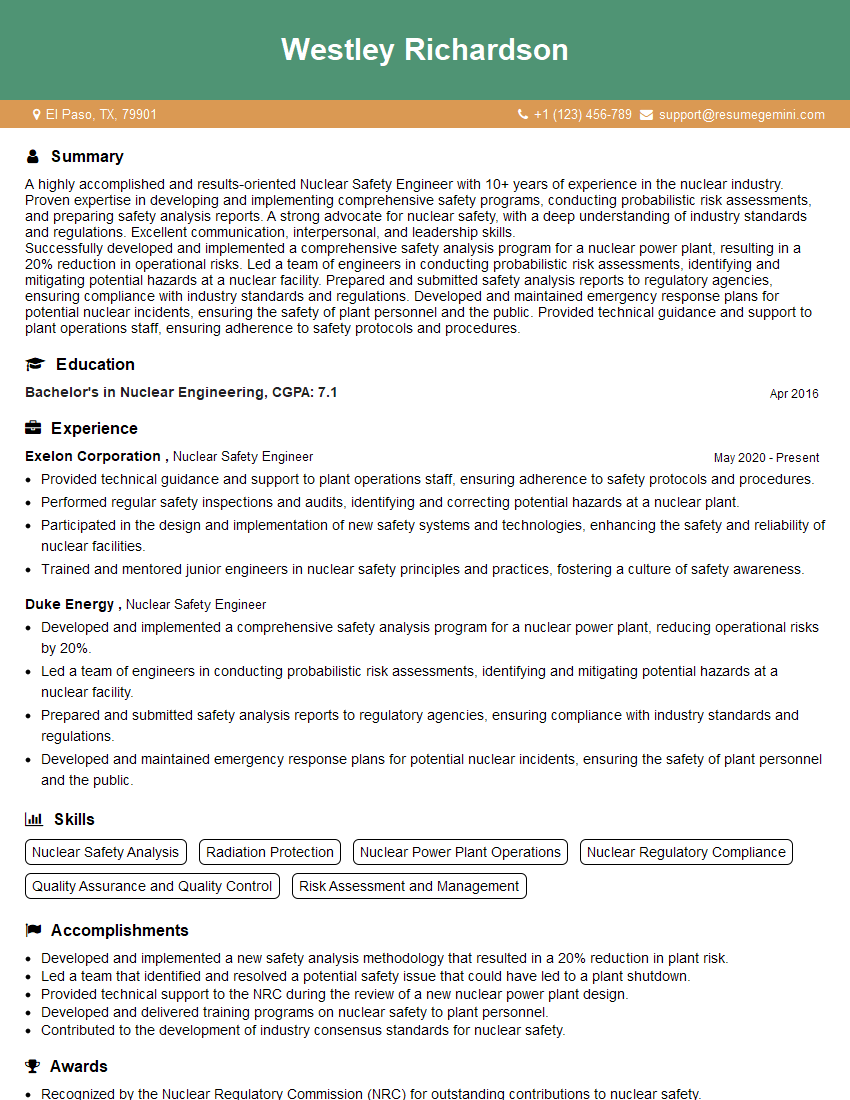
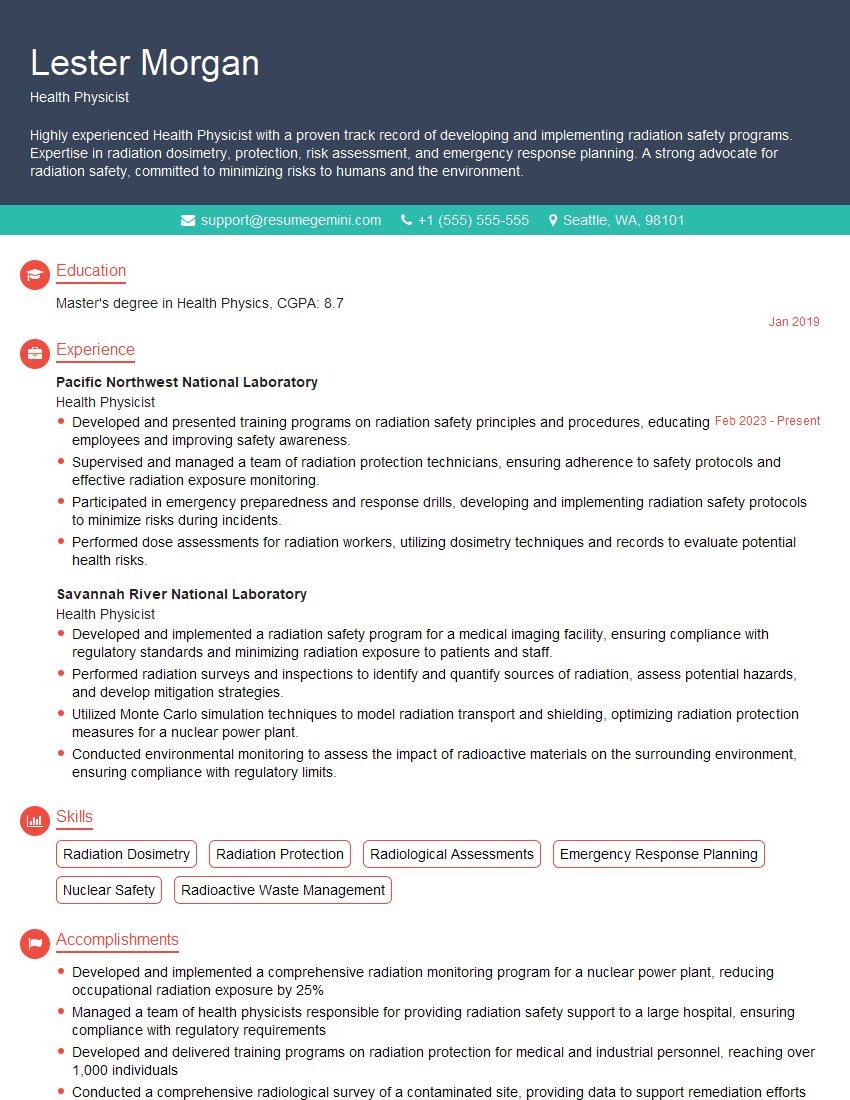
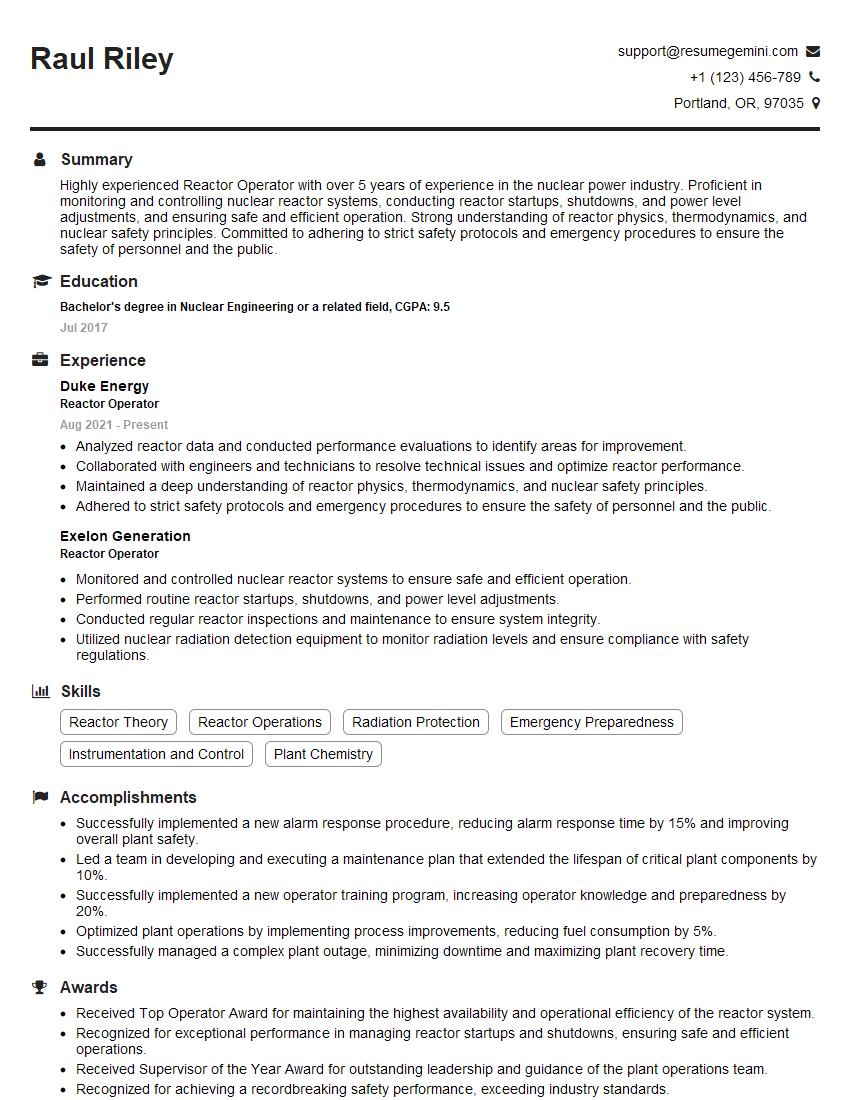
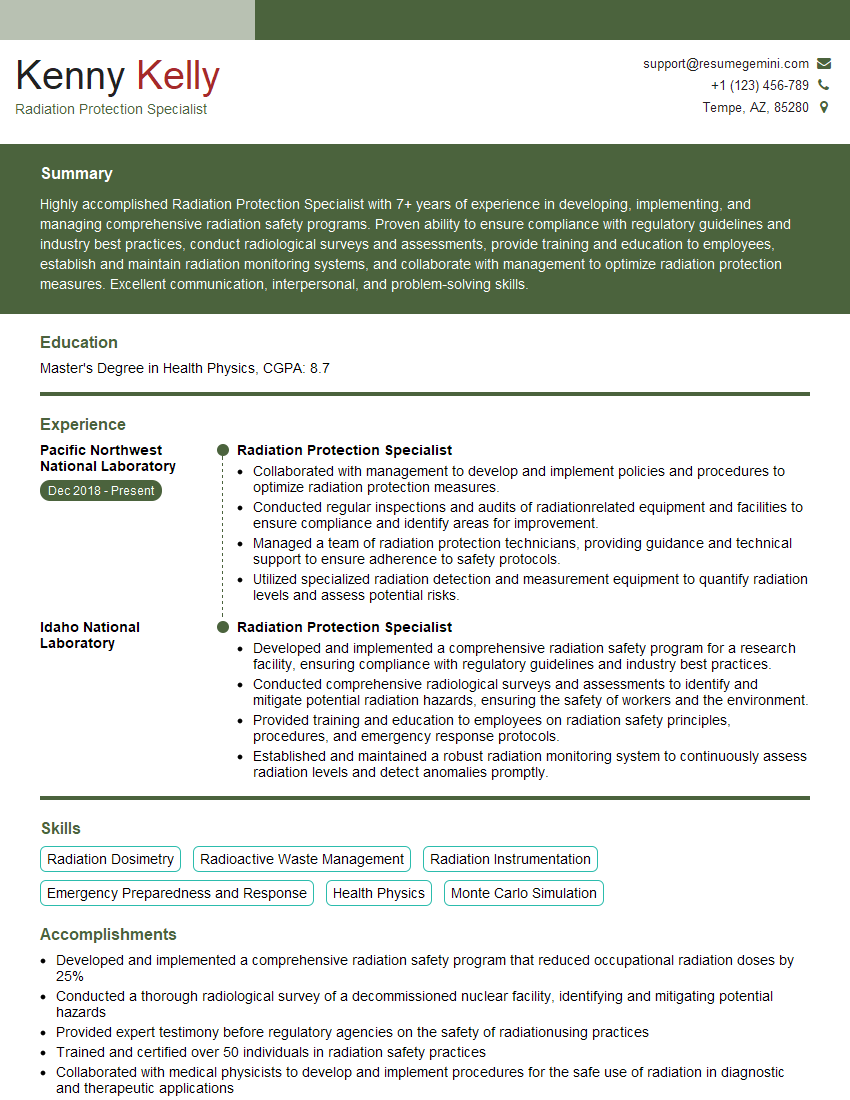
Mastering Nuclear Plant Systems is crucial for a successful and rewarding career in this vital industry. It demonstrates a strong understanding of complex technologies and a commitment to safety and efficiency. To significantly improve your job prospects, creating an ATS-friendly resume is essential. A well-structured and keyword-rich resume increases your chances of getting noticed by recruiters and securing an interview. We highly recommend using ResumeGemini to build a professional and impactful resume. ResumeGemini offers a user-friendly platform and provides examples of resumes tailored specifically to the Nuclear Plant Systems field, ensuring your qualifications are presented effectively to potential employers.

Explore more articles
Users Rating of Our Blogs
Share Your Experience
We value your feedback! Please rate our content and share your thoughts (optional).
What Readers Say About Our Blog
To the interviewgemini.com Webmaster.
Very helpful and content specific questions to help prepare me for my interview!
Thank you
To the interviewgemini.com Webmaster.
This was kind of a unique content I found around the specialized skills. Very helpful questions and good detailed answers.
Very Helpful blog, thank you Interviewgemini team.