Every successful interview starts with knowing what to expect. In this blog, we’ll take you through the top Nuclear Safety Regulations and Standards interview questions, breaking them down with expert tips to help you deliver impactful answers. Step into your next interview fully prepared and ready to succeed.
Questions Asked in Nuclear Safety Regulations and Standards Interview
Q 1. Explain the significance of ALARA principle in nuclear safety.
The ALARA principle, which stands for “As Low As Reasonably Achievable,” is a cornerstone of nuclear safety. It dictates that all radiation exposures should be kept as far below regulatory limits as is reasonably achievable, taking into account economic and social factors. This isn’t about eliminating all radiation, which is impossible, but about minimizing unnecessary exposure. Think of it like driving a car – you can’t eliminate all risk, but you can drive safely and responsibly to minimize accidents.
In practice, ALARA is implemented through a combination of engineering controls (like shielding and remote handling), administrative controls (like procedures and training), and personal protective equipment (like dosimeters and lead aprons). For example, a nuclear power plant might use robotics to perform tasks in high-radiation areas, minimizing the need for human exposure. Or a lab might implement strict protocols for handling radioactive materials, ensuring proper disposal and minimizing spills.
Q 2. Describe the role of the IAEA in establishing international nuclear safety standards.
The International Atomic Energy Agency (IAEA) plays a crucial role in setting international nuclear safety standards. It develops and promotes safety standards, guides, and codes of practice through a comprehensive process involving experts from member states. These standards aren’t legally binding in themselves, but they provide a robust framework that individual countries can adapt into their national regulations. The IAEA also conducts safety reviews of nuclear facilities, assists countries in building their regulatory infrastructure, and provides training to nuclear professionals worldwide.
The IAEA’s influence is significant because it promotes a global baseline for nuclear safety, contributing to the safe and secure use of nuclear technology internationally. Think of it as a globally recognized best practice guide, ensuring a consistent level of safety regardless of geographical location. This collaborative approach is vital for preventing accidents and promoting the responsible use of nuclear energy.
Q 3. What are the key components of a nuclear emergency response plan?
A comprehensive nuclear emergency response plan (NERP) has several key components. First, it needs clear procedures for detecting and assessing the nature and extent of any radiological release. This involves monitoring systems, emergency communication networks, and well-trained personnel. Second, it outlines protective actions for the public, including evacuation, sheltering, and the distribution of potassium iodide (KI) tablets in case of iodine-131 release. Third, it describes how to control and mitigate the radiological hazard, whether that means containing a release, decontaminating areas, or managing radioactive waste.
Furthermore, a robust NERP includes provisions for emergency medical treatment, including specialized facilities and trained medical personnel. It also involves communication strategies to inform the public and authorities, as well as post-accident recovery procedures. Regular exercises and drills are crucial to test the effectiveness of the plan and ensure everyone is prepared to act swiftly and efficiently in a real emergency.
Q 4. Explain the different types of radiation and their associated hazards.
There are several types of ionizing radiation, each with its associated hazards. Alpha particles are relatively heavy and have a short range, posing a significant hazard only if ingested or inhaled. Beta particles are lighter and more penetrating than alpha particles, requiring shielding like thin sheets of metal. Gamma rays are highly penetrating electromagnetic radiation, requiring thicker shielding like lead or concrete. Neutrons are uncharged particles that can induce radioactivity in materials they strike.
The hazards depend on the type, energy, and duration of exposure. High doses of radiation can cause acute radiation sickness, while lower doses over time can increase the risk of cancer and genetic mutations. Protection involves minimizing exposure time, maximizing distance from the source, and using appropriate shielding.
Q 5. Describe the process of obtaining a nuclear license.
Obtaining a nuclear license is a rigorous and multi-stage process, varying slightly by country but generally involving extensive documentation and regulatory review. It typically starts with a pre-application phase where the applicant interacts with the regulatory body to establish the scope and requirements for the license. A detailed application is then submitted, containing comprehensive information about the proposed facility, including its design, safety analysis, and operational procedures. This includes demonstrating compliance with all relevant safety standards and regulations.
The regulatory body then conducts a thorough review, often involving on-site inspections and independent expert assessments. This review process can be lengthy and requires extensive documentation and justification of safety measures. If the application is deemed satisfactory, the license is granted, subject to ongoing compliance monitoring and inspections. Failure to meet regulatory requirements can lead to penalties, suspension, or revocation of the license.
Q 6. What are the safety features of a pressurized water reactor?
Pressurized Water Reactors (PWRs) incorporate multiple safety features to prevent accidents and mitigate their consequences. These include redundant and diverse safety systems designed to shut down the reactor in case of an anomaly. For instance, a failure in one system will be compensated by another independent system. The reactor vessel is designed to withstand high pressures and temperatures, preventing the release of radioactive materials. Containment structures are built to prevent the escape of radioactive materials in the unlikely event of a serious accident. Emergency core cooling systems (ECCS) are designed to cool the reactor core if the primary coolant system fails.
Furthermore, PWRs incorporate systems for monitoring and controlling parameters like pressure, temperature, and neutron flux, allowing operators to take corrective actions promptly. Regular inspections and maintenance are crucial to ensure the continued safety of the facility. The overall design philosophy prioritizes defense in depth, meaning multiple layers of safety are integrated to prevent accidents and minimize the consequences should one occur.
Q 7. How do you conduct a radiation survey?
Conducting a radiation survey involves using radiation detection instruments to measure the level of ionizing radiation in an area. This typically involves using instruments like Geiger-Müller counters or scintillation detectors. The process starts with planning the survey – determining the area to be surveyed, potential radiation sources, and the required level of detail. Next, background radiation levels are measured to establish a baseline. Then, systematic measurements are taken throughout the designated area, using established protocols to ensure accuracy and consistency. This includes recording the readings, locations, and any relevant conditions (e.g., shielding, presence of radioactive materials).
The measured data is then analyzed to identify areas of higher radiation levels, determine the potential radiation hazards, and decide on appropriate actions, such as implementing additional shielding, restricting access, or decontaminating the area. The use of radiation monitoring equipment requires proper training and calibration to ensure accurate and reliable readings. It’s crucial to follow established safety procedures throughout the process, including using appropriate personal protective equipment.
Q 8. What are the regulatory requirements for nuclear waste disposal?
Nuclear waste disposal is governed by stringent regulations designed to protect public health and the environment from the long-term hazards of radioactive materials. These regulations vary slightly by country but share common goals. Key aspects include:
- Waste Classification: Nuclear waste is categorized based on its radioactivity level (high-level, low-level, etc.), determining the required disposal method and long-term management strategy. High-level waste, for instance, requires significantly more robust containment than low-level waste.
- Repository Design & Construction: For high-level waste, the design of geological repositories is crucial. This involves selecting stable geological formations (like deep underground tunnels in geologically stable rock formations) to ensure long-term containment, preventing leakage and minimizing environmental impact. The design must consider factors such as seismic activity, groundwater flow, and potential corrosion.
- Packaging and Transportation: Strict regulations govern the packaging and transportation of nuclear waste to ensure safety during transit. This includes using specialized containers designed to withstand accidents and prevent the release of radioactive materials. Multiple layers of containment are often employed.
- Monitoring and Surveillance: Once waste is disposed of, long-term monitoring is critical. This involves assessing the integrity of the repository and the surrounding environment, detecting any potential leaks or changes in conditions. This monitoring can span thousands of years.
- Regulatory Oversight: Independent regulatory bodies oversee the entire process, from waste generation to disposal, ensuring compliance with established standards and regulations. This includes regular inspections, audits, and enforcement actions.
For example, the U.S. has the Nuclear Waste Policy Act which designates Yucca Mountain as a potential repository, although its use remains contested. Similarly, many countries are developing deep geological repositories for long-term management of high-level waste.
Q 9. Explain the concept of criticality safety.
Criticality safety is paramount in nuclear operations. It focuses on preventing accidental nuclear chain reactions, which can lead to a criticality excursion—a sudden and uncontrolled release of energy. Imagine a criticality excursion like a runaway fire, but instead of burning fuel, it’s a chain reaction of nuclear fission.
This is managed through several approaches:
- Geometric Control: Shapes and spacing of fissile materials are carefully controlled. A subcritical geometry ensures that neutrons released during fission are unlikely to cause further fissions, preventing a chain reaction. Think of it like carefully stacking kindling—too close, and a fire starts; spaced correctly, and it doesn’t.
- Material Control: The amount and type of fissile material present are strictly regulated. Keeping the mass below a critical mass is crucial. This is like limiting the amount of flammable material in a room to avoid a large fire.
- Neutron Moderation and Absorption: Materials like boron or cadmium are used to absorb neutrons, thus reducing the chance of a chain reaction. These act like fire retardants.
- Administrative Controls: Strict procedures, training, and oversight are essential. Work permits, criticality alarms, and regular inspections all play a role.
Violations of criticality safety can have devastating consequences, including radiation exposure, facility damage, and environmental contamination. Therefore, robust safety measures are paramount.
Q 10. What are the different types of nuclear safeguards?
Nuclear safeguards encompass a multifaceted system of measures to prevent the theft, diversion, or sabotage of nuclear materials or facilities. These can be broadly categorized as:
- Physical Protection: This involves physical barriers, surveillance systems, and security personnel to protect nuclear materials and facilities from unauthorized access. Think of it as the ‘locks and guards’ of nuclear security.
- Material Control and Accounting (MC&A): This involves meticulous tracking and accounting of nuclear materials throughout their lifecycle—from origin to disposal. It’s like keeping a detailed inventory of all valuable items. Any discrepancies trigger investigations.
- State Systems of Accounting for and Control of Nuclear Material (SSAC): These are comprehensive national systems established to account for and control all nuclear materials within a country’s borders. They provide an overarching framework for MC&A.
- International Safeguards: The International Atomic Energy Agency (IAEA) conducts independent verification activities to ensure that states are complying with their non-proliferation obligations. This involves inspections and data analysis to ensure materials are used only for peaceful purposes.
- Export Controls: Regulations and controls on the export of nuclear materials and technologies are put in place to prevent their diversion to unauthorized parties. These function as an international ‘gatekeeper.’
Each of these safeguards complements the others, creating a layered security approach designed to deter and detect any attempt to misuse nuclear materials.
Q 11. Describe the process of conducting a nuclear safety audit.
A nuclear safety audit is a systematic and independent examination of a nuclear facility or operation to evaluate its compliance with safety regulations, standards, and best practices. The process generally involves:
- Planning and Scoping: Defining the objectives, scope, and timeframe of the audit. This involves identifying the specific areas to be reviewed, the applicable regulations, and the audit team.
- Document Review: Examining relevant documentation, such as operating procedures, safety analyses, training records, and maintenance logs. This ensures that documentation supports the safety claims.
- On-site Inspections: Conducting on-site inspections of the facility and equipment to verify compliance with regulations and procedures. This is a crucial part to see if claims match reality.
- Interviews: Interviewing personnel at various levels to assess their understanding of safety procedures and their adherence to them. This allows for identifying gaps in knowledge and potential safety culture issues.
- Data Analysis: Analyzing collected data to identify any non-compliances, safety deficiencies, or areas for improvement. This involves scrutinizing all data and correlating findings.
- Reporting and Recommendations: Preparing a detailed audit report documenting findings, non-compliances, and recommendations for corrective actions. This report forms the basis for follow-up action.
- Follow-up: Monitoring the implementation of corrective actions to ensure the identified deficiencies are addressed effectively. This is crucial to confirm if the identified issues are resolved effectively.
A well-conducted nuclear safety audit provides valuable insights into the safety culture and performance of a nuclear facility, helping to prevent accidents and enhance safety.
Q 12. How do you manage the risk of human error in nuclear operations?
Human error is a significant risk factor in nuclear operations. Mitigating this risk requires a multi-layered approach:
- Human Factors Engineering: Designing systems and procedures that minimize the likelihood of human errors. This involves considering human capabilities and limitations in the design of control rooms, interfaces, and work processes. For example, using clear and unambiguous displays, simplifying complex procedures, and incorporating redundancy to avoid single points of failure.
- Training and Qualification: Providing rigorous training and qualification programs to ensure that personnel have the necessary skills and knowledge to perform their tasks safely. This includes both theoretical knowledge and hands-on practice in realistic simulated environments.
- Procedural Controls: Developing and implementing clear, concise, and well-defined procedures. These should minimize the possibility of error and guide personnel through critical tasks. Regular procedural reviews are essential.
- Independent Verification and Validation: Employing independent checks and balances to ensure that procedures are followed correctly and that human errors are detected promptly. This could include peer reviews, cross-checks, and independent audits.
- Safety Culture: Fostering a strong safety culture where personnel are encouraged to report errors and near misses without fear of reprisal. Open communication and a collaborative approach are crucial for learning from past mistakes.
- Cognitive Aids: Incorporating technologies and tools such as decision support systems, checklists, and alarm systems to help personnel make better decisions and avoid errors under pressure.
Remember, human error isn’t necessarily about individual failings; often it’s a system problem. Addressing the underlying causes is key.
Q 13. What are the key elements of a nuclear security plan?
A comprehensive nuclear security plan is essential for protecting nuclear materials and facilities from theft, sabotage, and other malicious acts. Key elements include:
- Threat Assessment: A thorough analysis of potential threats to the facility, considering both internal and external threats. This includes assessing the likelihood and potential consequences of different scenarios.
- Vulnerability Assessment: Identifying vulnerabilities in the security systems and procedures. This could involve analyzing access controls, physical barriers, surveillance systems, and emergency response plans.
- Protective Measures: Implementing physical and procedural security measures to mitigate identified vulnerabilities. This includes installing barriers, fences, surveillance cameras, access control systems, and developing emergency response plans.
- Personnel Security: Screening and vetting personnel to ensure that only trusted individuals have access to sensitive areas and materials. Background checks, psychological evaluations, and regular security awareness training are essential.
- Emergency Response Plan: Developing and regularly testing an emergency response plan to handle security incidents effectively. This includes procedures for handling intrusions, bomb threats, and other security emergencies.
- Communication Plan: Establishing clear communication channels and procedures for reporting and responding to security incidents. This includes defining roles and responsibilities, and establishing communication protocols with external agencies.
- Security Training: Providing regular security awareness training to all personnel to enhance their understanding of security threats and procedures. This should cover topics such as recognizing suspicious activities, reporting security breaches, and responding to emergencies.
Regular reviews and updates to the security plan are crucial to adapt to evolving threats and vulnerabilities.
Q 14. Explain the regulatory framework for nuclear materials transportation.
The transportation of nuclear materials is subject to a rigorous regulatory framework designed to ensure public safety and prevent theft or sabotage. This framework varies by country but generally includes:
- Packaging Requirements: Nuclear materials must be packaged in robust containers designed to withstand accidents during transport. These packages are rigorously tested to ensure they can withstand impacts, fire, and other potential hazards.
- Routing and Escorts: Transport routes are carefully planned to minimize risks, often avoiding densely populated areas. Specialized escorts, including armed security personnel, may accompany shipments to prevent theft or unauthorized access.
- Emergency Response Planning: Detailed emergency response plans must be developed and practiced to handle potential accidents or security incidents during transport. This includes procedures for containing spills and protecting the public.
- Security Measures: A range of security measures are employed, such as GPS tracking, tamper-evident seals, and security communication systems, to monitor the shipment and detect any unauthorized attempts to access or tamper with the materials.
- Regulatory Oversight: Regulatory bodies oversee the entire process, ensuring compliance with regulations and standards. This includes inspections, audits, and enforcement actions to ensure accountability.
- International Agreements: International agreements and conventions, such as the IAEA’s Regulations for the Safe Transport of Radioactive Material, provide a framework for the safe international transport of nuclear materials.
The regulations emphasize a multi-barrier approach, layering security and safety measures to ensure the safe and secure transport of these materials. Failures in any of these areas could have serious consequences.
Q 15. What are the requirements for nuclear facility decommissioning?
Nuclear facility decommissioning is a complex and highly regulated process aimed at safely dismantling a nuclear power plant or other nuclear facility after its operational life. It involves several crucial steps, ensuring the protection of workers, the public, and the environment. The requirements vary depending on the type of facility, its operational history, and the regulatory framework of the country where it’s located.
- Site characterization and radiological surveys: A thorough assessment is crucial to determine the extent of radioactive contamination. This involves detailed mapping and sampling.
- Decontamination and demolition: Removing radioactive materials from structures and equipment using various techniques like chemical cleaning, high-pressure water jets, and specialized tools. Controlled demolition techniques might be employed to minimize dust generation and spread of contamination.
- Waste management: This is arguably the most critical aspect. Radioactive waste is categorized and packaged for appropriate disposal or storage. This can involve long-term storage in specially designed facilities.
- Site restoration: Once the decommissioning process is complete, the site undergoes remediation to bring it back to a state suitable for alternative use. This includes environmental monitoring to ensure no residual contamination poses a risk.
- Regulatory compliance: Throughout the entire process, stringent regulatory compliance is paramount. All activities must be documented, reviewed, and approved by the relevant regulatory bodies. This involves rigorous safety assessments and environmental impact assessments.
For example, decommissioning a research reactor might involve different procedures compared to a large commercial nuclear power plant, reflecting differences in the scale and type of radioactive materials present. The entire process is governed by strict national and international standards, and regulatory oversight ensures that public health and safety remain the paramount concern.
Career Expert Tips:
- Ace those interviews! Prepare effectively by reviewing the Top 50 Most Common Interview Questions on ResumeGemini.
- Navigate your job search with confidence! Explore a wide range of Career Tips on ResumeGemini. Learn about common challenges and recommendations to overcome them.
- Craft the perfect resume! Master the Art of Resume Writing with ResumeGemini’s guide. Showcase your unique qualifications and achievements effectively.
- Don’t miss out on holiday savings! Build your dream resume with ResumeGemini’s ATS optimized templates.
Q 16. What are the different types of radiation detectors and their applications?
Radiation detectors are essential tools for measuring ionizing radiation, crucial for ensuring safety in nuclear facilities and various other applications. Different detectors utilize varying principles to detect different types of radiation.
- Geiger-Müller counters: These are widely used for detecting beta and gamma radiation. They’re relatively simple, portable, and provide a quick indication of radiation levels. Think of them as the classic ‘clicker’ detectors in movies.
- Scintillation detectors: These detectors use scintillating materials that emit light when struck by radiation. The light is then detected by a photomultiplier tube, providing a more precise measurement than Geiger counters. They are more sensitive and can be used for various radiation types.
- Ionization chambers: These measure radiation by the ionization it produces in a gas-filled chamber. They are often used for measuring higher radiation levels and are more accurate than Geiger counters but less sensitive than scintillation detectors.
- Proportional counters: Similar to ionization chambers but provide a signal that’s proportional to the energy of the incident radiation. This allows for better energy discrimination and identification of different radiation sources.
- Solid-state detectors (semiconductor detectors): These utilize semiconductor materials to detect radiation. They offer excellent energy resolution and are particularly suitable for identifying specific radioactive isotopes.
Applications range from environmental monitoring to medical imaging and nuclear security. Geiger counters might be used for routine monitoring in a nuclear plant, while scintillation detectors could be used for more detailed measurements in a laboratory setting or during waste characterization. Solid-state detectors are essential in applications requiring high-precision energy measurements, such as in nuclear medicine.
Q 17. Describe your understanding of probabilistic risk assessment (PRA).
Probabilistic Risk Assessment (PRA) is a systematic and comprehensive methodology used to quantify the risks associated with complex systems, particularly those with potential for severe consequences, like nuclear power plants. It combines engineering knowledge, statistical data, and modeling techniques to estimate the likelihood and potential impact of accidents.
PRA involves identifying potential hazards, analyzing their initiating events, and evaluating the probability of accident sequences leading to various consequences. This involves building fault trees (showing the failure paths that lead to an accident) and event trees (showing the different possible outcomes from an initiating event). The results are often presented as risk curves, showing the frequency of different accident severities.
A key aspect of PRA is the quantification of uncertainties. Since we’re dealing with probabilities, uncertainty is inherent. PRA methodologies account for this using statistical techniques, allowing a clearer picture of the overall risk, rather than a deterministic, single-point estimation. PRA is not just about calculating probabilities, but also identifying vulnerabilities and improving safety measures by focusing on the most significant contributors to risk.
Imagine a large dam: a PRA for a dam would consider factors like earthquake probability, flood risk, structural integrity, and human error. It would estimate the probability of a dam failure and its consequences, helping engineers and regulators determine appropriate safety measures.
Q 18. How do you ensure compliance with nuclear safety regulations?
Ensuring compliance with nuclear safety regulations is a multifaceted process requiring a rigorous and proactive approach. It involves a blend of technical expertise, strict procedures, and constant monitoring.
- Developing and implementing safety programs: This includes comprehensive safety plans that cover all aspects of nuclear operations, from design and construction to operation and decommissioning. These plans are then integrated into everyday operations.
- Regular inspections and audits: Internal and external audits ensure adherence to safety standards. External audits by regulatory bodies are essential for independent verification.
- Maintaining detailed records: Thorough documentation of all safety-related activities is critical. This allows for tracing events, identifying areas for improvement, and demonstrating compliance during audits.
- Training and qualification of personnel: Operators and other personnel need to be highly trained and qualified. Regular training ensures up-to-date knowledge and skills related to safety procedures and regulatory requirements.
- Emergency preparedness: Having well-defined emergency plans and procedures is crucial. This includes regular drills and simulations to ensure preparedness for various scenarios.
- Continuous improvement: Safety should be an ongoing process. Analyzing past incidents and near misses, feedback from staff, and advancements in technology can lead to continual enhancements of safety measures.
For instance, a regular review of operational procedures, alongside feedback mechanisms from workers, might highlight potential safety risks that would otherwise be overlooked. This ongoing cycle of assessment and improvement is critical for maintaining compliance and preventing incidents.
Q 19. Explain the concept of defense-in-depth in nuclear safety.
Defense-in-depth is a fundamental principle in nuclear safety, emphasizing multiple layers of protection to prevent accidents and mitigate their consequences. It’s like having multiple safety nets – if one fails, others are in place to catch the potential problem.
These layers can include:
- Inherent safety features: These are built-in design characteristics that minimize the likelihood of accidents. For example, a reactor design inherently resistant to meltdown would be a component of this layer.
- Passive safety systems: These operate without external power sources. Examples include gravity-driven cooling systems that function even if power is lost.
- Active safety systems: These require external power and are designed to prevent and mitigate accidents. These include emergency core cooling systems.
- Administrative controls: These cover operational procedures, training, and regulatory oversight. This includes maintaining accurate records and having robust quality assurance programs.
- Emergency response systems: These are designed to handle accident scenarios, including evacuation plans, emergency medical response, and containment systems.
The concept is that if one layer of protection fails, others are in place to prevent or mitigate the consequences. It’s a redundant approach that significantly enhances the overall safety of a nuclear facility. This is crucial because relying on a single layer of protection is exceedingly risky. The layered approach provides much higher reliability in preventing accidents from occurring.
Q 20. How do you handle a nuclear safety incident or accident?
Handling a nuclear safety incident or accident requires a swift, coordinated, and highly professional response. The process is guided by detailed emergency plans and established procedures.
- Immediate actions: The immediate priority is to mitigate the immediate threat, prevent escalation, and protect personnel. This might involve shutting down a reactor, activating emergency cooling systems, or evacuating personnel.
- Assessment and diagnosis: Once the immediate danger is under control, a detailed assessment of the incident is performed to determine the extent of the damage and the potential release of radioactive materials.
- Emergency response team activation: A pre-defined emergency response team is activated, often consisting of specialists in radiation protection, emergency management, and public communication.
- Public communication: Accurate and timely communication with the public and relevant authorities is crucial to prevent panic and maintain public trust.
- Containment and cleanup: Containing the spread of radiation is critical. This might involve deploying specialized equipment and personnel.
- Investigation and root cause analysis: Following the immediate response, a thorough investigation is carried out to determine the root cause(s) of the incident, allowing for implementing corrective actions and preventing similar incidents in the future.
For example, the response to the Three Mile Island accident highlighted the importance of clear communication and effective coordination between various agencies and teams involved in handling such emergencies. Lessons learned from past events continually refine emergency response procedures.
Q 21. What are the limitations of current nuclear safety regulations?
While nuclear safety regulations are constantly evolving and improving, they do have certain limitations.
- Unforeseen events and emerging technologies: Regulations might not always anticipate unforeseen circumstances or rapid technological advancements. New risks could emerge, particularly with the advancement of new reactor designs and technologies.
- Complexity and interpretation: Nuclear regulations can be incredibly complex, leading to ambiguities and variations in interpretation across different organizations and countries.
- Cost and resource constraints: Implementing all safety measures can be very costly. Balancing cost and safety can be a challenge, particularly for smaller organizations or developing countries.
- Human error: No matter how comprehensive the regulations are, human error remains a significant factor. Regulations can minimize the probability of error but cannot completely eliminate it.
- Long-term effects: The long-term effects of low-level radiation exposure are still being researched. This uncertainty can make setting appropriate safety limits a complex issue.
Addressing these limitations requires continuous research, international collaboration, and improvements in regulatory frameworks. For example, international standardization efforts aim to improve consistency and reduce ambiguity in interpreting safety regulations. Advances in modeling and simulation techniques help better evaluate the risks associated with new technologies.
Q 22. Explain the role of quality assurance in nuclear safety.
Quality assurance (QA) in nuclear safety is paramount. It’s a systematic process ensuring all activities related to the design, construction, operation, and decommissioning of nuclear facilities meet the highest safety standards. Think of it as a rigorous, multi-layered safety net.
This involves meticulous documentation, regular inspections, audits, and testing at every stage. For instance, QA ensures that welds in a reactor vessel are performed to precise specifications, undergo non-destructive testing (NDT), and are meticulously documented. Failure to meet these standards can have catastrophic consequences.
- Design QA: Verifying design calculations, material selections, and safety analyses meet regulatory requirements.
- Construction QA: Monitoring the fabrication, installation, and testing of components to ensure adherence to specifications.
- Operational QA: Continuous monitoring of plant operations, maintenance procedures, and personnel training to maintain safety.
A strong QA program doesn’t just prevent accidents; it fosters a culture of safety and continuous improvement within the organization. It’s about proactively identifying and mitigating potential risks before they become hazards.
Q 23. How does your experience relate to the specific requirements of this role?
My fifteen years of experience in nuclear safety, encompassing roles in both regulatory oversight and plant operations, directly aligns with the requirements of this position. I’ve been involved in the development and implementation of safety programs, conducted numerous safety audits, and participated in incident investigations. My expertise in risk assessment, probabilistic risk assessment (PRA), and human factors engineering is especially relevant to effectively managing complex nuclear safety challenges. My experience in managing teams and communicating technical information clearly and concisely will facilitate collaboration with stakeholders and regulators.
Specifically, my previous role involved overseeing the implementation of new safety systems at a nuclear power plant, which required a deep understanding of regulatory requirements, technical specifications, and project management. This experience directly translates to the demands of this position, as it necessitates a similar blend of technical knowledge and management skills.
Q 24. Describe your experience with specific nuclear safety regulations (e.g., 10 CFR Part 50).
I have extensive experience with 10 CFR Part 50, particularly sections related to reactor licensing, technical specifications, and emergency planning. For example, I’ve worked on numerous license amendment applications, meticulously addressing the regulatory requirements for changes to plant systems and operations. This involved thorough reviews of safety analyses, justification of proposed modifications, and meticulous preparation of documentation for regulatory submittals. I also have significant experience interpreting and applying the requirements of 10 CFR Part 50, Appendix B, which addresses quality assurance criteria for nuclear power plants. This includes conducting audits to ensure compliance with the stringent quality assurance program requirements. I’ve also contributed to the development of emergency operating procedures (EOPs) based on the regulatory guidance in 10 CFR Part 50.
Beyond 10 CFR Part 50, my experience includes working with other relevant regulations, such as those related to radiation protection and waste management, demonstrating a comprehensive understanding of the regulatory landscape for nuclear safety.
Q 25. Describe a situation where you had to resolve a nuclear safety issue.
During a routine inspection, we discovered a minor leak in a secondary coolant system at a nuclear power plant. While the leak itself wasn’t immediately critical, it highlighted a potential path for radioactive material release if it progressed.
My team and I immediately implemented a structured problem-solving approach:
- Assessment: We thoroughly investigated the leak’s source and extent, analyzing system pressure, flow rates, and radiation levels.
- Mitigation: We temporarily shut down the affected system, isolating it from the rest of the plant to prevent further leakage and potential escalation.
- Repair: We then coordinated with specialized technicians to repair the leak, adhering to strict safety protocols. This included using specialized tools and radiation protection measures.
- Root Cause Analysis: After repairing the leak, we conducted a thorough root cause analysis to identify the underlying issues that led to the failure. We discovered a minor design flaw that had been overlooked during previous inspections.
- Corrective Action: Based on our analysis, we implemented corrective actions including design modifications and improvements to our inspection procedures to prevent similar incidents in the future.
This incident underscored the importance of proactive safety measures, thorough inspections, and a well-defined response plan. The successful resolution prevented a potential safety incident and improved overall plant safety.
Q 26. What are the ethical considerations in nuclear safety?
Ethical considerations in nuclear safety are paramount. They extend beyond mere compliance with regulations and encompass a commitment to transparency, accountability, and the well-being of the public.
- Transparency: Open and honest communication with stakeholders (including the public, regulatory bodies, and plant personnel) about potential risks and safety concerns is crucial. This builds trust and fosters a collaborative approach to safety management.
- Accountability: Individuals and organizations must be held accountable for their actions and decisions relating to nuclear safety. This necessitates robust internal oversight mechanisms and clear lines of responsibility.
- Precautionary Principle: When uncertainties exist regarding potential risks, the precautionary principle suggests taking preventative measures to avoid potential harm. This approach prioritizes public safety even in the absence of definitive scientific proof.
- Protection of Future Generations: Nuclear safety decisions should consider the long-term implications, including the management of radioactive waste and the protection of future generations from the risks of radiation exposure.
Ethical behavior in nuclear safety is not merely a matter of compliance; it’s a fundamental commitment to protecting the health and safety of the public and the environment.
Q 27. What are your professional development goals related to nuclear safety?
My professional development goals center on enhancing my expertise in advanced risk assessment methodologies, specifically focusing on probabilistic risk assessment (PRA) and the integration of advanced modeling techniques. I aim to deepen my understanding of human factors engineering in nuclear safety and its application to operational improvements. Furthermore, I want to expand my knowledge in the emerging field of digitalization and its implications for nuclear safety, particularly in terms of advanced monitoring, diagnostics, and control systems. Finally, I plan to pursue leadership opportunities to mentor and guide younger professionals entering the field of nuclear safety.
Q 28. How do you stay current with changes in nuclear safety regulations and standards?
Staying current with changes in nuclear safety regulations and standards is crucial. I achieve this through several key strategies:
- Regulatory Updates: I actively monitor publications from relevant regulatory bodies, such as the Nuclear Regulatory Commission (NRC) in the US, and international organizations like the IAEA. This involves reviewing updates to regulations, guidance documents, and safety advisories.
- Industry Conferences and Workshops: I regularly attend industry conferences and workshops, where experts share the latest research, innovations, and challenges in nuclear safety. Networking with colleagues at these events also provides valuable insights and perspectives.
- Professional Organizations: I’m an active member of professional organizations dedicated to nuclear safety, such as the American Nuclear Society (ANS). These organizations provide access to publications, training opportunities, and networking events that keep me abreast of advancements in the field.
- Literature Reviews: I regularly review relevant technical literature, including peer-reviewed journals and industry publications, to stay informed about research and best practices in nuclear safety.
This multifaceted approach ensures I remain well-informed and equipped to address the ever-evolving challenges in nuclear safety.
Key Topics to Learn for Nuclear Safety Regulations and Standards Interview
- Regulatory Frameworks: Understand the fundamental principles and structure of national and international nuclear safety regulations (e.g., IAEA safety standards). Focus on the key legislation and regulatory bodies relevant to your target role.
- Radiation Protection Principles: Master the ALARA principle (As Low As Reasonably Achievable) and its practical application in various nuclear contexts. Be prepared to discuss radiation shielding, dose monitoring, and emergency response procedures.
- Nuclear Facility Safety Systems: Familiarize yourself with the design, operation, and safety features of different types of nuclear facilities (reactors, fuel cycle facilities, etc.). Understand the role of safety systems in preventing accidents and mitigating their consequences.
- Accident Analysis and Risk Assessment: Develop your understanding of probabilistic risk assessment (PRA) methodologies and their use in evaluating nuclear safety. Be prepared to discuss various accident scenarios and their potential impact.
- Emergency Preparedness and Response: Understand the importance of emergency planning and response procedures in the event of a nuclear accident. Be familiar with relevant emergency response protocols and communication strategies.
- Quality Assurance and Quality Control: Know the principles of quality assurance and quality control as applied to nuclear safety. Understand the importance of documentation, audits, and continuous improvement.
- Nuclear Security and Safeguards: Understand the principles of nuclear security and safeguards, including physical protection measures and material accounting and control systems.
- Human Factors in Nuclear Safety: Be prepared to discuss the role of human factors in nuclear safety, including human error, training, and organizational culture.
- Waste Management and Decommissioning: Understand the principles and regulations governing the management of radioactive waste and the decommissioning of nuclear facilities.
Next Steps
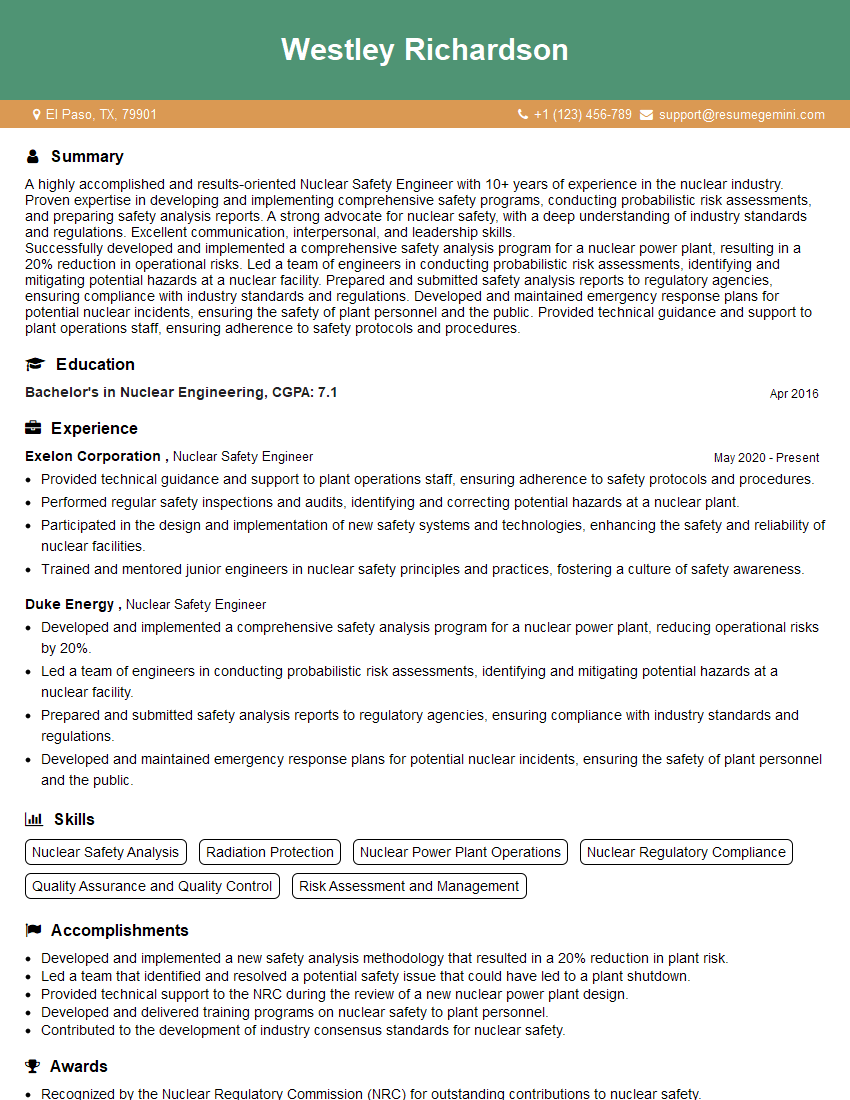
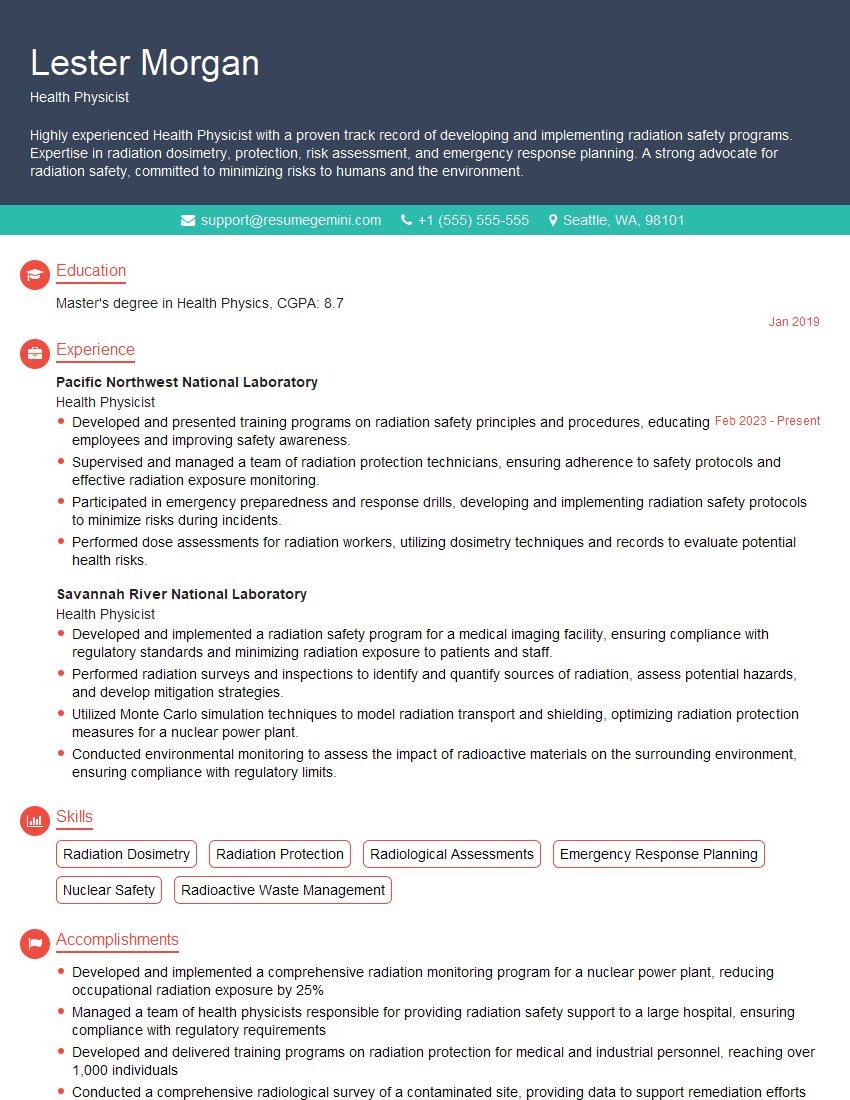
Mastering Nuclear Safety Regulations and Standards is crucial for a successful and rewarding career in this vital field. It demonstrates your commitment to safety and your ability to contribute to a secure and responsible nuclear industry. To maximize your job prospects, create a compelling and ATS-friendly resume that effectively showcases your skills and experience. ResumeGemini is a trusted resource that can help you build a professional and impactful resume. Examples of resumes tailored to Nuclear Safety Regulations and Standards are available to guide you.
Explore more articles
Users Rating of Our Blogs
Share Your Experience
We value your feedback! Please rate our content and share your thoughts (optional).
What Readers Say About Our Blog
To the interviewgemini.com Webmaster.
Very helpful and content specific questions to help prepare me for my interview!
Thank you
To the interviewgemini.com Webmaster.
This was kind of a unique content I found around the specialized skills. Very helpful questions and good detailed answers.
Very Helpful blog, thank you Interviewgemini team.