Unlock your full potential by mastering the most common Outdoor Leadership and Adventure Education interview questions. This blog offers a deep dive into the critical topics, ensuring you’re not only prepared to answer but to excel. With these insights, you’ll approach your interview with clarity and confidence.
Questions Asked in Outdoor Leadership and Adventure Education Interview
Q 1. Describe your experience in risk management within an outdoor setting.
Risk management in outdoor settings is a proactive, multi-layered process focused on minimizing potential hazards while maximizing opportunities for learning and growth. It’s not about eliminating risk entirely – that’s impossible – but about making informed decisions to manage it effectively. My approach involves a systematic process:
- Hazard Identification: Thoroughly assessing the environment (terrain, weather, wildlife), activities, and participants’ capabilities to identify potential hazards. This includes considering both obvious dangers like cliffs and less obvious ones such as fatigue or hypothermia.
- Risk Assessment: Evaluating the likelihood and severity of each identified hazard. This often involves using a risk matrix, assigning each hazard a level of risk (low, medium, high). For instance, a simple hike on a well-maintained trail would carry low risk, whereas ice climbing would be high risk.
- Risk Control: Implementing measures to reduce or eliminate identified risks. This may involve using appropriate equipment (helmets, harnesses), employing safety protocols (buddy systems, pre-trip briefings), and adjusting activities based on participant skills and environmental conditions. For example, if the weather forecast predicts a storm, the plan might be modified to a less exposed activity or postponement.
- Monitoring and Review: Continuously monitoring the situation throughout the activity and reviewing the effectiveness of the risk management strategies employed. This allows for adapting the plan as needed and learning from any incidents or near misses. Post-activity debriefs are crucial for this.
For example, during a rock climbing trip, I would assess the climbing routes for potential rockfalls, ensure participants have appropriate safety gear and training, and monitor weather conditions closely. Any change in weather would lead to a reassessment of the risk and a change in plan if necessary.
Q 2. Explain your process for developing and implementing an outdoor education program.
Developing and implementing an outdoor education program is a detailed process requiring careful planning and consideration of various factors. It begins with defining clear learning objectives, aligning with educational standards and participant needs. I follow these steps:
- Needs Assessment: Identifying the specific skills, knowledge, and attitudes participants should gain from the program. This often involves consultations with stakeholders and potential participants.
- Curriculum Design: Developing a curriculum that directly addresses the identified needs using experiential learning principles. This involves designing activities, selecting locations, and creating detailed lesson plans. The curriculum should incorporate progressive challenge, fostering both skill development and personal growth.
- Logistics and Resources: Securing necessary permits, arranging transportation, acquiring equipment, and managing budgets. This stage involves meticulous planning to ensure a smooth and safe operation.
- Staff Training: Providing comprehensive training to staff, ensuring they possess the necessary skills and experience to deliver the program safely and effectively. This includes risk management training, first aid and emergency response training, and instruction in appropriate teaching methodologies.
- Program Implementation and Evaluation: Executing the program, monitoring participant progress, and collecting feedback to improve future iterations. Regular evaluations, both formative (during the program) and summative (after completion), are crucial to ensure the program achieves its objectives and meets the needs of the participants.
For instance, when developing a wilderness survival program, I would start by outlining specific survival skills (fire building, shelter construction, water purification) and then design activities that allow participants to practice these skills in a safe and progressively challenging environment. Regular feedback sessions throughout the program would allow for adjustments and ensure everyone is engaged and learning effectively.
Q 3. How do you ensure the safety of participants in high-risk activities?
Ensuring participant safety in high-risk activities requires a layered approach emphasizing prevention, preparation, and response. Key elements include:
- Thorough Risk Assessment and Mitigation: A detailed risk assessment is the foundation. This involves identifying potential hazards, evaluating their likelihood and severity, and implementing control measures to reduce the risk to an acceptable level. This might include route selection, equipment checks, and environmental monitoring.
- Participant Screening and Selection: Ensuring participants possess the necessary physical and mental fitness, skills, and experience for the activity. This can be achieved through pre-program assessments, interviews, or physical fitness tests. Honest self-assessment by the participants is also crucial.
- Comprehensive Training and Instruction: Providing clear and comprehensive instruction on safety procedures, equipment use, and emergency response protocols. Sufficient practice time should be allocated to develop proficiency and confidence.
- Appropriate Equipment and Gear: Using high-quality, properly maintained equipment that is appropriate for the activity and environmental conditions. Regular equipment checks are essential.
- Emergency Preparedness: Developing and practicing comprehensive emergency plans, including communication procedures, evacuation strategies, and first aid protocols. This might include carrying satellite communication devices and having a detailed emergency contact list.
- Continuous Monitoring and Supervision: Constant monitoring of participants’ progress and well-being during the activity, addressing any concerns or problems promptly. Maintaining a safe distance but also being readily available to provide assistance is key.
For example, during a mountaineering expedition, I would ensure everyone is equipped with appropriate climbing gear, undergoes pre-expedition training on glacier travel and crevasse rescue, and has access to satellite communication in case of emergency. Regular weather checks would inform decisions about route selection and activity modifications.
Q 4. What are the key elements of effective communication in a challenging outdoor environment?
Effective communication in challenging outdoor environments is crucial for safety and successful teamwork. It needs to be clear, concise, and adaptable to the circumstances. Key elements include:
- Clear and Concise Language: Using simple, unambiguous language, avoiding jargon. In stressful situations, complex instructions can be easily misunderstood.
- Non-Verbal Communication: Utilizing gestures, facial expressions, and body language to reinforce verbal communication, especially when noise levels are high or communication is difficult.
- Active Listening: Paying close attention to what others are saying and acknowledging their contributions. Confirming instructions is critical.
- Feedback Mechanisms: Establishing clear channels for participants to provide feedback or report problems. This is important for identifying potential hazards or safety issues early on.
- Technology Integration (when appropriate): Utilizing communication technologies like radios or satellite phones for efficient communication, particularly in remote areas or during emergencies. However, relying solely on technology is not advisable.
- Adaptability: Adjusting communication style to suit individual needs and the changing environmental conditions. For example, communicating differently to a novice vs an experienced participant.
For example, when leading a group through a challenging river crossing, clear hand signals and concise verbal instructions combined with checking everyone’s understanding before proceeding would be essential. If a participant expresses concern, active listening and addressing their concerns immediately would be crucial for safety and team morale.
Q 5. Describe a time you had to make a difficult decision regarding participant safety.
During a kayaking trip on a fast-flowing river, a participant capsized and was struggling to regain control of their kayak in strong currents. While the participant possessed the necessary skills and had demonstrated proficiency in calmer waters, the swift currents presented a challenge. Initially, I was inclined to direct them on how to self-rescue, but I quickly assessed the situation and realized that the swift current and the participant’s increasing distress posed a significant risk. Despite the participant’s initial reluctance to accept direct assistance, I made the difficult decision to deploy a rescue team. This involved quickly assembling the trained kayakers, implementing a swift water rescue plan, and recovering the participant safely. This incident reinforced the importance of continuous monitoring, swift decision-making in dynamic situations, and prioritizing participant safety above immediate adherence to initial plans. It highlights the value of having well-trained support staff and a clear emergency response protocol.
Q 6. How do you adapt your leadership style to diverse groups and individuals?
Adapting my leadership style to diverse groups and individuals is essential for creating an inclusive and effective learning environment. I utilize a flexible approach, drawing upon various leadership styles as needed:
- Democratic Leadership: Encouraging participation in decision-making, fostering a sense of ownership and responsibility among participants. This works well with groups who value collaboration and have experience.
- Transformational Leadership: Inspiring participants through motivation, encouragement, and positive reinforcement. This is particularly effective when motivating participants to push beyond their comfort zones.
- Servant Leadership: Focusing on the needs of the participants, providing support, and empowering them to succeed. This approach prioritizes the well-being and growth of each individual within the group.
- Individualized Approach: Recognizing that each participant has unique needs, strengths, and challenges, I tailor my communication and support to meet their specific needs, creating a safe and welcoming environment for all.
For example, when leading a group with a mix of experienced and novice hikers, I would use a more democratic approach with the experienced individuals while providing more directive guidance to the novices. This ensures everyone feels supported, challenged, and engaged appropriately.
Q 7. What are your strategies for motivating and engaging participants in outdoor activities?
Motivating and engaging participants in outdoor activities involves creating a positive and challenging environment where everyone feels valued and supported. My strategies include:
- Setting Clear Goals and Expectations: Ensuring participants understand the objectives of the activity and how their contributions contribute to the overall success. Clear goals foster focus and increase motivation.
- Progressive Challenge: Gradually increasing the difficulty of tasks, allowing participants to build confidence and competence. This prevents overwhelming participants and keeps them engaged.
- Positive Reinforcement: Recognizing and celebrating accomplishments, both big and small. Positive reinforcement reinforces good behaviour and motivates further effort.
- Building Camaraderie: Creating opportunities for team building and social interaction, fostering a sense of community and shared purpose. Collaboration and team-building exercises strengthen group dynamics.
- Storytelling and Experiential Learning: Using storytelling and hands-on activities to make learning relevant and engaging. Relatable stories and experiences can be powerful motivators.
- Personalized Feedback: Providing constructive and tailored feedback, allowing participants to identify areas for improvement and celebrate their strengths. This fosters a growth mindset and increased engagement.
For example, during a rock climbing session, I would start with easier climbs to build confidence, gradually progressing to more challenging routes. Celebrating each successful climb, no matter how small, motivates participants to continue pushing their limits. Sharing stories of overcoming challenges on the rock face can also be inspiring.
Q 8. How do you address conflict within a group during an outdoor experience?
Addressing conflict in an outdoor group requires a proactive and empathetic approach. My strategy focuses on early intervention, fostering open communication, and finding mutually agreeable solutions. I believe in creating a safe space for expression, where individuals feel comfortable sharing their perspectives without fear of judgment.
- Active Listening: I start by actively listening to each person involved, ensuring everyone feels heard and understood. This often involves using reflective listening techniques, summarizing their points to confirm understanding.
- Mediation, not Dictation: I act as a facilitator, guiding the group towards a resolution rather than imposing a solution. I help them identify the root cause of the conflict, focusing on the issue rather than personalities.
- Collaborative Problem-Solving: We work together to brainstorm potential solutions, considering the needs and perspectives of all involved. This might involve compromise or finding creative alternatives.
- Setting Boundaries and Expectations: If necessary, I reinforce group norms and expectations regarding respectful communication and conflict resolution. This could include reviewing the group’s established code of conduct.
- Post-Conflict Debrief: After the conflict is resolved, I often facilitate a debrief to reflect on the experience, identify learning opportunities, and reinforce positive group dynamics.
For example, during a recent backpacking trip, two participants disagreed about the pace of travel. Through active listening, I discovered one was struggling physically, while the other was eager to reach the campsite before dark. We collaboratively adjusted the daily itinerary, incorporating rest stops and incorporating the perspectives of both parties.
Q 9. Explain your understanding of Leave No Trace principles.
Leave No Trace (LNT) principles are a set of ethical guidelines for minimizing human impact on the natural environment during outdoor activities. They are crucial for preserving wilderness areas for future generations and ensuring the sustainability of outdoor recreation. The seven principles are:
- Plan Ahead and Prepare: Know your route, the regulations, and potential hazards. Pack appropriately and make reservations when necessary.
- Travel and Camp on Durable Surfaces: Avoid damaging vegetation by staying on established trails, campsites, and rocks.
- Dispose of Waste Properly: Pack out everything you pack in, including toilet paper and food scraps. Use designated latrines or bury waste properly.
- Leave What You Find: Do not remove or damage natural or cultural resources. Respect wildlife and their habitats.
- Minimize Campfire Impacts: Use existing fire rings or stoves. Keep fires small and completely extinguish them before leaving.
- Respect Wildlife: Observe wildlife from a distance, never feed them, and store food properly to avoid attracting them to your campsite.
- Be Considerate of Other Visitors: Respect other users’ experiences by keeping noise levels down and yielding to others on trails.
Imagine a scenario where a group is leaving behind trash near a pristine lake. Applying LNT, we would ensure everything is packed out, reinforcing the idea that leaving a place better than you found it is essential for responsible outdoor recreation.
Q 10. Describe your experience with wilderness first aid and emergency response procedures.
I hold a Wilderness First Responder (WFR) certification, providing me with the skills and knowledge to assess, treat, and stabilize patients in remote environments. My training includes a wide range of medical skills, from treating minor injuries like sprains and cuts to managing more serious emergencies such as hypothermia, fractures, and allergic reactions. My experience extends to:
- Patient Assessment: Following a systematic approach to evaluate the patient’s condition, including primary and secondary assessments.
- Emergency Procedures: Handling various emergency situations, including cardiopulmonary resuscitation (CPR), defibrillation, and hemorrhage control.
- Wilderness Evacuation: Planning and executing safe and effective evacuations, considering terrain, weather, and available resources.
- Documentation and Communication: Maintaining thorough records of patient care and communicating effectively with emergency medical services.
For instance, during a canyoning trip, a participant suffered a severely twisted ankle. Using my WFR skills, I quickly stabilized the injury, provided pain management, and coordinated a rescue operation with park rangers, ensuring the patient received definitive medical care.
Q 11. How do you assess the environmental conditions and plan accordingly for an outdoor activity?
Assessing environmental conditions is a critical first step in planning any outdoor activity. My approach involves a multi-faceted assessment, encompassing weather, terrain, and potential hazards. I use a variety of resources to gather data and make informed decisions:
- Weather Forecasting: I utilize reliable weather sources, including national weather services and specialized mountain weather forecasts, to predict changes in conditions.
- Topographic Maps and Satellite Imagery: These tools help me understand the terrain, identify potential obstacles, and plan routes accordingly.
- Hazard Identification: I assess potential risks like wildlife encounters, water crossings, exposure to the elements, and navigation challenges.
- Contingency Planning: I develop backup plans to address unexpected weather changes or other unforeseen circumstances.
For example, before a rock climbing trip, I study the weather forecast, examine the rock face’s exposure, and assess potential fall zones. This enables me to select appropriate climbing routes, gear, and safety measures, minimizing the risks involved.
Q 12. How do you build trust and rapport with participants?
Building trust and rapport with participants is paramount for a successful outdoor experience. My approach focuses on creating a positive and inclusive environment, where everyone feels respected, valued, and safe. I employ several strategies:
- Open Communication: I foster open communication from the outset, actively listening to their concerns and sharing information transparently.
- Empathy and Understanding: I demonstrate empathy towards individuals’ needs, backgrounds, and skill levels. This involves actively trying to understand their perspectives and concerns.
- Shared Experiences: I encourage group cohesion through shared activities, challenges, and celebrations. This helps build camaraderie and strengthen interpersonal connections.
- Positive Reinforcement: I recognize and celebrate individual and collective achievements, fostering a sense of accomplishment and shared success.
- Respect and Inclusion: I establish a culture of respect and inclusion, where all voices are heard and valued, regardless of differences.
For instance, on a kayaking trip, I start with ice-breakers and get-to-know-you activities. Throughout the experience, I provide positive feedback and celebrate each person’s progress, whether they are a novice or experienced kayaker. This fosters a positive learning environment, strengthening group dynamics and building trust.
Q 13. What is your experience with equipment maintenance and safety checks?
Equipment maintenance and safety checks are essential aspects of risk management in outdoor leadership. My experience encompasses the proper care and inspection of a wide array of gear, including climbing equipment, camping gear, and watercraft. My routine includes:
- Pre-Trip Inspections: I meticulously inspect all equipment before each trip, checking for damage, wear, and tear.
- Regular Maintenance: I perform regular maintenance on equipment, such as cleaning, lubricating, and repairing minor issues.
- Safety Checks: I conduct thorough safety checks on specialized equipment, such as harnesses, ropes, and kayaks, adhering to manufacturer recommendations and industry best practices.
- Proper Storage: I ensure all equipment is stored correctly to prevent damage and extend its lifespan.
For example, before a rock climbing trip, I meticulously check each participant’s harness for wear, inspect the ropes for fraying, and ensure all carabiners are properly functioning. This preventative approach minimizes the risk of equipment failure, ensuring the safety of everyone involved.
Q 14. How do you handle challenging weather conditions during an outdoor program?
Handling challenging weather conditions requires a proactive and flexible approach. My strategy involves monitoring weather forecasts closely, having contingency plans in place, and making informed decisions based on safety and participant well-being.
- Monitoring Forecasts: I continuously monitor weather forecasts throughout the trip, adapting plans as necessary.
- Contingency Plans: I develop detailed contingency plans for various weather scenarios, such as sudden storms, extreme heat, or cold snaps.
- Risk Assessment: I assess the risks associated with continuing an activity or seeking shelter, considering factors such as participant experience and the severity of the weather.
- Communication: I maintain clear and consistent communication with participants, explaining decisions and ensuring everyone understands the plan.
- Emergency Procedures: I am prepared to execute emergency procedures if necessary, such as initiating an evacuation or providing appropriate shelter.
For instance, during a hiking trip, a sudden thunderstorm rolled in. I immediately led the group to a safe location away from exposed ridges and tall trees. We used our rain gear and waited until the storm passed, then resumed our hike adjusting the route to avoid further exposure.
Q 15. Describe your experience in leading and instructing group activities.
My experience in leading and instructing group activities spans over 15 years, encompassing diverse settings from wilderness expeditions to ropes courses and team-building workshops. I’ve led groups ranging in size from small intimate teams of 4 to large cohorts of 40 participants. My leadership style is adaptive, blending authoritative guidance with collaborative decision-making. I prioritize building rapport and trust from the outset, fostering a sense of shared purpose and mutual respect within the group.
For instance, during a recent week-long backpacking trip in the Appalachian Mountains, I guided a group of 12 teenagers through challenging terrain. I delegated tasks like campsite setup and meal preparation, empowering them to take ownership of their experience. This hands-on approach not only developed their practical skills but also fostered their teamwork and problem-solving abilities. I also utilized a combination of direct instruction and experiential learning, adapting my methods to accommodate different learning styles and paces.
- Direct Instruction: Providing clear instructions and safety briefings for critical skills such as navigation, first aid, and Leave No Trace principles.
- Experiential Learning: Designing activities like problem-solving challenges and leadership exercises that allowed participants to actively engage with the learning process.
Career Expert Tips:
- Ace those interviews! Prepare effectively by reviewing the Top 50 Most Common Interview Questions on ResumeGemini.
- Navigate your job search with confidence! Explore a wide range of Career Tips on ResumeGemini. Learn about common challenges and recommendations to overcome them.
- Craft the perfect resume! Master the Art of Resume Writing with ResumeGemini’s guide. Showcase your unique qualifications and achievements effectively.
- Don’t miss out on holiday savings! Build your dream resume with ResumeGemini’s ATS optimized templates.
Q 16. How do you incorporate environmental education into your programs?
Environmental education is integral to all my programs. I believe that a deep understanding and respect for the natural world are crucial for responsible outdoor leadership. I incorporate environmental education in several ways:
- Pre-trip orientation: Participants receive detailed briefings on local flora and fauna, Leave No Trace principles, and responsible waste management.
- In-situ learning: We actively engage with the environment through activities like nature journaling, ecological surveys, and identifying local species. I encourage participants to ask questions and share their observations.
- Conservation projects: Where appropriate, we incorporate activities like trail maintenance or invasive species removal, allowing participants to directly contribute to environmental stewardship.
- Post-trip reflection: We discuss the environmental impact of our trip and brainstorm ways to minimize our footprint in future outdoor adventures.
For example, during a kayaking trip, we incorporated a lesson on the importance of protecting local waterways, discussing water pollution and the effects of plastic waste. Participants were actively involved in collecting any litter found along the shoreline, reinforcing the importance of responsible environmental stewardship.
Q 17. What is your experience with trip planning and logistics?
Trip planning and logistics are paramount for successful outdoor experiences. My expertise encompasses meticulous planning, risk assessment, and contingency preparation. I utilize a comprehensive approach that covers every aspect of the trip, from permitting and transportation to emergency procedures and communication strategies.
My planning process typically involves:
- Defining objectives: Clearly defining the educational and experiential goals of the trip.
- Route planning: Researching and selecting appropriate routes based on participants’ skill levels and the environmental conditions. I use maps, GPS devices, and weather forecasts.
- Resource management: Developing a detailed equipment list, ensuring sufficient food and water supplies, and securing necessary permits and reservations.
- Risk assessment: Identifying and mitigating potential hazards, such as weather changes, wildlife encounters, and navigational challenges. This involves developing contingency plans.
- Communication plan: Establishing clear communication protocols, including designated check-in points and emergency contact information.
I use specialized software and online resources to manage logistics and track trip progress effectively. For example, I use Google My Maps for detailed route planning and sharing real-time location data with participants and support staff.
Q 18. How do you create a positive and inclusive learning environment?
Creating a positive and inclusive learning environment is a core principle of my leadership philosophy. I strive to foster a welcoming atmosphere where every participant feels valued, respected, and empowered to fully participate. This includes:
- Pre-trip communication: Sending out pre-trip questionnaires to understand participants’ needs and potential challenges. This allows for individualized support and adaptations.
- Establishing clear expectations: Communicating group norms and expectations for behavior and participation from the outset.
- Differentiated instruction: Adapting activities and teaching methods to cater to different skill levels and learning styles.
- Active listening and empathy: Creating space for participants to share their experiences and concerns, offering support and guidance when needed.
- Celebrating diversity: Recognizing and valuing the unique backgrounds, perspectives, and abilities of each participant.
For example, during a rock climbing session, I observed a participant who seemed hesitant and anxious. I provided individualized instruction and encouragement, adapting the challenges to meet their skill level. This approach helped build their confidence and fostered a sense of accomplishment.
Q 19. Describe your experience with different teaching methodologies in outdoor settings.
I employ a variety of teaching methodologies in outdoor settings, adapting my approach to the specific context and learning objectives. My experience includes:
- Experiential learning: Participants learn through direct experience and reflection. This often involves problem-solving activities, challenges, and simulations.
- Inquiry-based learning: Participants ask questions, investigate, and develop their own understanding through exploration and discovery.
- Cooperative learning: Participants work collaboratively in teams to achieve shared goals, fostering teamwork and communication skills.
- Demonstration and modeling: I demonstrate key skills and techniques, allowing participants to observe and practice under supervision.
- Reflection and debriefing: We spend time discussing experiences, reflecting on challenges overcome, and identifying areas for improvement.
For example, during a wilderness navigation exercise, I didn’t simply provide the route. Instead, I guided the group in using maps, compasses, and GPS to find their way, allowing them to learn through trial and error and collaborative problem-solving.
Q 20. How do you handle participant behavioral issues?
Addressing participant behavioral issues requires a proactive and consistent approach. My strategy focuses on prevention, early intervention, and clear communication. I typically follow these steps:
- Establish clear expectations: Setting group norms and expectations upfront, clearly outlining appropriate behavior.
- Positive reinforcement: Recognizing and rewarding positive behavior to encourage continued adherence to group norms.
- Early intervention: Addressing minor issues promptly and privately, addressing the behavior, not the person.
- Consistent application of consequences: If necessary, applying consequences fairly and consistently for violations of group norms.
- Communication and collaboration: Involving the participant in finding solutions to their challenging behavior.
- Seeking support: Consulting with supervisors or other professionals if needed, particularly for serious or persistent issues.
For example, if a participant consistently disregards safety protocols, I’d first address it privately, reminding them of the importance of safety and the potential consequences of their actions. If the behavior persists, I would escalate the response and potentially involve a supervisor.
Q 21. What are your strategies for addressing emergencies in remote locations?
Addressing emergencies in remote locations demands thorough preparation, quick thinking, and decisive action. My strategies include:
- Pre-trip planning: Thorough risk assessment and the development of detailed emergency plans, including communication protocols, evacuation routes, and first aid procedures. I ensure all participants are aware of these plans.
- Comprehensive first aid training: All participants receive, at minimum, wilderness first aid training. I carry a comprehensive first aid kit and have advanced certifications.
- Emergency communication: We establish reliable communication systems, including satellite phones or personal locator beacons (PLBs), and practice their use before the trip.
- Evacuation planning: Identifying potential evacuation routes and methods, considering variables such as terrain, weather, and available resources. I have experience with various rescue and evacuation techniques.
- Calm and decisive action: Maintaining composure and taking swift action during an emergency, following established protocols and prioritizing the safety of all participants.
For example, during a remote backpacking trip, a participant suffered a severe ankle injury. I immediately assessed the situation, provided first aid, contacted emergency services via satellite phone, and coordinated an evacuation with the appropriate authorities. The pre-planned evacuation route and communication protocol ensured a successful rescue.
Q 22. How do you ensure the accessibility of your programs to individuals with diverse needs?
Ensuring accessibility in outdoor programs means creating inclusive experiences for everyone, regardless of physical, cognitive, or sensory differences. It’s about adapting activities, not excluding participants. This involves a multi-faceted approach.
- Needs Assessment: Before any program, we conduct thorough assessments, consulting with participants and their families/support networks to understand specific needs and limitations. This might involve questionnaires, phone calls, or in-person meetings.
- Adaptive Equipment and Techniques: We utilize adaptive equipment like specialized wheelchairs for off-road terrain, adjustable harnesses for climbing, or assistive listening devices. We also adapt techniques, such as modifying hiking routes to be less strenuous or using alternative methods for activities that might be challenging.
- Trained Staff: Our team receives specialized training in inclusive practices and working with individuals with diverse needs. This ensures that all staff are comfortable and capable of providing safe and supportive assistance.
- Communication: Clear and consistent communication is crucial. This includes providing information in multiple formats (visual aids, simplified language, etc.) and ensuring there are multiple channels for feedback and communication.
- Partnerships: We collaborate with disability organizations and experts to further enhance our accessibility strategies and ensure we meet best practices.
For example, during a kayaking trip, we’ve modified the boats to accommodate wheelchairs and trained our staff on water safety techniques for participants with varying mobility levels. We also adapted the communication style to better suit the needs of neurodiverse participants. This meticulous approach ensures that everyone has a safe, engaging, and memorable outdoor experience.
Q 23. Describe your understanding of different outdoor activity regulations and permits.
Understanding and adhering to outdoor activity regulations and permits is paramount for safety and legal compliance. It’s not just about obtaining permits; it’s about comprehending the specific requirements for the location and the activity.
- Jurisdictional Regulations: Different areas (national parks, state forests, private land) have unique regulations. These may include restrictions on campfires, waste disposal, access points, and specific activity permits (e.g., climbing, kayaking, backcountry camping).
- Permitting Processes: Obtaining permits often involves submitting applications well in advance, providing detailed trip plans, and sometimes paying fees. These vary in complexity based on the location and activity’s impact.
- Environmental Considerations: Permits often aim to protect the environment. Understanding Leave No Trace principles is critical to minimize our impact. This includes proper waste disposal, respecting wildlife, and minimizing habitat disturbance.
- Safety Regulations: Regulations may address safety aspects such as mandatory safety equipment, group size limitations, and emergency contact information.
- Insurance and Liability: Adequate insurance coverage is necessary, protecting both the participants and the organization from potential accidents or incidents. This includes understanding the limits of the coverage and any exclusions.
For instance, when planning a mountaineering expedition, we must obtain permits from the relevant land management agency, which often involves a detailed itinerary, risk assessment, and a plan for emergency response. We also ensure that all participants understand and adhere to Leave No Trace principles and are equipped with appropriate safety gear.
Q 24. How do you use technology to enhance the learning experience in outdoor education?
Technology significantly enhances the outdoor education learning experience, transforming it from a purely physical endeavor into a multifaceted and engaging journey. Here’s how:
- GPS Tracking and Navigation: GPS devices and mapping apps allow for precise route planning, real-time location tracking, and enhanced safety measures. Participants can learn about navigation techniques and environmental awareness while being able to access their location if lost.
- Digital Learning Platforms: Online resources provide pre-trip preparation and post-trip follow-up. This might include interactive lessons, videos, quizzes, and digital field guides that participants can access before, during, and after the program.
- Data Logging and Analysis: Sensors and wearable technology can record physiological data (heart rate, sleep patterns), enhancing our understanding of the impact of outdoor activities on physical and mental wellbeing.
- Communication Tools: Satellite messengers and two-way radios provide reliable communication in remote areas, improving safety and allowing for constant updates to support teams.
- Virtual Reality (VR) and Augmented Reality (AR): These technologies can simulate aspects of outdoor environments, allowing for risk-free practice and skill development before engaging in real-world scenarios.
For example, we utilize a digital learning platform to provide participants with detailed information on wilderness first aid, leave-no-trace principles, and basic navigation skills before their trip. During the trip, we use GPS trackers to ensure everyone stays on course, which also contributes to the safety of the participants. Post-trip, participants can submit reflections via the platform, enhancing the overall learning experience.
Q 25. How do you assess the physical and mental capabilities of participants before an activity?
Assessing participants’ physical and mental capabilities is crucial for ensuring safety and maximizing engagement. It’s a continuous process, not a single evaluation.
- Pre-Trip Questionnaires: Detailed questionnaires gather information on medical history, physical fitness levels, any limitations, medications, and mental health considerations. This serves as a basis for assessing suitability for different activities.
- Physical Fitness Tests (Optional): Depending on the activity’s intensity, we may conduct physical tests to assess cardiovascular fitness, strength, and endurance. These tests are always tailored to the specific activity and conducted in a supportive environment.
- Interviews: Personal interviews allow us to discuss any concerns, answer questions, and gain a better understanding of a participant’s preparedness and expectations.
- Observation During Activities: Throughout the program, we closely observe participants to identify any signs of fatigue, injury, or discomfort. This allows for timely adjustments and interventions to maintain safety.
- Mental Fitness: We consider the mental preparedness of our participants. Open communication and creating a supportive environment are paramount in this aspect.
For instance, before a challenging backpacking trip, we’ll have participants complete a medical history form and conduct a brief fitness assessment. This helps us identify any potential health concerns or physical limitations and make necessary adjustments to the itinerary or equipment, guaranteeing a safe and engaging experience for everyone.
Q 26. What is your experience in mentoring and developing other outdoor leaders?
Mentoring and developing other outdoor leaders is a significant part of my role. It’s about fostering a culture of excellence, professionalism, and safety within the field.
- Formal Training Programs: I’ve been involved in designing and delivering training programs for aspiring outdoor leaders. These programs cover leadership styles, risk management, wilderness first aid, and environmental ethics.
- Mentorship and Shadowing: I actively mentor junior leaders through one-on-one guidance, shadowing opportunities, and constructive feedback. This allows them to learn from experience and develop their own leadership skills.
- Peer-to-Peer Learning: I encourage collaborative learning among leaders through workshops, discussions, and shared best practices. This promotes professional growth and team cohesion.
- Professional Development Opportunities: I support professional development by encouraging participation in conferences, workshops, and advanced training courses to enhance their skills and knowledge.
- Performance Evaluation and Feedback: I provide regular feedback and performance evaluations, focusing on both strengths and areas for improvement. This feedback helps leaders identify their professional goals and growth areas.
For example, I’ve mentored several junior leaders, providing them with practical experience through observation and hands-on guidance. I’ve also designed and led multiple workshops focusing on risk assessment and crisis management, equipping them with the skills to handle challenging situations effectively.
Q 27. How do you evaluate the success of your outdoor education programs?
Evaluating the success of outdoor education programs is a multi-faceted process, going beyond simply counting participants. We utilize various methods for a comprehensive evaluation.
- Participant Feedback: Pre- and post-trip questionnaires, along with informal feedback sessions, provide valuable insights into participants’ experiences, learning outcomes, and satisfaction levels.
- Skill Assessment: We assess the acquisition of practical skills through direct observation, demonstrations, and skill tests throughout and at the conclusion of the program.
- Behavioral Observation: We observe participants’ behavior, decision-making, problem-solving, and teamwork skills in real-world scenarios during the activity.
- Environmental Impact Assessment: We measure the program’s impact on the environment, monitoring factors like waste management, trail conditions, and wildlife disturbance.
- Statistical Analysis: Data collected from various sources is analyzed to identify trends and areas for improvement. This may include comparing the results against established benchmarks or reviewing the number of incidents or accidents.
For example, after a rock climbing program, we analyze the number of successful ascents, the level of confidence demonstrated by participants in their post-trip feedback, and any instances of environmental impact or safety incidents. This holistic evaluation allows us to refine our curriculum and improve the overall quality of the program.
Q 28. Describe your experience with budget management and resource allocation in outdoor activities.
Effective budget management and resource allocation are essential for running successful and sustainable outdoor programs. It requires careful planning, forecasting, and ongoing monitoring.
- Budget Creation: We develop detailed budgets that incorporate all anticipated costs, including equipment, transportation, permits, insurance, staff salaries, and participant fees.
- Resource Allocation: We prioritize resource allocation based on program needs and objectives. This may involve negotiating with vendors to secure favorable prices or exploring grant funding opportunities.
- Cost Control: We monitor expenditures closely to ensure that the program stays within budget. This involves tracking expenses, managing inventory, and identifying cost-saving measures where possible.
- Risk Management: A portion of the budget is allocated to risk management, including emergency response plans, safety equipment, and insurance coverage. This ensures that adequate resources are available to mitigate potential risks.
- Financial Reporting: Regular financial reports are prepared to provide a transparent view of program finances, enabling informed decision-making and accountability.
For example, when planning a multi-day expedition, we carefully allocate funds for equipment rental, transportation, permits, food, and contingency planning. We negotiate with local outfitters to secure reasonable prices for gear rental and transportation, and we explore grant options to offset some costs. This ensures responsible financial management without compromising the program’s quality or safety.
Key Topics to Learn for Your Outdoor Leadership and Adventure Education Interview
- Risk Management & Assessment: Understanding and applying risk management frameworks in various outdoor settings. This includes identifying hazards, assessing risks, developing mitigation strategies, and making informed decisions in dynamic environments.
- Leadership Styles & Group Dynamics: Exploring different leadership approaches (e.g., democratic, autocratic, laissez-faire) and their effectiveness in diverse groups. Practical application involves analyzing group behaviors, resolving conflicts, and fostering teamwork in challenging situations.
- Environmental Awareness & Sustainability: Demonstrating knowledge of Leave No Trace principles and environmentally responsible practices. This includes understanding the impact of outdoor activities on ecosystems and implementing sustainable strategies for conservation.
- Technical Skills & Proficiency: Showcase your expertise in relevant adventure activities (e.g., climbing, kayaking, wilderness first aid). Be prepared to discuss your experience, skills, and safety protocols related to these activities.
- Emergency Response & First Aid: Highlighting your proficiency in wilderness first aid and emergency response procedures. This includes understanding assessment, treatment, and evacuation techniques in remote locations.
- Instructional Design & Delivery: Discuss your experience in designing and delivering effective instruction for various skill levels and abilities. Be prepared to explain your teaching philosophy and methodologies.
- Program Planning & Logistics: Demonstrating your ability to plan and manage logistical aspects of outdoor programs, including budgeting, scheduling, equipment management, and participant selection.
- Ethical Considerations & Professionalism: Discussing the ethical considerations of working in outdoor settings, including professionalism, client safety, and responsible behavior.
Next Steps
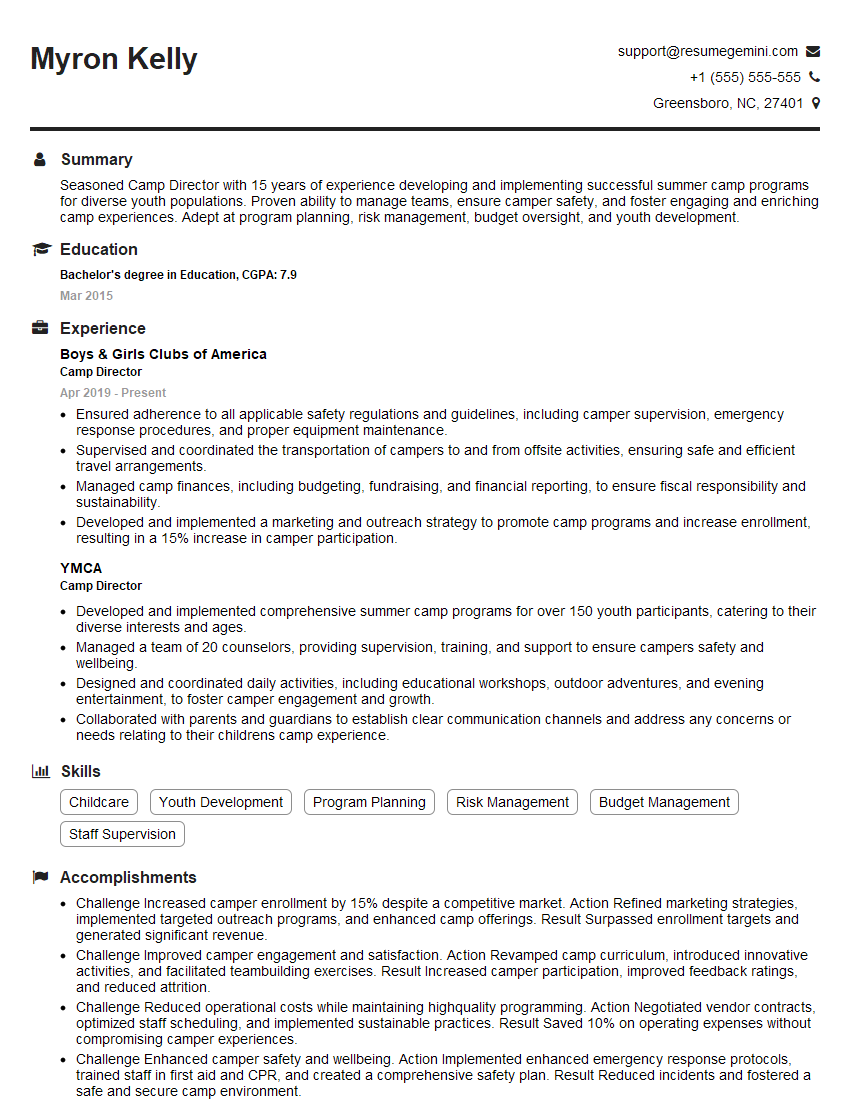
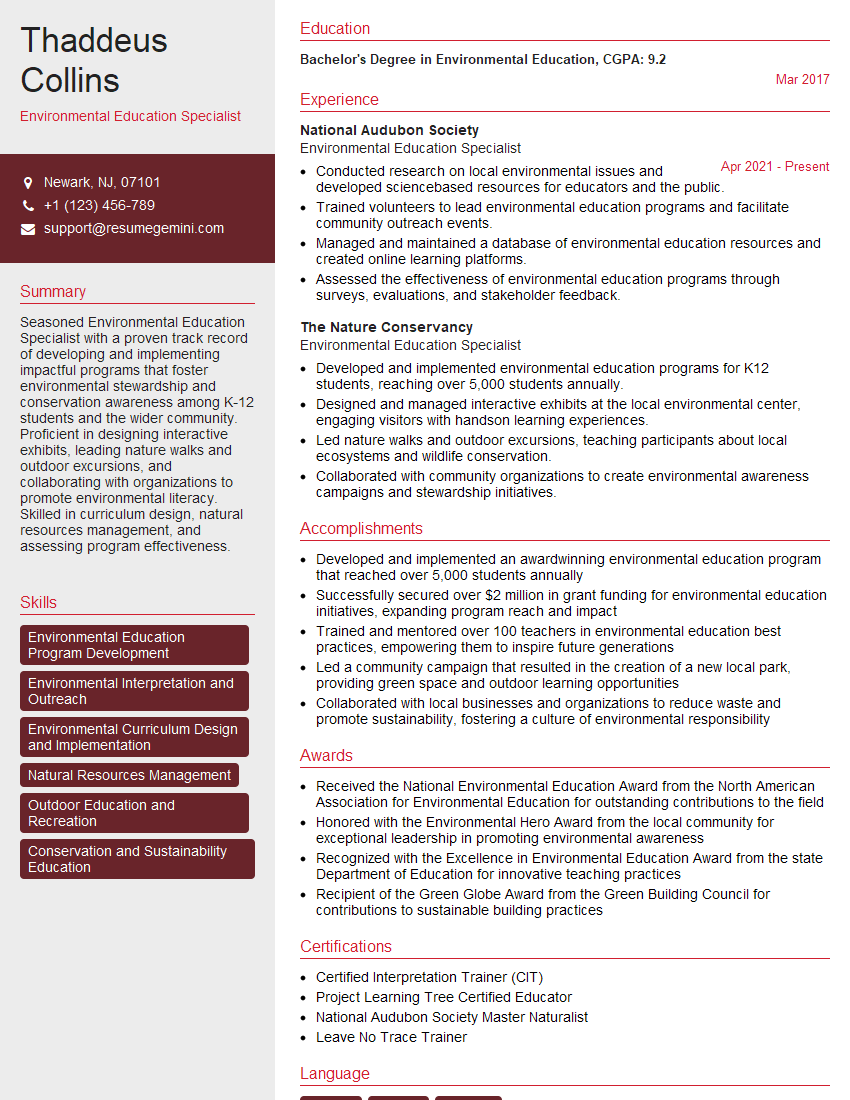
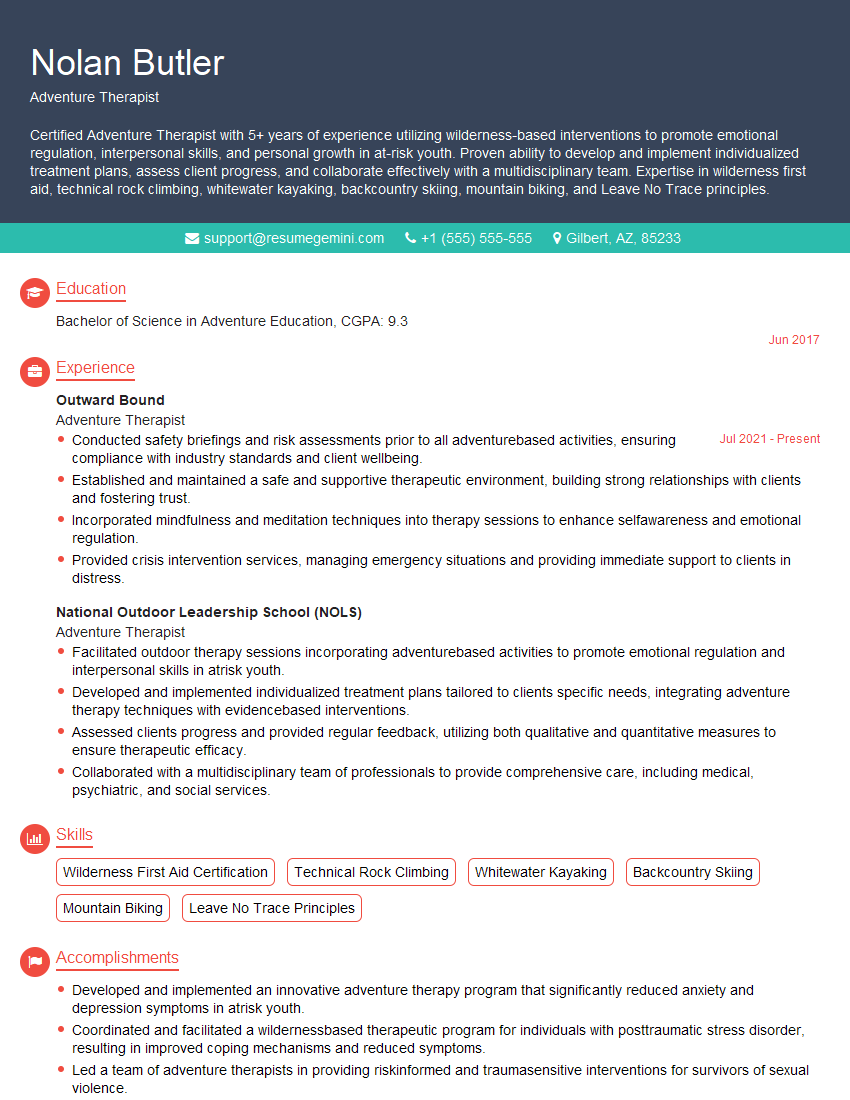
Mastering Outdoor Leadership and Adventure Education opens doors to exciting and fulfilling careers. To maximize your job prospects, a strong, ATS-friendly resume is essential. This is where ResumeGemini can help! ResumeGemini offers a powerful platform for creating impactful resumes that effectively communicate your skills and experience. They provide examples of resumes specifically tailored for Outdoor Leadership and Adventure Education professionals, helping you showcase your unique qualifications to potential employers. Invest the time in crafting a compelling resume – it’s a crucial step in securing your dream job.
Explore more articles
Users Rating of Our Blogs
Share Your Experience
We value your feedback! Please rate our content and share your thoughts (optional).
What Readers Say About Our Blog
To the interviewgemini.com Webmaster.
Very helpful and content specific questions to help prepare me for my interview!
Thank you
To the interviewgemini.com Webmaster.
This was kind of a unique content I found around the specialized skills. Very helpful questions and good detailed answers.
Very Helpful blog, thank you Interviewgemini team.