Preparation is the key to success in any interview. In this post, we’ll explore crucial Particle Counter Calibration interview questions and equip you with strategies to craft impactful answers. Whether you’re a beginner or a pro, these tips will elevate your preparation.
Questions Asked in Particle Counter Calibration Interview
Q 1. Explain the principle of operation of a particle counter.
Particle counters work primarily by detecting light scattered by particles as they pass through a laser beam. Imagine shining a flashlight in a dusty room – you see the dust motes because the light scatters off them. A particle counter uses a similar principle, but with much more precision. A sample of air or liquid is drawn through a sensing zone where a laser beam illuminates the particles. Sensors detect the scattered light, and sophisticated electronics analyze the intensity and angle of the scattered light to determine the size and number of particles.
The intensity of the scattered light is directly proportional to the size of the particle; larger particles scatter more light. This allows the instrument to differentiate between particles of different sizes, typically expressed in micrometers (µm). The number of scattered light signals corresponds to the number of particles present in the sample volume.
Q 2. Describe different types of particle counters and their applications.
Particle counters come in various types, each suited for specific applications:
- Liquid Particle Counters: These are used to analyze the cleanliness of liquids, such as pharmaceutical solutions, ultrapure water, and engine oils. They are crucial for ensuring product quality and preventing contamination.
- Air Particle Counters: These measure particle concentration in air, commonly used in cleanrooms, pharmaceutical manufacturing, and environmental monitoring. They help maintain cleanroom classifications and identify potential contamination sources.
- Portable Particle Counters: These are smaller and more mobile versions of air or liquid particle counters, ideal for quick spot checks and on-site assessments.
- Condensation Particle Counters (CPCs): These counters detect even very small particles (nanometer range) by using a process that causes the particles to grow into larger, detectable droplets. They are essential in atmospheric research and nanotechnology.
For example, a pharmaceutical company would use liquid particle counters to ensure their injectable drug solutions are free from particulate matter that could harm patients. Similarly, a semiconductor manufacturer uses air particle counters to maintain extremely clean environments (class 100 or ISO 5 cleanrooms) for chip fabrication.
Q 3. What are the common calibration standards used for particle counters?
Calibration standards for particle counters are typically traceable to national metrology institutes. Common standards include:
- Polystyrene Latex Spheres (PSL): These are uniform, spherical particles of known size and concentration. They are widely used because of their consistent size distribution and stability.
- NIST-traceable standards: The National Institute of Standards and Technology (NIST) provides traceable standards that ensure the accuracy and reliability of the calibration process. Many commercial calibration standards are linked to NIST.
The PSL spheres are suspended in a liquid or air to create a known concentration of particles, which is then used to verify the particle counter’s accuracy in sizing and counting.
Q 4. How often should a particle counter be calibrated?
The calibration frequency of a particle counter depends on factors such as usage intensity, environmental conditions, and regulatory requirements. A general guideline suggests calibration at least annually. However, more frequent calibration (e.g., semi-annually or even quarterly) might be necessary in critical applications such as pharmaceutical manufacturing or semiconductor fabrication, or if the instrument shows signs of malfunction.
Regular preventive maintenance, including cleaning the instrument’s optical components, also extends its accuracy and lifespan, reducing the need for more frequent calibration.
Q 5. What are the factors that affect the accuracy of particle counter readings?
Several factors can significantly influence the accuracy of particle counter readings:
- Instrument Age and Wear: Over time, the optical components of the instrument can degrade, affecting the accuracy of measurements.
- Environmental Conditions: Temperature and humidity fluctuations can affect the performance of the instrument.
- Sample Flow Rate: Inaccurate sample flow rates can lead to inaccurate particle concentration readings.
- Coincidence Errors: If the particle concentration is too high, particles may pass through the laser beam simultaneously, leading to undercounting. This is more likely at higher particle concentrations.
- Particle Shape and Refractive Index: The accuracy of size determination depends on the assumption that particles are spherical and have known refractive indices. Deviations from this assumption can lead to errors in sizing.
Regular calibration helps to minimize these errors by verifying the instrument’s performance against a known standard.
Q 6. Describe the procedure for calibrating a particle counter.
The procedure for calibrating a particle counter usually involves these steps:
- Prepare the calibration standard: Dilute the PSL standard to the appropriate concentration.
- Set up the instrument: Ensure the particle counter is properly warmed up and connected to a data acquisition system.
- Run the calibration: Inject the calibration standard into the particle counter and record the readings.
- Compare the readings: Compare the instrument’s readings with the known concentration and size distribution of the calibration standard.
- Adjust the instrument: Make any necessary adjustments to the instrument’s settings based on the comparison. Some instruments have automated calibration routines.
- Document the calibration: Record all the calibration data, including the date, time, calibration standard used, and any adjustments made.
It’s critical to follow the manufacturer’s instructions and use certified calibration standards to ensure the accuracy of the calibration.
Q 7. What are the different types of calibration methods for particle counters?
Several calibration methods are used for particle counters:
- Single-point calibration: Checks the instrument’s performance at a single concentration of particles. While simpler, it provides limited information.
- Multi-point calibration: Uses several different concentrations of particles to generate a more complete calibration curve, providing a more thorough evaluation of the instrument’s performance over its working range.
- Automated calibration: Many modern particle counters have built-in automated calibration routines which simplifies the process and improves consistency.
The choice of calibration method depends on the required accuracy and the complexity of the instrument. Multi-point calibration is generally preferred for critical applications due to its greater accuracy and comprehensive data.
Q 8. Explain the concept of particle size distribution and how it’s measured.
Particle size distribution refers to the relative abundance of particles of different sizes within a sample. Imagine a jar of mixed nuts – some peanuts, some cashews, some almonds. Particle size distribution is like describing how many of each type of nut you have. In particle counting, we’re interested in the number of particles of various sizes within a fluid or gas.
It’s measured using particle counters which employ various techniques, primarily light scattering. As particles pass through a laser beam, they scatter light. The amount of scattered light is directly related to the particle’s size. The particle counter measures the intensity of this scattered light and, using sophisticated algorithms, determines the particle’s size and counts the number of particles in each size range. This data is then presented as a histogram or graph showing the number of particles versus their size.
For example, a cleanroom might have a distribution showing mostly particles smaller than 1 micron, while a dusty environment would have significantly more larger particles.
Q 9. How do you interpret a particle counter calibration report?
A particle counter calibration report should detail the performance of the counter against known standards. It will typically include:
- Instrument Identification: The serial number and model of the particle counter.
- Calibration Date and Method: The date of calibration and the specific method used (e.g., NIST traceable standards).
- Calibration Standards: Details of the particle size and concentration of the standards used.
- Calibration Results: A comparison of the particle counter’s measured values against the known values of the standards. This usually includes data on accuracy, precision, and linearity over the relevant size ranges. You’ll see figures showing the measured concentration at specific particle sizes and perhaps graphical representations of the difference between expected and actual counts.
- Calibration Certificate/Traceability: A statement indicating the traceability of the calibration to national or international standards (like NIST in the US).
- Pass/Fail Status: A clear indication whether the counter passed or failed the calibration process according to pre-defined acceptance criteria. These criteria are usually defined by the manufacturer and/or relevant industry standards.
Any significant deviations from the expected values should be highlighted and may indicate a need for service or repair. A thorough review of the report helps ensure the reliability of future measurements.
Q 10. What are the potential sources of error during particle counter calibration?
Several factors can introduce errors during particle counter calibration. These include:
- Inaccurate Calibration Standards: The accuracy of the calibration depends entirely on the accuracy of the reference standards used. Contamination or degradation of standards can lead to significant errors.
- Environmental Conditions: Temperature and humidity fluctuations can affect both the particle standards and the performance of the particle counter, leading to inaccurate measurements.
- Instrument Malfunction: Problems with the particle counter’s laser, optics, or electronics can lead to incorrect counts and size estimations. A clogged sampling line also introduces error.
- Sampling Technique: Inconsistent sampling methods can affect the accuracy and reproducibility of calibration results. The flow rate must be carefully controlled and monitored.
- Operator Error: Improper handling of equipment, incorrect setup, or errors in data recording can contribute to significant errors.
- Contamination: Particulate contamination in the calibration environment can influence the results.
Q 11. How do you troubleshoot common problems encountered during particle counter calibration?
Troubleshooting involves systematic investigation. For example, if the calibration fails, first check the calibration report for specific failure points. Then:
- Verify Calibration Standards: Ensure the standards are within their expiry date and haven’t been compromised. Compare results with a second set of standards if possible.
- Check Environmental Conditions: Ensure that temperature and humidity are within the specified ranges.
- Inspect the Instrument: Carefully check for any obvious damage, leaks, or blockages in the sampling line. Clean the optics if necessary according to the manufacturer’s instructions.
- Review the Calibration Procedure: Make sure that the calibration procedure was followed exactly as specified.
- Run Diagnostics: Many particle counters have built-in diagnostic routines that can help to identify internal problems.
- Consult the Manufacturer: If the problem persists, contact the manufacturer’s technical support for assistance.
Remember, thorough documentation throughout the process is crucial for identifying the source of the issue.
Q 12. What are the safety precautions to be taken while calibrating particle counters?
Safety during particle counter calibration is paramount. Key precautions include:
- Laser Safety: Particle counters use lasers, so eye protection is absolutely necessary. Never look directly into the laser beam. Ensure the calibration area is properly shielded to prevent accidental exposure.
- Electrical Safety: Ensure that the instrument is properly grounded and that all electrical connections are secure. Avoid working with the equipment in wet or damp environments.
- Handling of Calibration Standards: Handle calibration standards carefully to prevent contamination or damage. Follow the manufacturer’s instructions for storage and handling.
- Cleanliness: Maintain a clean and organized workspace to prevent contamination of the equipment and the calibration standards.
- Personal Protective Equipment (PPE): Wear appropriate PPE such as gloves and lab coats to prevent contamination of both the equipment and yourself.
Q 13. Explain the importance of maintaining calibration records.
Maintaining accurate and complete calibration records is essential for several reasons:
- Compliance: Many industries have regulatory requirements that mandate regular calibration and documentation of particle counters. These records are crucial for demonstrating compliance with these regulations.
- Data Integrity: Calibration records ensure the reliability and traceability of the data generated by the particle counter, which might be crucial for quality control, process monitoring, or research.
- Troubleshooting: Complete records can help in identifying and resolving any issues that arise with the particle counter’s performance over time. They aid in trend analysis to predict potential problems.
- Preventative Maintenance: Calibration records can help identify patterns indicating the need for preventative maintenance, ultimately extending the lifespan of the instrument.
- Legal Protection: Detailed records serve as legal proof of compliance with regulations and due diligence in maintaining the accuracy of measurement equipment.
Q 14. How do you ensure the traceability of calibration standards?
Traceability of calibration standards ensures that the standards used are linked to a known, reliable reference. This typically involves a chain of comparisons to national or international standards, such as those provided by the National Institute of Standards and Technology (NIST) in the United States.
This is achieved by:
- Using NIST-traceable standards: Purchase calibration standards from accredited suppliers who can provide certificates of traceability to NIST (or equivalent national standards organizations).
- Regular Calibration of Standards: The calibration standards themselves need to be periodically recalibrated by an accredited laboratory to maintain traceability. This involves sending the standards to a facility that can directly compare them to a higher-order standard.
- Maintaining Chain of Custody: Keeping meticulous records of the handling and movement of standards throughout the calibration process establishes a clear chain of custody. This documentation demonstrates that the standards have not been compromised or altered.
Proper traceability ensures the accuracy and reliability of the calibration process, providing confidence in the results obtained.
Q 15. What are the regulatory requirements for particle counter calibration?
Regulatory requirements for particle counter calibration vary depending on the industry and application, but generally align with international standards like ISO 21501-4. This standard specifies the requirements for the calibration and performance verification of particle counters. Specific regulations may be imposed by government agencies (like the FDA in the pharmaceutical industry) or internal quality management systems (e.g., GMP guidelines). These regulations often dictate calibration frequency, acceptable tolerances, and documentation requirements. For instance, a cleanroom in the pharmaceutical industry might require calibration at more frequent intervals (e.g., every 3 months) than a less critical environment (e.g., every 6 months or annually). Failure to adhere to these regulations can lead to non-compliance, potentially impacting product quality and leading to regulatory penalties.
In summary, regulatory compliance hinges on meticulous record-keeping, adherence to established calibration procedures, and the use of traceable standards. The specific requirements are always context-dependent and should be determined by consulting the applicable regulations and standards for the particular environment and application.
Career Expert Tips:
- Ace those interviews! Prepare effectively by reviewing the Top 50 Most Common Interview Questions on ResumeGemini.
- Navigate your job search with confidence! Explore a wide range of Career Tips on ResumeGemini. Learn about common challenges and recommendations to overcome them.
- Craft the perfect resume! Master the Art of Resume Writing with ResumeGemini’s guide. Showcase your unique qualifications and achievements effectively.
- Don’t miss out on holiday savings! Build your dream resume with ResumeGemini’s ATS optimized templates.
Q 16. Describe your experience with different types of particle counters.
My experience encompasses a wide range of particle counters, including both single-channel and multi-channel instruments. I’ve worked extensively with optical particle counters, which use laser light scattering to detect and size particles. These range from portable, handheld devices suitable for quick spot checks to sophisticated, automated systems used for continuous monitoring in cleanrooms. I’ve also had experience with condensation particle counters (CPCs), which are particularly useful for detecting smaller particles (nanoparticles) that might be missed by optical methods. Each type presents its own set of calibration challenges; for instance, optical particle counters require regular checks of the laser alignment and light source intensity, while CPCs require meticulous attention to the saturation point and flow rate calibration.
Furthermore, I’m familiar with different particle size ranges that these counters can measure, from submicron particles (important for semiconductor manufacturing) to larger particles (relevant to pharmaceutical manufacturing). This understanding is crucial because the calibration process and acceptable tolerances often vary depending on the size range of interest. For example, calibrating a counter for the detection of 0.1 micron particles requires a higher level of precision than calibrating for 5 micron particles.
Q 17. Explain your experience with different calibration software and techniques.
My experience includes working with various calibration software packages and manual techniques. Many modern particle counters have built-in software for automated calibration using traceable standards. This software guides users through the calibration process, checks for errors, and generates reports. However, I’ve also extensively used manual calibration methods, often involving comparing the counter’s readings against those of a reference instrument or traceable standards. This requires careful attention to detail and thorough understanding of the underlying principles of particle counting. In this case, accurate data recording and analysis are critical for determining the calibration factors.
Specific techniques I’ve utilized include using certified monodisperse particle standards of known concentration and size (e.g., polystyrene latex spheres). These standards are introduced into the particle counter, and the counter’s response is compared to the known values. Any deviation allows for the determination of correction factors. Furthermore, I’m adept at troubleshooting calibration issues, identifying potential sources of error (e.g., instrument malfunction, contamination, inaccurate standard preparation), and implementing corrective actions.
Q 18. How do you handle discrepancies in calibration results?
Discrepancies in calibration results require a systematic investigation. The first step is to carefully review the entire calibration process, checking for procedural errors, such as incorrect handling of standards, improper instrument setup, or data entry mistakes. If no procedural errors are found, I would then examine the equipment itself, looking for signs of malfunction (e.g., faulty sensors, clogged filters). It’s also crucial to assess the quality of the calibration standards used, as inconsistencies in the standard can lead to inaccurate results.
For example, if a particle counter consistently underestimates particle counts, this could be due to a weakened light source in an optical counter, or contamination within the instrument causing false readings. Once the source of discrepancy is identified, corrective action is implemented, which might involve equipment repair, recalibration using fresh standards, or even replacement of faulty components. All findings and corrective actions are meticulously documented and tracked for audit trail purposes.
Q 19. How do you validate the calibration procedure?
Validation of the calibration procedure is essential to ensure its accuracy and reliability. This involves demonstrating that the calibration process consistently produces accurate and reliable results. This can be achieved through various methods, such as performing multiple calibrations on the same instrument and comparing the results. A statistically valid range of results is expected. Similarly, using multiple particle size standards and comparing the results against expected values ensures the efficacy of the entire calibration process.
Another key aspect is using different certified standards from multiple vendors. This ensures that the calibration is not overly sensitive to the characteristics of a particular batch of standards. The validation process should also encompass thorough documentation, demonstrating traceability to national or international standards. This creates a robust audit trail that helps maintain data integrity.
Q 20. What are the key performance indicators (KPIs) for particle counter calibration?
Key Performance Indicators (KPIs) for particle counter calibration include accuracy, precision, and traceability. Accuracy refers to how closely the measured values match the true values, while precision indicates the repeatability of measurements. Traceability means the calibration results can be linked back to national or international standards, ensuring comparability and reliability. Other important KPIs might include calibration frequency, the number of out-of-tolerance results, and the time taken to complete the calibration process. Tracking these KPIs helps identify areas for improvement and ensures that the calibration process remains efficient and effective.
For instance, a high percentage of out-of-tolerance results suggests a problem with the instrument or calibration procedure, which requires prompt investigation and corrective action. Similarly, excessive time spent on calibration can highlight inefficiencies that could be addressed through process optimization.
Q 21. Describe your experience with ISO standards related to cleanrooms and particle counting.
My experience with ISO standards related to cleanrooms and particle counting is extensive, encompassing ISO 14644 (Cleanrooms and associated controlled environments), and ISO 21501-4 (Particle counters – Part 4: Calibration). ISO 14644 provides guidelines for the classification and monitoring of cleanrooms, while ISO 21501-4 outlines the requirements for calibrating particle counters used in these environments. Understanding these standards is crucial for ensuring the accuracy and reliability of particle counting data, which in turn, is critical for maintaining a cleanroom environment to the required classification.
For example, the ISO 14644 standard specifies acceptable particle concentration limits for different cleanroom classifications (e.g., ISO Class 5, ISO Class 7). Particle counters used to monitor these cleanrooms must be accurately calibrated to ensure that the concentration measurements are reliable and comply with the regulatory requirements. This accurate measurement is paramount for identifying and rectifying any excursions and maintaining the integrity of the manufacturing process.
Q 22. How do you ensure the accuracy and reliability of calibration results?
Ensuring accurate and reliable calibration results hinges on a multi-faceted approach. It begins with meticulously following the manufacturer’s instructions for each specific particle counter model. This includes using certified reference materials (CRMs), such as NIST-traceable polystyrene latex spheres (PSL) of known size and concentration. These CRMs are the gold standard for verifying the accuracy of the particle counter’s readings.
Beyond following instructions, we maintain rigorous quality control measures. This involves regular checks of the calibration equipment itself – ensuring the air compressor is functioning properly, the tubing is clean and free of leaks, and the sheath air flow is consistent and within specifications. We also meticulously document every step of the calibration process, including dates, times, CRM information, and observed results. This detailed record-keeping is crucial for traceability and troubleshooting.
Finally, we use statistical analysis to evaluate the calibration data. We look for trends, outliers, and overall consistency. If inconsistencies arise, we investigate potential sources of error, recalibrate if necessary, and document any corrective actions. Think of it like a detective story: we meticulously examine all the clues (data) to ensure the accuracy of our ‘case’ (calibration).
Q 23. What are the best practices for managing and storing calibration equipment?
Proper management and storage of calibration equipment are vital for maintaining its accuracy and prolonging its lifespan. We store the equipment in a clean, controlled environment, free from dust, moisture, and extreme temperatures. This prevents contamination and damage that could compromise calibration results. Think of it like storing fine wine – careful storage ensures its quality.
Each piece of equipment, from the particle counter itself to the CRM vials and supporting instruments, is meticulously labeled with its identification number, calibration date, and next scheduled calibration date. This labeling system makes it easy to track maintenance and ensure timely recalibration. We also maintain a detailed inventory log, detailing the location of each piece of equipment and its status. This allows for easy retrieval and accountability.
Regular preventative maintenance is critical. We follow a strict schedule for cleaning, checking air lines for leaks, and performing functional tests. This proactive approach minimizes downtime and ensures the equipment remains ready for calibration tasks.
Q 24. Describe your experience with data analysis of particle counter results.
Data analysis of particle counter results is a critical step in evaluating air quality and validating cleanroom classifications. We employ a variety of analytical techniques, starting with a visual inspection of the raw data to identify any anomalies or outliers. Software programs designed for particle counting provide tools for generating reports, including particle size distributions, concentration levels, and other relevant parameters. This visual examination is like looking at a crime scene – we search for unusual patterns or clues.
We then apply statistical analysis to confirm the reliability of the data. This might involve calculating averages, standard deviations, and confidence intervals to assess the precision and accuracy of the measurements. For example, we might use a t-test to compare particle counts from different locations within a cleanroom to determine if significant differences exist. We also create graphs and charts to visualize the data, making trends and patterns easier to identify.
Interpreting the results involves understanding the implications of the particle size distribution and concentration. Are the counts within acceptable limits for the designated cleanroom classification? Do the data suggest a potential source of contamination that needs investigation?
Q 25. How would you train a new technician on particle counter calibration?
Training a new technician in particle counter calibration is a phased process emphasizing both theoretical understanding and practical skills. We start with a comprehensive review of the principles of particle counting, including the different types of particle counters, measurement techniques, and the importance of calibration. This theoretical foundation lays the groundwork for effective practical application.
The next phase involves hands-on training. This starts with supervised practice using a training particle counter and simulated samples. The trainee learns how to operate the equipment, prepare samples, and perform calibrations according to established procedures. We emphasize meticulous record-keeping and proper documentation at each step. We treat this training like an apprenticeship, slowly building confidence and competence.
Finally, the new technician performs calibrations under close supervision, gradually transitioning to independent work as they demonstrate competence and mastery of all aspects of the calibration process. Continuous monitoring and feedback ensure consistent performance, and regular competency assessments guarantee ongoing skill development. We use a checklist approach to ensure all critical steps are consistently followed.
Q 26. How do you stay up-to-date with the latest advancements in particle counter technology?
Staying up-to-date with advancements in particle counter technology is essential for maintaining proficiency in this field. I regularly attend industry conferences and workshops to learn about new developments in instrumentation, calibration techniques, and data analysis methods. These events provide invaluable opportunities to network with peers and learn from leading experts.
I actively read relevant scientific journals and industry publications to stay abreast of the latest research and technological innovations. This continuous learning keeps my knowledge current and allows me to adapt my calibration methods as technology evolves. Think of it as a lifelong pursuit of knowledge, continuously adapting to a dynamic technological landscape.
Furthermore, I maintain professional memberships in relevant organizations to access continuing education materials, webinars, and networking opportunities. This ensures I remain informed on emerging best practices and regulatory changes.
Q 27. Explain your experience with different particle counter manufacturers and their specific calibration requirements.
My experience encompasses a range of particle counter manufacturers, each with its own unique calibration requirements. For instance, some manufacturers provide detailed, step-by-step instructions and proprietary software, while others rely more on general industry standards. Regardless of the manufacturer, adherence to the specific instructions is paramount for accuracy.
For example, I’ve worked with particle counters from TSI, Lighthouse, and Beckman Coulter. TSI instruments often require specific CRM types and flow rates, while Lighthouse models may have different software interfaces for data acquisition and analysis. Beckman Coulter’s calibration procedures often incorporate specific validation and verification steps. In each case, understanding the manufacturer’s specifications and using their recommended procedures is crucial for achieving reliable calibration results.
The key is flexibility and adaptability. The ability to quickly grasp the specific requirements of a new manufacturer and implement their protocols effectively is crucial. This involves a thorough review of the manufacturer’s documentation, careful attention to detail, and a commitment to using the proper equipment and procedures.
Q 28. Describe a challenging situation you faced during particle counter calibration and how you overcame it.
During a cleanroom certification project, we encountered a significant discrepancy between the particle count readings from two different particle counters used for cross-validation. Initial troubleshooting suggested potential issues with either instrument, but careful inspection revealed a less obvious problem: the sheath air supply lines were subtly different in diameter. This apparently minor difference caused inconsistencies in the air flow rate, influencing the particle count results.
To overcome this, I first thoroughly reviewed the operational and maintenance manuals for both counters, paying close attention to the specified sheath air flow rates. We then carefully measured the sheath air flow for each counter using calibrated flow meters and confirmed the discrepancy. Finally, we replaced the tubing on one of the counters with tubing matching the specifications of the other. After the replacement, repeat measurements showed a high degree of agreement between the two particle counters.
This experience underscored the importance of paying attention to every detail, even seemingly minor ones. A thorough understanding of the instrument’s operating principles, careful adherence to procedures, and the use of proper calibration equipment proved crucial in resolving the issue. This experience reinforced the need for thorough documentation and cross-checking at every stage of the calibration process.
Key Topics to Learn for Particle Counter Calibration Interview
- Understanding Particle Counting Principles: Grasp the fundamental physics behind particle detection and sizing, including light scattering techniques and their limitations.
- Calibration Procedures and Standards: Become proficient in performing calibrations using NIST-traceable standards, understanding the importance of accuracy and traceability in measurements.
- Calibration Equipment and Tools: Familiarize yourself with the various types of equipment used in calibration, including particle size standards, flow meters, and data acquisition systems. Understand their operation and maintenance.
- Data Analysis and Interpretation: Learn to analyze calibration data, identify potential sources of error, and interpret results to ensure the accuracy and reliability of the particle counter.
- Troubleshooting and Problem Solving: Develop your ability to diagnose and resolve common issues encountered during calibration, such as instrument drift, sensor contamination, and data inconsistencies.
- Quality Control and Assurance: Understand the role of calibration in ensuring compliance with relevant quality standards and regulations (e.g., ISO, GMP).
- Different Types of Particle Counters and their Calibration Needs: Explore the nuances in calibrating various particle counter types, considering their design and applications (e.g., condensation particle counters, optical particle counters).
- Safety Procedures and Regulations: Familiarize yourself with the relevant safety procedures and regulations associated with handling calibration equipment and working in cleanroom environments.
- Documentation and Reporting: Understand the importance of maintaining accurate and complete calibration records and generating clear and concise reports.
Next Steps
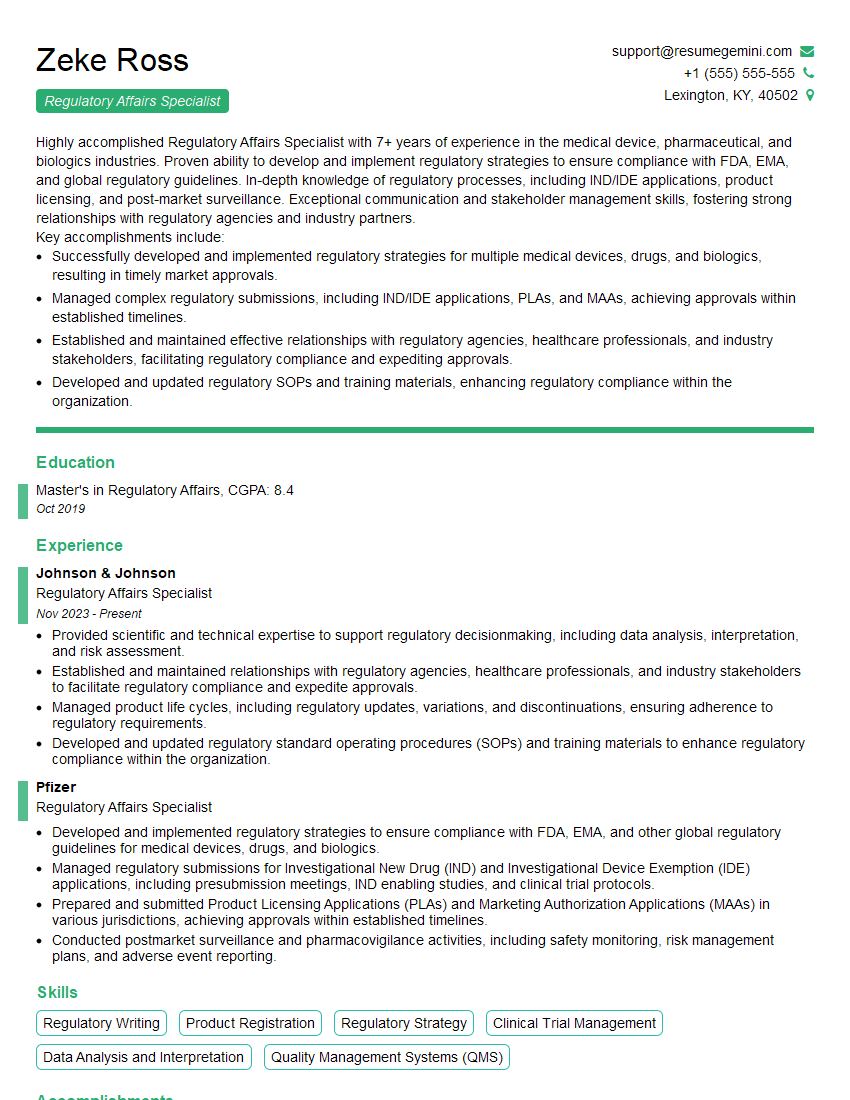
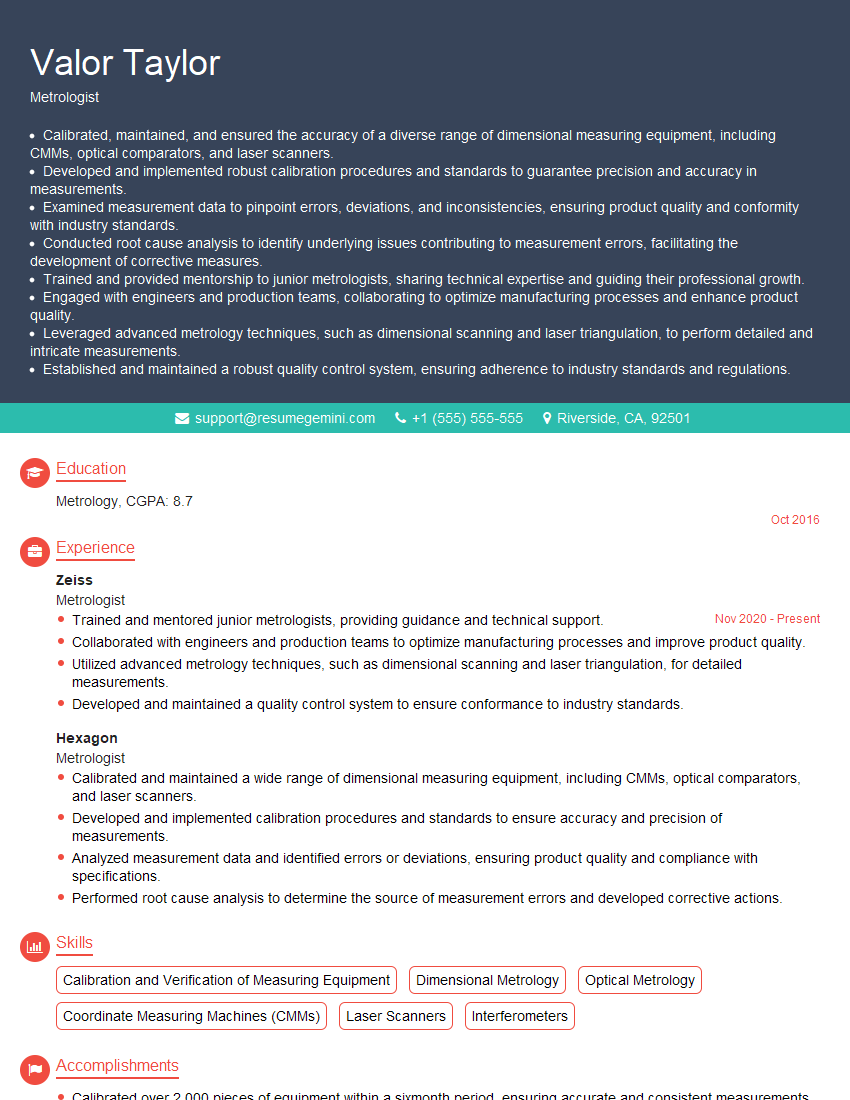
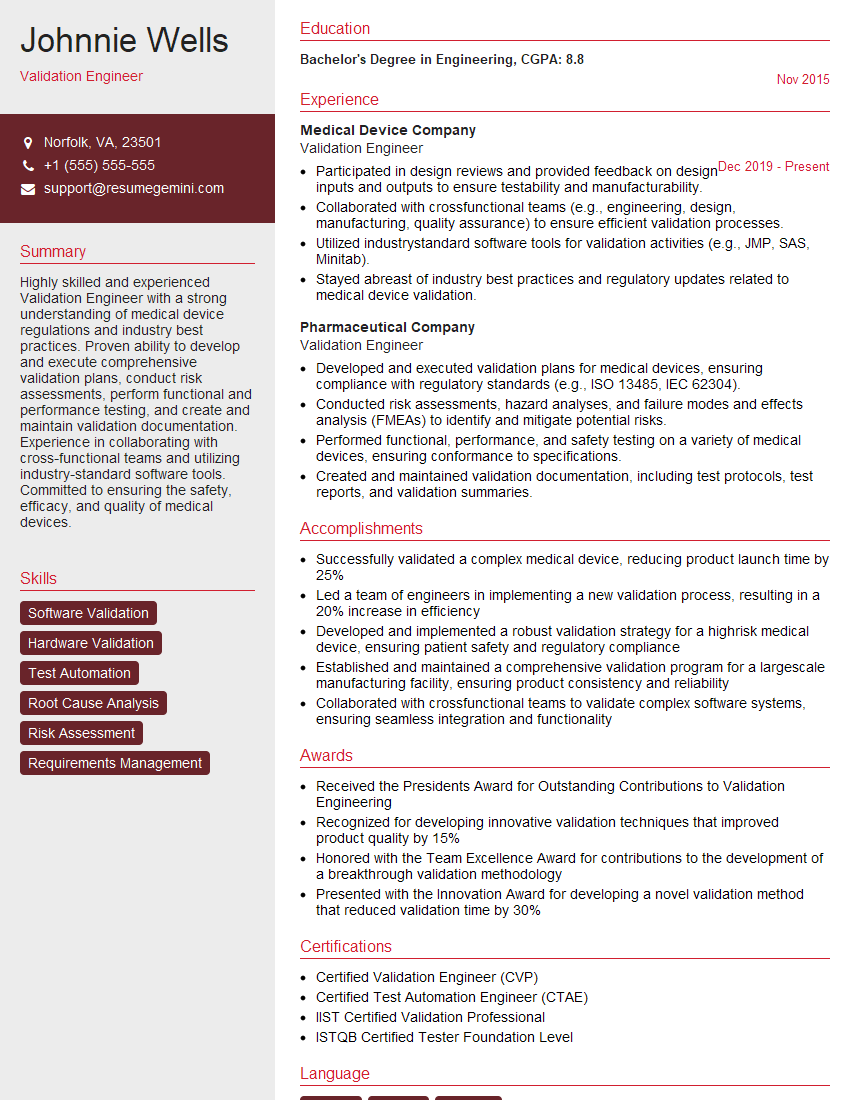
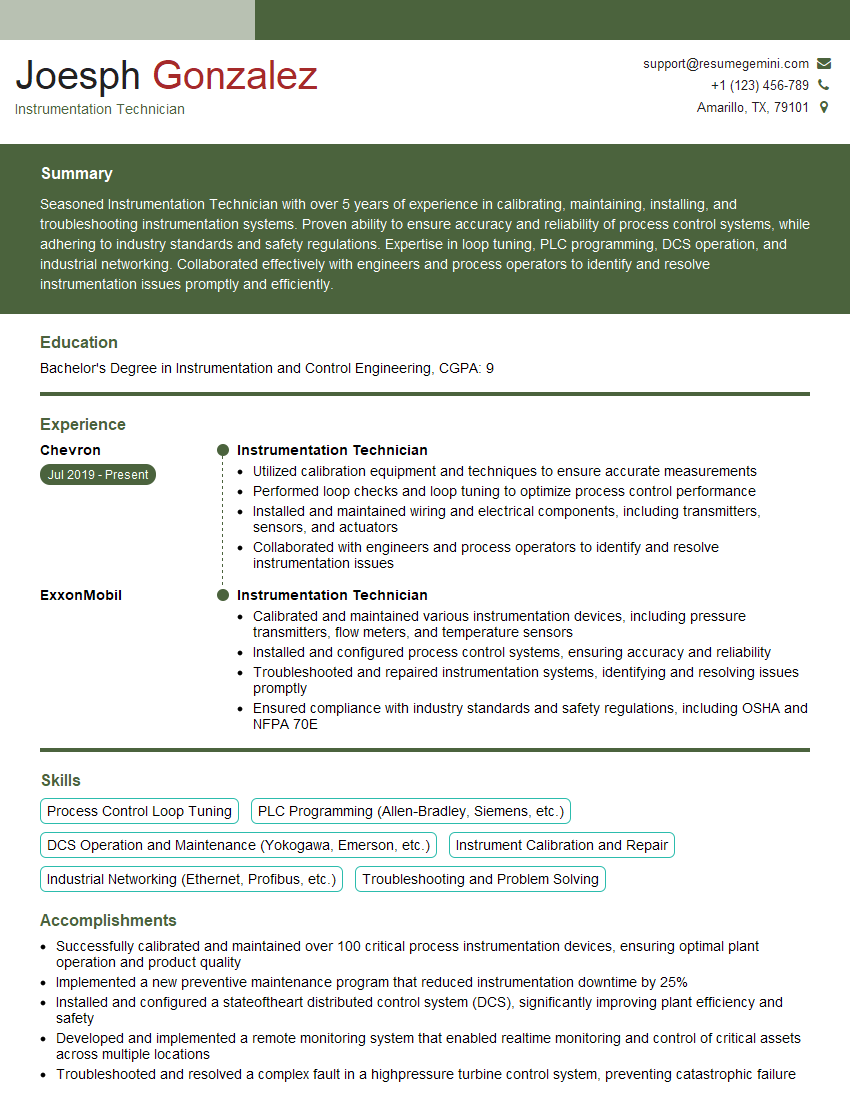
Mastering Particle Counter Calibration opens doors to exciting career opportunities in various industries demanding high precision and quality control. A strong understanding of these principles is highly valued and demonstrates a commitment to technical excellence. To maximize your job prospects, create an ATS-friendly resume that effectively highlights your skills and experience. ResumeGemini is a trusted resource to help you build a professional and impactful resume. Examples of resumes tailored to Particle Counter Calibration are available to guide you. Invest in your career success – build a resume that gets noticed.

Explore more articles
Users Rating of Our Blogs
Share Your Experience
We value your feedback! Please rate our content and share your thoughts (optional).
What Readers Say About Our Blog
To the interviewgemini.com Webmaster.
Very helpful and content specific questions to help prepare me for my interview!
Thank you
To the interviewgemini.com Webmaster.
This was kind of a unique content I found around the specialized skills. Very helpful questions and good detailed answers.
Very Helpful blog, thank you Interviewgemini team.